Spiced Blueberry Jammin’

Following a Thanksgiving hiatus, I am back with the 23rd episode of Good Eats. In this episode, Alton makes only one recipe, which is for Spiced Blueberry Jam. I have made freezer jam before, but my only other canning experience has been the dill pickles my mom and I have made for the past eight to 10 years. To start Alton’s jam, you need to begin by washing all of your canning equipment, which I did by hand.

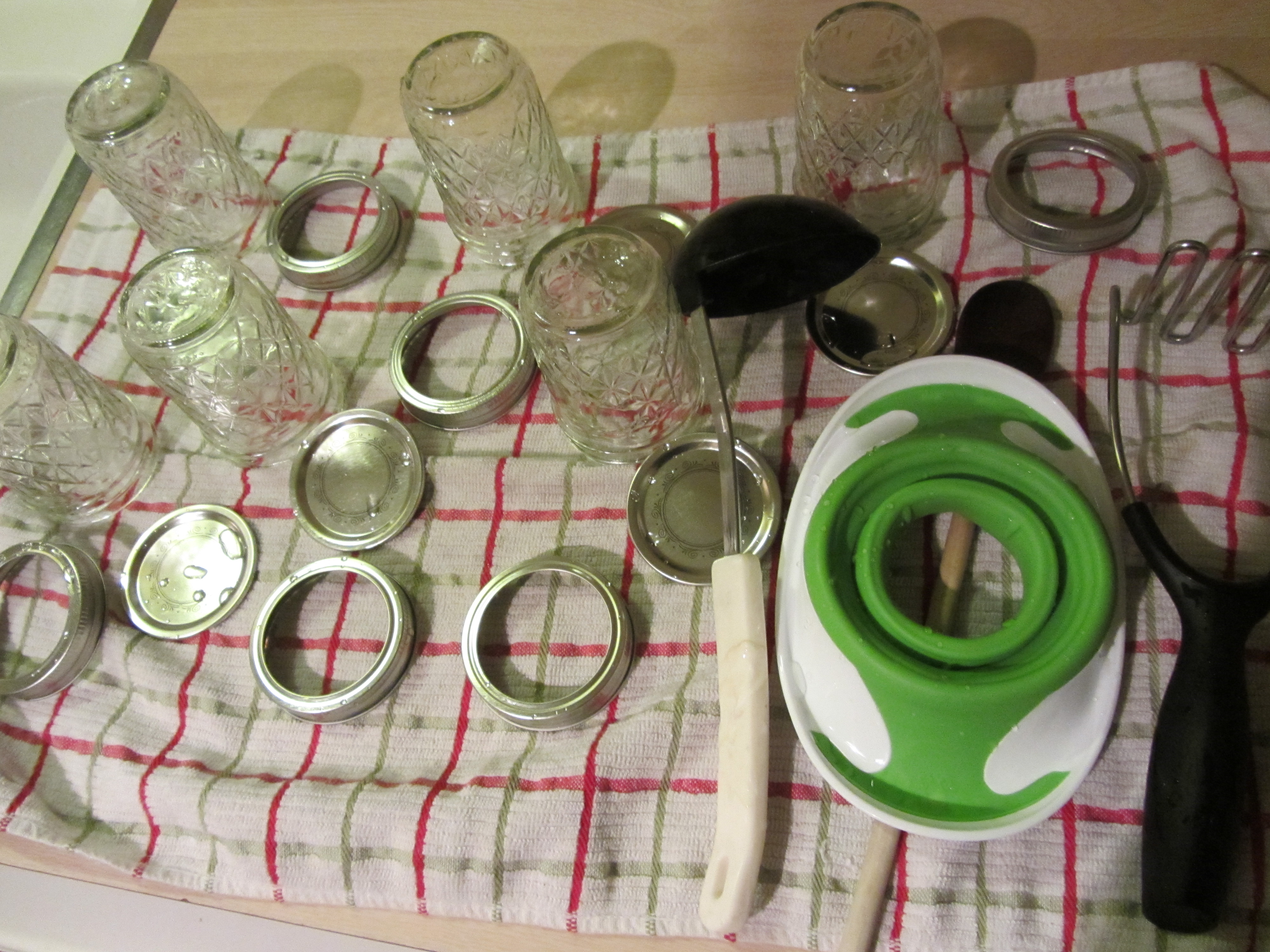
Jars, bands, funnel, masher, and ladle after hand washing.

Jars, bands, funnel, masher, and ladle after hand washing.

After a good wash, it is critical to sanitize your equipment, which Alton did by boiling everything (except the jar lids) for 10 minutes. The jar lids can be added to the pot after it has been removed from the heat for ~10 minutes, as boiling the lids could destroy their sealing compound. I could not find a good pan to boil all of my equipment, so I opted to run everything through the dishwasher instead; this included my jars, bands for the lids, a canning funnel, and a ladle. While your equipment is sanitizing, you can begin making your jam by combining frozen blueberries, a packet of dry pectin, cinnamon, ground star anise, fresh nutmeg, lemon juice, and cider vinegar.

Jam ingredients:  frozen blueberries, star anise, nutmeg, cinnamon, pectin, lemon juice, and cider vinegar.

Jam ingredients: frozen blueberries, star anise, nutmeg, cinnamon, pectin, lemon juice, and cider vinegar.

Whole star anise.

Whole star anise.

Ground star anise.

Ground star anise.

Now, there are a couple of differences between the recipe prepared in the episode and the online recipe. In the episode, Alton uses 1/4 t of cinnamon and 4 T of cider vinegar, while the online recipe calls for no cinnamon and 5 T of cider vinegar. I made the recipe as Alton did in the show. Once everything is combined in the saucepan, you want to bring it to a boil over low heat, as you do not want your frozen fruit to burn.

Blueberries and pectin.

Blueberries and pectin.

Blueberries, pectin, and spices.

Blueberries, pectin, and spices.

All ingredients in the pan.

All ingredients in the pan.

Heating over low heat.

Heating over low heat.

Once juice starts forming on the bottom of the pan, you can increase the heat and began to mash the blueberries with a hand masher. You want to boil the mixture for about five minutes, continuing to mash the berries.

Juice starting to form at bottom of pan.

Juice starting to form at bottom of pan.

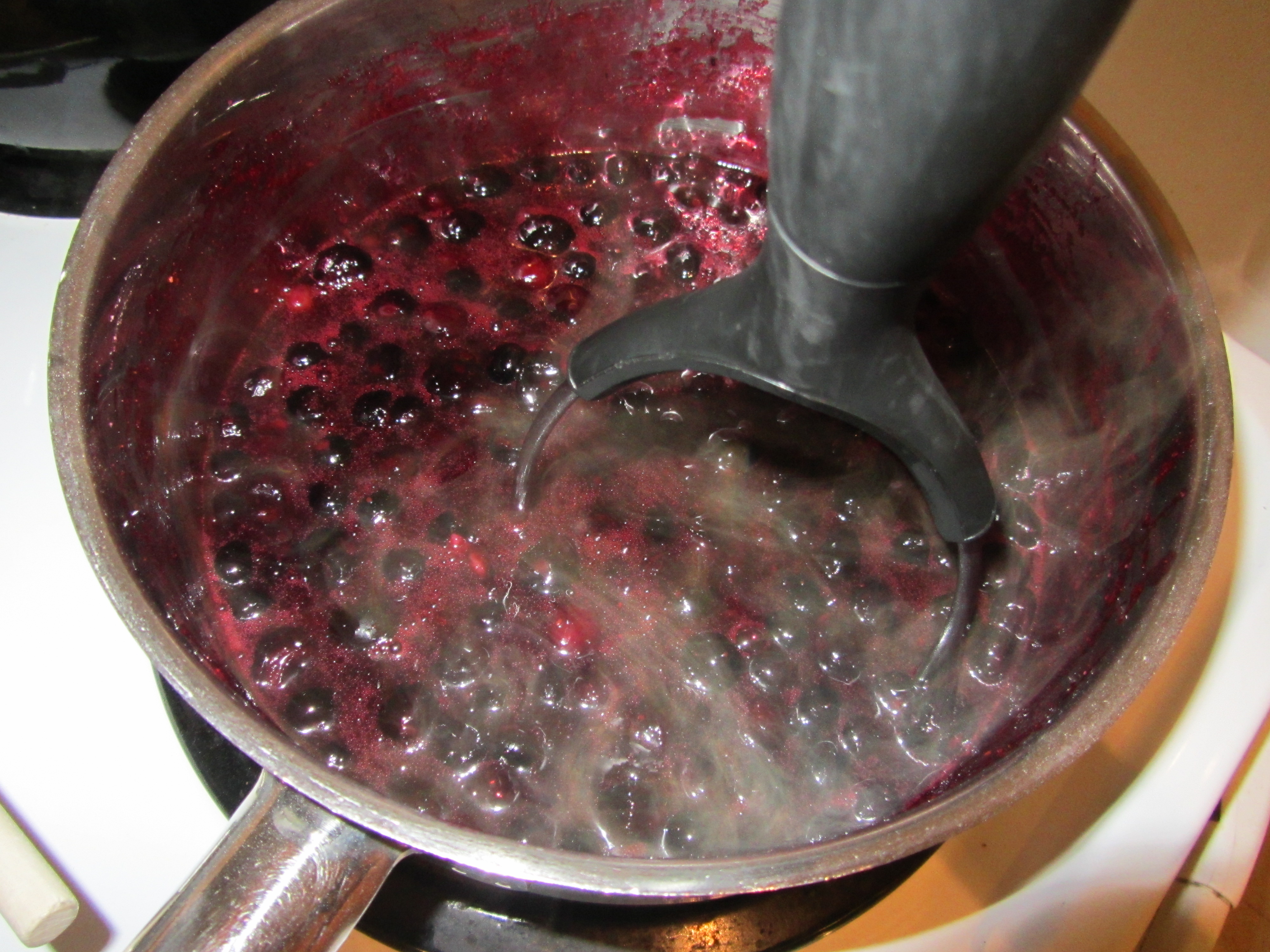
Bringing the mixture to a boil.

Bringing the mixture to a boil.

Mashing the blueberries.

Mashing the blueberries.

At this time, you add your sugar and some water to compensate for evaporation. Sugar serves to make jam spreadable, helps to set the pectin, and it takes up excess water. After adding the sugar and water, you increase the heat to medium-high and stir until your jam reaches a boil. Boil the jam for one minute and you are done.

Adding sugar and water.

Adding sugar and water.

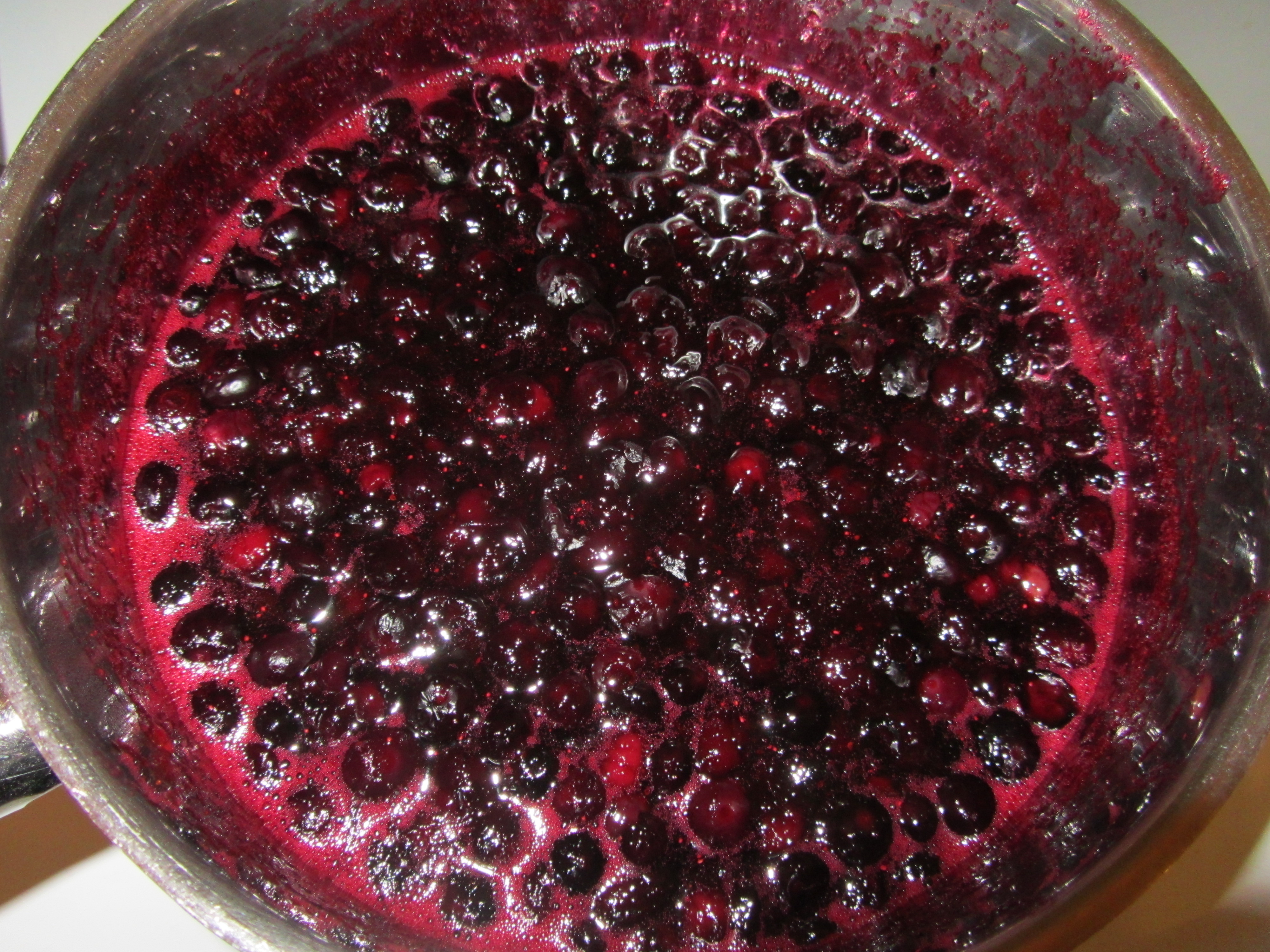
Jam after boiling for a final minute.

Jam after boiling for a final minute.

At this point, you could put lids on the jars and store them in the refrigerator for a couple of weeks. I opted to process my jars for longer shelf life, and because it is what Alton does in the episode. While your jars are still hot, you want to fill them with the hot jam mixture, using a ladle and your funnel.

Filling my jars.

Filling my jars.

At this time, I put my jar lids in a bowl with some hot (not boiling) water.

Jar lids in hot water.

Jar lids in hot water.

You only want to fill your jars to the bottom of the funnel. I had just about the perfect amount of jam for six half-pint jars.

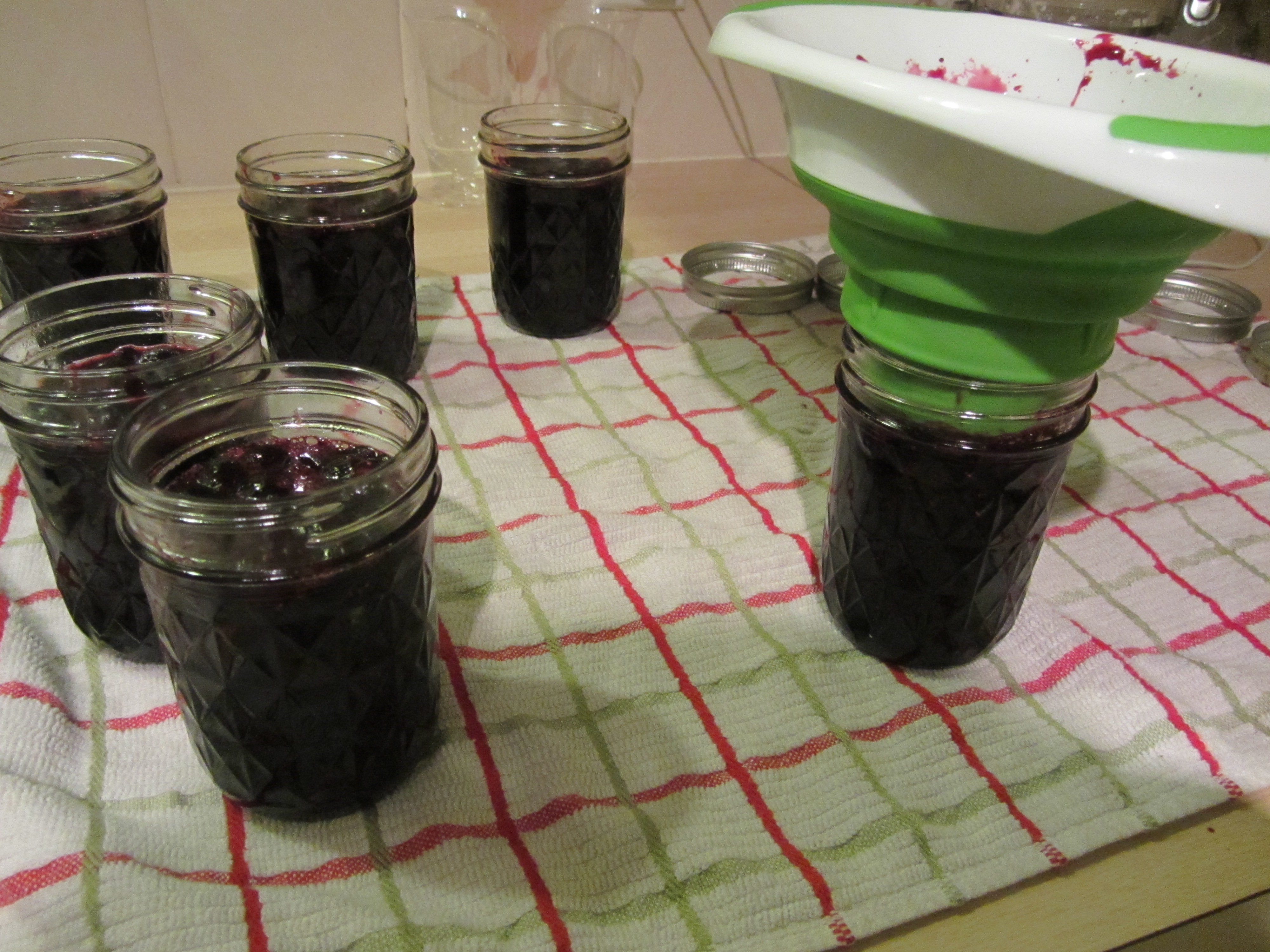
Filled jars.

Filled jars.

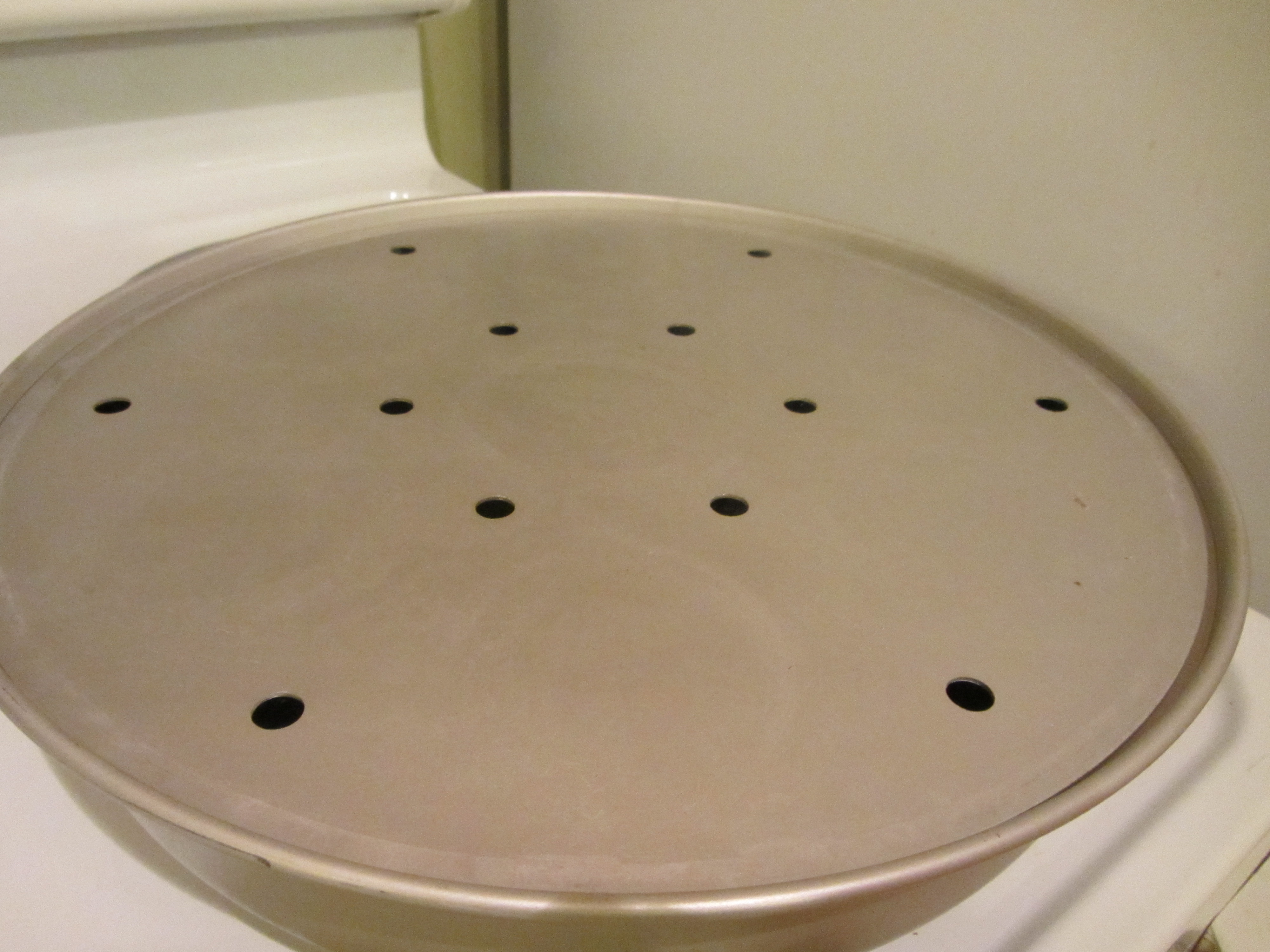
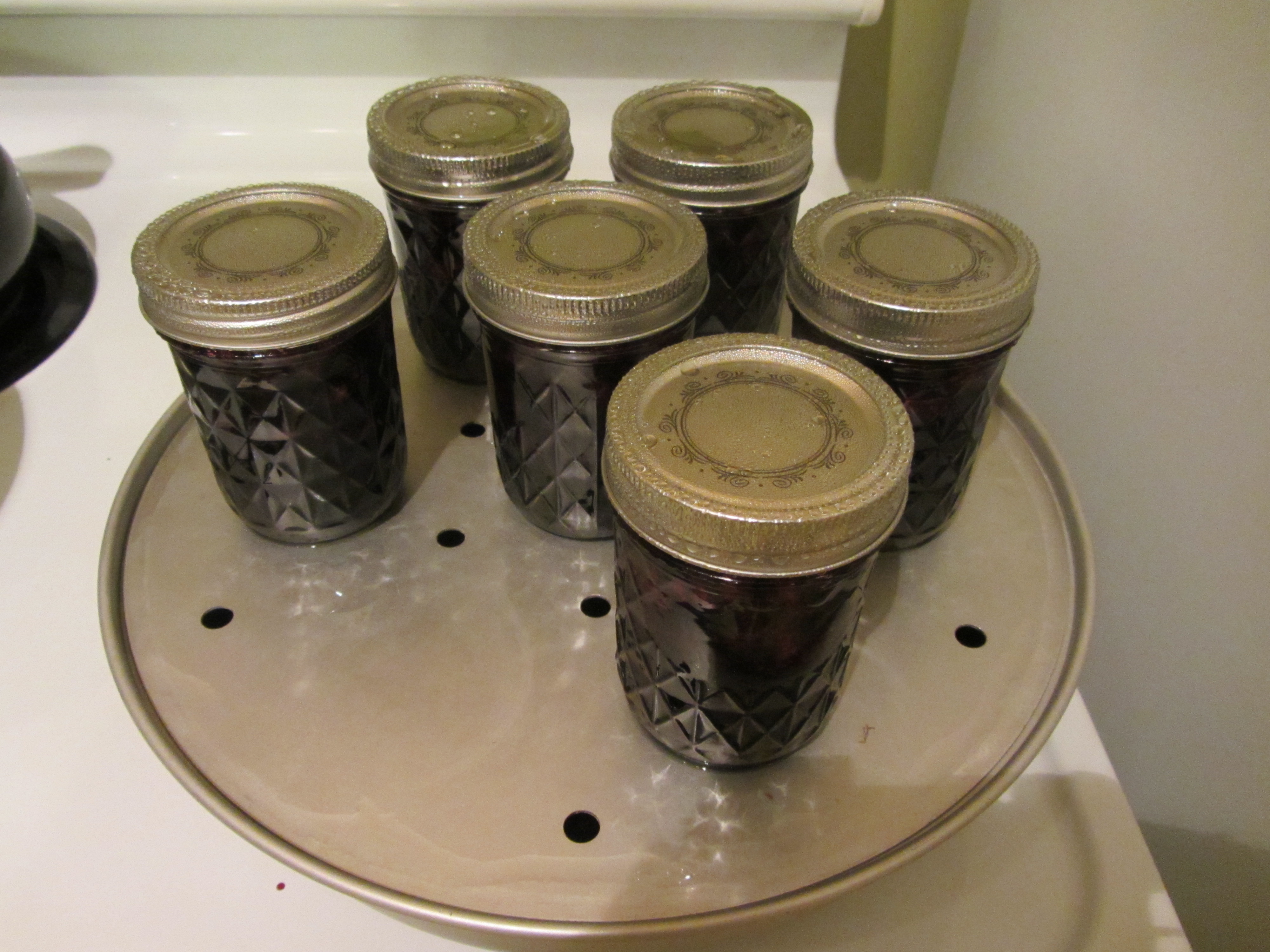
Once filled, wipe the rims of your jars with a damp paper towel and add the lids. Alton used a magnetic wand to put his lids on, but I simply used a fork and my fingers, avoiding touching the bottoms of the lids. Screw the bands on your jars, but only finger-tight. Alton processed his jars by putting them in a water bath. I, on the other hand, borrowed my mom’s steam canner, which is what she and I have always used for our pickles and it has always served us very well. Basically, it is an aluminum dome that sits over a water bath. As the water boils, steam comes up through holes between the bases of the jars.

Steam canner base.

Steam canner base.

Jars in the steam canner.

Jars in the steam canner.

Lid on for processing.

Lid on for processing.

Watching for steam to come from the vents.

Watching for steam to come from the vents.

After 10 minutes of processing (processing times depend on the elevation where you live), I pulled my jars from the canner. While my mom and I have occasionally had a jar that has failed to seal, all of my jam lids made a happy popping sound immediately when removed from the canner.

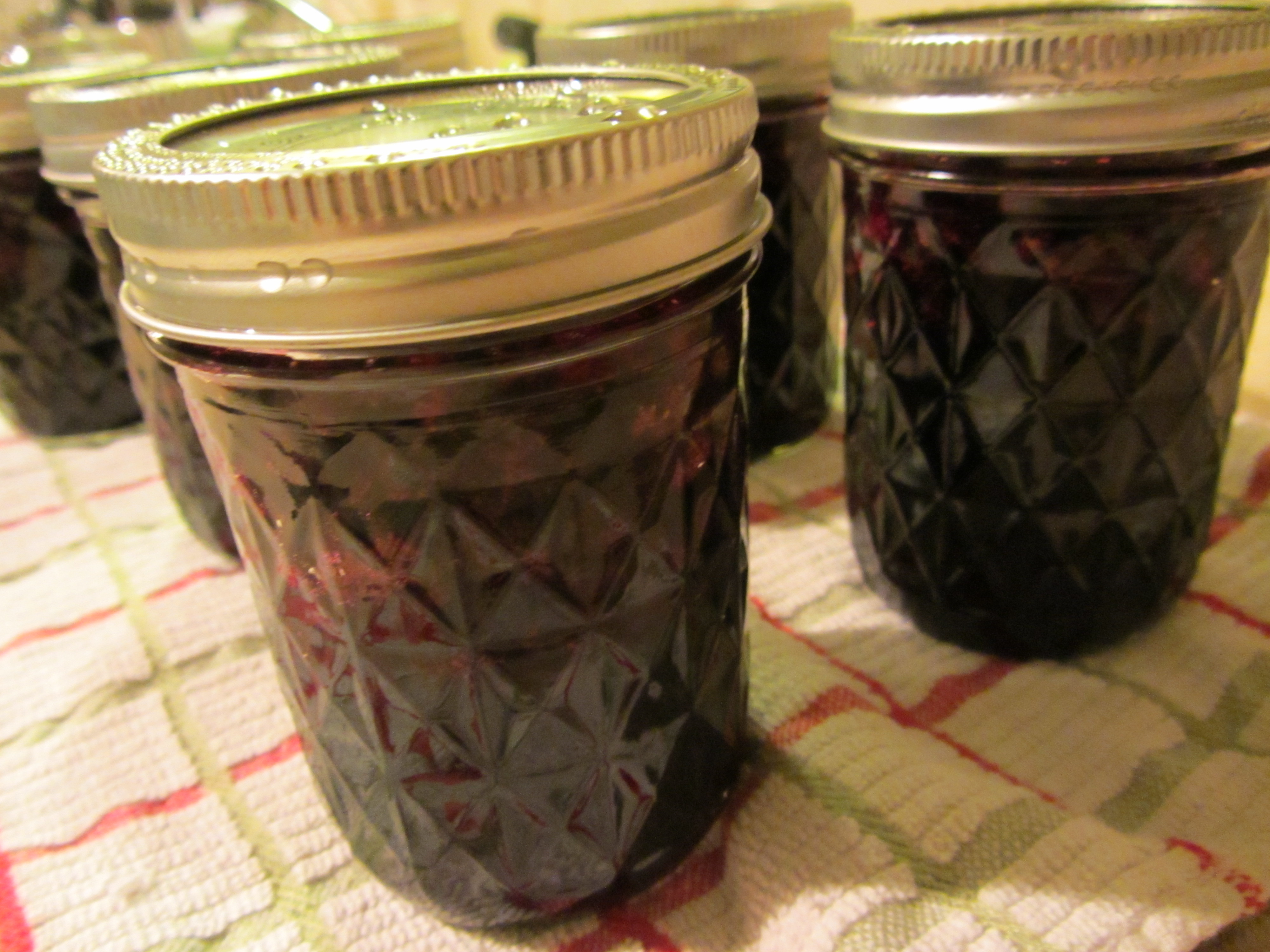
Jars after 10 minutes of processing.

Jars after 10 minutes of processing.

Fresh (and hot!) from the canner.

Fresh (and hot!) from the canner.

You want to let your jars cool completely, and Alton recommends storing them without their bands. Why? The bands tend to rust and it is easier to tell if a jar is spoiled when the lid is not held in place by a band. Ted and I had the jam yesterday morning for breakfast, spreading it on toast.

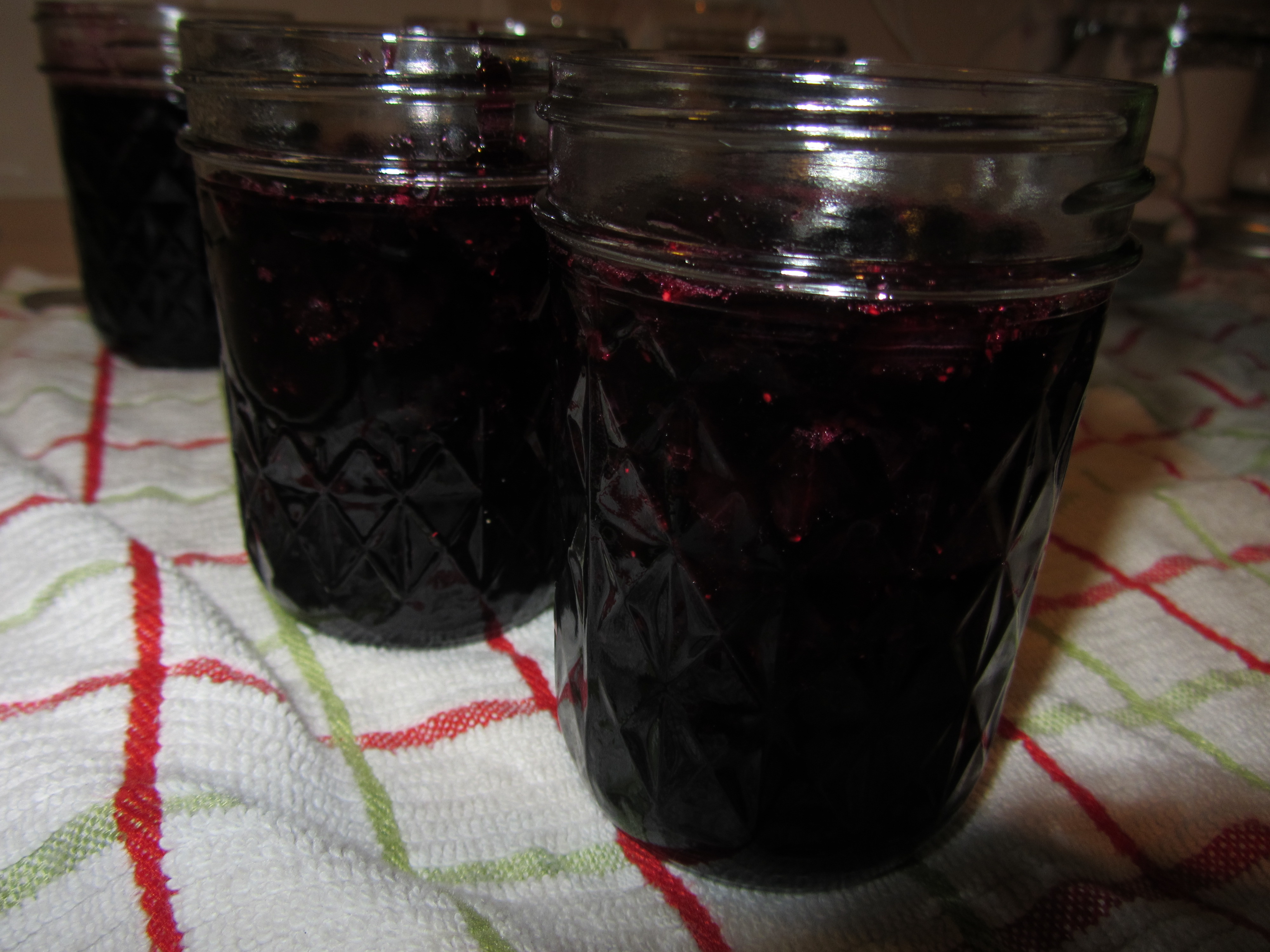
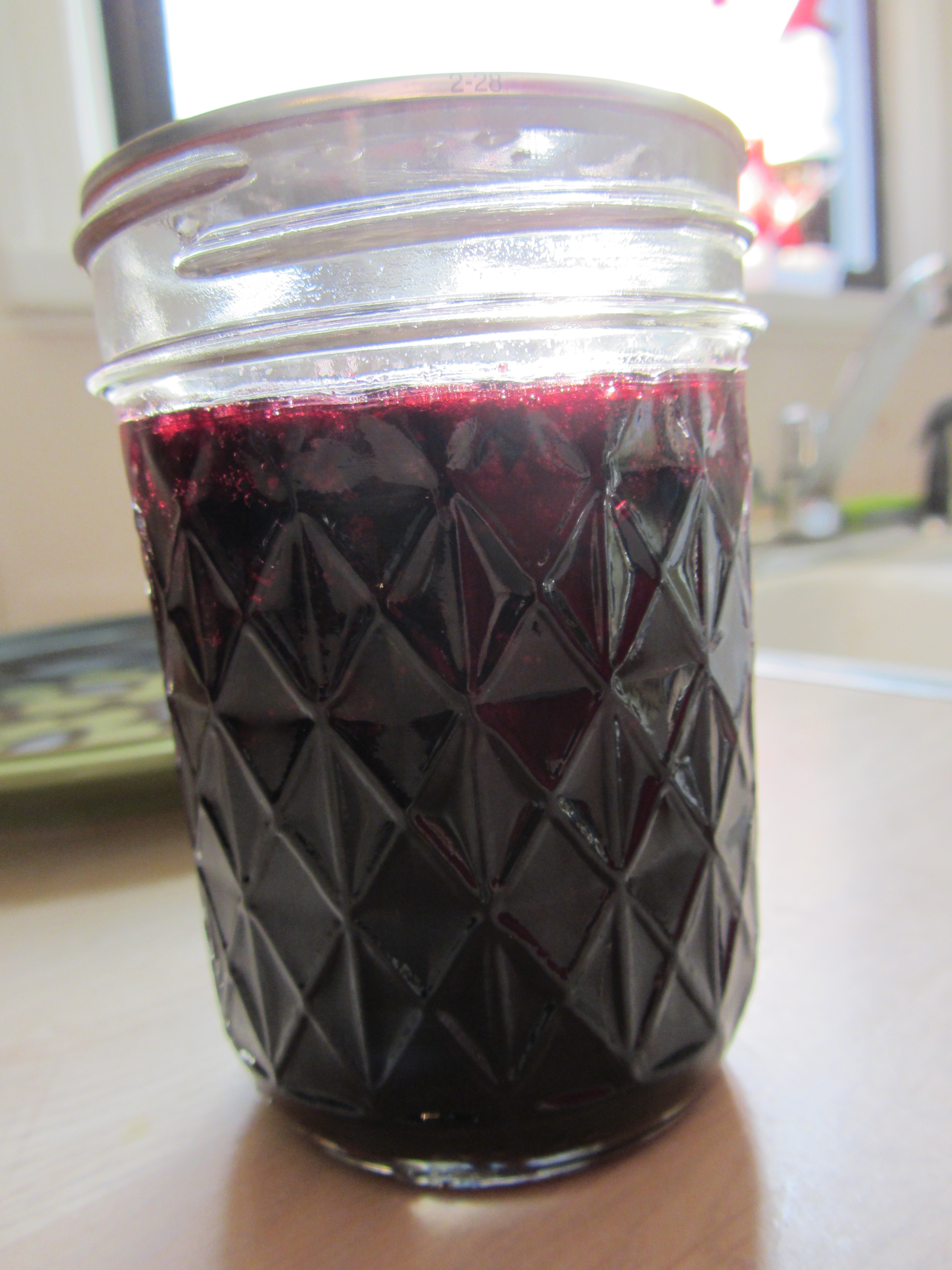
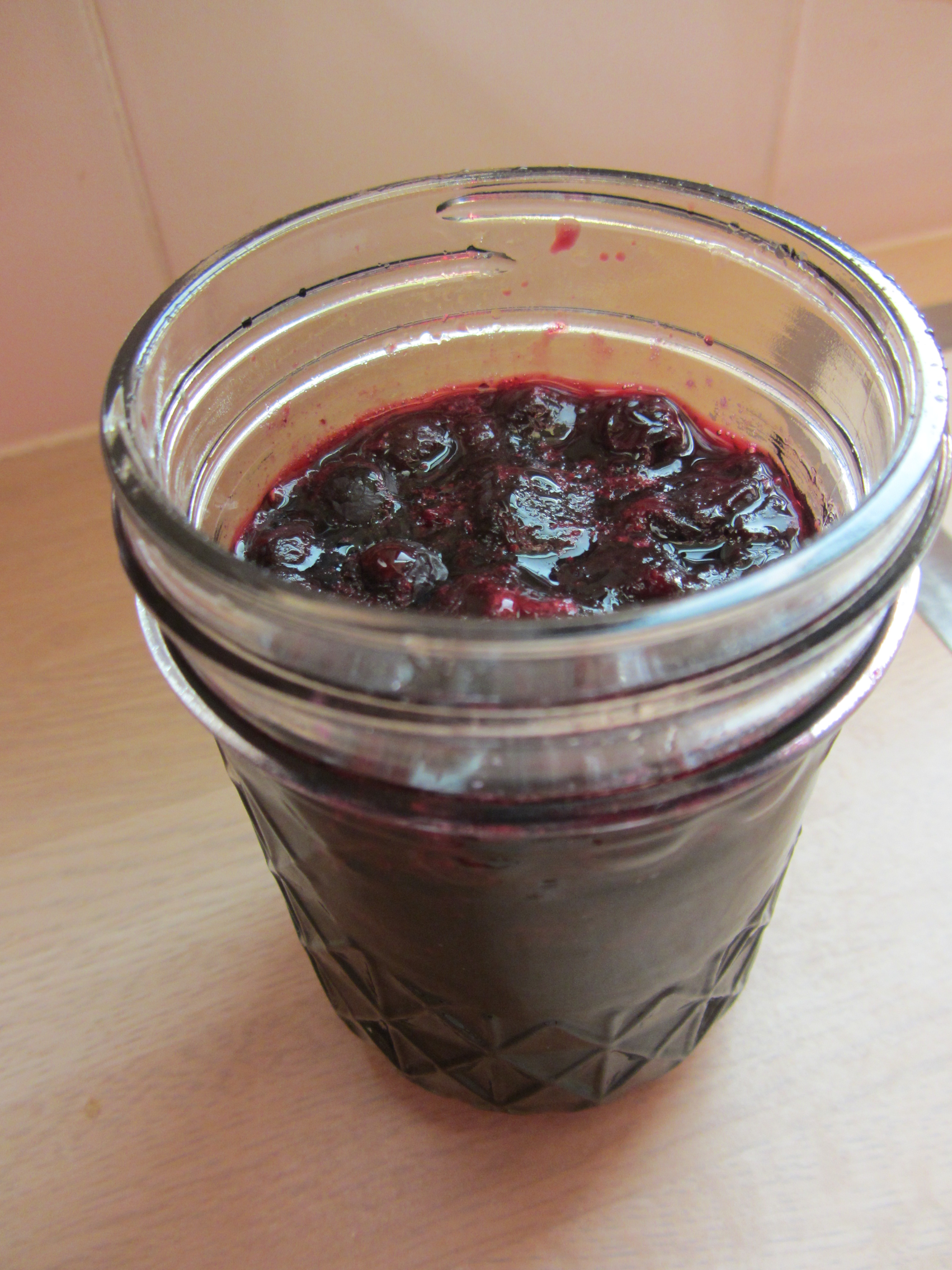
Nice color to the jam.

Nice color to the jam.

Completed jam.

Completed jam.

Jam on toast.

Jam on toast.

The blueberry flavor is super intense and you would not guess that the jam is made of frozen fruit. We both thought the anise flavor paired really well with the blueberries, and Ted described the jam overall as “spicy.” While the nutmeg and cinnamon are fairly subtle, the anise flavor is obvious, though not overpowering. This jam is a little on the looser side, but I would not call it runny or thin, and it does have a beautiful purple color. Overall, I think it is really good jam, and the spice notes are a surprise, as they are more intense than in most jam. Jam is so easy to make, and this one could make a nice holiday gift.

When Alton Brown was filming Good Eats, he and his crew produced eight special episodes, in addition to the regular seasonal episodes. Seeing as Ted and I will be having our Thanksgiving dinner with his parents this year, we decided we would have my parents over to our house for an early Thanksgiving dinner, which we had yesterday. It just so happens that the first of the Good Eats special episodes has a Thanksgiving theme, so, of course, I used the recipes from this special episode to fill our (first – lucky us!) Thanksgiving table this year.

Ted and I have only hosted Thanksgiving once at our house. In 2010, we hosted both sets of our parents, along with Ted’s aunt and uncle. It was particularly cold and snowy that year, and Ted was in charge of cooking the turkey. My dad contributed our family’s favorite stuffing with blue cornbread and chorizo sausage, and everyone else brought a side dish or two to share. Ted chose to follow Alton’s turkey recipe from this episode of Good Eats. He’ll tell you it turned out dry, but the rest of us thought it was very good. The highlight of the day was when Ted and my dad were carving the turkey. As we did not have a carving board, they were carving the bird on a pull-out cutting board under the kitchen counter. The bird was quite hefty, causing the cutting board to slant toward the kitchen floor, and all of the turkey’s juices began running off the edge of the board. We all saw a huge mess about to form, but Hitcher, the hound, stepped in to save the day, positioning himself perfectly so the juices would run straight into his open, waiting mouth. Ellie, my now mother-in-law, was laughing so hard that I thought she was going to fall over.

Good Eats Roast Turkey

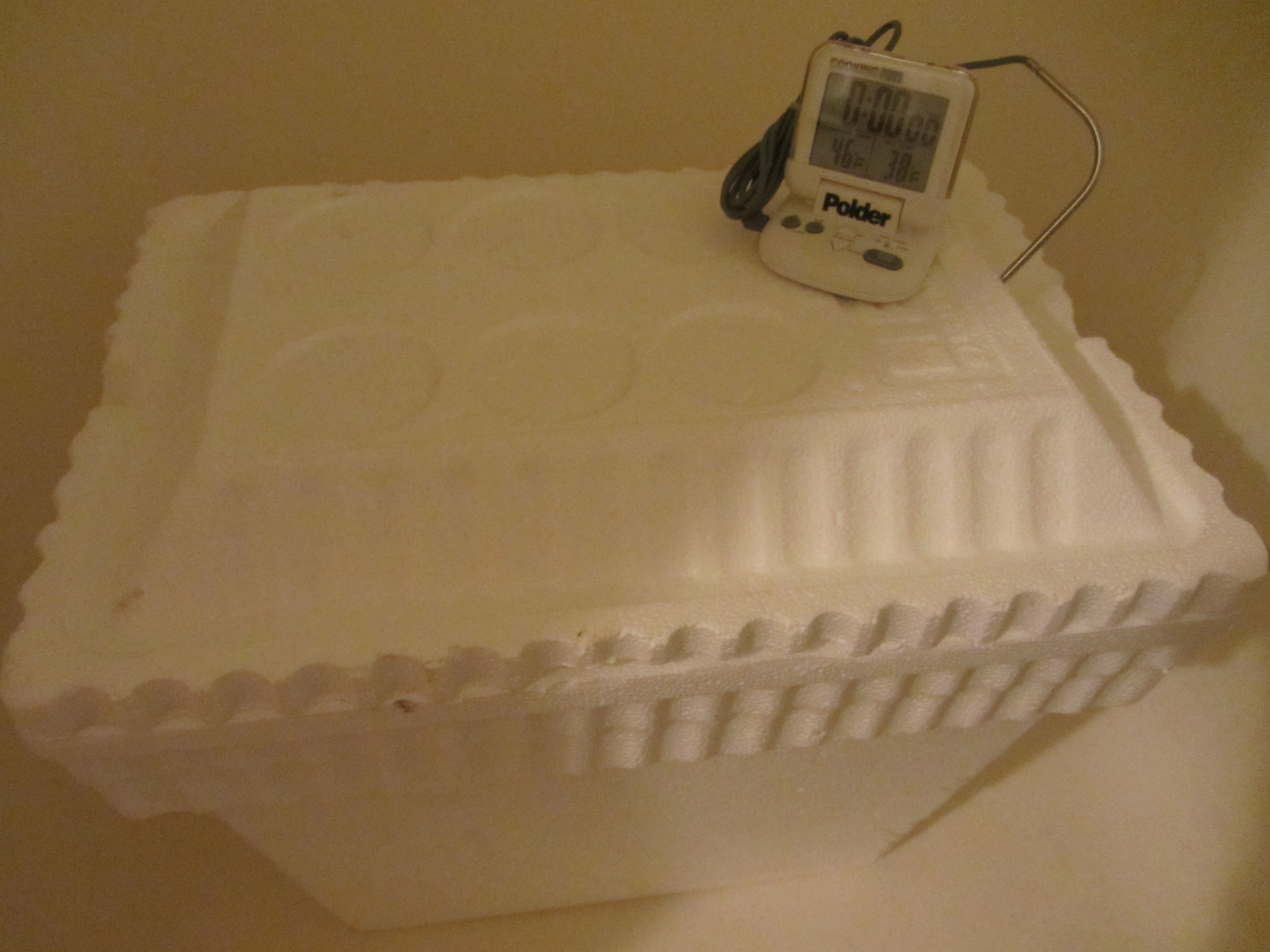
I was nervous yesterday, as I was cooking my first turkey. While I have always contributed something to Thanksgiving dinner, I have never before had the responsibility of cooking the almighty bird. I carefully watched Alton’s preparation of the recipe. For this recipe, he recommends a 14-16 pound turkey, but we purchased a 13 pound turkey since we would only have four people eating. To begin, you want to thaw your turkey for two-three days prior to Thanksgiving. I started thawing my turkey Monday evening. To thaw, Alton recommends putting your turkey (in a pan) inside a Styrofoam cooler with ice packs. Since we have two hounds, my turkey thawed safely in the guest bathroom shower.To monitor the temperature, he suggests sticking a probe thermometer through the top of the cooler, with an alarm set to go off at 38 degrees. We did not have a probe thermometer, but after watching the episode, I realized it would really be a necessity to properly prepare a turkey the Alton way. I purchased this thermometer at Amazon, which happens to be the same one Alton uses in the episode.

Turkey thawing in cooler.

Turkey thawing in cooler.

As an alternative, if you need to thaw your turkey very quickly, you can put your turkey in a five-gallon bucket of cool water, changing the water every three to four hours; it should take ~six to eight hours. Note:  Always thaw your turkey in its original wrapping. Did you know that turkeys are only technically considered frozen if they are below zero degrees? A refrigerated turkey is one between one and 24 degrees, while a fresh turkey is at, or above, 26 degrees. My probe thermometer went above 40 degrees, but the turkey still felt quite frozen, so I left it in the cooler until late Wednesday night. Sometime while your turkey is thawing, you want to make your brine. You can make the brine up to two days ahead, and you will want to make it early since it needs to chill. For the brine, combine vegetable stock, Kosher salt, brown sugar, peppercorns, allspice berries, and candied ginger in a pot. I ended up adding my ginger later, as I did not have any in the house.

Brine ingredients:  vegetable broth, brown sugar, allspice berries, Kosher salt, and peppercorns. Not pictured:  candied ginger.

Brine ingredients: vegetable broth, brown sugar, allspice berries, Kosher salt, and peppercorns. Not pictured: candied ginger.

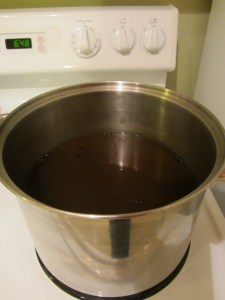
Brine on the stove, minus the candied ginger.

Brine on the stove, minus the candied ginger.

Bring this mixture to a boil, and then allow it to cool to room temperature with a lid on the pot. Once cool, you want to thoroughly chill the brine in the refrigerator.
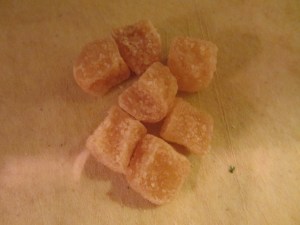
Candied ginger. I added this after my brine had cooled, as I did not have any.
Candied ginger. I added this after my brine had cooled, as I did not have any.

Cooled brine with candied ginger added.

Cooled brine with candied ginger added.

Thanksgiving morning, or late the night before (this is what I did), combine your brine with a gallon of heavily iced water in a five-gallon bucket.

Brine plus ice water in a bucket.

Brine plus ice water in a bucket.

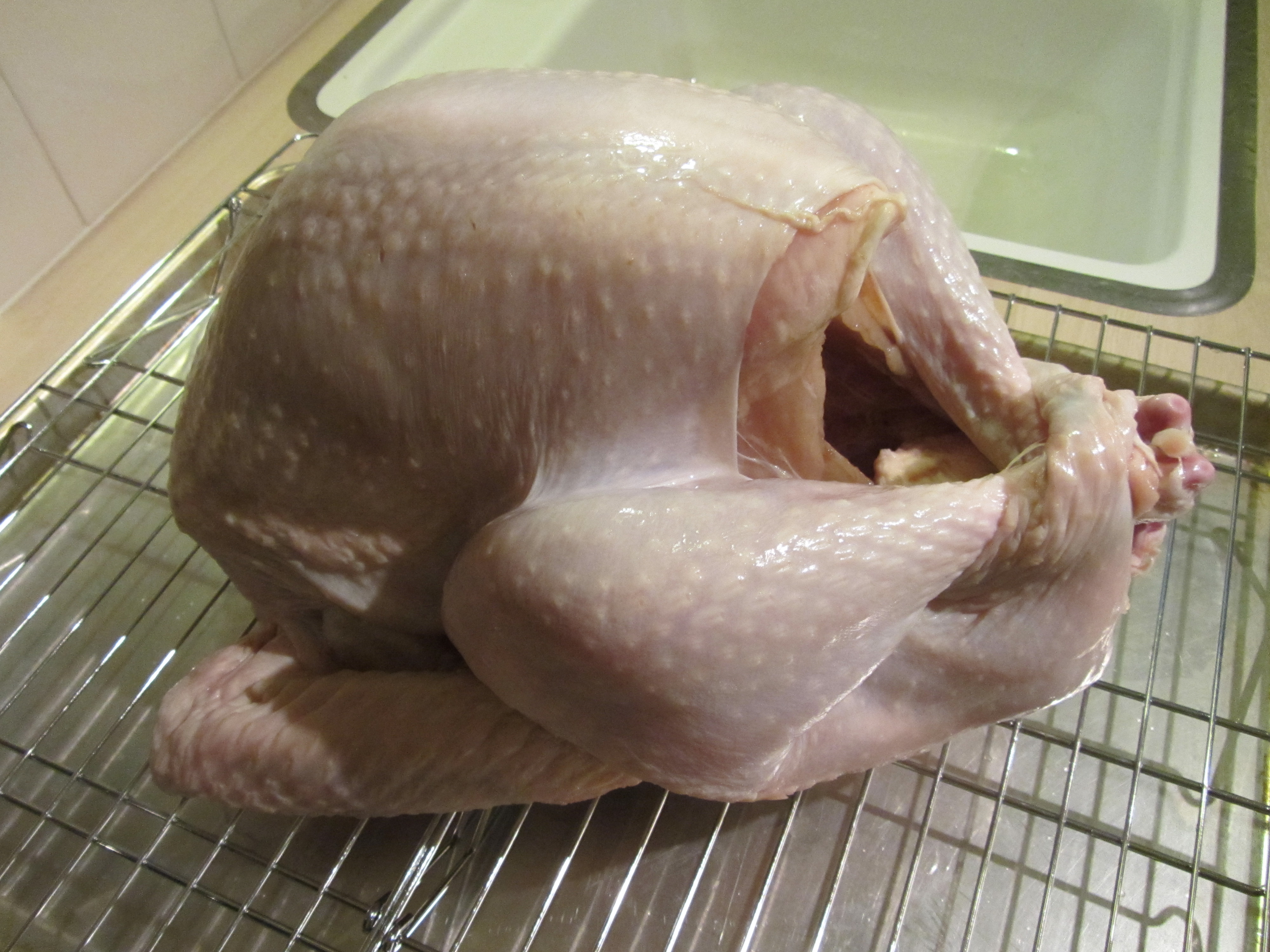
Remove the turkey’s guts, give him a rinse, and place him into the brine, breast down. You want to put the breast down since it tends to dry out the fastest. Alton tells you to leave your turkey in the brine for six to eight hours, though the online recipe says you can leave the bird in the brine for up to 16 hours. Since Alton tells you in the episode that you can begin the brining process late in the evening prior to your cooking day, I went with that. Regardless of how long you choose to brine your turkey, you want to flip it over once in the middle of the brining period. What about stuffing? Alton calls stuffing “evil” in this episode. Why? Not only is it potentially unsafe to cook stuffing in the bird because of possible foodborne illness, but it also causes your turkey to take longer to cook, which can result in a dry bird. Now, I grew up with parents who always stuffed the bird, and none of us have ever gotten sick because of it, so I am not overly frightened of stuffing. But, since the goal of my blog project is to cook all of the Good Eats recipes as closely to how Alton does them on the show, there was no stuffing in my bird yesterday. Instead, once I was ready to cook my turkey, I removed it from the brine, rinsed it off, and patted it dry, placing it on a rack over a sheet pan.
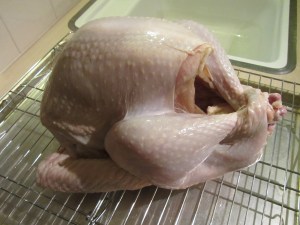
My 13 pounder.

My 13 pounder.

I microwaved a sliced onion and a sliced red apple in some water for a minute on high. When you remove the apple and onion from the microwave, throw a cinnamon stick into the liquid to steep for a couple of minutes also.

Sliced apple and onion, microwaved with some water, and steeped with a cinnamon stick.

Sliced apple and onion, microwaved with some water, and steeped with a cinnamon stick.

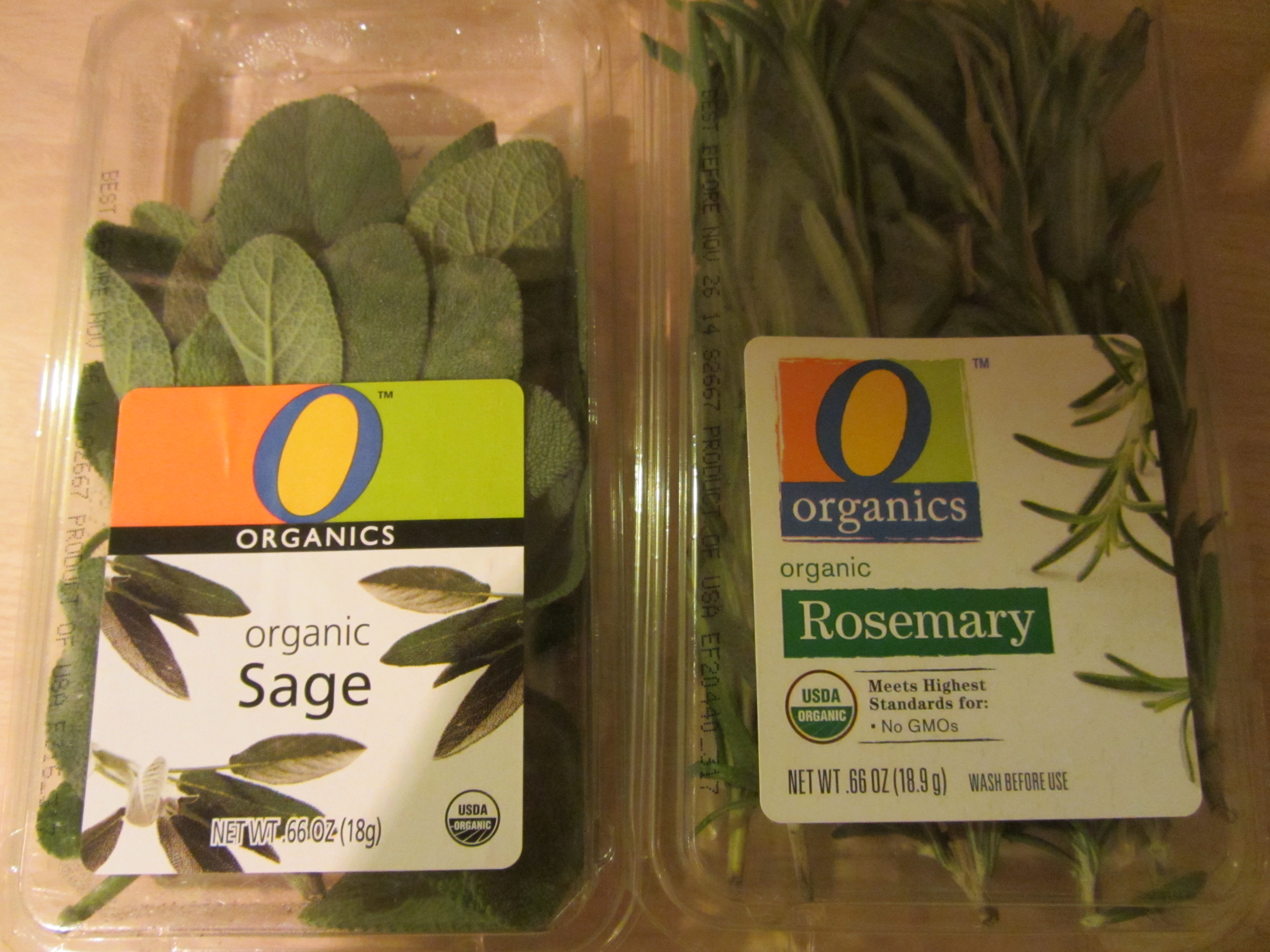
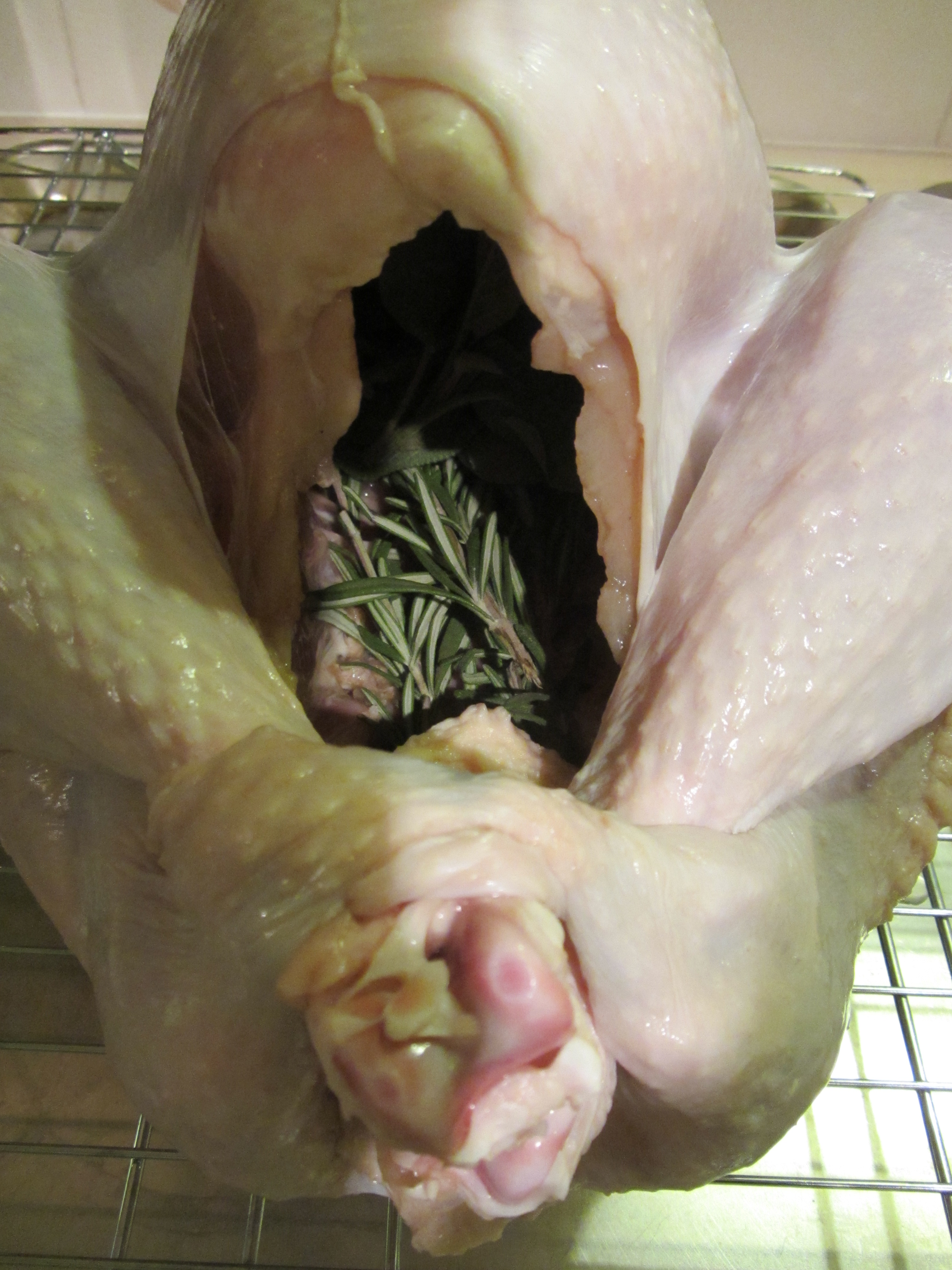
While this is steeping, put some fresh rosemary and sage into the cavity of the bird; I did two big sprigs of rosemary and one bunch of sage.
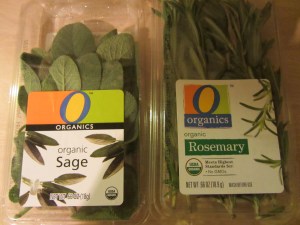
Sage and rosemary to go in turkey's cavity.

Sage and rosemary to go in turkey’s cavity.
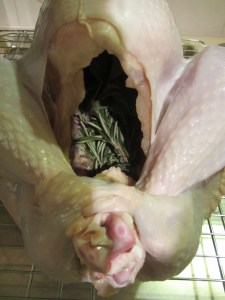
Rosemary and sage in the bird.

Rosemary and sage in the bird.

You want to tuck the turkey’s wings up under its body to prevent them from burning. If your bird has its legs tied, leave this on. My turkey did not have its legs tied, but I tucked them inside its skin, which held them in place nicely. After a few minutes of steeping, add the apple, onion, and cinnamon stick to the cavity of the bird. It is easiest to use tongs to do this. I crammed as much of these aromatics into the bird as I could fit.

Apple, onion, and cinnamon stick placed in the bird.

Apple, onion, and cinnamon stick placed in the bird.

Leave the turkey popper thermometer in the bird, but ignore it. Here is where one of the biggest tricks of Alton’s recipe comes in, and this is not mentioned in the online recipe. You want to take a large piece of foil and fold it into a large triangle.

Turkey triangle.

Turkey triangle.

Oil this “turkey triangle” and mold it so it covers the breast of the bird, and then set it aside for later.
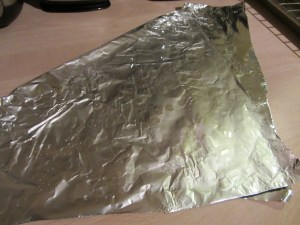
Oiled turkey triangle.
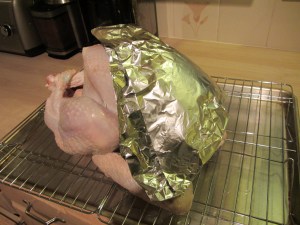
Oiled turkey triangle.

Molding the turkey triangle to the breast.

Molding the turkey triangle to the breast.

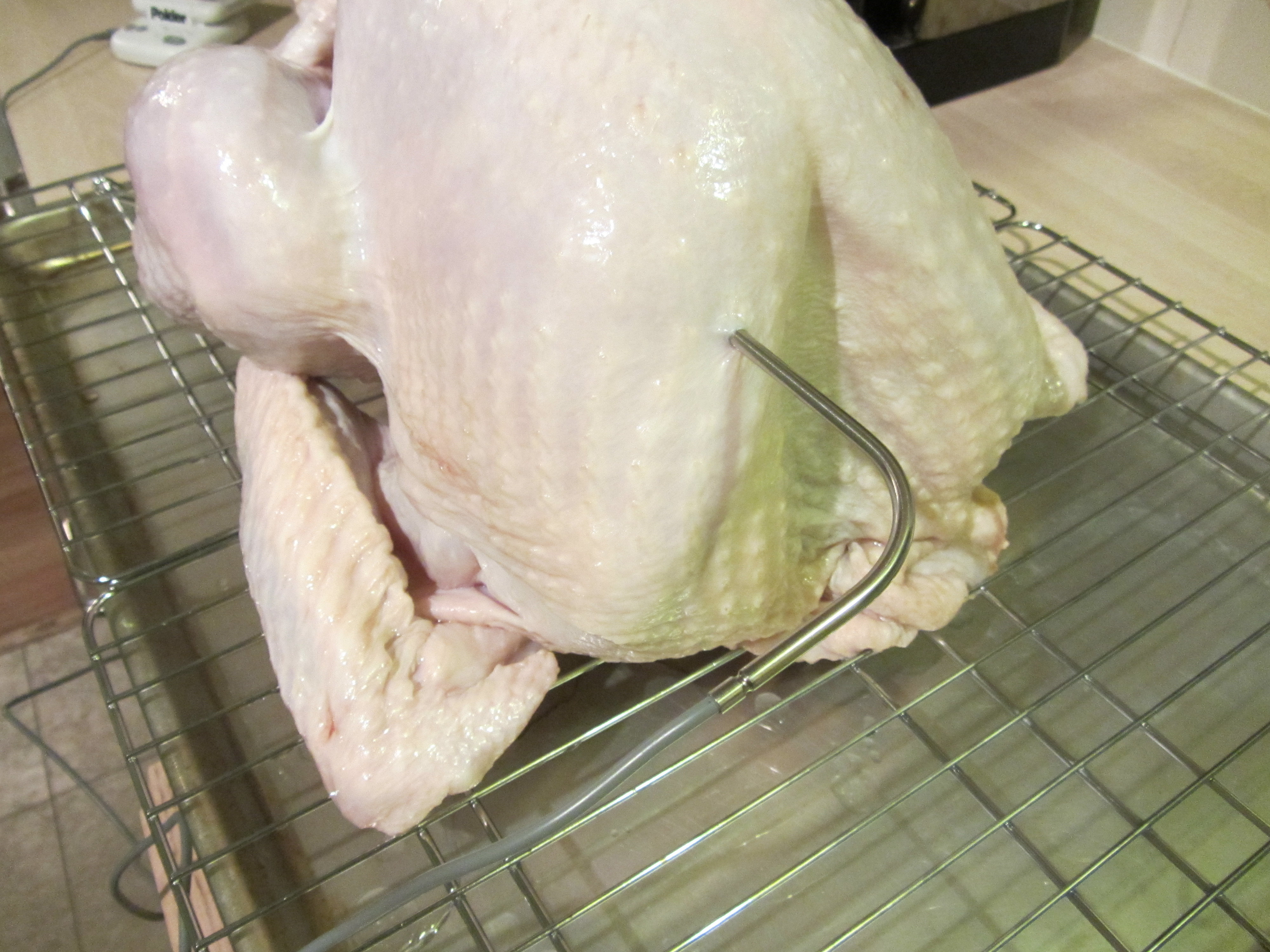
What is the purpose of the turkey triangle? Dark meat is perfectly cooked at 180 degrees, while white meat is ready at 161 degrees. Since there is this discrepancy in temperature, you will use the triangle to protect the breast meat, while allowing the dark meat to cook more quickly. This will result in a bird that has perfectly cooked white AND dark meat. Now, coat the outside of your turkey with oil and insert your probe thermometer into the thickest part of the breast, ensuring that you do not hit any bones, as that can result in a false temperature reading.
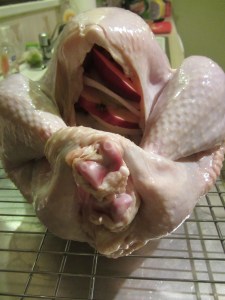
Turkey, filled with aromatics and oiled up.
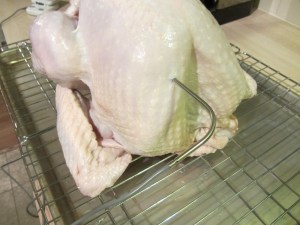
Turkey, filled with aromatics and oiled up.

Probe inserted into deepest part of breast.

Probe inserted into deepest part of breast.

Set your alarm to go off when your turkey’s temperature hits 161 degrees.

Starting temperature of my turkey (42), and end goal temperature (161).

Starting temperature of my turkey (42), and end goal temperature (161).

Now, the turkey is ready for the oven. Place it in a 500 degree oven for 30 minutes. When the 30 minutes are up, place the previously molded turkey triangle onto the bird, protecting the breast. I did not get a picture when I did this. Decrease the oven temperature to 350 degrees and wait for your alarm to sound. How easy is that? Alton recommends that you place the turkey in the oven legs first, but my turkey would only fit sideways. According to Alton, a 14 pound bird will take about two hours to cook, but my 13 pound bird took two hours and 45 minutes. Cooking time will depend on the starting temperature of your bird (mine was at 42 degrees), the size of your turkey, and your oven. When your bird is done cooking, remove it from the oven and let it rest for 15 minutes.

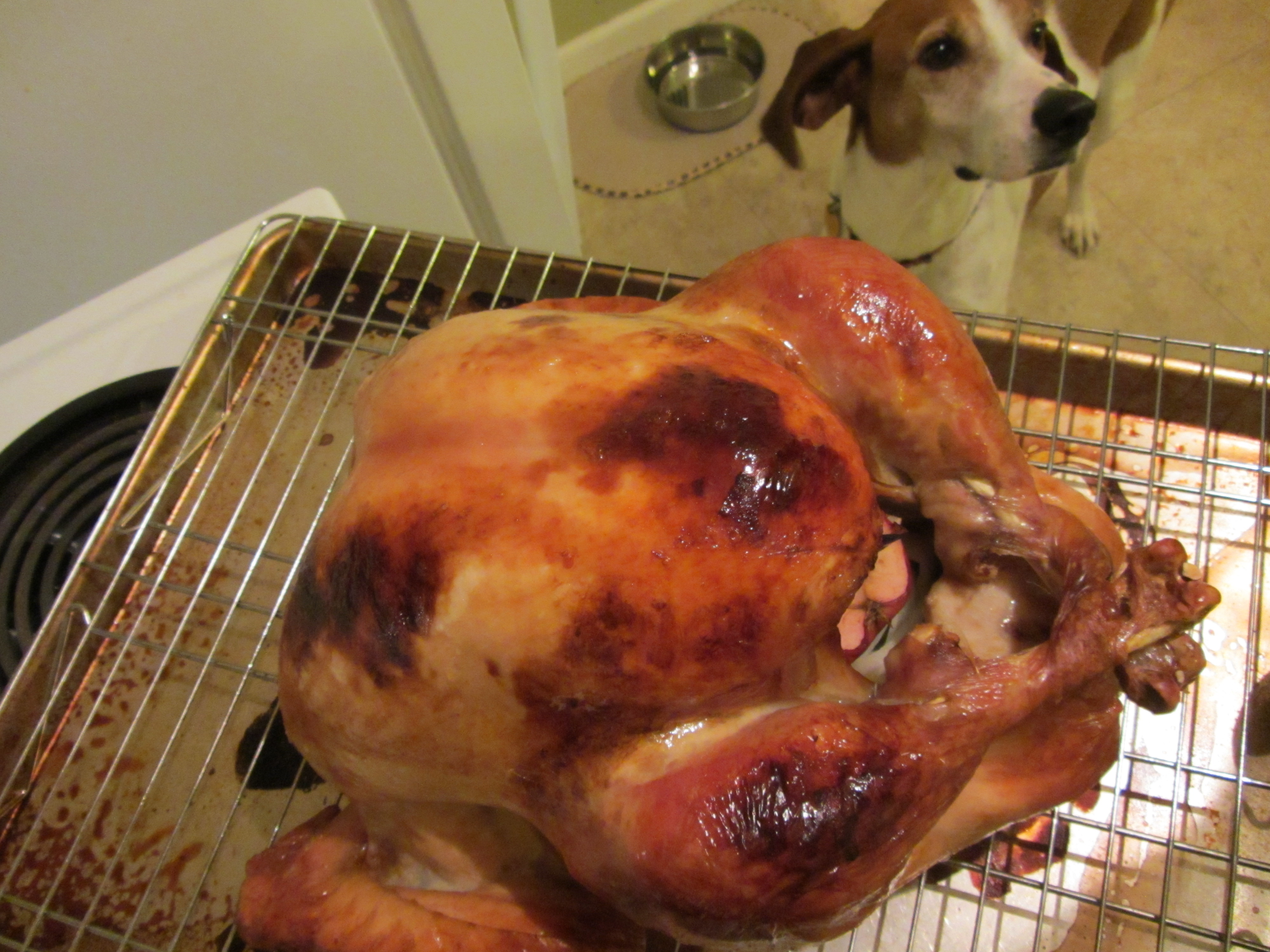
Turkey, photo bombed by the hound.

Turkey, photo bombed by the hound.

Turkey, fresh from the oven.

Turkey, fresh from the oven.

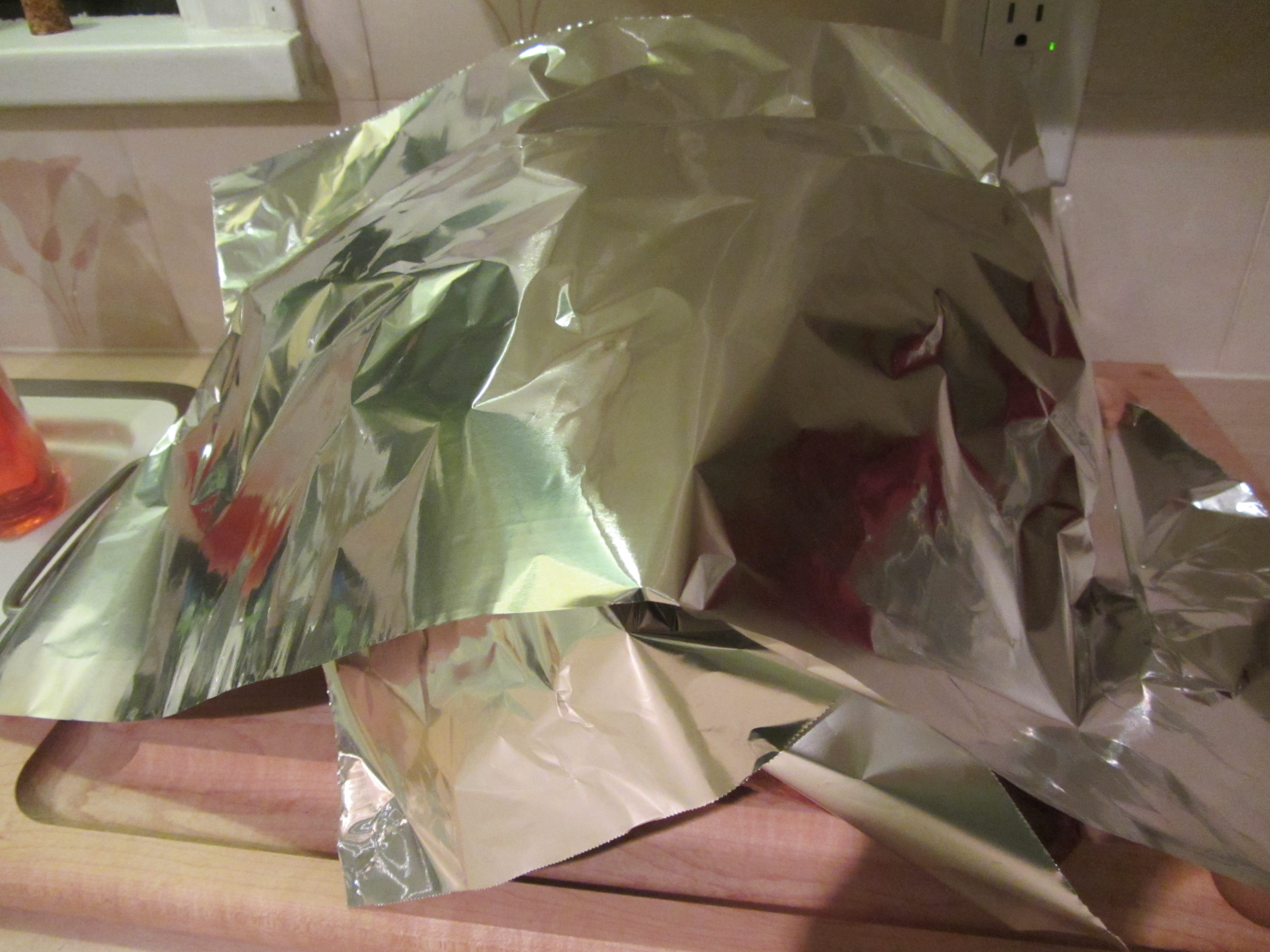
If you have a classic round charcoal grill, you can use the lid of your grill to cover your turkey while it rests. If not, foil will suffice.
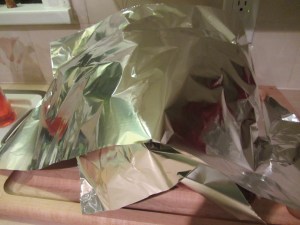
Turkey resting under foil.

Turkey resting under foil.

When ready to carve, use an electric knife. To best carve your turkey, carve between the legs and the body first, going down until you hit the joint. Press on the leg with your hand until it pops, and then use the knife to cut the rest of the way through. Next, to carve the breast, cut horizontally toward the center of the bird at the wing line, and then make slices perpendicularly down to the initial cut. This will result in perfect slices of white meat. My turkey could not have turned out any better. It was golden brown on the outside, while incredibly juicy and moist on the inside. The white meat, in particular, shocked everyone with how moist it was.

Moist, flavorful, perfectly cooked white AND dark meat.

Moist, flavorful, perfectly cooked white AND dark meat.

The turkey was loaded with flavor, without being salty. We all agreed that it was great, including the Coonhounds, who howled while the turkey was carved and were all too willing to clean up the turkey juice trail that led from the kitchen to the garage; when you live with hounds, and an always-hungry cat, you must hide your Turkey in the garage while you eat your Thanksgiving dinner. Though this was my first turkey, I cannot imagine that I will ever prepare a turkey another way, but I do have to say that my dad has cooked some amazing turkeys with his basted, grilled method too. Oh, and if you have leftover turkey, Alton says it freezes very well – just be sure to wrap it in both foil and plastic before freezing. Seeing as Ted and I both just finished delectable leftover turkey sandwiches, I do not think our leftovers will need to be frozen! Long story short, if you do not yet have a turkey plan for Thanksgiving, try Alton’s turkey. It is wonderful.

Here is a synopsis of my turkey timeline to give you an idea of how this recipe plays out:

  • Sunday afternoon – purchased turkey.
  • Monday, 5:30 pm – began thawing turkey in cooler.
  • Wednesday morning – made and chilled brine.
  • Wednesday, 11:45 pm – put bird in brine.
  • Thursday, 4:00 pm – took bird out of brine.
  • Thursday, 4:30 pm – put bird in oven.
  • Thursday, 7:15 pm – bird done when temperature reached 161 degrees.
  • Thursday, 7:30 pm – carved bird.


Tart Cranberry Dipping Sauce

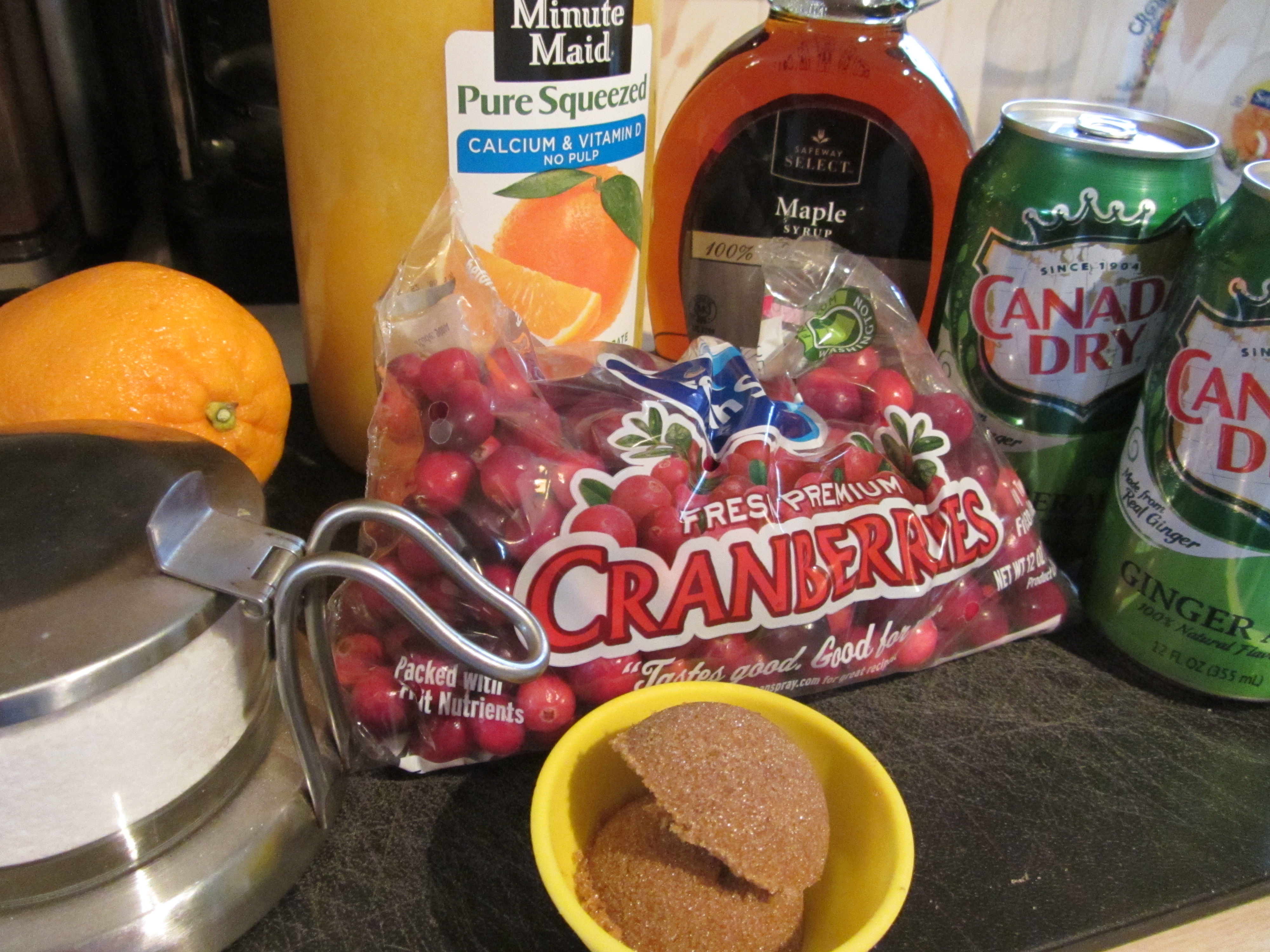
To go along with your perfect turkey, in the Thanksgiving special, Alton shows you how to make a cranberry dipping sauce. The recipe for this sauce can be found here, which for some reason shows up as under a different Good Eats episode. I happen to like the gelatinous cranberry sauce you can buy in a can, but it truly does not compare to a dish made with fresh cranberries. For Alton’s cranberry concoction, combine 12 ounces of frozen cranberries (the online recipe calls for a pound), orange juice, ginger ale, maple syrup, light brown sugar, the zest of an orange, and a pinch of Kosher salt in a saucepan. I could not find frozen cranberries, so I used fresh cranberries.
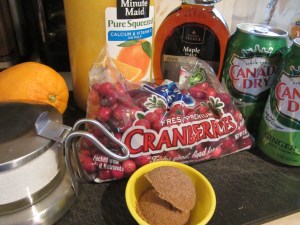
Sauce ingredients: cranberries, OJ, ginger ale, maple syrup, brown sugar, Kosher salt, and the zest of an orange.

Sauce ingredients: cranberries, OJ, ginger ale, maple syrup, brown sugar, Kosher salt, and the zest of an orange.

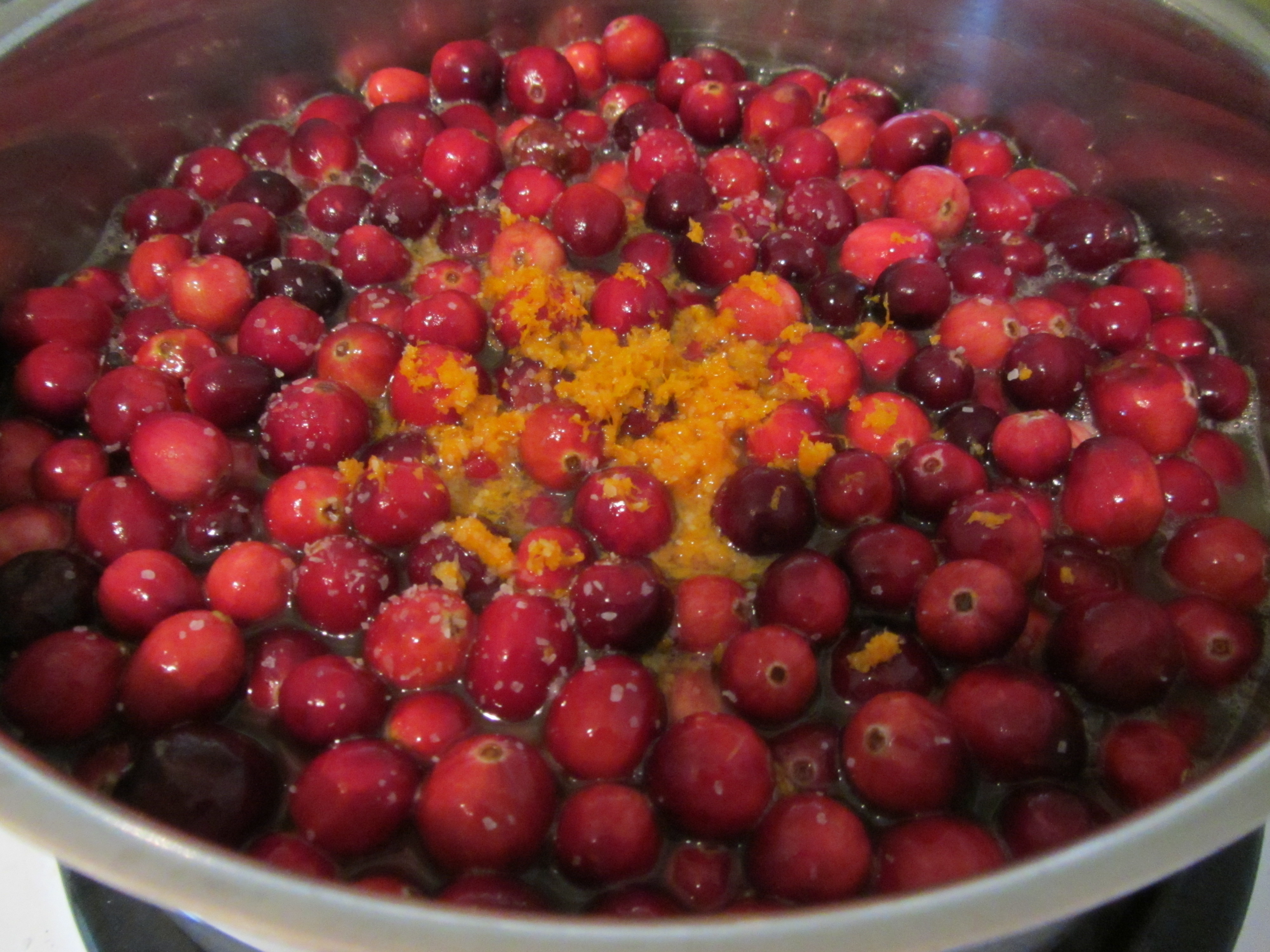
All of the ingredients in a saucepan.

All of the ingredients in a saucepan.

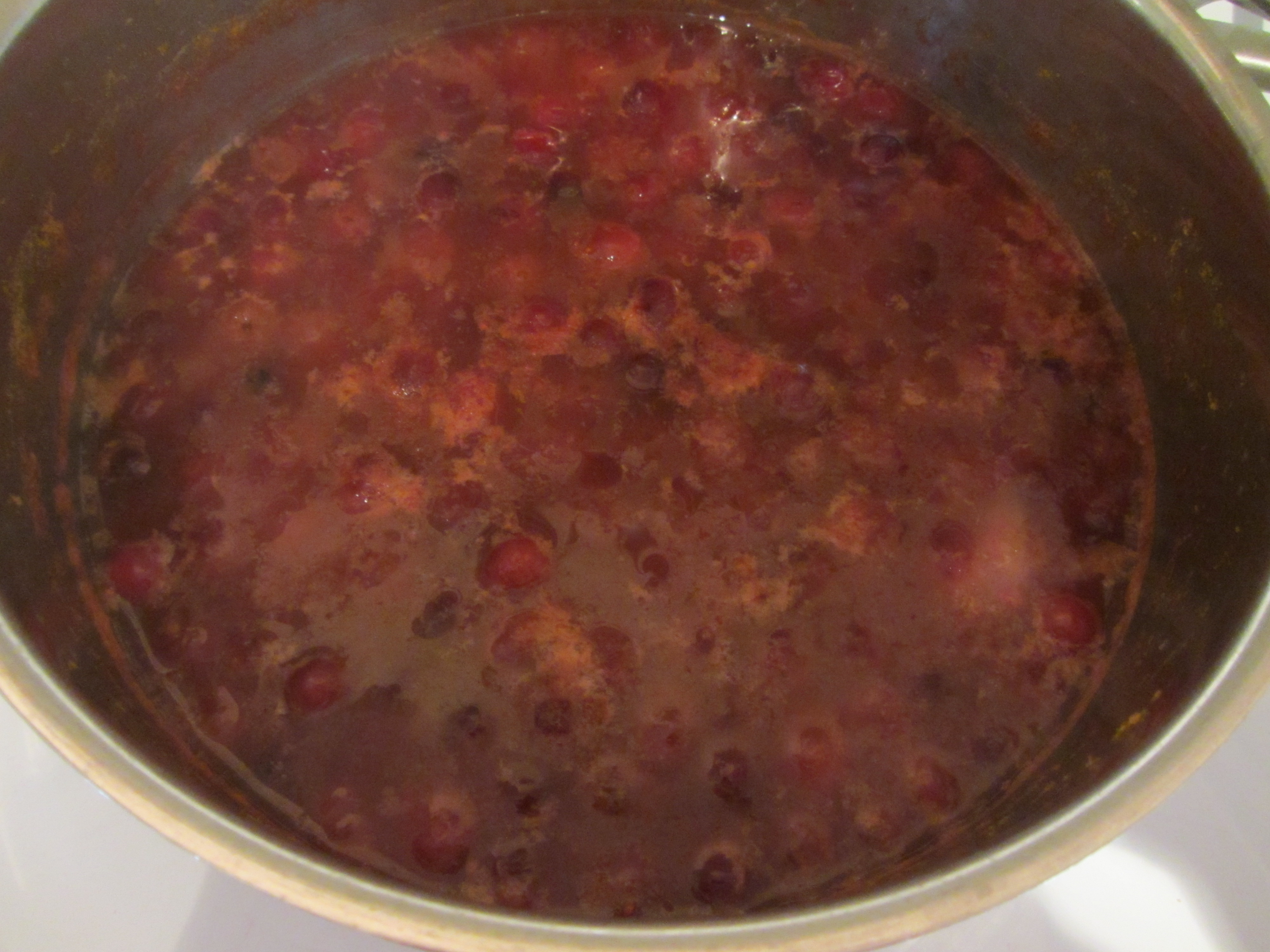
Bring this mixture to a boil, decrease the heat to medium, and cook it for 30 minutes. A skin will form on the surface of the sauce, so skim that off.
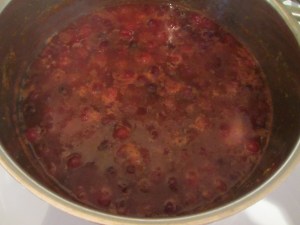
A skin formed after 30 minutes on the stove.
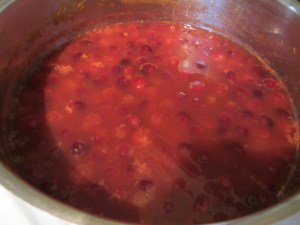
A skin formed after 30 minutes on the stove.

After skimming off the skin.

After skimming off the skin.

If you have an immersion blender, you can use that to blend the sauce. Our immersion blender is incapacitated, so I used a traditional blender to blend my sauce.

Into the blender.

Into the blender.

Completed cranberry sauce.

Completed cranberry sauce.

Tart cranberry dipping sauce.

Tart cranberry dipping sauce.

Serve this sauce in individual ramekins for each diner to dip their turkey in. This sauce really does pair nicely with turkey, as it is quite tart and contrasts nicely with the meat. It is loaded with cranberry and orange flavor, and is a brilliant cranberry red, which also adds a lot of color to the Thanksgiving table. Also, you can make this sauce ahead of time and reheat it while your turkey is resting. I would definitely make this again to pair with turkey. It does make quite a large volume of sauce, so I am already thinking of other ways to use it. Perhaps we will have to have this with some homemade pound cake and vanilla ice cream for dessert one night! If you are looking for a new way to incorporate cranberries into your Thanksgiving dinner, or an alternative to gravy, this is a fun (and easy!) one to try.

Sweet Corn Bread Pudding

The final recipe Alton prepares in “Romancing the Bird” is for his Sweet Corn Bread Pudding. I happen to love stuffing, especially my dad’s, at Thanksgiving, so I was happy to see that Alton made this bread pudding, as it is along the lines of stuffing. Again, this is a nice recipe for Thanksgiving, as you can make it early in the day and reheat it in the oven while your turkey is resting, which means you are not scrambling to make a bunch of things at the last second.
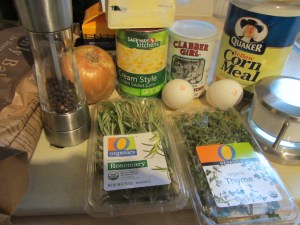
Ingredients for bread pudding:  pepper, Kosher salt, onion, creamed corn, butter, cream, eggs, baking powder, cornmeal, rosemary, thyme, and Parmesan.

Ingredients for bread pudding: pepper, Kosher salt, onion, creamed corn, butter, cream, eggs, baking powder, cornmeal, rosemary, thyme, and Parmesan.

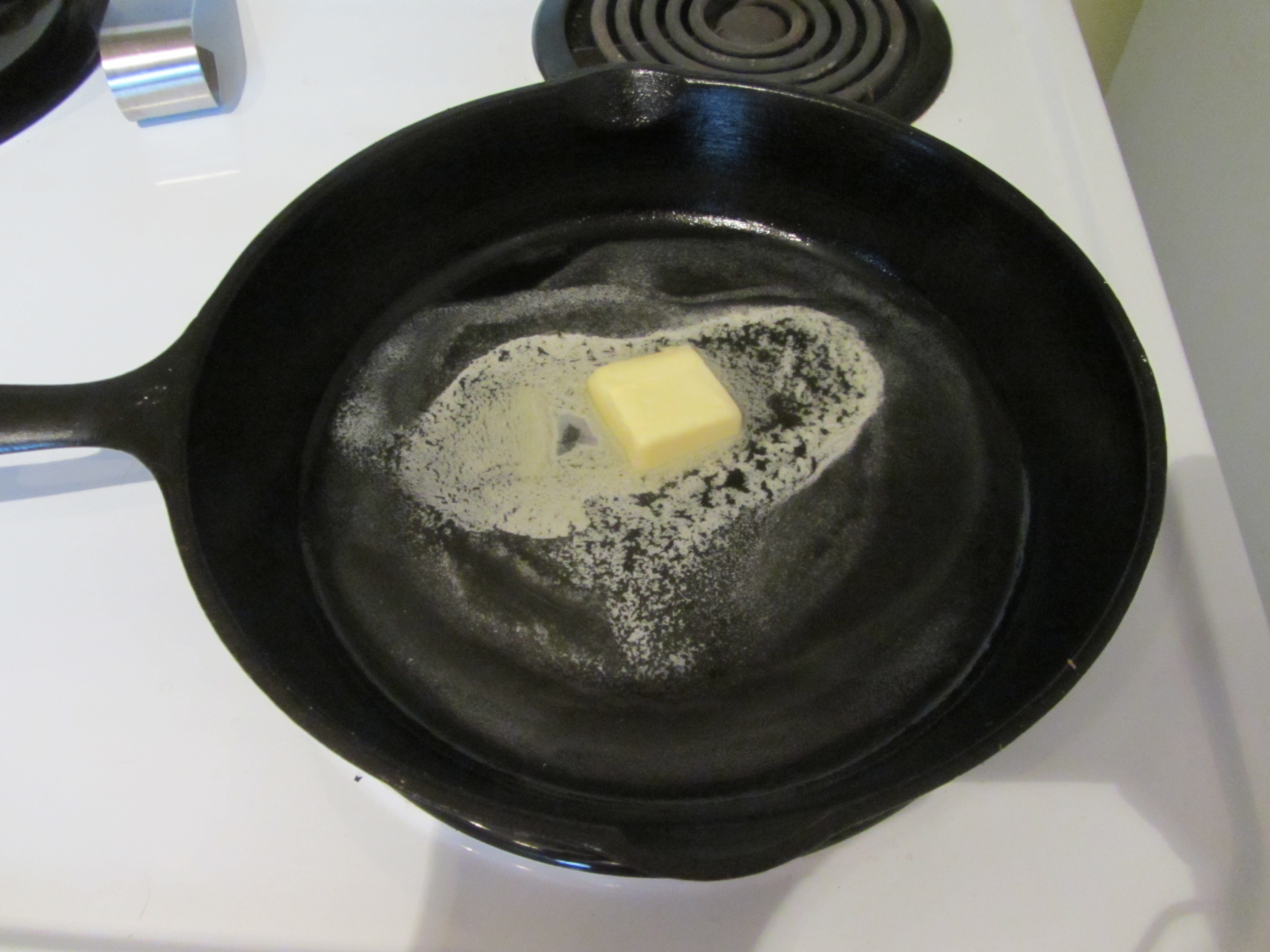
To begin, heat an iron skillet and melt some butter.

Preheating iron skillet.

Preheating iron skillet.

Melting butter.

Melting butter.

Add a diced onion (the online recipe calls for half an onion, but Alton uses a whole onion in the show) and some chopped, fresh rosemary and thyme.

Onion sweating in butter.

Onion sweating in butter.

Onion, butter, rosemary, and thyme.

Onion, butter, rosemary, and thyme.

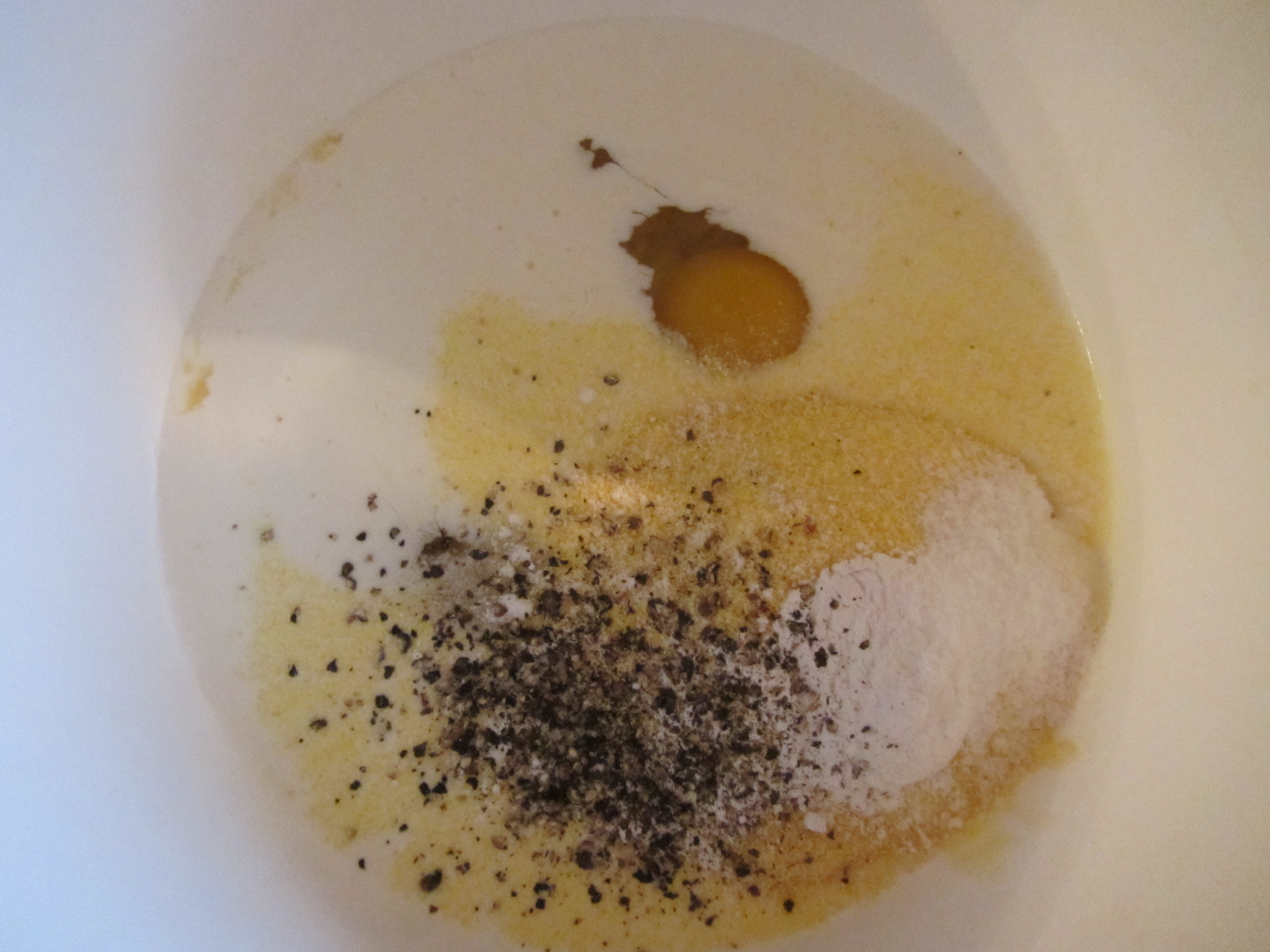
In the meantime, mix together, in a bowl, a can of creamed corn, heavy cream, two eggs, cornmeal, baking powder, Kosher salt, and some pepper.
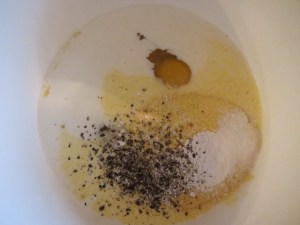
Creamed corn, cream, eggs, cornmeal, baking powder,  Kosher salt, and pepper.

Creamed corn, cream, eggs, cornmeal, baking powder, Kosher salt, and pepper.

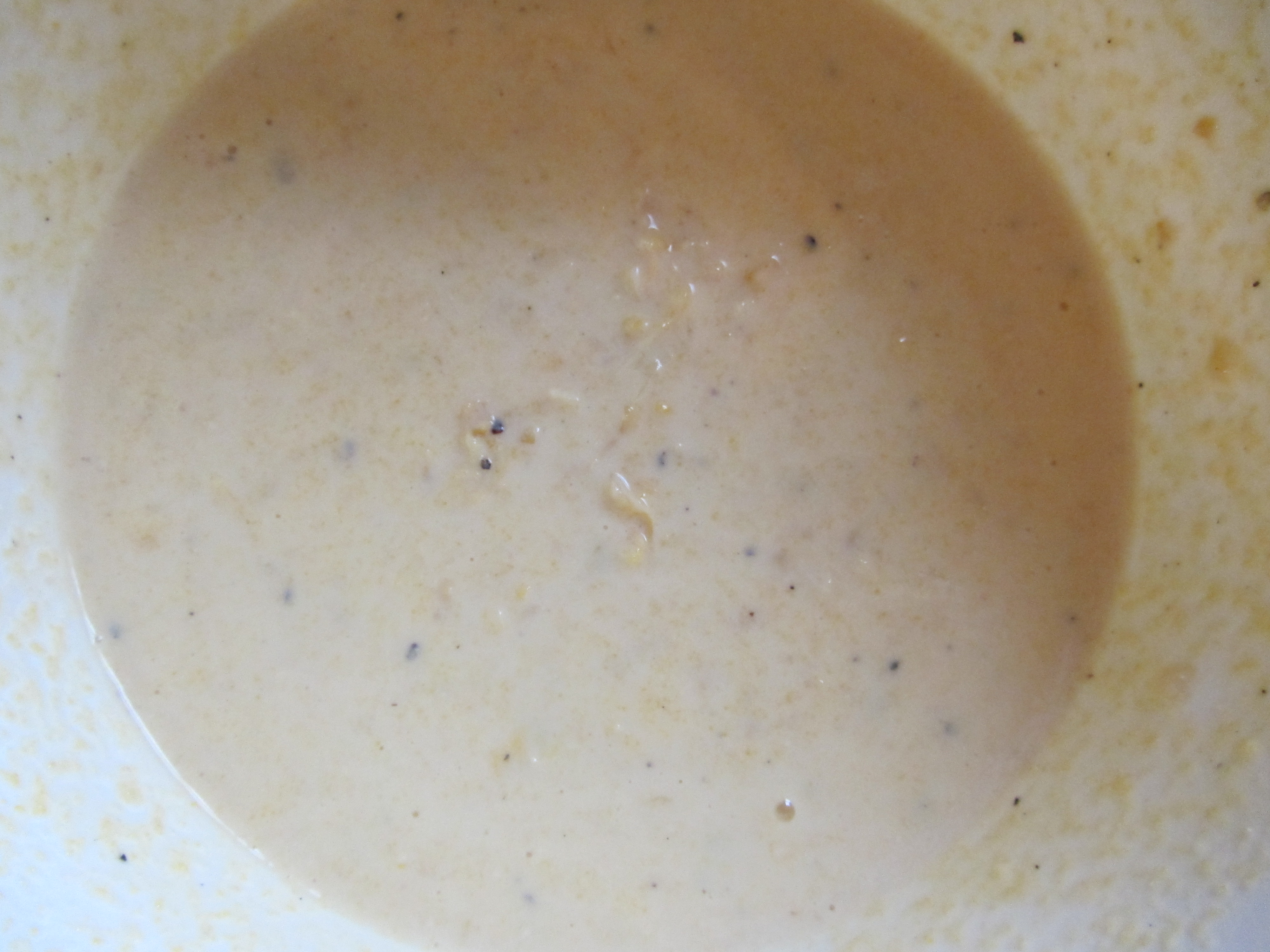
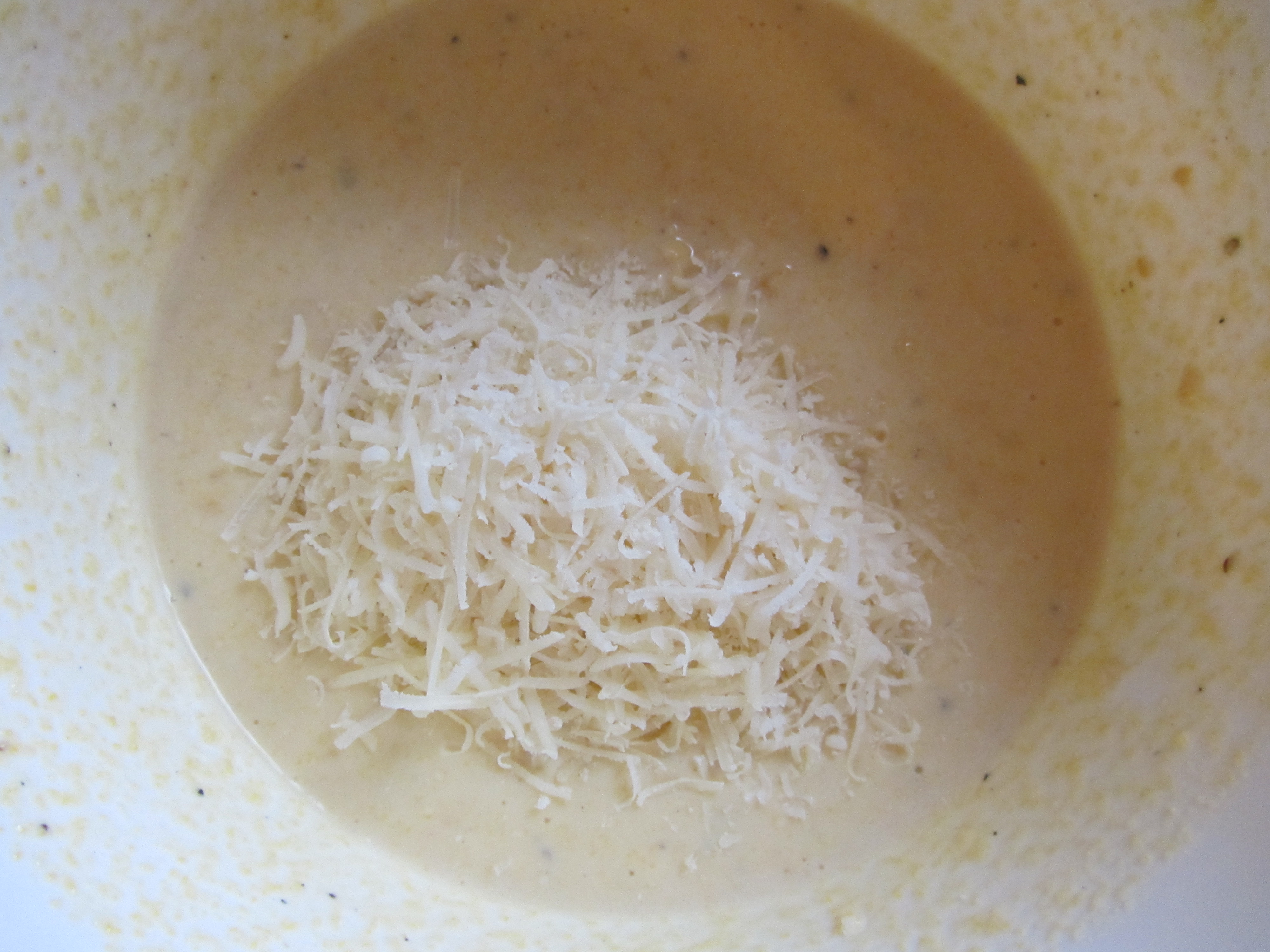
Once this is combined, fold in some shredded Parmesan cheese and cubed bread; the recipe calls for French bread and Alton uses Italian bread in the show.
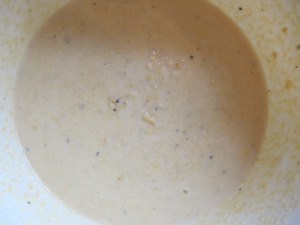
Whisked mixture.
Whisked mixture.

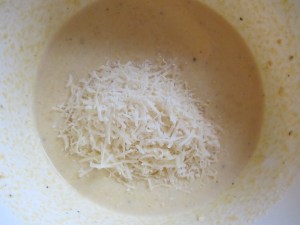
Folding in Parmesan.

Folding in Parmesan.

Folding in bread cubes.

Folding in bread cubes.

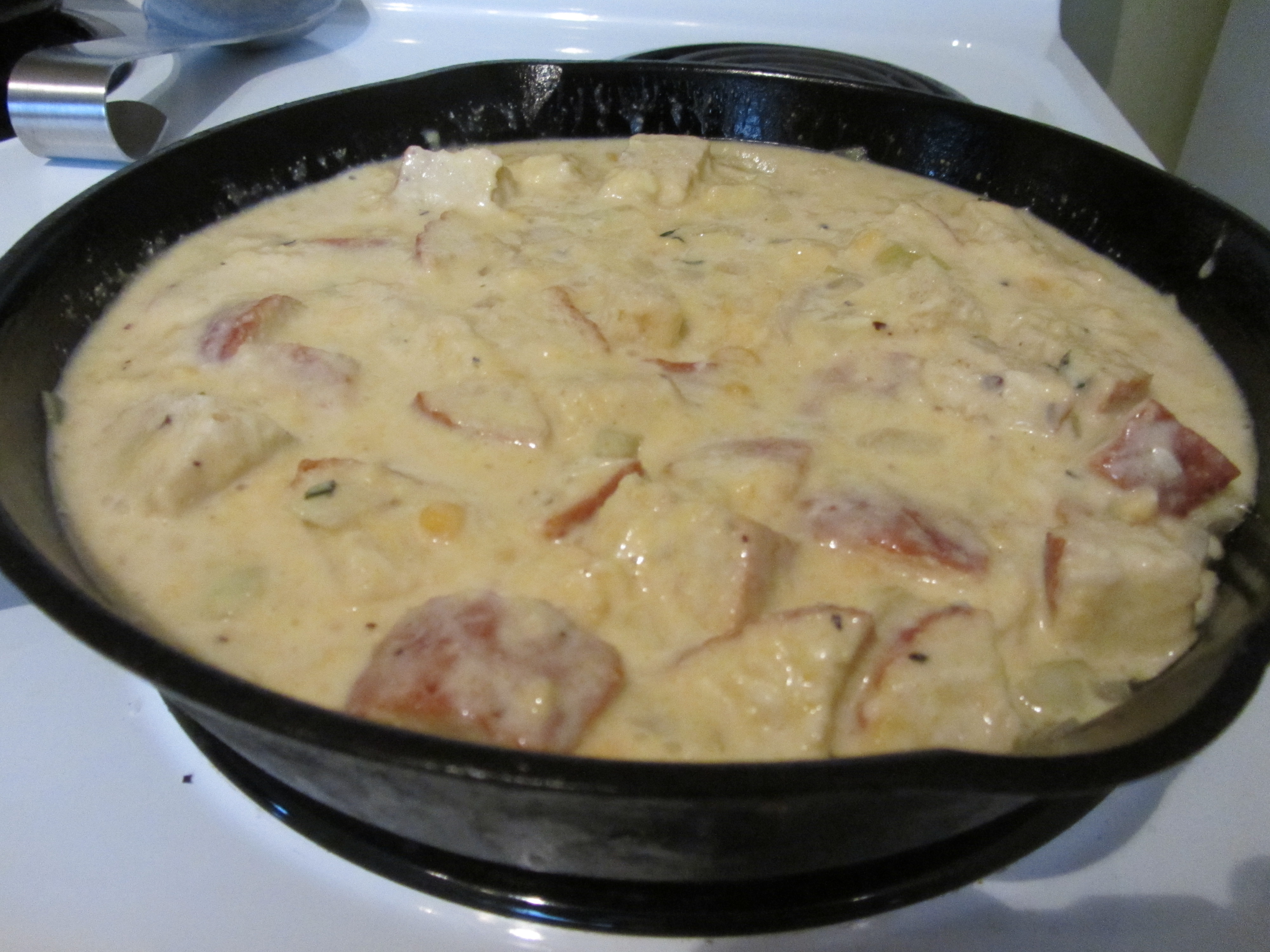
11-21-14 023 Pour this over the onion, butter, and herbs in the iron skillet and put it in a 350 degree oven for 50 minutes.

Bread mixture added to skillet.

Bread mixture added to skillet.

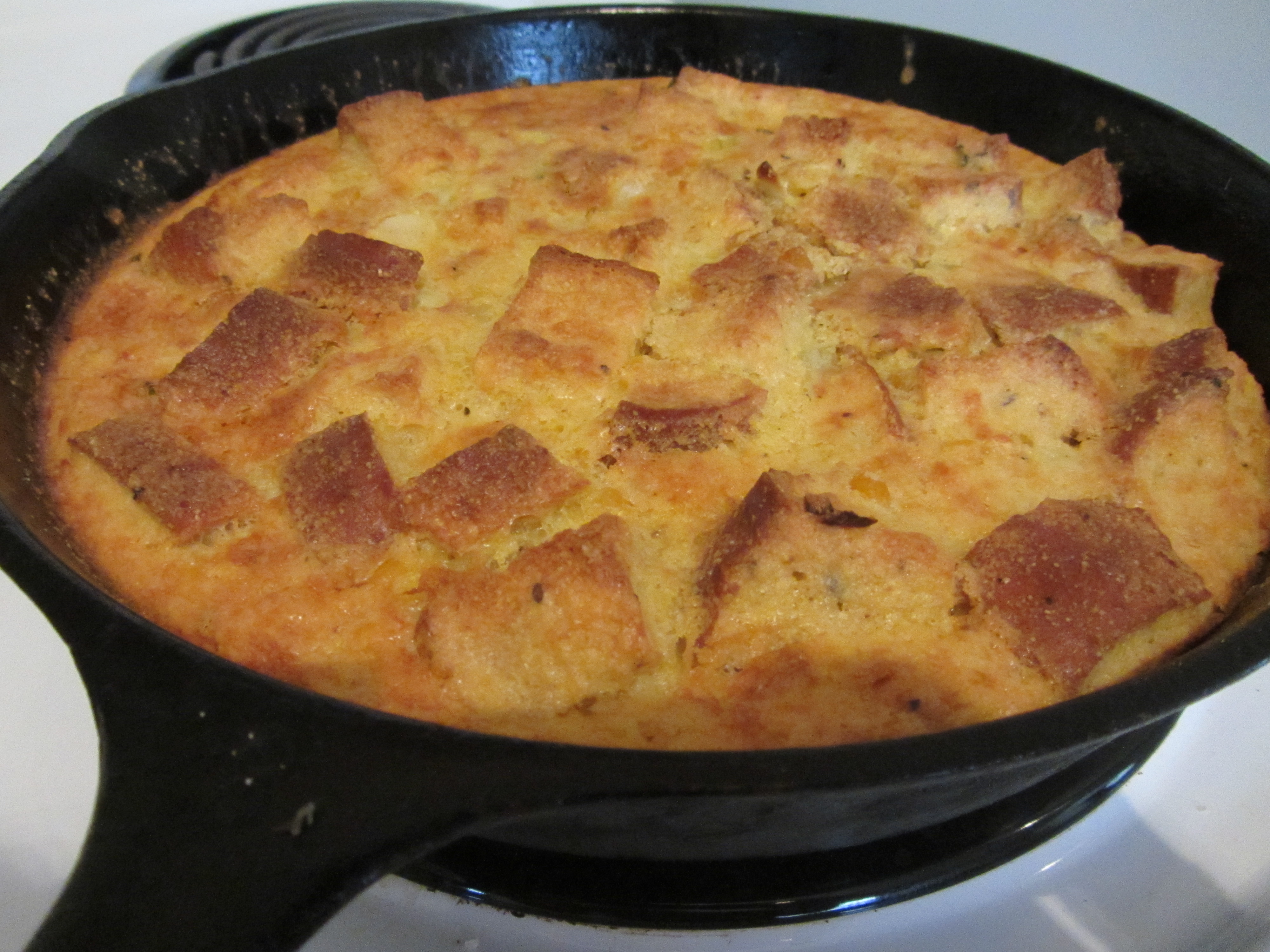
Corn bread pudding straight from the oven.

Corn bread pudding straight from the oven.

I have kind of a negative perception of bread pudding in general, as I have had some very soggy, wet bread puddings. This recipe, however, produced a pudding with the texture of a moist cornbread, which reminded me of the texture of my dad’s stuffing when it is cooked inside the turkey. The flavor of the herbs, especially the rosemary, really came through, along with the onion. You could also taste the Parmesan cheese, yet the pudding was hardly cheesy. I thought this was great, especially as a stuffing stand-in. And, again, it was super easy! I could see making this to serve with chili too. We all liked this too, and I foresee making it again in the future, though I would opt for Dad’s stuffing, if given the choice.

All in all, our Thanksgiving dinner was quite successful and delicious. We all liked all of the dishes and they will likely appear on our table again, especially the turkey. You cannot go wrong with any of Alton’s Thanksgiving recipes.
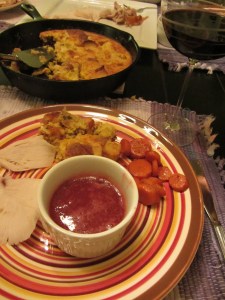
A decent Thanksgiving dinner, if I say so myself.

A decent Thanksgiving dinner, if I say so myself.

Chips and Fish

I was excited to see that I would be making Alton’s fish and chips after watching the 22nd episode of Good Eats. I love fish and chips, but had never made it before. We do not really do any deep frying at home, so this was to be a new experience for me. My parents fried food when I was a kid, so I have memories of them making French fries, onion rings, etc. For most of their frying, I remember them using a deep fryer. For this recipe, Alton uses a Dutch oven to fry his potatoes and fish. Our only Dutch oven is cast iron, and Alton explains that one should not fry in cast iron because the iron oxide from the metal can cause your oil to turn rancid. I, however, could not justify the purchase of a new Dutch oven simply for this recipe, and figured I could toss the oil after frying, should it appear rancid. Prior to commencing frying, I sliced my Russet potatoes (one per person) on a mandolin into perfect French fries. As soon as your potatoes are cut, you want to submerge them in cold water, which serves to remove excess starch; excess starch prevents steam from escaping during cooking and also causes the potatoes to brown. The potatoes can sit in the cold water for up to 10 hours. My potatoes sat in the water for a couple hours.

Potatoes soaking in cold water to remove starch.

Potatoes soaking in cold water to remove starch.

Once I was ready to fry, into my Dutch went my gallon of Safflower oil, after my husband, Ted, kindly made an extra trip to the store to purchase more oil (we had not initially purchased enough). Safflower oil has a high smoke point of 510 degrees, making it an ideal oil for frying. Alton tells you to fill your Dutch oven to within 1.5 inches of the top. A gallon of oil in a five-quart Dutch oven is perfect for this level. I used a candy/frying thermometer to monitor my oil’s temperature, as this is what Alton had done in the episode.

Safflower oil for frying.

Safflower oil for frying.

A gallon of oil in a five quart Dutch oven.

A gallon of oil in a five quart Dutch oven.

Once your oil is in the pan, you want to heat it over high heat. Meanwhile, you want to prep a rack over a sheet pan, as this is where your food will drain after frying.

Rack over a sheet pan for draining fried food.

Rack over a sheet pan for draining fried food.

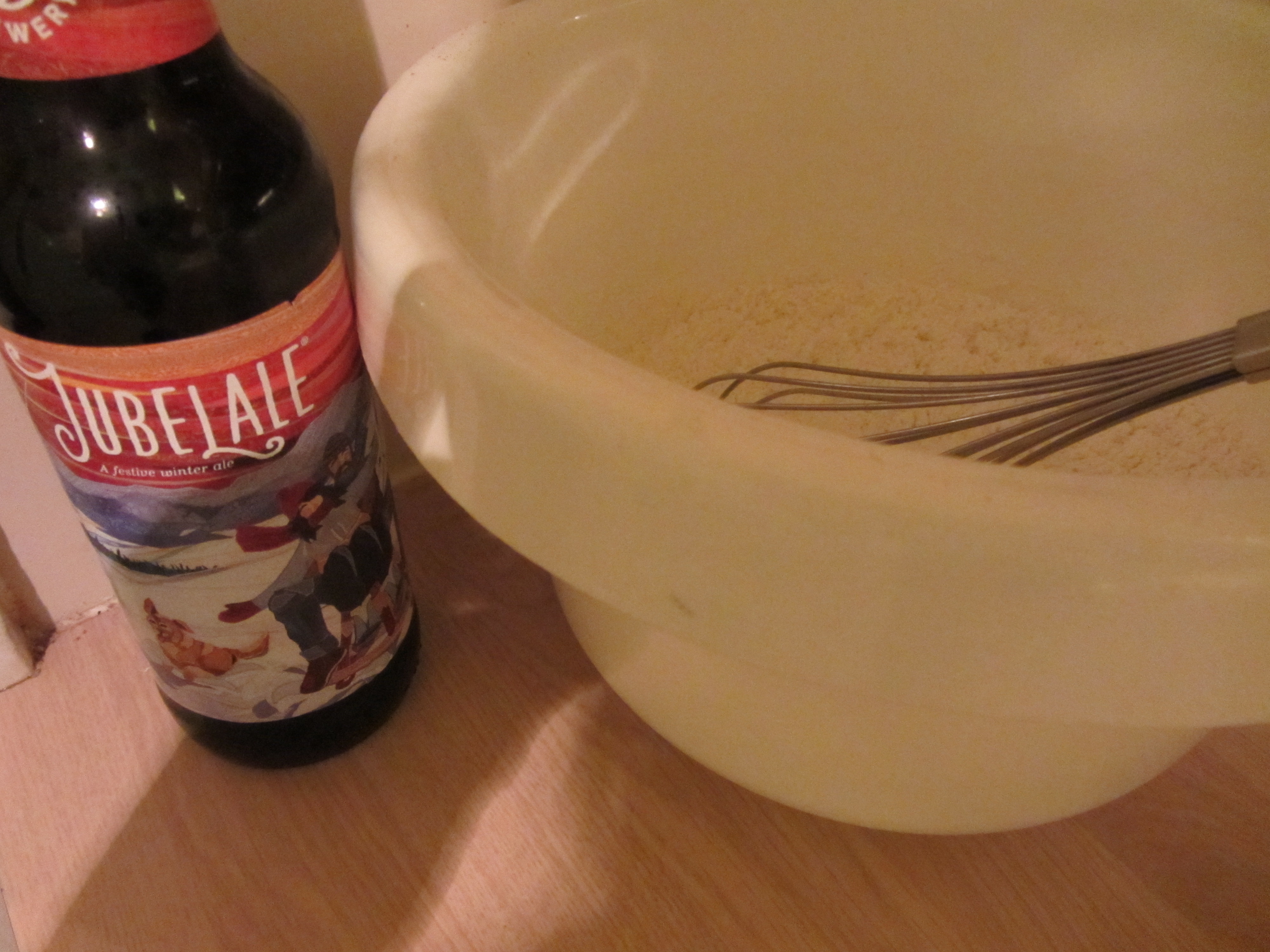
Fifteen to 60 minutes prior to frying your fish, you want to mix up your batter. For the batter, you combine flour, baking powder, Kosher salt, cayenne pepper, Old Bay Seasoning, and a cold bottle of beer. Making the batter much further in advance will cause the beer in the batter to lose its bubbles. The batter goes into the refrigerator to chill while you fry your potatoes.

Flour, baking powder, Kosher salt, cayenne pepper, and Old Bay Seasoning.

Flour, baking powder, Kosher salt, cayenne pepper, and Old Bay Seasoning.

Dry batter ingredients plus a beer.

Dry batter ingredients plus a beer.

Completed batter.

Completed batter.

Prior to frying, it is necessary to drain your potatoes very thoroughly. Alton uses a salad spinner for this step, but as we do not have a salad spinner, I used kitchen towels to roll up and pat my potatoes dry.

Drained potatoes, drying on towels.

Drained potatoes, drying on towels.

When your oil reaches 320 degrees, you are ready to begin frying your potatoes in batches (fry ~one potato at a time). Since our potatoes were very large, I fried mine in three batches. The French fries are fried two times – first at a lower temperature and then at a higher temperature. For the first frying, you just want to fry your potatoes until they are translucent and starting to get floppy, which takes two-three minutes. Cool the potatoes to room temperature.

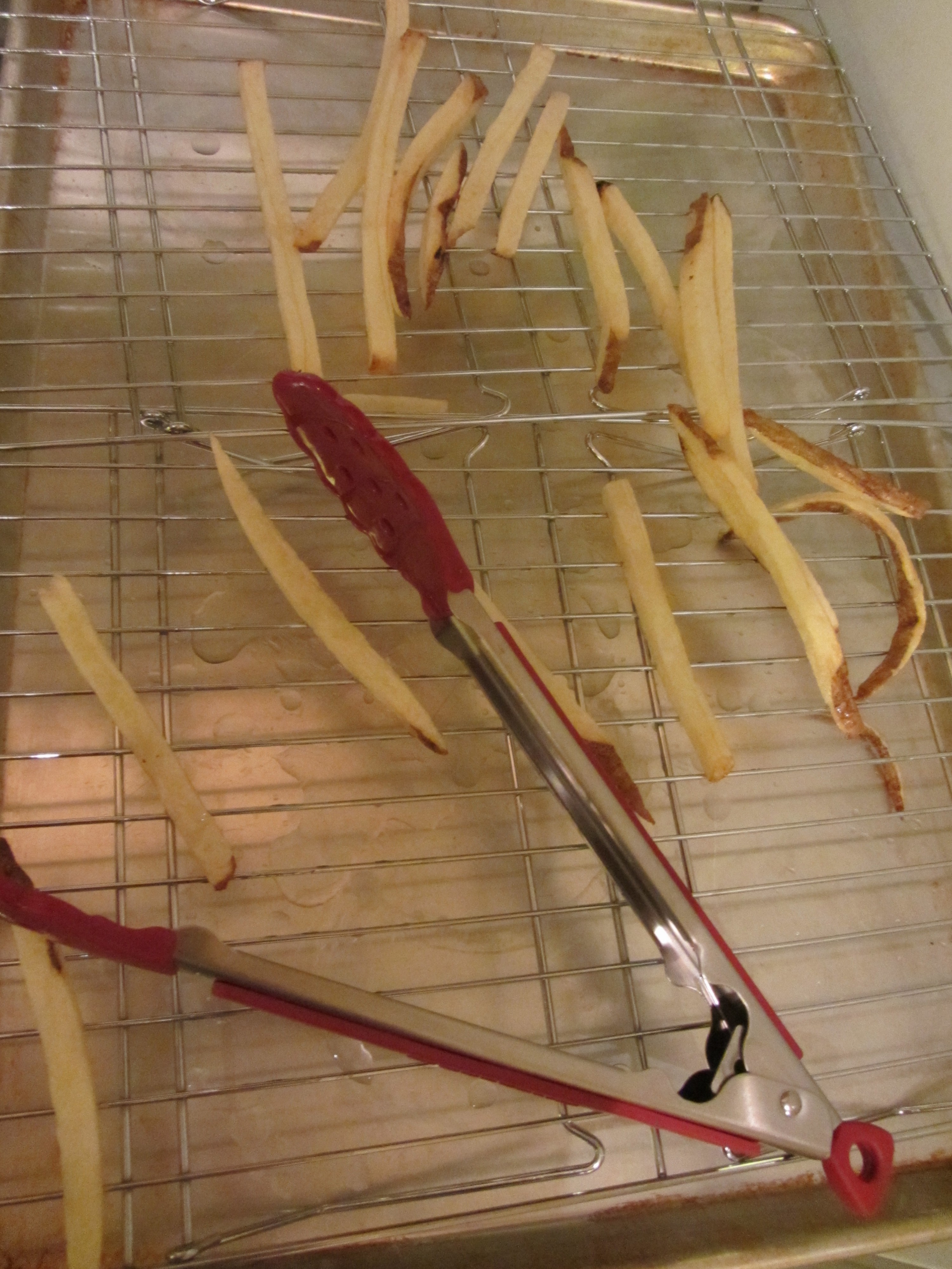
Potatoes draining on racks after first frying.

Potatoes draining on racks after first frying.

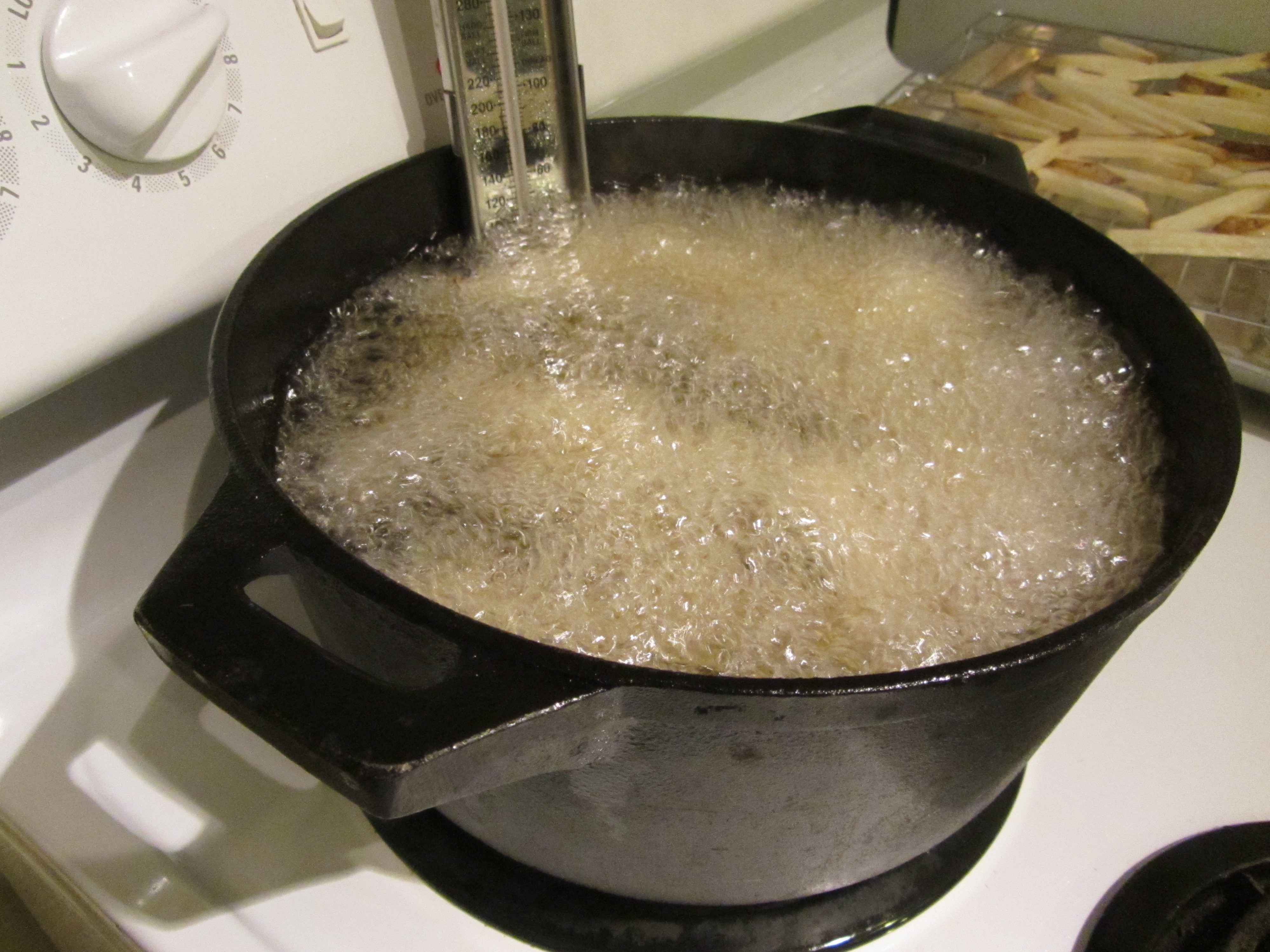
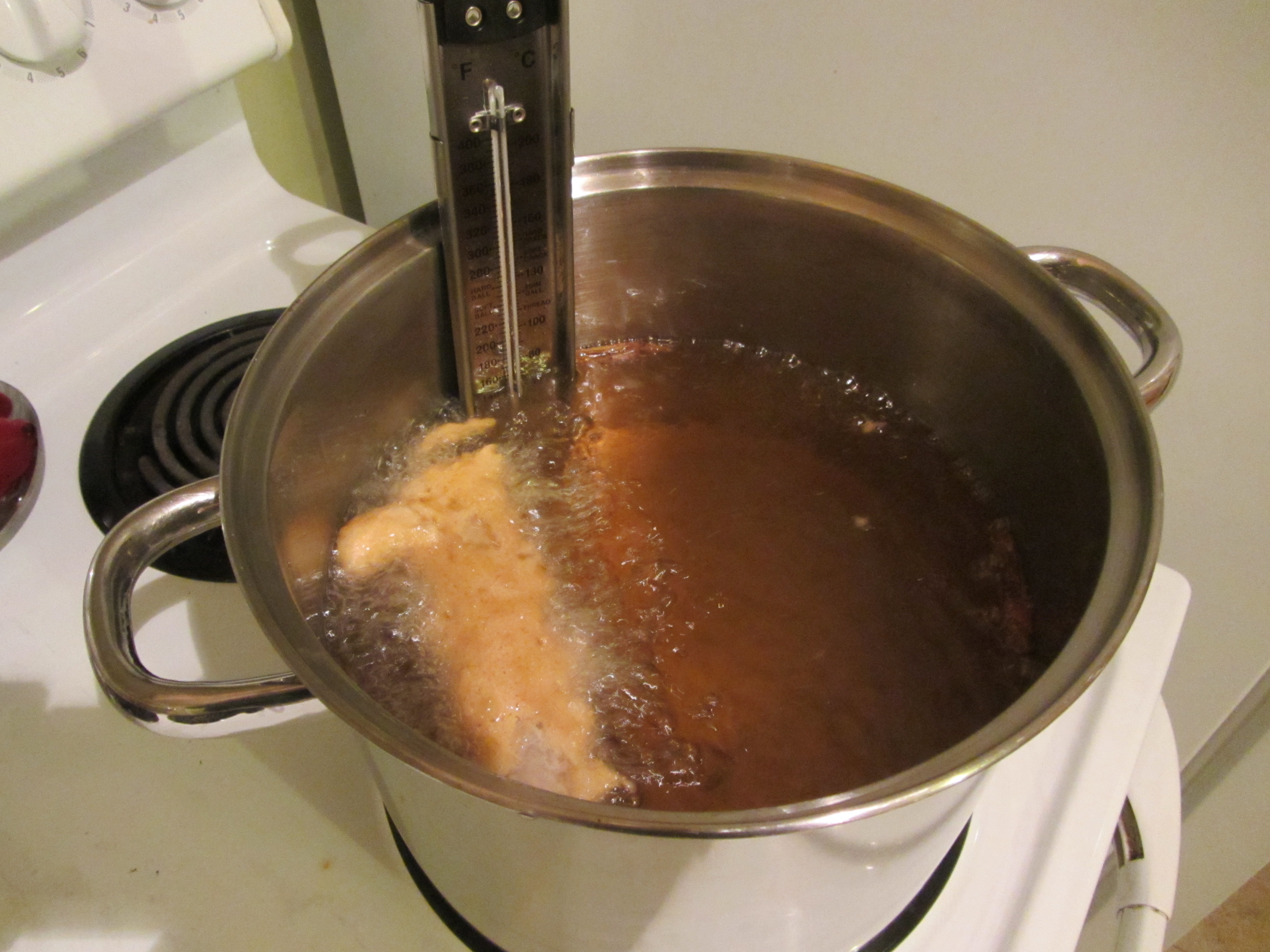
As my potatoes were taking their first dip into the oil, I noticed that my oil was really bubbling aggressively, and some oil even spilled over the edge of the Dutch oven.

Hot, bubbling oil.

Hot, bubbling oil.

Ted and I noticed that there appeared to be some smoke coming from the burner, and I contemplated removing the pan from the heat. Ted convinced me not to worry (Safflower oil does, after all, have a very high smoke point). By this point, the kitchen was getting quite smokey, one Coonhound had fled to the basement for cover, all of the windows were open (it was about 22 degrees outside), and the other Coonhound was observing us from behind the blockade of chairs we put around the perimeter of the kitchen. It was about this time that we heard a “whoosh” sound as flames ignited under the pot. Fantastic. We turned the burner off immediately and Ted carried the Dutch oven out to the driveway. Meanwhile, the burner was still on fire and the fire extinguisher made an appearance.

Never good when this makes an appearance.

Never good when this makes an appearance.

As Ted attempted to put out the six-inch flames with a kitchen towel, I grabbed a sheet pan and placed it over the burner to suffocate the flames. I guess all those years of watching crappy cooking shows like Hell’s Kitchen paid off, as images of Gordon Ramsay smothering flames danced in my head. After a couple of hectic moments, we were good to go, albeit with completely blackened burner drip pans, a scorched kitchen towel, a house full of smoke, and two very confused dogs. I somehow failed to get pictures of this whole series of events. Go figure. I was less than enthused about continuing with the recipe. Ted, however, insisted that I continue, transferring the oil to a deeper pot (and a clean burner). Once my oil was back to temperature, I completed the first frying of my potatoes. For the potatoes’ second swim, you want to increase the oil temperature to 375 degrees and heat your oven to 200 degrees. Again, frying the potatoes in batches, you want to fry them until they are a nice golden brown. While they are still hot, season them generously with Kosher salt, and stick them in the oven to keep them warm. When the potatoes are all done, it is time to fry the fish. For this recipe, Alton suggests using tilapia, and he says he purchases frozen fillets. Since only two of us would be eating, I used 3/4 of a pound of tilapia, which I thawed and cut into one-inch strips.

Tilapia fillets.

Tilapia fillets.

Tilapia cut into 1" strips.

Tilapia cut into 1″ strips.

Prior to dipping your fish strips into the batter, you want to dredge them lightly in cornstarch, tapping off any excess.

Dredging fish in cornstarch.

Dredging fish in cornstarch.

Then, into the batter they go. The batter has a tendency not to coat the patches of fish where there is more batter, so you may have to dip them twice. The batter is quite thick, but clings well to the fish. You want to fry the fish until it is golden brown, turning it over several times while frying.

Fish frying in new, deeper pot on clean burner.

Fish frying in new, deeper pot on clean burner.

Frying fish.

Frying fish.

My fish took about three minutes to fry. Again, you want to drain your fish on a rack to get rid of excess oil.

Fried tilapia, draining on racks.

Fried tilapia, draining on racks.

Golden brown fish.

Golden brown fish.

Alton recommends that you break one of your fish strips in half to make sure the fish is cooked through; if not, you can finish the fish in a 350 degree oven for about 10 minutes. Oh, and be sure to serve your fish and chips with malt vinegar.

Fish and chips, served with malt vinegar.

Fish and chips, served with malt vinegar.

I love malt vinegar on French fries, and I fondly remember going to the boardwalk near my aunt’s house in Delaware to get a newspaper cone filled with malt vinegar-sprinkled French fries, but I digress. Though I had a bit of a “frytastrophe” in making Alton’s fish and chips, Ted and I both found the resulting product to be very good. The French fries were light and fairly crispy, though I would have preferred mine a little bit crispier. The Fish was golden brown and had a light, super crispy shell, while the fish inside remained very moist. One of my pet peeves when ordering fish and chips at a restaurant is that the batter often slides off of the fish, but the batter in this recipe clung to the fish beautifully. The fried coating was flavorful, though I could not identify the Old Bay Seasoning. All in all, this was delicious, though it ended up being too much food for us. I would do a half pound of fish for two people, if I were to make this again… and I probably will make this again. Next time, however, I will use a deeper pot for frying, and I will try to use a salad spinner to dry my fries, as I think my potatoes may have been a little too damp when they went into the oil, causing my oil to bubble over. It is safe to say that this episode goes down as the most disastrous in my little project. Let’s just hope it stays that way.

The 21st episode of Good Eats features recipes on beef, specifically ground beef. What meat eater doesn’t like ground beef? The fun part about the recipes in this episode is that Alton shows you how to grind your own meat at home. When you buy ground beef at the grocery store, it is composed of all of the leftover meat trimmings, which means that the consumer is really not sure where their meat is coming from. Conversely, by grinding your own beef at home, you know exactly what part of the cow you are eating. Alton explains that there are really three good ways to grind your own meat; you can use a meat grinding attachment on a stand mixer, an old-fashioned hand grinder, or a food processor. For these recipes, Alton uses the latter. It had honestly never really occurred to me to grind my own meat, and especially not with my food processor, so this was a fun experiment for me to try.

Burger of the Gods

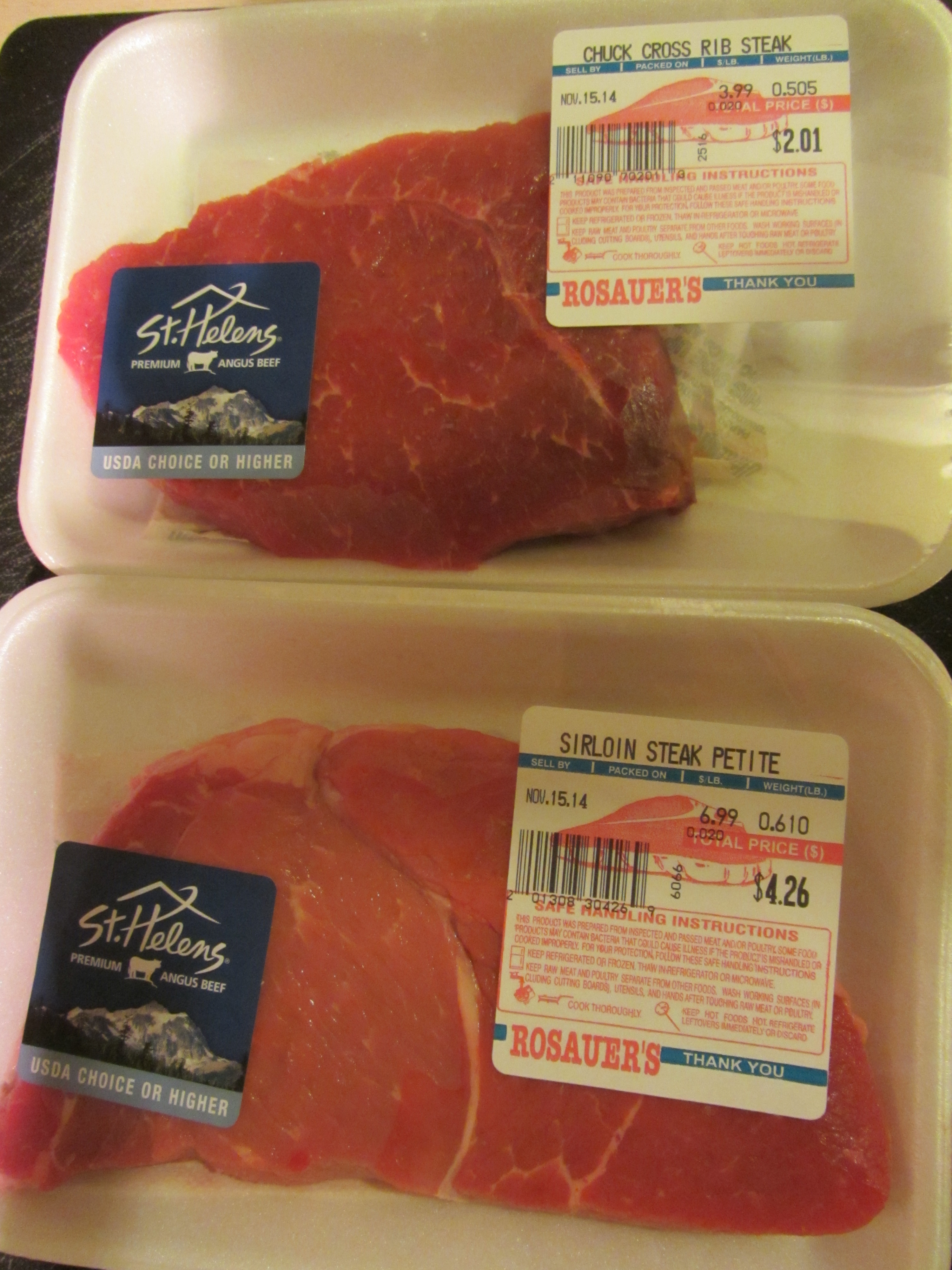
The first recipe Alton tackles is for a classic burger. For this recipe, you want half of your meat to be chuck and the other half to be sirloin.

Sirlon and chuck, ready to grind at home.

Sirlon and chuck, ready to grind at home.

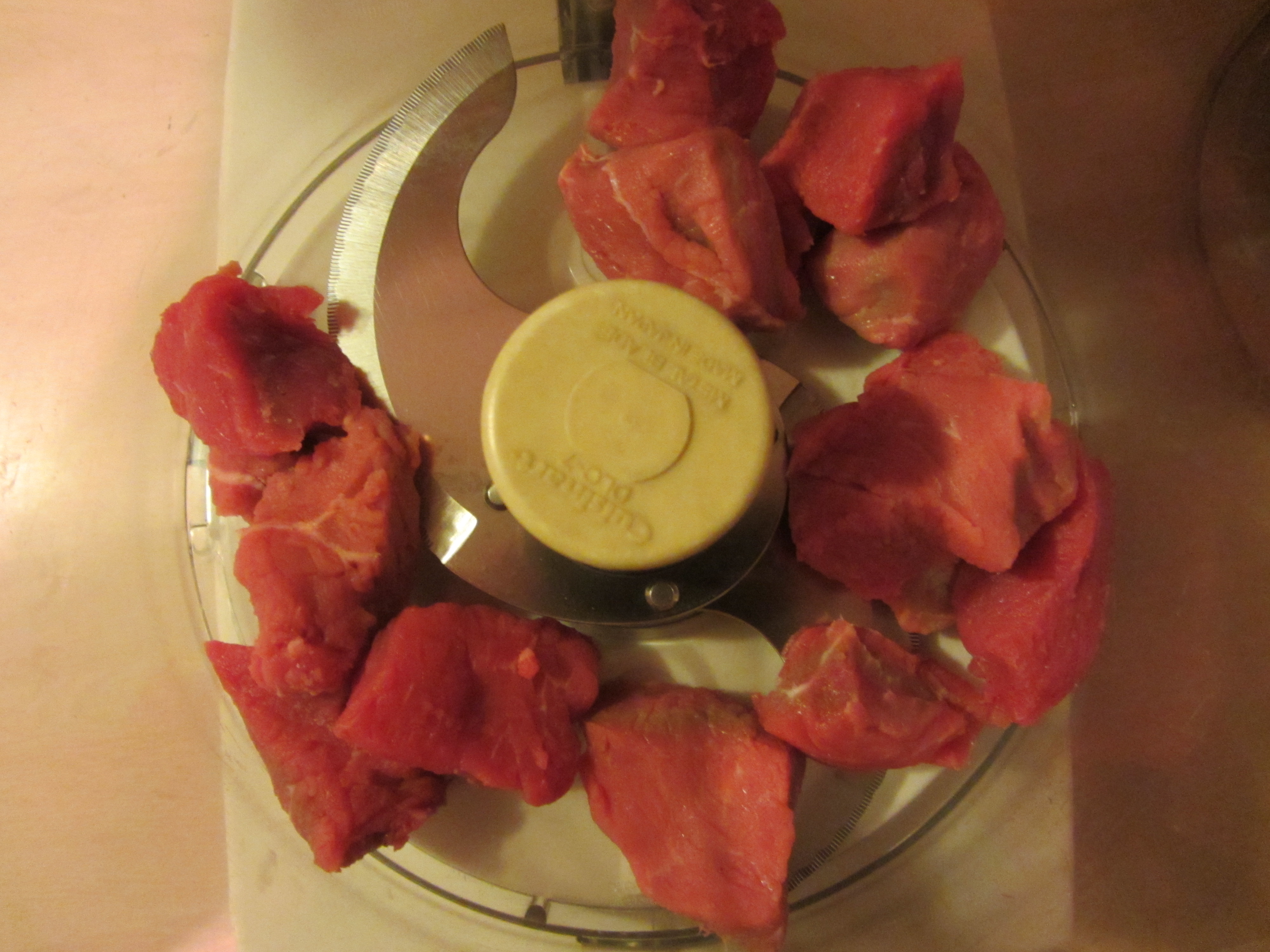
Since chuck is about 30% fat, it is ideal for blending with lean meats like sirloin. To begin, you want to trim your meat of any visible fat or tough connective tissue. My meat needed very little trimming. Once trimmed, you cut your meat into 1 1/2″ cubes. For grinding, you want your meat to be chilled. My meat was still cold after I trimmed it, so I began grinding right away. You want to process your meat in small batches, using short pulses. I found that putting eight ounces of trimmed meat into the processor was the perfect amount of meat for one batch, so I only had to do a total of two batches. Alton tells you to pulse the processor about 10 times for perfect burger meat. I ended up doing about 15 pulses for mine, and it seemed to be just about right. FYI Alton tells you to pulse meat about six times for perfect chili meat.

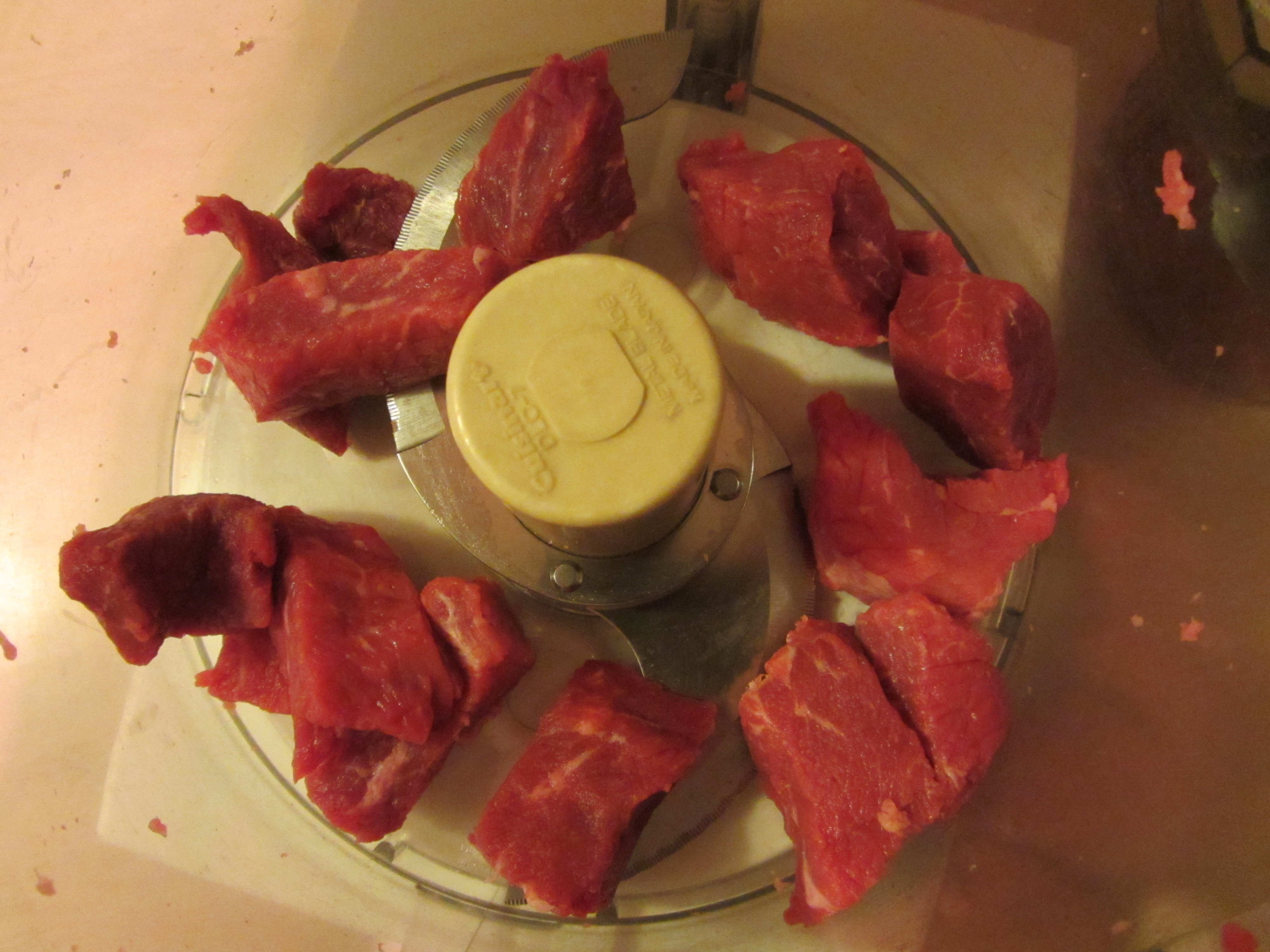
Sirlon in the food processor.

Sirlon in the food processor.

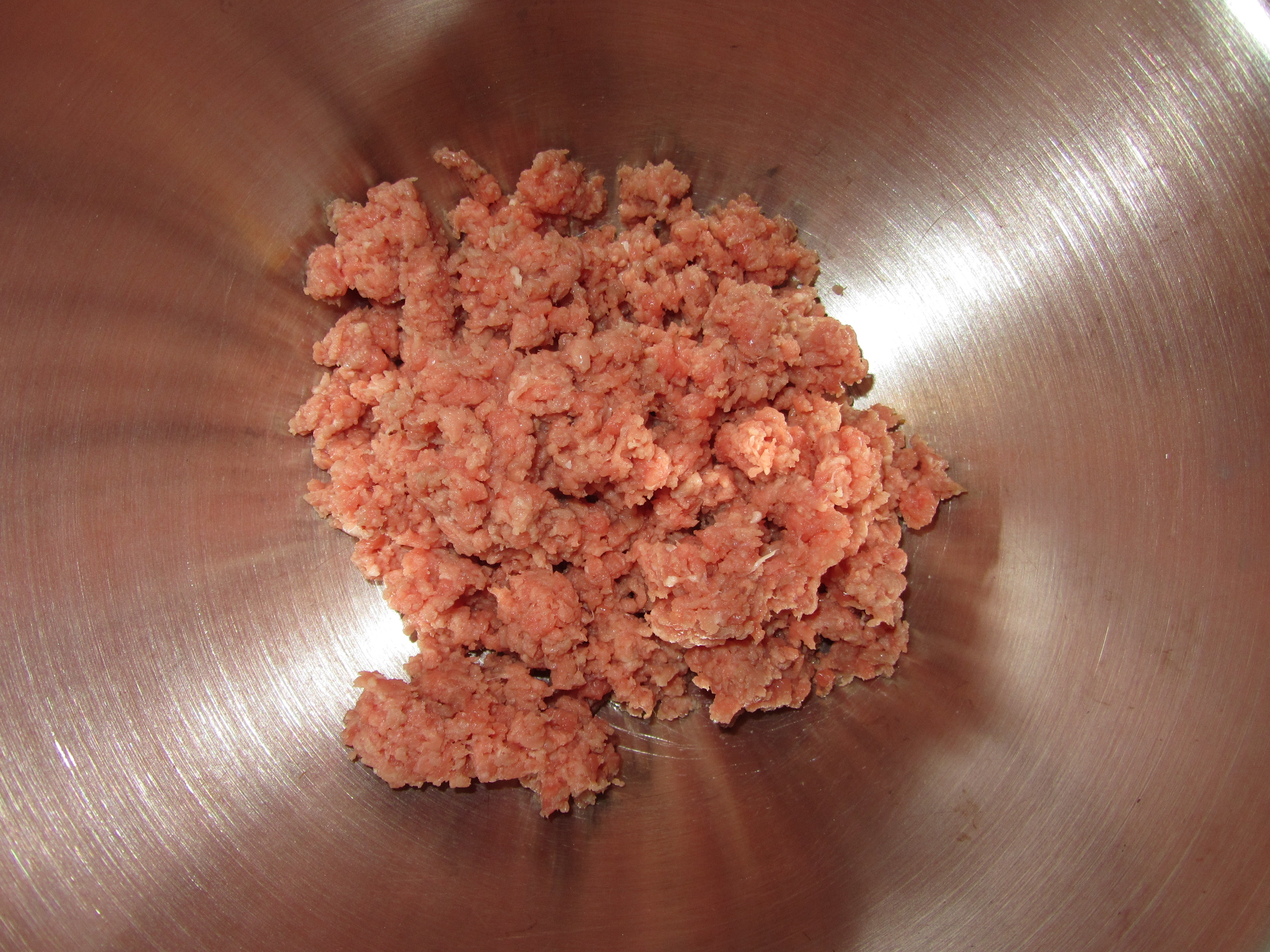
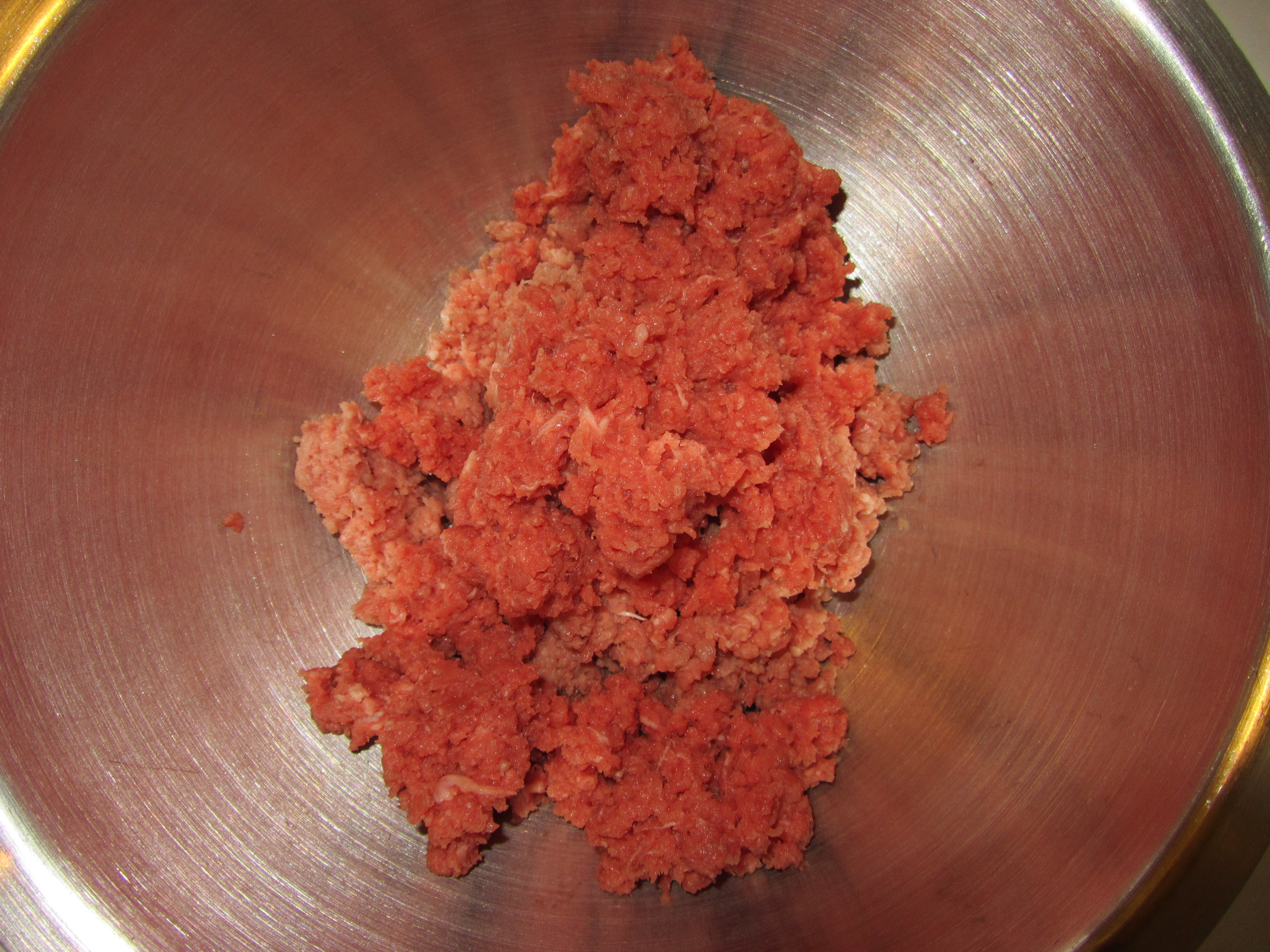
Ground sirloin, after ~15 pulses.

Ground sirloin, after ~15 pulses.

Ground sirloin.

Ground sirloin.

Chuck, ready to be ground.

Chuck, ready to be ground.

Ground chuck.

Ground chuck.

Once your meat is ground, you lightly mix it with your hands in a bowl. At this point, you can use the meat right away, or you can refrigerate it for a day or two.

Ground chuck and sirloin.

Ground chuck and sirloin.

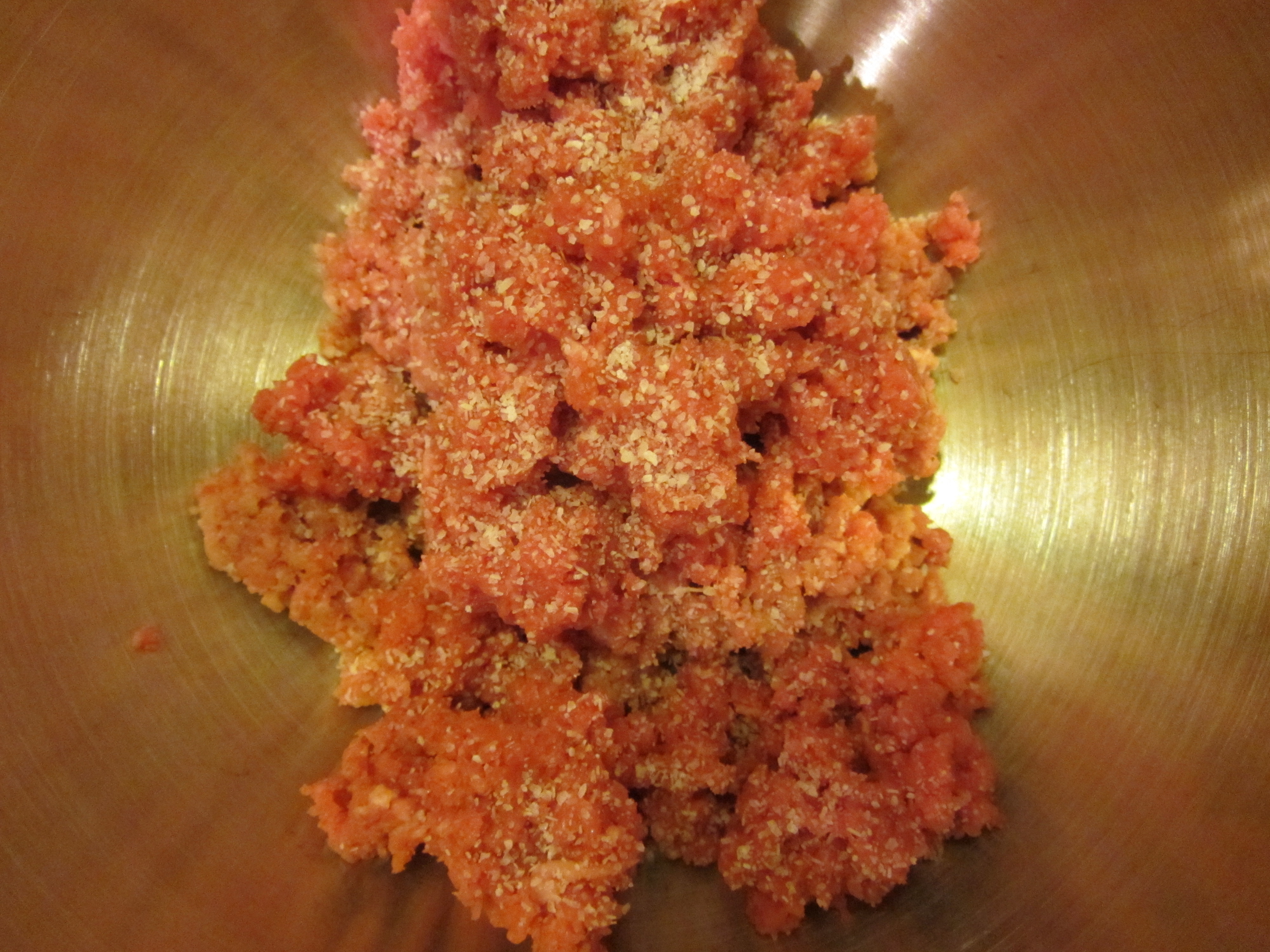
When ready to use your meat (I used mine right away), add some Kosher salt and mix it in gently with your hands. Alton stresses that salt is all the seasoning you need for a perfect burger.

Ground meat, plus salt.

Ground meat, plus salt.

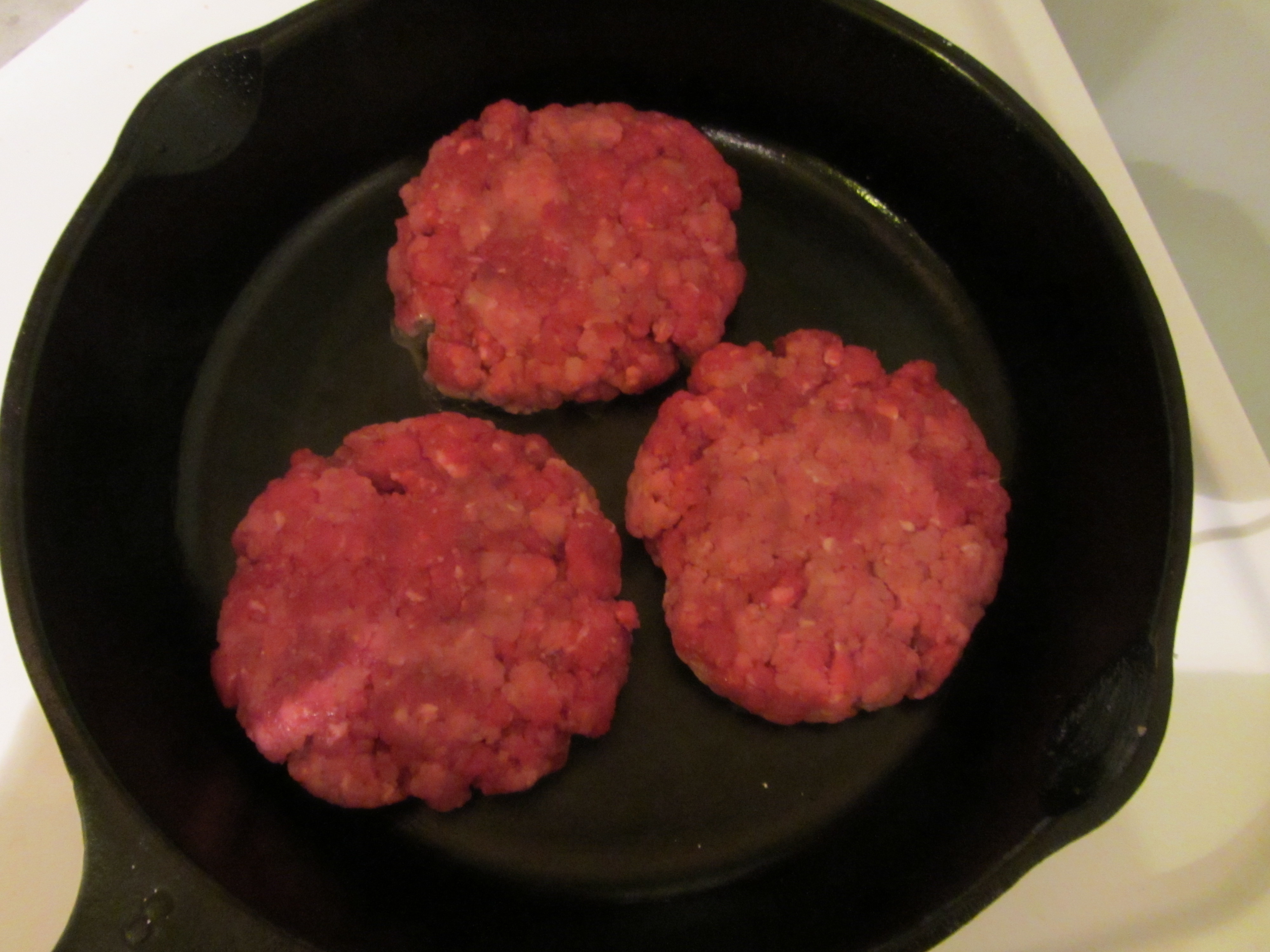
For a perfectly sized burger patty (4″ x 3/4″), weigh five ounces of meat. Lightly toss the meat between your two hands, forming it into a ball, and then flatten the meat into a patty. You do not want to compress the meat too much, as this will kill its texture.

Lightly formed patties.

Lightly formed patties.

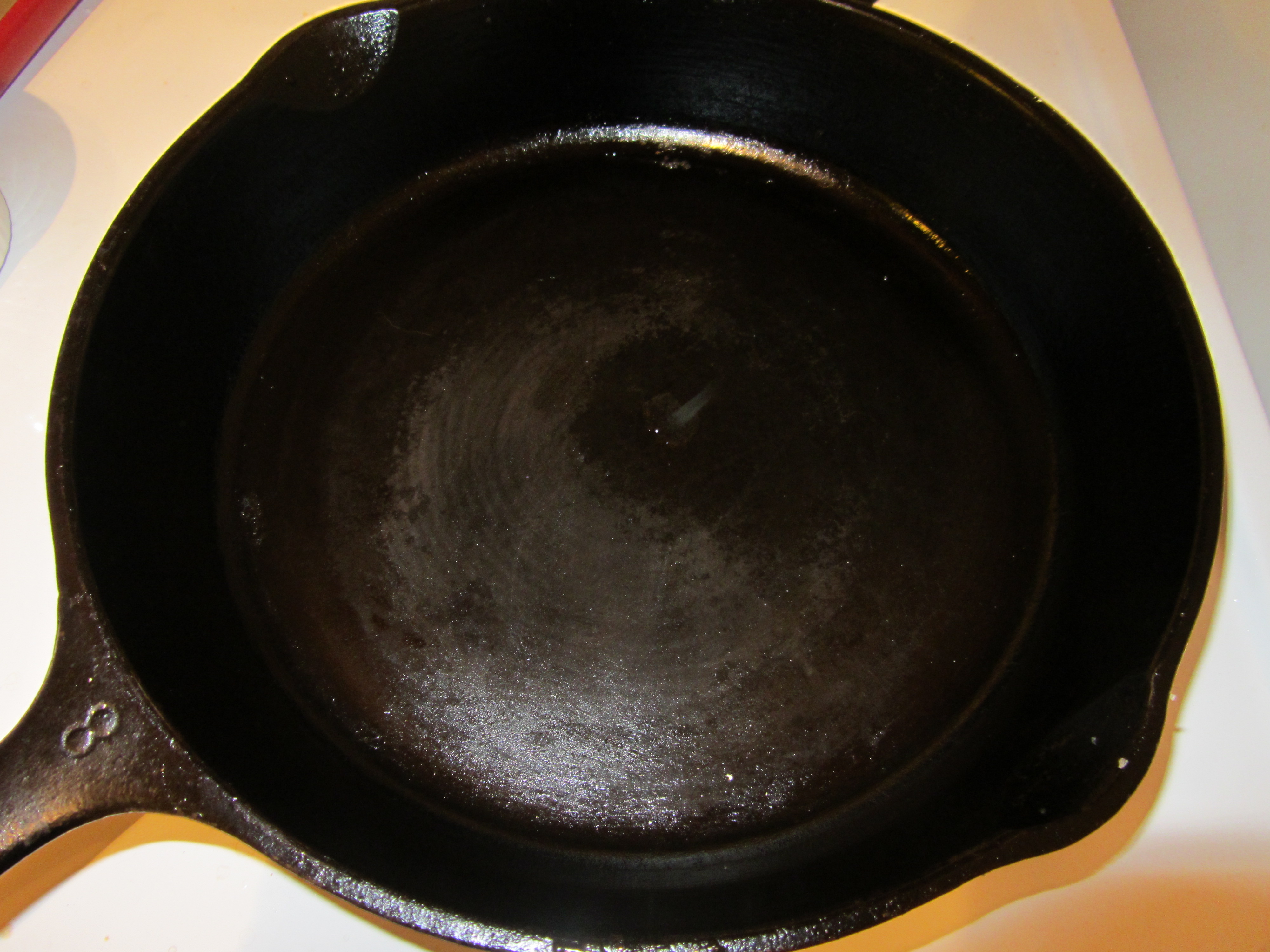
When your patties are all formed, heat a cast iron skillet over medium-high heat until water sizzles and bubbles away, about two minutes.

Cast iron skillet.

Cast iron skillet.

Cook your burgers for four minutes per side if you want a medium-rare burger. Cook for an additional minute per side to get a medium burger.

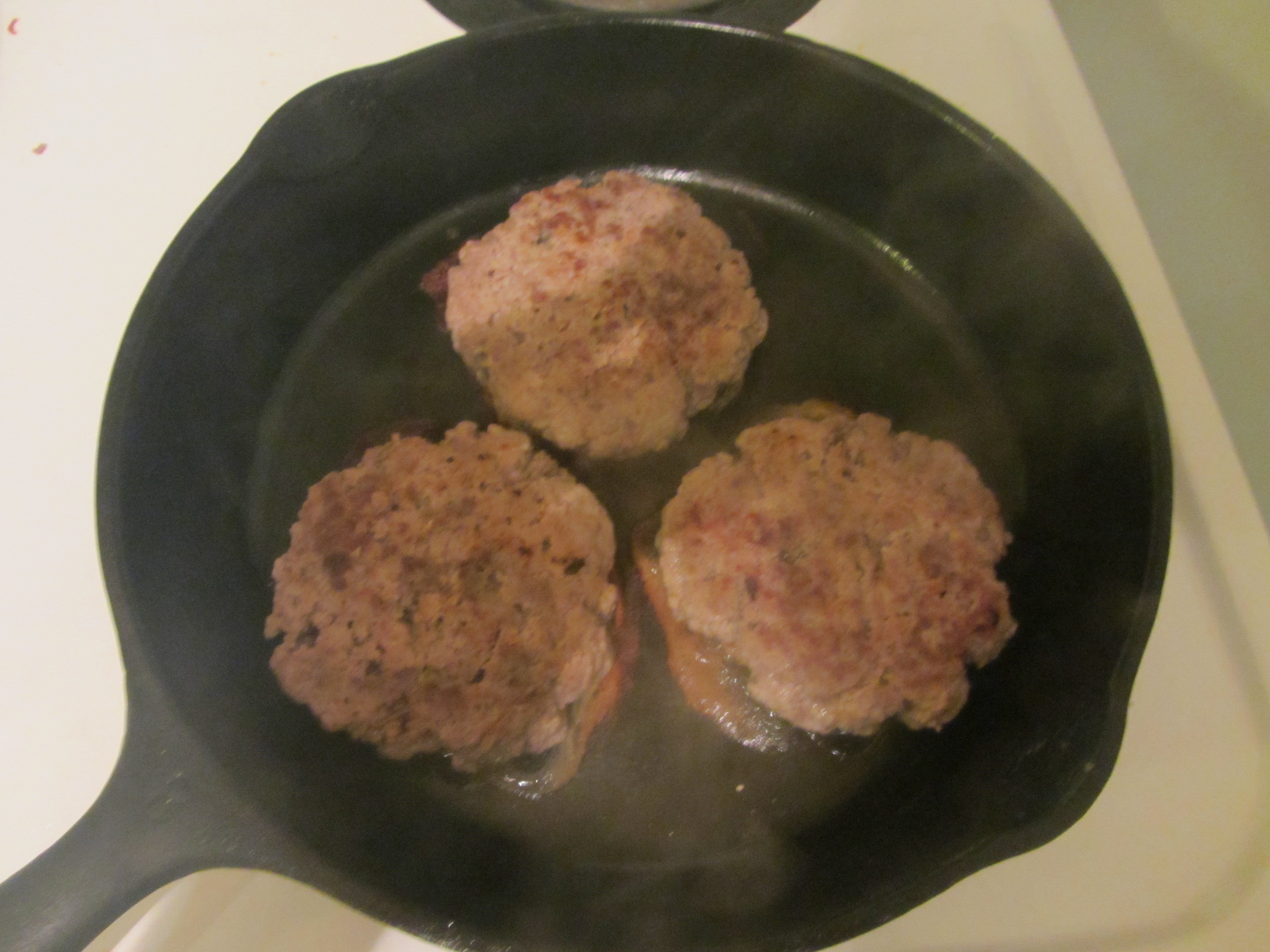
Burgers in the pan.

Burgers in the pan.

Burgers flipped after 4 minutes.

Burgers flipped after 4 minutes.

Though this may conflict with every burger you have ever seen being cooked in an American diner, Alton informs you that you should, under no circumstances, smash your patty with a spatula while it is cooking. Patty smashing only serves to get rid of the good juices you want in your burger. Alton’s other rule for burger cooking:  flip burgers only one time. Once your burgers are cooked to your desired degree of doneness, let them rest for a minute or two before eating.

Resting burgers.

Resting burgers.

In the episode, Alton begs you to serve your burgers his way, which is on a toasted bun with only some mayonnaise and freshly ground pepper. I complied with his request.

Bun adorned the Alton way, with only mayo and pepper.

Bun adorned the Alton way, with only mayo and pepper.

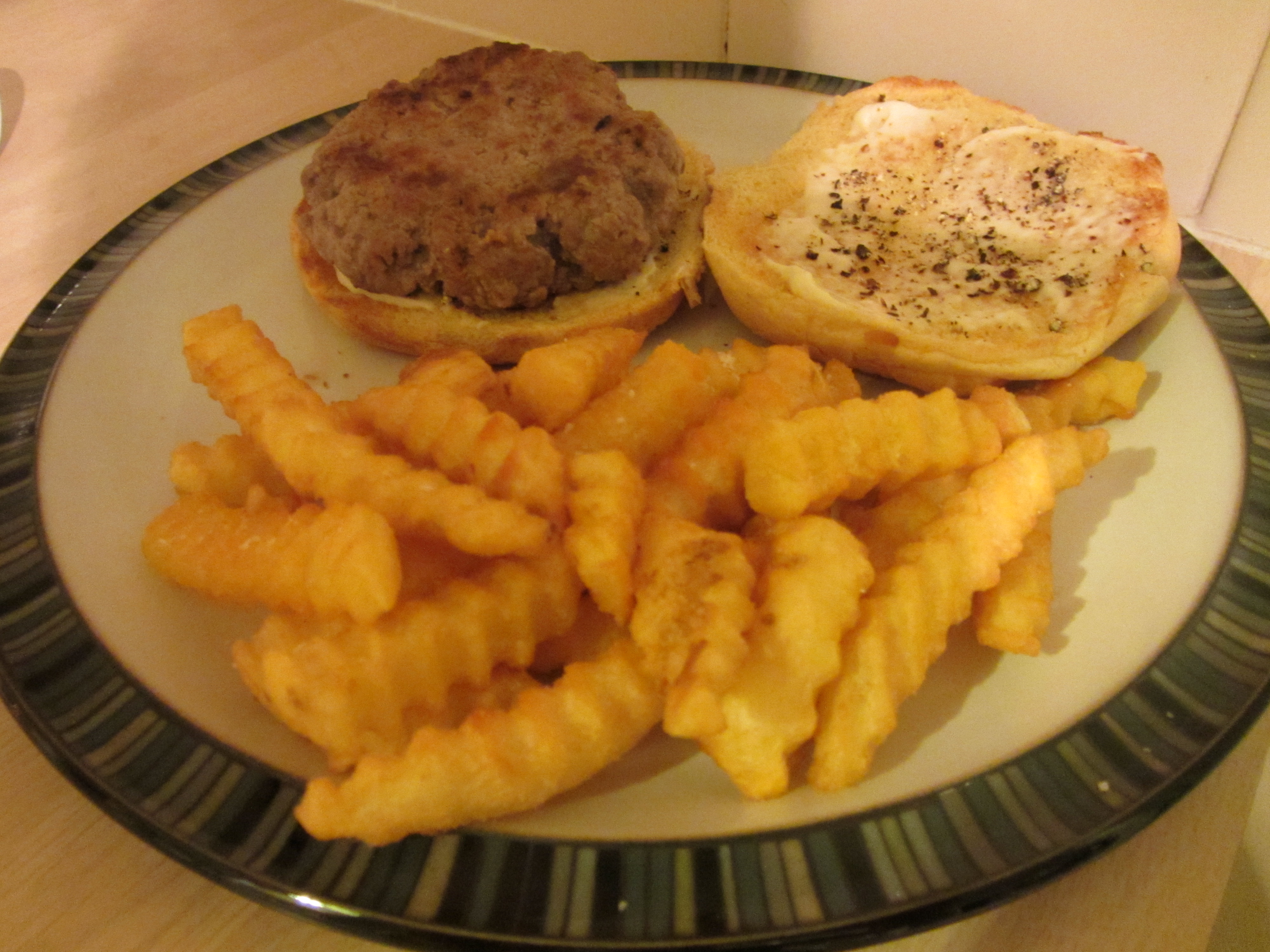
We ate our burgers with French fries on the side. The texture of the beef was great, as the burgers stayed moist and were not overly dense. Unfortunately, my burgers were a little overcooked, which I think was due to my burner being a little too hot from the French fries cooking simultaneously below.

Burger with fries.

Burger with fries.

Still, though, the burgers were flavorful and juicy. I am not a huge fan of mayonnaise, so I was skeptical about eating my burger with only mayo and pepper. I do have to say that the meat flavor really stood out and was complimented by the spice of the pepper and creaminess of the mayo. I do think that we sometimes overwhelm the basic flavors of the meat itself by piling on a lot of condiments. Really, though, it’s just about what you like, right? This burger recipe was a winner. Grinding the meat at home really took very little extra time and effort, though it is a bit more expensive to do so. If you want to treat yourself to a good burger at home, it is worth the expense to grind your meat. Plus, you’ll know exactly what you are eating, which is a bonus.

Good Eats Meatloaf

The second recipe in this episode is for meatloaf. I really like meatloaf, especially at this time of the year. Like the burger recipe, this recipe uses a food processor. The food processor I use belonged to my parents, and I’m fairly sure it was a wedding present to them in 1974. You do have to keep your hand pressing on the lid or it will stop running, but it otherwise works just fine. To begin, you combine garlic-flavored croutons, black pepper, cayenne, chili powder, and dried thyme in the processor.

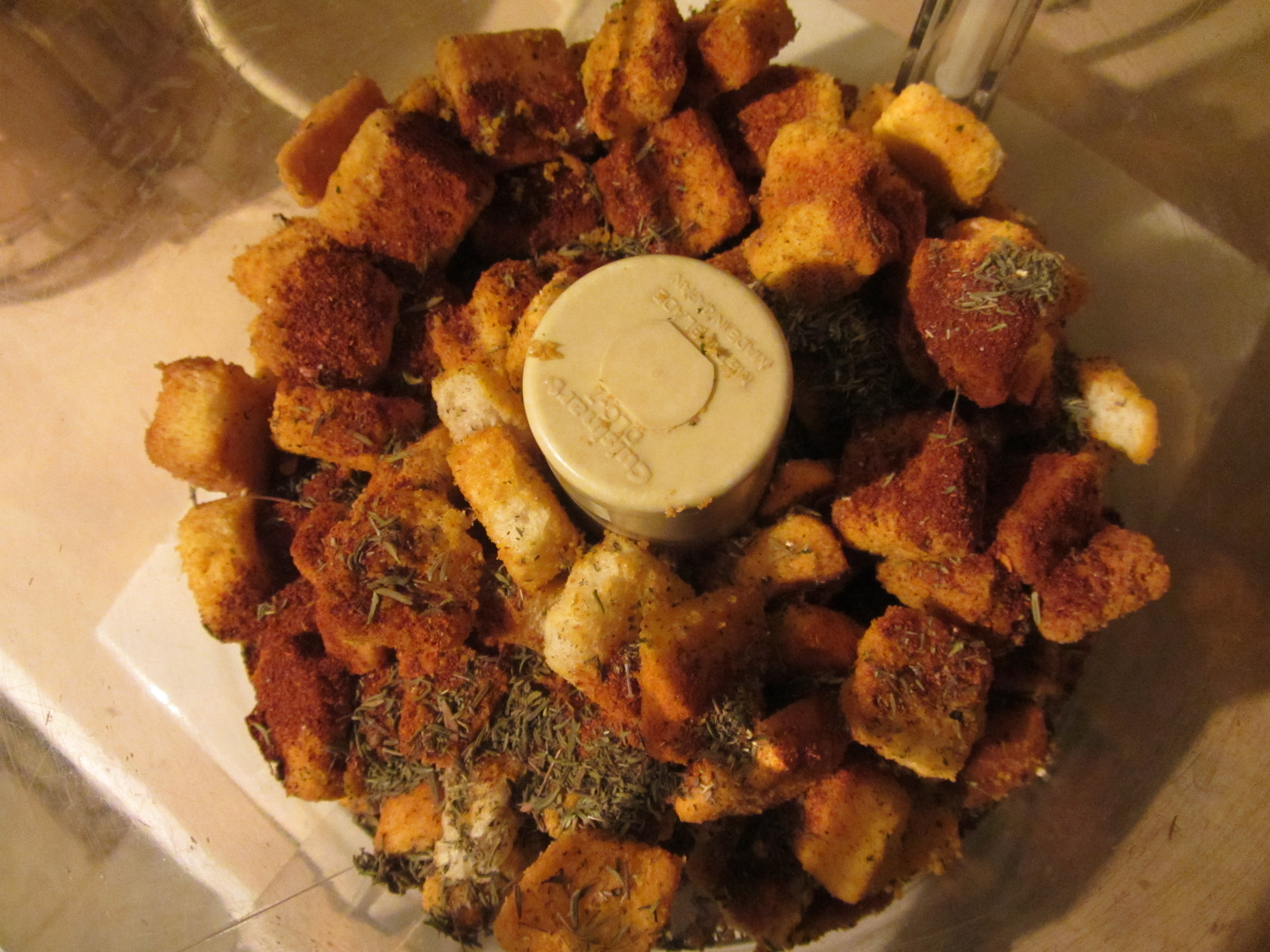
Garlic croutons, pepper, cayenne, chili powder, and thyme

Garlic croutons, pepper, cayenne, chili powder, and thyme

Grinding the crouton mixture in the food processor.

Grinding the crouton mixture in the food processor.

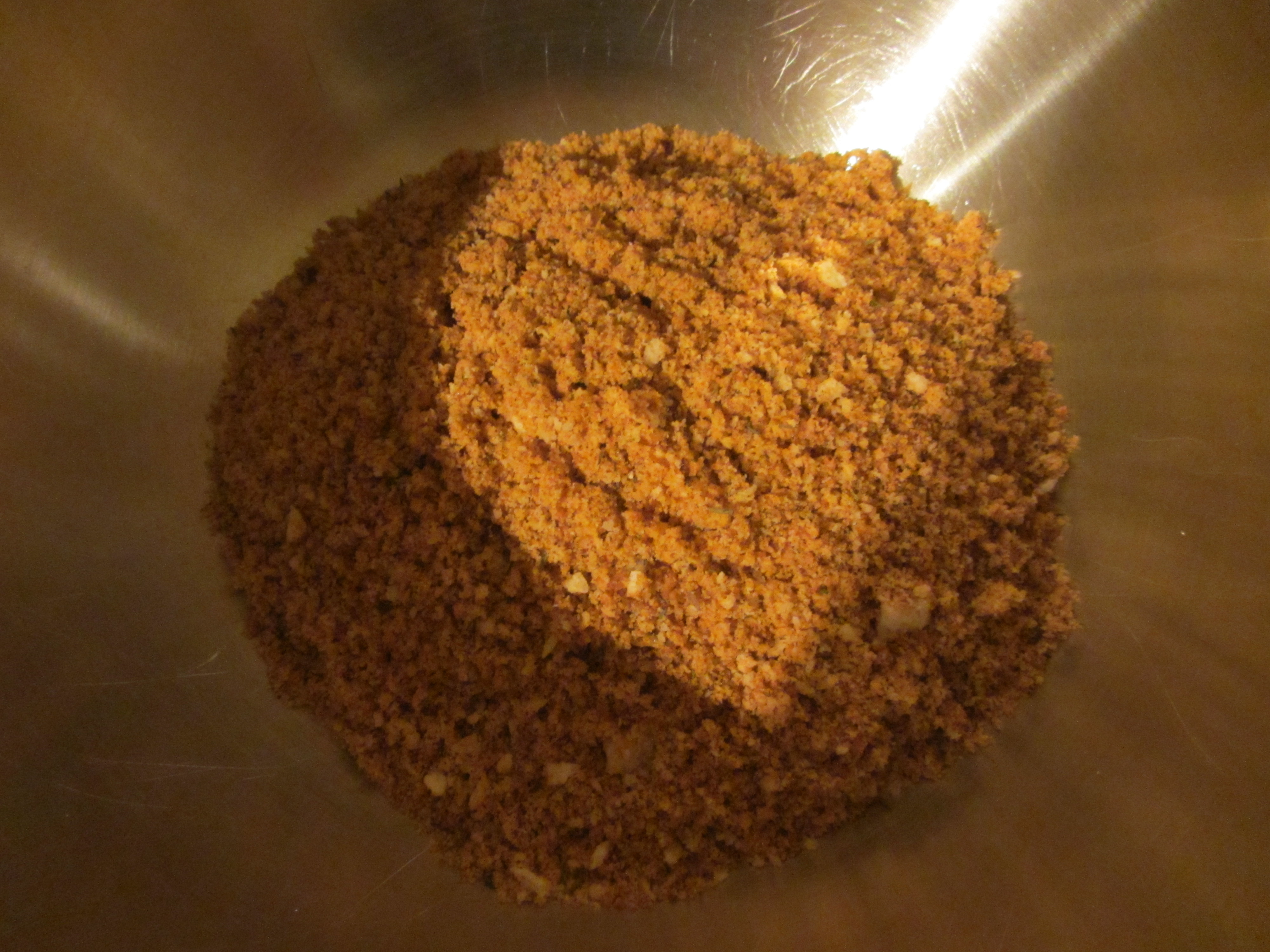
You want to process this until all of the visible crouton cubes are gone. This mixture then goes into a large mixing bowl.

The ground crouton mixture.

The ground crouton mixture, and Coonhound cameo.

Ground crouton mixture in mixing bowl.

Ground crouton mixture in mixing bowl.

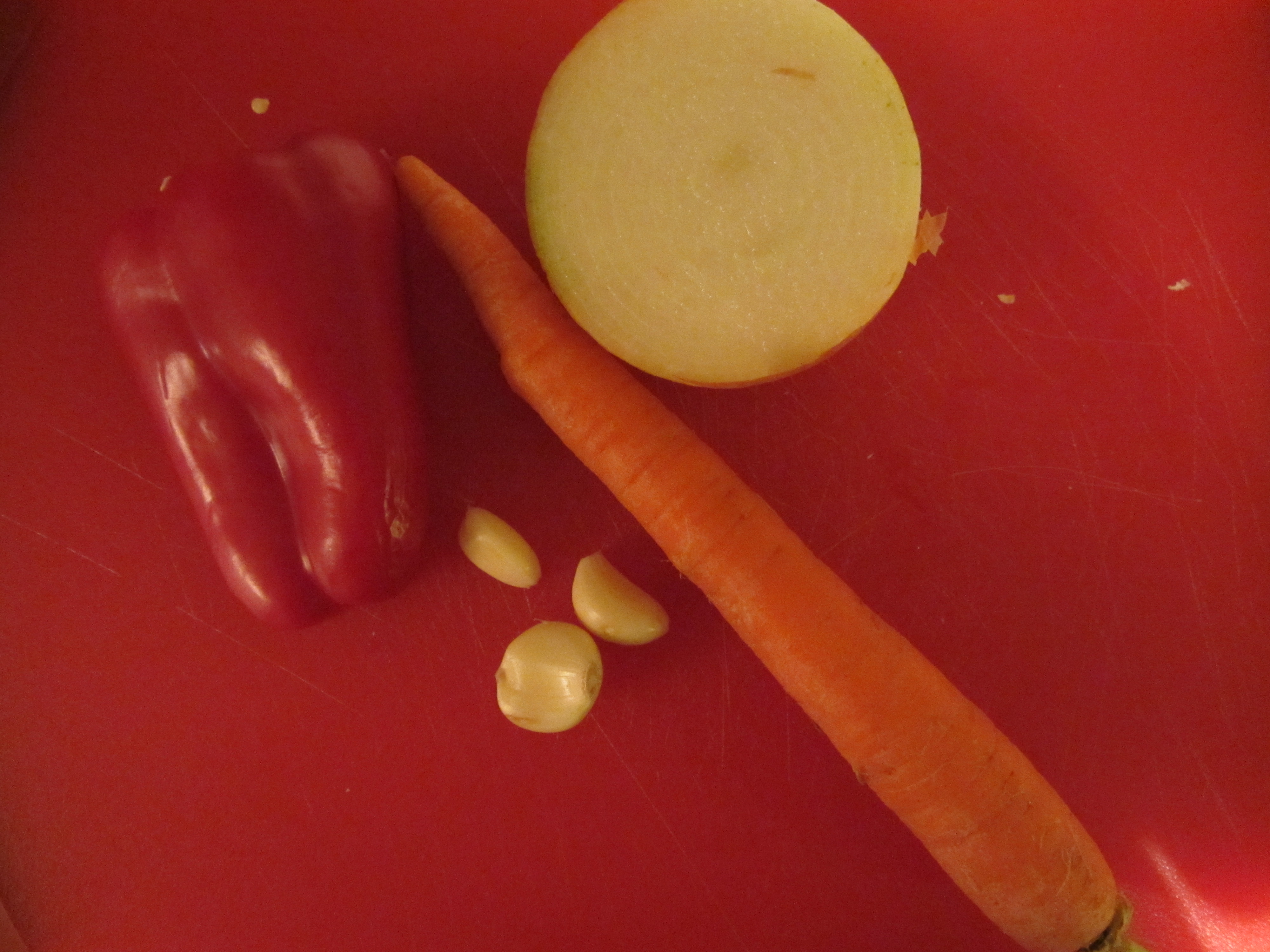
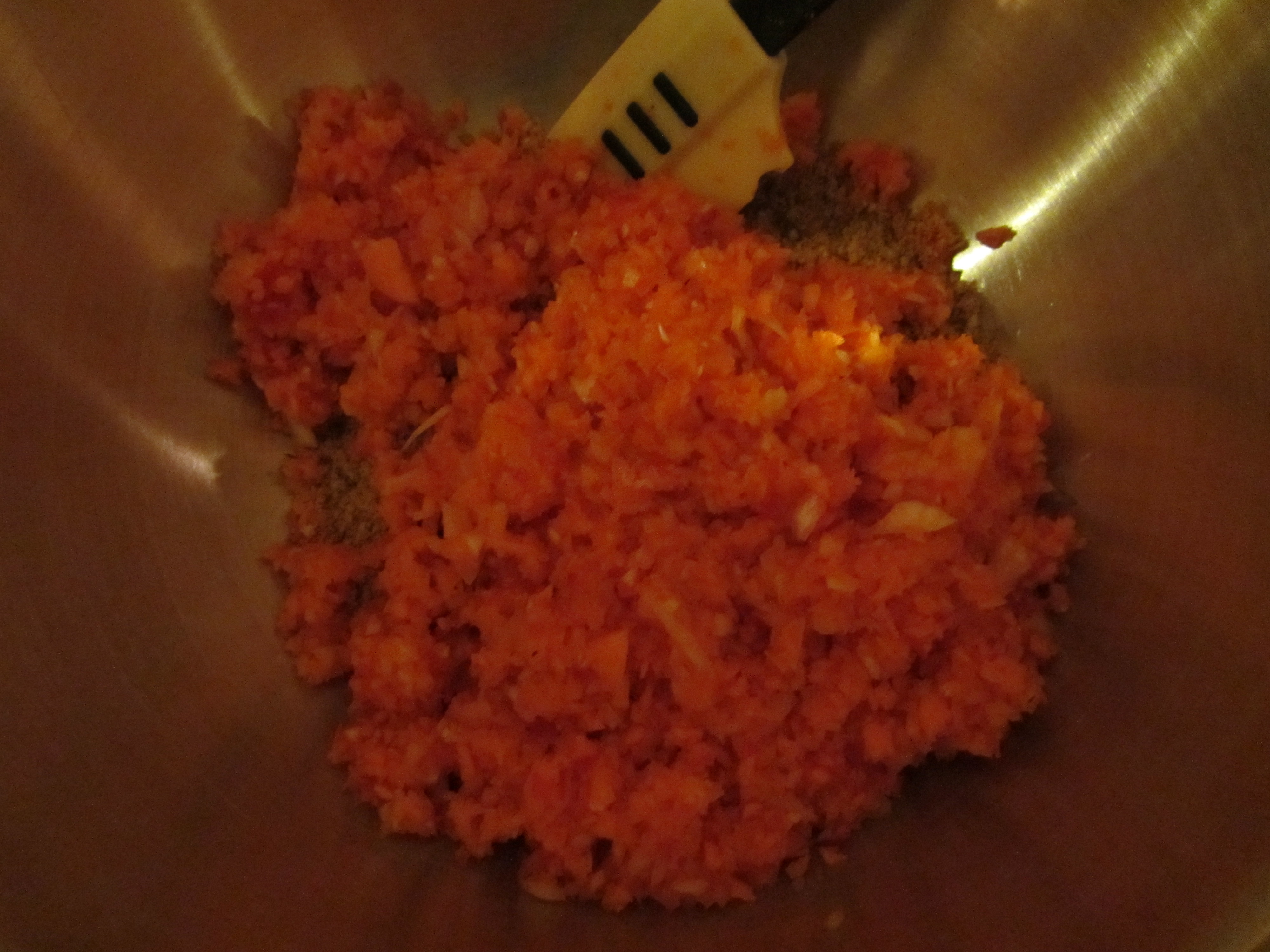
Next, again in your food processor, you combine onion, carrot (no need to peel), garlic, and bell pepper.

Bell pepper, carrot, onion, and garlic.

Bell pepper, carrot, onion, and garlic.

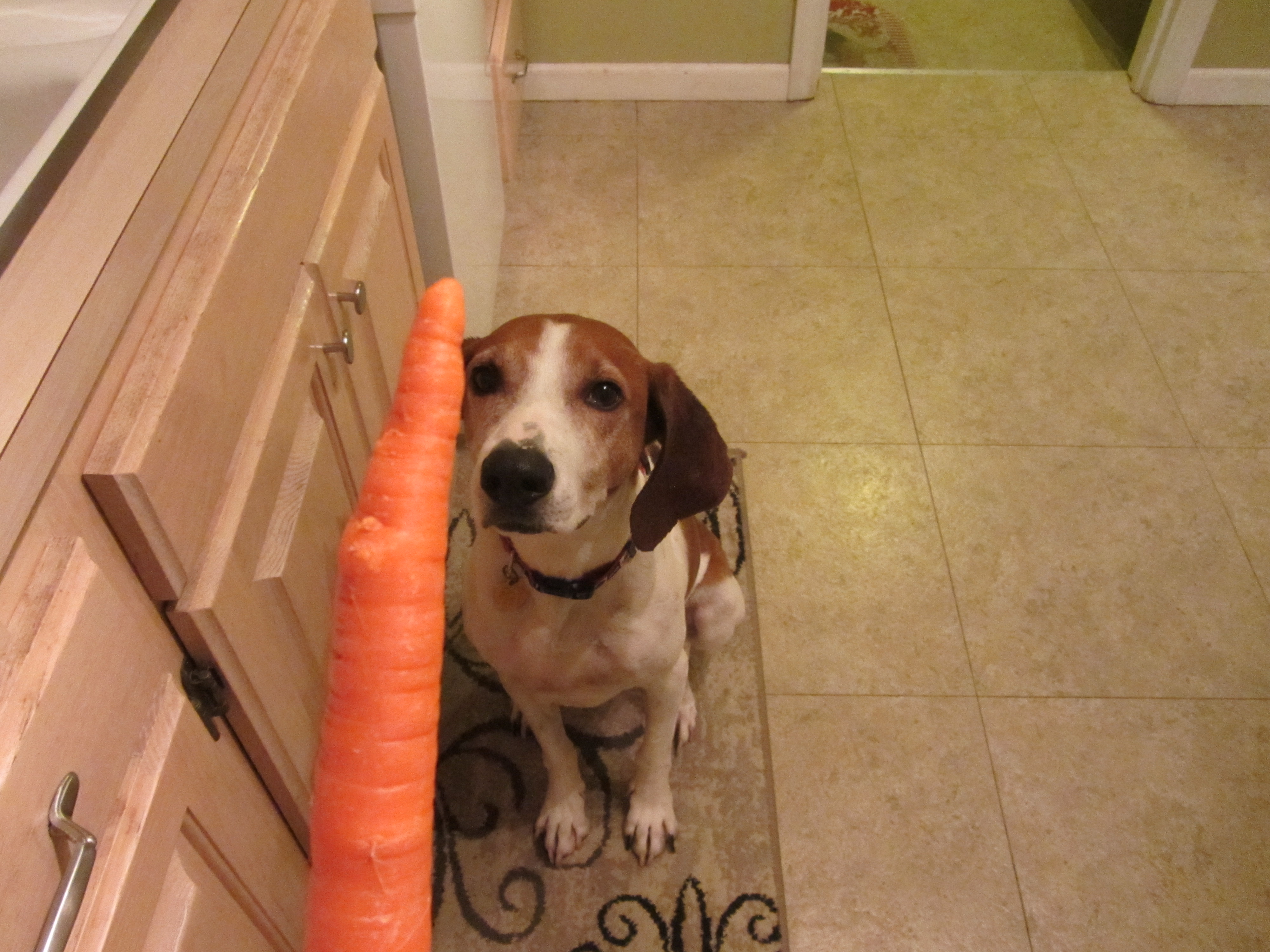
He is NUTS for carrots.

He is NUTS for carrots.

Catching his carrot piece.

Catching his carrot piece.

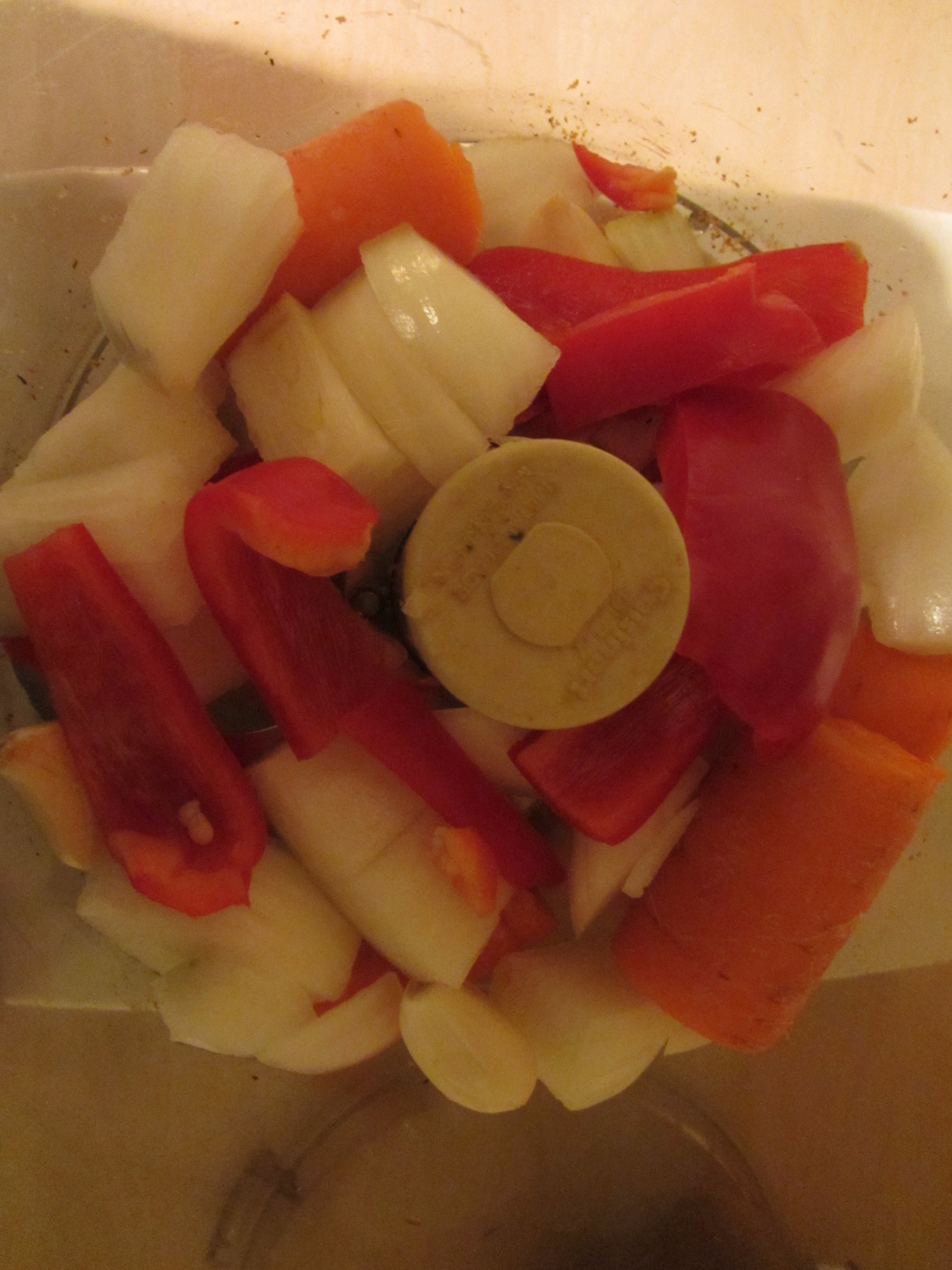
Veggies in the food processor.

Veggies in the food processor.

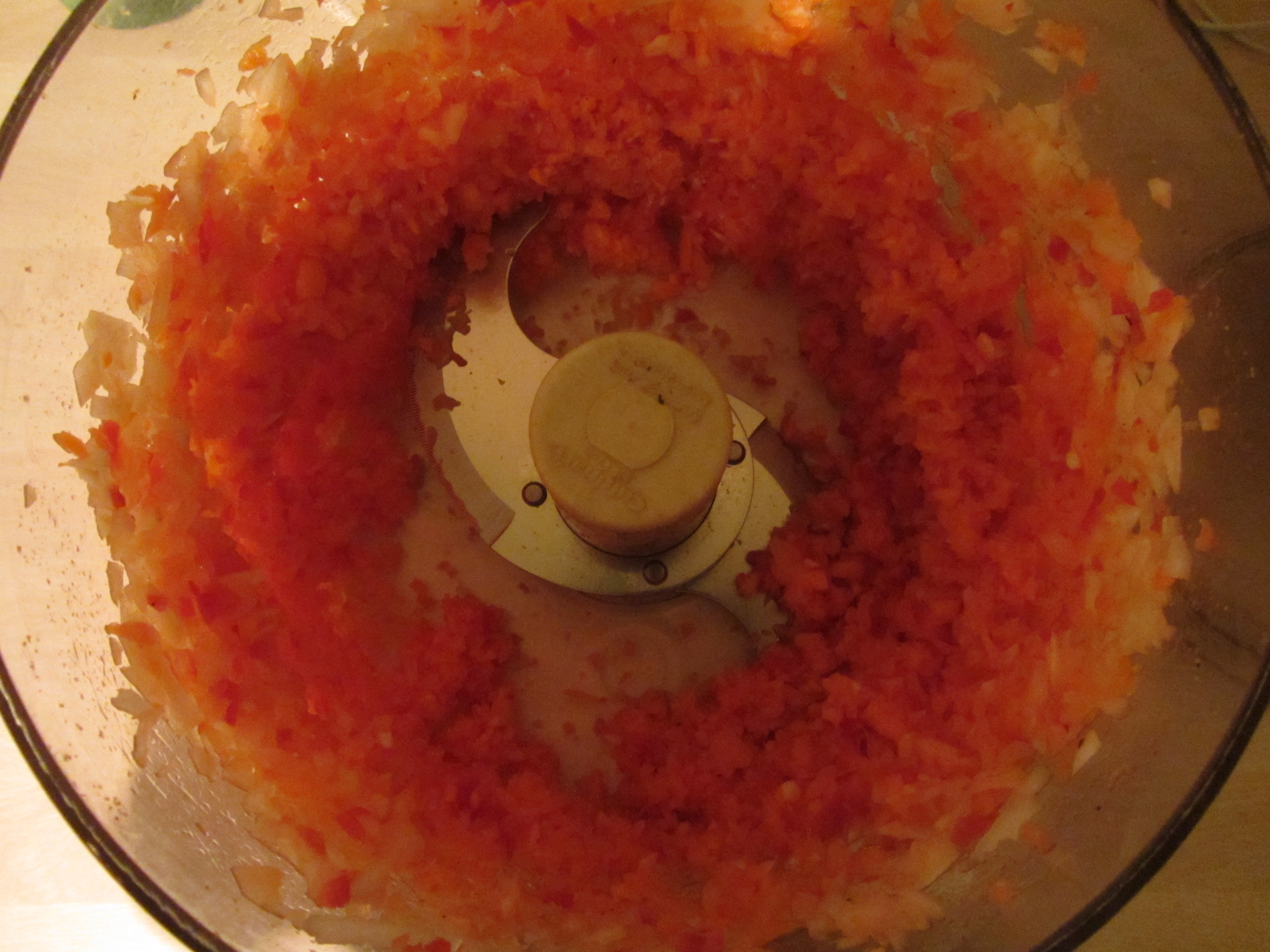
You want to process the vegetables until they are finally chopped, but you do not want to puree them. Once chopped, the veggies go into the bowl with the crouton mixture.

Chopped veggies.

Chopped veggies.

Veggies in the bowl with the croutons.

Veggies in the bowl with the croutons.

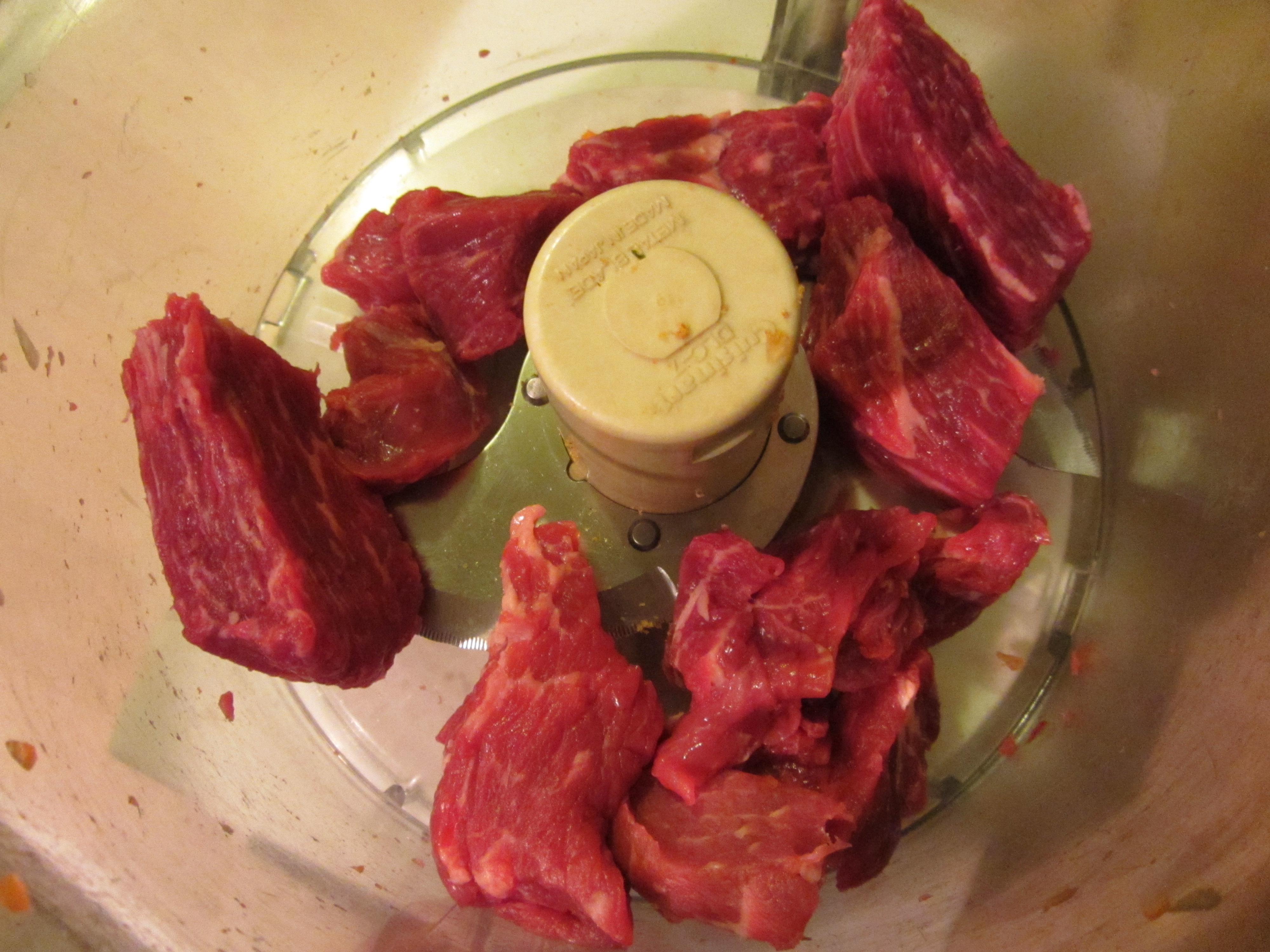
Next, into the food processor goes your meat. Just like with the burger recipe, you want to use 50% chuck and 50% sirloin that you have trimmed and cubed.

Sirloin and chuck to be trimmed and ground.

Sirloin and chuck to be trimmed and ground.

I had to do a bit more trimming with this meat than for the burgers, so it took slightly longer. I was still able to do my meat in two batches, pulsing about 15 times.

Sirloin in the food processor.

Sirloin in the food processor.

Sirloin after ~15 pulses.

Sirloin after ~15 pulses.

Chuck in the food processor.

Chuck in the food processor.

Once your meat is ground, you add it to the bowl with the other ingredients, along with some Kosher salt and one egg.

Both ground meats added to the veggies and croutons, along with salt and an egg.

Both ground meats added to the veggies and croutons, along with salt and an egg.

You want to use your hands to gently toss this mixture. Alton tells you not to squeeze the meat. Once everything is suitably combined, pack the meat into a loaf pan, using a spatula.

The combined mixture after mixing with my hands.

The combined mixture after mixing with my hands.

Packed into a loaf pan.

Packed into a loaf pan.

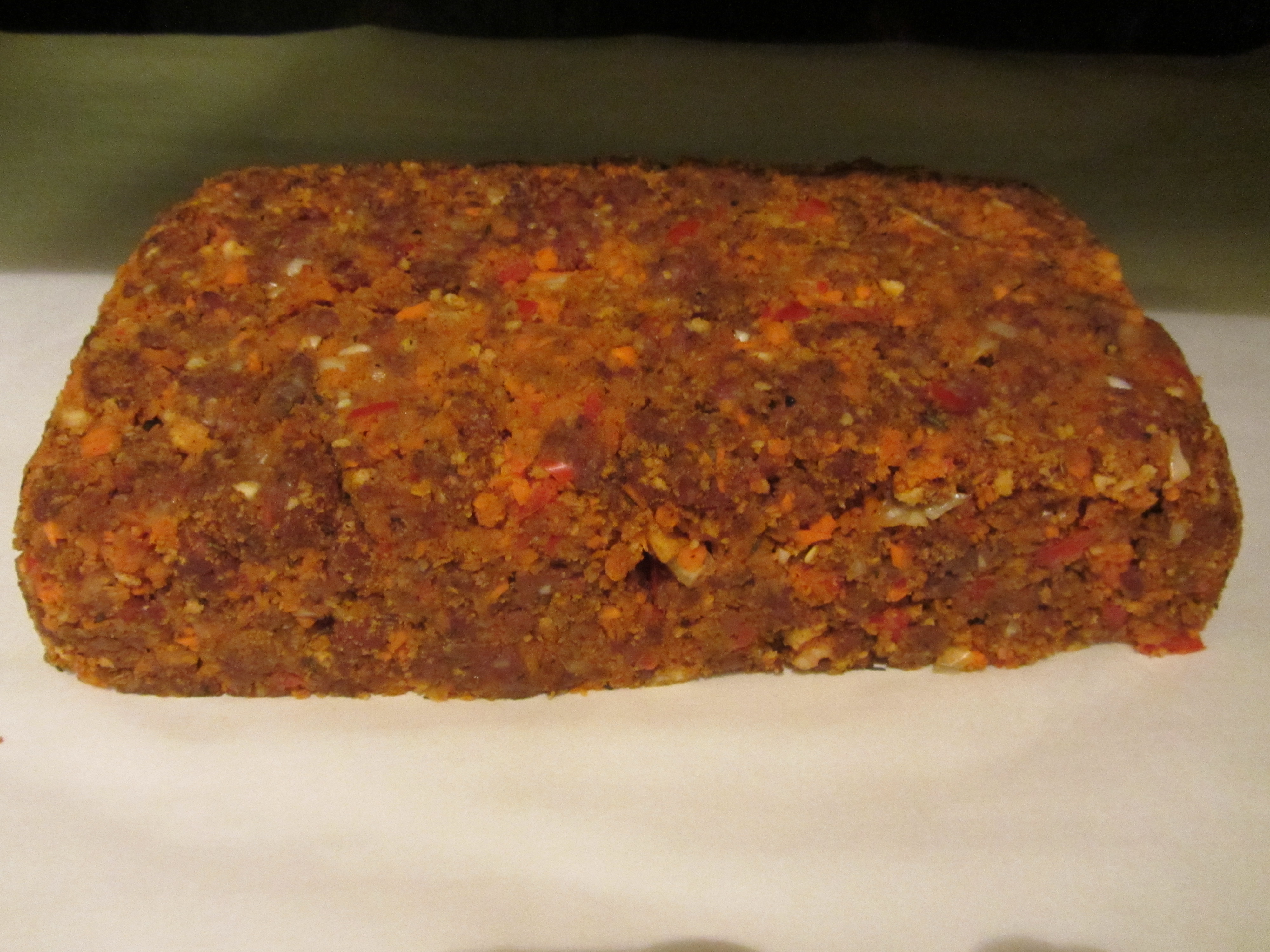
Here is where Alton’s recipe differs from most meatloaf recipes, as you do not actually bake the meatloaf in the loaf pan. Instead, you turn the meatloaf out onto a parchment-lined baking sheet, using the loaf pan simply as a mold. Alternatively, you could just shape the meatloaf on the sheet pan with your hands. Why does Alton not have you bake in the loaf pan? Cooking the meatloaf on a sheet pan allows the fat to escape while the heat gets in.

Turned out onto a parchment-lined sheet pan.

Turned out onto a parchment-lined sheet pan.

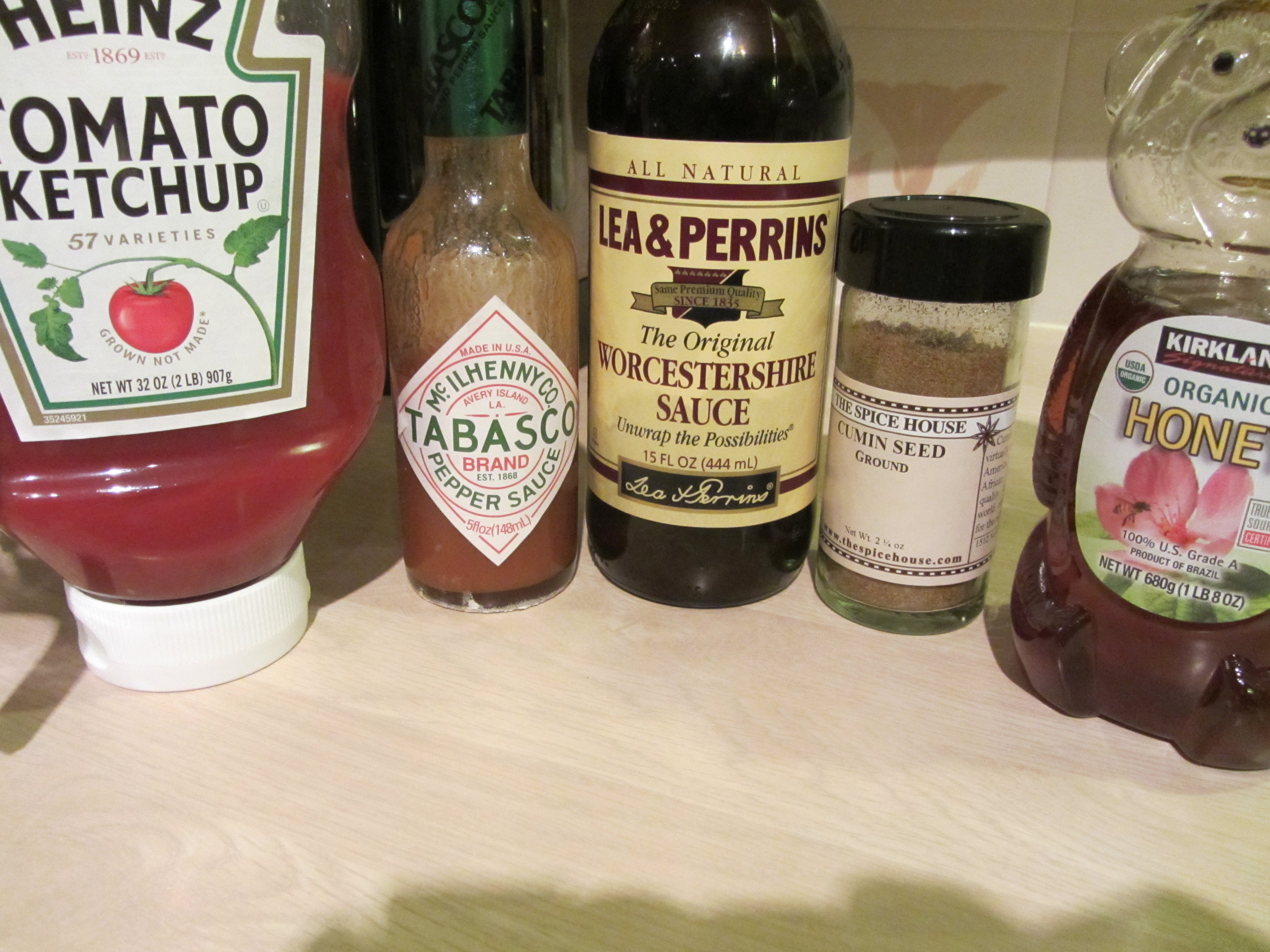
After baking for about 10-15 minutes, you want to brush a glaze onto your meatloaf. For the glaze, combine ketchup, cumin, Worcestershire sauce, hot sauce (I used Tabasco, as did Alton), and honey. In the online recipe, the glaze calls for a teaspoon of ground cumin, though Alton used a whole tablespoon of cumin in the episode. I, or course, went with what he did in the episode.

Glaze ingredients:  ketchup, hot sauce, Worcestershire sauce, cumin, and honey.

Glaze ingredients: ketchup, hot sauce, Worcestershire sauce, cumin, and honey.

Finished glaze.

Finished glaze.

Meatloaf after 10-15 minutes in the oven.

Meatloaf after 10-15 minutes in the oven.

Glaze brushed on and back into the oven.

Glaze brushed on and back into the oven.

For his meatloaf, Alton uses a probe thermometer (set to 155 degrees), which he inserts into the center of the meatloaf at a 45 degree angle. I do not have a probe thermometer, so I simply checked the temperature of my meatloaf regularly until it reached 155 degrees. Confession:  my meatloaf’s temperature was a bit higher than 155 degrees when I removed it from the oven. Once you remove your meatloaf from the oven, be sure to let it rest for about 10 minutes before slicing.

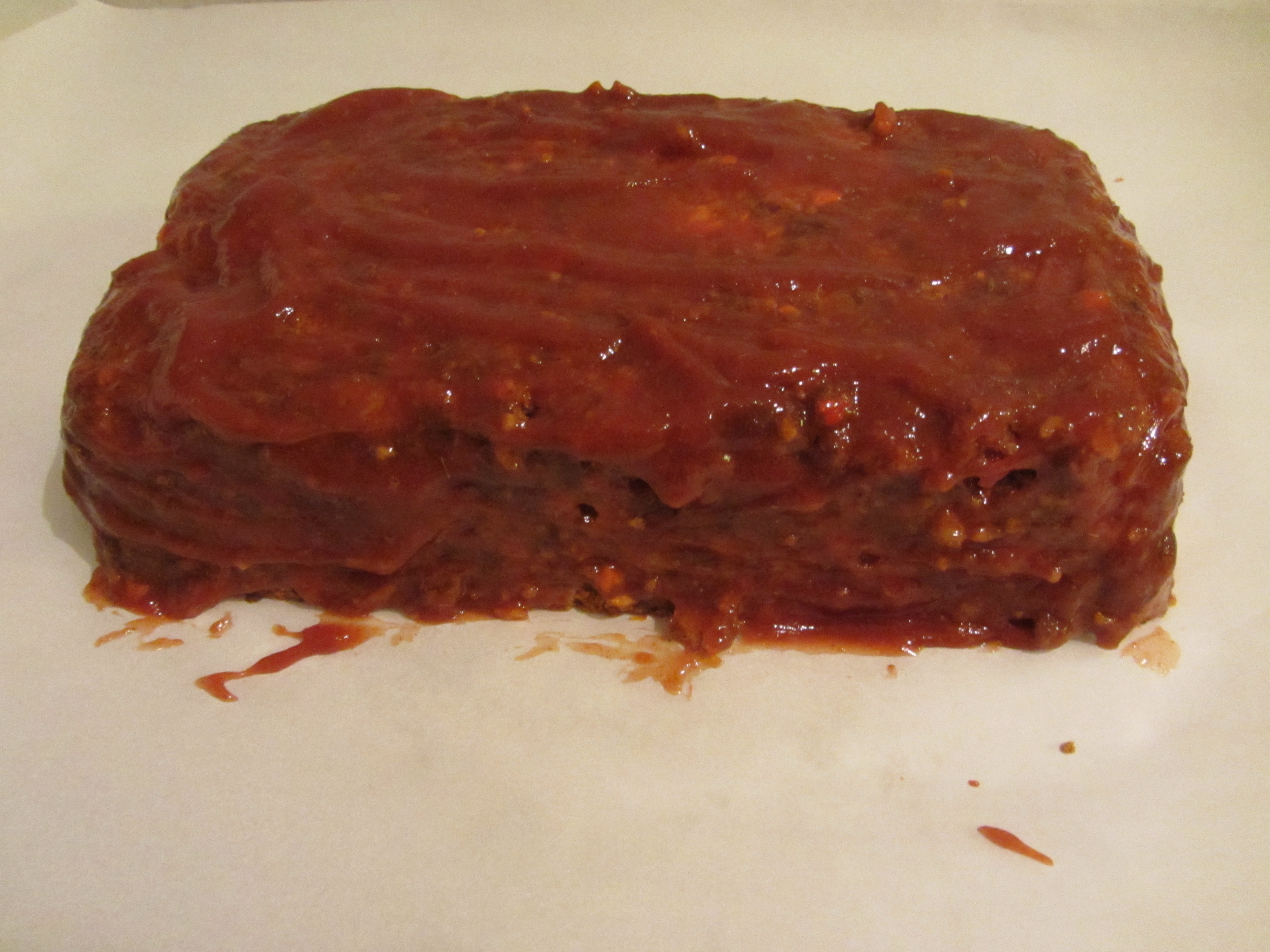
Meatloaf after baking to 155 degrees (+).

Meatloaf after baking to 155 degrees (+).

We ate our meatloaf last night, alongside some steamed, seasoned broccoli. The meatloaf did crumble a bit when it was sliced, but it was far from dry. In fact, it was very moist in the middle with a nice crust from the glaze on the outside.

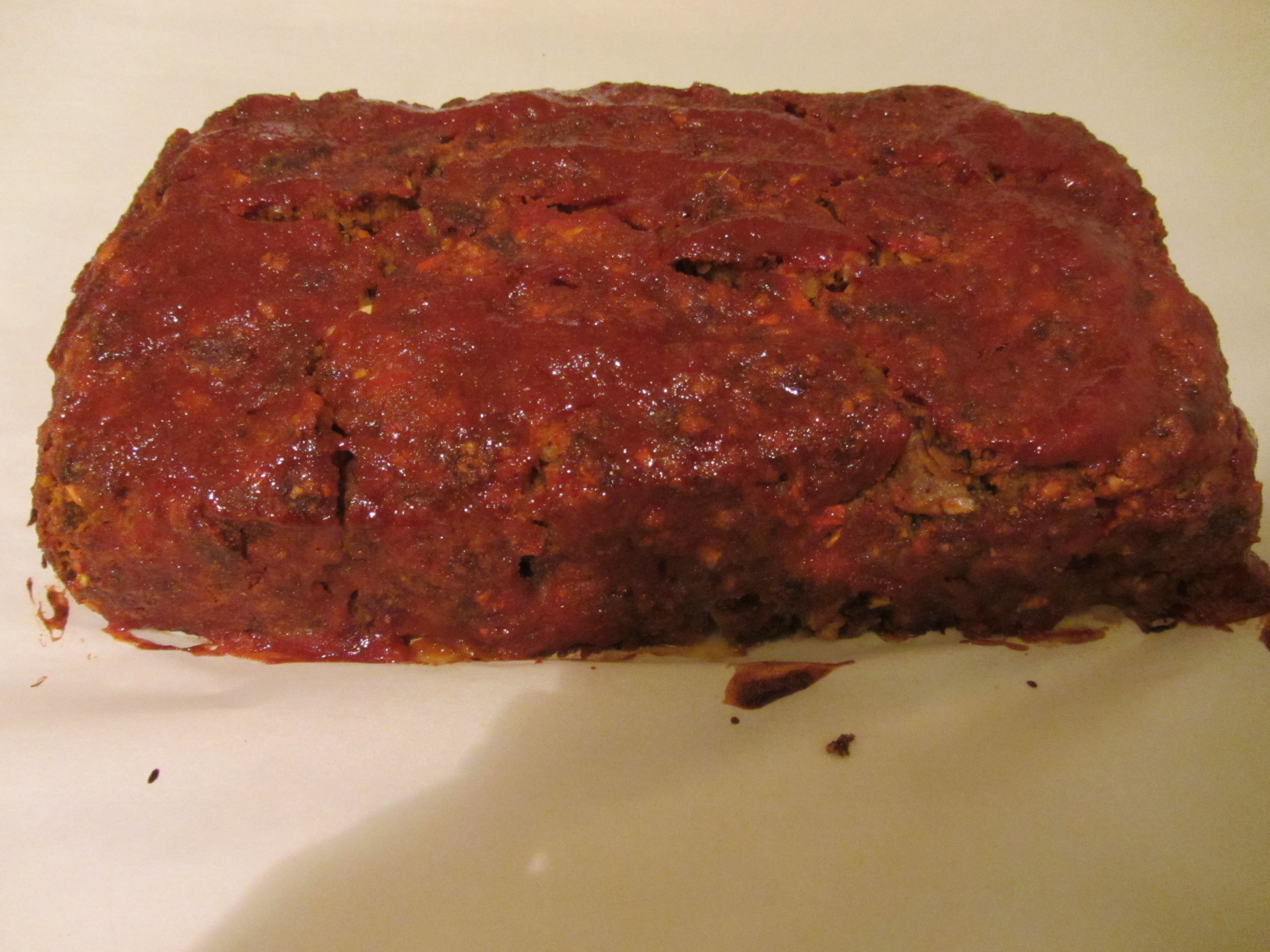
Meatloaf after resting.

Meatloaf after resting.

We both really liked the combination of spices used, and said we will likely use them again for any future meatloaf, even if we are not grinding our own meat. The cumin was the predominant spice, so those who do not like cumin may find this to be a bit overpowering. We, however, thought it was just right. The flavor was zesty, slightly spicy from the cayenne and hot chili powder, and sweet from the ketchup and honey. The meat flavor still came through, even with all of the spice, and the vegetables served to keep moisture in the meatloaf. If you are looking for a super flavorful, spicy meatloaf, give this one a try.

True Brew

I am far from a coffee aficionado. I am, however, married to a closet coffee snob. While I am content with good ol’ drip coffee, my husband has a plethora of coffee tools and gadgets, including a stovetop Italian espresso maker, an Aeropress, a Chemex coffee maker, two French presses, and a burr grinder. Oh, and we have a standard drip coffee maker. My husband also loves to roast his own coffee, but that’s another subject. I do savor my one cup of coffee in the morning (with half and half, please, and thank you very much), but that is typically the extent of my caffeinated fueling for the day. It is, however, difficult for me to say no if someone offers me a cappuccino. My primary complaint about coffee is that it can be bitter, so I was hoping Alton’s coffee method would succeed in rendering coffee free of bitterness. This post will be rather brief, as the 20th episode of Good Eats featured a method of coffee making, more so than a recipe.

To make coffee the Alton Brown way, grind your own beans, and grind them as close to brewing time as possible. For drip coffee, Alton recommends that you grind your beans for about 15 seconds, and he says a standard blade grinder is just fine. Since we happen to have a fancy schmancy burr grinder, I used that to grind my beans just prior to brewing.

Fancy schmancy burr grinder.

Fancy schmancy burr grinder.

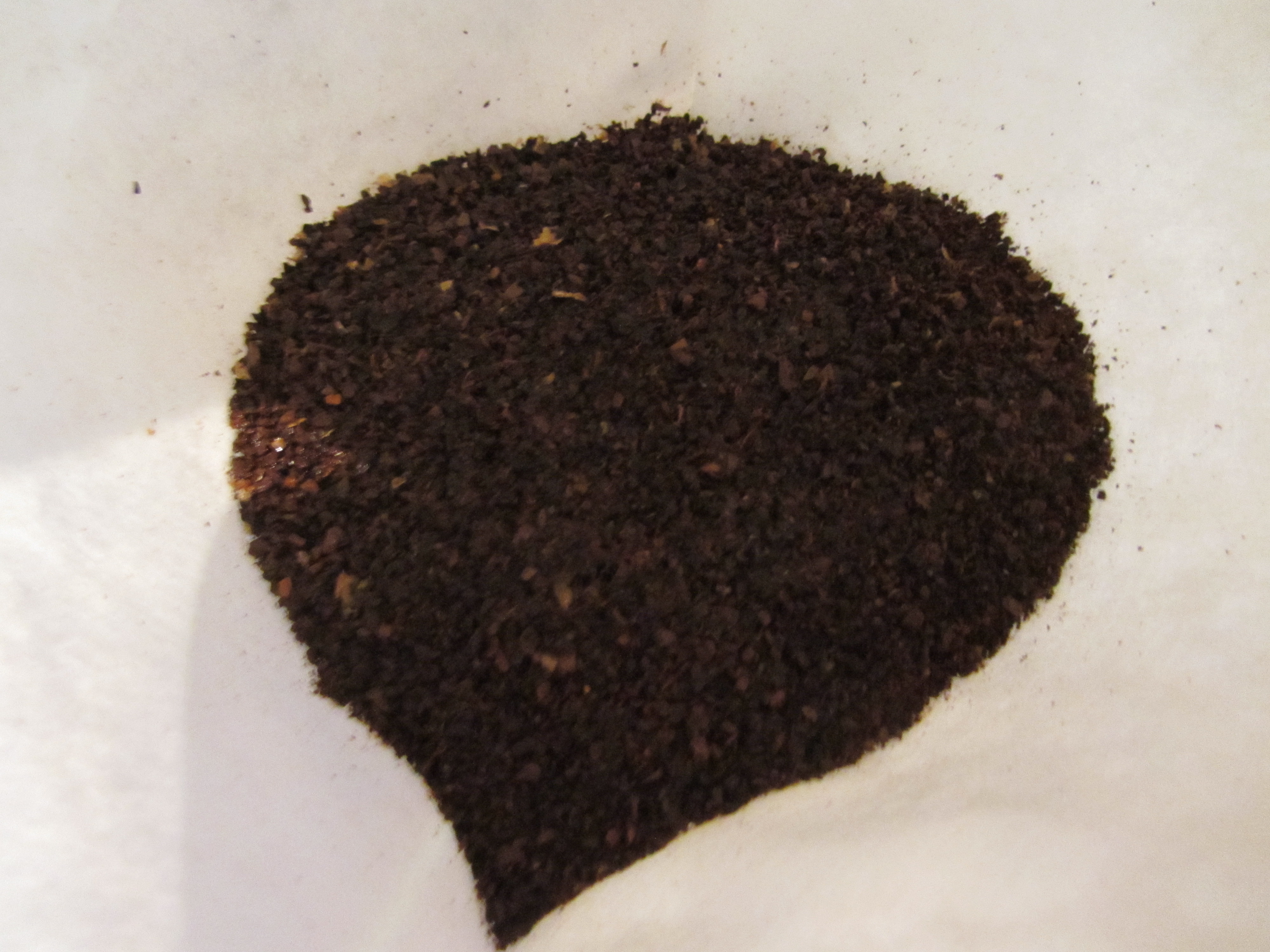
Alton strongly emphasizes that it is critical to use enough coffee when brewing. Since bitterness is a common complaint about coffee, many people assume they should decrease the amount of coffee to decrease bitterness. Instead, Alton stresses that it is necessary to use a good 2 T of coffee grounds per 6 oz. of water. Using less than 2 T of coffee per cup leads to over-extraction and resulting bitterness. I set my burr grinder to the 6 cup mark, but it yielded less than the 12 T of grounds needed, so I had to grind more.

Fresh coffee grounds.

Fresh coffee grounds.

2 T per 6 oz. cup.

2 T per 6 oz. cup.

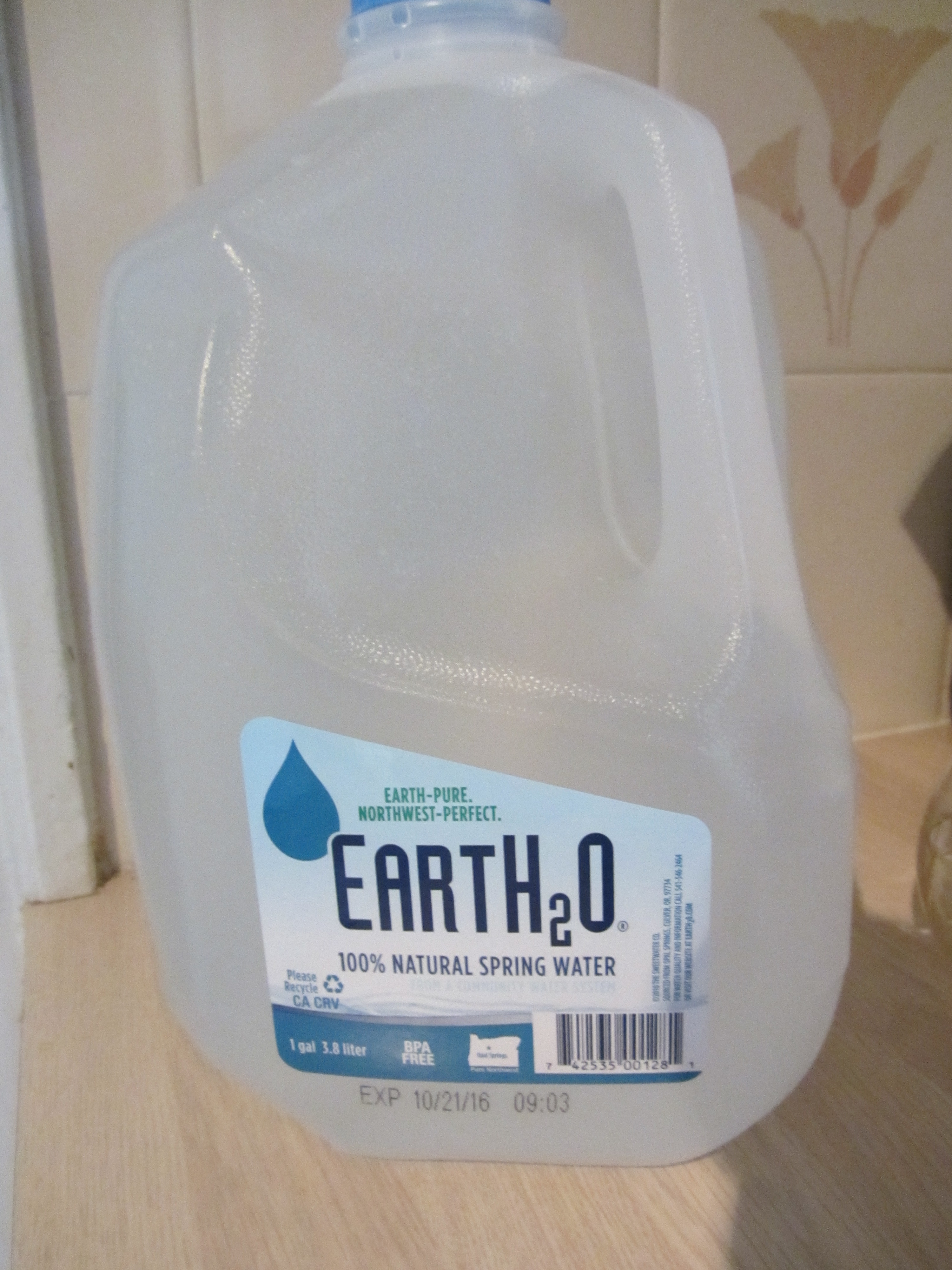
Alton also mentions that water quality is important, as tap water can impart negative flavors. If possible, Alton says you should use filtered or bottled water. To go along with his method, I used bottled water.

Bottled water for brewing.

Bottled water for brewing.

In addition to water quality, water temperature is pivotal, and you want your water to be between 190 and 205 degrees. To achieve proper water temperature, Alton recommends an electric kettle. We do not have an electric kettle, so I brought my water to temperature on the stove.

36 oz. of bottled water, being brought to 190-205 degrees.

36 oz. of bottled water, being brought to 190-205 degrees.

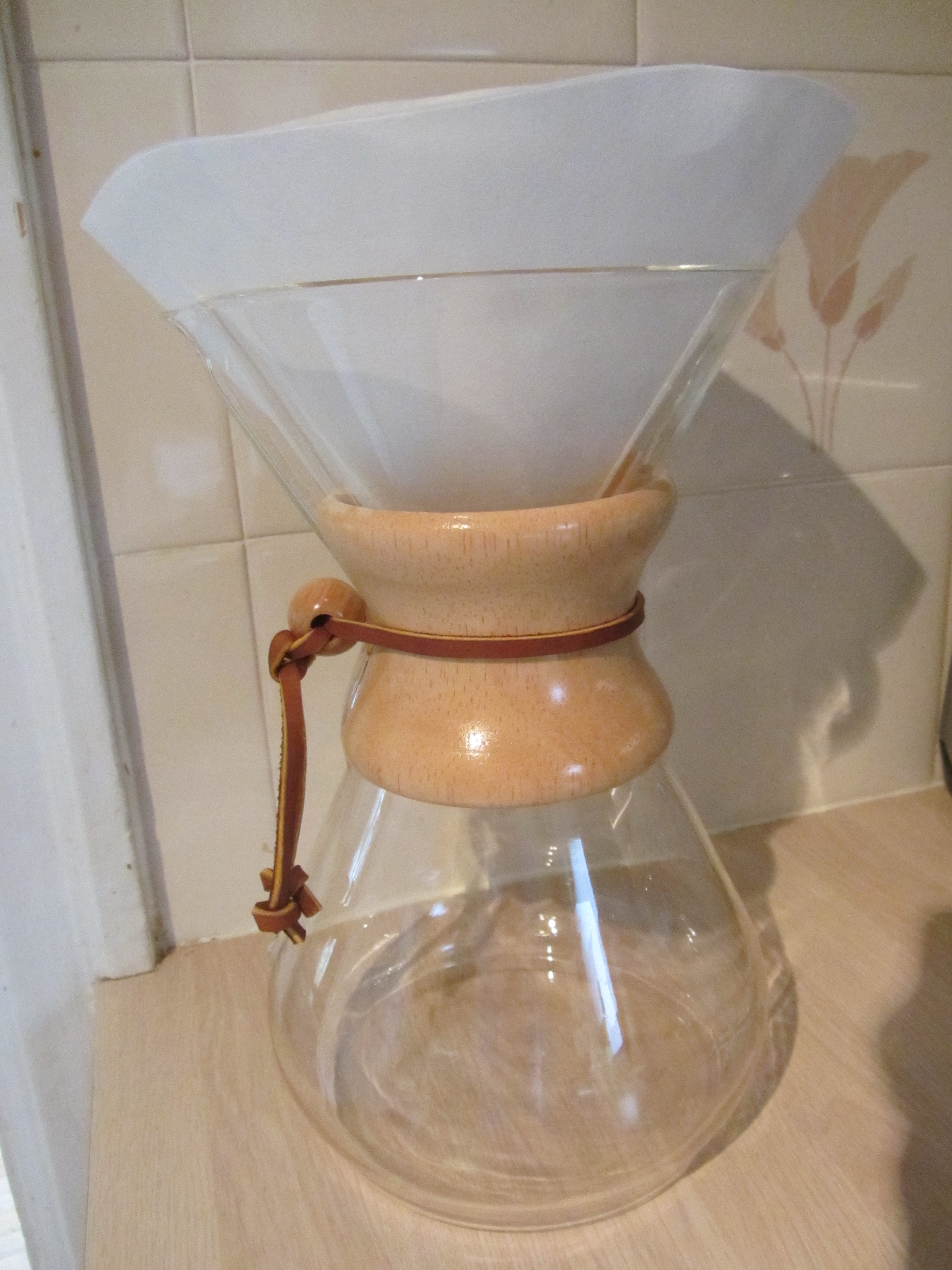
Ideally, you want to use a gold mesh coffee filter for extraction, which is placed over a thermal carafe. This maintains the water temperature. Since we don’t have a thermal carafe, I used my husband’s Chemex coffee maker and a paper filter.

Chemex coffee maker with paper filter.

Chemex coffee maker with paper filter.

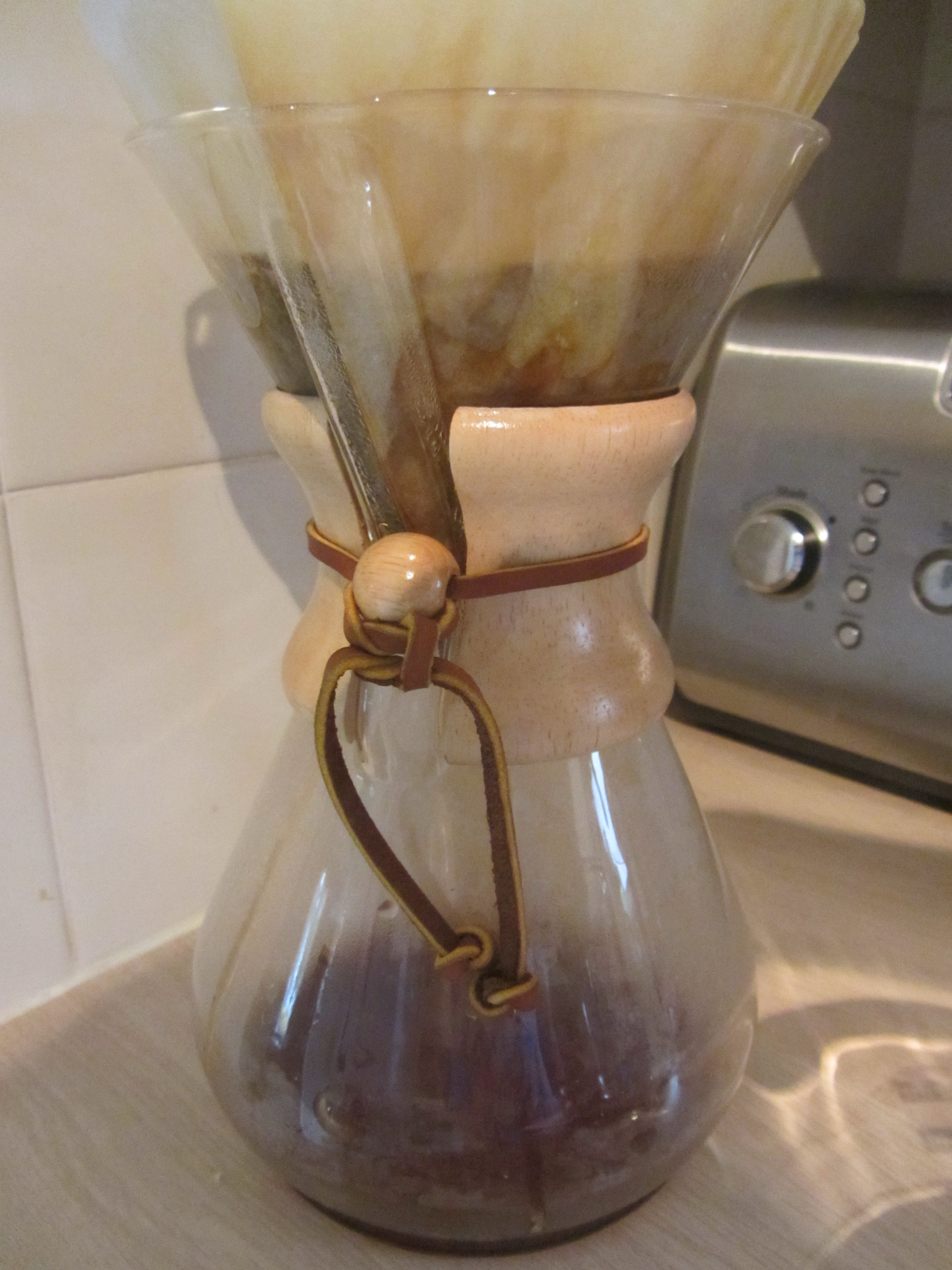
Before you pour your hot water over your coffee, it is best to spritz the surface of the coffee grounds with water. I used a spray bottle to spritz my grounds. Total extraction time for coffee should be between four and five minutes. My extraction took a little over five minutes, and about four pour overs.

Grounds in filter.

Spritzed grounds in filter.

Beginning the brewing process.

Beginning the brewing process.

Slowly brewing.

Slowly brewing.

Finished brewing after about 5 minutes.

Finished brewing after about 5 minutes.

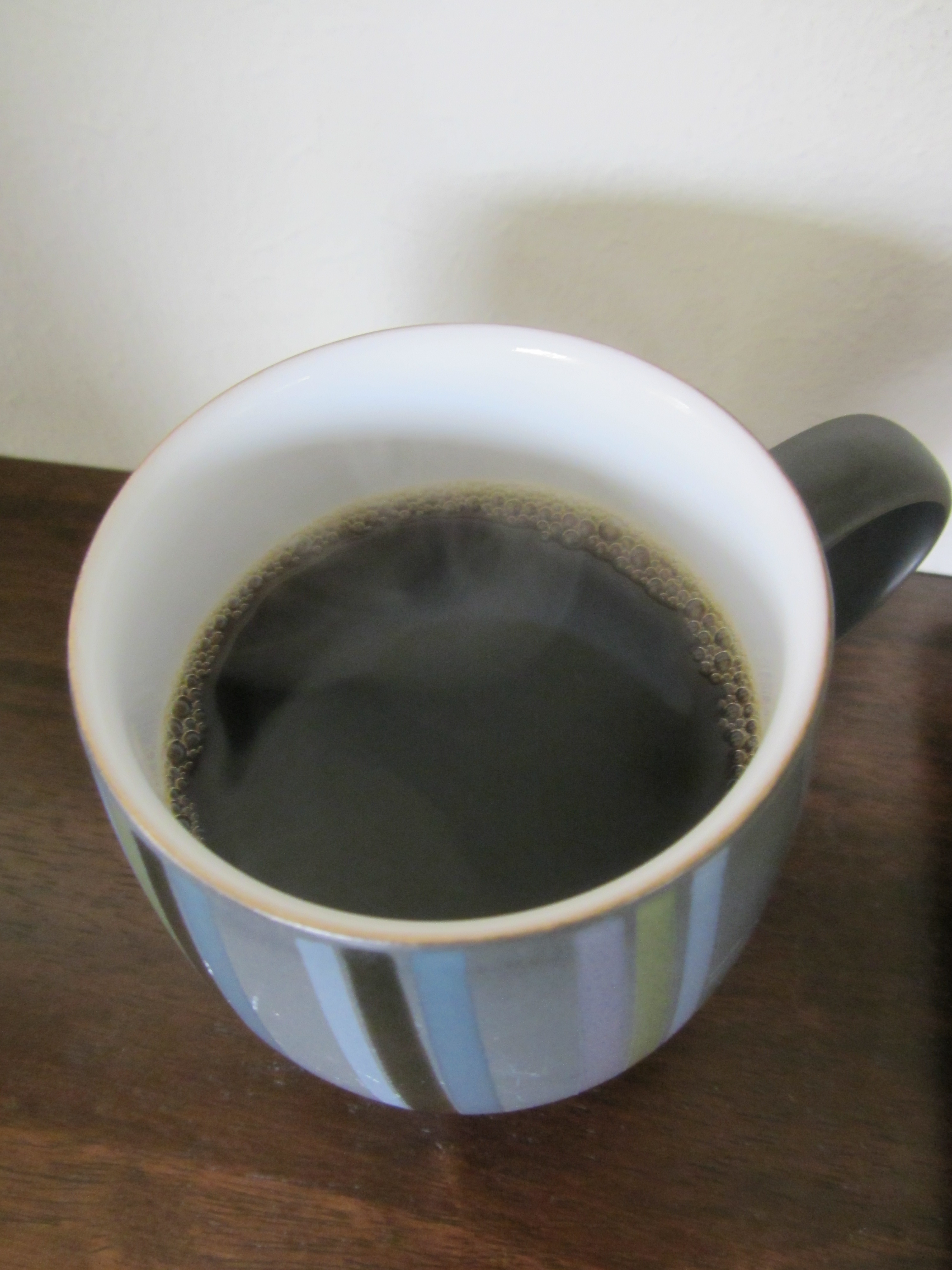
A lovely cup of coffee.

A lovely cup of coffee.

FYI, according to Alton, only about 30% of coffee is extractable (by weight), and only 2/3 of that extractable portion has pleasant flavor. I brewed my Alton coffee this morning, so my husband and I could drink the coffee at the same time. I will say that this coffee had no bitterness. I do usually add half and half to my coffee to cut down on bitterness, but I drank my cup black this morning; this may have had something to do with the fact that we purchased fat-free half and half by mistake (yuck!). My husband, the usual coffee brewer in our house, admitted that this coffee seemed less bitter than normal, and stated that he will be using 2 T of grounds per cup from here on. I highly doubt we will be using bottled water for our daily coffee brewing, but this method did result in a good cup of coffee. If you want to be guaranteed a great cup of coffee with no bitterness, give Alton’s method a try. The biggest takeaway message:  use enough coffee grounds when brewing.

Random coffee facts from Alton:

1) Buy beans in foil bags with a one-way valve. The valve allows CO2 from the beans to escape.

2) Store coffee in an airtight container at room temperature for a max of one week.

3) Do not freeze coffee. When freezing, condensation forms on the beans, which increases oxidation.

4) Decaf coffee is much more expensive than caffeinated coffee because the decaffeination process depletes much of the goodness within the coffee. Therefore, very high quality beans need to be used to produce acceptable decaf coffee.


I am a sucker for baking. I have loved to bake for as long as I can remember, and even considered going to culinary school to become a pastry chef. For a year and a half I worked at a bakery in a tiny (population of ~300 people) Washington town. When I applied for the job, I had romantic visions of early mornings spent manipulating dough into glorious breads and pastries. Instead, I would wake at 4:30 am and drive 30 minutes to work to be the soup and salad girl. Sigh. While I made those soups and salads to the best of my ability, there was simply nothing romantic about them, or the early mornings. Instead, I would watch with envy, from my little soup corner of the kitchen, as the town Frenchman would fold circles of dough over tangy fruit fillings, forming beautiful free-form galettes.

No Pan Pear Pie

Needless to say, I was excited to watch the 19th episode of Good Eats, as it is a baking episode AND the recipe featured is for a fruit galette. To begin this recipe, Alton has you start with your dough, combining flour, corn meal, sugar, and Kosher salt. For this, he emphasizes that you want to use all-purpose flour, as it browns better.

Dry ingredients..

Dry ingredients.

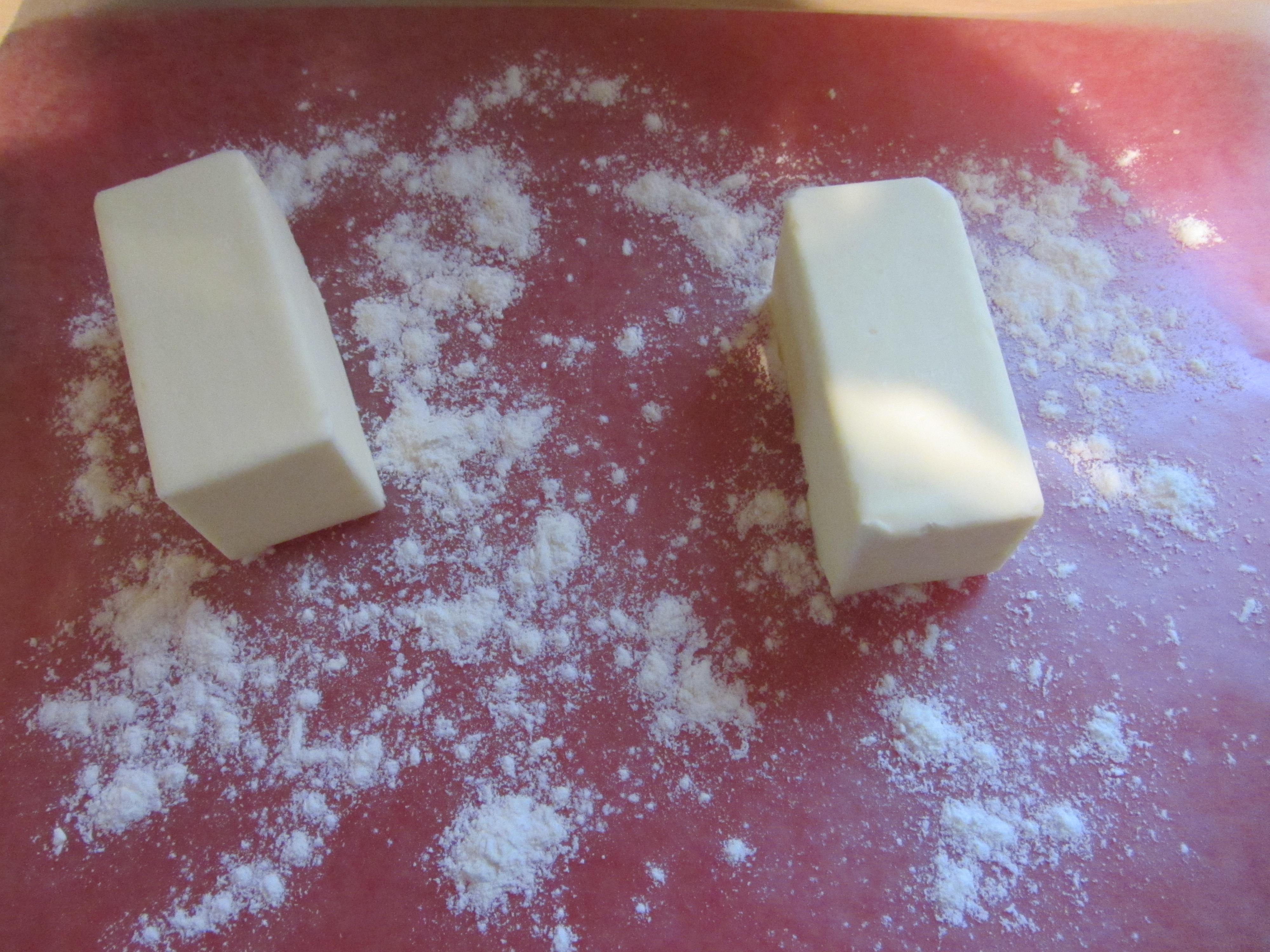
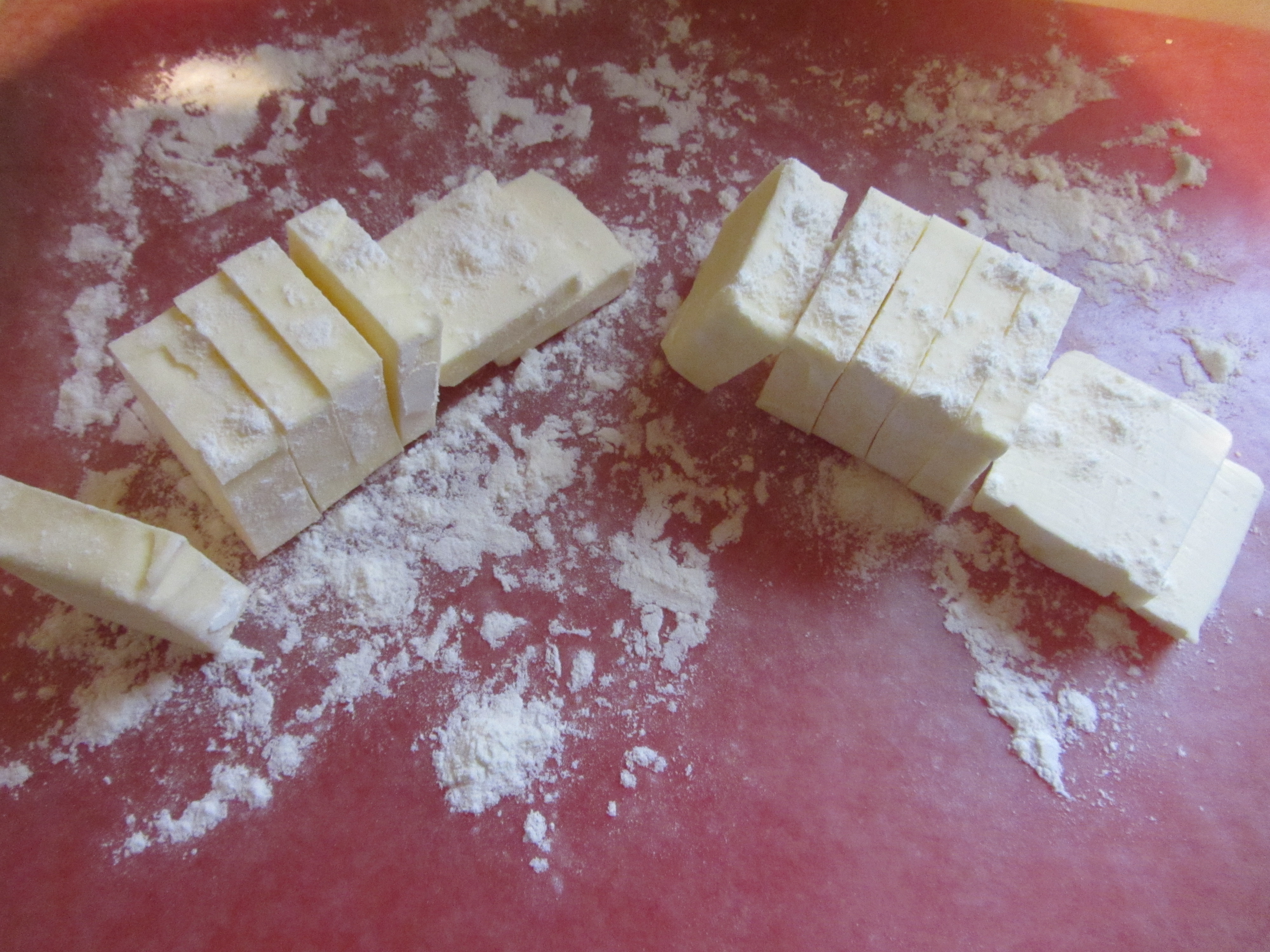
Meanwhile, you coat two sticks of butter in some flour and cut them into pieces.

Coating butter in flour.

Coating butter in flour.

Coated butter.

Coated butter.

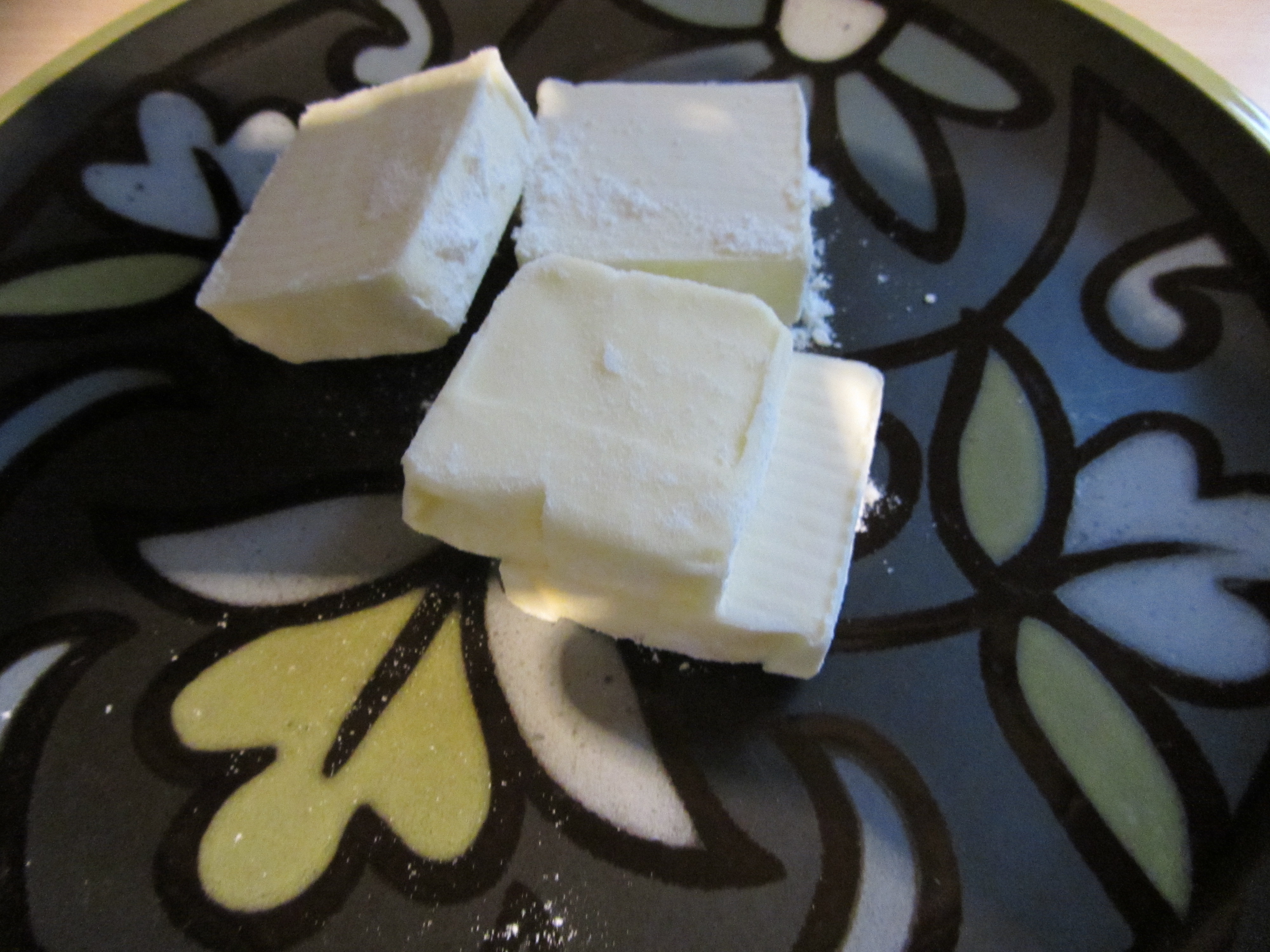
Both the butter and the dry ingredient mixture go into the refrigerator to chill, though you want to keep half a stick of the butter at room temperature.

Reserved, room temperature butter.

Reserved, room temperature butter.

Once your ingredients are thoroughly chilled, you pulse your dry mix in a food processor, adding the room temperature butter, and pulsing until the fat is no longer visible.

Pulsing dry ingredients.

Pulsing dry ingredients.

Adding room temperature butter.

Adding room temperature butter.

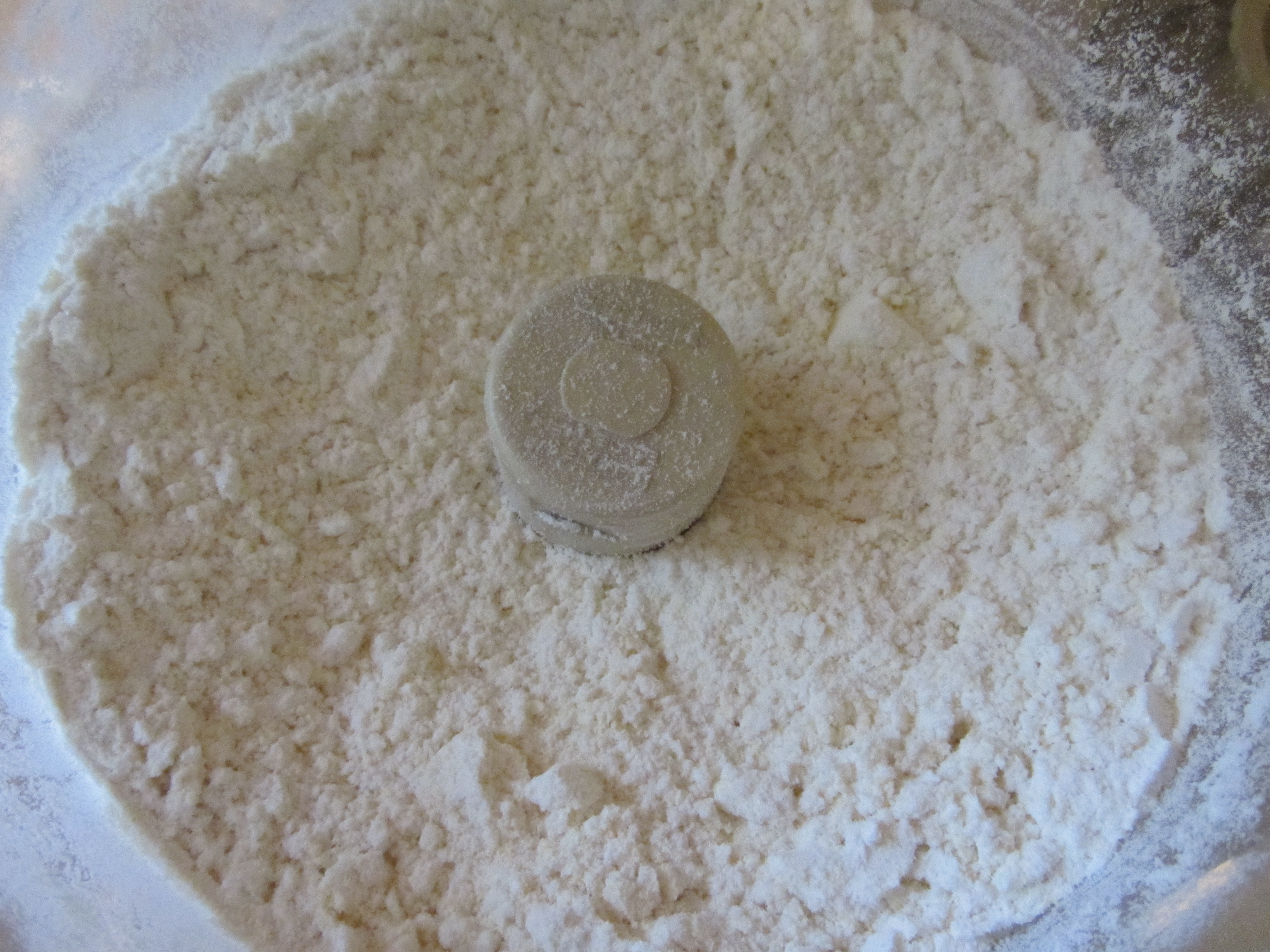
Fat no longer visible.

Fat no longer visible.

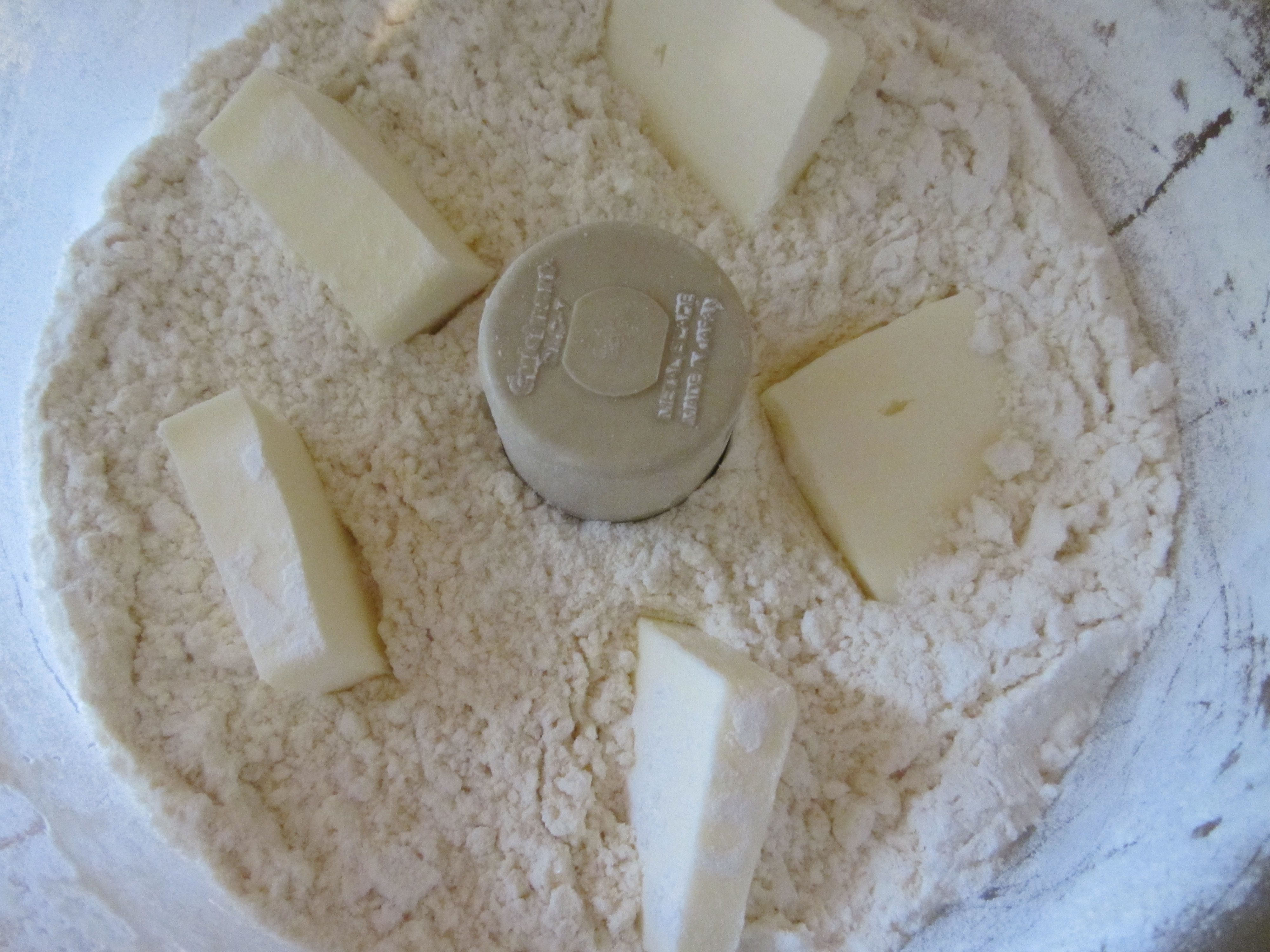
At this point, you add half of your chilled butter, pulsing about 10 times, or until you have a mixture with pea-sized lumps.

Adding half of cold butter.

Adding half of cold butter.

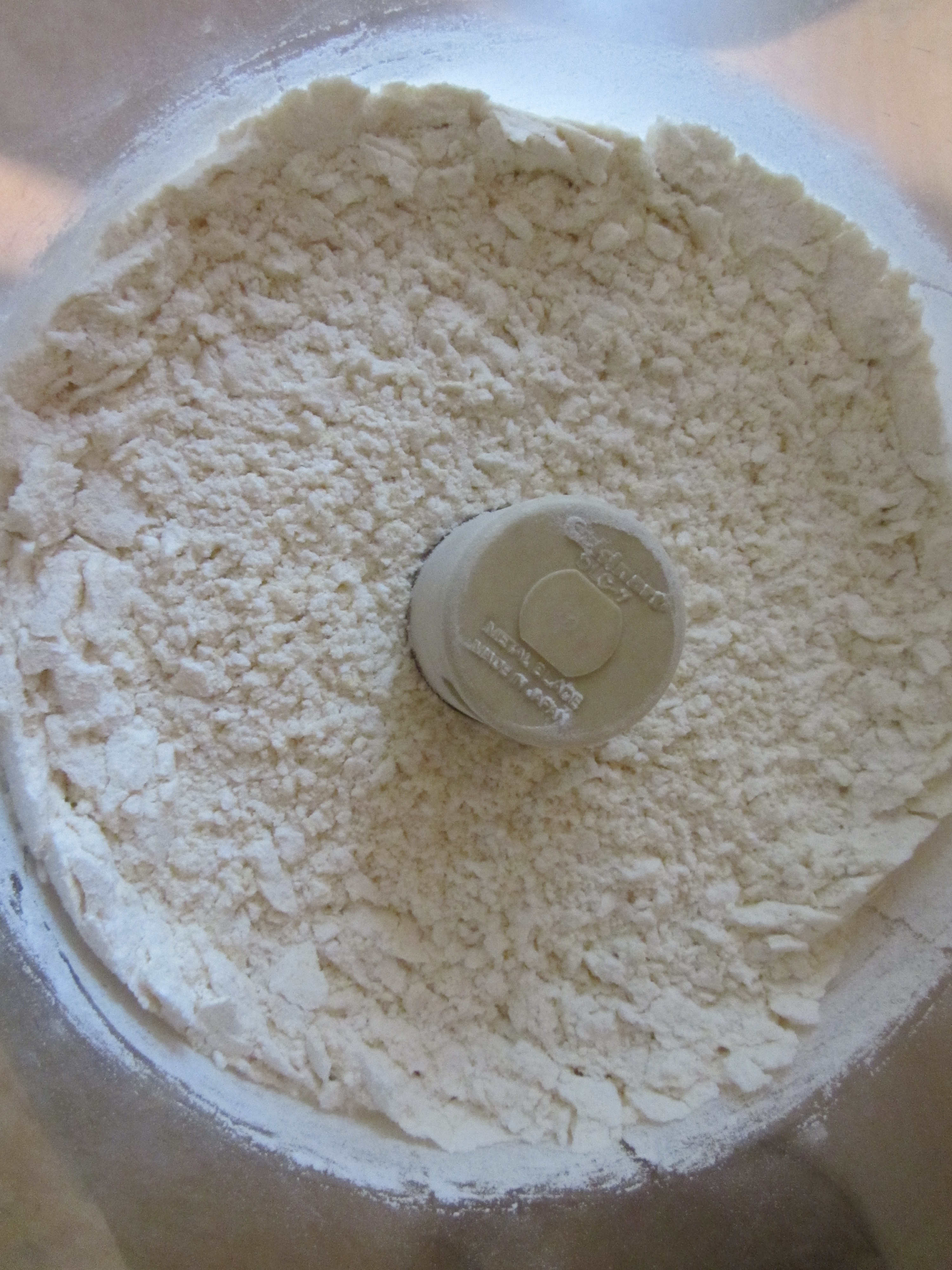
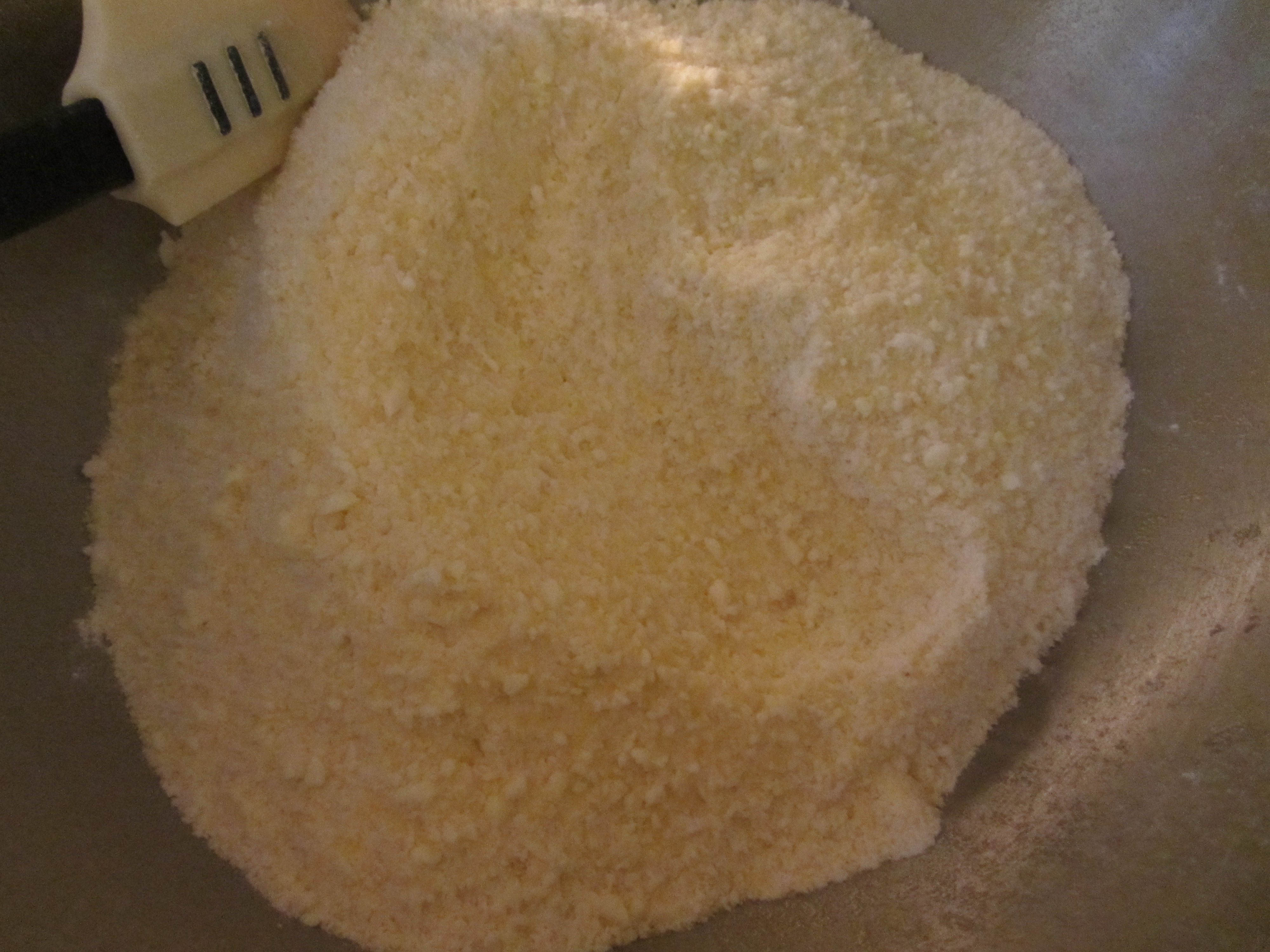
10-27-2014 060 To this, you add the remaining cold butter, pulsing a max of 4 times.

Final mixture.

Final mixture.

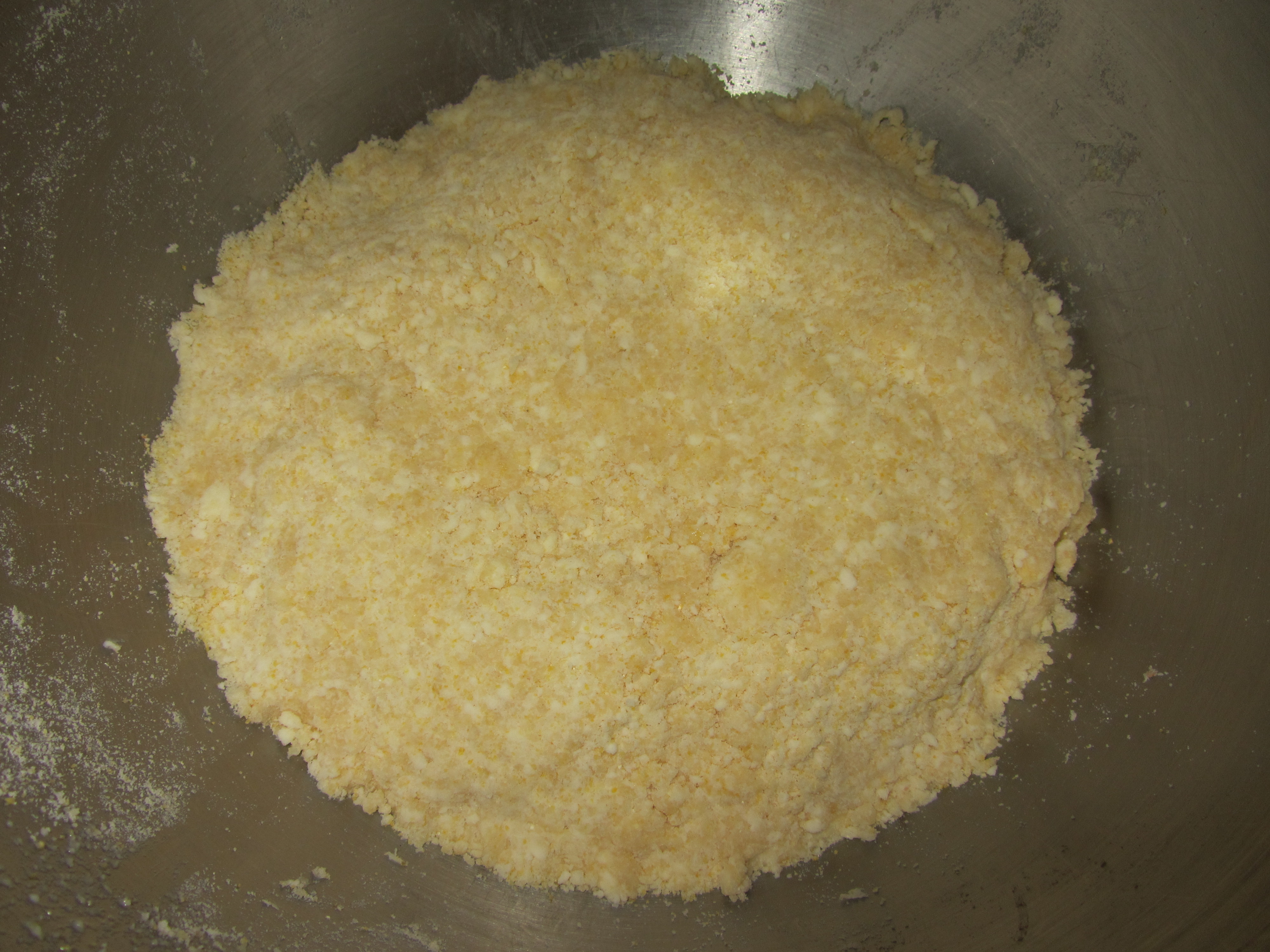
This mixture is placed in a metal bowl. The liquid for this dough is a combination of apple juice concentrate and water, which Alton recommends you put into a spray bottle.

Spray bottle with apple juice concentrate and water.

Spray bottle with apple juice concentrate and water.

This liquid gets spritzed onto the surface of the dough, and folded in with a spatula, until you have a dough that holds together and breaks cleanly, without crumbling.

Spritzing liquid into dry mixture.

Spritzing liquid into dry mixture.

Adding liquid.

Adding liquid.

Once your dough has reached this state, you form it into a ball, wrap it in parchment, and put it in the refrigerator to chill. I ended up using twice the amount of liquid called for in the recipe before deciding my dough was close enough. In reality, my gut was telling me to keep adding more liquid. Foreshadowing.

Final dough, after adding 2x the liquid called for.

Final dough, after adding 2x the liquid called for.

Dough wrapped to go in refrigerator.

Dough wrapped to go in refrigerator.

While your dough chills, you make the filling for your pie.

Filling ingredients.

Filling ingredients.

To a hot iron skillet, you add two Anjou pears, peeled, cored, and sliced.

Hot iron skillet.

Hot iron skillet.

Pears.

Pears.

To the pears, you add balsamic vinegar and sugar.

Pears with balsamic vinegar.

Pears with balsamic vinegar.

Pears, balsamic vinegar, and sugar.

Pears, balsamic vinegar, and sugar.

Once the pears have softened, you add nutmeg, cinnamon, and butter.

Pear mixture with spices and butter.

Pear mixture with spices and butter.

When the butter has melted, you add a cup of blueberries and remove the filling from the heat.

Blueberries added.

Blueberries added.

Some sifted flour is stirred into the filling to thicken it, and you allow it to cool to room temperature.

Flour sifted into filling.

Flour sifted into filling.

Final filling.

Final filling.

I ended up running out of time to finish my pie in the day I started it, so I refrigerated my filling and dough overnight. The next morning, I pulled my dough and filling from the refrigerator, allowing them both to warm up for a few minutes. I sprinkled my work surface with flour and turned my dough out onto it. I could tell immediately that I should have listened to my gut the day before, as my dough was way too crumbly.

Dough that is too crumbly.

Dough that is too crumbly.

Back into the food processor it went. This time, I added cold water through the feeding tube until my dough was coming together in a nice ball. I worked my dough into a nice smooth ball, and put it back in the refrigerator for about 20 minutes. Finally, I was ready to assemble my pie.

Proper dough after adding more liquid.

Proper dough after adding more liquid.

Dough ready to roll out after adding more liquid.

Dough ready to roll out after adding more liquid.

Alton tells you to roll your dough on a floured surface until it is 1/4″ thick. If your dough gets too warm, you can press it with a cold sheet pan, but I never needed to do that. Once your dough is in a nice, even circle, you transfer it to an inverted, parchment-coated, sheet pan.

Rolled out dough.

Rolled out dough.

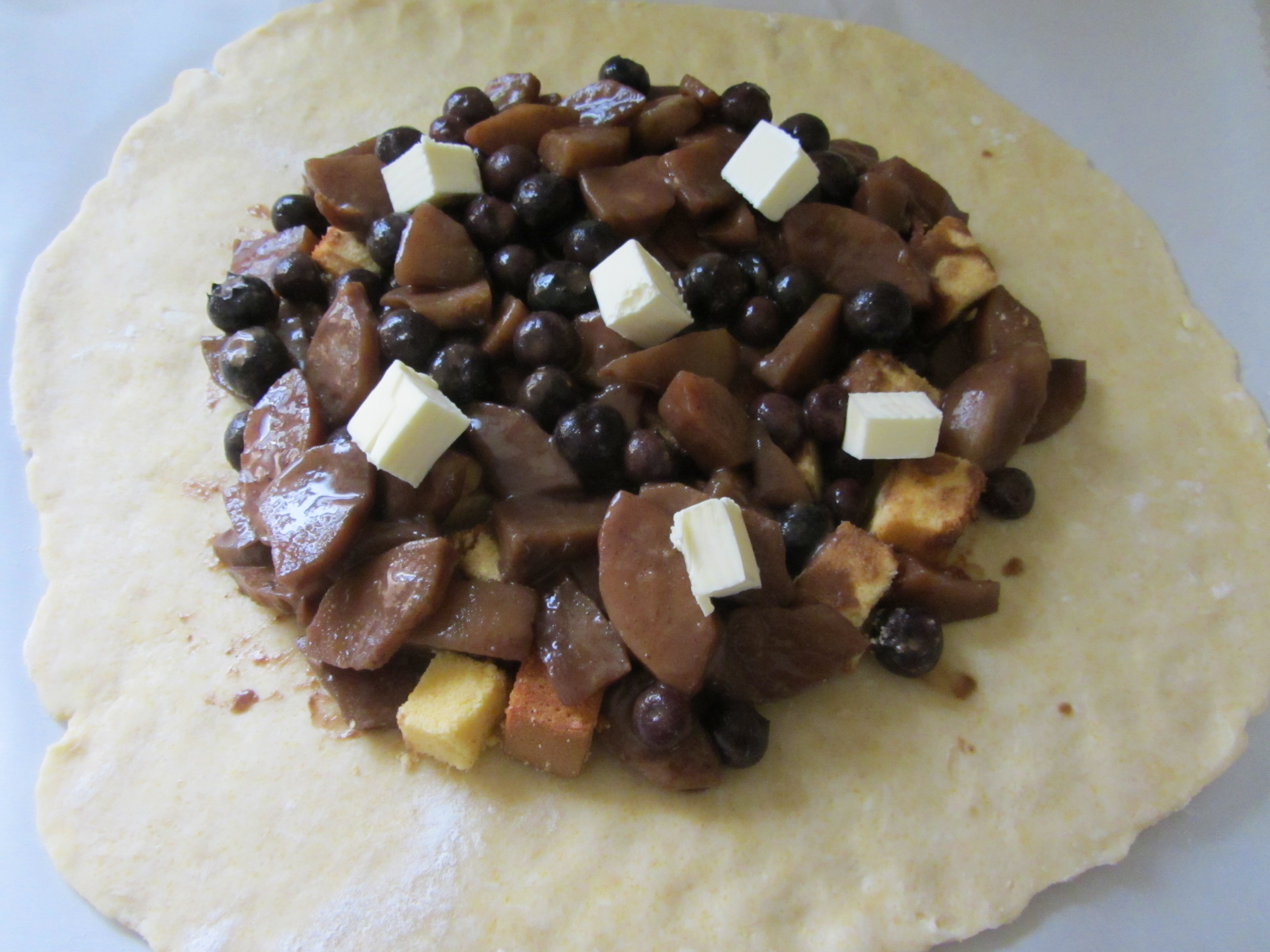
In the center of your dough circle, you place pound cake cubes (I used frozen pound cake), and top this with your fruit filling. Some clumps of butter are dotted over the filling, and you can begin folding up your dough.

Pound cake in middle of dough circle.

Pound cake in middle of dough circle.

Pound cake, fruit filling, and butter.

Pound cake, fruit filling, and butter.

You fold your dough in sections, overlapping the sections and sealing them with some water, until all of the excess dough is folded up.

Folded dough around filling.

Folded dough around filling.

Your crust gets brushed with an egg wash and sprinkled with sugar, and it goes into the oven for 25 minutes.

Brushed with egg wash and sprinkled with sugar.

Brushed with egg wash and sprinkled with sugar.

My pie was done in about 32 minutes, as it was golden brown and the pleats felt like they would break if you pushed on them.

Pie after baking.

Pie after baking.

It is best to allow this pie to cool to room temperature before cutting. We ate this pie for dessert and/or breakfast over the next few days. It cut easily into wedges (even the very first piece), and had a nice combination of flavors and textures.

Perfect first slice of pie.

Perfect first slice of pie.

Pie slice.

Pie slice.

I really liked the addition of cornmeal to the crust, as it gave it an extra dimension of texture. The crust was flaky, buttery, and tender. The pears in the filling were soft, but not mushy, and the blueberries gave a bit of tartness. The pound cake absorbed some of the liquid in the filling, which gave the cake a velvety, cheesecake-like texture. I will make this pie again, though I think it might be more fun to make individual galettes, rather than one big pie. If you are looking for a different pie for Thanksgiving, this is a good one to try. Or, if you want a traditional pan-baked pie, you could still use the filling recipe from this pie to make a perfect Fall fruit pie. No longer do I need to lust over others’ galettes, as this recipe is an easy one to make at home myself.

When I was a kid, my family used to head out in the woods to go mushrooming. My parents had taken classes on the subject and had a variety of books. If we happened to find any questionable fungi, my parents would ask an expert before we would eat them. My parents swore that my brother and I were better at finding mushrooms than they were, which my dad attributed to us being “closer to the ground.” Who needs a mushroom-smelling hog when you’ve got little kids?

My mom once caught me eating small brown mushrooms in our front yard when I was little. Shortly after I ate the mushrooms, I became very sick. It turned out that the mushrooms were not poisonous, and I just had coincidentally contracted some sort of bug. It makes for a good story now, but it wasn’t so funny at the time.

The Fungal Saute

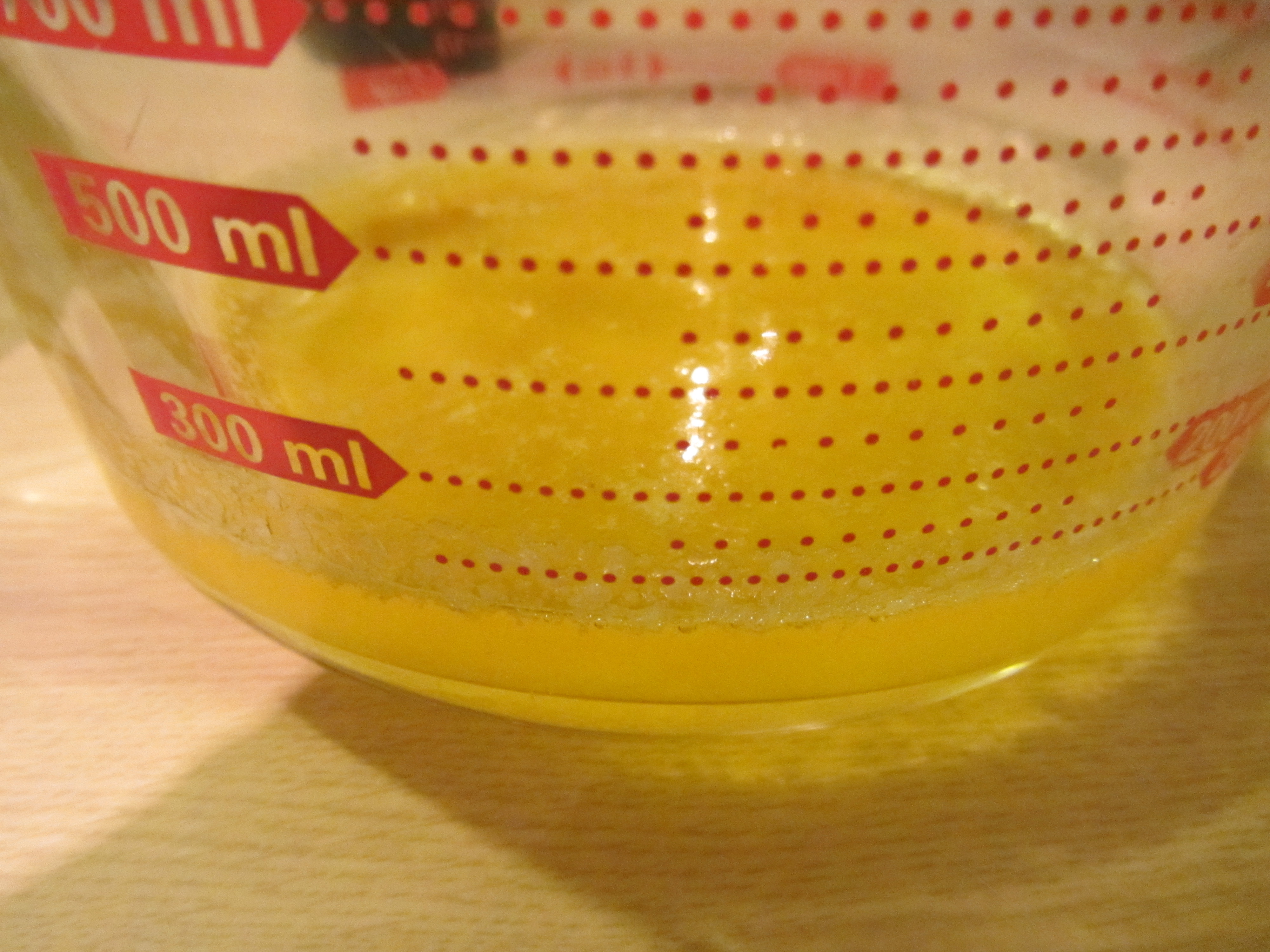
I really like mushrooms and we eat them fairly regularly, though we don’t tend to purchase the more exotic varieties very often. We usually stick to the creminis, portobellos, and the occasional shiitakes. A family friend taught me a recipe for sauteed mushrooms when I was a teenager, and it became one of the things I cooked regularly for our family dinners. I was curious to see how Alton’s recipe for sauteed mushrooms would compare to the one I’ve been making for nearly 20 (yikes!) years now. The first part of this recipe is actually a recipe within the recipe, as you first need to make clarified butter. I had never made clarified butter before, though I knew the basics of how to do it (it’s very simple). My dad used to make it on a regular basis. To make clarified butter, Alton explains that you simply melt your butter over low heat, continuing to cook it until it stops bubbling and the liquid is clear. This takes approximately a half hour.

Melting butter.

Melting butter.

Butter mid-way through the clarifying process.

Butter mid-way through the clarifying process.

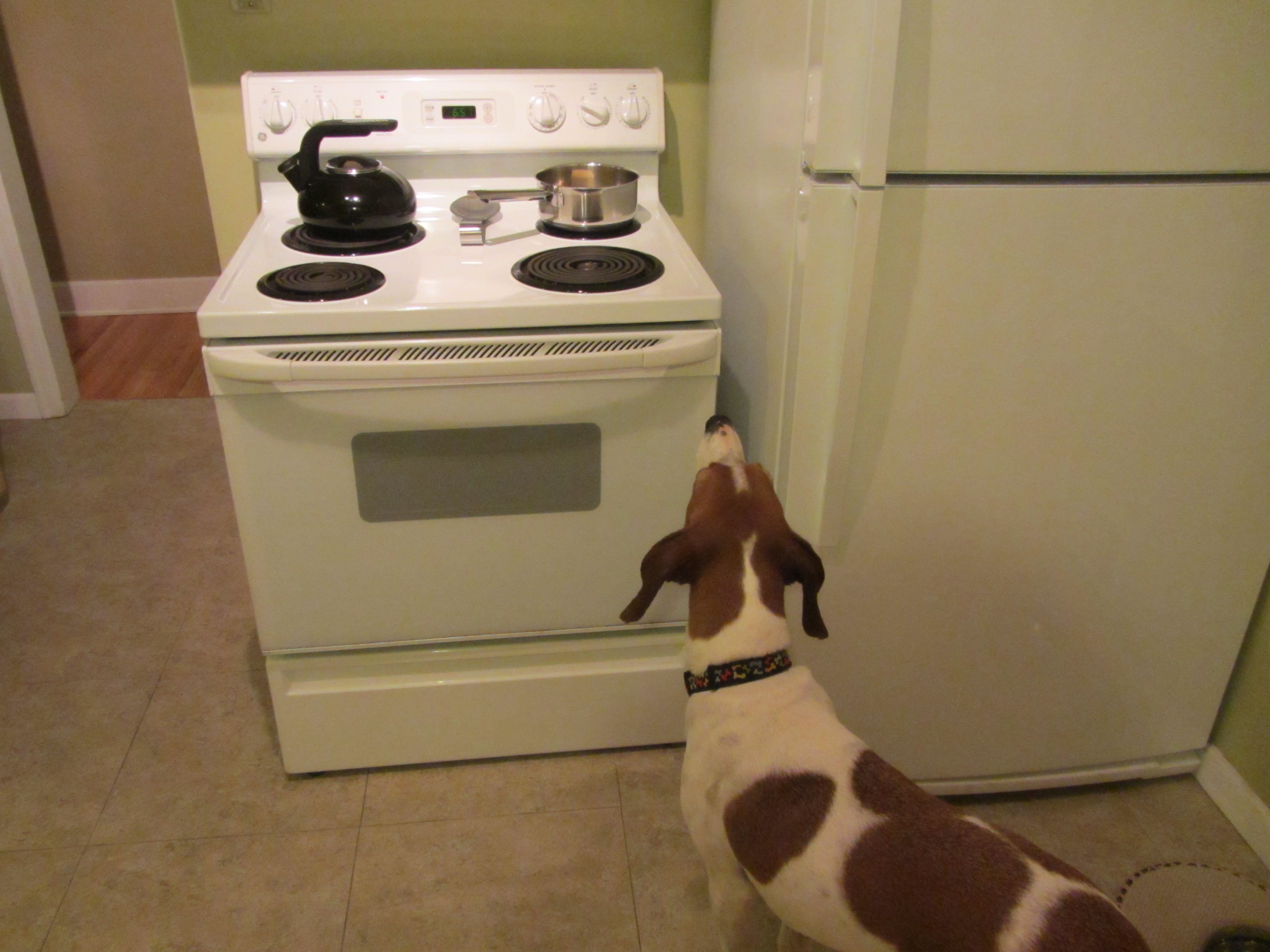
Clarifying butter = a half hour of torture for a hound dog.

Clarifying butter = a half hour of torture for a hound dog.

Butter, still bubbling as it clarifies.

Butter, still bubbling as it clarifies.

Final clarified butter.

Final clarified butter.

Once cool, you strain the butter for immediate use. Or, to use later, you top the hot butter with a couple inches of hot water, and allow the liquid to cool in the refrigerator. The clarified butter will solidify into a solid puck. I began the butter process while I prepped my ‘shrooms.

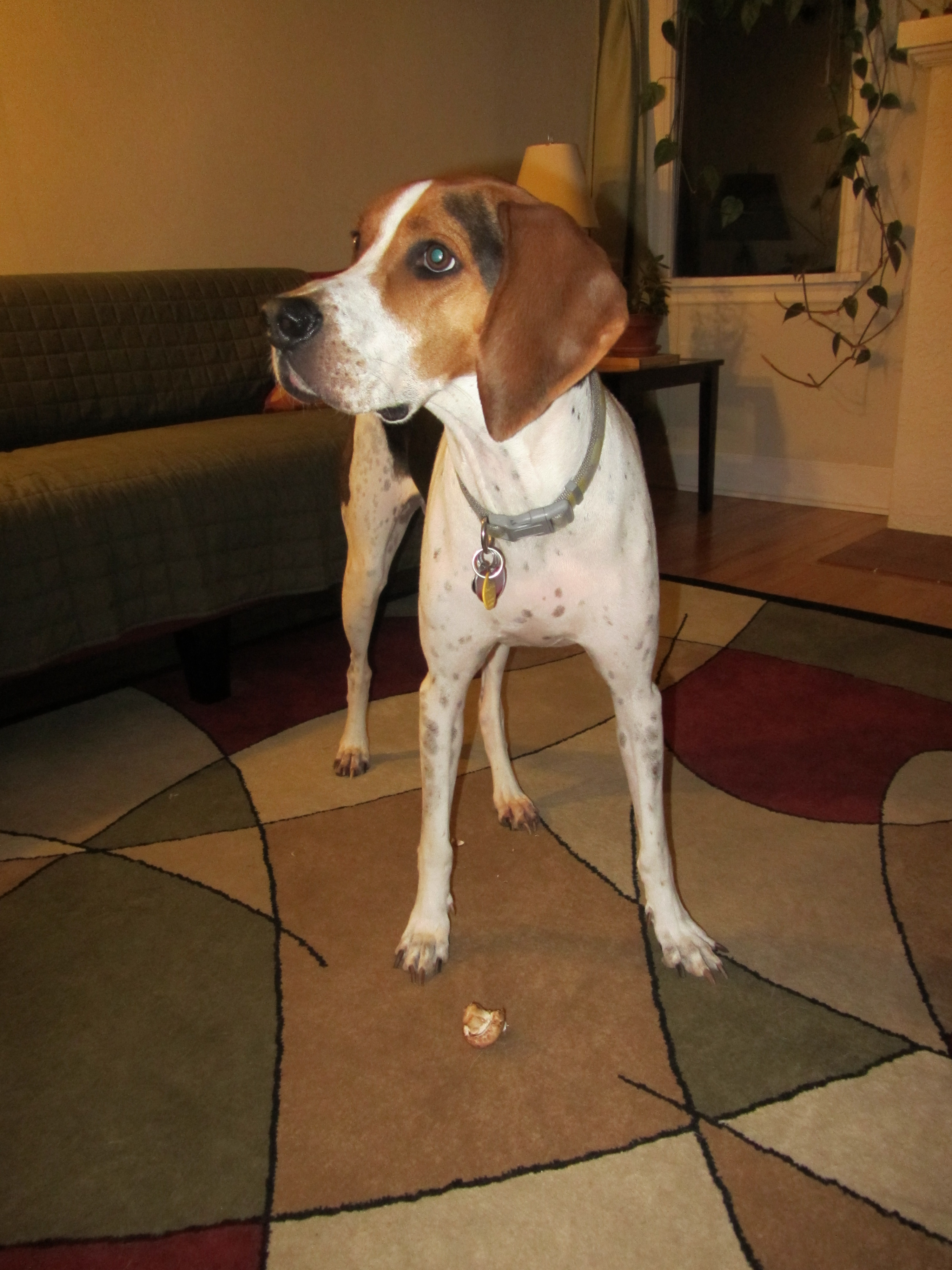
Apparently, there actually is something a Coonhound will not eat.

Apparently, there actually is something a Coonhound will not eat.

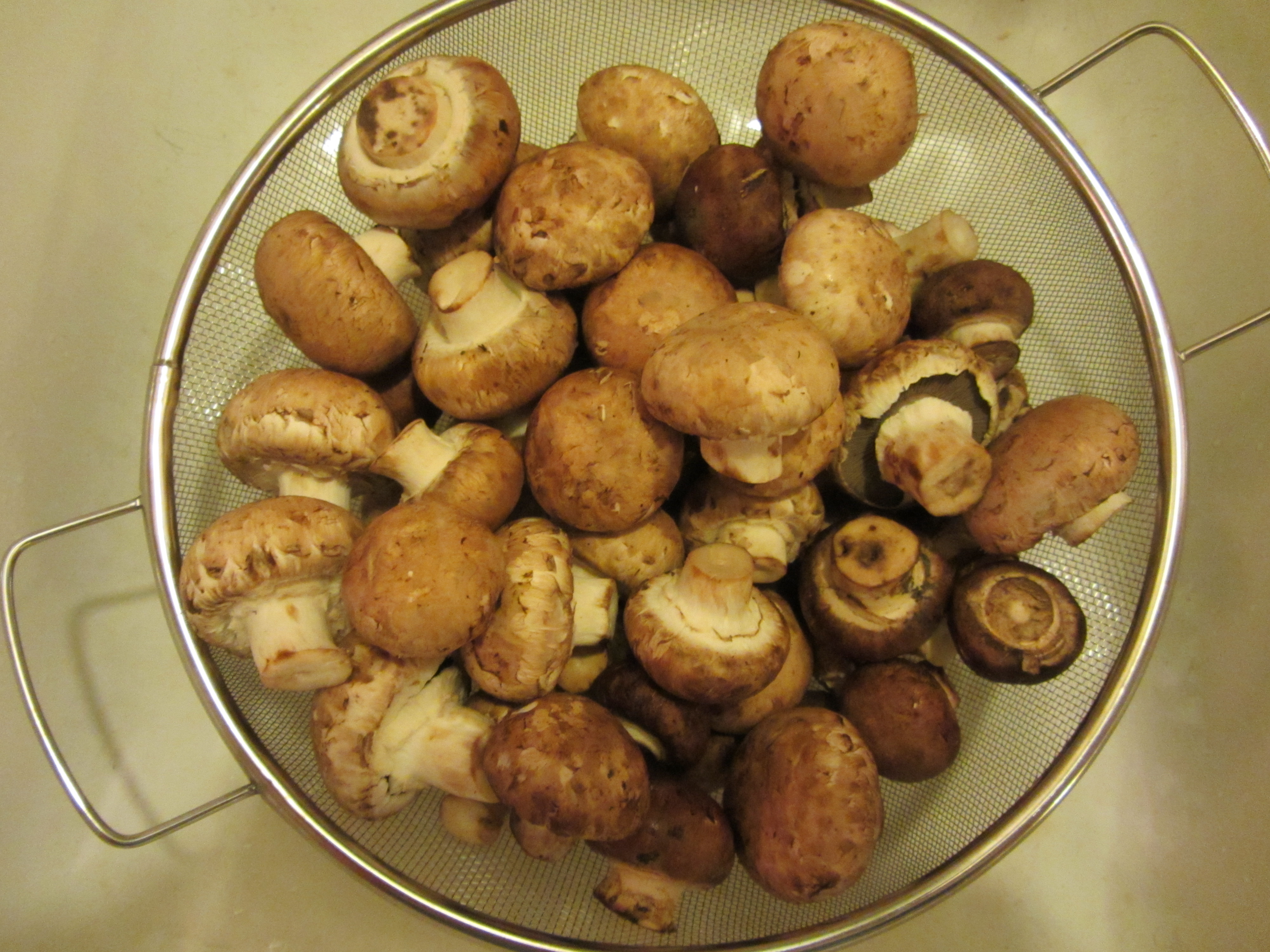
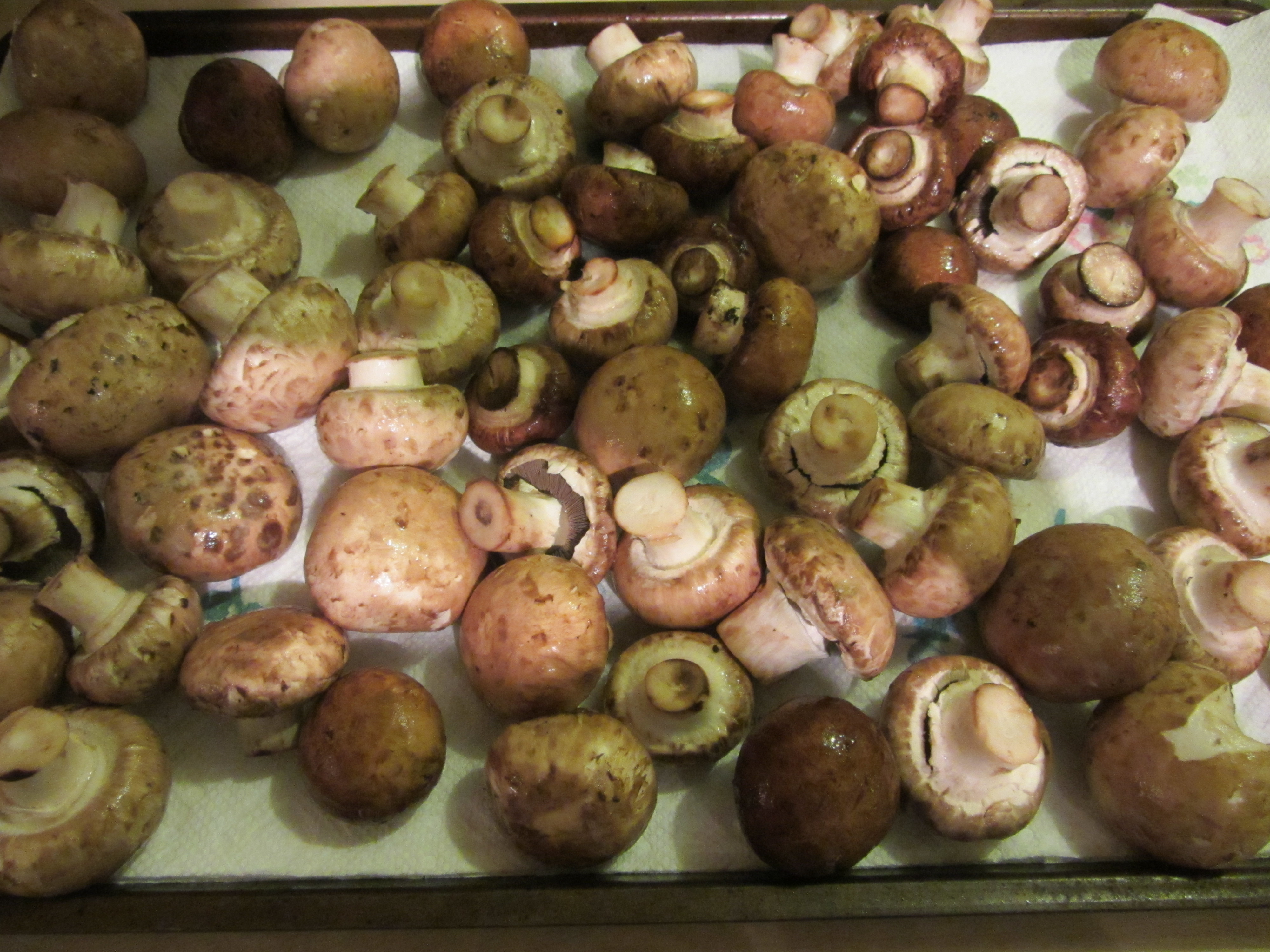
Alton suggests cleaning your mushrooms if they have any visible dirt. To clean them, he says it is easiest and best to simply give them a good rinse in a colander, drain them, and roll them in paper towels.

Cremini mushrooms, ready to be rinsed.

Cremini mushrooms, ready to be rinsed.

Mushrooms, rinsed and drained.

Mushrooms, rinsed and drained.

Other mushroom tips from Alton:  1) Store mushrooms in a paper bag. 2) Treat mushrooms like they are meat, using hot, fast, and dry cooking methods. For this particular recipe, you use cremini mushrooms. I washed my mushrooms and sliced them into 1/4″ slices. Apparently, an egg slicer works perfectly for slicing mushrooms, but we do not have one, so I did mine with a good ol’ knife.

All of the ingredients for the saute.

All of the ingredients for the saute.

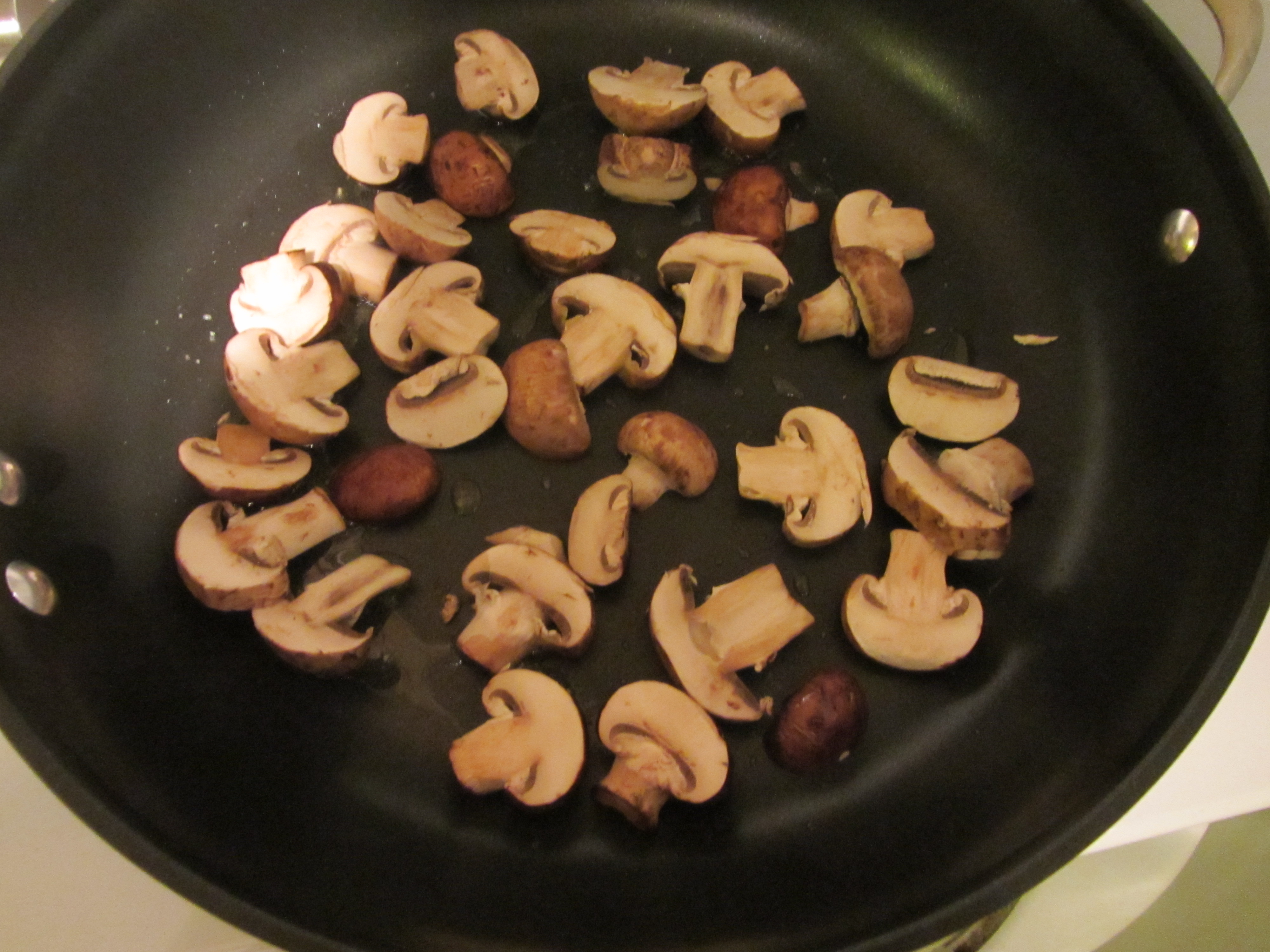
Once your butter is clarified and strained, you heat some of the butter in a pan over high heat. The high heat is why it is necessary to clarify the butter in the first place, as clarified butter has a higher smoke point than standard butter. To your butter, you want to add your sliced mushrooms, handful by handful.

First handful of mushrooms in the hot pan.

First handful of mushrooms in the hot pan.

As each handful of mushrooms browns, you move them to the outside of the pan while adding new mushrooms to the center of the pan.

Adding mushrooms, handful by handful.

Adding mushrooms, handful by handful.

Once all of the mushrooms are in the pan, you add Kosher salt and shallots. You continue to cook the mushrooms until they are all a rich brown color and a crust has formed on the pan. At this point, it is necessary to deglaze the pan, and Cognac is the liquid of choice.

Mushrooms with shallots and Cognac.

Mushrooms with shallots and Cognac.

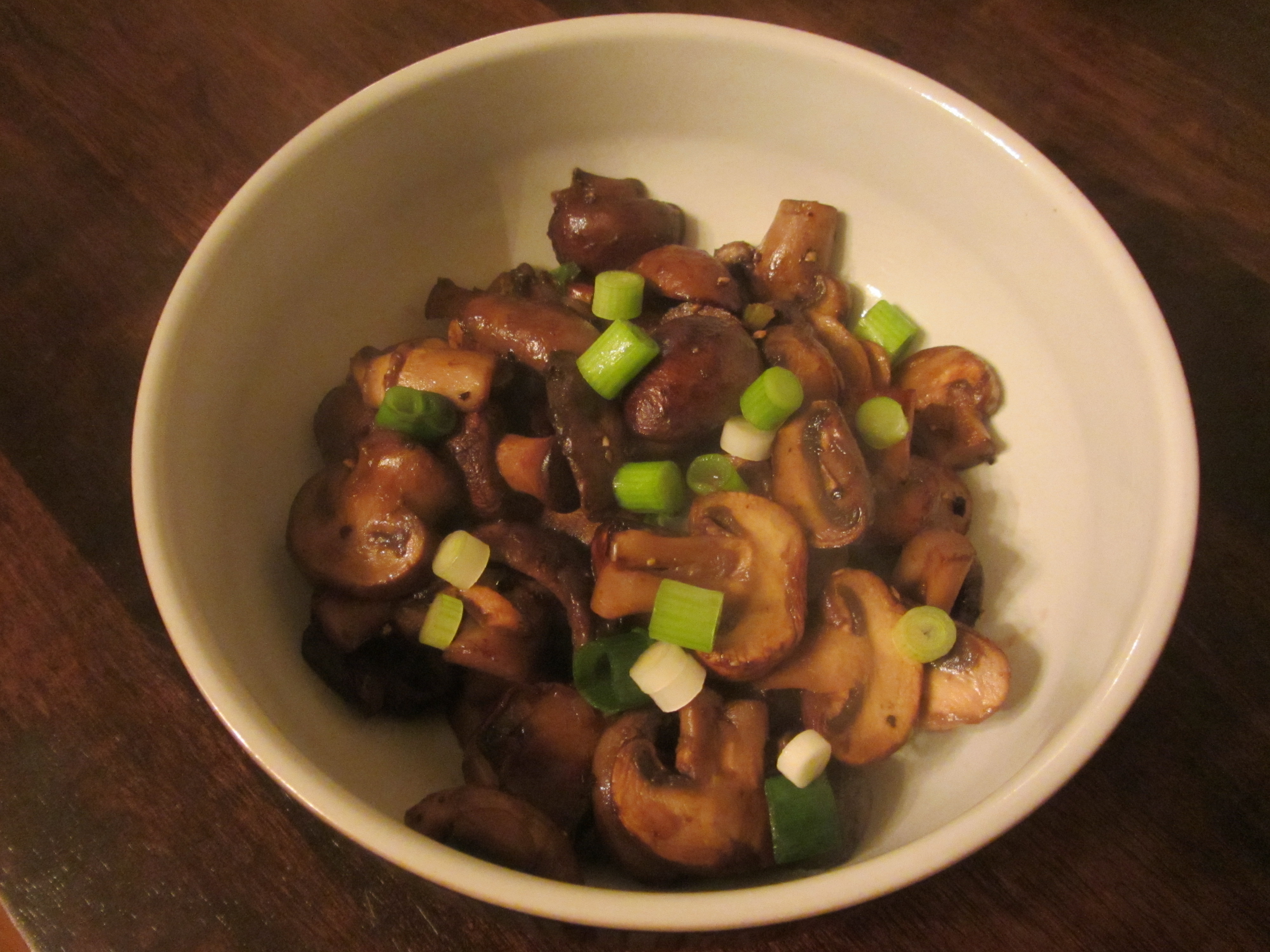
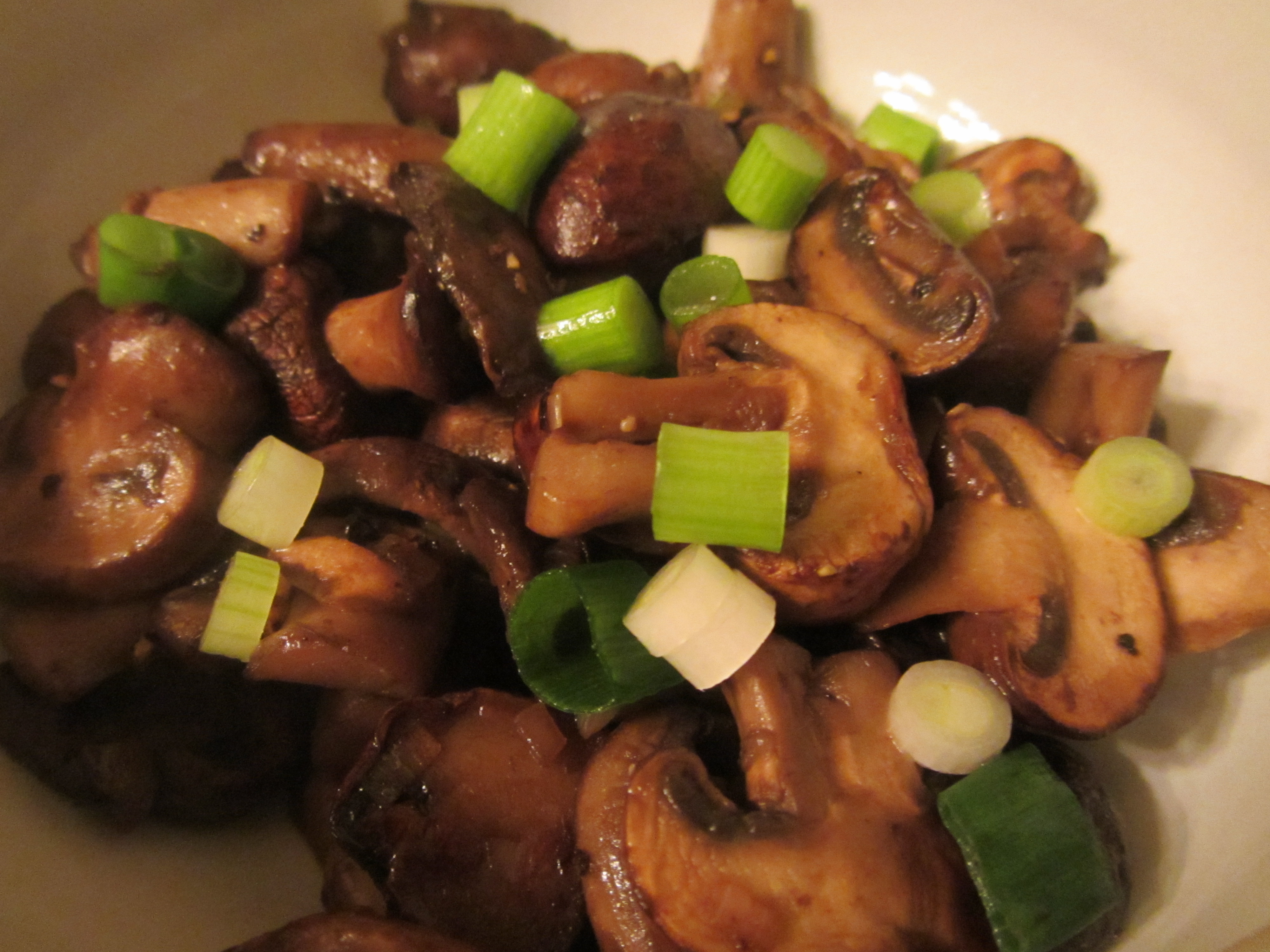
You add some chopped chives to your mushrooms, along with some pepper, and you are ready to go.

Final sauteed mushrooms with chives.

Final sauteed mushrooms with chives.

10-27-2014 022

We ate our mushrooms as a side to our entree. The nice thing about this sauteed mushroom recipe is that it really allows the meaty flavor of the mushrooms themselves to shine. While I still like my old sauteed mushroom recipe too, I do think that the old recipe had some strong flavors (garlic, lemon, etc.) that overpowered the mushrooms. This recipe didn’t wow me, but it was good, and the predominant flavor was definitely that of the mushrooms.

That Ol’ Cap Magic

The second recipe in this episode of Good Eats is for stuffed mushroom caps. The online recipe is a bit vague with its ingredients, as it calls for a batch of sauteed mushrooms. After watching the episode, I got a bit more clarification. Alton tells you to prepare a batch of sauteed mushrooms, using the same method as used in the previous recipe. This time, however, he recommends that you use shiitake mushrooms. My grocery store only had one package of shiitakes, so I used those plus a portobello mushroom cap.

Shiitakes and portobellos.

Shiitakes and portobellos.

To the sauteed mushrooms, as prepped previously, you add heavy cream, shredded parmesan, and dried tarragon.

Melting clarified butter.

Melting clarified butter.

Sauteeing the mushrooms.

Sauteeing the mushrooms.

Addition of cream, parmesan, and tarragon.

Addition of cream, parmesan, and tarragon.

At this point, you remove your pan from the heat and add some breadcrumbs. The breadcrumbs nicely bind the sauce. This mushroom mixture will be the filling for white mushroom caps.

Breadcrumbs added off heat to tighten the sauce.

Breadcrumbs added off heat to tighten the sauce.

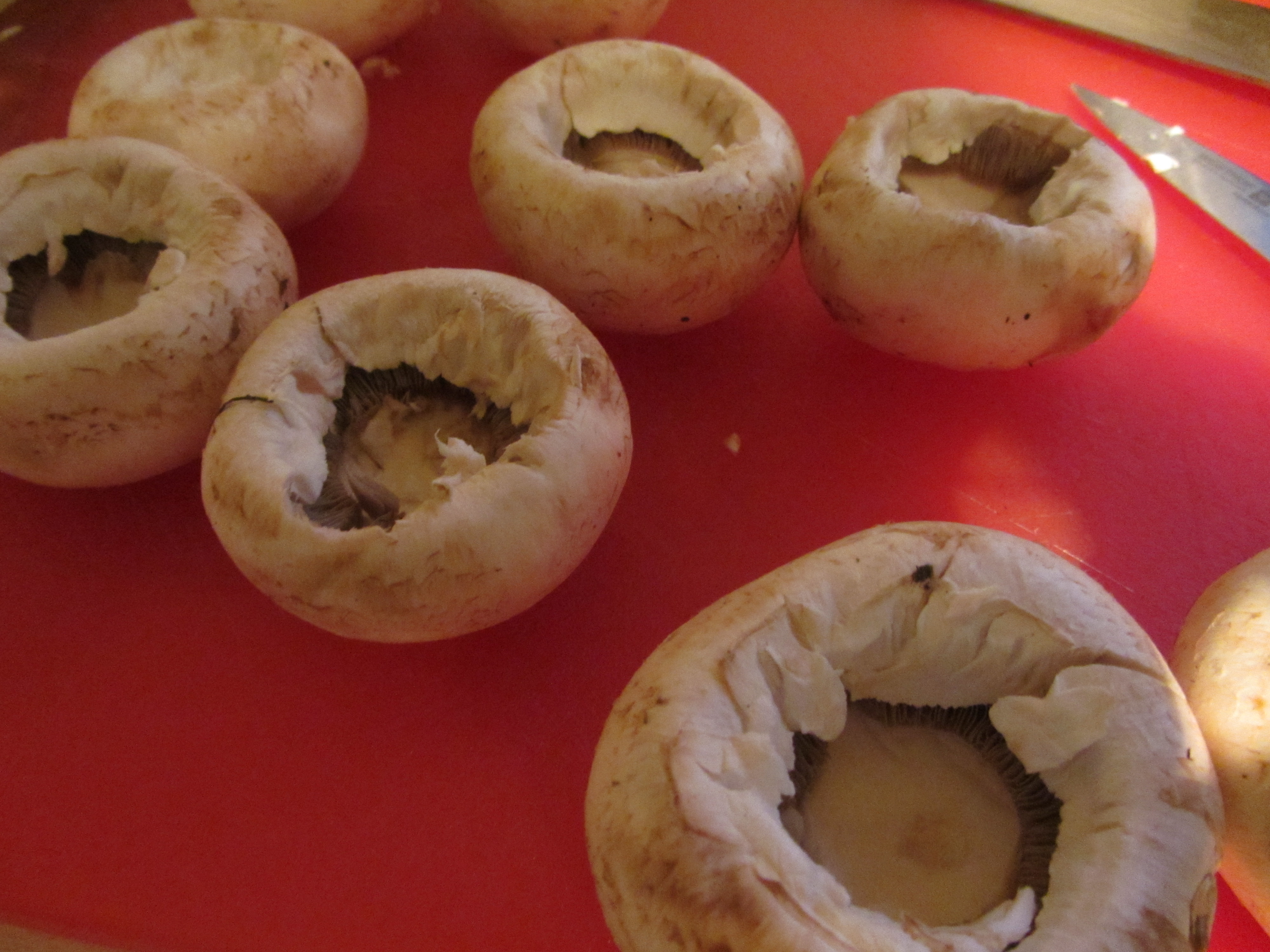
After destemming the mushroom caps, you sprinkle them with olive oil, rosemary, thyme, and garlic, tossing to coat them well.

Mushrooms to be stuffed.

Mushrooms to be stuffed.

Mushroom caps after destemming.

Mushroom caps after destemming.

Garlic, rosemary, and thyme.

Garlic, rosemary, and thyme.

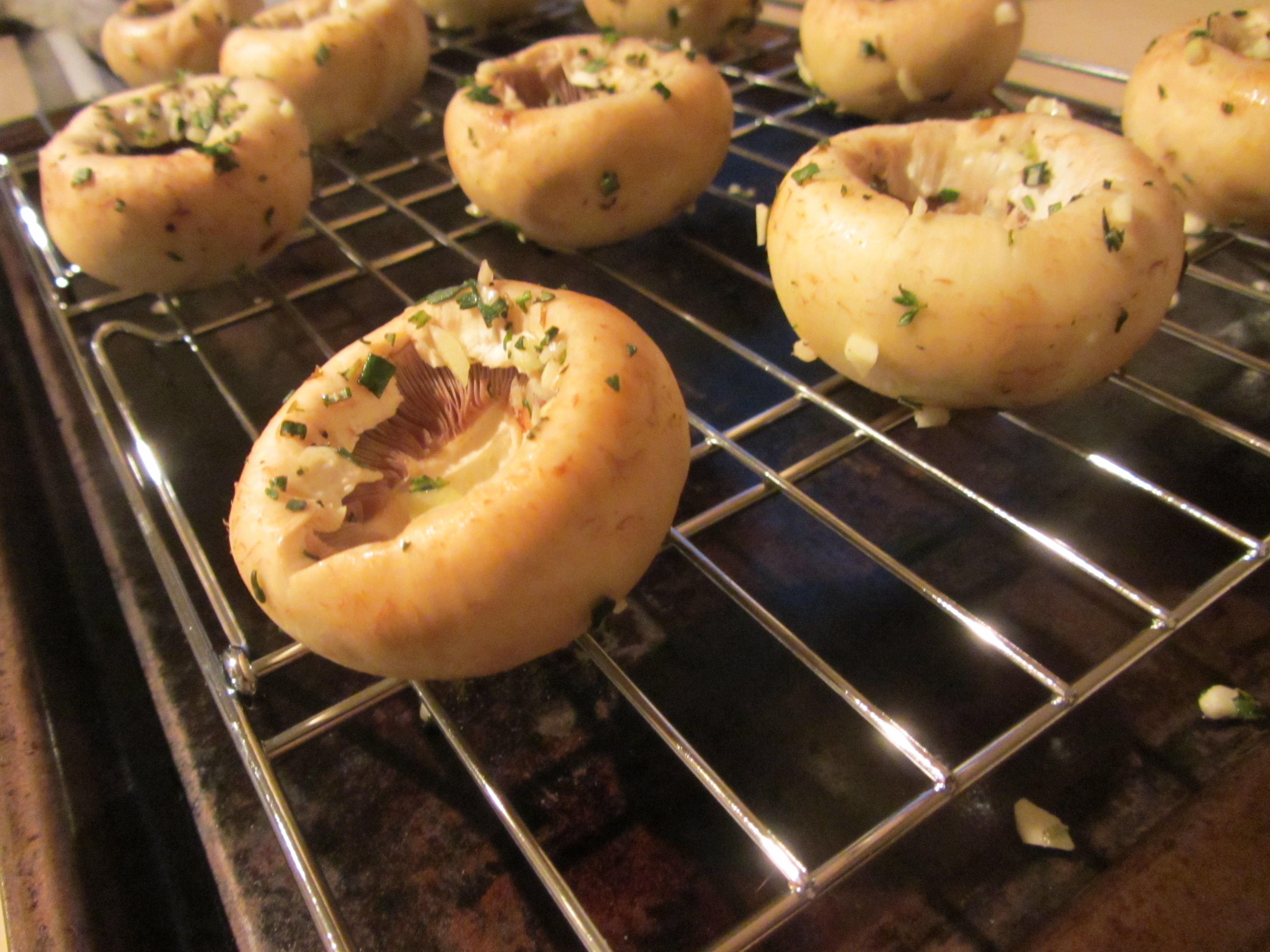
Mushroom caps tossed with olive oil, rosemary, thyme, and garlic.

Mushroom caps tossed with olive oil, rosemary, thyme, and garlic.

These caps go into a hot oven until they are tender. It is best to cook them upside down on a cooling rack that is placed on a baking sheet, as this allows all of the juices to drain. I actually forgot to bake my caps upside down, so their cavities were filled with liquid that I had to drain out.

Mushrooms ready to go in the oven.

Mushrooms ready to go in the oven.

Mushrooms after baking. I forgot to turn mine upside down before I baked them, so they filled with fluid.

Mushrooms after baking. I forgot to turn mine upside down before I baked them, so they filled with fluid.

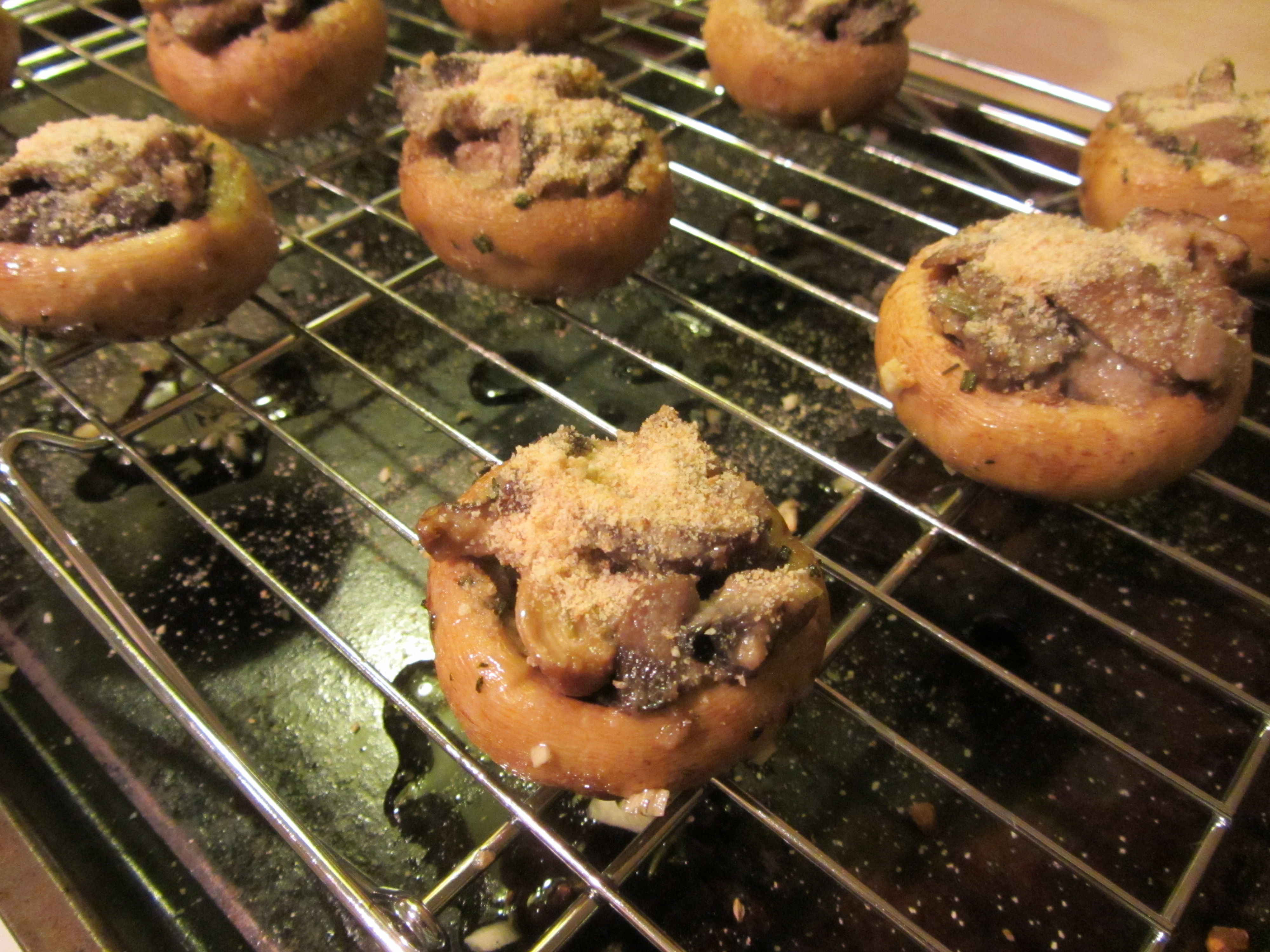
The sauteed mushroom filling is spooned into the seasoned caps, and Alton stresses not to overstuff them.

Mushrooms stuffed with mushrooms.

Mushrooms stuffed with mushrooms.

The filling is topped with a sprinkle of breadcrumbs, and they go under the broiler on the highest rack.

Some breadcrumbs sprinkled on top.

Some breadcrumbs sprinkled on top.

The mushrooms will not need to be under the broiler long – mine took only about two minutes until the filling began to bubble.

I guess the mushrooms smelled good when they came out of the oven.

I guess the mushrooms smelled good when they came out of the oven.

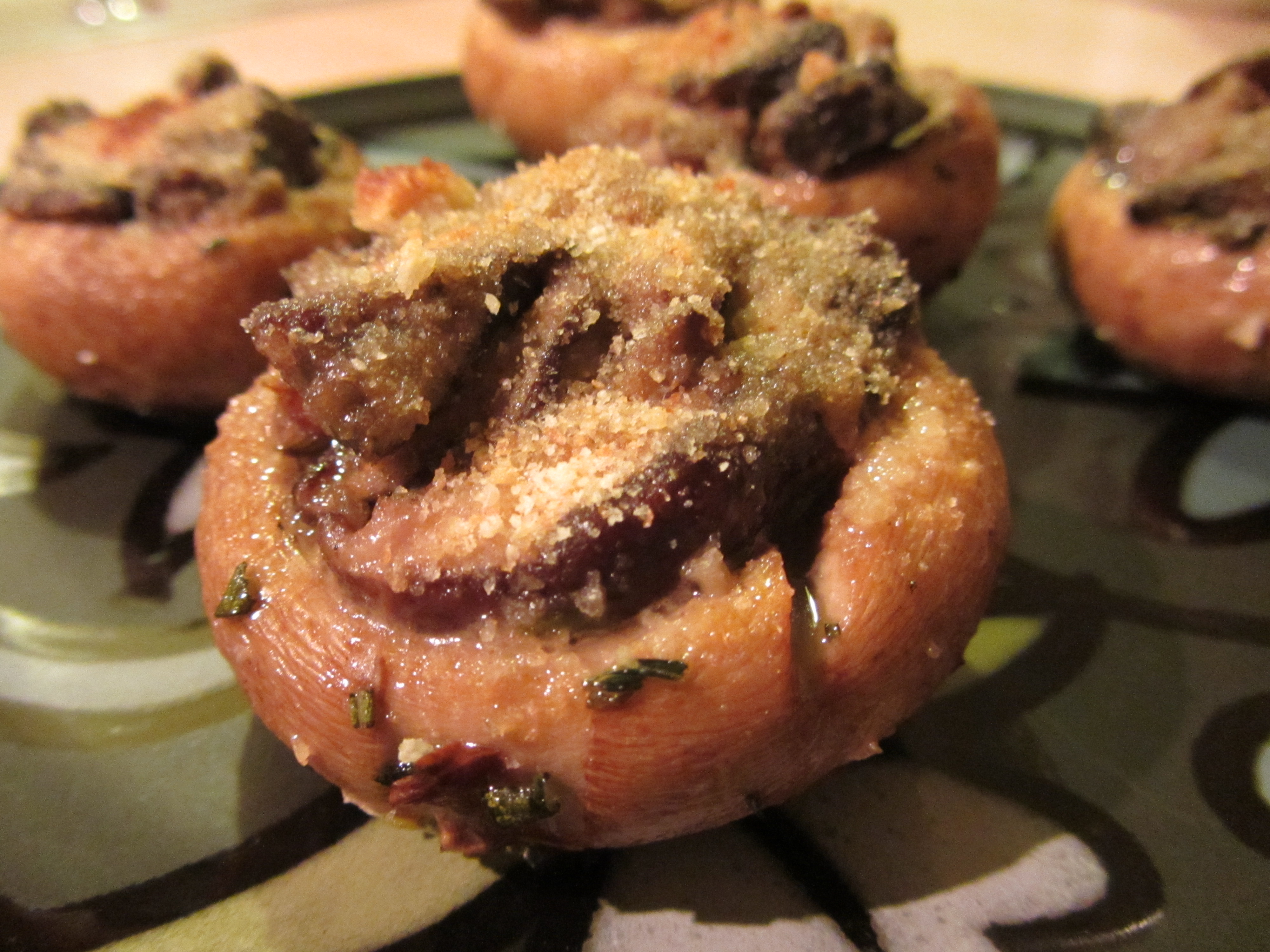
A perfect appetizer plate of stuffed mushroom caps.

A perfect appetizer plate of stuffed mushroom caps.

10-27-2014 045

We ate these mushroom caps as an appetizer, and we both really liked them. They were quite juicy and the filling had rich, creamy flavors and textures that paired well with the meatiness of the mushroom caps. The flavors of the different mushroom types all came through too, as did the herbs. I preferred this recipe to the sauteed mushroom recipe, and I could see making these again as an appetizer.

The Shrimp Cocktail

I had to make a decision here with my blog, as to whether to continue with the episodes in production order or in order of how the episodes aired. I chose to continue with the episodes by air date, which put my next episode as the shrimp episode. Shrimp, while I think they are okay, are not my favorite thing. I will almost always opt for other seafood over shrimp. This probably explains why I had never prepared shrimp prior to making this recipe from Good Eats.

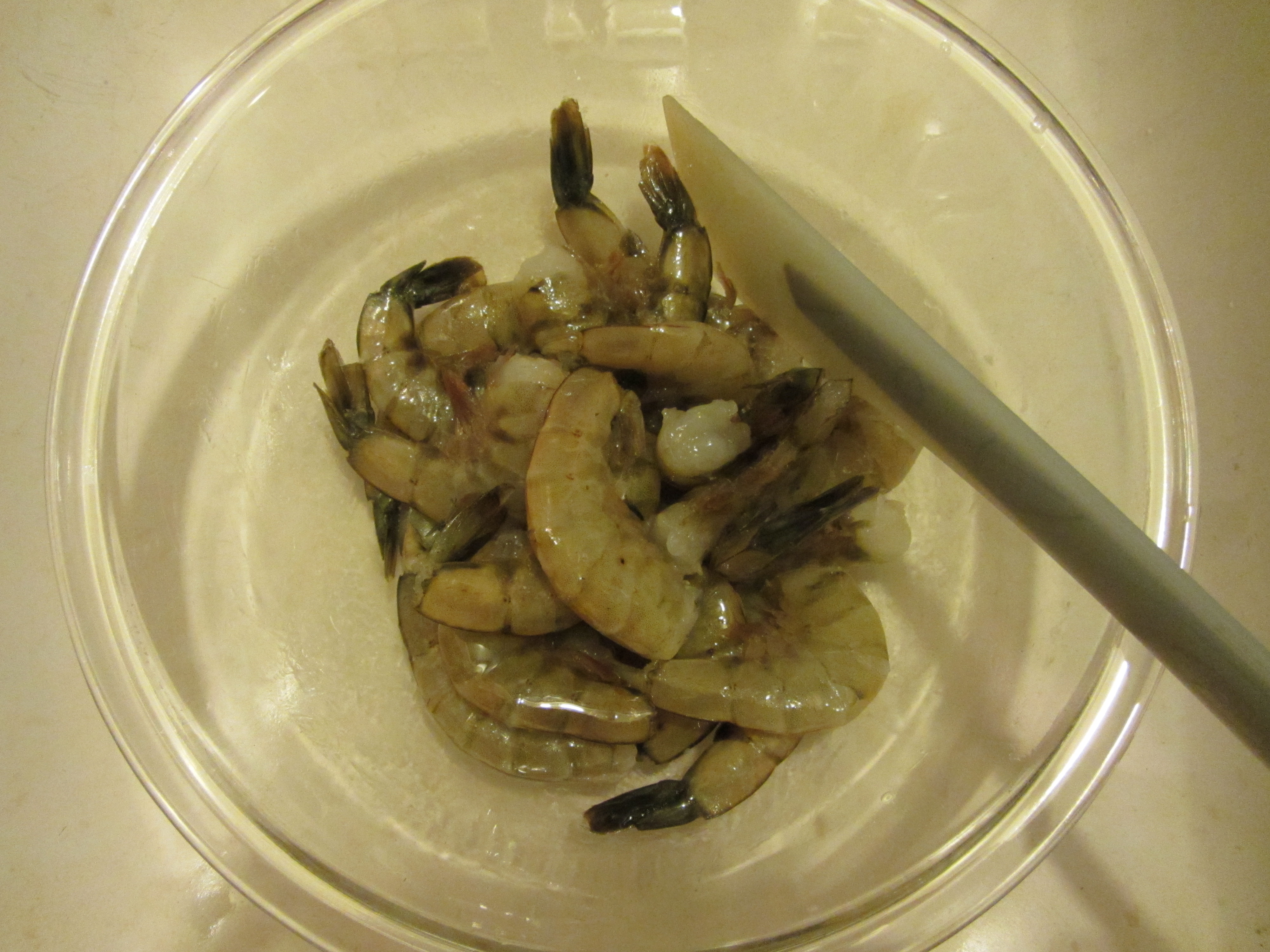
To begin this recipe, Alton shows you how to clean and devein your shrimp by cutting along the back of each shrimp with small scissors. He gives a helpful tip to remove the veins (which are really the intestinal tracts) under water, as they tend to stick to everything. Alton really emphasizes the need to keep your shrimp very cold throughout every step of the shrimp cocktail process, so the shrimp are kept in a bowl of ice water while you devein them.

Cleaned shrimp.

Cleaned shrimp.

Once the shrimp are all clean, you combine Kosher salt, sugar, water, and ice cubes to make your brine. Alton says he makes his brine by running through one cycle of a coffee maker. I just dissolved my salt and sugar on the stove, let the brine cool slightly, and added my ice cubes. I poured the brine over my shrimp and put them in the refrigerator for 25 minutes.

Kosher salt and sugar, ready to be dissolved in some water to make a shrimp brine.

Kosher salt and sugar, ready to be dissolved in some water to make a shrimp brine.

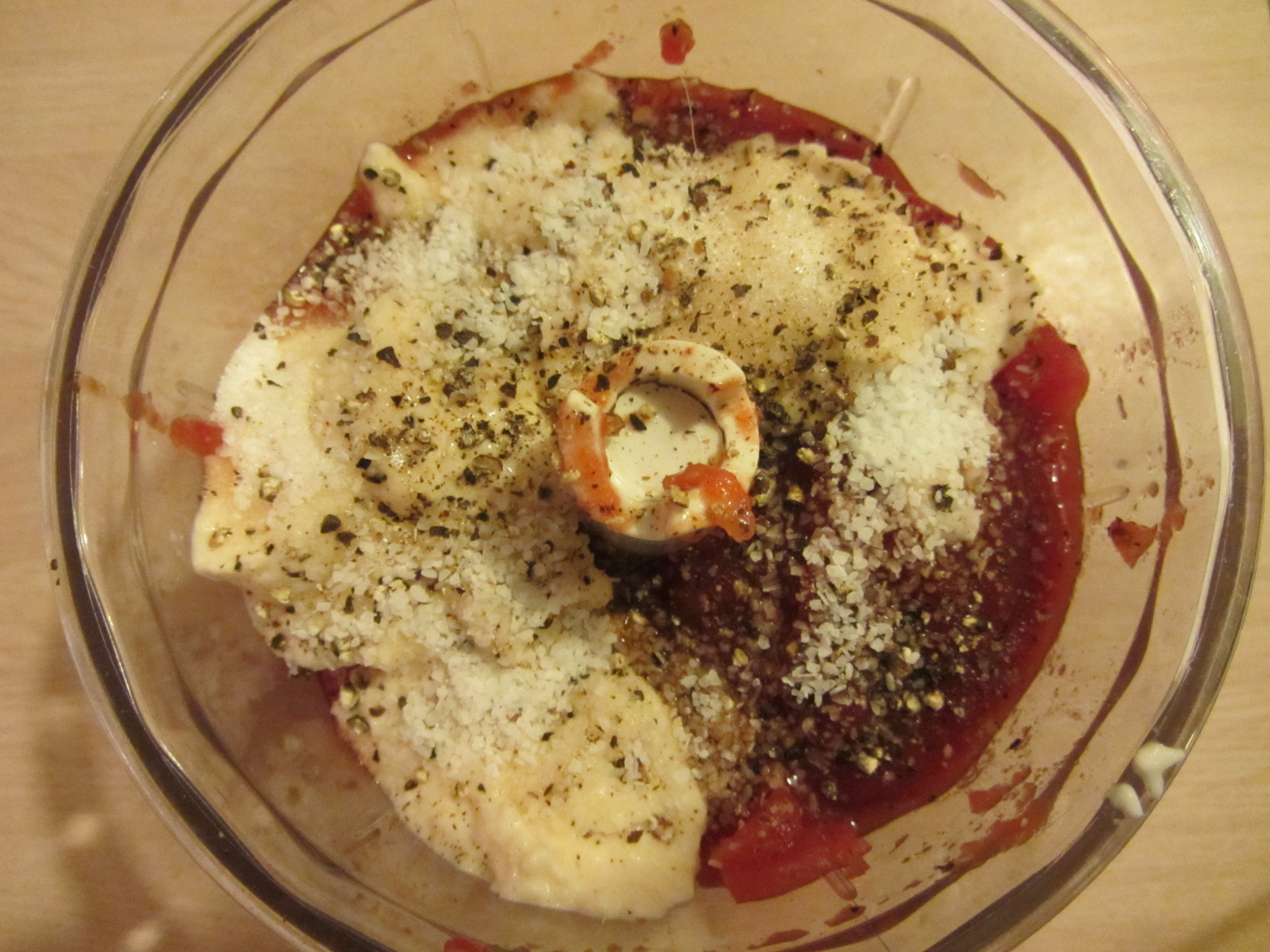
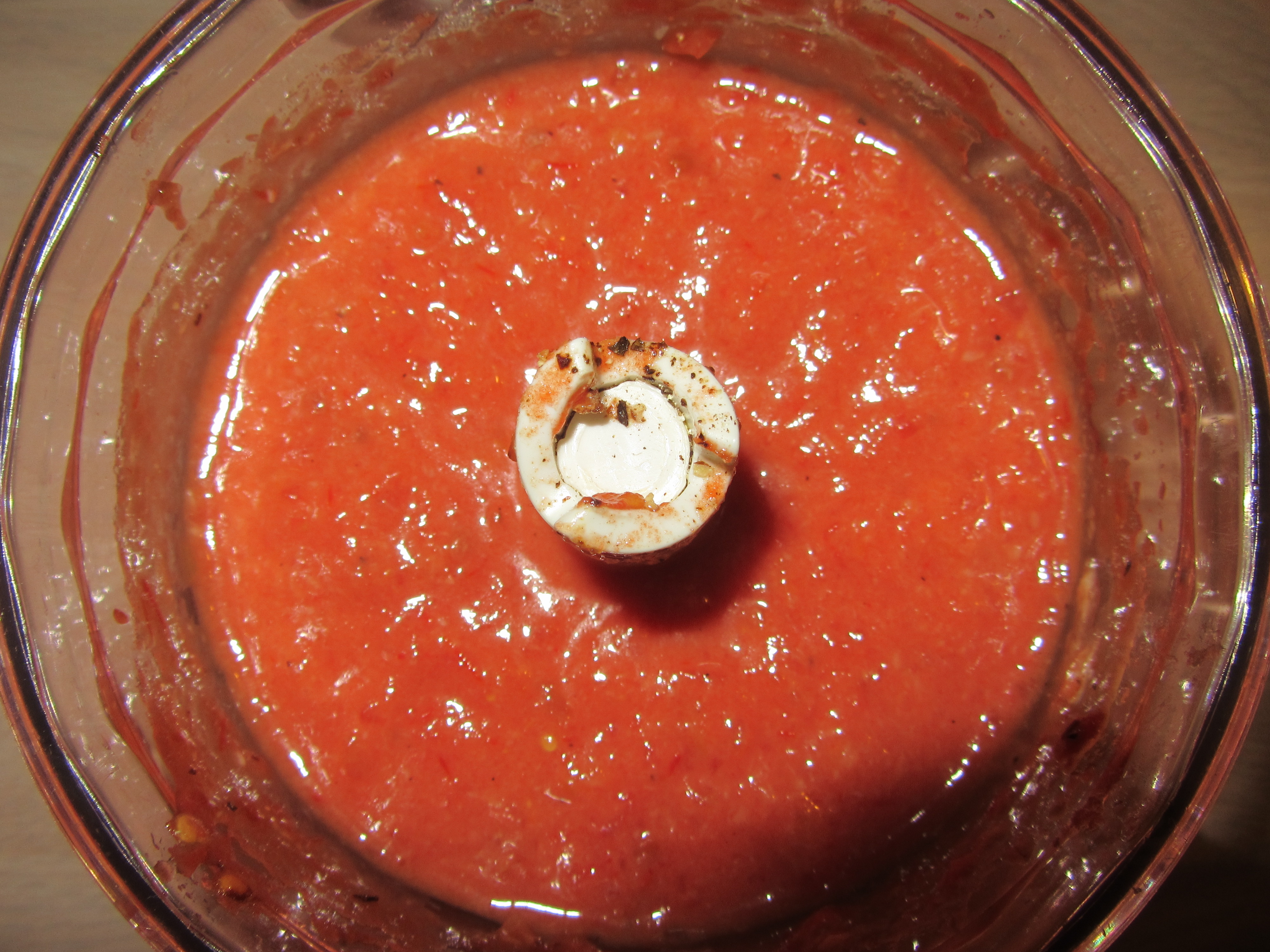
While your shrimp sit in their brine, you make the cocktail sauce. You combine a can of drained tomatoes, chili sauce, horseradish, sugar, pepper, and Kosher salt in a food processor. I used my mini food processor that came with my immersion blender (Alton did this in the episode too), and it worked perfectly.

Canned tomatoes, chili sauce, horseradish, sugar, pepper, and Kosher salt.

Canned tomatoes, chili sauce, horseradish, sugar, pepper, and Kosher salt.

Finished cocktail sauce.

Finished cocktail sauce.

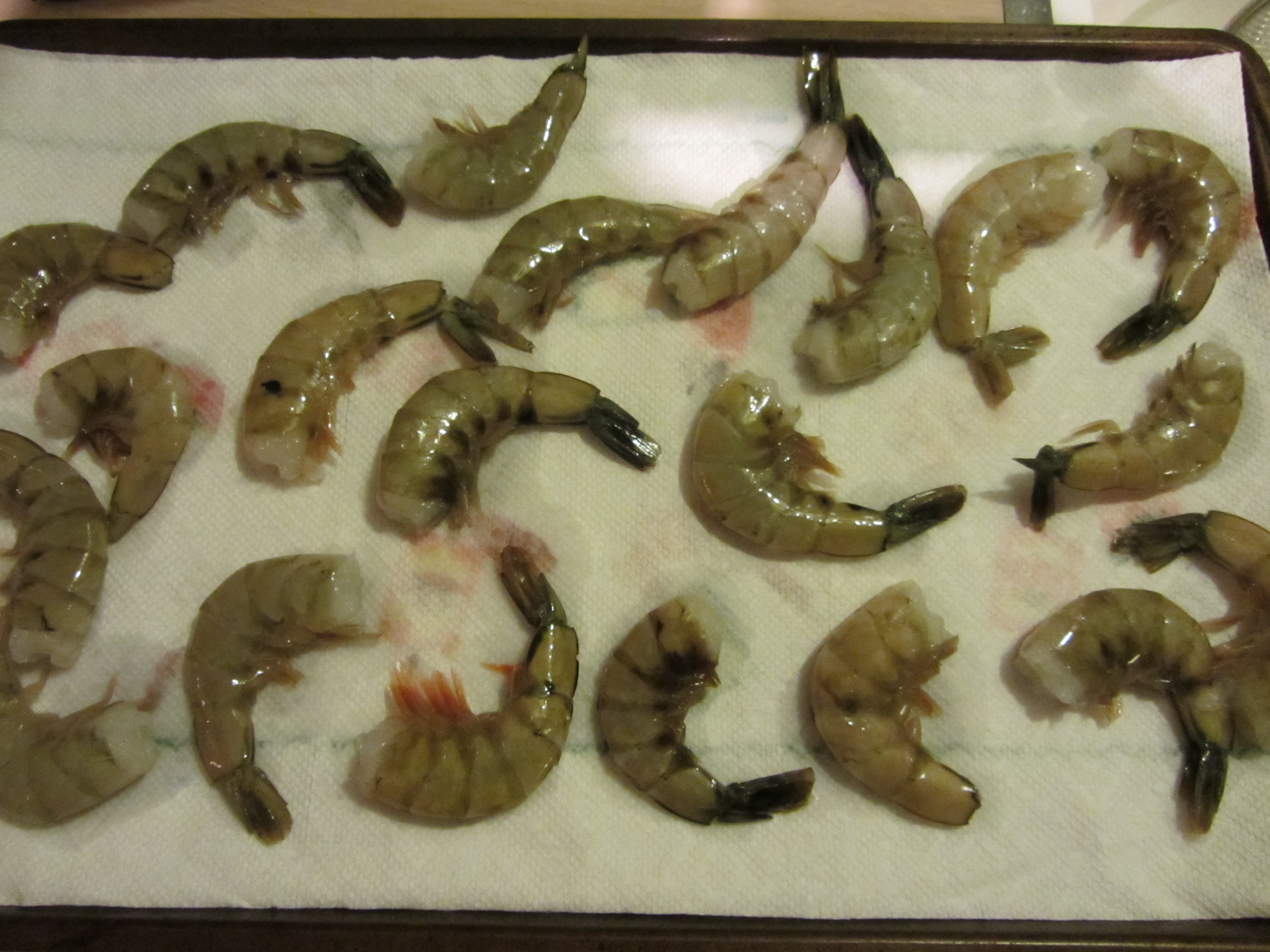
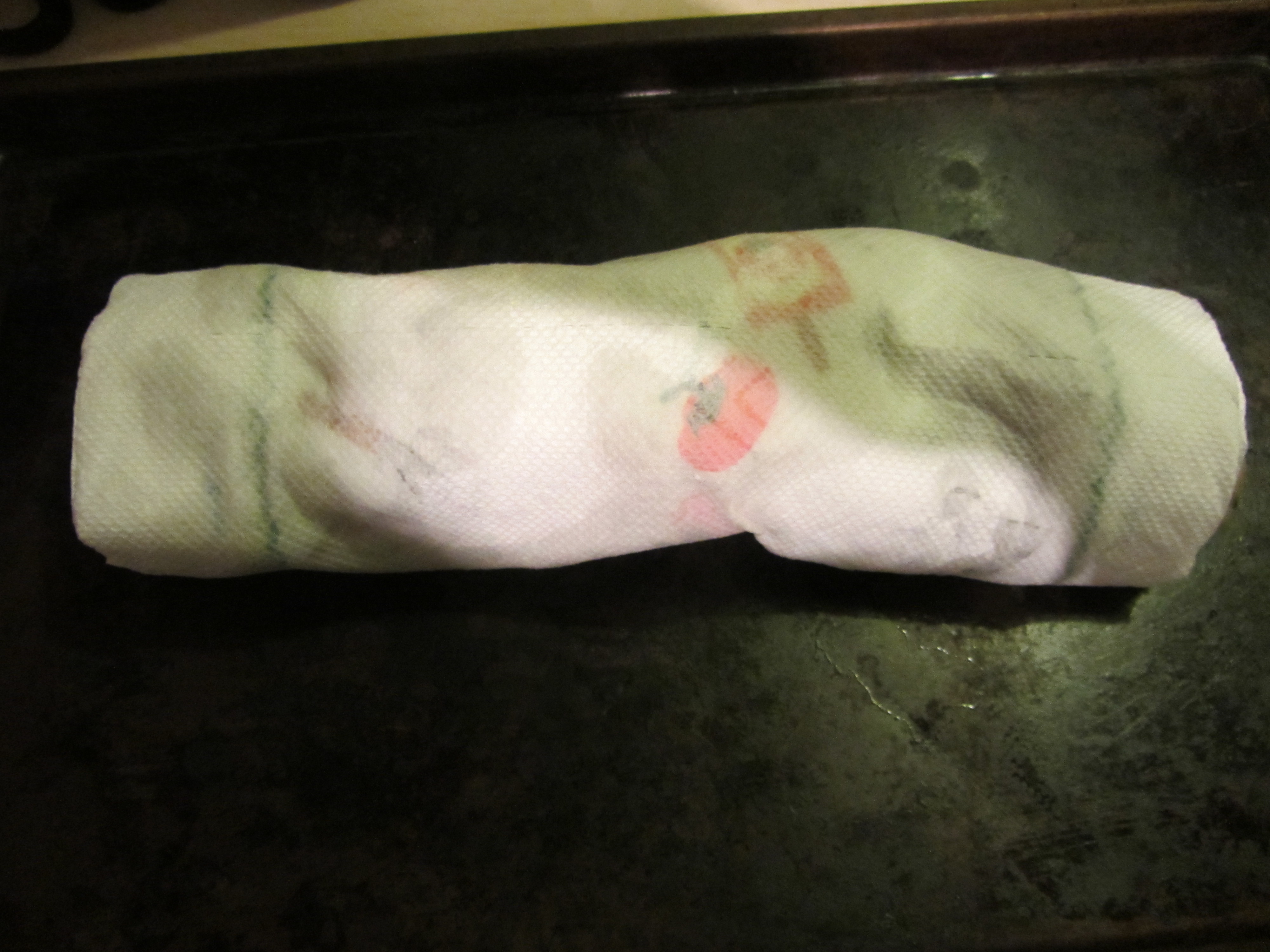
The sauce goes into the refrigerator while you finish your shrimp. After the brining period, you drain and rinse your shrimp. Alton tells you not to brine your shrimp for more than ~25 minutes. You then dry your shrimp in paper towels while you preheat your broiler with a foil-coated pan IN the oven.

Shrimp after brining.

Shrimp after brining.

Shrimp, drying in paper towels.

Shrimp, drying in paper towels.

For this recipe, you want to place your oven rack in the position that is second closest to the broiler. Once the broiler is preheated, you toss your shrimp with some olive oil and sprinkle them with some Old Bay Seasoning. I love Old Bay Seasoning. Both my parents are from Maryland, and my grandma made the best crab cakes on the planet with a sprinkle of Old Bay.

Shrimp coated with olive oil.

Shrimp coated with olive oil.

And a sprinkle of Old Bay.

And a sprinkle of Old Bay.

Shrimp with oil and Old Bay.

Shrimp with oil and Old Bay.

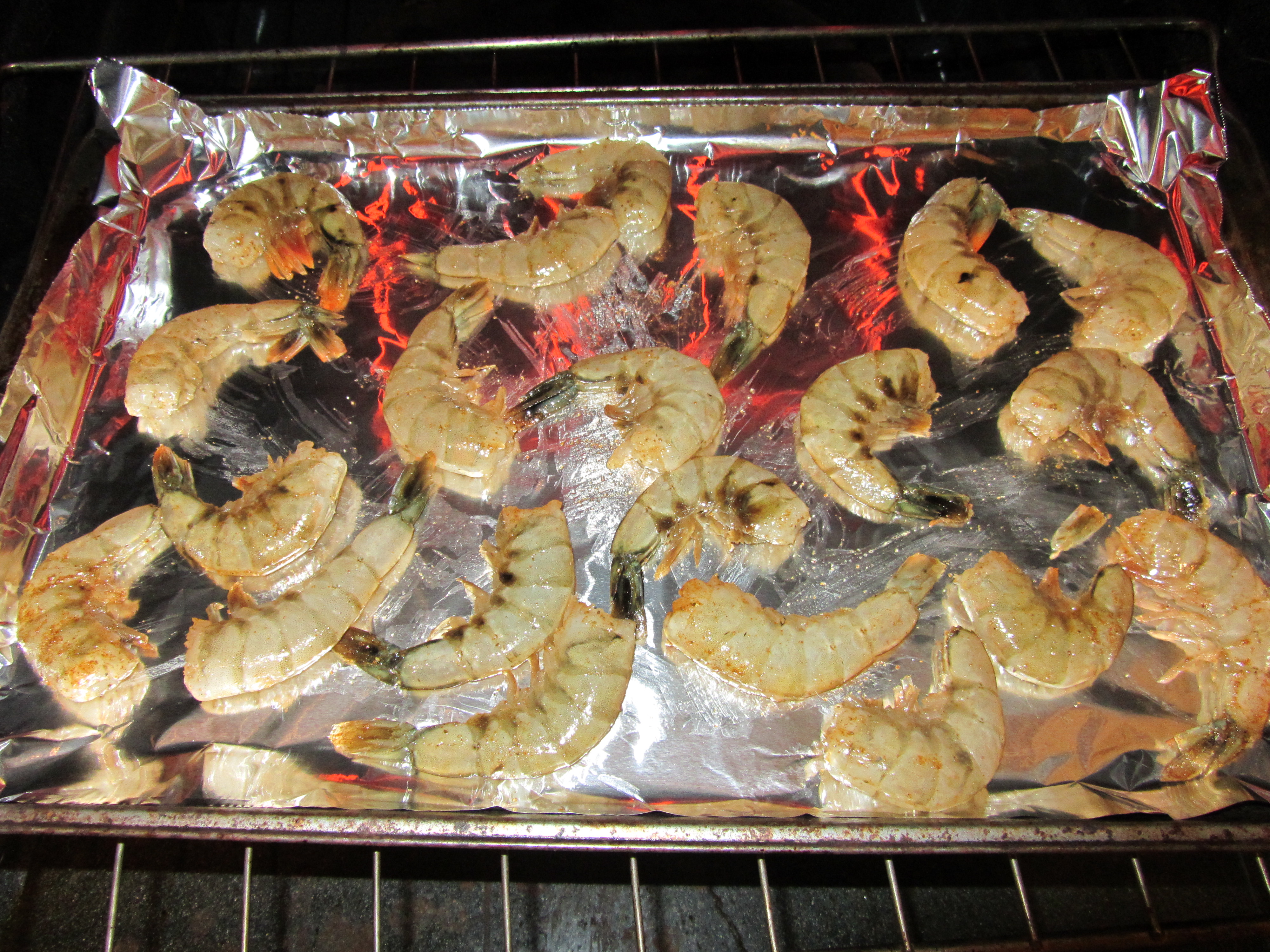
Once your shrimp are well-coated, you toss them, in a single layer, onto your hot pan in the oven, and they go under the broiler for two minutes. My shrimp were turning a nice shade of pink after two minutes. I flipped them over and threw them back into the oven for their additional one minute of cooking.

Shrimp into the oven on a pre-heated pan.

Shrimp into the oven on a pre-heated pan.

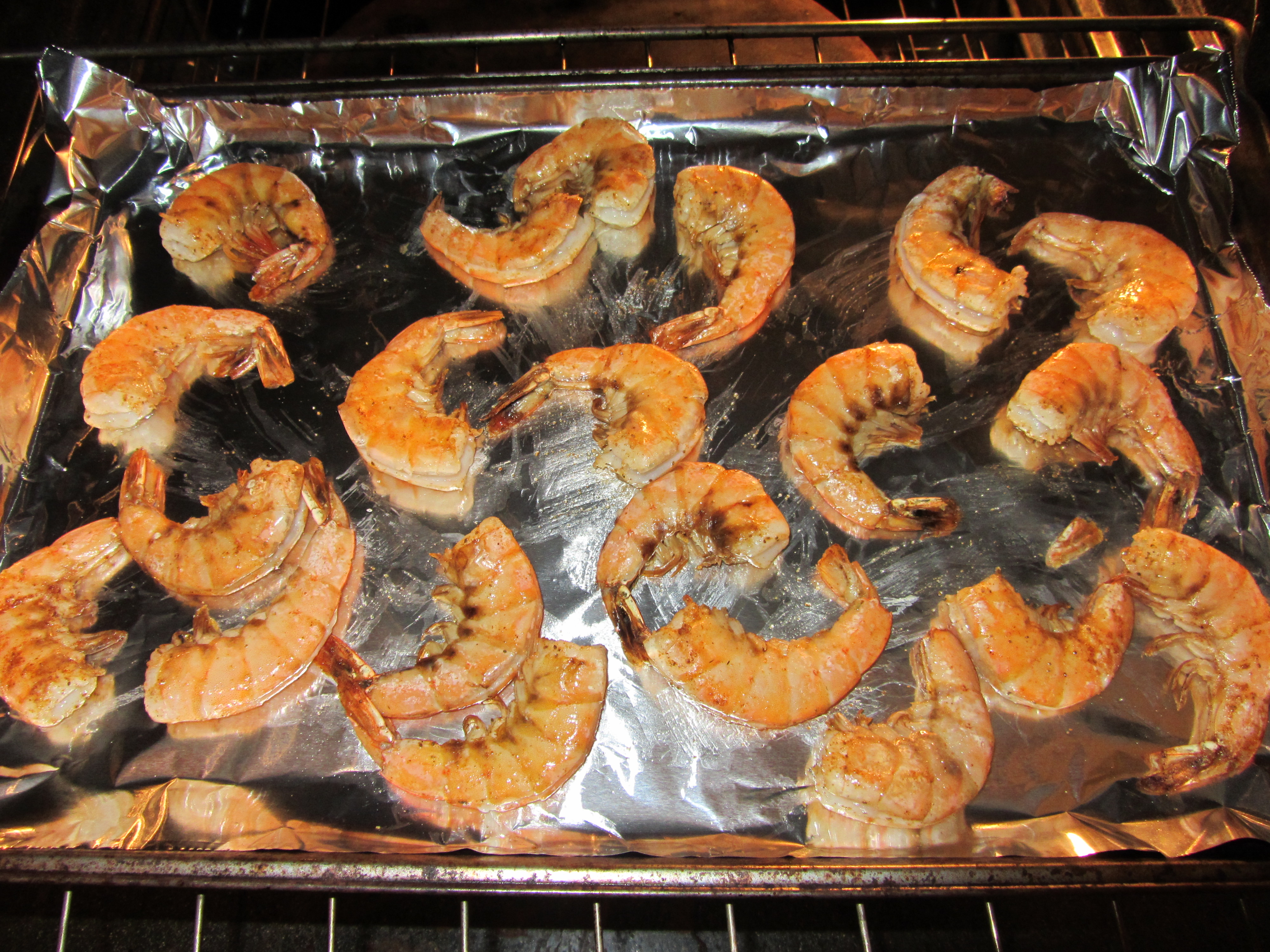
Shrimp after 2 minutes under the broiler.

Shrimp after 2 minutes under the broiler.

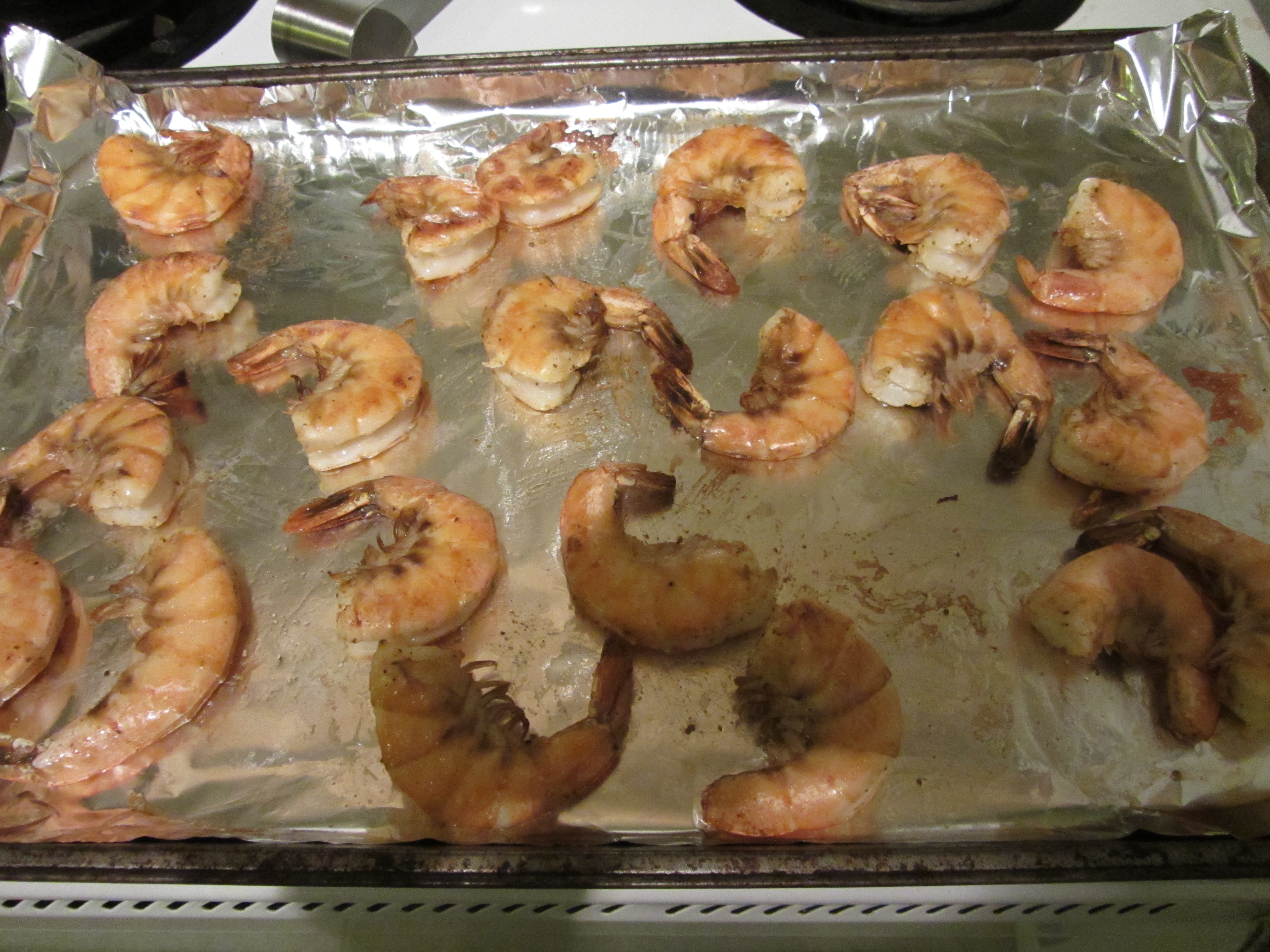
Shrimp after being flipped for an additional minute under the broiler.

Shrimp after being flipped for an additional minute under the broiler.

As soon as your shrimp come out of the oven, you want to put them into a freezer-cold bowl and toss them around. The bowl then goes back in the freezer for 5 minutes, and then is transferred to the refrigerator.

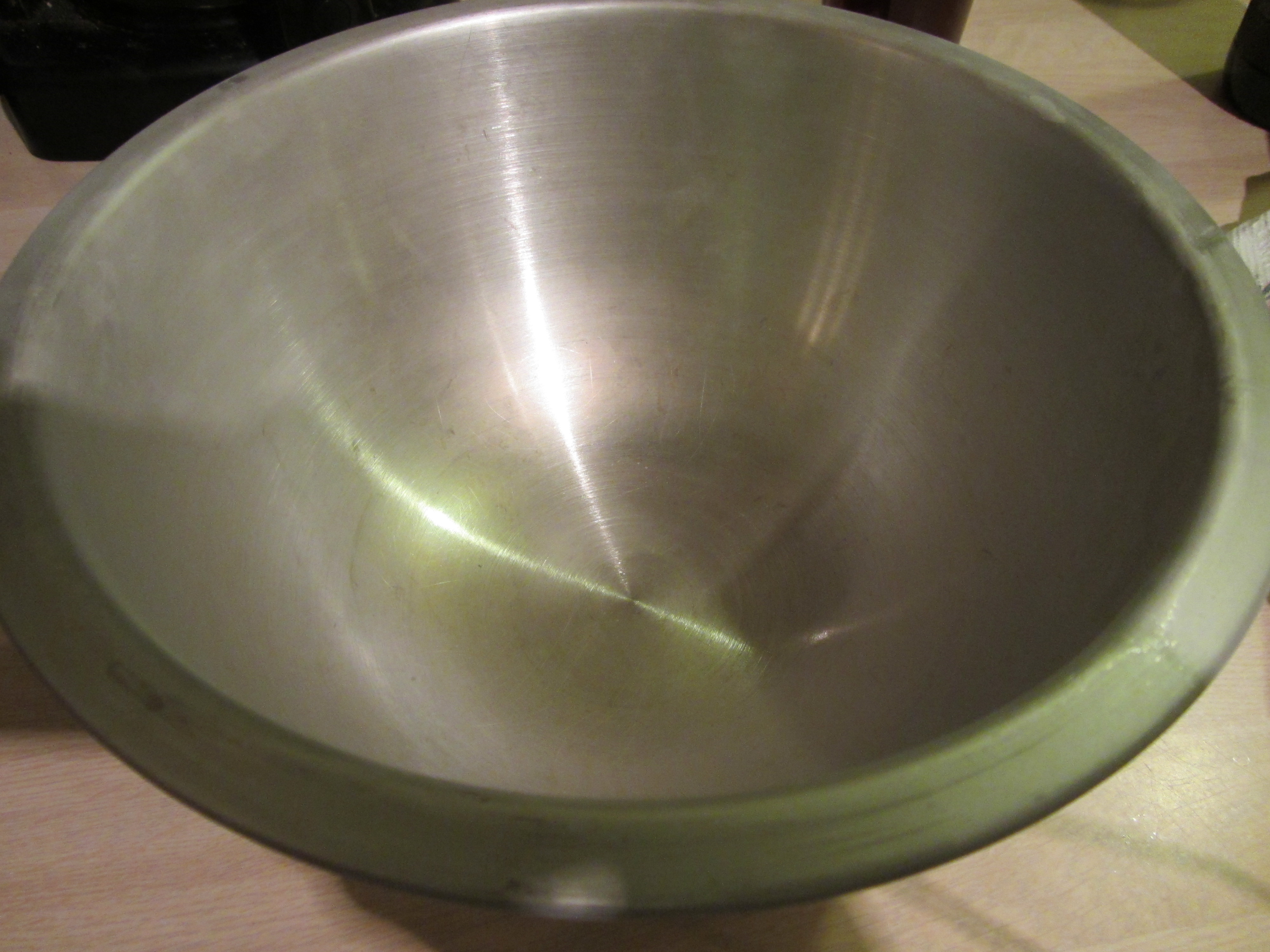
Frozen bowl.

Frozen bowl.

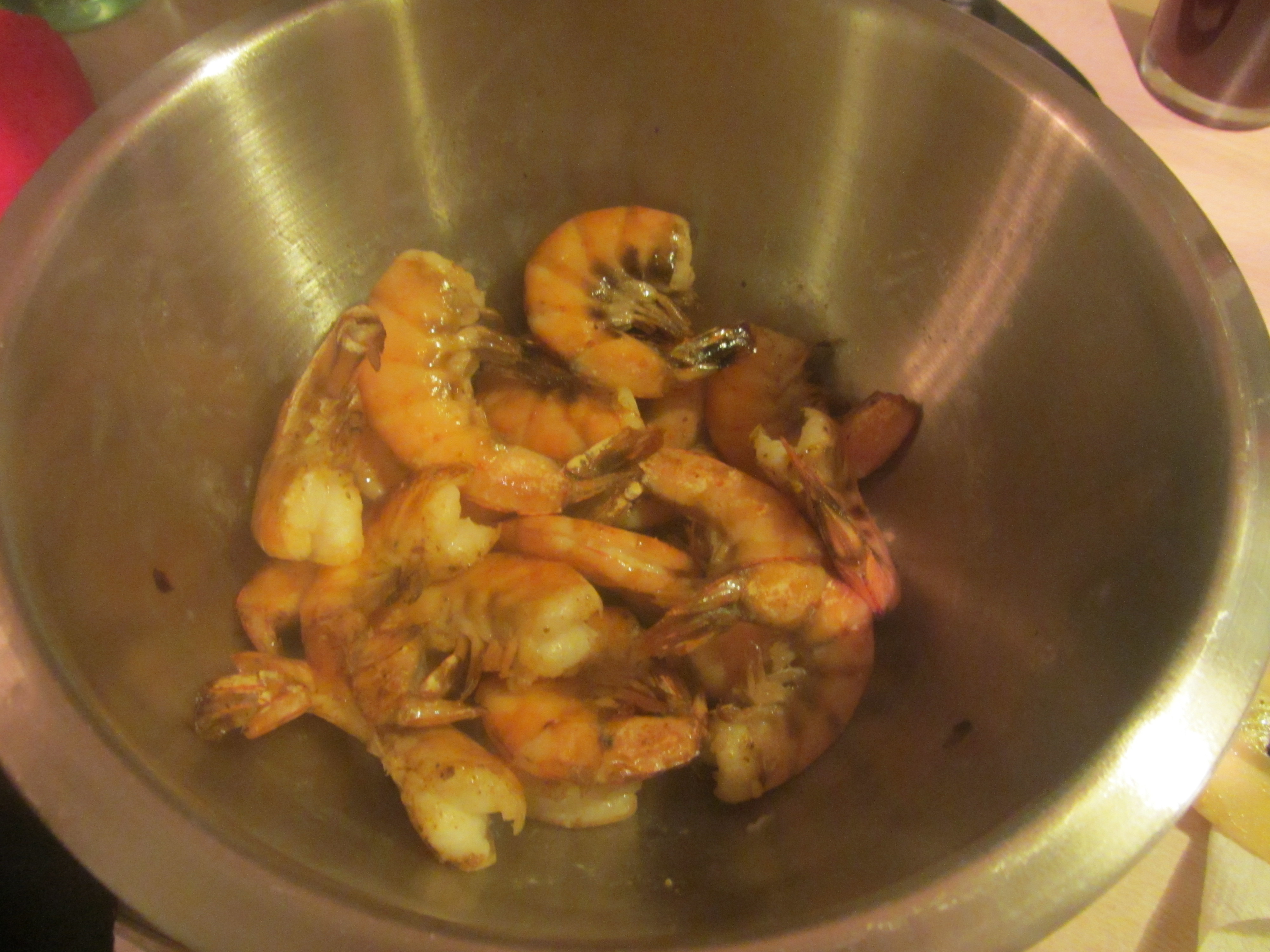
Hot shrimp into the cold bowl.

Hot shrimp into the cold bowl.

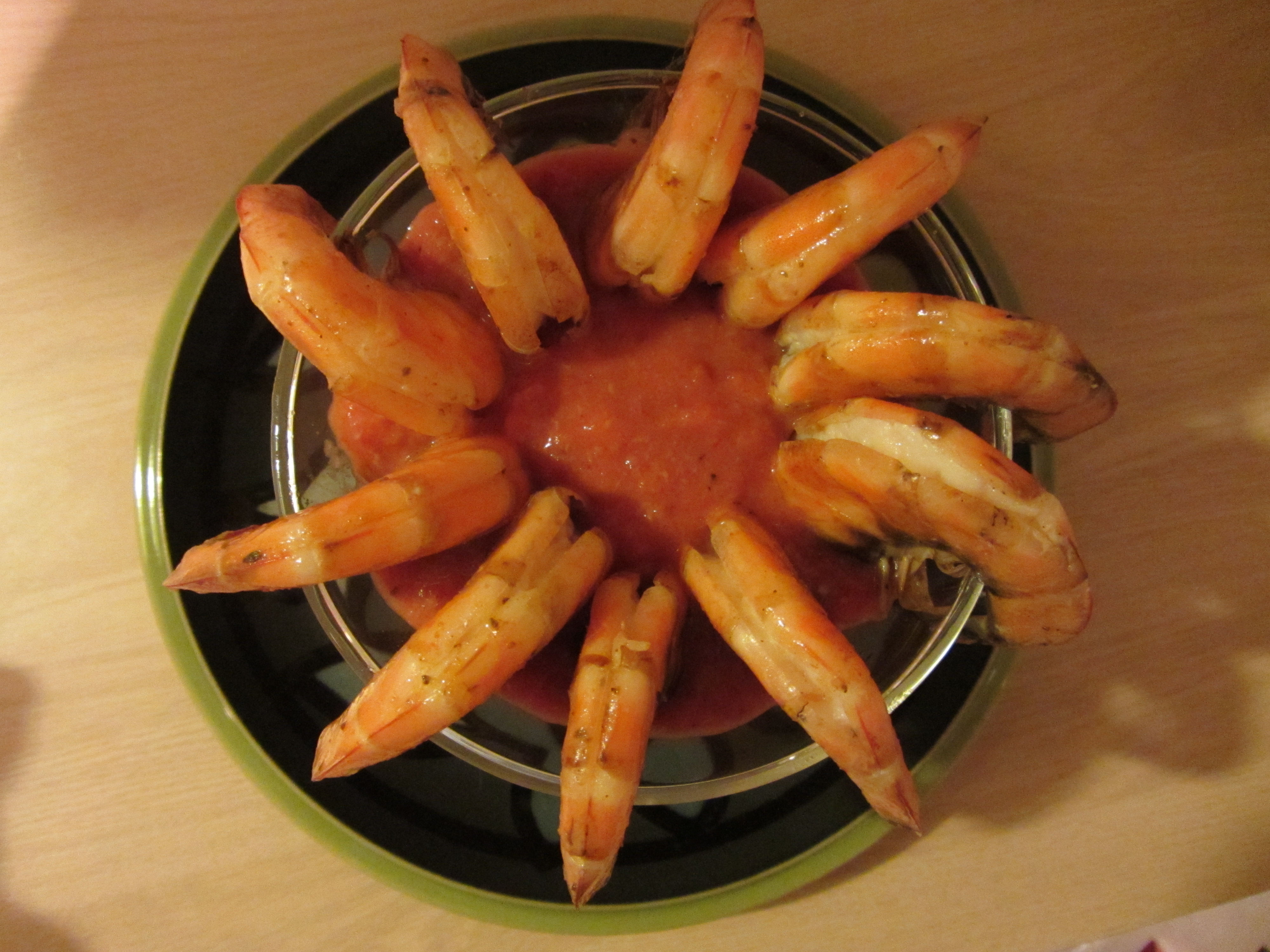
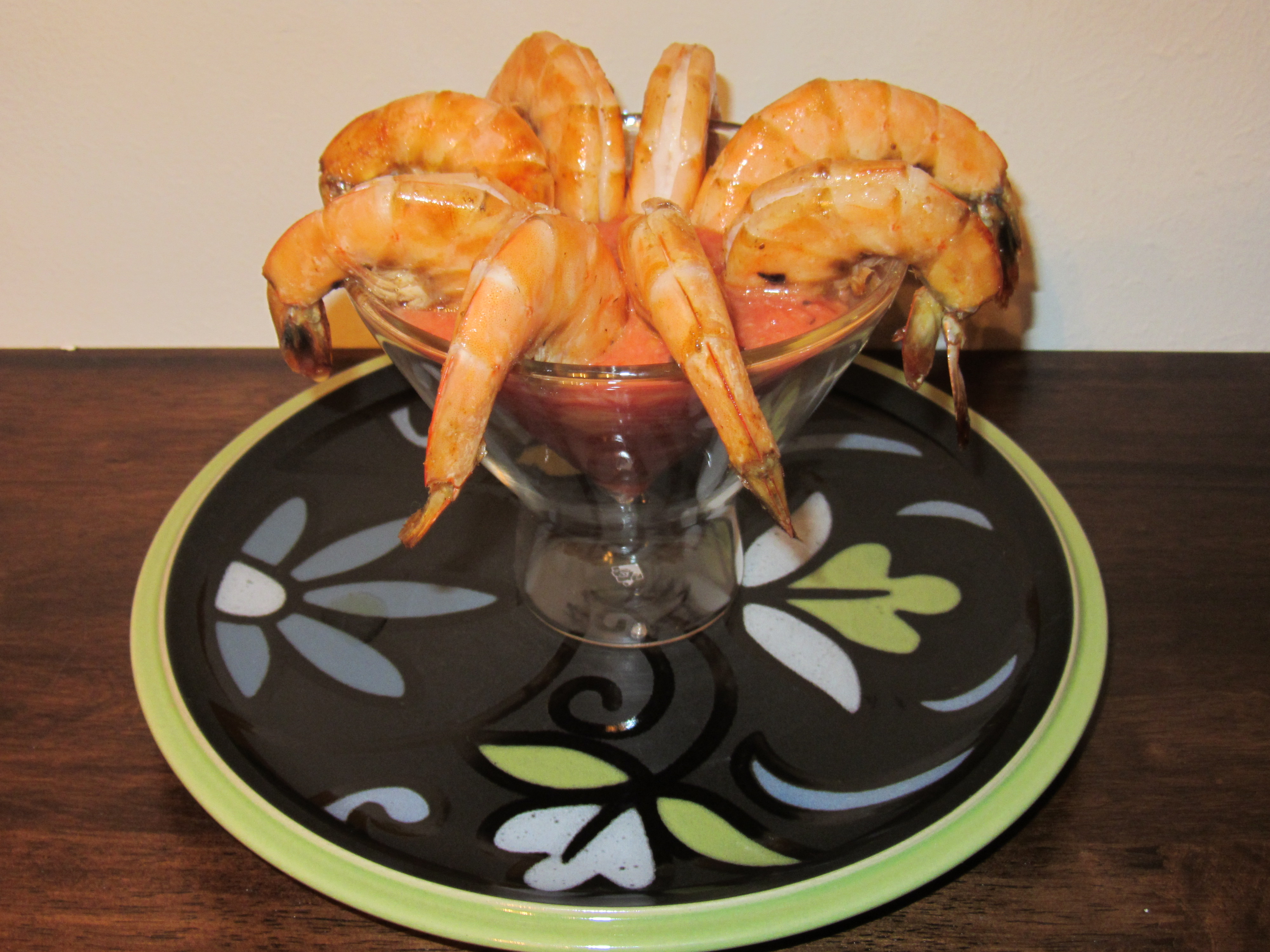
Once the shrimp are thoroughly chilled, you recreate the classic shrimp cocktail presentation, filling a martini glass with cold cocktail sauce and placing shrimp around the rim of the glass.

Completed shrimp cocktail.

Completed shrimp cocktail.

Shrimp Cocktail.

Shrimp Cocktail.

My blogging helpers.

My blogging helpers.

We ate this shrimp cocktail for dinner one night last weekend. We loved the spicy kick of the cocktail sauce, though I am sure some people would find it to be too spicy. I found the heat of the horseradish to contrast nicely with the sweetness of the tomatoes and chili sauce. The shrimp had a nice texture that was far from the rubbery texture I have come to dislike in shrimp. Alton says dry heat methods are the best for cooking shrimp, and this recipe seems to confirm that. My husband thought this shrimp cocktail was delicious, and said this was the best cocktail sauce he had ever had.

It’s a Wonderful Waldorf

I live in Washington state. It is Fall. Could the timing be any better for me to happen upon the “Apple Family Values” episode of Good Eats? I love apples, but I sort of refuse to eat them in the summer. In fact, I see the commencing of apple eating as my concession that the fall season is indeed upon us. As a Washington apple eater, my new personal favorite apple is the SweeTango, though a good Honeycrisp is hard to beat. They are expensive, but so worth it.

I will admit that I was not overly enthused to make Alton’s Waldorf salad. My impression of Waldorf salad has always been that it is a dated, over-mayonnais-ed salad from a famous hotel. Boy was I wrong about this one, as Alton’s take is well worth making.

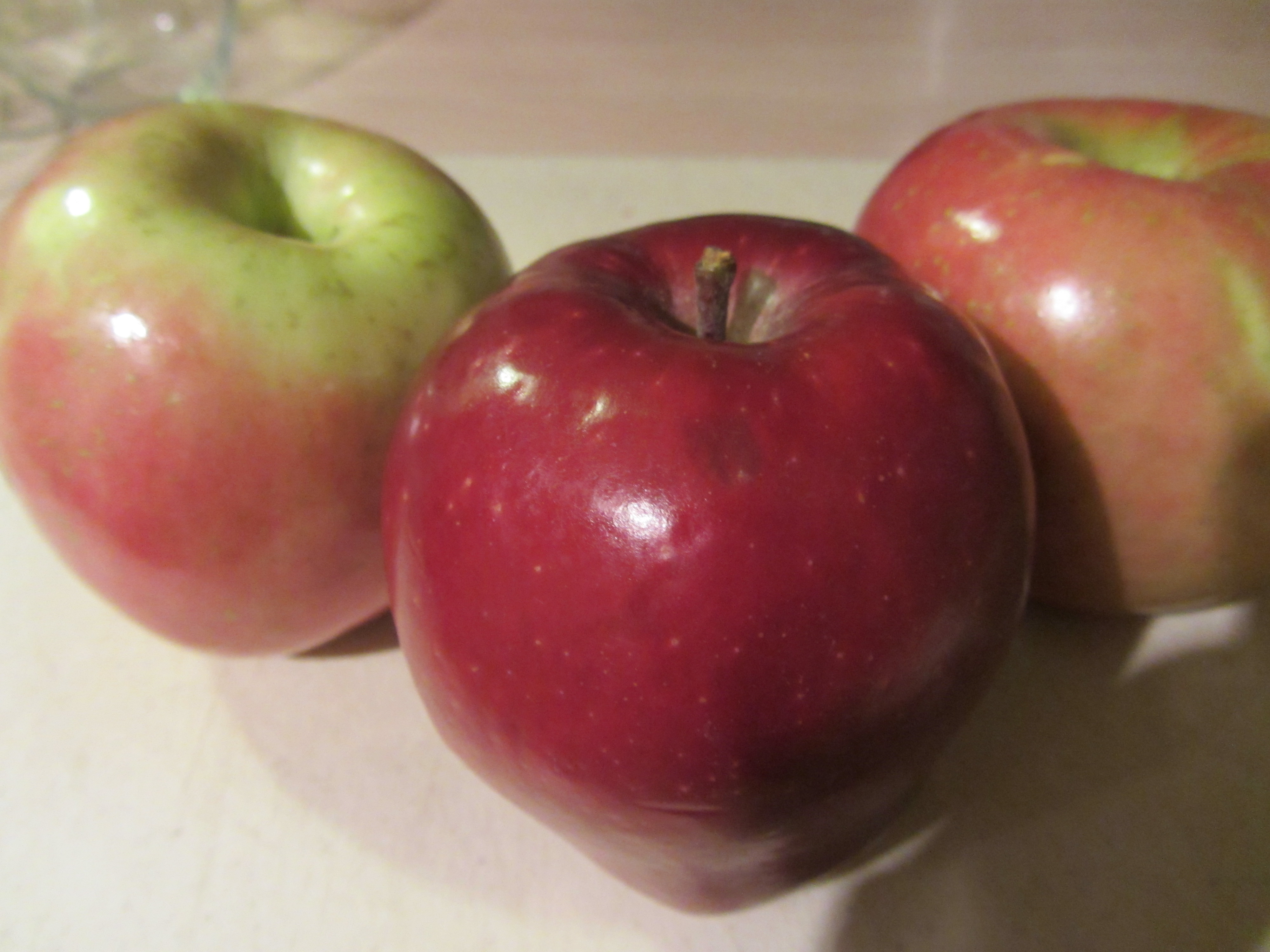
For Alton’s Waldorf salad, he recommends that you use three apples:  two Ginger Golds or Fujis and one Red Delicious. Ginger Gold apples are not readily available in our area, so I used Fuji apples in their place.

Two Fuji apples and one Red Delicious apple.

Two Fuji apples and one Red Delicious apple.

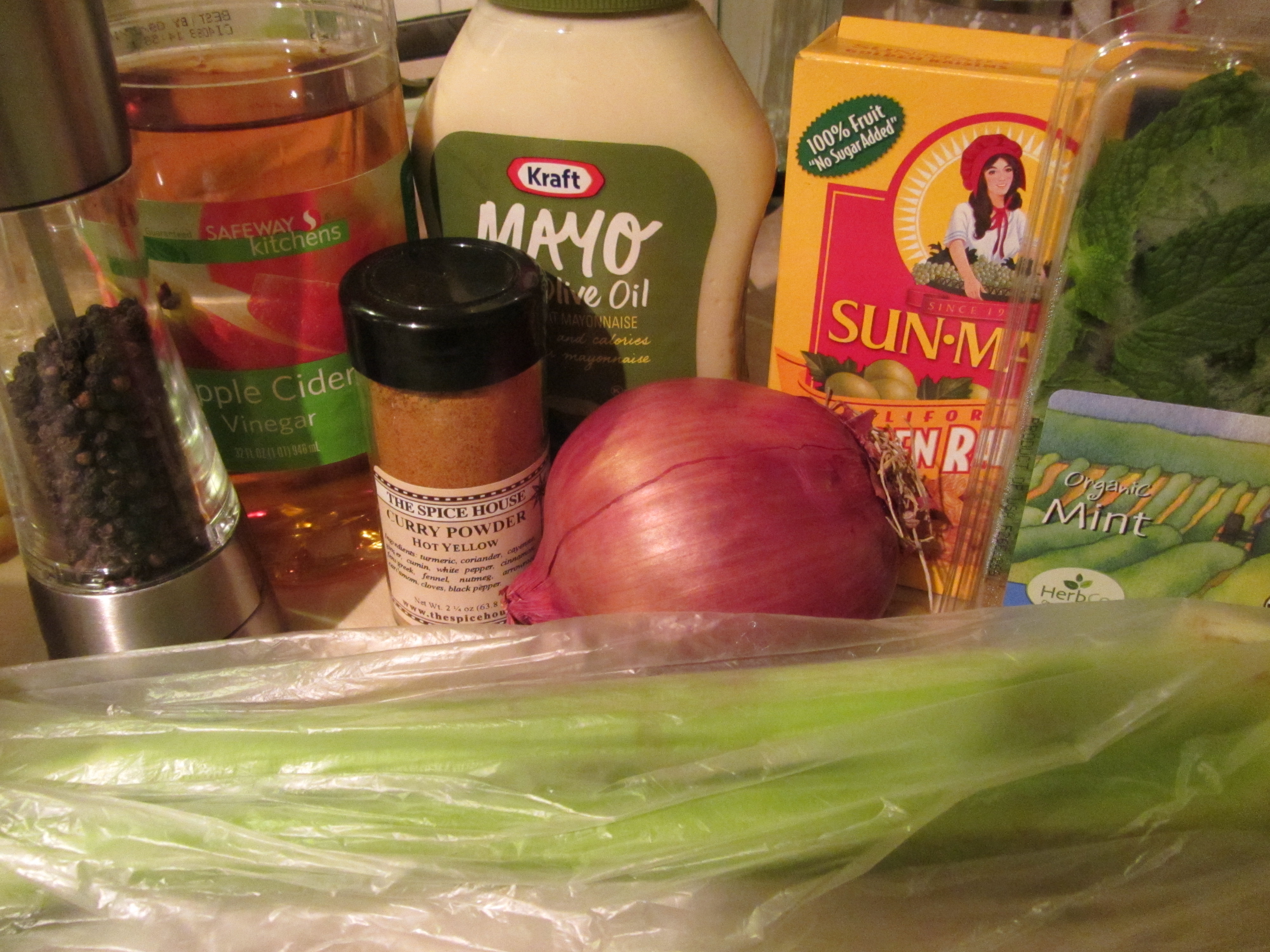
Ingredients for Waldorf salad (minus apples, toasted walnuts, and salt).

Ingredients for Waldorf salad (minus apples, toasted walnuts, and salt).

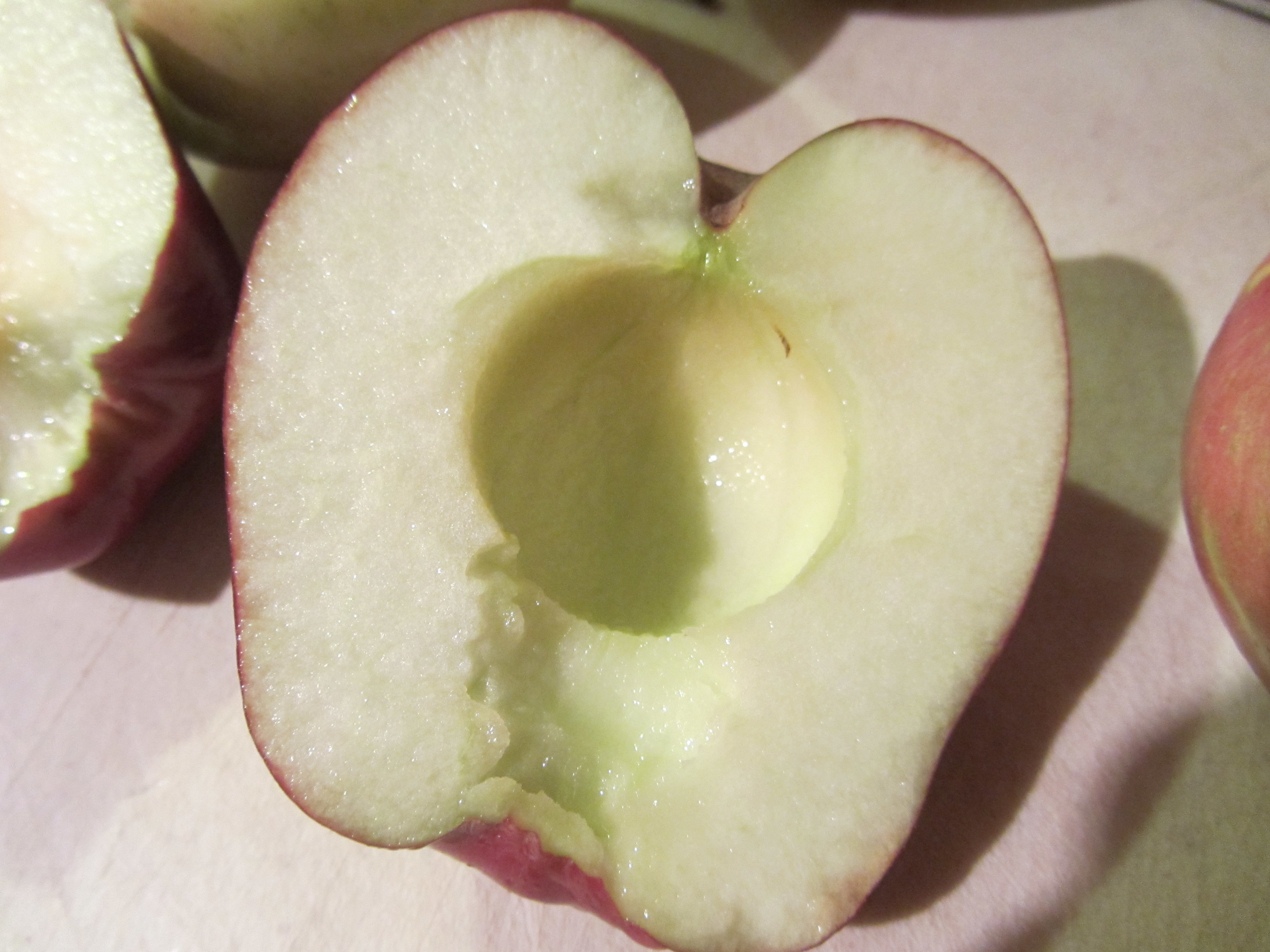
Alton suggests that you cut the apples in half, and use a melon baller to scoop out the core. This works like a charm, and I will be using this trick in the future.

Apple, cored with a melon baller.

Apple, cored with a melon baller.

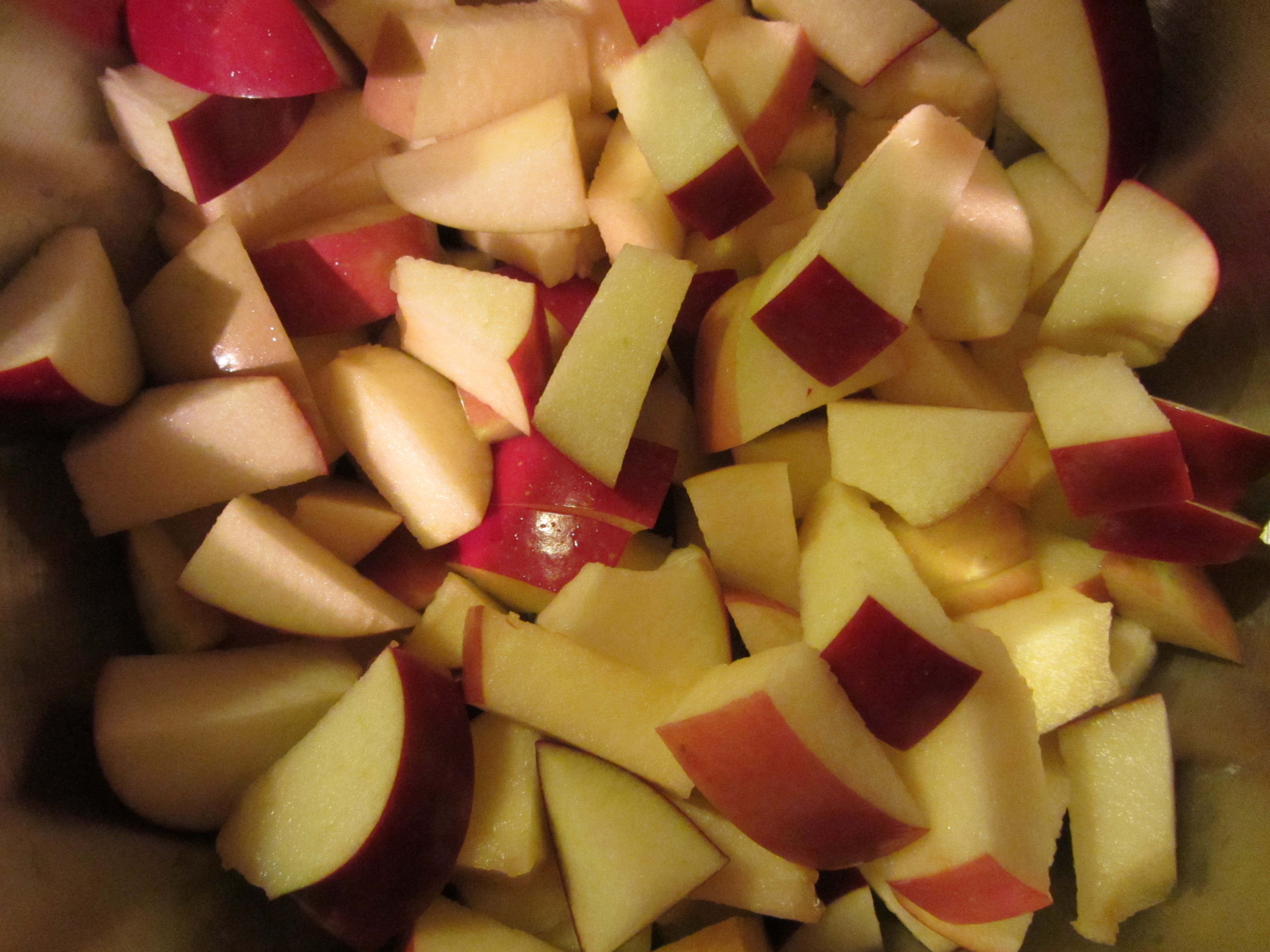
After coring and chopping the apples, you toss them with some cider vinegar.

Chopped apples, tossed with cider vinegar.

Chopped apples, tossed with cider vinegar.

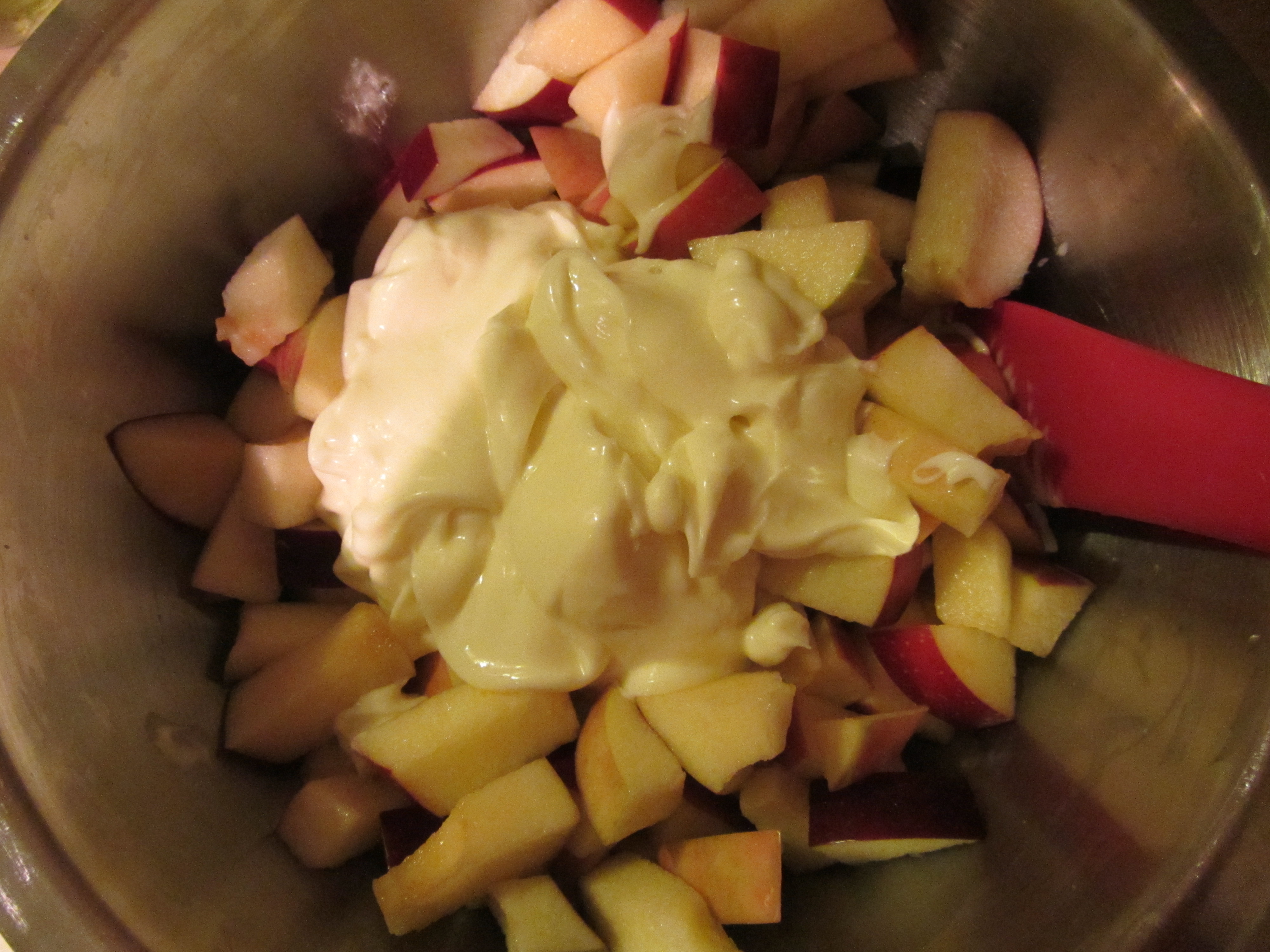
Following the vinegar, you add some mayonnaise to your apple mixture, tossing to make sure the apples are thoroughly covered.

Vinegar-coated apples with mayonnaise.

Vinegar-coated apples with mayonnaise.

Apples coated with mayo.

Apples coated with mayo.

You add some Kosher salt and pepper for seasoning.

Apples with vinegar, mayonnaise, salt, and pepper.

Apples with vinegar, mayonnaise, salt, and pepper.

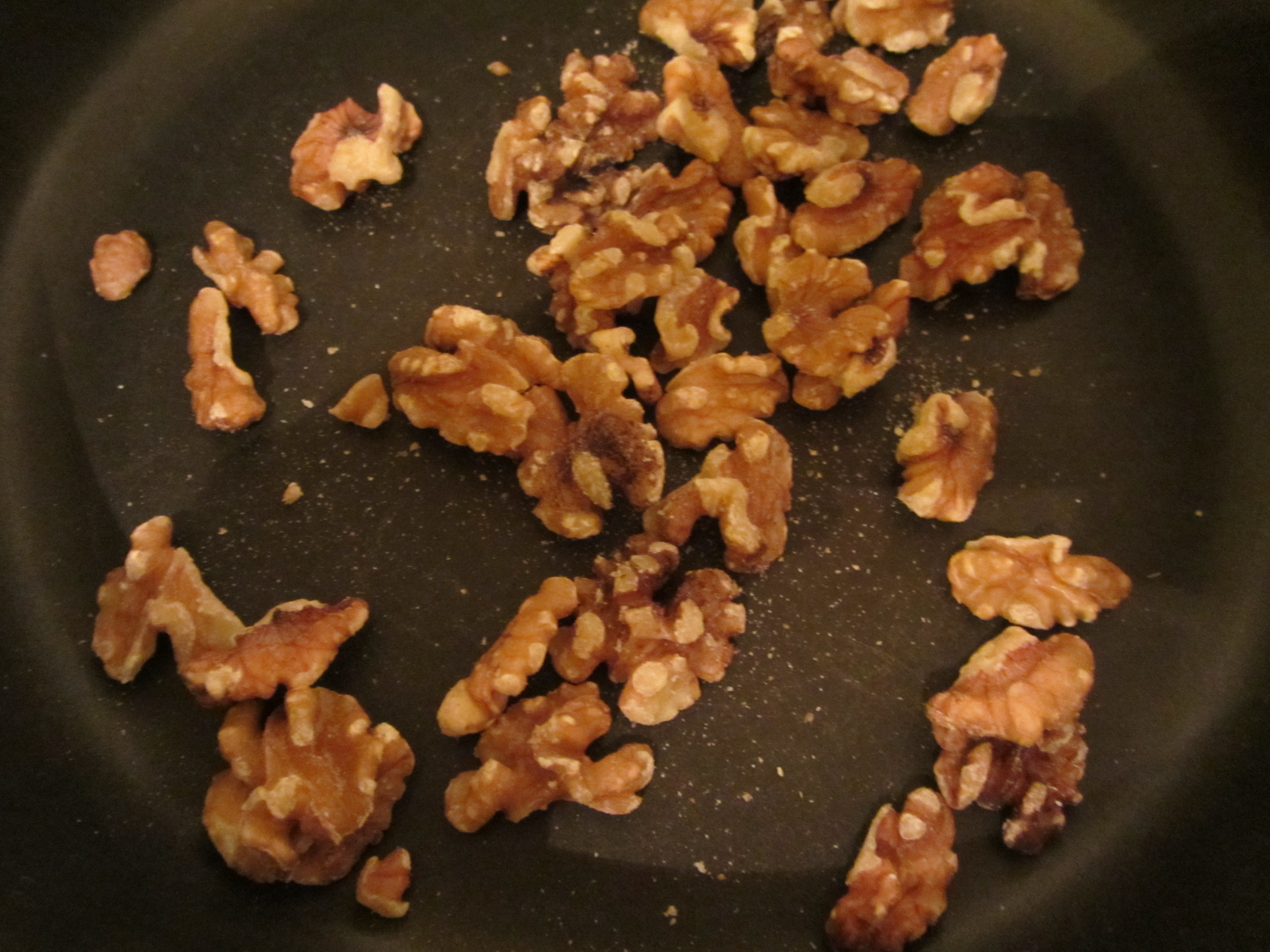
Meanwhile, you toast some walnuts on the stove, and throw them into the mix.

Toasting walnuts.

Toasting walnuts.

Next, you throw in some golden raisins, curry powder (I used hot curry powder for some extra kick, though maharajah curry would also be excellent), some celery, fresh mint, and red onion.

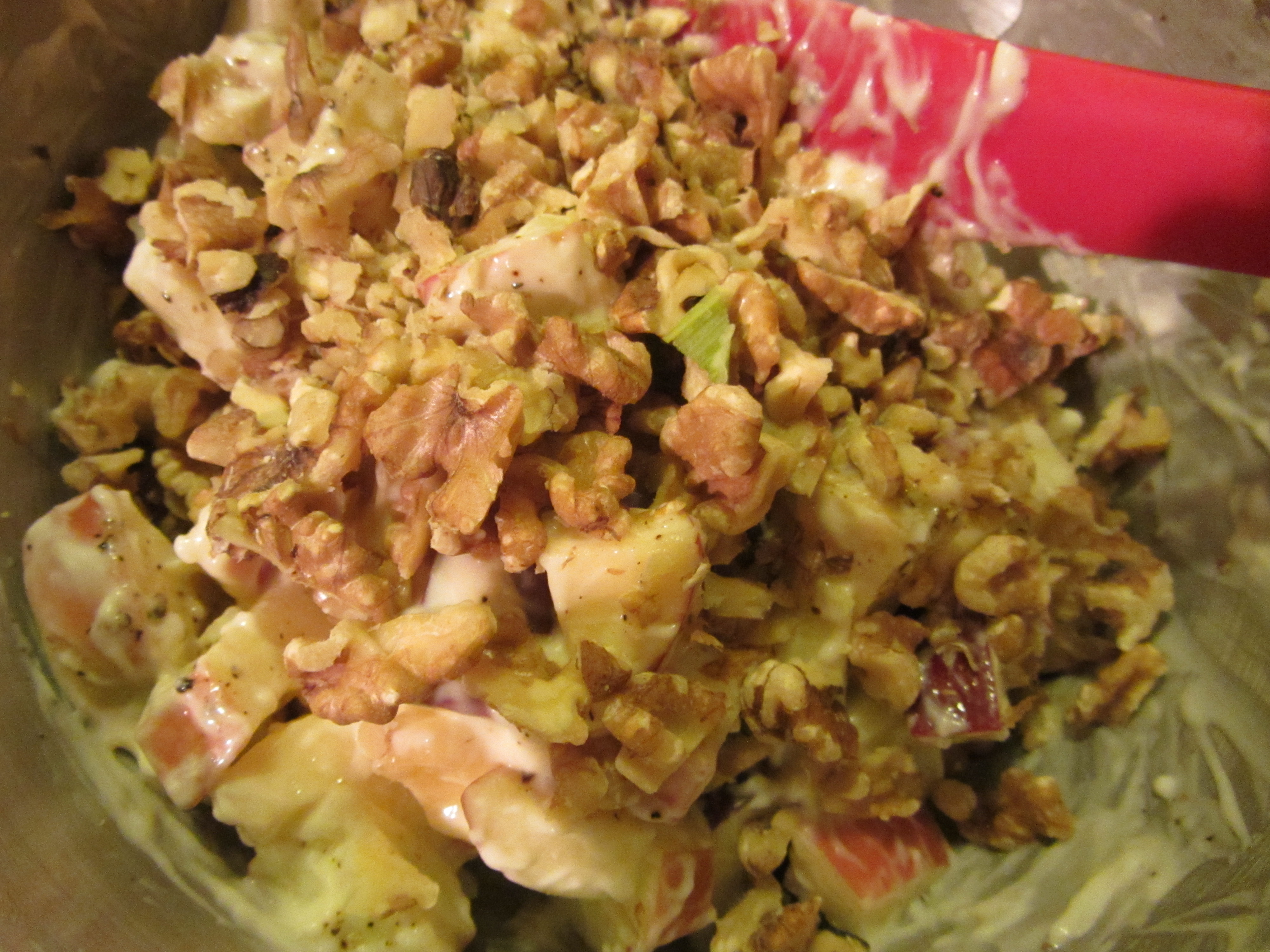
Apple mixture with toasted walnuts.

Apple mixture with toasted walnuts.

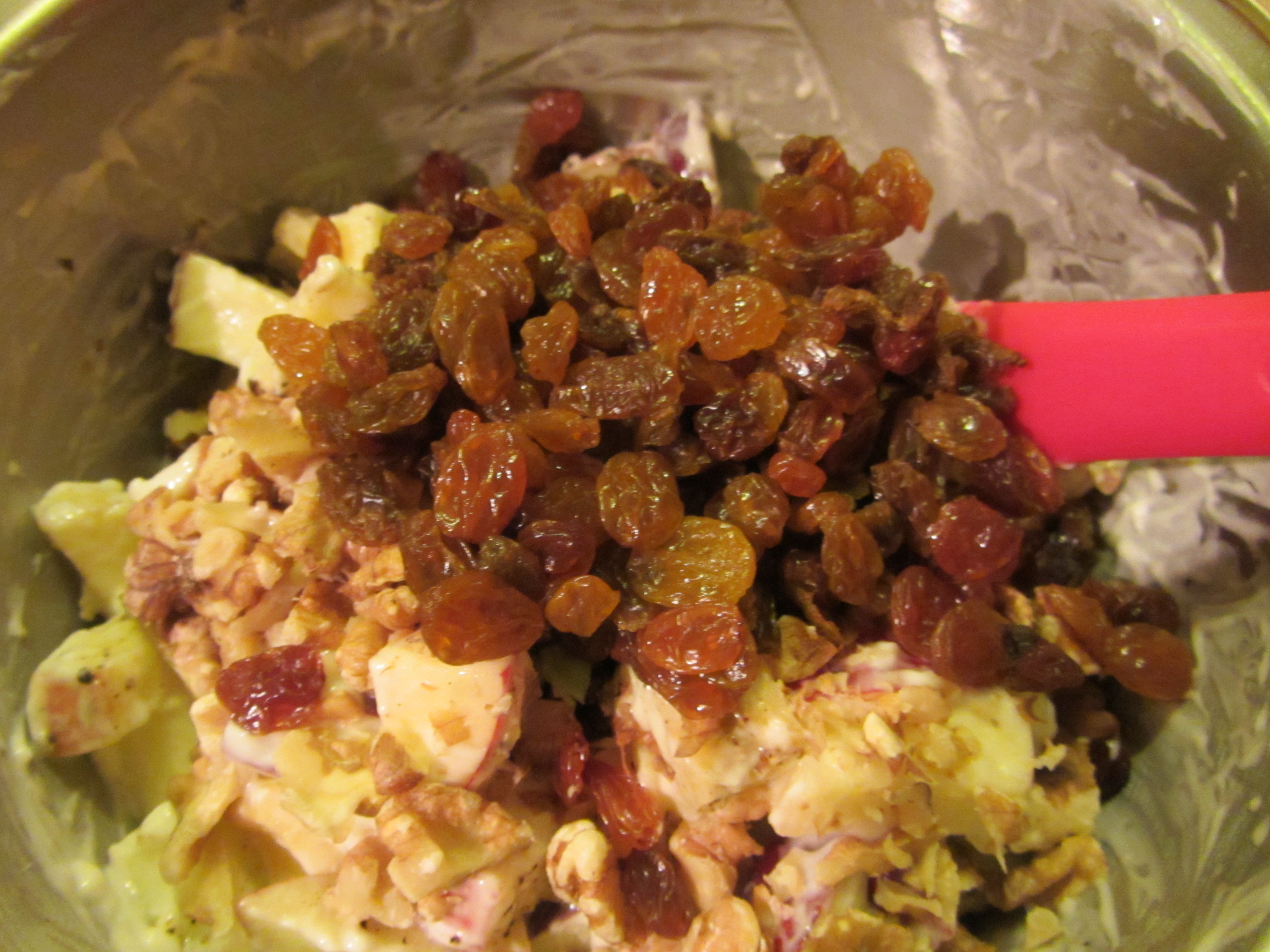
Apple mixture with walnuts and golden raisins.

Apple mixture with walnuts and golden raisins.

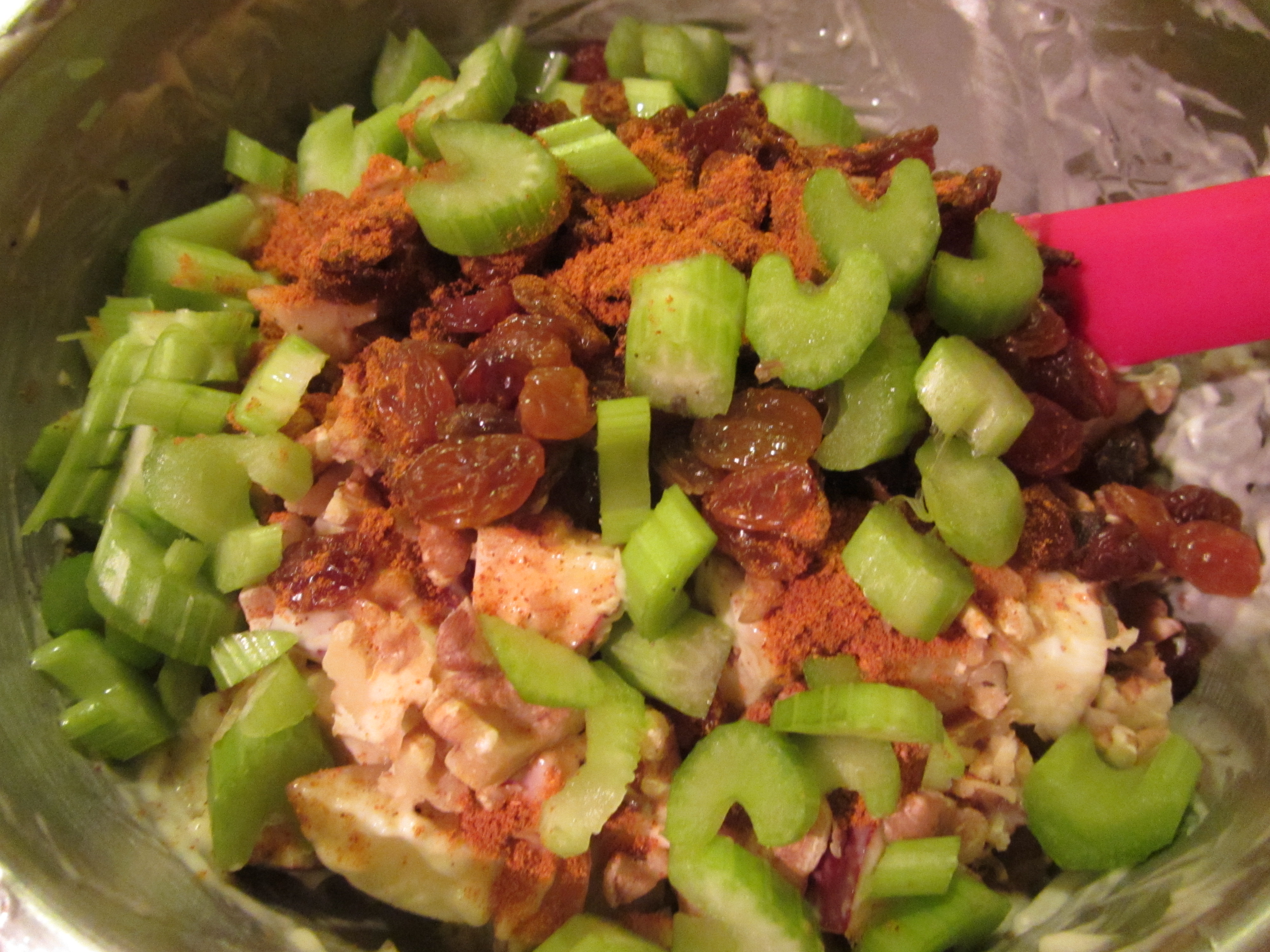
And some hot curry powder.

And some hot curry powder.

Plus some celery.

Plus some celery.

And some mint chiffonade.

And some mint chiffonade.

Some red onion tossed in.

Some red onion tossed in.

In the episode, Alton tells you to shred the red onion, while the online recipe calls for julienned red onion. I just sort of chopped my onions into thin strips. Also, the online recipe tells you to chill the salad for at least an hour prior to serving, but Alton does not mention this in the episode. I chilled my salad for 30 minutes, at the most.

The final mixture.

The final mixture.

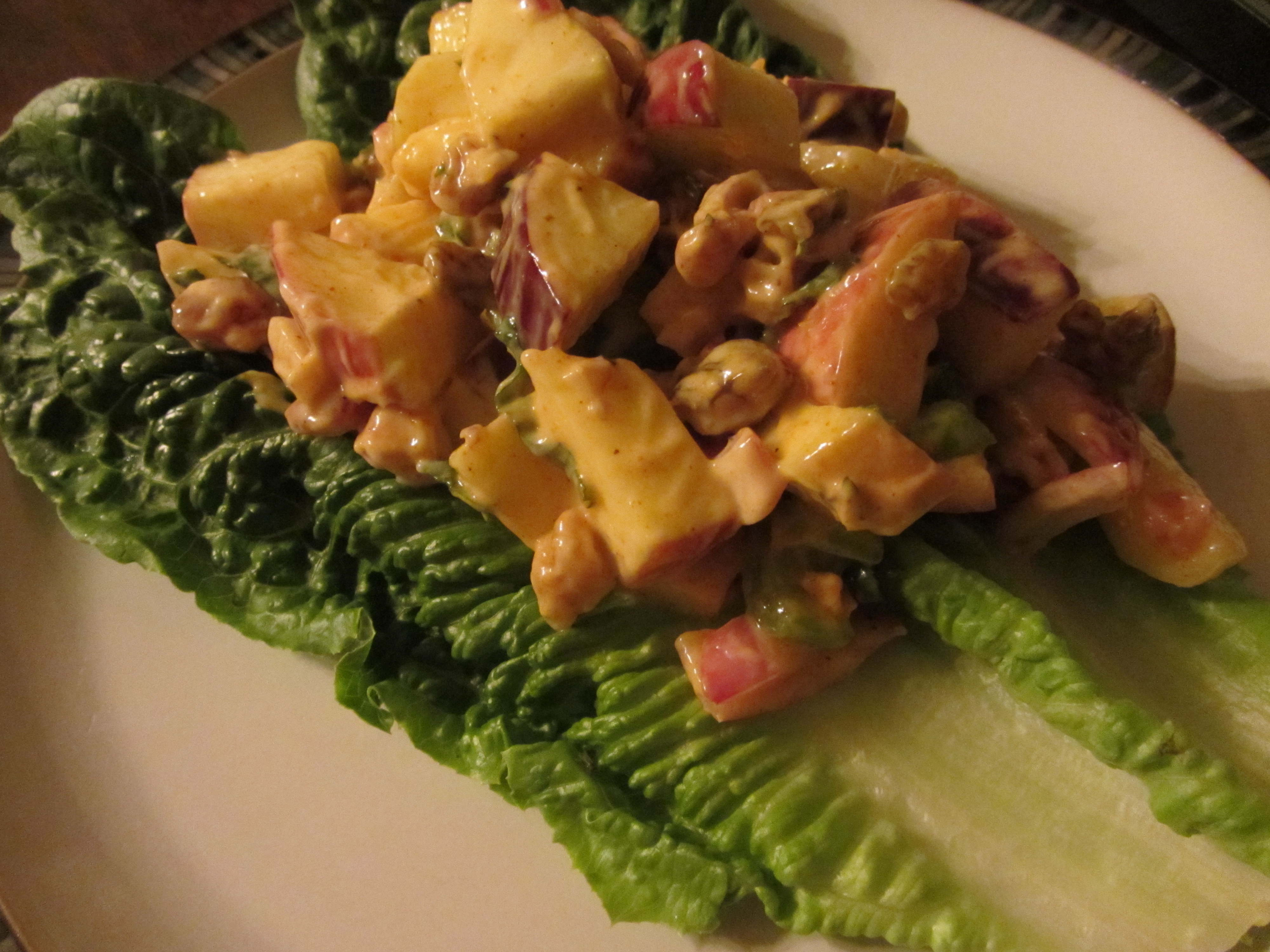
To serve the salad, you spoon it onto Romaine lettuce leaves.

Wonderful Waldorf.

Wonderful Waldorf.

We had this salad with a potato soup, but it could easily serve as an entree itself. I really loved this salad and will be making it again. It has so many wonderfully contrasting flavors and textures. The sweetness of the apple paired with the crunchy walnuts and celery, fresh mint, astringent red onion, and sweet-hot curry powder was delicious. My only complaint with this salad was that my red onion was quite strong, and almost overpowered some of the other flavors in the salad, but red onions tend to greatly vary in their potency. I also opted to use hot curry powder, as we tend to like a little spice in our food. I may have to try the Maharajah curry powder next time, as its sweeter flavor would probably pair nicely with the apples. Since we had the Waldorf salad as a side to our soup, we had leftovers. I anticipated that the texture of the salad would become one-note overnight, but the salad was just as good the following day, so do not be wary of having leftovers with this one.
10 Minute Apple Sauce

My mom used to make apple sauce in the fall. I remember her standing over the sink, her right arm spinning in circles as she turned the arm of her tattered food mill. Often, Mom would serve homemade (and sometimes store-bought) applesauce to my brother and me for breakfast. It was usually served in a bowl, and with a drizzle of heavy cream on top. I preferred my applesauce warm, and discovered that I liked it with a sprinkle of extra brown sugar. My mom could always make store-bought applesauce taste almost like homemade, with the additions of cinnamon, vanilla, and sugar.

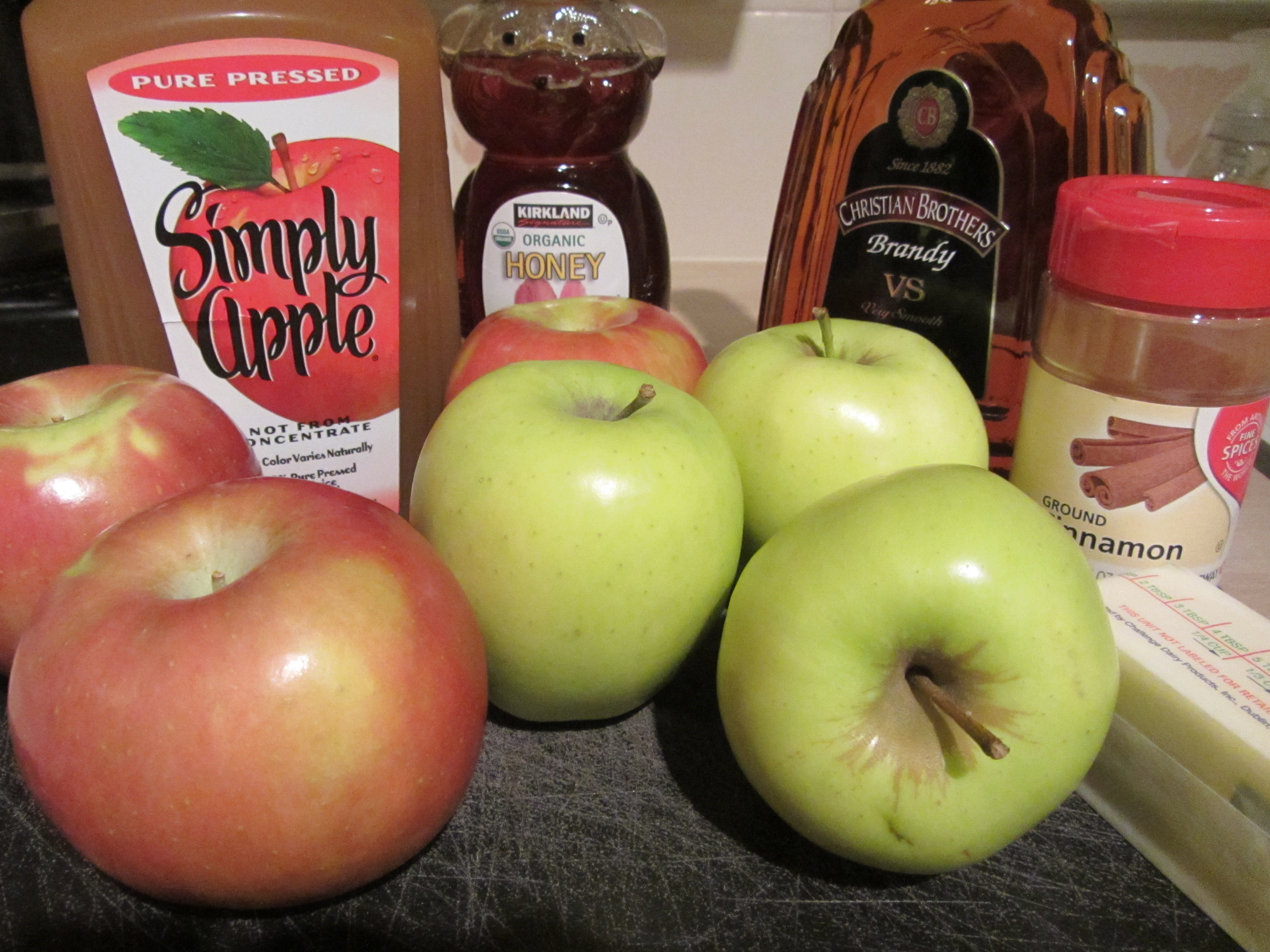
When I watched Alton prepare his 10 Minute Apple Sauce, I was skeptical that it could taste anything like my mom’s homemade applesauce. To begin, you combine unfiltered apple juice, cognac or brandy (I used brandy), butter, honey, and cinnamon in a microwave-save container that has a lid. To this liquid mixture you add six peeled, cored, and quartered apples (three Golden Delicious apples and three Fuji apples).

Golden Delicious apples, Fuji apples, unfiltered apple juice, honey, brandy, cinnamon, and butter.

Golden Delicious apples, Fuji apples, unfiltered apple juice, honey, brandy, cinnamon, and butter.

You put the lid on your container and give the entire mixture a good shake. Once everything is good and mixed, you open one corner of your lid and microwave the applesauce on high power for 10 minutes.

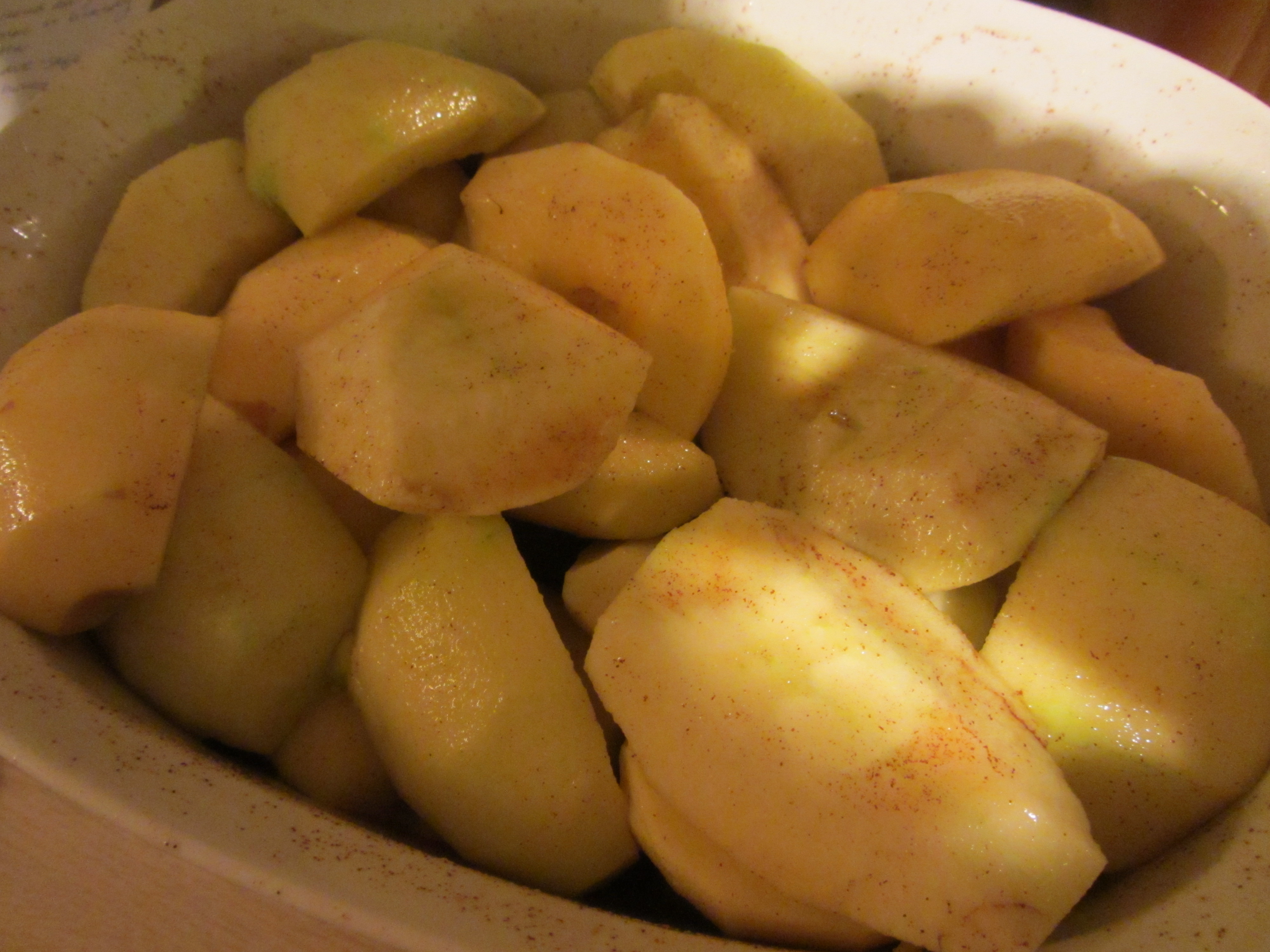
Apple mixture, prior to cooking.

Apple mixture, prior to cooking.

After cooking, you blend the mixture until it is “almost smooth.”

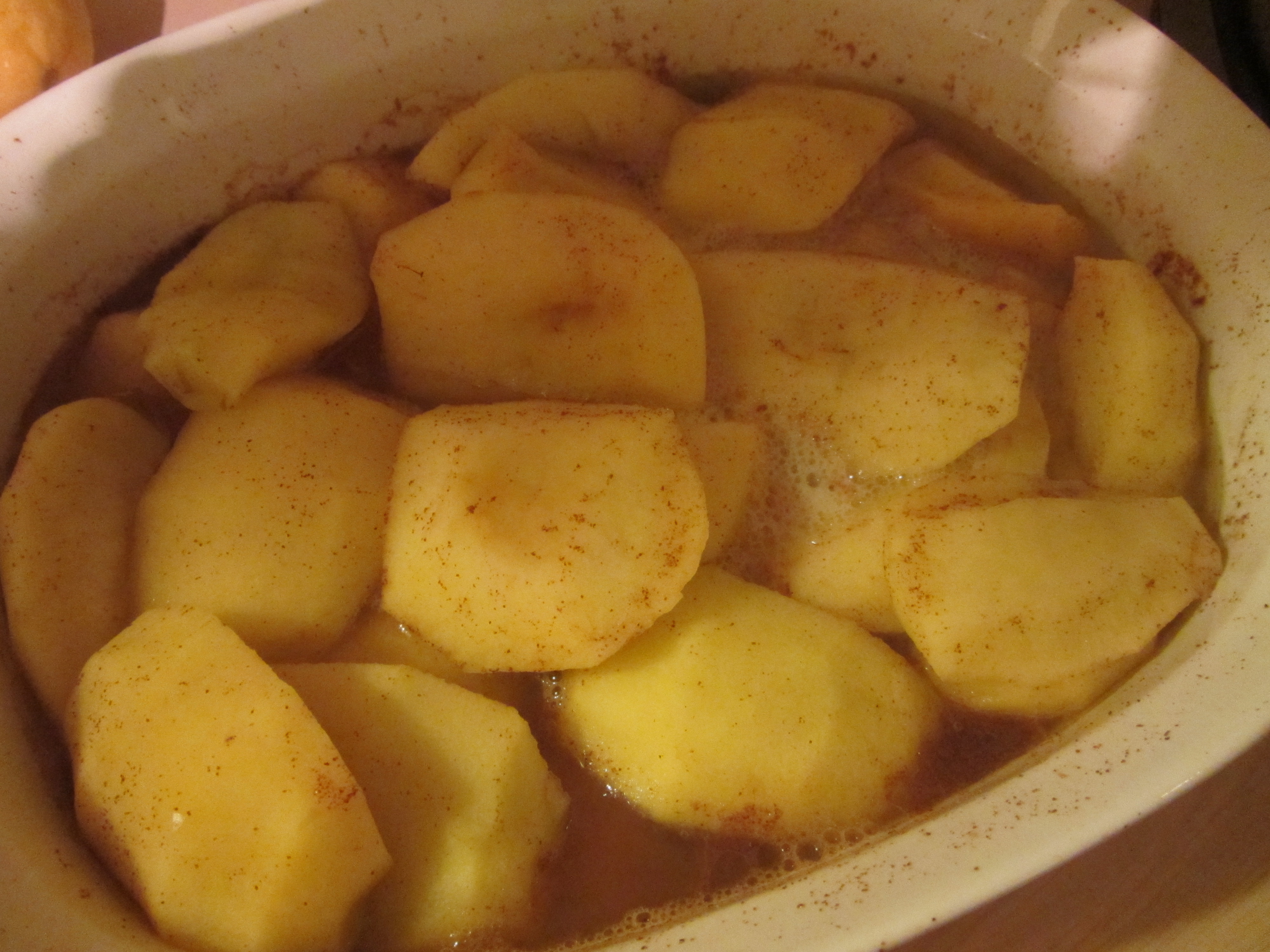
Apple mixture, after baking.

Apple mixture, after baking.

My immersion blender is one of my very favorite kitchen gadgets, but it happens to be quite unhappy at the moment. Our Coonhounds also happen to love the immersion blender (they come running), as they recognize that the sound of the whisk attachment often means whipped cream for them. Since the immersion blender is currently out of commission, I threw the entire apple mixture into the blender and blended it until it was nearly smooth.

Final applesauce.

Final applesauce.

Alton says that this applesauce will keep well in the refrigerator for two to three weeks. I guess that isn’t an issue when your applesauce is gone in two days. This is definitely the fastest and easiest applesauce I have ever made. Was it as good as Mom’s? Tough to say, but it was pretty darn good.

Baker, Baker

The final recipe in this episode is for baked apples. Yet again, I think of my mom when I think of baked apples. She would make baked apples for us for breakfast or dessert. Sometimes the apples were sliced prior to baking, while other times they were whole, as in Alton’s recipe in this episode.

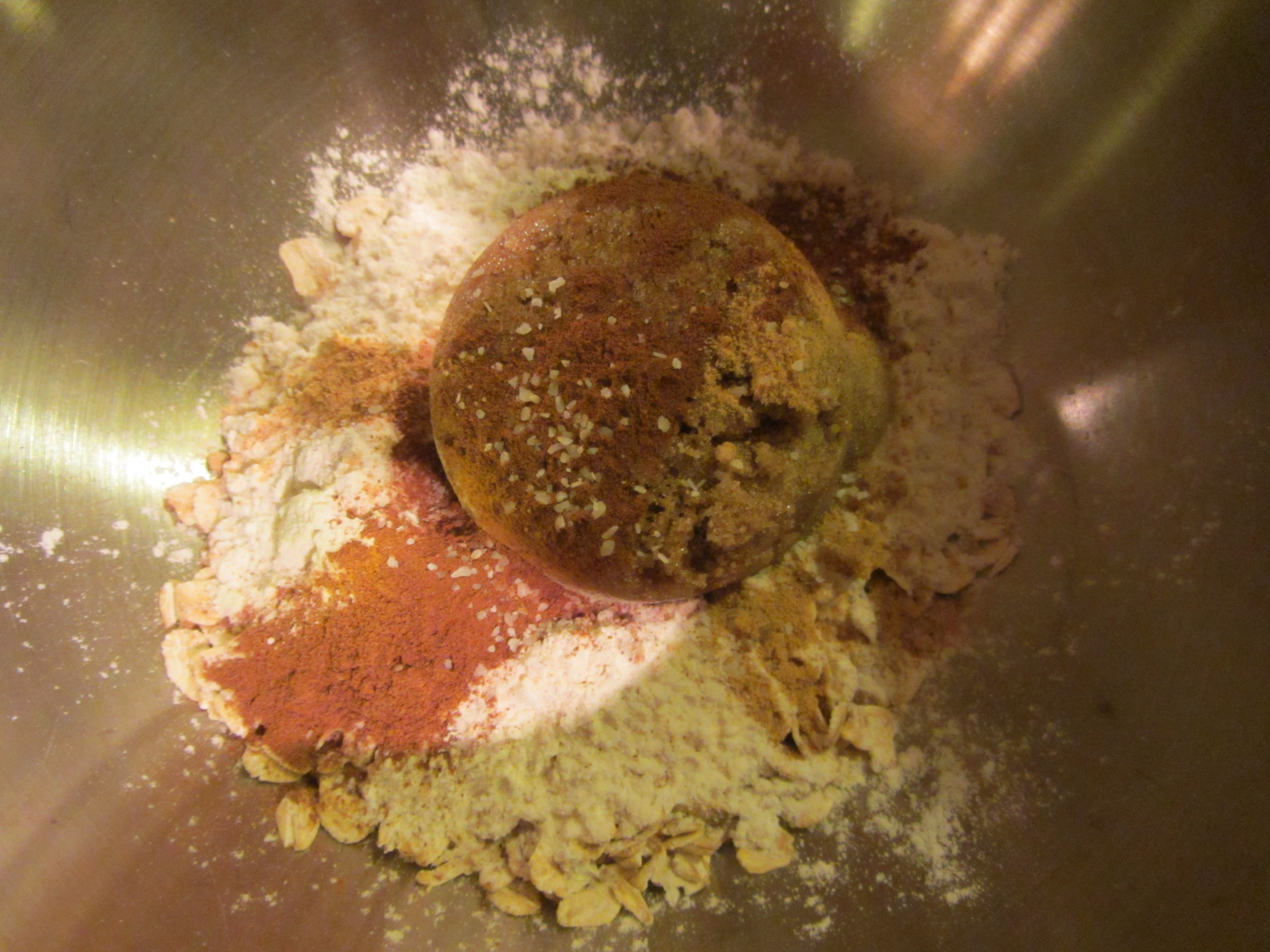
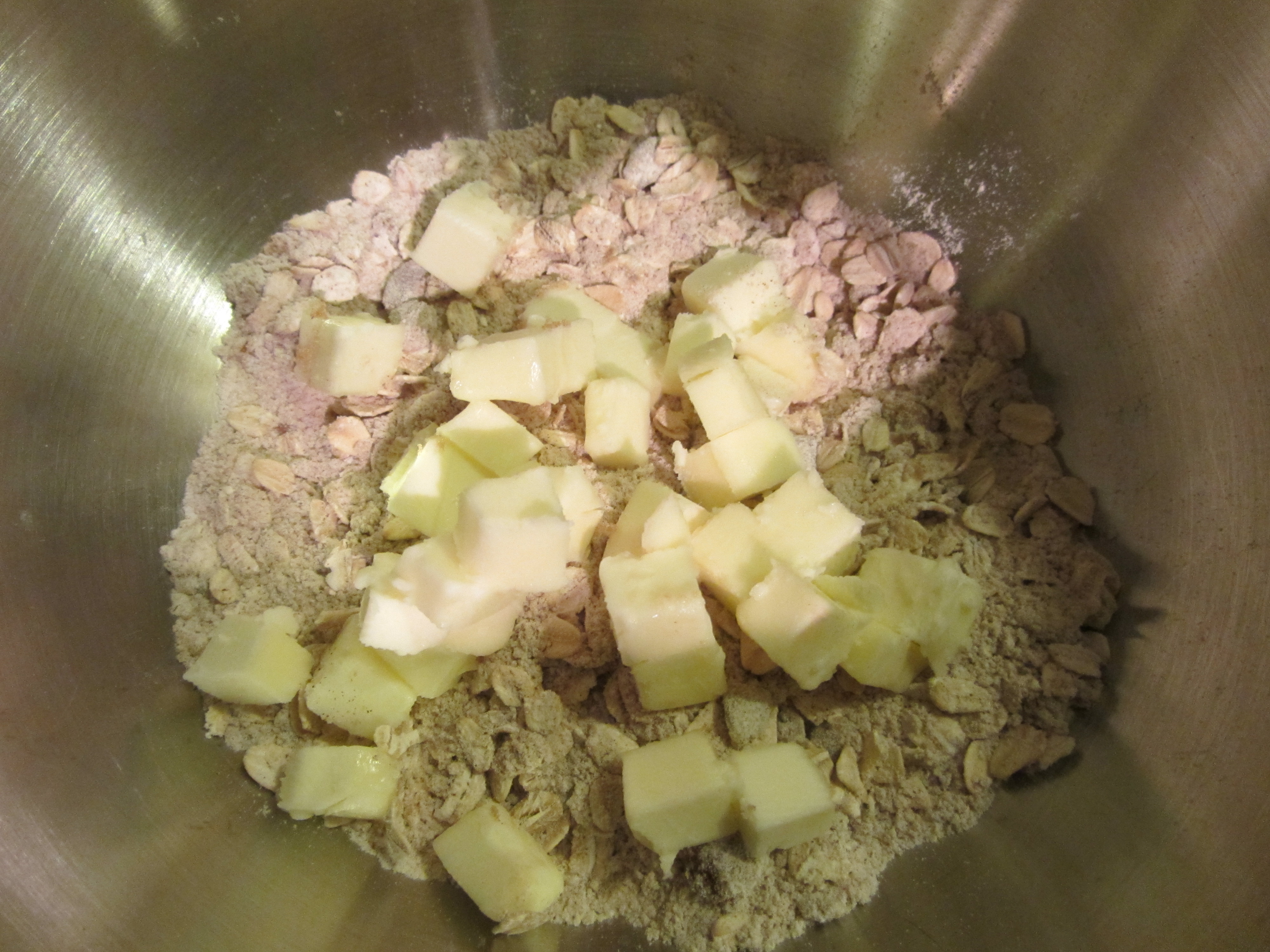
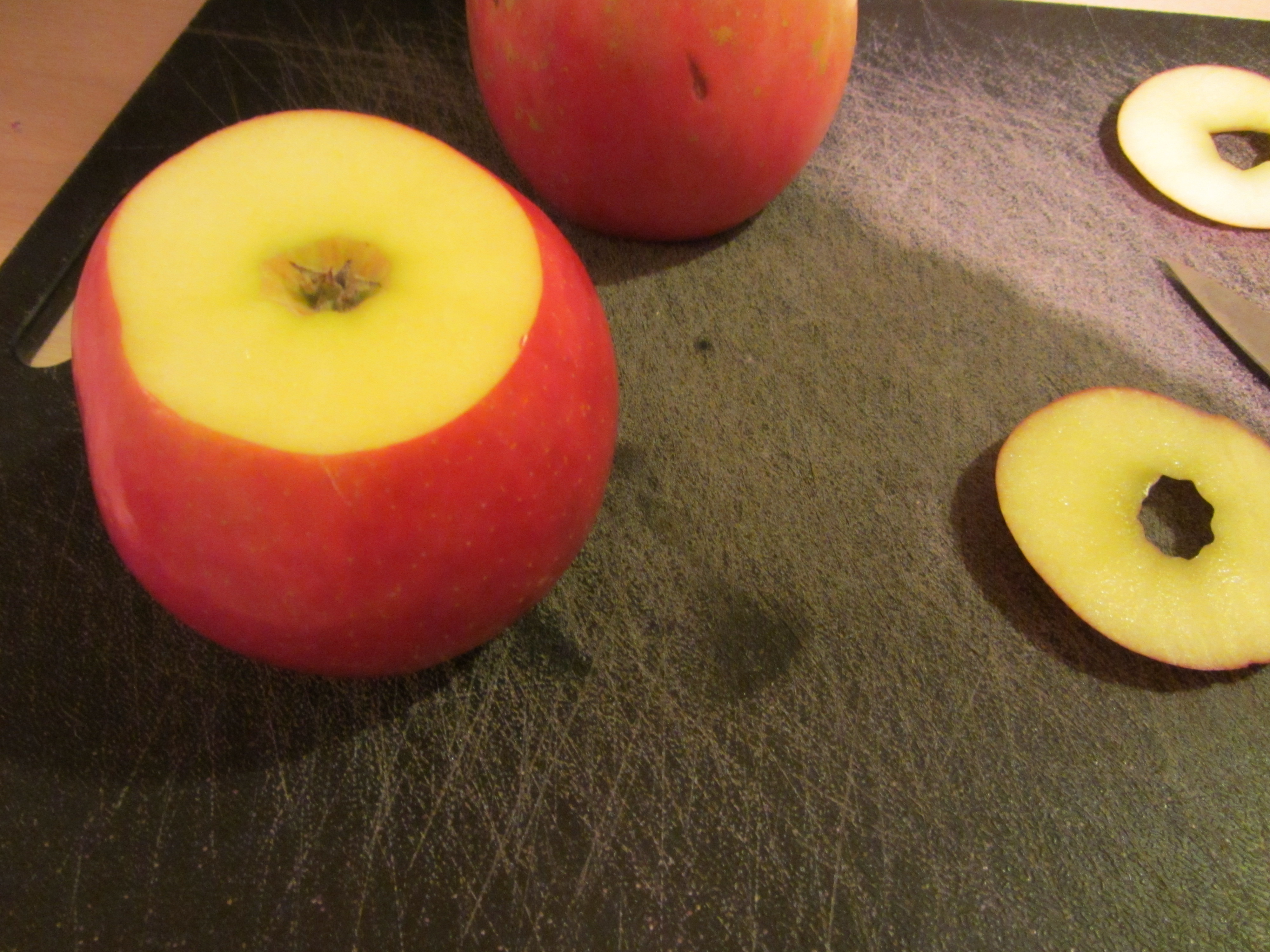
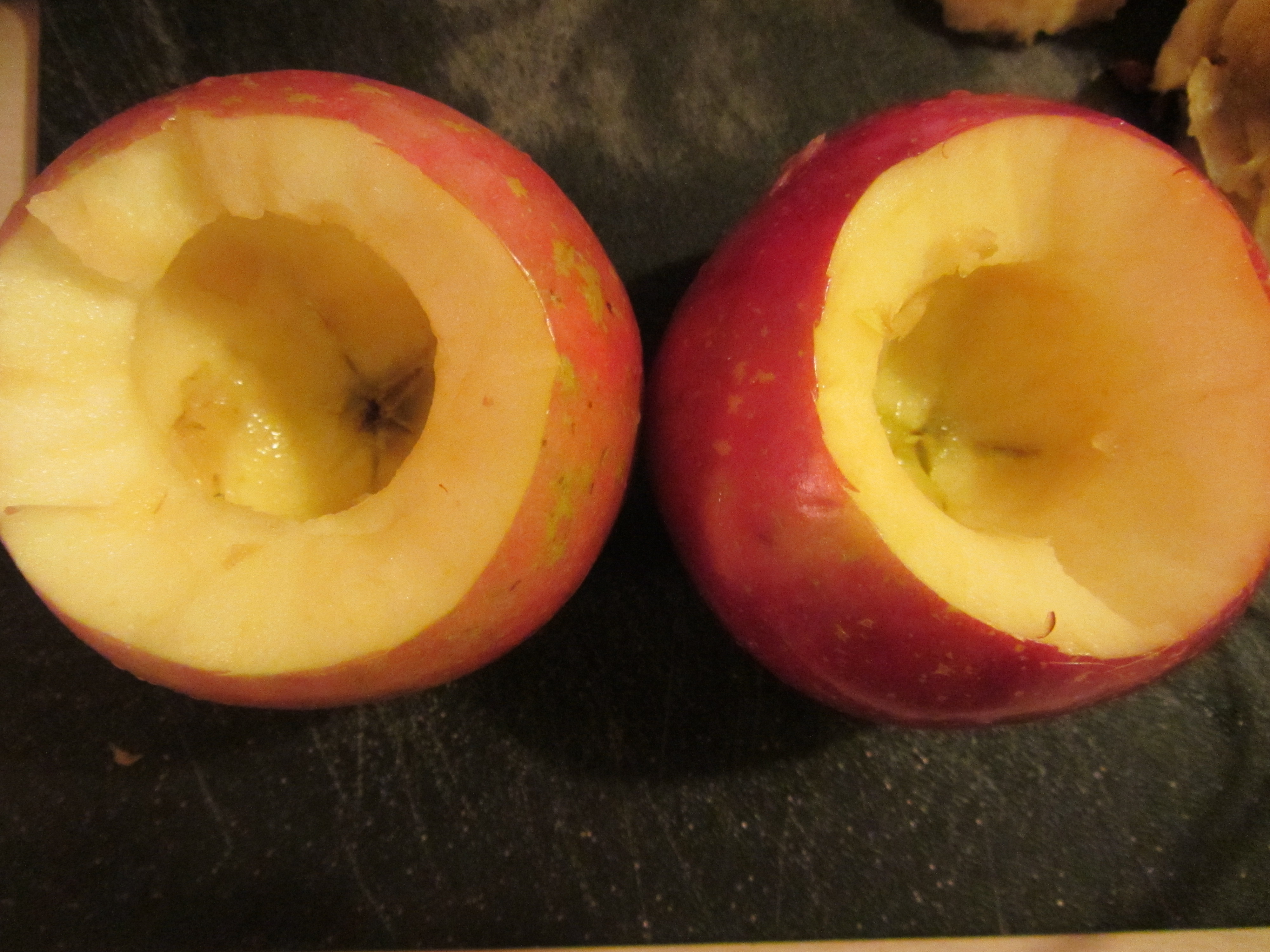
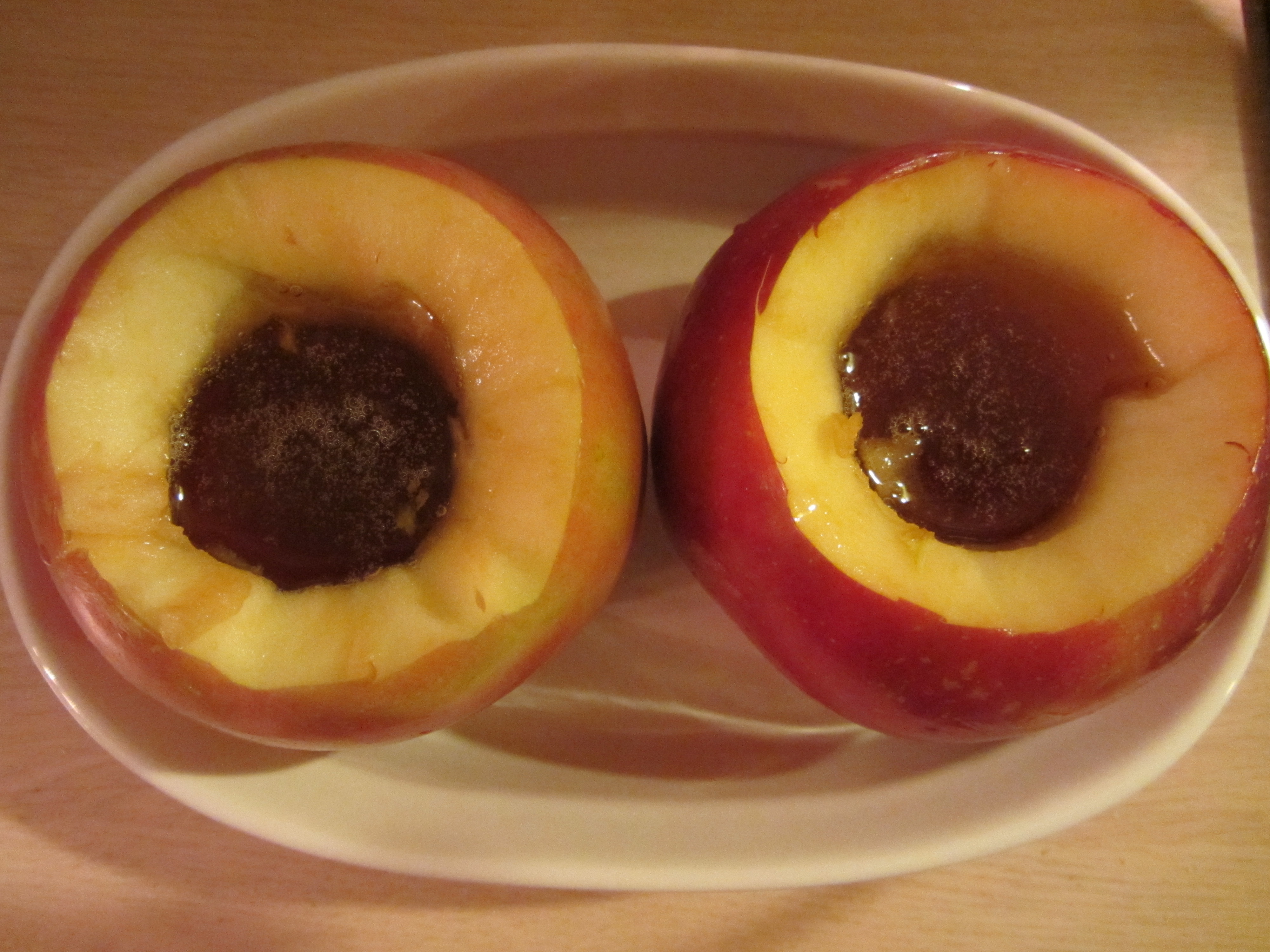
For these baked apples, you first combine your topping ingredients. In a bowl you combine oats, flour, light brown sugar, cinnamon, ground ginger, and Kosher salt.

All of the ingredients for baked apples.

All of the ingredients for baked apples.

Oats, flour, light brown sugar, cinnamon, ginger, and salt.

Oats, flour, light brown sugar, cinnamon, ginger, and salt.

Into this mixture you add some butter with your hands, working until the mixture is crumbly.

And some butter.

And some butter.

Completed streusel topping.

Completed streusel topping.

The topping mixture goes into the refrigerator while you prep your apples. For this recipe you want to use Braeburn or Fuji apples. I used Braeburns for this recipe. You first want to cut the bottoms off of your apples; this will give your apples a level, stable base while you work on them.

Leveling the apples.

Leveling the apples.

Once the apples are level, you carve off the tops of the apples, using a paring knife. A melon baller is then used to scoop out the seeds and core of the apples. Once cored, you fill the apple reservoirs with honey and sprinkle the tops with the topping mixture. You pack down the topping, and then sprinkle on additional streusel, taking care not to pack the second layer of topping.

Cored and ready to go.

Cored and ready to go.

Reservoirs filled with honey.

Reservoirs filled with honey.

Apples topped with two layers of streusel.

Apples topped with two layers of streusel.

The apples are placed in a baking dish and go into a 350 degree oven for 40 minutes, or until they are tender when squeezed with tongs. The apples need to cool for about 10 minutes prior to eating. We ate ours with ice cream on the side.

Baked apples, served with ice cream.

Baked apples, served with ice cream.

This recipe does make additional streusel topping, so I made baked pears the following evening.

The streusel topping can also be used for pears.

The streusel topping can also be used for pears.

These baked apples have all of the flavor of homemade apple pie, yet they are so much easier to make. When served with ice cream, they are truly a treat. The apples are tender to the bite and filled with a glorious almost-caramelized filling. For an easy, yet indulgent, treat, these are a great way to go. I can say that I would gladly make any of these recipes again.


Fondue Vudu

Now that the fruitcake has officially all been eaten in our house, we’re on to the next logical task:  cheese! Cheese is absolutely one of my favorite things, and I will find any excuse to eat it. I have been known to reason that I need to eat more cheese because “I need more protein,” or because “Calcium is good for my bones.” I can also safely say that I like any and all types of cheeses. Well, except for Gjetost. I just can’t do Gjetost. Thank goodness my HDL is 119.

The first recipe Alton conquers in this episode of Good Eats is for cheese fondue. I will confess that I had made this fondue before, though I had not watched the episode prior to making the recipe. I did watch the episode before making it this time around. My family ate cheese fondue when I was growing up, especially when we went downhill skiing in the winter. I remember that my mom’s recipe always had a touch of Kirsch in it. Alton’s recipe also uses some alcohol, though his is in the form of hard cider and brandy.

To begin Alton’s recipe, you rub your fondue pot with a halved clove of garlic.

Garlic, hard cider, Gruyere, and Smoked Gouda.

Garlic, hard cider, Gruyere, and Smoked Gouda.

Alton recommends using an electric fondue pot, but we do not have one, so I used a standard fondue pot. Once you have thoroughly rubbed your fondue pot with garlic, you add hard cider, Kosher salt, lemon juice (Alton uses 1 T in the episode, while the online recipe calls for 2 T), and brandy. You bring this mixture to a simmer.

Pot rubbed with garlic and filled with hard cider, Kosher salt, lemon juice, and brandy.

Pot rubbed with garlic and filled with hard cider, Kosher salt, lemon juice, and brandy.

Meanwhile, you grate your Gruyere and Smoked Gouda, and toss the cheeses with 2 T of cornstarch (the online recipe calls for less cornstarch).

Grated Gruyere and Smoked Gouda.

Grated Gruyere and Smoked Gouda.

Cheese mixed with cornstarch.

Cheese mixed with cornstarch.

Gradually, handful by handful, you begin adding your grated cheese to the cider mixture.

Adding the first handful of cheese.

Adding the first handful of cheese.

Alton stresses that you take this process slowly, allowing the cheese to melt completely and waiting for bubbles to break the surface before adding the next handful of cheese. I found that I actually needed to increase the heat a bit to get the cheese to completely melt and incorporate. Otherwise, little bits of cheese remained visible.

Adding cheese, handful by handful.

Adding cheese, handful by handful.

All of the cheese incorporated.

All of the cheese incorporated.

Once the cheese is all melted and smooth, you add a pinch of black pepper and 1/2 t (the online recipe calls for 1/4 t) of curry powder. Since we like heat, I chose to use hot curry powder.

Hot curry powder.

Hot curry powder.

Fondue with curry powder.

Fondue with curry powder.

We ate our fondue with cubed bread and a little bit of cubed Summer sausage.

Fondue dinner spread.

Fondue dinner spread.

When we have had fondue in the past, we have also really liked to use apples or pears, though we did not do that this time around. We both really like the flavor of this fondue, which is why we have made it a few times now. My fondue ended up being much smoother this time around, which I assume could be due to the additional cornstarch in the episode recipe vs. the online recipe. The smokiness of the Gouda really comes through in this fondue, though it is not overpowering, and the sweetness of the cider is also evident. I find the flavors to balance well, with the sweetness of the cider, the smokiness of the Gouda, the subtle heat from the curry powder, the tartness of the lemon juice, and the salty/nutty flavor of the Gruyere. This is a super easy, but sinful, dinner to make. We like to have it on a day when we have done a good long run or bike ride! This will remain my go-to cheese fondue recipe, and I’ll be making it as Alton makes it in the episode.

Big Cheese Squeeze

The second recipe in the cheese episode is for a grilled cheese sandwich. Being the cheese lover I am, I’m a pretty happy girl if you put a grilled cheese sandwich in front of me, especially if the bread and cheese do the sandwich justice. For his sandwich, Alton tells you to heat two skillets (preferably iron) over high heat. Ideally, you want one skillet to be able to nest inside the other skillet. We happen to have two iron skillets that fit the bill perfectly.

Heating two cast iron skillets.

Heating two cast iron skillets.

While your skillets heat, you grate a good handful of cheese (Alton uses Cheddar in the episode, so that is what I used) and spread Dijon mustard on one slice of bread. You top this with the cheese, grind some black pepper on top, and put the lid on your sandwich.

Mustard on the bread.

Mustard on the bread.

Extra sharp Cheddar.

Extra sharp Cheddar.

Cheese on the mustard-coated bread.

Cheese on the mustard-coated bread.

And some ground pepper.

And some ground pepper.

You then spritz olive oil onto the outer sides of the sandwich and onto the bottom of the smaller skillet. You remove the pans from the heat, place your sandwich in the larger skillet, and put the smaller skillet on top. In about three minutes, you should have the perfect grilled cheese sandwich.

Into the skillet, after being coated with olive oil.

Into the skillet, after being coated with olive oil.

Nesting skillets.

Nesting skillets.

Nesting skillets.

Nesting skillets.

I have liked all of the recipes that I have prepared from Good Eats… until now. This recipe was just a complete flop for me. My skillets ended up being way too hot, and quickly burned the outside of my sandwich, and I did not actually turn the heat on under the skillets until I was completely ready to assemble my sandwich. I ended up throwing my sandwich away. Frustrated, and irritated to waste aged extra sharp Cheddar cheese, I opted to wait to try again another day. I tried this method again a few days later, opting for non-stick skillets this time, and heating them over lower heat for less time.

Bread with mustard.

Bread with mustard.

Bread with mustard and pepper.

Bread with mustard and pepper.

Bread with mustard, pepper, and cheese.

Bread with mustard, pepper, and cheese.

Oiled sandwich.

Oiled sandwich.

Nestled skillets.

Nestled skillets.

Guess what? This time, the skillets were not hot enough, so the outside of the sandwich got slightly browned, but the cheese was not thoroughly melted. Great.

Sandwich from skillets that were not hot enough.

Sandwich from skillets that were not hot enough.

I had to place them back over the heat and do it a second time. And, in that amount of time, I could have already eaten a perfectly good grilled cheese sandwich made the old-fashioned way. I will say that I liked the sandwich made with Dijon mustard and black pepper, though I had discovered that I liked the addition of mustard on my own a while ago. I will not be making a grilled cheese sandwich this way again. There is a reason that people have been making grilled cheese sandwiches the same way for years – because it works.