Archive for the ‘Episodes by Season’ Category

Scrap Iron Chef’s Bacon

I was super excited for the 59th episode of Good Eats. Who wouldn’t be excited at the prospects of making homemade bacon? This episode was a play on the TLC show Junkyard Wars, which I recall seeing several times. I don’t know that this episode would make much sense if you had not seen the original show, but I’m not here to judge production value… I just judge the food!

For Alton’s bacon, you will need a slab of pork belly, preferably from the back end of the pig (it has more fat). How much pork belly will you need? Alton appeared to prep about 10 pounds of pork belly in the episode, while the online recipe calls for five pounds. I, on the other hand, wound up with a 13.5 pound slab of belly. Basically, you can prep as little or as much bacon as you would like; you will just need to adjust the amount of brine you make accordingly. My pork belly was frozen, so I had to allow a couple extra days for it to thaw in the refrigerator. Even if your pork is not frozen, you will need to brine your pork belly for three days before smoking it.

IMG_4537

Ingredients for bacon brine: Kosher salt, sugar, molasses, black pepper, & apple cider. Not pictured: water.

To make enough brine for 10 pounds of pork belly, combine 2 C Kosher salt, 2 C sugar, 8 oz blackstrap molasses, 2 T ground black pepper, 2 quarts apple cider, and 2 quarts water in a large pot.

Bring the brine to a simmer and allow it to cool to room temperature. Once the brine is cool enough to use, portion your pork belly into chunks that can be stored in ziplock bags; I cut my pork belly into six sections.

Divide the brine evenly among the bags and refrigerate the pork for three days, turning the bags once per day to ensure even brining.

IMG_4551

Pork belly and brine in bags for three days.

When smoking day has arrived, remove your pork belly chunks from their brine and dry them on a rack over a sheet pan. A fan can help to expedite this process. Dry the pork for ~30 minutes per side. The purpose of drying the pork is to form a pellicle, or a protein layer, to which the smoke particles can adhere.

IMG_4557

Pork belly drying on racks to form pellicle before smoking.

If you are like me and do not own a smoker, you can build an Alton Brown smoker, much like the one I made for the smoked salmon episode. The difference between the bacon smoker and the salmon smoker is that you want to cold smoke the bacon, while the salmon was smoked with hot smoke. To make a cold smoker a la Alton, you will need a large cardboard box to hold your meat/racks, and a smaller cardboard box to hold your electric burner and wood chips.

You will also need a piece of flexible ductwork to connect the two boxes. Duct tape works great for sealing everything up, and you will want to seal the boxes very tightly.

IMG_4570

My smoker. Two cardboard boxes connected with ductwork.

The smoke will be produced in the smaller box before traveling through the ductwork to the meat box; this keeps the smoke cool. If you have a small fan to push the smoke through the ductwork, that helps too. I used a small personal fan that I taped to the inside of the meat box. Alton recommended inserting a probe thermometer in the meat box to be sure the temperature remains below 80 degrees; my temperature never rose above 63 degrees. You will want to smoke your bacon for about six hours, changing the wood chips about every hour.
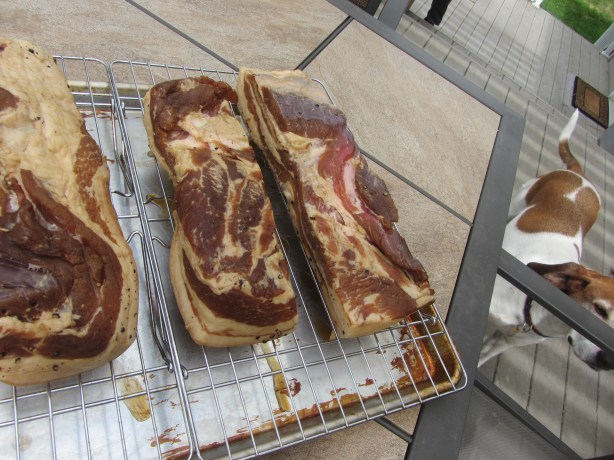
IMG_4563

My bacon after drying. Ready to smoke!

Be prepared for some awesome aromas to waft around your home. When your bacon has finished smoking, chill it in the freezer for an hour before slicing. In the episode, Alton did not mention whether his pork belly had the skin on, as my pork belly did. I opted to cut the skin off before slicing the bacon. We have a meat slicer, which made slicing pretty easy, and I honestly cannot imagine slicing it all by hand. Regardless of how you slice your bacon, slice it fat side up.
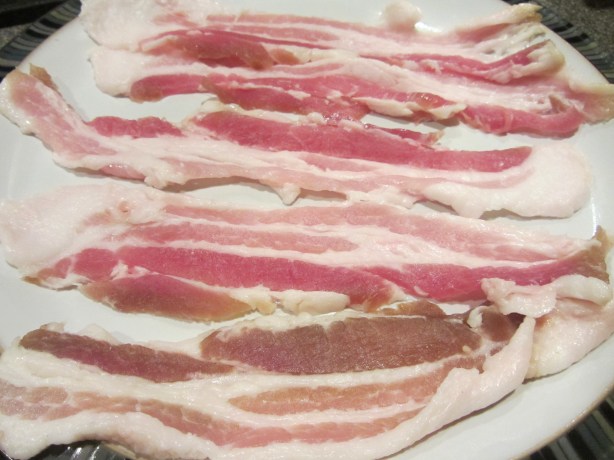
IMG_4574

My sliced bacon. Freezing the bacon for an hour makes slicing easier.

Alton’s bacon can be stored in the freezer for up to a year. How does Alton recommend that you cook bacon? He recommends that you bake bacon on a rack placed over a sheet pan. Start your bacon in a cold oven that is set to 400 degrees, and check the bacon every three minutes until cooked to your liking. Oh, and save the drippings!

We first tried Alton’s bacon on BLT sandwiches with a slice of cheddar and Alton’s party mayo, and they were delicious sandwiches! The bacon is really quite delicious, though it does not have quite as much smoke flavor as I would have expected. We have a freezer full of delicious bacon that we can eat for months to come. Making bacon is certainly a fun weekend project that is worth a try.

Bacon Vinaigrette with Grilled Radicchio

If you are looking for something to use those delicious bacon drippings for, look no further than Alton’s grilled radicchio. For this recipe you’ll need radicchio lettuce, Kosher salt, black pepper, bacon drippings, brown sugar, coarse mustard, cider vinegar, and olive oil.
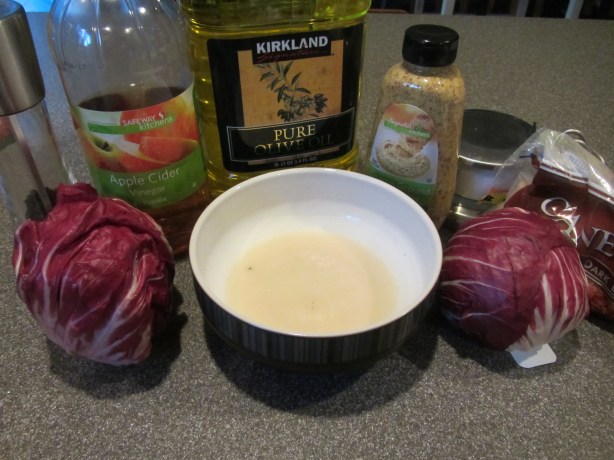
IMG_4582

Ingredients for Alton’s grilled radicchio: radicchio lettuce, bacon drippings, Kosher salt, pepper, brown sugar, coarse mustard, cider vinegar, and olive oil.

Cut your radicchio into wedges, leaving some of the core in each wedge. Toss the radicchio wedges in bacon drippings to evenly coat, and sprinkle them with Kosher salt and pepper.

Grill the wedges until they are just starting to brown at the edges. Place the warm wedges on a plate and cover with foil.

Set the radicchio aside and allow the steam to cook the wedges while you make the dressing. For the vinaigrette, combine 1 T brown sugar, 1 T coarse mustard, and 1/4 C cider vinegar in a bowl. Whisk in 1/4 C olive oil and 2 T bacon drippings.

Drizzle the grilled radicchio with the bacon vinaigrette.
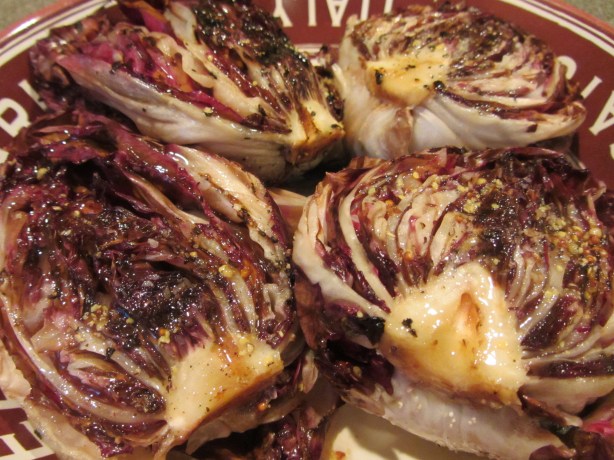
IMG_4603

Radicchio wedges served with vinaigrette.

We ate this as a side dish and both thought it was delicious. In fact, we liked it so much that we already plan to have it again. This is an excellent, and different, vegetable side dish that is perfect alongside grilled entrees.
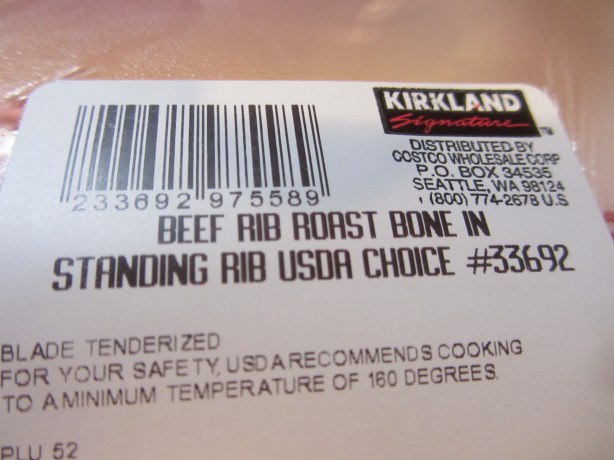
When I think of a standing rib roast, I think of Christmas or another special occasion. When your spouse has cancer, you find yourself creating special occasions to celebrate, whether they be great or small. So, on a random Friday evening in March I cooked Alton’s standing rib roast… just because.

Dry-Aged Standing Rib Roast with Sage Jus

For Alton’s standing rib roast, you will only need a few ingredients:  canola oil, Kosher salt, black pepper, water, red wine, fresh sage, and a standing rib roast. Alton used a 4-bone-in roast, which was about 10.5 pounds. I opted for a smaller, 3-bone-in roast that was about 7 pounds. Our roast came from Costco, and they also had 2-bone-in roasts.

IMG_4492

My 3-bone-in standing rib roast.

Note:  for this recipe, you will need to start prepping 72 hours in advance. In the episode, Alton explains that a standing rib roast is different from prime rib simply because prime rib is from prime beef, while a standing rib roast is not from prime beef. When purchasing a standing rib roast, it is best to get one from the loin end, as the loin end has less bone and connective tissue.

The first step of Alton’s recipe is aging the beef. Place your roast, lightly covered (I used paper towels) in your refrigerator for 72 hours. This aging process will intensify the flavor of the meat.

IMG_4495

My roast, getting ready to age for 72 hours.

After the aging period is complete, remove your roast from the refrigerator and allow it to sit at room temperature for an hour, covered. Your roast will look quite leathery from the aging; Alton says you can trim off any super leathery portions, but I just left my roast as it was.

Now, to cook your roast the Good Eats way, you will need a large, domed terra cotta planter. Place the base of the planter in your cold oven, along with a vessel to hold the roast; I used a glass pie plate. Place the dome of the planter on top and heat your oven to 200 degrees. While the oven is preheating, rub your roast all over with canola oil, and sprinkle with Kosher salt and pepper.

Insert a probe thermometer into the center of the top of the top of the roast, place the roast inside the vessel, and cover with the dome.

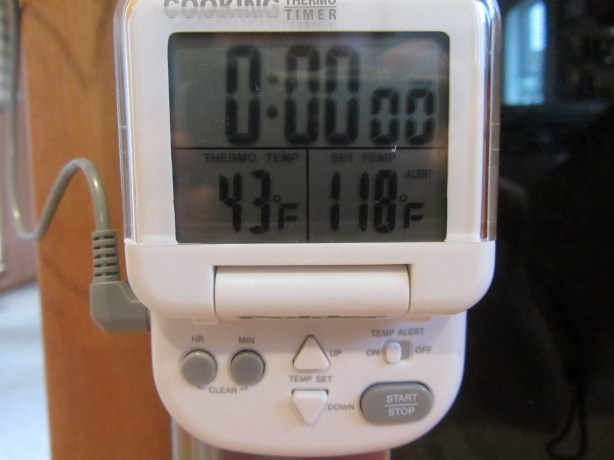
Set the probe thermometer alarm to go off when the internal temperature of the roast hits 118 degrees.

IMG_4507

Probe thermometer, set to go off at an internal temperature of 118 degrees.

It took my roast 4 hours and 25 minutes to hit 118 degrees. When your alarm goes off, remove the roast from the oven and let it rest on a rack, covered with foil. Leave the probe thermometer in the roast.

Keeping the dome and vessel in the oven, increase the oven’s temperature to 500 degrees. This is where the online recipe differs from the recipe in the episode:  the online recipe tells you to let the roast rest until it reaches 130 degrees, while Alton simply let his roast rest until its temperature plateaued. Since I prepare everything as done in the episode, I allowed my roast to rest until its temperature was steady at 121 degrees, which took about 25 minutes. Once your roast has rested, remove the foil and place the roast back in the vessel/dome.

IMG_4520

My roast, going back into a 500 degree oven to “sear” for 15 minutes.

Cook the roast for 15 minutes. This 15 minute cook at 500 degrees essentially serves to sear the roast, giving it a crusty exterior. When the 15 minutes are up, remove the roast from the oven, cover it with foil, and let it rest on a cutting board while you prepare the sauce. This is where the cooking vessel comes into play. Discard any excess grease from the vessel – I forgot to do this, so had to skim the grease off my sauce later. If you have a vessel that can go on a burner, place the vessel on a burner over high heat and deglaze the vessel with 1 C water and 1 C red wine.

I did not have a stove-safe vessel, so I had to deglaze with the residual heat of the vessel before transferring to a pot. Bring the liquid to a boil and scrape the pan with a spatula. Cook the sauce until it has reduced by half. Finally, add 3-4 bruised sage leaves to the sauce for 60 seconds and strain.

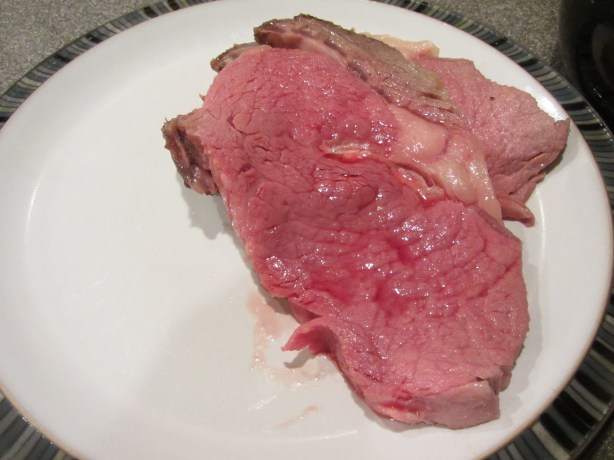
Carve your roast with an electric knife, first removing the slab of bones. Cut off any large pieces of fat and slice the meat into 1/2-inch or larger slices. Serve the meat with the sage jus.

We ate this for dinner, along with some side dishes and a good bottle of wine. The meat was delicious and tender with a nice crust on the outside, and we both thought we could really taste the aging of the meat.

IMG_4536

Alton’s standing rib roast.

The sauce, in my opinion, was just okay. I think I would have preferred a nice horseradish sauce. Still, if you are looking to celebrate a special occasion, Alton’s standing rib roast is an excellent choice. Follow his protocol and you will not be disappointed. Oh, and if you have leftovers, you can slice them thinly and make fantastic sandwiches!

Crepes are a true favorite of mine. My mom would make crepes for us occasionally when we were kids, usually serving them for breakfast with bananas, strawberries, and whipped cream. Yes, we were quite fortunate to have a mom who made us such wonderful breakfasts! It had been quite a while since I had last made crepes (years, probably), so I had a good time revisiting crepes in this episode.

Crepes

Alton’s plain crepes are made by combining 2 eggs, 3/4 C milk, 1/2 C water, 1 C flour, and 3 T melted butter in a blender.

Blend the crepe mixture for only 7-10 seconds, as you do not want to over-mix the batter. To make your crepes sweet, add 1 t vanilla and 2 1/2 T sugar to your batter.

IMG_4381

Vanilla and sugar are added to the batter to make sweet crepes.

Sweet crepes are great with Nutella. My brother and I enjoyed many Nutella crepes when we took a trip to Paris a few years ago.

Alternatively, to make savory crepes, add 1/4 t salt and 1/4 C chopped fresh herbs to the batter.

Refrigerate the batter for 1-24 hours before cooking your crepes. When ready to make your crepes, heat a medium nonstick skillet over medium heat. Lube your pan with butter and wait until the butter begins to bubble. You should only need to lube your pan prior to the first crepe.

IMG_4410

Pan lubed with butter.

Using a 1/4 cup measure, pour a thin layer of batter into the pan, swirling the pan to coat as you pour. A full 1/4 C of batter will be too much. For my pan, filling the measuring cup about 2/3 full resulted in perfect crepes. When the edges of your crepe start to pull back from the pan, your crepe is ready to flip.

IMG_4413

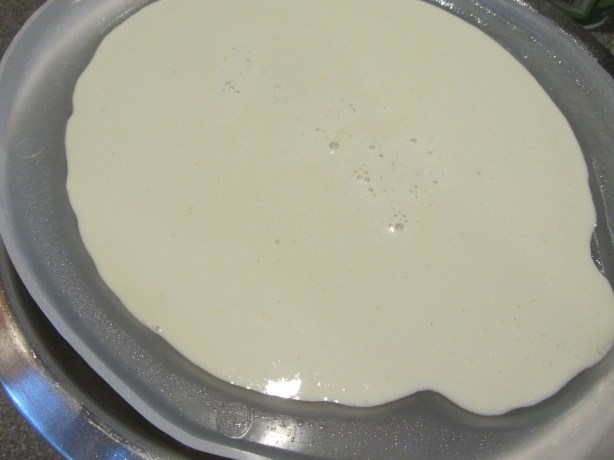
Crepe batter poured into lubed pan.

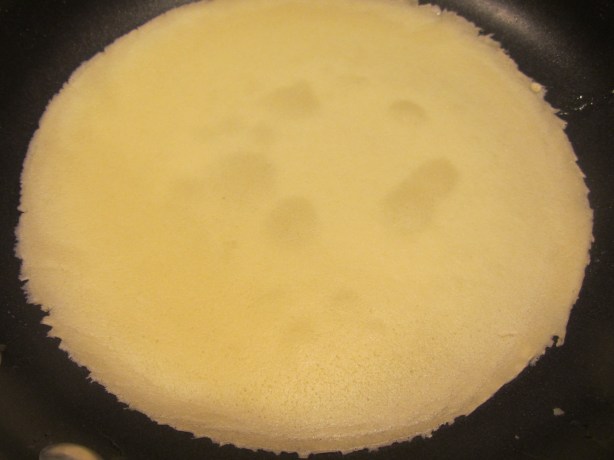
Alton flipped his crepe in mid-air, but I used my fingers to lift and flip my crepe. Cook the second side of the crepe just until set.

IMG_4414

Crepe finishing its cooking in the pan.

You can keep your crepes warm for about 30 minutes in a low oven. For longer storage, stack your crepes between layers of wax paper and refrigerate or freeze.

Mushroom Crepe Cake

Once you have made all of these crepes, what should you do with them? For a savory crepe entree, try Alton’s mushroom crepe cake. You will first need to make a batch of crepes, as described above; you can choose to make plain or savory crepes. I made a batch of plain crepes for my mushroom cake. Next, you will need to make the mushroom filling for your “cake.” Begin by dicing an onion and thinly slicing a pound of mushrooms – Alton used 1/2 pound brown mushrooms and 1/2 pound shiitake mushrooms.

Once you have sliced all of your mushrooms, set half of the mushrooms aside and finely chop the other half.

Set a large skillet over medium-low heat and sweat the onion in 2 T melted butter.

When the onions are translucent, add the mushrooms and 1 t Kosher salt.

IMG_4428

Mushrooms added to the pan.

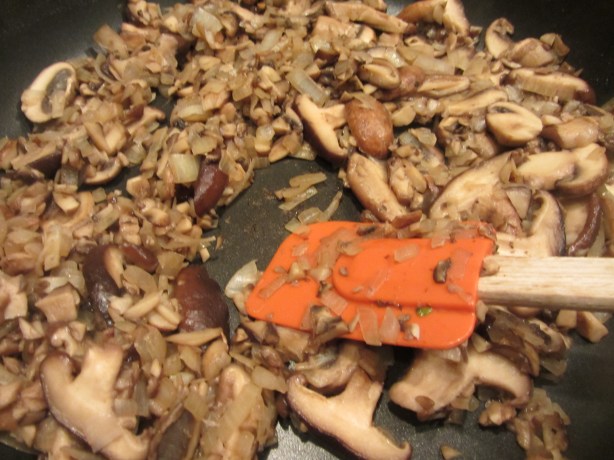
Cook this mixture until it has reduced by 2/3.

IMG_4430

Mushroom mixture, reduced by 2/3.

Add 4 ounces whole milk to the pan and cook the mixture until it is a loose paste.

Sprinkle 1/2 C shredded provolone over the mushroom mixture, and stir until melted; I had to chop some provolone slices for this, as I could not find a block of provolone at my store.

IMG_4433

Provolone added to the mushroom mixture.

Taste the filling and season it to taste with salt and pepper. To assemble your cake, place two crepes on a buttered sheet pan. Spread a thin layer of the mushroom filling over the crepe and sprinkle chopped chives on top. Top with another crepe.

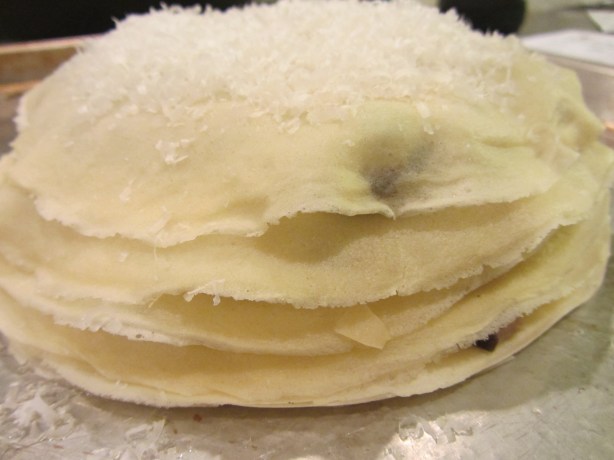
Continue this layering until you have about eight layers. Sprinkle the top crepe with grated Parmesan cheese and warm the cake in a 250-degree oven until heated through.

IMG_4442

Layers of crepes and mushrooms.

Cut into wedges and serve.

We ate this mushroom cake as a dinner entree and thought it was delicious. I also shared some with my parents and they really enjoyed it. This cake also makes a very pretty presentation, as you can clearly see the layers when you cut the cake into wedges. The mushroom filling is rich, savory, and creamy, while the crepes are light and smooth. I think I will likely make this one again.

Crepes Suzette

For a crepe preparation using dessert crepes, Alton made Crepes Suzette. For this recipe, you will need a batch of dessert crepes, as described above. To make Alton’s version of this classic recipe, combine 4 oz orange liqueur, 1 T sugar, and 1 T brown sugar in a skillet over medium heat.

Stir this mixture until the sugar dissolves and is nearly dry. Stir in 1/4 pound of softened butter and stir the mixture until it tightens.

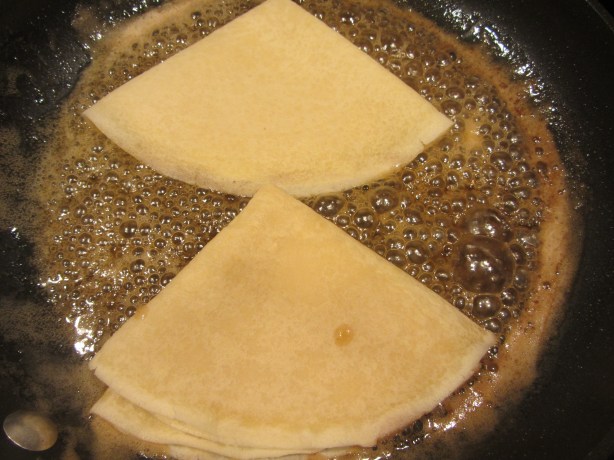
Add crepes to the pan, coating them evenly with the sauce and folding them into quarters.

IMG_4398

Crepes added to the pan.

Serve the crepes warm with vanilla ice cream.

IMG_4401

Crepes Suzette.

In full disclosure, I folded my crepes prior to putting them in the pan. And, I misread my recipe and added 1/4 C butter instead of 1/4 pound. Big difference, I know. Still, we thought these crepes were a delicious dessert. Though I had heard of Crepes Suzette, I can’t honestly say whether I had eaten them before this. The orange liqueur really does not come through much, as the sauce is really more of a caramel. We ate these two nights for dessert and thought they were great. If you make the crepes ahead of time, these come together in a matter of minutes.

Crepe Quiche Lorraine

The final recipe in this episode is for miniature quiches made with crepe crusts. I used my batch of savory crepes for this recipe. Begin by lining each cup of a nonstick muffin tin with one crepe, allowing the edges to pleat on themselves.

IMG_4470

Crepes lining muffin tin.

For the quiche filling, whisk together 8 eggs and 1 1/2 C milk. Add 1 t Kosher salt and some black pepper.

To each crepe cup add some sauteed onion, crumbled bacon, and shredded cheddar cheese.

Ladle in some of the egg filling.

IMG_4475

Egg filling added to quiches.

Bake the quiches at 350 degrees for 15 minutes, or until set.

My quiches took a few extra minutes of baking. We ate these for dinner and thought they were a creative use of crepes. However, they were not mind blowing. My crepes seemed to be a little too large for the muffin tin, so I would use smaller crepes if I were to make these again. Overall, this was a really good episode and all of the recipes were really fun to make.


The 56th episode of Good Eats commences with Alton dressed as a primitive Scotsman and making haggis in the woods. Though there is an online recipe for Alton’s haggis, it was really prepared as more of a shtick than as a real Good Eats demo; therefore, I’m taking the liberty of not preparing haggis. I will freely admit that I was quite happy to learn that haggis would not be a “required” portion of my blog project. If, however, I ever make a trip to Scotland (and, I hope I do), I will surely give haggis an honest try.

Steel Cut Oatmeal

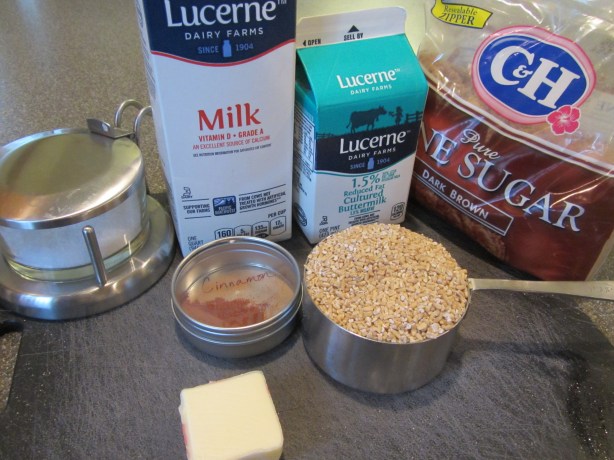
Prior to watching this episode of Good Eats I had never before consumed steel cut oatmeal. Types of oats are differentiated by the amount of processing they have undergone. Whole oats are unprocessed oats that still have their coats, while steel cut/pinhead oats have been run through steel cutters. Rolled, or old-fashioned, oats are even further processed by being steamed, pressed, and dried. Finally, instant oats are the most processed oats, which have been further mashed, par-cooked, and dried. My brother loved flavored instant oatmeal packets when we were a kid, but they were never my thing. I decided to make Alton’s steel cut oatmeal for us on a lazy Saturday morning. The ingredients you will need for Alton’s steel cut oatmeal are butter, steel cut oats, boiling water, whole milk, buttermilk, Kosher salt, cinnamon, and brown sugar.

IMG_4321

Ingredients for steel cut oatmeal: whole milk, buttermilk, Kosher salt, brown sugar, cinnamon, butter, and steel cut oats. Not pictured: water.

In a large saucepan, saute 1 C steel cut oats in 1 T melted butter until there is a nutty aroma.

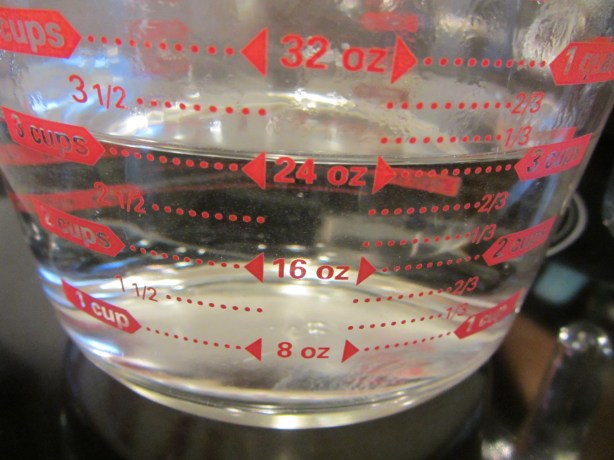
Add 3 C boiling water, decrease the heat to a simmer, and stir the oats. You do not want to add salt to the oats at this time because polysaccharides in the oats (called pentosans) give oatmeal its creamy texture; salt will compete with the pentosans for water, leaving you with non-creamy oatmeal.

IMG_4326

Three cups of boiling water to add to the sauteed oats.

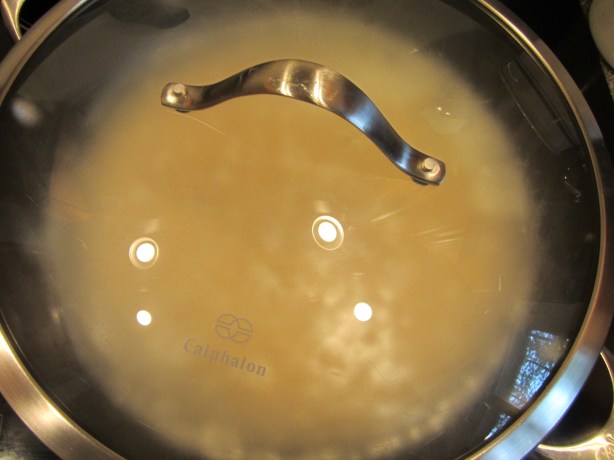
Cover the pan with a lid and let it simmer for 30 minutes.

IMG_4329

Lid on the pan for a 30 minute simmer.

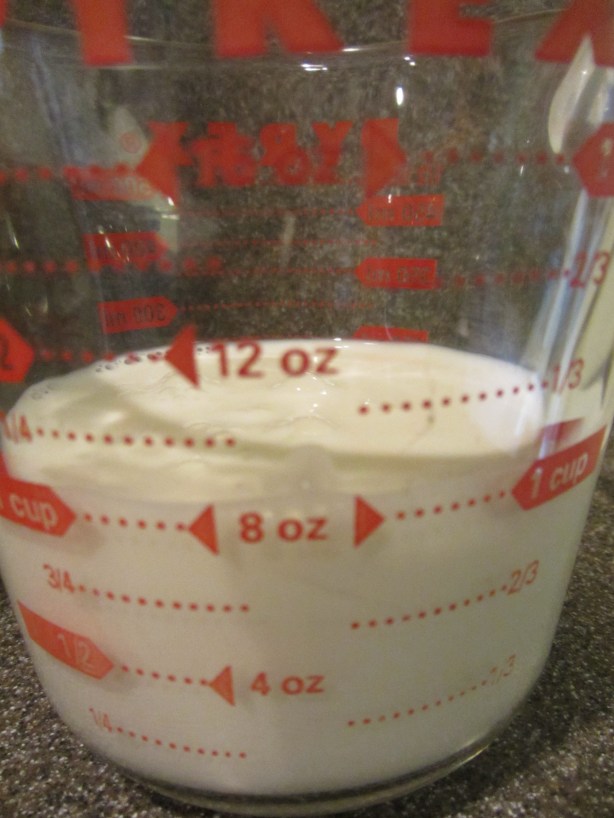
Meanwhile, combine 1/2 C whole milk with 1/2 C buttermilk. Combining the dairy ingredients will prevent the buttermilk from curdling when you add it to the hot oats.

IMG_4332

Buttermilk combined with whole milk.

When your 30 minute simmer is up, add the milks and 1/2 t Kosher salt to the oats.

IMG_4334

Dairy and salt added to oats.

Gently stir the oatmeal with the handle of a wooden spoon, letting it continue to cook for an additional 10 minutes.

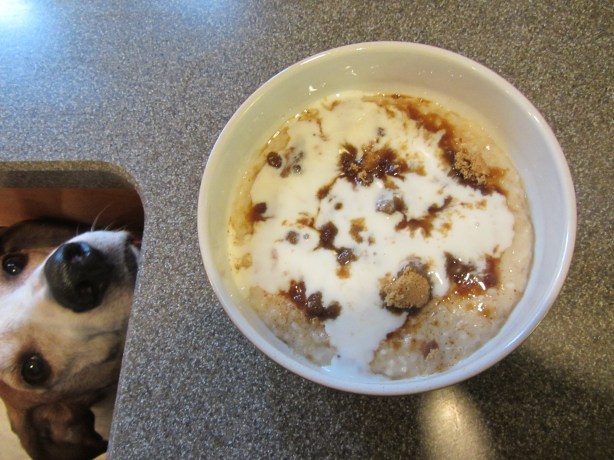
Serve the warm oatmeal in bowls with buttermilk, cinnamon, and brown sugar.

IMG_4346

A delicious bowl of steel cut oatmeal with brown sugar, buttermilk, and cinnamon.

We really enjoyed our steel cut oatmeal and I will be making it again. It is a hearty breakfast and the oats have a lot more texture than old-fashioned or instant oats, which I really appreciate. I also really liked the addition of buttermilk for a bit of tang in the oatmeal. Though steel cut oatmeal takes a bit longer to prepare than old-fashioned oatmeal, I think it is well worth the additional time.

Overnight Oatmeal

If you are looking for a super easy, fast, and delicious hot breakfast, Alton’s overnight oatmeal is fantastic. All you will need for this are a few ingredients and a slow cooker. In your slow cooker combine 1 C steel cut oats, 4 C water, 1 C dried cranberries, 1/2 C sliced dried figs, and 1 C cream.

Note that the online recipe calls for 1/2 C half-and-half instead of the cup of cream Alton used in the episode. Set the slow cooker to low and let it cook overnight for 8-9 hours.

I made this for us to have in the morning before a long run and we both really thought it was good. Actually, we liked it so much that I made it a second time a few days later. The oatmeal is rich and still has some texture from the steel cut oats, and the dried fruit adds the perfect amount of sweetness. The dried fruit really plumps up after cooking overnight. Plus, you could add any dried fruit you would like. We found that no additional toppings or seasonings were needed for this oatmeal. As an aside, Ted is doing pretty well as he is going through chemo, and ran 10 miles recently!

Granola

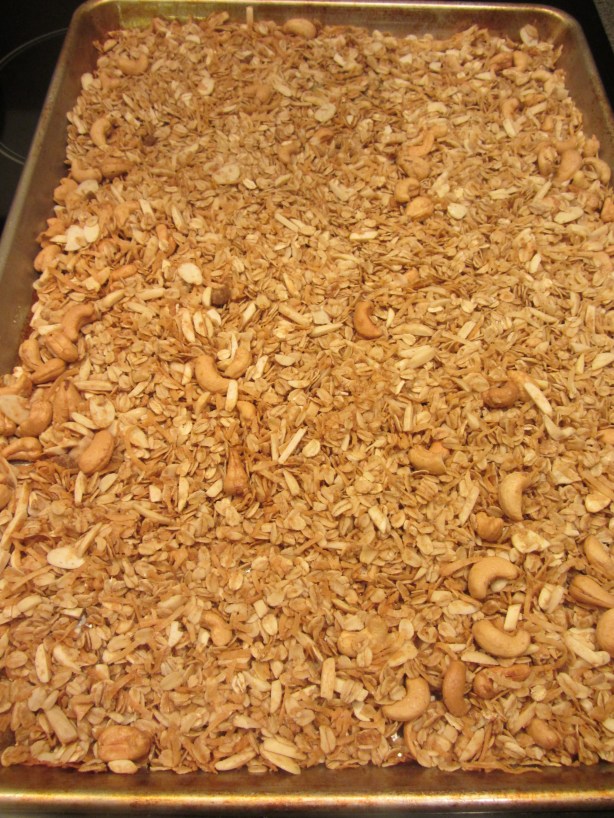
A recipe for granola is the final recipe in this oat episode of Good Eats. You will need to be sure you can hang around your kitchen for a little while when you start this one. Begin by combining the following ingredients in a large bowl:  6 T brown sugar, 1 C slivered almonds, 3/4 C sweetened coconut, 1 C cashews, 3/4 t Kosher salt, and 3 C rolled oats.

Thoroughly mix all of these ingredients before adding 1/4 C canola oil and 6 T maple syrup. We are very fortunate because Ted’s aunt and uncle in Wisconsin produce their own maple syrup, and it is much better than what you can purchase in stores.

Toss the granola well and spread it on a sheet pan.

Bake the granola at 250 degrees for an hour and 15 minutes, stirring the granola every 15 minutes.

IMG_4372

My granola, after baking for about an hour and 15 minutes.

Let the granola cool for a half hour before adding dried fruit of your choice; I added a cup of dried cherries to my granola.

This granola is sweet, crunchy, and delicious. We still have some granola in our pantry and I find myself grabbing a handful when I pass by. This is another recipe I will keep on hand and plan to make again, perhaps altering the nuts and fruit.

Clearly, I’m a fan of Good Eats, and I have really enjoyed every episode I have completed… until now. The 55th episode of Good Eats, which was the first to air in season 5, was just kind of a flop. Both the episode and the recipes in this episode lacked the creativity and excitement that I expect from Alton Brown and Good Eats. In short, this episode was all about gelatin molds. Now, there’s nothing wrong with a gelatin mold, but gelatin can be used for so much more than just that; it is used in marshmallows, aspics, and candies, among others. I feel that the Good Eats team failed their subject in this episode.

Sparkling Gingered Face

Yes, you read that recipe title correctly. The first recipe in the gelatin episode is indeed for a face-shaped gelatin mold. The original air date of this episode was October 24th, 2001, so keep in mind that Alton was probably going for a Halloween theme of sorts. To make the face, you’ll need a face-shaped gelatin mold, cold ginger beer, powdered gelatin, and cold sparkling wine. The online recipe also calls for some sugar, but Alton did not add sugar in the episode.

IMG_4261

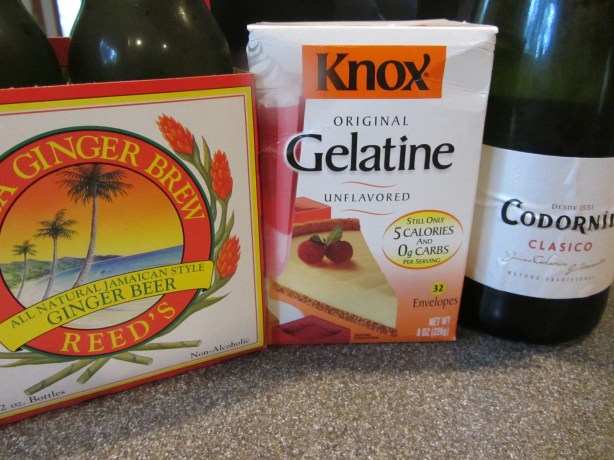
Ingredients for Alton’s sparkling gingered face: ginger beer, gelatin, and sparkling wine.

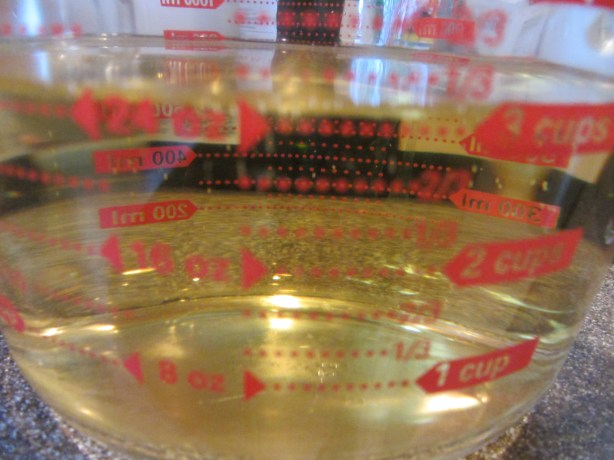
You will need to adjust the amounts of the ingredients for the size of your gelatin mold. Ideally, you will want equal volumes of ginger beer and sparkling wine, and you will use one package of gelatin per cup of liquid. My mold has a capacity of nine cups, so I wanted to use 4.5 C each of ginger beer and sparkling wine, and 9 packages of gelatin. I will confess that I altered this slightly, as I only had one bottle of sparkling wine. Since a bottle of sparkling wine is about 3 C, I used 6 C of ginger beer. To begin, pour your cold ginger beer (always bloom gelatin in cold liquid) in a microwave-safe container. Sprinkle your gelatin over the liquid and give it a good shake or stir. Allow the gelatin to bloom for 5 minutes.

Microwave the gelatin mixture until it reaches a temperature of 150 degrees, giving it a stir every minute. My gelatin took 7 minutes to hit 150 degrees.

IMG_4266

Gelatin/ginger beer mixture after reaching 150 degrees.
Once your ginger beer/gelatin is at 150 degrees, add your cold sparkling wine, swirling the container as you add.

IMG_4267

Sparkling wine to add to ginger beer/gelatin.

Note:  You should always pour cold liquid into warm to avoid getting gelatin clumps. Refrigerate this mixture for about an hour, or until it reaches egg white consistency.

IMG_4269

Sparkling ginger mixture, after being refrigerated for about an hour. Ready to go in mold.

Pour the gelatin into your mold (I oiled mine) and refrigerate overnight. If your mold does not have a flat bottom, you can place it in a bowl to keep it level. It is not easy to transport a full gelatin mold, so you may want to fill your mold in the refrigerator.

IMG_4271

Gelatin mixture poured into my mold.

To unmold your set gelatin, use your fingers to pull the gelatin away from the sides of the mold. Place a serving dish on top of the mold and invert the mold onto the dish.

We ate this for dessert one evening and it was okay, though the texture was quite firm. The flavors of both the ginger beer and the sparkling wine were apparent, and you actually got a slight fizzy sensation on your tongue. Really though, this did not do much for us, and it’s just a bit odd to eat a gelatin face.

Spooky Edible Eyes

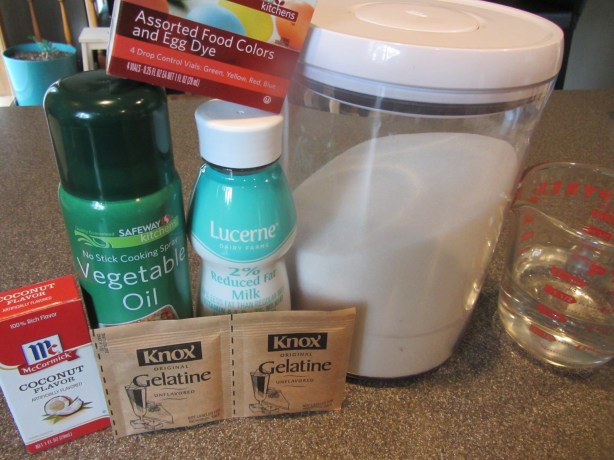
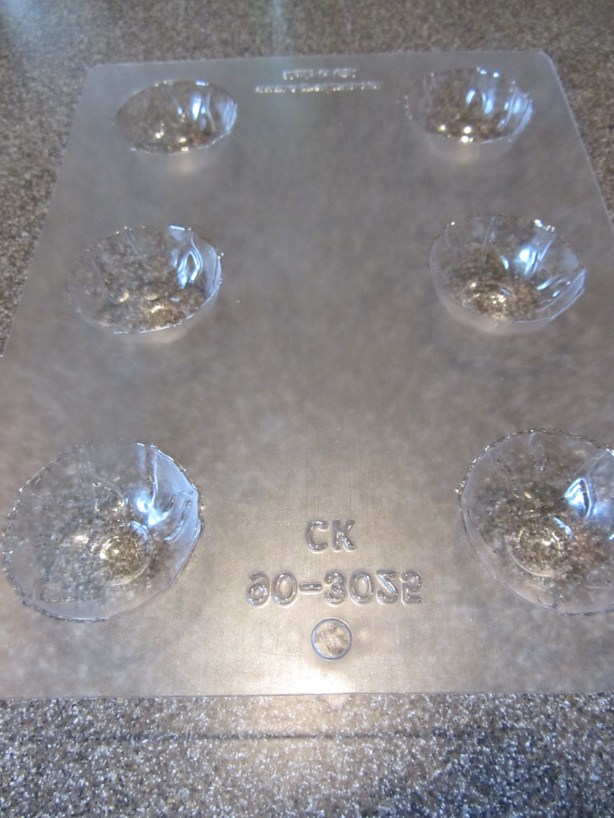
Alton did not officially prepare this recipe in the episode, but he did mention that the recipe was online, so I figured I should make it. For this one, you will need an eyeball-shaped mold, powdered gelatin, low-fat milk, water, sugar, coconut extract, and spray oil.

IMG_4295

Ingredients for edible eyeballs: coconut flavor, oil spray, gelatin, low-fat milk, food color, sugar, and water.

IMG_4298

My eyeball mold.

Begin by blooming 1 package of gelatin in 1/2 C low-fat milk for 5 minutes.

IMG_4301

Gelatin blooming in milk.

Meanwhile, put 1/2 C water, 3 T sugar, and 1/4 t coconut extract in a saucepan and bring this mixture to a boil.

IMG_4296

1/2 C water, 3 T sugar, and 1/4 t coconut extract, being brought to a boil.

Pour the hot mixture into the cold gelatin/milk (this is the opposite of what Alton told you to do in the first recipe), stirring until dissolved.

IMG_4302

Water/sugar mixture added to milk/gelatin.

Pour the liquid into oiled molds and refrigerate until set – about an hour.

IMG_4303

The eyeball mixture poured into the mold to set.

Once set, remove the eyes from their molds.

IMG_4306

My eyeballs, unmolded.

To make different colored eyes, bloom 1/2 a package (3 g) of gelatin in 1/4 C cold water for 5 minutes.

IMG_4307

1/2 package of gelatin blooming in 1/4 C water.

Add 1/4 C boiling water to the gelatin and stir to dissolve. Divide this clear gelatin among bowls and add food coloring to create different colors.

The online recipe tells you to use an eyedropper to add the colors to the irises on the eyes; I did not have one, so I used Q-tips. For the pupils, combine equal amounts of each food coloring in a dish, and use a Q-tip to form the pupil. I made my eyes bloodshot, using a toothpick to “paint” red food coloring blood vessels.

IMG_4314

My finished edible eyeballs.

I was actually quite happy with how these turned out appearance-wise, and they’d be great for a Halloween party. They honestly didn’t taste too bad either, though I wouldn’t call them delicious.

Cinnamon Cherry Heart

Continuing on with the gelatin organ theme, next up is a gelatin heart. This one is pretty straight-forward, requiring only powdered gelatin, cherry juice, and cinnamon extract… oh, and a heart-shaped gelatin mold.

IMG_4283

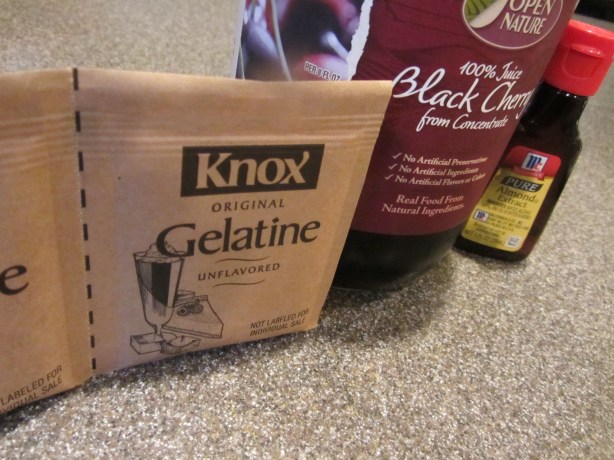
Ingredients for gelatin heart: gelatin, cherry juice, and cinnamon (or almond for me) extract.

I had difficulty finding cinnamon extract, so I wound up using almond extract in my heart. As with all of the recipes in this episode, the first step is to bloom 2 packages of gelatin in 1 C cherry juice for 5 minutes.

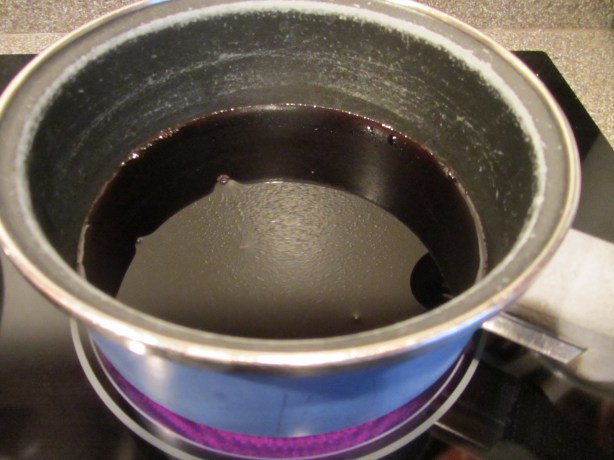
Meanwhile, bring the other cup of juice, along with the extract, to a boil.

IMG_4286

Cherry juice and extract being brought to a boil.

Add the hot juice to the gelatin/juice mixture and stir to dissolve the gelatin. Pour the mixture into your mold (I oiled my mold) and let it refrigerate for at least six hours before unmolding.

This gelatin mold tasted decent, but the texture was a bit too firm, making it somewhat unappealing. This one was just blah.

Panna Cotta Brain with Cranberry Glaze

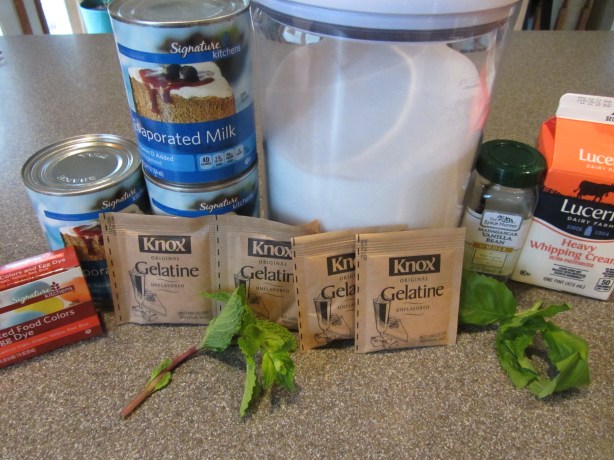
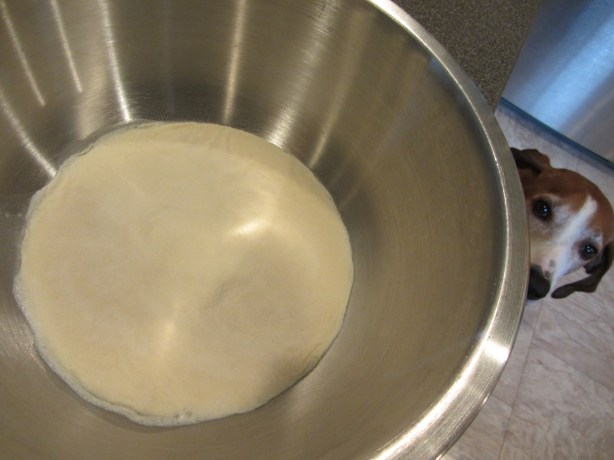
Of all the recipes in this episode, I was most excited for the panna cotta, though the idea of it being in the shape of a brain made it slightly less appealing. The ingredients for this one are evaporated milk, powdered gelatin, sugar, a vanilla bean, heavy cream, fresh mint, fresh basil, food coloring, and bourbon (optional).

IMG_4222

Panna cotta ingredients: evaporated milk, gelatin, sugar, food coloring, vanilla bean, heavy cream, fresh mint, and fresh basil.

In a large container, bloom 4 packages of gelatin in 12 ounces evaporated milk for 5 minutes.

IMG_4224

Gelatin blooming in evaporated milk.

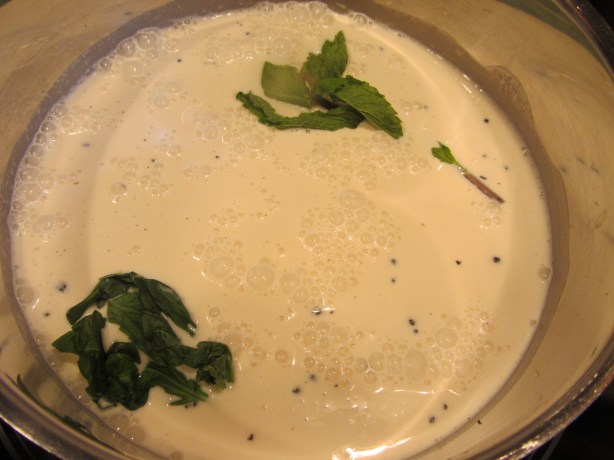
While the gelatin blooms, combine in a saucepan 24 ounces evaporated milk, 3/4 C sugar, 1/2 a vanilla bean, 1 1/2 C heavy cream, and a jigger of bourbon, if using. Bring this mixture to a bare simmer over medium heat, whisking to dissolve the sugar. Also add one sprig each of crushed fresh mint and basil.

IMG_4232

Evaporated milk, sugar, vanilla bean, heavy cream, fresh mint, and fresh basil being brought to a simmer.

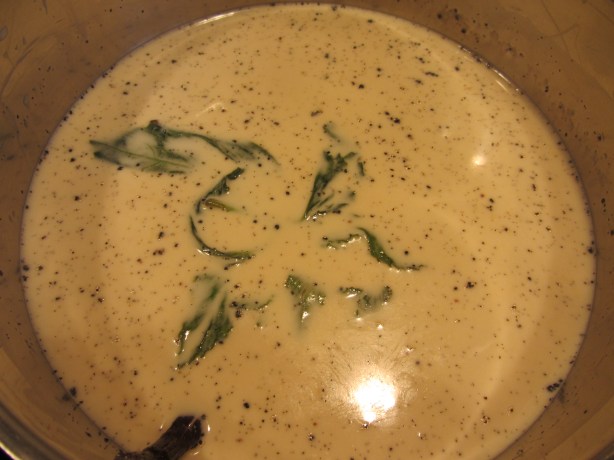
Remove the pan from the heat as soon as you start to see bubbles.

IMG_4235

After coming to a bare simmer.

Strain the cream mixture into the blooming gelatin and stir to dissolve the gelatin. There will be lots of lumps in the mixture, so you will have to stir for a little while.

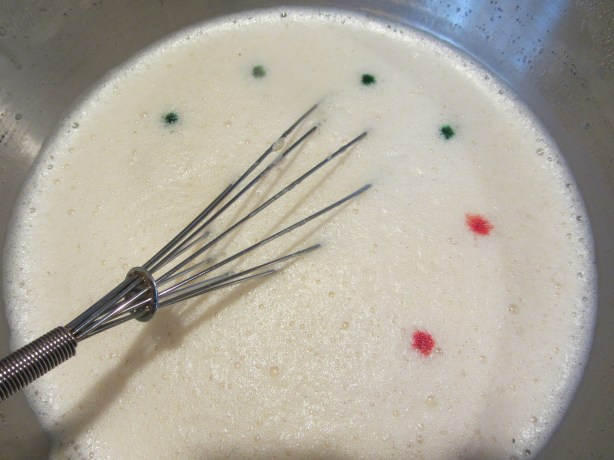
To make the panna cotta really look like gray matter, add 2 drops of red food coloring and 4 drops of green.

IMG_4239

For a gray brain, add 2 drops of red food coloring and 4 drops of green food coloring.

Allow the panna cotta to cool to room temperature before pouring into a 6-cup brain mold, and refrigerate overnight. I noticed some lumps in my panna cotta, so I strained my panna cotta a second time as I poured it into the mold. I also oiled my brain mold to make unmolding easier.

IMG_4241

My gray panna cotta, poured into my mold.

IMG_4255

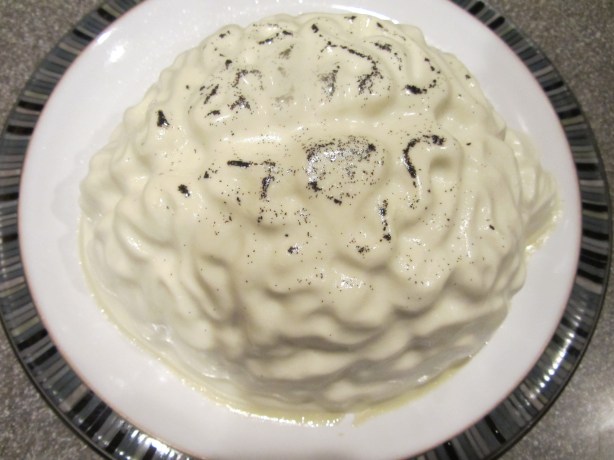
My panna cotta brain.

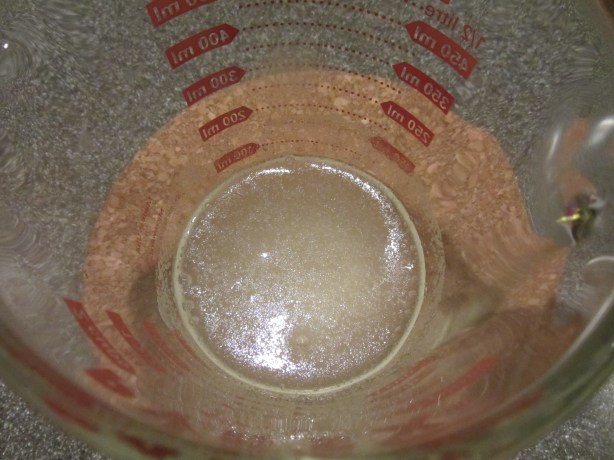
If you wish to serve your brain with some cranberry blood, you can make a cranberry glaze by blooming 1 package of gelatin in 1/2 C cranberry juice for 10 minutes.

IMG_4242

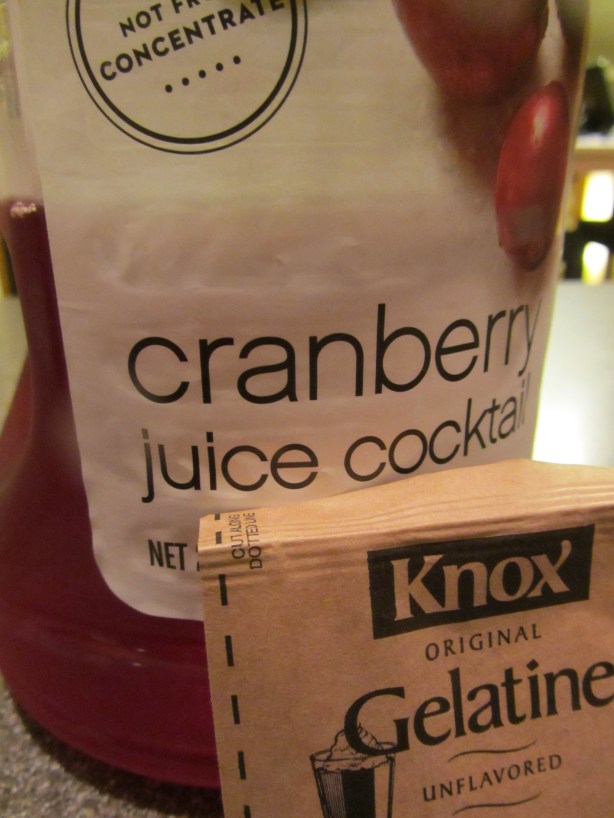
Ingredients for cranberry glaze: cranberry juice and gelatin.

Dissolve the gelatin with an additional cup of boiling cranberry juice, add a few drops of blue food coloring, and let cool to room temperature.

IMG_4244

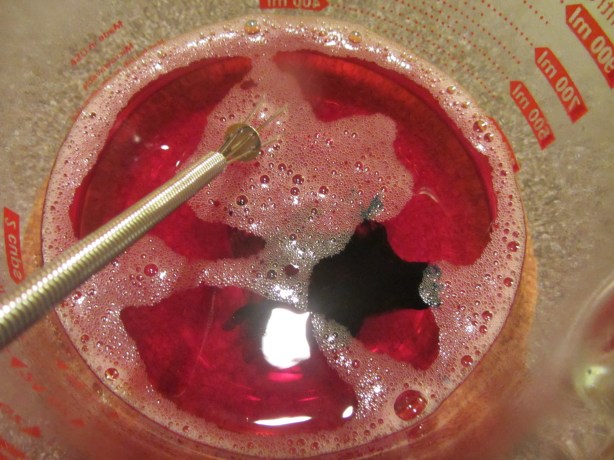
Additional cup of cranberry juice, being brought to a boil under careful supervision.

IMG_4251

Blue food coloring added to cranberry glaze.

Unmold your brain, and drizzle some cranberry glaze over the top.

IMG_4257

My brain with cranberry glaze.

I had high hopes for this, but neither Ted or I liked it at all. I thought the flavor of the panna cotta was good, but its texture was unappealingly firm. And, the cranberry glaze did not set up on the panna cotta, as Alton’s did in the episode. Instead, it puddled around the bottom of the panna cotta. We ended up throwing the rest of the panna cotta in the trash. Maybe we just do not care for panna cotta?

Layered Gelatin Mold

Alton did not use a specific recipe for a layered gelatin mold, but gave options and tips for making one. His tips were to use roughly a cup of each gelatin flavor per layer, to add a new flavor when the previous one is still sticky, and to use a hair dryer to unmold metal molds. To make opaque layers, you can add sour cream to the gelatin, or you can add fruit between layers. I made a layered mold with altering opaque and clear layers, and using a bundt pan. It turned out to be my favorite thing from this entire episode.

Growing up, my family had a variety of animals – dogs, cats, horses, rabbits, and lambs, among others. I had a bit of an obsession with the name Timothy, insisting on bestowing the name on each subsequent lamb. There may have even been a female Timothy in there somewhere! Though we had lambs as pets, we really did not eat much lamb when I was growing up, but I have come to really like it as an adult. My lamb consumption has been almost exclusively at restaurants, so I was excited to get to try cooking a leg of lamb to finish off the third season of my Good Eats project.

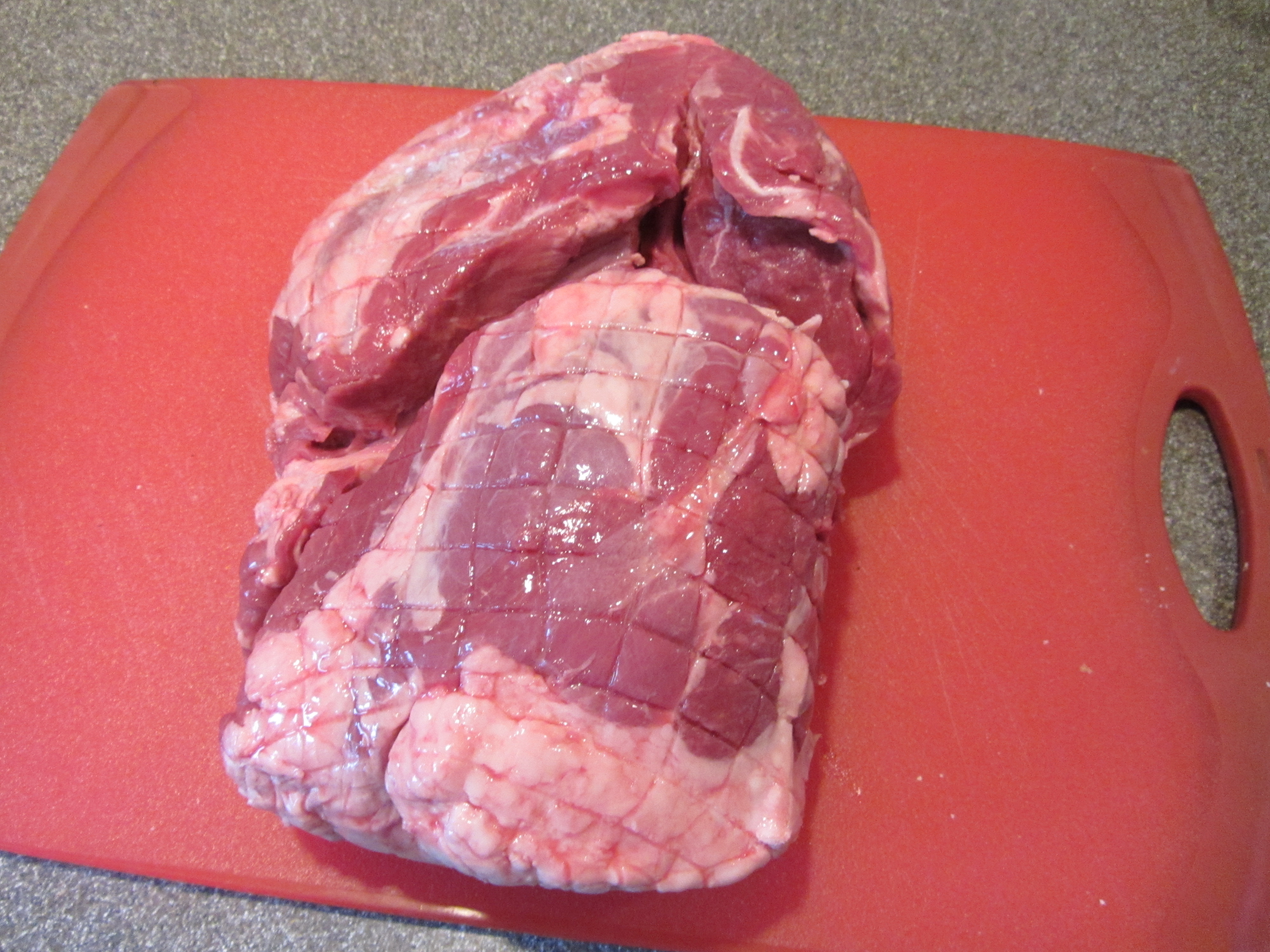
The recipe for Alton’s grilled leg of lamb can be found here. Unless you are cooking for 8-10 people, you will want to cook half a leg of lamb. The sirloin end of the leg (the end furthest from the hoof) is the portion you want to get, and you can often get your butcher to cut this portion for you. I went to good ol’ Costco to get my lamb, so mine came in a vacuum-sealed bag; Alton is not a big fan of this, as you end up paying partially for the liquid in the bag, but it was a convenient option for me. Once you get your lamb home, you want to unroll it into a flat slab.

Leg of lamb.

Leg of lamb.

Opened leg of lamb.

Opened leg of lamb.

Note that just because you get a “boned” leg of lamb, a portion of the joint may still be in place; if this is the case, you will want to remove the joint by cutting around it and pulling it out. My leg of lamb was truly boneless. Also trim off any huge chunks of fat or connective tissue, but you want to be careful not to over trim the meat, as the leg of lamb consists of several muscles held together by connective tissue. Flip the meat over so the skin side is up and trim off the fell, which is the impermeable membrane over the fat. The fell can be very tough, so you want to remove as much as possible, using the tip of your knife to get under the membrane.

Fell trimmed off.

Fell trimmed off.

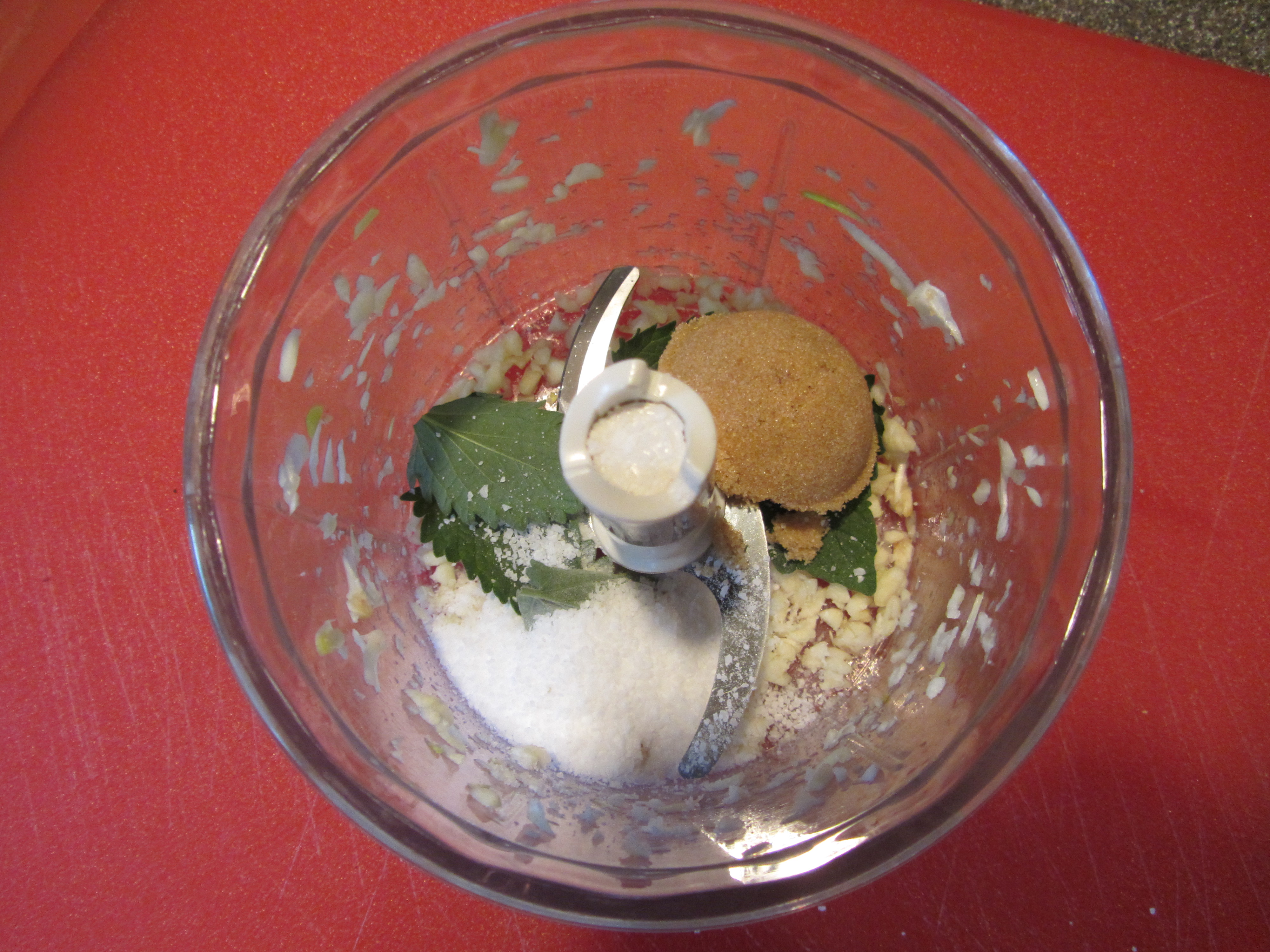
Once your lamb is trimmed sufficiently, in a mini chopper combine 4 cloves of garlic, 8 mint leaves, 1 T brown sugar, 1 T Kosher salt, 2 t black pepper, 5 T Dijon mustard, and 2 T canola oil.

Ingredients for Alton's lamb:  Kosher salt, black pepper, Dijon mustard, mint, garlic, canola oil, and brown sugar.

Ingredients for Alton’s lamb: Kosher salt, black pepper, Dijon mustard, mint, garlic, canola oil, and brown sugar.

Four cloves of garlic in the chopper.

Four cloves of garlic in the chopper.

Chopped garlic.

Chopped garlic.

Eight mint leaves added to garlic.

Eight mint leaves added to garlic.

1 T brown sugar added.

1 T brown sugar added.

and 1 T Kosher salt.

and 1 T Kosher salt.

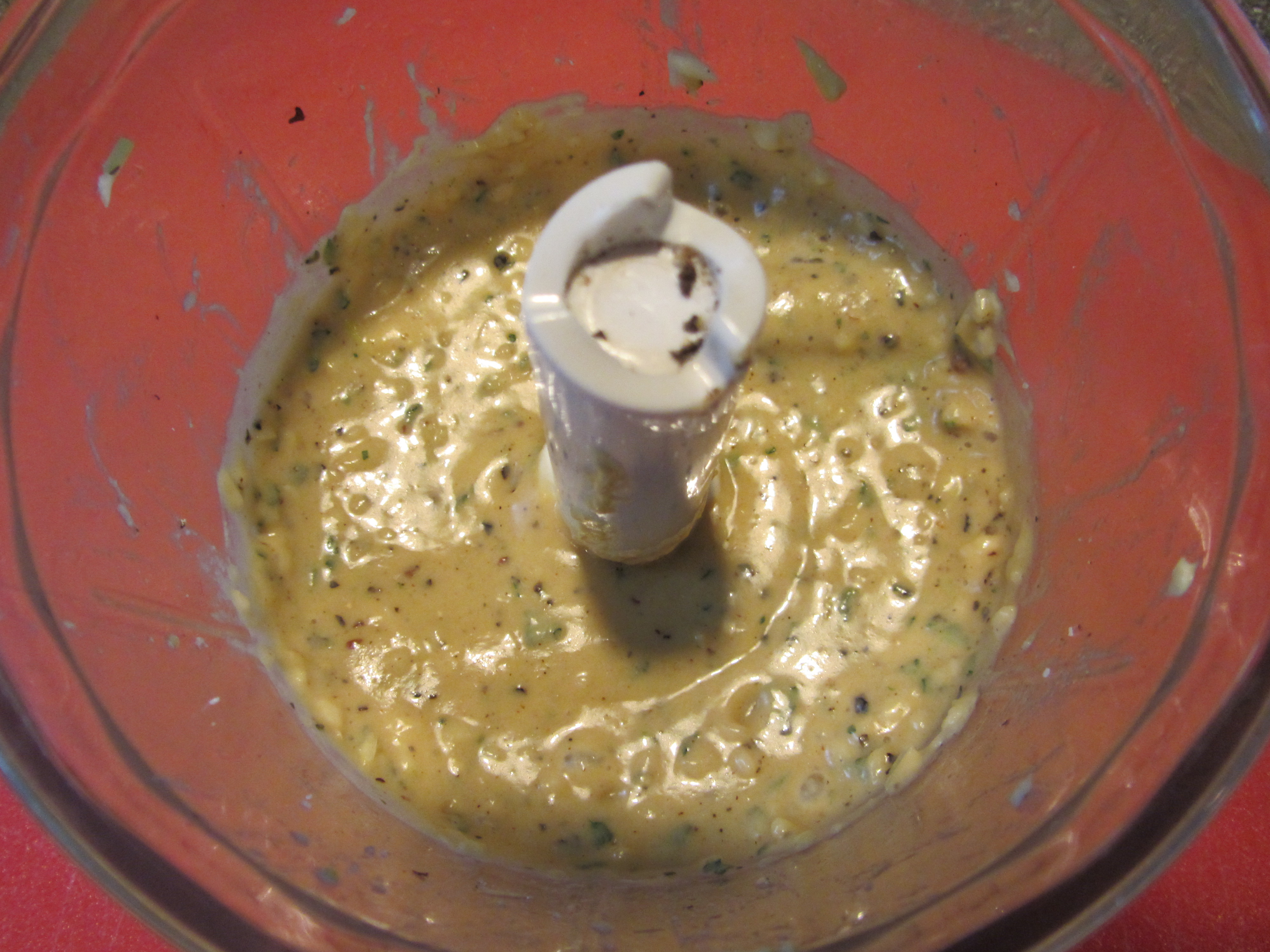
Plus 5 T Dijon mustard and 2 t black pepper.

Plus 5 T Dijon mustard and 2 t black pepper.

2 T canola oil added.

2 T canola oil added.

Mint/mustard mixture.

Mint/mustard mixture.

You will need to truss your meat, so cut five pieces of butcher’s twine that are 17-18 inches long. You will also need one longer piece of twine that is about 36 inches long. Flip the meat so the skin side is down and spread the mustard/mint mixture all over the meat, using all of the mixture.

Mint/mustard mixture spread over lamb.

Mint/mustard mixture spread over lamb.

Roll the lamb up into a neat tube shape and flip it so the skin side is facing up.

Lamb rolled into tube shape.

Lamb rolled into tube shape.

Starting in the middle of the meat, tie one of the shorter pieces of twine around the lamb, using a surgeon’s knot. You want to tie the twine tightly, but not overly so, as the meat will expand when it cooks.

Butcher's twine tied around the center of the lamb.

Butcher’s twine tied around the center of the lamb.

Continue tying the shorter pieces of twine around the meat, evenly spacing them.

Additional pieces of twine tied around lamb.

Additional pieces of twine tied around lamb.

Once all of shorter pieces of twine are tied, use the long piece of twine to tie the meat lengthwise, looping it around the shorter pieces of twine. Again, finish with a surgeon’s knot.

Longer piece of twine looped around the shorter pieces of twine.

Longer piece of twine looped around the shorter pieces of twine.

Alton used a charcoal grill to cook his lamb. We do not have a charcoal grill, so I used our gas grill. You will want to cook the lamb over indirect heat, and be sure to lube the grill grates with canola oil prior to putting the roast on the grill.

Lamb ready to go on the grill.

Lamb ready to go on the grill.

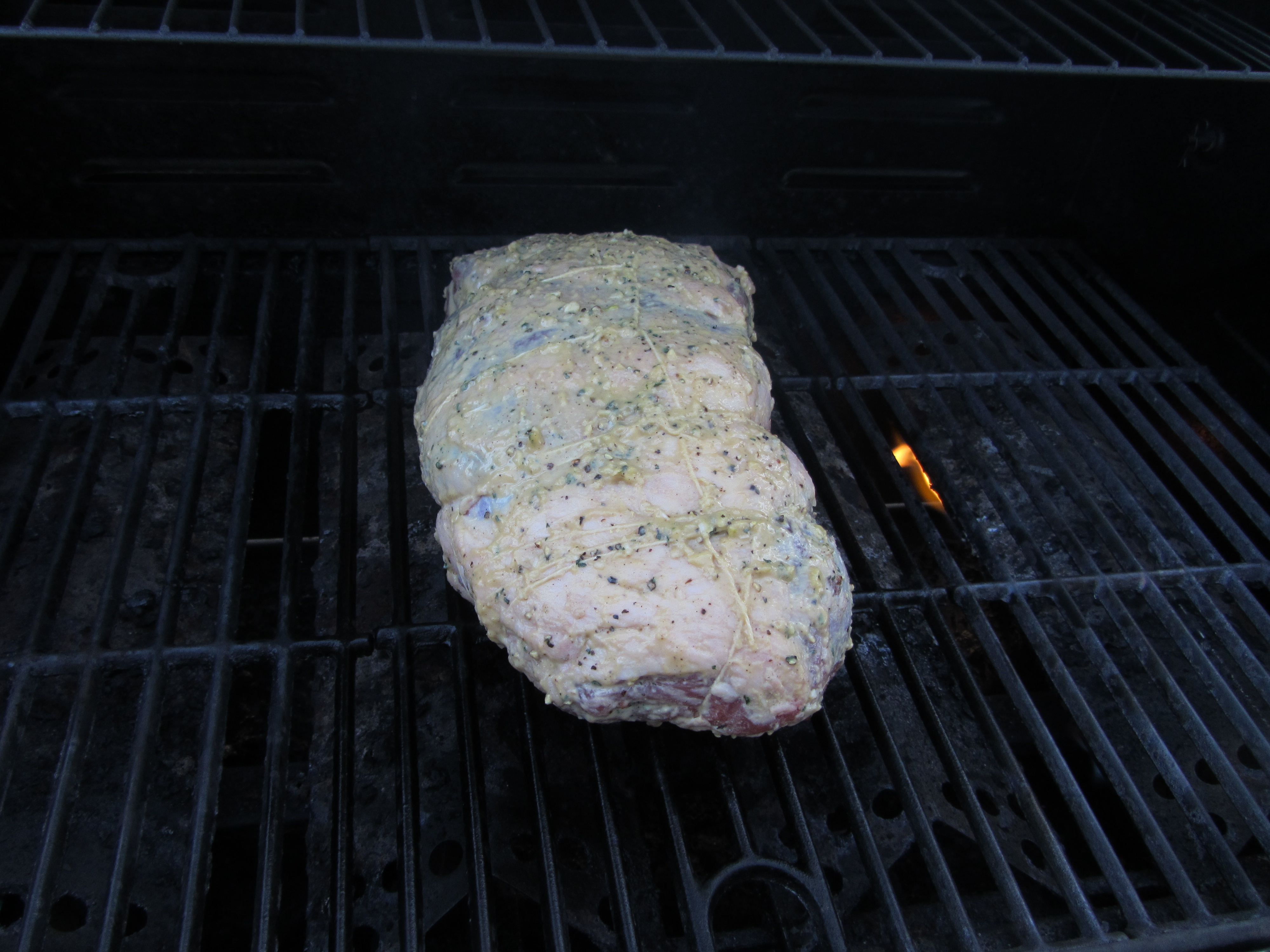
Place the lamb on the grill, skin side up, and throw some rosemary sprigs below the grates to act as a smoking agent.

Lamb on the grill.

Lamb on the grill.

Sprigs of rosemary added to the grill.

Sprigs of rosemary added to the grill.

Close the lid and allow the lamb to cook for 20 minutes. After 20 minutes, flip the meat and turn it 180 degrees.

Lamb flipped and rotated after 20 minutes.

Lamb flipped and rotated after 20 minutes.

Insert a probe thermometer at an angle and set it to beep when the meat hits 135 degrees. In the episode, Alton’s lamb took only an additional 25-30 minutes to reach 135 degrees, but my lamb took considerably longer to be done.

Lamb after reaching 135 degrees.

Lamb after reaching 135 degrees.

Once your lamb is done, remove the twine and allow it to rest under foil for at least 15 minutes before serving. We ate the lamb as our entrée, simply slicing it.

Lamb after resting 15 minutes under foil.

Lamb after resting 15 minutes under foil.

Alton's grilled leg of lamb.

Alton’s grilled leg of lamb.

We shared some leftover lamb with my parents who used the sliced lamb to make sandwiches, which they said were really good. I used the remaining leftover lamb to make my grandma’s curry. Alton’s lamb was really quite delicious and tender, and the mint mixture really flavored the meat well. If you are looking for something different to grill this summer, Alton’s lamb is a great choice, especially for a group.

Shred, Head, Butter and Bread

Cabbage is not a vegetable we eat often in our house, aside from the occasional slaw to accompany fish tacos or the like. I was curious to see what we would think of Alton’s cabbage preparations in the 40th Good Eats episode. Alton says that the first recipe in this episode originated from his mother.

Ingredients:  butter, seasoned croutons, dry mustard, caraway seed, green cabbage, Kosher salt, and sugar.

Ingredients: butter, seasoned croutons, dry mustard, caraway seed, green cabbage, Kosher salt, and sugar.

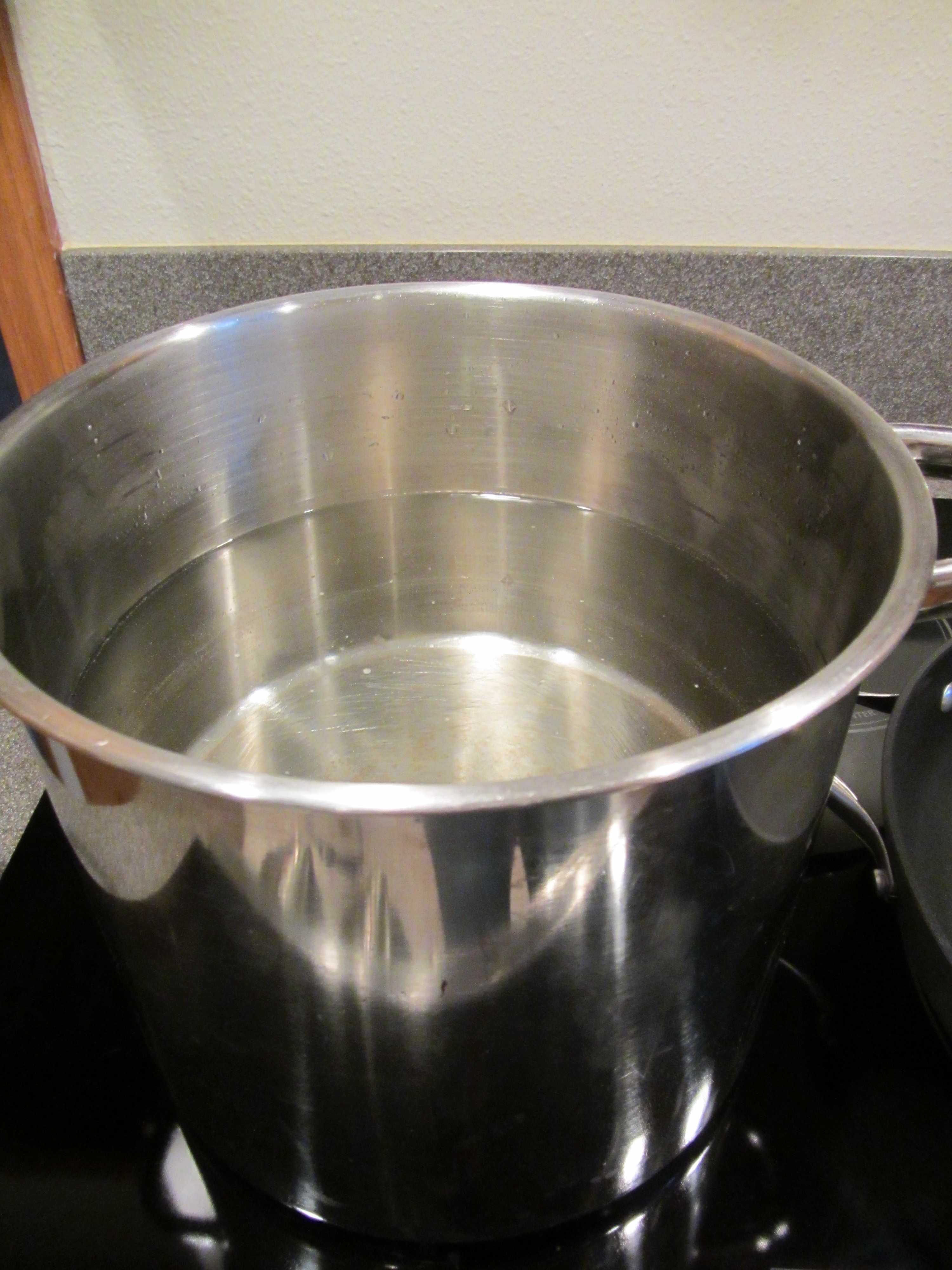
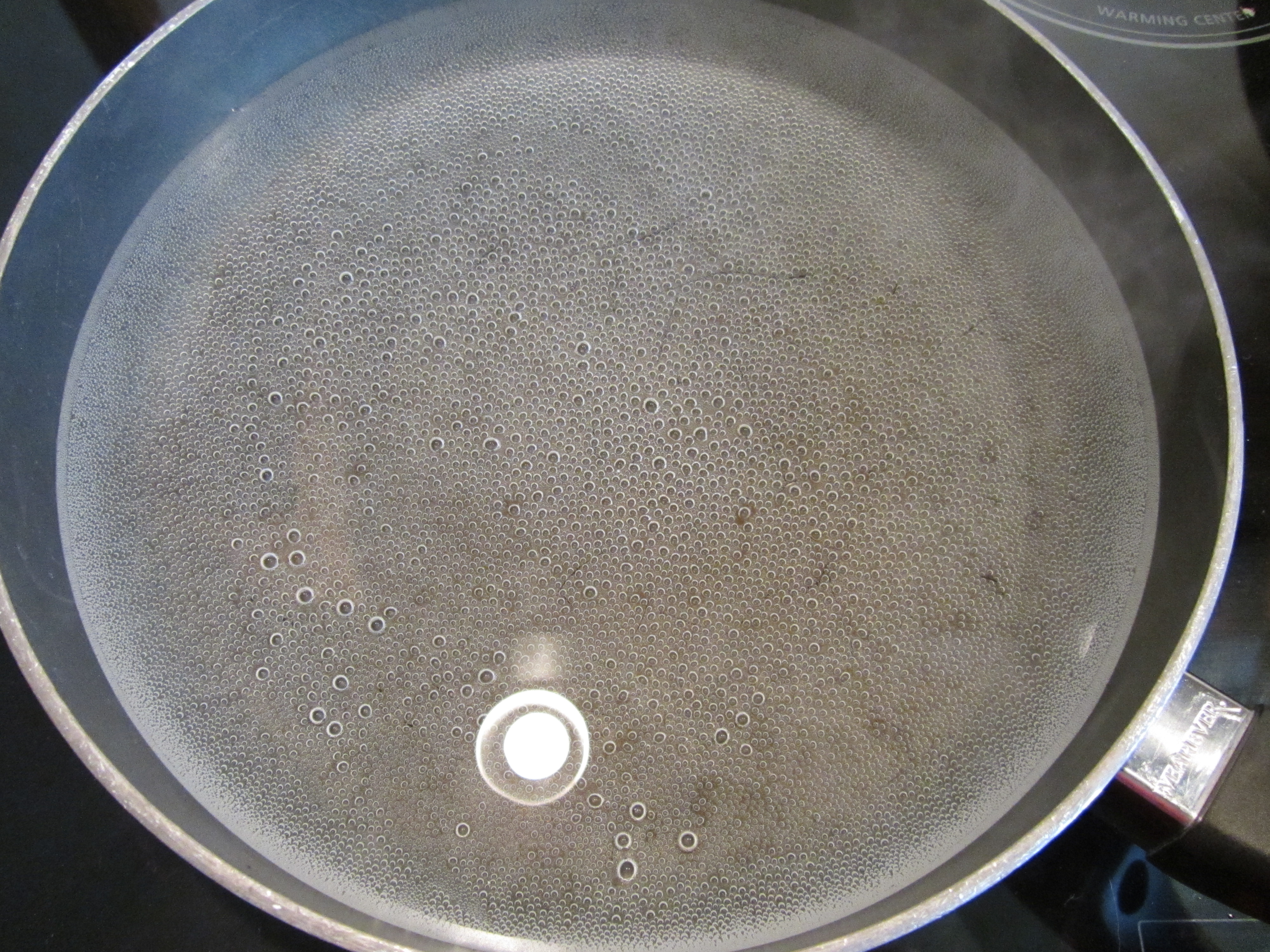
5-6-2015 074 To make Alton’s mom’s cabbage, fill your biggest pot 3/4 full with water and bring to a boil over high heat.

Big pot of water over high heat.

Big pot of water over high heat.

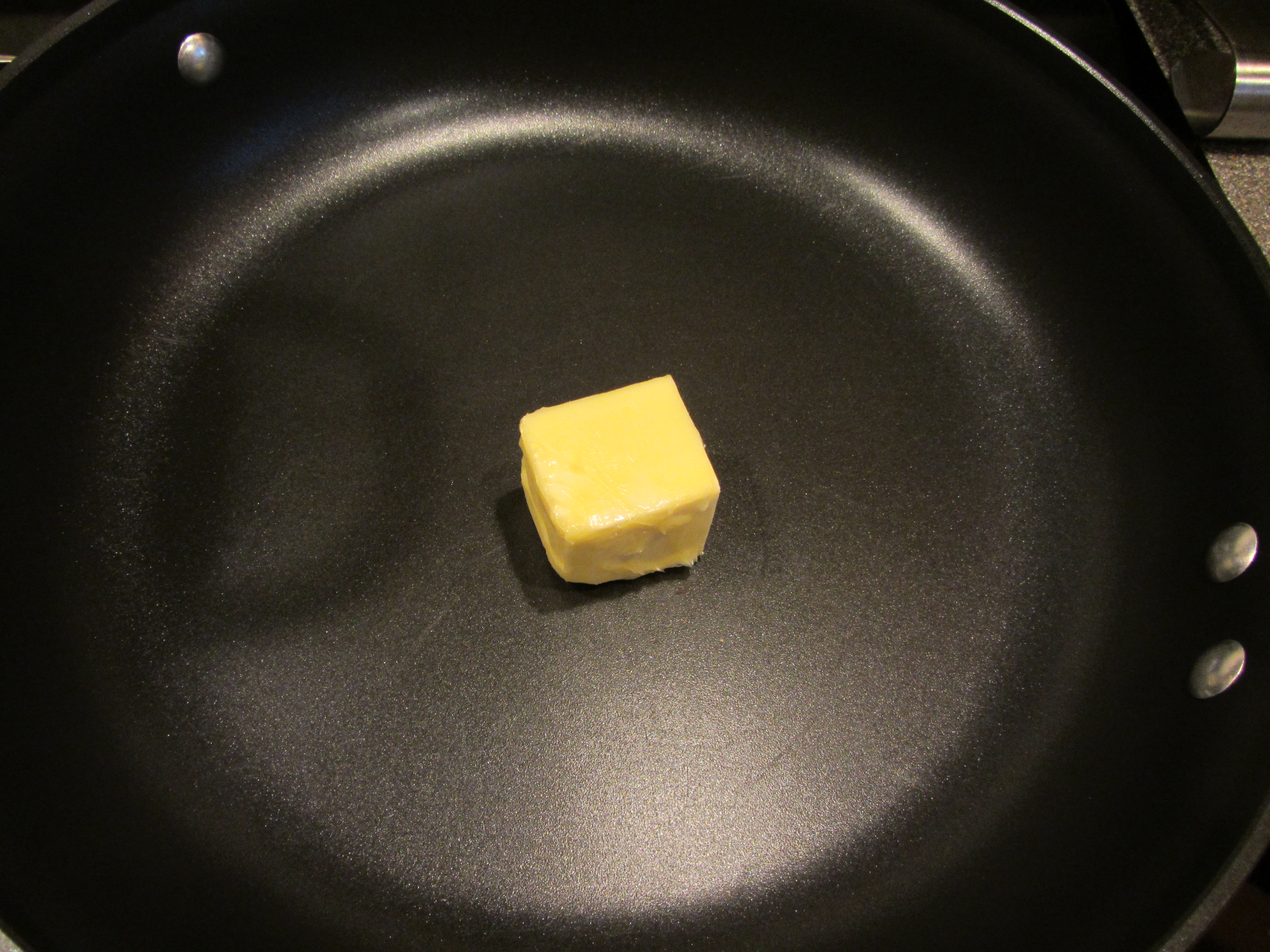
Meanwhile, in a large skillet, melt 1/2 a stick of butter and add 1/2 C pulverized seasoned croutons.

Half a stick of butter in a large skillet.

Half a stick of butter in a large skillet.

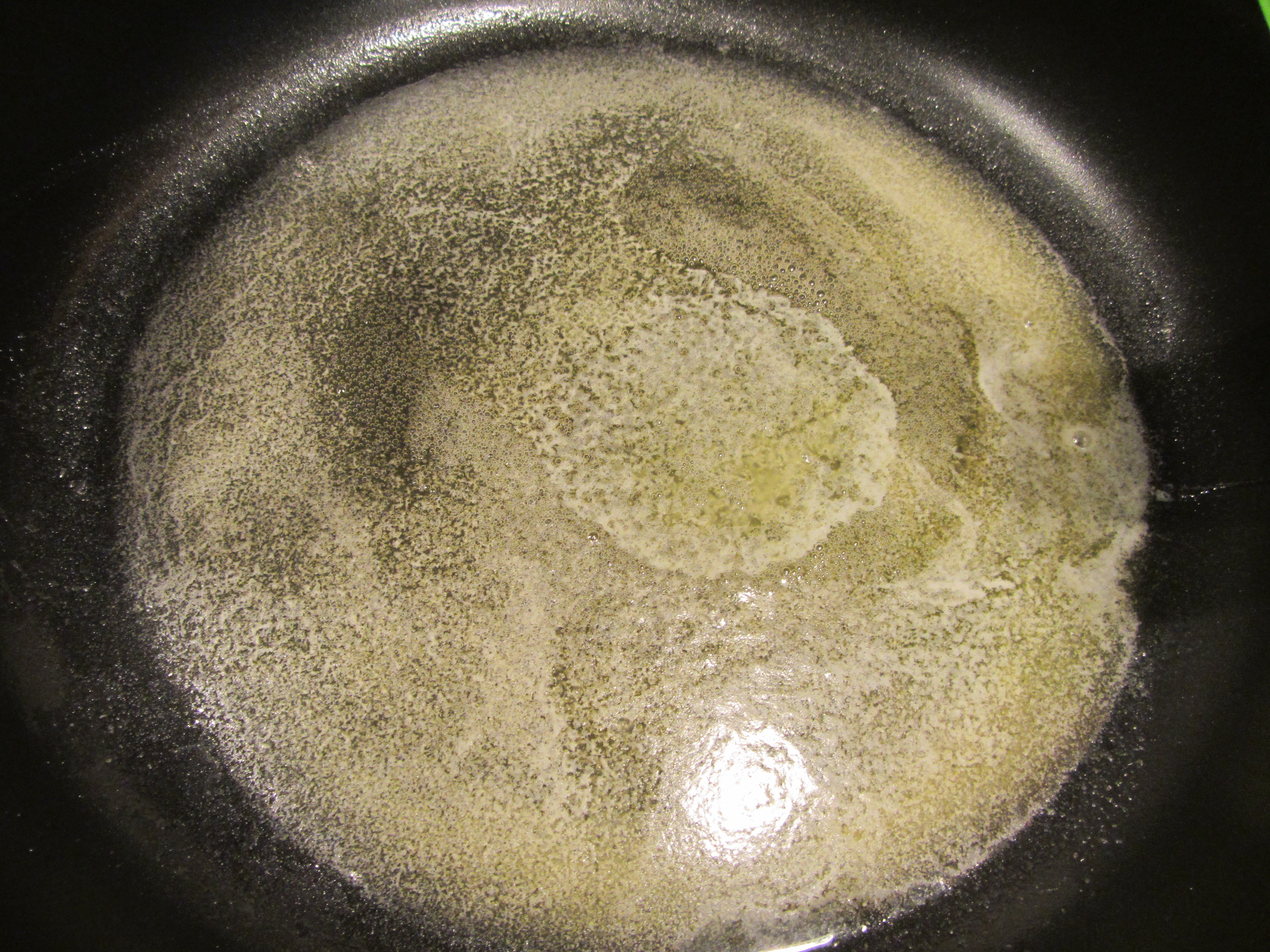
Melted butter.

Melted butter.

Pulverized seasoned croutons.

Pulverized seasoned croutons.

Pulverized croutons added to butter.

Pulverized croutons added to butter.

To this crouton mixture, add two big pinches of dry mustard and 1 t caraway seeds.

Dry mustard and caraway seed added to butter/crouton mix.

Dry mustard and caraway seed added to butter/crouton mix.

Continue to cook this mixture, stirring over medium heat until the butter browns and you have a nutty aroma. When you have reached this point, take the pan off the heat, but leave the mixture in the pan for later.

Stirred until browned and nutty.

Stirred until browned and nutty.

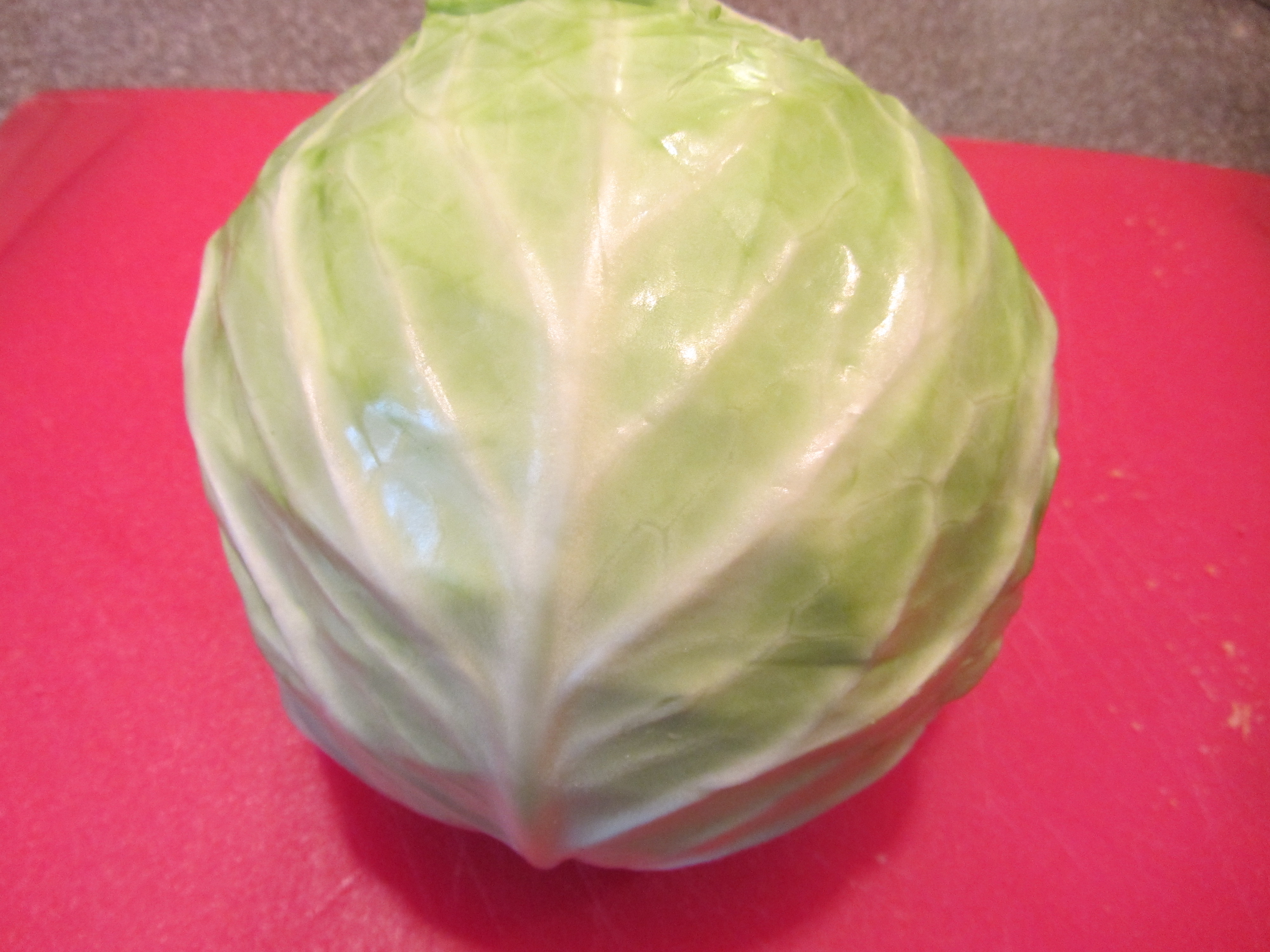
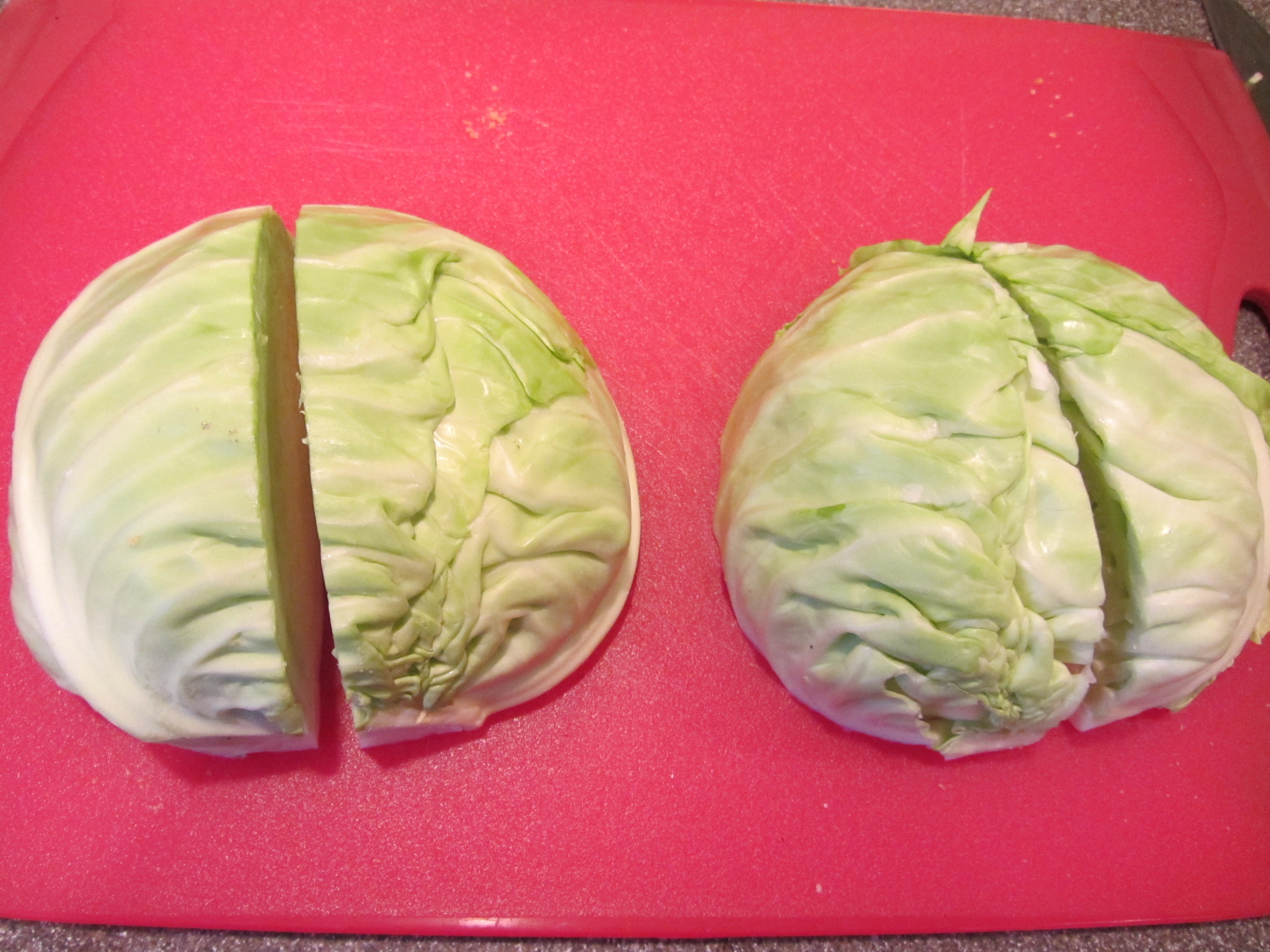
Next, you want to shred a small head of green cabbage. Alton explains that he prefers small heads of cabbage because they are sweeter. To shred your cabbage, cut the head into quarters and cut the hard white core out of each quarter. Lay the cabbage quarters on your cutting board (curved side out), and slice perpendicularly to the board. If this is tough to visualize, there are lots of videos online.

Whole head of green cabbage.

Whole head of green cabbage.

Cabbage cut into halves.

Cabbage cut into halves.

Cabbage cut into quarters.

Cabbage cut into quarters.

Shredded cabbage.

Shredded cabbage.

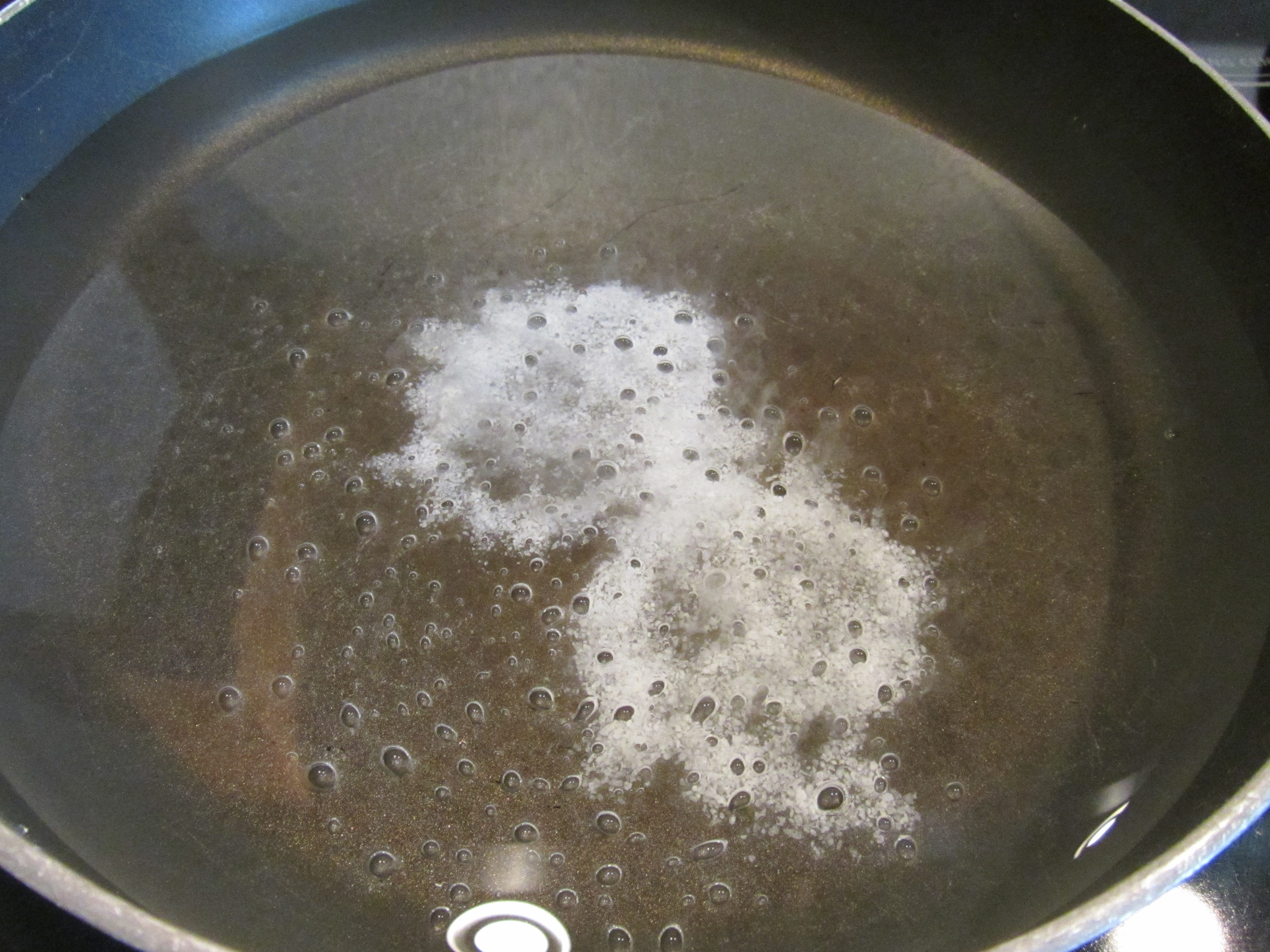
When your cabbage is shredded, add 1 T Kosher salt and 1 T sugar to your pot of boiling water.

1 T Kosher salt added to boiling water.

1 T Kosher salt added to boiling water.

1 T sugar added to water.

1 T sugar added to water.

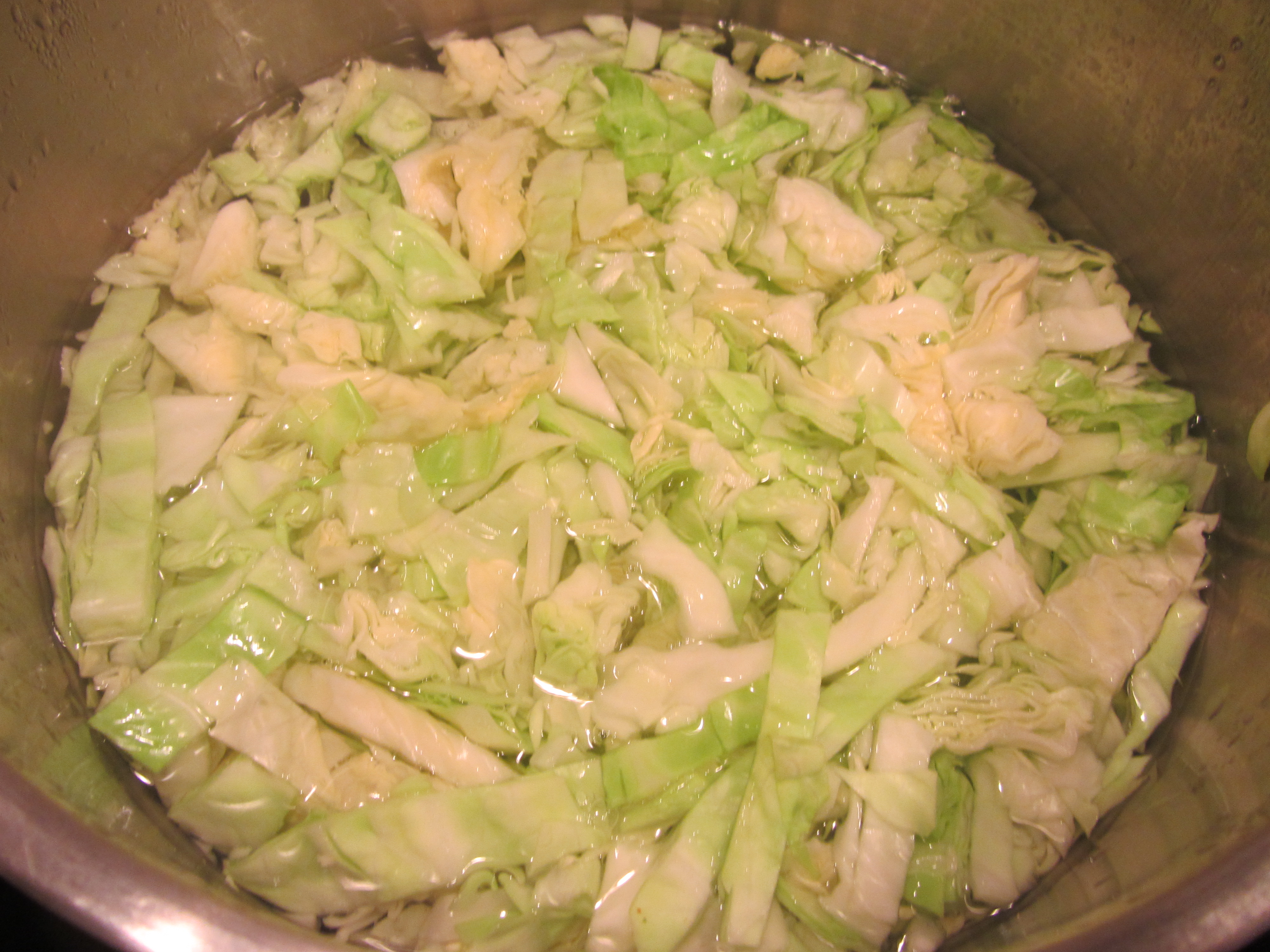
Why cook your cabbage in a lot of sugared/salted water? The large volume of water dilutes acid that seeps from the cabbage. The sugar preserves the cabbage’s cellular structure, while the salt increases the boiling point of the water to promote faster cooking. Add the shredded cabbage to the boiling water. You will notice an immediate color change in the cabbage, as it becomes a more brilliant shade of green; this is because the cabbage is releasing gas as it cooks, allowing the true color of the chlorophyll to show.

Cabbage added to water for 2 minutes.

Cabbage added to water for 2 minutes.

Cook the cabbage for a scant two minutes and drain. Alton used a salad spinner to drain his cabbage, but a colander works fine too.

Cabbage drained after cooking for 2 minutes.

Cabbage drained after cooking for 2 minutes.

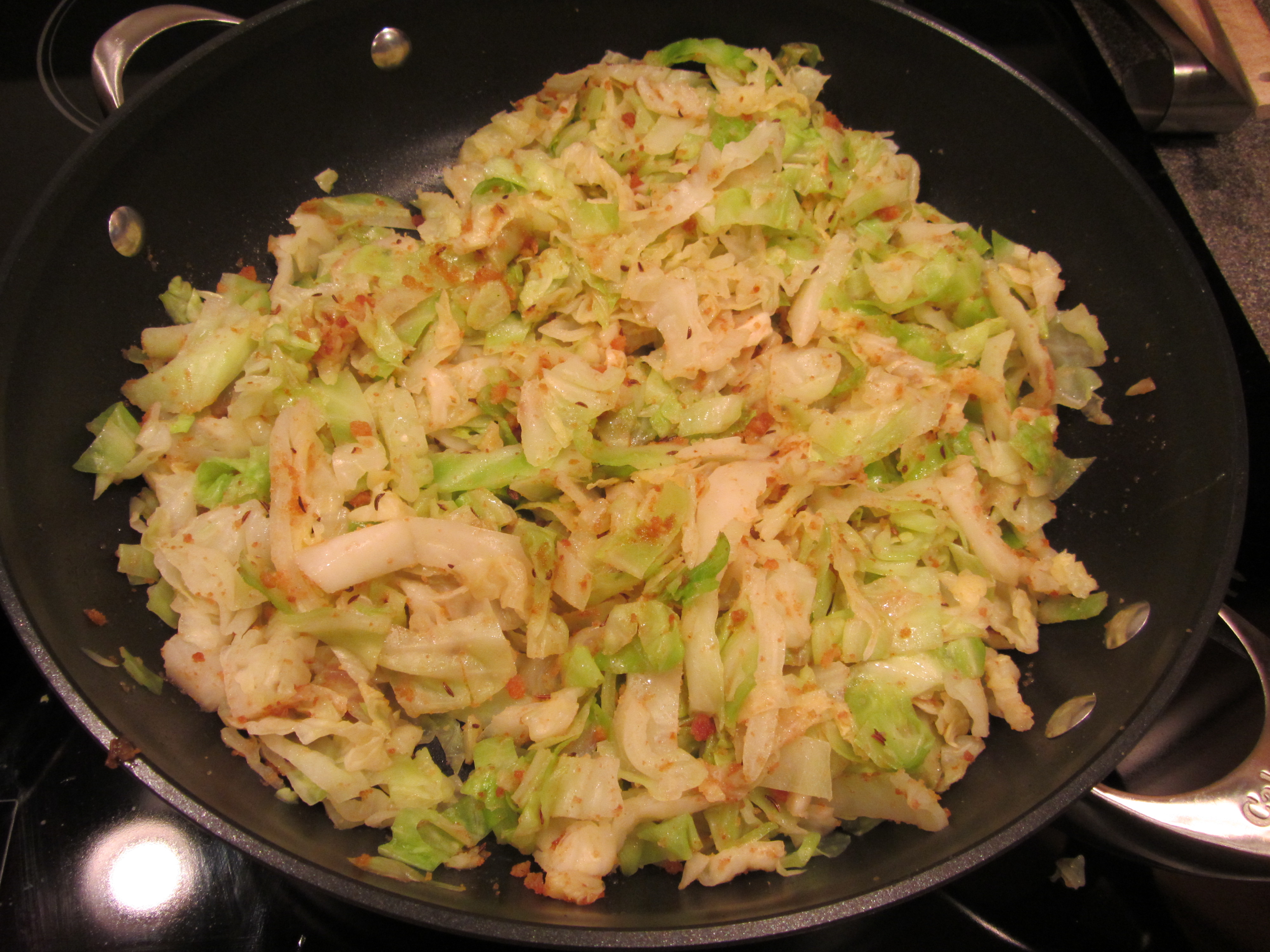
Add the cabbage to the butter/crumb mixture in the skillet and toss to coat with tongs.

Cabbage added to skillet with butter/crouton mixture.

Cabbage added to skillet with butter/crouton mixture.

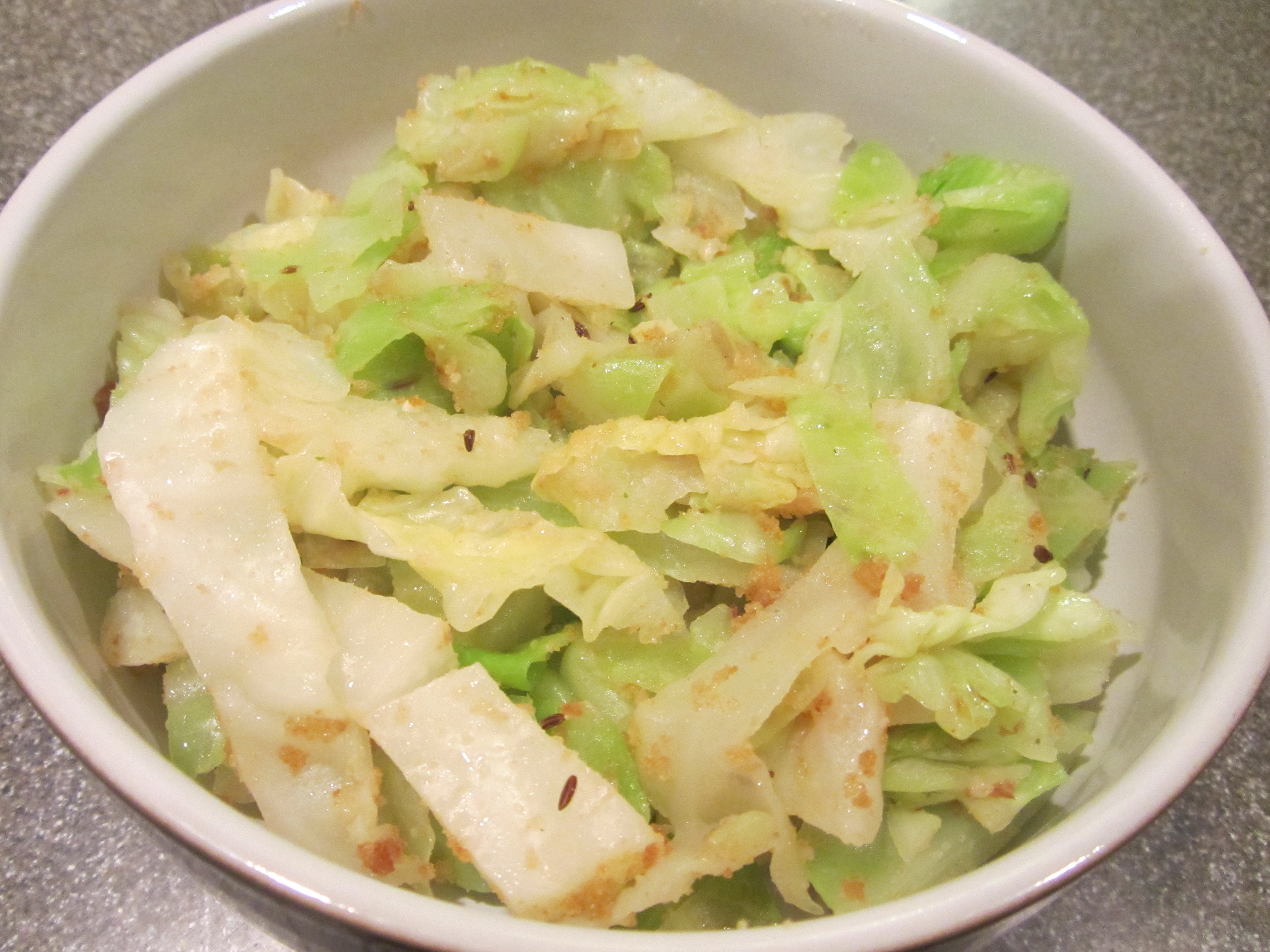
Final cabbage.

Final cabbage.

We ate this cabbage as a side dish and we both really liked it. The cabbage maintained a nice texture and color, avoiding looking like a “wet Army Jeep,” as Alton described. The caraway seed’s flavor came through, but was not overpowering, and the overall dish had a buttery, slightly sweet flavor. We both agreed that we would make this again as a vegetable side dish.

Home of the Braise

Alton’s second cabbage preparation uses red, rather than green, cabbage. This recipe involves braising the cabbage in acidic liquid, which the purple pigments (anthocyanins) in red cabbage love.

Ingredients for braised cabbage:  canola oil, Granny Smith apple, apple juice, caraway seed, Kosher salt, black pepper, red cabbage, lemon juice, and butter.

Ingredients for braised cabbage: canola oil, Granny Smith apple, apple juice, caraway seed, Kosher salt, black pepper, red cabbage, lemon juice, and butter.

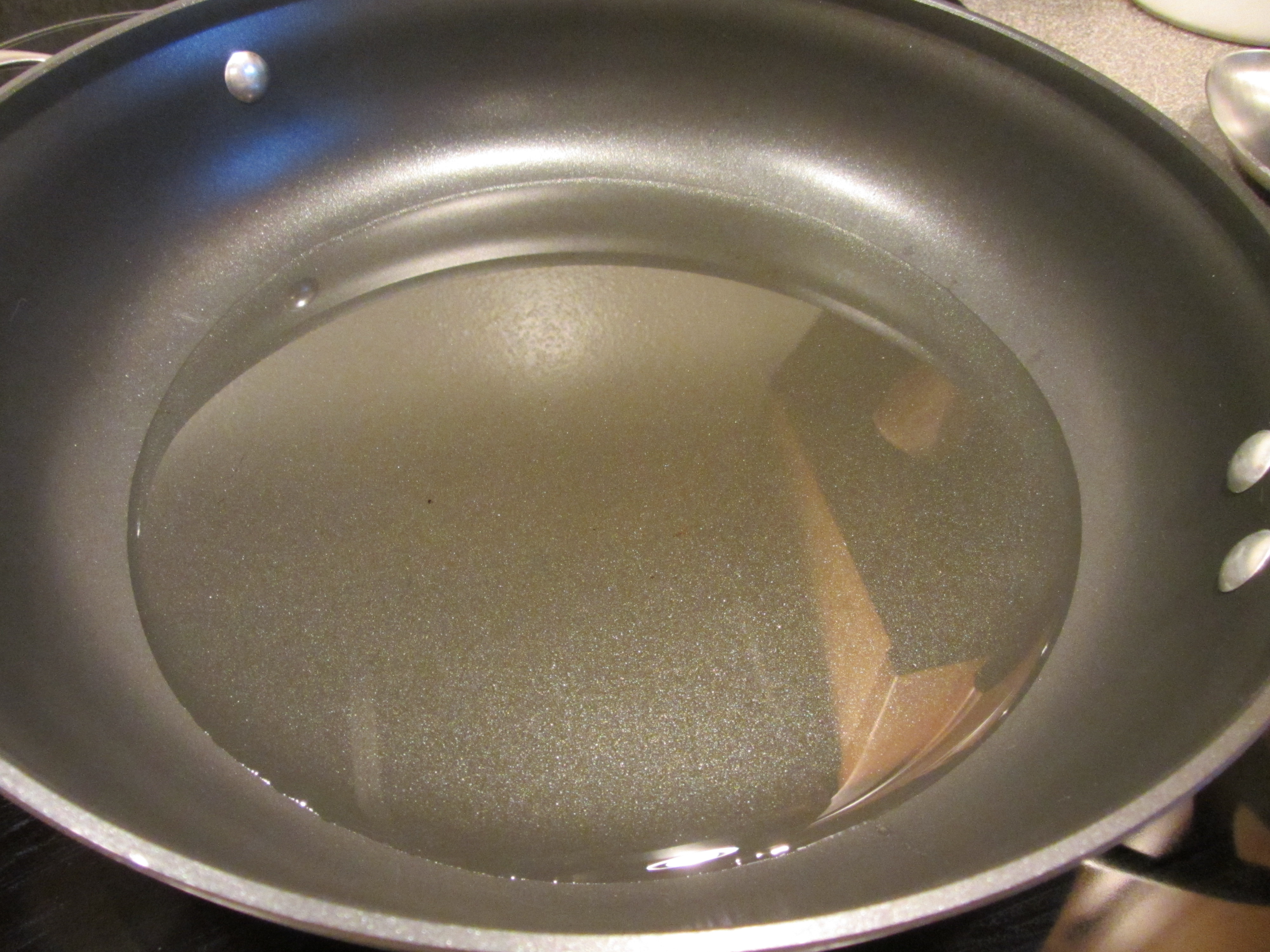
To make this cabbage, heat a large skillet over medium heat, adding 2 T canola oil to coat the pan.

2 T canola oil heating in a pan.

2 T canola oil heating in a pan.

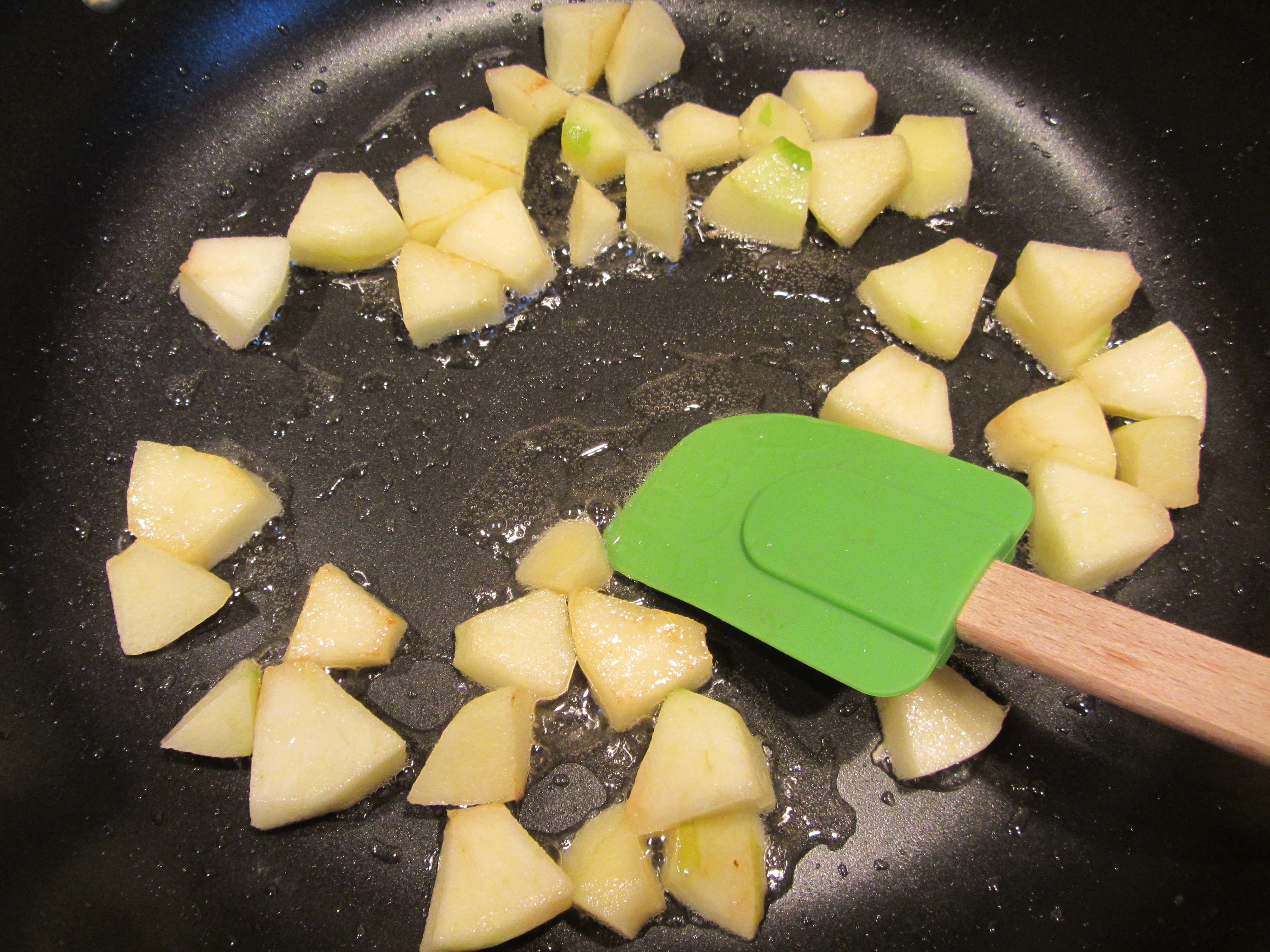
Add 1 Granny Smith apple, peeled, cored, and cubed, and toss.

Granny Smith apple added to the pan.

Granny Smith apple added to the pan.

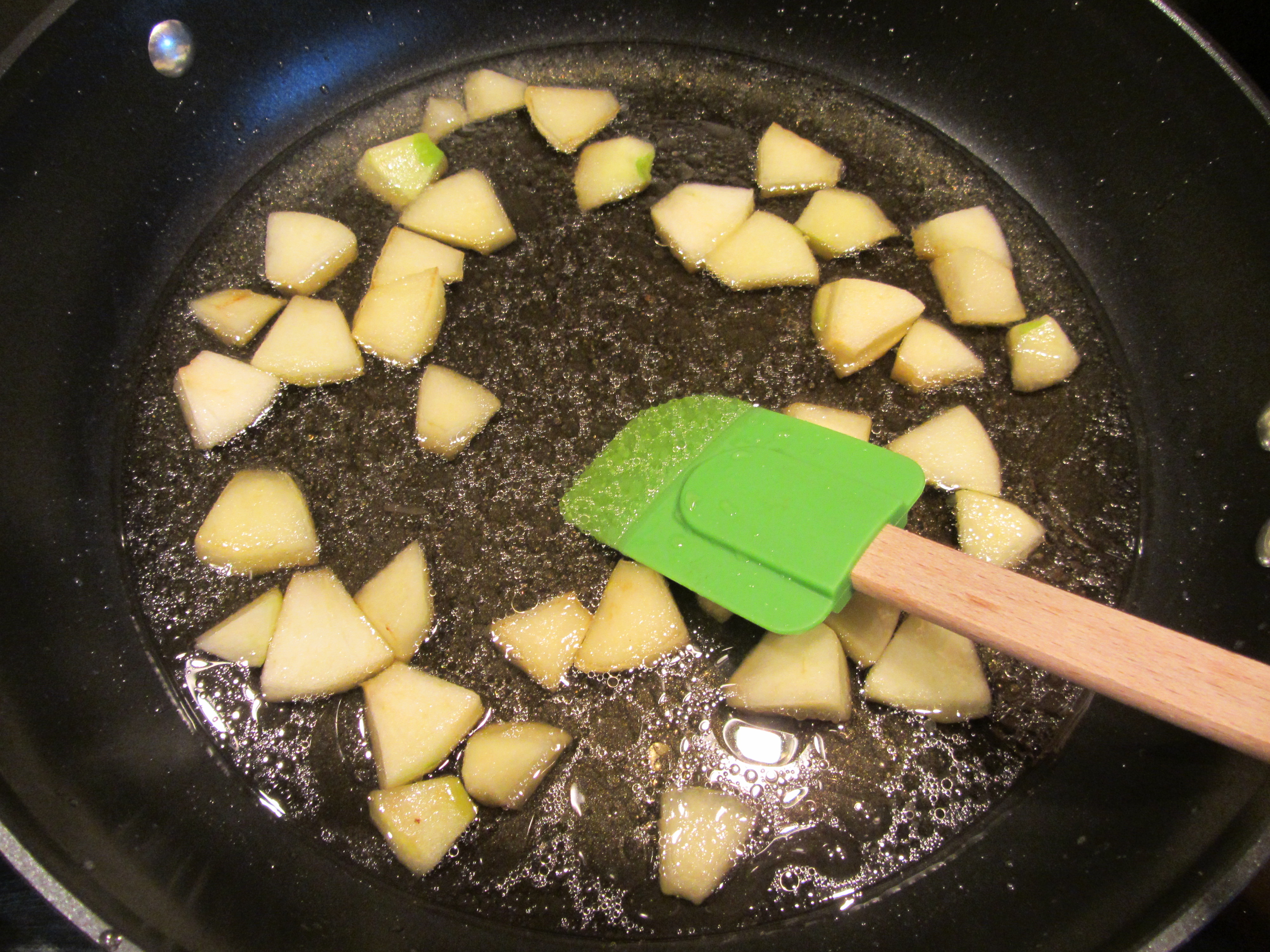
Once the apple is lightly browned, add 1 pint of apple juice, preferably unfiltered. The acid from the apple and apple juice serves to keep the final cabbage red, rather than blue.

A pint of apple juice added to the apple.

A pint of apple juice added to the apple.

Increase the heat and add 1/4 t caraway seed, 1 1/2 t Kosher salt, several grinds of black pepper, and 1/2 a head of shredded red cabbage.

Caraway seed, Kosher salt, and black pepper added to the apple mixture.

Caraway seed, Kosher salt, and black pepper added to the apple mixture.

Cabbage halved, and ready to be shredded.

Cabbage halved, and ready to be shredded.

Shredded red cabbage.

Shredded red cabbage.

Shredded cabbage added to the pan.

Shredded cabbage added to the pan.

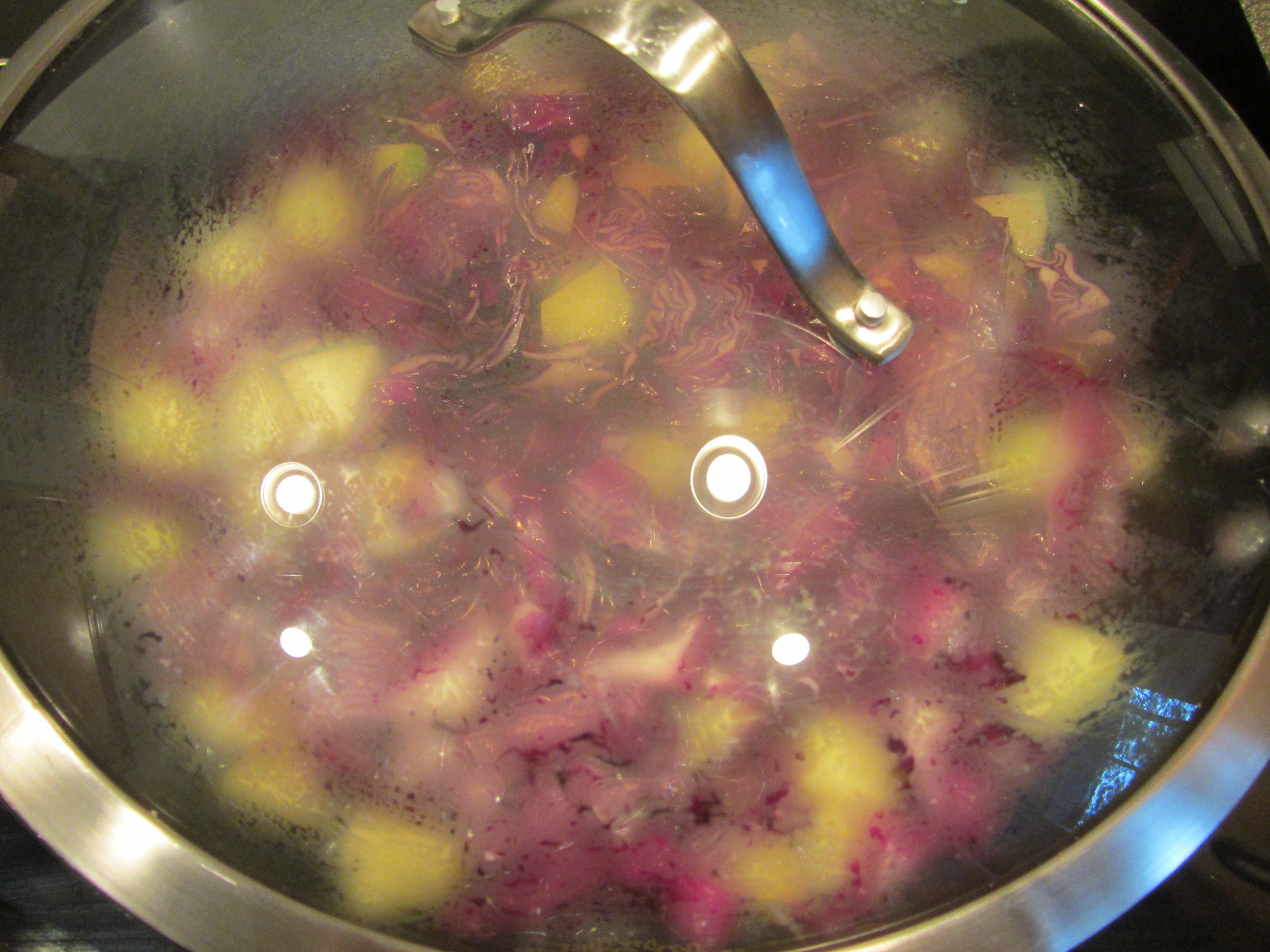
Put the lid on the pan, shake the pan to get everything coated, decrease the heat to low, and cook for 20 minutes.

Lid on the pan, heat turned to low, and left to cook for 20 minutes.

Lid on the pan, heat turned to low, and left to cook for 20 minutes.

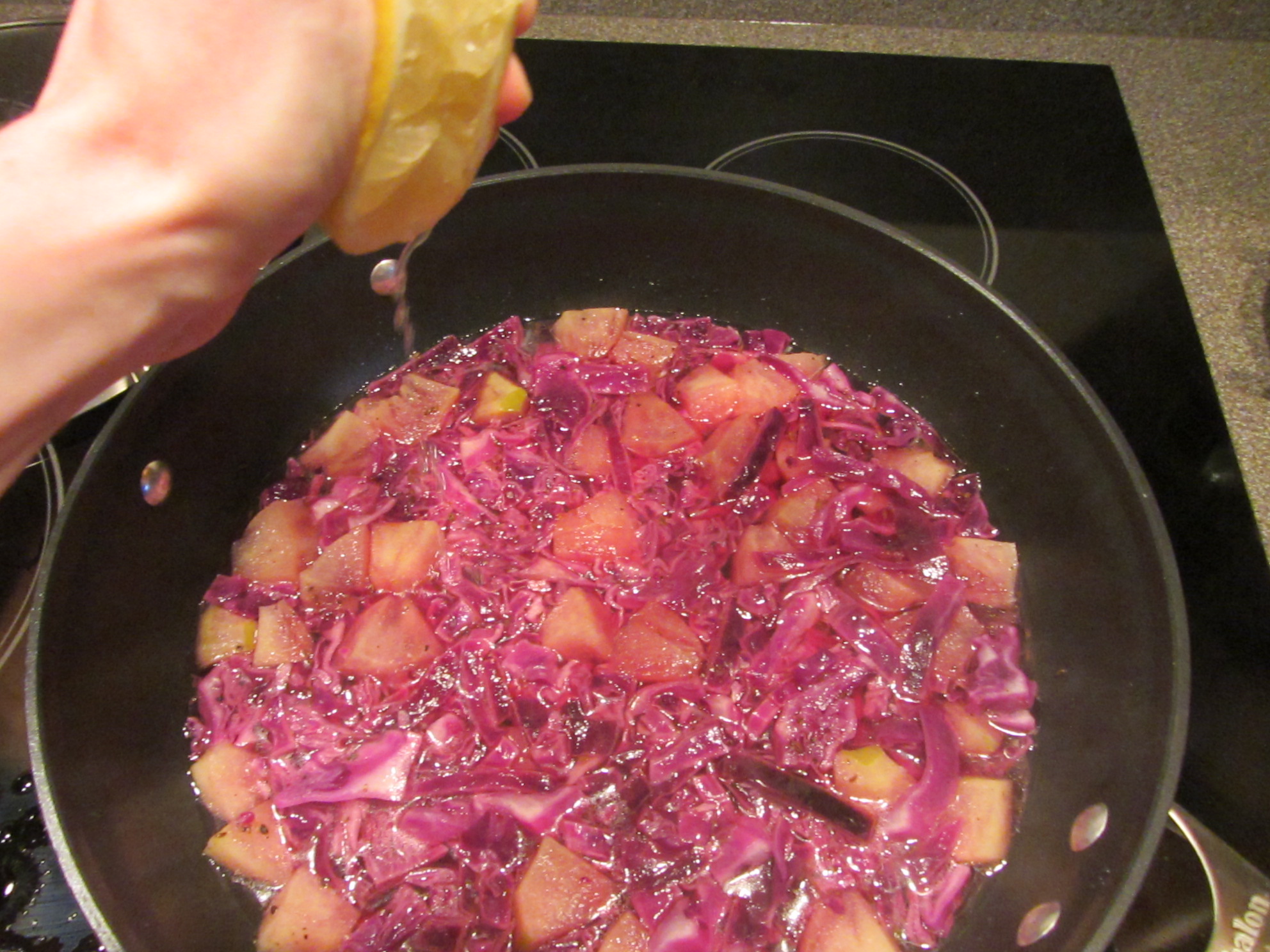
To boost the pigment of the final dish, sprinkle lemon juice over the cabbage just before serving.

Lemon juice added to boost pigment.

Lemon juice added to boost pigment.

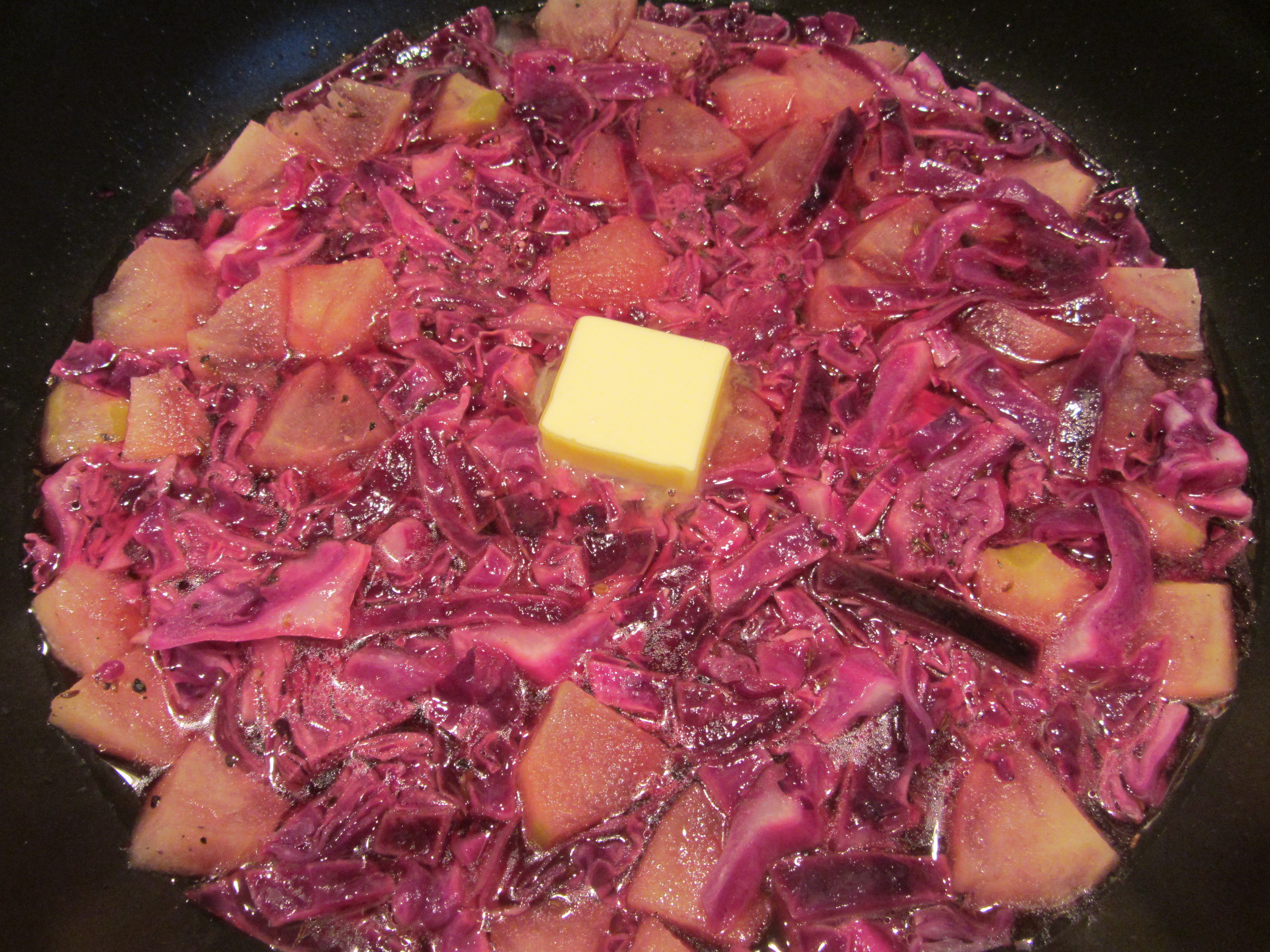
Alton also likes to add a pat of butter to cut the acid from the lemon.

A pat of butter melted into the cabbage.

A pat of butter melted into the cabbage.

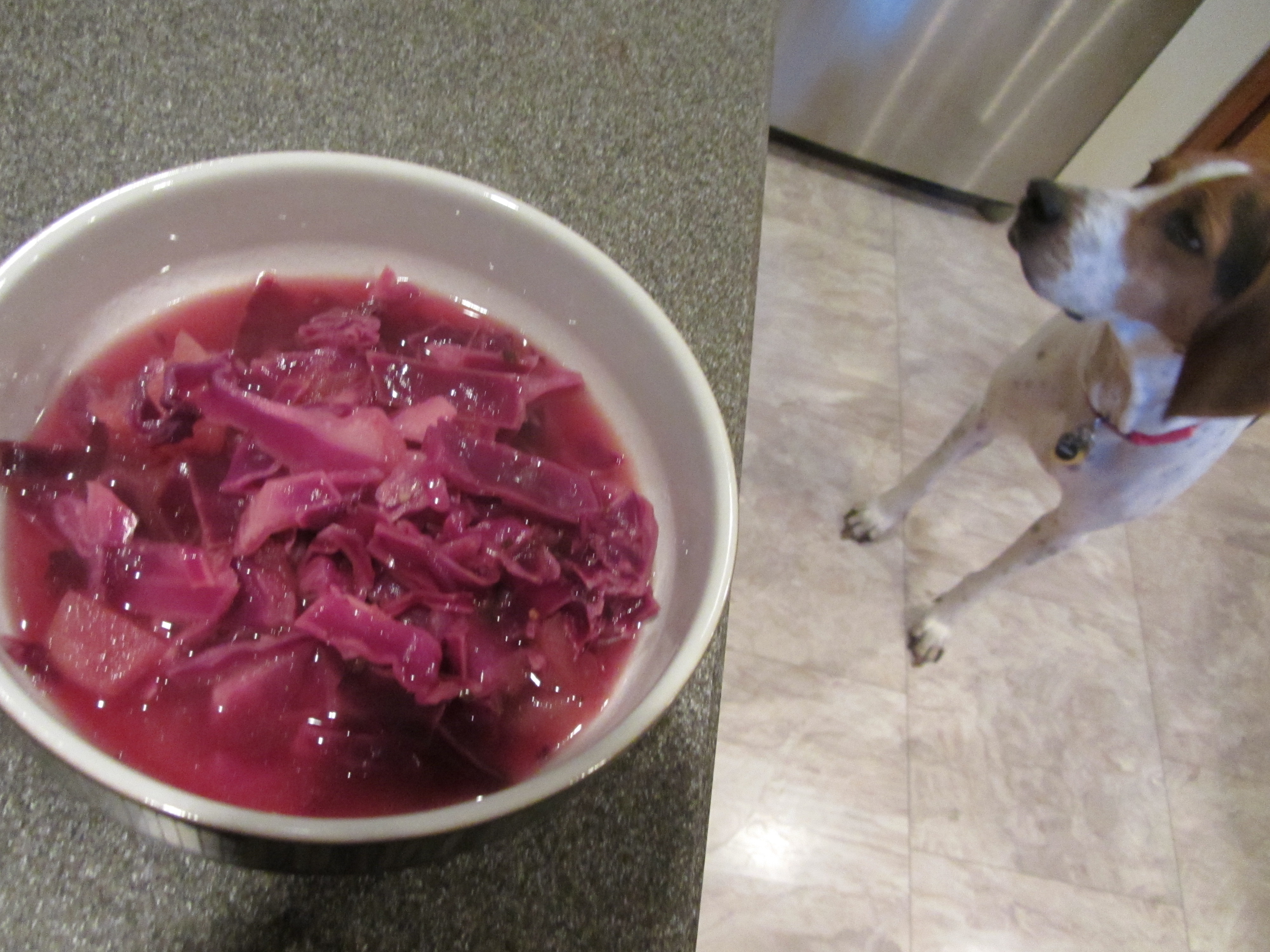
The finished cabbage.

The finished cabbage.

5-6-2015 135

Why is caraway seed so often paired with cabbage? Aside from pairing well flavor-wise, caraway seed helps to limit cabbage’s production of hydrogen sulfide gas, which is what can make your house smell like cabbage for days. We ate this cabbage as a side dish last night and we liked it even better than the first cabbage recipe. While the first recipe was sweet, buttery, and mild, this dish was much more tangy and bold. Again, Alton showed that cooking cabbage properly can maintain the texture, flavor, and color of a vegetable that so often gets a bad rap. You cannot go wrong with either of Alton’s cabbage recipes.

Thanks to my little Good Eats project, our post-Boston Marathon week consisted largely of recipes for tofu. Considering that we were quite gluttonous for a couple of days after the marathon, I think we were ready for some tofu! I know many people who turn their noses up at tofu, but I happen to like the stuff, as does Ted. My first experiences with tofu were when I was in high school and going through a phase where I did not eat a lot of meat; somehow, I had convinced myself that I really didn’t like meat. My brother was out of town and my dad decided he would try to cook a few tofu recipes for he, my mom, and me. We affectionately refer to this week in our lives as “Tofu Week.” I don’t recall what the various tofu preparations were, but I remember whispered conversations between my mom and me where we both agreed the tofu was horrible, but did not want to hurt Dad’s feelings. Thankfully, Dad sat down at the table, took one bite, and said, “This is horrible.” This exact scenario played out several times during that week, leaving us all to think that tofu was pretty darn disgusting. While I later gave tofu another shot and really liked it, I don’t think my parents ever quite recovered from Tofu Week.

Fillet O’Fu

Alton’s first tofu preparation was his tofu fillet. For this tofu recipe, you want to use firm tofu, which has less moisture than silken tofu, and therefore has a higher concentration of nutrients. Firm tofu is like a sponge, so it will soak up any flavors you want to impart. When marinating meat, one purpose of the acid in the marinade is for tenderizing the meat’s proteins. Since tofu’s proteins are already coagulated, tofu marination is solely for flavor injection. To make Alton’s tofu fillets, slice a block of firm tofu lengthwise into four equal slices.

One block of firm tofu.

One block of firm tofu.

Block of firm tofu, cut into four fillets.

Block of firm tofu, cut into four fillets.

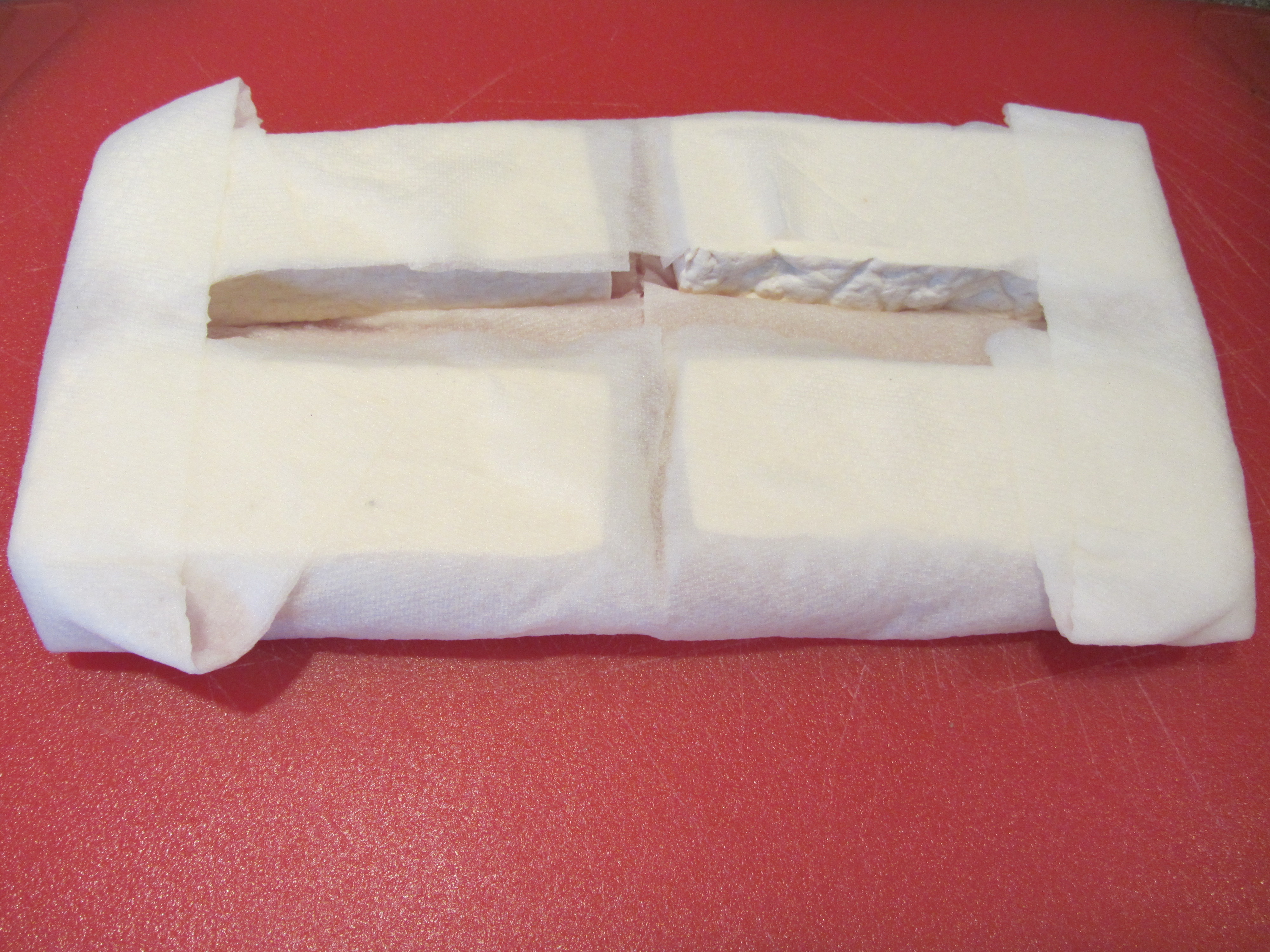
Wrap the tofu fillets in paper towels, weigh the tofu down with a sheet pan and some canned goods, and allow the paper towels to absorb the moisture for a good hour.

Tofu fillets wrapped in paper towels and weighed down.

Tofu fillets wrapped in paper towels and weighed down.

Tofu fillets after sitting in paper towels for an hour.

Tofu fillets after sitting in paper towels for an hour.

Meanwhile, make a marinade of 2 T sherry vinegar, 2 T Worcestershire sauce, and a few dashes of Tabasco sauce.

Marinade ingredients:  Worcestershire sauce, Tabasco sauce, and sherry vinegar.

Marinade ingredients: Worcestershire sauce, Tabasco sauce, and sherry vinegar.

Place the tofu fillets into the marinade for 15 minutes on each side. Alton explains that since the tofu is sponge-like, it is not necessary to do a long marination.

Tofu fillets into marinade for 15 minutes.

Tofu fillets into marinade for 15 minutes.

Tofu fillets flipped to marinate for 15 minutes on side two.

Tofu fillets flipped to marinate for 15 minutes on side two.

When ready to cook, fill a large non-stick skillet with 1/8″ of canola oil, and place over medium-high heat.

Canola oil in non-stick skillet.

Canola oil in non-stick skillet.

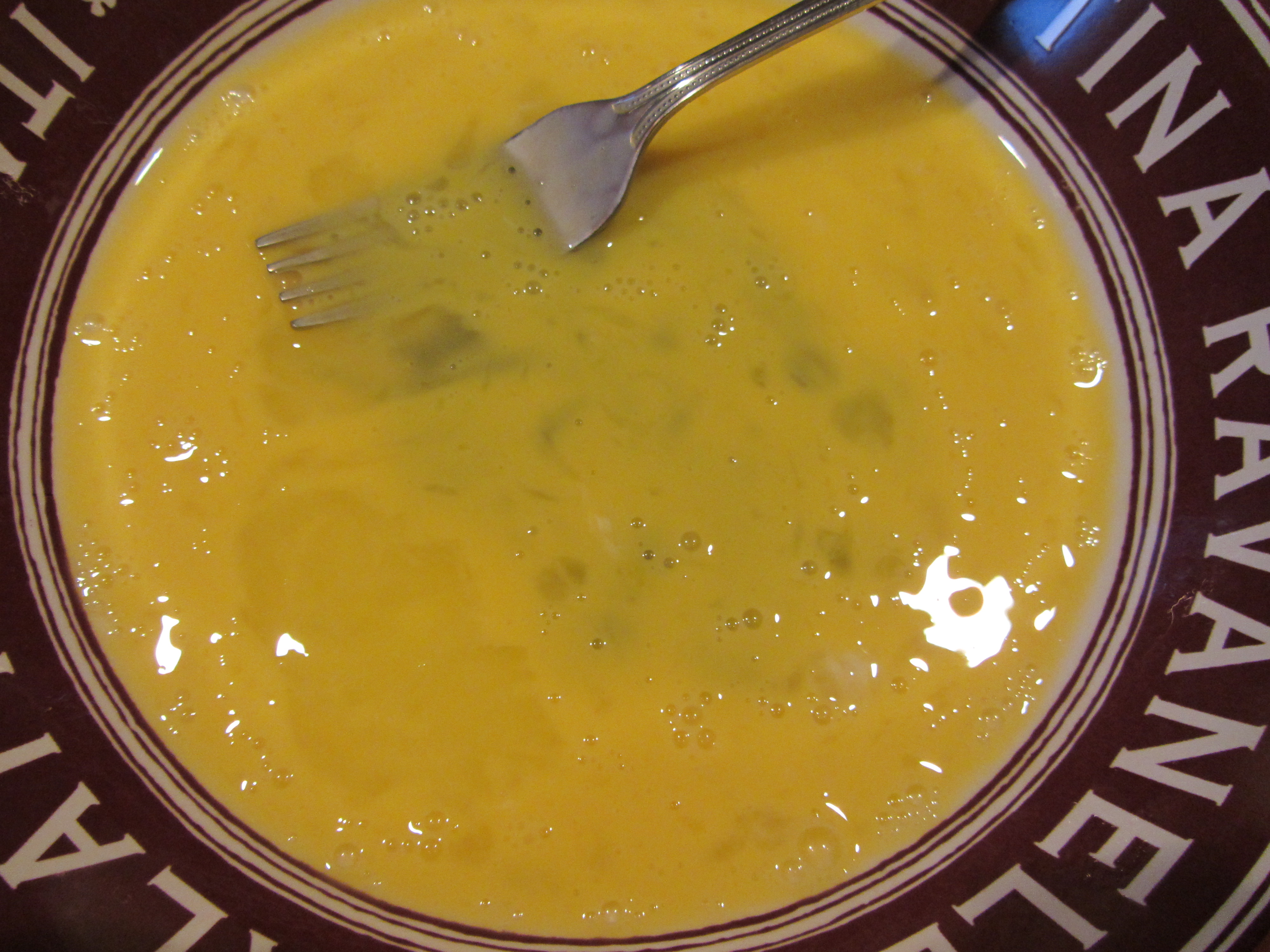
In a shallow dredging dish, crack two eggs and lightly beat them. In a second dredging dish, place 1/2 C flour.

Two dredging dishes:  one with flour and one with eggs.

Two dredging dishes: one with flour and one with eggs.

Eggs beaten with a fork.

Eggs beaten with a fork.

Blot the marinated tofu with paper towels to get rid of excess marinade and dredge the fillets lightly in flour, tapping to get rid of any excess flour.

Marinated tofu on paper towels.

Marinated tofu on paper towels.

Tofu dredged lightly in flour...

Tofu dredged lightly in flour…

After dredging the tofu in flour, dip the fillets into the eggs, and slide them gently into the hot oil.

...and then coated in egg.

…and then coated in egg.

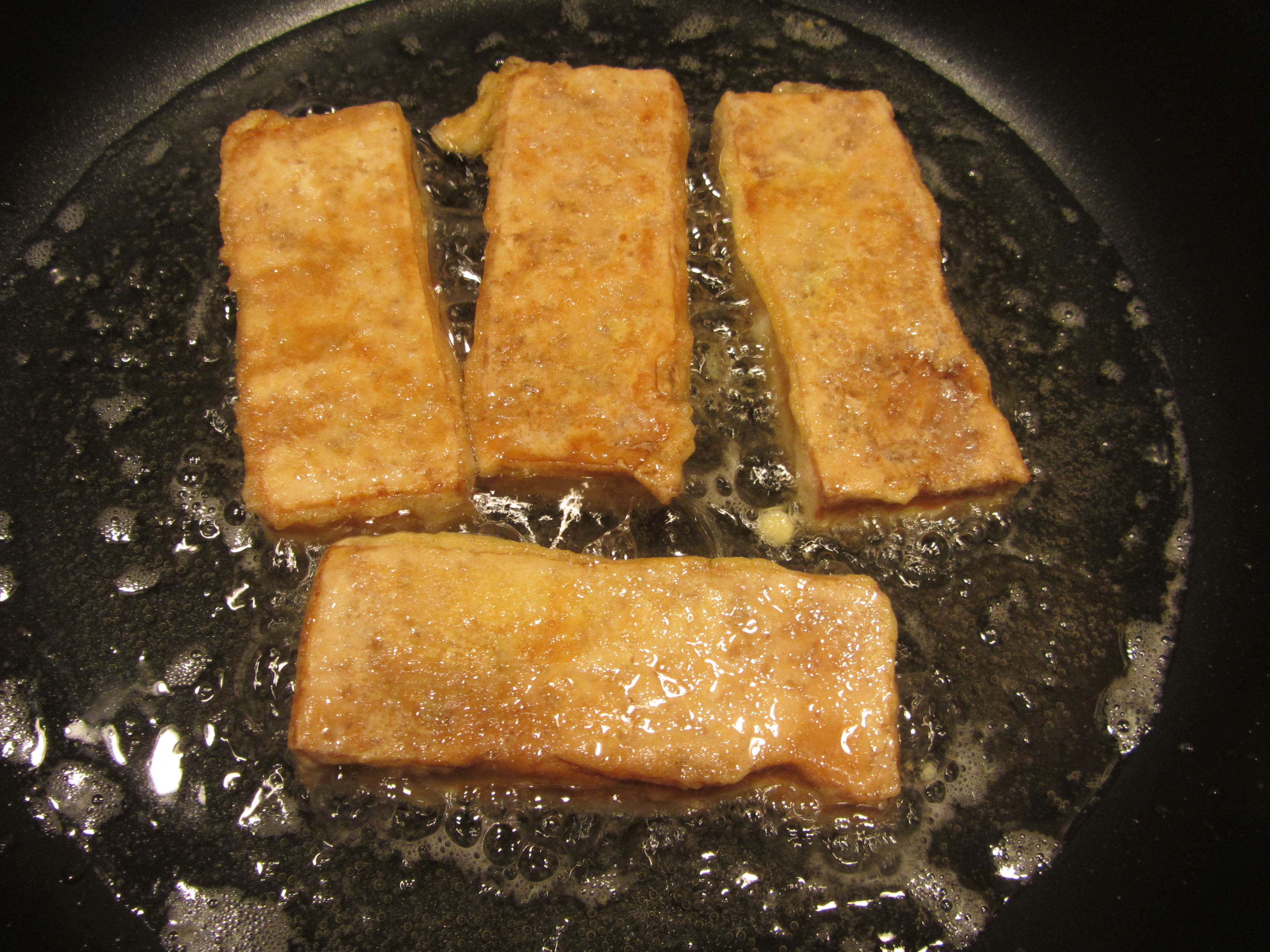
Fry the fillets for two minutes per side, or until golden brown.

Tofu fillets into hot oil for 2 minutes.

Tofu fillets into hot oil for 2 minutes.

Tofu fillets flipped to cook on second side for two more minutes.

Tofu fillets flipped to cook on second side for two more minutes.

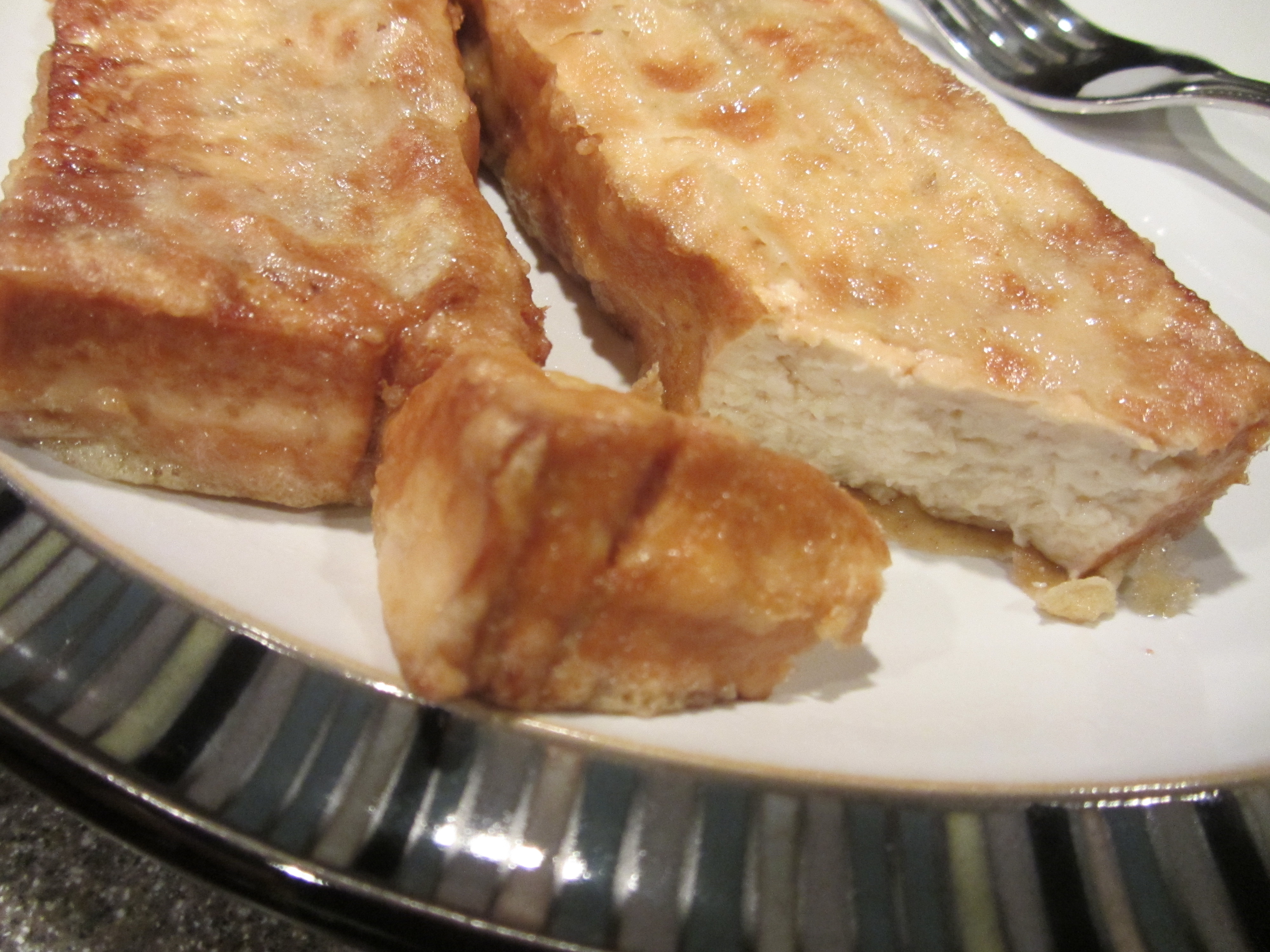
Pan-fried tofu fillets.

Pan-fried tofu fillets.

Coonhounds will eat tofu.

Coonhounds will eat tofu.

We ate these fillets as our entrée and we liked the crispy “skin” that coated the tofu. While you could taste the marinade, it was faint, so I wonder if a longer marination would result in better flavor injection. I think I will try this recipe again, but with a 24-hour marination, as that is what I have done with some other tofu recipes that have had more flavor. Texture-wise this was a good tofu dish, but it was a bit bland flavor-wise.

No Guilt Caesar

What better to pair with tofu fillets than a green salad with tofu Caesar dressing?

Caesar ingredients:  Parmesan, garlic, Dijon mustard, white wine vinegar, Worcestershire sauce, Kosher salt, black pepper, and silken tofu.

Caesar ingredients: Parmesan, garlic, Dijon mustard, white wine vinegar, Worcestershire sauce, Kosher salt, black pepper, and silken tofu.

To make Alton’s tofu dressing, grind 2 ounces of Parmesan cheese in a blender.

Two ounces of cubed Parmesan.

Two ounces of cubed Parmesan.

Cubed Parmesan in the blender.

Cubed Parmesan in the blender.

With the blender running, dump 2 cloves of garlic down the chute.

Garlic added to Parmesan.

Garlic added to Parmesan.

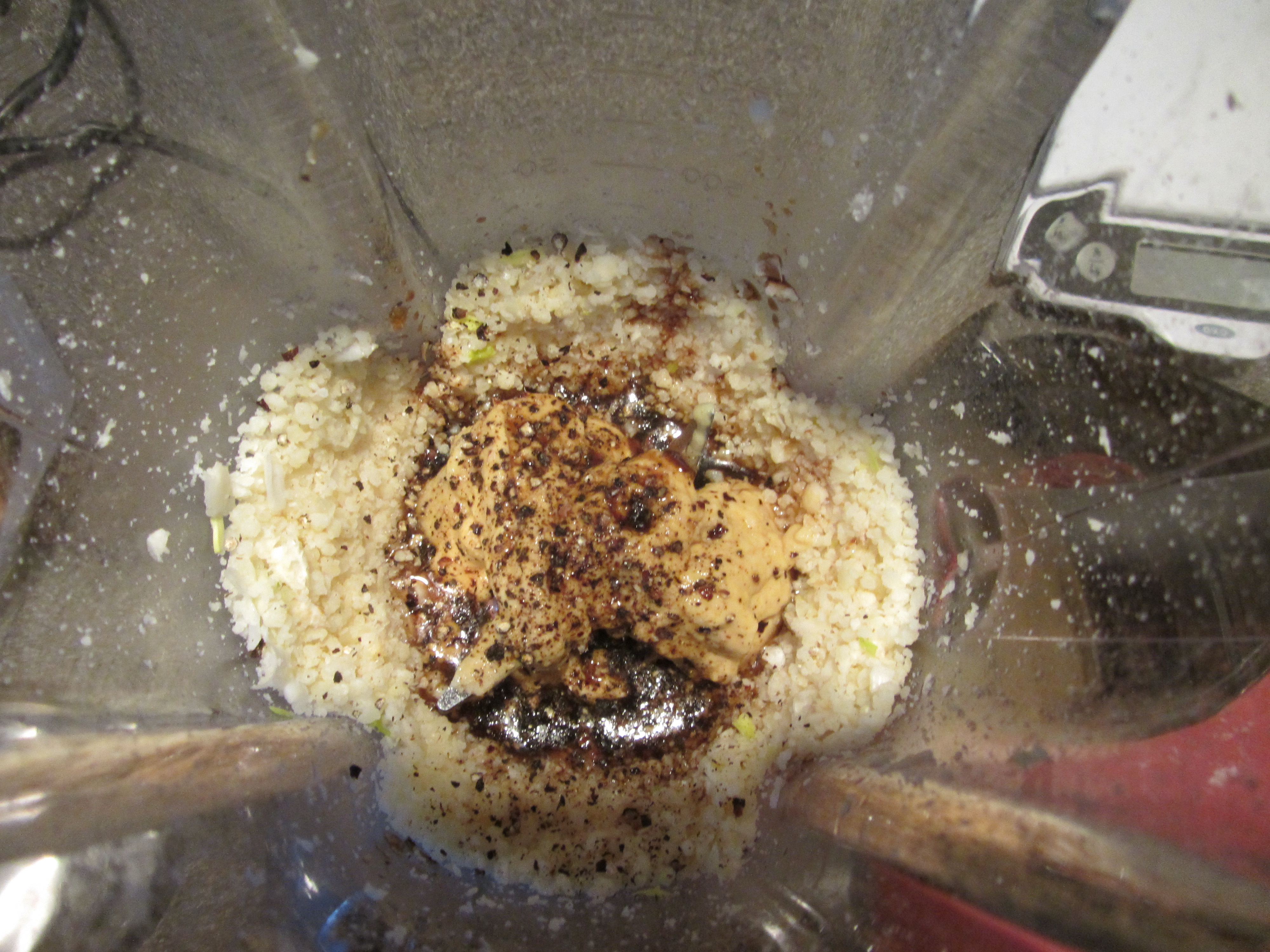
Once processed, turn the blender off and add 2 T Dijon mustard, 1 1/2 t white wine vinegar, 1 1/2 t Worcestershire sauce, a pinch of Kosher salt, a few grinds of black pepper, and 1 C of silken tofu.

Dijon mustard, white wine vinegar, Worcestershire sauce, Kosher salt, and black pepper added to dressing.

Dijon mustard, white wine vinegar, Worcestershire sauce, Kosher salt, and black pepper added to dressing.

Silken tofu added to blender.

Silken tofu added to blender.

Blend until smooth. Once smooth, slowly pour 2 T of olive oil down the chute with the blender running.

Olive oil drizzled into dressing.

Olive oil drizzled into dressing.

Finished tofu Caesar dressing.

Finished tofu Caesar dressing.

Tofu Caesar dressing over arugula.

Tofu Caesar dressing over arugula.

The dressing will keep in the refrigerator for up to two weeks. We were pretty happy with this dressing, though it does have pretty intense garlic flavor. If using two cloves of garlic, I would recommend using smaller ones. I served my dressing over arugula because that is what we had in the house, but we will have to get some Romaine and make a true Caesar-style salad. This is a good, easy, healthy salad dressing, and you would really never know it has tofu as a main ingredient.

Moo-Less Chocolate Pie

The third recipe in this episode is for Alton’s tofu chocolate pie. As far as desserts go, it doesn’t get any easier than this one.

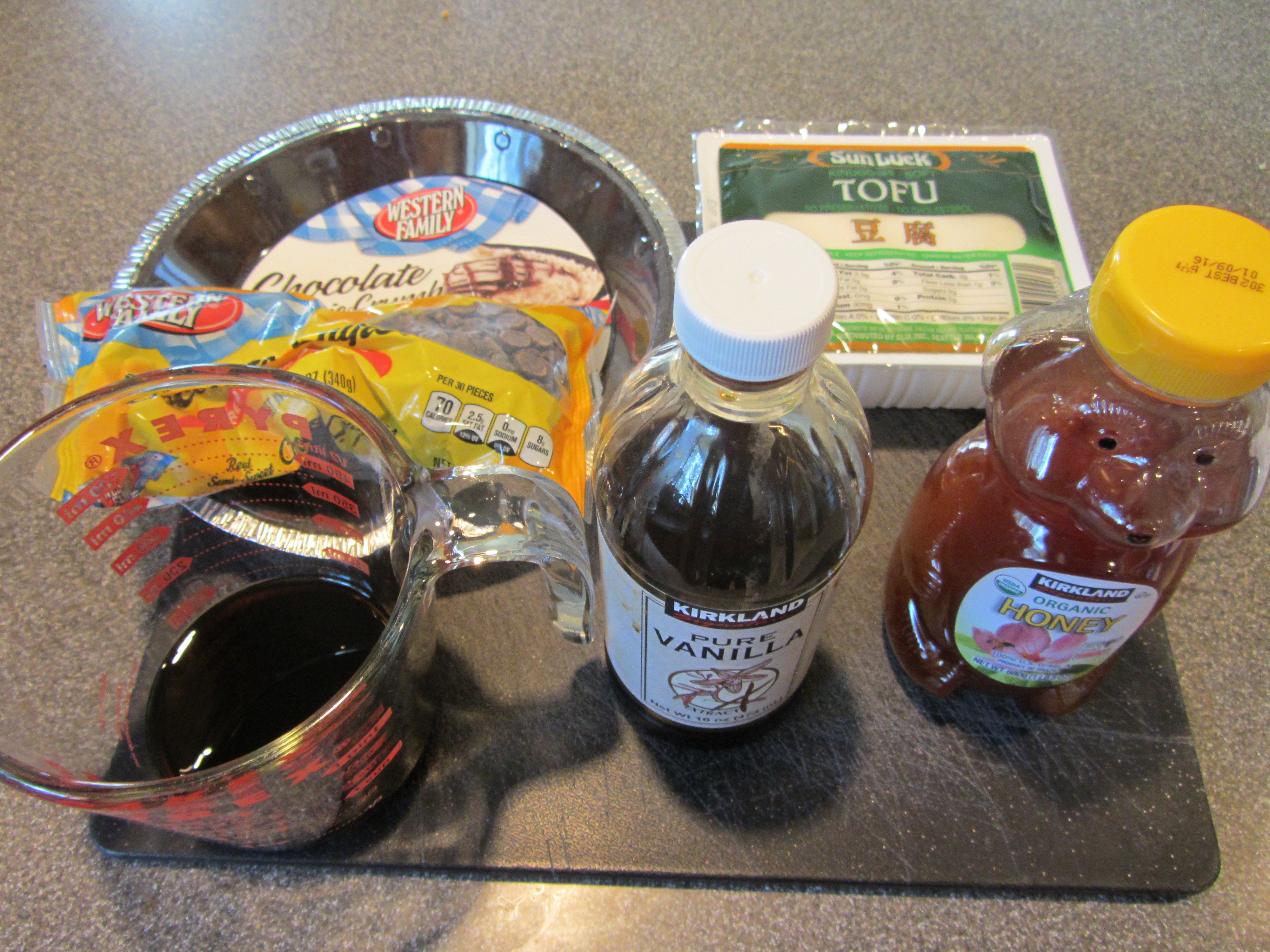
Ingredients for tofu chocolate pie:  silken tofu, semisweet chocolate chips, coffee liqueur, vanilla, honey, and a cookie crust.

Ingredients for tofu chocolate pie: silken tofu, semisweet chocolate chips, coffee liqueur, vanilla, honey, and a cookie crust.

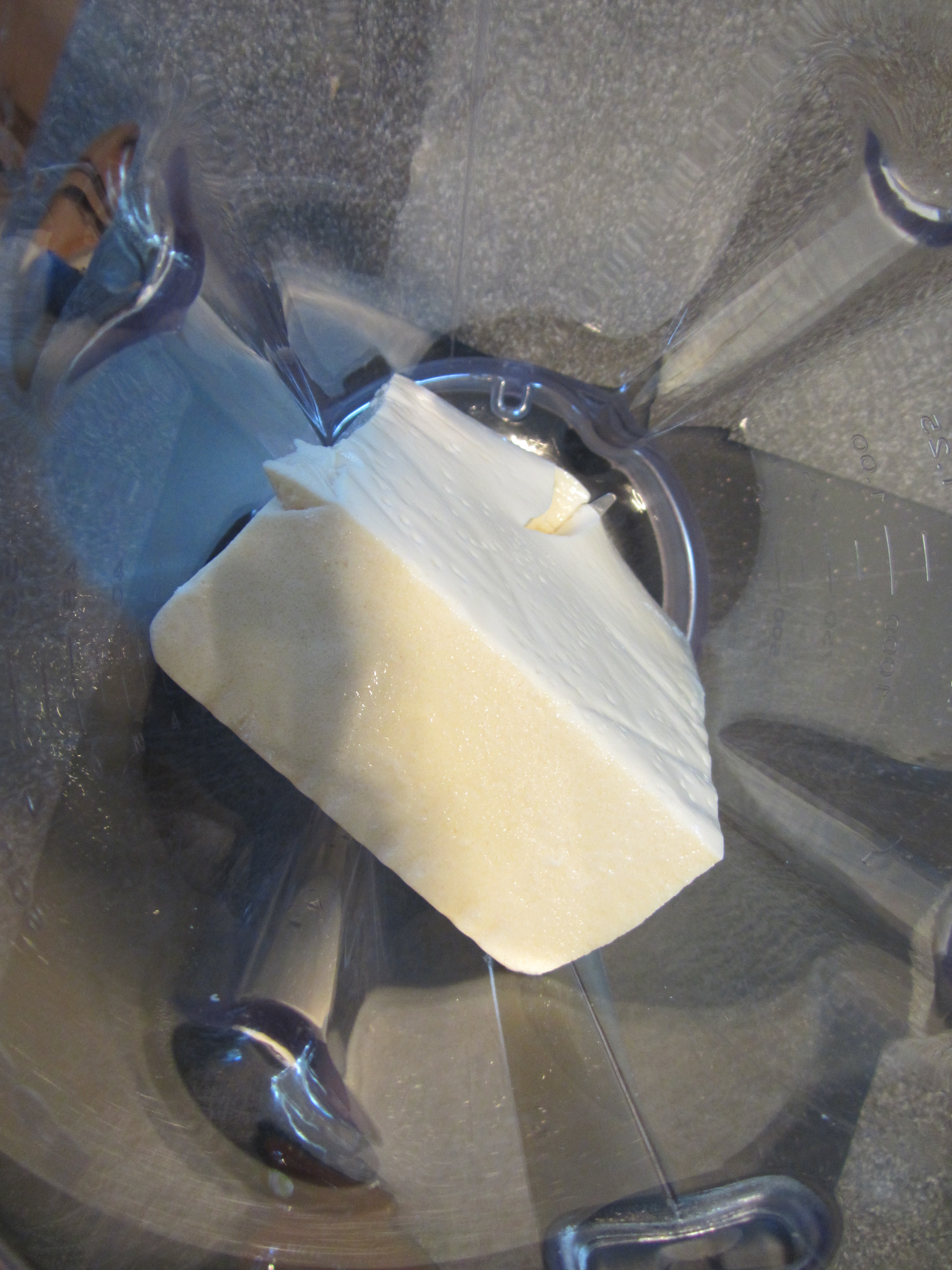
In a blender, combine one block of silken tofu, 1/3 C coffee liqueur, 1 t vanilla, 1 T honey, and 2 C semisweet chocolate chips, melted. Blend until smooth.

Tofu in the blender.

Tofu in the blender.

Melted chocolate chips, vanilla, honey, & coffee liqueur added to the tofu.

Melted chocolate chips, vanilla, honey, & coffee liqueur added to the tofu.

Blended until smooth.

Blended until smooth.

Pour the mixture into a prepared chocolate cookie crust and refrigerate until firm. The online recipe contains a recipe for a chocolate wafer crust, but Alton used a purchased chocolate cookie crust in the episode, so that is what I used.

Prepared cookie crust.

Prepared cookie crust.

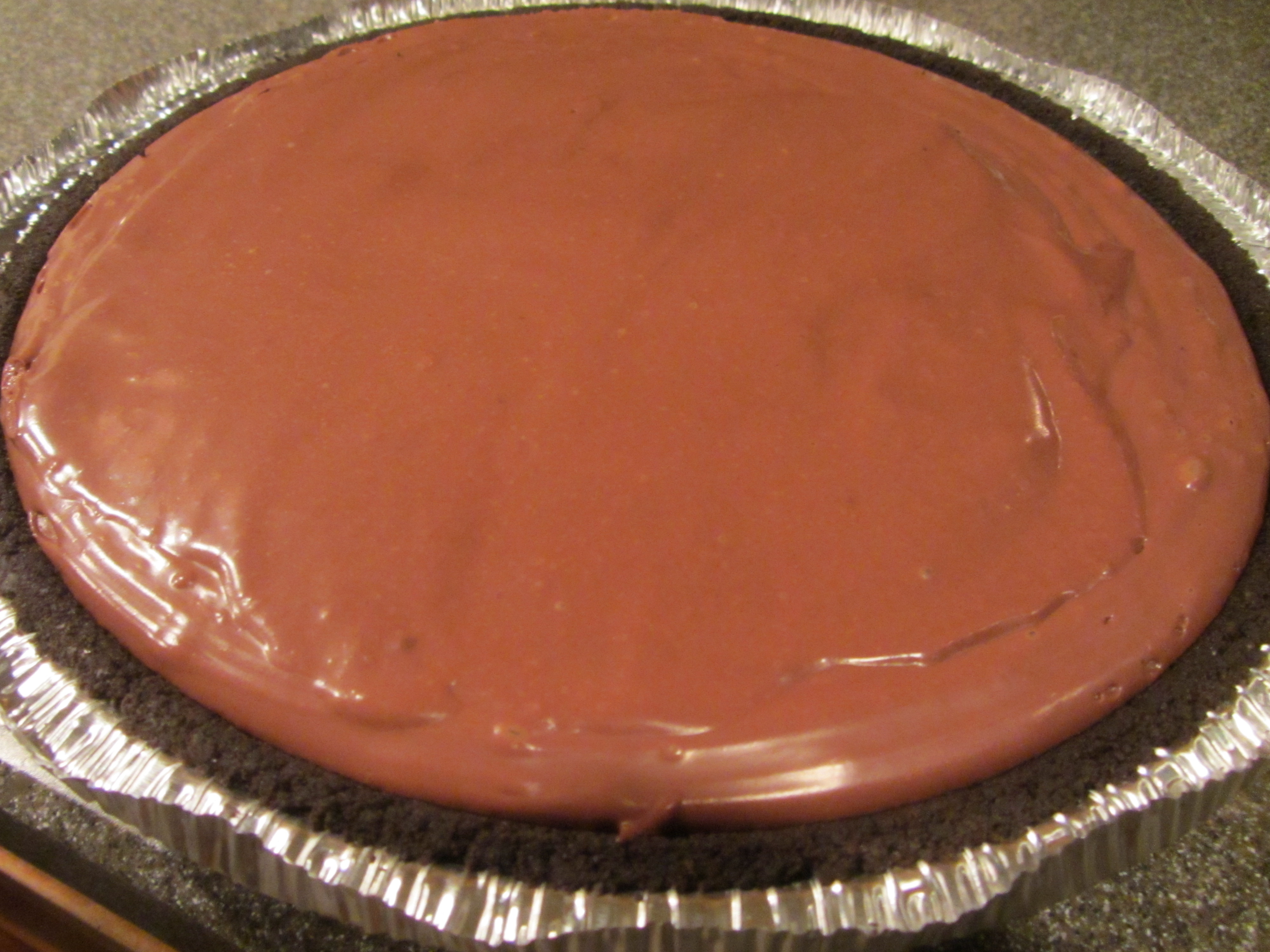
Filling poured into crust.

Filling poured into crust.

Pie after setting in the refrigerator.

Pie after setting in the refrigerator.

Dense tofu chocolate pie.

Dense tofu chocolate pie.

This pie is delicious, and I will absolutely make it again. The pie is super rich, full of chocolate flavor, and has a dense, smooth texture. You would NEVER guess that tofu is in this pie. I would say this is one of the best recipes I have made so far in this project.

Tall & Tangy Tofu Thangy

The final recipe in this episode is for a tofu smoothie. In advance of making this one, freeze a small can (8 1/4 oz) of fruit cocktail in light syrup. I actually could not find a small can of fruit cocktail, so I weighed mine out and froze it in a ziplock bag.

Smoothie ingredients:  frozen fruit cocktail in light syrup, lemonade mix, cranberry juice, and silken tofu.

Smoothie ingredients: frozen fruit cocktail in light syrup, lemonade mix, cranberry juice, and silken tofu.

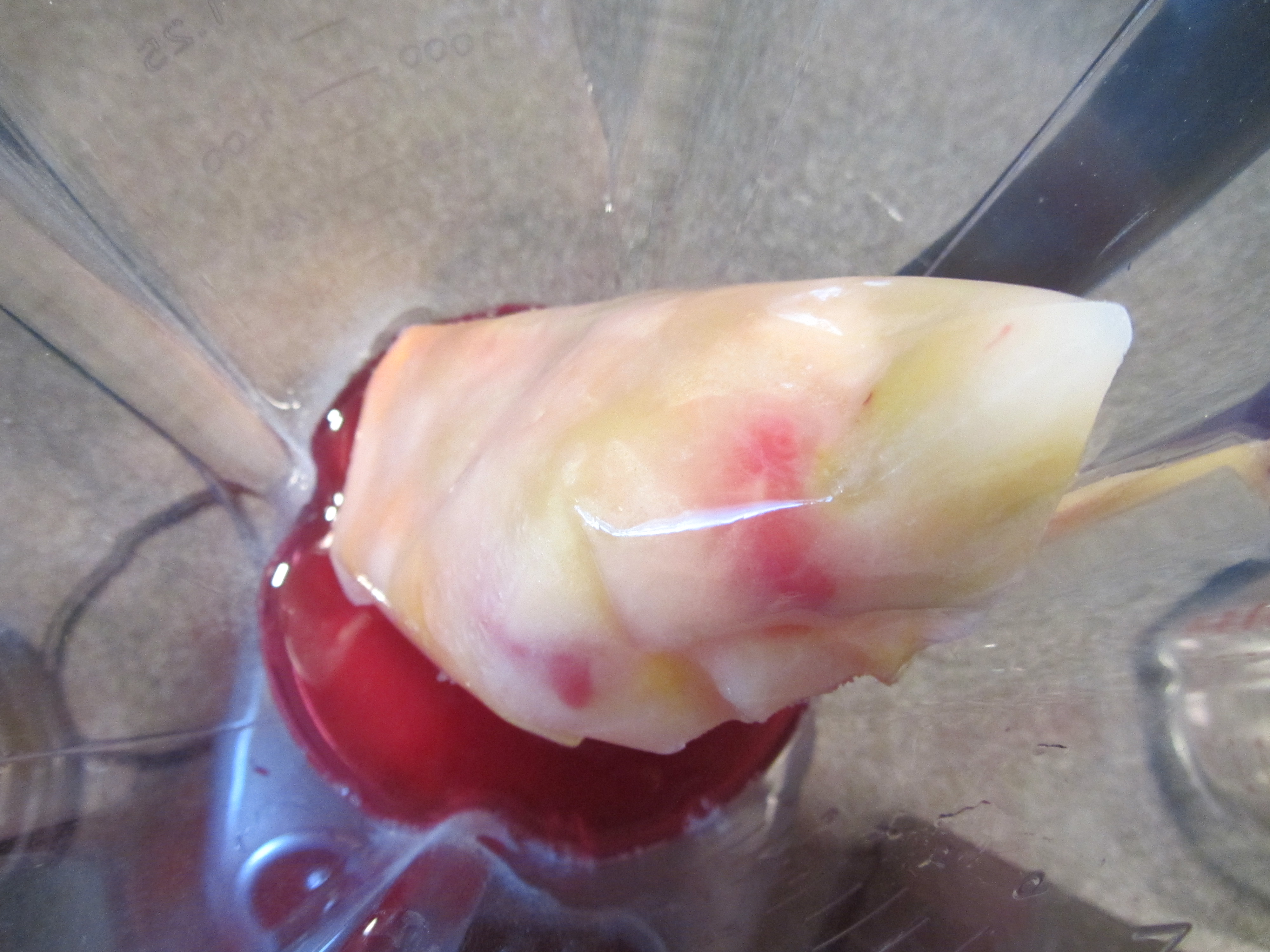
When ready to have your smoothie, dump the frozen fruit cocktail into a blender, along with 1 t powdered lemonade mix, 6 ounces cranberry juice, and 1 block of silken tofu. Blend until smooth and drink.

Frozen fruit cocktail in the blender.

Frozen fruit cocktail in the blender.

Lemonade mix added.

Lemonade mix added.

Six ounces of cranberry juice.

Six ounces of cranberry juice.

Allison's camera 066

Silken tofu added to the blender.

Silken tofu added to the blender.

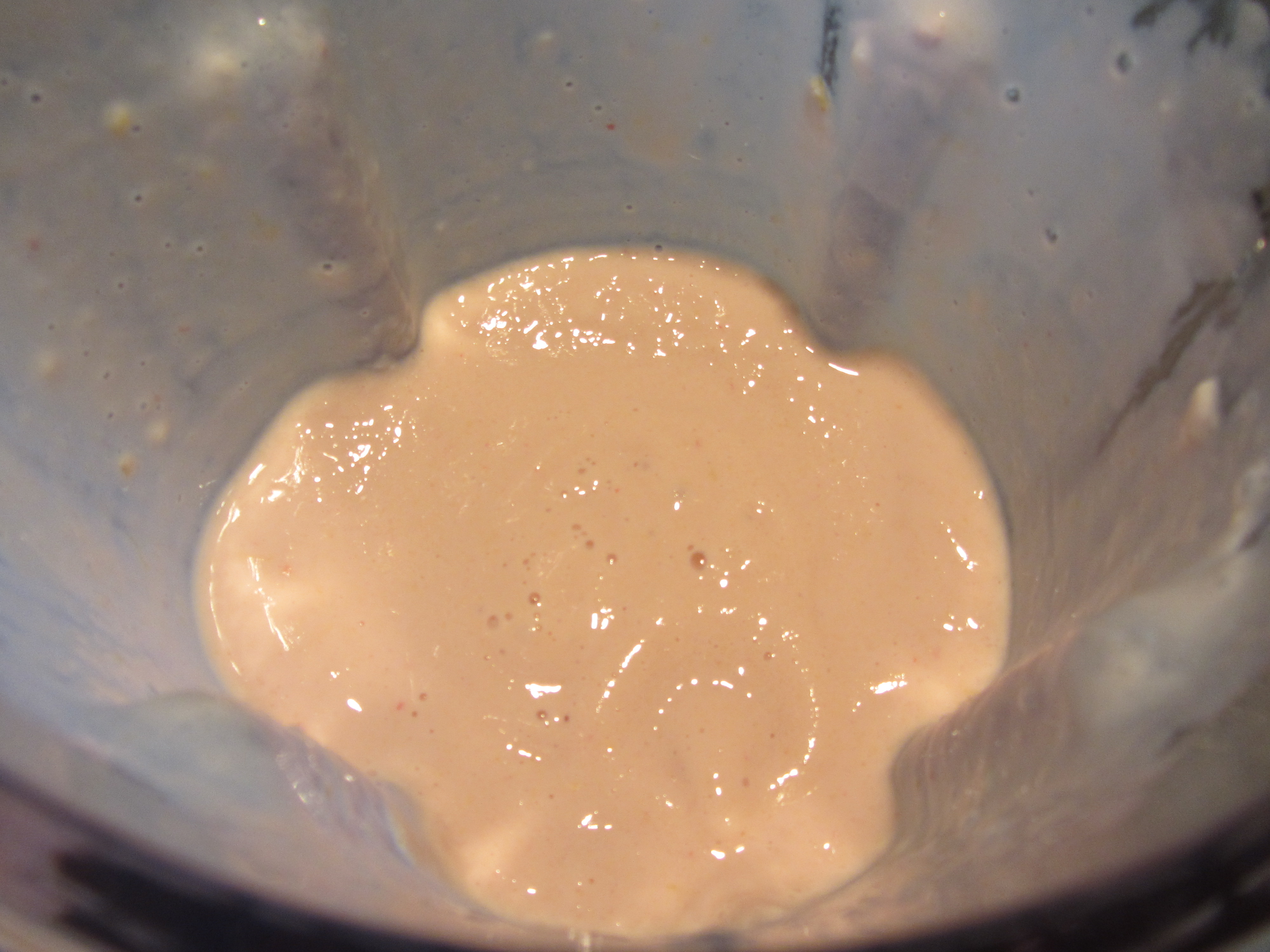
Blended until smooth.

Blended until smooth.

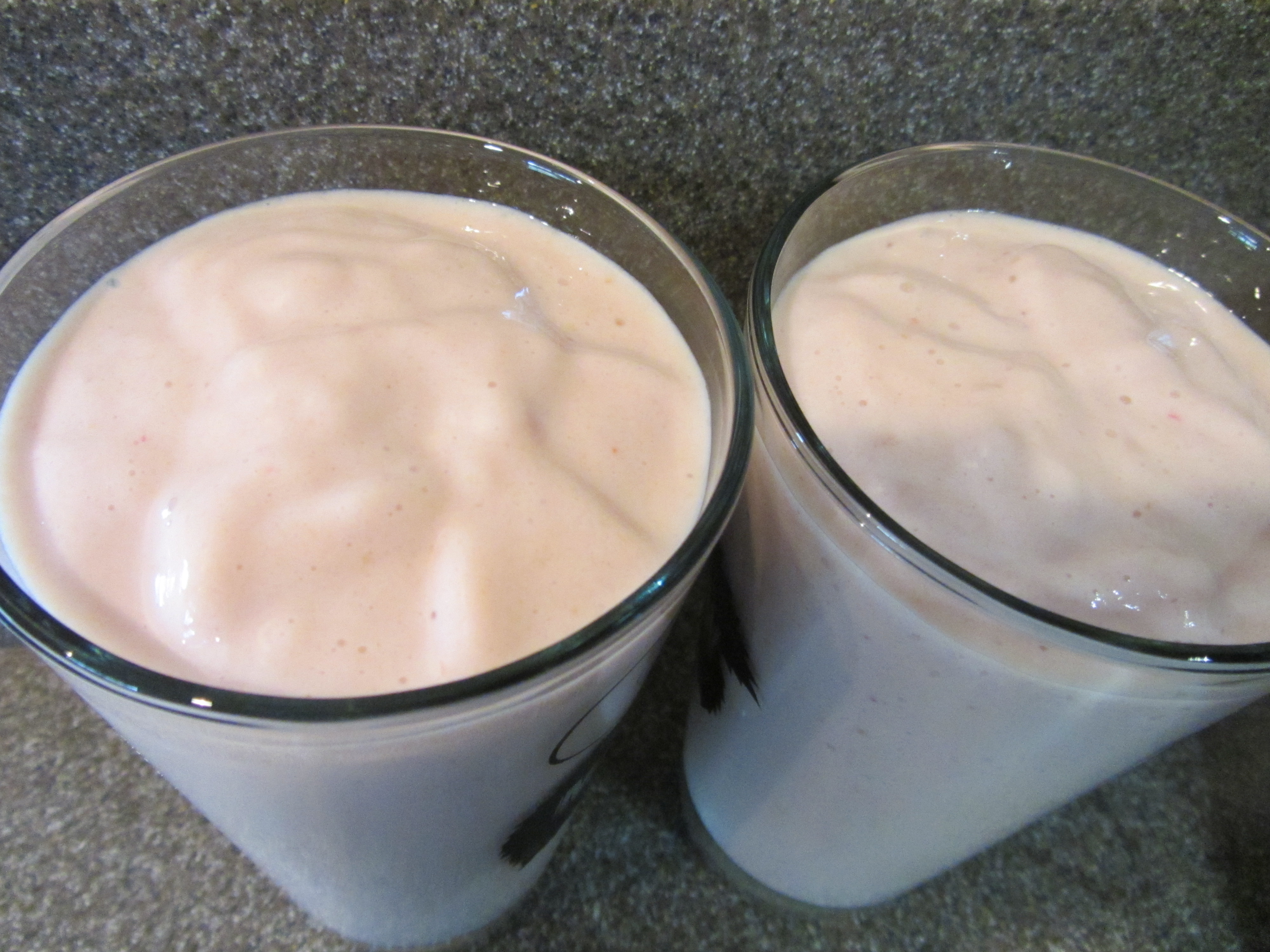
The finished tofu smoothie.

The finished tofu smoothie.

We had this smoothie for breakfast yesterday, and thought it was okay, but not outstanding. It is a pretty thick smoothie that is really more tart than sweet, and we both found that the flavor of the tofu really came through, which some people may not care for.

The Coonhounds got a little taste of the smoothie, and they thought it was pretty good.

The Coonhounds got a little taste of the smoothie, and they thought it was pretty good.

I probably will not make this one again, as I think my own tofu smoothie “recipe” (I don’t measure anything) is better; mine consists of a banana, frozen berries, silken tofu, honey, soy milk, and some yogurt.

I was not as excited for this episode of Good Eats as I have been for some of the others. While I recognize that poaching is a valuable cooking method to have in one’s toolbox, I just didn’t find the recipes in this episode to be super inventive overall. Still, I definitely did learn a lot from making the recipes in this episode, which is really what it is all about.

Poached Eggs

First up in the 38th episode of Good Eats was Alton’s technique for poaching eggs. There is no printable recipe for Alton’s poached eggs, but there is a video clip here. I have made poached eggs many times and some have turned out more successfully than others. I don’t really have a go-to formula, so I was hopeful that this method might become “The One.”

To poach eggs Alton’s way, fill a non-stick skillet with an inch of water, add a teaspoon of Kosher salt and about a teaspoon of vinegar, and bring to a simmer. The vinegar is added because the acid speeds the setting of the whites, which helps to prevent feathering.

All you need for poached eggs:  Kosher salt, eggs, vinegar. Oh, and some water.

All you need for poached eggs: Kosher salt, eggs, vinegar. Oh, and some water.

Water, vinegar, and Kosher salt being brought to a simmer.

Water, vinegar, and Kosher salt being brought to a simmer.

Simmering water, ready for eggs.

Simmering water, ready for eggs.

Crack each egg into a ramekin.

Eggs cracked into individual ramekins.

Eggs cracked into individual ramekins.

Starting at 12 o’clock in the pan, slide one egg gently into the water. Continue around the pan, adding eggs at even intervals. Using the clock method helps you to remove the eggs in the order you put them in, so they will all cook evenly.

Eggs at 12 o'clock and 6 o'clock.

Eggs at 12 o’clock and 6 o’clock.

Once your eggs are all in the water, put the lid on the pan, turn off the heat, and let the eggs poach for seven minutes.

Lid on the pan, heat off, and left to poach for seven minutes.

Lid on the pan, heat off, and left to poach for seven minutes.

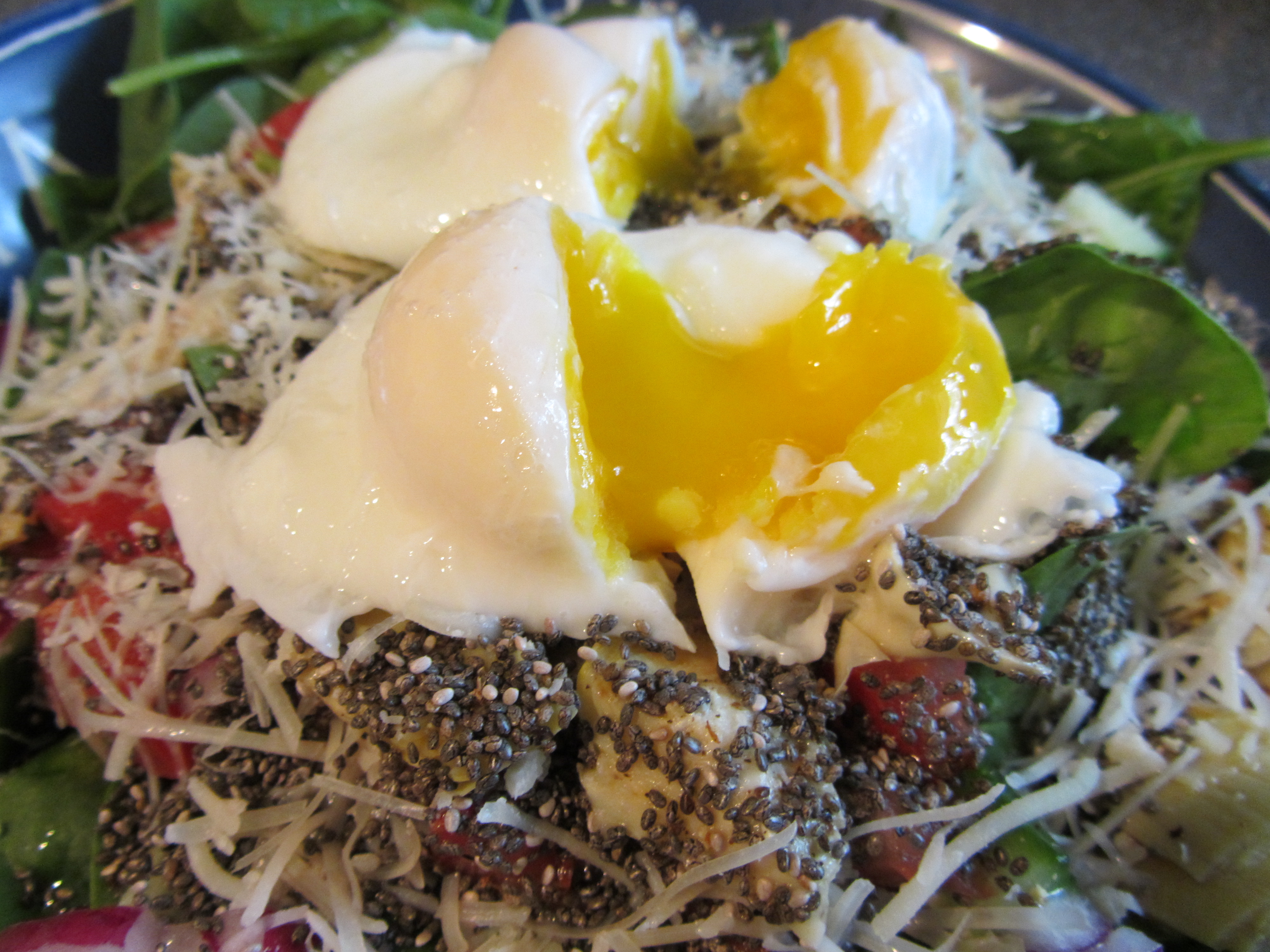
To save poached eggs for later (I didn’t know you could do this), put the eggs in ice water immediately after cooking and refrigerate them for up to eight hours; when ready to eat, reheat in simmering water for one minute. Alton served his eggs over a salad, which is what I planned to do with mine anyway. I love how the eggs become part of the dressing!

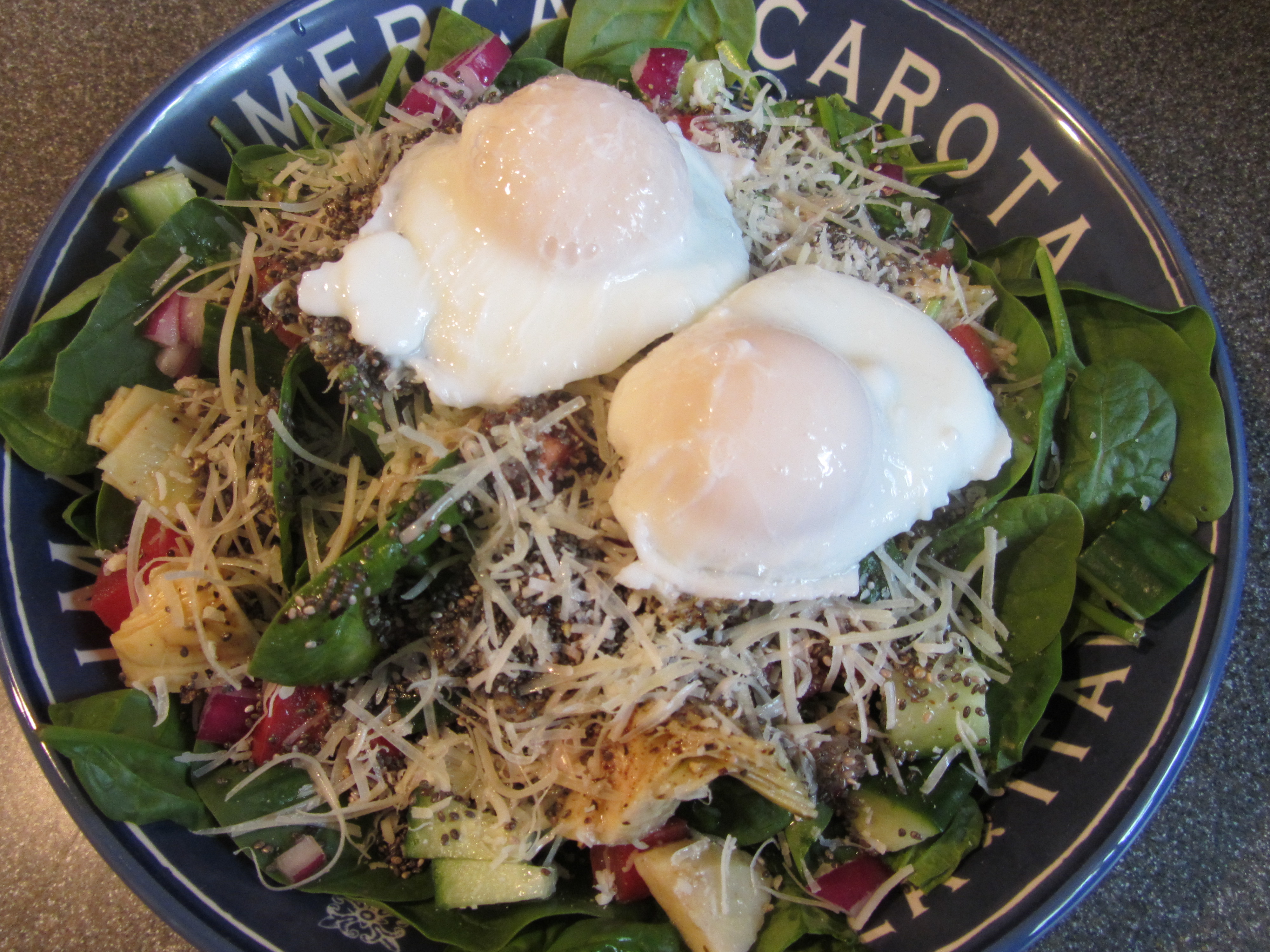
Poached eggs over a lunch salad.

Poached eggs over a lunch salad.

Alton's poached eggs.

Alton’s poached eggs.

My eggs were pretty good, but I think I could have pulled them out just a little bit earlier and they would have been perfect. I will use this method the next time I make poached eggs, but I’ll pull them out a little earlier.

Ge Court Bouillon

Next in this episode was a recipe for court bouillon, which is a flavored poaching liquid composed of an acidic liquid, aromatic vegetables, and herbs. Poaching, FYI, is when you cook food in liquid that is just below a simmer. When poaching, you want to keep the liquid around the final temperature that you want your cooked product to be. Poaching is ideal for high protein foods that tend to dry out when they are cooked, such as fish and chicken, but it is also good for pears and stone fruit. My mom went through a phase of making poached pears years ago; it seemed like she tried a hundred recipes, but in reality it was probably only three or four. Alton recommends poaching fruit in ginger ale, so I have added that to my list of things to try. Poached fruit over ice cream = great summer dessert.

Ingredients for court bouillon:  water, white wine, lemon juice, onion, celery, garlic, black peppercorns, fresh thyme, and bay leaves.

Ingredients for court bouillon: water, white wine, lemon juice, onion, celery, garlic, black peppercorns, fresh thyme, and bay leaves.

To make Alton’s court bouillon, in a saucepan combine 1 1/2 C water, 1/2 C white wine, the juice of a lemon, a chopped onion, half a rib of chopped celery, a finely chopped garlic clove, 1 t black peppercorns, 4-5 sprigs of fresh thyme, and 1 bay leaf.

All of the ingredients in a pan.

All of the ingredients in a pan.

Bring the mixture to a boil, decrease the heat, and simmer for eight minutes before poaching.

Court bouillon, brought to a boil before use.

Court bouillon, brought to a boil before use.

You can re-use the court bouillon, as long as you bring it to a boil before each use, and it also freezes well. If you plan to use it more than once, strain the liquid after the first use. I used my court bouillon as Alton did in the episode, which was for the following recipe.

The Frenchman’s Bass

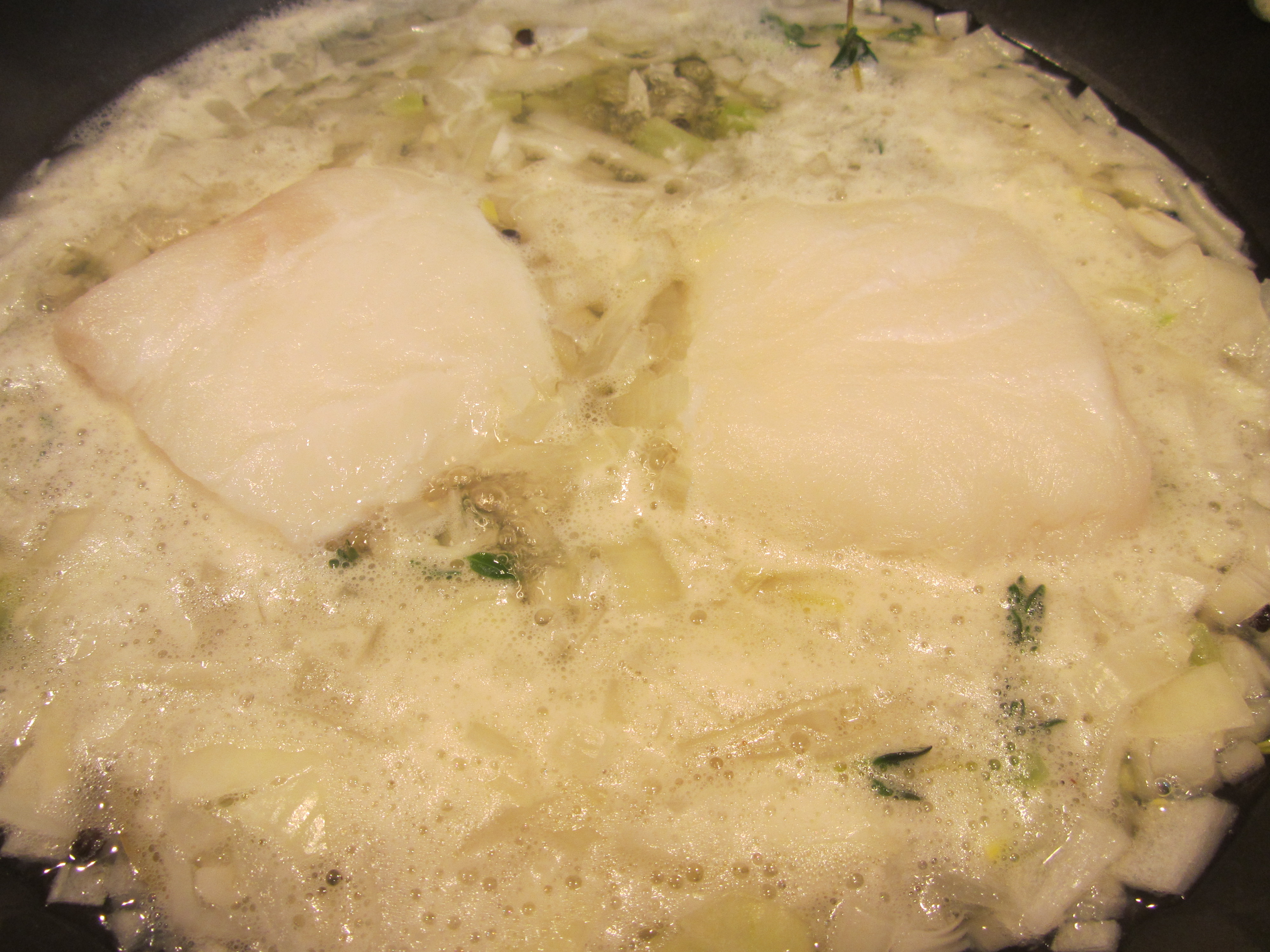
As I said above, I used my court bouillon to prepare the next recipe in this episode, which was for poached sea bass. I brought my court bouillon to a boil, reduced it to a simmer, and slid in two sea bass fillets, partially submerging them.

Beautiful sea bass fillets added to the simmering court bouillon.

Beautiful sea bass fillets added to the simmering court bouillon.

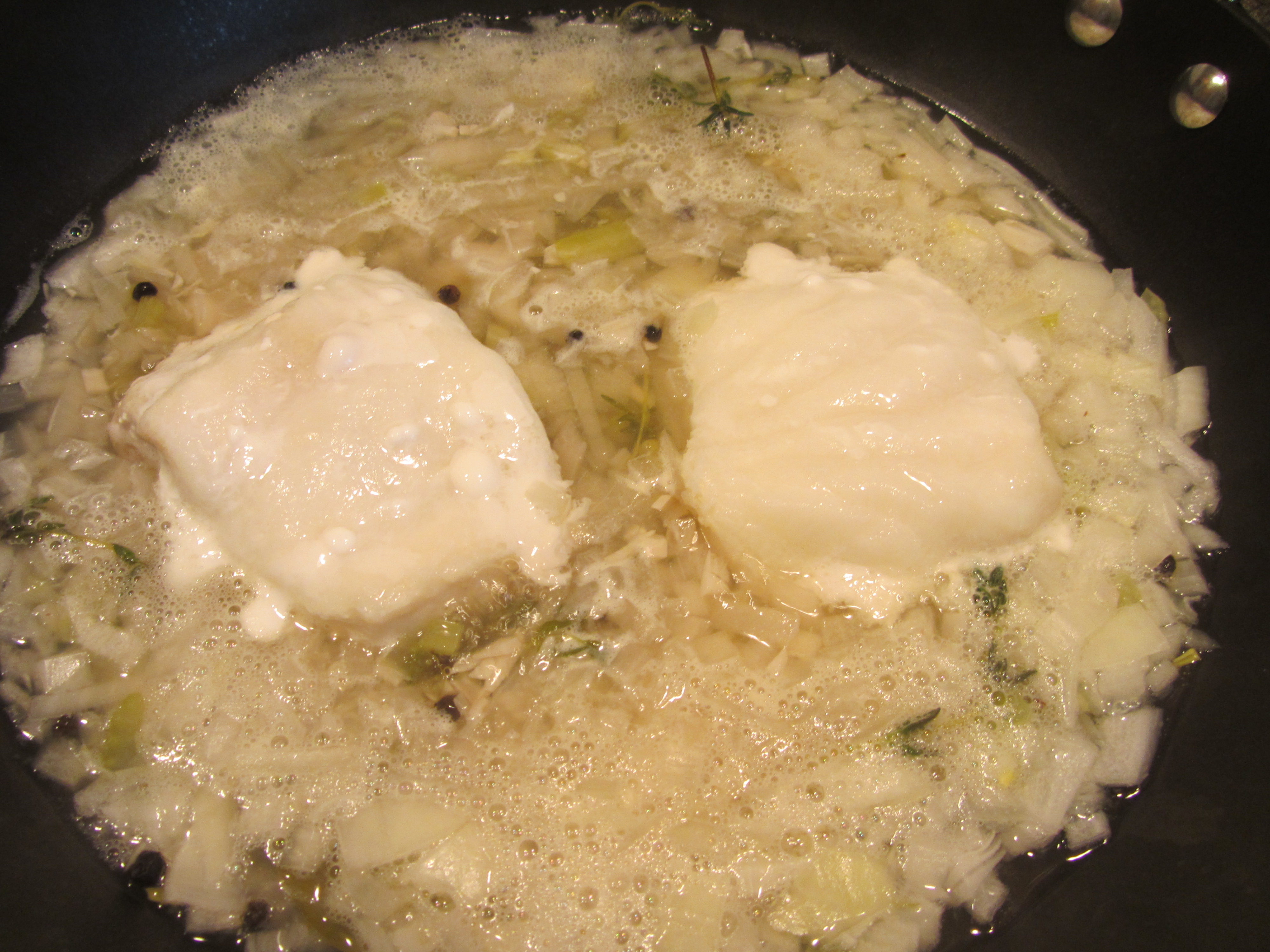
I put the lid on the pan and allowed the fish to poach until it was done. My fish took about 10 minutes to cook, but it was frozen when we got it (I thawed it under cold water prior to cooking).

Lid on the pan, and fish left to poach.

Lid on the pan, and fish left to poach.

Fish after about 7 minutes of poaching. I let it cook a little longer.

Fish after about 7 minutes of poaching. I let it cook a little longer.

My finished poached sea bass.

My finished poached sea bass.

We ate the fish for lunch, served simply with lemon wedges on top. It was horrible – so horrible that it was really inedible. There was a strong bitterness to the fish that was quite perplexing. Such a waste and such a bummer. I couldn’t stop wondering why my fish had turned out with such poor flavor. After thinking about it for a while, I decided to take a quick sip of the chardonnay I used in my court bouillon. Bingo. The chardonnay was horrible, with an intense bitter finish. I feel quite stupid for failing to taste the wine prior to using it in my recipe, but seeing as I was making my court bouillon in the morning, I didn’t feel up to some chardonnay. The saddest part is that I did smell the wine in the bottle before I poured it, and I had a slight inclination that it might be “off,” but I failed to listen to my gut. Lessons learned:  ALWAYS take a swig (or two), and I need to trust my wine “Spidey sense” a bit more. Needless to say, I really can’t fairly evaluate this recipe, as the recipe was not the cause of my ruined fish. Yes, I am quite embarrassed by this one.

Catfish au Lait

Moving on to better things, the final recipe in this episode was for catfish poached in evaporated milk.

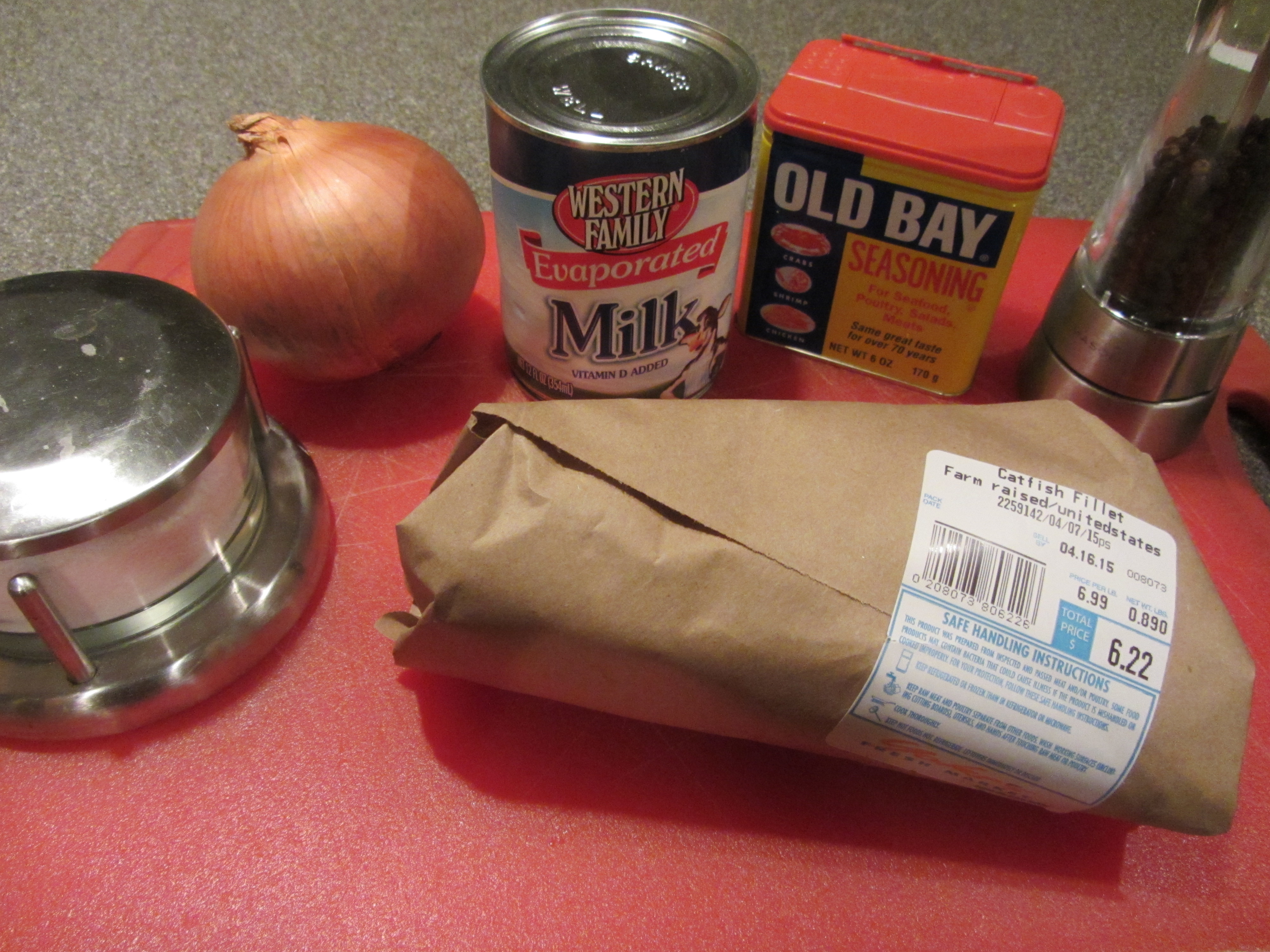
Ingredients for catfish au lait:  evaporated milk, Old Bay Seasoning, black pepper, Kosher salt, onion, and catfish fillets.

Ingredients for catfish au lait: evaporated milk, Old Bay Seasoning, black pepper, Kosher salt, onion, and catfish fillets.

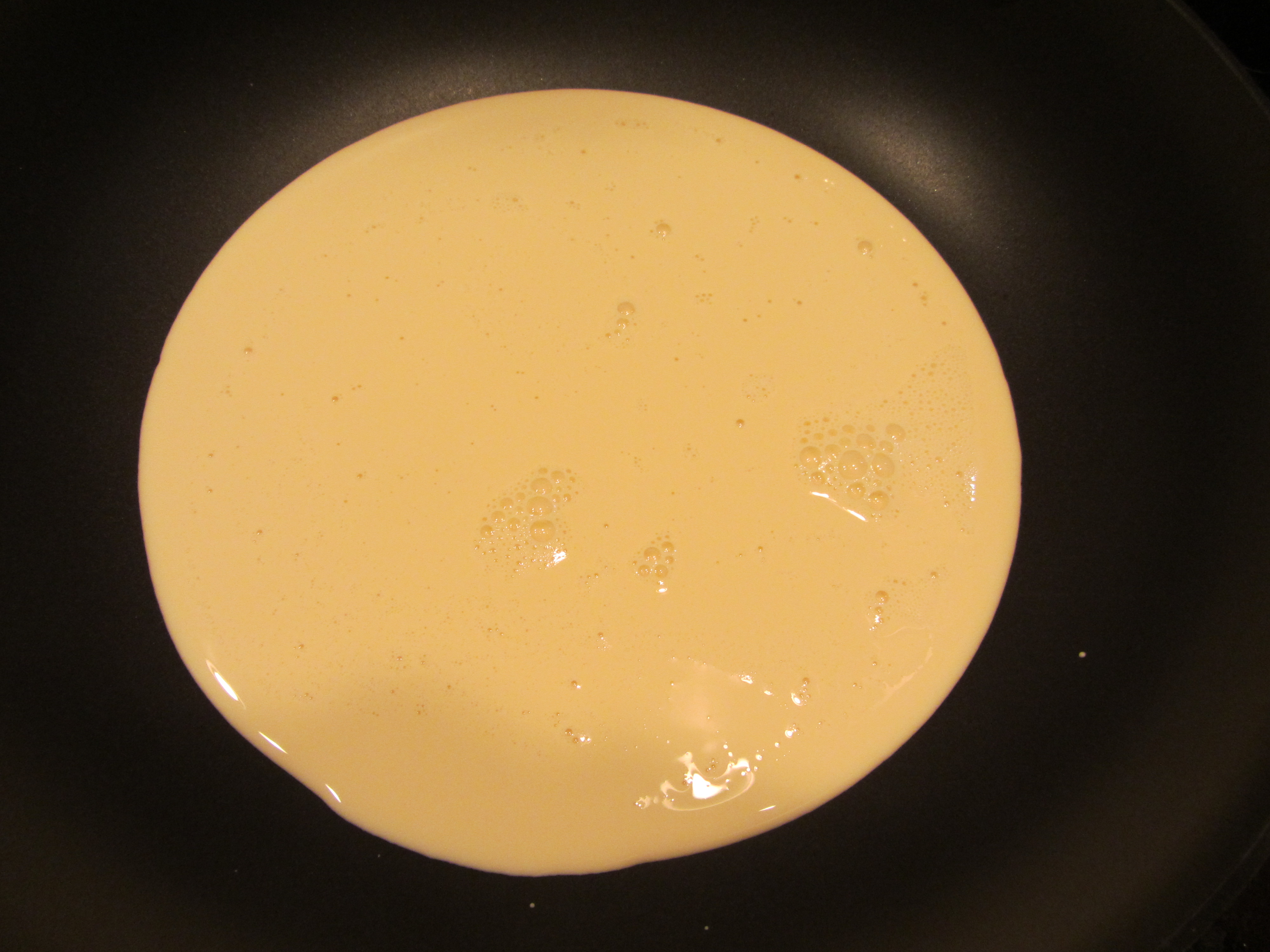
For this recipe, in a skillet, combine 12 oz evaporated milk, 1 t Old Bay Seasoning, 1 t ground black pepper, 1 1/2 t Kosher salt, and half an onion, thinly sliced.

Evaporated milk in a skillet.

Evaporated milk in a skillet.

Old Bay Seasoning, black pepper, and Kosher salt added to milk.

Old Bay Seasoning, black pepper, and Kosher salt added to milk.

Onions added to pan.

Onions added to pan.

Alton used an electric skillet for this, but I do not have an electric skillet. Bring this mixture to a boil.

Mixture after being brought to a boil.

Mixture after being brought to a boil.

Once boiling, gently slide your catfish fillets (I used three) into the liquid, almost fully submerging them.

Catfish fillets added to milk mixture.

Catfish fillets added to milk mixture.

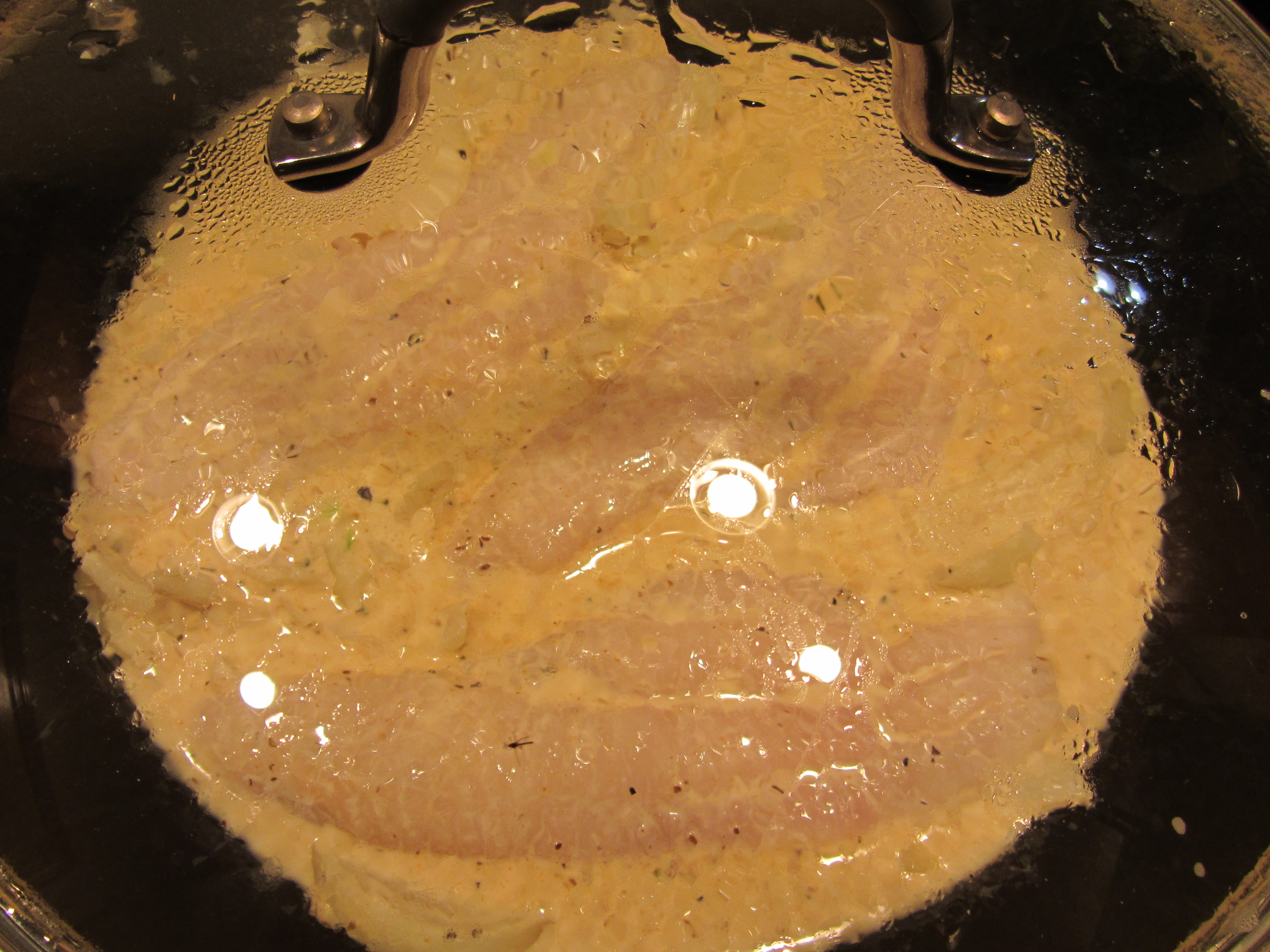
Spoon some of the liquid over the top of the fillets, decrease the heat to low, and cover.

Lid on the pan, heat turned to low, and left to poach.

Lid on the pan, heat turned to low, and left to poach.

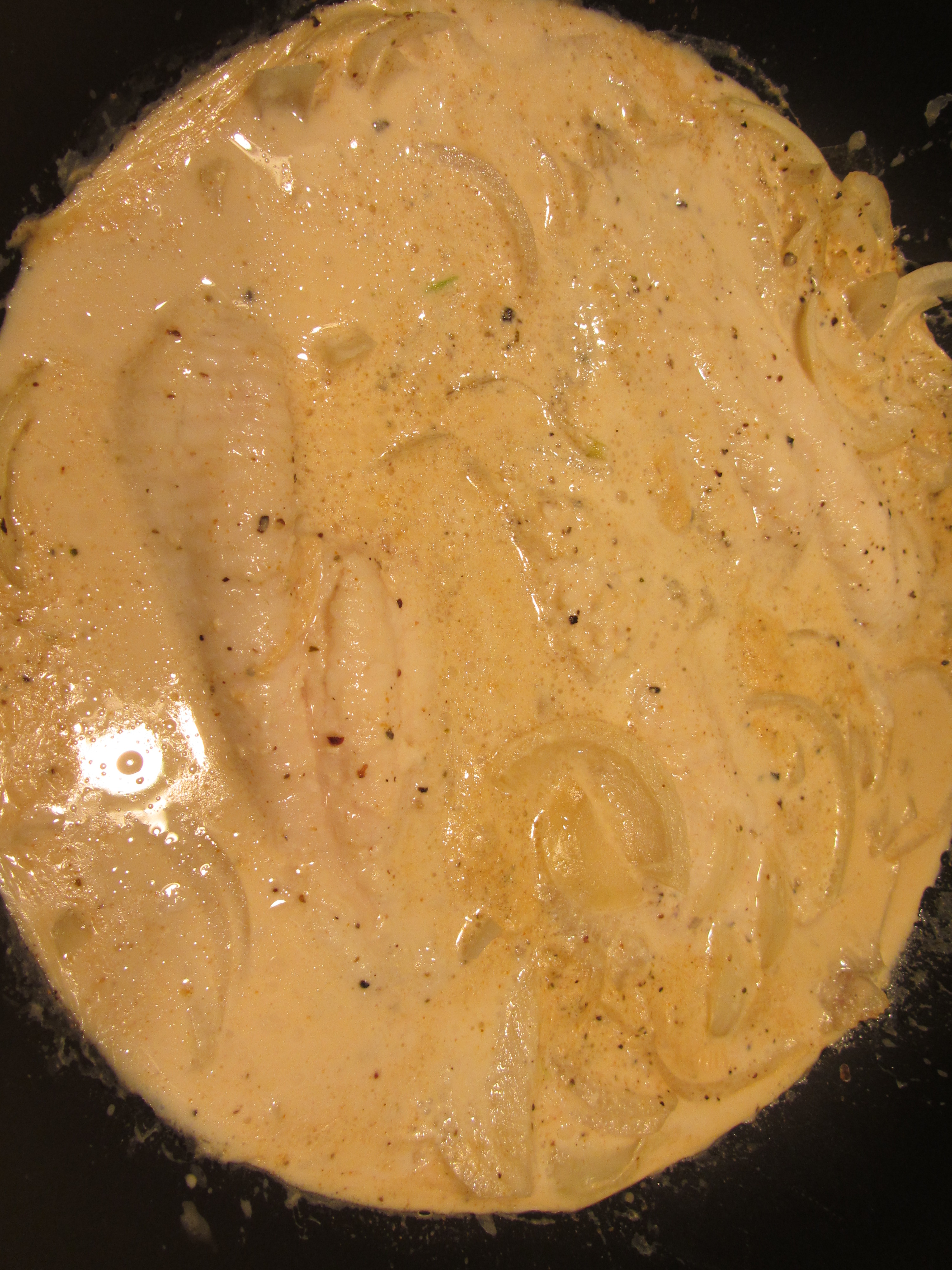
Let the fish poach to desired doneness, which took about eight minutes for my fish.

Catfish after poaching for ~eight minutes.

Catfish after poaching for ~eight minutes.

We ate this fish for dinner, eating it just as it was, with some of the onions on top.

Catfish served with poached onions on top.

Catfish served with poached onions on top.

I thought this was really good. The fish was very moist, with a slight sweetness from the milk and a hint of Old Bay. The onions, too, were really delicious, and were great to eat with the fish. I will probably make this again. It was a fast, easy, inexpensive way to prepare fish. Ted liked this too, but said he would opt for a different fish preparation, such as fish tacos, if given a choice.

The Once and Future Beans

It only seems fitting that I was scheduled to make Alton’s baked beans now, seeing that I am heading to “Beantown” shortly to (hopefully) run the Boston Marathon. I have recently been plagued with another running-related injury, so I am still unsure as to how my marathon will go. Regardless, we have had our share of protein-loading this past week, in the form of beans.

I’ve only eaten a few baked bean recipes that have really wowed me, while the rest have been overly sweetened, slightly mushy piles of “meh.” As I set out to make them, I assumed Alton’s Good Eats baked beans would fall into the “wow” category, especially after reading the ingredient list.

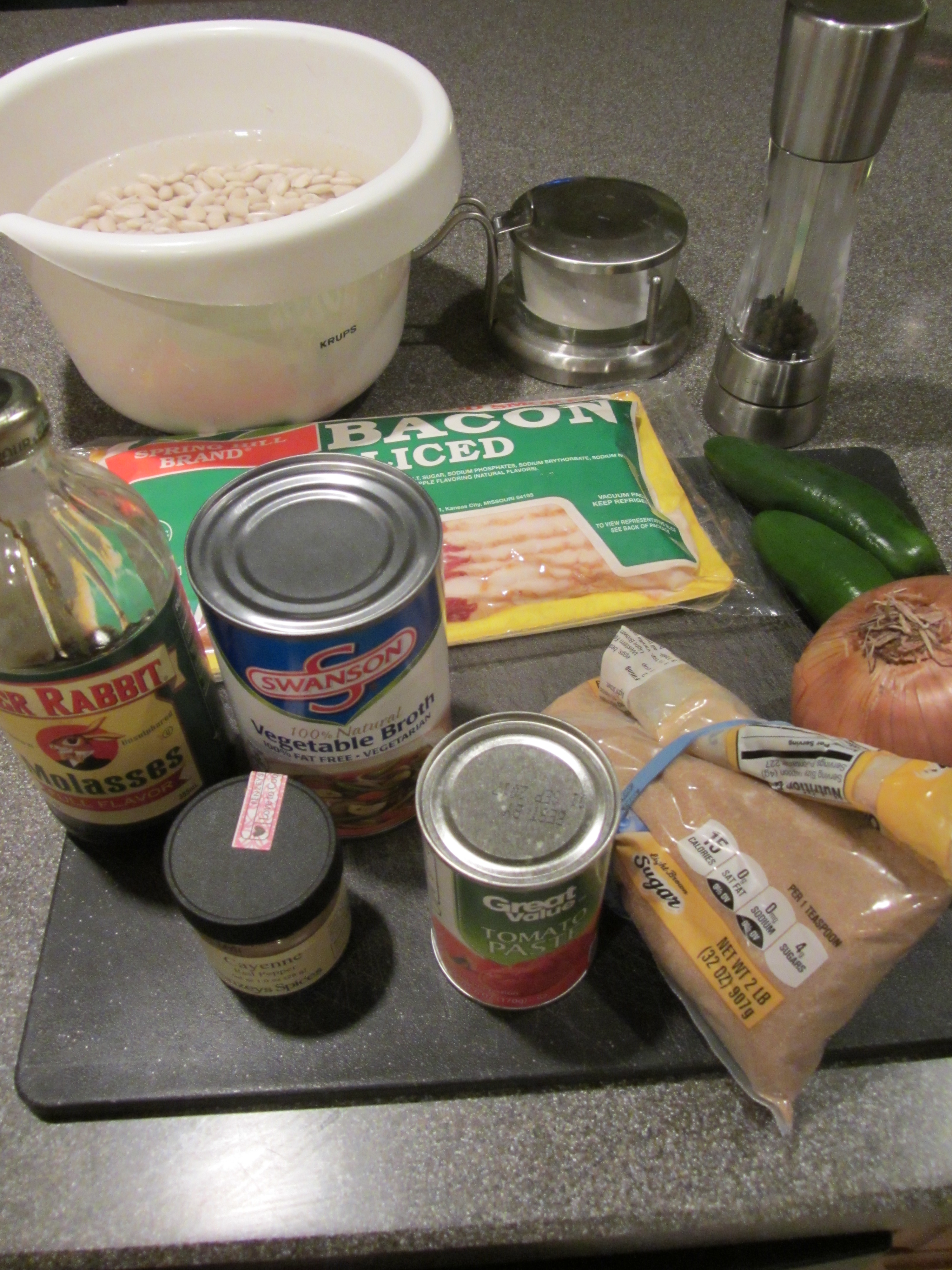
Ingredients for Alton's baked beans:  Great Northern beans, bacon, onion, Jalapenos, tomato paste, brown sugar, molasses, vegetable broth, cayenne pepper, black pepper, and Kosher salt.

Ingredients for Alton’s baked beans: Great Northern beans, bacon, onion, jalapeno, tomato paste, brown sugar, molasses, vegetable broth, cayenne pepper, black pepper, and Kosher salt.

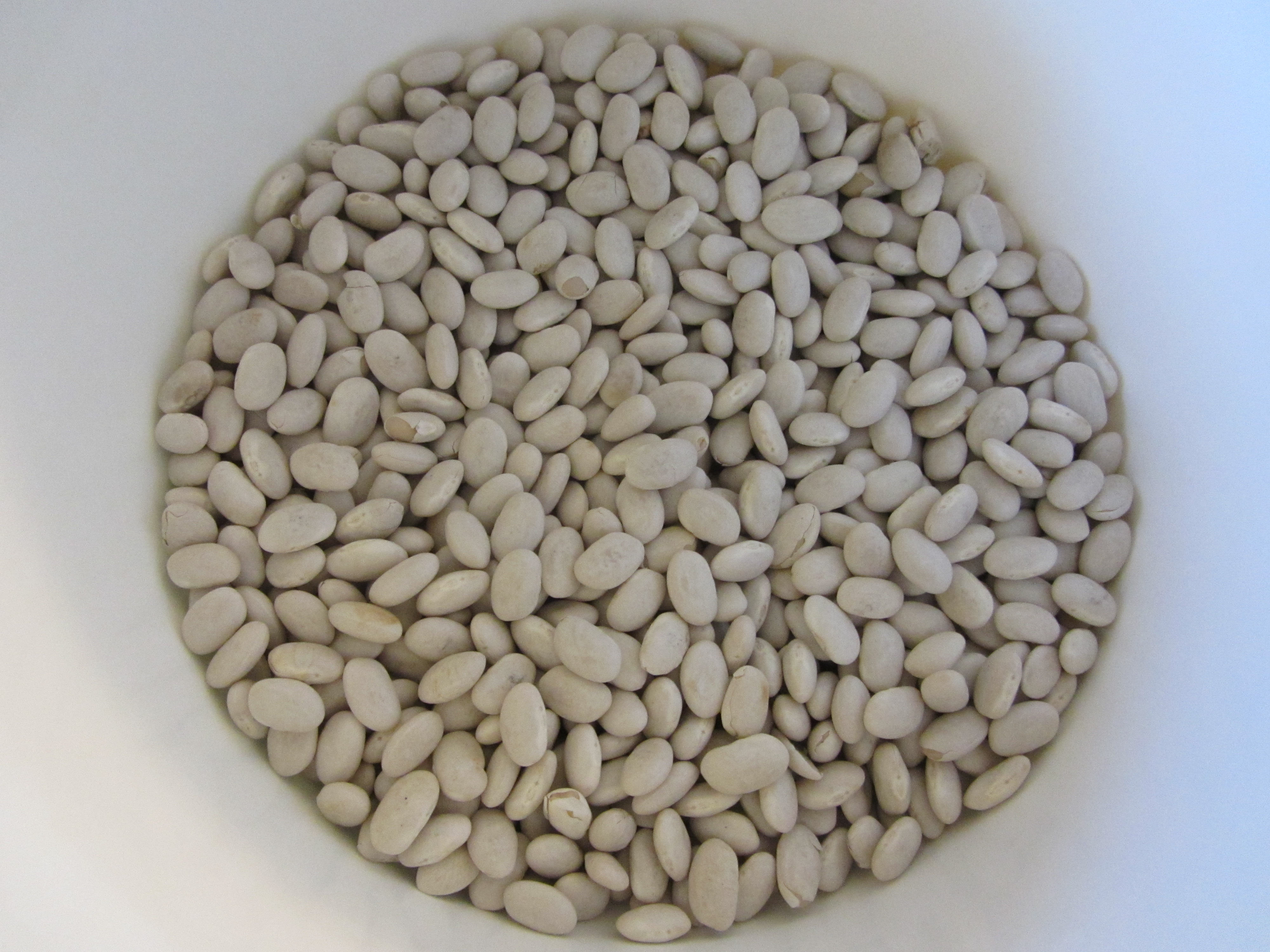
To make Alton’s beans, soak a pound of dried Great Northern beans in water for 6-8 hours, or until the beans split easily. You will want to sort and rinse your beans prior to soaking.

1 lb of dried Great Northern beans.

1 lb of dried Great Northern beans.

Beans, ready to soak.

Beans, ready to soak.

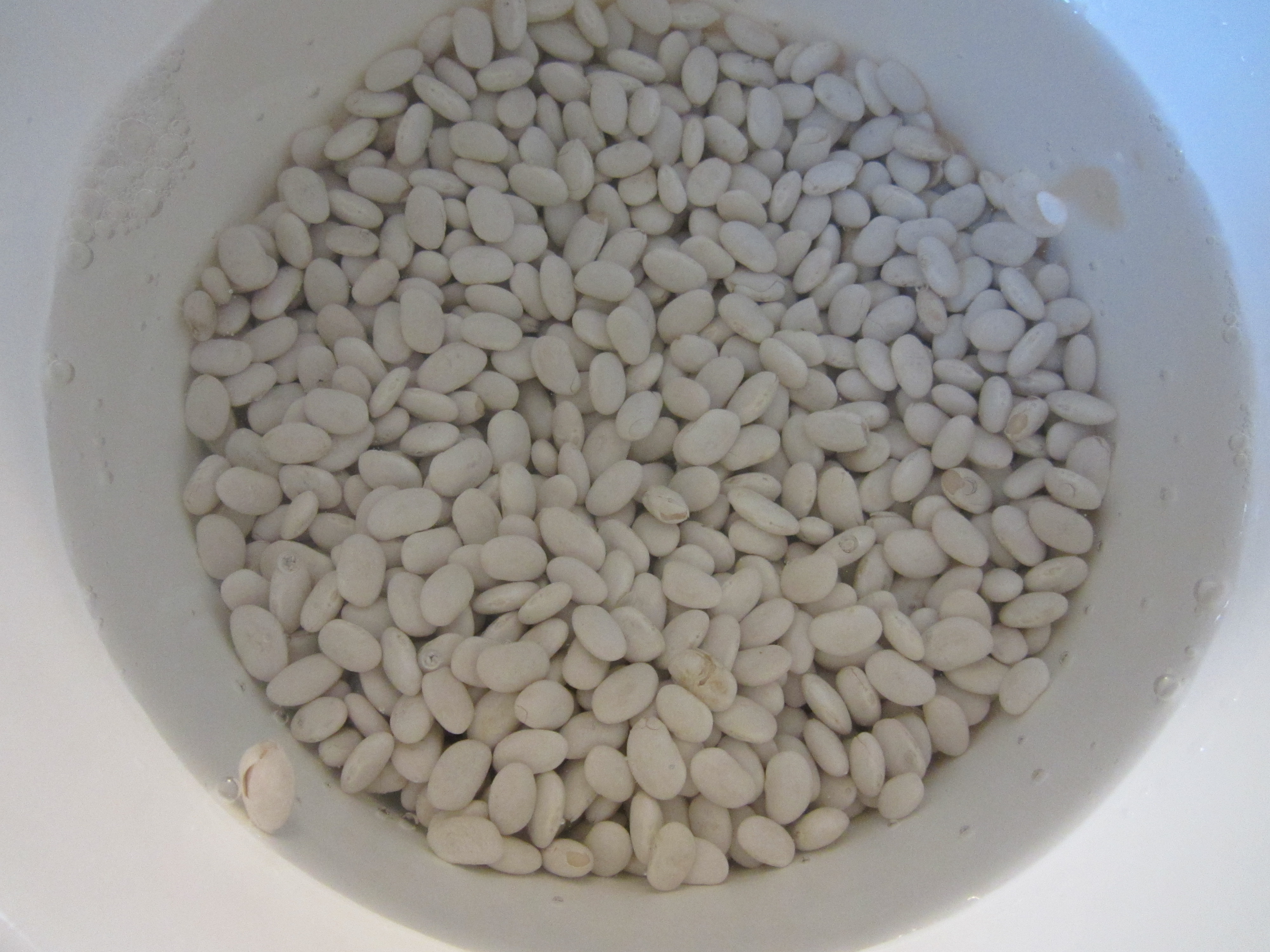
Beans, beginning their soak.

Beans, beginning their soak.

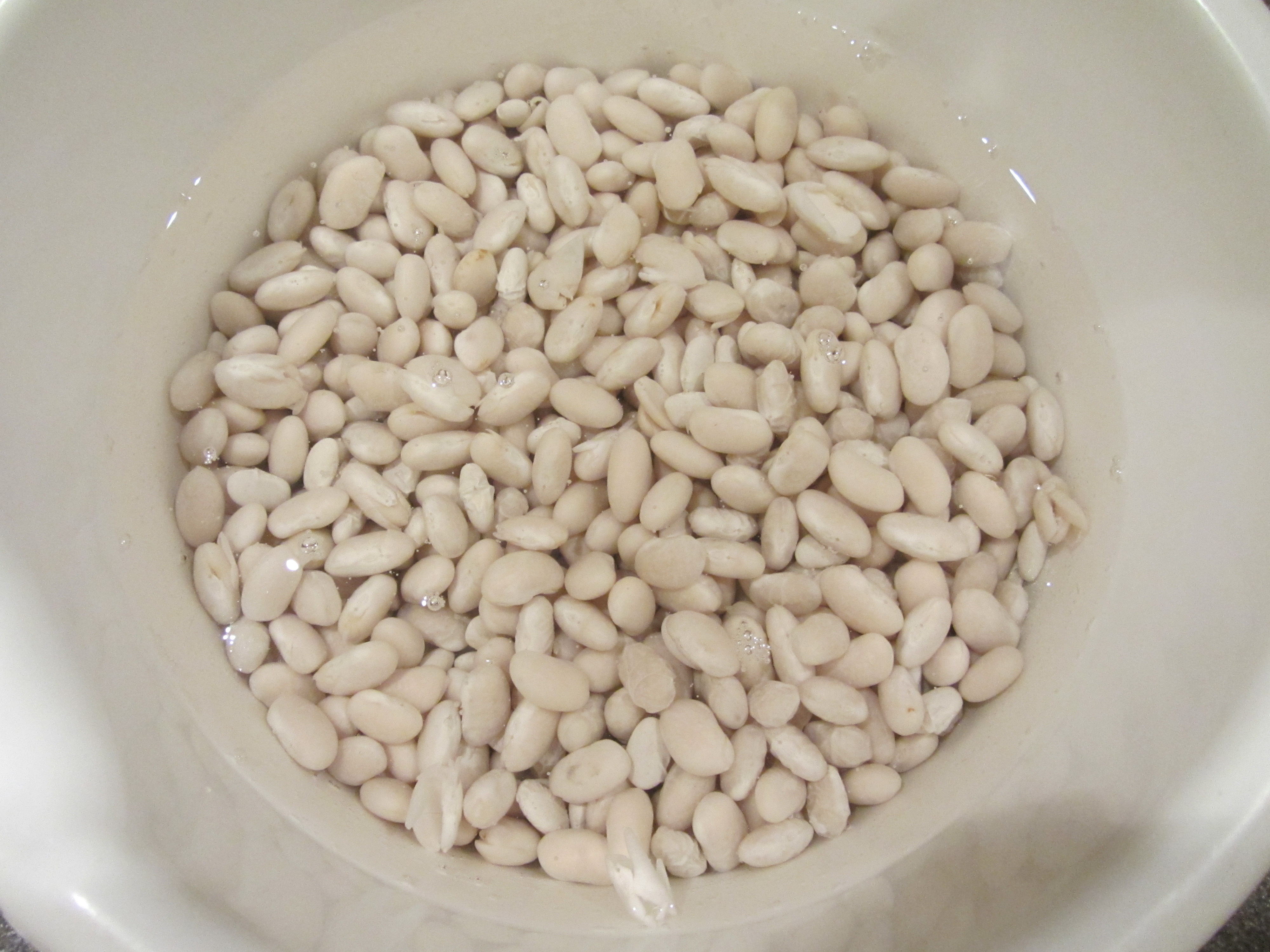
Beans after soaking.

Beans after soaking.

When ready to cook, into a heavy Dutch oven, over medium heat, add a pound of chopped bacon, a chopped onion, and two chopped jalapenos; stir until enough fat has rendered to soften the onion.

Chopped jalapenos and onion in the Dutch oven.

Chopped jalapenos and onion in the Dutch oven.

Bacon, jalapenos, and onion in the Dutch oven.

Bacon, jalapenos, and onion in the Dutch oven.

Onion softened.

Onion softened.

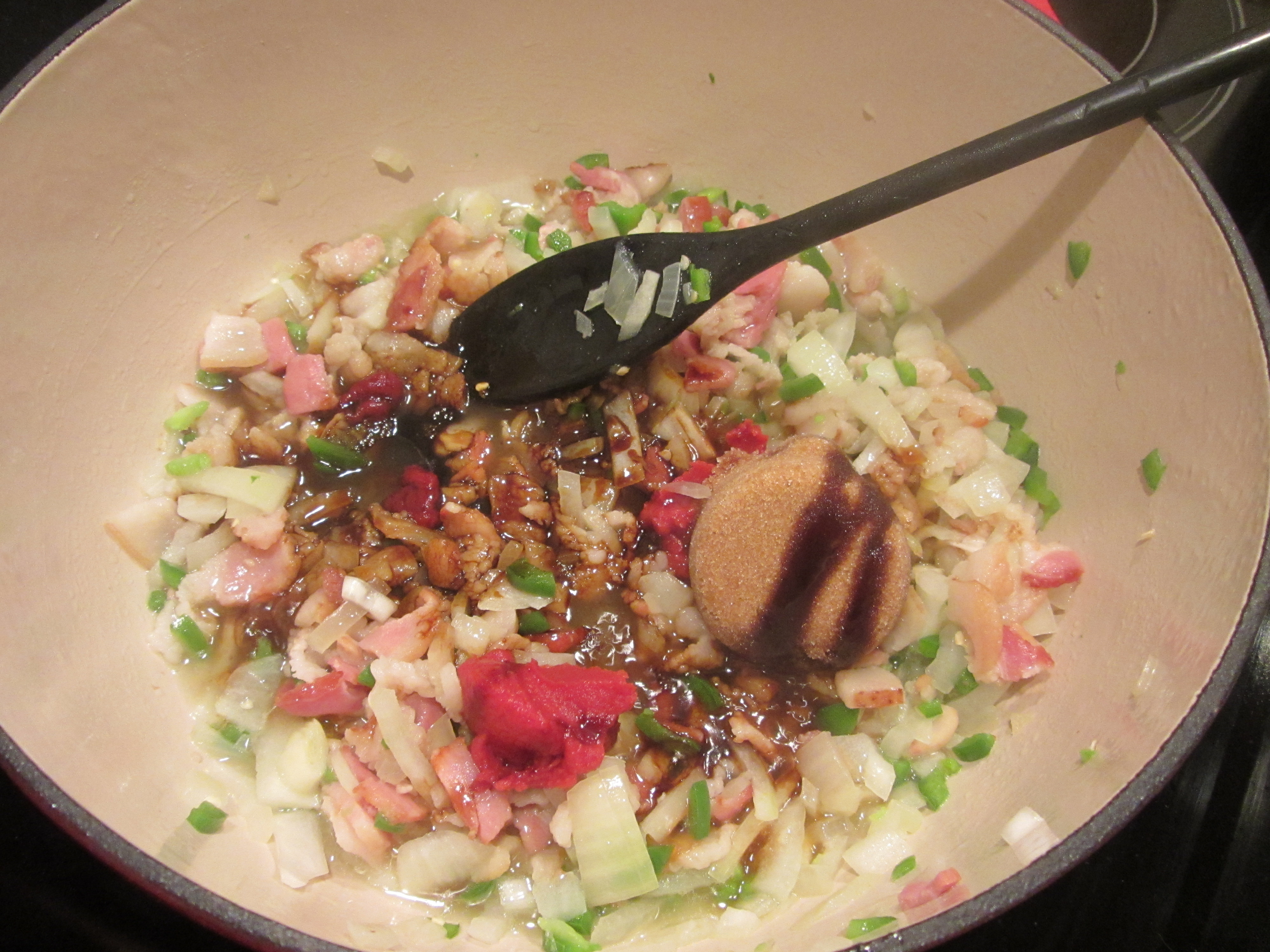
Add 1/4 C T tomato paste, 1/4 C brown sugar, and 1/4 C molasses. The acid in the tomato paste, along with the calcium in the molasses, helps the beans to maintain their structure, rather than breaking down during cooking.

Tomato paste, brown sugar, and molasses added.

Tomato paste, brown sugar, and molasses added.

Meanwhile, drain the beans, reserving their soaking liquid. If your liquid is less than 4 C, top it off with vegetable broth to make 4 C; my soaking liquid was exactly 4 C.

Reserved bean soaking liquid.

Reserved bean soaking liquid.

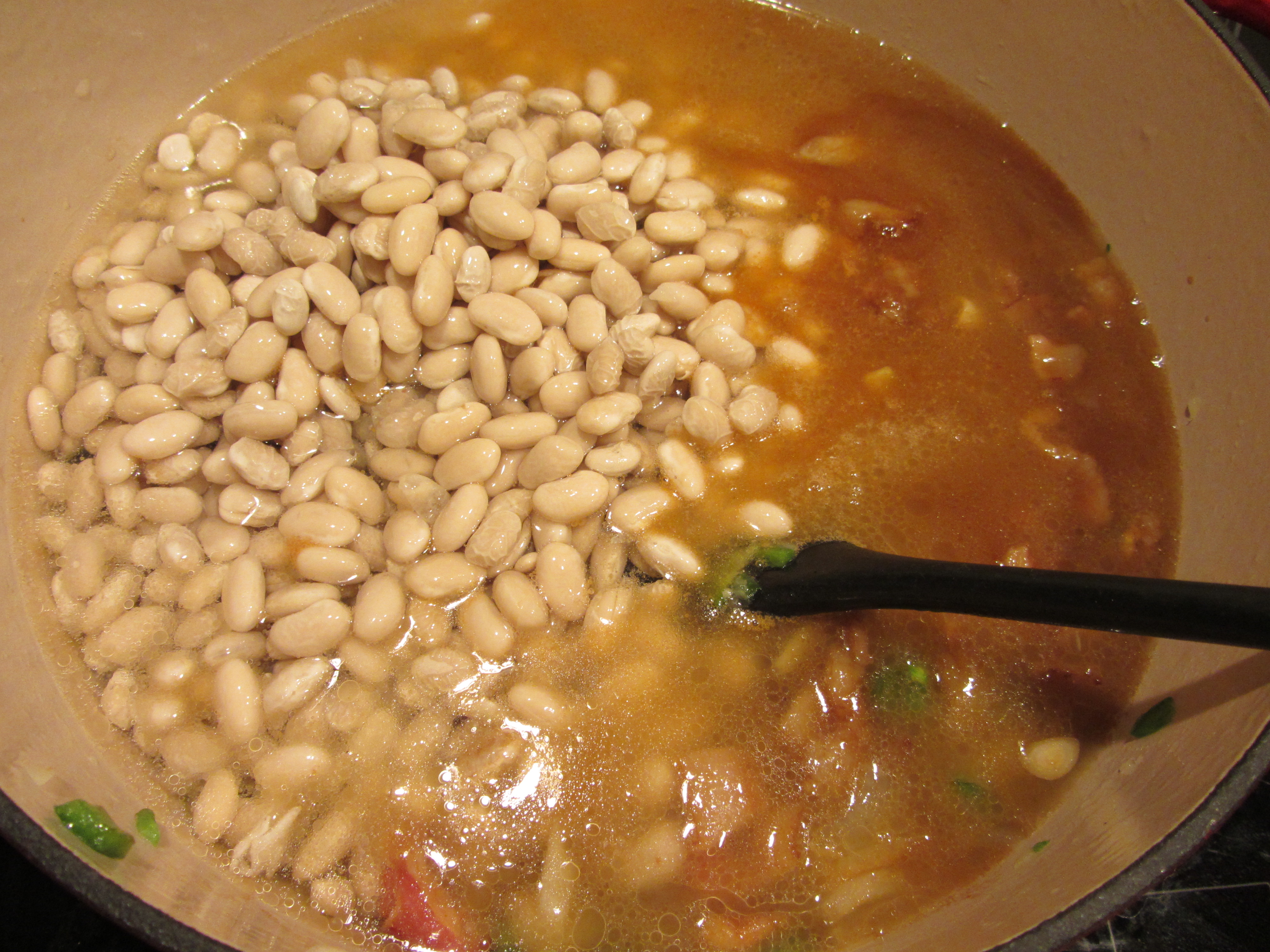
Once drained, add the beans to the Dutch oven, along with their liquid.

Beans added to Dutch oven.

Beans added to Dutch oven.

Soaking liquid added to beans.

Soaking liquid added to beans.

Finally, add 1/4 t cayenne pepper, 1 t black pepper, and 2 t Kosher salt.

Spices added.

Spices added.

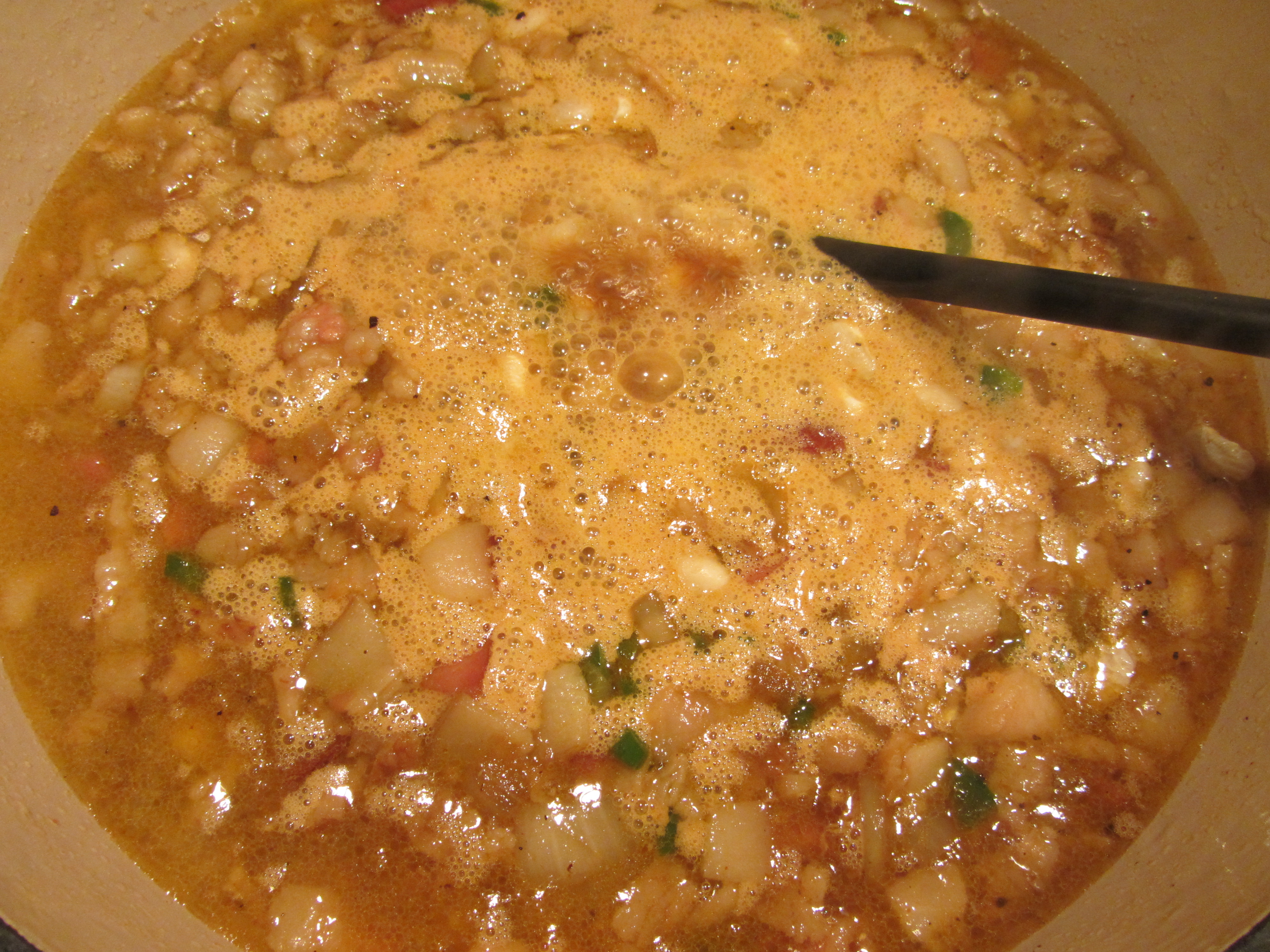
Bring the beans to a boil over high heat, stir, put the lid on, and throw the beans in a 250-degree oven for 6-8 hours, or until tender.

Beans brought to a boil before going in the oven.

Beans brought to a boil before going in the oven.

I began soaking my beans early in the morning, so I could put them in the oven right before I went to bed. Let me tell you… the house smelled so amazing when we woke up. Ted said he woke up at 3 am and almost went down to sample the beans in the middle of the night. Alton’s beans definitely did not disappoint. I am tempted to say that they may be my favorite baked beans of all time. They are also probably the richest, but a pound of bacon’ll do that!

Alton's baked beans.

Alton’s baked beans.

4-7-15 024 The beans were al dente, not overly saucy or sweet, and had a good kick of heat to balance them out. They really were fantastic, and I will definitely be making them again.

Black Bean Salad

The second bean recipe Alton makes in this episode is for black bean salad.

Ingredients for black bean salad:  dried black beans, carrot, celery, thyme, parsley, bay leaf, onion, olive oil, lime juice, red onion, cilantro, cumin, chili powder, Kosher salt, and black pepper.

Ingredients for black bean salad: dried black beans, carrot, celery, thyme, parsley, bay leaf, onion, olive oil, lime juice, red onion, cilantro, cumin, chili powder, Kosher salt, and black pepper.

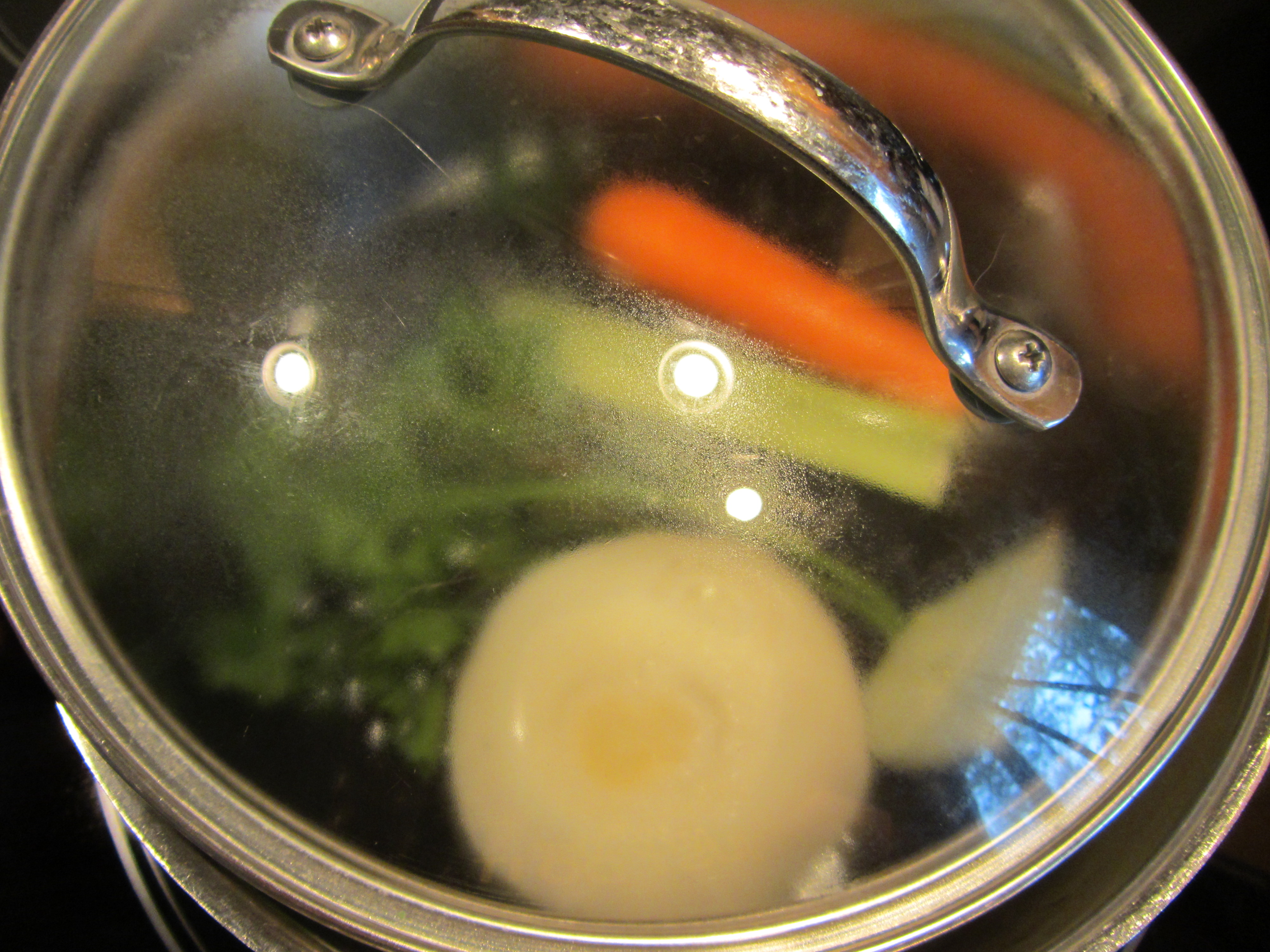
To make his salad, in a saucepan place 2 C of black beans, a whole half (that’s a bit ironic, isn’t it?) of an onion, and a tied satchel of 1/2 a carrot, 1/2 a celery stalk, some fresh thyme, some parsley, and a bay leaf. I like to think that we are fairly organized since moving, but I could not find my butcher’s twine anywhere, so I had to ditch the satchel idea and play “Go Fish.”

Beans in a pot with carrot, celery, onion, thyme, parsley, and a bay leaf.

Beans in a pot with carrot, celery, onion, thyme, parsley, and a bay leaf.

Barely cover the beans with water, bring them to a simmer, and partially cover.

Water just to cover the beans.

Water just to cover the beans.

Partially covered and left to simmer.

Partially covered and left to simmer.

After 30 minutes, add 2 t of Kosher salt.

Kosher salt added to beans after 30 minutes.

Kosher salt added to beans after 30 minutes.

Continue to cook the beans for an additional 30 – 90 minutes, or until al dente. My beans took a full two hours to be done. I had to add additional water a few times to keep my beans covered.

Beans after cooking for 2 hours.

Beans after cooking for 2 hours.

When the beans are cooked, drain them and remove the onion, carrot, celery, and herbs.

Drained beans in a bowl.

Drained beans in a bowl.

Toss the hot beans with 1/3 C olive oil and 1/3 C lime juice.

Cilantro, lime juice, olive oil, red onion, chili powder, and cumin ready to be added to beans.

Cilantro, lime juice, olive oil, red onion, chili powder, and cumin ready to be added to beans.

Beans tossed with lime juice and olive oil.

Beans tossed with lime juice and olive oil.

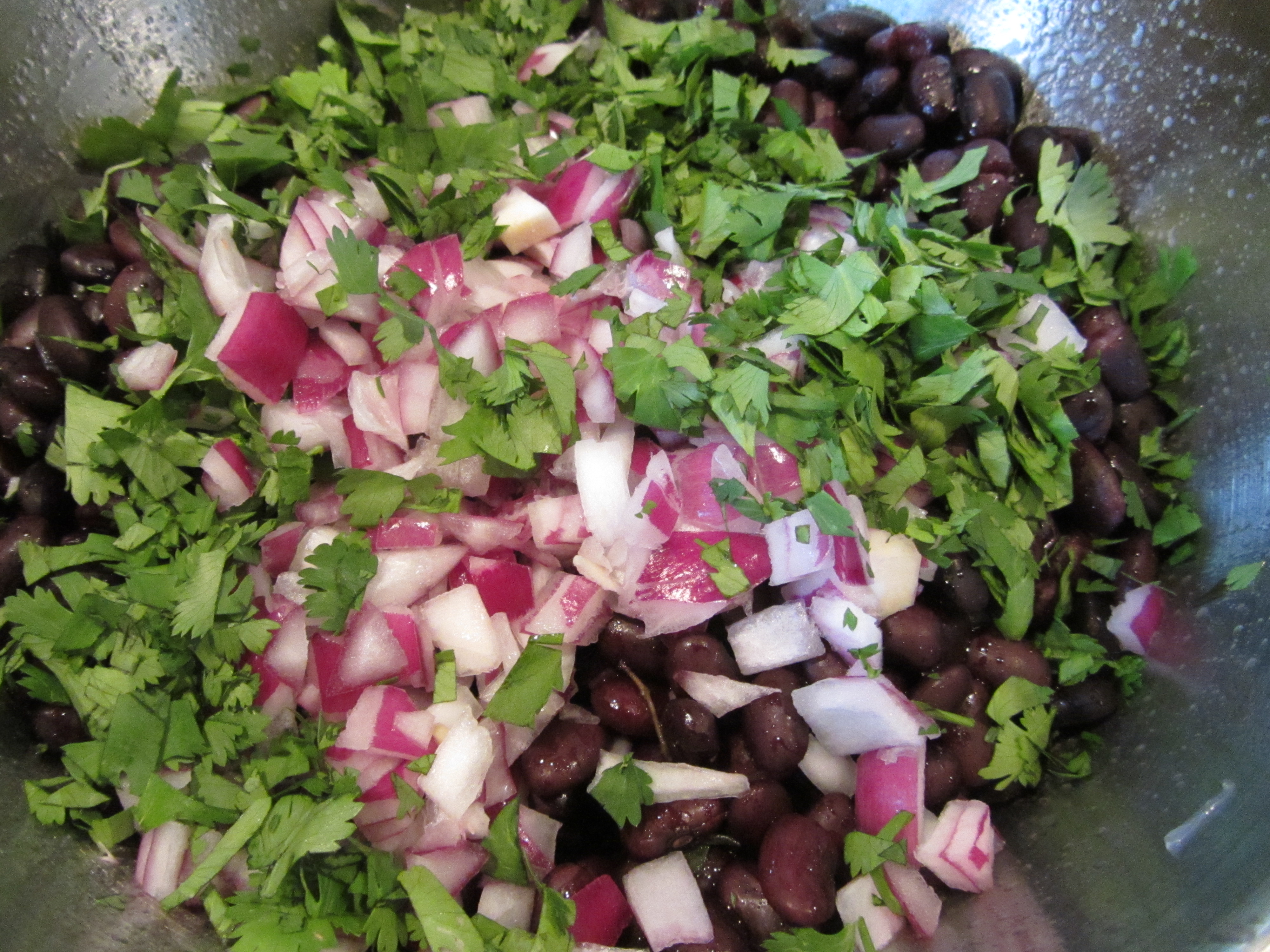
Add a small minced red onion, a handful of chopped cilantro, 1 t cumin, and 1 t chili powder. Toss to combine and chill for several hours.

Cilantro and red onion added to beans...

Cilantro and red onion added to beans…

...along with cumin and chili powder.

…along with cumin and chili powder.

Season with salt and pepper before serving.

Salt and pepper added after chilling.

Salt and pepper added after chilling.

Alton's black bean salad.

Alton’s black bean salad.

We ate this salad as a side dish and thought it was pretty good, but not mind-blowing. It would be a good, easy dish to bring to a potluck, but so would the baked beans, and those were so much better.

Turbo Hummus

Alton couldn’t really have a bean episode of Good Eats without including a recipe for hummus, could he? In this case, it was for his Turbo Hummus. I whipped this up when we were both really hungry after a hard workout.

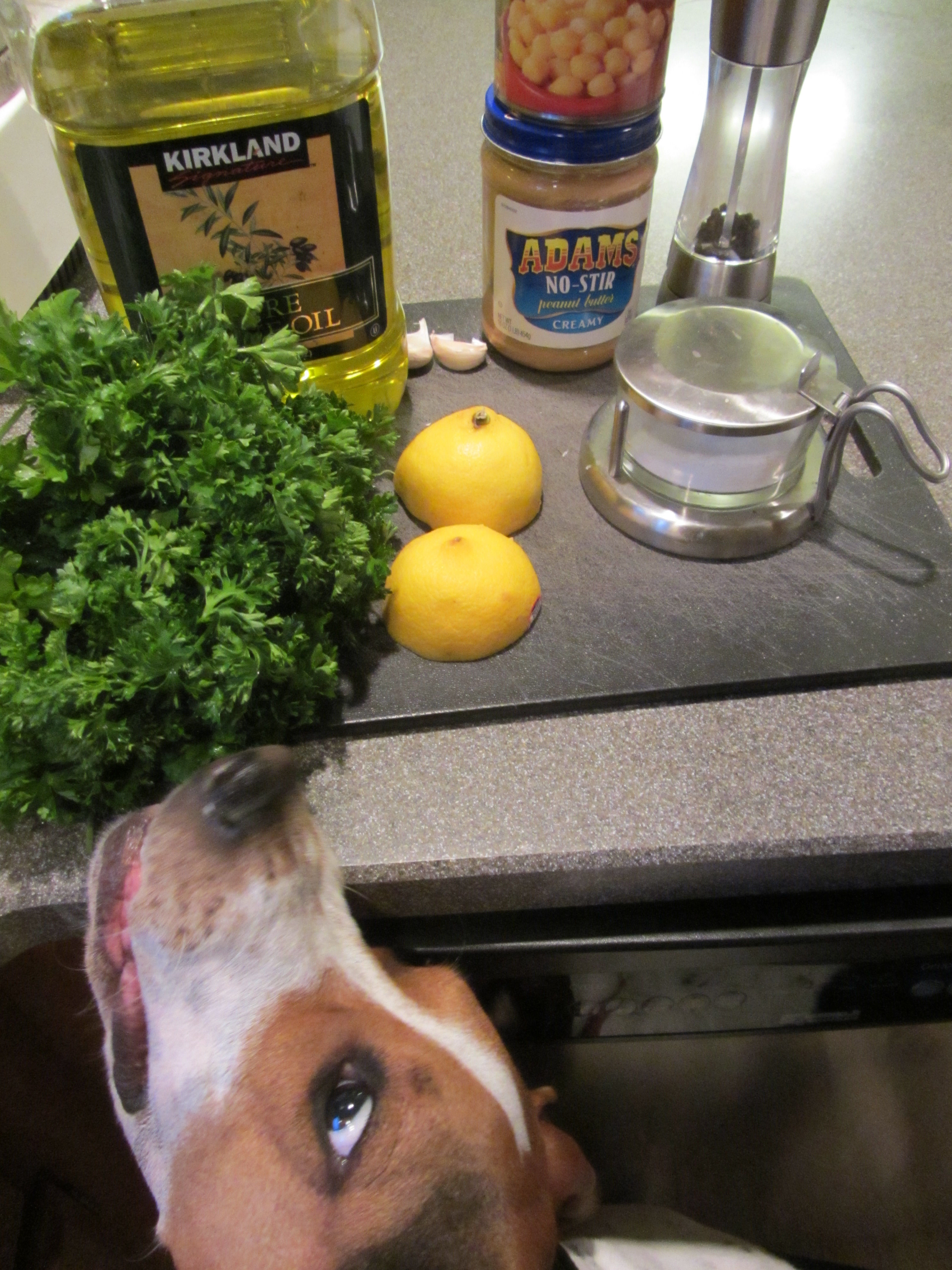
Ingredients for hummus:  garlic, canned garbanzos, creamy peanut butter, parsley, lemon juice and zest, black pepper, Kosher salt, and olive oil. And... a parsley thief.

Ingredients for hummus: garlic, canned garbanzos, creamy peanut butter, parsley, lemon juice and zest, black pepper, Kosher salt, and olive oil. And… a parsley thief.

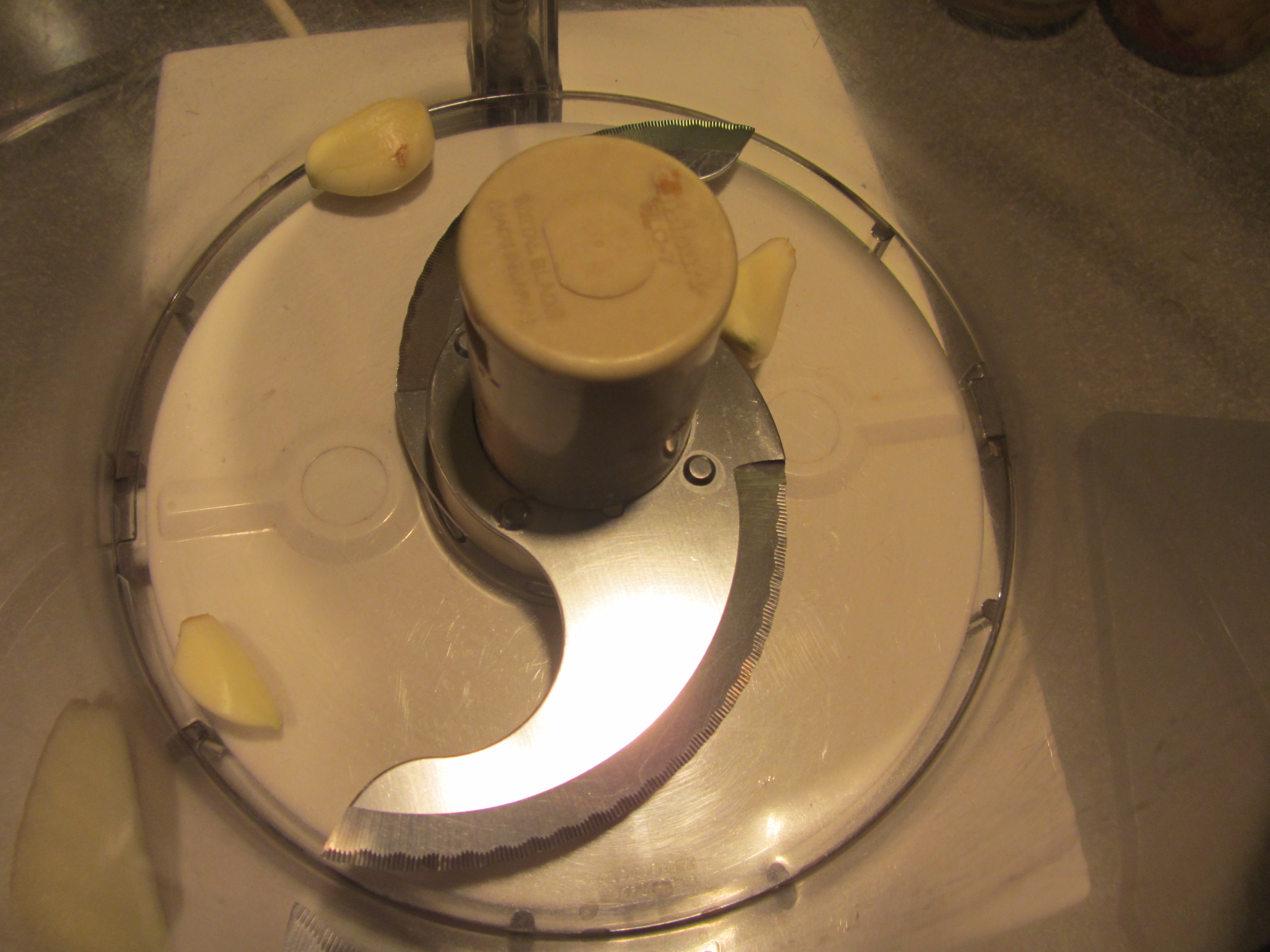
In a food processor chop 2-3 cloves of garlic; I opted for three and our breath was paying for it later, but it was good at the time.

Garlic into the food processor.

Garlic into the food processor.

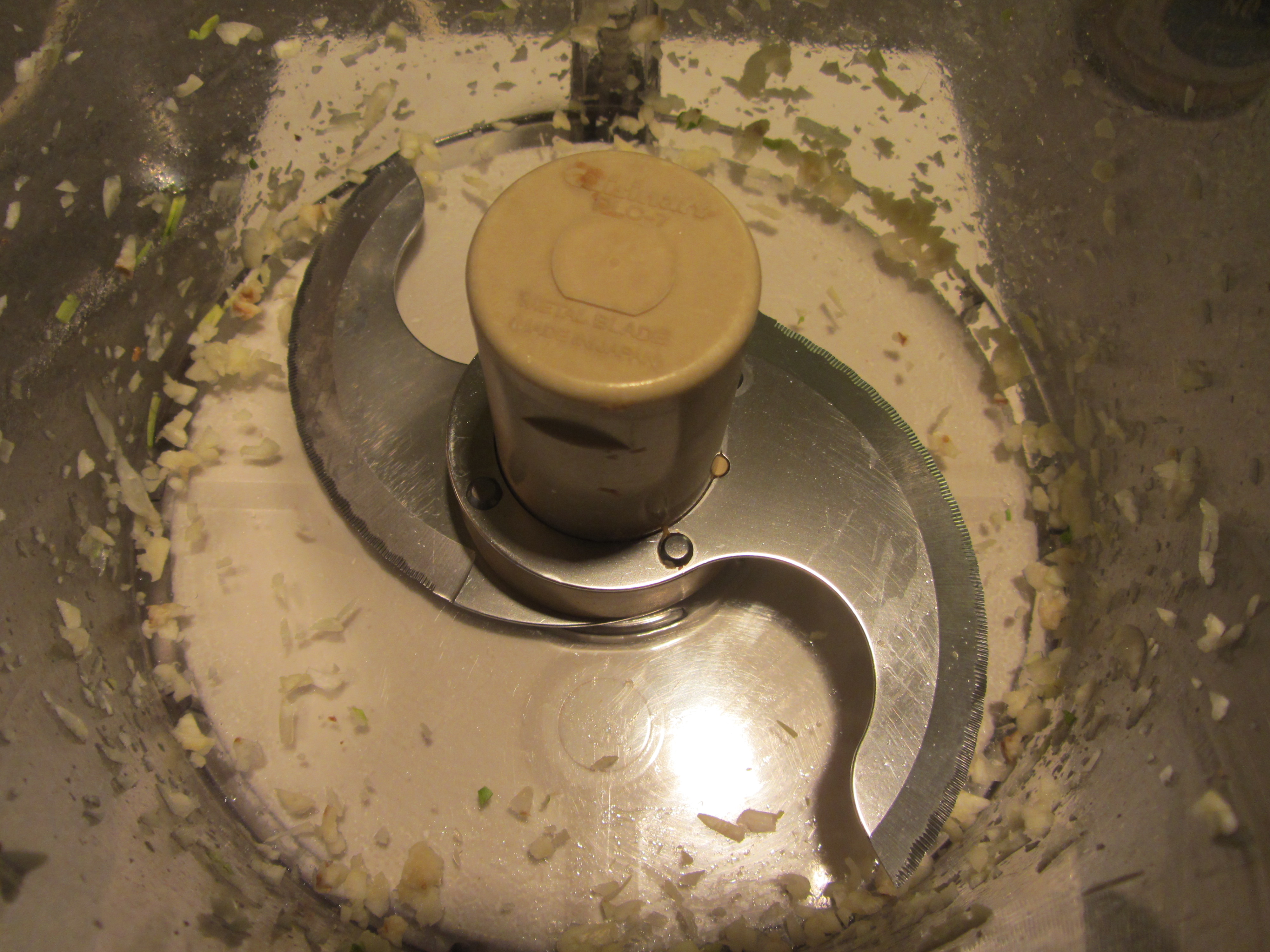
Chopped garlic.

Chopped garlic.

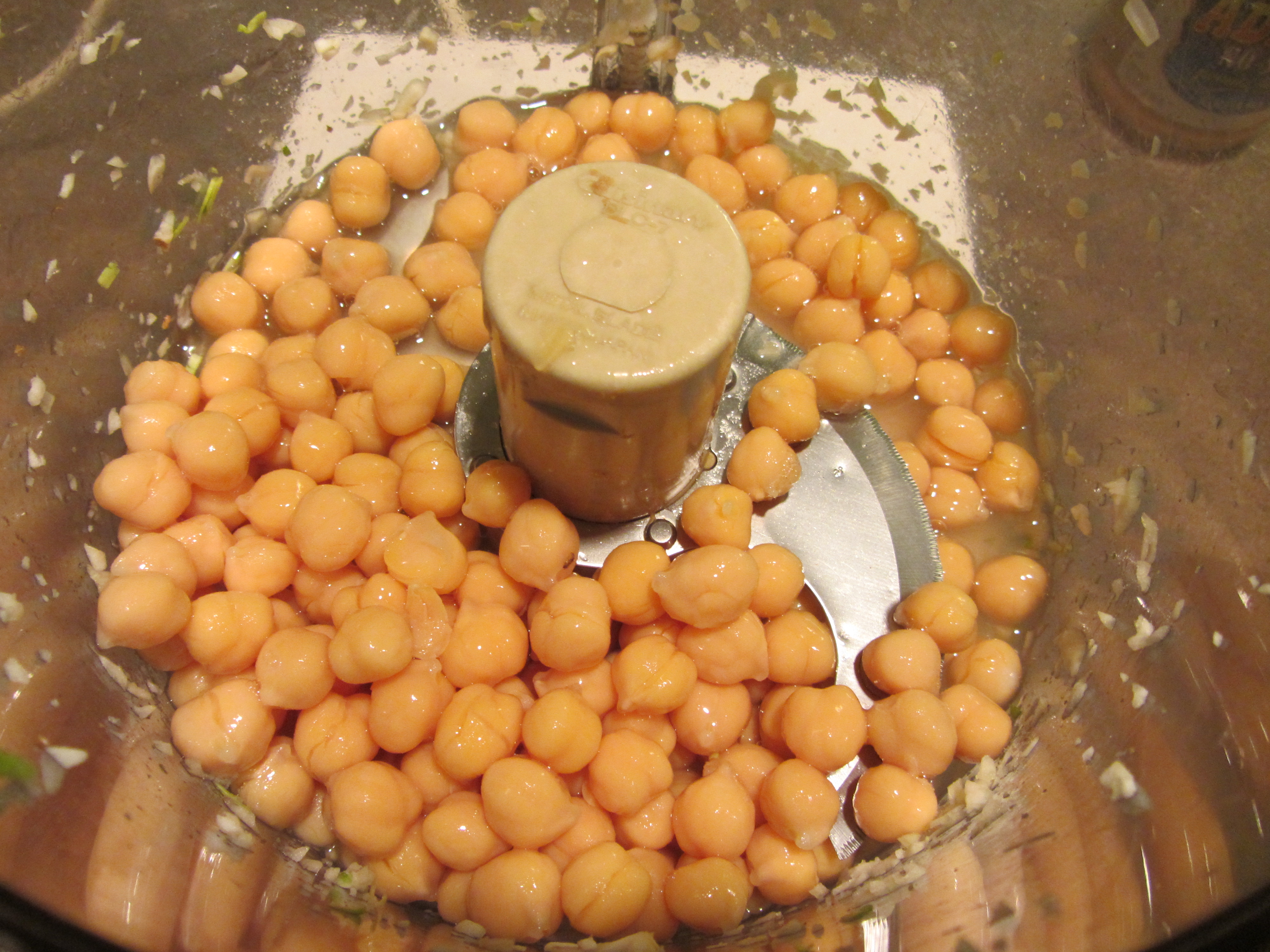
To the garlic, add a can of drained garbanzo beans and half of their reserved liquid. Process until smooth.

Beans drained and liquid reserved.

Beans drained and liquid reserved.

Beans into the processor.

Beans into the processor.

Beans processed, along with half of their liquid.

Beans processed, along with half of their liquid.

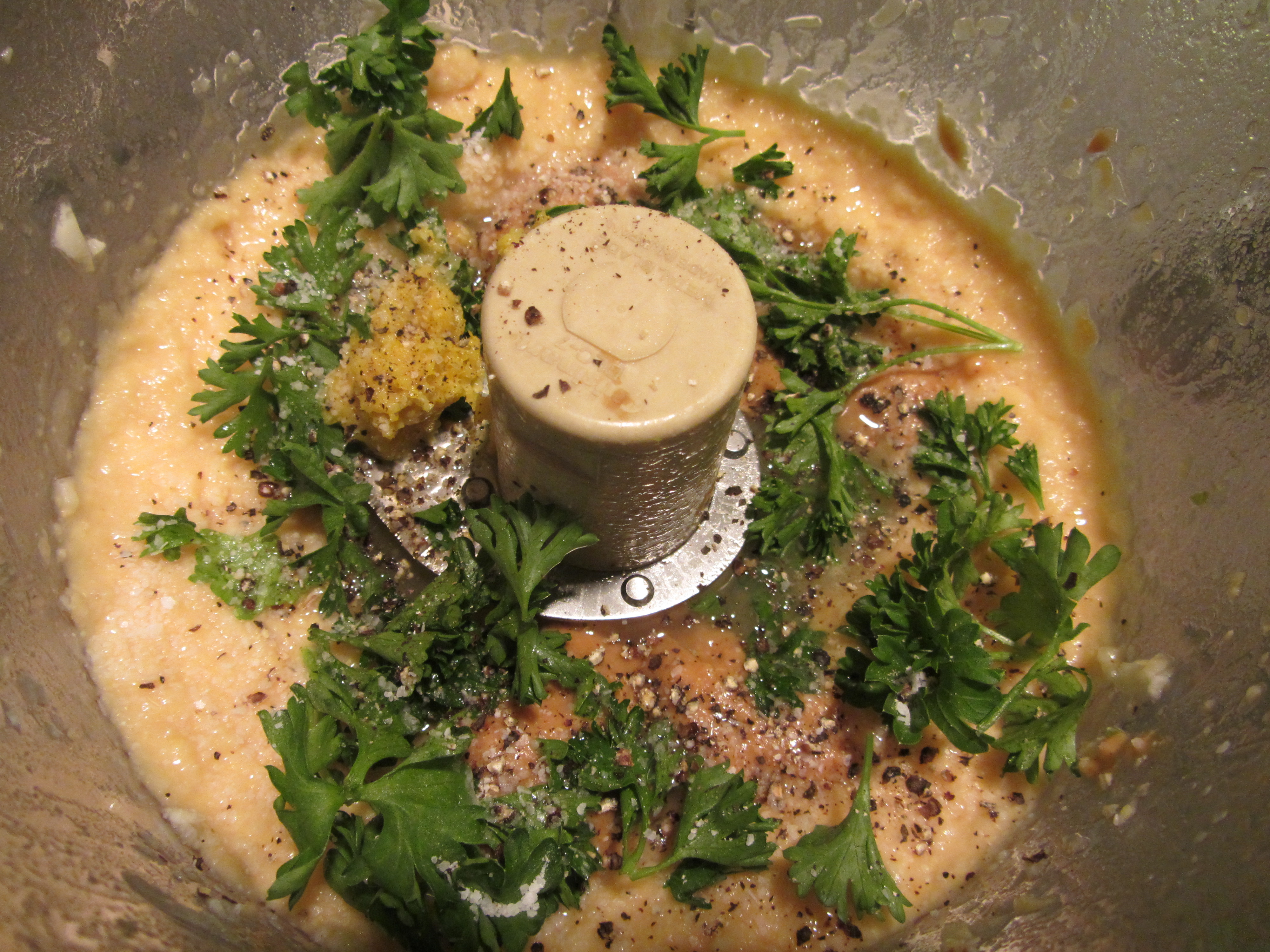
Add 2-3 T of creamy peanut butter, a handful of parsley, the zest and juice of a lemon, black pepper, and a couple of big pinches of Kosher salt.

Peanut butter, parsley, lemon juice, lemon zest, black pepper, and Kosher salt added to beans.

Peanut butter, parsley, lemon juice, lemon zest, black pepper, and Kosher salt added to beans.

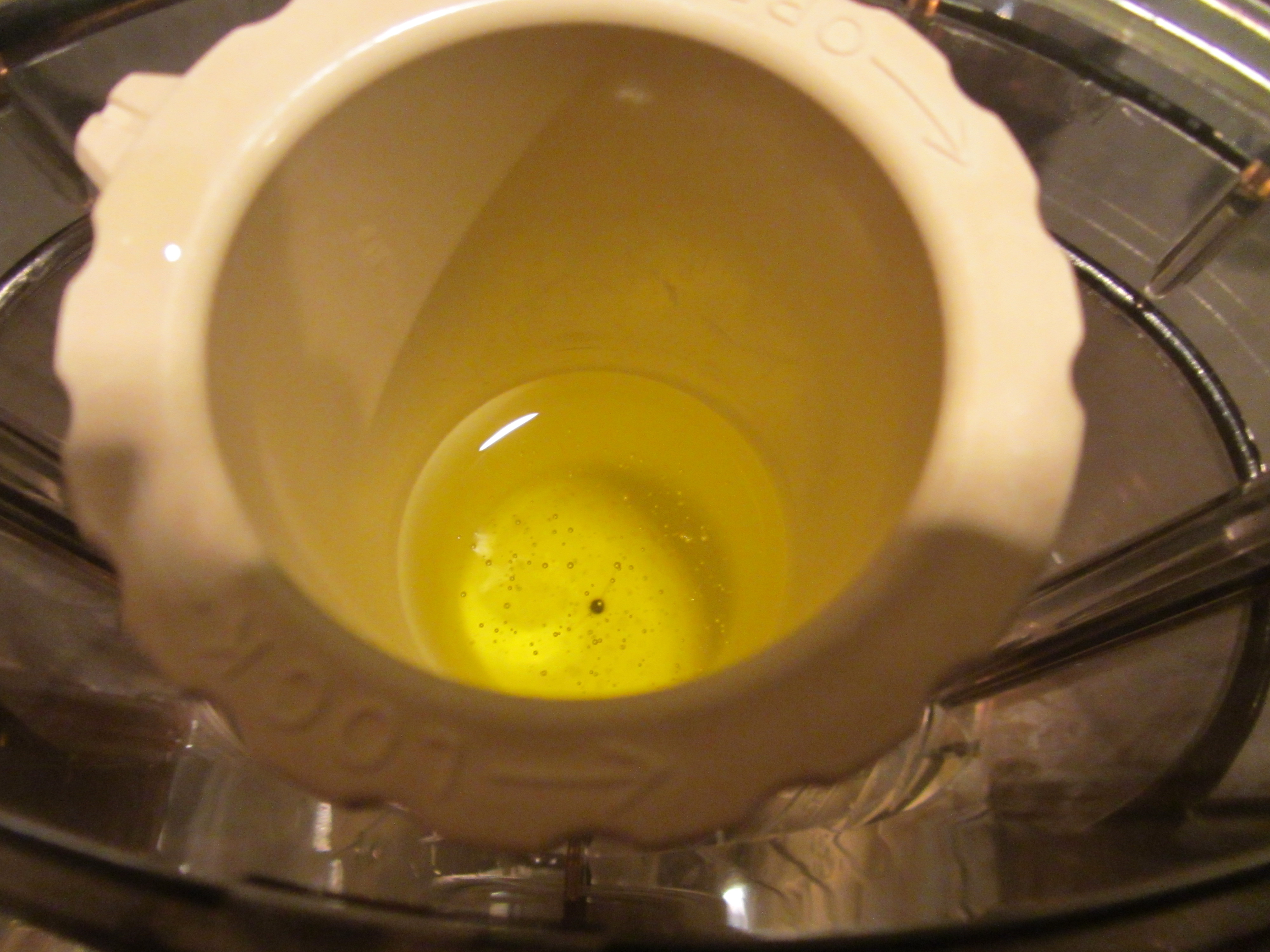
Process. Finally, drizzle in 1/3 C olive oil.

Olive oil drizzling into hummus.

Olive oil drizzling into hummus.

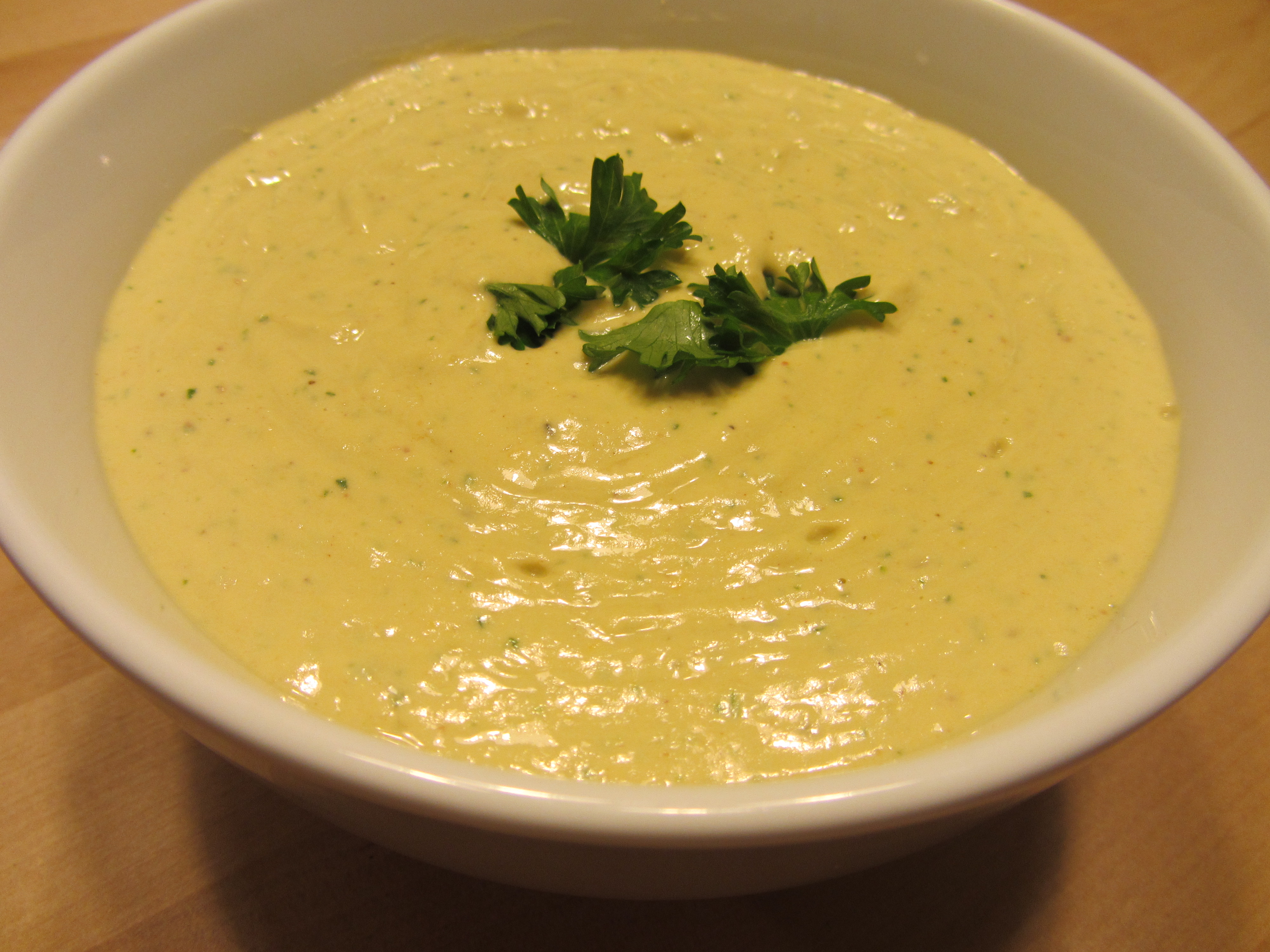
Alton's Turbo Hummus.

Alton’s Turbo Hummus.

We ate our hummus with pretzel chips, polishing off half of it pretty quickly. Having made traditional hummus with tahini before, I thought you could taste a difference with the peanut butter. To me, it wasn’t better or worse – just different. This hummus was a bit thinner than I prefer, but the flavor was good, and it was definitely super fast to make. If you’re looking for a super fast snack, this is a good one.