Archive for February, 2019

This episode of Good Eats is unique because Alton does not actually cook anything. Instead, this episode serves to prove or debunk five culinary myths. Through a series of kitchen experiments, Alton evaluates each myth and concludes whether each is true or false.

Myth #1 – The juices of meat are sealed in by searing.

For this myth, Alton weighed two steaks prior to cooking. The steaks were both oiled, but no salt was added, as salt pulls out liquid. One steak was seared on both sides in a hot skillet, while the other steak was not seared. The seared and unseared steaks were placed in a 400-degree oven at the same time, and a probe thermometer was placed in the center of each steak; the thermometers were set to beep when the steaks reached a temperature of 140 degrees. The seared steak reached 140 degrees faster than the unseared steak, so the seared steak was removed from the oven and allowed to rest for five minutes. After four additional minutes in the oven, the unseared steak reached 140 degrees, and was removed from the oven/allowed to rest.

After both steaks had rested, they were weighed a second time. The unseared steak lost 13% of its raw weight, while the seared steak lost 19% of its original weight. Based on these results, Alton concluded that searing does not seal in meat juices, and declared this myth to be “SMASHED.”

Myth #2 – Birds can be killed from the toxic fumes of nonstick pans.

In all honesty, Alton did not conduct any actual experiment for this myth. Instead, he simply talked about the conclusions that have been made by studies conducted on this topic. It has been found that nonstick pans release toxic fumes when they hit a temperature above 500 degrees, and especially when they are empty. These fumes can kill birds and can also cause humans to have flu-like symptoms. Alton opts to avoid all high-heat cooking in nonstick pans, including searing, frying, broiling, and even sautéing. This myth is “TRUE.”

Myth #3 – Mushrooms should not be washed because they absorb water.

The method for this experiment was to place four ounces of mushrooms in a hand sieve, which was then placed inside a glass bowl; four of these mushroom/sieve/bowl combos were set up. A liter of water was poured over the mushrooms in three of the four bowls, while the final bowl of mushrooms were left dry. The first bowl of mushrooms was allowed to sit in the water for 10 minutes before removing and draining the mushrooms. The second bowl of mushrooms was allowed to sit in the water for 20 minutes before removing and draining the mushrooms. The third bowl of mushrooms sat in the water for 30 minutes before removing and draining the mushrooms. The final bowl of mushrooms was rinsed thoroughly under running water and allowed to drain.

After all of the mushrooms were drained, the mushrooms from each sieve were weighed to analyze how much water they had absorbed. The mushrooms soaked for 10 minutes had gained 0.2 ounces of water, or about one teaspoon. The 20 minute mushrooms had gained 0.25 ounces of water, or about a teaspoon. Thirty minutes of soaking resulted in the mushrooms gaining 0.15 ounces of water, or about a teaspoon. The mushrooms rinsed under running water had gained 0.2 ounces of water, or about a teaspoon.

This experiment demonstrated that mushrooms absorb a small amount of water regardless of length of exposure to water. Since mushrooms tend to have a fair amount of grit and dirt on them, Alton concluded that he will thoroughly wash his mushrooms. This myth was “SMASHED.”

Myth #4 – Adding oil to pasta water keeps noodles from sticking together.

To test this myth, Alton added a gallon of water, 1 T of olive oil, and a pinch of Kosher salt to a pasta pot. The pot was covered and placed over high heat until the water reached a boil. Once the water was boiling, Alton added a half pound of pasta to the water, decreased the heat to medium-high, and cooked the pasta until it was al dente.

After cooking, Alton drained the pasta, allowing the liquid to drain into a long, clear tube beneath the strainer. After several minutes, the drained liquid had separated into its oil and liquid phases, with the oil rising to the top of the tube. Alton calculated the drained amount of oil to be 0.43 ounces, which was about 85% of the original tablespoon of oil added to the pasta water.

Since only 15% of the olive oil remained on the surface of the drained pasta, Alton concluded that not enough oil coated the pasta to prevent the noodles from adhering to each other. This myth was hereby “SMASHED.” Alton did, however, state that adding oil to pasta water can prevent the water from foaming by oiling the bonds of the starch released from the noodles. Or, you can just use a larger vessel with more water.

Myth #5 – Water can explode when microwaved.

The experiment for this myth involved placing a tall, narrow, glass bottle (picture a Snapple bottle) full of water in a microwave. The water was microwaved for three minutes on high power, which resulted in water spraying all over the inside of the microwave. This “explosion” of water is called spontaneous boiling, which occurs when the temperature rises above the boiling point without the formation of any bubbles. Since the inside of the glass bottle was perfectly smooth, there were no nucleation sites, which are spots where bubbles can form. In addition, the small opening of the bottle kept the water still, so when the heat energy built up within the bottle, one large bubble was formed and the water sprayed everywhere. To avoid this, when microwaving, use a container with a large opening and stir the contents regularly. This final myth was deemed to be “TRUE.”
Seeing as it is currently 12 degrees outside here, it really isn’t peak melon season. I take the episodes in the order they come, though, so we enjoyed a couple melon recipes in February. Although the melon was not of the greatest quality, these recipes still managed to give us a little taste of summer.

Hot Melon Salad

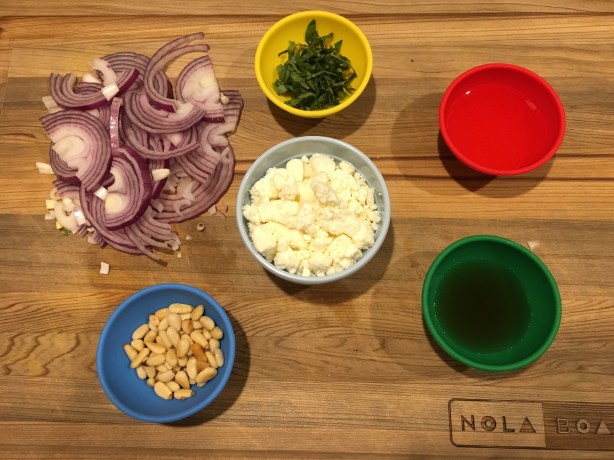
I have wanted to make this melon salad since I watched this episode with my dad when it originally aired in 2005. I remember that it just sounded so good to me when I first watched this episode. Alton prefers to use a high-powered outdoor gas burner for his wok, which is a setup my dad adopted after watching Good Eats. I do have my dad’s outdoor burner, but it needs a new hose, so I used our flat-bottomed wok on our regular old stove. Whether you are cooking indoors or out, heat your wok on a hot burner until water droplets instantly turn to steam upon hitting the pan. As with any stir fry, be sure to have all of your ingredients ready ahead of time, as the cooking goes very quickly. The ingredients for this dish are 1 1/2 T olive oil, a thinly sliced red onion, 8 ounces of cubed honeydew melon, 8 ounces of cubed cantaloupe, 1 T basil chiffonade, Kosher salt, black pepper, 2 t red wine vinegar, 2 ounces feta cheese, and 1 T toasted pine nuts.

IMG_1524

Ingredients for salad: red onion, basil, olive oil, red wine vinegar, toasted pine nuts, and feta cheese. Not pictured: melon.

Speaking of cantaloupe, did you know that all of the cantaloupes in this country are really muskmelons? Anyway, once the wok is hot, add the oil to the pan and swirl to coat.

IMG_1525

Oil in hot wok.

Add the sliced red onion and toss until heated through.

IMG_1526

Onion added to hot wok.

Next, add the cubed melon and toss again, cooking until the corners of the melon just start to brown slightly. Add the tablespoon of basil, along with a pinch of Kosher salt and some black pepper.

Drizzle the vinegar into the pan and transfer the salad to a serving dish. Finish the salad by sprinkling on the feta and pine nuts.

IMG_1532

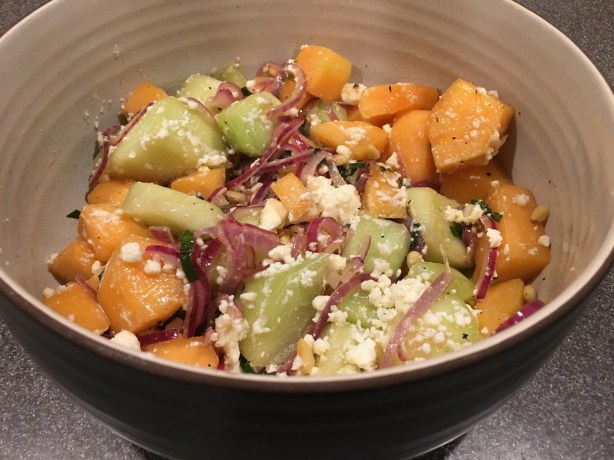
Alton’s hot melon salad.

We had this as a side dish one night and we ate the entire salad. I really like the flavors in this salad and how they compliment each other. The melon becomes sweeter from the heat, yet the red wine vinegar gives just a light touch of acidity. The feta adds some much-needed salt, while the red onion gives some pungency. The crunch of the pine nuts is a nice addition to a salad that is otherwise composed of ingredients with fairly similar textures. To me, this dish would be a perfect summer grilling side dish, and I intend to make it again, just as soon as deck season arrives.

Melon Sorbet

A fresh melon sorbet is the second recipe in this episode, and it is super easy to throw together.

IMG_1549

Sorbet ingredients: watermelon, lemon juice, vodka, and sugar.

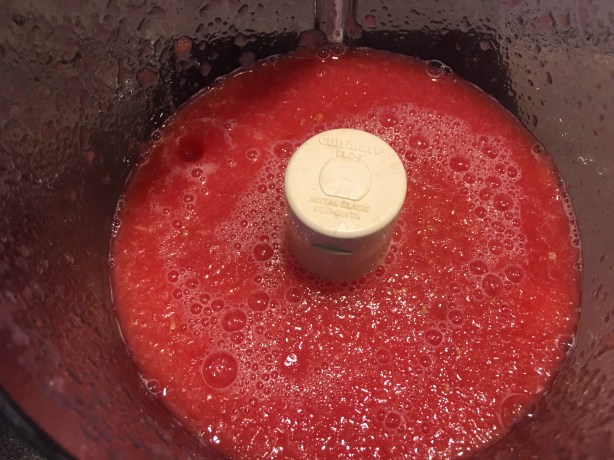
Puree a pound plus five ounces of watermelon in a food processor.

IMG_1550

Pureed watermelon.

To the pureed melon, add 3 T fresh lemon juice, 2 T vodka, and 9 ounces of sugar. The vodka serves to lower the freezing point of the sorbet, making the texture softer and less icy.

IMG_1552

Lemon juice, vodka, and sugar added to watermelon puree.

Refrigerate the melon mixture for at least two hours before churning in an ice cream maker.

IMG_1570

Churning sorbet after chilling.

Once churned, transfer the sorbet to an airtight container and freeze for 3-4 hours before eating.

IMG_1620

Watermelon sorbet.

The amounts of watermelon flavor and aroma in this sorbet are amazing, especially considering that I could not get great fruit. The color of the sorbet also seemed more vibrant than the color of the melon itself. As for texture, this sorbet stayed pretty soft and scoopable, and had very few large ice crystals. This sorbet truly is a taste of summer. It is quite sweet, so I have to wonder if a slight decrease in sugar could make this even better, though I suppose that could also alter the final texture of the sorbet. Perhaps I will just have to make two batches of sorbet once melon is in season – one with the original sugar concentration and one with a slightly lower concentration. I also intend to try this with some other types of melon, though I would imagine the sugar would have to be adjusted accordingly for the sugar contents of different melons. This sorbet is super refreshing, easy, and can brighten up even the coldest of winter days.

I was not overly stoked for an entire episode of pudding recipes. I mean, pudding is fine, but it’s not exactly exciting. I did, however, get very happy when I was a kid and my mom would leave pudding in the refrigerator for an after-school snack; chocolate pudding was my brother’s favorite, while I always preferred butterscotch. Speaking of butterscotch pudding, if you have not tried the butterscotch pudding in Alton’s latest book, it is a must-make. Here is my rundown of Alton’s pudding recipes, and I must say that two out of three wowed me.

Indian Rice Pudding

Indian rice pudding is the first recipe in this episode. The ingredients in this recipe are 1 C cooked rice, 1 C milk, 1/2 C heavy cream, 3/4 C coconut milk, 2 ounces sugar, 1/4 t ground cardamom, 1 1/2 ounces golden raisins, and 1 1/2 ounces chopped unsalted pistachios.

IMG_1429

Rice pudding ingredients: cooked rice, milk, heavy cream, coconut milk, sugar, cardamom, golden raisins, and pistachios.

For the pudding, put the milk and rice in a large skillet and bring to a boil over medium heat, stirring.

Once boiling, decrease the heat to low and simmer the milk/rice until it has thickened slightly, which should take about five minutes; if you run a spatula along the bottom of the pan, the liquid should be thick enough to part and stay parted.

IMG_1432

Rice and milk after coming to a boil and simmering.

When you have achieved this desired consistency, increase the heat to medium and add the cream and coconut milk, followed by the sugar and cardamom (use a whisk to incorporate the cardamom).

When the mixture has reached a boil again, decrease the heat to low and cook for five more minutes.

IMG_1439

Pudding cooked for 5 more minutes.

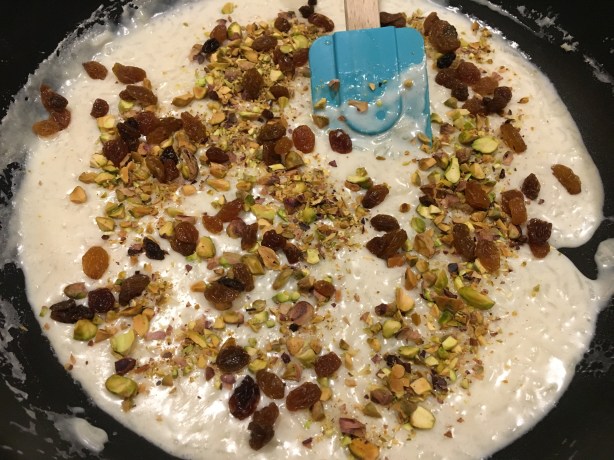
Remove the pan from the heat and stir in the raisins and nuts.

IMG_1440

Raisins and pistachios added to pudding off the heat.

Transfer the pudding to your desired serving vessel(s) and enjoy immediately, or you can chill the pudding overnight, which is how Alton prefers it. If you do opt to chill the pudding, press plastic wrap on the surface of the pudding to prevent formation of a skin.

IMG_1442

Alton’s rice pudding.

I tasted the rice pudding when it was warm, but chose to refrigerate it overnight before eating a full serving. This rice pudding is delicious. The pudding is thick, rich, creamy, and indulgent. The subtle flavor of coconut milk is in the background, while pistachio flavor is predominant. The raisins add little punches of fruit flavor, while the nuts add a little crunch. This is great for dessert or for breakfast, or for both! I fully intend to make this again soon. In fact, I am really wishing I had some right now! Excellent recipe.

Tapioca Pudding

I do not recall ever having tapioca pudding prior to making this recipe. I asked my parents about tapioca pudding the other day and my mom said she remembers her mother making it, while my dad did not think he had ever had tapioca pudding. Tapioca, by the way, is a starch from the cassava plant. Tapioca is sold in several forms, but this recipe calls for large pearl tapioca. The recipe begins by soaking 3 1/2 ounces of tapioca in a pint of cold water overnight; you can do this at room temperature.

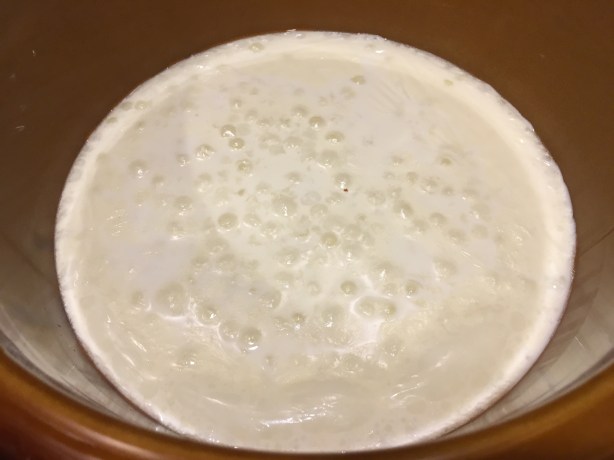
After the soak, drain the pearls and put them in a crock pot, along with 2 1/2 C milk, 1/2 C heavy cream, and a pinch of Kosher salt. Stir the pudding, put the lid on the cooker, and let the pudding cook on high for two hours.

After the two hour cook time, beat one egg yolk with 1/3 sugar in a bowl – this will form a paste.

IMG_1513

Tapioca after cooking for two hours.

Temper the egg yolk mixture by slowly whisking 1 – 1 1/2 C of the warm tapioca into the eggs.

Once tempered, add the egg mixture back to the crock pot of tapioca and whisk to combine. Add the zest of a lemon to the cooker, place the lid back on, and let the pudding cook for 15 more minutes.

Transfer the tapioca to an airtight container, pressing plastic wrap directly onto its surface. Let the pudding cool to room temperature before refrigerating until it is thoroughly chilled.

IMG_1521

Pudding after cooking for 15 more minutes.

IMG_1558

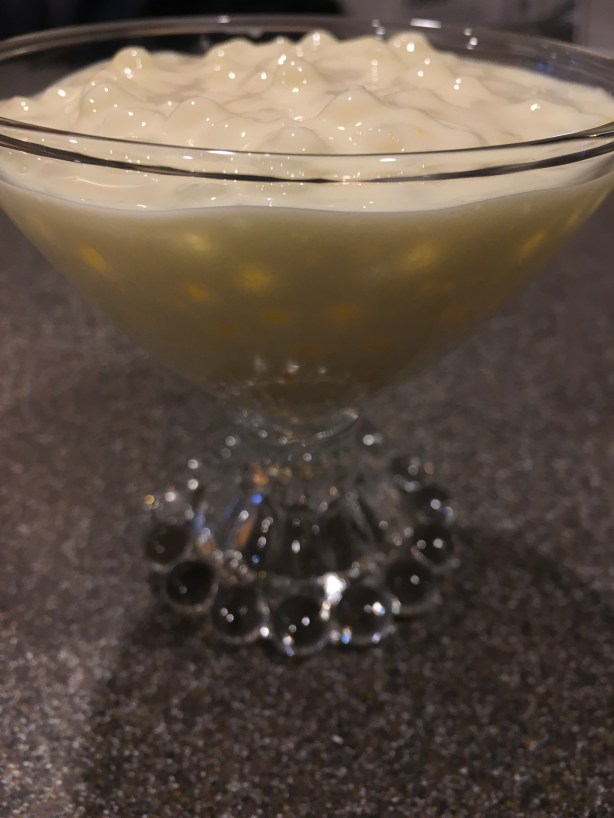
Chilled tapioca pudding.

This pudding was good, but not amazing like the rice pudding. Since I am not a tapioca pudding expert I cannot say for sure, but I felt like the texture of this pudding was maybe a little thinner than it should be. I liked the added texture from the slightly chewy tapioca pearls, but the base was a little on the soupy side. As for flavor, it was just sort of creamy with subtle lemon overtones. I may make this again, simply because I have half a bag of tapioca pearls remaining, but I won’t add this one to the permanent recipe vault.

Chocolate Pudding

What pudding episode would be complete without a recipe for chocolate pudding? This is a two-step recipe, in which you first make a dry pudding mix, and then use the mix to make the pudding. To make the dry mix, in a lidded container combine 1 1/2 ounces non-fat dry milk, 2 ounces cornstarch, 1 t salt, 3 ounces Dutch cocoa powder, and 6 ounces powdered sugar. Shake the container to combine the ingredients.

To make the pudding, put 1 3/4 C of the dry pudding mix in a saucier. Whisk 2 C milk and 2 C heavy cream into the dry pudding mix.

Bring the mixture to a boil over medium heat, whisking occasionally. Once boiling, decrease the heat to low and simmer for four minutes, whisking.

Remove the pan from the heat and stir in 1 t vanilla.

IMG_1458

Adding vanilla off the heat.

Pour the pudding through a sieve and into a serving bowl. Press plastic wrap directly on the surface of the pudding to prevent the formation of a skin, and refrigerate the pudding for at least four hours before eating.

IMG_1481

Alton’s chocolate pudding.

This is the best chocolate pudding I have ever eaten. The pudding is super rich and creamy in both texture and flavor. It is smooth and chock full of chocolate flavor, and a little goes a long way. I am going to whip up another batch of this pudding shortly. It is super good.