Posts Tagged ‘soup’

It’s been a while since I last posted. While I actually prepared the recipes from this episode of Good Eats weeks ago, I am only just now having time to sit down and actually write them up. Since I last made a post, we have left town a couple times, Ted finished up chemo and had scans (clear – yay!), we hosted a clear scan party, and my mom ended up in the hospital/had surgery. Hopefully things will slow down here at some point!

Anyway, the subject of the 64th episode of Good Eats was squash, and particularly winter squash. Needless to say, this episode would have been more ideal if it had popped up during cooler months of the year. Thankfully, you can purchase winter squash at any time of the year.

Squash Soup

First up in this episode was Alton’s squash soup. Alton used two Kabocha squash to make his soup, though he stated you could use any hard winter squash; I could not find Kabocha squash at my store, so I used acorn squash.
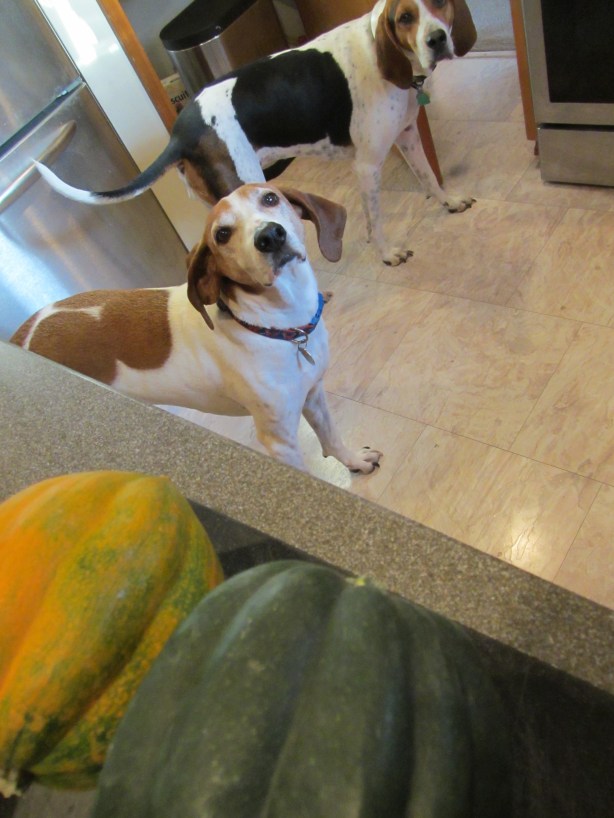
IMG_4843

The hounds, checking out my acorn squash.

You first need to quarter your squash and remove the seeds. Alton quartered his squash by hitting a vegetable cleaver with a wooden mallet.

IMG_4844

Quartered acorn squash.

Brush the squash quarters with melted butter, sprinkle them with Kosher salt and pepper, and stick them in a 400-degree oven.

IMG_4848

Quartered acorn squash, brushed with melted butter and sprinkled with pepper and Kosher salt.

According to Alton, your squash should be tender and roasted within 25 minutes, but my squash took nearly an hour to become tender.

IMG_4851

Squash, after roasting for almost an hour.

When your squash are cool enough to handle, use an ice cream scoop to remove their flesh. You will need six cups of cooked squash, and the easiest way to measure this is using displacement. You can do this by putting the squash in a large measuring vessel with 1 1/2 C chicken stock; when the liquid line hits 7 1/2 C, you know you have 6 C of squash. Dump the squash/stock in a pot and add 1 1/2 C additional chicken stock, 4 T honey, and 1 t grated ginger.

IMG_4853

Squash in soup pot, along with chicken stock, honey, and grated ginger.

Heat the soup over medium-high heat until bubbles begin to form on the surface, and process the soup with an immersion blender until smooth. Finally, finish the soup by stirring in 1/2 C heavy cream, 3 big pinches of Kosher salt, 2 small pinches of white pepper, and 6 grates of nutmeg on a microplane grater.

Simmer the soup over medium heat until it is heated through. Serve in bowls with sour cream. We ate this soup with goat cheese toasts on the side.
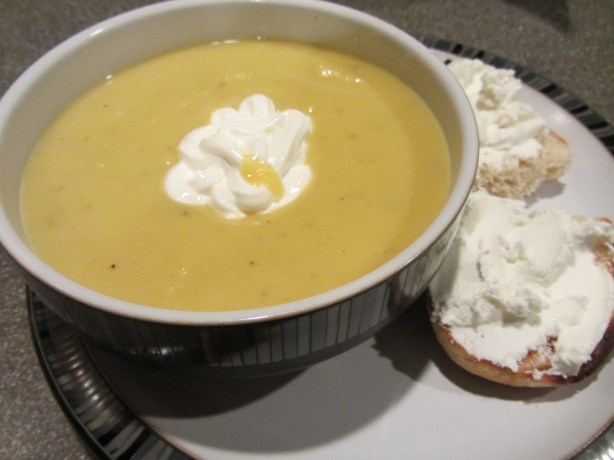
IMG_4862

Finished squash soup with sour cream.

Ted is not particularly fond of squash, but he thought this soup was “pretty good.” Honestly, I found this soup to be a little too sweet, so I would consider cutting down on the honey. The sour cream does help to cut the sweetness also. This would be a perfect soup for a chilly night, so it did not seem apropos when we were eating it in the heat of summer. This is a good, easy, traditional squash soup, and it would come together in minutes if you prepped the squash ahead of time.

Butternut Dumplings with Brown Butter and Sage

Of the recipes in this episode, I was most excited to make Alton’s squash dumplings. For this recipe, you will need a one-pound butternut squash.
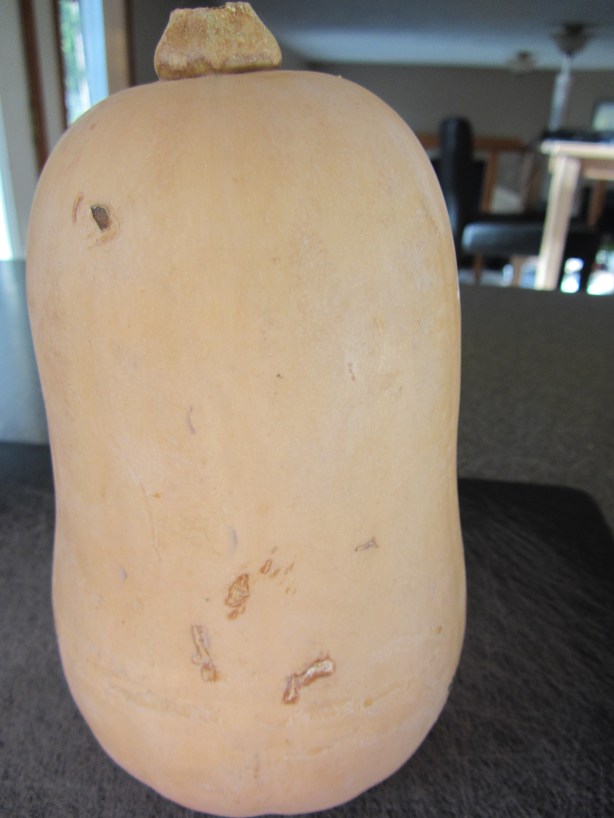
IMG_4863

A one-pound butternut squash.

Halve the squash, remove the seeds, brush the flesh with olive oil, and sprinkle them with Kosher salt and pepper.

IMG_4867

Halved squash, brushed with olive oil and sprinkled with Kosher salt and pepper.

Roast the squash in a 375-degree oven for 45 minutes, or until tender. When you put the squash into the oven, also add 4 medium russet potatoes to the oven, taking care to prick their flesh with a fork first.

IMG_4866

4 medium russets, skin pricked with a fork.

While your vegetables are roasting, you can gather your other ingredients:  Kosher salt, 1 1/2+ C flour, and an egg, lightly beaten with a pinch of nutmeg.
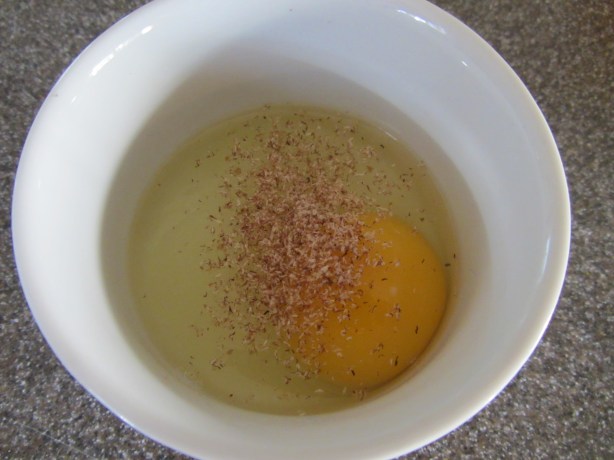
IMG_4869

One egg, to be beaten with a pinch of nutmeg.

Once the vegetables are cool enough to handle, mash the flesh of the squash together with the flesh of the potatoes, mashing only until combined.

Using a wooden spoon, stir the egg and 1/2 C flour into the squash/potato mixture. You want to add flour gradually until you have a dough that is slightly wet, but not sticky.

While Alton only needed a small amount of flour to get his dough to the proper consistency, I ended up needing over 5 C of flour to get my dough to the point where I could handle it; several online reviewers had this same problem. Once your dough is ready, bring a pot of salted water to a boil. On a floured surface, turn out your dough and divide it into eight equal balls.

One at a time, roll each ball into a 1/2-inch thick snake, and cut each snake into 1/2-inch pieces.

At this point, you can cook the dumplings or place them on a floured baking sheet and freeze for later use. To cook the dumplings, add them to the boiling water in batches, removing them from the water as they float to the surface. To cease cooking, place the boiled dumplings immediately in ice water before drying them on a tea towel.

Next, heat a skillet over high heat, adding 1 T softened butter. Once the butter is melted, add 2 chopped sage leaves and 1 C of the boiled/cooled/dried dumplings. Cook the dumplings until they are golden brown and crispy on all sides.

Serve the dumplings with lots of Parmesan cheese and pepper.

IMG_4900

A bowl of dumplings with Parmesan and pepper.

We really liked these dumplings, though they definitely needed a healthy sprinkle of Kosher salt in addition to the Parmesan and pepper. The dumplings are fairly dense, but delicious with their crispy exteriors and softer interiors. The dumplings are slightly sweet and pair greatly with the savory browned butter, sage, and Parmesan. I will say that the process of making the dough was much more tedious than Alton demonstrated in the show, but we ended up with enough dumplings for at least three meals. I foresee making these again, especially in the Fall.

Pumpkin Bread

Last up in this episode was Alton’s pumpkin bread recipe. Ideally, for this recipe you will want to use fresh pumpkin, but I had to settle for canned pumpkin since it was the middle of July. Either way, you will need 3 C of pumpkin; if using fresh pumpkin, grate the flesh. You will also want to toast 1 C of pumpkin seeds for 5 minutes at 400 degrees. I purchased pumpkin seeds that were already toasted. In a bowl, sift together 2 C flour, 2 t cinnamon, 1/2 t Kosher salt, 1 t baking soda, and 1/4 t baking powder.

In a separate large bowl, beat 3 eggs and gradually add 1 1/2 C sugar.

IMG_4908

3 eggs, beaten with 1 1/2 C sugar.

Once the sugar is incorporated, slowly whisk in 3/4 C vegetable oil. Finally, add 1 t vanilla extract.

Fold the pumpkin mixture into the egg mixture, along with the cup of toasted pumpkin seeds.

IMG_4914

Pumpkin and pumpkin seeds added to egg mixture.

Finally, add the dry ingredients to the wet mixture, and fold everything together. Pour the batter into a nonstick loaf pan and bake at 325 degrees for 75 minutes, or until the tip of a paring knife comes out clean.

Cool the bread in the pan for 15 minutes before turning the bread onto a rack to cool completely. If you prefer to make muffins instead of bread, divide the batter among muffin tins and bake for 30 minutes at 325 degrees.

IMG_4926

Alton’s pumpkin bread.

This is a very delicious pumpkin bread, but I really did not care for the texture of the pumpkin seeds. I found the pumpkin seeds to be very chewy from absorbing the moisture of the bread. I definitely plan to make this bread again, but I will be omitting the seeds. The bread itself has just the perfect amount of sweetness, is very moist, and has loads of pumpkin flavor.
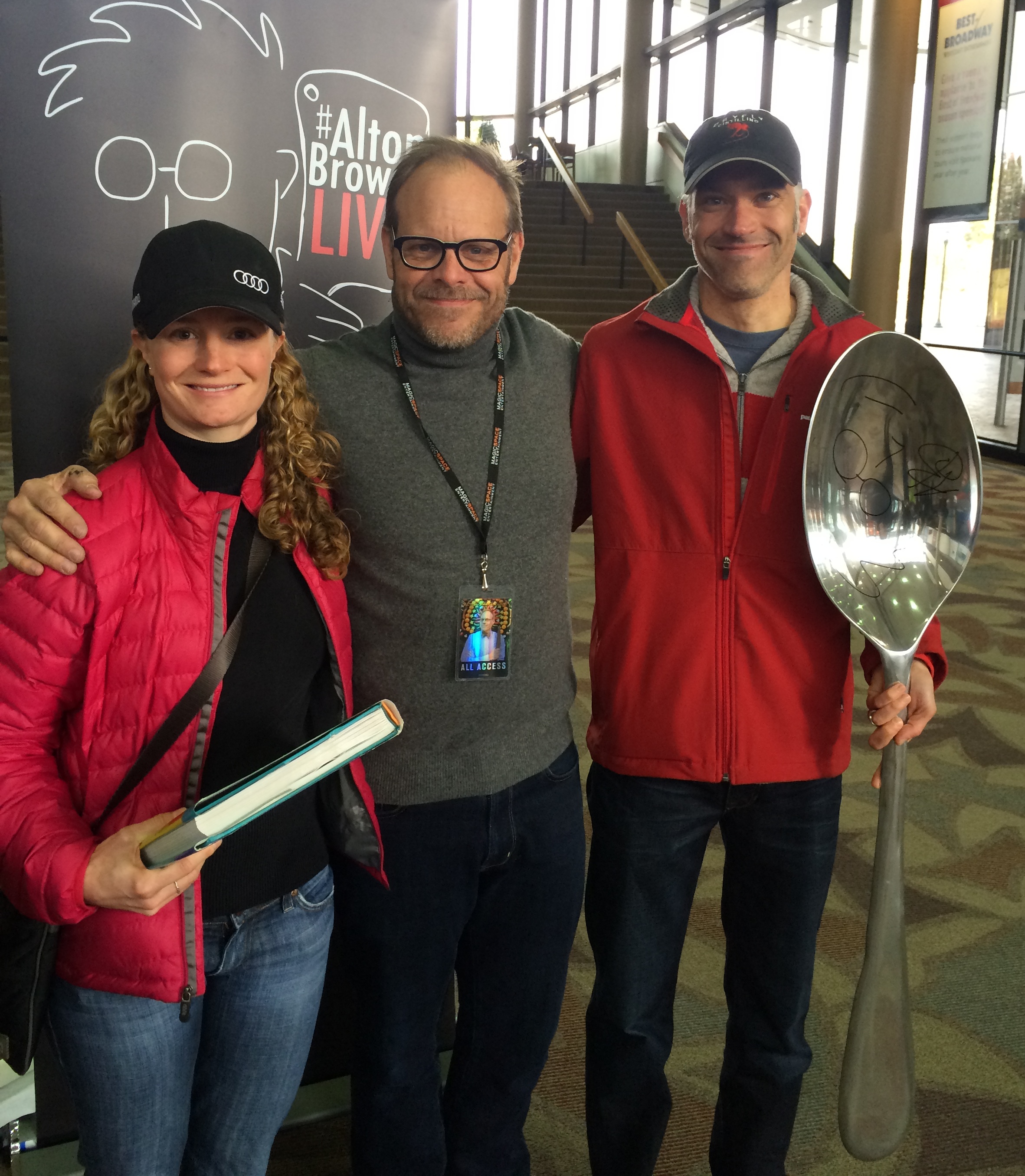
Seeing as I am putting myself through (what I call) the Alton Brown Culinary School of Good Eats, I would be remiss if I did not write a little bit about the day I had yesterday. I was awoken at 5:07 am by my adorable Coonhound, Hitcher, who was suffering from one of his occasional fits of morning sickness. While I stood in the dark kitchen, waiting for him to finish grazing in the back yard, I decided to make a quick check of Facebook, or Twitter, or one of the other online giants. Staring back at me from the feed of none other than Alton Brown was a pair of latitude and longitude coordinates for the location of an autograph signing he would be having in Spokane at noon. The coordinates were for the Spokane Convention Center.

After a few more hours of sleep, I had to decide whether to do my planned 15 mile run, or to try to meet Alton; I split the difference, ran 8.5 miles, and dragged Ted to the Convention Center with me, along with our giant metal spoon and my Alton Brown cookbook. Somehow, I don’t think Ted looked too out-of-place on Spokane’s downtown streets with his spoon, as I think of the gentleman I used to always see, riding a bicycle with a huge Finding Nemo hat. We ended up waiting in line for about 45 minutes, briefly met Alton, had our photo taken with him, and got a few autographs. I will somewhat shamelessly admit how stoked I was about this. Secretly, I think Ted thought it was pretty cool too.

Ted and me with Alton.

Ted and me with Alton.

My custom Alton post-it.

My custom Alton post-it.

To cap off the day, we took my parents to see Alton perform his Edible Inevitable show. Though I did not know what to expect, I knew I would enjoy the show, but it far exceeded my expectations. I cannot remember the last time I laughed as hard as I did last night. Seriously, if you have the chance to see Alton perform live, you really should take that opportunity.

In a Cranberry Jam

Last November, I cooked an early Good Eats Thanksgiving dinner for my parents and us, following it up with a Thanksgiving dinner with Ted’s parents on Thanksgiving day; that meant we had two Good Eats turkeys in a matter of days. I wrote about the early Thanksgiving dinner here. When I wrote about the Thanksgiving special, I failed to realize that the 32nd episode of the show would entail making recipes with the leftovers from the Thanksgiving special. So… we had Thanksgiving dinner again in February. Last Thursday, I again made Alton’s Tart Cranberry Dipping Sauce, Sweet Corn Bread Pudding, and the Good Eats Roast Turkey.

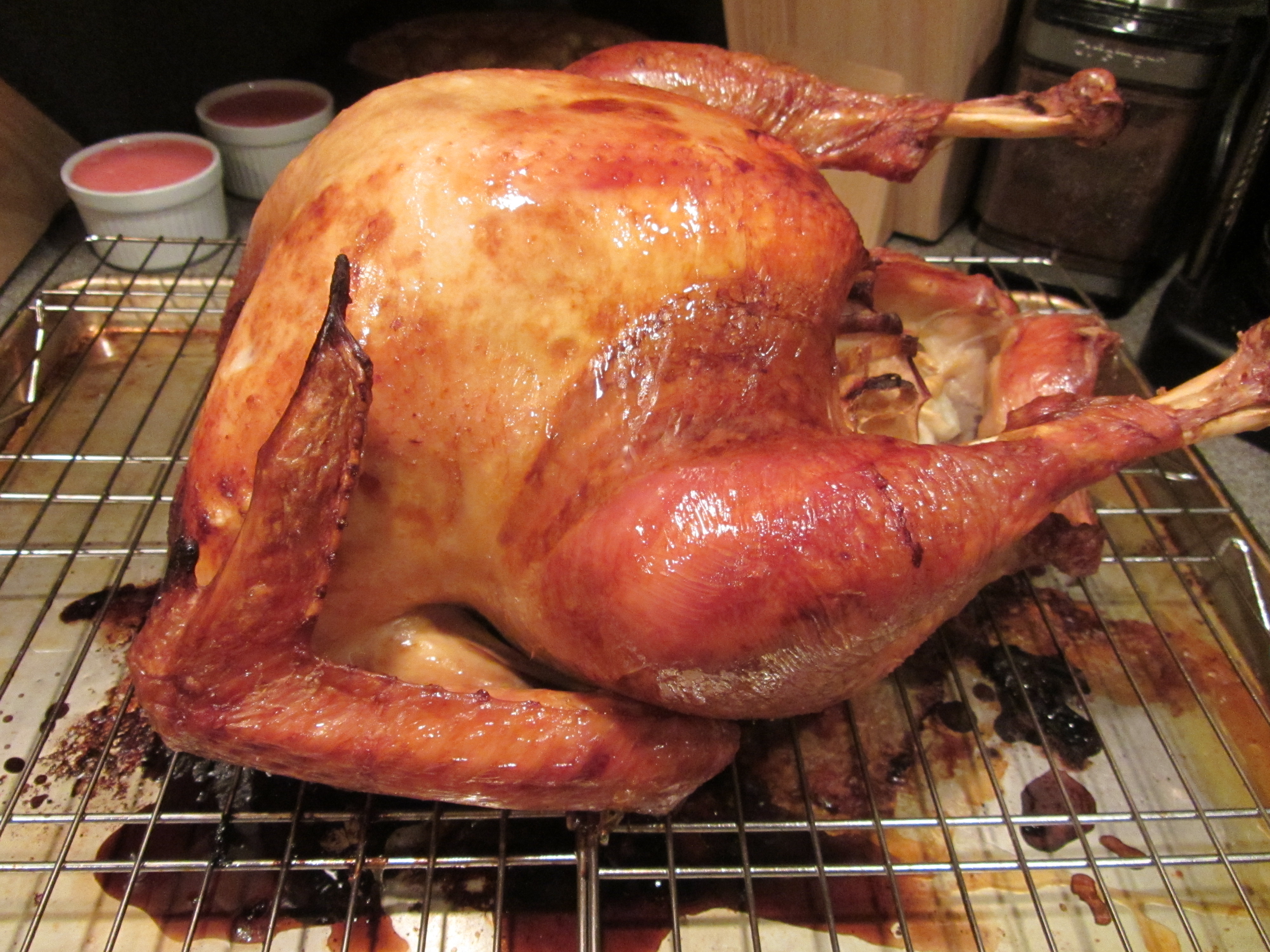
A February Good Eats turkey.

A February Good Eats turkey.

Sweet corn bread pudding.

Sweet corn bread pudding.

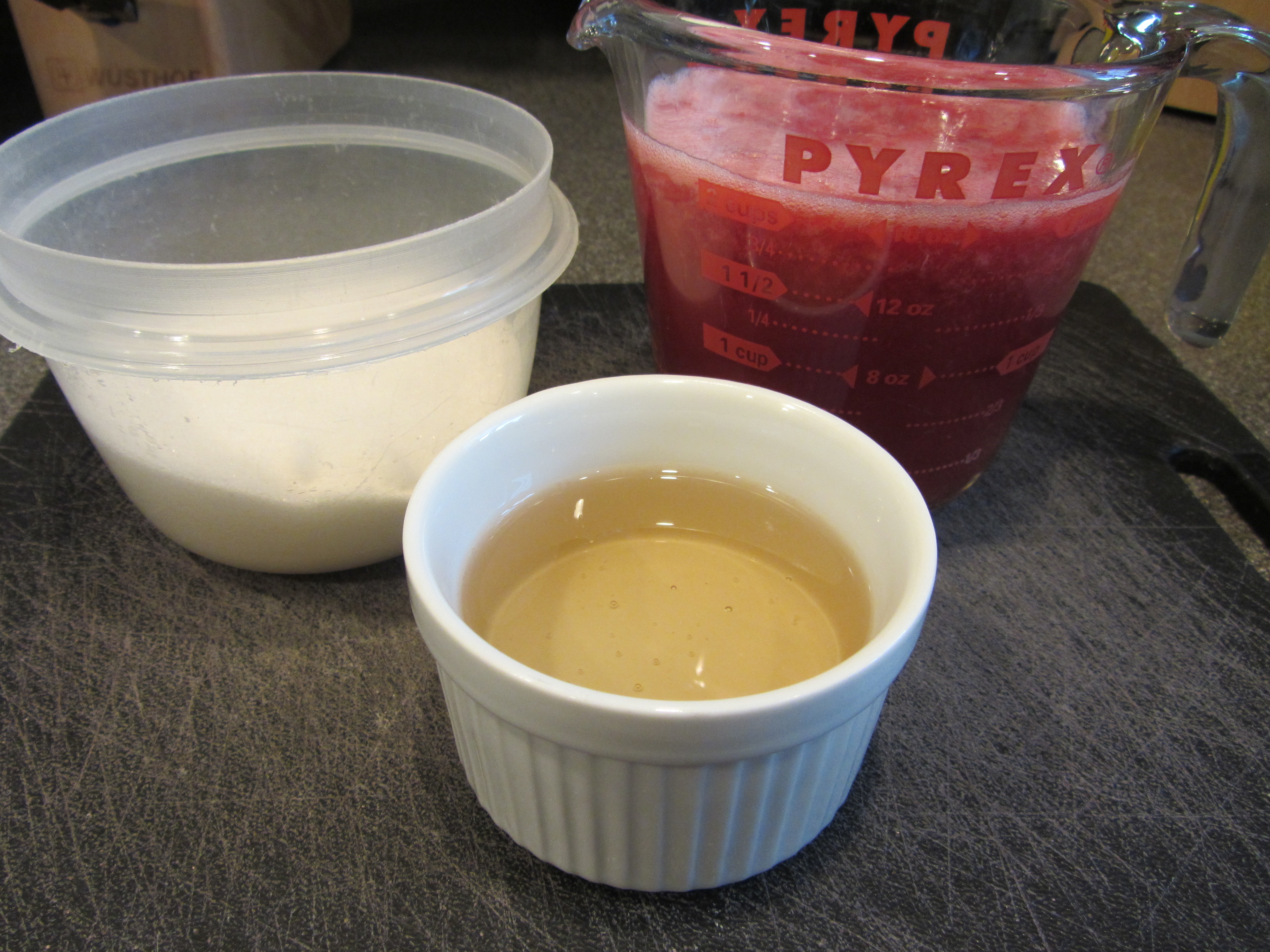
After a Thanksgiving-like dinner Thursday, I made Alton’s recipes for Thanksgiving leftovers on Friday, the first of which was for his cranberry jam. This recipe is really simple. To make it, you combine 2 C of leftover cranberry dipping sauce with a cup of sugar and a half cup of ginger ale.

Ingredients for cranberry jam:  leftover cranberry dipping sauce, ginger ale, and sugar.

Ingredients for cranberry jam: leftover cranberry dipping sauce, ginger ale, and sugar.

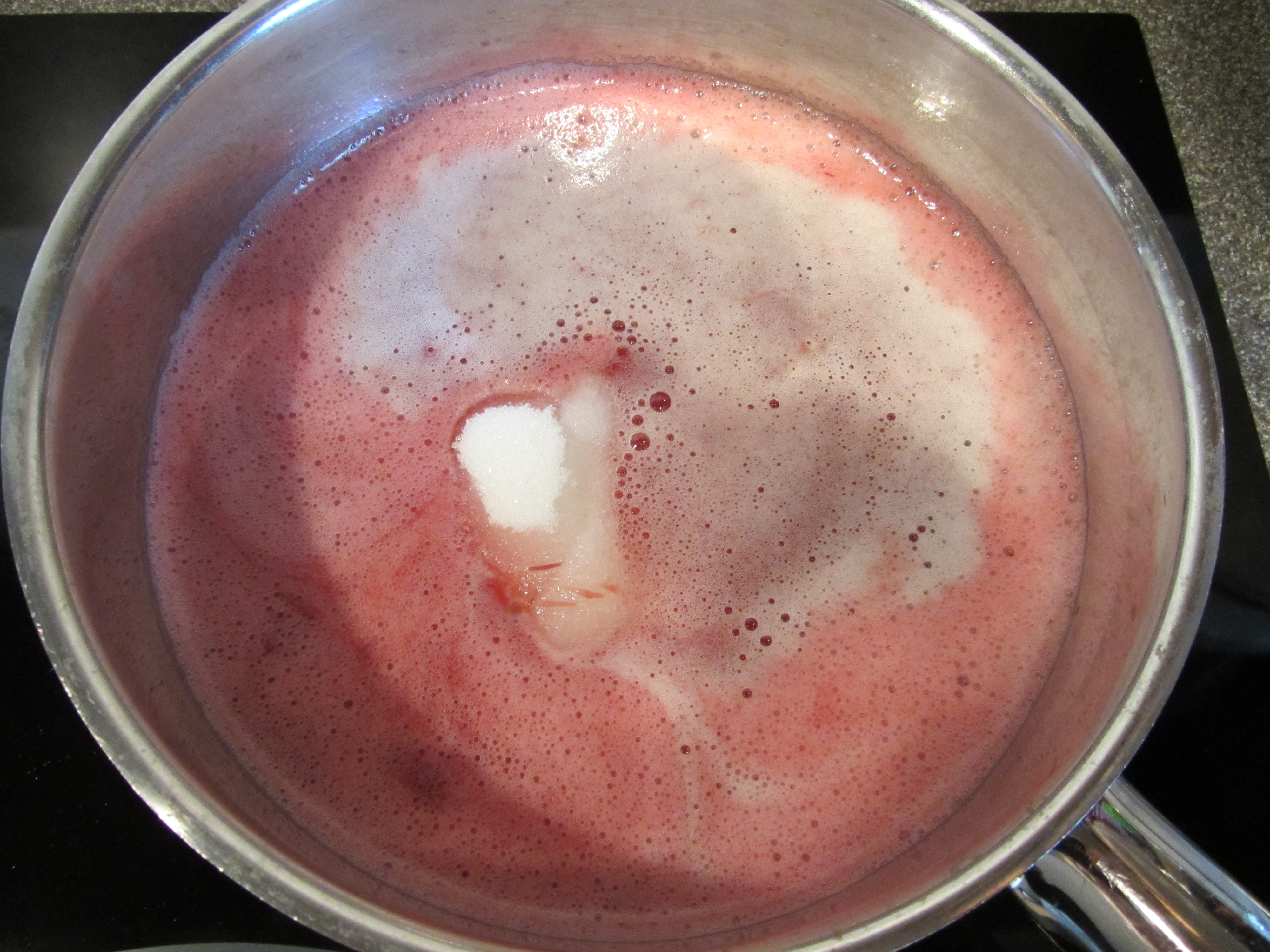
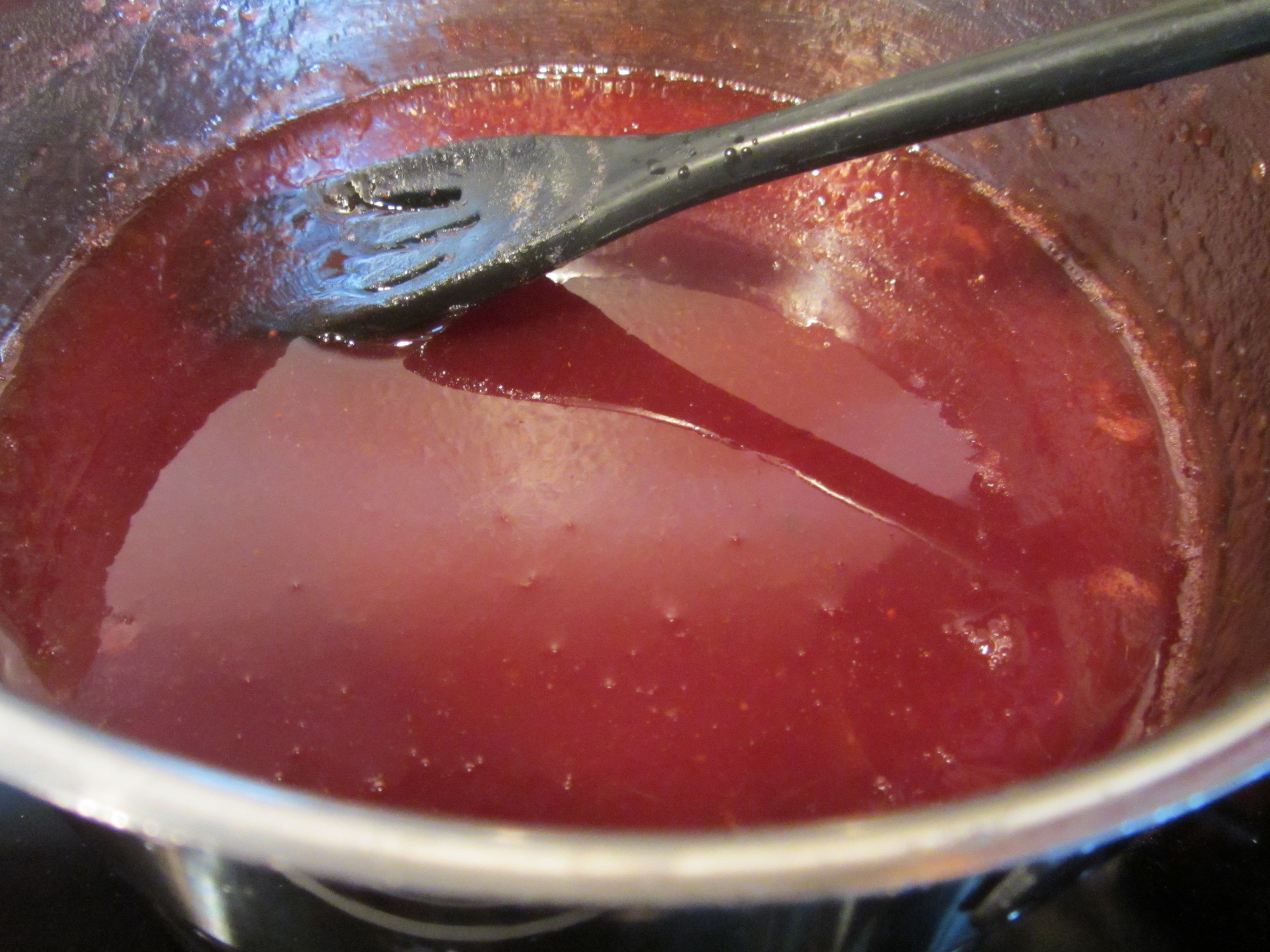
The mixture is cooked over low heat until it reduces to the consistency of loose jam, which took a couple of hours for mine.

Dipping sauce, ginger ale, and sugar in a saucepan.

Dipping sauce, ginger ale, and sugar in a saucepan.

Reduced cranberry dipping sauce.

Reduced cranberry dipping sauce.

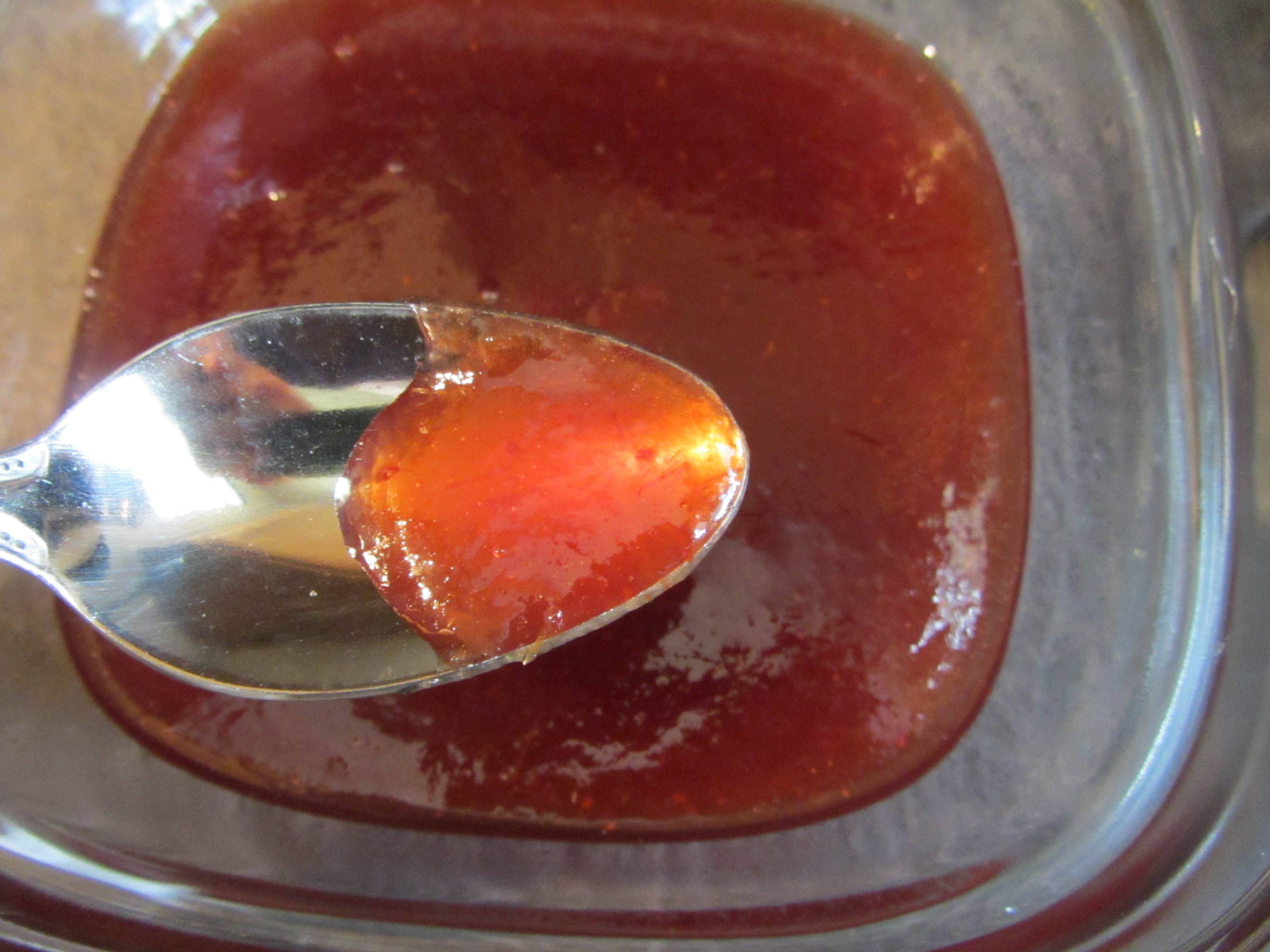
Finished cranberry jam.

Finished cranberry jam.

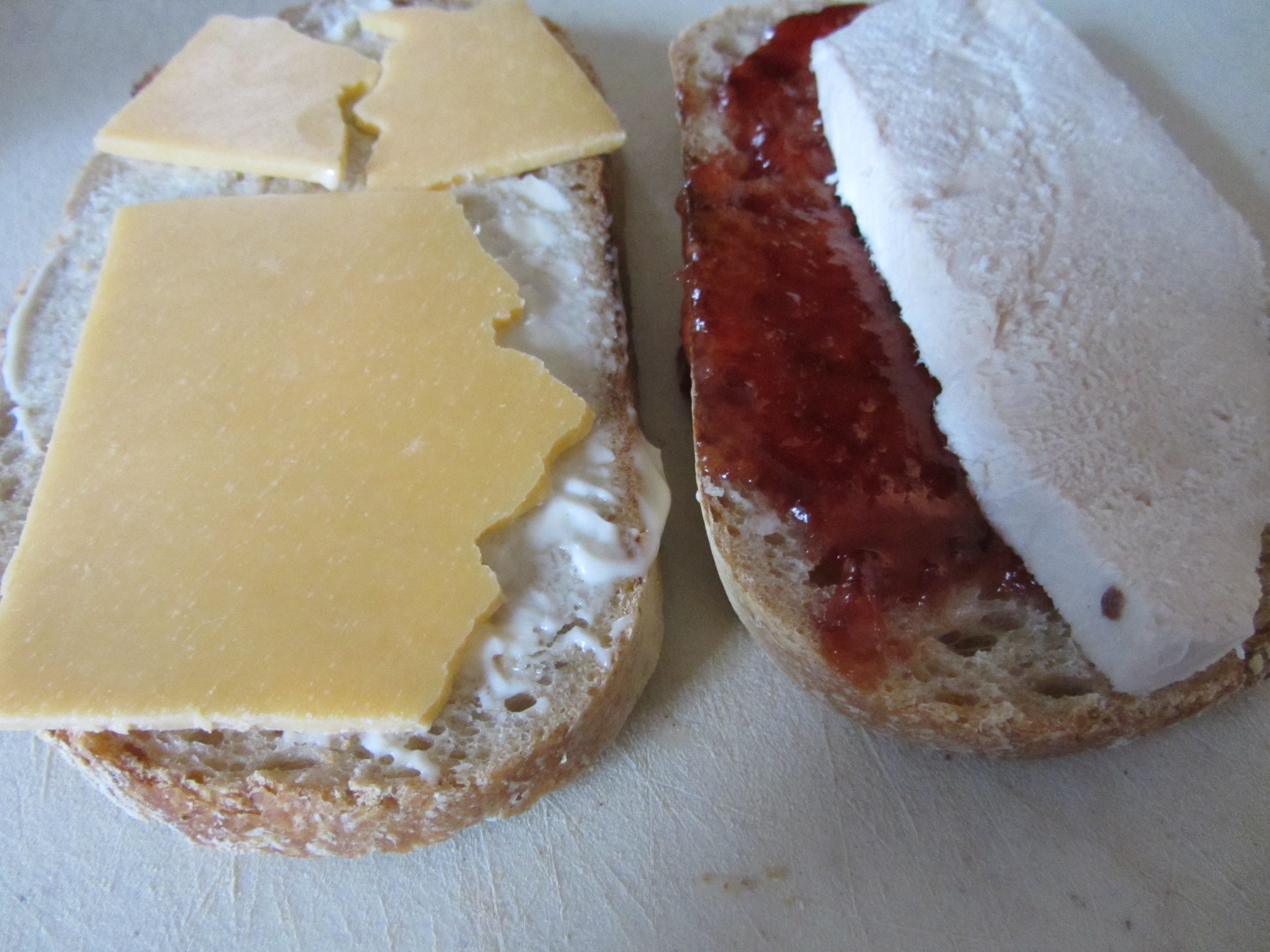
The resulting jam was really delicious, and we have since used it for turkey sandwiches, peanut butter and jelly sandwiches, and our morning toast.

Sandwich made with leftover turkey and cranberry jam.

Sandwich made with leftover turkey and cranberry jam.

The jam is tart-sweet, has a rich red color, and is easily spreadable. I liked the cranberry dipping sauce the first time around, and being able to make this jam from the leftovers makes it even more worthwhile. I will be making this one again.

Turkey Re-Hash

What better thing to eat for breakfast than Alton’s turkey hash? This recipe utilizes both the leftover turkey meat and the leftover corn bread pudding.

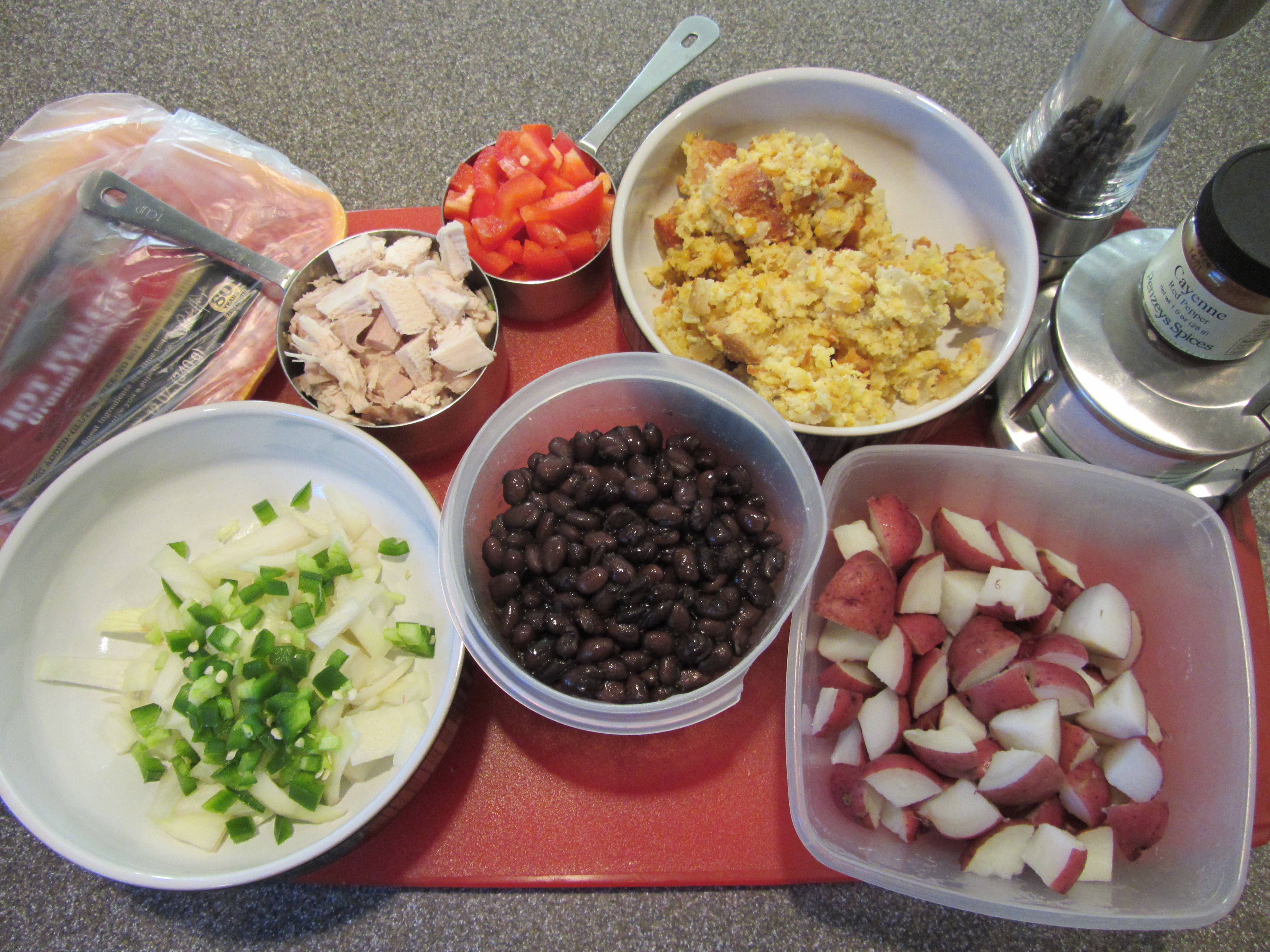
Ingredients for turkey hash:  breakfast sausage, onion, jalapeno, bell pepper, cooked red potatoes, black beans, leftover corn bread pudding, leftover turkey, cayenne, salt, and pepper.

Ingredients for turkey hash: breakfast sausage, onion, jalapeno, bell pepper, cooked red potatoes, black beans, leftover corn bread pudding, leftover turkey, cayenne, salt, and pepper.

To start, Alton tells you to heat a cast iron skillet over medium-high heat. Since we have a brand new smooth top range, I opted not to use cast iron, as I have heard that it can scratch a smooth top range. Instead, I used a heavy non-stick skillet. Once the pan is hot, add a half pound of breakfast sausage and cook it until it renders some of its fat; I used a spicy Italian sausage.

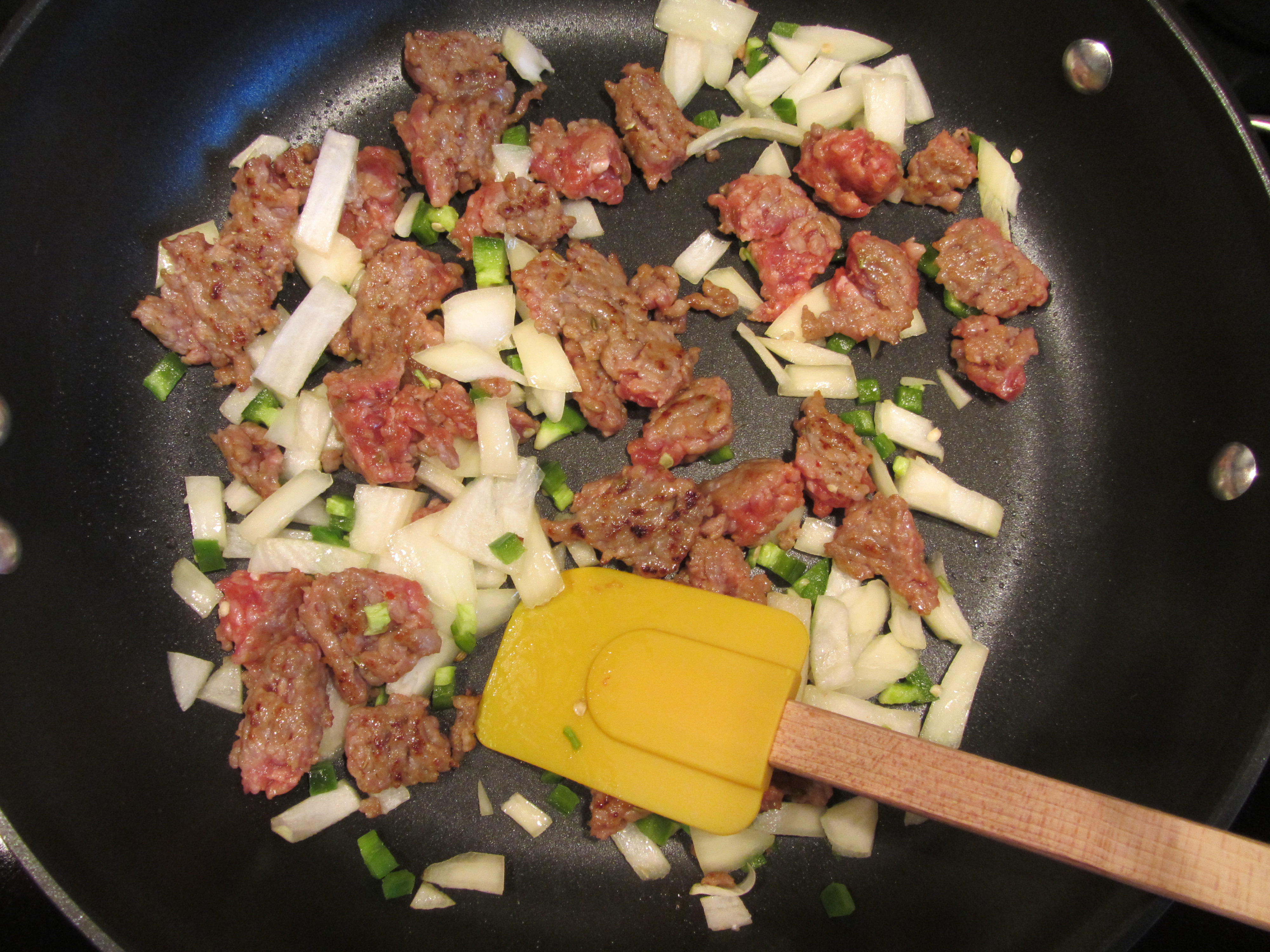
Sausage rendering fat.

Sausage rendering fat.

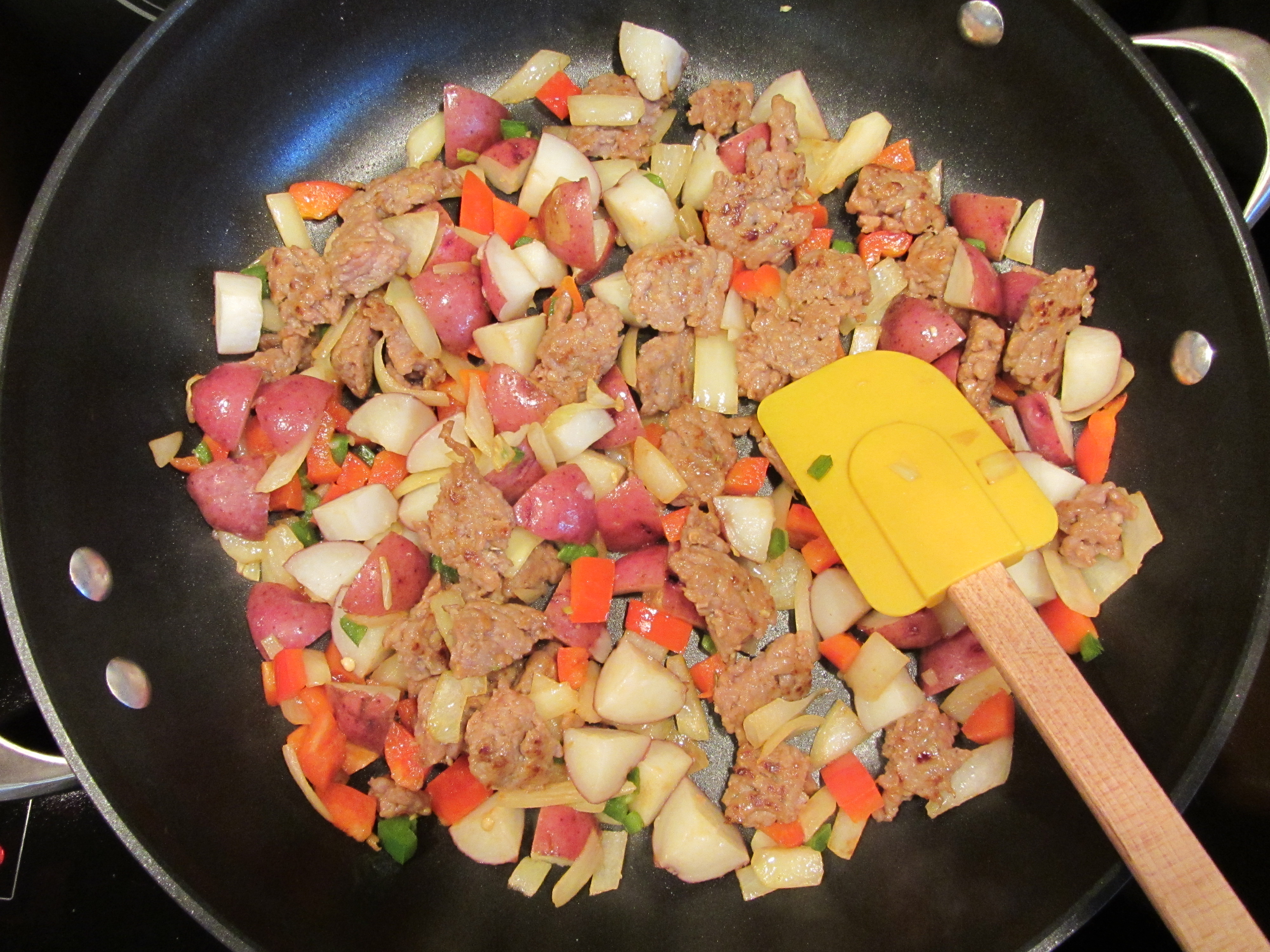
To the sausage, add half an onion and half a jalapeno, chopped.

Onion and jalapeno added to pan.

Onion and jalapeno added to pan.

When the onion is translucent, add a half cup of chopped red bell pepper and cook for a minute or two.

Bell pepper added.

Bell pepper added.

Next, add 1.5 C of cooked, cubed red potatoes (Note: I cooked my potatoes the night before by simmering them in salted water until tender). To get some good brown color on the potatoes, increase the heat to high.

Potatoes added to hash.

Potatoes added to hash.

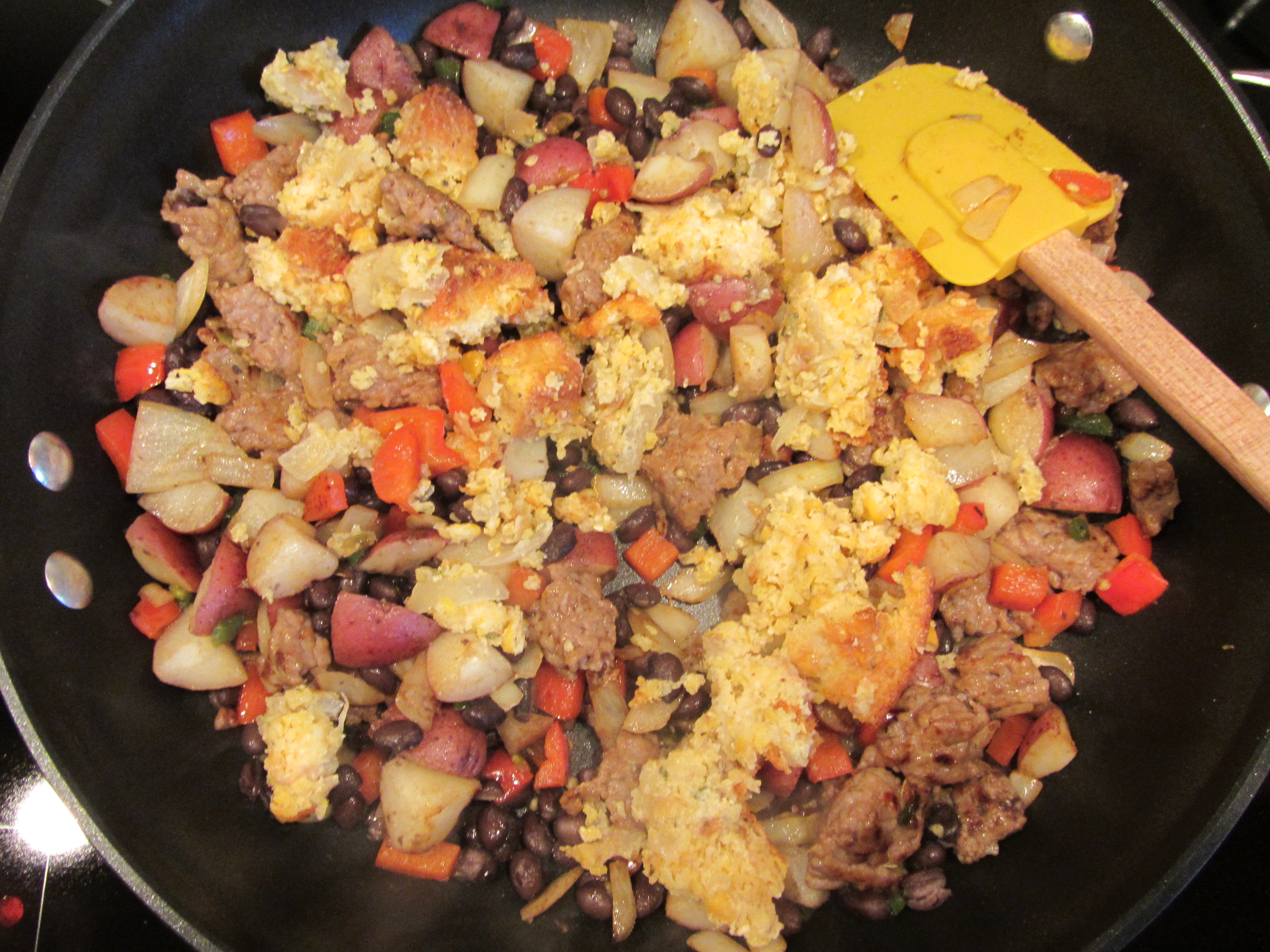
Then, add a can of black beans, drained and rinsed, followed by a couple cups of the leftover corn bread pudding, cubed.

Black beans in the pan.

Black beans in the pan.

The addition of leftover corn bread pudding.

The addition of leftover corn bread pudding.

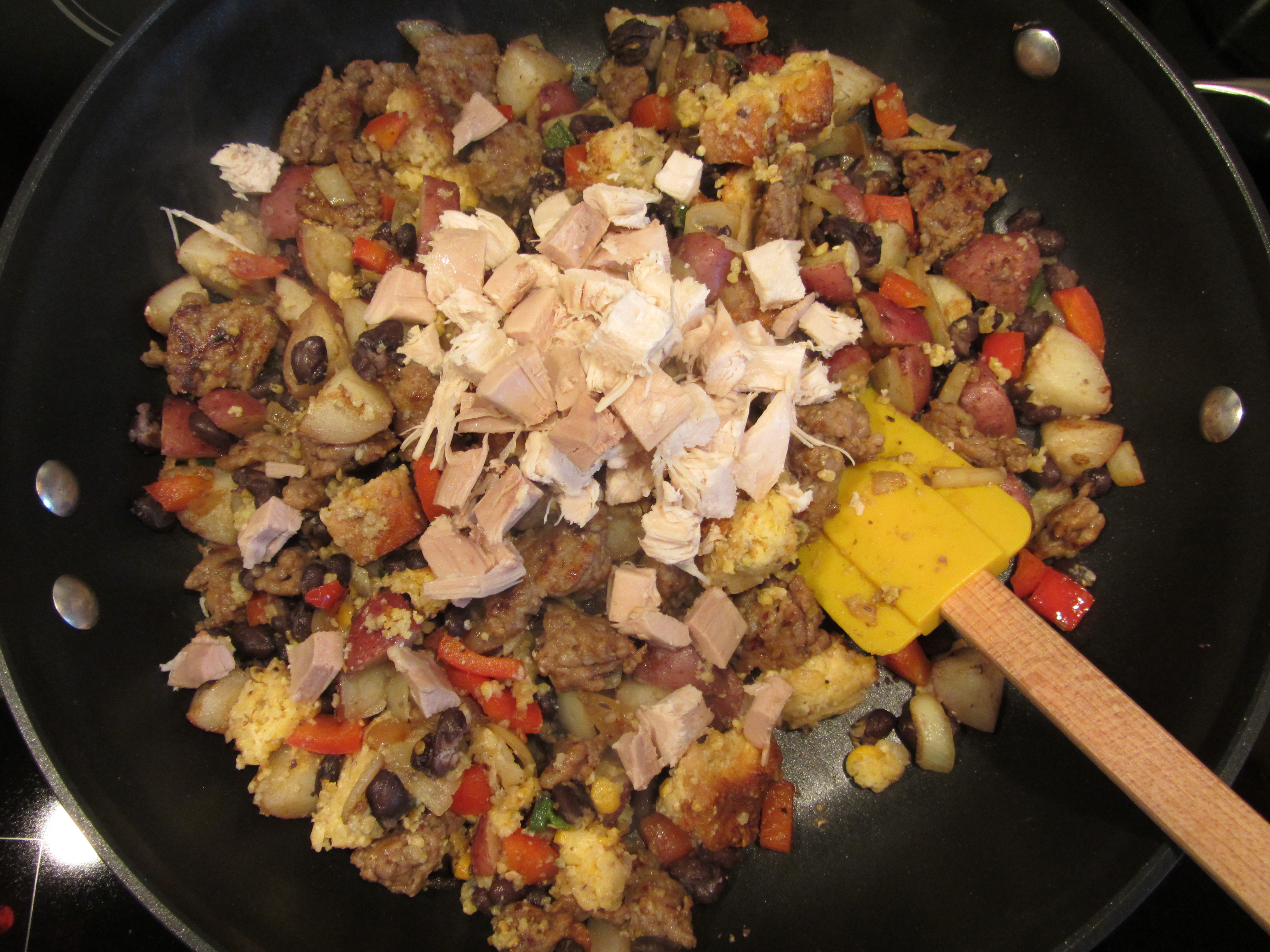
Stir everything and add a cup of cubed turkey meat.

Leftover cubed turkey added.

Leftover cubed turkey added.

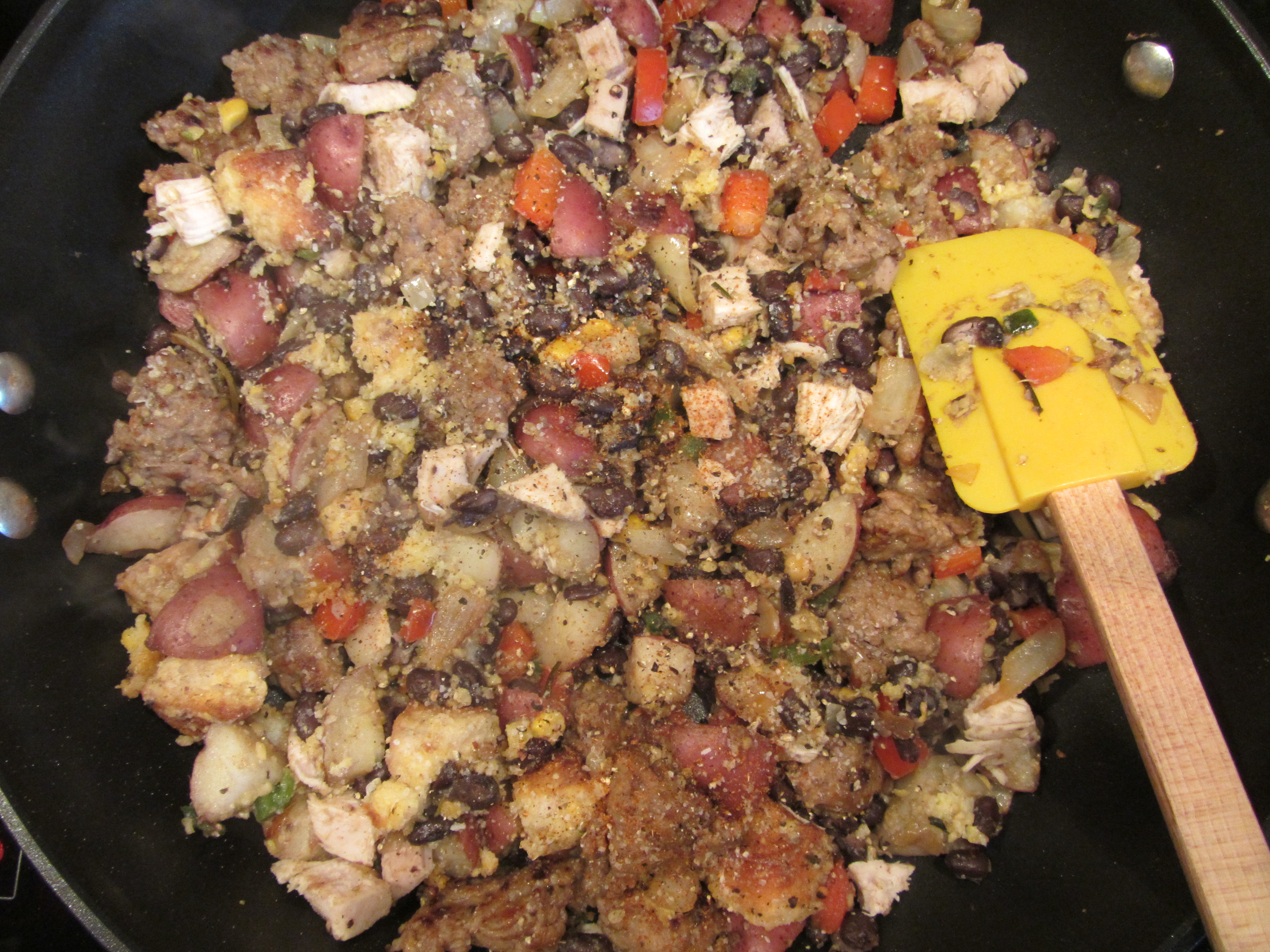
Season the hash with some cayenne pepper, salt, and pepper.

Seasonings added to the hash.

Seasonings added to the hash.

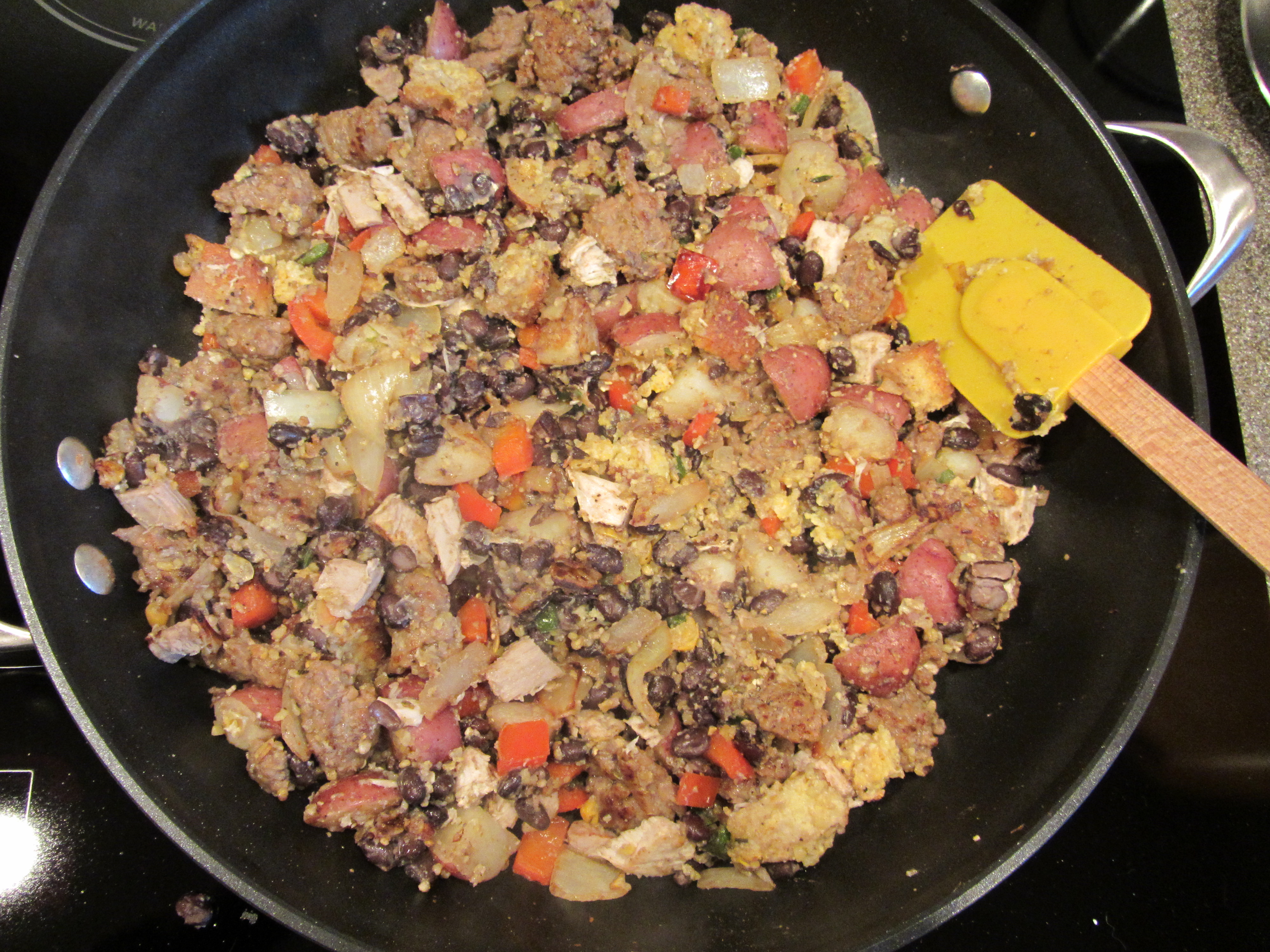
The completed hash.

The completed hash.

Turkey Re-Hash.

Turkey Re-Hash.

Serve hot. This hash was good, but not mind-blowing. It really was a perfect leftover recipe, as you could easily make this your own, adding whatever you have in the house. We rarely eat hot breakfasts during the week, so that was a treat in itself. The hash had a nice medley of textures and a pretty good level of heat, which we really like. This is a recipe I wouldn’t seek out, but I will not be surprised if I end up making a version of this again in the future with the leftovers we have on hand. Next time, though, I will likely make Alton’s mentioned additions of a couple of eggs and some cheese. Even better!

Bird to the Last Drop

Alton’s last Thanksgiving leftover recipe is for turkey soup. Allow a few hours for making this soup, as it will be better if it has longer to cook.

Ingredients for turkey soup:  vegetable broth, turkey carcass, frozen vegetables, rice, cubed turkey, Old Bay, thyme, salt, and pepper.

Ingredients for turkey soup: vegetable broth, turkey carcass, frozen vegetables, rice, cubed turkey, Old Bay, thyme, salt, and pepper.

To make it, combine two quarts of vegetable broth with the remains of your turkey carcass.

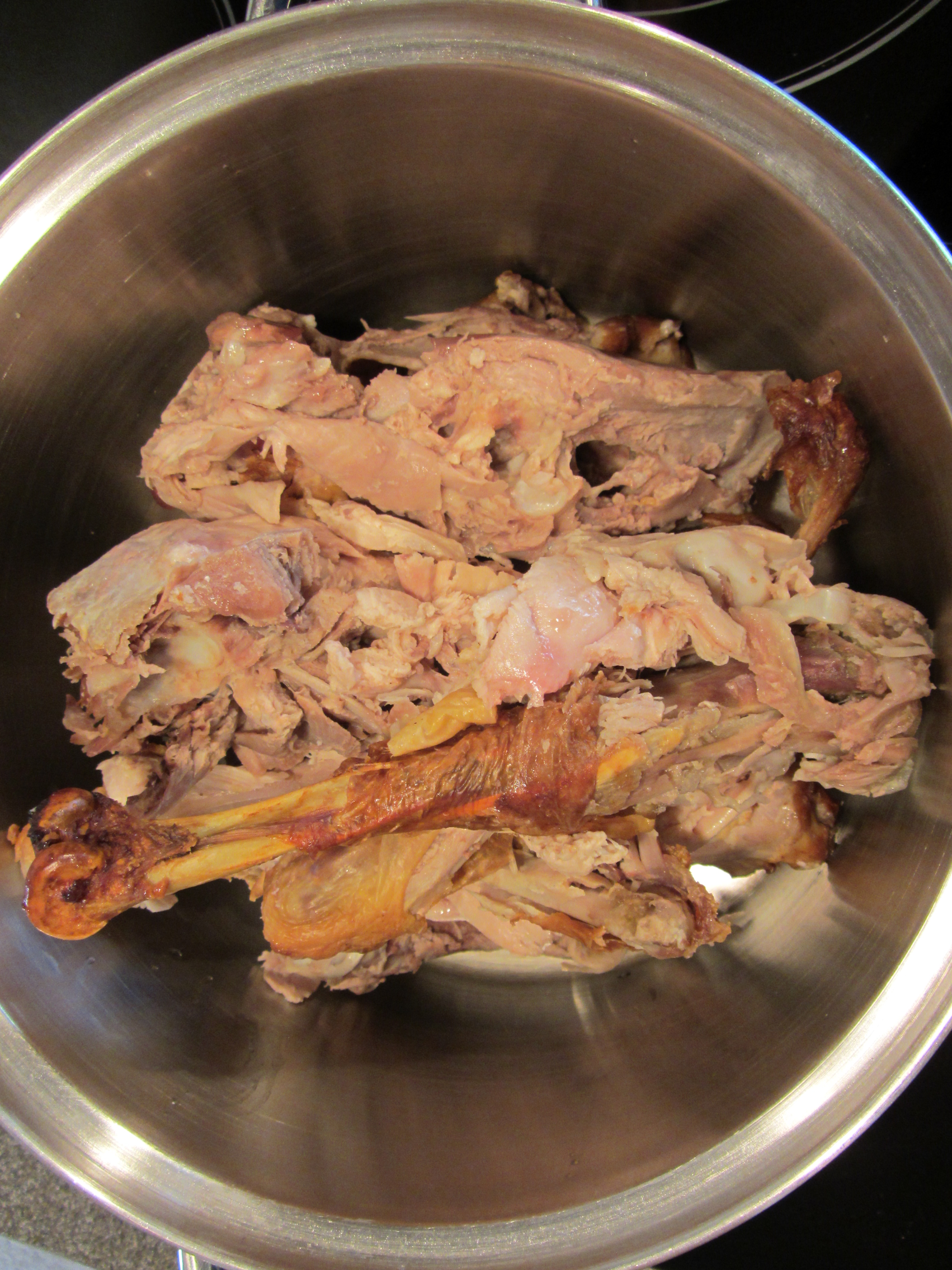
Broken down turkey carcass.

Broken down turkey carcass.

Turkey carcass and vegetable broth.

Turkey carcass and vegetable broth.

Cover this and simmer it over low heat. While the online recipe tells you to cook this for an hour, it will only be better if you can cook it longer. I simmered my bones for 2.5 hours.

Turkey carcass after simmering for 2.5 hours.

Turkey carcass after simmering for 2.5 hours.

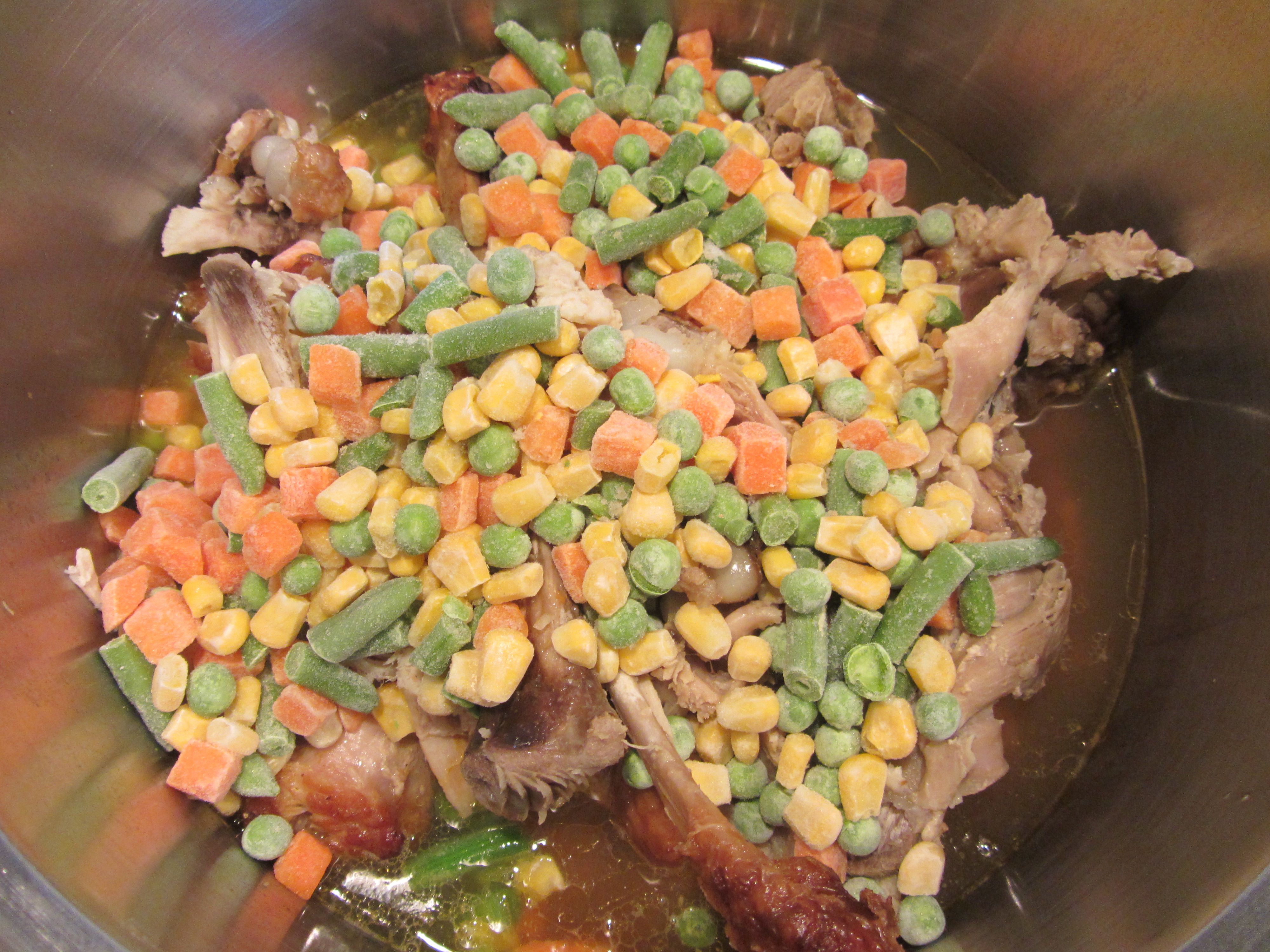
After a good simmer, add 10 ounces of frozen vegetables (I added 12 oz), 1/2 C of rice, 2 C of cubed turkey meat, 1 t of Old Bay Seasoning, 2 t of dried thyme, salt, and pepper.

Addition of frozen vegetables.

Addition of frozen vegetables.

3-2-15 038

Addition of rice.

Addition of rice.

Addition of leftover turkey meat.

Addition of leftover turkey meat.

Salt, pepper, and thyme added to soup.

Salt, pepper, and thyme added to soup.

Simmer the soup for an additional 20 minutes, remove the bones, and serve.

Turkey soup after final 20 minute simmer.

Turkey soup after final 20 minute simmer.

Turkey soup after fishing bones out.

Turkey soup after fishing bones out.

I made the soup a day prior to serving it. We returned home Saturday, after doing a mountain bike race in Oregon, and this turkey soup was the perfect meal to come home to. It was the epitome of comfort food, with a super rich mouthfeel, a variety of textures, and the flavor of a slow-cooked stock with lots of thyme.

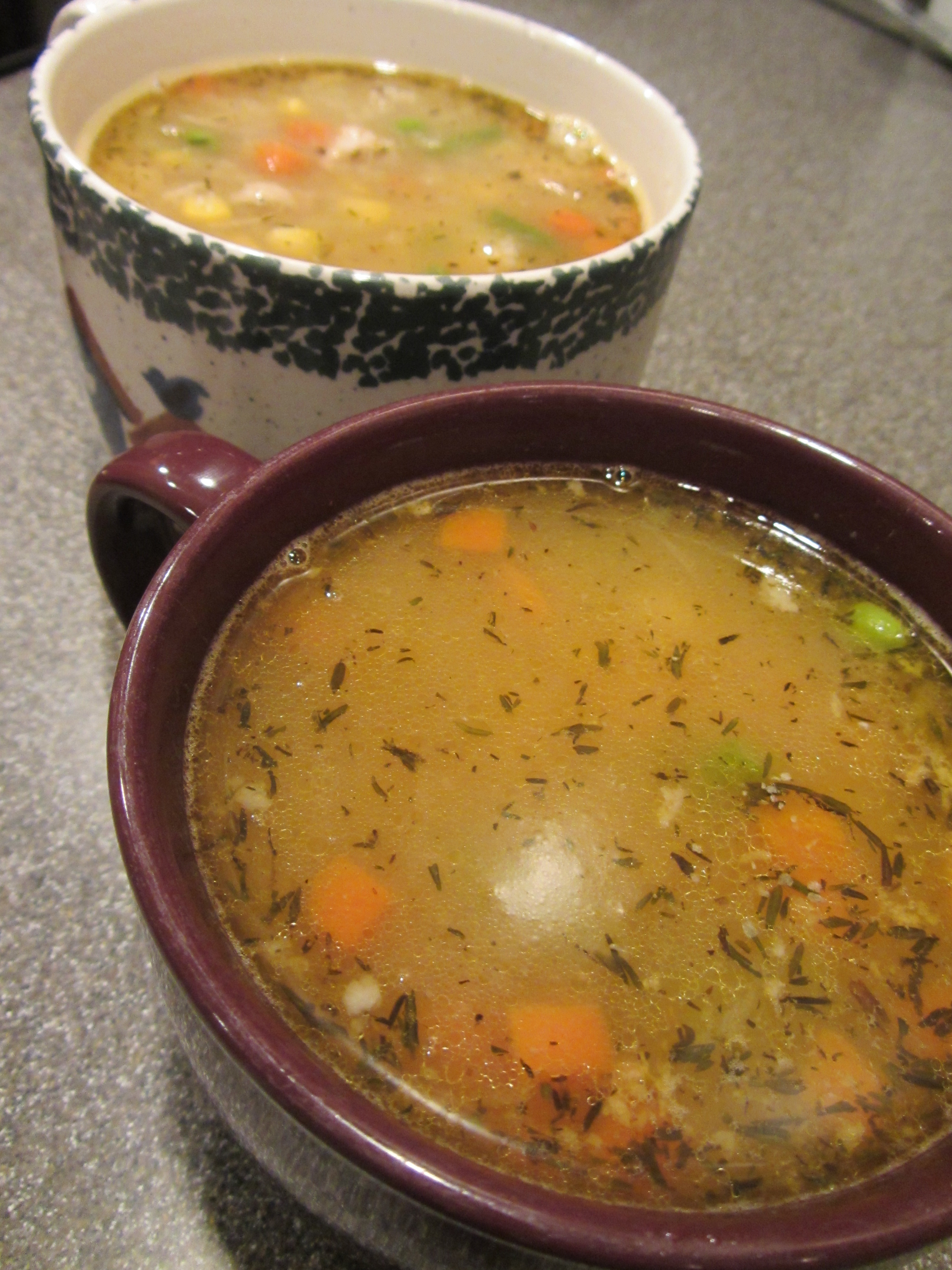
Finished turkey soup.

Finished turkey soup.

We thought this turkey soup was great, and I will surely be making this with our future turkey leftovers. Delicious and easy! The richness of the soup makes it a meal in itself. Keep this one in mind for Thanksgiving this year, or should you need an excuse to make a Good Eats turkey at any time in the year!


French Onion Soup

I’m not gonna lie – I was excited when I saw that Alton’s French onion soup was next on the agenda. I have loved French onion soup since I was a kid, even vaguely recalling the first time I had it. I was in a restaurant with my parents and brother (I believe it was a restaurant called Jonathan’s, but I may be wrong on the location) and my parents encouraged me to try onion soup. When I saw the crock full of steaming broth, crusty bread, and bubbling cheese, I was not sure how to go about “attacking” it. My dad, describing the best onion soup he ever had, instructed me that the key to properly eating French onion soup is to be sure to get a bit of broth (and onion), bread, and cheese in every bite. Oh, and he also advised me to use the side of the crock to help to “cut” the cheese. It was love at first bite for me, and I, along with the rest of my family, have continued to love this classic soup ever since. Somewhere along the line, French onion soup even managed to become our go-to Christmas Eve meal. How? I don’t recall, but I know the idea was my mom’s… and that it was pure genius.

I have made a plethora of French onion soup recipes, including those from Julia Child (though delicious, I do not recommend this recipe if you plan a family outing in a confined car the following day), Thomas Keller, Tyler Florence, and Cook’s Illustrated. I am sure there have been others. Last weekend, I added Alton Brown’s recipe from Good Eats to this list.

I watched the 9th episode of Good Eats, taking notes on Alton’s preparation in the show. He strictly recommends using sweet onions (preferably Vidalias), or a combination of sweet and red onions. I opted to do the latter. Since I was making a double batch of soup, I ended up using about eight pounds of onions, with half being of each type of onion. Alton suggests using an electric skillet for the soup, but I do not have one, so I used a standard stockpot.

Per Alton’s instructions, I melted butter in my pan and added my sliced onions in layers, sprinkling Kosher salt over each layer.

Melting butter

Melting butter

First layer of sweet onions in the pan.

First layer of sweet onions in the pan.

Combination of sweet and red onions, along with salt.

Combination of sweet and red onions, along with salt.

After the onions sweated for a while, I began stirring them every 15 minutes until they had drastically cooked down and were caramelized to a dark brown. This took at least a couple hours for my onions.

Onions beginning to cook down.

Onions beginning to cook down.

8-12-2014 010

Onions after a couple hours on the stove.

Onions after a couple hours on the stove.

Once cooked down, I covered the onions with Gewurztraminer (Alton recommends this or a Chardonnay), and allowed the wine to cook down to a syrup-like state.

Wine to add to my onions.

Wine to add to my onions.

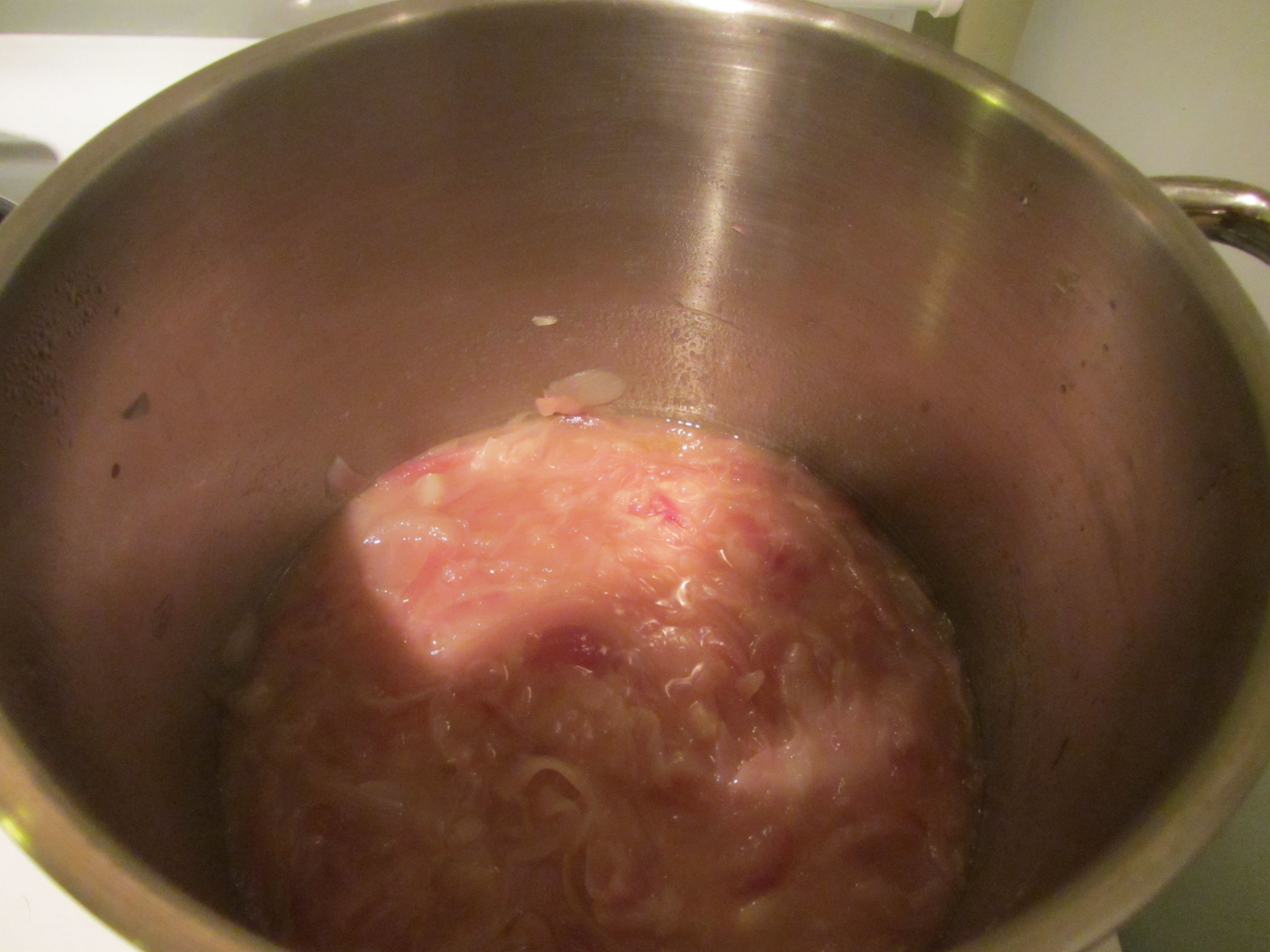
Onions with wine.

Onions with wine.

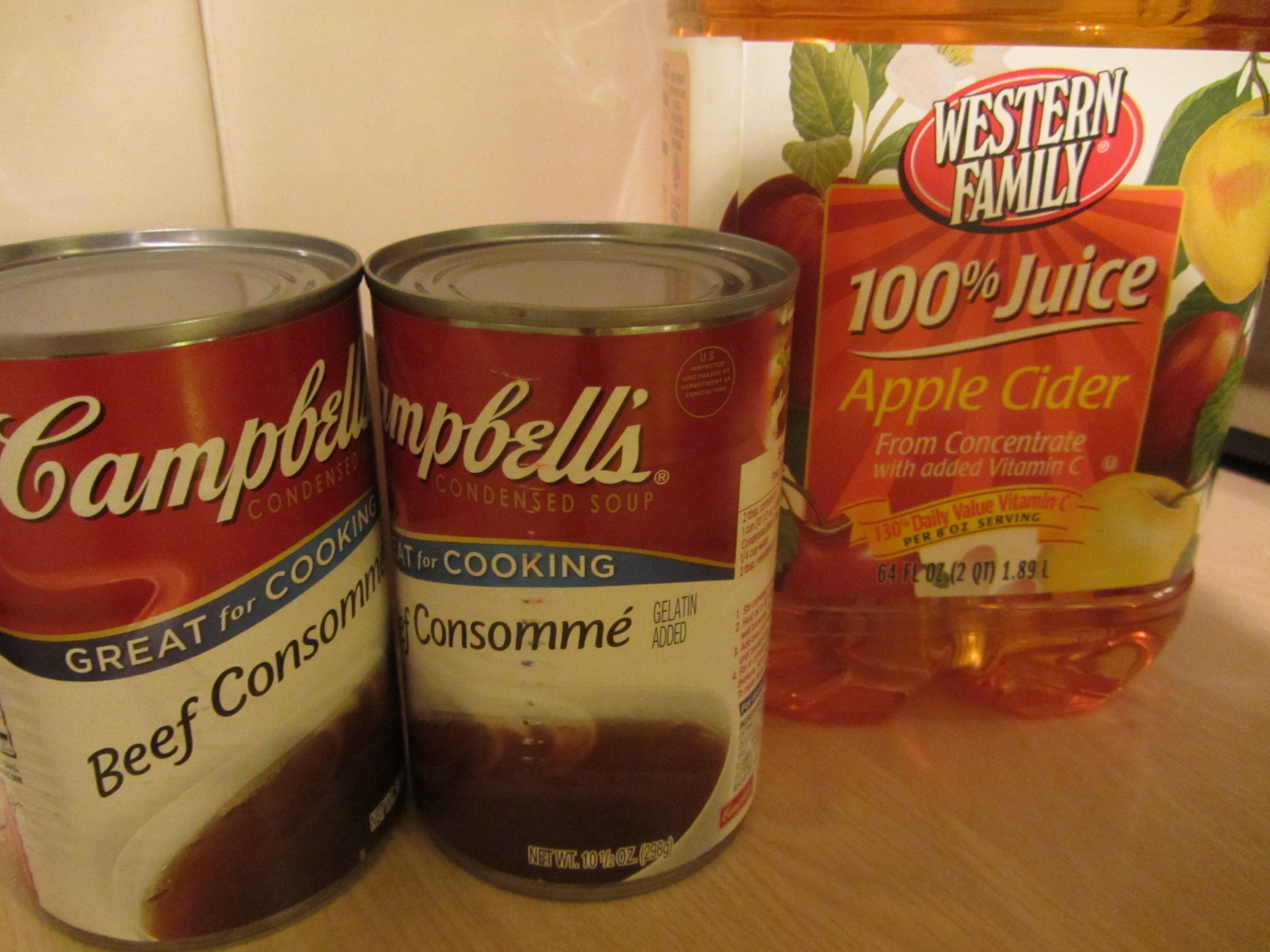
At this point, the remaining liquids were added:  beef consomme, chicken broth, and apple cider; in the show, Alton says it does not matter whether the cider is filtered, so I used filtered cider.

Beef consomme and apple cider. Not pictured:  chicken stock.

Beef consomme and apple cider. Not pictured: chicken stock.

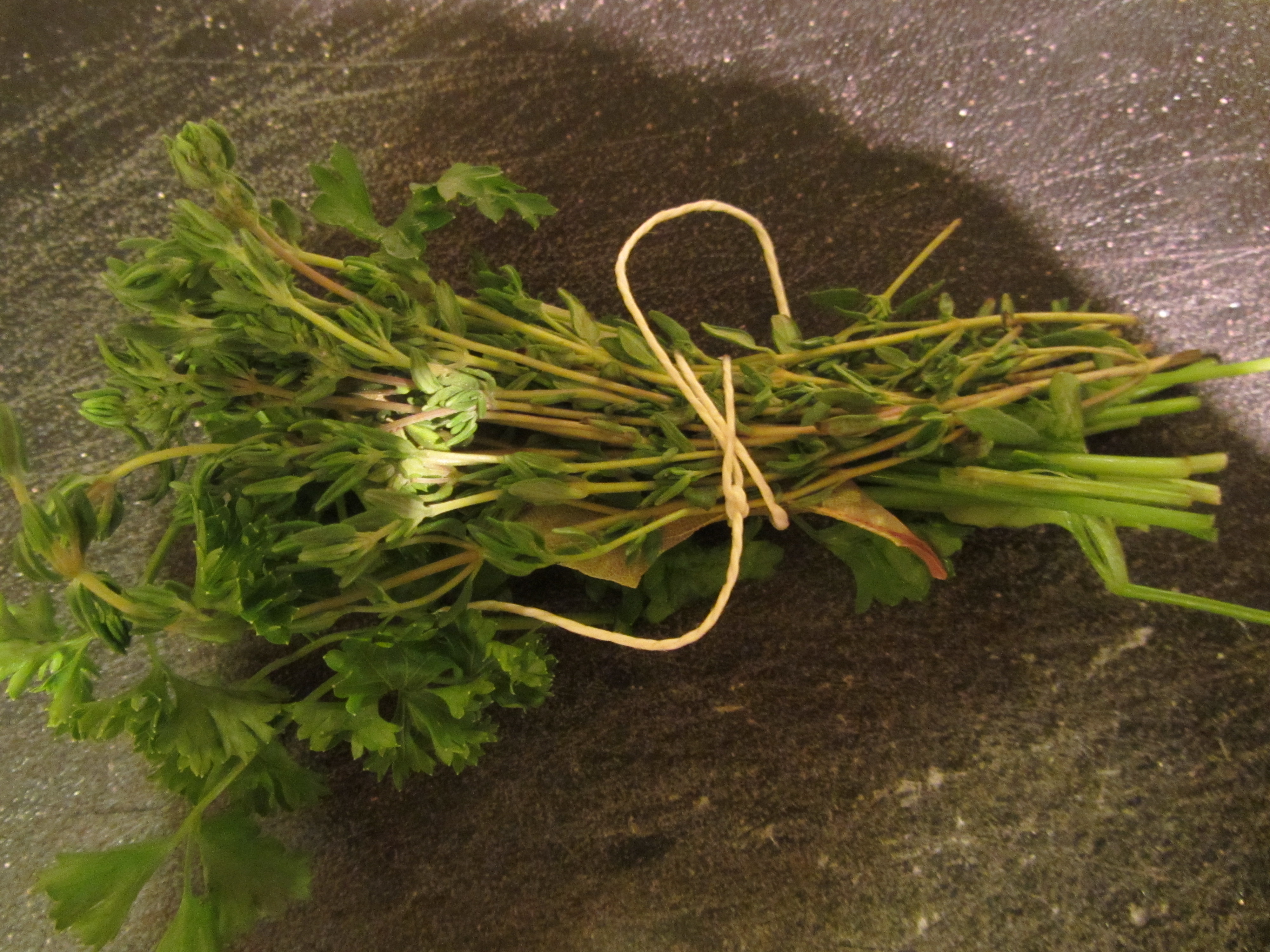
The bouquet garni is also tossed in at this point, and the soup is simmered to allow the flavors to combine.

Bouquet garni of thyme, parsley, and a bay leaf.

Bouquet garni of thyme, parsley, and a bay leaf.

After simmering, the soup is seasoned with Kosher salt, pepper, and Cognac.

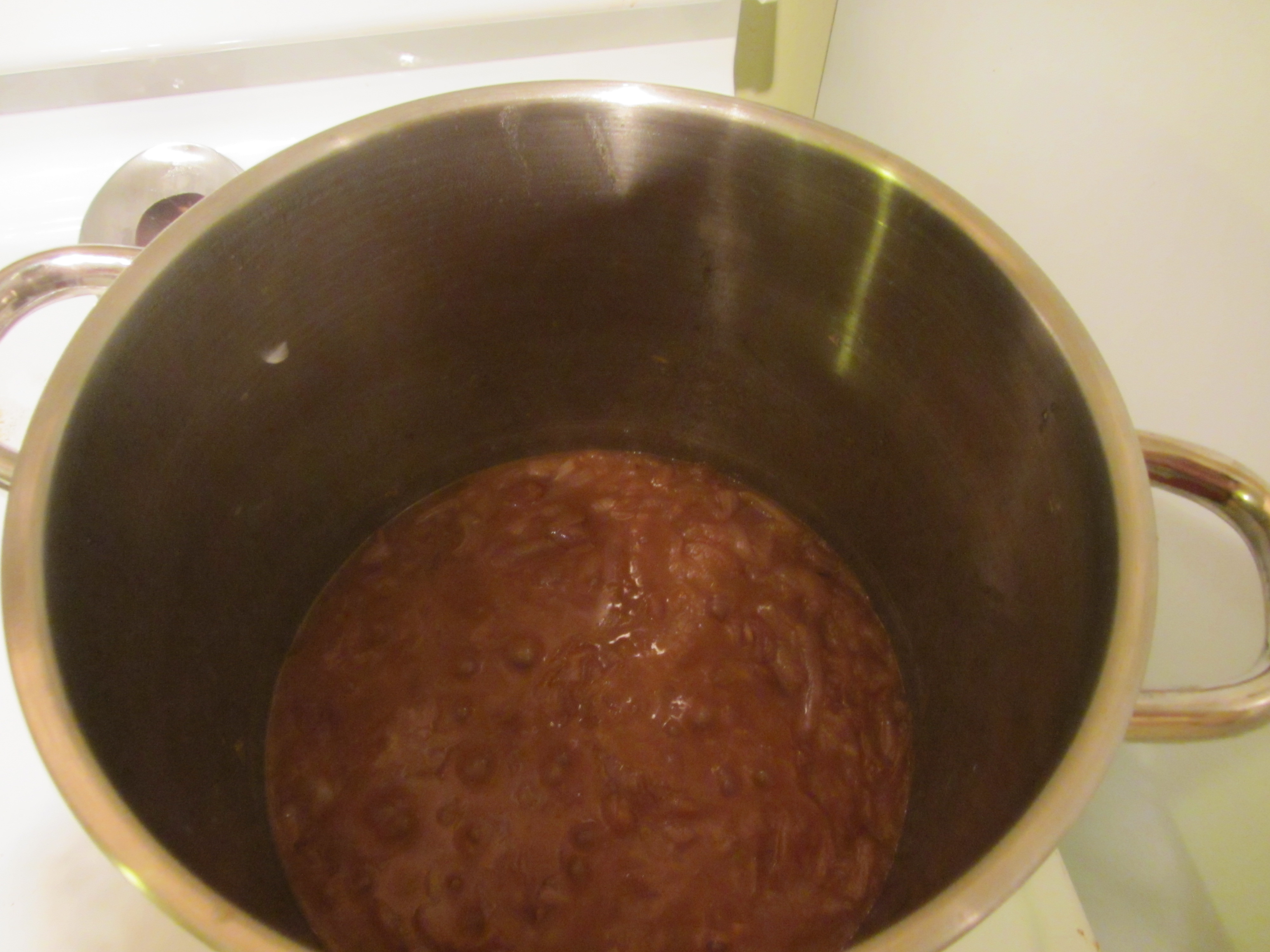
Completed soup, simmering.

Completed soup, simmering.

To serve, the soup is topped with toasted bread (toasted under the broiler), grated Parmesan, and sliced Fontina. The bowls go back under the broiler until the cheese is melted and bubbly, and voila!

Bread to be toasted under the broiler.

Bread to be toasted under the broiler.

Soup with bread on top.

Soup with bread on top.

A combination of cheeses to top the soup.

A combination of cheeses to top the soup.

Parmesan and Fontina cheeses on the soup.

Parmesan and Fontina cheeses on the soup.

The completed soup.

The completed soup.

I shared some of this onion soup with my parents, and Ted and I had it twice for dinner. My parents felt that the soup was a bit too sweet, but we did not think the same. To me, all onion soups are sweet, and this one actually had a nice tang on the finish. Perhaps it was the cider that my parents did not much care for. Overall, I thought this was a very good French onion soup. It was far less labor-intensive and time-consuming than some others I have made, but it still had well-developed flavors. I also really liked the combination of Parmesan and Fontina to top the soup. Traditionally, my mom always topped her soup with Gruyere or Emmentaler, but I think I maybe liked Alton’s combination more. Alton’s recipe is quite different from some of the others I have had, using white wine and chicken stock, as opposed to red wine and beef stock. The addition of cider is another twist. I think that the flavor of the actual onions shone more with Alton’s recipe, as the onions were not overpowered by liquids in the soup, and the soup still had a nice “bite” to it. I think it is safe to say that we will be turning to this recipe again in the future… Christmas Eve, perhaps?