


For one of my parents’ first dates, my dad took my mom out to dinner. My dad ordered oysters on the half shell as an appetizer for the two Marylanders to share. It turned out that my mom had never before eaten a raw oyster, but, wanting to impress her date, she feigned experience and got them down. If you think about it, perhaps, in a small way, oysters contributed to my very existence.
I never tried a raw oyster myself until 2015 when we took a trip to New Orleans between Ted’s chemo/radiation and subsequent surgery. We headed to a nice restaurant for happy hour and ordered a dozen oysters to go with our cocktails. Our waitress suggested that we try our first oysters on Saltine crackers, along with some cocktail or mignonette sauce, and her tips led to us ordering an additional dozen.
Horseradish Cream Sauce
Apparently, Alton likes to eat his oysters at home with a horseradish cream sauce. This sauce should be made several hours before you will be eating your oysters.
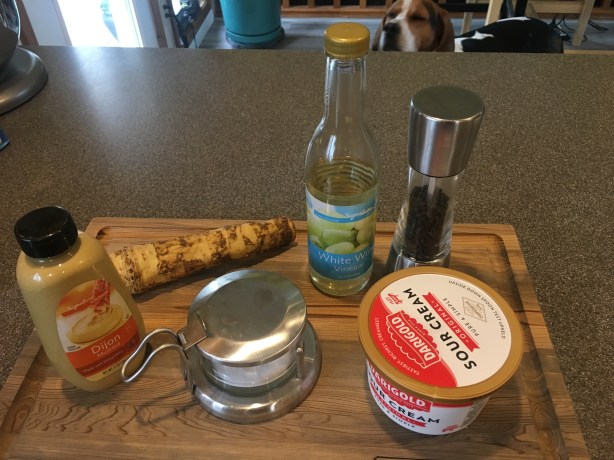
Ingredients for horseradish sauce: horseradish root, Dijon mustard, Kosher salt, white wine vinegar, pepper, and sour cream.
When serving oysters at home, plan for six large, or eight to ten small, oysters per person as an appetizer. Store oysters flat in the refrigerator with damp cloths between layers, and do not keep them for any longer than a week (preferably only a day or two). Shucking oysters can be a bit tricky, so it’s helpful to watch some videos. Alton’s tips are to hold the round side of the oyster down, insert the knife at the hinge, and give the knife a little twist. Oh, and don’t forget to cut under the oyster once you have the shell open.

Oysters, ready to be shucked.
Now, back to the sauce. Grate 1/4 C of peeled horseradish root into a bowl, using a microplane. Add 1 t white wine vinegar, 1/4 t pepper, 1/2 t Kosher salt, 1 T Dijon mustard, and 1 C sour cream.


Whisk the sauce until combined, and refrigerate until use.

Horseradish cream sauce.
The sauce will get less intense with time. I served this sauce with some fresh oysters on the half shell, and I really liked its subtle heat.

Horseradish cream sauce served with shucked oysters.
If you are looking for a horseradish sauce that really burns your nose, this isn’t it. Of course, you could always add some additional horseradish to make it spicier. This sauce would also pair beautifully with red meat, as it would not overpower the flavor of the meat. This is a really well-balanced, delicious sauce.
Baked Oysters Brownefeller
If you are an oyster newbie, you may find a baked preparation like Alton’s version of Oysters Rockefeller to be less intimidating. Still, though, you will need to get some raw oysters and shuck them. The oysters I ended up with were Pacific oysters, I believe, and they were humongous! I would opt for smaller oysters next time. For Alton’s baked oysters, melt 6 T of unsalted butter in a large skillet over medium-low.
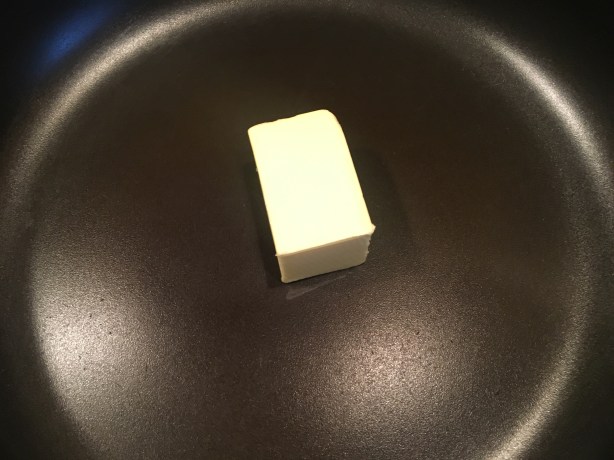
Unsalted butter in a large skillet.
Once melted, add 3/4 C chopped onion, 3/4 C chopped celery, and 1/2 t Kosher salt. Increase the heat to medium and cook the vegetables for about five minutes.
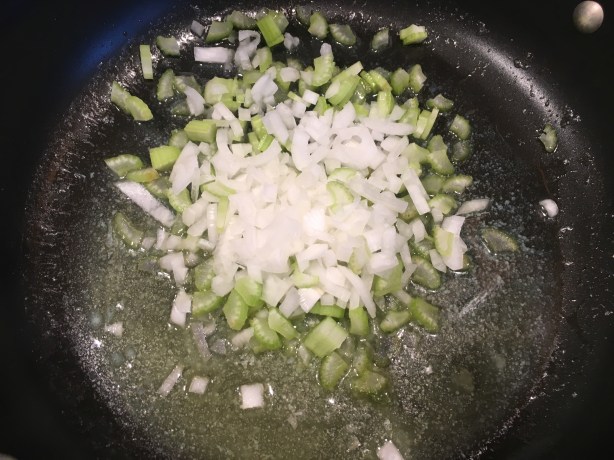
Celery, onion, and Kosher salt added to butter.
Add 1 T minced garlic and cook for about a minute.
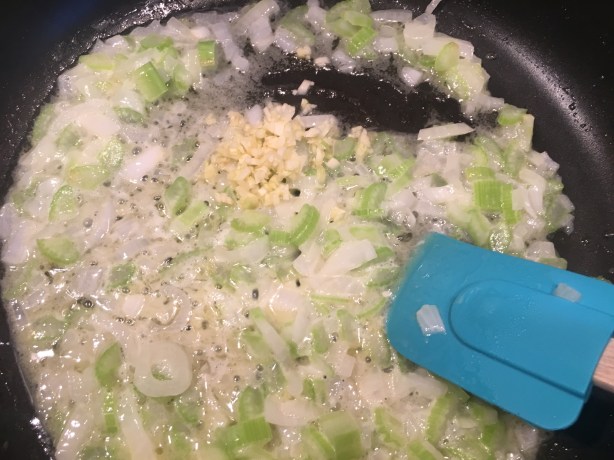
Garlic mixed in.
Next, add a 14 oz can of artichoke hearts drained/chopped, 1 C Panko breadcrumbs, 2 t lemon zest, 1/2 t pepper, 1 t dry oregano, and a pinch of Kosher salt. Stir this mixture until the butter has been absorbed by the breadcrumbs, and then cook for another minute.


Spread 4 C of rock salt on a rimmed baking sheet, and nest 24 shucked oysters in the salt (I did fewer oysters since there were only two of us). Evenly distribute the Panko mixture to cover the oysters.


Bake the oysters at 425 for 10-12 minutes, or until the topping is golden.

Oysters into the oven.

Oysters Brownefeller.
I wanted to like this more than I did, but I don’t think I can blame all of that on Alton’s recipe. The biggest problem I had with this recipe came down to my oysters themselves. My market ordered oysters for me, and said they would get what was available, which meant I had no choice in what they received. My oysters were honestly just too big, which made them very difficult to eat along with all of the topping. Oysters are supposed to be a one-bite experience, which was just impossible with mine. The flavor of the topping was nice, but the topping did not crisp up as much as I hoped it would. Again, though, I wonder if this was because my oysters were so large that they contributed a lot of moisture to the topping. I imagine that this recipe could be quite successful with small oysters, so I would encourage oyster lovers to give this a try with better oysters.
Oyster Soup
Alton’s final oyster recipe is for an oyster soup. This recipe is a little easier because you can use pre-shucked oysters in a jar. When buying them, be sure they are in clear liquid, as cloudy liquid can be a red flag.
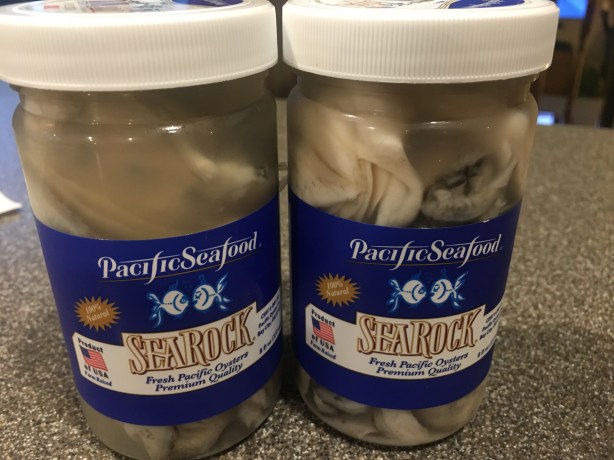
Jarred oysters.
There really are only a few ingredients in this simple soup, which begins by draining the liquid from a pint of jarred oysters into a saucepan containing a quart of heavy cream.


Heat the cream and oyster liquor, avoiding bringing it above a simmer. Meanwhile, melt 1 T unsalted butter in a large skillet over medium heat, and add two ribs of chopped celery and a large pinch of Kosher salt.


Add a chopped onion to the skillet and cook for a few minutes.
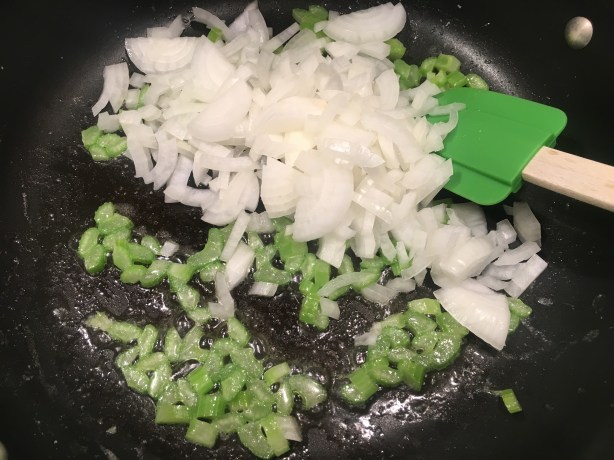
Onion added to the pan.
Next, add the drained oysters to the pan, along with 1 t celery seed and 1 1/2 t hot sauce. Cook the oysters just until they plump up and curl at the edges.


Place the oyster mixture in the carafe of a blender, along with enough of the warm cream to cover the oysters. Blend the oysters until smooth.


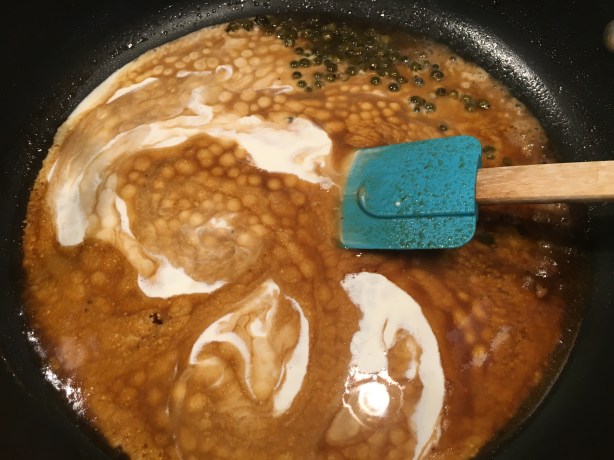
Return the remaining cream to medium heat and add the oyster puree, stirring to combine.

Oyster puree added back to remaining warm cream.
Serve the soup with a squeeze of lemon and some parsley, chives, or chervil.
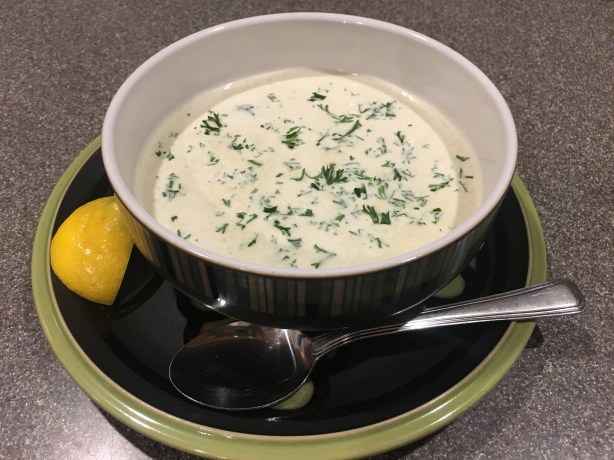
Bowl of oyster soup with lemon and parsley.
This soup had subtle briny flavor of the ocean balanced with the richness of cream, and if it had been placed in front of me I probably would have guessed it was a smooth clam chowder. I don’t think I would have ever been able to identify that oysters were the main ingredient in this soup. With the heavy cream base of this soup, I was afraid the soup would be super rich, but it was light enough that I had no trouble eating a whole bowl of it. This is a good recipe for those who like clam chowder but want to try something a little bit different.







 Allison Cooks Alton's Good Eats