Archive for December, 2014

Ribs are not something I eat on a regular basis. In fact, chances are that I will opt for a pulled pork sandwich, or something else of the sort, over a slab of baby backs. I decided to make my foray into rib making the day before I left to celebrate Christmas with my family. Amid the melee of wrapping gifts and trying to jigsaw them safely into my suitcase, I was unsure if I would really have the time to also make ribs for dinner. As always, Alton Brown made his recipe for baby back ribs look very, very easy, so I figured… why not?

Who Loves Ya Baby-Back?

After watching the 26th episode of Good Eats, I headed to the grocery store to get the ingredients I would need to make baby back ribs the Alton Brown way. Thankfully, for me, this meant only a few ingredients. My grocery store happened to have no baby back ribs on the shelf, so I asked the butcher, who had some stowed away in the freezer. Since only two of us would be eating, I purchased one slab. When I got home, I thawed my vacuum-sealed ribs in cold water, which really did not take too long. While my ribs thawed, I made Alton’s dry rub. If you plan to make these ribs time and again, go ahead and make a large batch of dry rub, as it will keep indefinitely. Alton mixes his ingredients in a quart-sized mason jar that he tops with two lids – the first lid has holes punched in it for sprinkling, while the second lid is solid for storage. I made a small batch of the rub since I did not know when I would be making the ribs again. The only key with the rub is to keep the rub’s ratio the same:  8 parts light brown sugar:3 parts Kosher salt:1 part chili powder +1 part combo of black pepper, cayenne pepper, jalapeno seasoning (I used chipotle), Old Bay Seasoning, thyme, and onion powder.

Dry rub ingredients:  light brown sugar, Kosher salt, chili powder, black pepper, cayenne pepper, chipotle seasoning, Old Bay Seasoning, thyme, and onion powder.

Dry rub ingredients: light brown sugar, Kosher salt, chili powder, black pepper, cayenne pepper, chipotle seasoning, Old Bay Seasoning, thyme, and onion powder.

Mixing the dry rub.
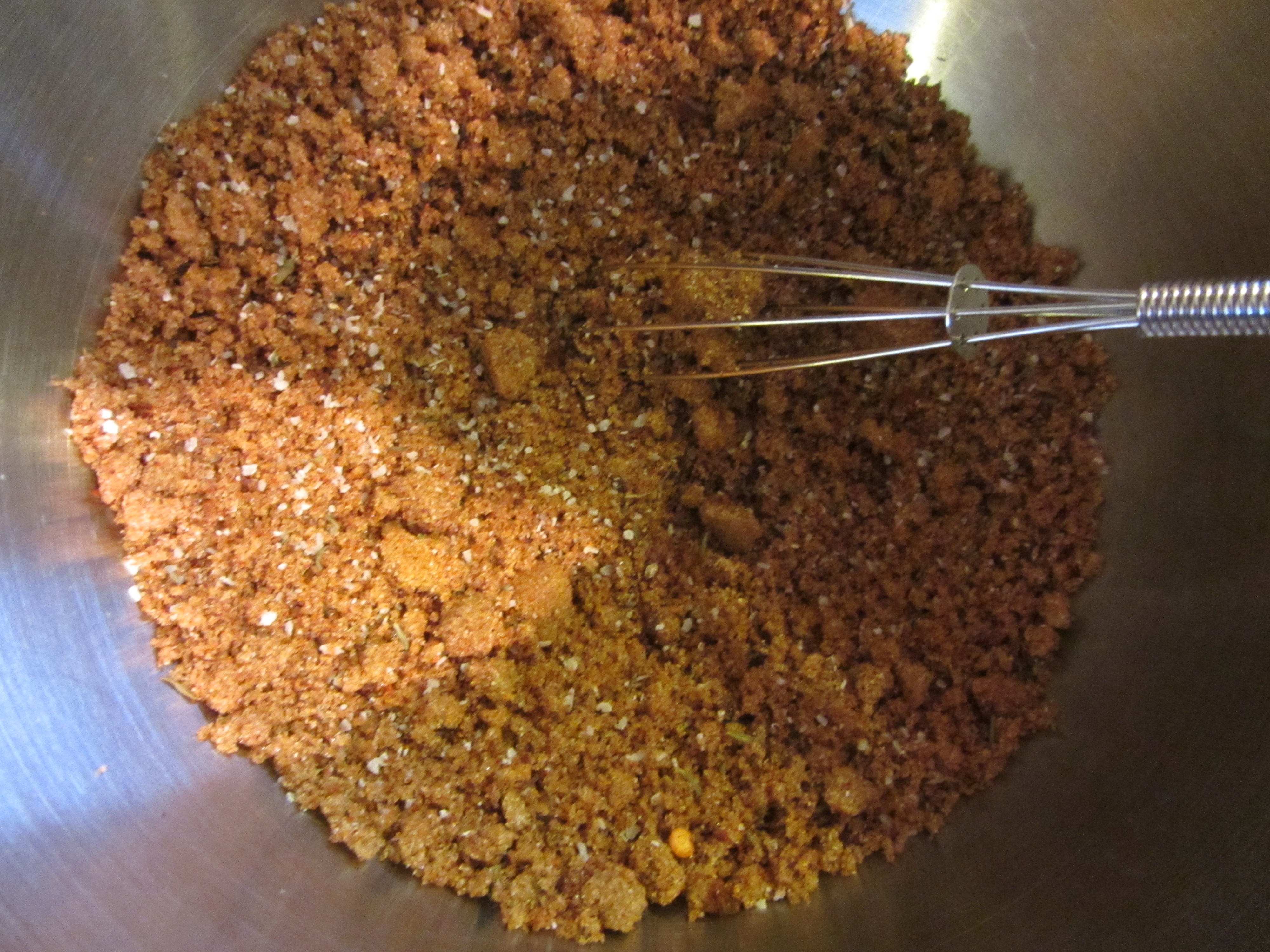
Mixing the dry rub.

Completed dry rub..

Completed dry rub..

When my ribs were thawed, I placed them on a large sheet of heavy foil, which was placed shiny side down to slow heat absorption into the ribs.

Slab of ribs on foil, shiny side down.

Slab of ribs on foil, shiny side down.

I sprinkled the top side of the ribs liberally with the dry rub, patting it gently with my hands.
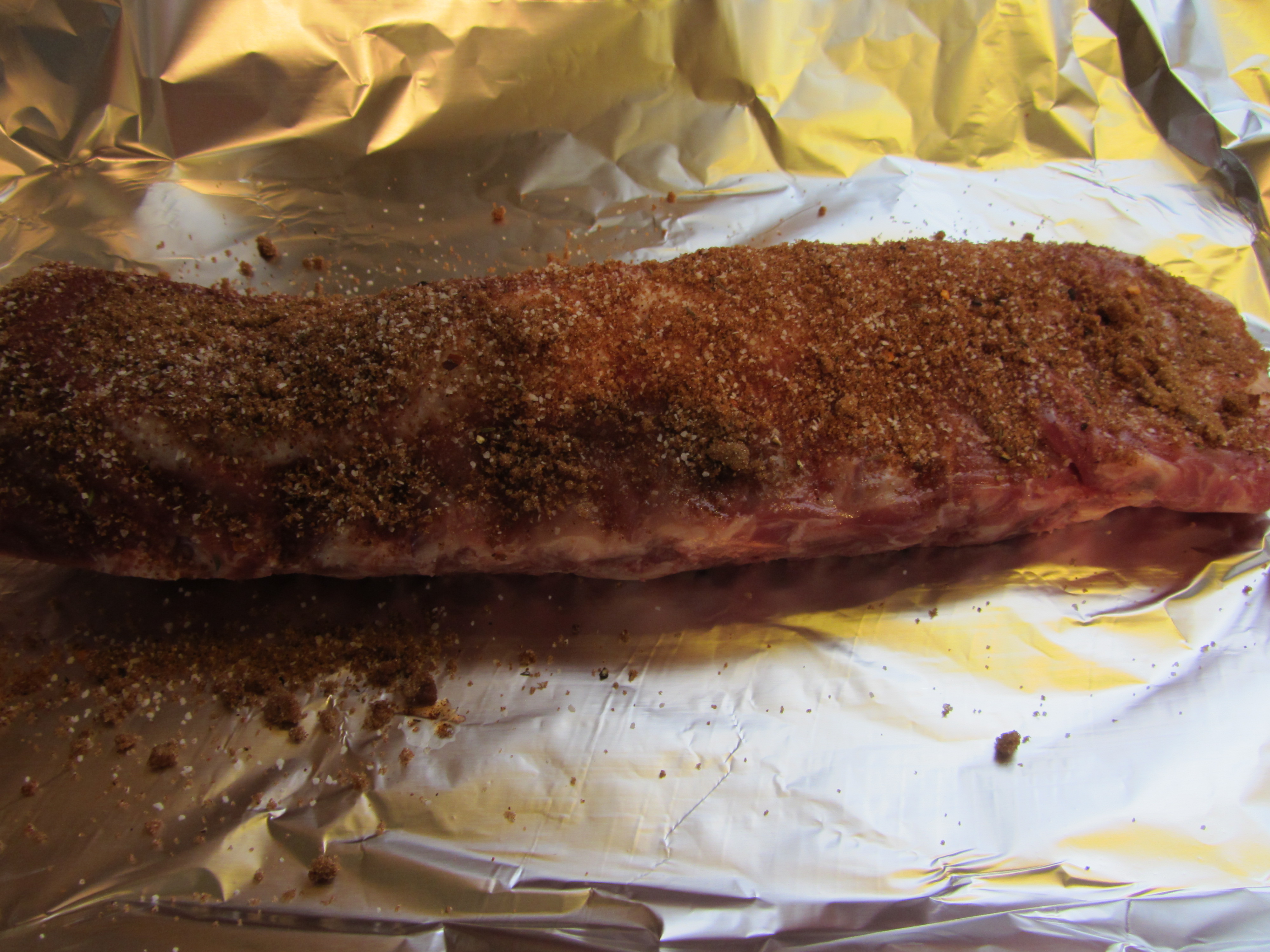
Ribs coated with dry rub.

Ribs coated with dry rub.

I flipped my ribs over and sprinkled some on the other side too, but Alton explains that the top, convex side, of the ribs is where you want to put the majority of the rub.
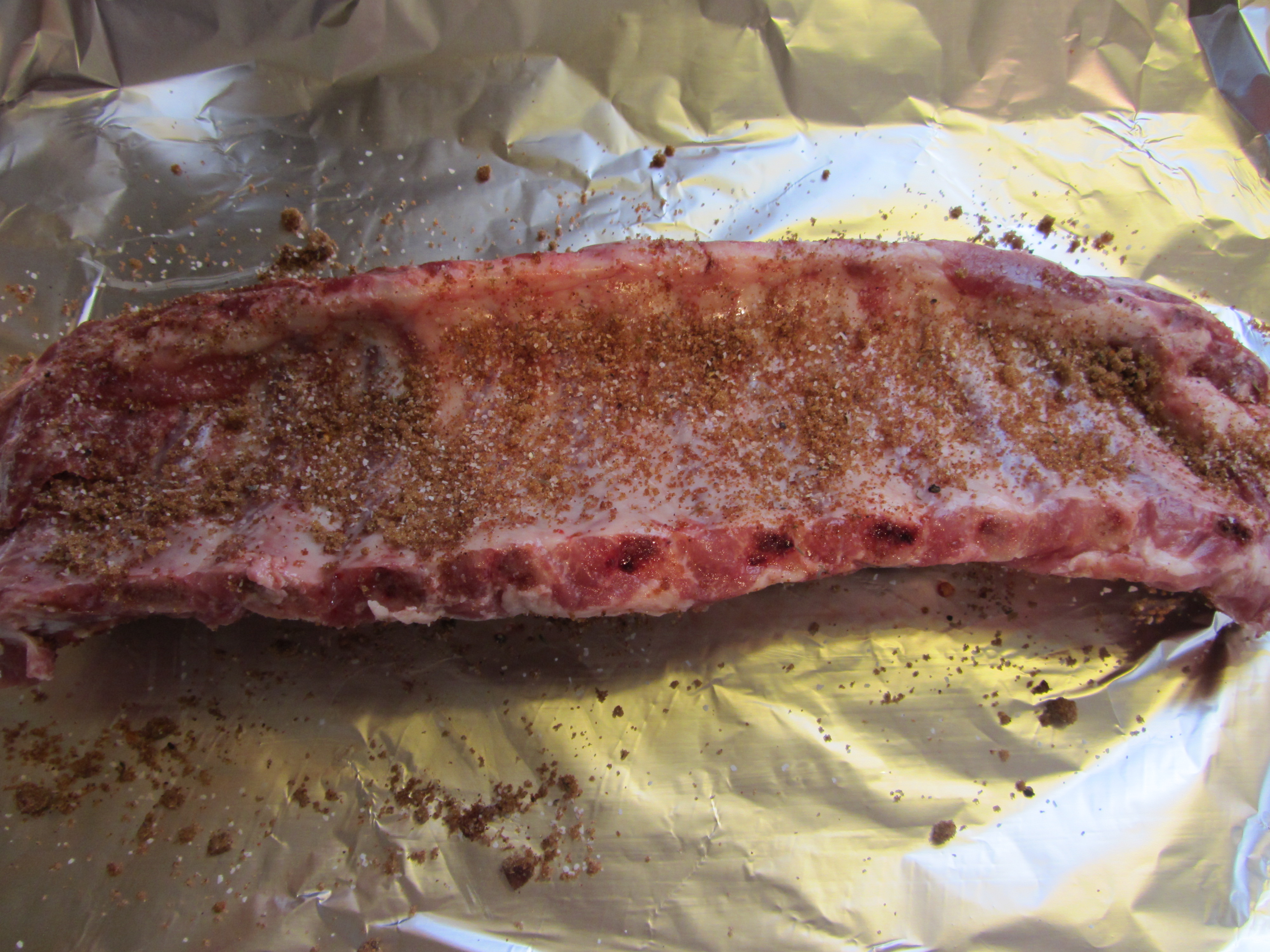
Flipped ribs with some rub on concave side.

Flipped ribs with some rub on concave side.

Note:  you will not use all of the rub. Once the  ribs are coated with rub, fold the foil over the ribs and roll up the ends.
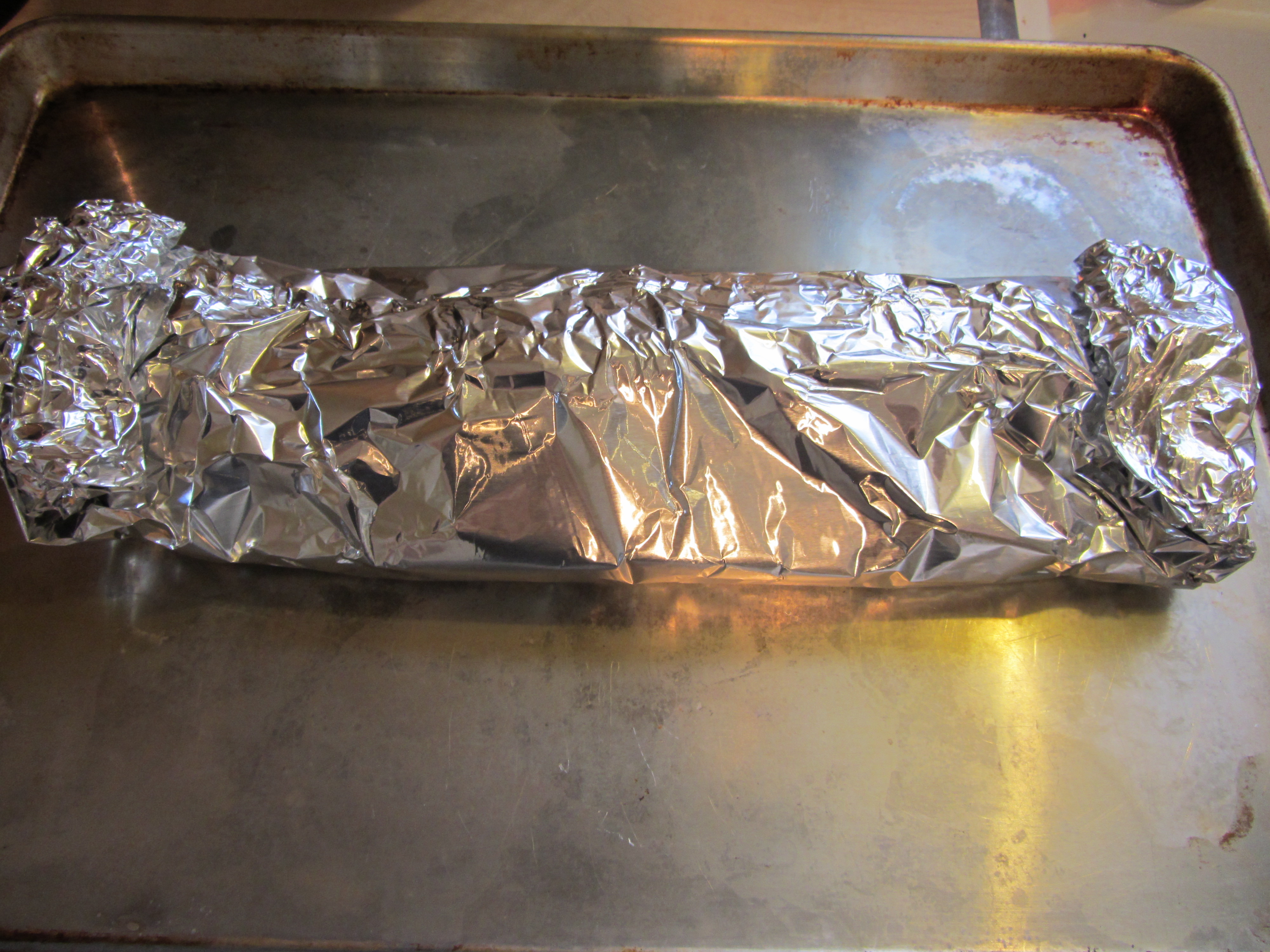
Rolled up packet of ribs.

Rolled up packet of ribs.

Stick the foil packet(s) in the refrigerator for at least an hour, and preferably overnight. I refrigerated my ribs for about three hours. You will want to put the packets on a baking sheet. When you are ready to cook your ribs, it is time to make the braising liquid. When braising, you only use enough liquid to keep the meat moist. Alton explains that his braising liquid is a combination of acidity, salinity, and sweetness. For the acidity, he uses white wine and white wine vinegar. Worcestershire sauce gives the liquid its salinity, while the sweetness comes from honey. Oh, and you add some garlic, which Alton says needs no reason.

Braising liquid ingredients:  white wine, white wine vinegar, Worcestershire sauce, honey, and garlic.

Braising liquid ingredients: white wine, white wine vinegar, Worcestershire sauce, honey, and garlic.
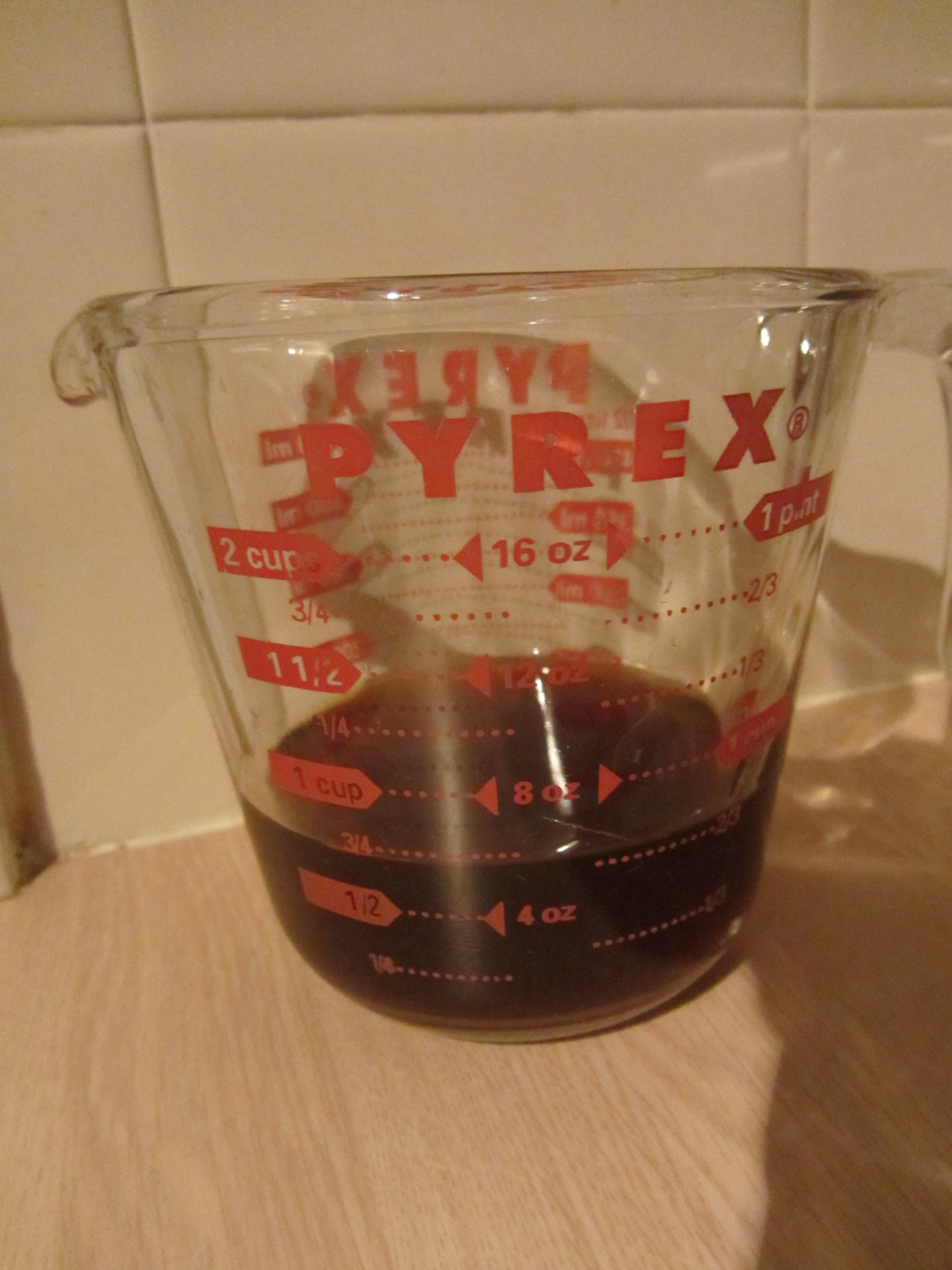
Braising liquid.

Braising liquid.

The braising liquid goes into the microwave for a minute or so until everything is dissolved, and then you pour it into one end of your rib packet, using the foil like a funnel, and lightly tilting the pan to let the liquid run through the foil packet.
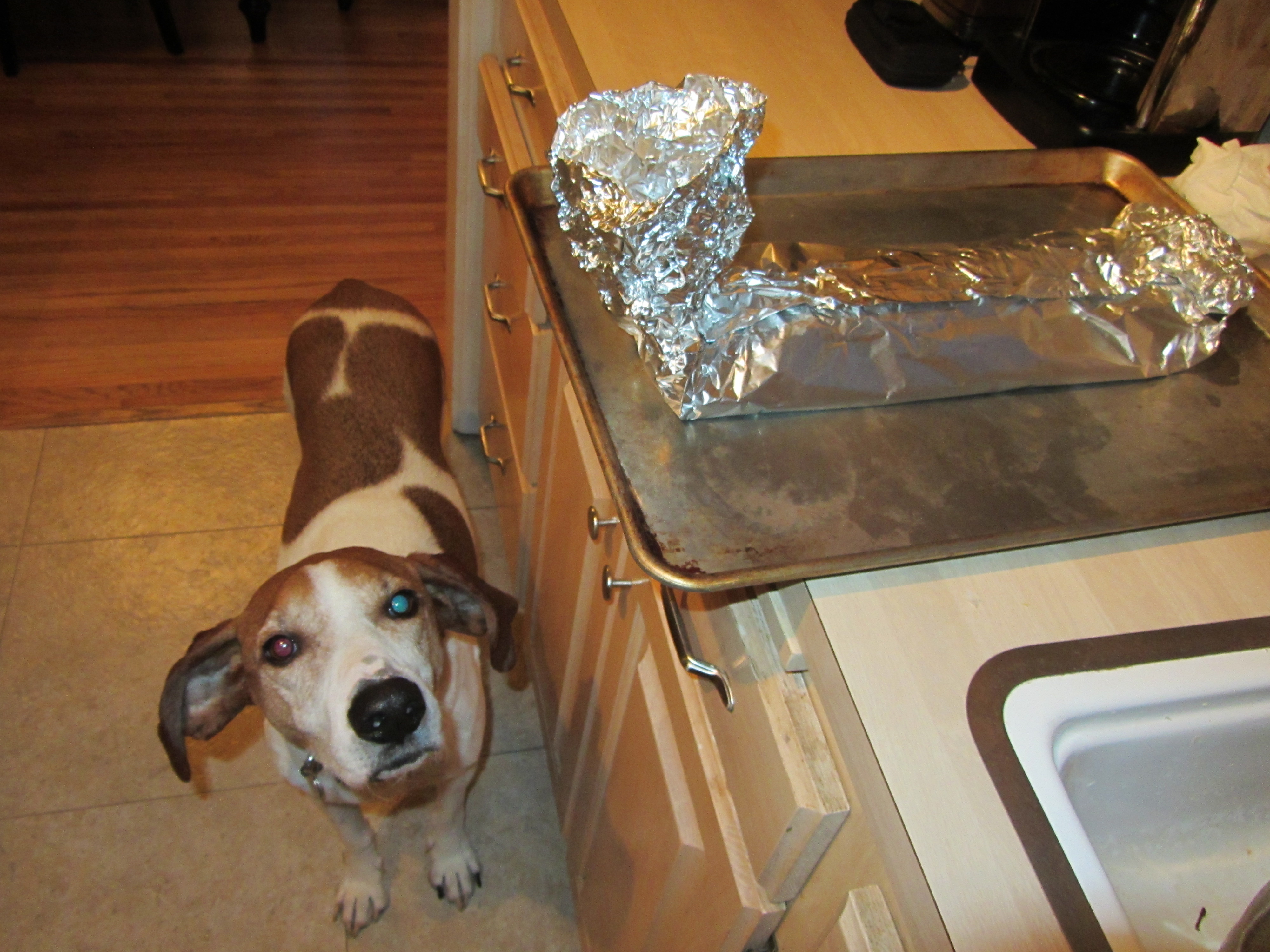
Using the foil like a funnel for the braising liquid.

Using the foil like a funnel for the braising liquid.

You close the foil packet back up, and it goes into a 225-degree oven for 2.5 hours. Alton stresses that you do not want to try to speed up this process, as slow cooking is critical. It is also a good idea to check the temperature of your oven. I checked my oven temperature with the new infrared thermometer I got for Christmas. To check for doneness, open the rib packet and twist a rib toward the middle of the slab; if it slightly rotates, the ribs are done. My one slab of ribs was done after 2.5 hours.

After 2.5 hours in the oven.

After 2.5 hours in the oven.

When the ribs are done, it is time to make the sauce. To do this, lay the rib packet over a large sauce pan and cut the foil to release the juice into the pan. I ended up with a pretty large volume of juice, and mine had a fair amount of visible fat.
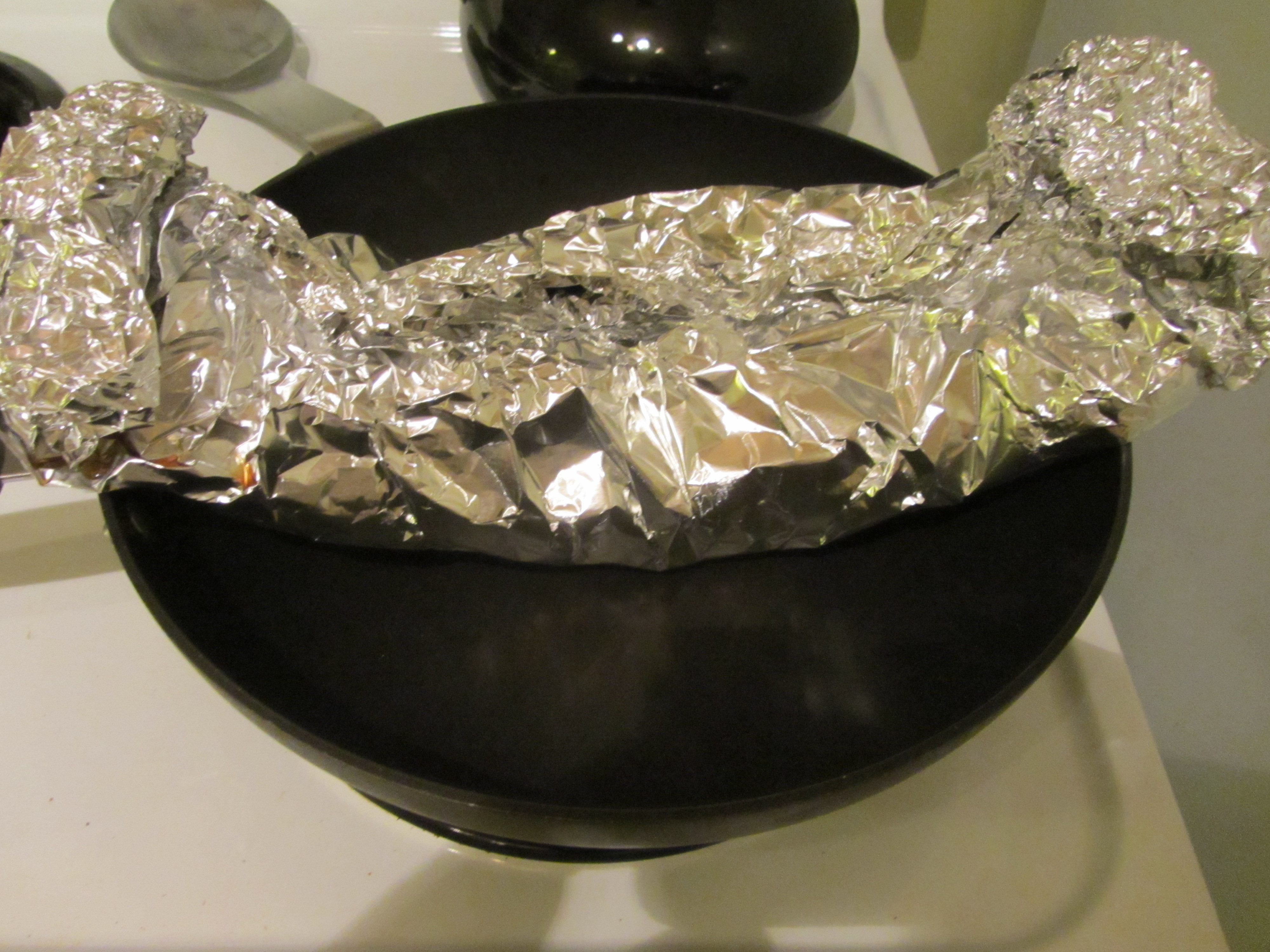
Placing ribs over pan to cut packet and get sauce.
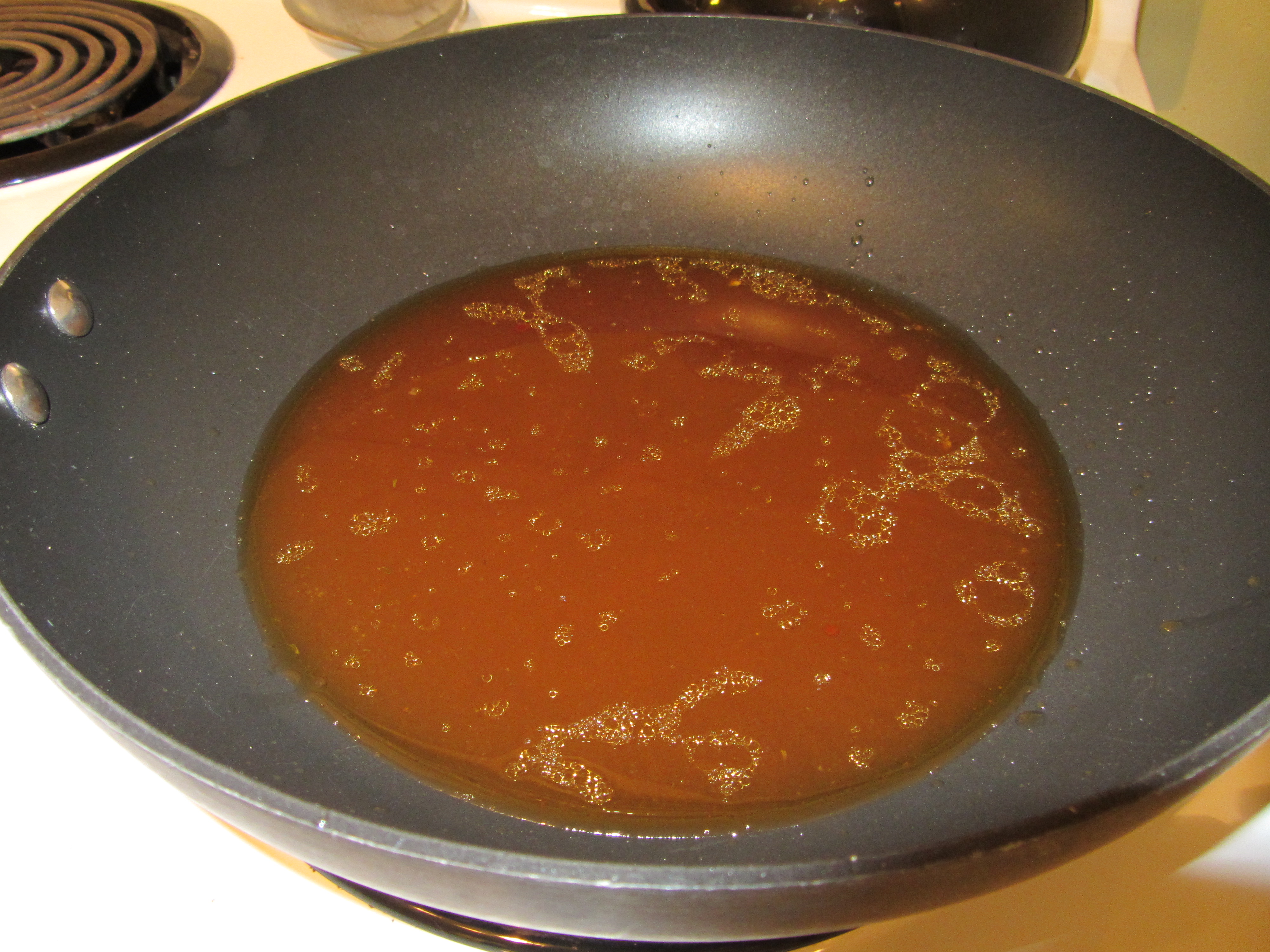
Placing ribs over pan to cut packet and get sauce.

Sauce before reduction.

Sauce before reduction.

Heat the juice over high heat, letting it reduce until it is the consistency of barbecue sauce. Alton says this will take 5-10 minutes, but my sauce took a bit longer to reduce.

Sauce after reduction.

Sauce after reduction.

When the sauce is done, fold back the foil surrounding the ribs and paint them liberally with the sauce. You will have extra sauce.

Ribs ready for sauce.

Ribs ready for sauce.

Ribs with sauce painted on.

Ribs with sauce painted on.

Keeping the saucy ribs exposed, stick them under the broiler, watching them carefully because they can easily burn. My ribs were under the broiler for maybe a minute before the sauce started bubbling and caramelizing.

Ribs after broiling.
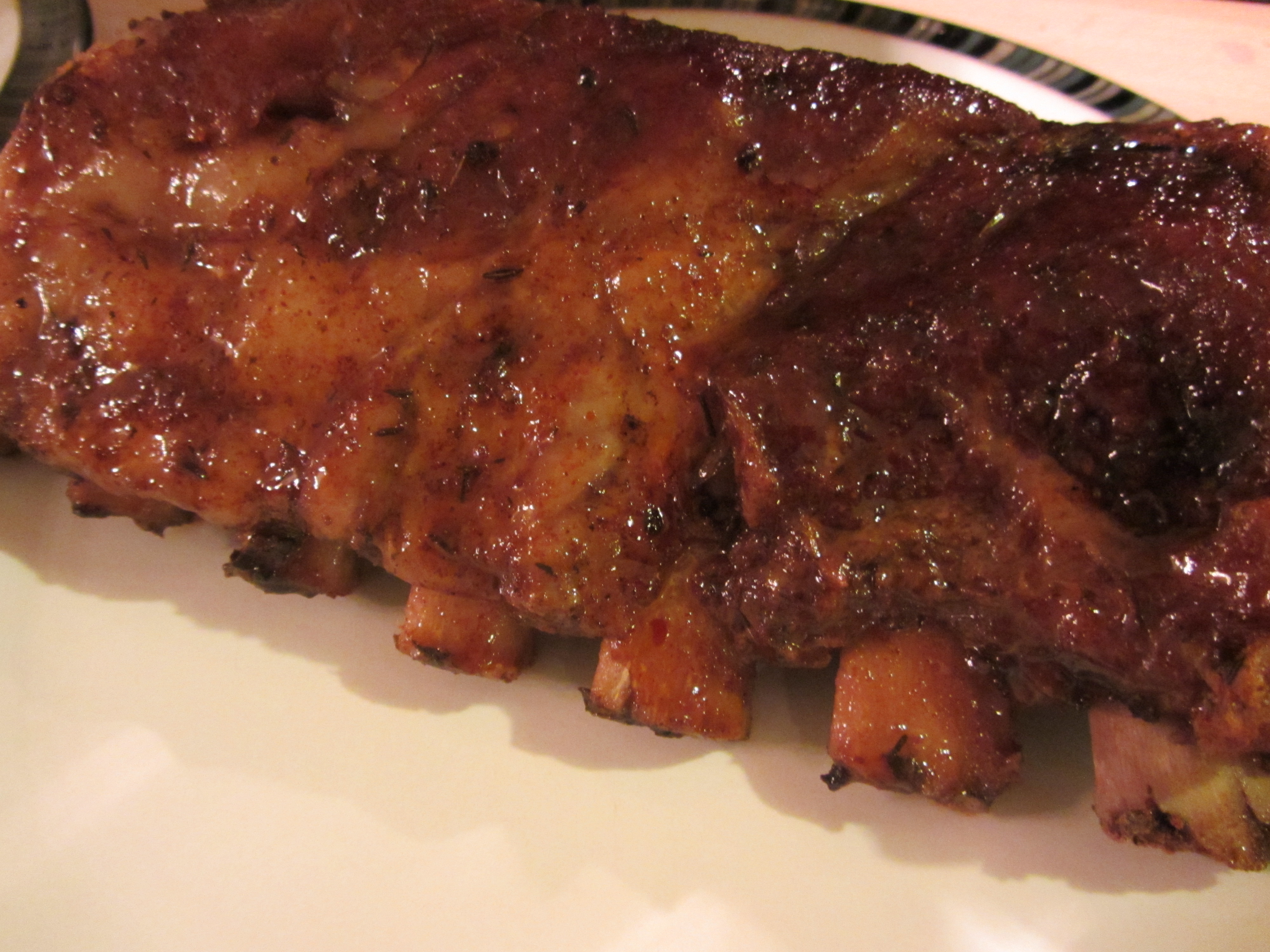
Ribs after broiling.

Ribs ready to eat!

Ribs, ready to eat!

Remove the ribs from the oven and portion them into two-rib portions. Alton says he likes to portion them this way because they are easier to eat. Toss the ribs in a bowl with the extra sauce, and you are ready to eat. We ate our ribs with a side of coleslaw. They were sticky and messy – the way ribs are supposed to be. Ted thought the ribs were great, saying he would definitely make them again. I, not being a rib aficionado, thought the ribs were pretty good, though I found them to be a bit chewy. I wonder if they would be even more tender with a longer cooking period. The flavor of the sauce was great – sweet, slightly tangy, and rich from the fat. If you are a rib person, this is definitely a good recipe, and it is so easy you cannot believe it!

I was very excited for this episode of Good Eats because my dad made this recipe for Ted and me several years ago. I remember telling my dad about Good Eats, thinking he would really love the scientific approach to food. My dad’s first reaction to Alton Brown,  however, was to ponder who the “nerdy” guy in the Hawaiian shirt was. After watching a few episodes of the show, he became hooked and was a true Good Eats devotee. We went to my parents’ house for dinner one night several years ago and Dad told us he would be making a special dessert of Alton’s. Sure enough, it was Alton’s banana split. Dad was critical of his recipe outcome, but we all thought it was great. Needless to say, I was excited to try making this dessert myself.

Banana Splitsville

The star ingredient of the 25th (Have I really done that many already?) episode of Good Eats is sugar. One recipe is featured in this episode, but it features sugar in a few applications. To start this recipe, you make the candy garnishes, or “doodads” as Alton calls them, for your banana split. You put sugar in a saucepan, adding water until you have the consistency of wet sand. The online recipe calls for a full cup of water, but this will give you a consistency that is far thinner than what you desire. I used a half cup of water, at most. Oh, and you want to add ~ 1 T of corn syrup to this mixture, as it will prevent the sugar from recrystallizing.

Sugar, corn syrup, and water.

Sugar, corn syrup, and water.

Heat this sugar syrup over high heat until the sugar dissolves. If you have a candy thermometer, you will want to use it at this point. I made a mistake in using too wide of a pan, so my thermometer was not submerged.

Heating the sugar syrup, but my thermometer was not submerged enough.

Heating the sugar syrup, but my thermometer was not submerged enough.

This left me to go by my eye, but I do not recommend that method if you have not made candy or caramel before. While your syrup heats, prepare two sheet pans by turning them over and covering them with parchment paper. When your syrup hits ~300 degrees, you can begin to swirl the pan. Until this point, you want to leave the syrup alone. You will know that your syrup is approaching 300 degrees, as it will start to turn amber in color.

Around 300 degrees.

Around 300 degrees.

When your syrup reaches 340 degrees, remove it from the heat. It will be a deep amber by this point. Stir the mixture slowly, as you do not want to incorporate too much air; this can result in cloudy candy. Continue to stir the mixture until it falls from a spoon in a steady stream.

Around 340 degrees. Cooling the syrup by stirring gently.

Around 340 degrees. Cooling the syrup by stirring gently.

When your syrup has reached this point, you want to make your “doodads” by swirling the syrup over the parchment paper, creating abstract sugar art to accessorize your banana splits. I found that I should have waited an additional minute or so before starting my doodads because they were easier to make as the syrup cooled more. Do not over-obsess about your doodads, as they will likely not be perfect, nor will they all look alike. Once your doodads are made, allow them to cool on the parchment.

Doodads.

Doodads.

Doodads.

Doodads.

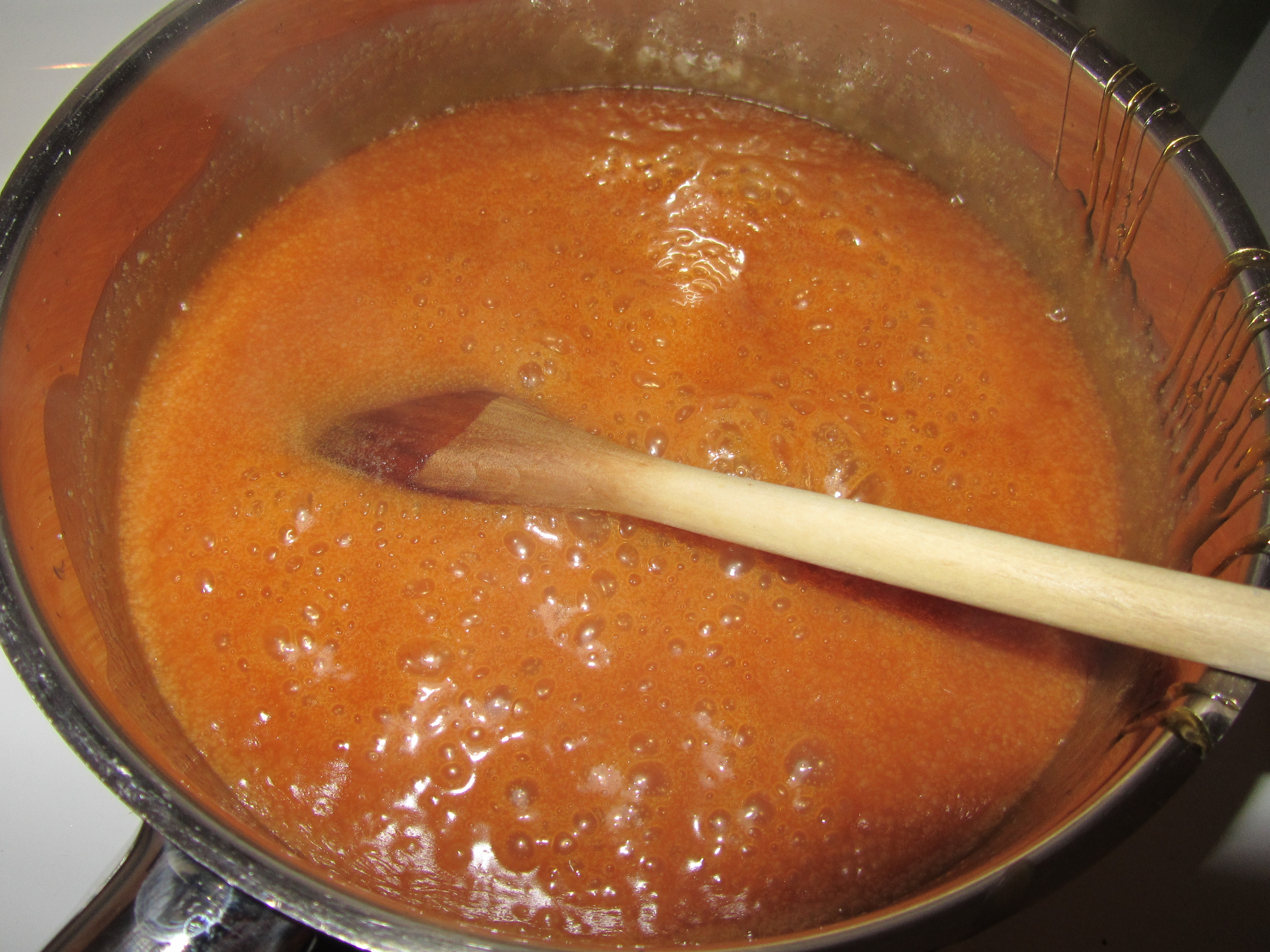
While your doodads cool, put the remaining syrup back on the heat until you see faint wisps of smoke; when this happens, remove the pan from the heat and add an equal amount of heavy cream. The caramel will bubble and hiss.

Syrup back on the heat.

Syrup back on the heat.

Cream added once smoke was seen.

Cream added once smoke was seen.

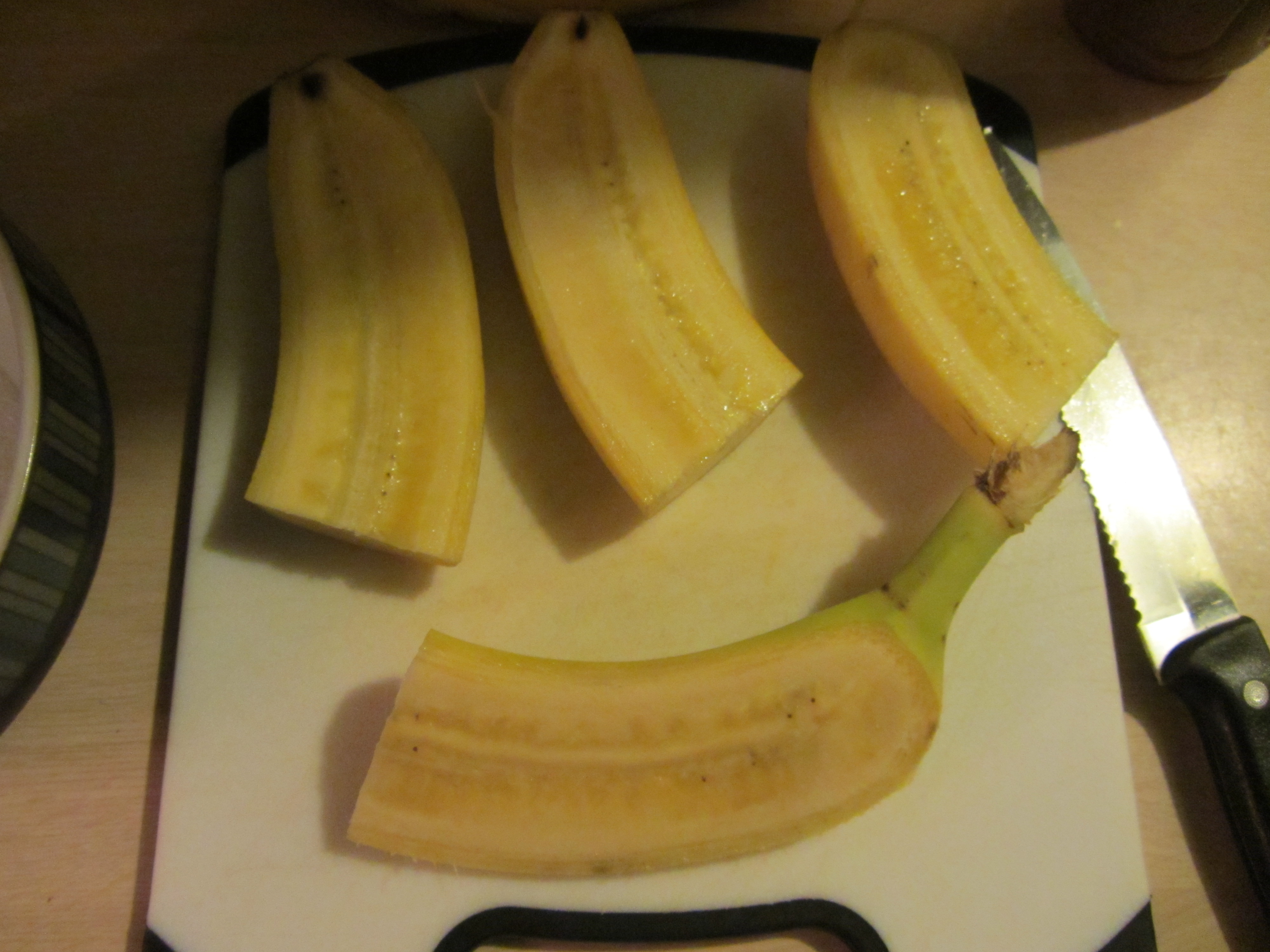
I added nearly 2 C of cream, roughly guessing as to how much cream to add. Put the caramel back over the heat and cook for ~3 minutes, stirring occasionally. Do not be alarmed if a glob of caramel seems to be in the bottom of the pan, as it will melt again when you put it back over the heat. The sauce for the dessert is now complete. If possible, make this in advance, so it has time to cool down. When ready to serve dessert, quarter one banana per person, leaving the peels on.

Bananas and sugar.

Bananas and sugar.

One banana, quartered, per person.

One banana, quartered, per person.

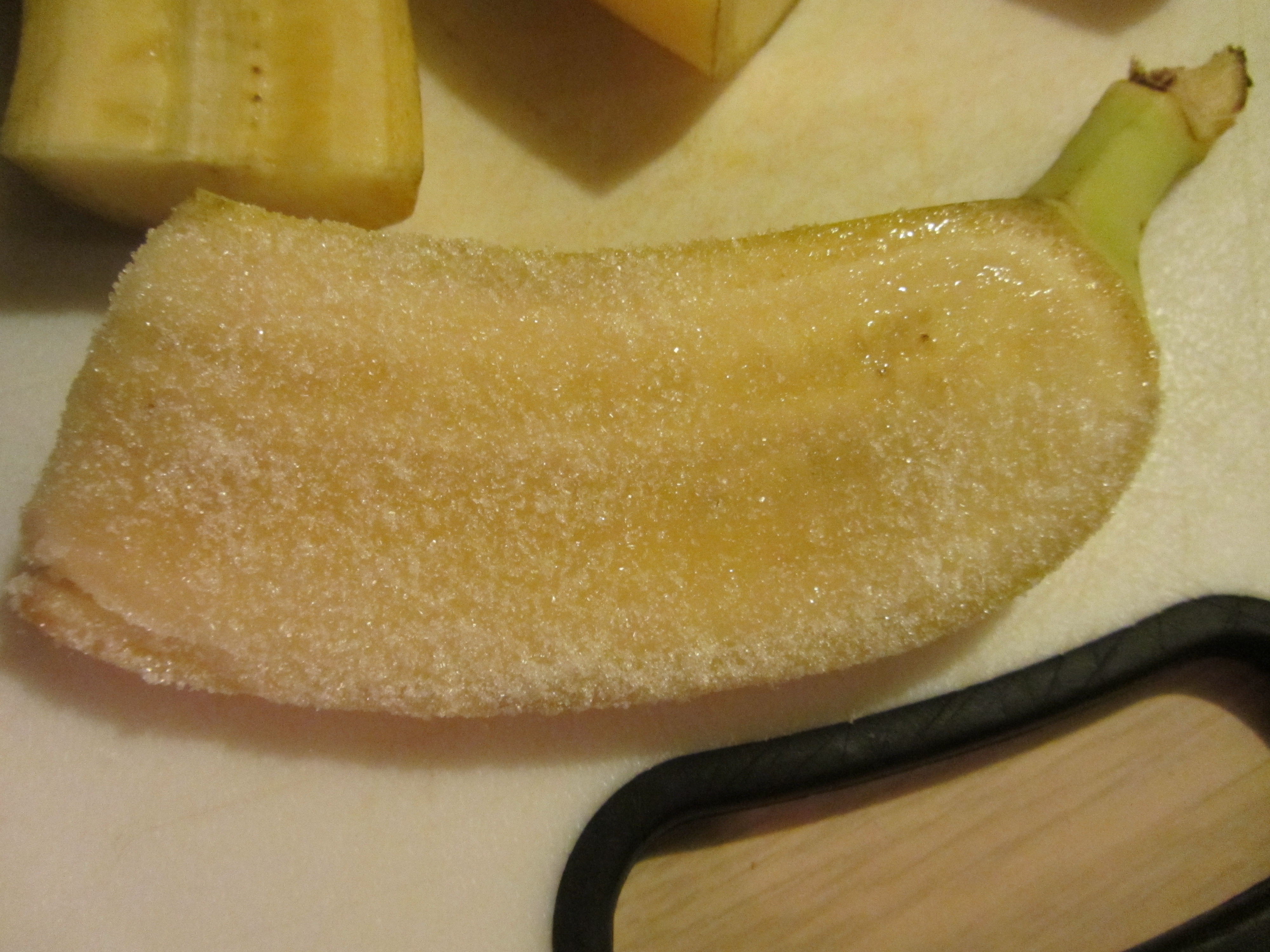
Rub the exposed surfaces of the bananas in sugar, and then remove the peels.

Bananas coated in sugar.

Bananas coated in sugar.

Place the sugared bananas on a rack over foil, and brulee them with a torch until they are golden brown.

Sugared bananas over foil.

Sugared bananas over foil.

Torching the bananas, with a helper.

Torching the bananas, with a helper.

12-18-2014 026

Golden brown bananas.

Golden brown bananas.

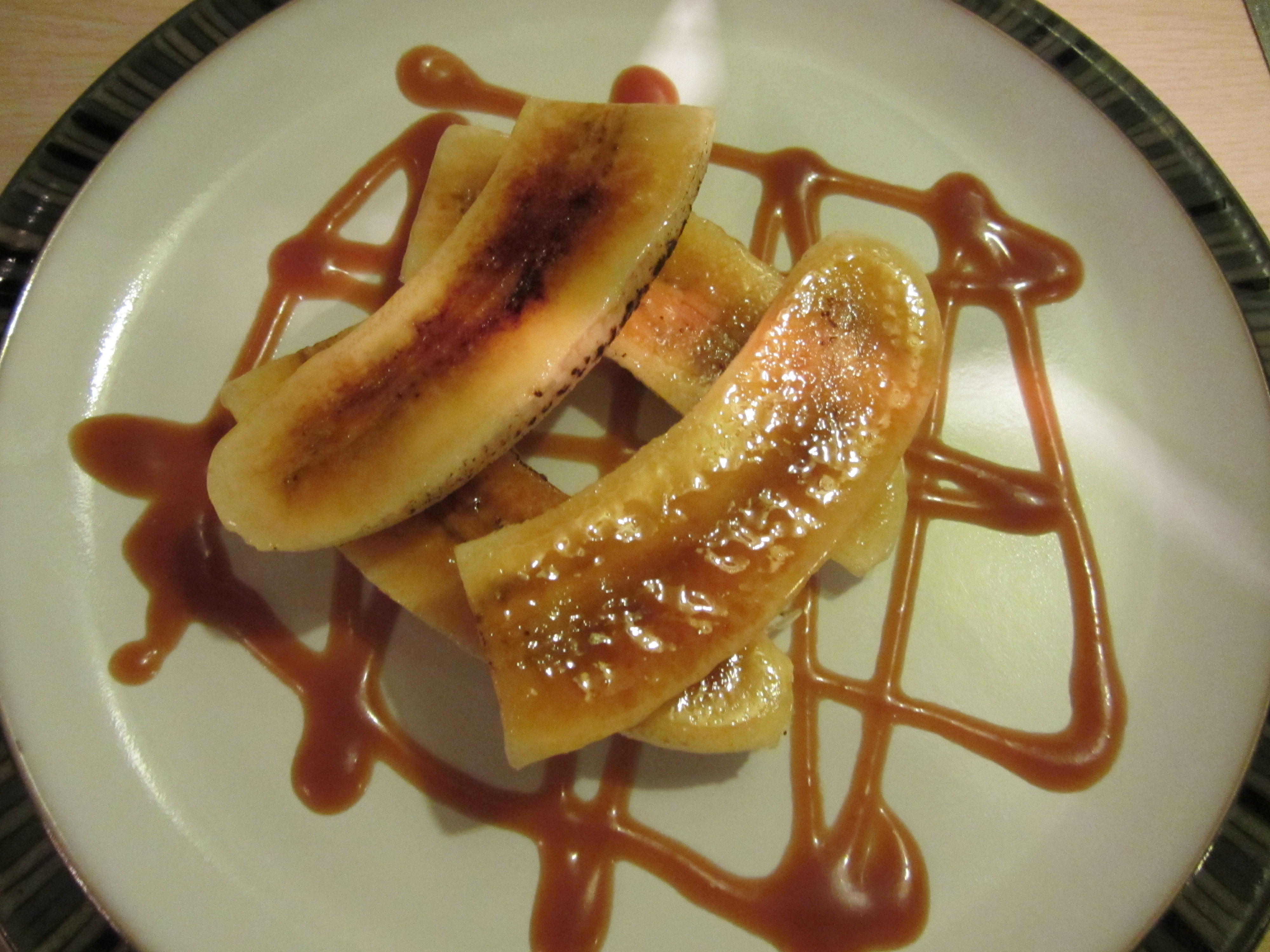
At this point, all of the components of your dessert are ready. For plating, put the caramel sauce in a squeeze bottle and squirt it in a decorative pattern on the plate. Top the sauce with four banana pieces, layered like Lincoln logs in two layers.

Caramel with bananas.

Caramel with bananas.

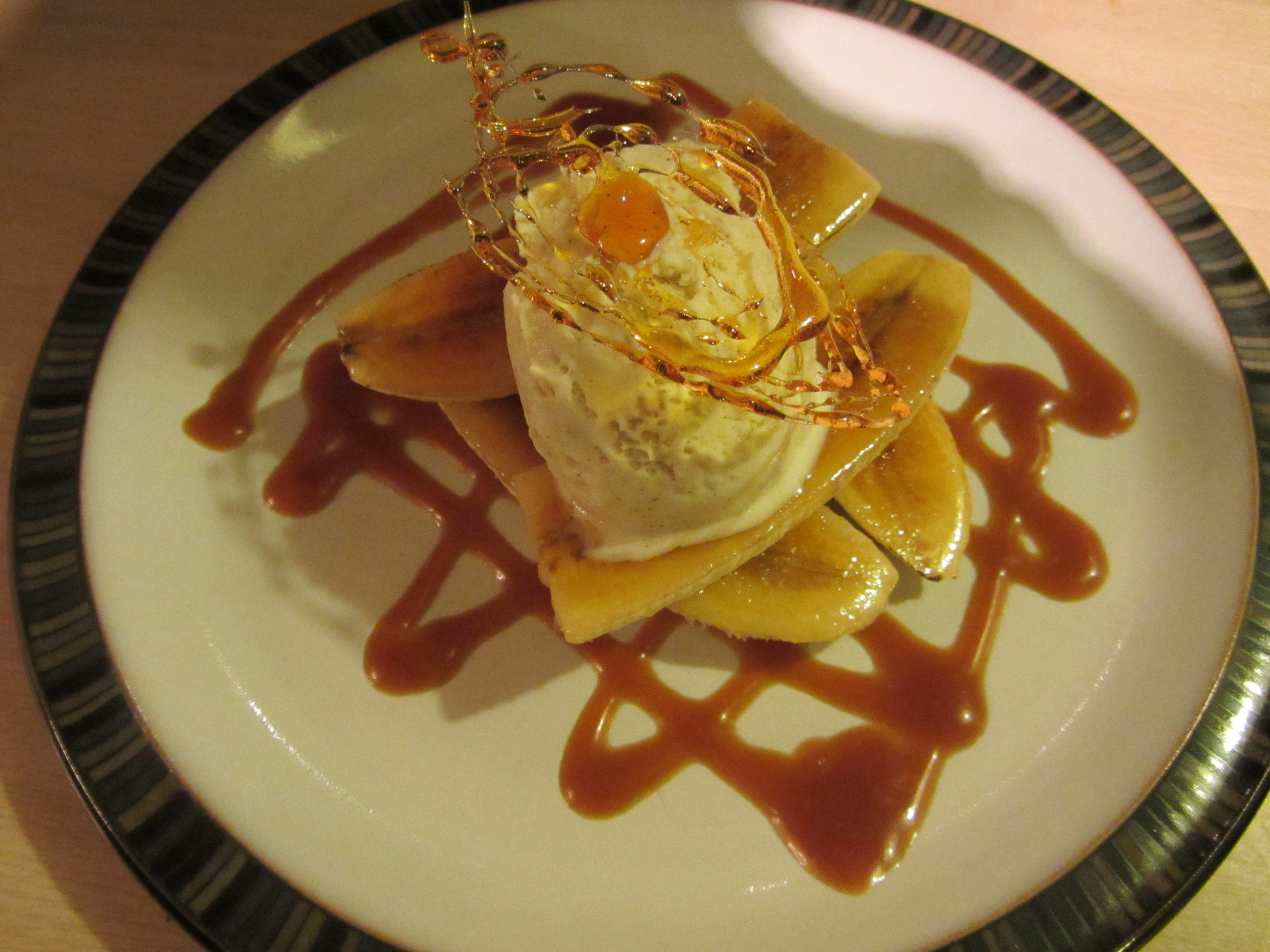
Add a scoop of ice cream (I used store-bought vanilla, or you could use Alton’s vanilla ice cream recipe), and top with a doodad.

Finished banana split.

Finished banana split.

12-18-2014 032 We ate these banana splits as dessert after a regular weeknight dinner, and the dessert definitely stole the show. The great things about this dish are the contrasting textures and temperatures. While the caramel sauce is smooth, sweet, and smokey, the bananas are warm, moist, and coated with a crunchy shellac. In addition to the bananas, you have cold ice cream and a crunchy doodad. This is a great dessert, and I would definitely make it again. The resulting presentation is impressive, especially given the effort put in. I can see why my dad wanted to make this when he originally watched the episode. It is a great dessert.

The 24th episode of Good Eats is all about tomatoes. Specifically, Alton Brown makes a case for the value of canned tomatoes in the pantry, arguing that fresh tomatoes should really only be used when they are in their peak season and locally grown. Why would one opt for canned tomatoes when fresh tomatoes are readily available in the produce department year-round? Alton points out that “fresh” does not necessarily equal “ripe.” I see his point, as a tomato purchased in December in Washington has not ripened naturally, but rather has been artificially ripened by exposure to ethylene gas. While these tomatoes may look shiny and red, they are often rock hard and lacking flavor. In contrast, with canned tomatoes, you know you are purchasing fruit that was picked when ripe. While nothing compares to a fresh tomato from your own garden, we pretty much  always have canned tomatoes in our pantry, as we often through them in soups, pasta sauces, etc.

I happen to be married to someone who does not much care for fresh tomatoes. Bizarre, I know. While he will eat tomato sauces, salsas, etc., he will pull tomatoes off of sandwiches and salads. Even more bizarre is the fact that my brother is the same way. Tomatoes were not my favorite thing when I was a kid, but I cannot get enough of the tomatoes that come from our garden. I suppose I will have to settle for the canned variety for several more months. Sigh…

Pantry Friendly Tomato Sauce

In this episode, Alton makes an all-purpose tomato sauce, using canned tomatoes. For making a tomato sauce, it is best to use canned tomatoes that have had the least cooking, which rules out pureed and stewed tomatoes. Crushed tomatoes are also not a great option, as they have many of their seeds, which can contribute some bitterness to a sauce. That leaves diced and whole tomatoes, and Alton opts for whole tomatoes because they are less processed than diced tomatoes.

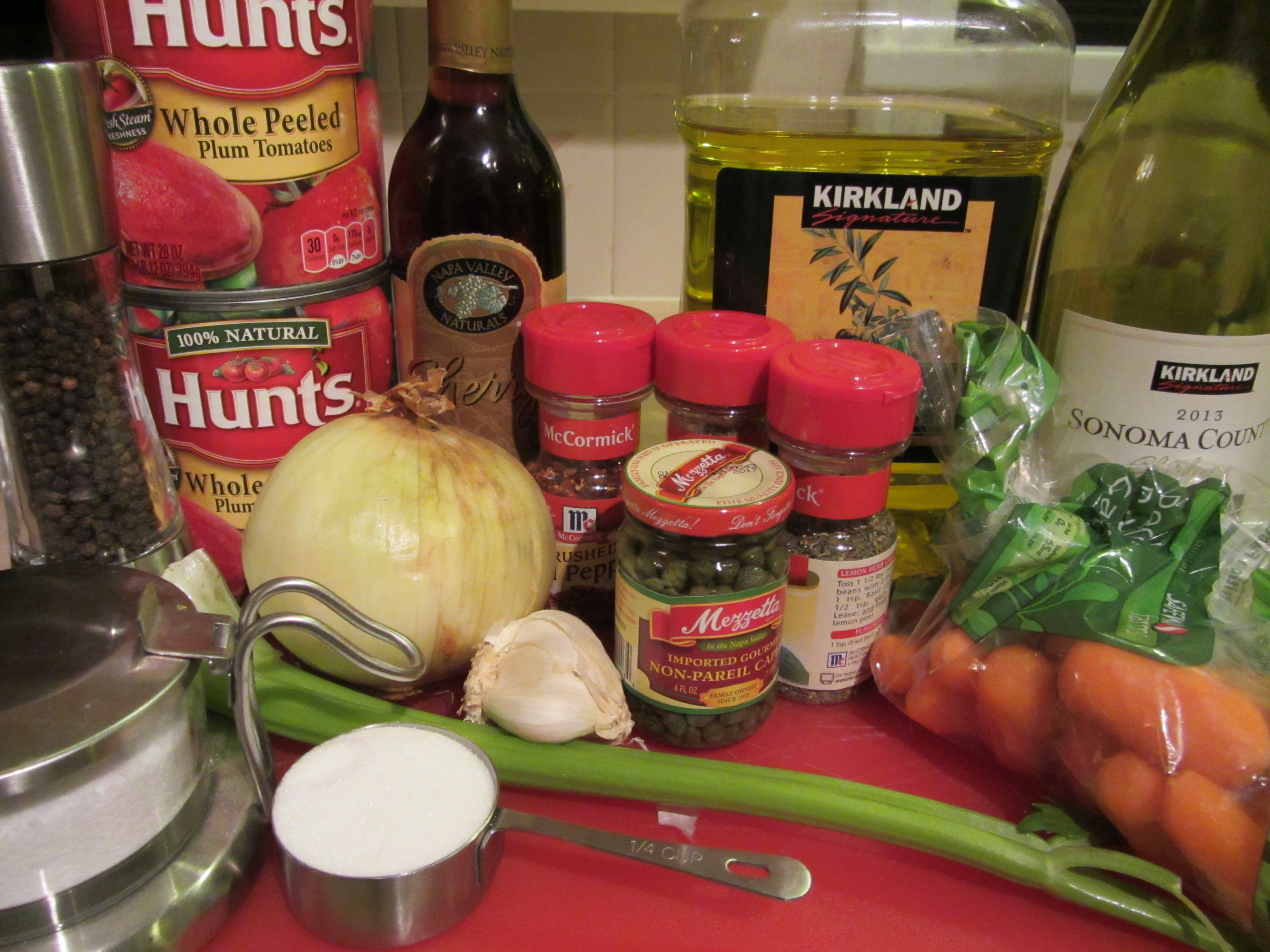
Tomato sauce ingredients:  canned whole tomatoes, sherry vinegar, sugar, red pepper flakes, oregano, basil, onion, carrot, celery, olive oil, garlic, capers, white wine, Kosher salt, and black pepper.

Tomato sauce ingredients: canned whole tomatoes, sherry vinegar, sugar, red pepper flakes, oregano, basil, onion, carrot, celery, olive oil, garlic, capers, white wine, Kosher salt, and black pepper.

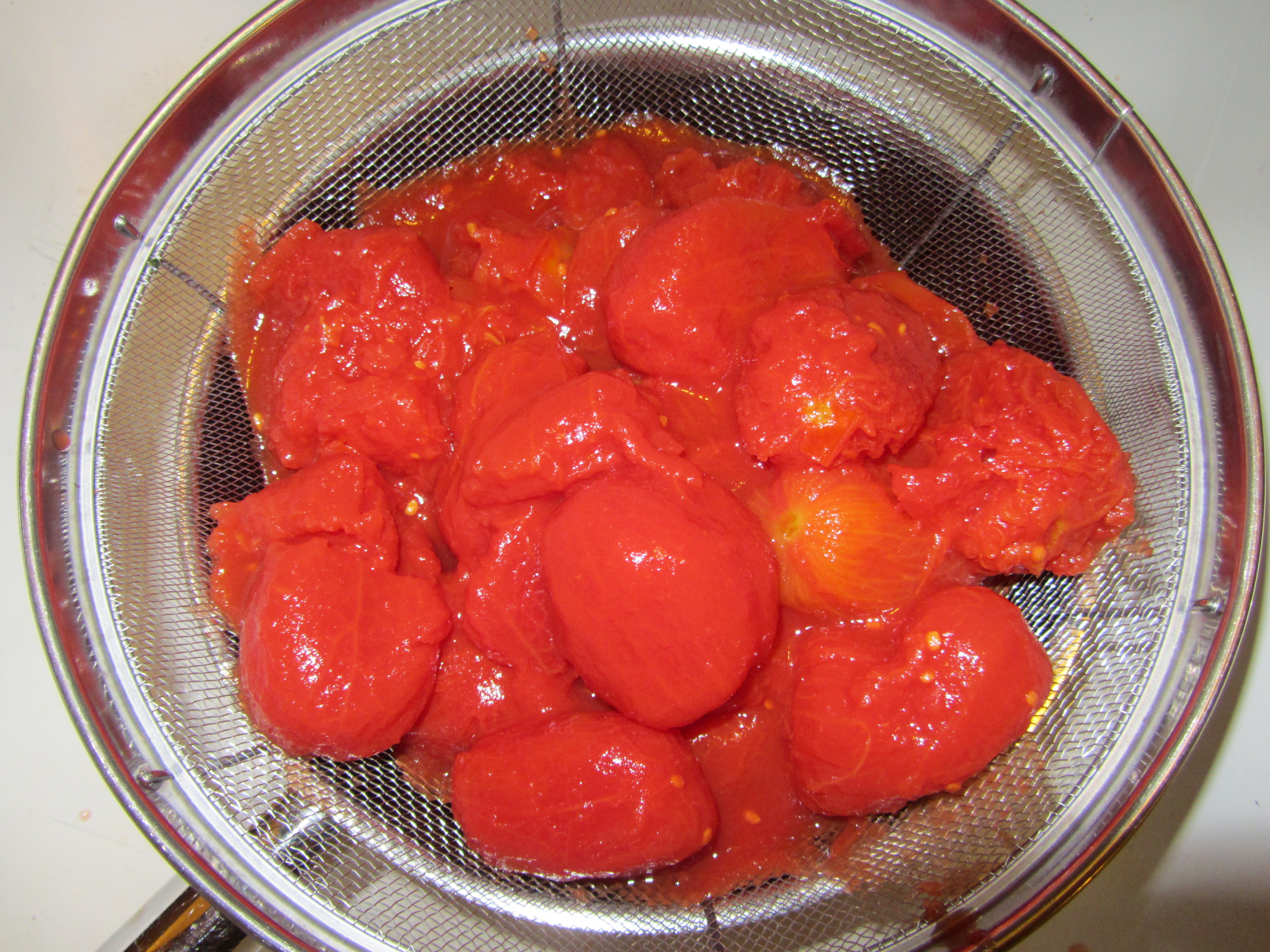
To start this recipe, strain your canned tomatoes into a saucepan.

Tomatoes straining into saucepan.

Tomatoes straining into saucepan.

Split the tomatoes open with your fingers and scrape the seeds into the drain, getting rid of as many seeds as possible.

Seeded tomatoes.

Seeded tomatoes.

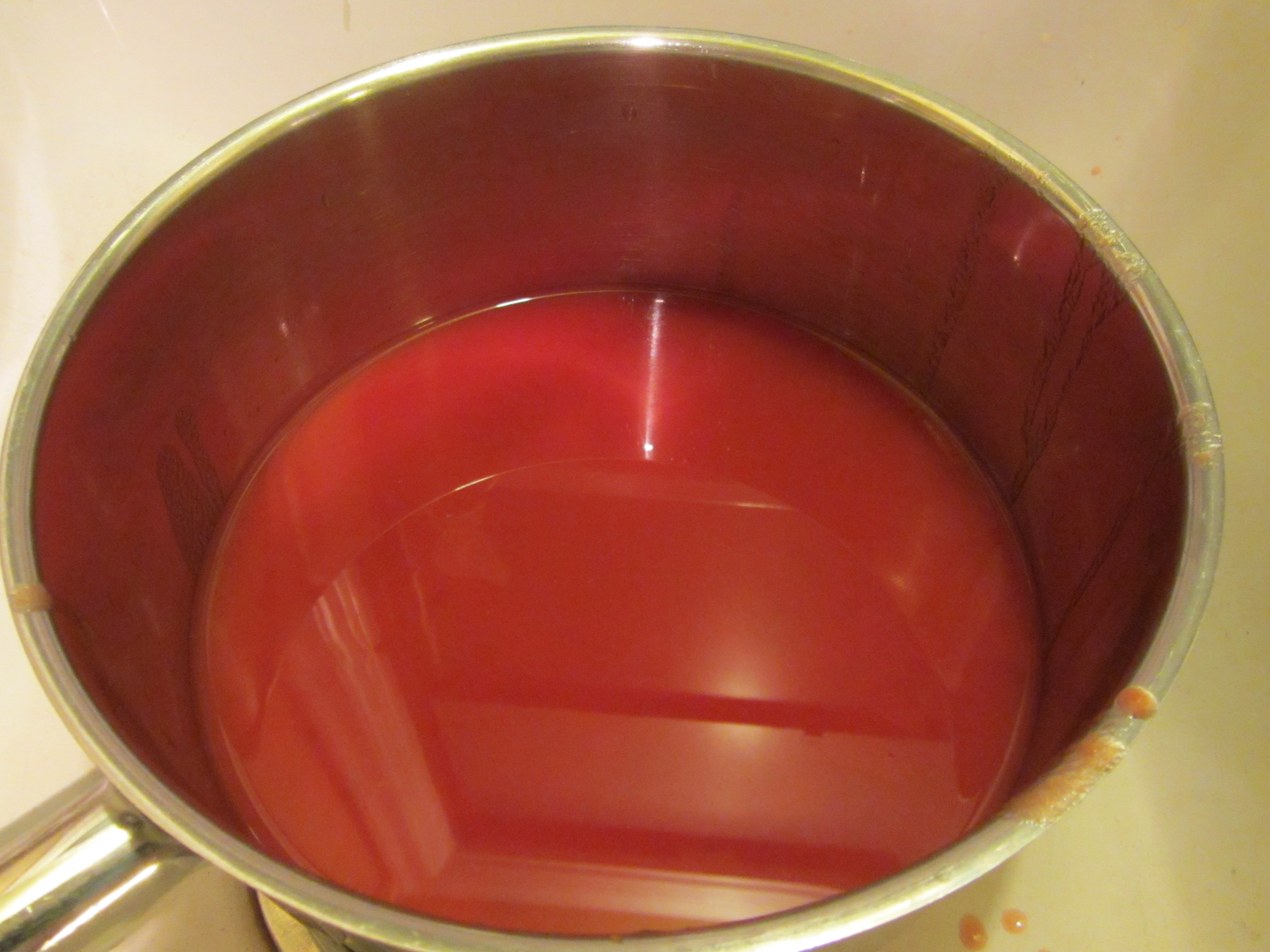
To the tomato juice in the pan, add sherry vinegar, sugar, red pepper flakes, oregano, and basil. I had trouble finding sherry vinegar, but finally found it at a natural market.

Strained tomato liquid.

Strained tomato liquid.

Tomato liquid plus sherry vinegar, sugar, red pepper flakes, oregano, and basil.

Tomato liquid plus sherry vinegar, sugar, red pepper flakes, oregano, and basil.

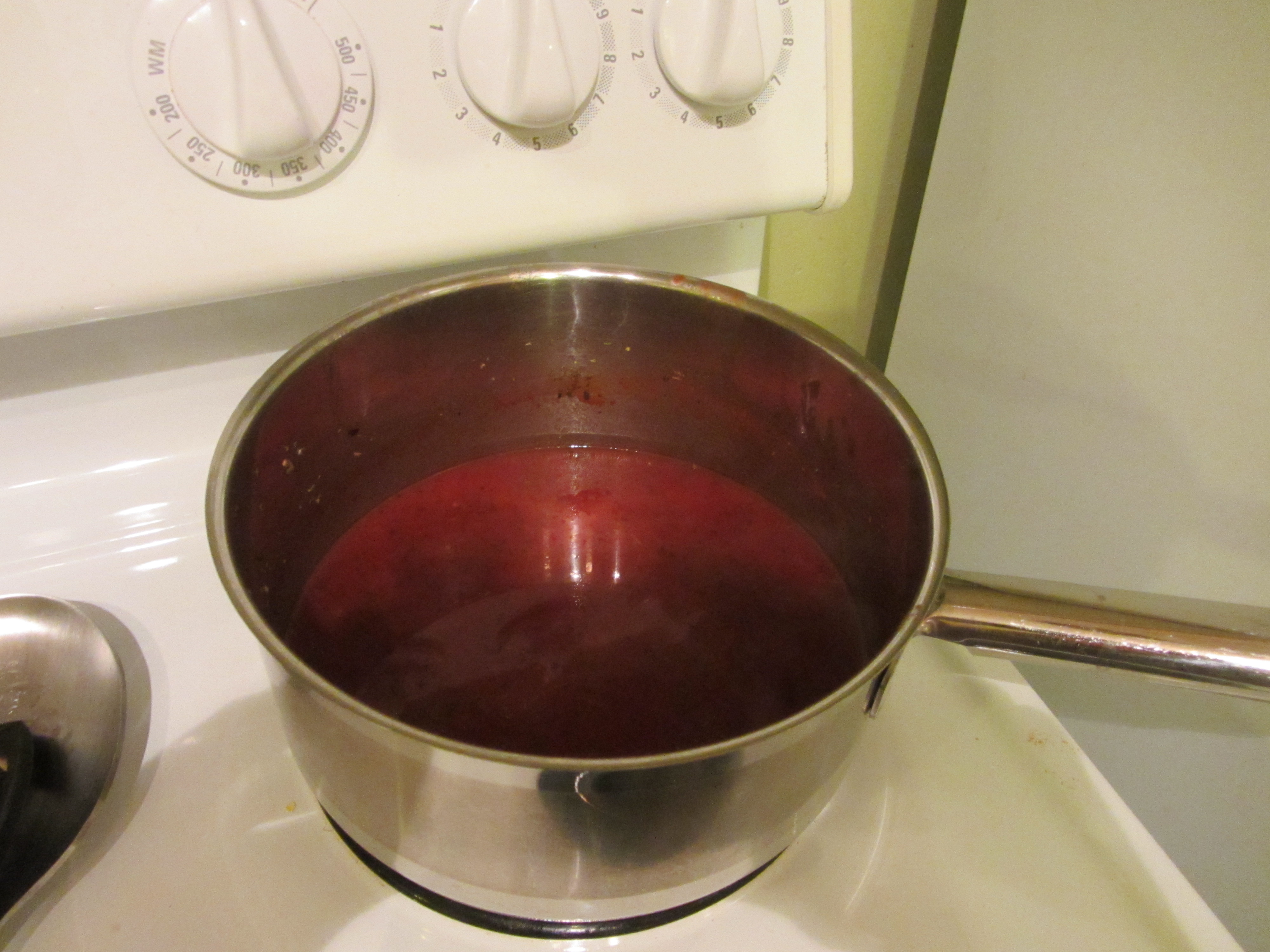
Heat this tomato liquid over high heat until bubbles stack up and then reduce the heat to a simmer. You will want to cook this liquid until it reduces by 50%, and then remove it from the heat.

Reducing tomato syrup.

Reducing tomato syrup.

While your tomato syrup reduces, it is time to prep the mire poix, which is the classic French combination of onion, celery, and carrot. The ideal ratio for a mire poix is two parts onion to one part carrot and celery. Chop the carrot first, as it will take the longest to cook, and add it to a roasting pan set over two burners. Coat the bottom of the pan with olive oil, and let the carrot start to sweat while you chop the onion and celery.

Chopped carrot.

Chopped carrot.

Carrot in roasting pan with olive oil.

Carrot in roasting pan with olive oil.

It is ideal to cut the vegetables uniformly, so they will cook evenly. Add the onion, celery, and four gloves of garlic to the pan.

Onion and celery.

Onion and celery.

Mire poix in the roasting pan.

Mire poix in the roasting pan.

Chopped garlic.

Chopped garlic.

Alton simply smashed his garlic with a marble slab, but I opted to chop my garlic since I knew I would not be pureeing my sauce, and therefore did not want huge chunks of garlic in the sauce. Continue sweating the mire poix for about 15 minutes, or until the vegetables are tender. At this point, add your tomatoes and capers to the pan and put the pan under the broiler.

Tomatoes and capers added to vegetables.

Tomatoes and capers added to vegetables.

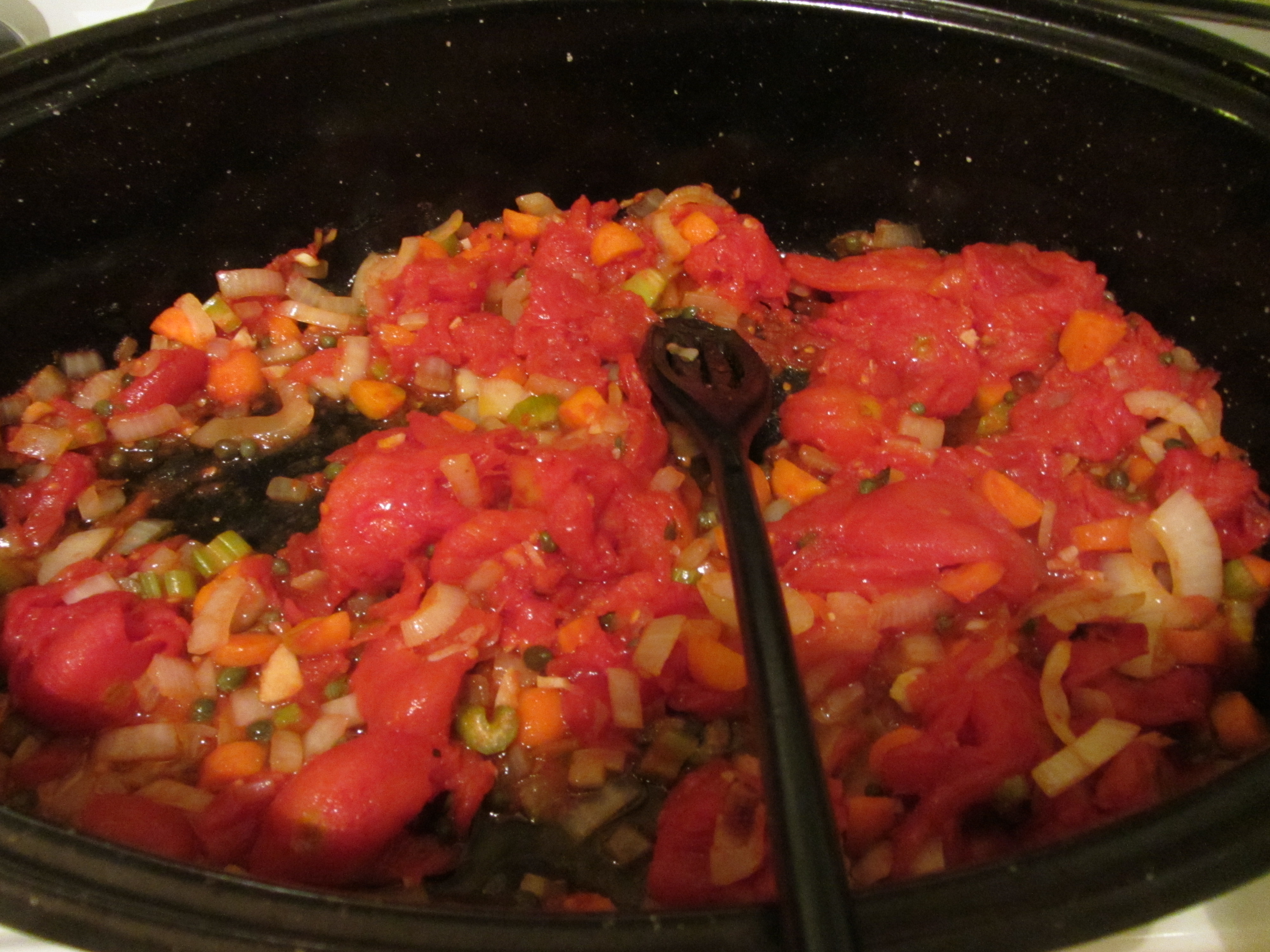
Broil the vegetable mixture until the tomatoes start to caramelize, which should take 15-20 minutes. You will want to stir the vegetables every five minutes or so. When the vegetables are done, remove the roasting pan from the oven and add some white wine.

Vegetables after broiling.

Vegetables after broiling.

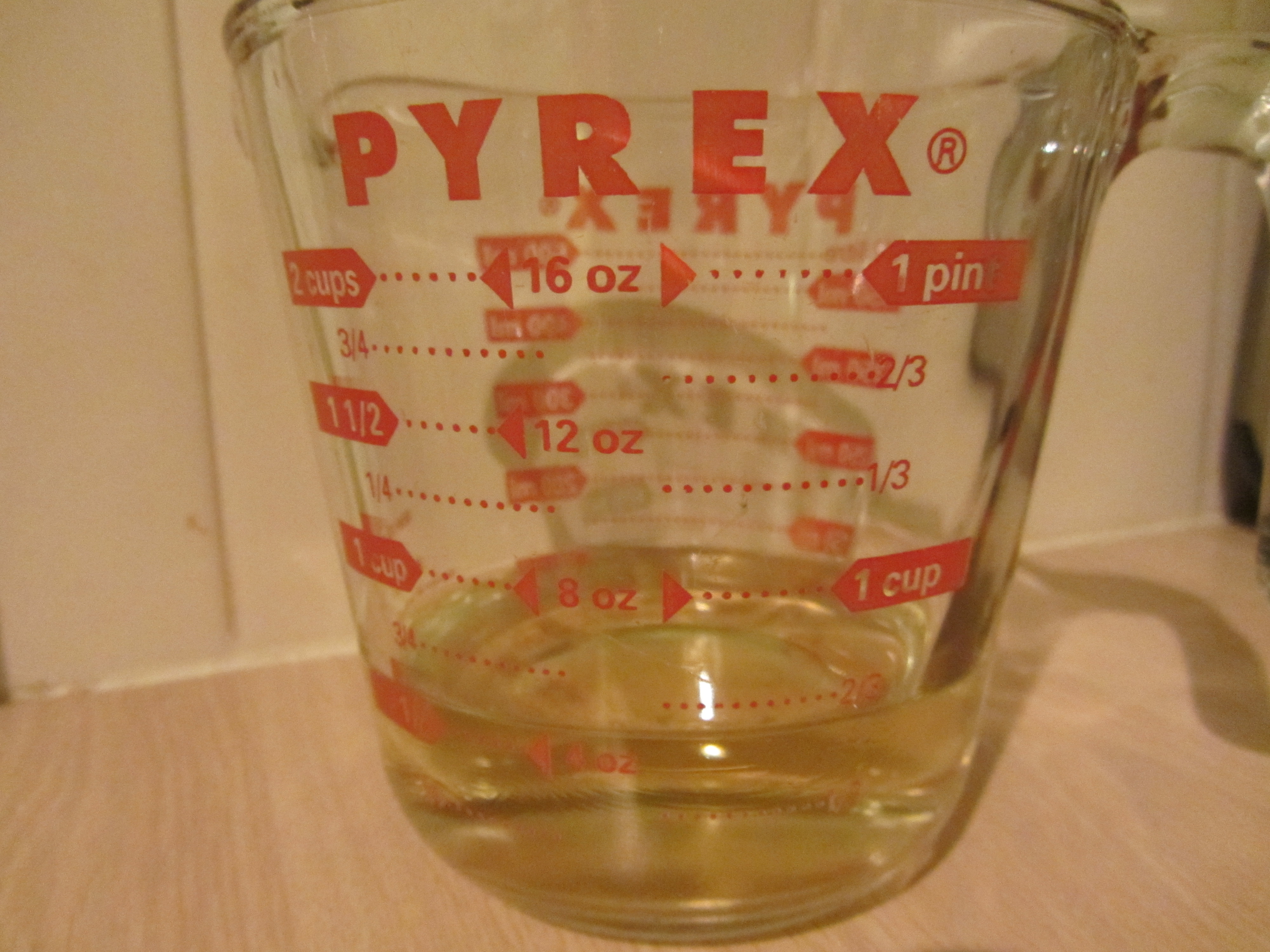
White wine.

White wine.

This will serve to release some alcohol-soluble flavors from the tomatoes, giving the sauce more dimension. Combine the cooked vegetable mixture with the reduced tomato syrup, add some black pepper, and mix. You may need to add some Kosher salt too, which I did.

Reduced syrup.

Reduced syrup.

Combined syrup and vegetables, plus black pepper.

Combined syrup and vegetables, plus black pepper.

Depending on the end use of your sauce, you can leave the sauce as it is, mash it lightly with a potato masher, or puree it completely. As we were to be eating our sauce over pasta, I took Alton’s recommendation to lightly mash the sauce, leaving it with some texture.

Completed sauce after light mashing.

Completed sauce after light mashing.

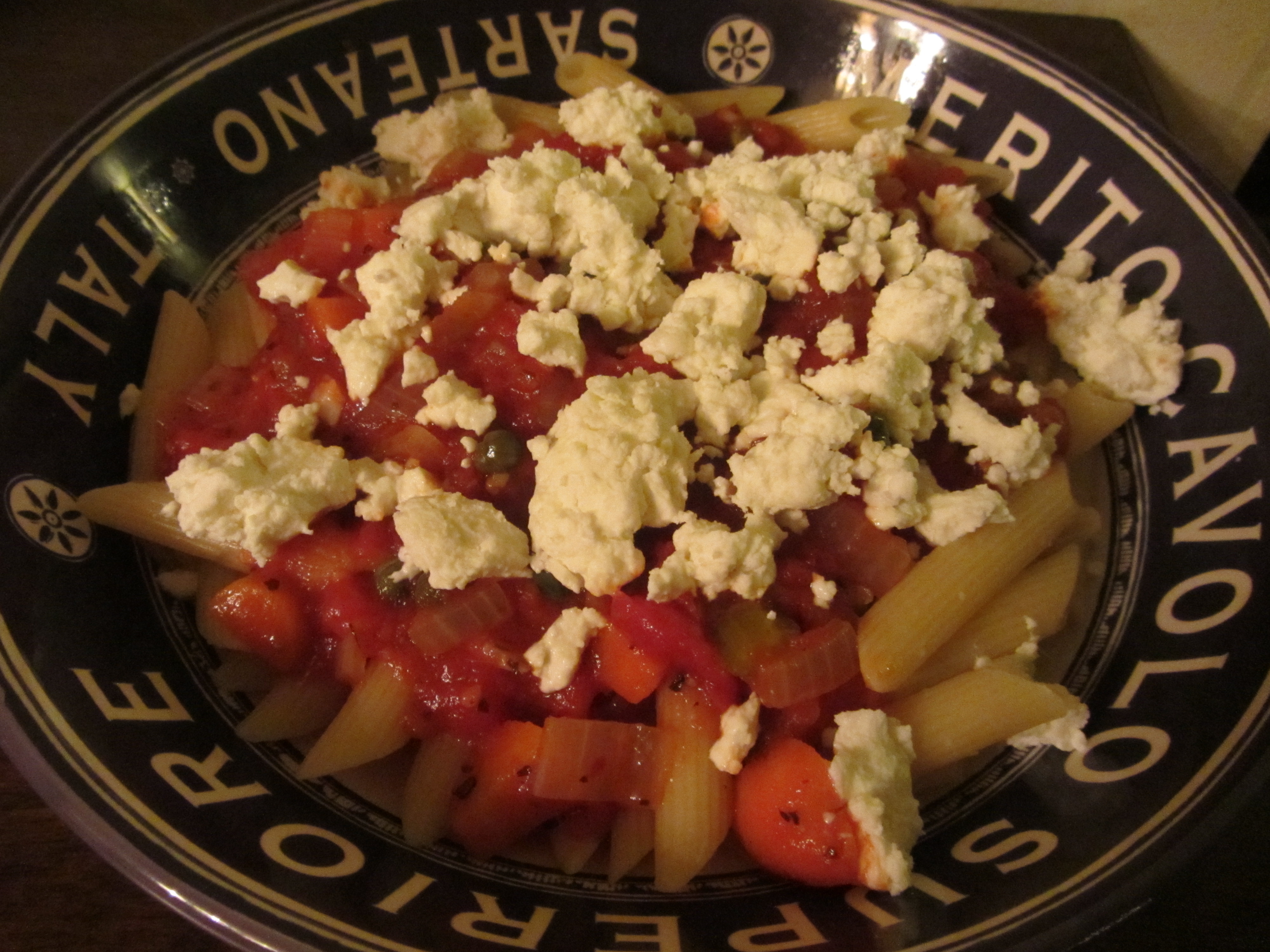
For a pizza sauce, or to cook meatballs in the sauce, you would want to puree the sauce to a smooth consistency. I served my tomato sauce over penne pasta, and sprinkled a little (okay, maybe a lot) of goat cheese over the top.

Tomato sauce over penne with goat cheese.

Tomato sauce over penne with goat cheese.

Ted and I thought this was a great tomato sauce. The vegetables gave it some texture, it was slightly sweet, had some heat from the red pepper flakes, and tang from the capers. As someone who frequently throws together pantry tomato sauces, this is one I will be adding to my repertoire. I will make this again, puree it, and freeze in batches for homemade pizza. If you are looking for an easy, healthy, year-round tomato sauce that tastes much better than commercial jarred sauces, be sure to give this one a go.

As a side note, I prepped my pasta for our dinner per Alton’s newer recommended method, which I mentioned in my previous pasta post here. Alton argues that there is no reason to boil water prior to cooking pasta. Instead, cover the dry pasta with cold water and put it on the burner, cooking until the pasta is al dente.

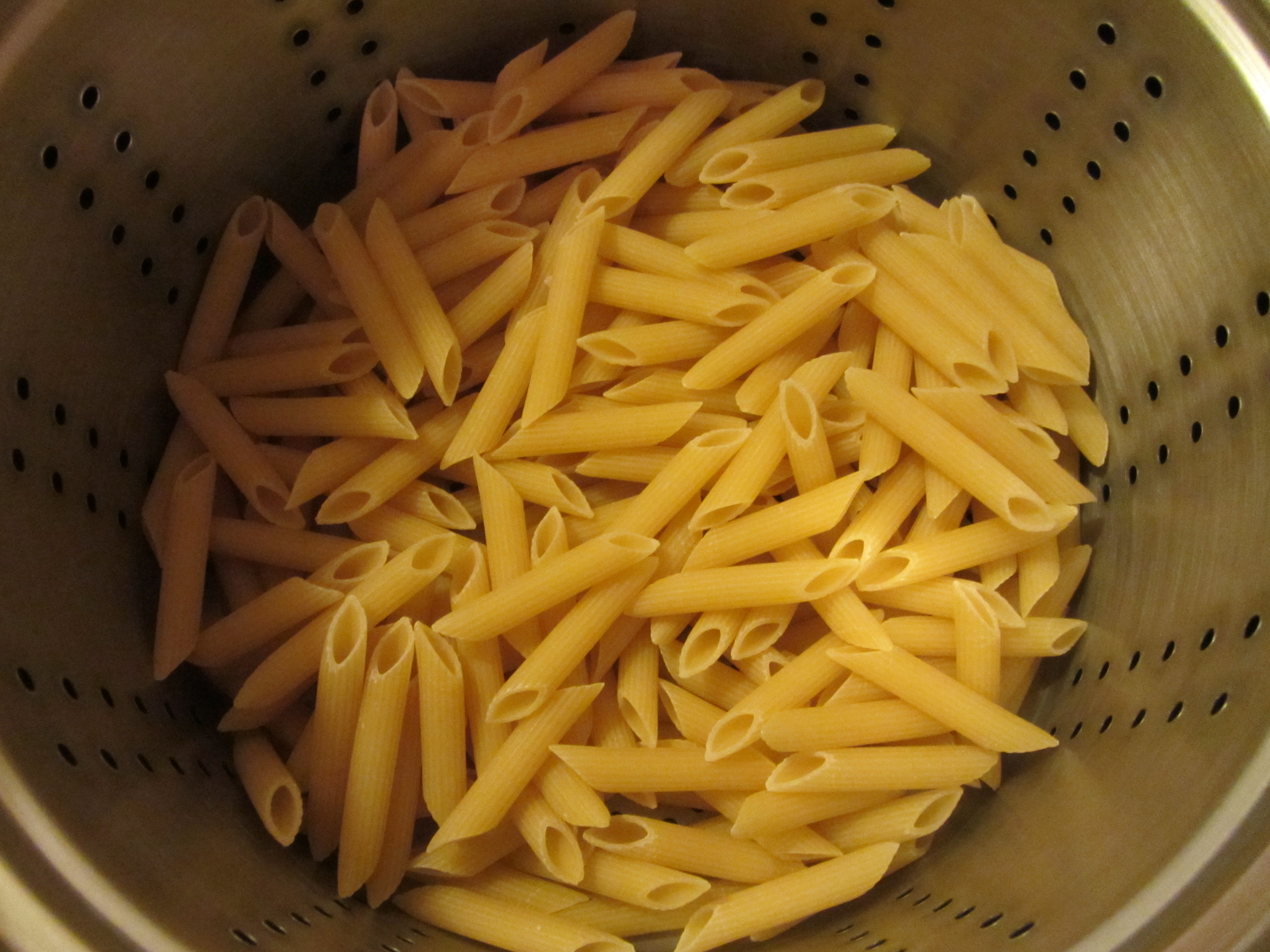
Dry noodles in pot.

Dry noodles in pot.

Noodles in cold water.

Noodles in cold water.

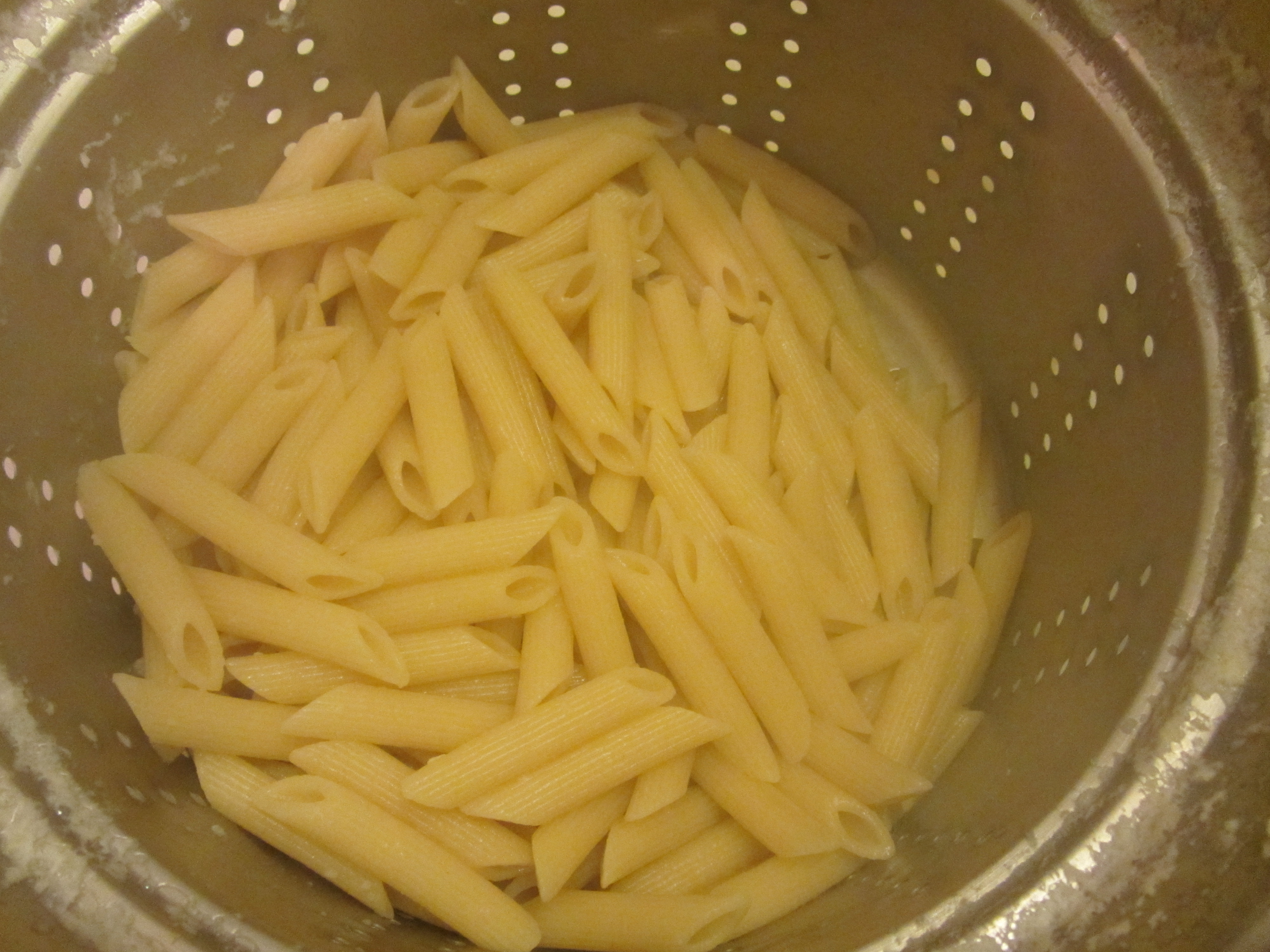
Al dente penne.

Al dente penne.

Really, after cooking pasta this way (I’ve done it a few times), I have to say that Alton is right; there really is no need to boil the water first.

Spiced Blueberry Jammin’

Following a Thanksgiving hiatus, I am back with the 23rd episode of Good Eats. In this episode, Alton makes only one recipe, which is for Spiced Blueberry Jam. I have made freezer jam before, but my only other canning experience has been the dill pickles my mom and I have made for the past eight to 10 years. To start Alton’s jam, you need to begin by washing all of your canning equipment, which I did by hand.

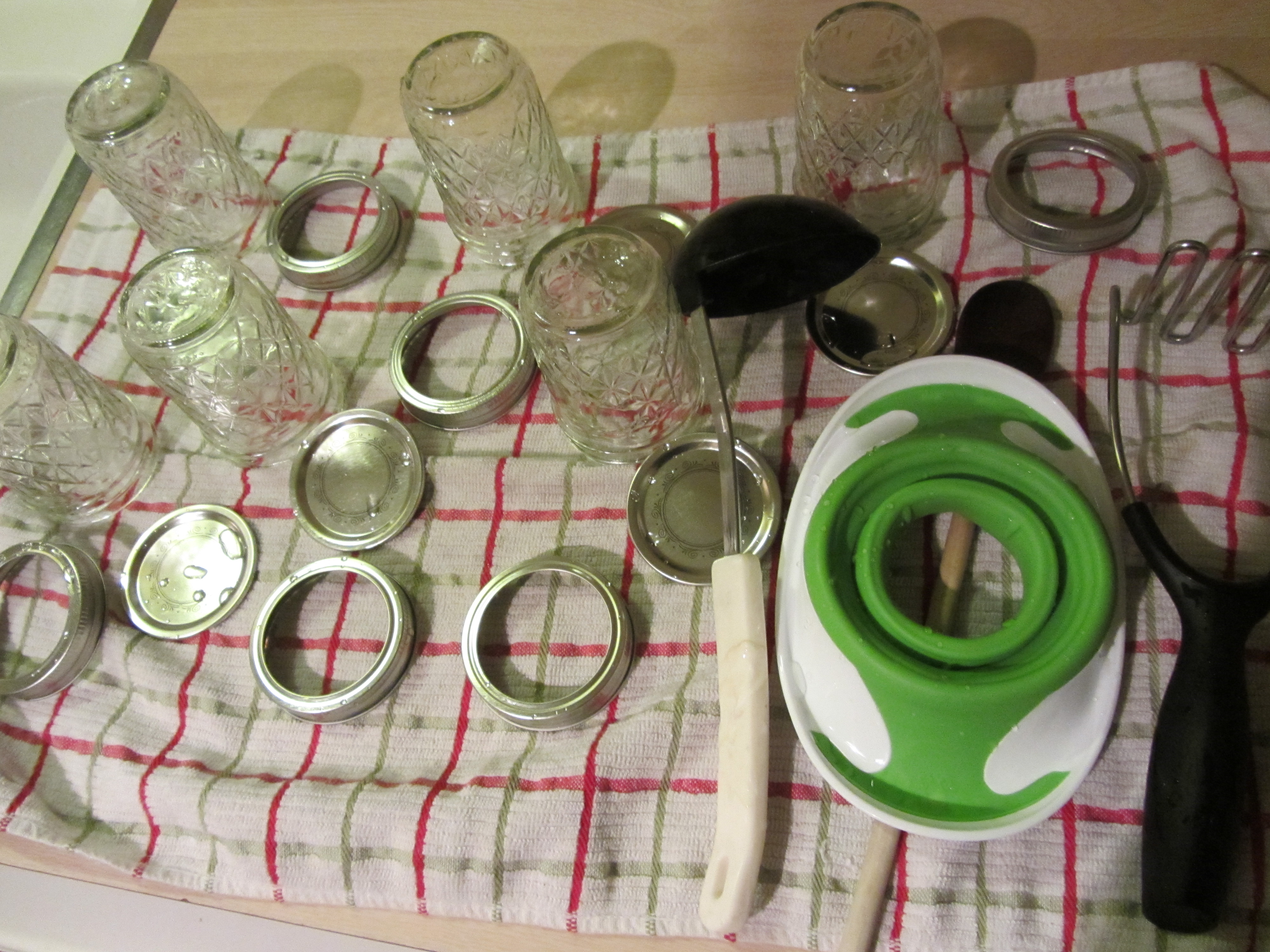
Jars, bands, funnel, masher, and ladle after hand washing.

Jars, bands, funnel, masher, and ladle after hand washing.

After a good wash, it is critical to sanitize your equipment, which Alton did by boiling everything (except the jar lids) for 10 minutes. The jar lids can be added to the pot after it has been removed from the heat for ~10 minutes, as boiling the lids could destroy their sealing compound. I could not find a good pan to boil all of my equipment, so I opted to run everything through the dishwasher instead; this included my jars, bands for the lids, a canning funnel, and a ladle. While your equipment is sanitizing, you can begin making your jam by combining frozen blueberries, a packet of dry pectin, cinnamon, ground star anise, fresh nutmeg, lemon juice, and cider vinegar.

Jam ingredients:  frozen blueberries, star anise, nutmeg, cinnamon, pectin, lemon juice, and cider vinegar.

Jam ingredients: frozen blueberries, star anise, nutmeg, cinnamon, pectin, lemon juice, and cider vinegar.

Whole star anise.

Whole star anise.

Ground star anise.

Ground star anise.

Now, there are a couple of differences between the recipe prepared in the episode and the online recipe. In the episode, Alton uses 1/4 t of cinnamon and 4 T of cider vinegar, while the online recipe calls for no cinnamon and 5 T of cider vinegar. I made the recipe as Alton did in the show. Once everything is combined in the saucepan, you want to bring it to a boil over low heat, as you do not want your frozen fruit to burn.

Blueberries and pectin.

Blueberries and pectin.

Blueberries, pectin, and spices.

Blueberries, pectin, and spices.

All ingredients in the pan.

All ingredients in the pan.

Heating over low heat.

Heating over low heat.

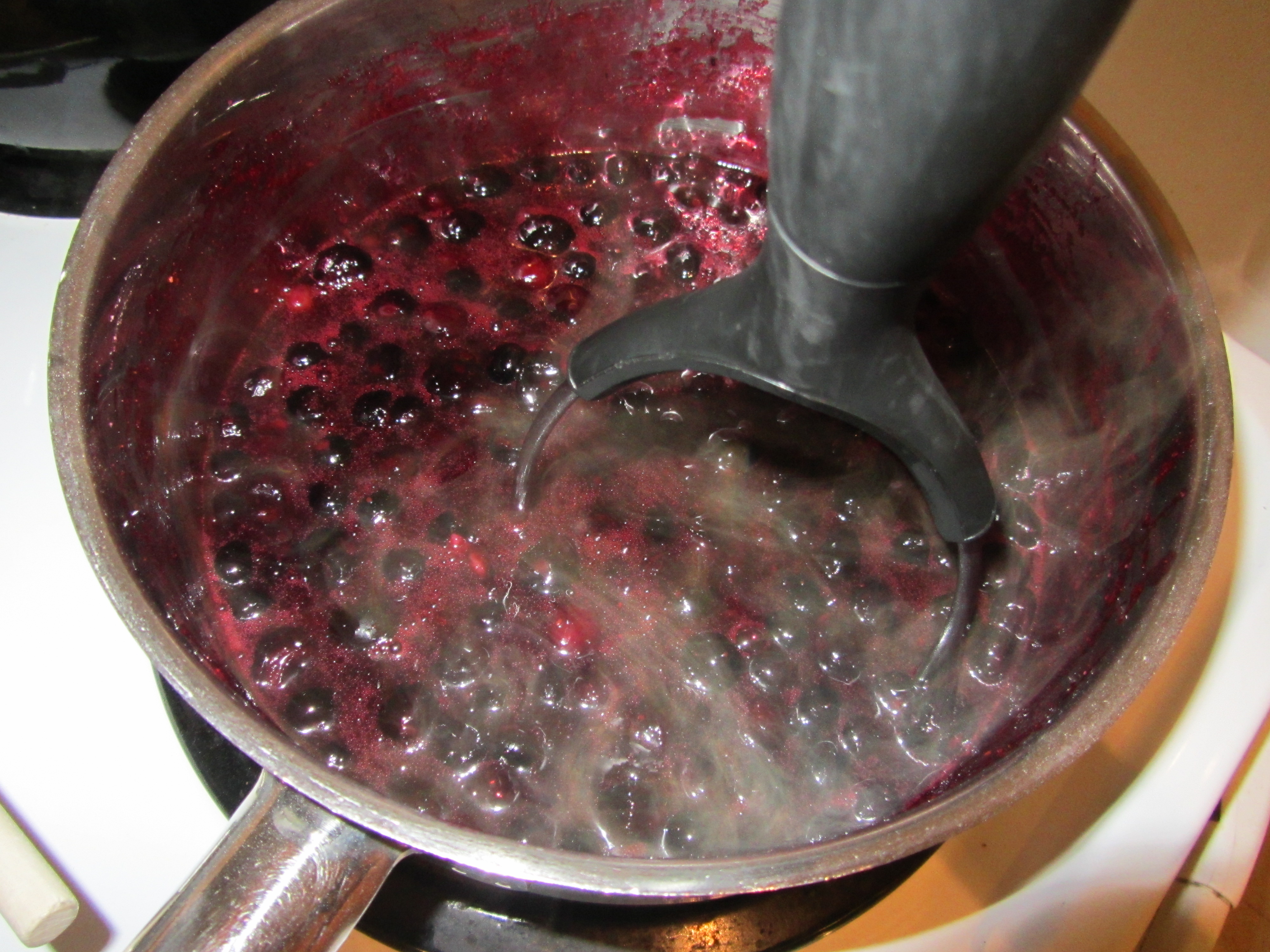
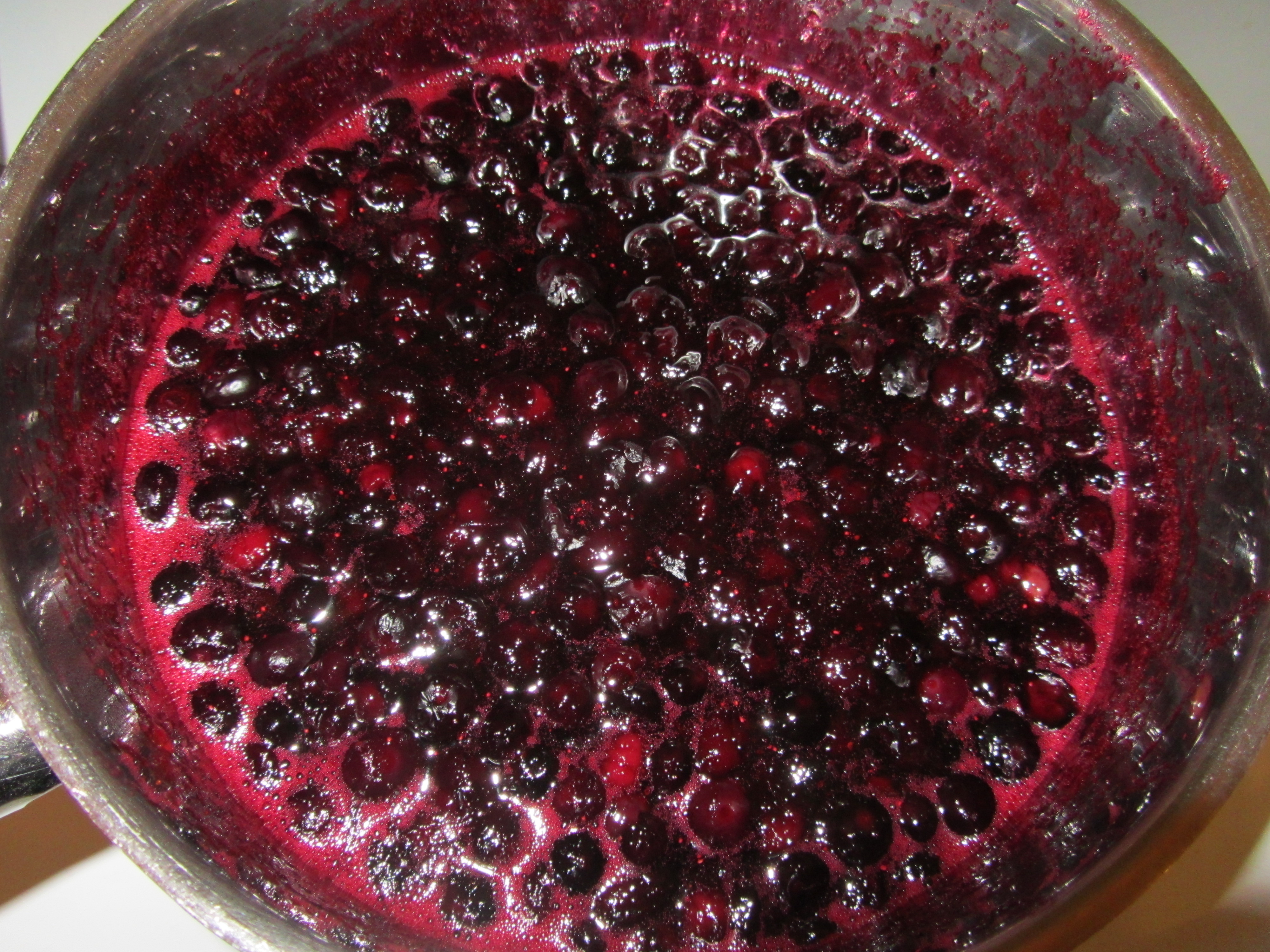
Once juice starts forming on the bottom of the pan, you can increase the heat and began to mash the blueberries with a hand masher. You want to boil the mixture for about five minutes, continuing to mash the berries.

Juice starting to form at bottom of pan.

Juice starting to form at bottom of pan.

Bringing the mixture to a boil.

Bringing the mixture to a boil.

Mashing the blueberries.

Mashing the blueberries.

At this time, you add your sugar and some water to compensate for evaporation. Sugar serves to make jam spreadable, helps to set the pectin, and it takes up excess water. After adding the sugar and water, you increase the heat to medium-high and stir until your jam reaches a boil. Boil the jam for one minute and you are done.

Adding sugar and water.

Adding sugar and water.

Jam after boiling for a final minute.

Jam after boiling for a final minute.

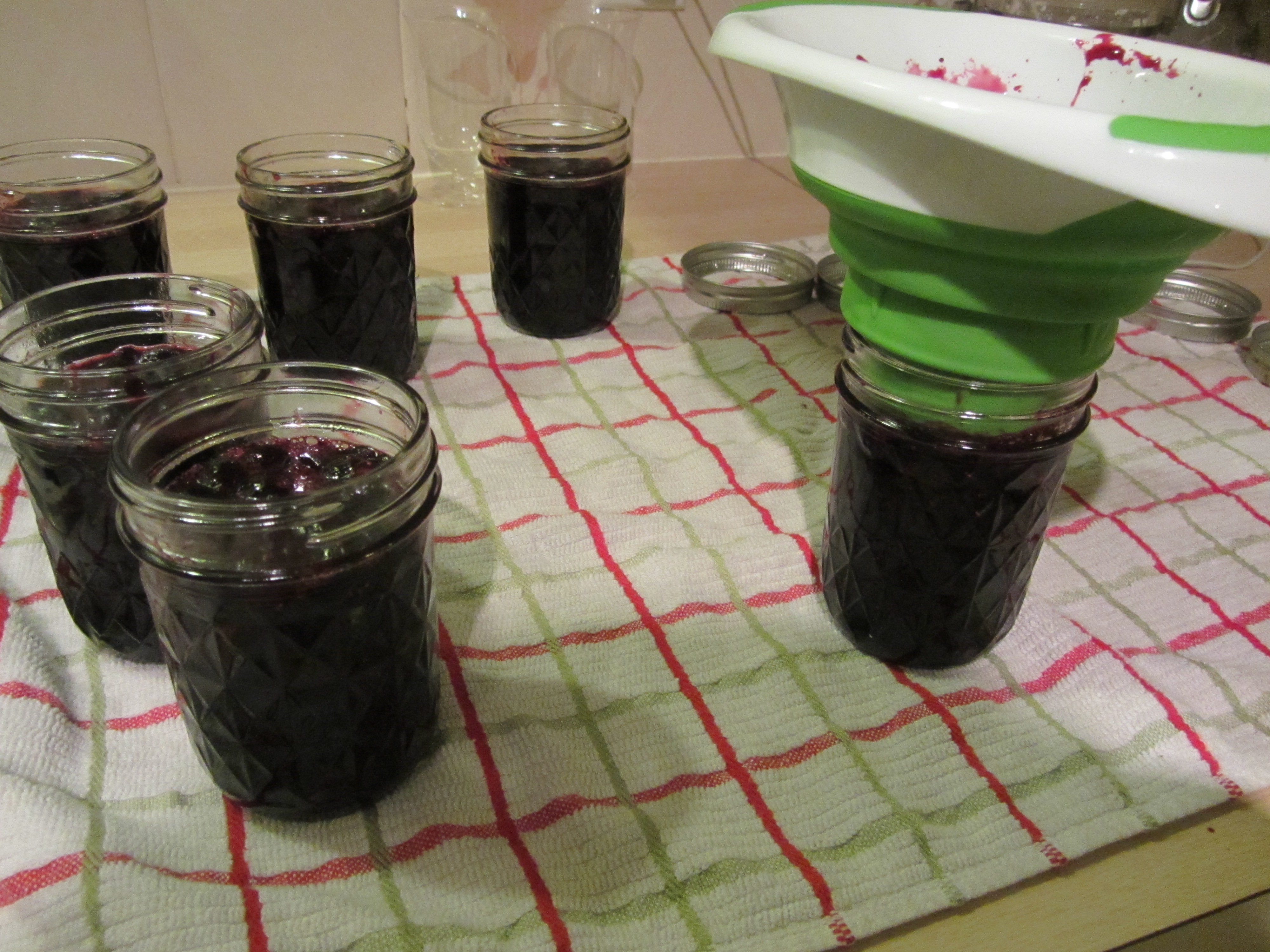
At this point, you could put lids on the jars and store them in the refrigerator for a couple of weeks. I opted to process my jars for longer shelf life, and because it is what Alton does in the episode. While your jars are still hot, you want to fill them with the hot jam mixture, using a ladle and your funnel.

Filling my jars.

Filling my jars.

At this time, I put my jar lids in a bowl with some hot (not boiling) water.

Jar lids in hot water.

Jar lids in hot water.

You only want to fill your jars to the bottom of the funnel. I had just about the perfect amount of jam for six half-pint jars.

Filled jars.

Filled jars.

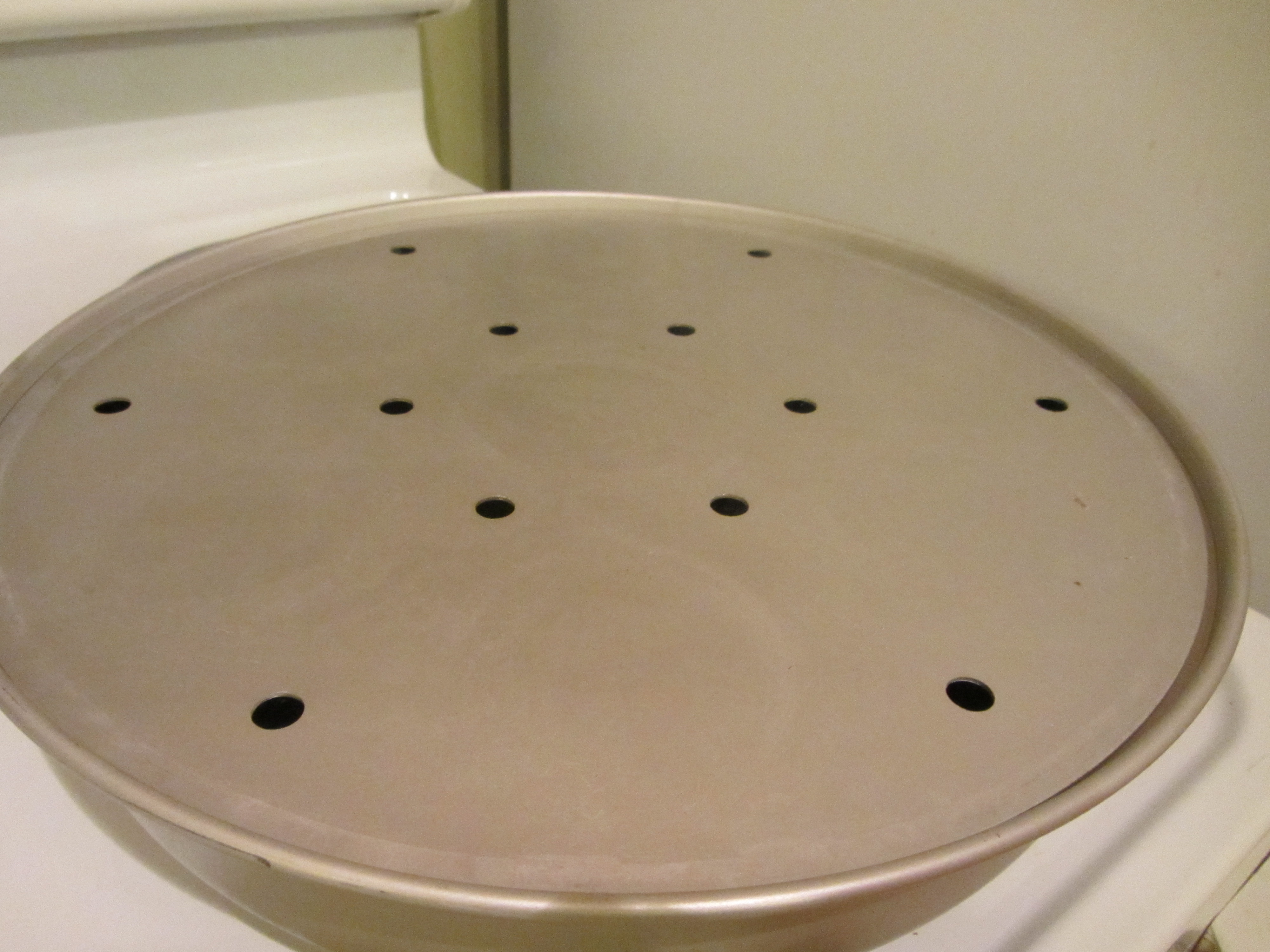
Once filled, wipe the rims of your jars with a damp paper towel and add the lids. Alton used a magnetic wand to put his lids on, but I simply used a fork and my fingers, avoiding touching the bottoms of the lids. Screw the bands on your jars, but only finger-tight. Alton processed his jars by putting them in a water bath. I, on the other hand, borrowed my mom’s steam canner, which is what she and I have always used for our pickles and it has always served us very well. Basically, it is an aluminum dome that sits over a water bath. As the water boils, steam comes up through holes between the bases of the jars.

Steam canner base.

Steam canner base.

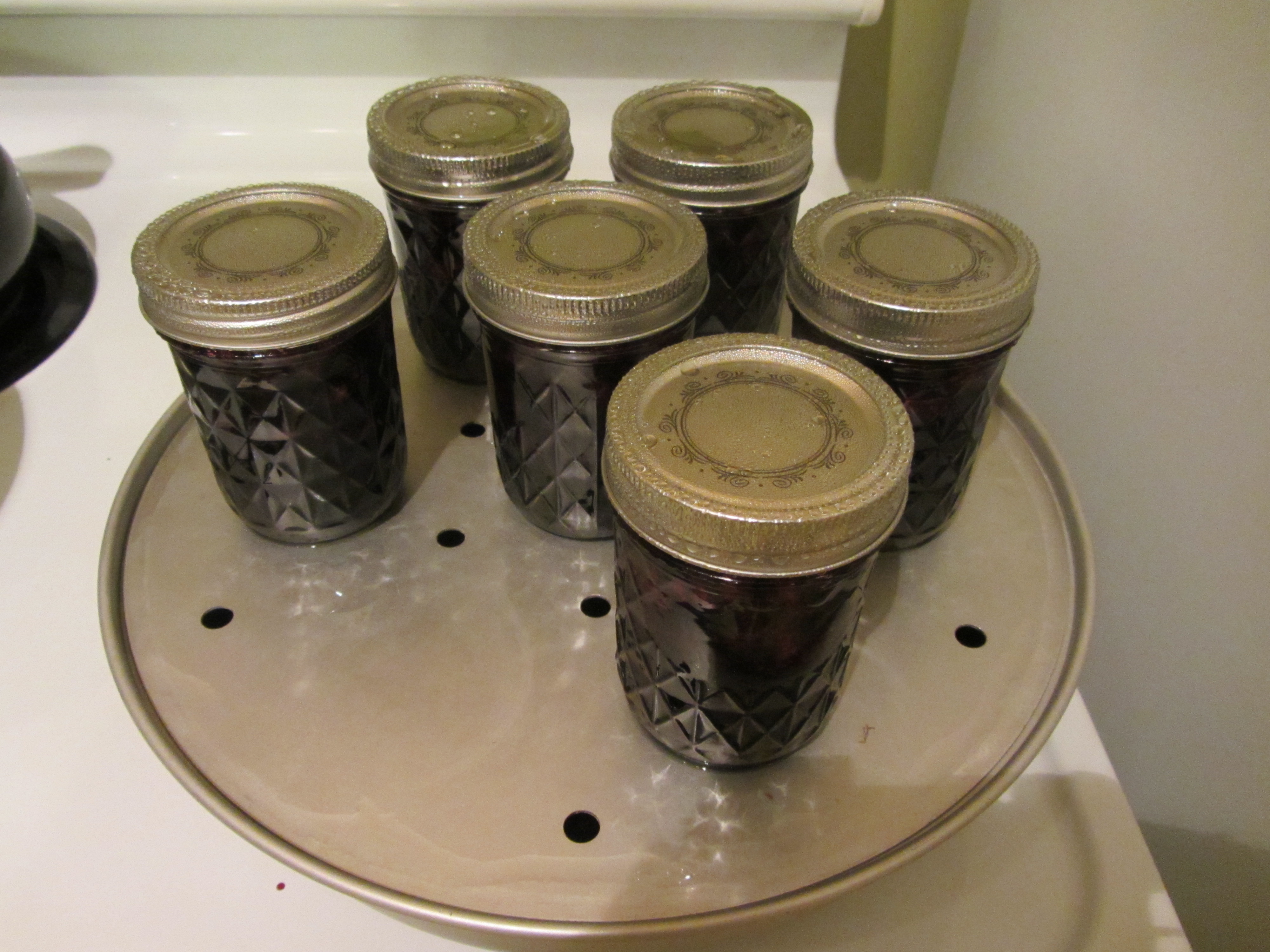
Jars in the steam canner.

Jars in the steam canner.

Lid on for processing.

Lid on for processing.

Watching for steam to come from the vents.

Watching for steam to come from the vents.

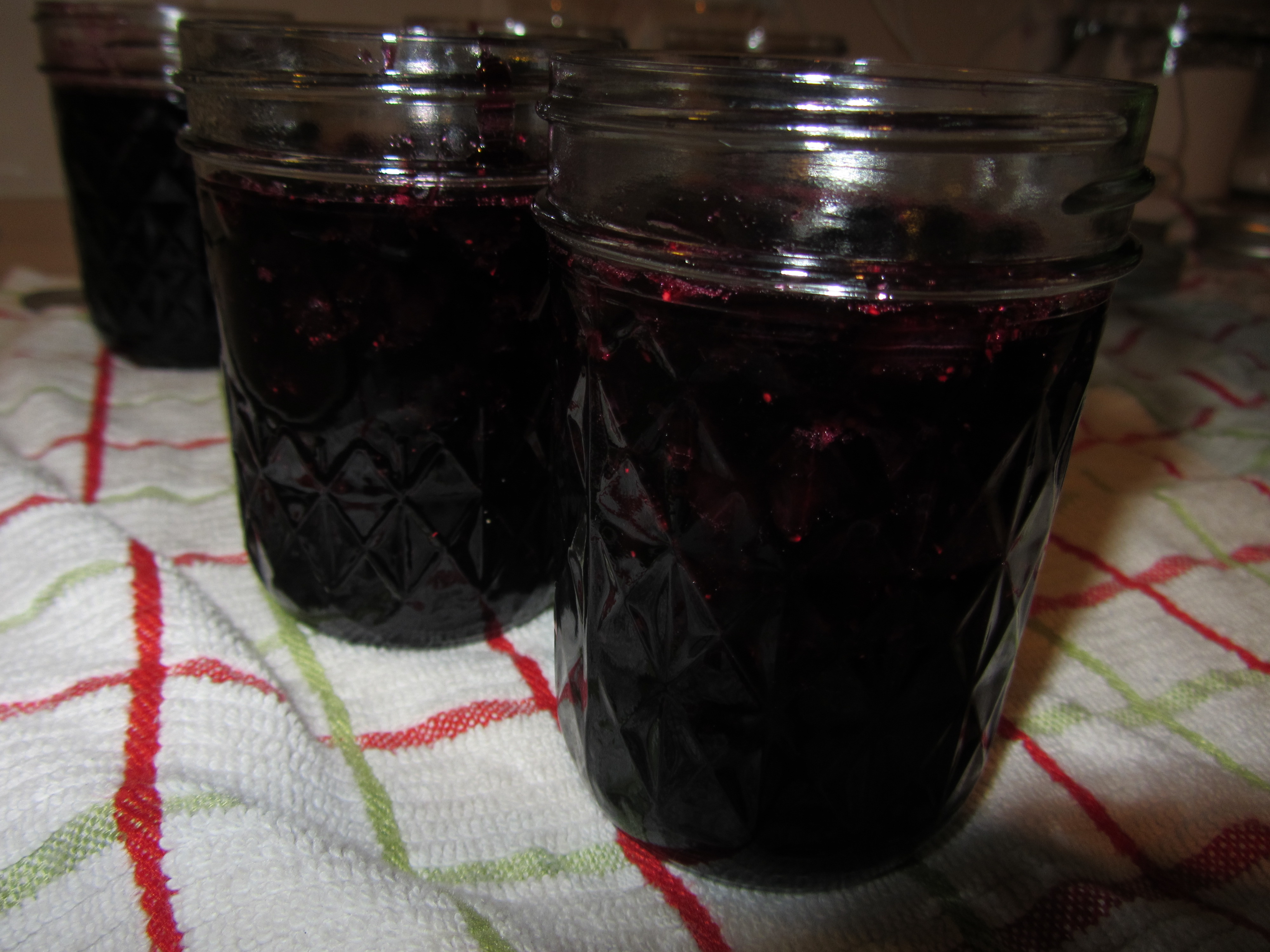
After 10 minutes of processing (processing times depend on the elevation where you live), I pulled my jars from the canner. While my mom and I have occasionally had a jar that has failed to seal, all of my jam lids made a happy popping sound immediately when removed from the canner.

Jars after 10 minutes of processing.

Jars after 10 minutes of processing.

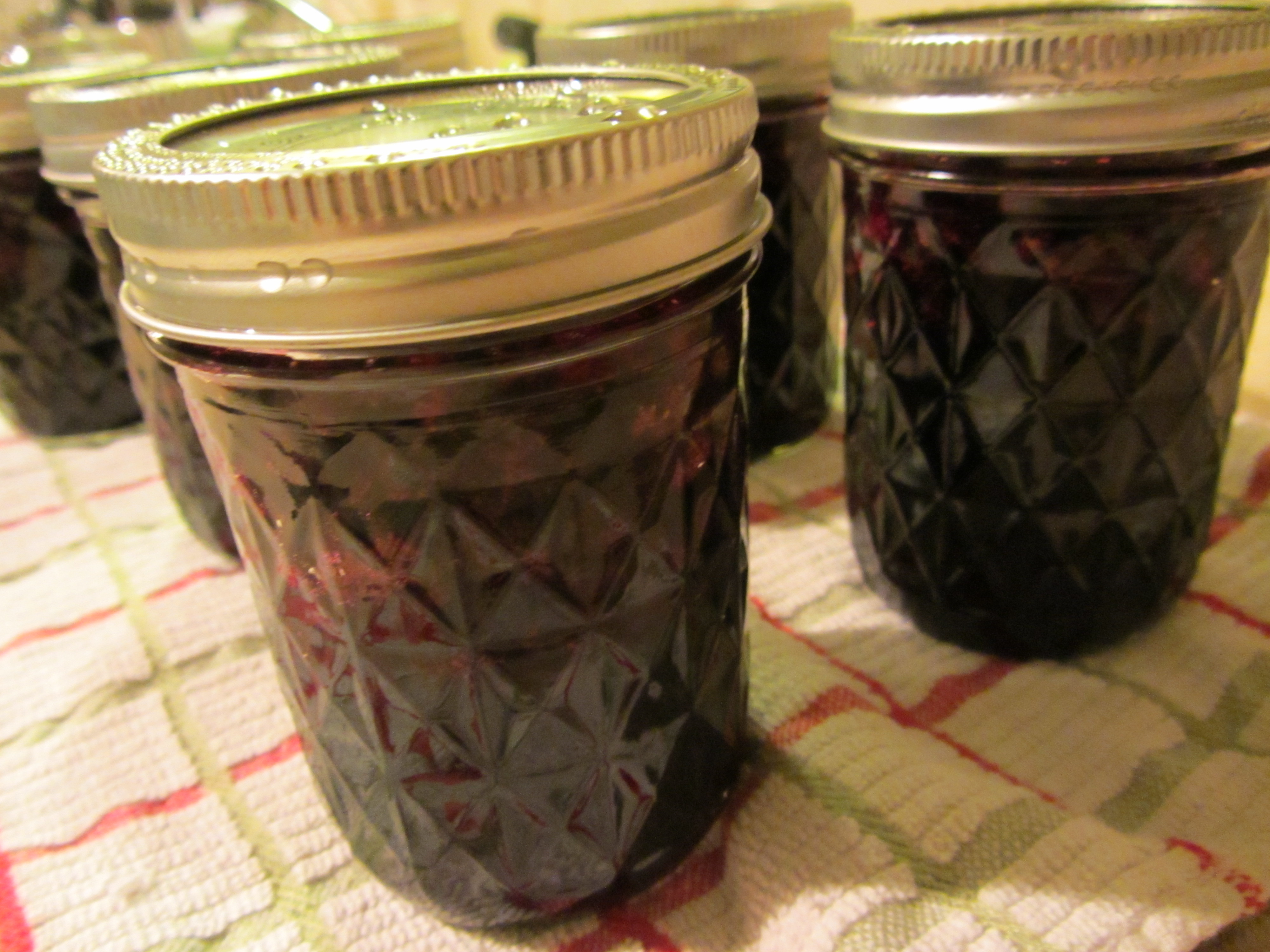
Fresh (and hot!) from the canner.

Fresh (and hot!) from the canner.

You want to let your jars cool completely, and Alton recommends storing them without their bands. Why? The bands tend to rust and it is easier to tell if a jar is spoiled when the lid is not held in place by a band. Ted and I had the jam yesterday morning for breakfast, spreading it on toast.

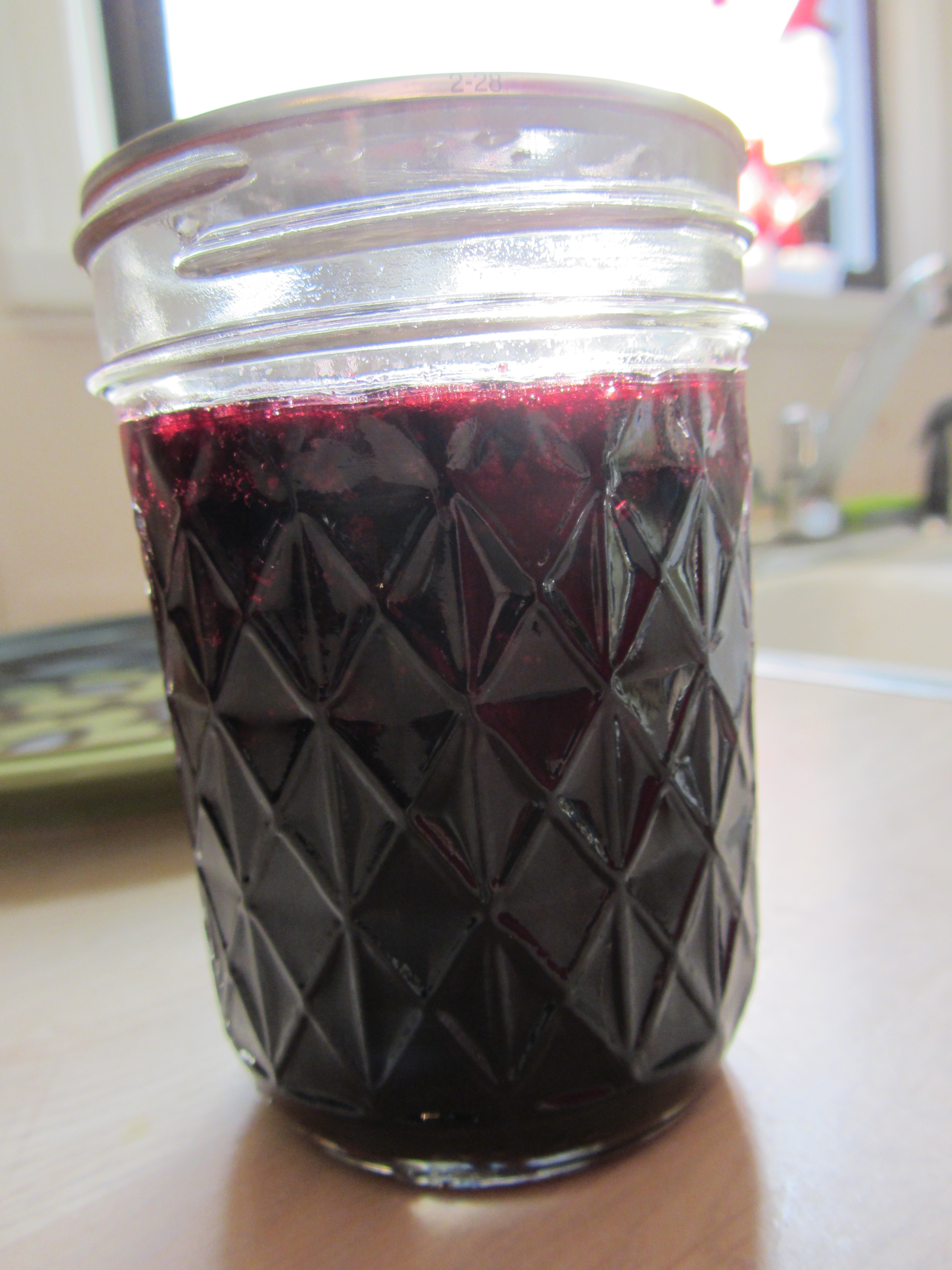
Nice color to the jam.

Nice color to the jam.

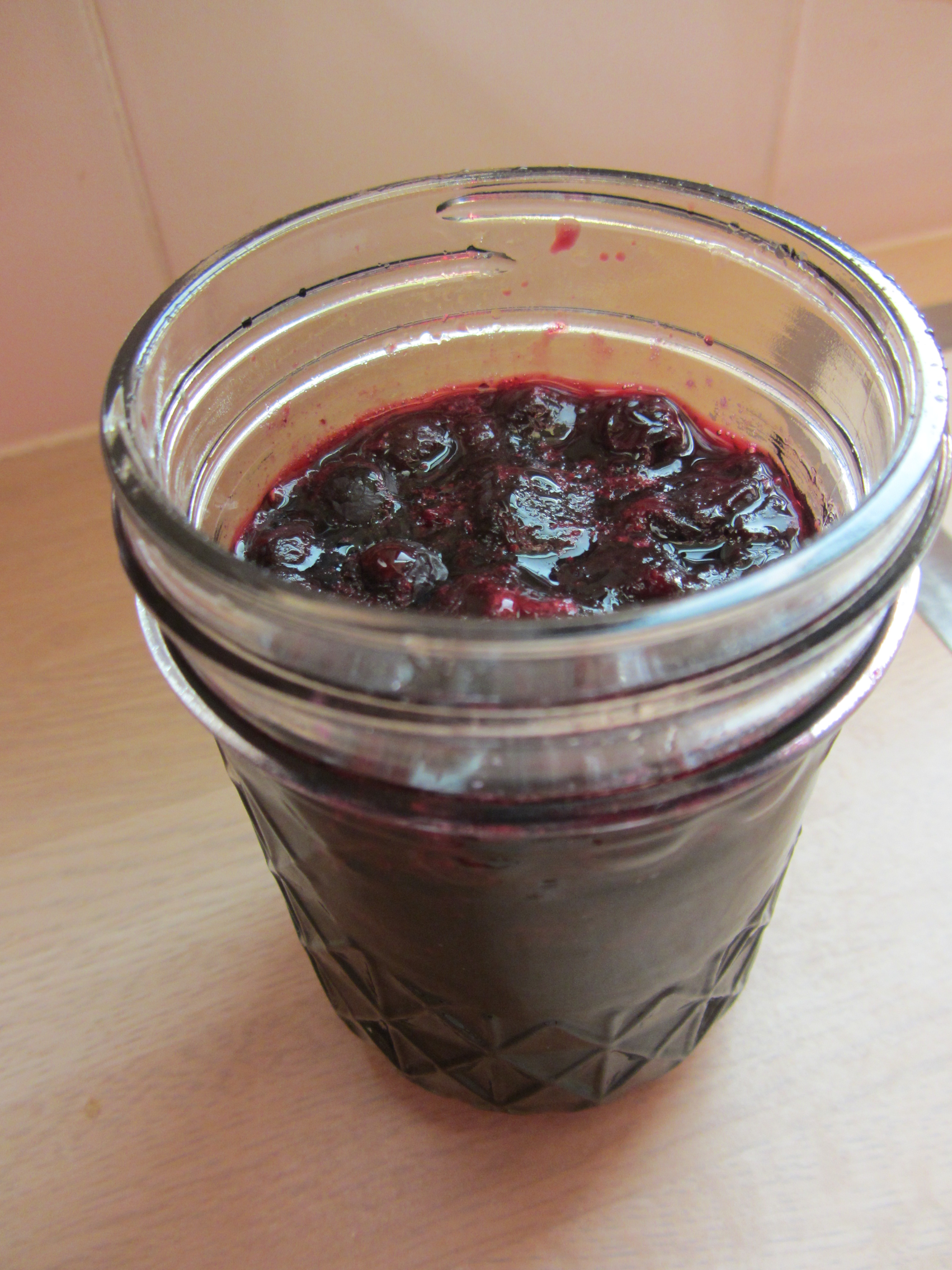
Completed jam.

Completed jam.

Jam on toast.

Jam on toast.

The blueberry flavor is super intense and you would not guess that the jam is made of frozen fruit. We both thought the anise flavor paired really well with the blueberries, and Ted described the jam overall as “spicy.” While the nutmeg and cinnamon are fairly subtle, the anise flavor is obvious, though not overpowering. This jam is a little on the looser side, but I would not call it runny or thin, and it does have a beautiful purple color. Overall, I think it is really good jam, and the spice notes are a surprise, as they are more intense than in most jam. Jam is so easy to make, and this one could make a nice holiday gift.