Archive for the ‘Season 4’ Category

I actually prepared this dish a couple weeks ago, but I am only now getting around to blogging about it. I know my mother-in-law, Ellie, is concerned about Ted keeping his weight up as he goes through his radiation and chemotherapy. I am doing my best to keep him well-fed, and Alton’s fried chicken was certainly something he had no trouble consuming!

Fried Chicken

I am not a huge fan of preparing chicken, as I have written before. I just find it to be unappealing in its uncooked state. Now, if someone prepares it for me, it’s a different thing. This was my first time making fried chicken, and was the first time I had consumed fried chicken in years. The recipe for Alton’s fried chicken is pretty straight-forward. He recommends getting a whole broiler/fryer chicken, rather than purchasing an already-portioned bird.

A broiler/fryer chicken.

My broiler/fryer chicken.

Why? It is cheaper to break down your own chicken, you get better portioning, and the meat stays fresher longer.

It is probably best to watch Alton’s chicken breakdown in the episode. To start, place your chicken on a cutting board with the neck facing you.
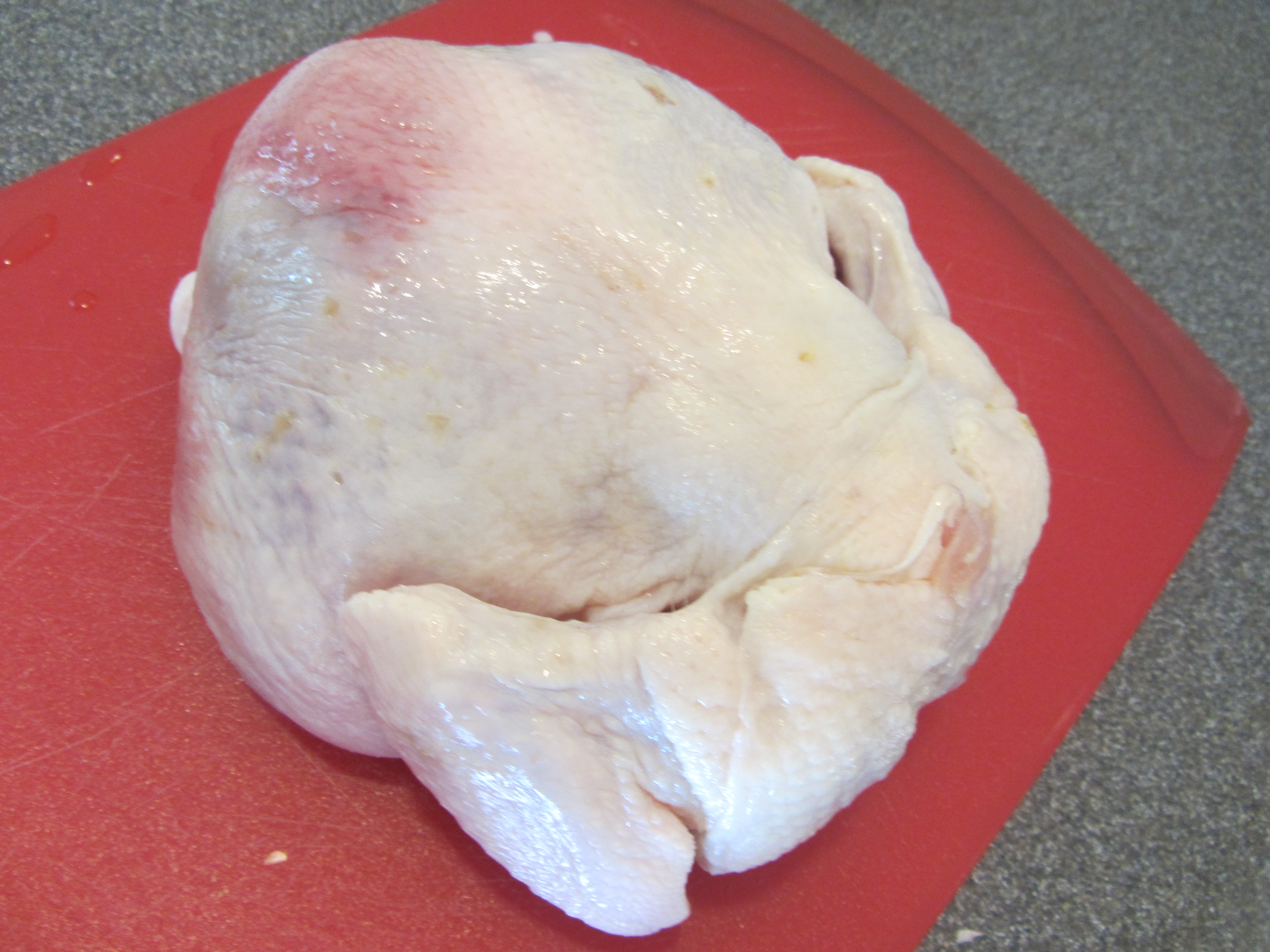
My chicken on a cutting board.

My chicken on a cutting board.

Cut the wings off; discard the wings or save to use in making stock. Next, you need to remove the wishbone. You can feel the wishbone if you run your finger over the inside of the neck. Using a sawing motion, you will cut the wishbone out by running your knife down each side until the bone becomes detached. The legs are next; cut through the skin between the breast and the drumsticks. Flip the bird over, feel for the thigh bones, and bend the legs backward toward you, dislocating the joints. Cut the legs off with your knife. Squeeze each leg together to find the joint line, kind of like squeezing a nut cracker. Place the blade of your knife in the joint and slice down to separate the thigh from the drumstick. To portion the breast, cut down one side of the keel bone, and use your knife to “peel” the meat from the ribs. Do the same on the other side.
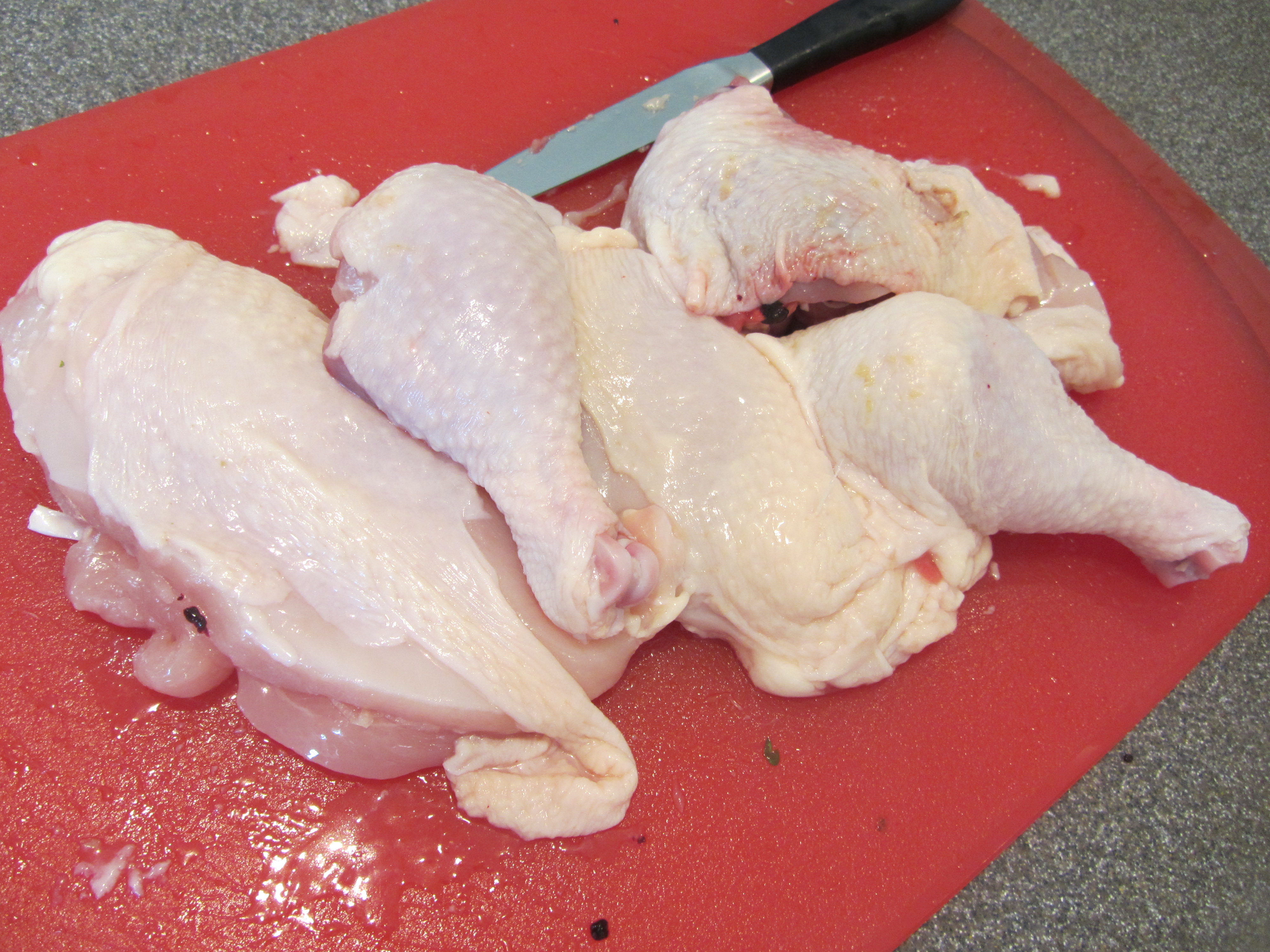
My chicken after portioning Alton's way. Not a perfect job.

My chicken after portioning Alton’s way. Not a perfect job.

Again, it may be easier to watch a video of how to break a chicken down. If desired, you can use the carcass and wings to make stock. Place your chicken pieces in a container and pour two cups of low-fat buttermilk over them; cover and refrigerate for 12-24 hours.
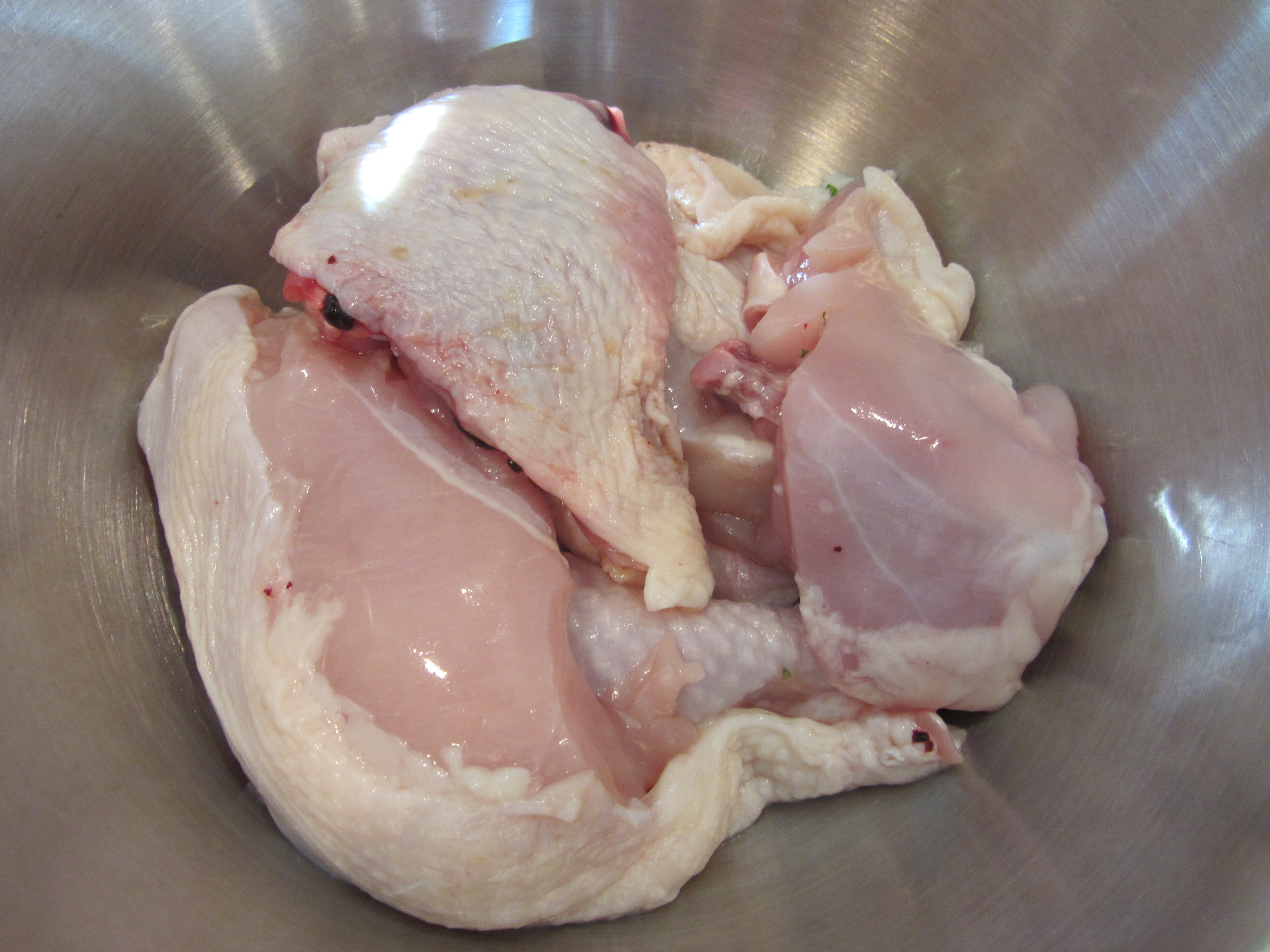
Chicken pieces in a container.

Chicken pieces in a container.

Low-fat buttermilk.
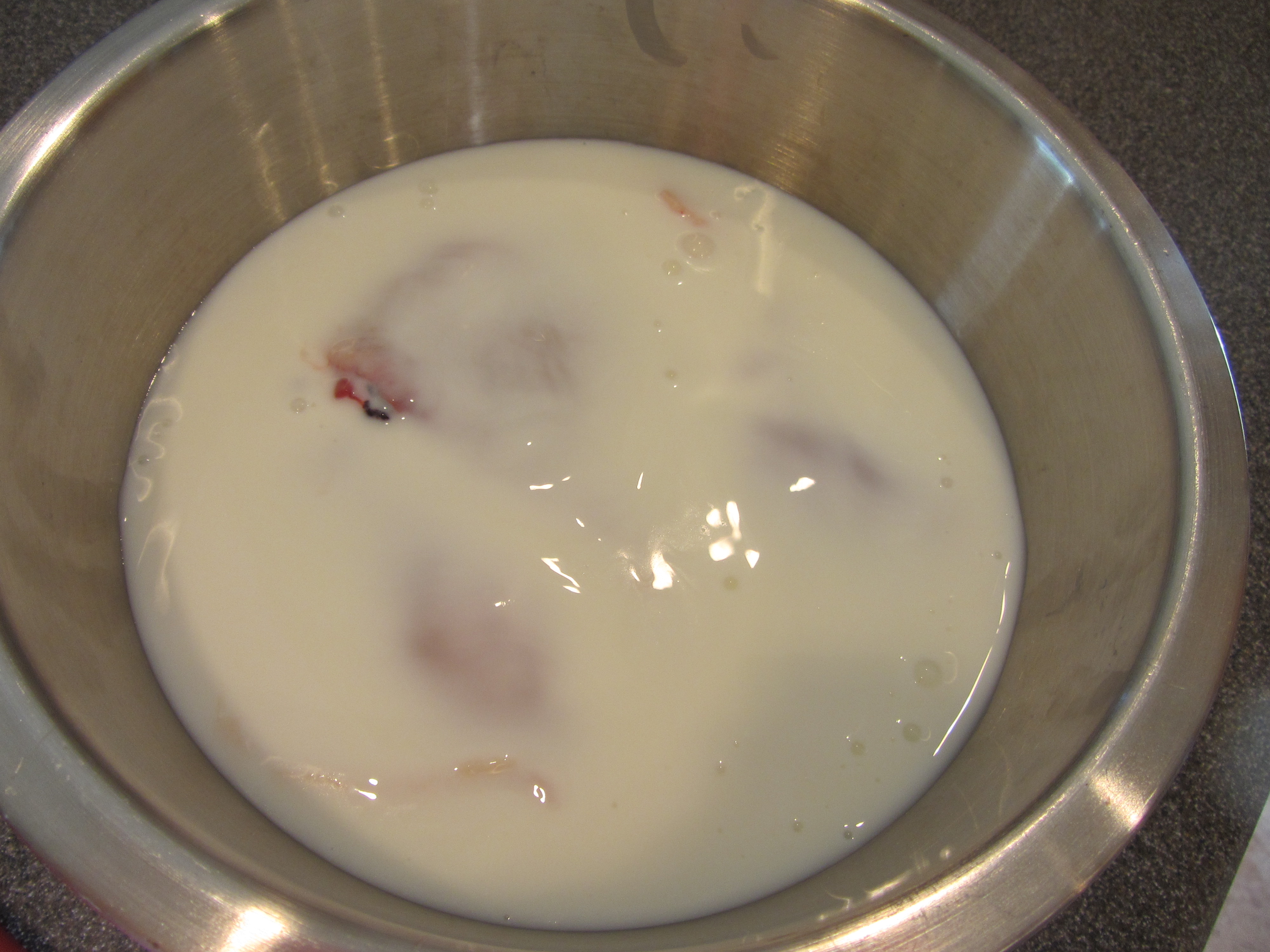
Low-fat buttermilk.

Buttermilk poured over chicken pieces.

Buttermilk poured over chicken pieces.

I let my chicken pieces sit for ~24 hours. When ready to fry your chicken, heat solid vegetable shortening in a large skillet (preferably iron); for a 12-inch skillet, use 16 oz. of shortening.
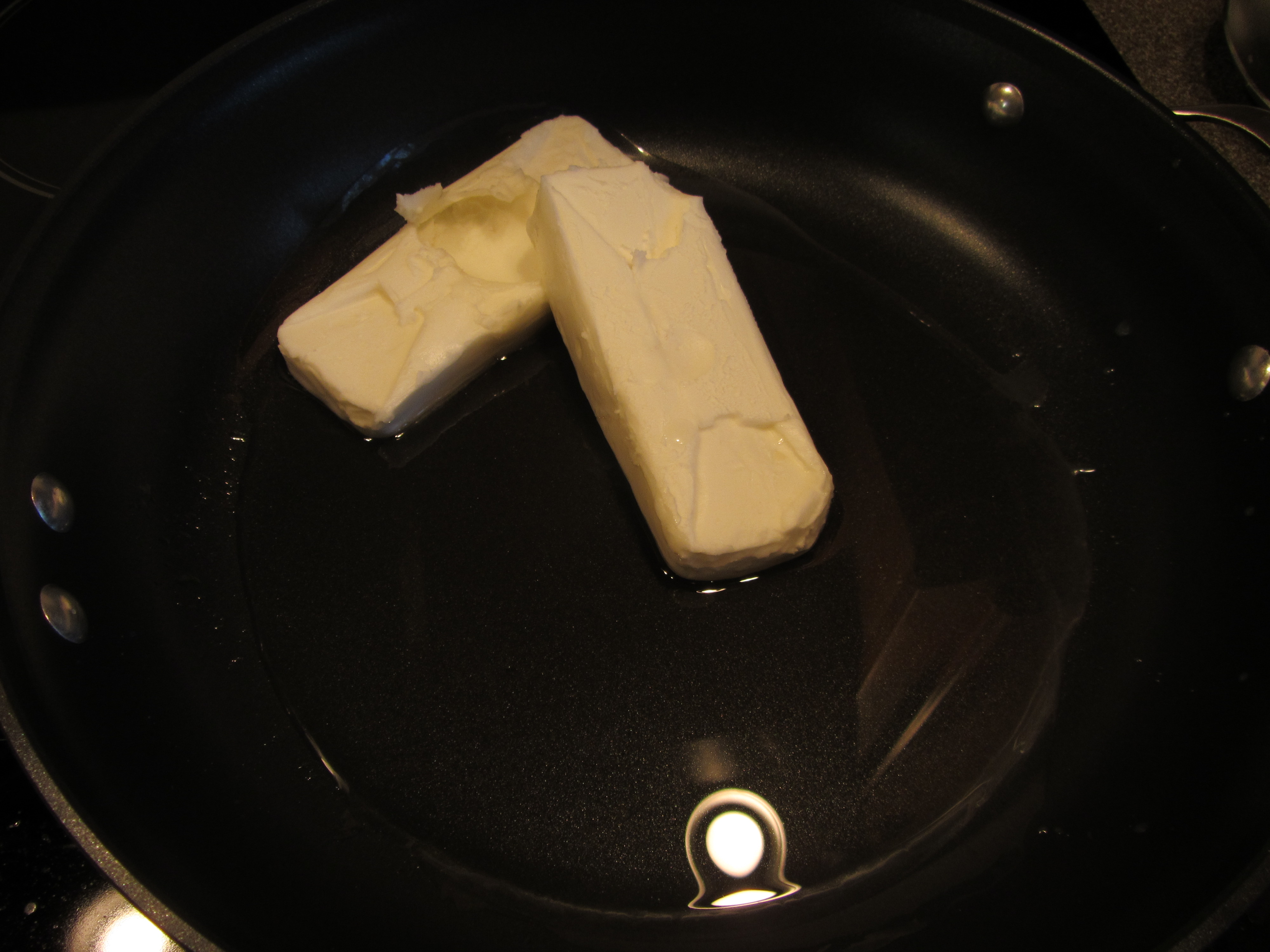
16 ounces of shortening melting in a 12-inch skillet.

16 ounces of shortening melting in a 12-inch skillet.

You want your melted shortening to come 1/3″ up the side. Drain your chicken pieces, discarding the buttermilk.
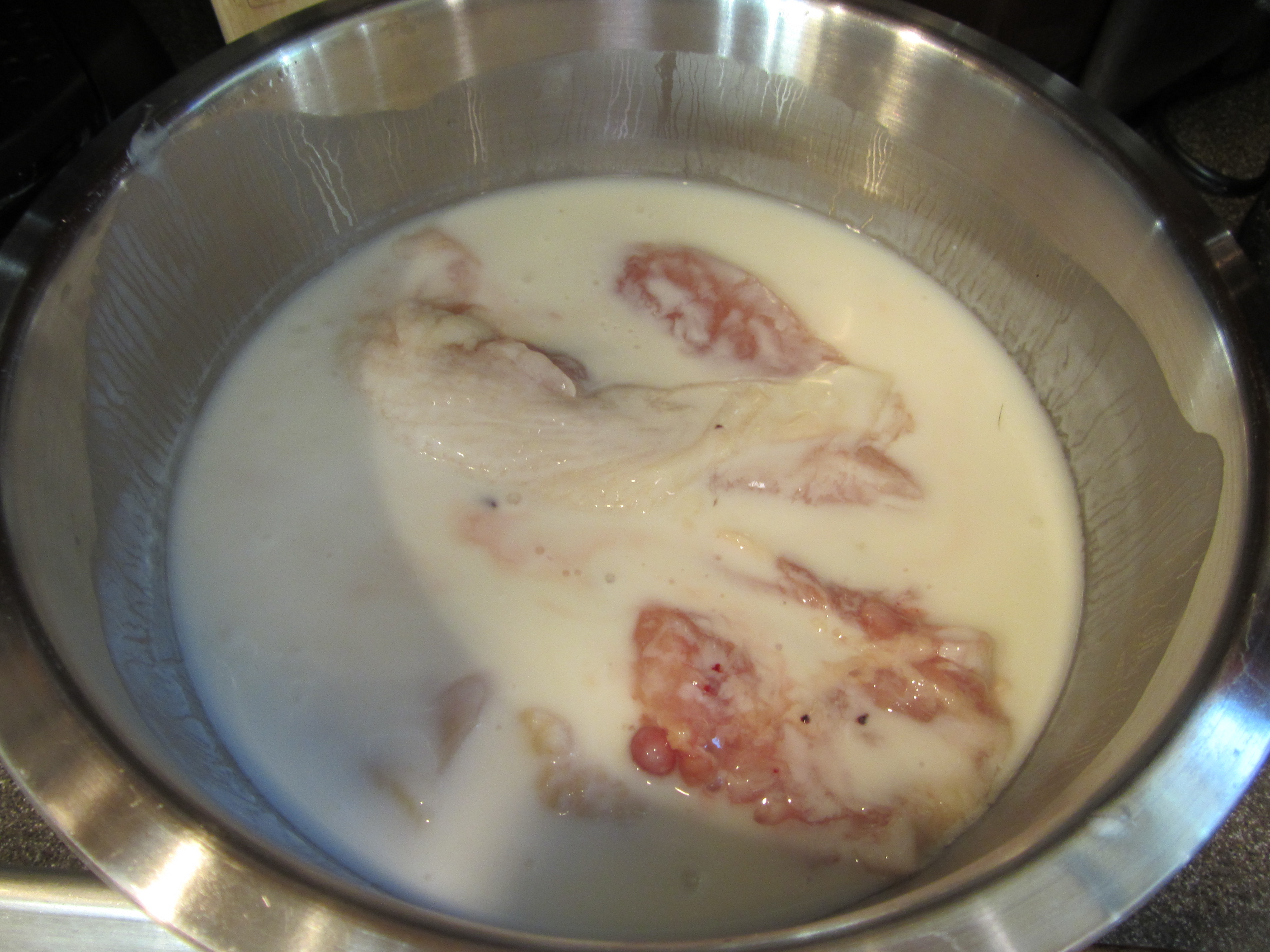
Chicken after soaking in buttermilk for ~24 hours.
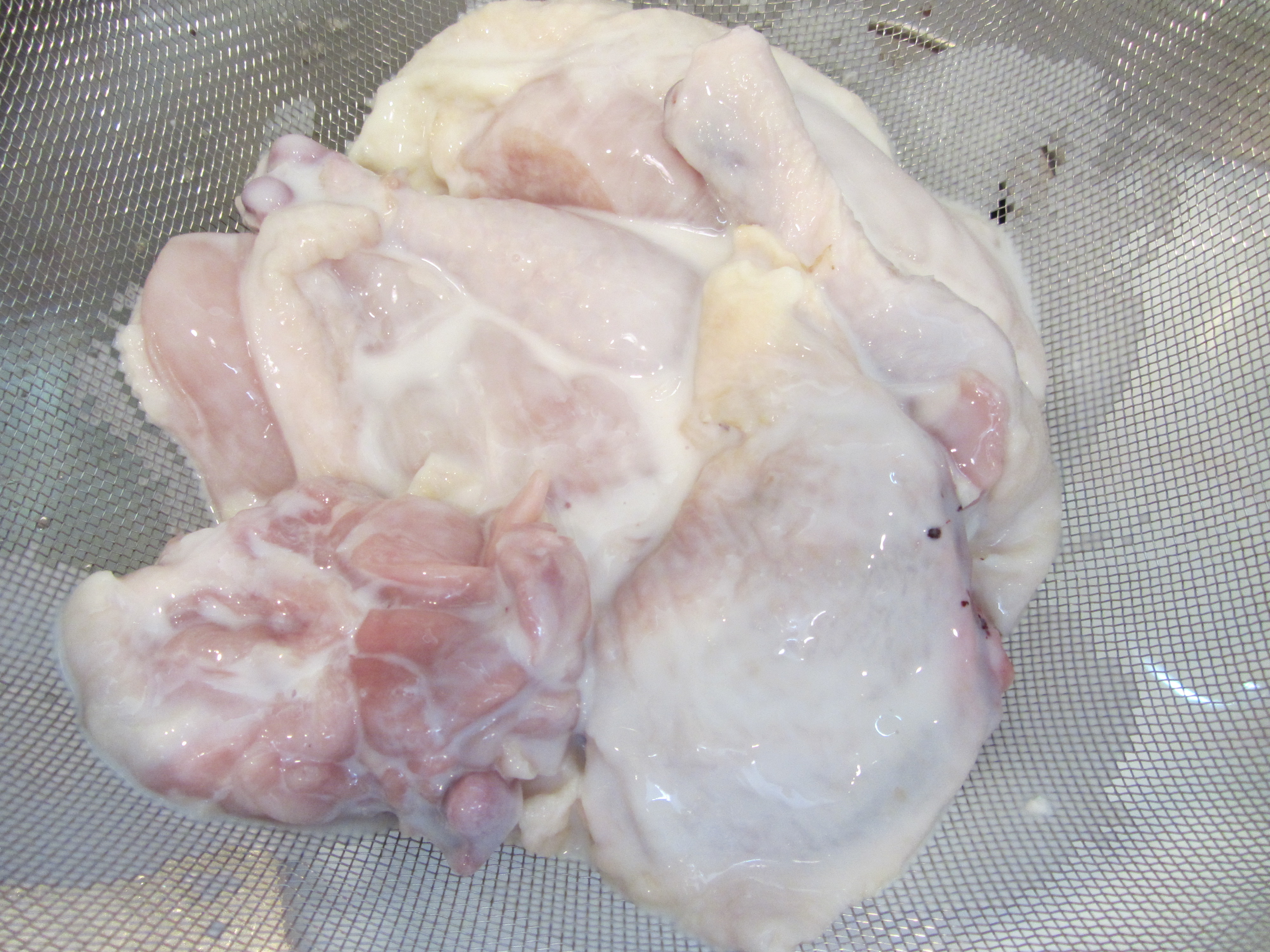
Chicken after soaking in buttermilk for ~24 hours.

Drained chicken pieces.

Drained chicken pieces.

Meanwhile, prepare your seasoning blend by combining 2 T Kosher salt, 2 T paprika (I used hot smoked paprika), 2 t garlic powder, and 1 t cayenne pepper. Alton places his seasoning blend in a shaker for easy dispersion.
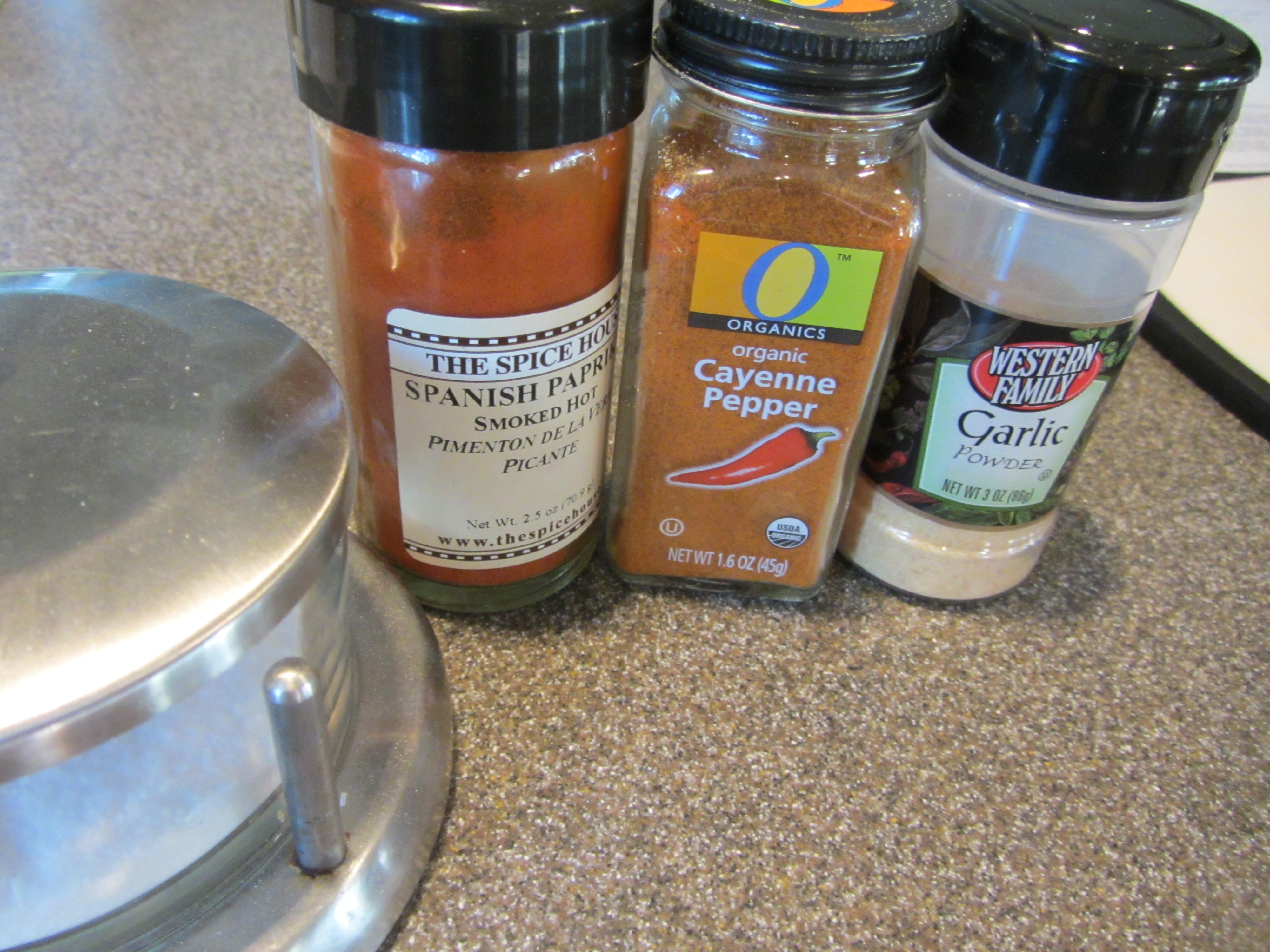
Ingredients for spice blend:  Kosher salt, garlic powder, paprika, and cayenne pepper.
Ingredients for spice blend: Kosher salt, garlic powder, paprika, and cayenne pepper.

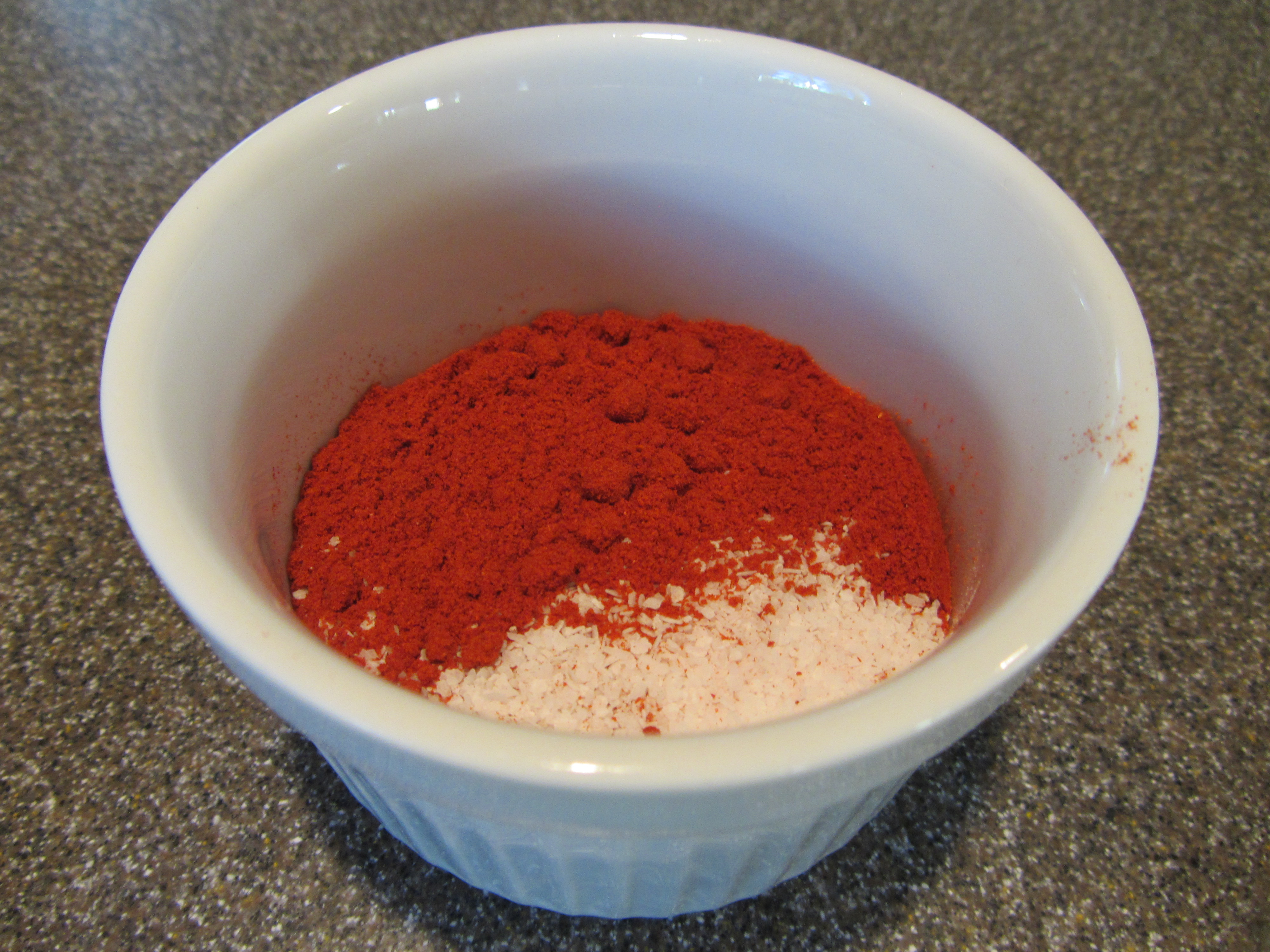
2 T Kosher salt and 2 T paprika.
2 T Kosher salt and 2 T paprika.

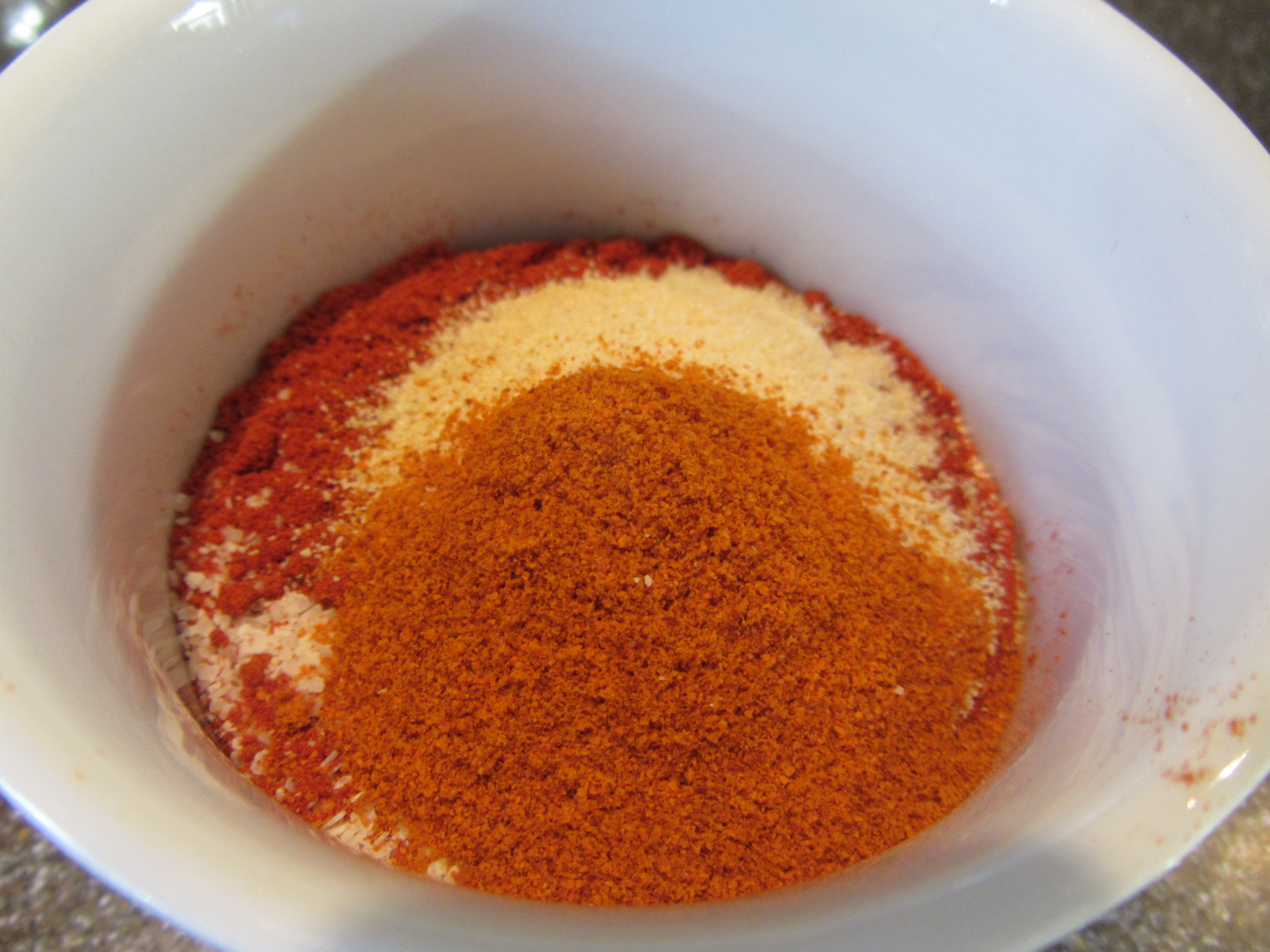
2 t garlic powder and 1 t cayenne pepper added to spice blend.
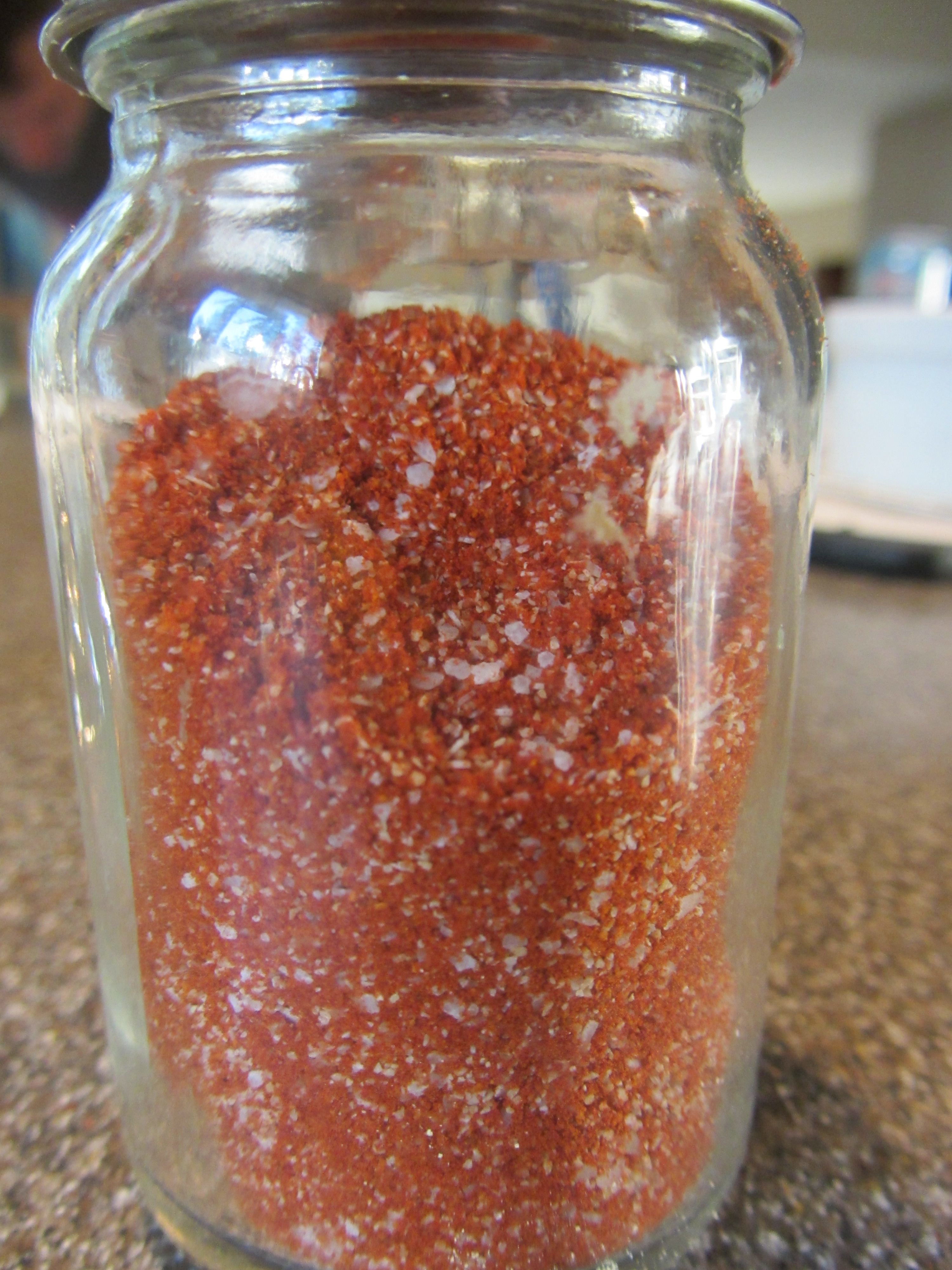
2 t garlic powder and 1 t cayenne pepper added to spice blend.

Final spice blend in a shaker.

Final spice blend in a shaker.

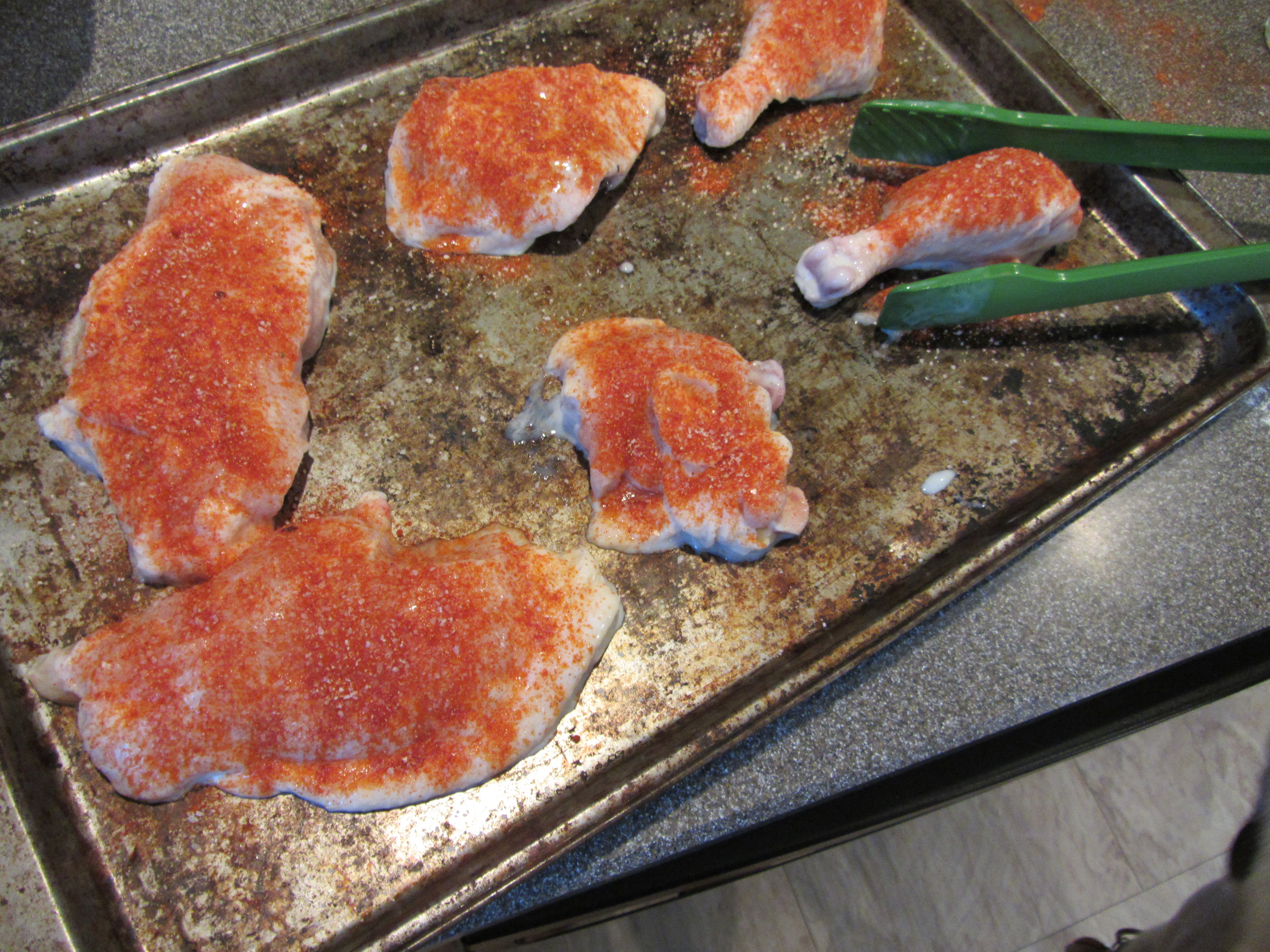
Place your drained meat pieces on a baking sheet and season them liberally on both sides with your blend.
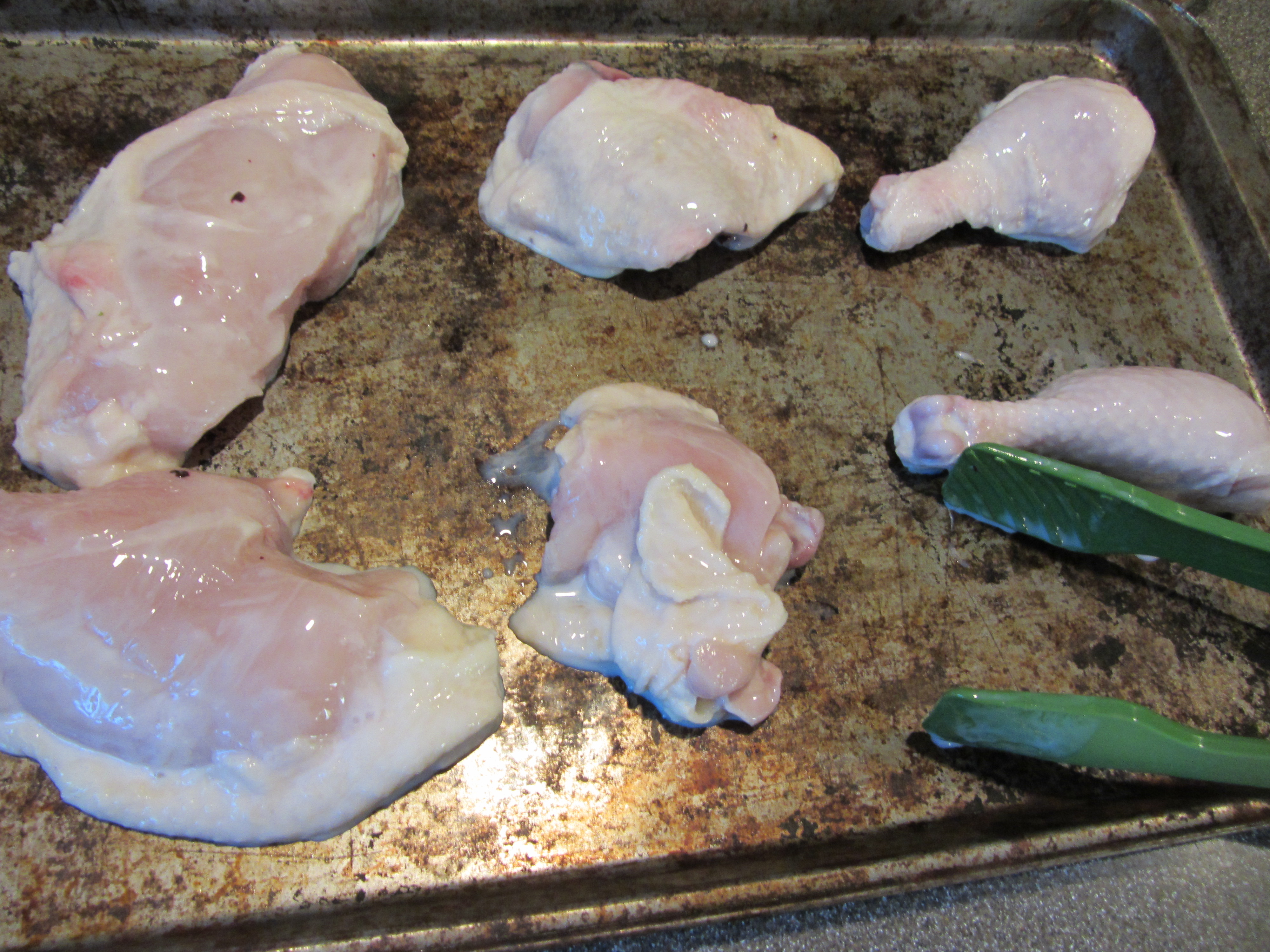
Chicken pieces on a baking sheet.
Chicken pieces on a baking sheet.

Chicken pieces sprinkled liberally with spice blend.

Chicken pieces sprinkled liberally with spice blend.

After seasoning, dredge the chicken pieces in flour, shaking off the excess flour.
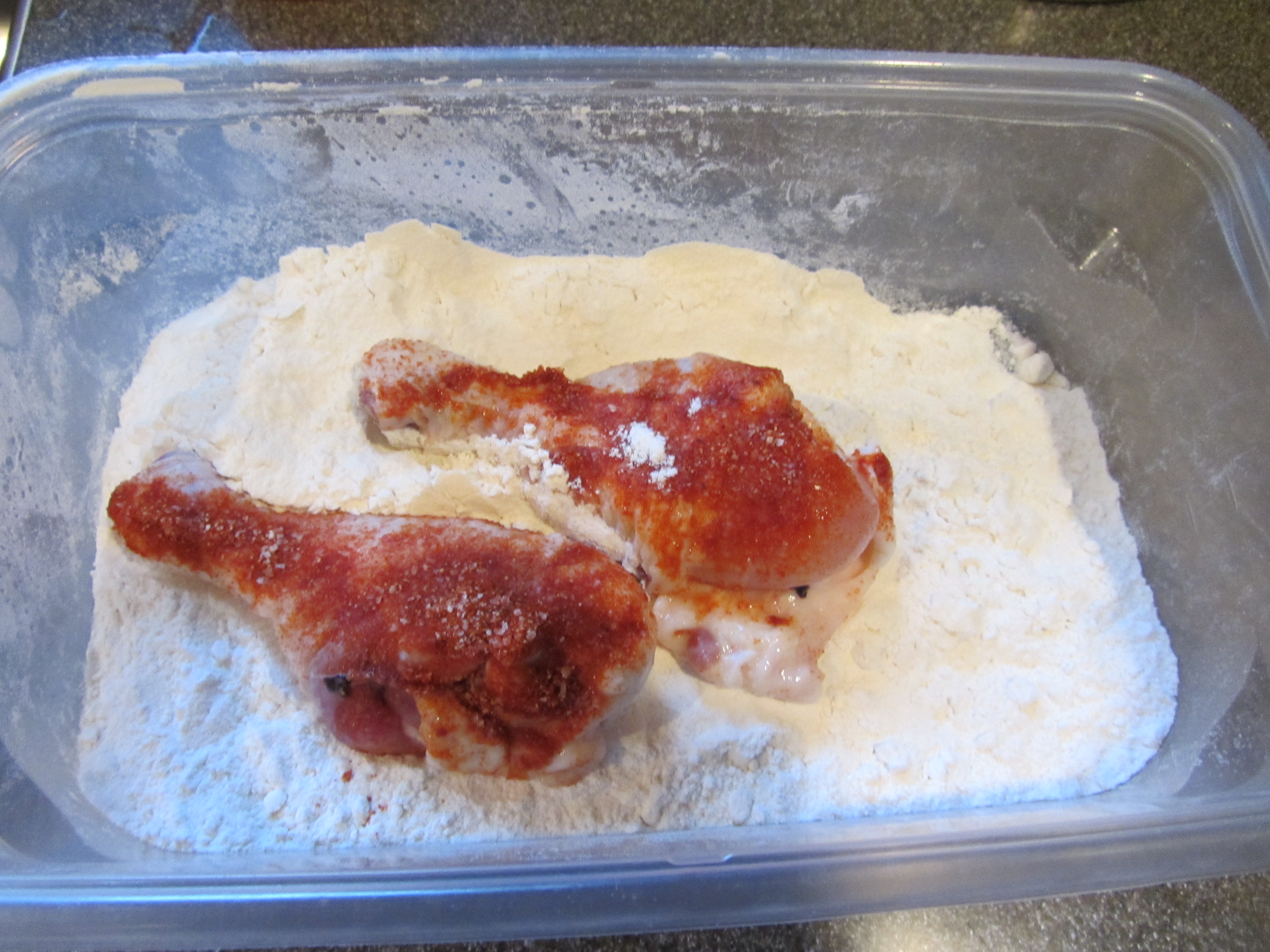
Seasoned chicken pieces being dredged in flour.
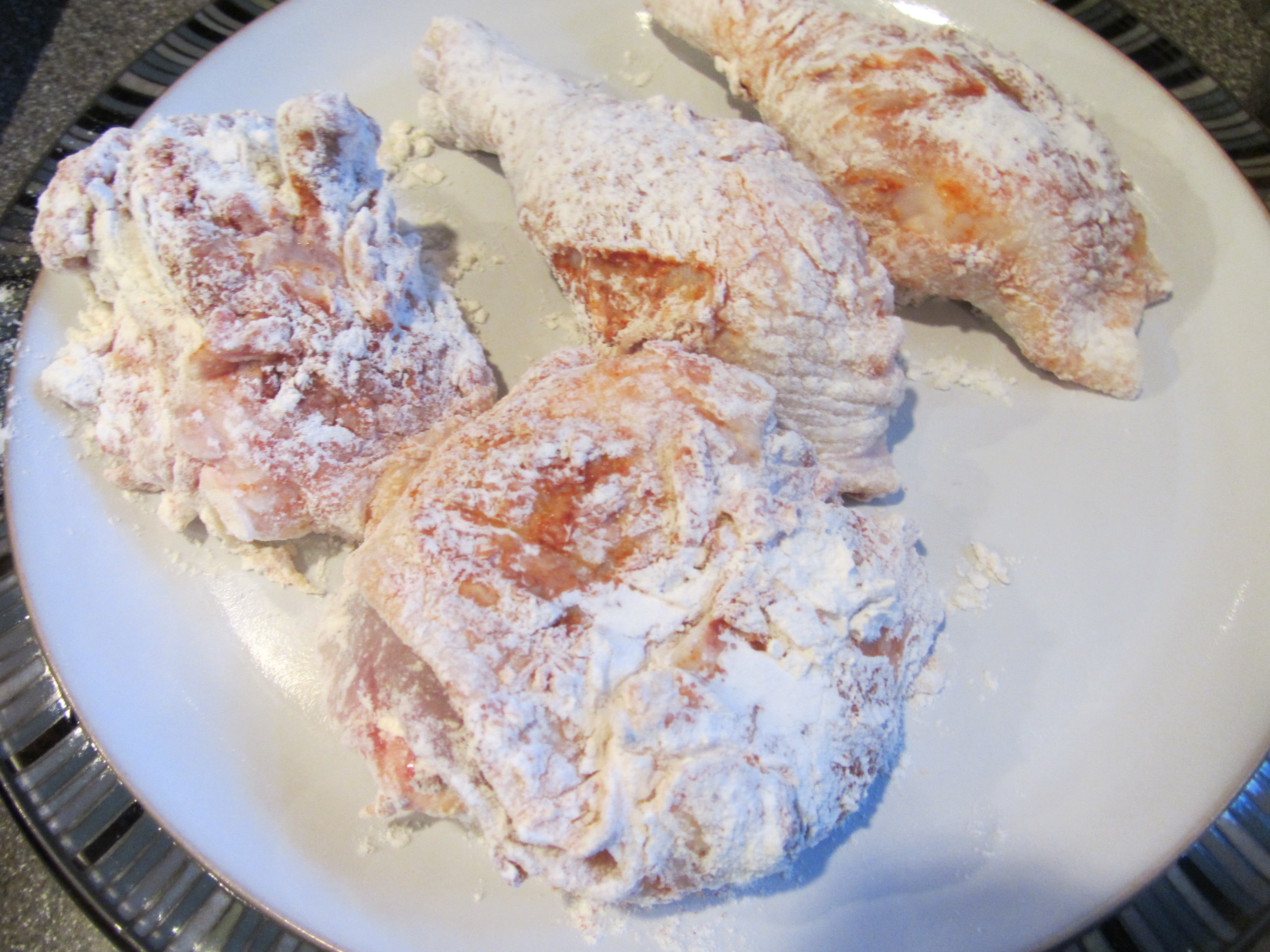
Seasoned chicken pieces being dredged in flour.

Dredged chicken pieces.

Dredged chicken pieces.

Seasoning the meat prior to dredging decreases the chance of burning and also leads to less waste of spices. Let the dredged chicken sit for 2-3 minutes. To start frying your chicken, Alton says you want your oil temperature to be a max of 350 degrees. I put my chicken in the pan when my oil was around 325 degrees.

Shortening at ~325 degrees.

Shortening at ~325 degrees.

Place your breasts, skin side down, at 10 and 2 o’clock in the pan. The drumsticks should be placed at 5 and 7 o’clock, and the thighs should go in the center. I did a poor job of portioning my thighs, so they were very small. I opted to place my breasts in the center instead.
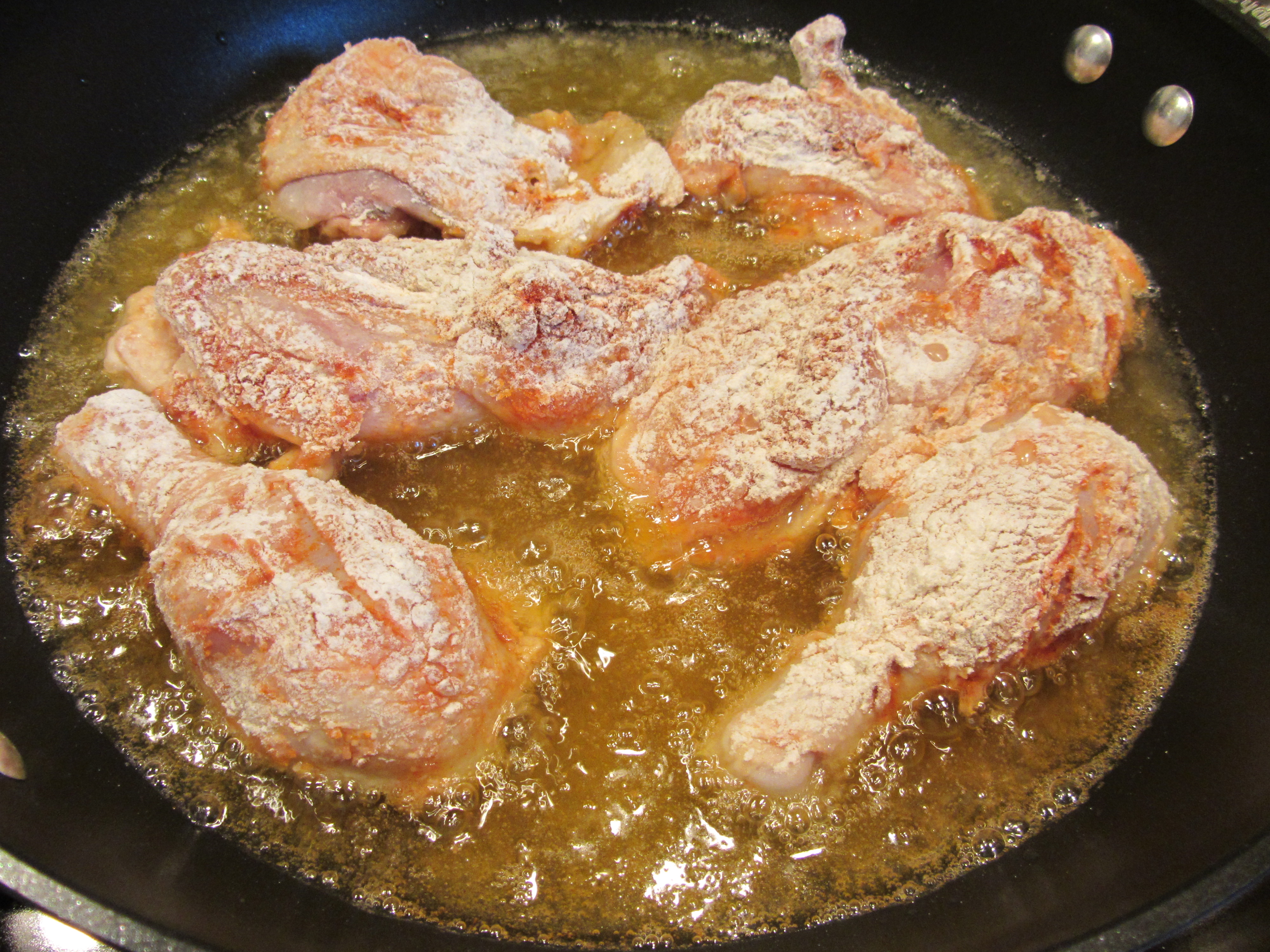
Chicken pieces added to skillet for 12 minutes.

Chicken pieces added to skillet for 12 minutes.

Fry the chicken for about 12 minutes, and flip the pieces to their opposite sides to cook for an additional 12 minutes. Make sure to check your oil temperature frequently, as you do not want it to get any hotter than 350 degrees. I used my infrared thermometer to monitor my oil temperature.
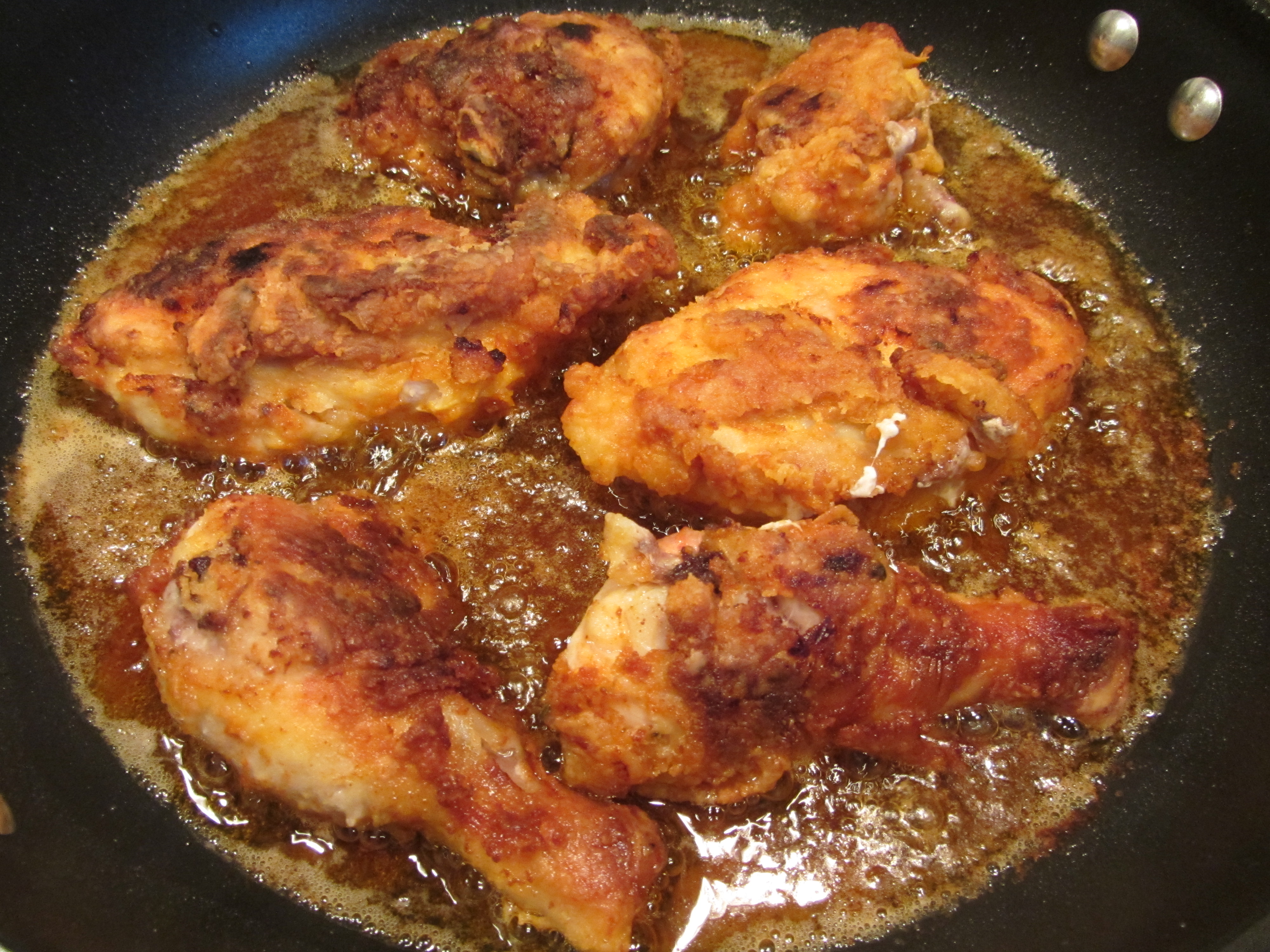
Chicken pieces flipped to second sides for ~12 more minutes.

Chicken pieces flipped to second sides for ~12 more minutes.

When your cooking time is up, check the internal temperature of your chicken to ensure it is cooked throughout; you will want an internal temperature of 180 degrees. Some of my chicken pieces required additional cooking time. Drain your fried chicken on a rack over a sheet pan. It will maintain its heat for quite some time.
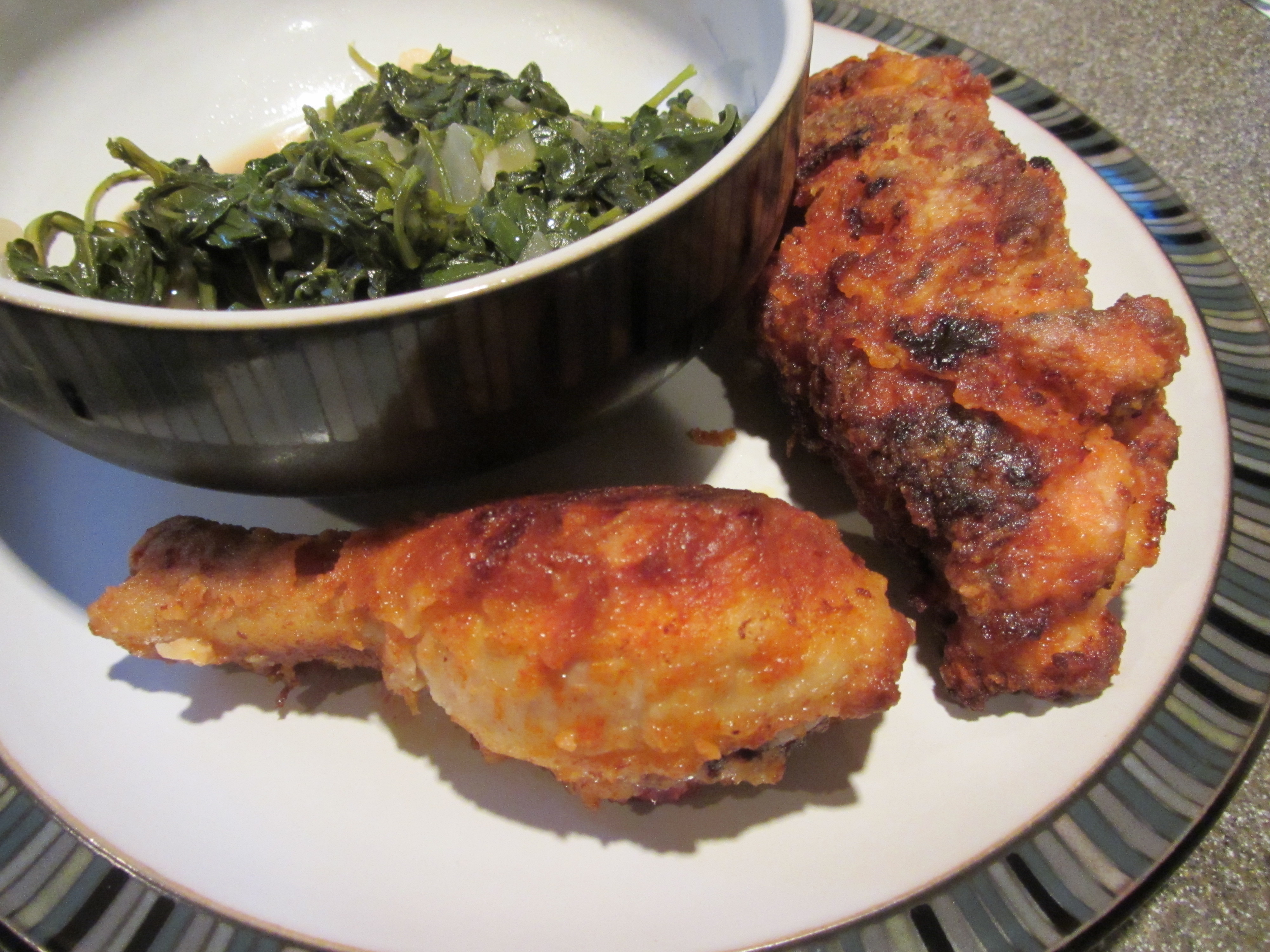
Alton's fried chicken.

Alton’s fried chicken.

I have to say that Alton’s fried chicken was pretty spot-on. I heavily spiced my chicken, and that made the flavor quite intense. The skin was crispy and relatively low on grease, and the meat inside was tender and juicy. I would definitely make this again. Maybe someday someone will make it for me, as I would prefer to not see the slimy bird before cooking! At least I didn’t start a fire with this frying attempt, as I did with the fish and chips!

This post is quite overdue, but at least I’m getting to it now, right? The recipe in this episode of Good Eats involves the use of a pressure cooker. Thankfully, my parents had given me a pressure cooker for Christmas years ago when I was trying to start a personal chef service. Note:  personal chef services do not tend to do well in very small college towns.

I have loved my pressure cooker when I have used it, and I surely have not used it enough. My mother-in-law tells the story of her pressure cooker exploding years ago when she was cooking beets. Red beet juice was everywhere. Modern pressure cookers are safe and efficient, and work wonderfully for fast cooking of otherwise slow-cooking foods.

AB’s Beefy Broth

In this episode of Good Eats, Alton’s TV sister has a nasty case of the flu and asks him to make some broth for her. I figured the timing of this recipe was perfect as my husband was in his second week of chemo and radiation. To start, Alton clarifies the difference between a stock and a broth. A stock, you see, only requires water and bones. A broth, on the other hand, is water with meat or vegetables, and the meat and veggies are strained out. If the meat and vegetables are left in, you have a soup.

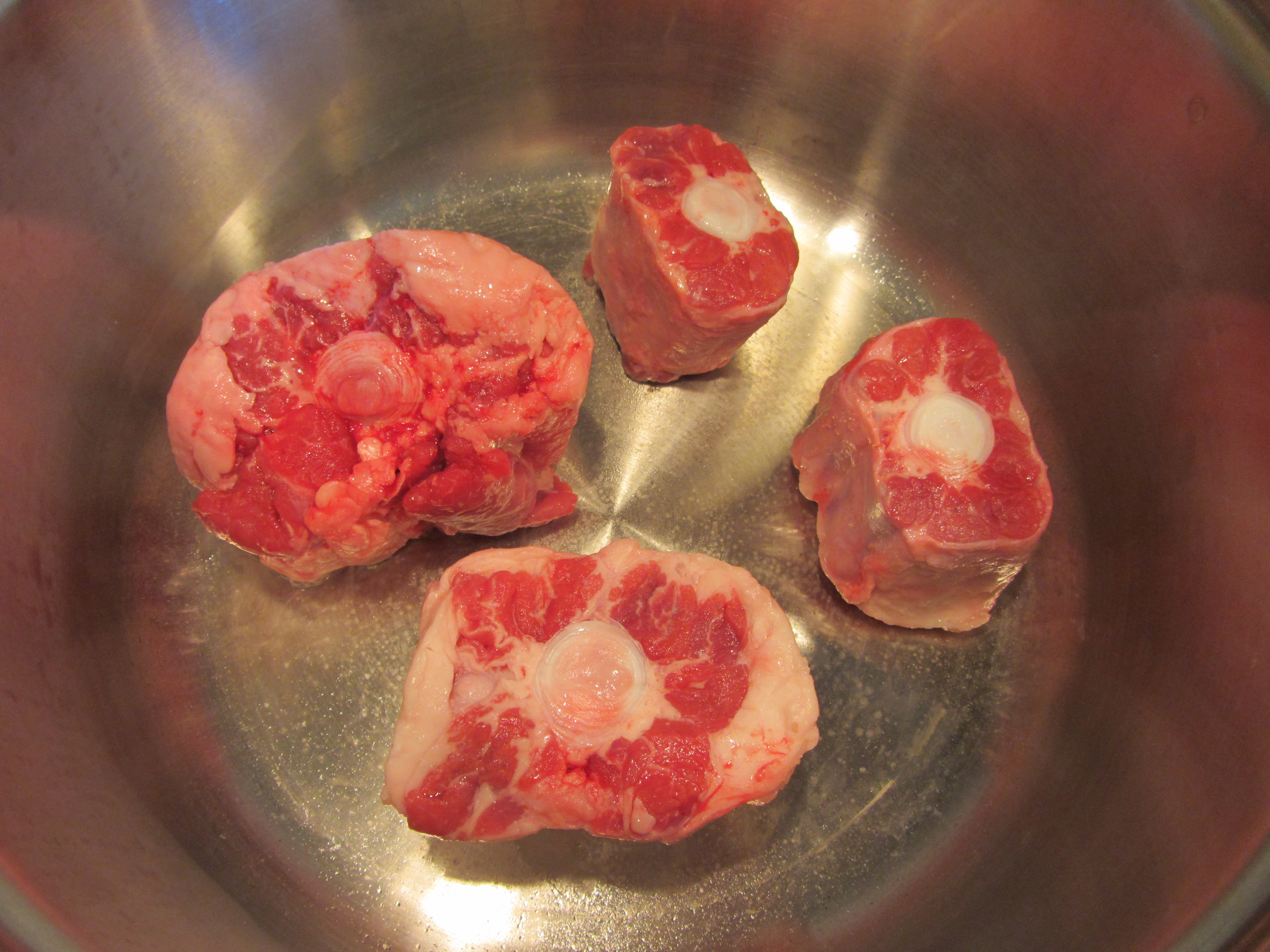
To make Alton’s recipe for beef broth, you will need a total of three pounds of beef shank and oxtail, ideally in equal proportions. I tried to find beef shank in numerous stores and at the butcher shop, but with no luck, so I ended up using all oxtail pieces.

Ingredients for Alton's beef broth:  Kosher salt, canola oil, onions, black peppercorns, garlic, carrots, parsley, and celery. Not pictured:  beef pieces and water.

Ingredients for Alton’s beef broth: Kosher salt, canola oil, onions, black peppercorns, garlic, carrots, parsley, and celery. Not pictured: beef pieces and water.

To start, heat your pressure cooker over high heat.

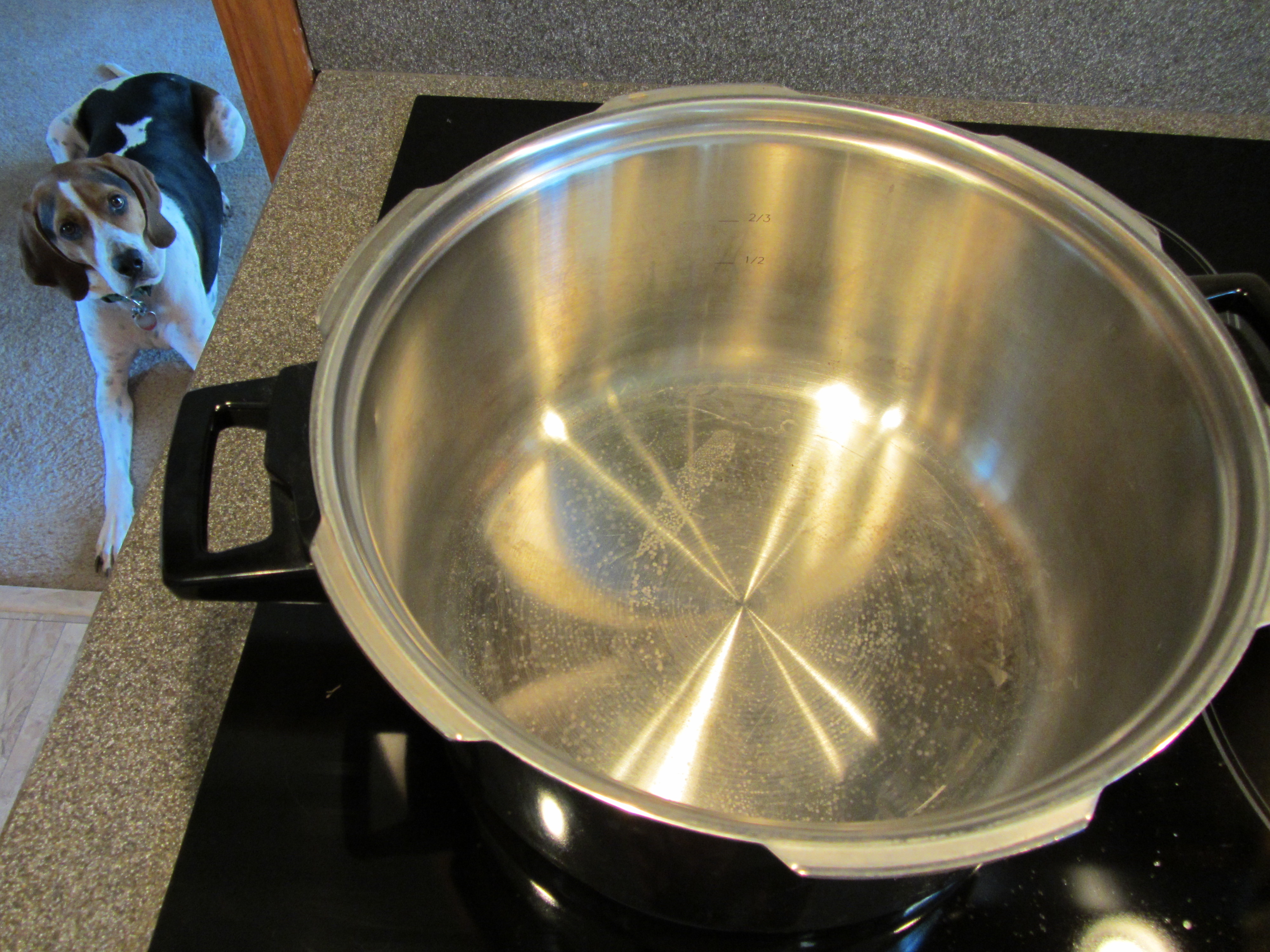
Pressure cooker heating. Dog waiting.

Pressure cooker heating. Dog waiting.

While the pressure cooker heats, put the meat pieces in a bowl and drizzle them with canola oil. Sprinkle them with 1/4 t Kosher salt and toss them to coat.

Three pounds of oxtail pieces in a bowl.

Three pounds of oxtail pieces in a bowl.

Meat pieces tossed with canola oil and Kosher salt.

Meat pieces tossed with canola oil and Kosher salt.

Alton explains that the oil acts as a conductor, while the salt serves to add flavor and pull out “protein-laden juices.” Once the pressure cooker is hot, add the meat pieces, leaving an inch between them. You will want to do this in a couple of batches, as you don’t want to overcrowd the pan.

Meat pieces into the pressure cooker.

Meat pieces into the pressure cooker.

Turn the meat pieces with tongs, letting them sear on all sides before removing them from the pan.

Searing the meat on all sides.

Searing the meat on all sides.

Remove any excess fat from the pan with a wad of paper towels.

Excess fat to be removed with paper towels.

Excess fat to be removed with paper towels.

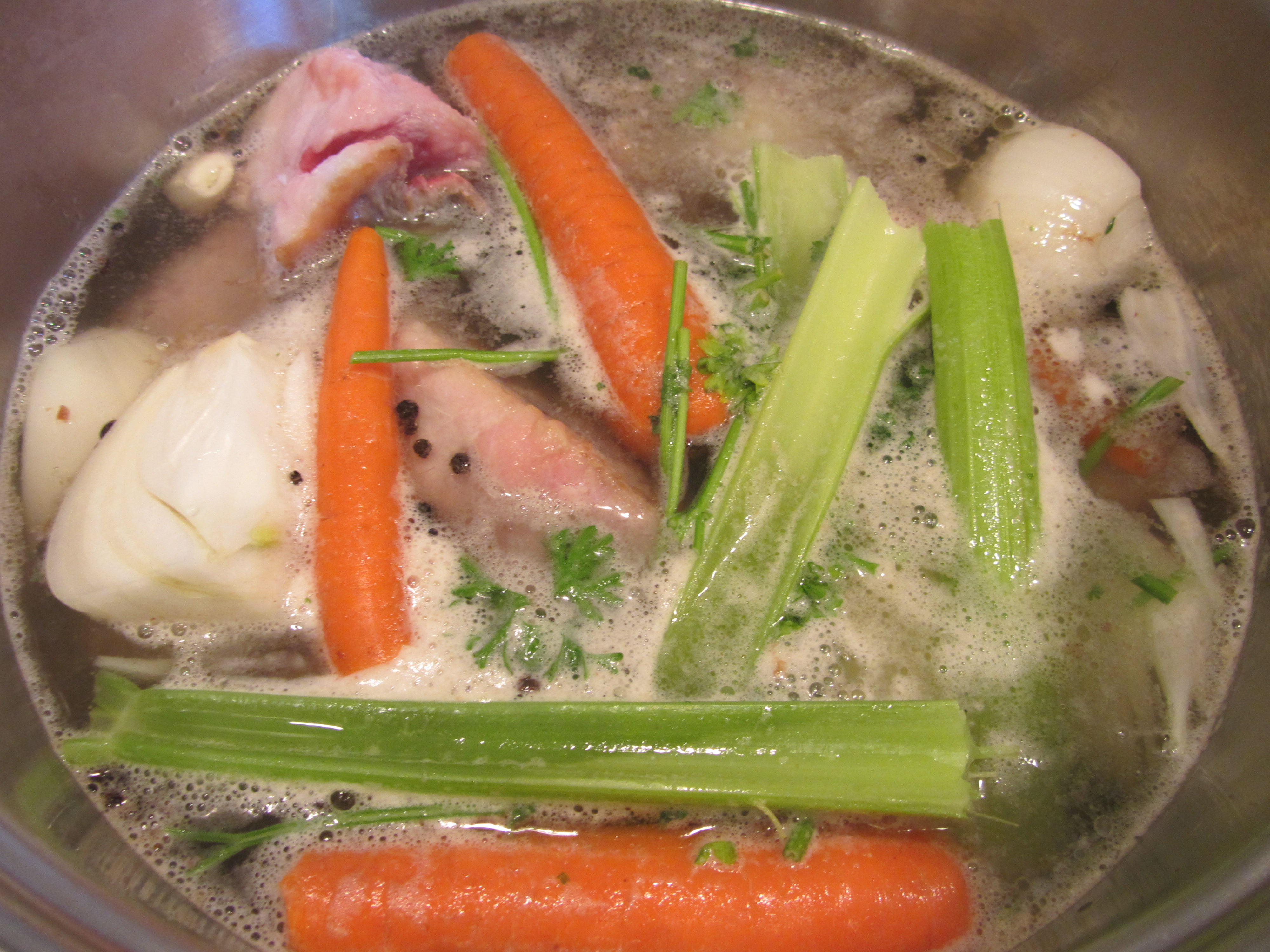
Next, add the meat back to the cooker, along with two quartered onions, two celery ribs, two carrots, a handful of parsley stems, two cloves of garlic, and 1 t black peppercorns.

Meat, onions, celery, carrots, parsley stems, garlic, and peppercorns added to cooker.

Meat, onions, celery, carrots, parsley stems, garlic, and peppercorns added to cooker.

Also add two quarts of water, making sure your pressure cooker is filled no higher than 2/3 full.

Two quarts of water added to cooker.

Two quarts of water added to cooker.

Bring the liquid to a boil and skim the protein foam off of the top.

Protein foam to be skimmed off of the top.

Protein foam to be skimmed off of the top.

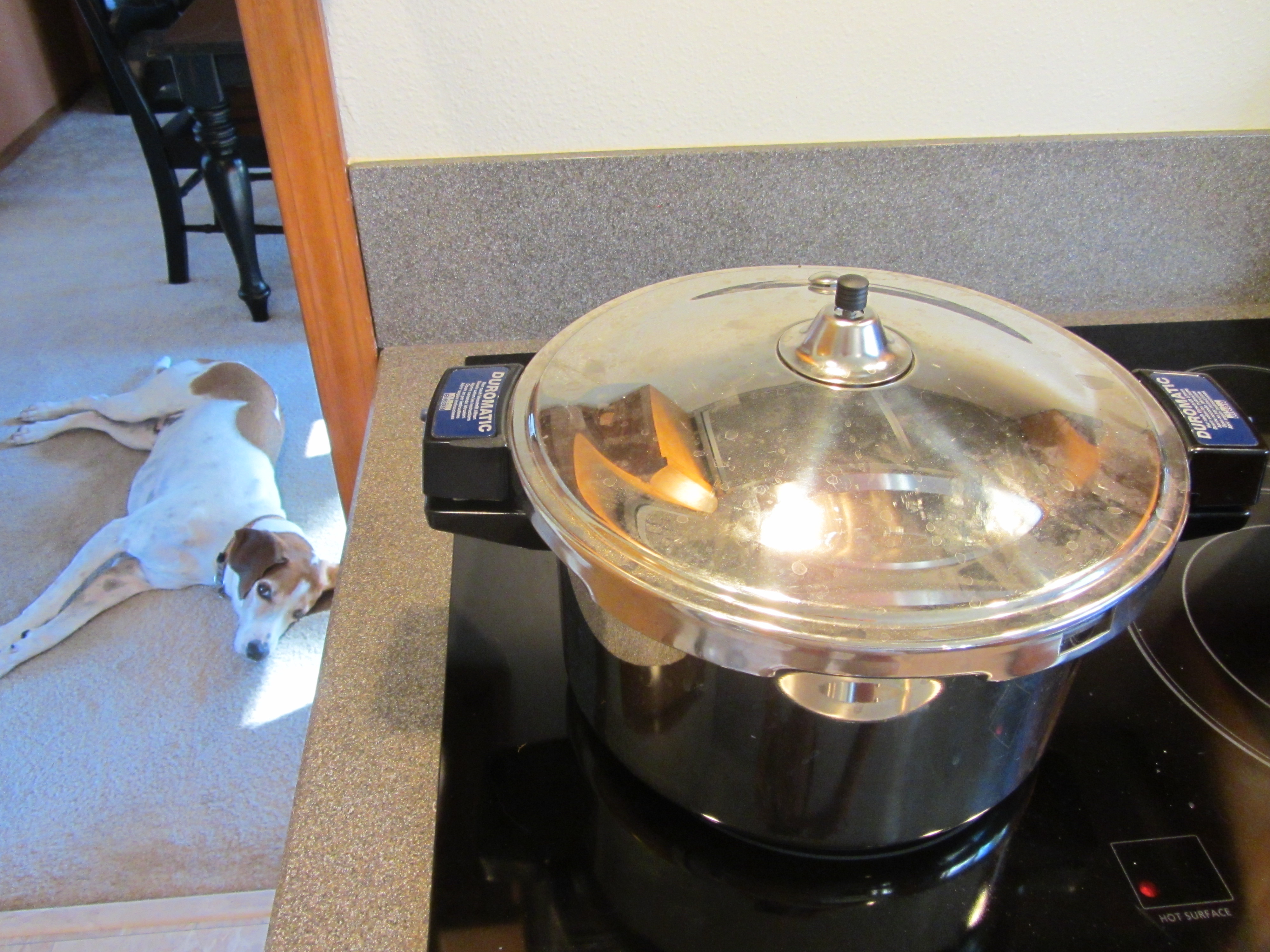
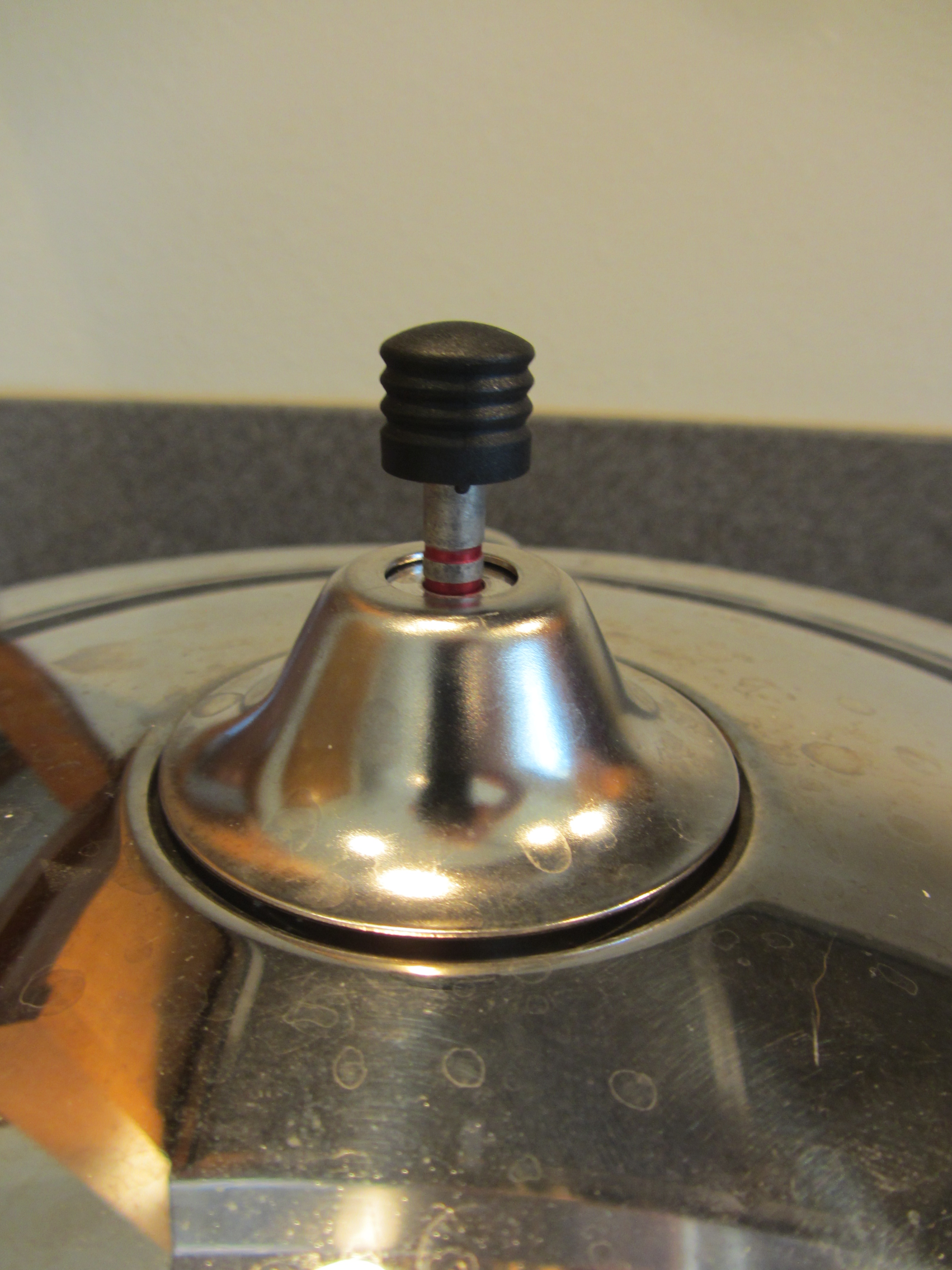
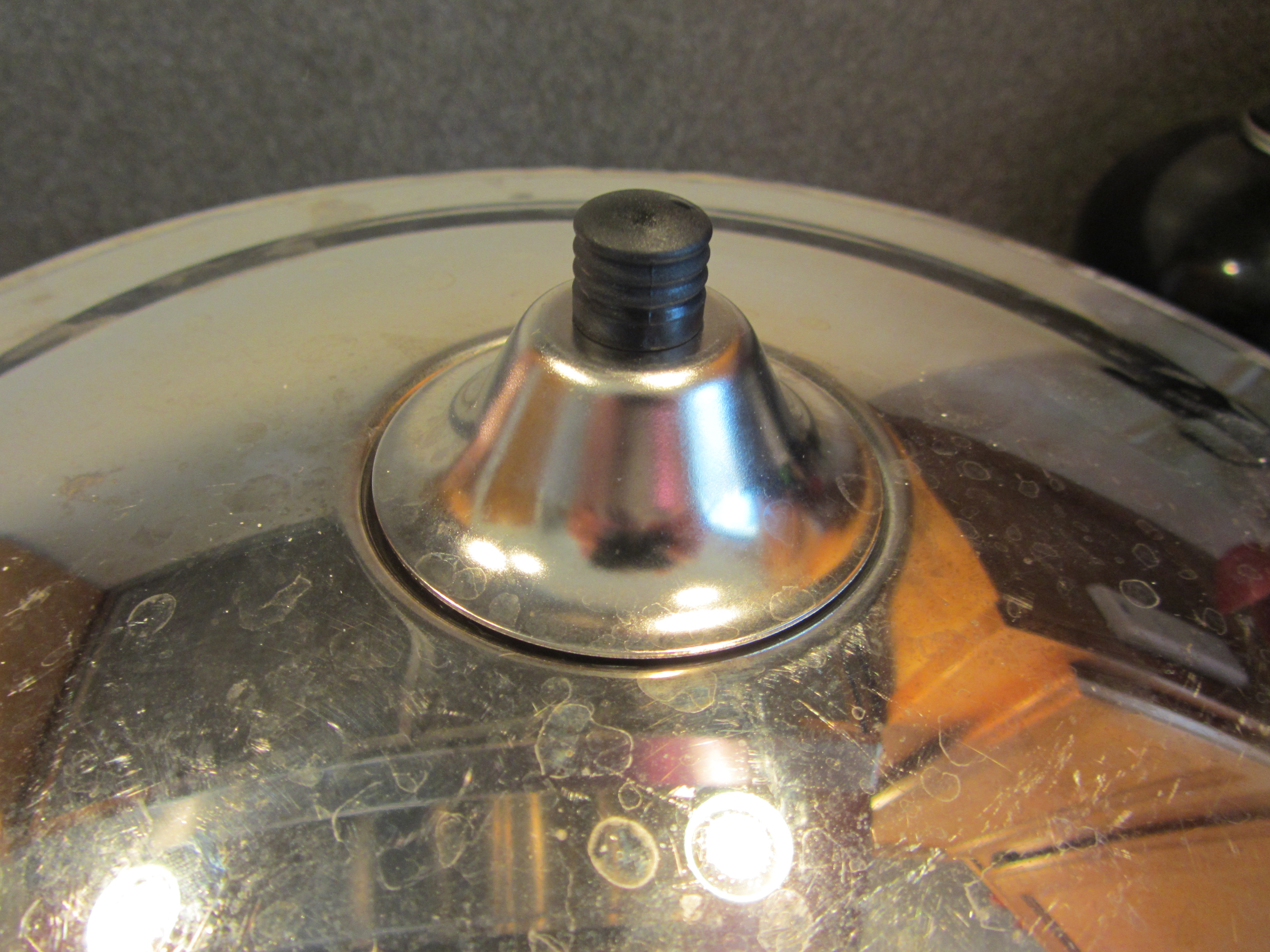
Lock the lid on your cooker and bring it to full pressure. Cook for 50 minutes.

Lid on the cooker. Other dog waiting.

Lid on the cooker. Other dog waiting.

Pressure cooker at full pressure for 50 minutes.

Pressure cooker at full pressure for 50 minutes.

Once cooked, release the pressure from your cooker and strain the broth through cheesecloth.

Pressure released after 50 minutes.

Pressure released after 50 minutes.

The broth after cooking.

The broth after cooking.

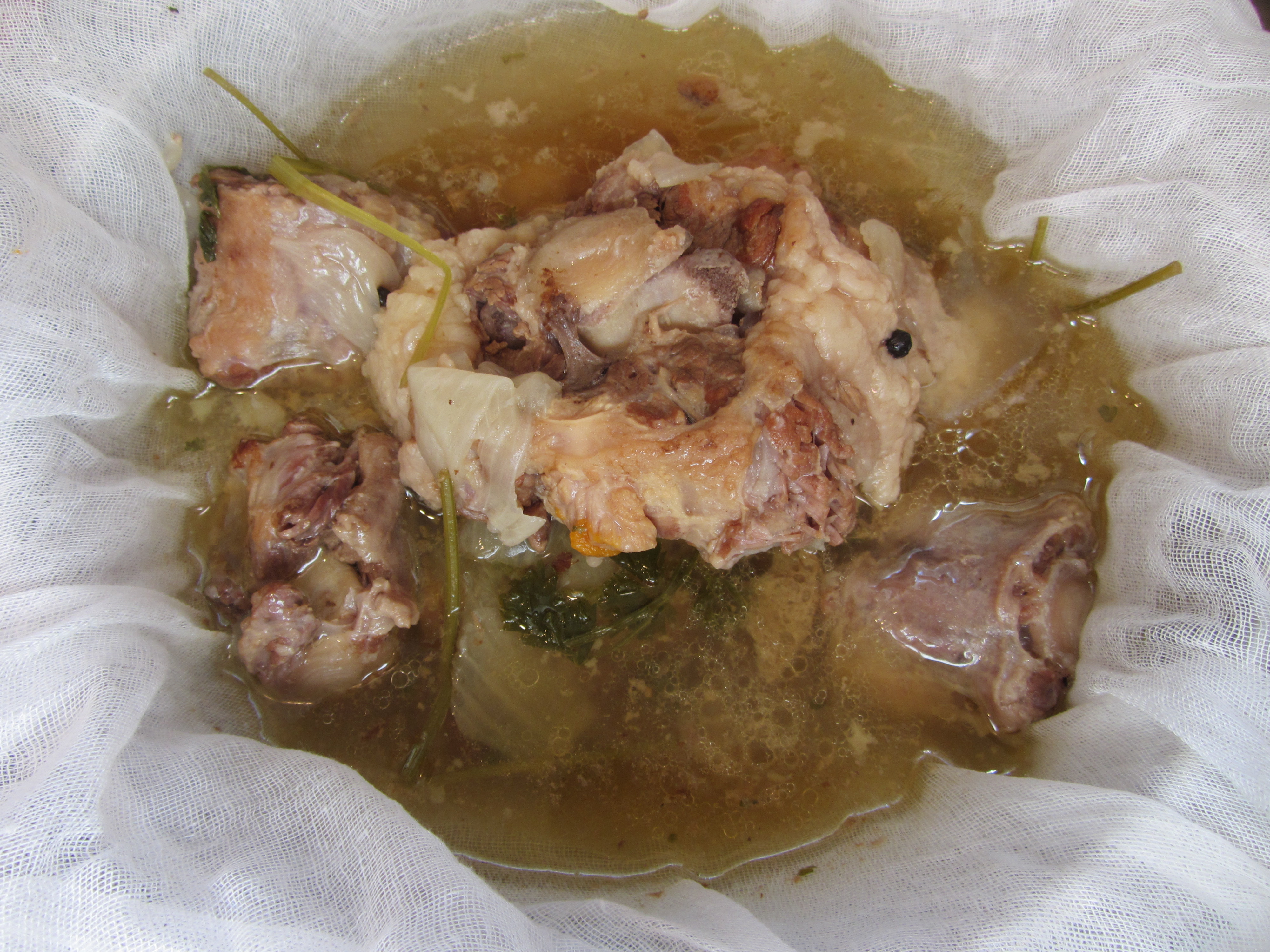
Straining the broth through cheesecloth.

Straining the broth through cheesecloth.

Using an oven mitt wrapped with a plastic bag, squeeze the meat to get all of the juices out.

Squeezing the juice out of the meat pieces.

Squeezing the juice out of the meat pieces.

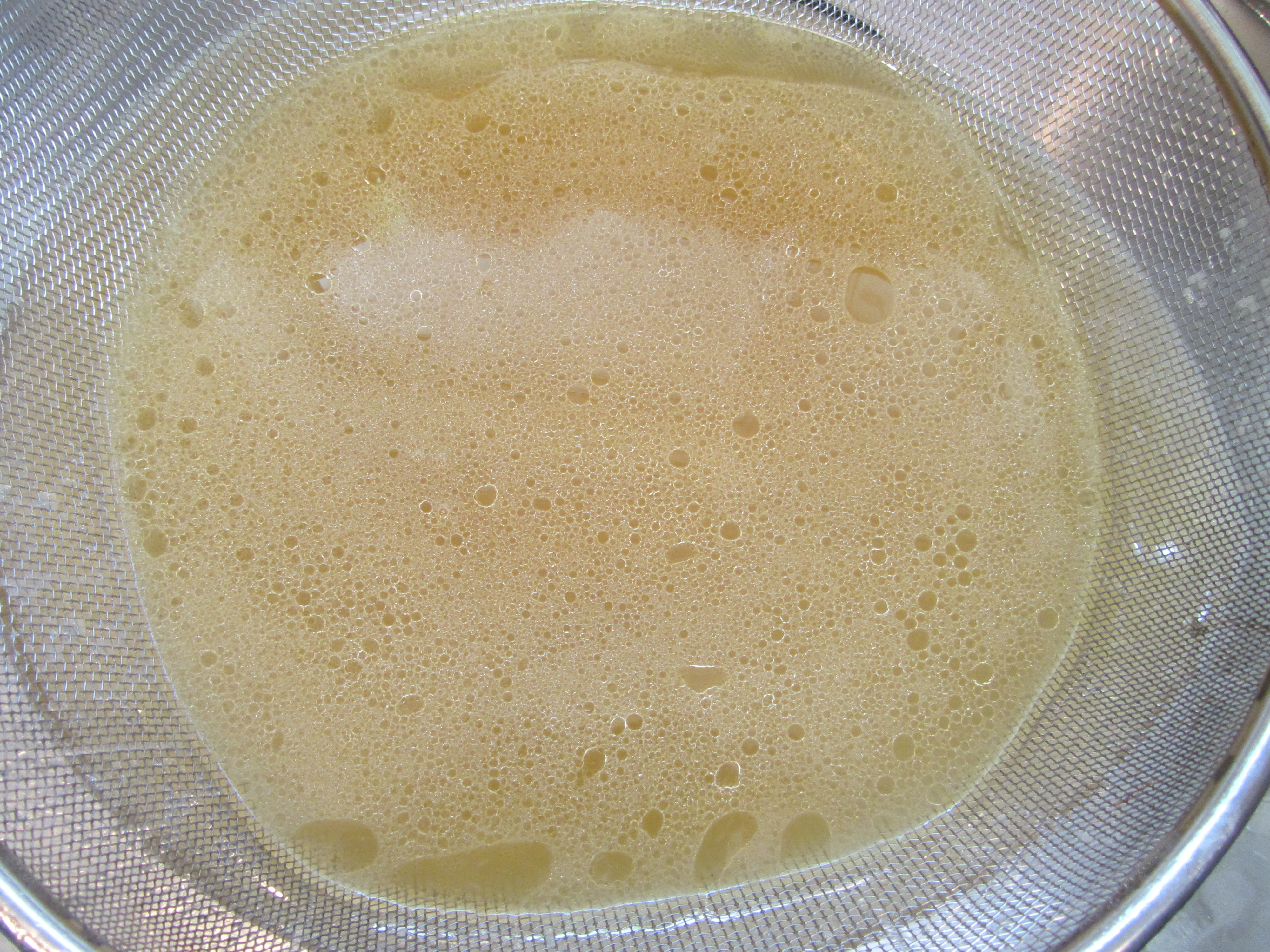
Alton told you to strain your broth a second time, but my broth looked very clear and I skipped the second straining.

The strained broth.

The strained broth.

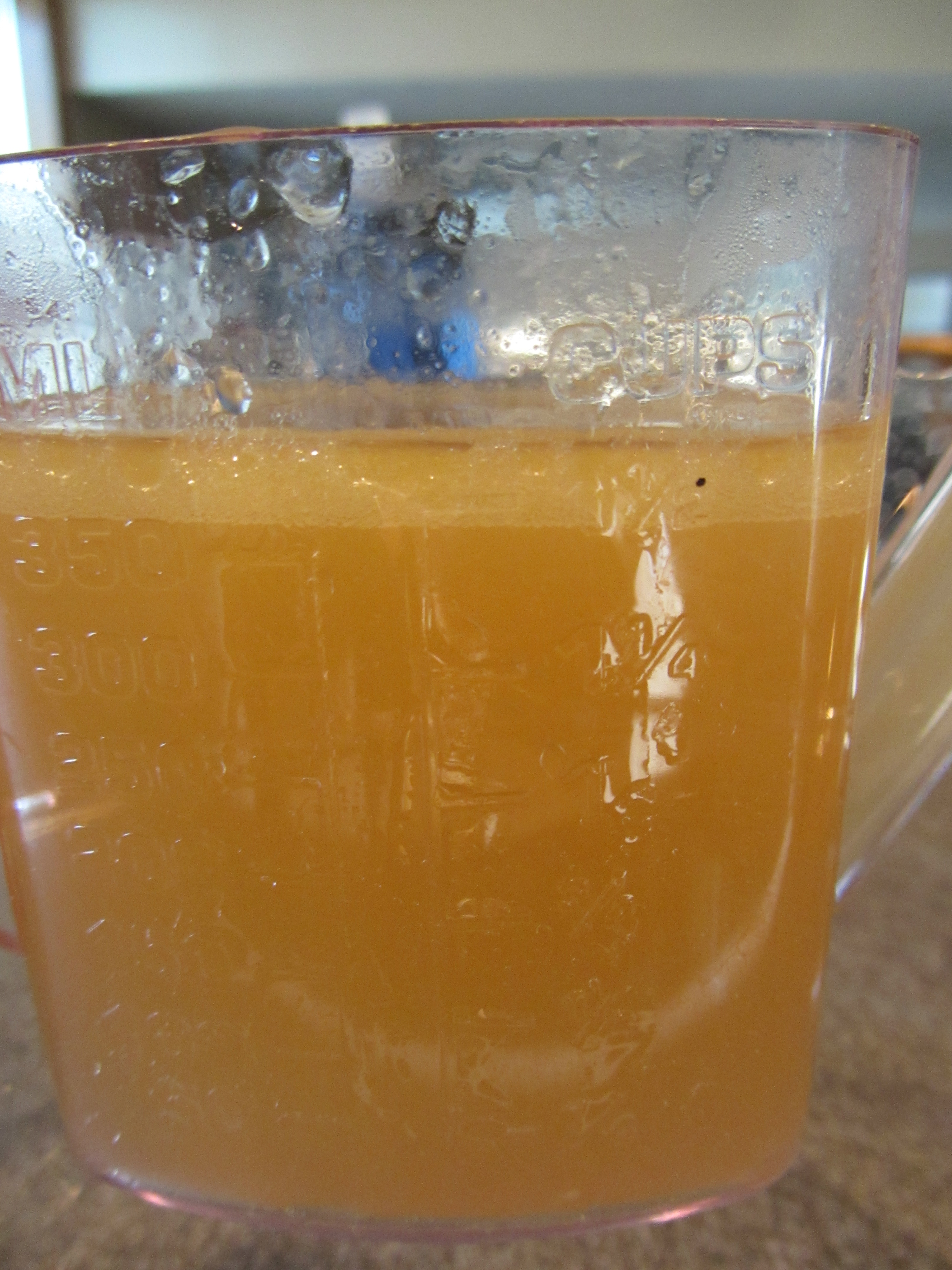
The broth will have a fair amount of fat on the top. You can get rid of the fat by transporting the broth to a new container, using a gravy separator and discarding the fat.

Using a gravy separator to discard the fat from the broth.

Using a gravy separator to discard the fat from the broth.

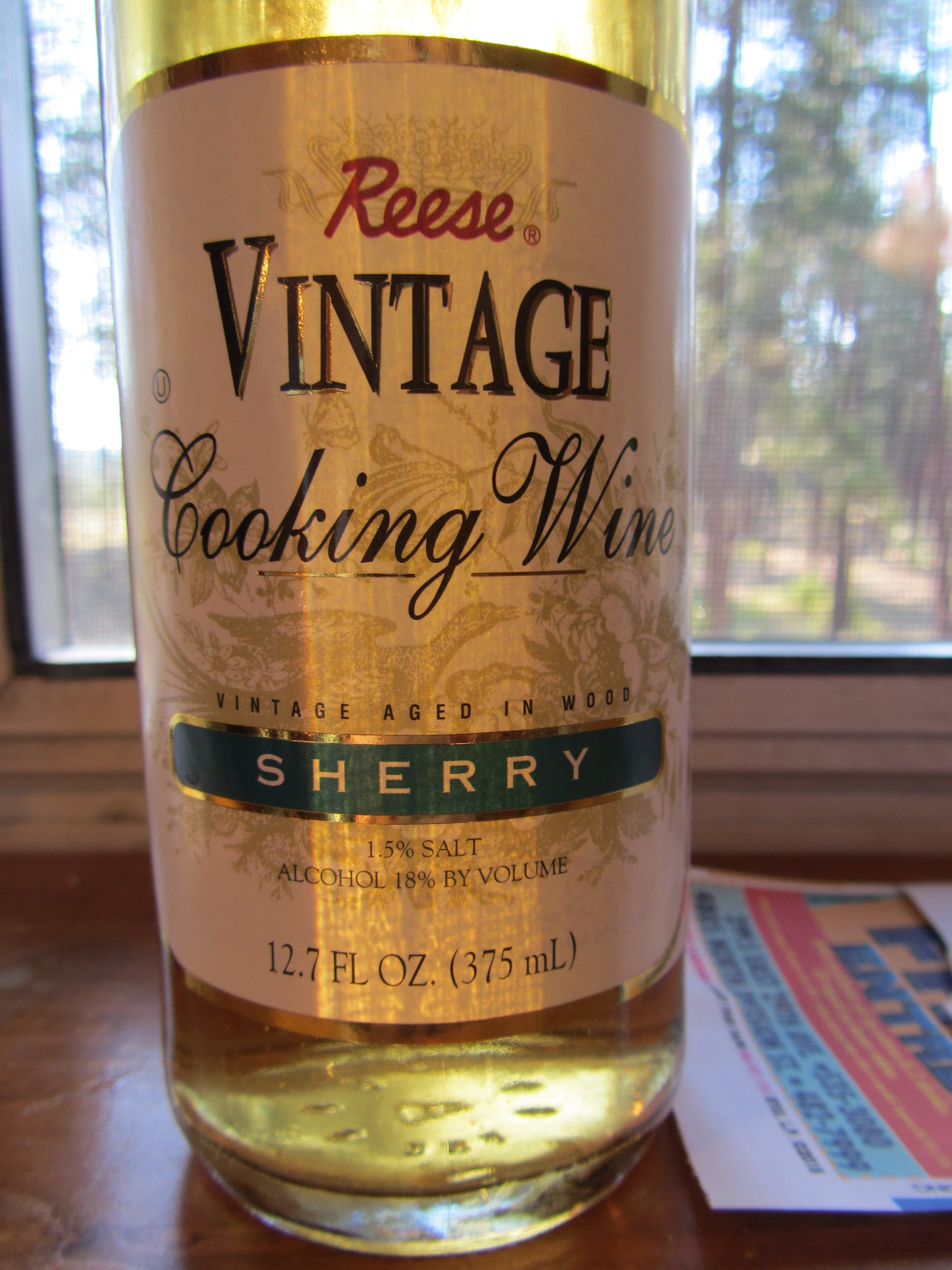
At this point, taste your broth and season as necessary. Alton recommends salt and sherry for seasonings, or you could add lemon juice. My broth needed quite a bit of salt, and I added a few dashes of sherry.

Sherry for seasoning.

Sherry for seasoning.

You can eat the broth as it is, or you can use it as a base for soups. We both had a mug of broth as soon as it was ready, and it was delicious. It had loads of meaty flavor, a rich mouthfeel, and really tasted of umami. The sherry really served to enhance the beefy flavor. We froze the rest of our broth for later use; I anticipate that some of it will be consumed plain and some will be used to make soup. If someone you know is sick or looking for good old-fashioned comfort food, Alton’s beef broth should be on your list.

My Good Eats project has taken a bit of a back seat lately, but I plan to keep plugging away at it when I can. Ted was diagnosed with cancer at the end of May, which has turned our world a bit upside down. Still, we have found that keeping a bit of normalcy in life helps with everything. So, as we were awaiting test results last weekend, I decided to distract myself by cooking through the next episode of Good Eats, which happens to be the first episode in the fourth season.

Smoked Salmon

We live in Washington, which means smoked salmon is abundant. While I pretty much like all smoked salmon, my dad’s version reigns supreme. His has a somewhat dry, flaky texture, is slightly salty, and has loads of flavor. To make it even better, he serves it with an amazing aioli that our family calls “Dog Shit Sauce.” You see, this sauce is so good that a family friend once told my dad he’d eat dog shit if it was covered in the aioli.

My brother made Alton’s version of smoked salmon around Christmas last year. He made it straight from the online recipe, but did not watch the episode. I, of course, watched the episode and made the salmon exactly as Alton did in the show. If you do it Alton’s way, you also make your own smoker. More on that later.

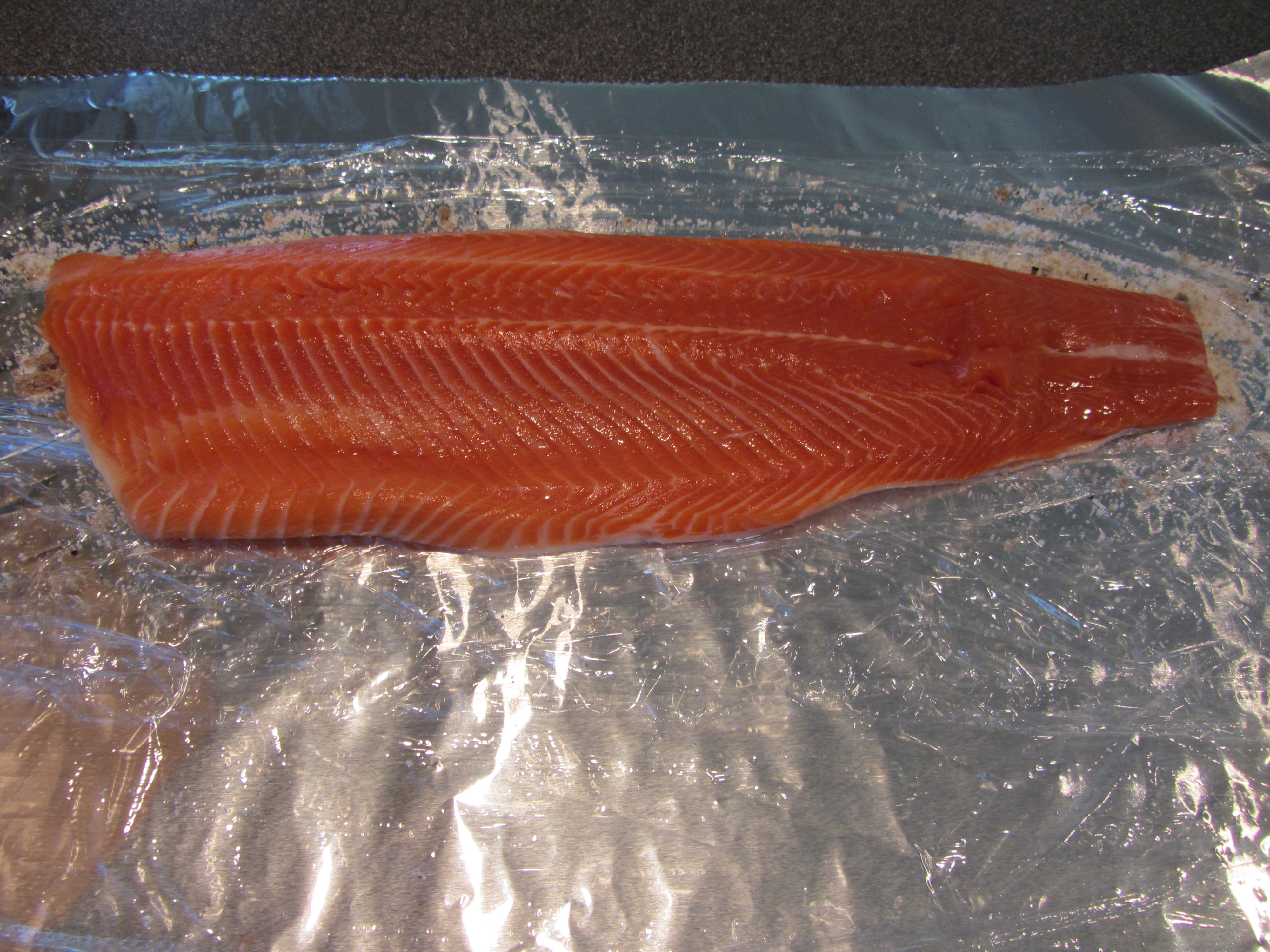
To make Alton’s salmon, you will want to use two large salmon fillets. I purchased my fillets at Costco, and they were just the right size. Depending on where you get your fish, you may need to pull pin bones out of the fillets with pliers; my fish already had no pin bones. Alton uses a cure for his fish, which serves a few purposes. The cure seasons the fish, draws liquid out, and denatures proteins, which helps to keep the fish moist during smoking. The cure also creates a protein layer on the outside of the fish, called a pellicle, which aids in keeping the fish moist.

Ingredients for salmon cure:  sugar, Kosher salt, dark brown sugar, and black peppercorns.

Ingredients for salmon cure: sugar, Kosher salt, dark brown sugar, and black peppercorns.

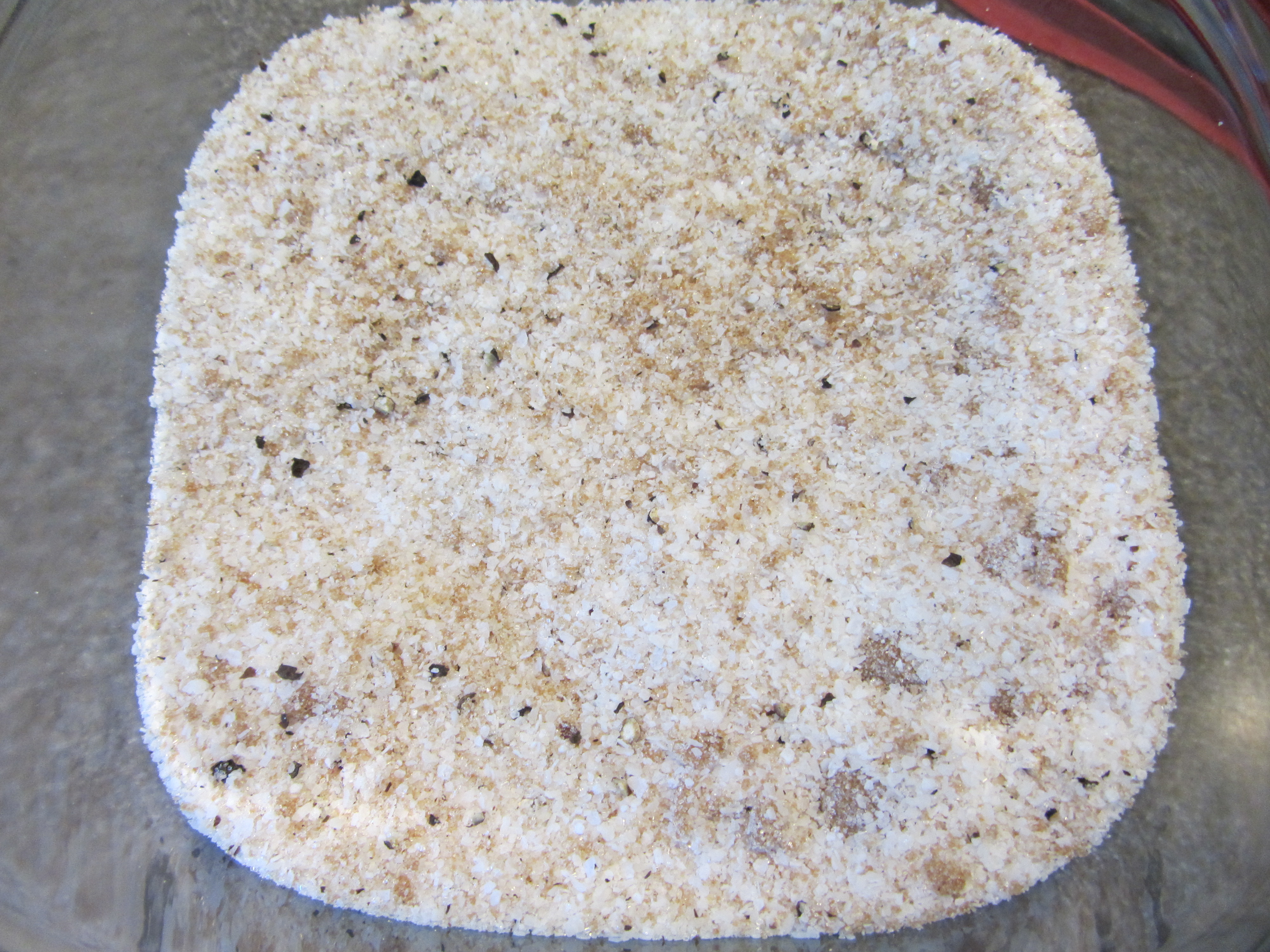
To make the cure, in a lidded container combine 1 C Kosher salt, 1/2 C dark brown sugar, 1/2 C sugar, and 1-2 T crushed black peppercorns.

Kosher salt, sugar, dark brown sugar, and crushed black peppercorns combined.

Kosher salt, sugar, dark brown sugar, and crushed black peppercorns combined.

Shake this mixture until everything is evenly dispersed.

Cure after shaking ingredients together to combine.

Cure after shaking ingredients together to combine.

Place a large sheet of plastic wrap on top of a large piece of heavy foil. Sprinkle some cure on the foil, roughly in the shape/size of one of your fillets, and place the fillet on top, skin side down.

Small amount of cure sprinkled in fillet shape on plastic wrap.

Small amount of cure sprinkled in fillet shape on plastic wrap.

First salmon fillet placed on top of sprinkled cure.

First salmon fillet placed on top of sprinkled cure.

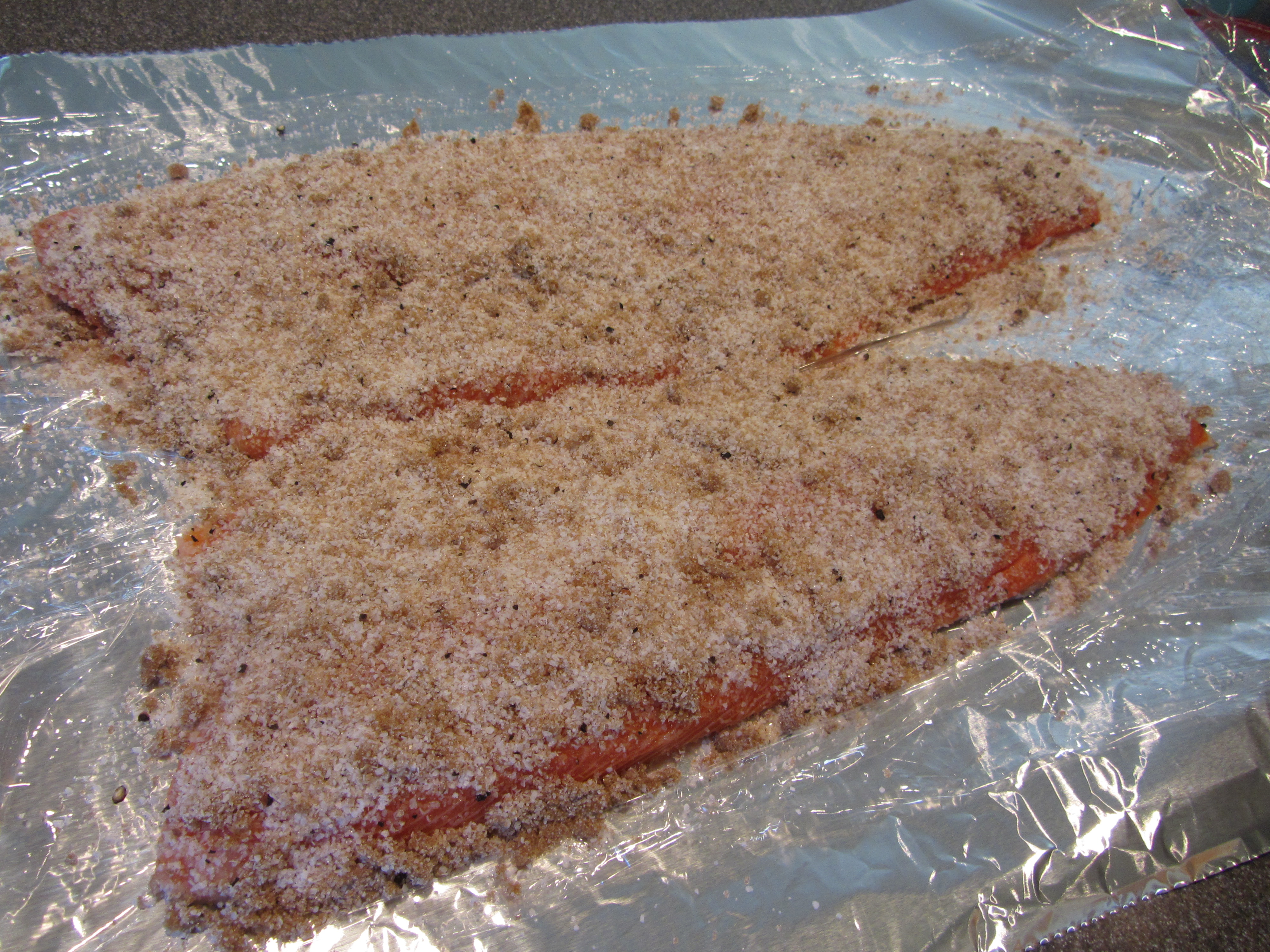
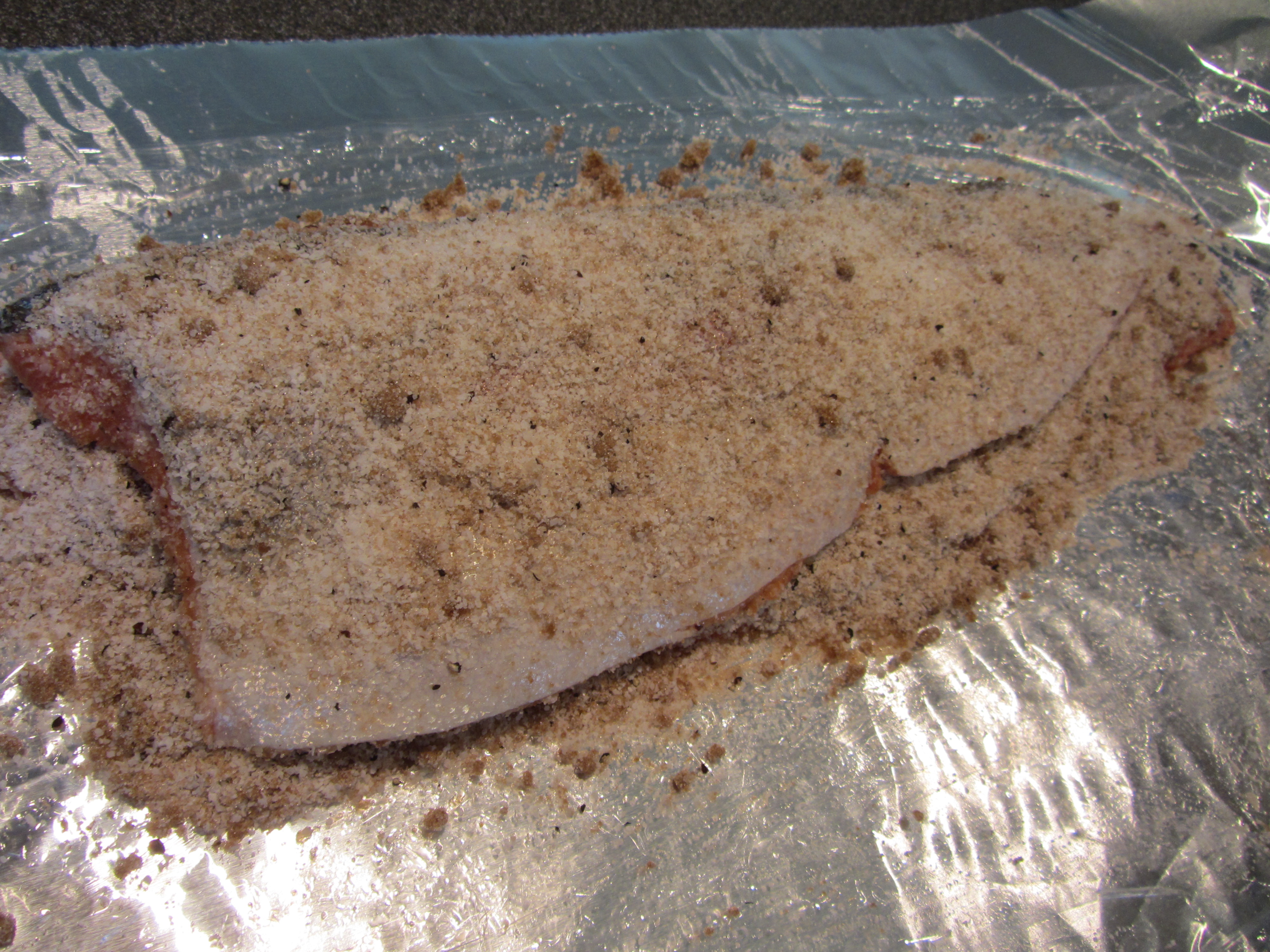
Generously sprinkle the cure over the flesh side of the fish, patting it gently with your hand. You will want to have a bit less cure at the tail end of the fillet since it is thinner.

Fillet #1 topped with cure.

Fillet #1 topped with cure.

Top the flesh side of the second fillet with cure and roll it on top of the first fillet, as if creating a whole fish.

Second fillet placed next to first fillet.

Second fillet placed next to first fillet.

Cure sprinkled on second fillet.

Cure sprinkled on second fillet.

Second fillet rolled onto first fillet, and skin side sprinkled with cure.

Second fillet rolled onto first fillet, and skin side sprinkled with cure.

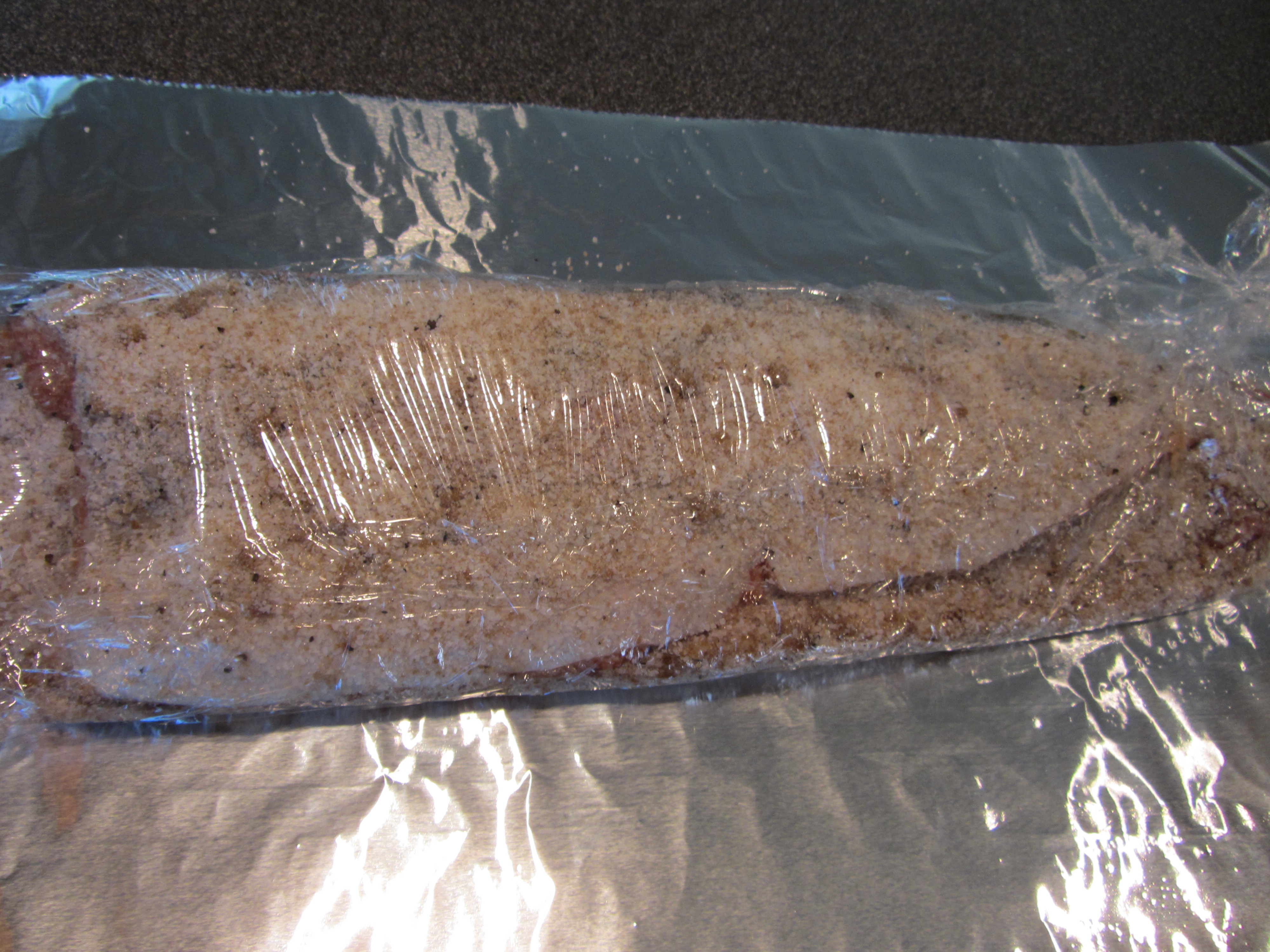
Sprinkle the last of the cure on the skin side of this fillet. I used all of my cure, with the majority of it on the meat sides of the fish. Tightly roll the fillets in the plastic wrap, and then again in the foil, leaving the tail end of the fish open for liquid to drain.

Fillets wrapped tightly in plastic wrap.

Fillets wrapped tightly in plastic wrap.

Fillets wrapped in foil.

Fillets wrapped in foil.

Place the fish on a large sheet pan with a lip, and top with another sheet pan. Place cans or bricks on the top sheet pan to weigh it down, and place in a refrigerator for 12 hours.

Fish sandwiched between two sheet pans. Cans were later placed on top.

Fish sandwiched between two sheet pans. Cans were later placed on top.

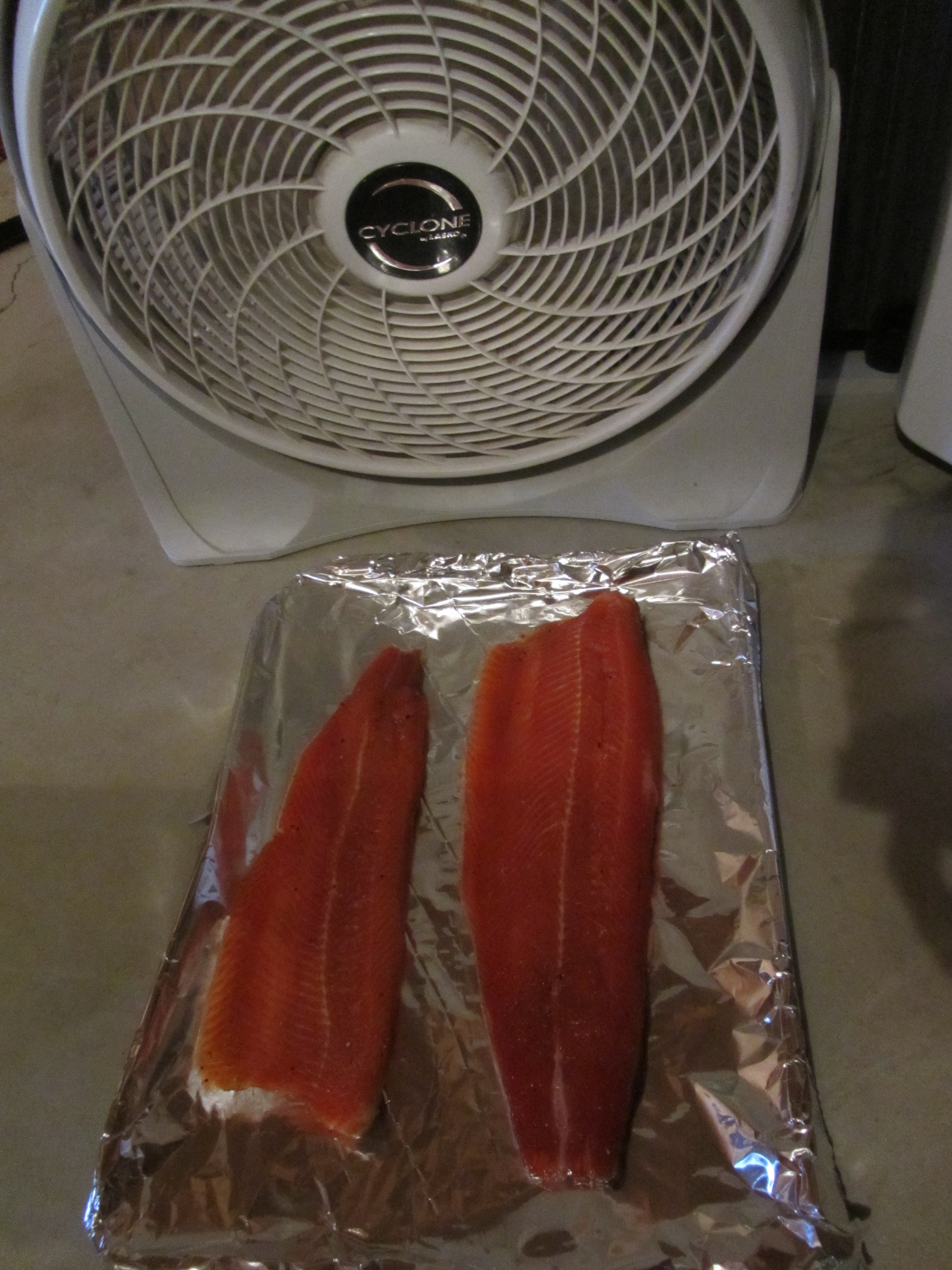
After 12 hours, flip the fish, and let it continue to sit for 12 more hours. After curing, some liquid will have accumulated in the bottom sheet pan. Rinse the fish thoroughly with water, pat dry with paper towels, and place the fish in a cool place to air dry; a fan can speed up this process. I let my fish dry for about two hours.

Fish after being rinsed, which was after 24 hours of refrigeration.

Fish after being rinsed, which was after 24 hours of refrigeration.

Salmon drying by a fan for ~2 hours.

Salmon drying by a fan for ~2 hours.

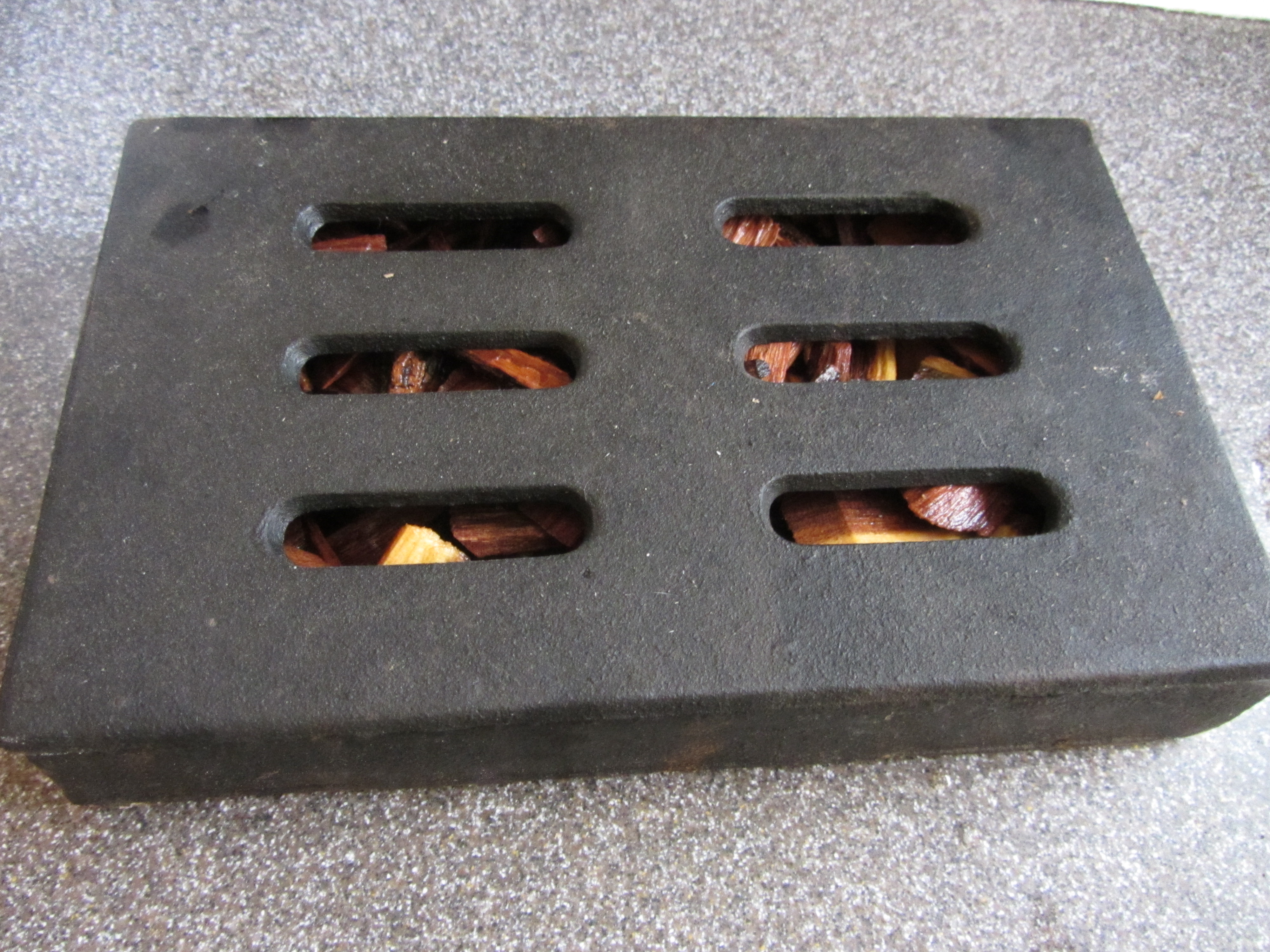
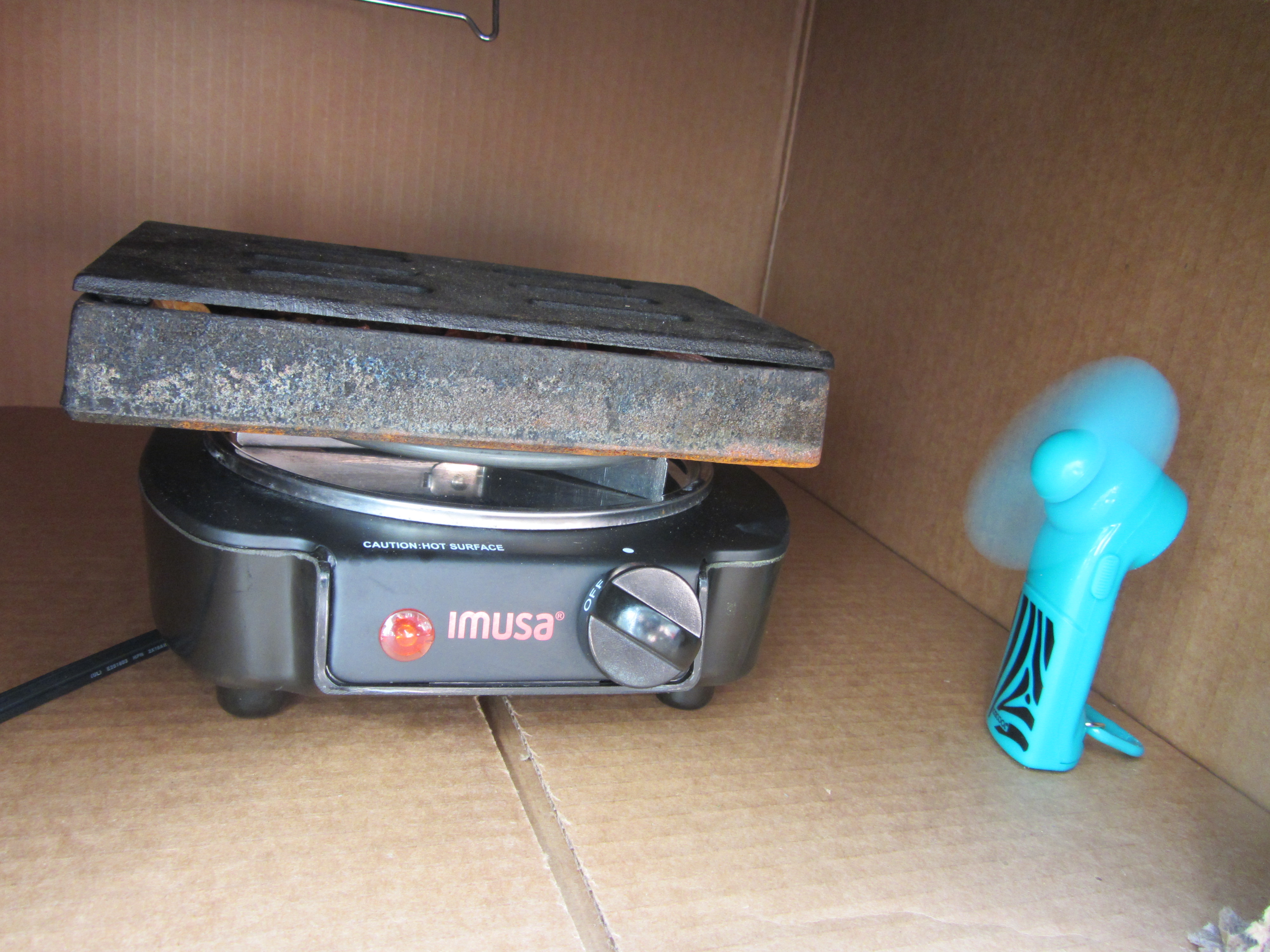
If you plan to make an Alton Brown smoker, a good time to do it is while your fish dries. To make a smoker, you will need a large cardboard box, two 1/4″ dowel rods, an electric hot plate, a mini personal fan, and an extension cord. You will also need hardwood sawdust or soaked wood chips for smoking, along with something to put them in. Alton used a small cast iron skillet, topped with a perforated disposable pie plate. I used a small smoking box.

Soaked mesquite chips placed in smoking box.

Soaked mesquite chips placed in smoking box.

Filled smoking box.

Filled smoking box.

To make your smoker, first stick your two dowel rods through the sides of the box, so they are parallel to each other. Place a rack on top of the dowels to hold your fish. Next, cut a trap door in the bottom of one side of the box; it needs to be large enough to reach in and check your wood chip status. Place your electric hot plate in the center of the bottom of the box, and place your skillet or smoking box on top.

Smoke box placed on electric hot plate.

Smoke box placed on electric hot plate.

Plug your hot plate into your extension cord. Once your fish is dry, place it on the rack in the smoker, and insert a probe thermometer at an angle into the thickest portion of fish. Set the thermometer alarm to beep at 150 degrees. If you have a second probe thermometer, stick it through the side of the box to monitor the air temperature in the box, which you want to keep between 140 and 150 degrees. I did not have a second probe thermometer, so I did not worry about the air temperature much, only checking it occasionally with a Thermapen. Close the top of the box, turn the hot plate on to high, and set the mini fan in the box to circulate the air.

Salmon placed in DIY cardboard smoker, ready to be smoked.

Salmon placed in DIY cardboard smoker, ready to be smoked.

Mini fan added to box.

Mini fan added to box.

Close the trap door and let your fish smoke.

Smoker activated. Probe thermometer set for 150 degrees in thickest piece of fish.

Smoker activated. Probe thermometer set for 150 degrees in thickest piece of fish.

If you are using sawdust like Alton did, you will need to change your sawdust several times. Oh, and make sure your sawdust is not from pressure-treated wood, as pressure-treated wood contains toxins. I opted for mesquite wood chips, and I never needed to change them. My fish reached 150 degrees in under three hours, and it looked perfect. I let it cool to room temperature and we ate some for dinner.

Salmon after reaching 150 degrees.

Salmon after reaching 150 degrees.

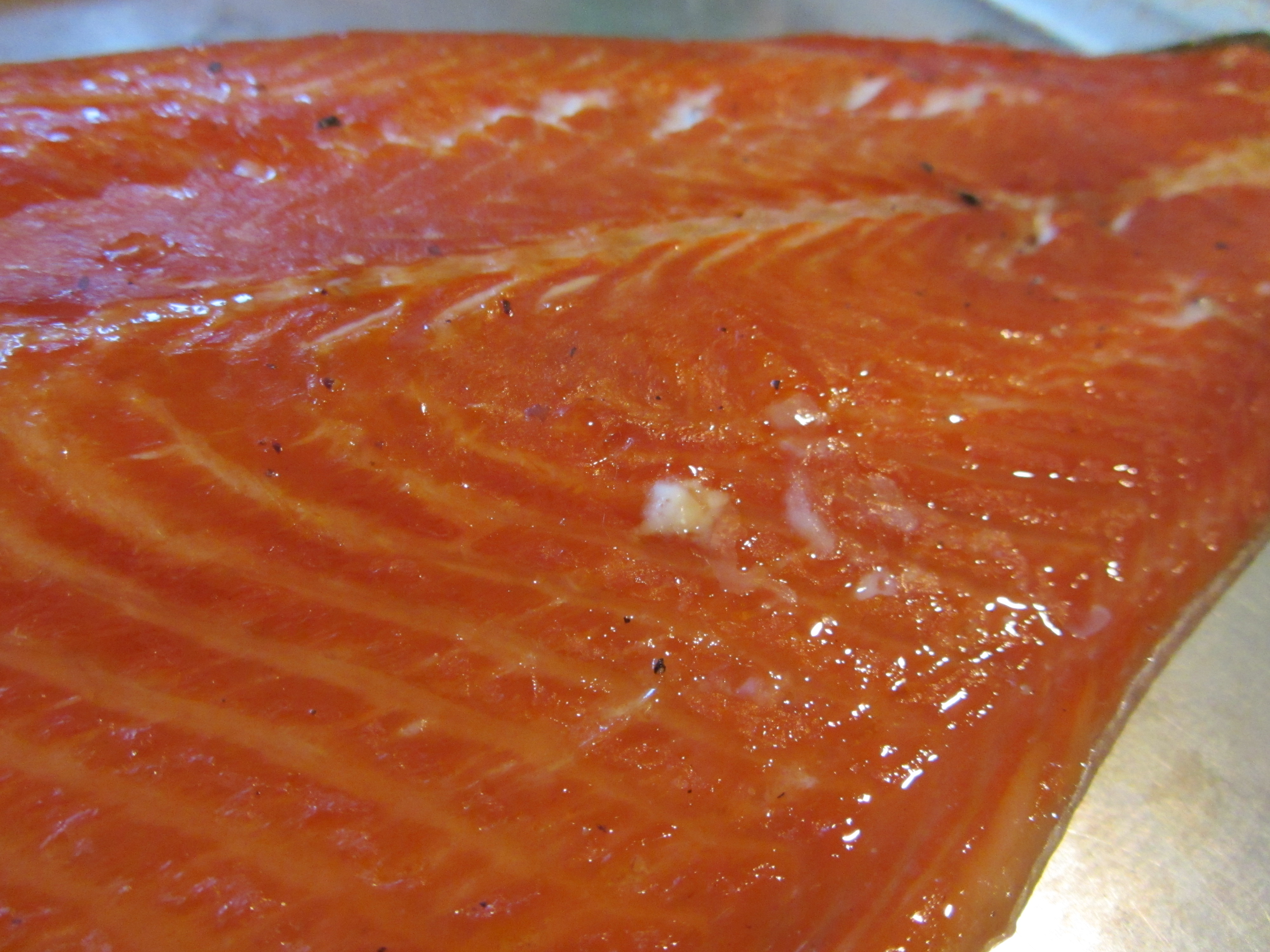
Close-up of finished salmon.

Close-up of finished salmon.

I vacuum sealed the remaining salmon to eat at later dates.  The salmon was fantastic! It had a dry, flaky texture, which we really liked, and it had just the right amount of smokey flavor. I should have put a little less cure on the tail ends of my fillets, as the thinnest pieces are a tad too salty, but the salmon is perfect otherwise! I was very happy with how the cardboard smoker worked, and I cannot see ever buying a smoker when this method works so well. This is a fun, easy project that produces great smoked salmon. This is one I’m saving for future use.