Archive for the ‘Episodes by Season’ Category

Southern Biscuits

I have previously mentioned that differences exist between the recipes featured on Good Eats and the online versions of the same recipes. The recipes from the 7th episode had many differences, so I, of course, made the recipes as made on the show. The first of these recipes was for biscuits, as made by Alton’s grandmother. In the episode, Alton explains that it is desirable to make biscuits with soft flour, which has a lower protein content. You can use self-rising flour for this, or you can simulate soft flour by combining 3 parts of all-purpose flour with 1 part of cake flour; I did the latter. No mention of soft flour is made in the online recipe. In the episode, Alton tells you to use 10 oz. of flour, while the online recipe calls for 2 cups. He also tells you to weigh one ounce of butter and two ounces of shortening, while the online version calls for 2 T of each.

I combined my dry ingredients, and then cut in the fat with my fingers until I had a crumb-like texture.

Combined dry ingredients.
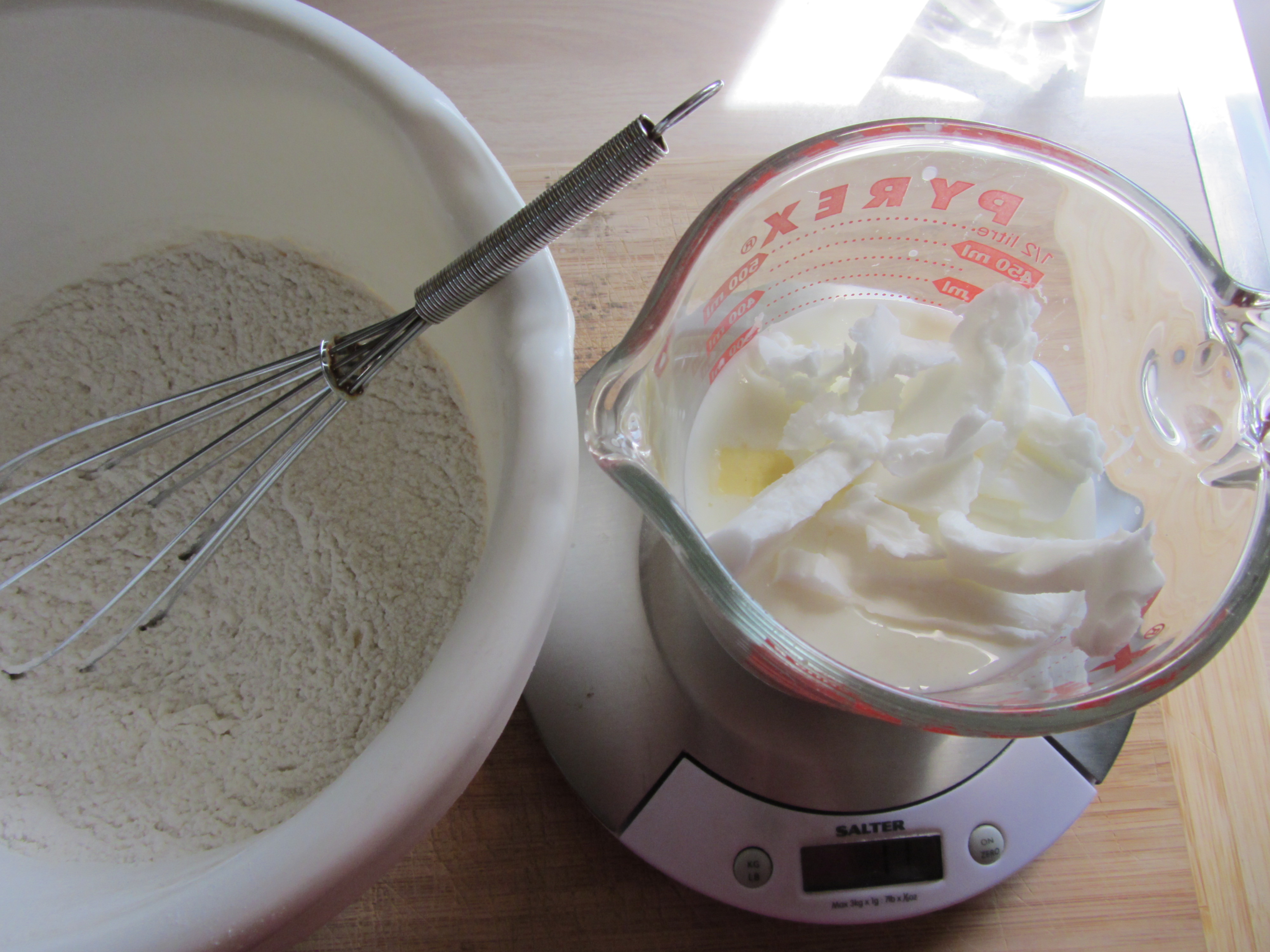
Combined dry ingredients.

Buttermilk, shortening, and butter.

Buttermilk, shortening, and butter.

Cutting in the butter.
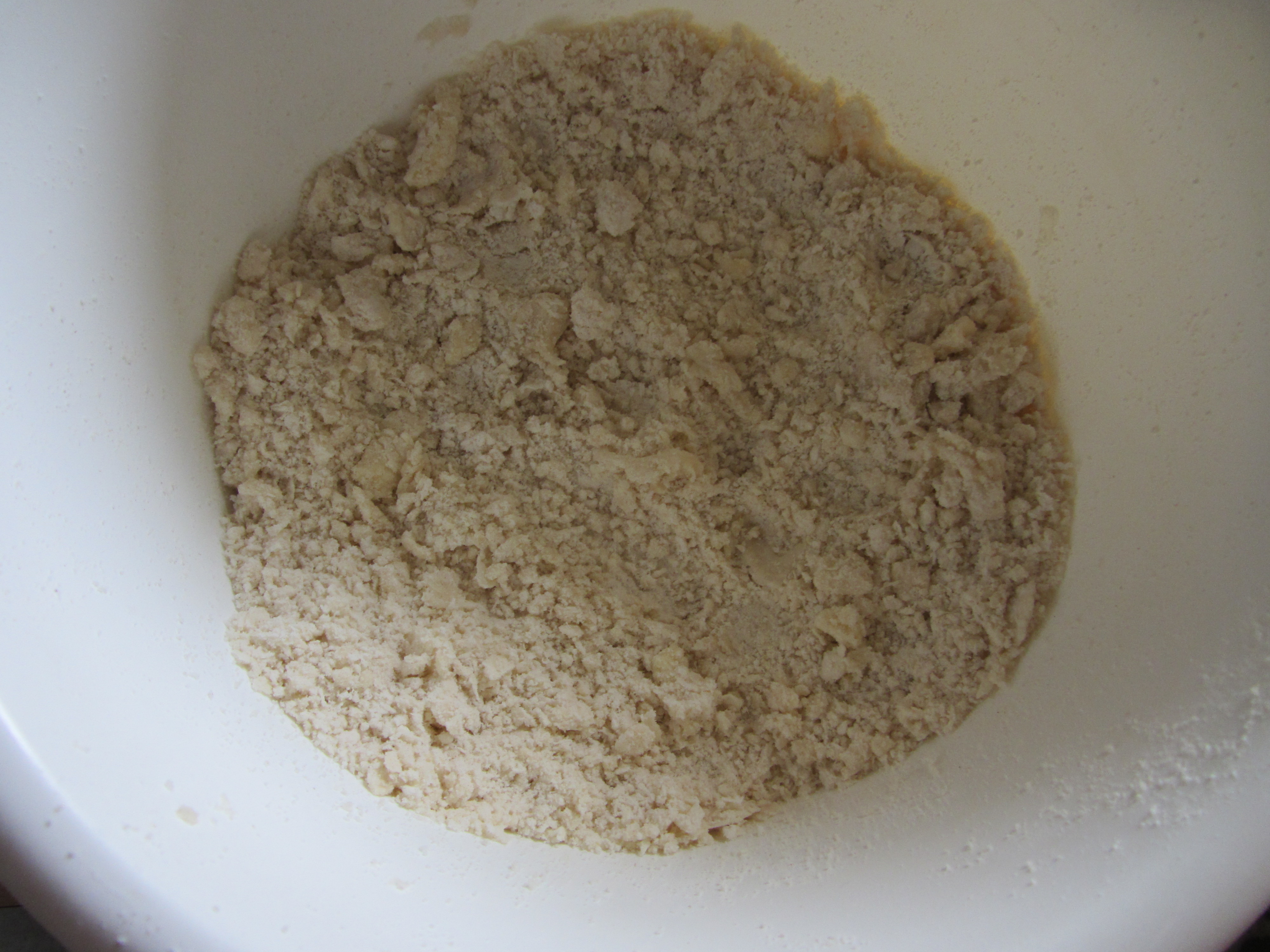
Cutting in the butter.

Crumb-like texture.

Crumb-like texture.

I then mixed in my buttermilk, being cautious not to overwork the dough. Alton and his grandmother emphasize this point in the episode, saying overworking the dough can lead to tough biscuits. My dough seemed wet and sticky, and like it would possibly be difficult to work with once turned out onto my board.

Adding the buttermilk.

Adding the buttermilk.

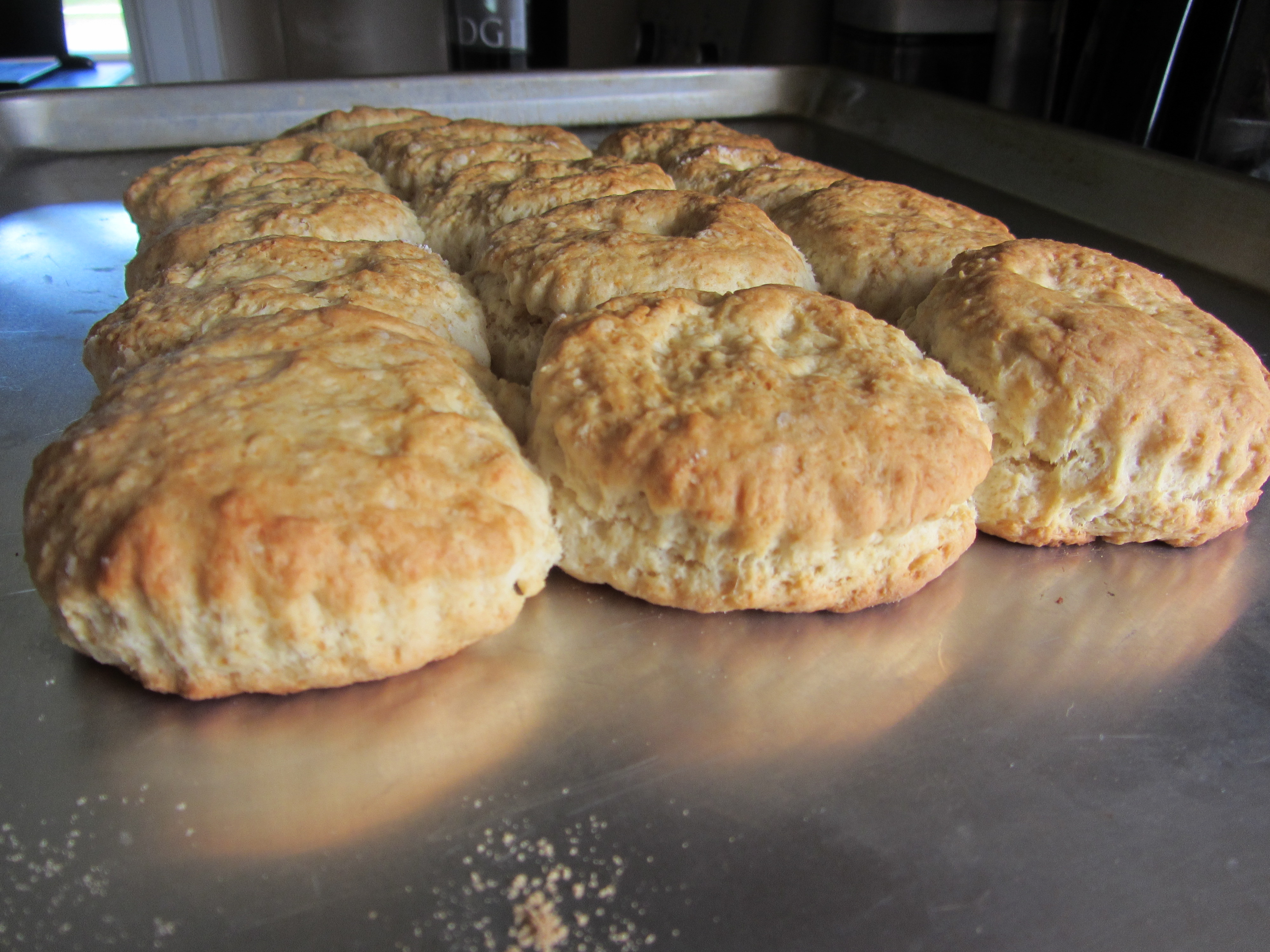
Surprisingly, it was actually very easy to work with. I cut out my biscuits with a 2.5-inch cutter, and placed them on my baking sheet so they were just barely touching. I indented the top of each biscuit with my fingers (this was another thing mentioned in the episode that is not in the online recipe) to prevent having domed tops, and baked them until they were golden brown.
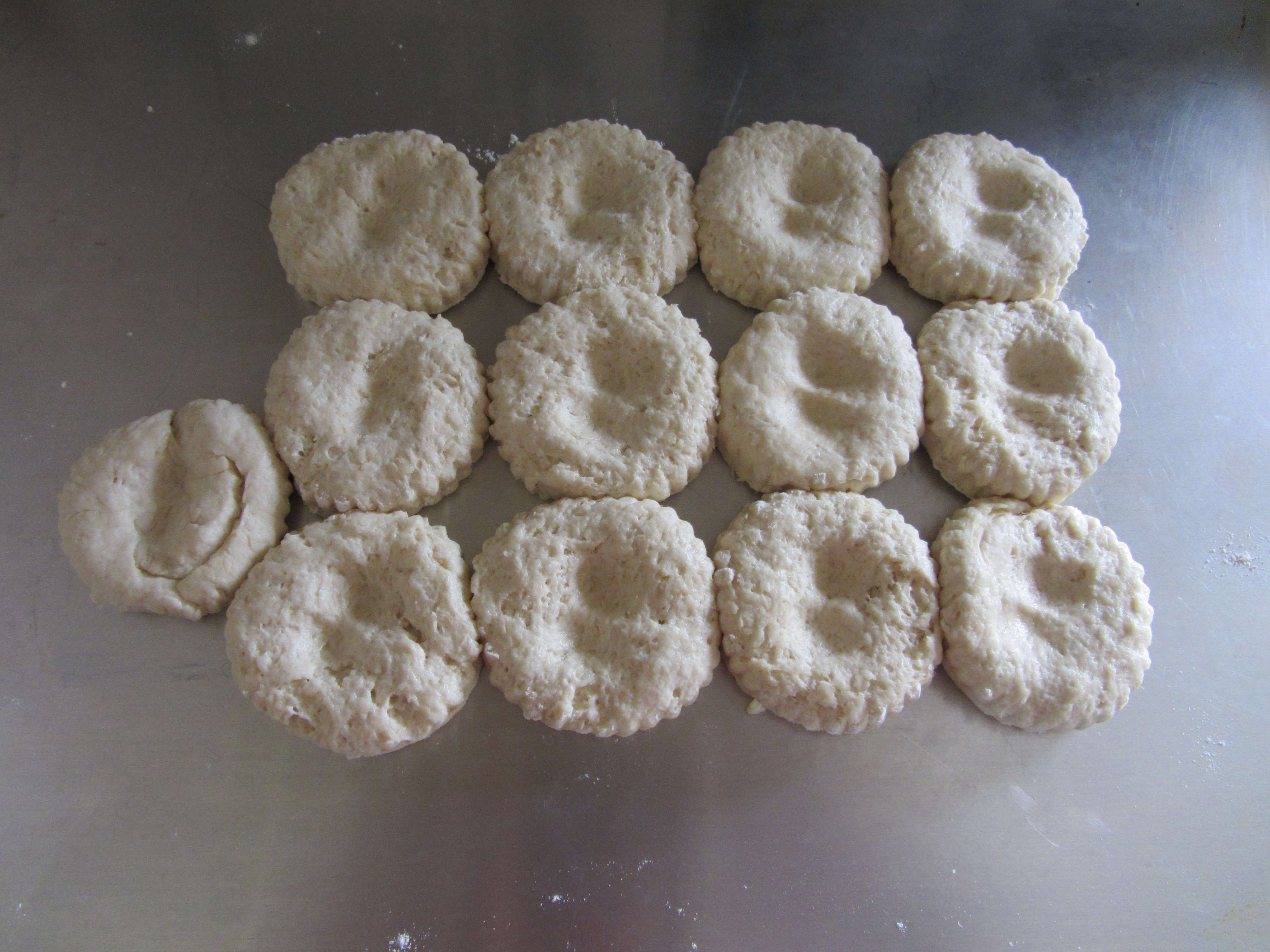
Indented biscuits pre-baking.
Indented biscuits pre-baking.

Golden brown biscuits.
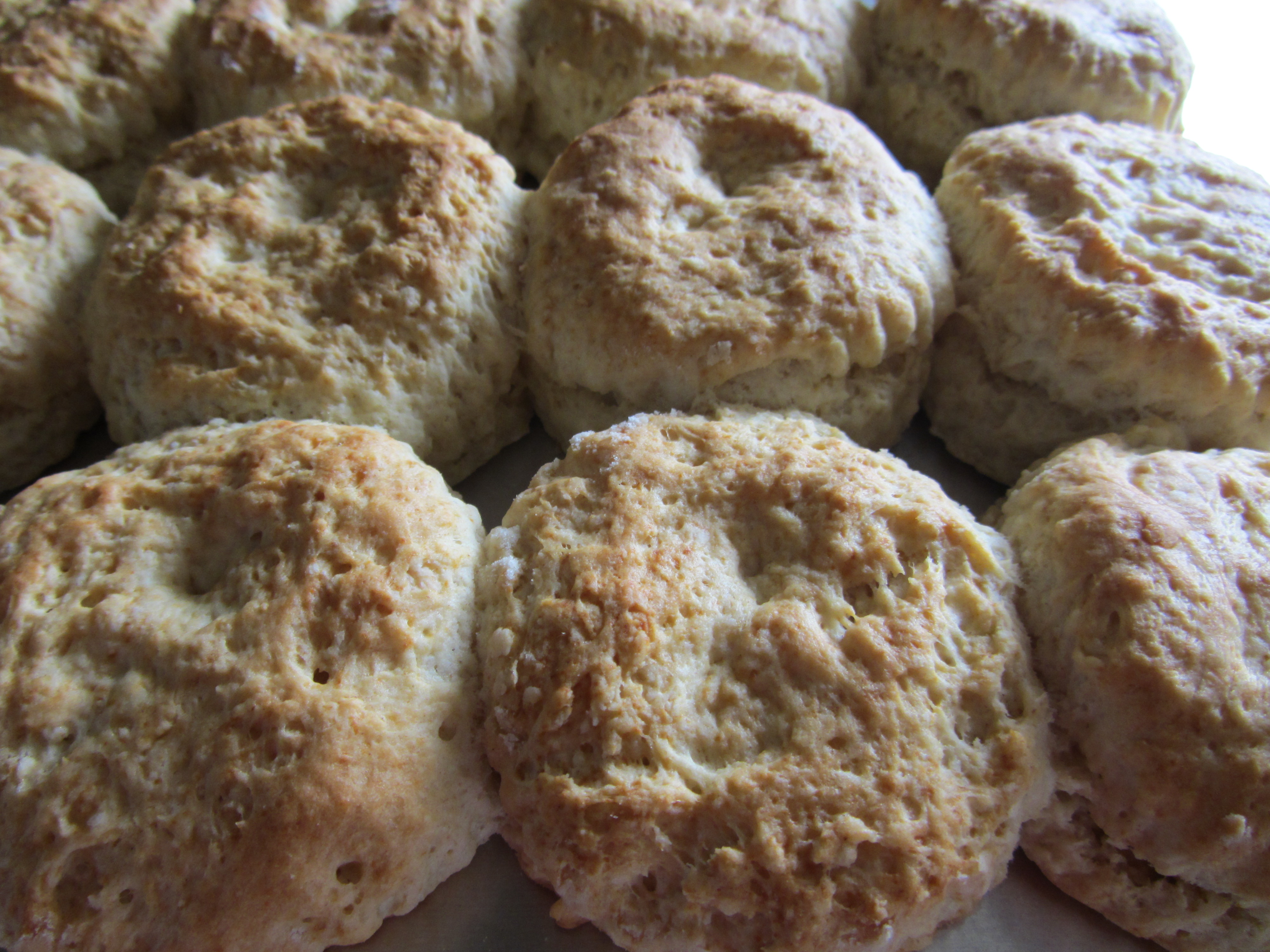
Golden brown biscuits.

Biscuits straight from the oven.
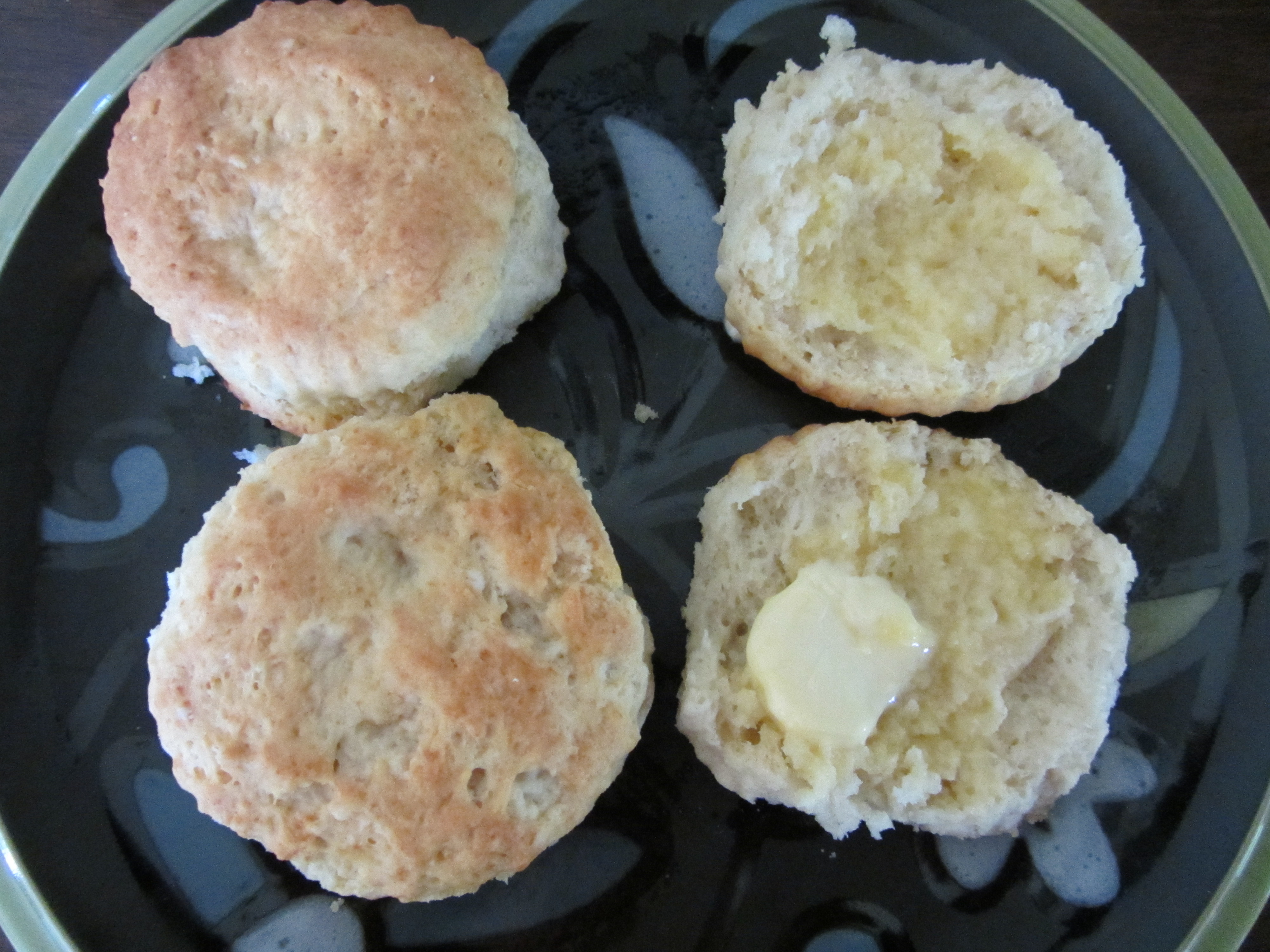
Biscuits straight from the oven.

Split and buttered biscuits.

Split and buttered biscuits.

We ate our biscuits warm from the oven, split, and buttered. My dad has made biscuits for years, and his are quite different from these biscuits. I grew up with super light, flaky biscuits, while these biscuits were more cake-like and dense. I thought they were very good, and they are such a quick breakfast treat. Having listened to some of Alton’s podcasts, I have gathered that he now uses a round pan when he makes biscuits, and that he covers them when they come out of the oven. Perhaps I’ll have to try a round pan next time, along with self-rising flour.

Scones

Like the biscuit recipe, the scone recipe differs between the episode and the online recipe. As in the biscuit recipe in the show, Alton recommends using soft flour for the scones. The sugar content in the two versions of the recipe is different, with the episode calling for 2 T of sugar, while the online recipe has 1/3 C of sugar, and Alton tells you to bake your scones at 400 degrees F, while the online recipe uses a temperature of 375 degrees. The overall recipe process is very similar to that of the biscuits, beginning with combining the dry ingredients.

Dry ingredients.

Dry ingredients.

To this mixture, you add your fat, cutting it in with your fingertips, and then you add your cream and egg, mixing until combined.

Cutting in the fat.
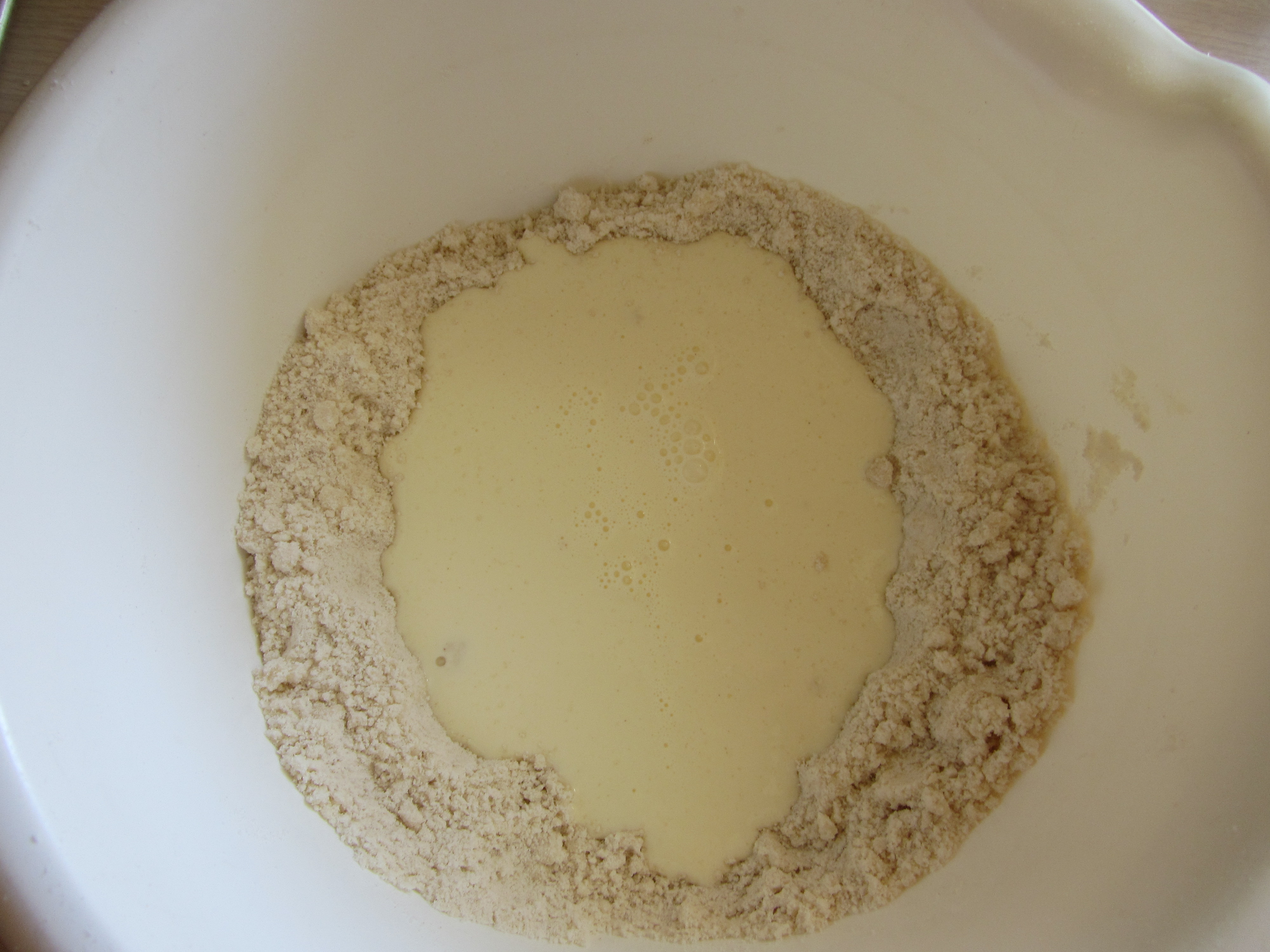
Cutting in the fat.

Adding the cream and the egg.

Adding the cream and the egg.

Currants or dried cranberries (I used currants) are then lightly mixed into the dough, which is turned out onto a board and cut into individual scones.
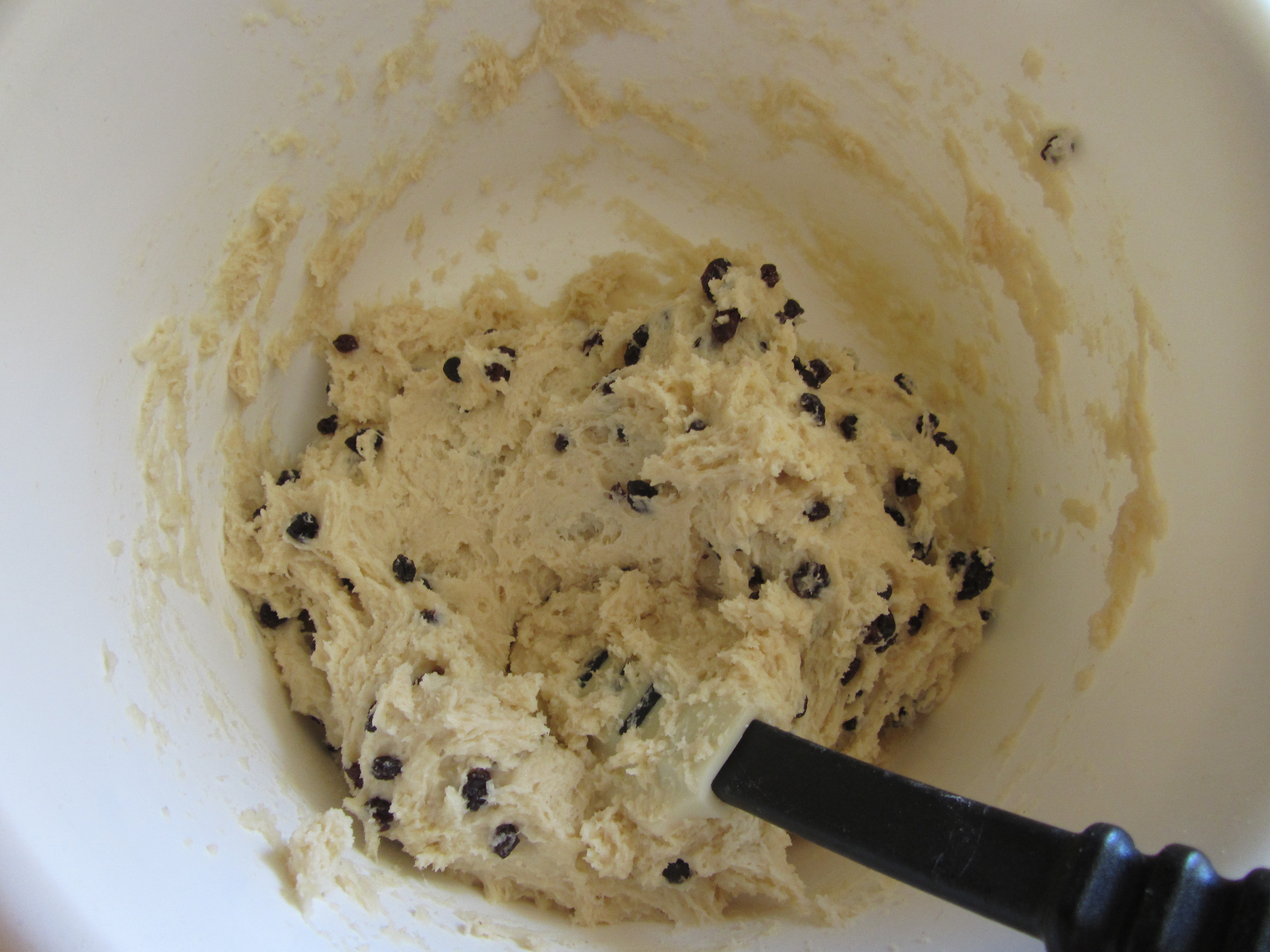
Currants mixed in.
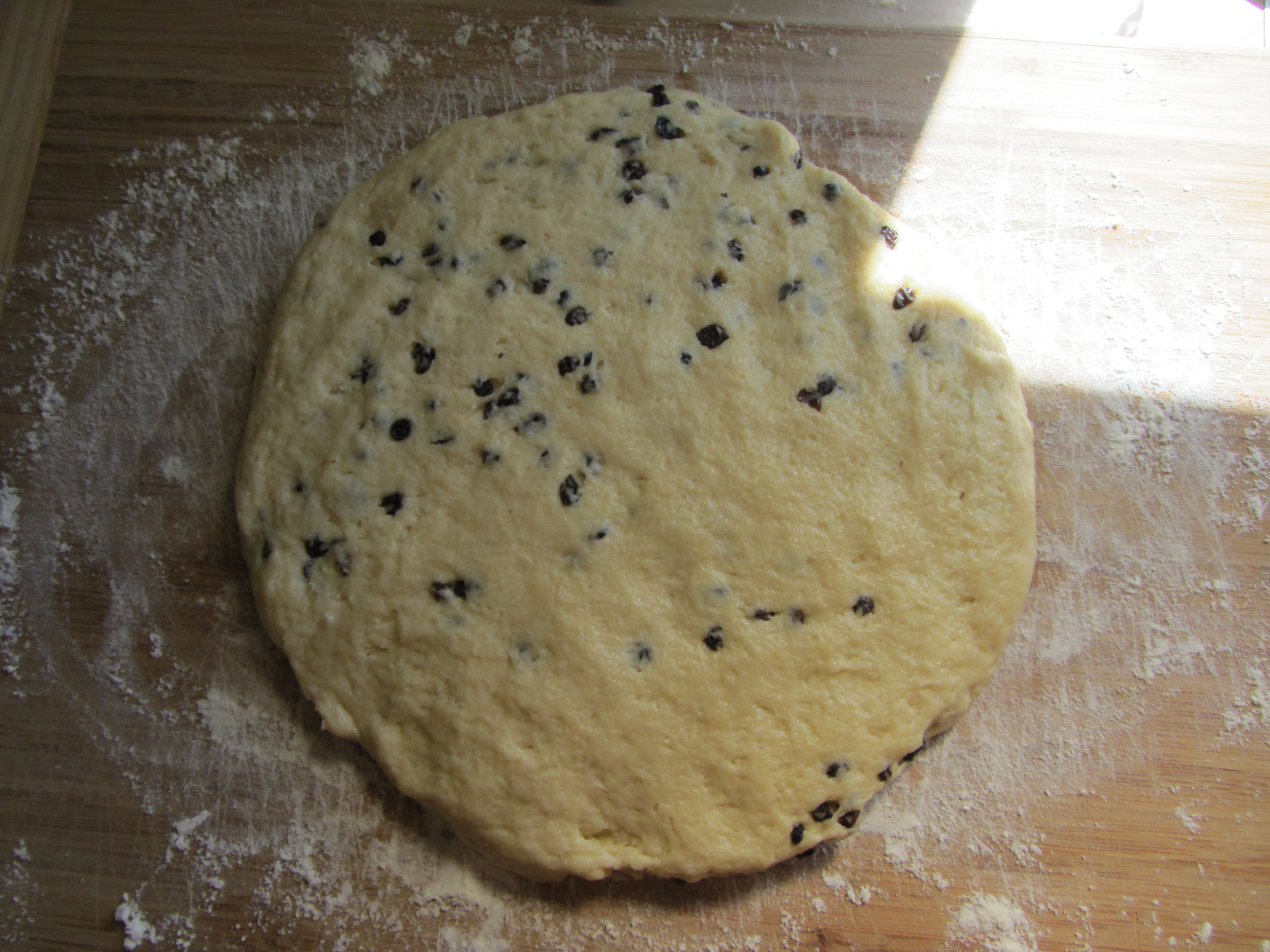
Currants mixed in.

Dough round.

Dough round.

I used to work at a bakery and we made our scones in triangles by cutting the round of dough into pizza-like slices. I opted to make my scones this way, rather than using a round cutter. I also brushed my scones with melted butter, and sprinkled them with some sugar before baking.
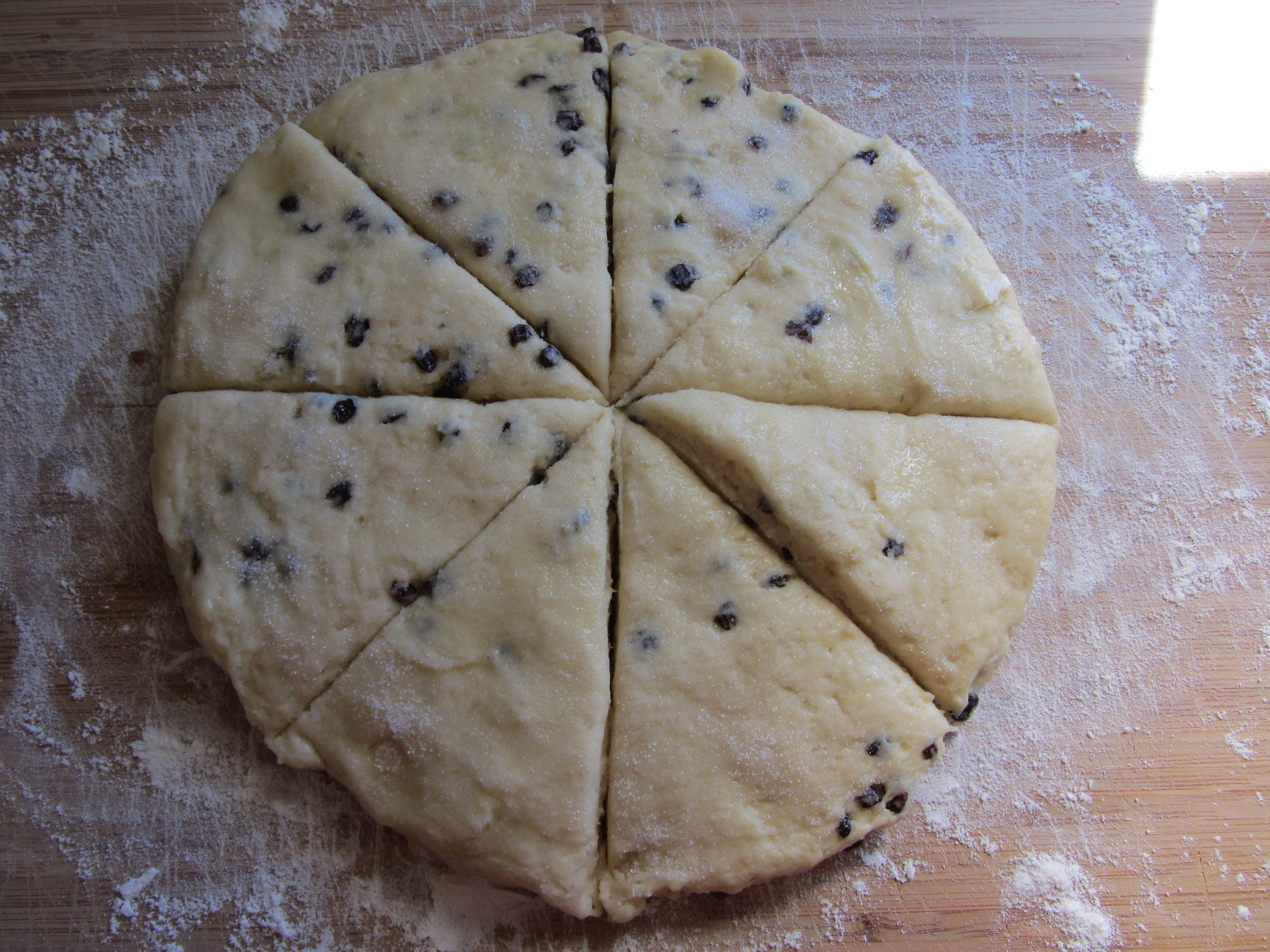
Brushed with melted butter, sprinkled with sugar, and cut into triangular scones.

Brushed with melted butter, sprinkled with sugar, and cut into triangular scones.

Scones ready to bake.

Scones ready to bake.

The scones turned out well, with a crumbly, slightly cakey, texture. They were not particularly sweet, which went well with coffee in the morning.

Golden scones.

Golden scones.

Ready to eat for breakfast!

Ready to eat for breakfast!

This was not my favorite scone recipe of all time, but they were still pretty good. If I make these again, I’ll likely add a different fruit, such as berries.

Shortcake

The final recipe in this episode was for shortcake. Again, the basic dough was similar to that of the biscuits and scones, though, again, there were some differences in the two versions of the recipe. Actually, this recipe had a lot of disparities.The printed recipe tells you to preheat your oven to 450 degrees, while Alton uses a 400 degree oven in the show. As with the biscuits and scones, in the episode Alton suggests using soft flour, rather than the all-purpose flour in the online recipe. The online recipe omits baking soda, while the TV version calls for 1/4 t of baking soda. The sugar also varies between the two recipes, with Alton adding 1/3 C of sugar in the TV episode, while the online recipe calls for only 1 T of sugar. Alton tells you to weigh your butter and shortening (1 oz of butter and 2 oz of shortening), while the online edition uses 2 T of each fat. The final deviation in the recipes is the amount of half and half used:  1 C used in the show and 3/4 C online. How is it possible that the online recipes differ so substantially from the show recipes? This just confirms that I need to continue watching each episode prior to making the recipes.

As with the other two recipes in this episode, the dry ingredients are combined, the fat is cut in, and the liquid is added.

Dry shortcake ingredients.

Dry shortcake ingredients.

Half and half, shortening, and butter.
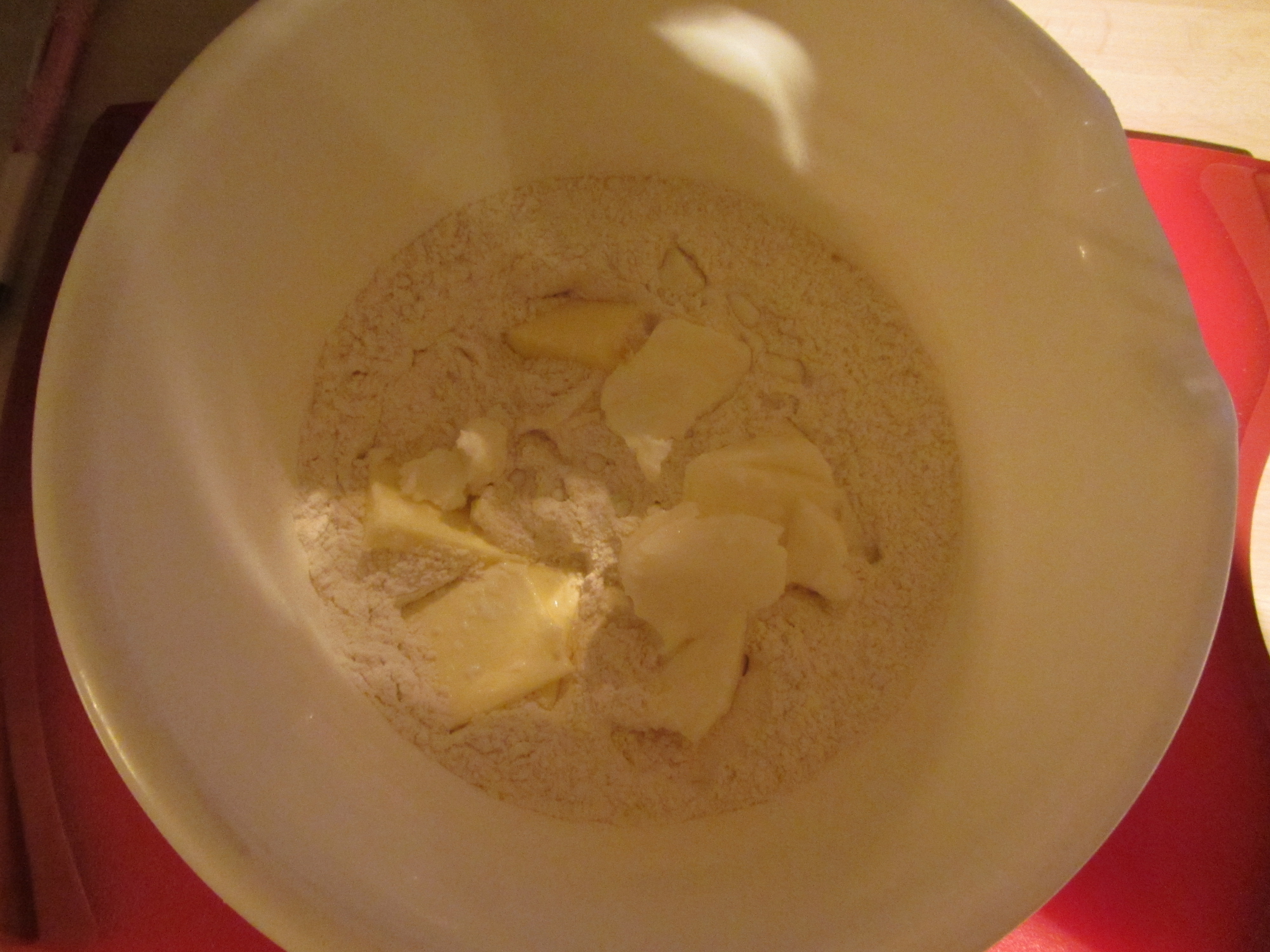
Half and half, shortening, and butter.

Cutting in the fat.

Cutting in the fat.

Adding the liquid.
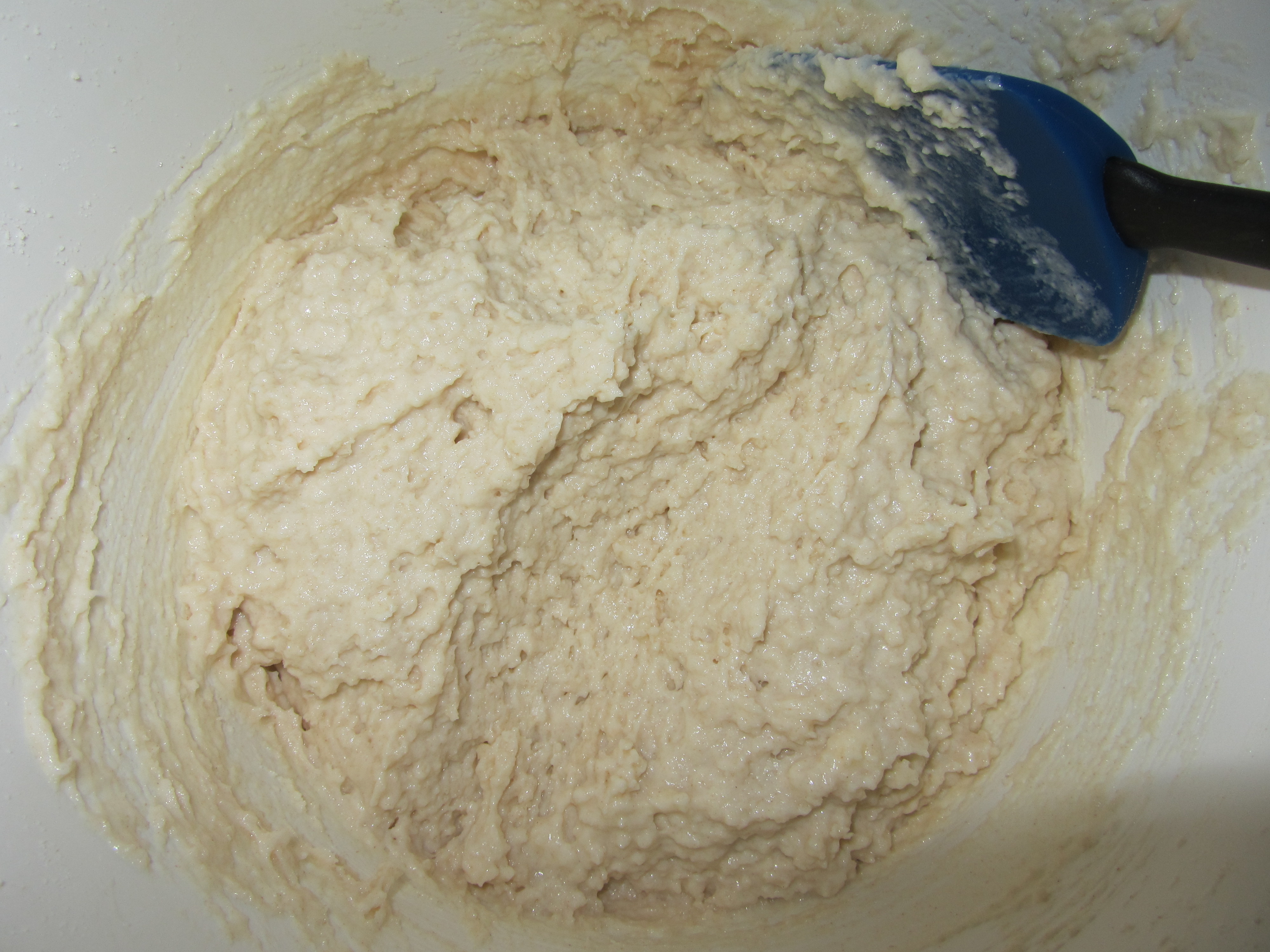
Adding the liquid.

Resulting shortcake dough.

Resulting shortcake dough.

The resulting dough is then dropped onto a baking sheet, brushed with butter, sprinkled with sugar, and baked.
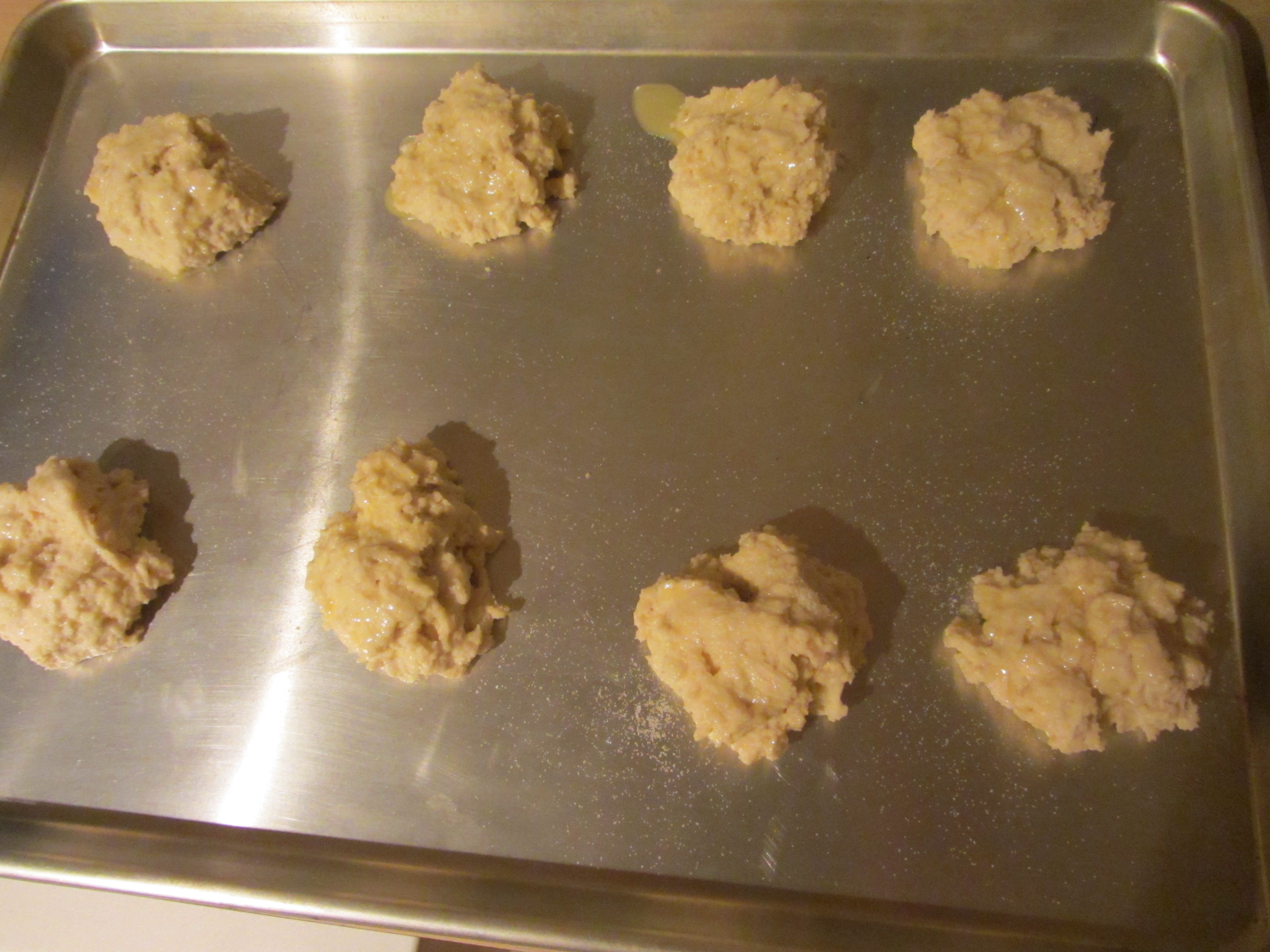
Dough dropped onto baking sheet, brushed with melted butter, and sprinkled with sugar.
Dough dropped onto baking sheet, brushed with melted butter, and sprinkled with sugar.

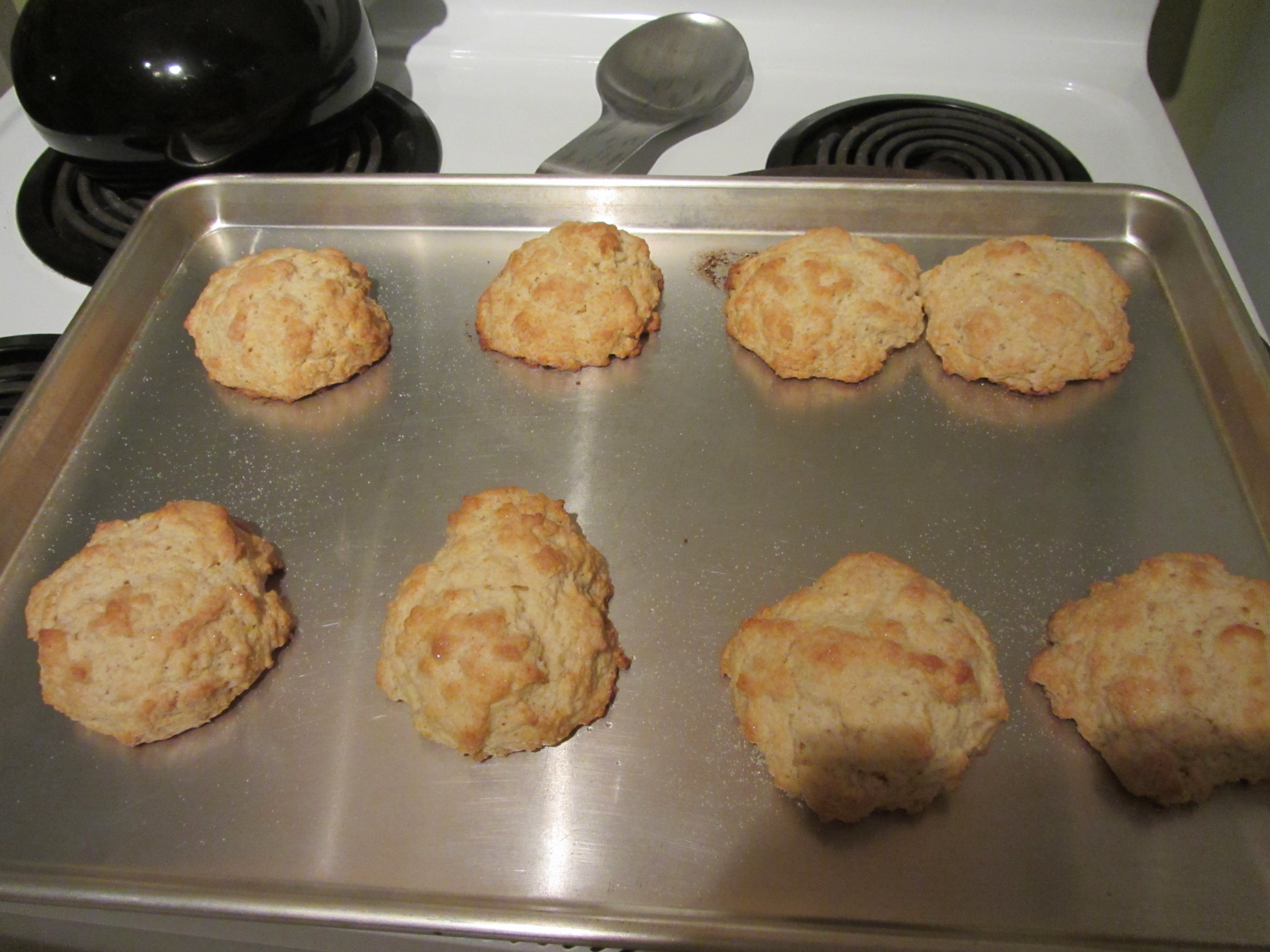
Completed shortcakes.

Completed shortcakes.

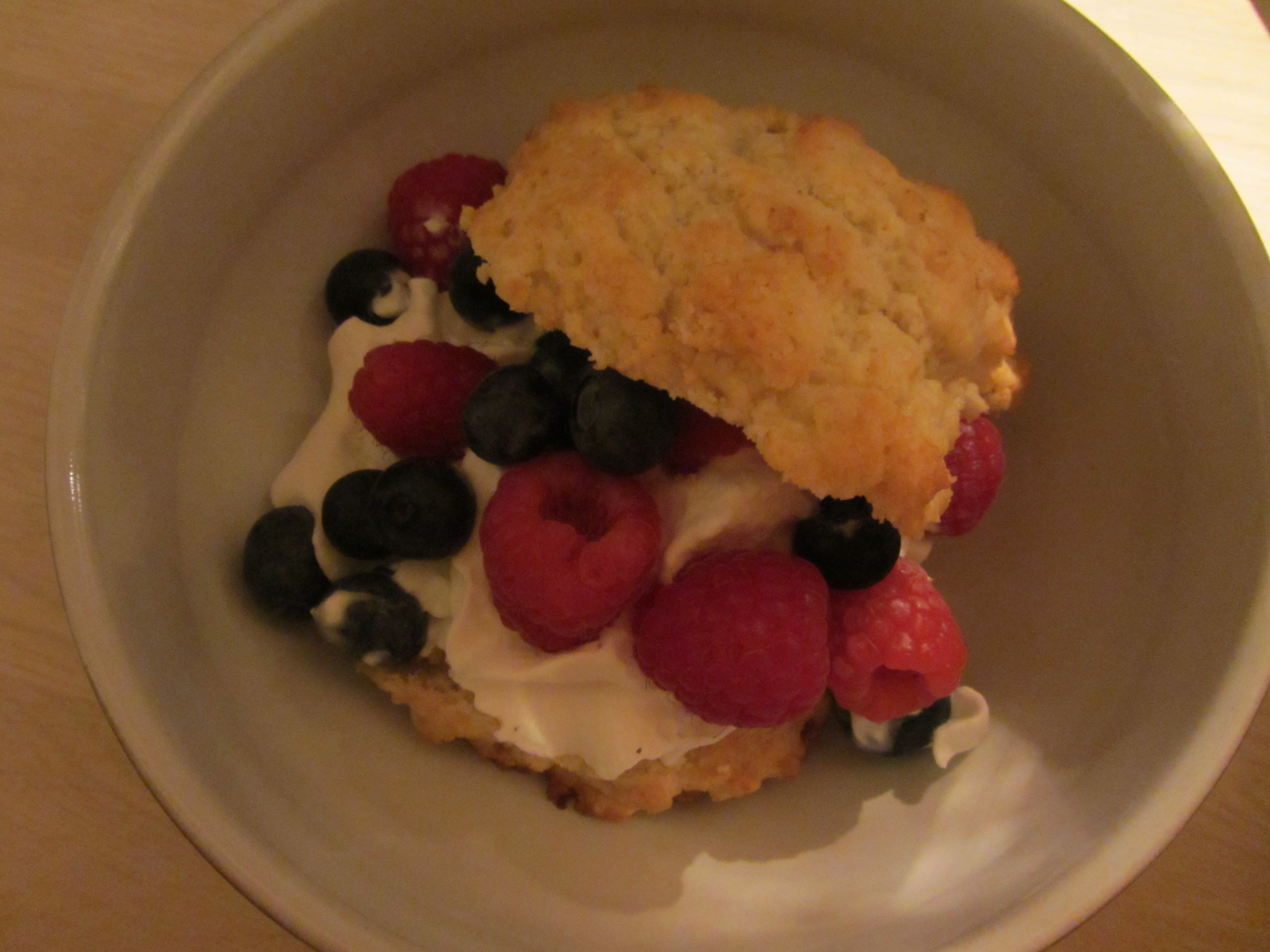
We ate our shortcakes in several ways:  with ice cream, with berries and whipped cream, and with nectarines and whipped cream.
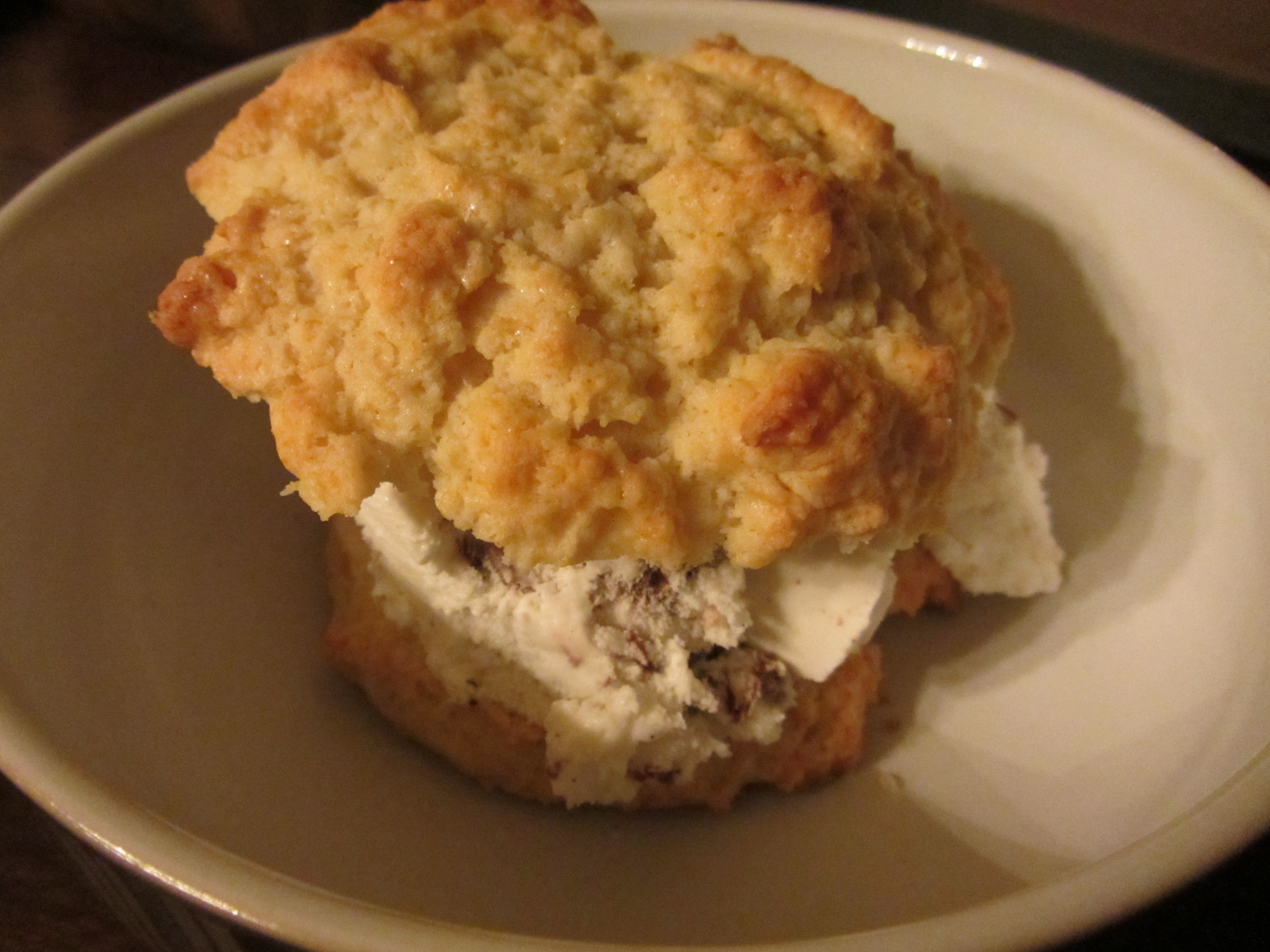
Shortcake with ice cream
Shortcake with ice cream

Shortcake with berries and whipped cream.

Shortcake with berries and whipped cream.

The shortcakes were best when they were first made, as they had a light, crumbly texture. A day later, the texture was less crispy and more on the cakey side. I tried “refreshing” our shortcakes with a few minutes in a warm oven, which helped to somewhat restore their original texture. I thought the cakes had just the right amount of sweetness to pair well with the fruit and whipped cream, which was my favorite of the ways we ate ours.

Of the three recipes in this episode, the biscuits were definitely our favorite. The shortcakes followed, with the scones not far behind. Thank goodness we work out a lot!
Key Lime Sorbet

When I first read the recipe for sorbet from this episode of Good Eats, my first thought was that it might be difficult to find key lime preserves in eastern Washington. Upon reading the recipe reviews online, I discovered that many people had difficulty finding key lime preserves, necessitating an ingredient substitution. One recipe reviewer mentioned having used lime curd successfully in lieu of the preserves, so that is the route I chose to go in. Now, I realize that lime curd is drastically different from lime preserves, so I was a bit nervous about how my sorbet would turn out.

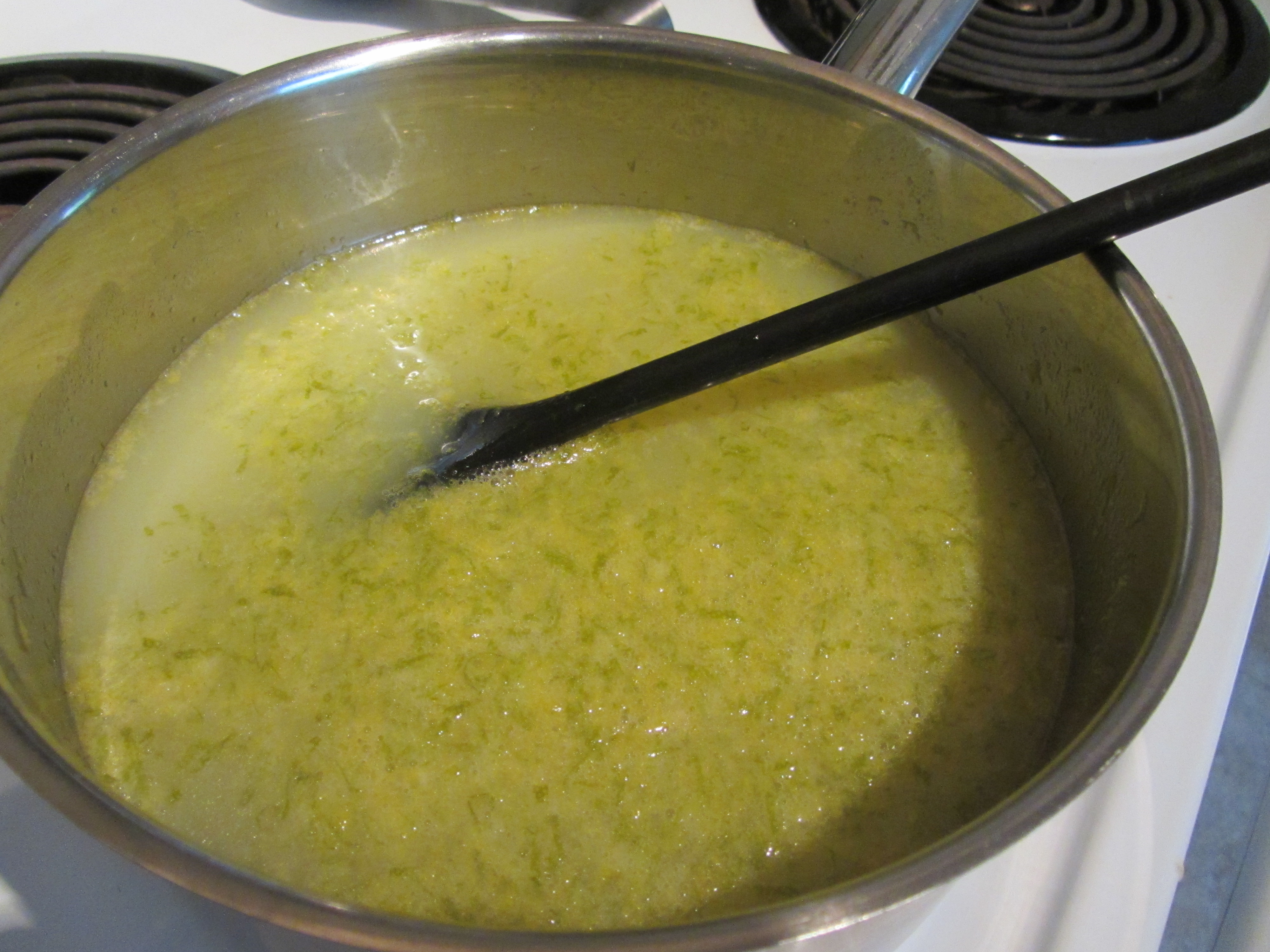
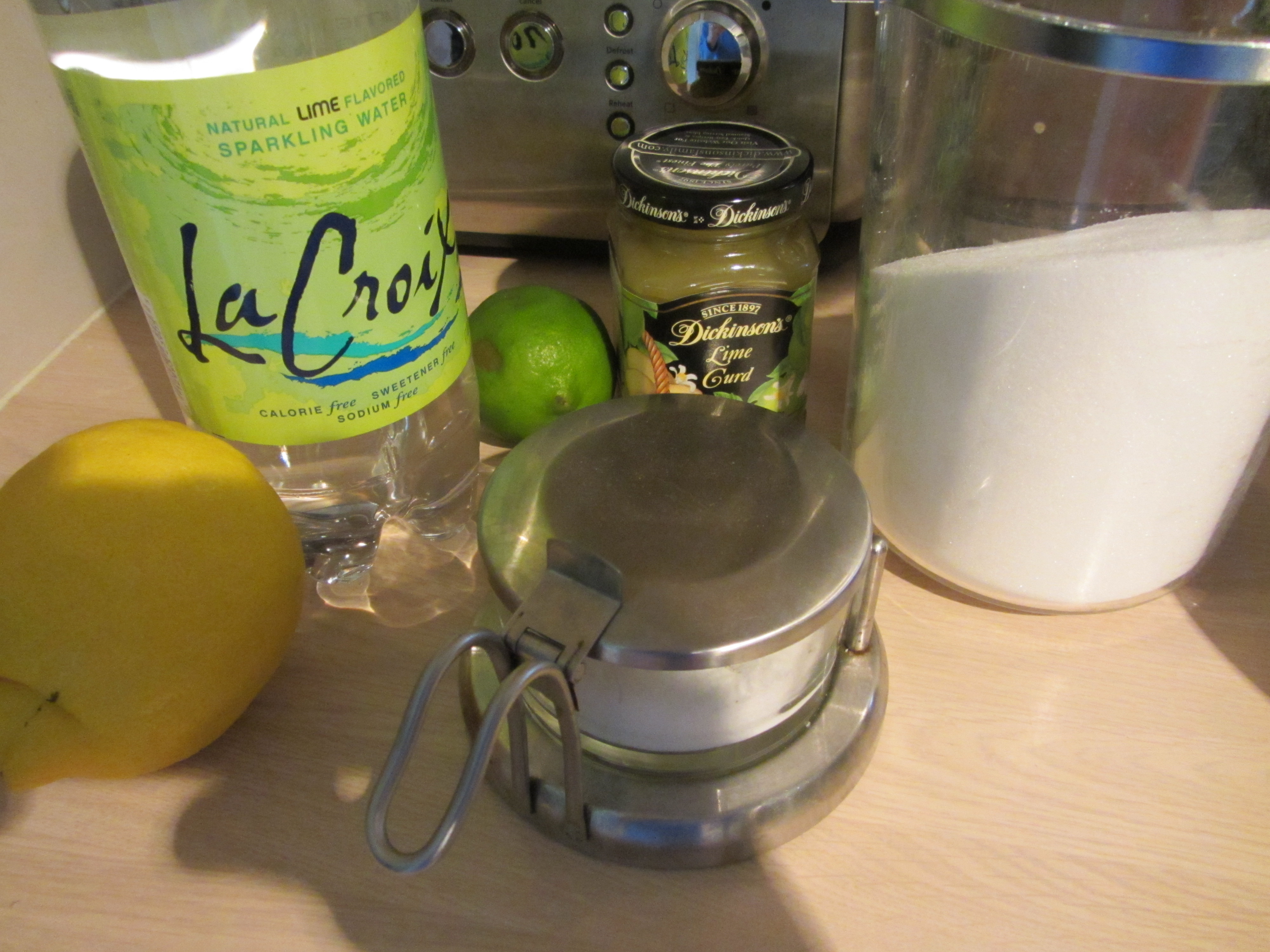
I gathered my ingredients, combining my sugar, lime curd, and lime sparkling water on the stove.

Sorbet ingredients.

Sorbet ingredients.

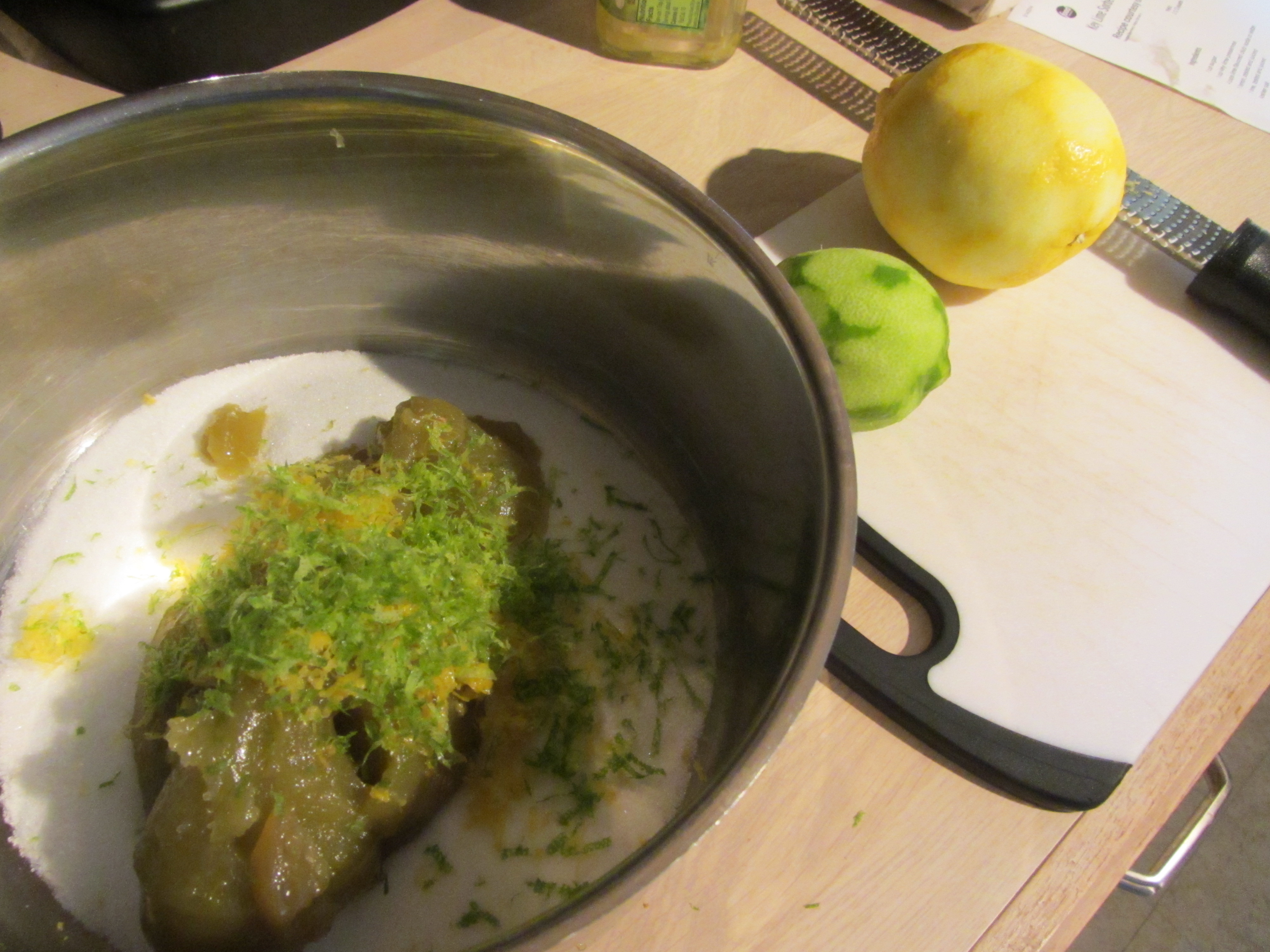
Sugar, lime curd, lime & lemon zest,  and salt.

Sugar, lime curd, lime & lemon zest, and salt.

The juice (minus ~a tablespoon) and zest of the lime and lemon, along with some Kosher salt were added and stirred until dissolved. Once dissolved, I added the remaining sparkling water and tasted the mixture. Alton said the mixture should be very sweet and tart, and I felt that my mixture could stand to have a bit more zing, so I added the remaining lemon and lime juice.7-2-2014 005

The completed sorbet mixture.

The completed sorbet mixture.

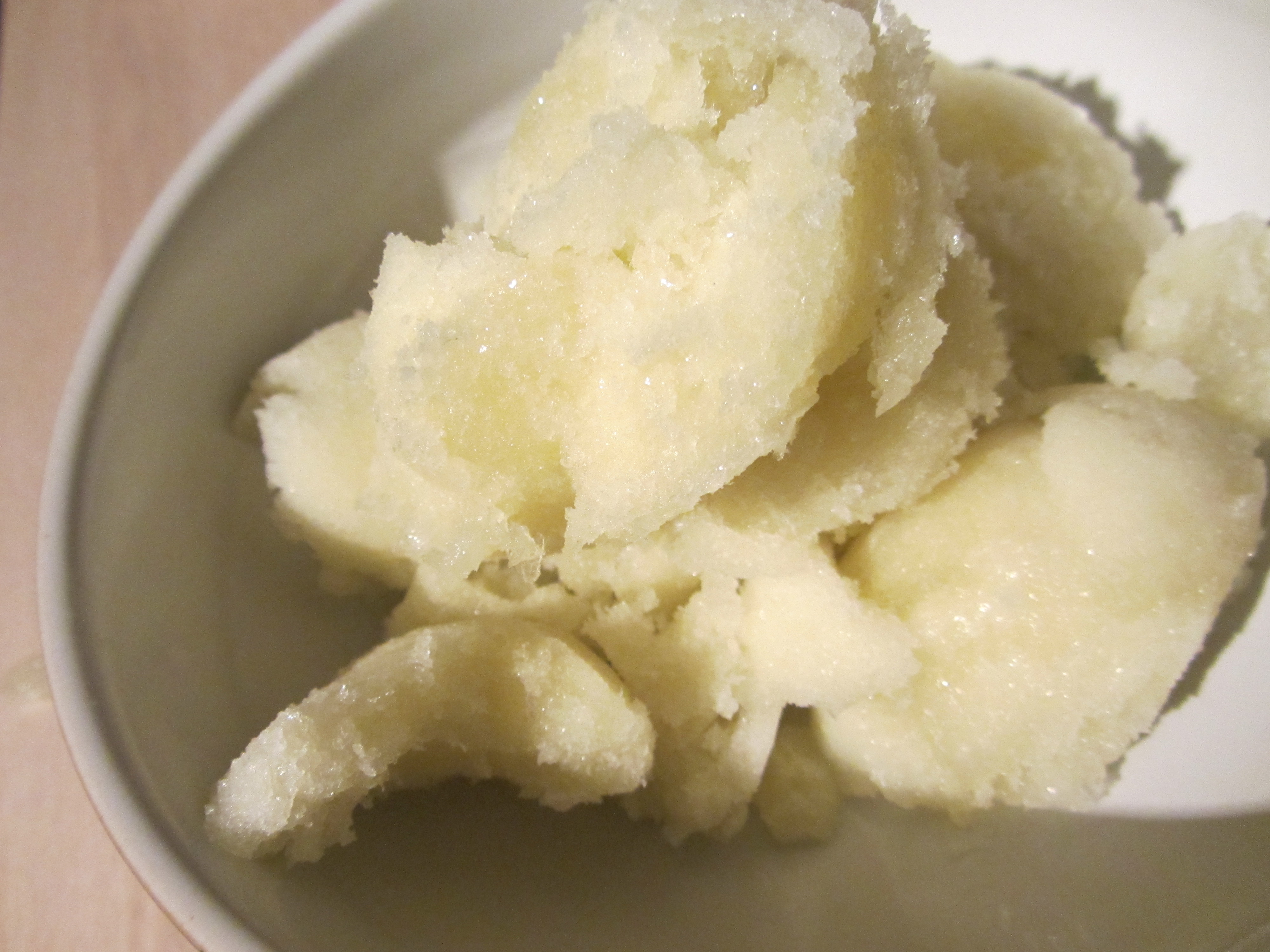
I chilled my sorbet in the refrigerator for a full day, strained it (it had some odd lumps from the lime curd), and churned it in my 25-year-old Donvier ice cream maker.

Churned and ready to go in the freezer.

Churned and ready to go in the freezer.

My resulting sorbet was tart, sweet, refreshing, and great for a warm day.

Refreshing lime sorbet.

Refreshing lime sorbet.

I do wonder how my sorbet would have compared if I had used the key lime preserves. I’m guessing it would have been sweeter with more intense lime flavor. If you do want to make this recipe and cannot find key lime preserves in your area, lime curd will work as a substitution.

Coffee Granita

The second recipe in episode 6 is for coffee granita. As I have mentioned in some previous posts, many of the online recipes differ from the recipes presented in the actual Good Eats episodes, and this recipe was one of those. While the online recipe calls for 1/2 C of sugar and 2 T of coffee liqueur, in the episode, Alton uses 1/3 C of sugar and 1 T of coffee liqueur. As always, I went with the recipe as presented in the TV episode.

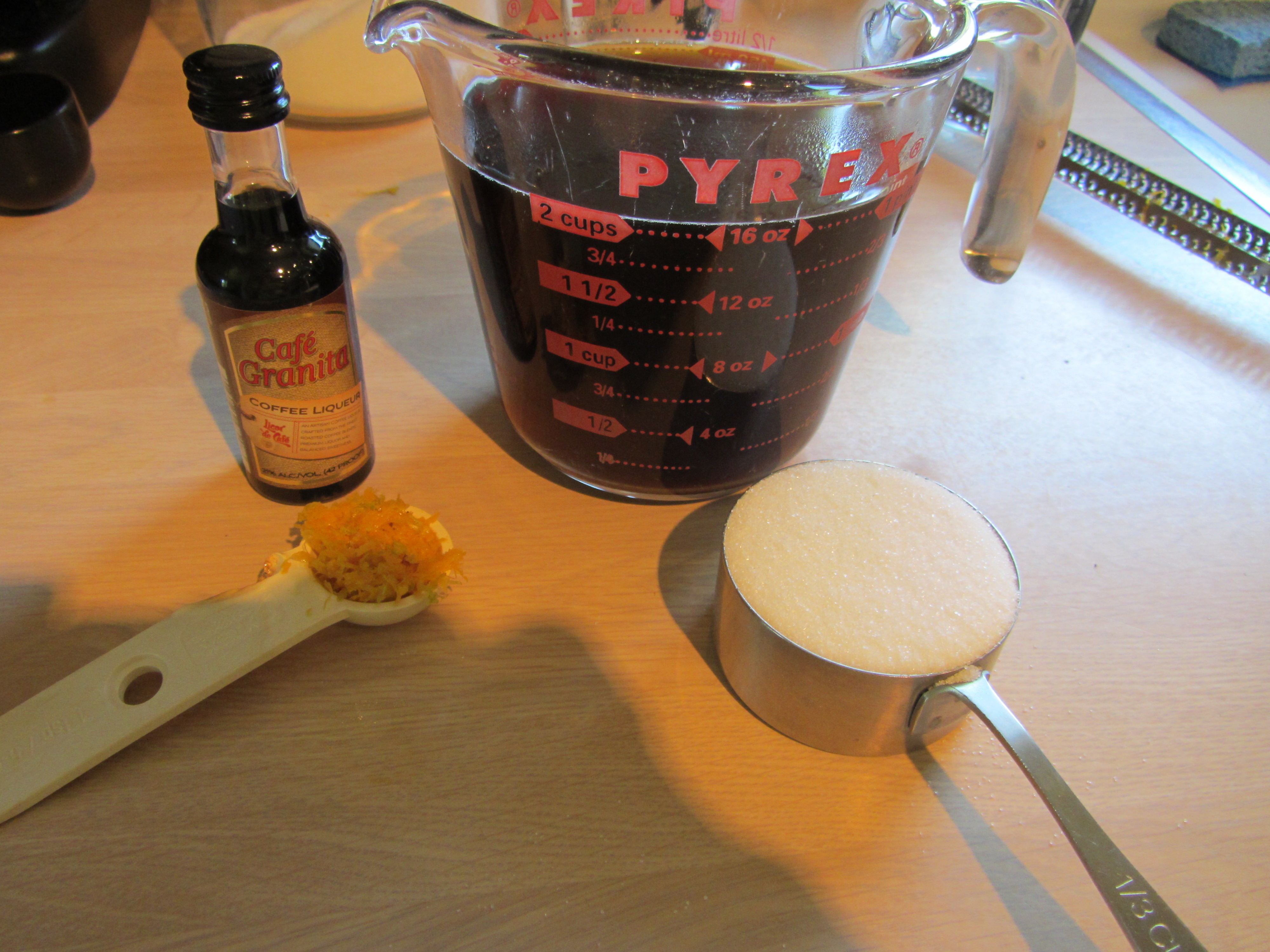
I made Aeropress coffee, diluting it with water to get 2 cups, and then added my sugar, coffee liqueur, and zest (I used orange zest).

Just 4 ingredients for this easy dessert.

Just 4 ingredients for this easy dessert.

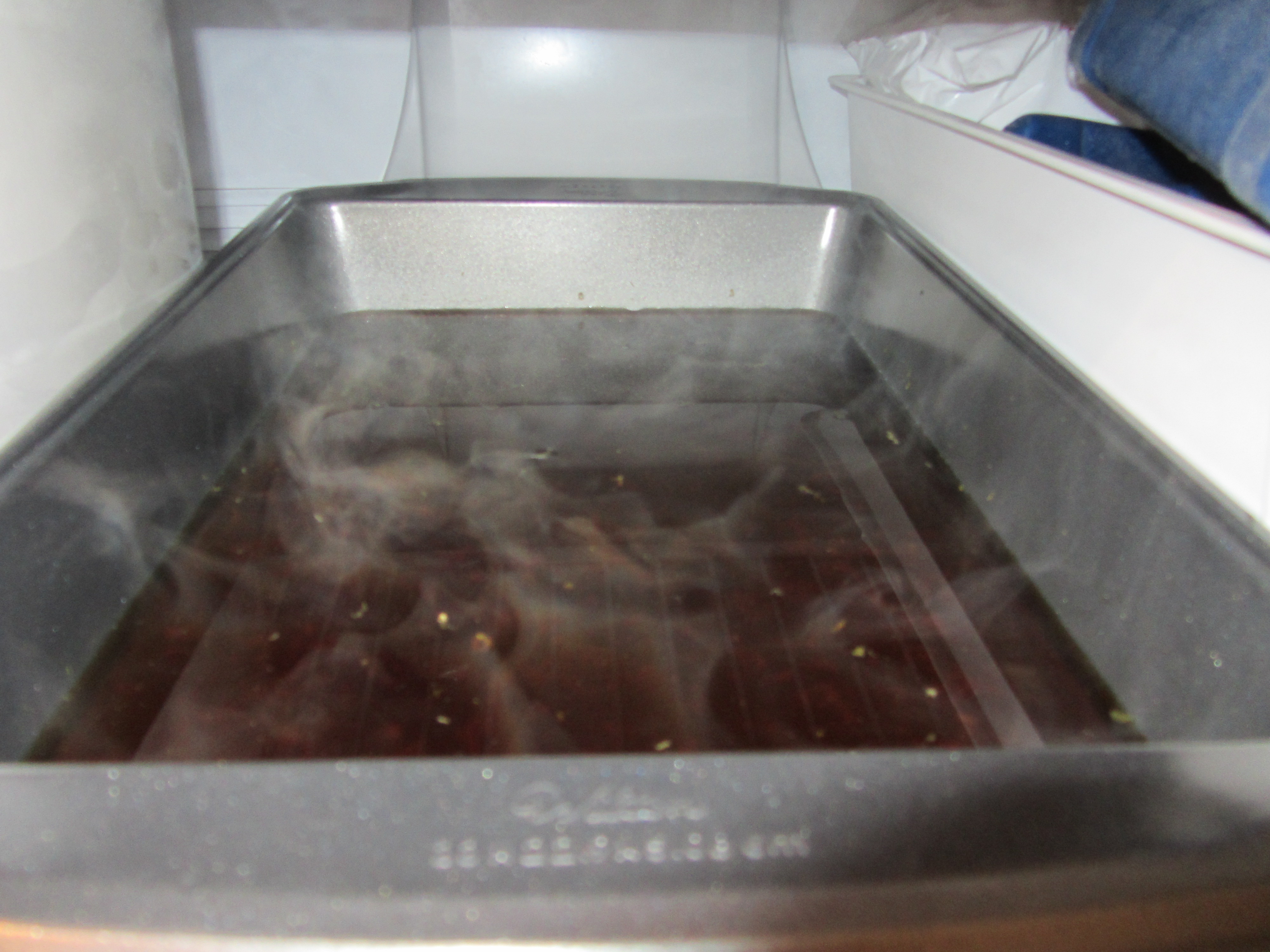
Into the freezer.

Into the freezer.

I poured the mixture into a 9×13″ metal pan, and checked it after 45 minutes. It was beginning to freeze around the edges, so I scraped the crystals with a fork. I continued this process every 20 minutes for a couple hours until the entire mixture was frozen, and then left it in the freezer for an additional hour.

Crystals forming.

Crystals forming.

All frozen.

All frozen.

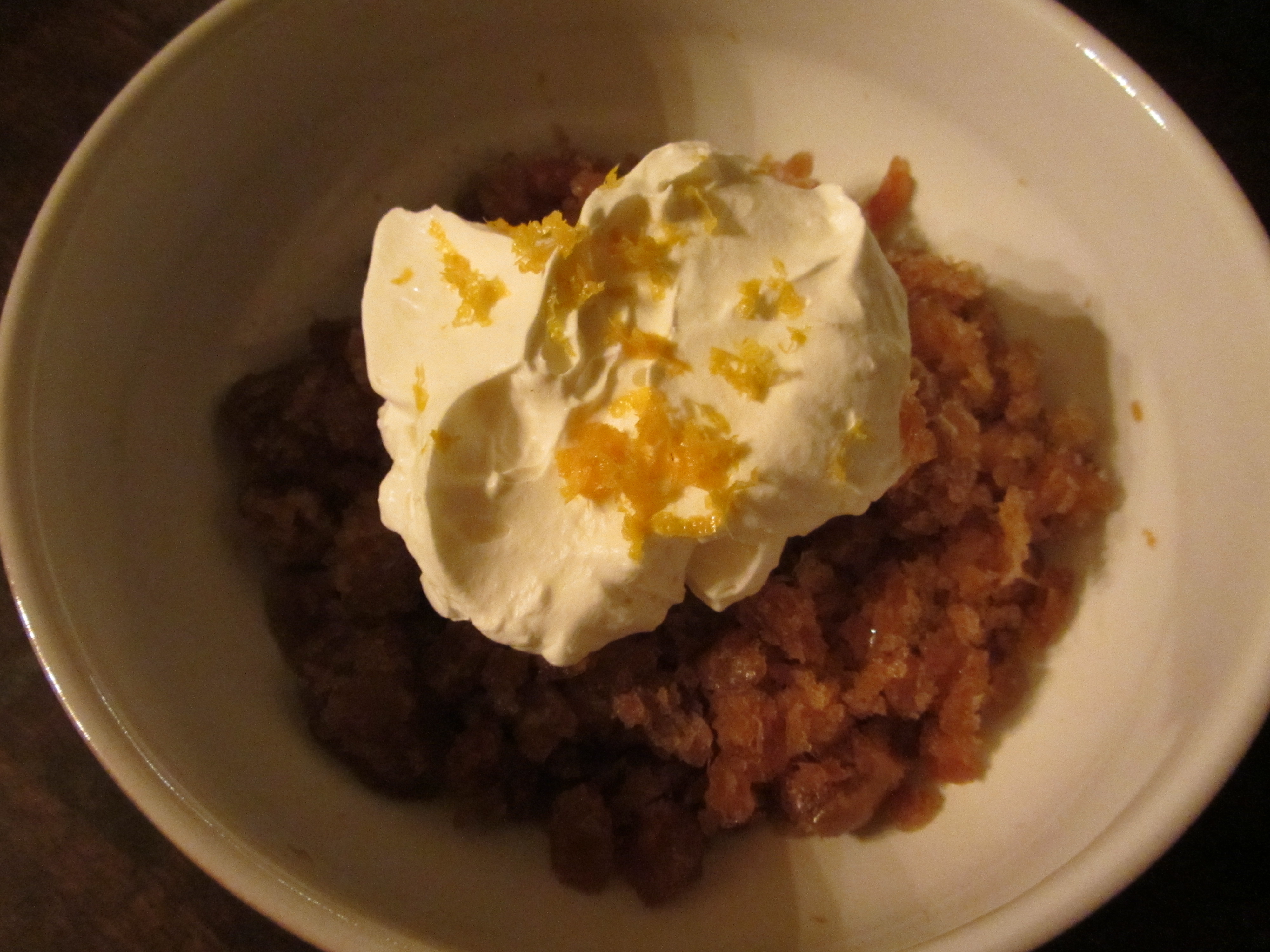
Using a fork to scrape the ice crystals gave the granita a light, fluffy texture. I topped the granita with lightly sweetened whipped cream and orange zest.

Coffee granita with whipped cream and orange zest.

Coffee granita with whipped cream and orange zest.

Both Ted and I liked this dessert, finding it to be refreshing and light. I am glad I followed the recipe from the episode, as I think the granita would have been far too sweet with the ingredient amounts in the online recipe. The whipped cream cut the sweetness of the granita perfectly.

“Serious” Vanilla Ice Cream

The last recipe in the 6th episode was for vanilla ice cream. I grew up making homemade ice cream with my brother and my parents, so homemade ice cream remains a staple of Summer for me. Once again, there were a couple of differences between the episode recipe and the online recipe. This time, the online recipe called for 1 cup minus 2 T of sugar and 2 T of peach preserves, while the episode used 1 cup minus 3 T of sugar and 3 T of peach preserves. Also, in the episode, Alton added a pinch of Kosher salt to his ice cream mixture.

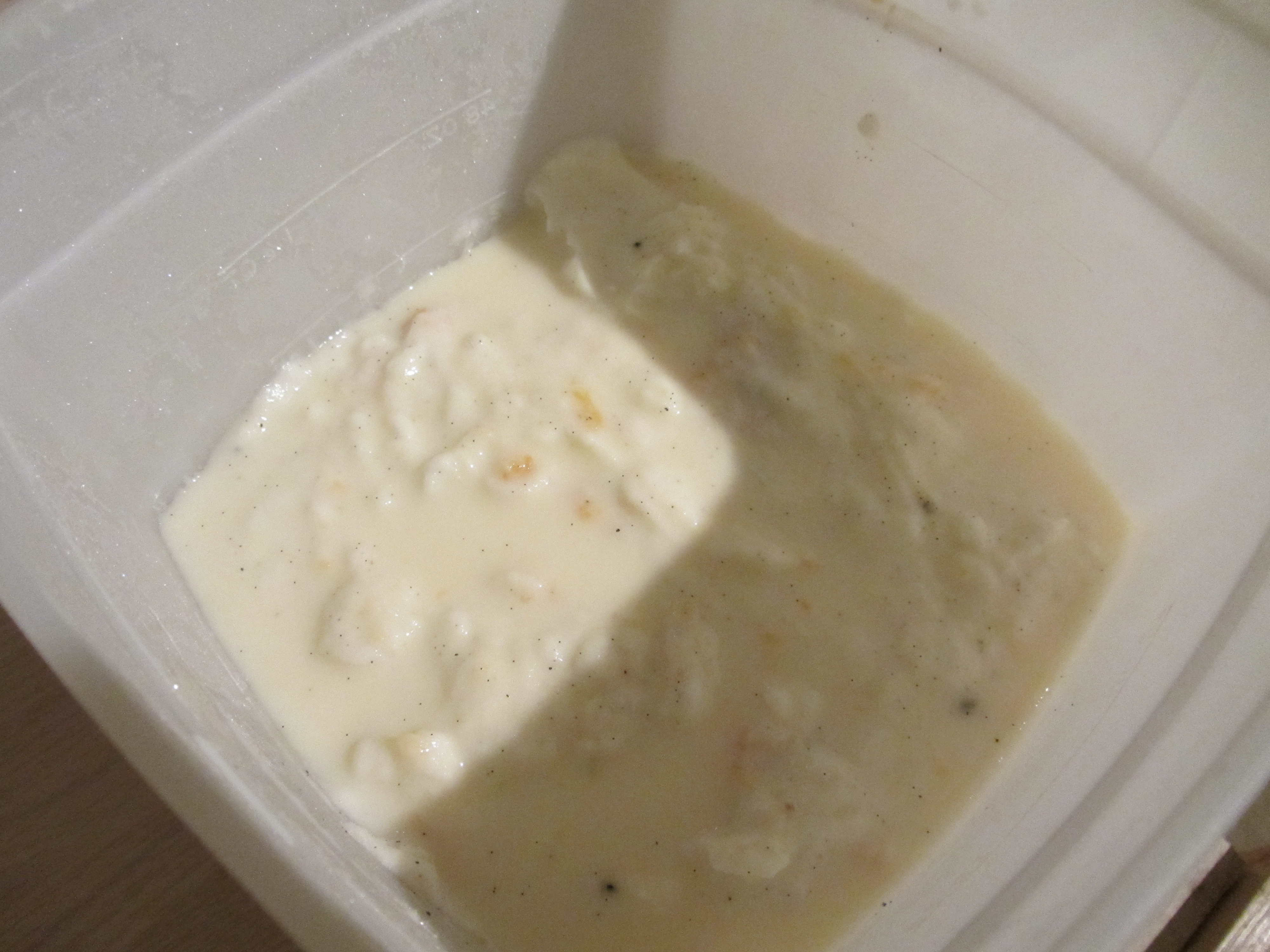
I combined the half-and-half and cream, and brought the mixture to a simmer on the stove, adding the scraped vanilla bean (along with the hull).

Vanilla ice cream ingredients.

Vanilla ice cream ingredients.

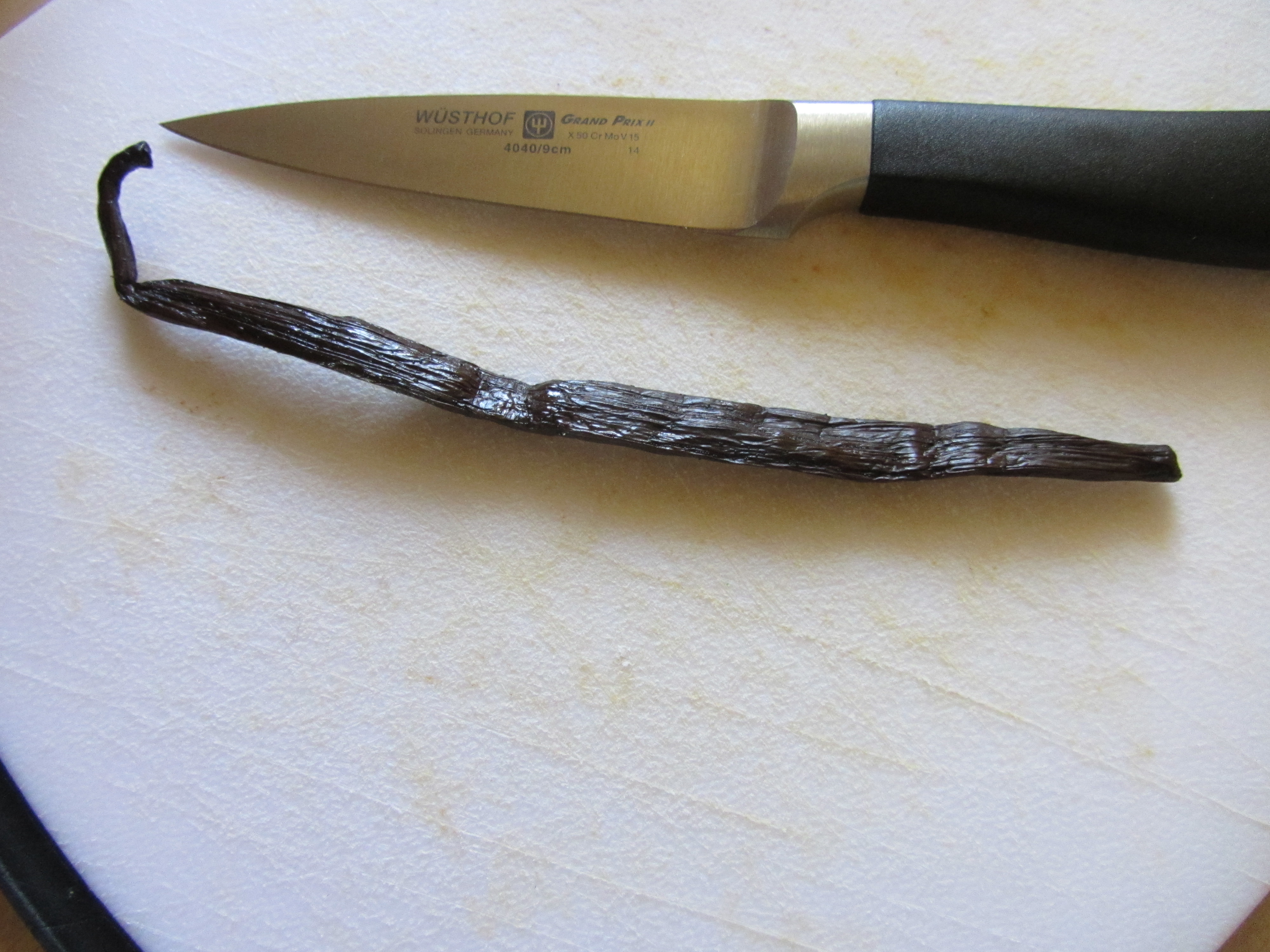
Fresh vanilla bean.

Fresh vanilla bean.

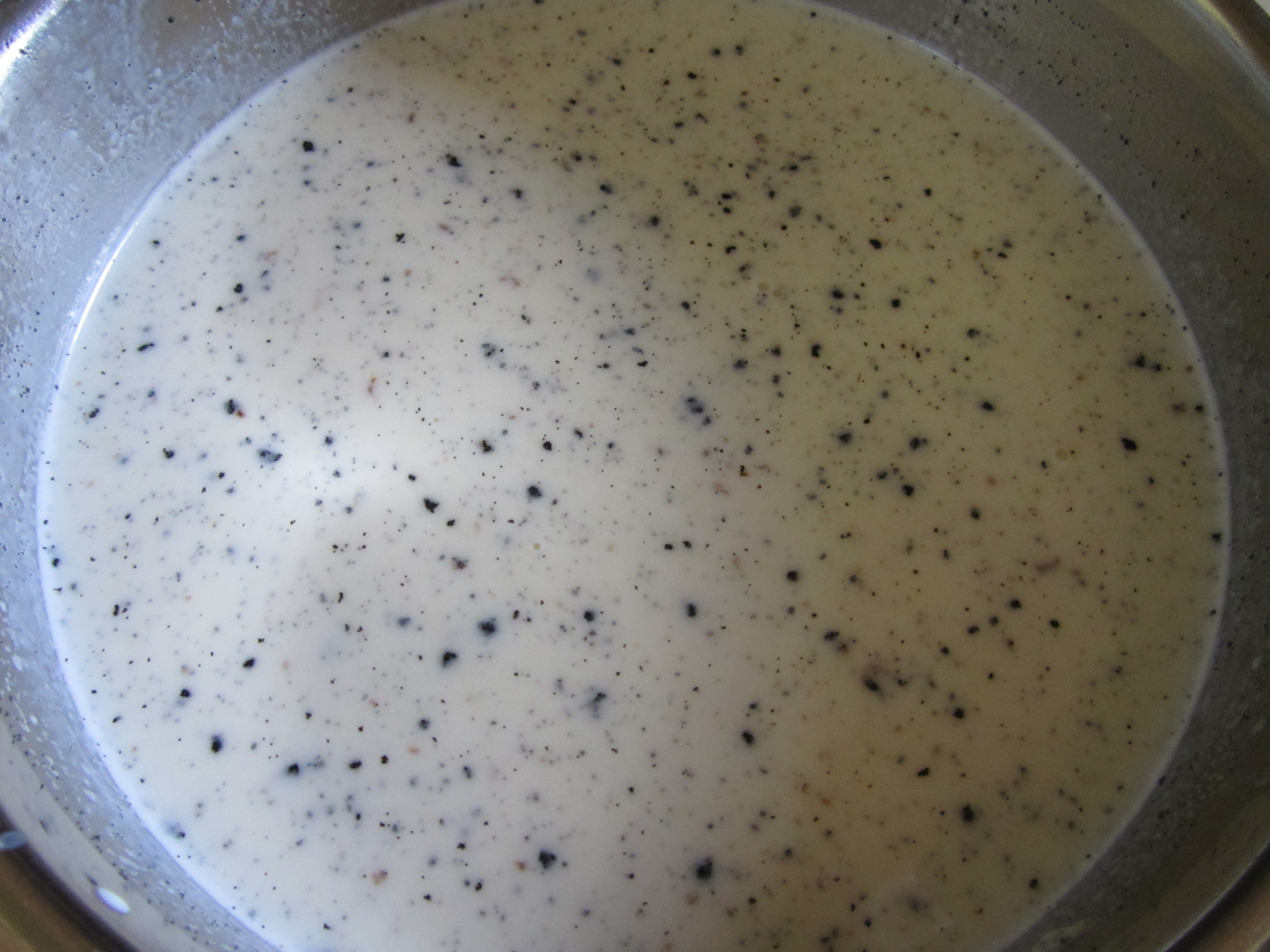
Loads of vanilla!

Loads of vanilla!

Once at a simmer, I turned off the heat and added the sugar, peach preserves, and salt. I allowed the mixture to cool to room temperature, and then placed it in the refrigerator overnight. Once thoroughly chilled, I churned the ice cream in my Donvier ice cream maker, and placed the ice cream in the freezer to freeze to a harder consistency.

Churning away.

Churning away.

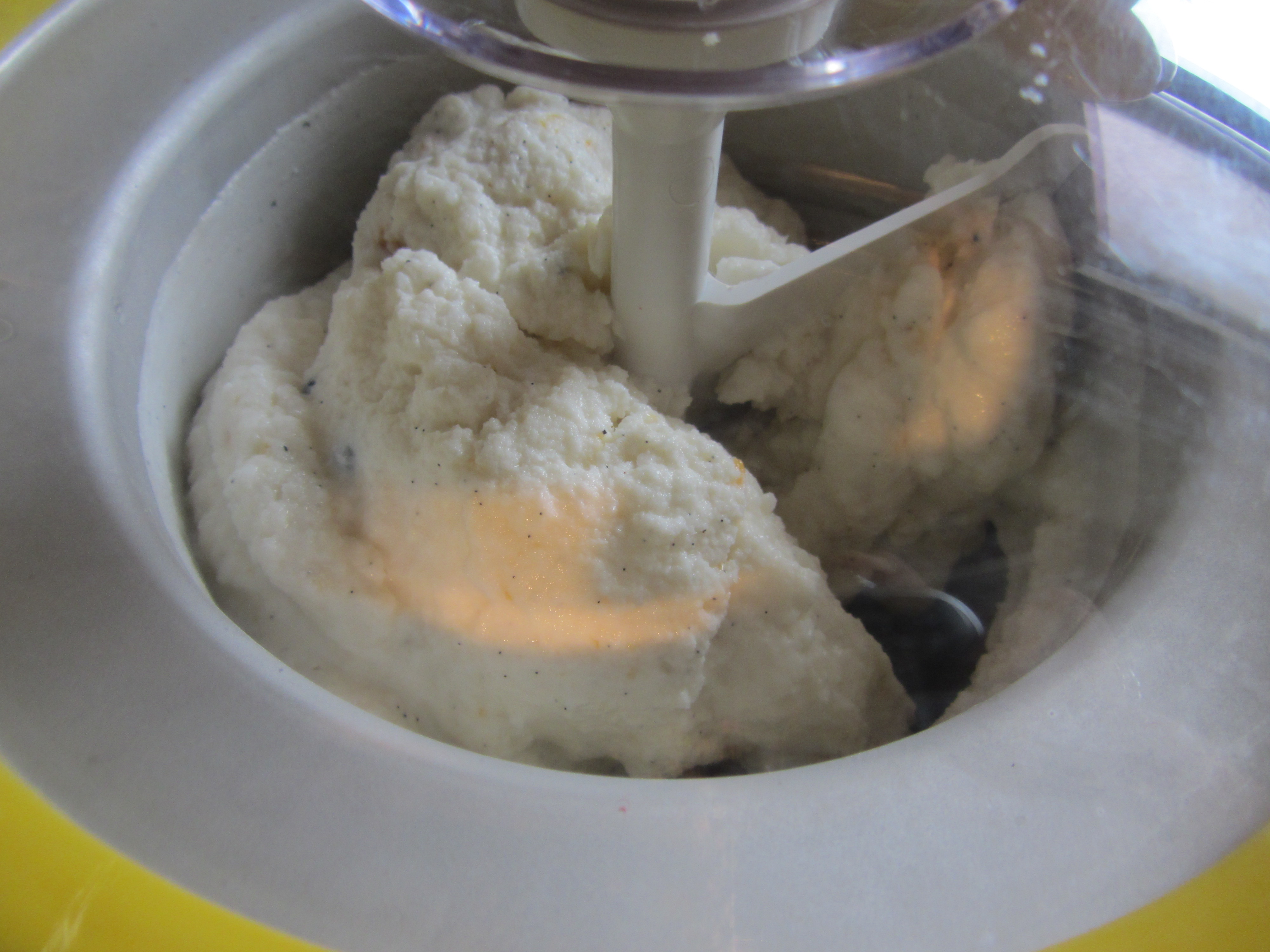
Churned to soft-serve consistency.

Churned to soft-serve consistency.

Into the freezer to harden.

Into the freezer to harden.

Finished vanilla ice cream.

Finished vanilla ice cream.

This recipe made less than a quart of ice cream, and it took the two of us no time to polish it all off. The vanilla flavor was outstanding, which was thanks to the super fresh vanilla bean I used. I do wish that my ice cream had a smoother texture, as it seemed to have tiny crystals, but I am guessing that this is more due to my super old ice cream maker than to the recipe itself. I liked the addition of the peach preserves to the ice cream, as it added just a bit of peach flavor here and there, while still leaving vanilla as the predominant flavor. All in all, this was a very good recipe for vanilla ice cream.

I can admit that I experienced some trepidation upon seeing I would need to butterfly a chicken for the 5th episode of Good Eats. As a child, I shrieked in horror upon seeing our family’s naked Thanksgiving turkey sitting on the kitchen counter. Fleeing the room, I was chased by my older brother who had a handful of giblets. Ever since, I have really not liked the appearance of uncooked fowl. Really, though, can anyone truly say they find raw chicken appetizing? It’s an odd shade of yellowish pink, slimy, slightly sticky, and covered by prickly yellow skin. Still, amazingly, the cooked version can be quite tasty.

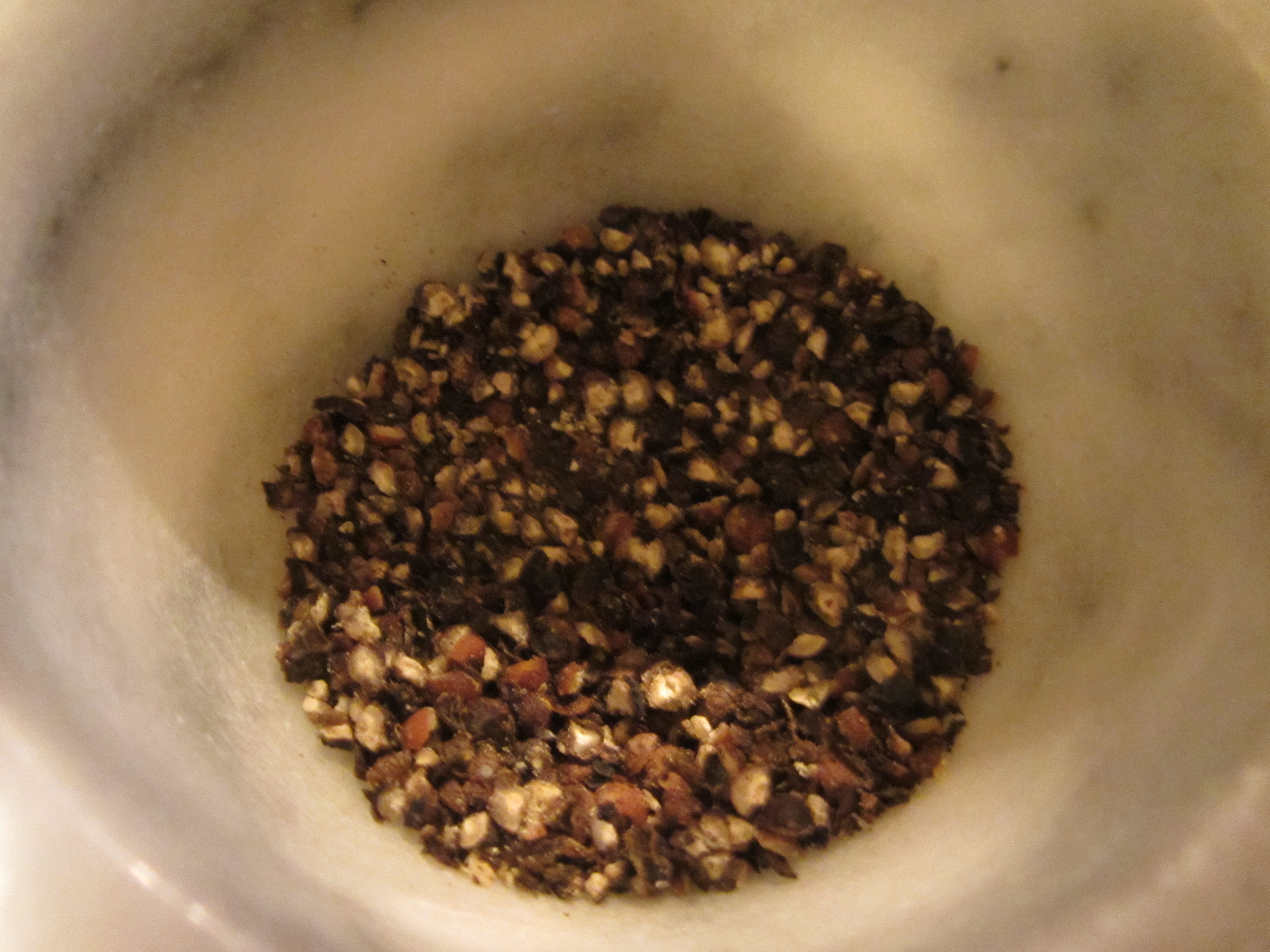
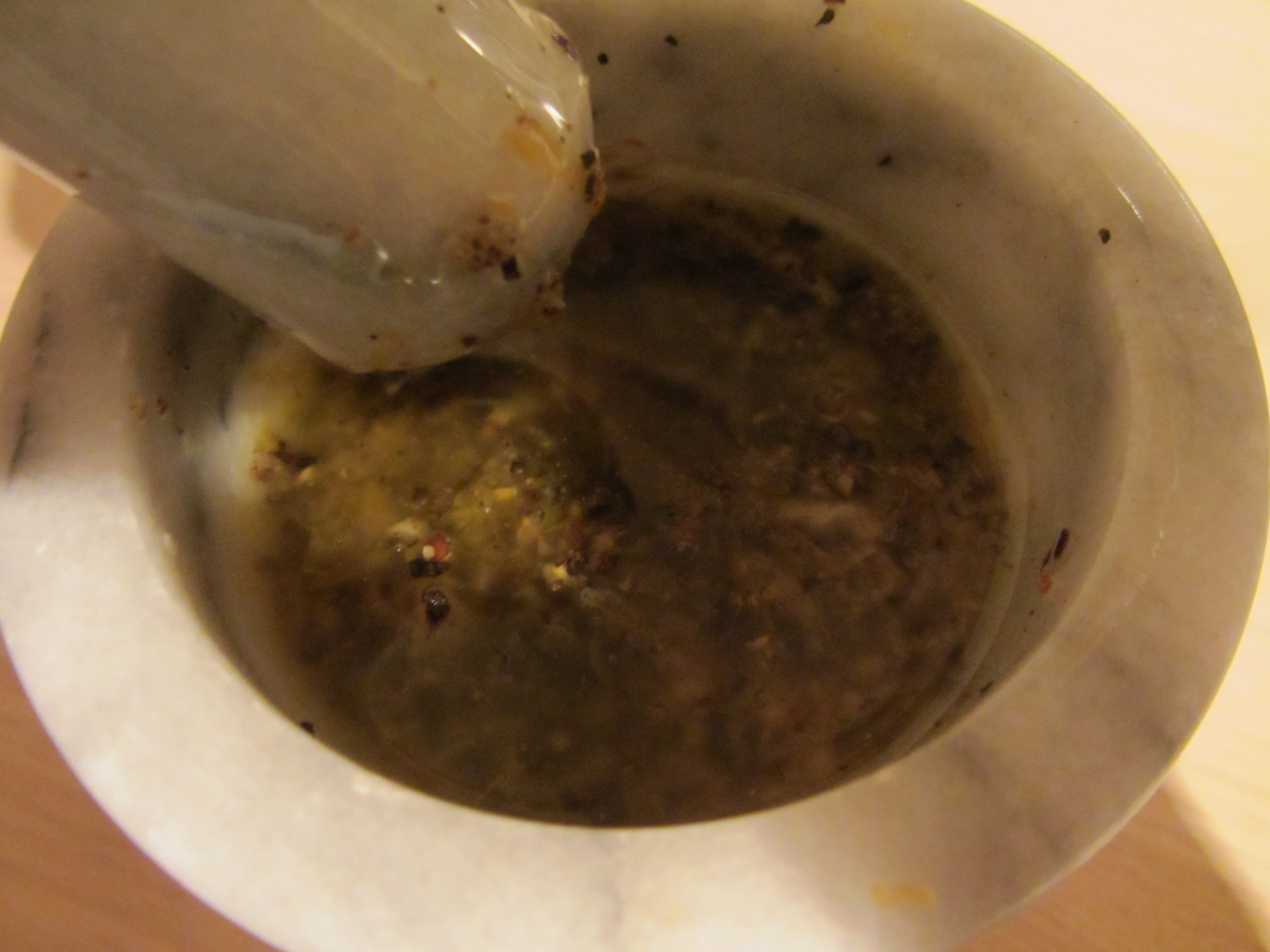
The smallest chicken we could get at our grocery store was five pounds, while Alton’s recipe calls for a three or four pound bird. I made my paste of peppercorns, garlic, salt, lemon zest, and olive oil, and filled my roasting pan with carrots, onions, and celery. Then it was time to face the bird… DUN, DUN, DUNNN!!!

Veggies in the roasting pan.

Veggies in the roasting pan.

6-16-2014 002

Garlic, pepper, lemon, salt, and oil paste.

Garlic, pepper, lemon, salt, and oil paste.

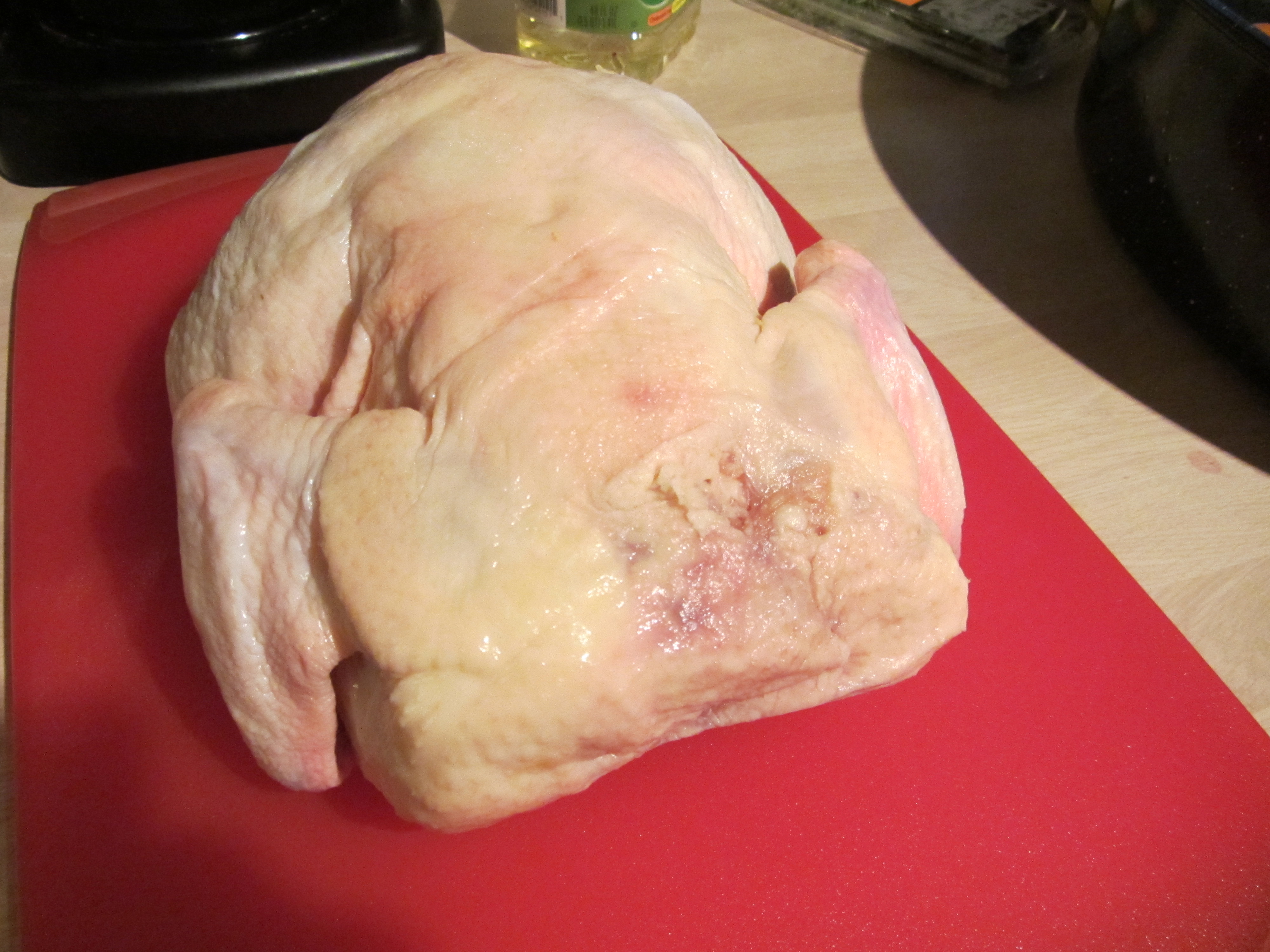
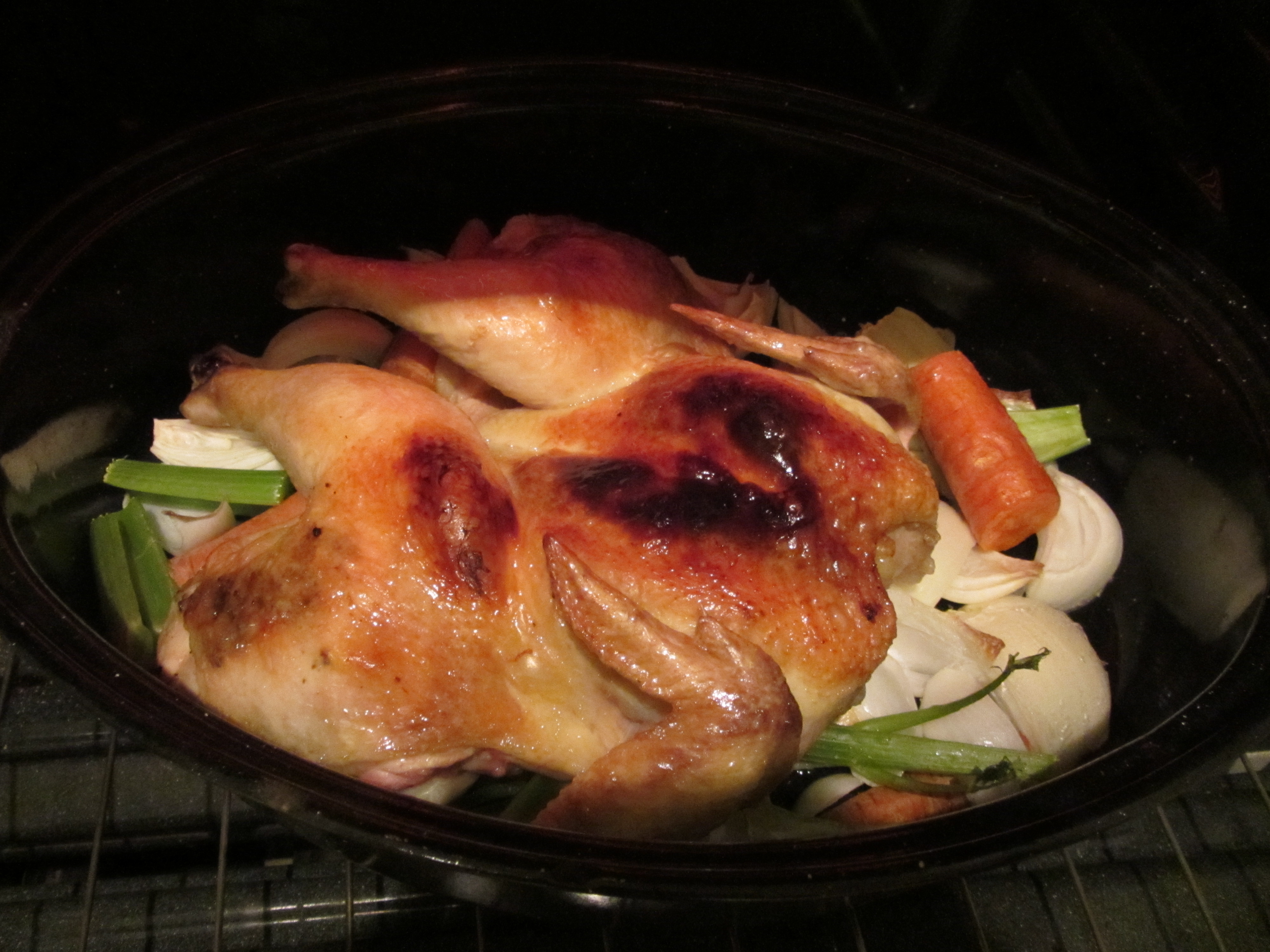
I placed my chicken (I called her “Sally”) on my board and cut down both sides of the back bone. This part was actually pretty easy. The keel bone, however, proved to be harder to remove than it was when Alton did it on the show. I pressed down on her until she was flat, loosened her skin, and spread the paste under her skin. Then I oiled her up and placed her on top of the veggies in the roasting pan.

Sally.

Sally.

Butterflying Sally.

Butterflying Sally.

6-16-2014 008

Into the oven.

Into the oven.

My oven rack was 8 inches from the broiler, as recommended in both the episode and online recipe. This proved to be too close, as Sally’s breasts were getting too dark too quickly. It was fine after lowering her to the very bottom rack.

Ready to flip. Breast got a little too dark.

Ready to flip. Breast got a little too dark.

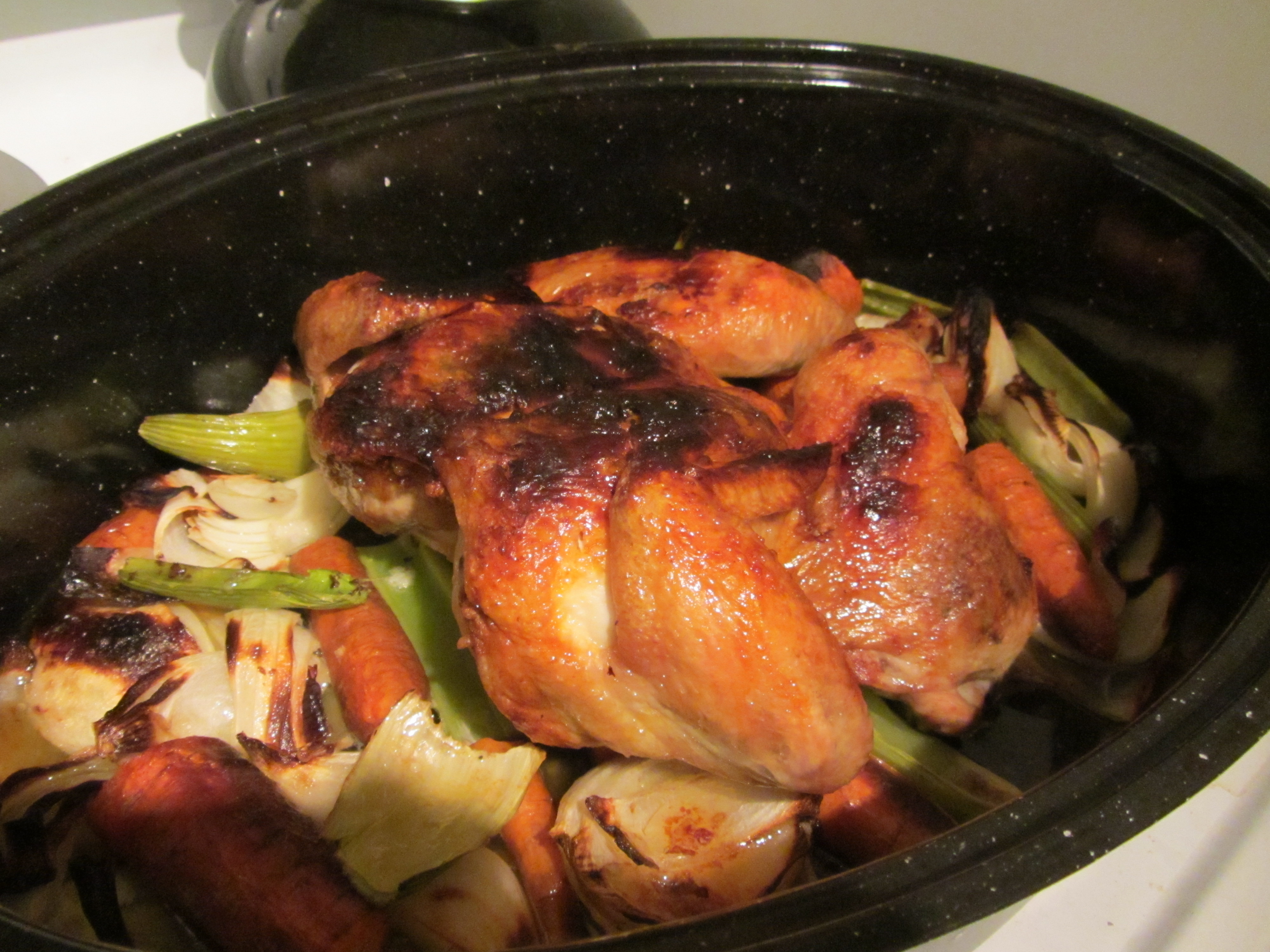
The online recipe tells you to check the bird after 10 minutes of cooking. The episode, on the other hand, tells you to check after 18 minutes. Since my bird was larger, I checked her after 18 minutes, and decided to let ‘er go for another couple minutes before flipping her over. Her derriere took considerably longer also, and she ended up cooking for a total of nearly an hour before she was at 165 degrees.

Ready to eat.

Ready to eat.

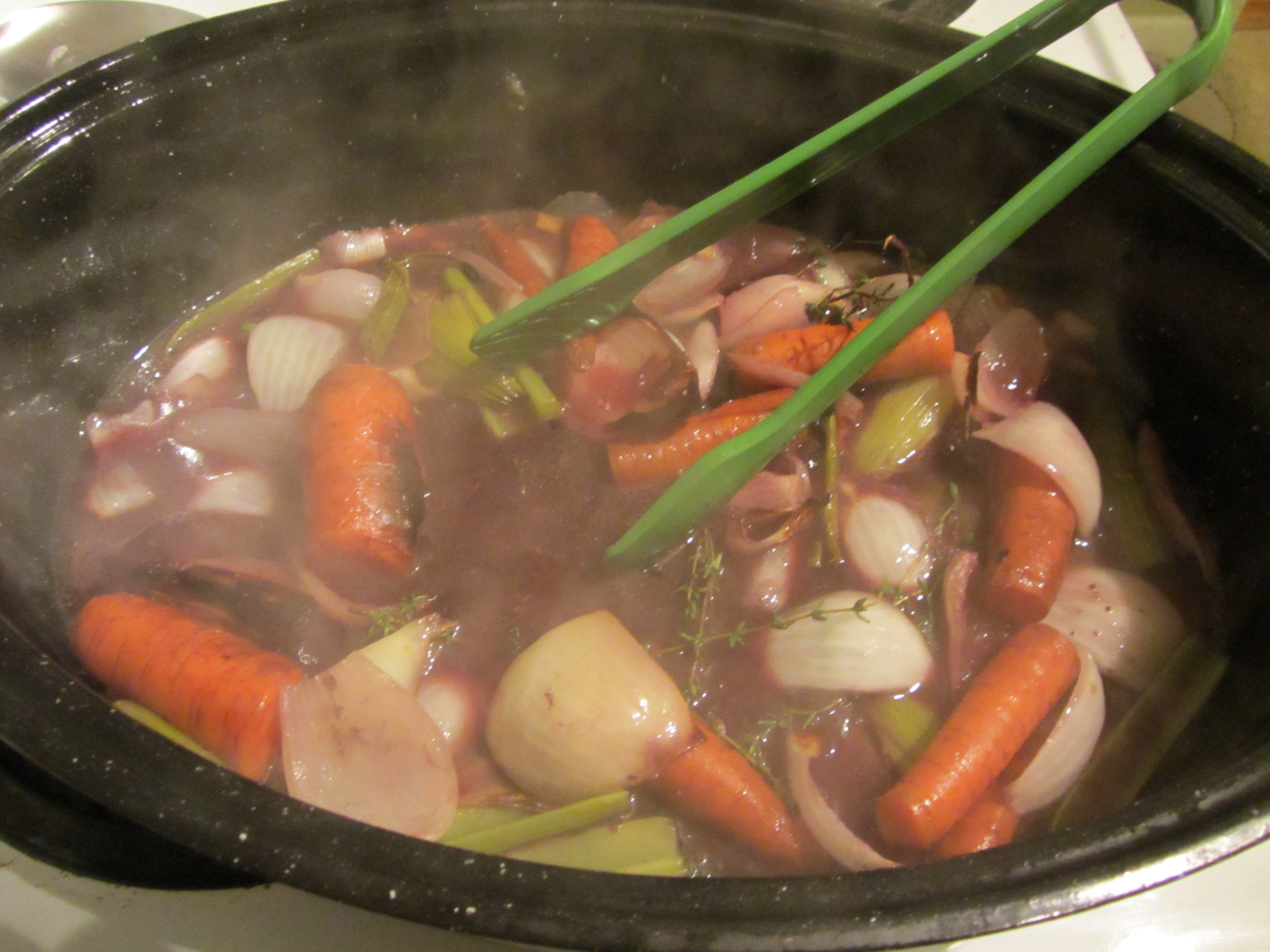
While Sally rested in the shade of a foil-covered bowl, I deglazed the roasting pan and made the jus. I cut Sally into quarters, making incisions to catch the jus, drizzled her with jus, and topped her with a lemon wheel.

Making the jus.

Making the jus.

The final plate.

The final plate.

Ted declared Alton’s chicken to be delicious, and I think it’s safe to say that he is happy I am pursuing this project.

Hail Caesar Salad

I am a salad person, and I love a good Caesar salad. My mom makes a fantastic Caesar salad, and I knew Alton’s recipe from Good Eats was going to have its work cut out for it to rival Mom’s recipe. In both watching the episodes and reading the online recipes from the show, I have learned that subtle differences often exist between how Alton prepares the dishes on the show and the recipes posted online. I choose to follow what Alton does on the show when there are any differences.

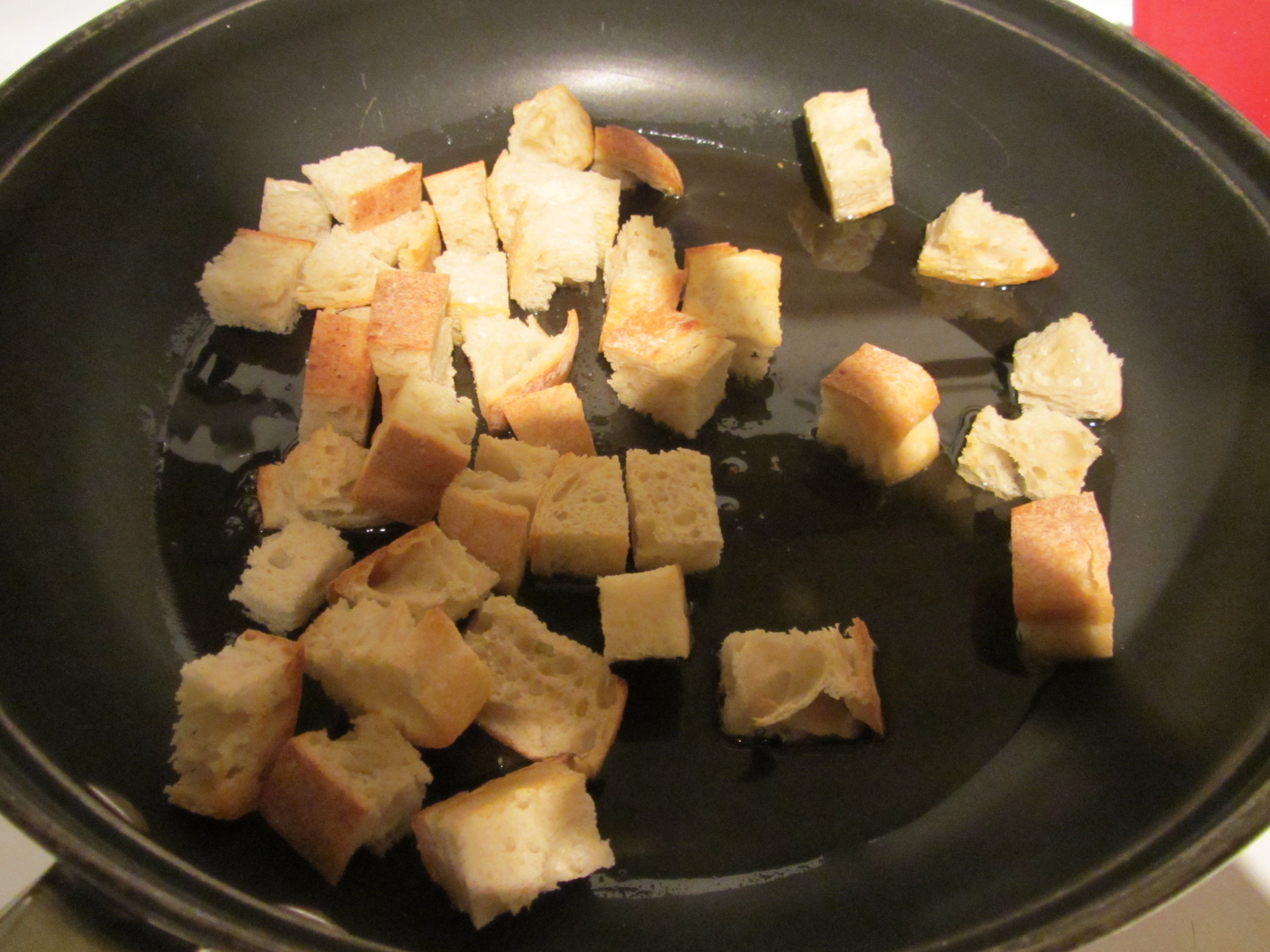
My mom often made homemade croutons when we were growing up, so I am slightly biased when it comes to store-bought versus homemade croutons. Really, there is no comparison. For my croutons in the Caesar, I used a store-bought loaf of Pugliese bread.

Pugliese bread cubes.

Pugliese bread cubes.

It was not day-old bread, but the croutons still managed to dry sufficiently in the oven. Alton was right… tossing the crispy bread cubes with the hot garlic-flavored olive oil definitely made my mouth water!

Garlic, olive oil, and salt.

Garlic, olive oil, and salt.

Hot garlic oil.

Hot garlic oil.

Croutons tossed in garlic oil.

Croutons tossed in garlic oil.

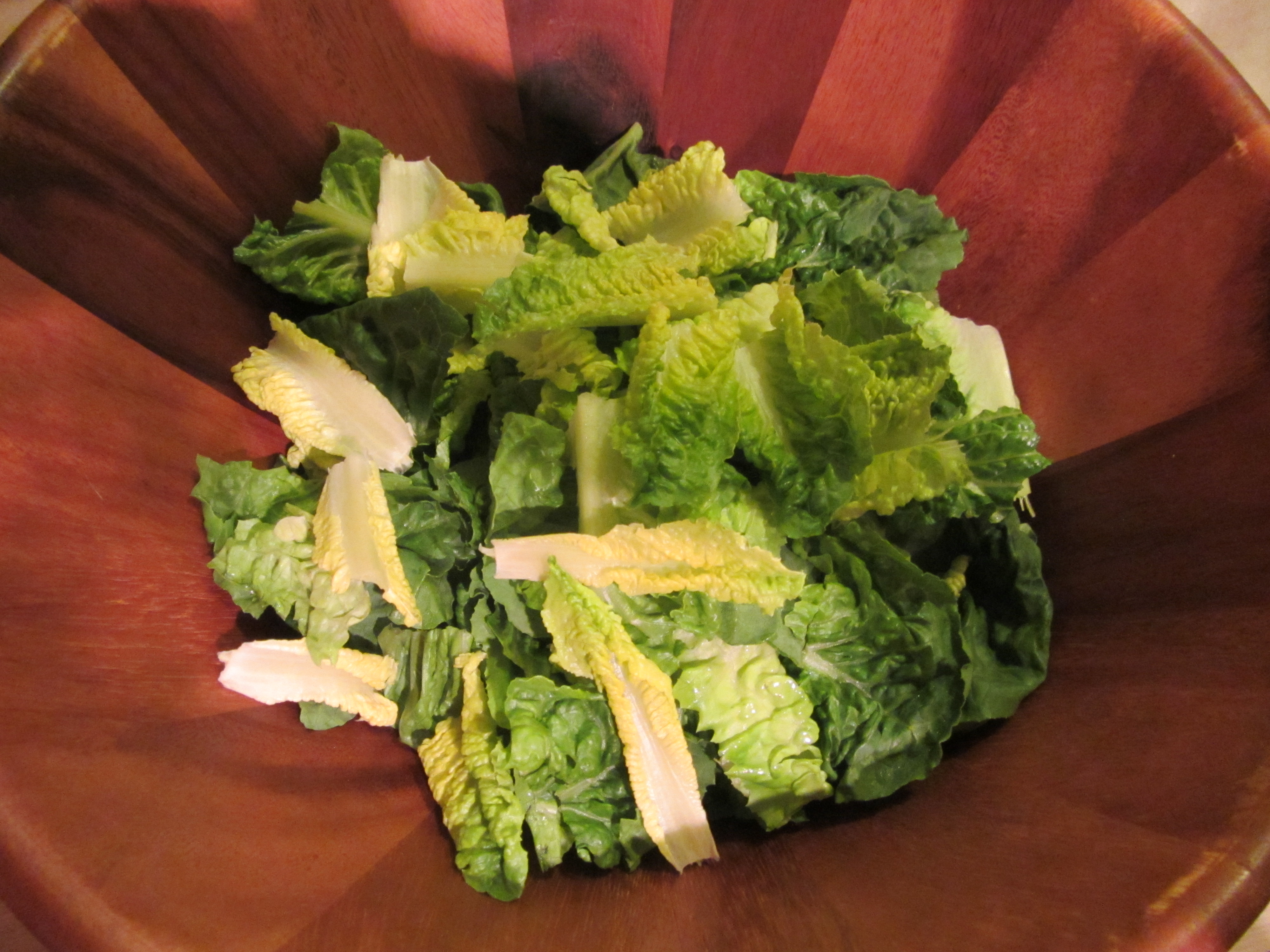
I used two hearts of Romaine that were pre-washed and bagged, as our salad spinner (the same one Alton recommends on Good Eats) died in a tragic accident on a hot stove years ago. Note:  Do not place your clean plastic salad spinner on the stove to air dry without checking the burners first.

Hearts of Romaine.

Hearts of Romaine.

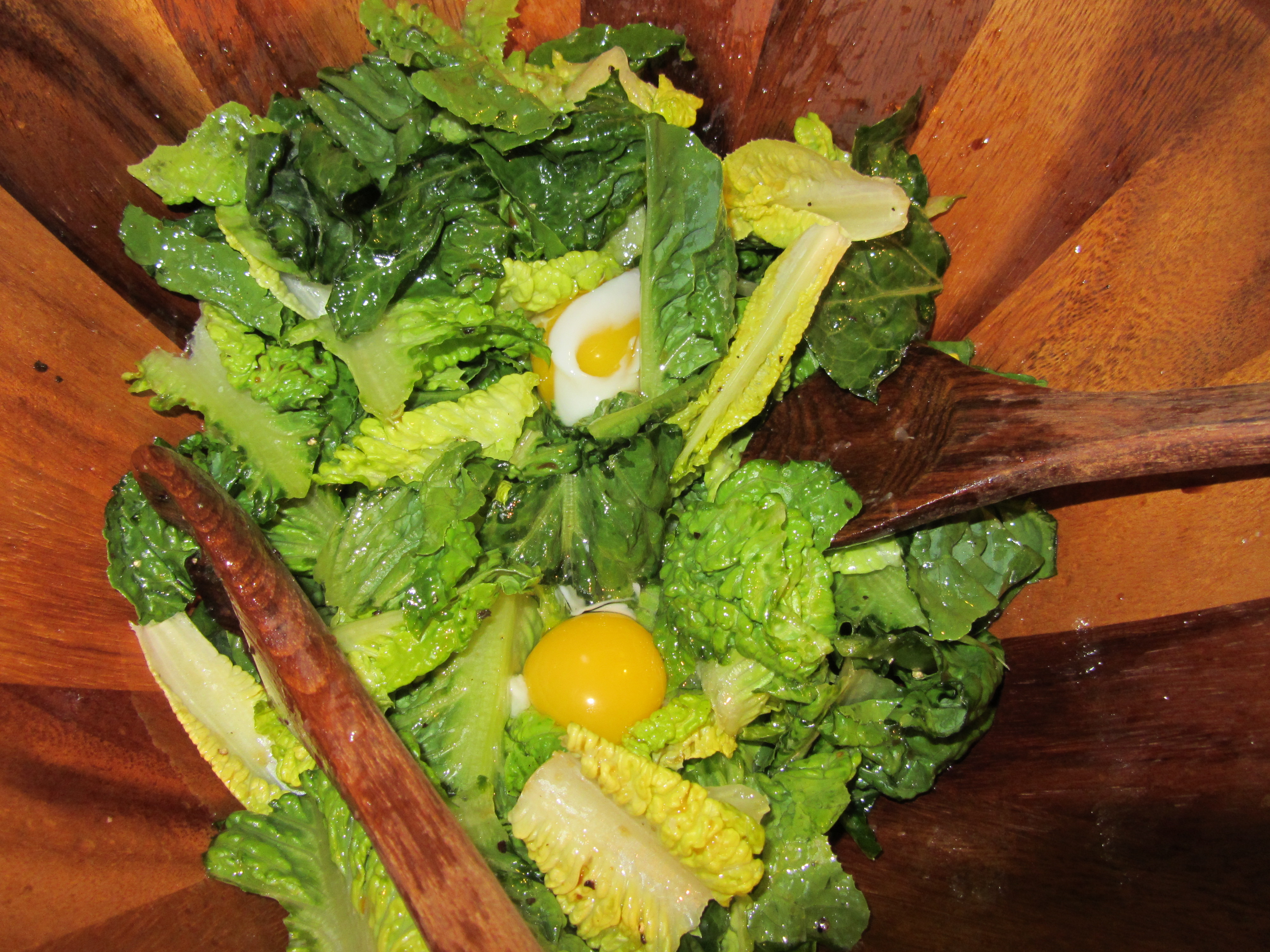
Following Alton’s recipe, I cooked my eggs for one minute, and gradually added the dressing ingredients to my lettuce, tossing after each addition. I did like the flavor of the Worcestershire sauce in the dressing, though I’ll admit I have also had Caesar salads with anchovies that I have enjoyed. Adding the barely cooked eggs to the dressing made a creamy dressing that thoroughly coated the greens and paired nicely with the crunchy garlic croutons.

Gradually adding dressing ingredients.

Gradually adding dressing ingredients.

Worcestershire and lemon juice.

Worcestershire and lemon juice.

Adding the one-minute eggs.

Adding the one-minute eggs.

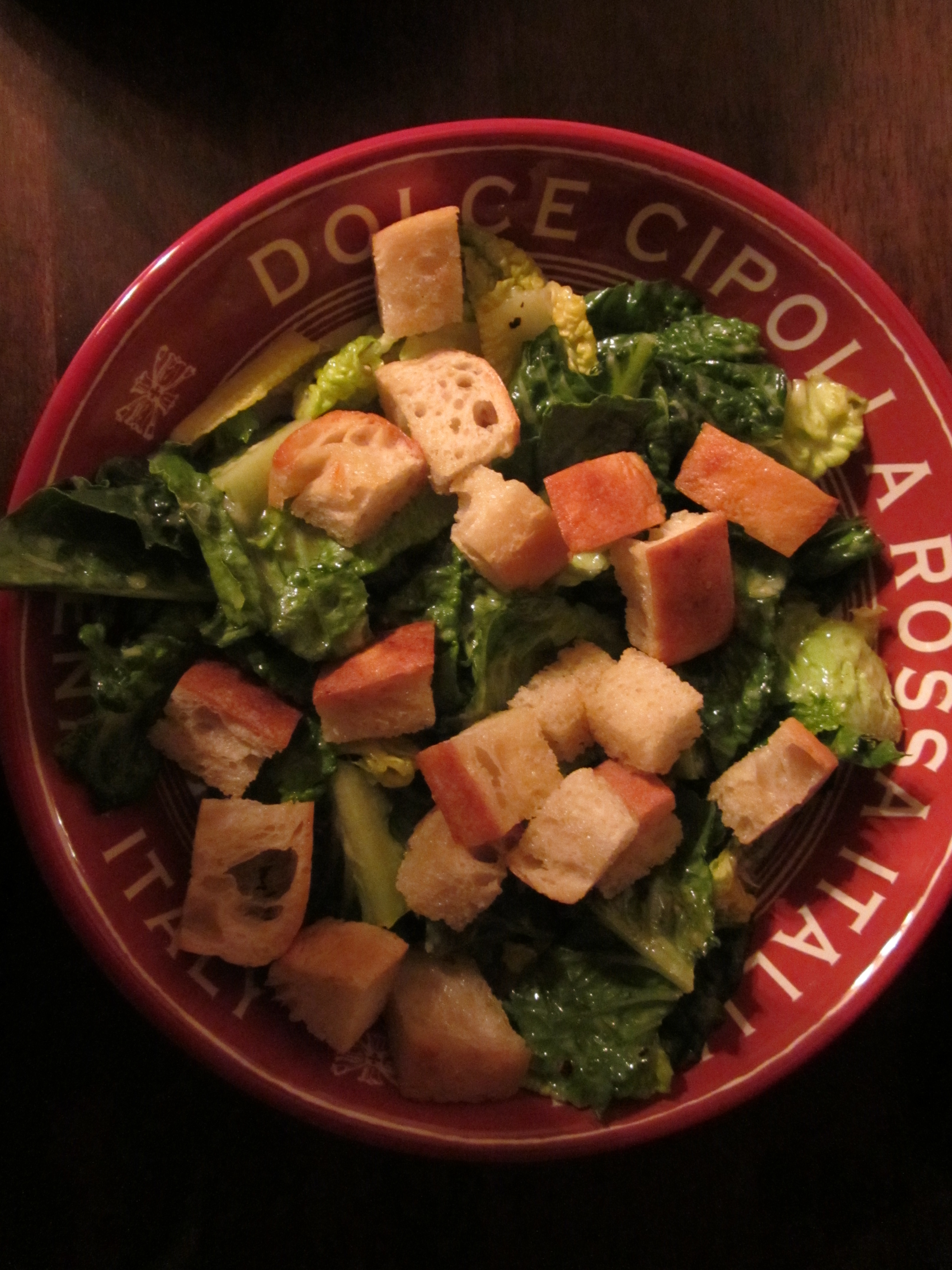
The final Caesar.

The final Caesar.

All in all, I thought this was a very good Caesar salad. Was it as good as Mom’s? Sorry Alton, but I think hers still wins.

Veni Vedi Vinaigrette

I tend to like my salad dressings on the savory, tangy, acidic side. Fruity, sweet salad dressings just usually are not my favorites. Often, I just drizzle olive oil, vinegar, salt, and pepper straight onto my greens. Alton’s vinaigrette recipe reminds me somewhat of my grandmother’s spinach salad dressing, so I knew I would like this salad dressing before I even tried it. Per Alton’s instructions, I first combined my vinegar, mustard, garlic, salt, and pepper.

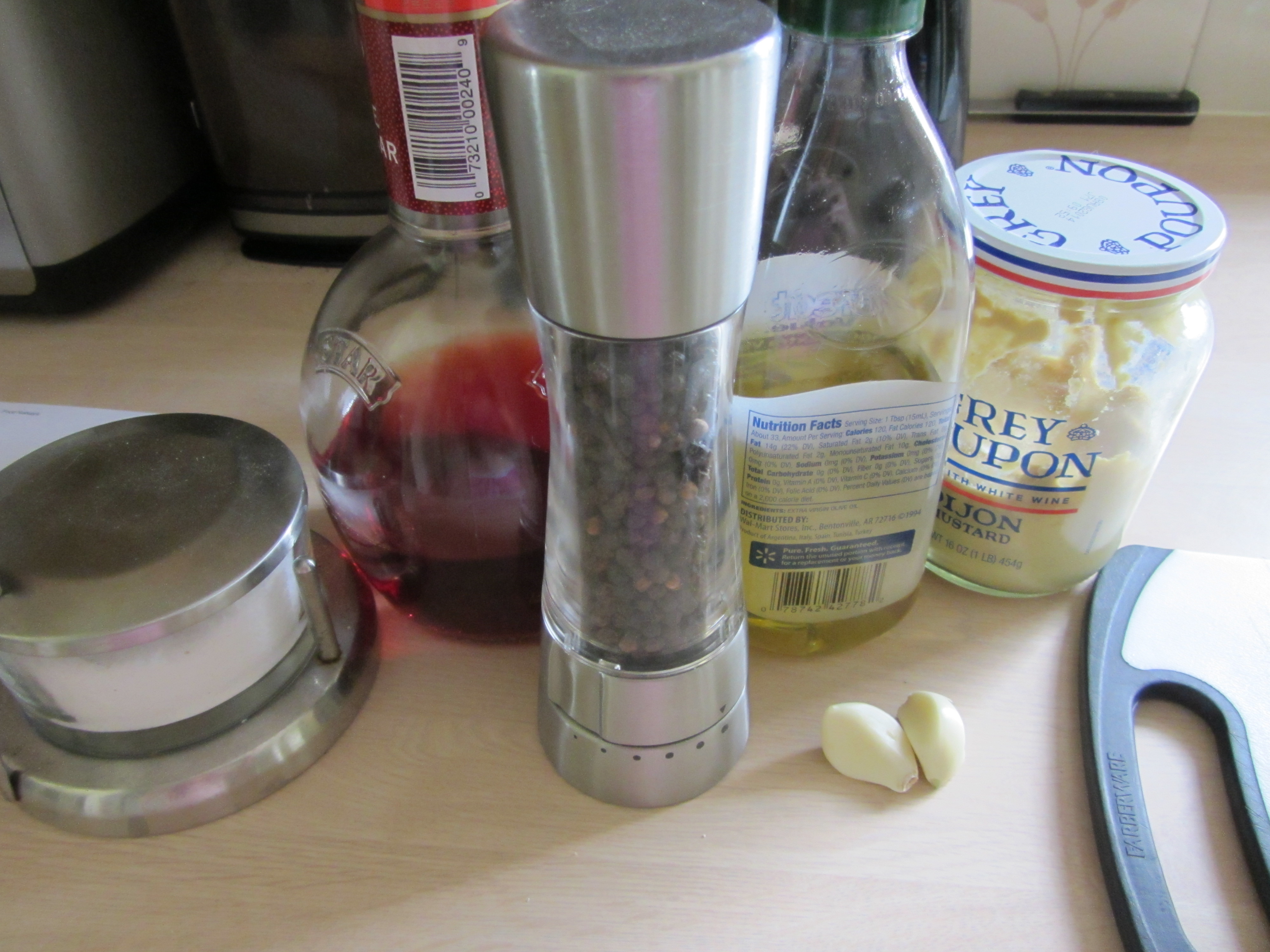
Gathering vinaigrette ingredients.

Gathering vinaigrette ingredients.

Combination of vinegar, mustard, garlic, salt, and pepper.

Combination of vinegar, mustard, garlic, salt, and pepper.

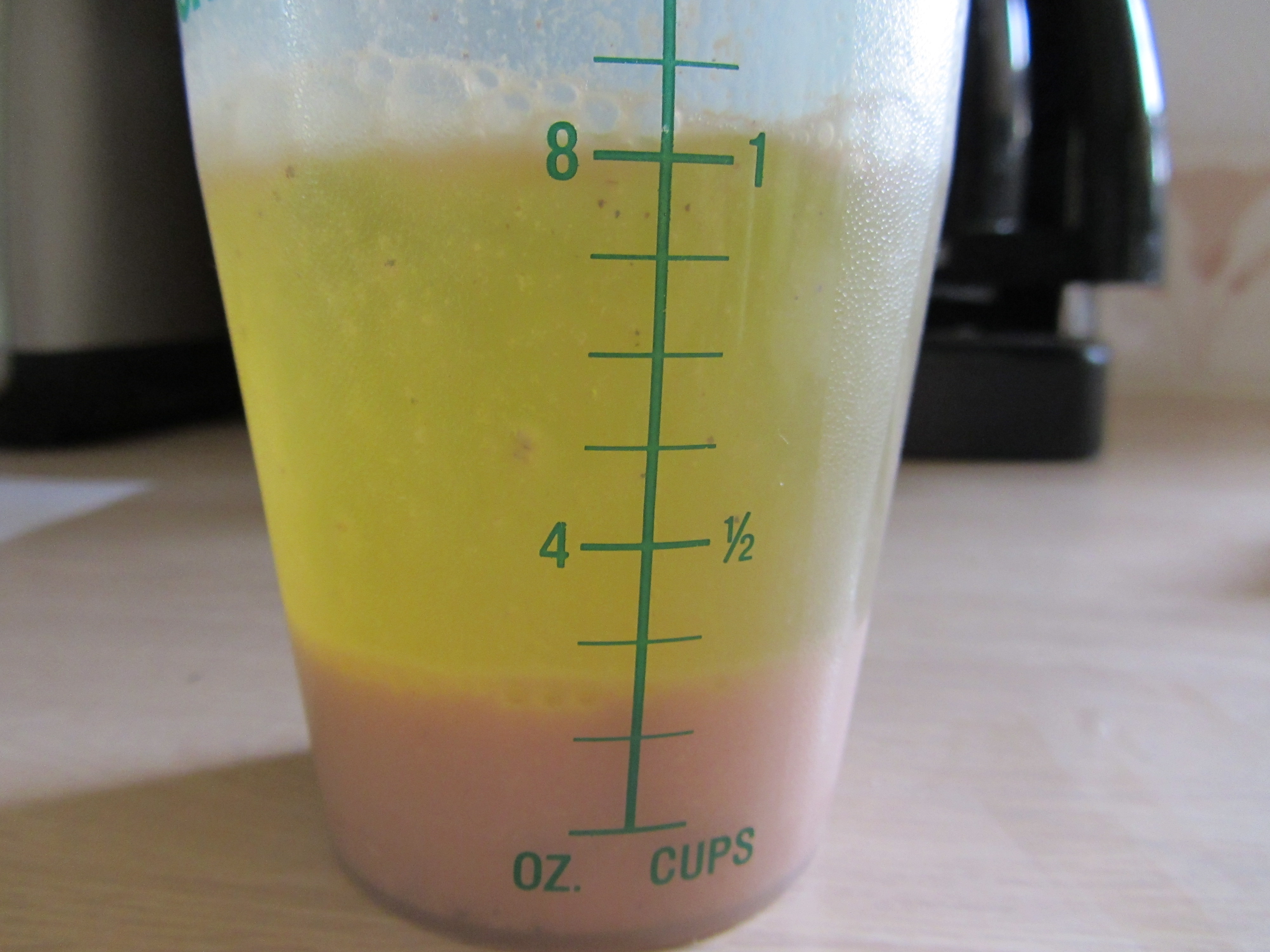
I then added my olive oil and shook the dressing until it was well emulsified. I left mine at room temperature for a few hours before having it on a lunch salad I made with tomato, marinated artichoke hearts, cucumber, kalamata olives, walnuts, avocado, and fresh parmesan.

Olive oil added to other ingredients.

Olive oil added to other ingredients.

Final emulsified vinaigrette.

Final emulsified vinaigrette.

The result was a bright, acidic, tangy dressing that would brighten up any plate of greens, and you can throw it together in a matter of minutes. Why buy salad dressing when you can make something so much better at home?

Eggs Over Easy

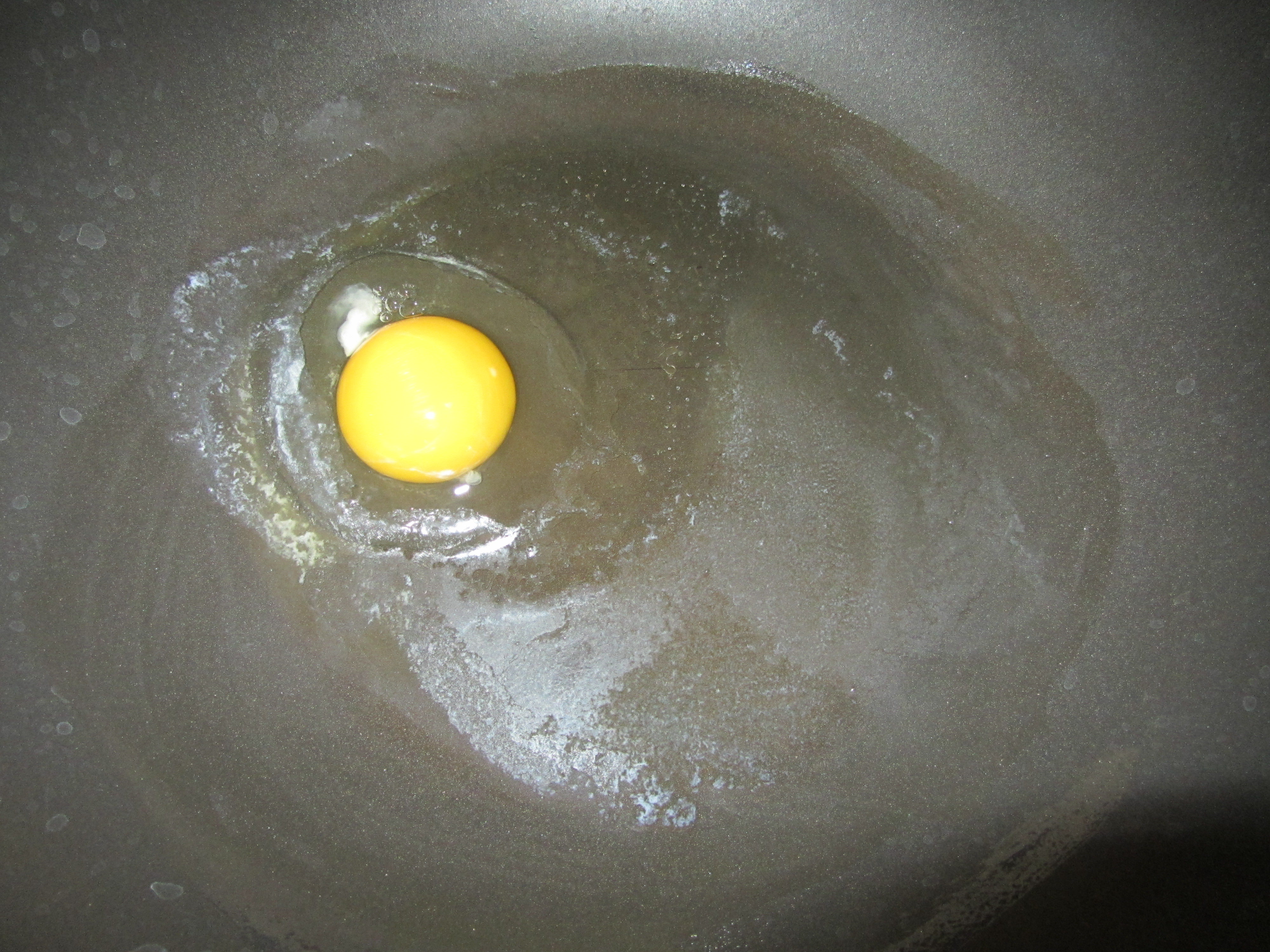
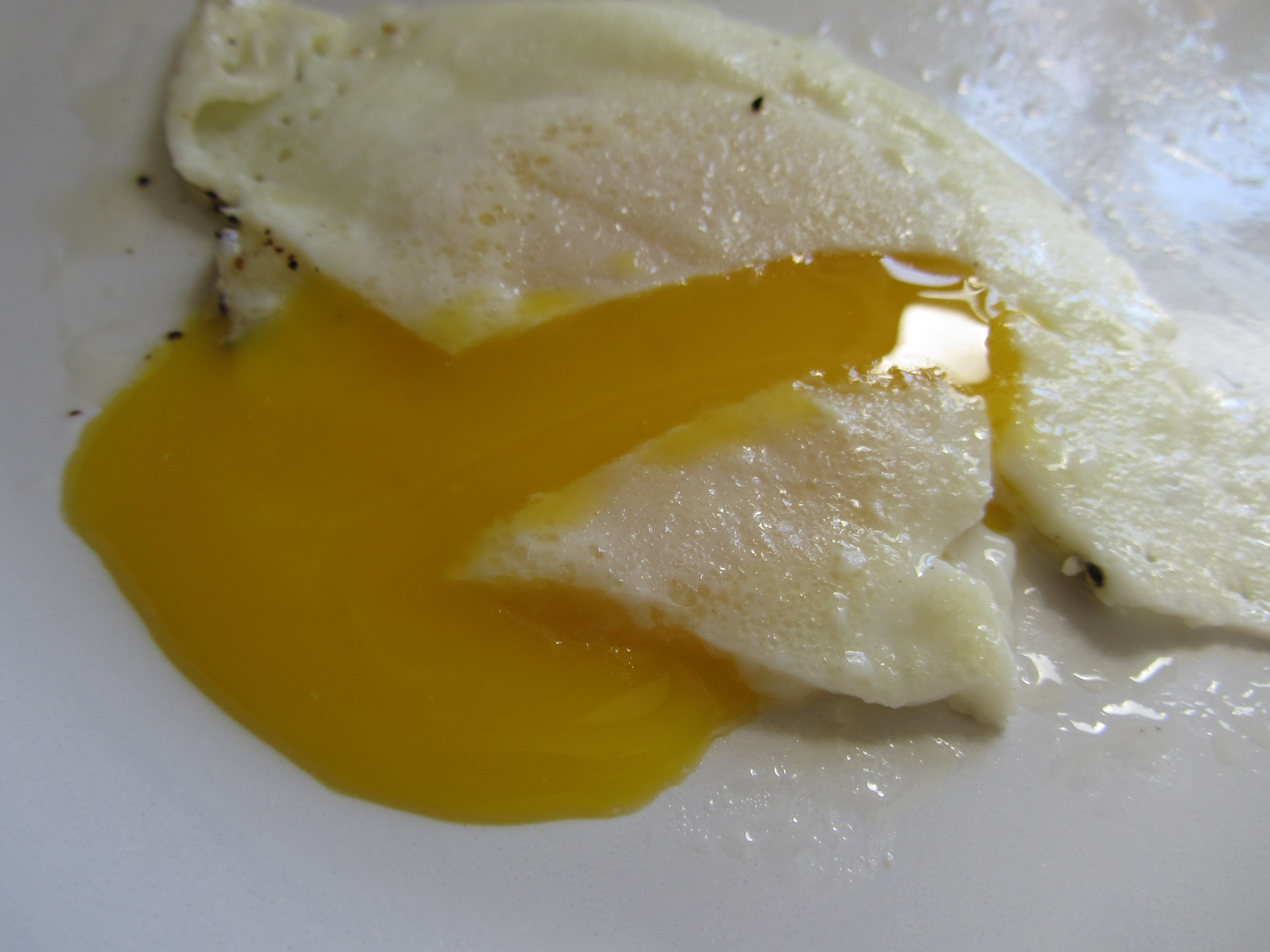
The first recipe in the third episode is for over easy eggs. This recipe can be found here. As a frequent egg eater, I have cooked eggs in numerous ways over the years. Over easy eggs are, however, a type of egg that I do not frequently cook. We do not have a small non-stick skillet in our kitchen repertoire, so I utilized a large non-stick pan we have that has rounded, rather than squared-off, edges. This kept the contents of the pan in the center of the bottom of the skillet. After melting my butter, I added a single egg (rather than two eggs, as in the episode and recipe).6-10-2014 111 6-10-2014 112 As soon as my egg white was opaque, I flipped it over easily and magnificently with a simple shake and jiggle of the pan.6-10-2014 113 Oh, wait… that part didn’t happen. Upon realizing that it was going to be impossible to gracefully and successfully flip my egg in my large pan, I cheated and flipped it with a spatula.6-10-2014 114 Once flipped, I counted to 10, flipped the egg, again, and it was ready to eat. The result was a perfect over easy egg, with a cooked, but not rubbery white, and an intact yolk that just perfectly leaked when I cut into it with my fork.6-10-2014 116 I will use this method again for cooking over easy eggs. Now, I just need to get a small skillet with which I can master the toss.

Scrambled Eggs Unscrambled

Though considered boring by some egg lovers, I adore a good plate of scrambled eggs. In fact, they are usually my go-to. The unfortunate thing is that scrambled eggs are so rarely cooked correctly. I have, in my many years of scrambling eggs, become pretty consistently good at cooking them. Many breakfast joints serve scrambled eggs that are rubbery, chewy, have an artificial shade of yellow, and are often a single, flat mass. Perhaps that’s why they get such a bad rap. So, take note… if you follow Alton’s recipe from Good Eats, you will have a proper plate of delicious scrambled eggs.

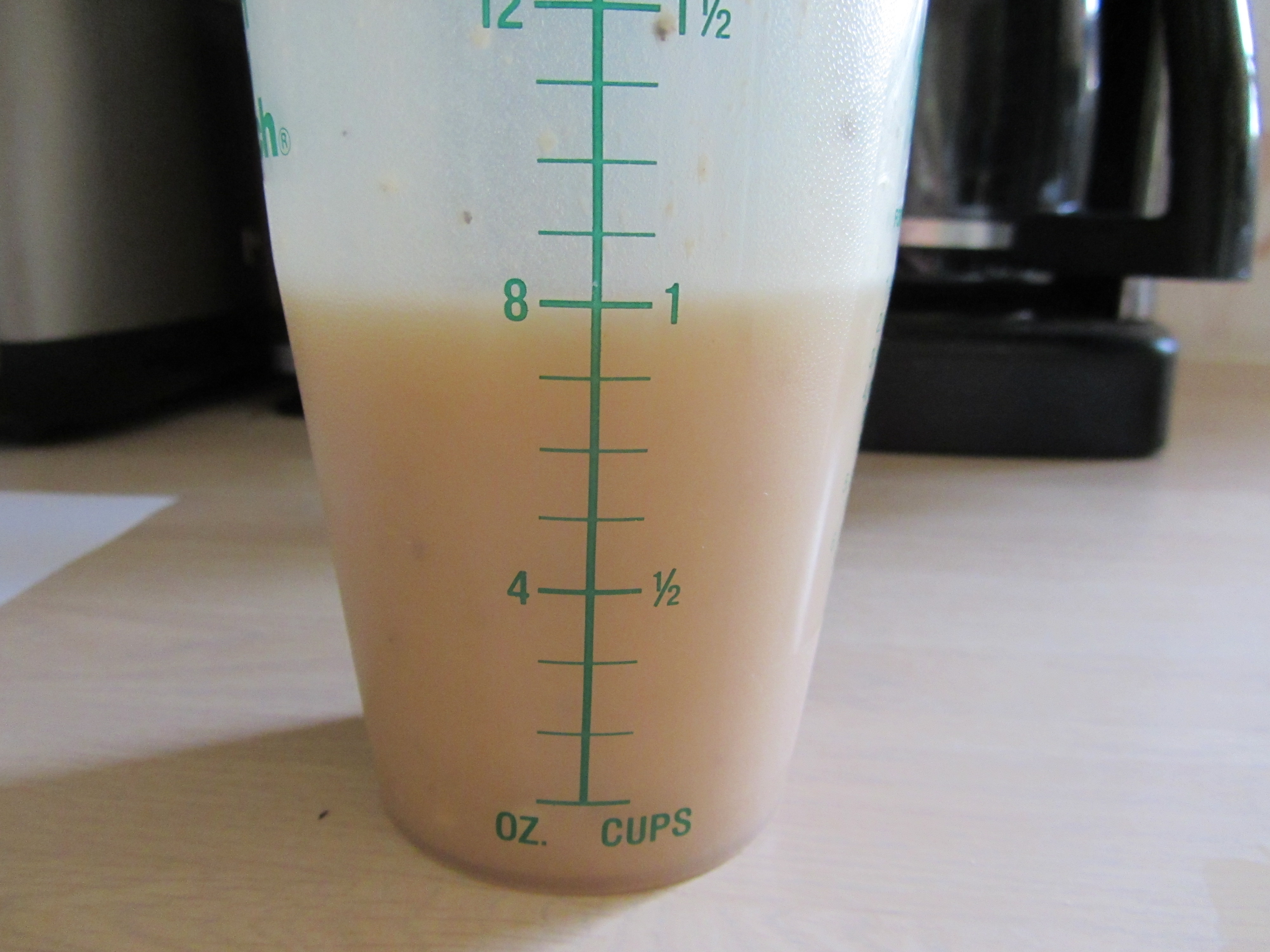
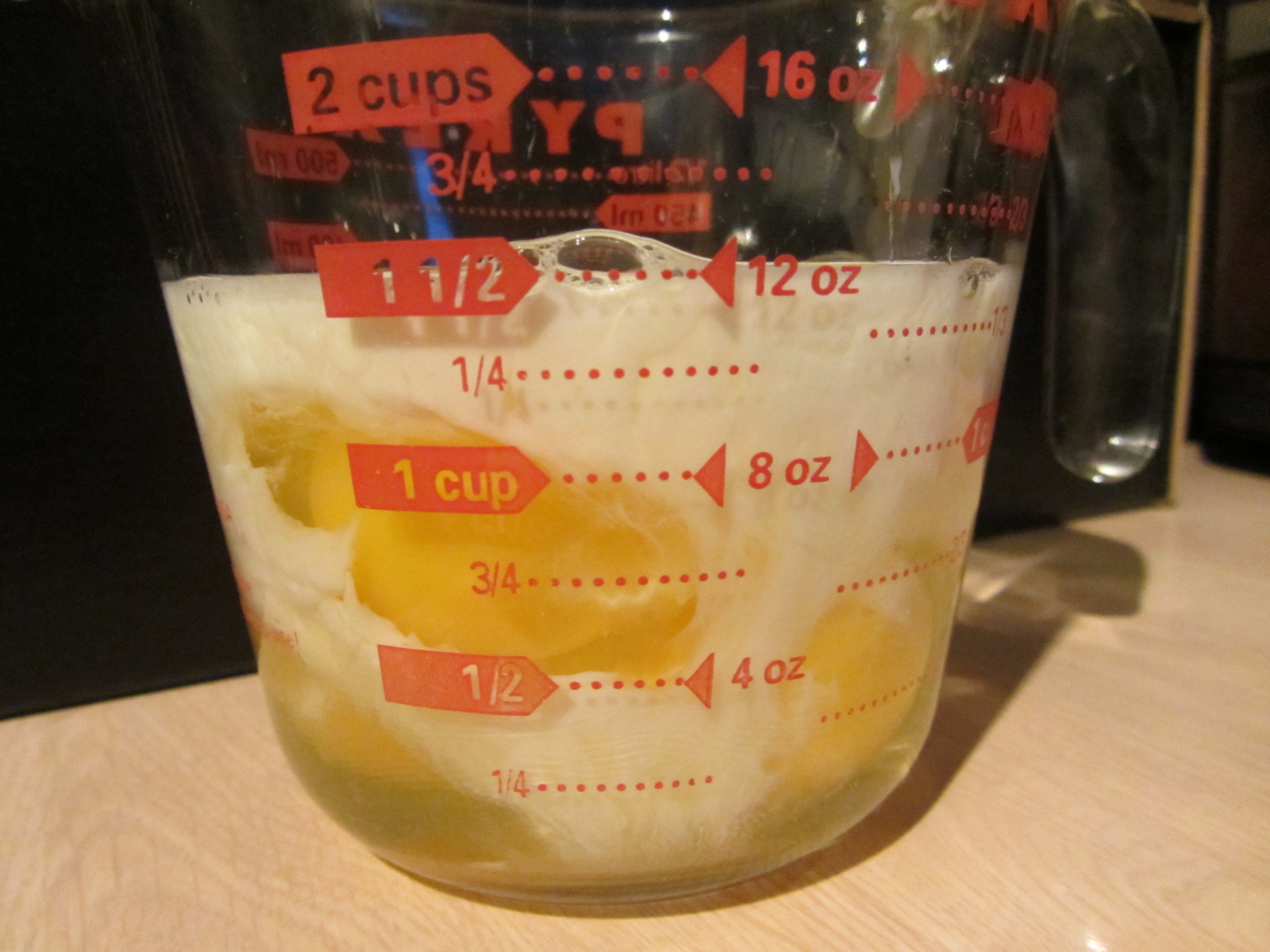
Eggs with added whole milk.

Eggs with added whole milk.

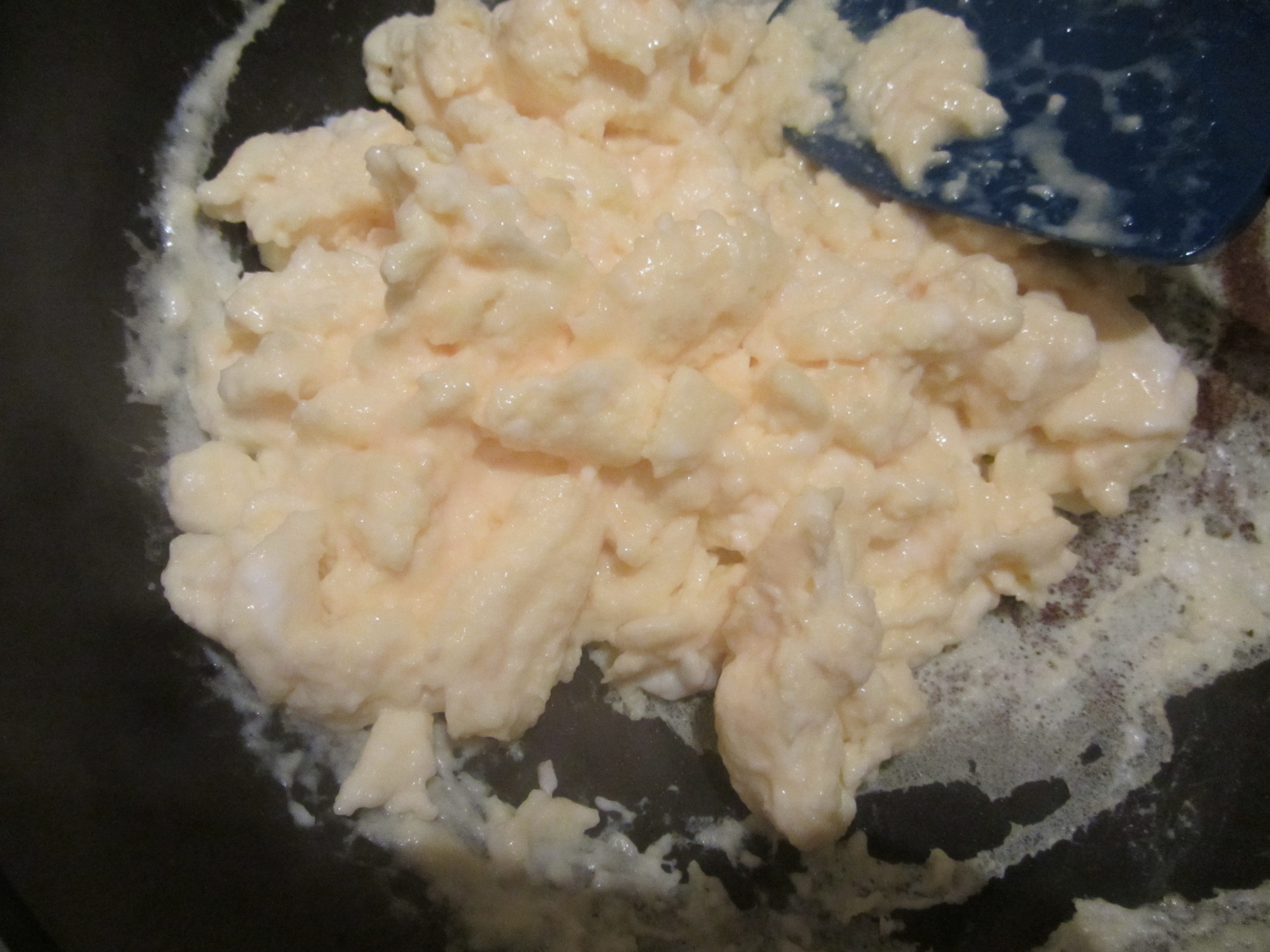
The tricks with scrambled eggs are to start them over low heat, only switching to high heat once the curds begin to form, and as soon as there is no liquid left in the pan, remove them from the heat.

Eggs over low heat.

Eggs over low heat.

Curds beginning to form.

Curds beginning to form.

Time to remove from the burner.

Time to remove from the burner.

As Alton says in the episode, “If the eggs look done in the pan, they’ll be overdone on the plate.” I thought this recipe produced scrambled eggs that rivaled all of the others I have made successfully in the past. I added some grated sharp white cheddar cheese and hot sauce to mine, and I was good to go.

A perfect plate of scrambled eggs, topped with sharp white cheddar.

A perfect plate of scrambled eggs, topped with sharp white cheddar.

Lemon Curd

The final recipe in the third episode of Good Eats is for lemon curd. I had never before made lemon curd, so I was excited to make this one. Plus, just recently I had a delicious dessert at a restaurant that consisted of lemon curd, raspberries, and crumbled meringue. As far as desserts go, lemon curd is a quick and easy thing to make, using only a few ingredients. Be prepared, though, to whisk for several minutes. While the online recipe calls for the juice of four lemons, I only needed to juice two lemons to get the desired 1/3 cup of juice.

Zest

Zest

Lemon juice

Lemon juice

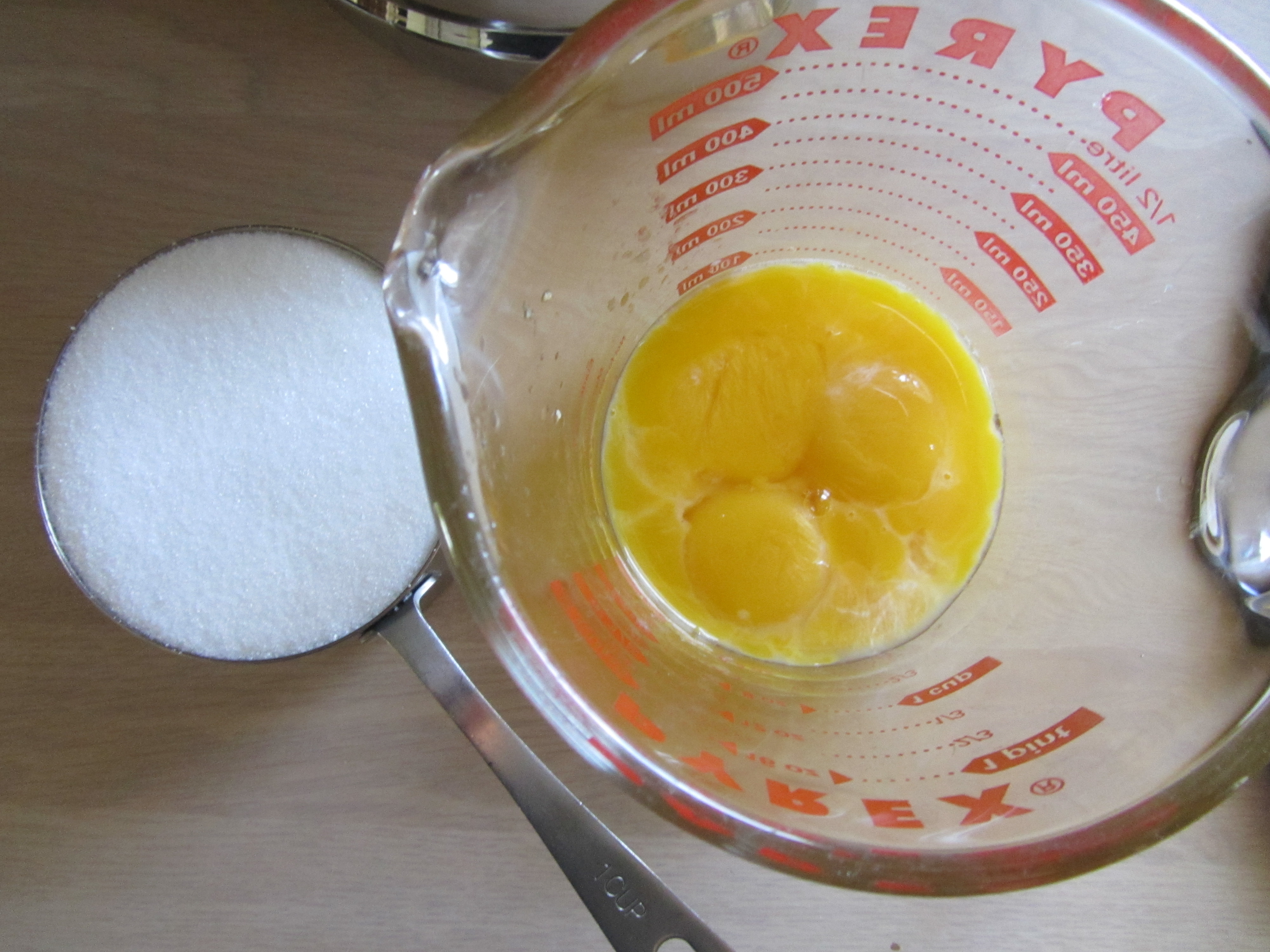
Eggs and sugar.

Eggs and sugar.

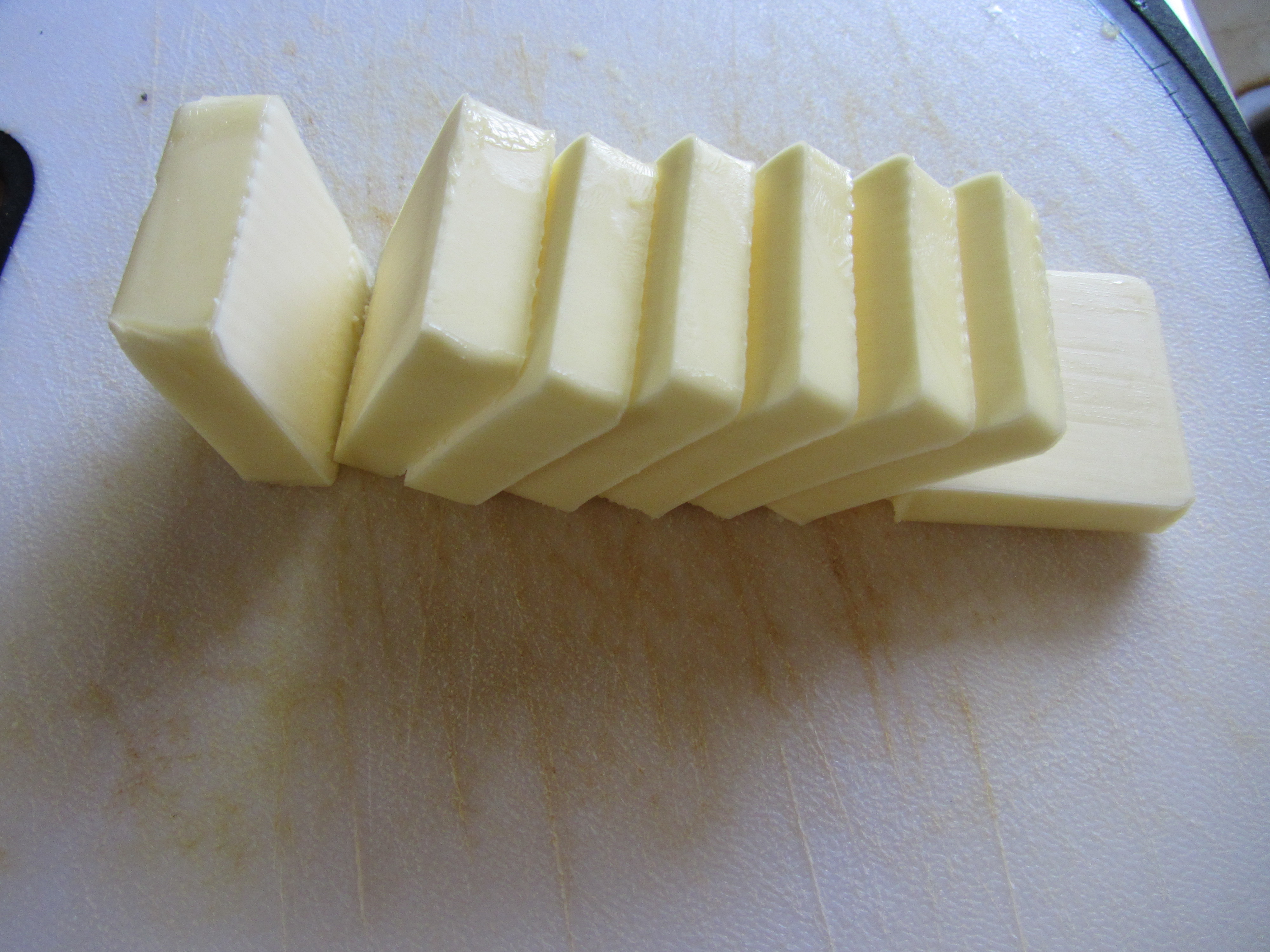
Butter, of course!

Butter, of course!

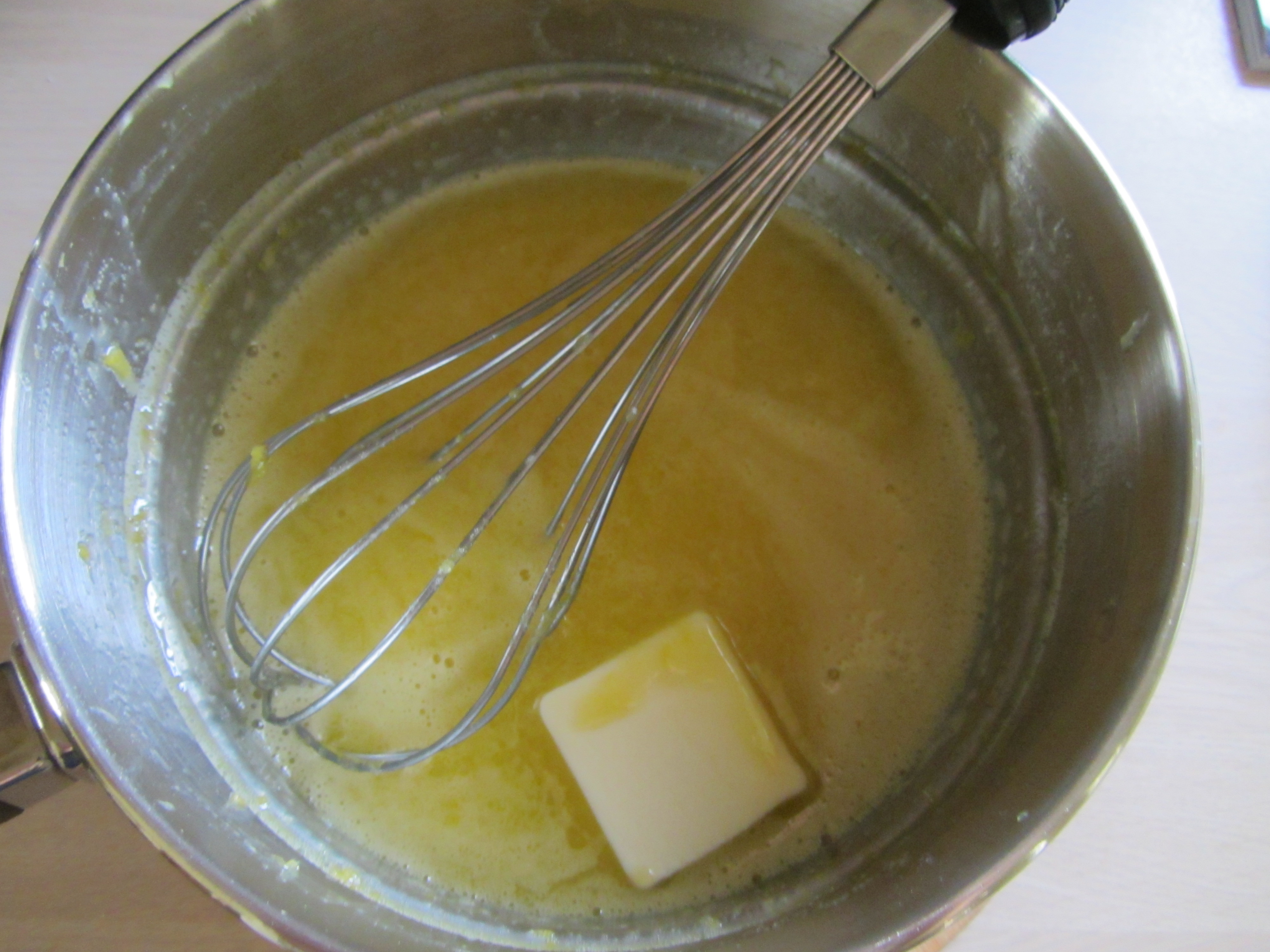
I used my double boiler to make my curd, whisking over low heat. The online recipe says it takes about eight minutes for the curd to be thick enough to remove from the heat. I, however, found that I had to cook my curd for several additional minutes, and truthfully, I probably should have cooked it even a little bit longer to get a bit thicker consistency.

Lemon curd in double boiler.

Lemon curd in double boiler.

Whisking in the butter, pat by pat.

Whisking in the butter, pat by pat.

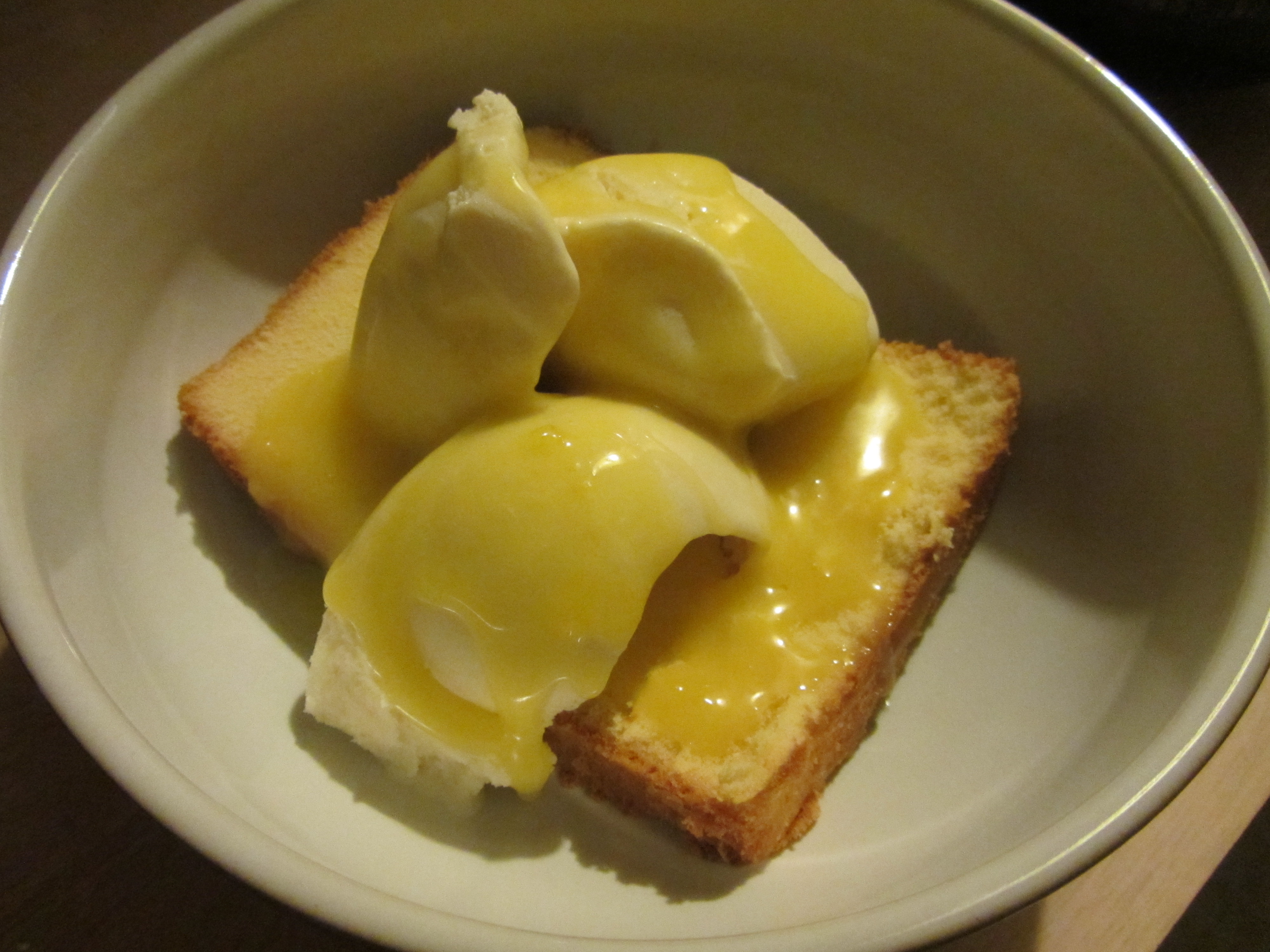
Though it was a little bit thinner than I would have liked, the flavor of the curd was excellent. It was a vibrant shade of yellow, and had a great balance of sweetness and lemon tang. I described it as “bright,” and it was a perfect summer dessert. We ate it over pound cake (store bought, unfortunately) with good vanilla ice cream, and I had some the following morning over raspberries.

Finished lemon curd.

Finished lemon curd.

Pound cake with vanilla ice cream and lemon curd.

Pound cake with vanilla ice cream and lemon curd.

With some pound cake, ice cream, berries, and lemon curd still in our refrigerator, it might be time to get some dessert!
The Baked Potato

Following the success of my trial of the first episode, I continued my foray into Good Eats land with the recipes featured in the second episode about potatoes. Next up was the humble baked potato, which, by the way, I paired with the steaks I made from the first episode. The first time I attempted to make Alton’s baked potatoes (recipe here), I was in the process of getting everything ready to go when I discovered we had run out of Kosher salt. This NEVER happens at our house, but, of course, it had to happen on the very first day of my project. If it had been early in the evening, I would have simply run to the store for more salt, but it had been a busy weekend day and we were already on schedule for a very late dinner. Alton would, I presume, be happy to hear that I did not simply substitute other salt, but rather I postponed the commencement of my project until the following day. It is comical now, but at that time, I viewed it as some cosmic sign that my project was perhaps not meant to be.

The following day, I prepared baked potatoes per the Good Eats method, after, of course, watching the episode. Prior to baking these potatoes, I had always made my baked potatoes by wrapping them in foil and baking them in the oven. Alton’s method, by contrast, involves coating the potatoes with oil and Kosher salt,

Potato coated with oil and Kosher salt

Potato coated with oil and Kosher salt

and then baking them directly on the oven rack with no foil. It is wise to put a baking sheet on the rack below the potatoes, as they do drip while they bake. My husband and I were both happy with the resulting potatoes, which had crispy, salty skins.

Baked potato with crispy, salty skin.

Baked potato with crispy, salty skin.

Baked potato with butter, salt, and pepper.

Baked potato with butter, salt, and pepper.

Mashers

Continuing on with the potato recipes in the second episode, next up were the mashed potatoes. Mashed potatoes are not something we eat regularly, but rather tend to be reserved for holidays. Why? I don’t know, but perhaps it’s because they strike me as a rich, heavy dish fit for gluttonous holidays. I did go through a phase a few years ago when I couldn’t stand to look at mashed potatoes, but that was because I had worked as a food scientist on a mashed potato project that saw me tasting/modifying mashed potatoes all day at work. Trust me, you can get burnt out on mashed potatoes pretty quickly. After a year-long hiatus from mashed potatoes, I can say that I do enjoy them again, though they’ll probably never again be something I want to eat on a regular basis.

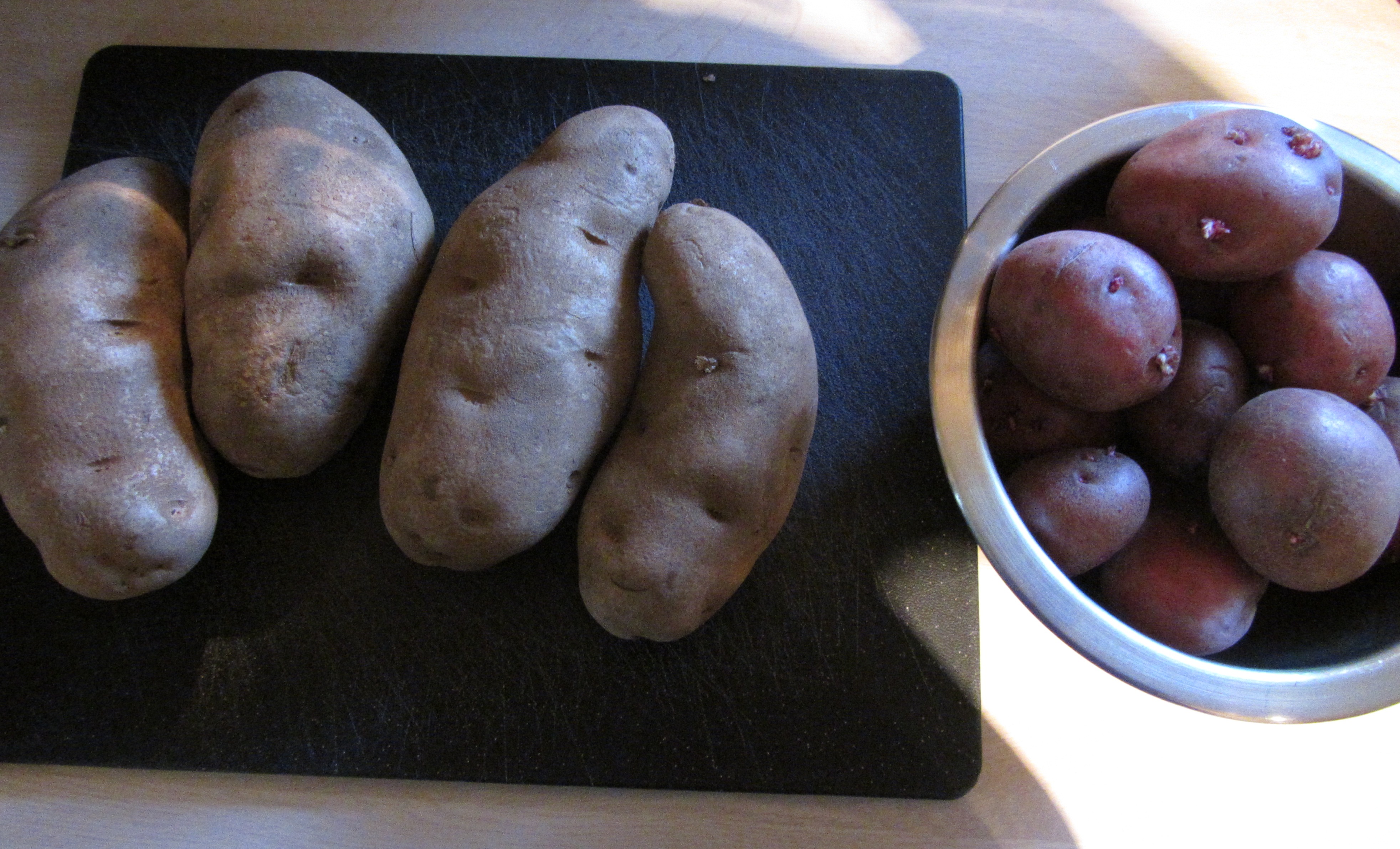
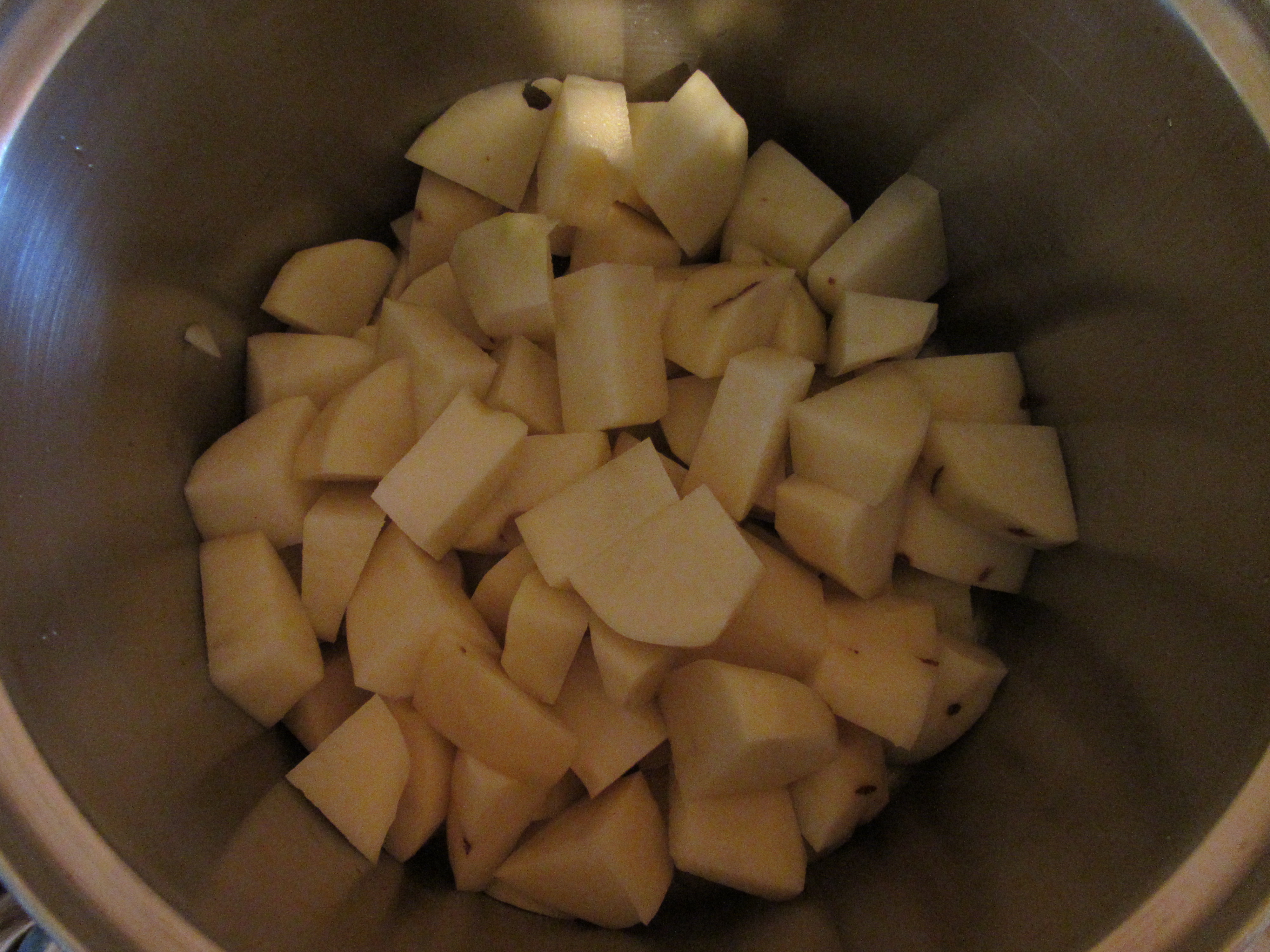
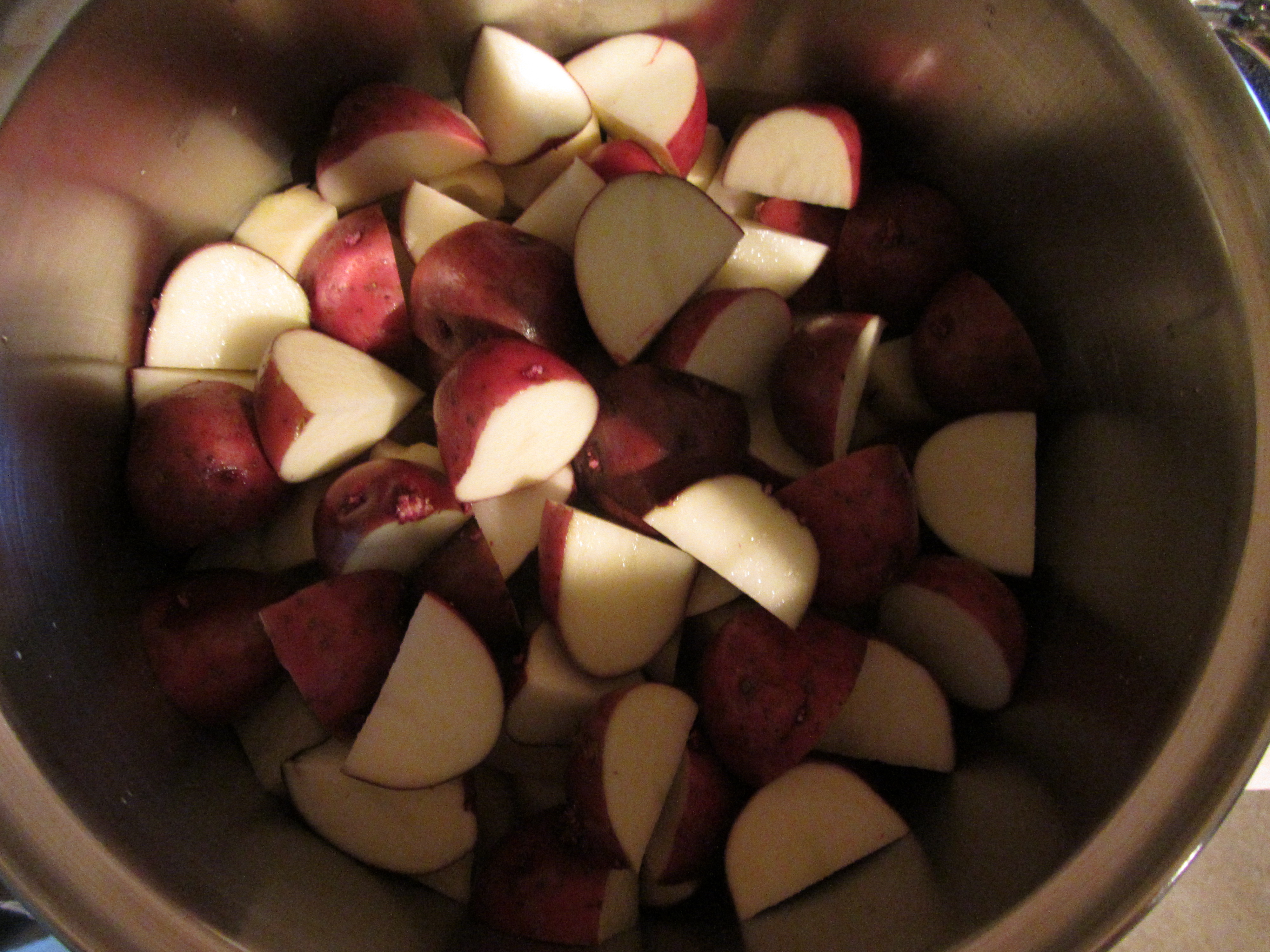
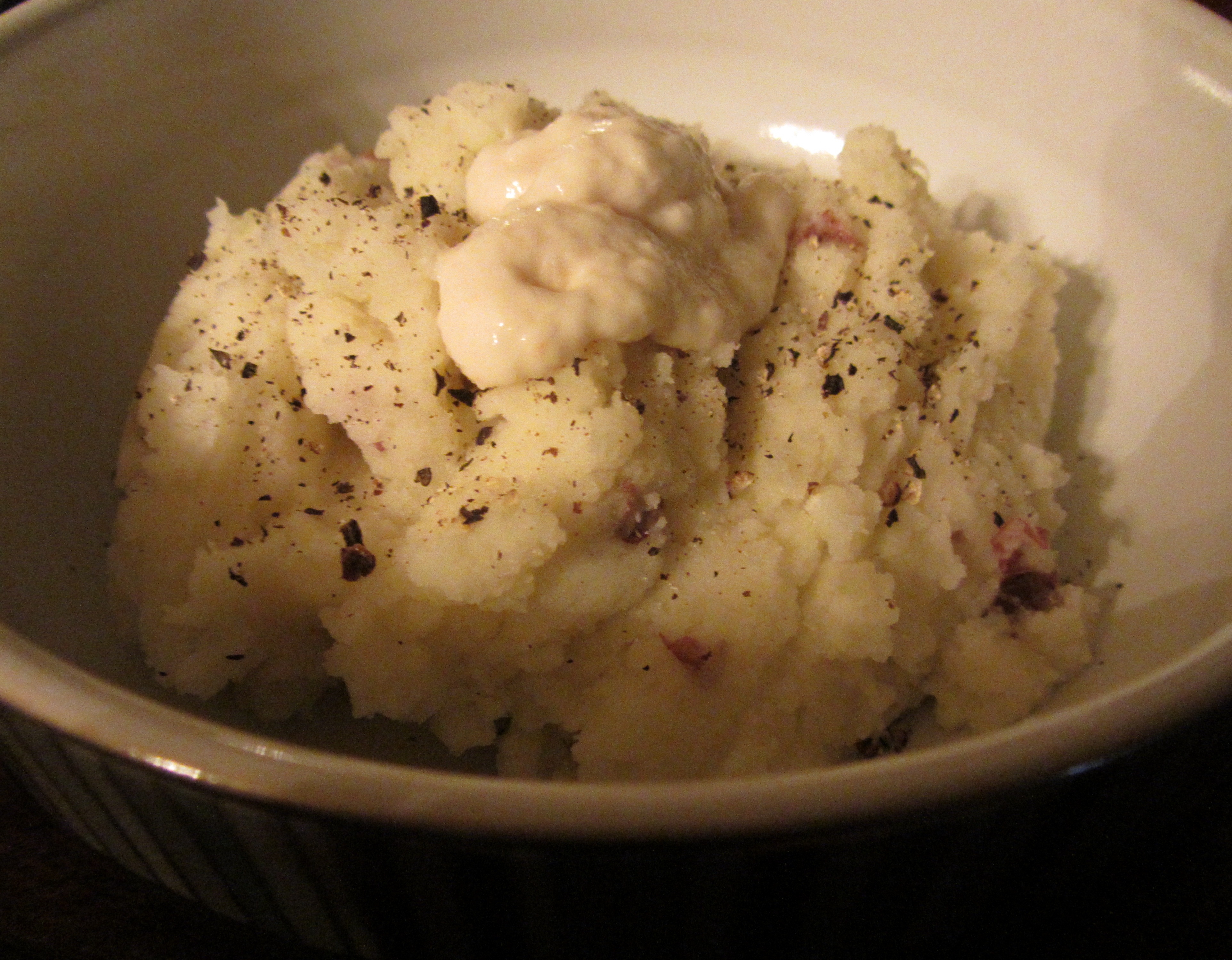
Alton’s recipe is here, and is really quite straight forward. As he states in the episode, really the important part of this recipe is the ratio of russet potatoes to red potatoes. Per his recommendation, I weighed my potatoes, getting a 2:1 ratio of russets to reds.???????????????????????????????episode 2 recipe 2-2 episode 2 recipe 2-3 While my potatoes gently cooked, I heated my dairy mixture with garlic.??????????????????????????????? ???????????????????????????????Sure enough, my potatoes were ready for mashing about 20 minutes after coming to a boil. They mashed easily, but I quickly discovered that I needed more of the dairy mixture than I had prepared. I quickly heated some more dairy on the stove, and added it slowly until I had the fluffy potatoes I desired.episode 2 recipe 2-6 ??????????????????????????????? Ted declared these the best mashed potatoes he has had, and he’s a Midwestern boy, so you know his opinions on meat and potatoes are valid. We ate ours with extra salt and pepper, and some creamed horseradish.

Mashed potatoes with salt, pepper, and horseradish.

Mashed potatoes with salt, pepper, and horseradish.

Potato/Portobello Gratin

The third, and final, recipe in the 2nd episode was for the potato/portobello gratin. One reason I was excited to begin this project was to employ some of the kitchen gadgets/equipment we have that are not so frequently used. Enter the mandolin. Ted bought a mandolin years ago for some particular recipe which I cannot recall. It has since sat on a shelf, rarely used. For the gratin recipe featured in this episode, the mandolin was a huge asset, if not a necessity. It yielded uniform slices of Yukon gold potatoes, and saved me a lot of time. In fact, following the prep work for this recipe, I found myself wondering why I have not utilized this tool more often.

Uniform Yukon Gold slices.

Uniform Yukon Gold slices.

I followed Alton’s recipe, but threw in some fresh tarragon I had lying around, and used Parmigiano-Reggiano. I had enough potato slices for three layers, while Alton created four layers in the episode.

Gratin layers prior to baking.

Gratin layers prior to baking.

In the online recipe, the directions are to check the gratin after baking for an hour, but I followed the slightly different instructions from the episode, which were to check the gratin after about 45 minutes. My gratin was cooked through at that point. I also ended up using more than the recommended 3/4 C of half-and-half from the online recipe. I just added more until the liquid came up through the layers when I pushed down with my hands. Though I thought it looked like it had a bit too much liquid when I pulled it out of the oven, it set up nicely after allowing it to cool for 20 minutes, and the potatoes were nicely cooked without being soft.??????????????????????????????? ??????????????????????????????? As a bonus, the tarragon was nice with the potatoes. This recipe really is something to experiment with, as you could throw in whatever you have on hand. Next up:   Episode 3.

When I first told my husband, Ted, of my idea to cook all of the recipes from Good Eats, he was instantly supportive. As a fan of the show himself, he recalled that the first episode of the show involved cooking a steak. I am embarrassed to admit that I had never before cooked a steak. Yes, you read that correctly. Though I cook often, I had never prepared a steak in my 30+ years. Ted was excited at the prospect of having a home-cooked steak. The question was, would I be able to cook it properly enough to do it justice?

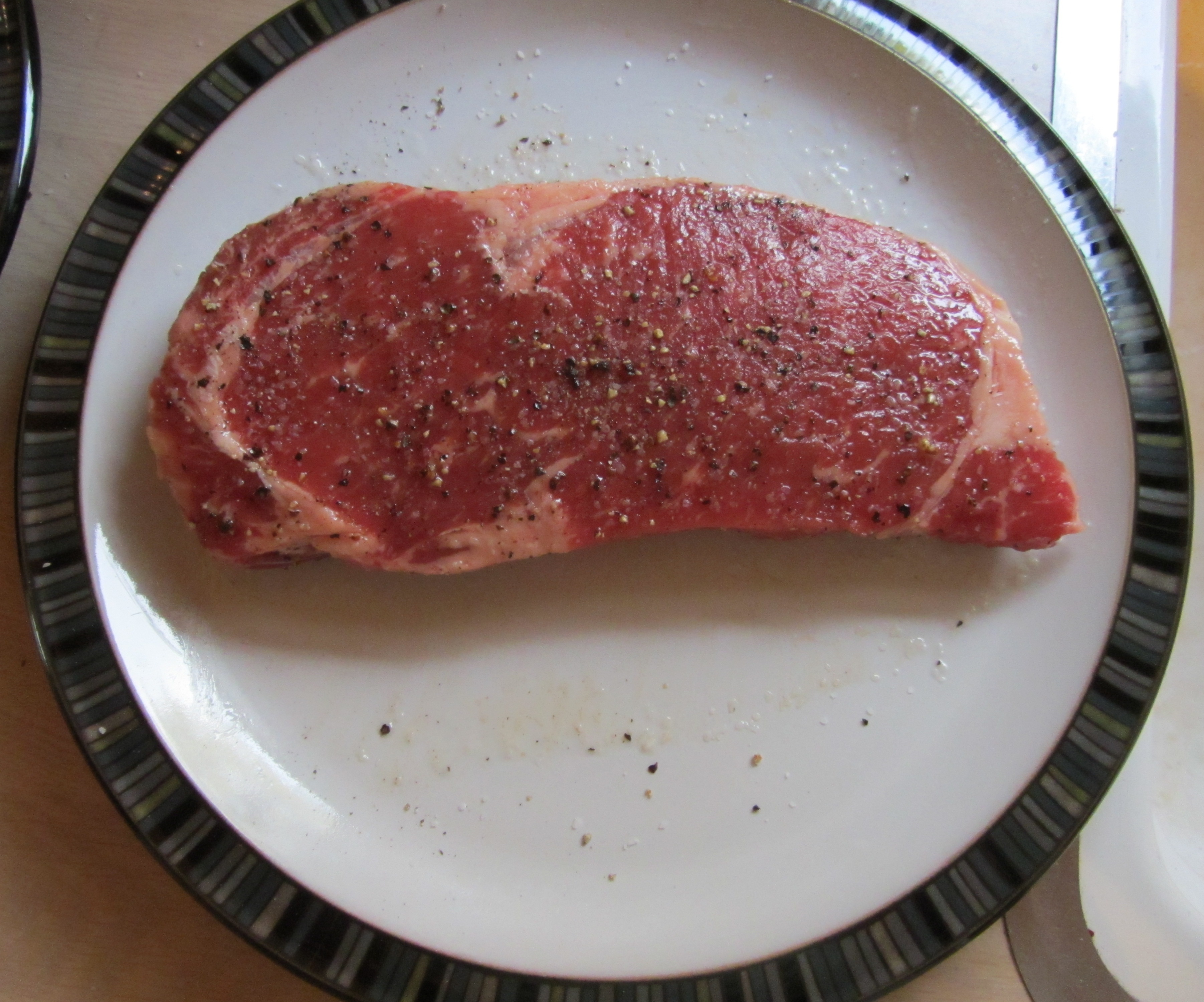
The recipe for Alton’s Pan-Seared Rib-Eye may be found here. After watching the episode, I picked out two rib-eyes to cook for Ted and me. I seasoned the steaks and allowed them to come to room temperature.

Rib-Eye, seasoned and brought to room temperature.

Rib-Eye, seasoned and brought to room temperature.

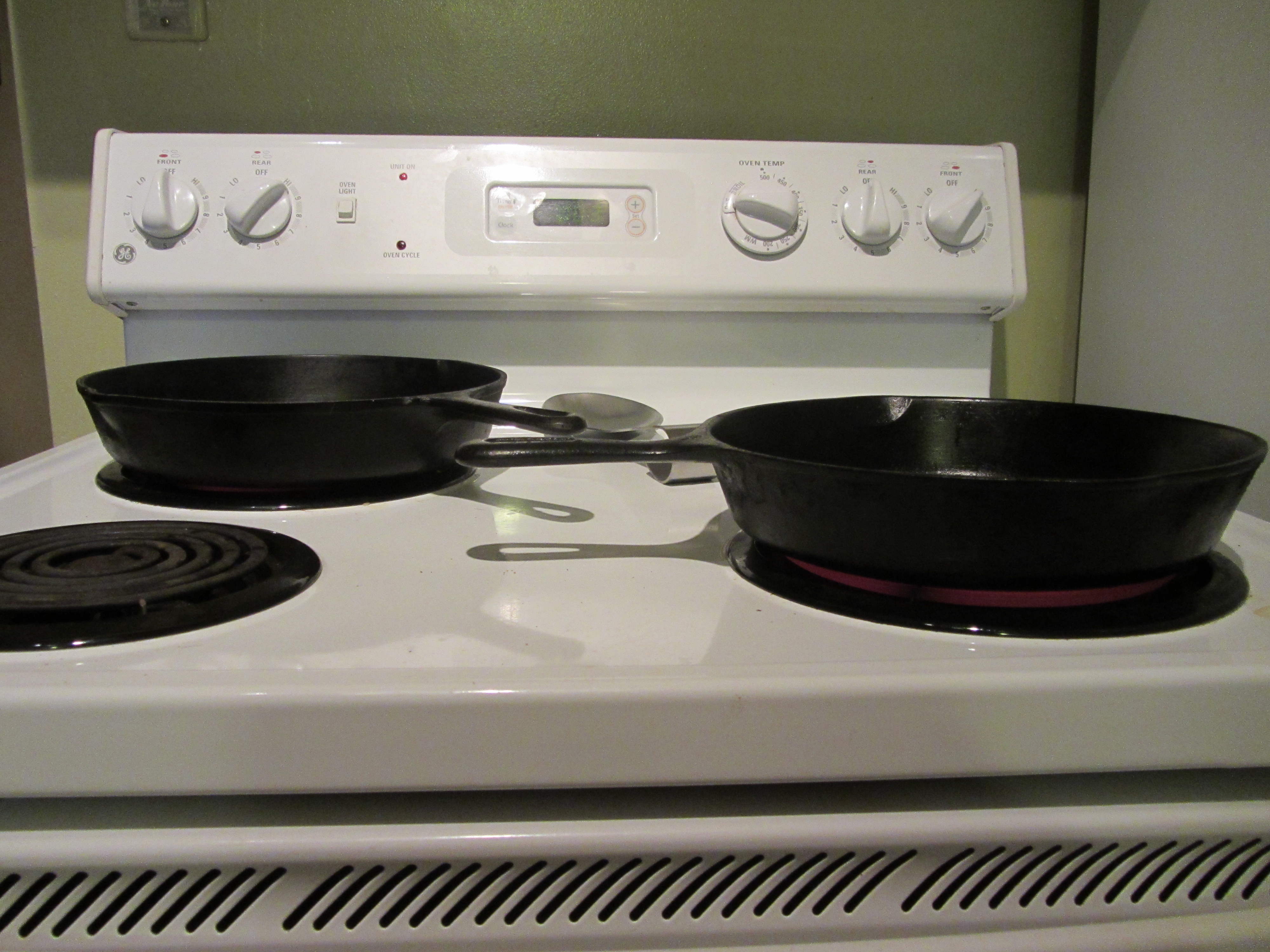
Per Alton’s instructions, I heated our two cast iron skillets until they were screaming hot, first in the oven and then further on the stove, and then placed the steaks in them. The vent above the stove was cranking, and the windows were open, but to no avail. The kitchen filled with smoke and the smoke alarm screamed her shrillest shriek, sending one of our Coonhounds running to the basement in fear. I followed Alton’s cooking recommendations to a tee, completing their cooking in mere minutes, and then allowing the steaks to rest, elevated and tented, for a few minutes.

Screaming hot skillets.

Screaming hot skillets.

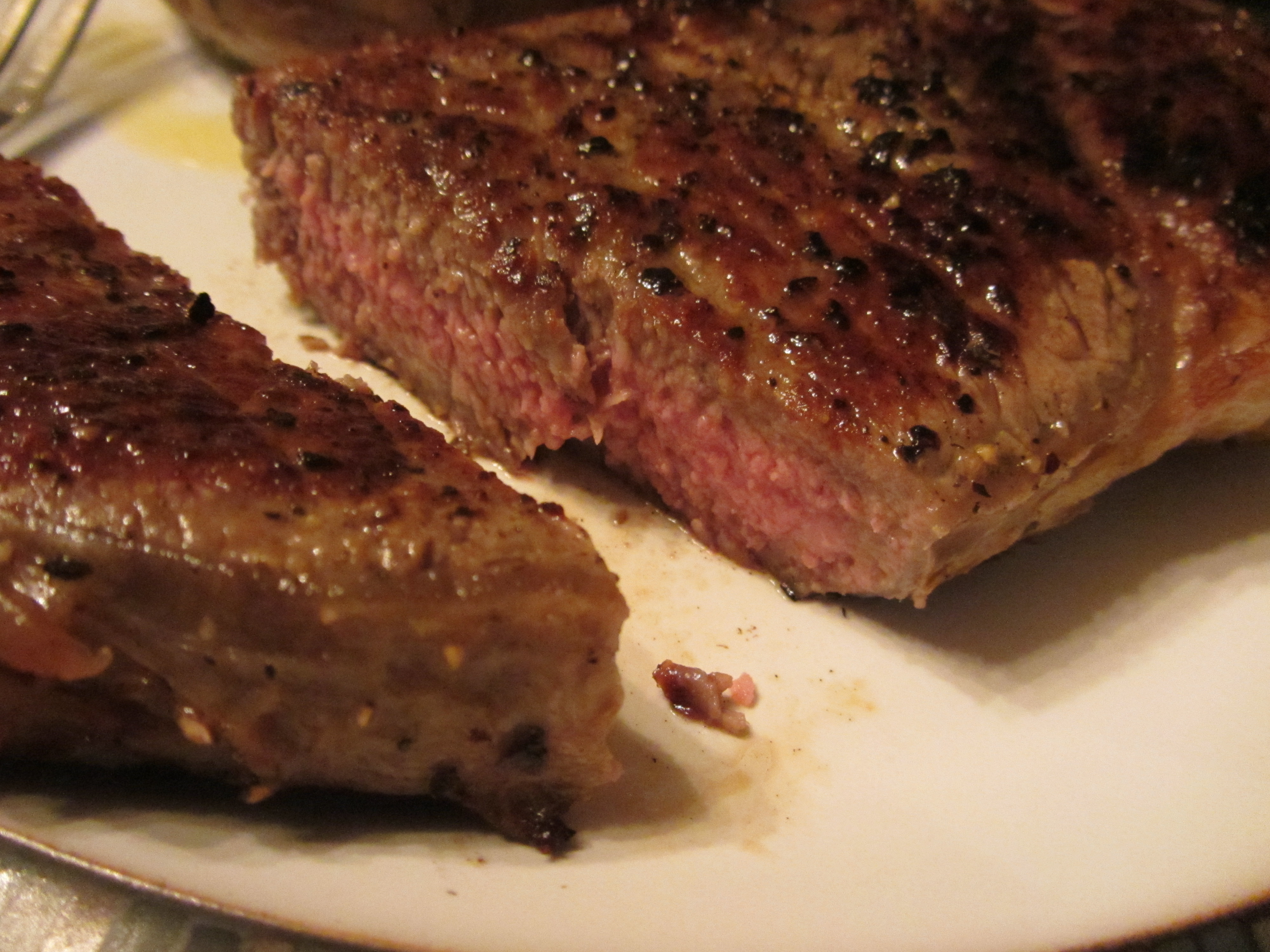
As we cut into our steaks for the first time, I was nervous about what we would find. Would the steaks be underdone, overdone, or just right? Well, slap my ass and call me Goldilocks! We were rewarded with perfect medium-rare steaks that were tender and juicy with a nice peppery crust. My pet peeve with steaks are when they “bleed” (my dad calls those “juices”) all over the plate. The liquid (whatever you choose to call it) remained where it belonged… in the meat. I deem the first recipe from Good Eats a success. If you follow Alton’s recipe and you want to cook a steak indoors, you will not be disappointed.
Medium-rare Rib-Eye.

Medium-rare Rib-Eye.