Archive for March, 2015

Ah, butter, I have loved thee for as long as I can remember. Conversely, as a kid, my brother refused to eat butter, and would only eat margarine. Nuts, I know. I seem to remember something about him being disgusted by the fact that butter was animal-based fat. I think it is safe to say that the anti-butter trait is not genetic, as I saw my niece lick a stick of butter with pure delight last week when she was visiting. Thank goodness because butter certainly belongs on the list of “good eats.”

Raymond Beurre Blanc

Monday evening seemed like a good time to have the first recipe from this episode, which was for Alton’s beurre blanc. I have had beurre blancs in the past, but always in a restaurant.

Beurre blanc ingredients:  shallots, white wine, lemon juice, heavy cream, unsalted butter, Kosher salt, and white pepper.

Beurre blanc ingredients: shallots, white wine, lemon juice, heavy cream, unsalted butter, Kosher salt, and white pepper.

To make Alton’s sauce, add a couple of small chopped shallots to a pan, along with 8 oz. of white wine and 2 oz. of lemon juice.

Chopped shallots.

Chopped shallots.

Shallots and wine in the pan.

Shallots and wine in the pan.

Lemon juice added.

Lemon juice added.

Increase the heat to high, and reduce this liquid “au sec,” or until almost dry; you will have about 2 T remaining.

Shallots, lemon juice, and white wine.
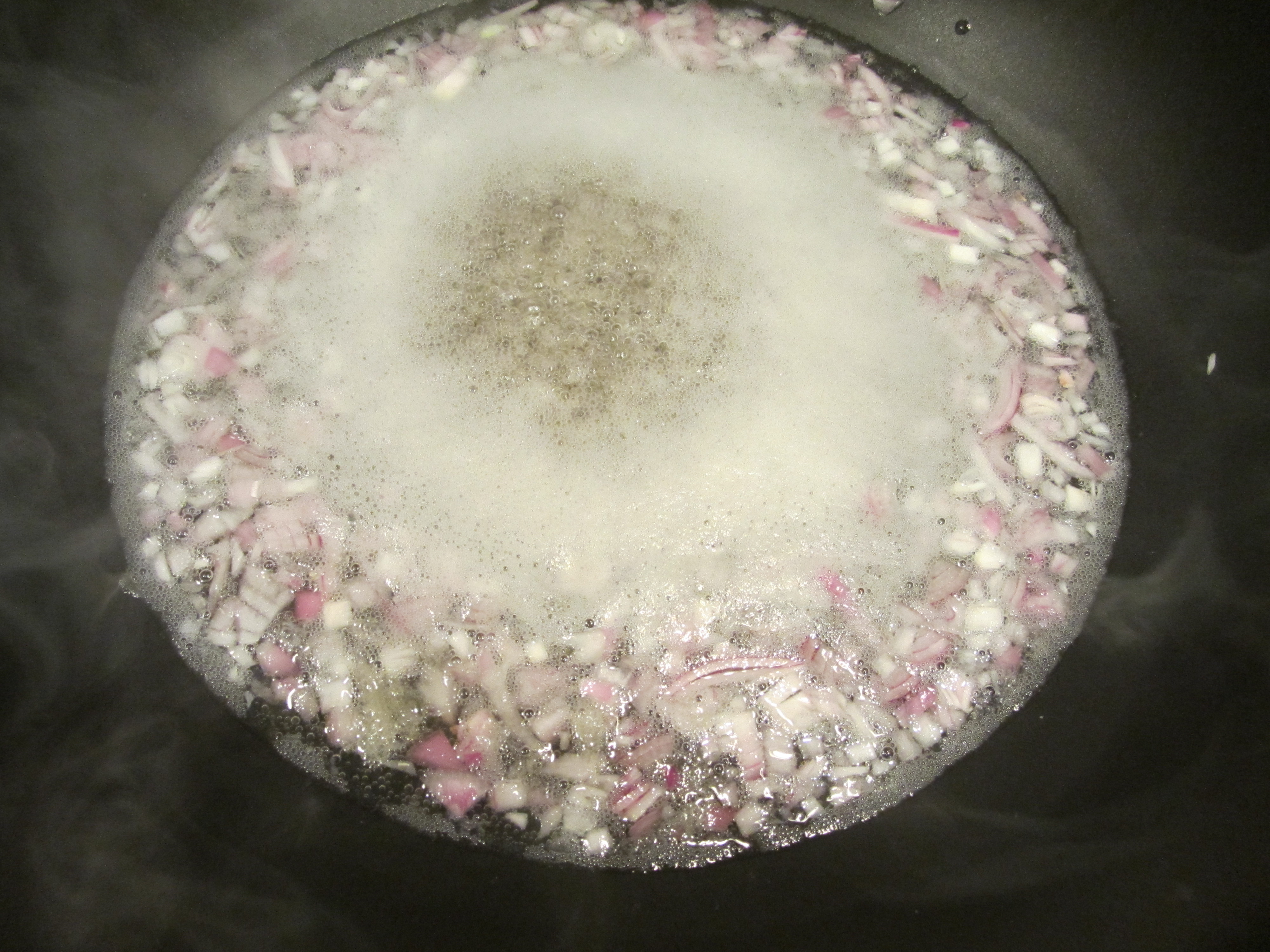
Shallots, lemon juice, and white wine.

Beginning to reduce.

Beginning to reduce.

After a few minutes.
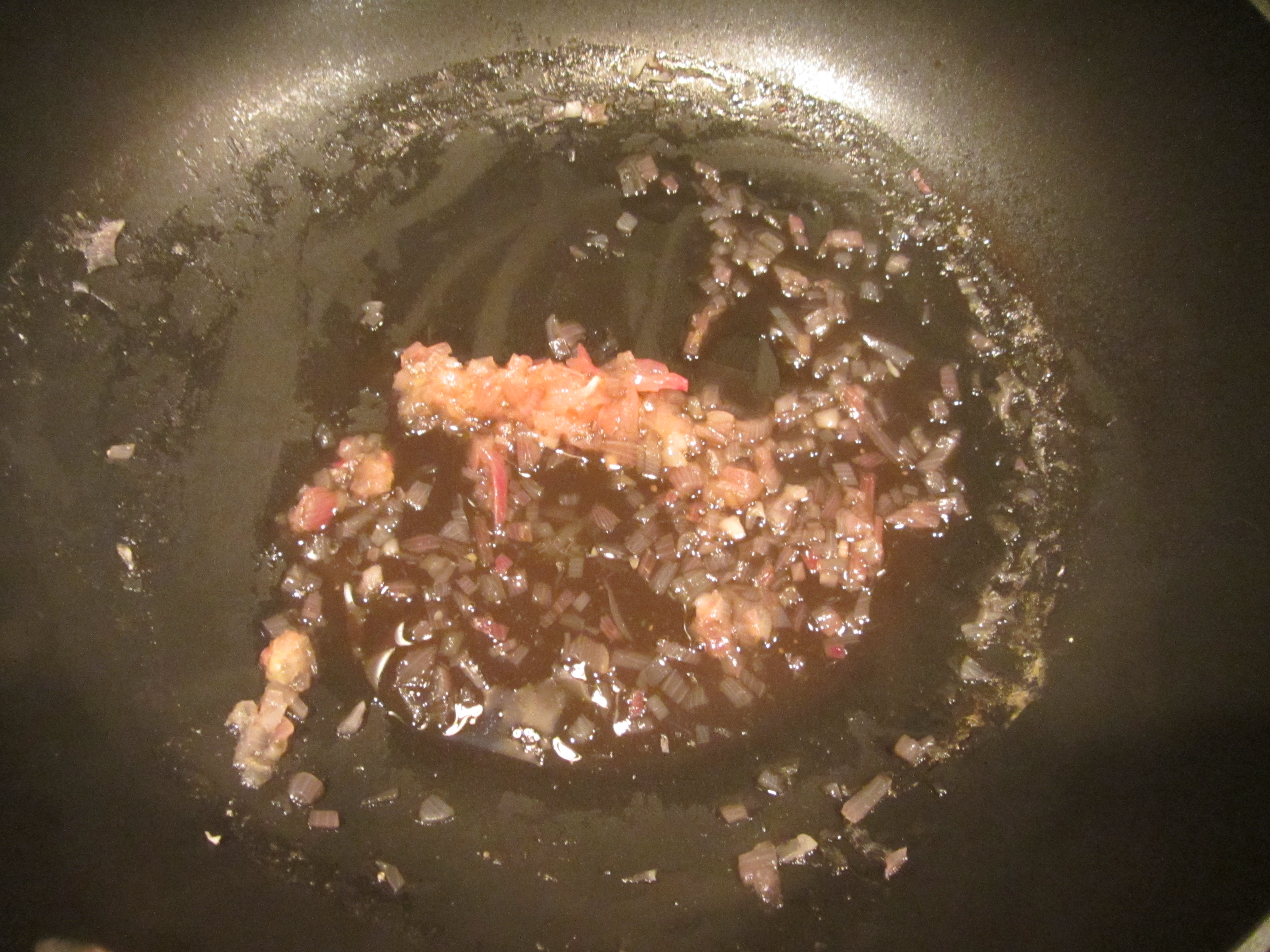
After a few minutes.

Reduced "au sec."

Reduced “au sec.”

Add 1 T of heavy cream to the pan, and decrease the heat to low as soon as the cream starts to bubble. The cream, as Alton says, is your “emulsion insurance.”
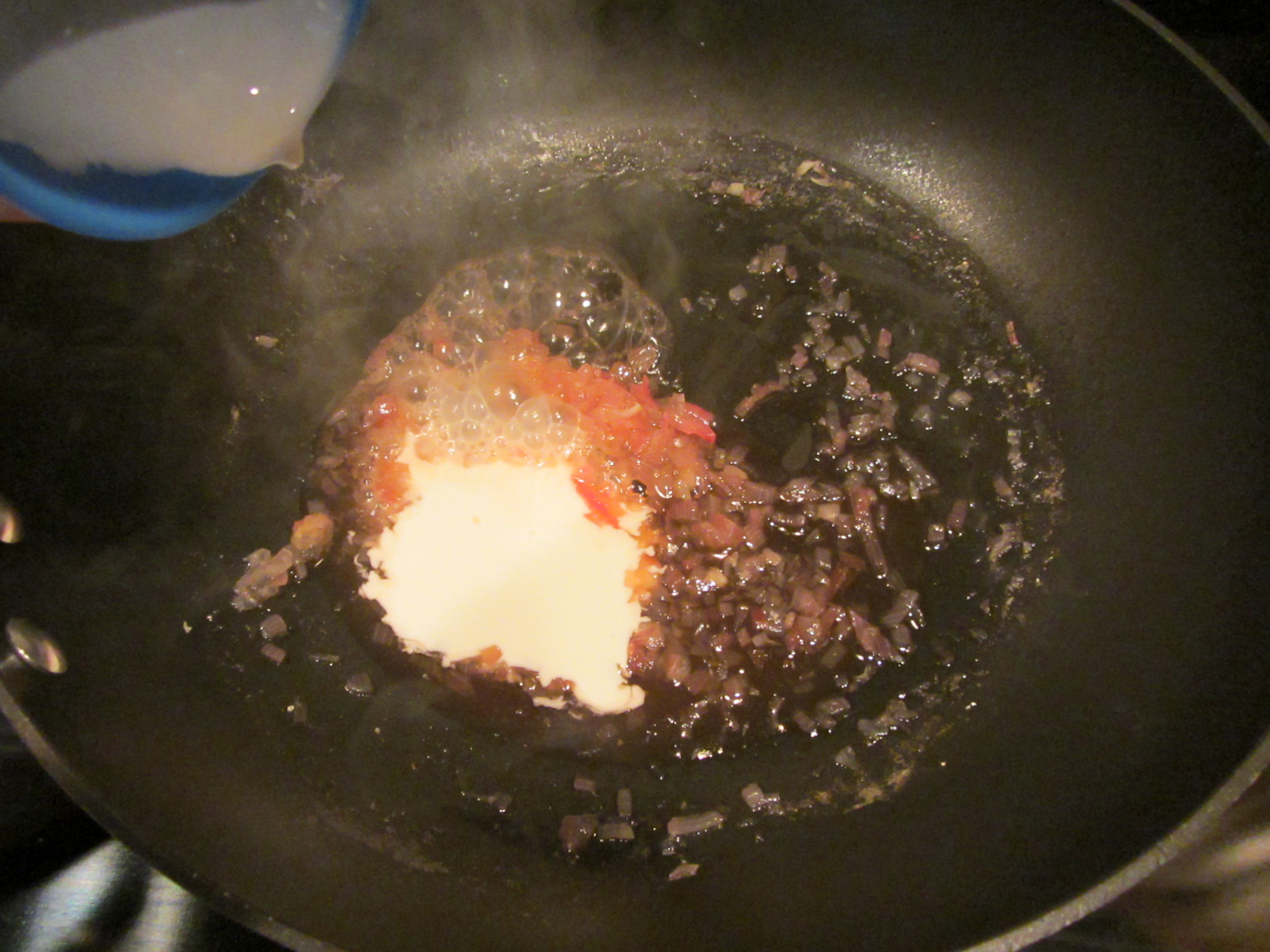
Cream added to pan for "emulsion insurance."

Cream added to pan for “emulsion insurance.”

Cream bubbling, so heat turned to low.

Cream bubbling, so heat turned to low.

Next, you will need 6 oz. of cold, unsalted butter, which you will want to cut into tablespoon-sized chunks.

Butter cut into chunks.

Butter cut into chunks.

You will add the butter chunks one at a time, first on the heat, and then off of the heat, until incorporated. If the sauce gets above 130 degrees, the membranes around the fat globules will collapse, so you do not want the sauce to get too hot.

First chunk of butter being added.

First chunk of butter being added.

Stirring the butter first on the heat...

Stirring the butter first on the heat…
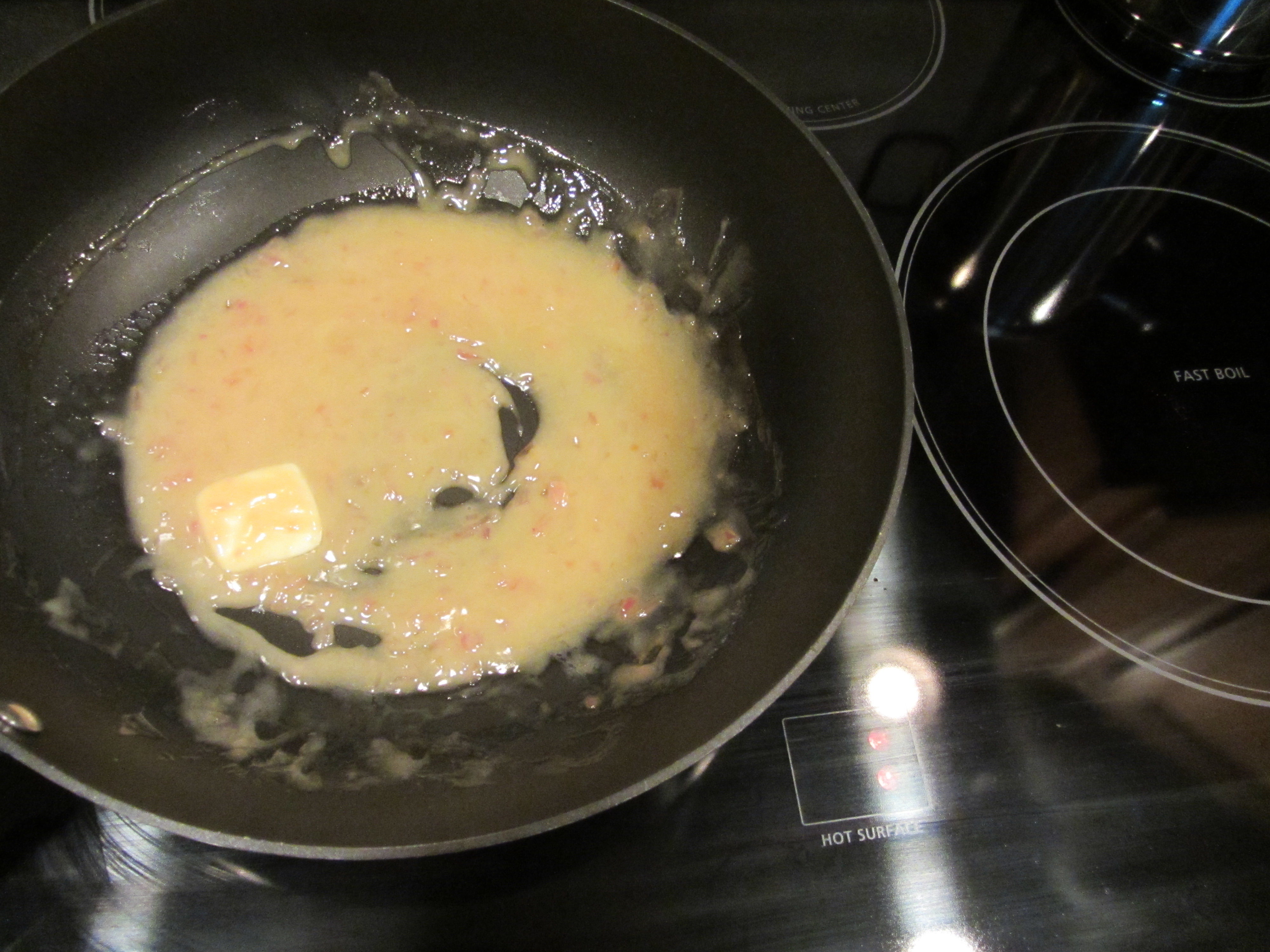
...and then off of the heat.

…and then off of the heat.

To scale the sauce up or down, Alton explains that you want to use about a stick of butter per tablespoon of reduction. Once all of the butter has been added, season the sauce with Kosher salt and white pepper, to taste. You can serve the sauce as is, or you can strain it for a perfectly smooth sauce.

The finished beurre blanc.

The finished beurre blanc.

Since the beurre blanc will not hold well, you will want to serve it immediately or store it in a thermos for later use. We had the beurre blanc over steaks and asparagus for dinner, and it paired greatly with both.
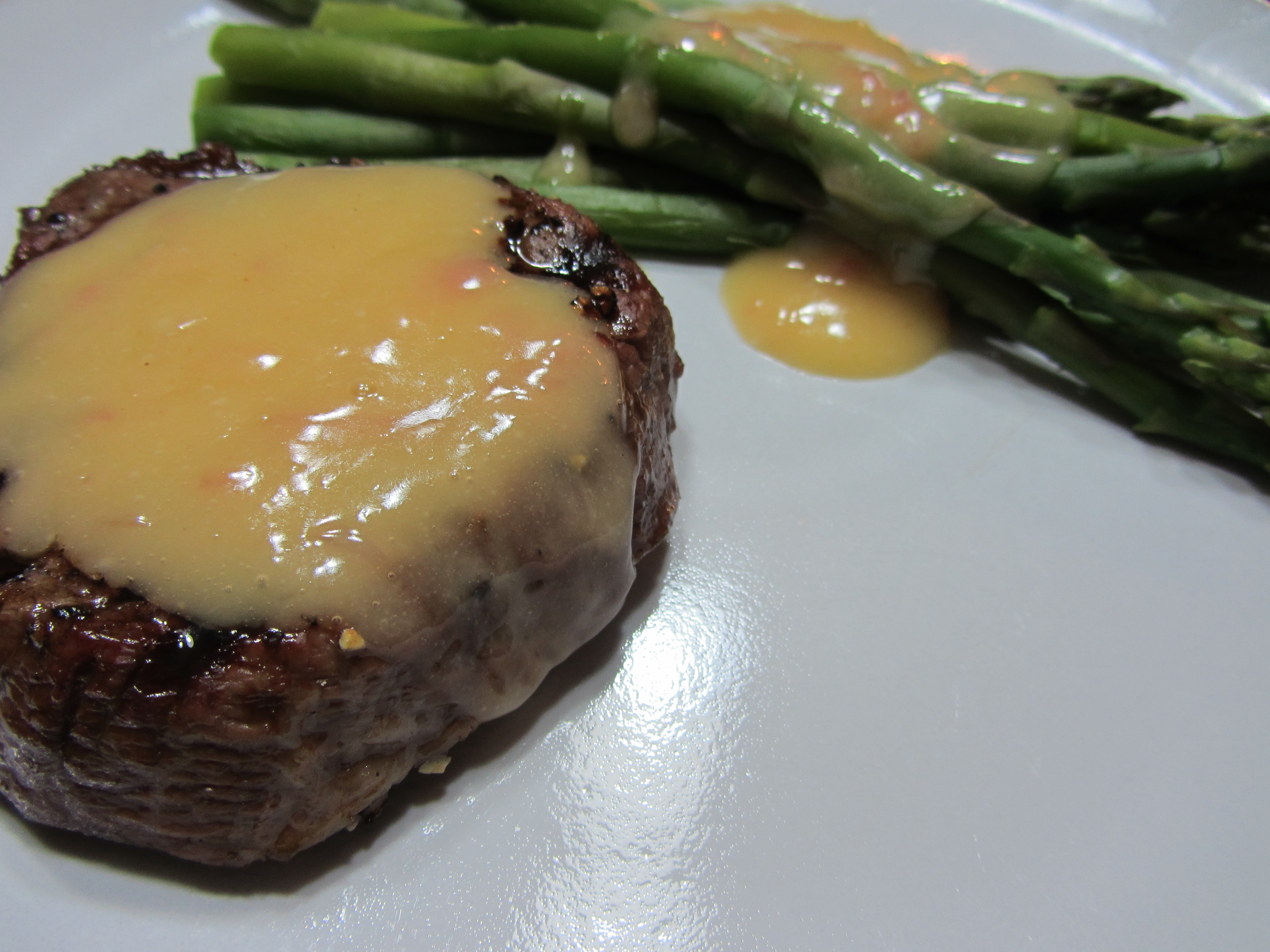
Alton's beurre blanc over a steak and asparagus.

Alton’s beurre blanc over a steak and asparagus.

As someone who prefers to have some sort of sauce with steak, I really enjoyed this. I loved the slight sourness of the sauce, as it contrasted nicely with the richness from the butter. I will be making this one again for sure, as it would also be great over poached eggs or fish. This is a simple way to dress dinner up.

Compound Butter

Next up in Alton’s butter arsenal is a recipe for compound butter. I remember having compound butter at some restaurant when I was little, with my mom explaining to me that there were endless possibilities for flavor combinations you could achieve. Alton’s version is pretty straight forward.
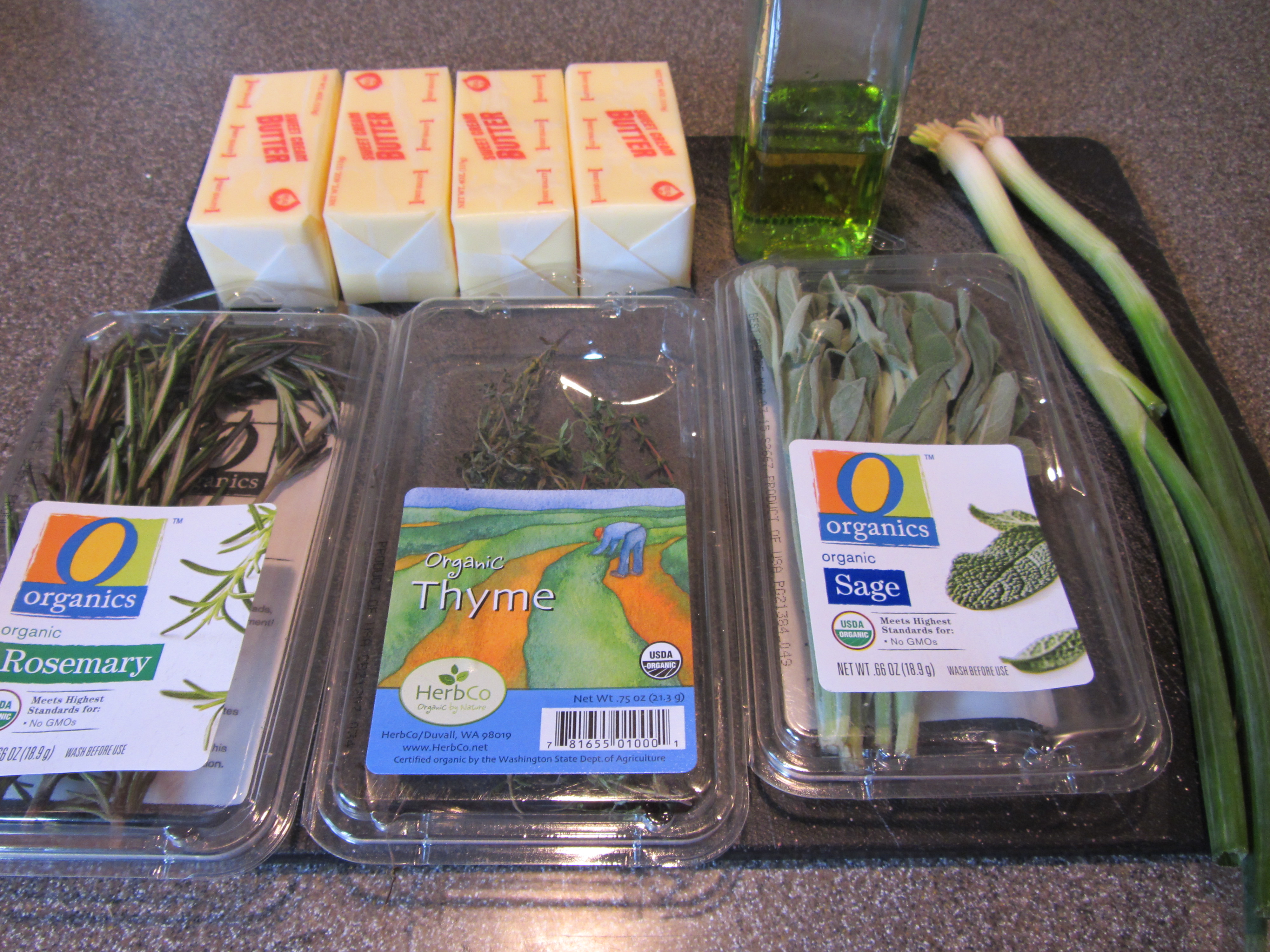
Ingredients for compound butter:  olive oil, chives, thyme, rosemary, sage, and salted butter.

Ingredients for compound butter: olive oil, chives, thyme, rosemary, sage, and salted butter.

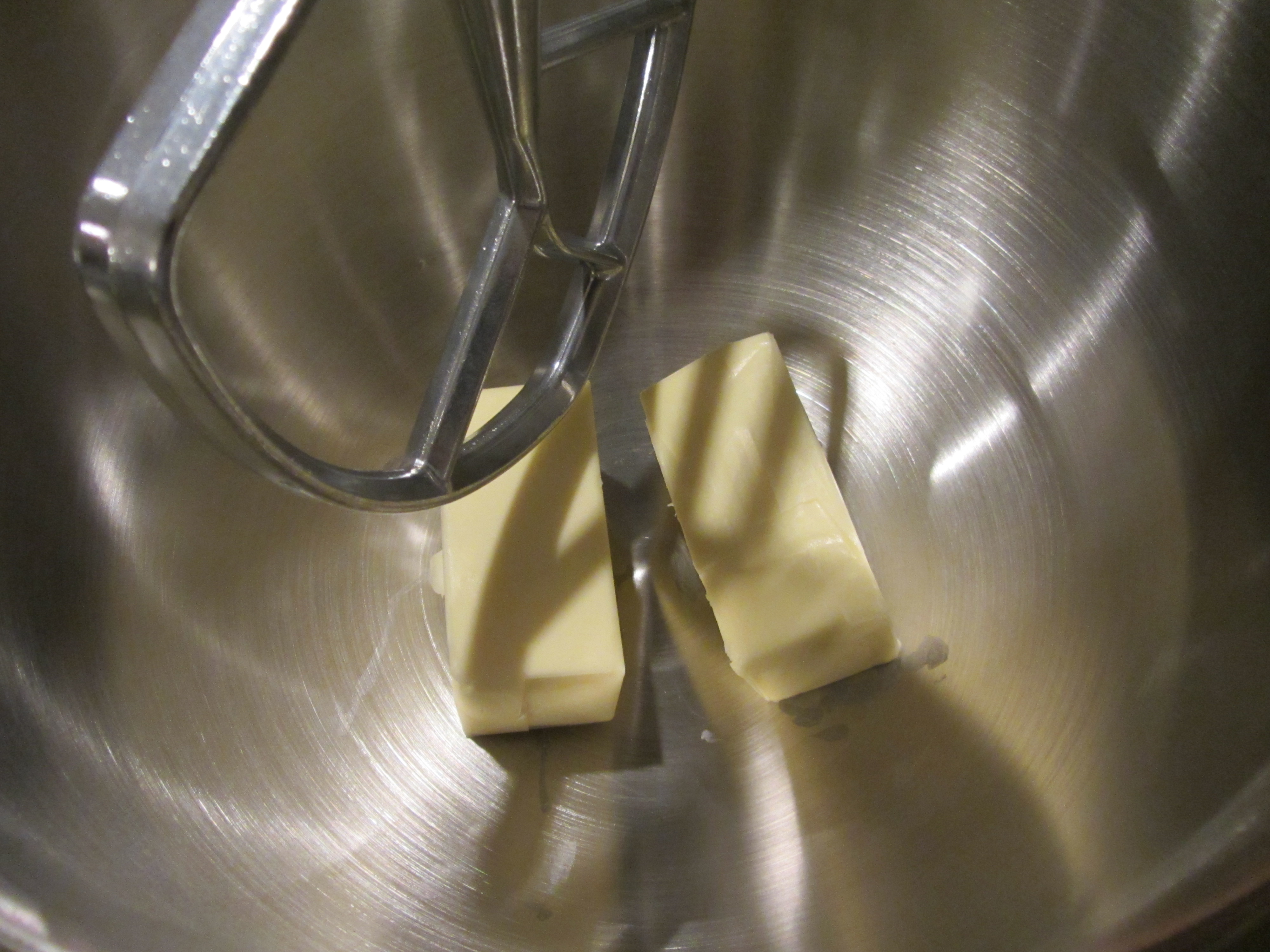
To start, cut a pound of salted butter into tablespoon-sized chunks and set it aside. Salted butter is used here because it has a longer shelf-life; the salt in the butter helps to prevent oxidation. This is why unsalted butter is typically wrapped in foil, while salted butter is not.
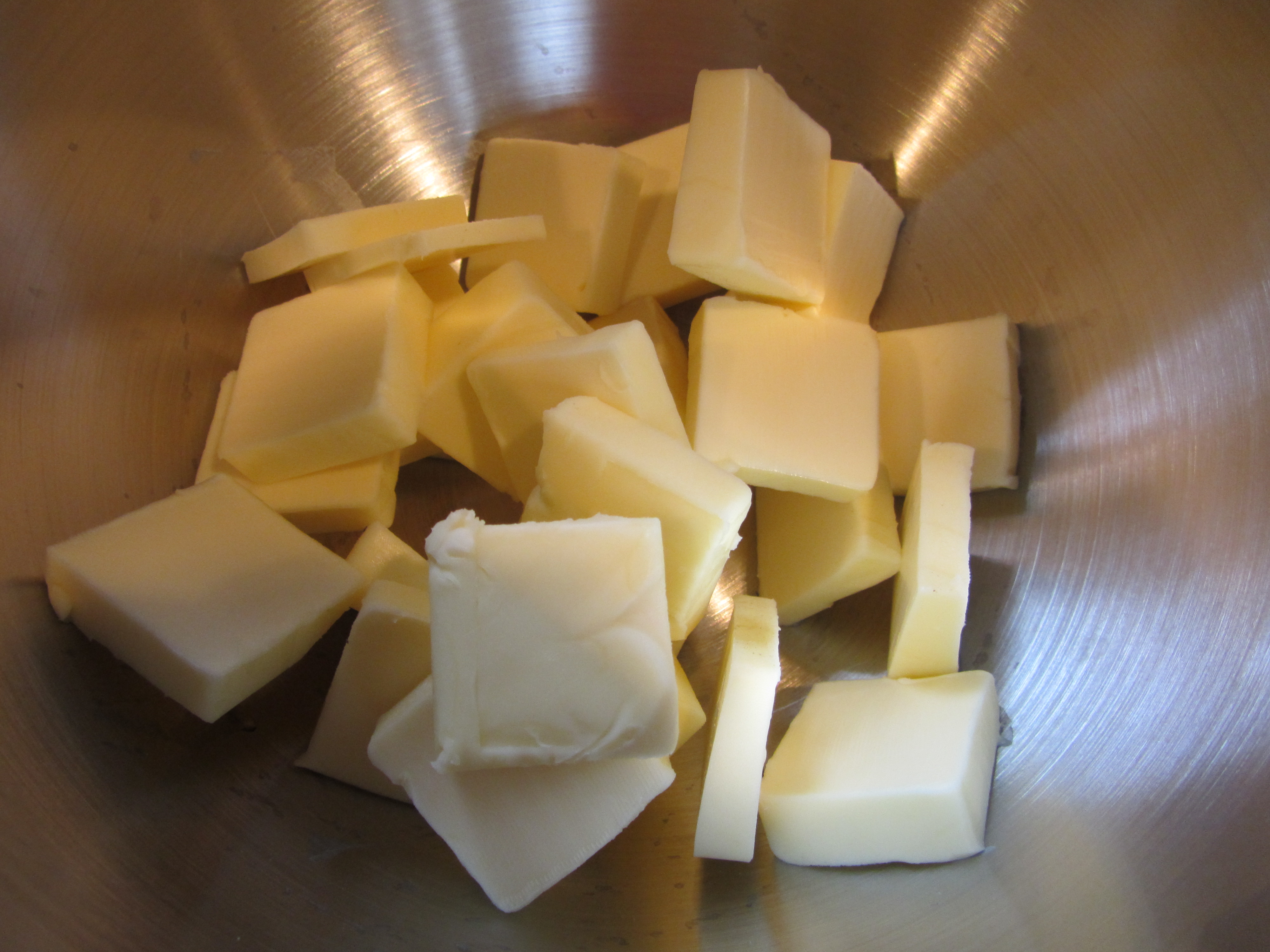
Butter chunks in mixer.

Butter chunks in mixer.

Next, pour 3-4 T of olive oil into your food processor, add 2 T of chopped chives, and chop.

Chives and olive oil in the food processor.

Chives and olive oil in the food processor.

Chopped chives in olive oil.

Chopped chives in olive oil.

To this, add 3 T of mixed herbs; Alton likes a tablespoon each of sage, thyme, and rosemary. Process this herb mixture until the oil is green.

Chopped sage, thyme, and rosemary.
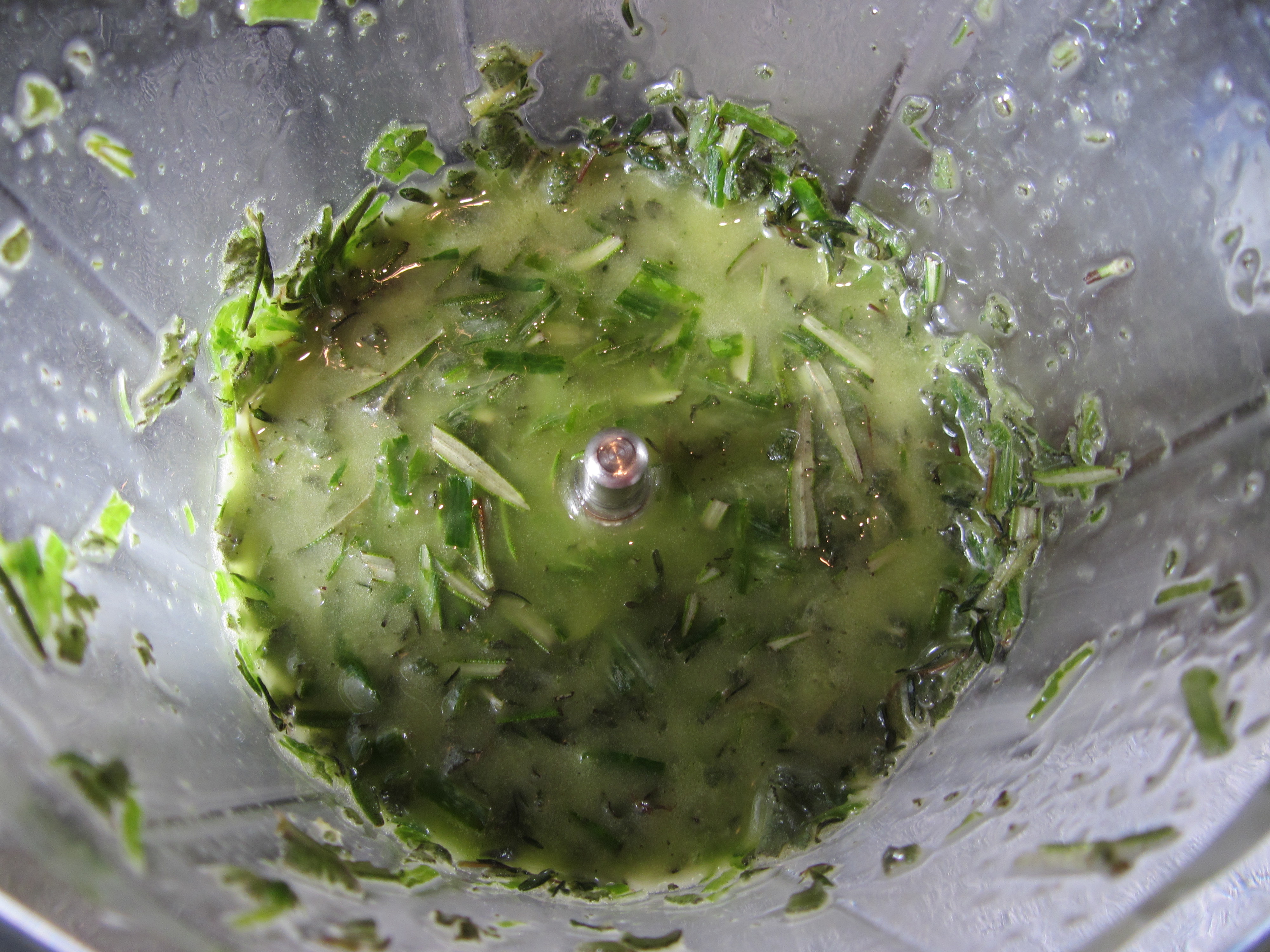
Chopped sage, thyme, and rosemary.

Herbs chopped in oil.

Herbs chopped in oil.

Using the whisk attachment on your stand mixer, beat the butter until fluffy, starting on low and increasing the speed to high. The butter should be fluffy in 5-7 minutes.

Butter whipped until fluffy.

Butter whipped until fluffy.

Once fluffy, add the oil to the butter and mix until incorporated evenly.

Herb/oil mixture added to butter and mixed.

Herb/oil mixture added to butter and mixed.

Spoon the butter onto the end of a sheet of parchment, and pull the far end of the parchment over the butter.
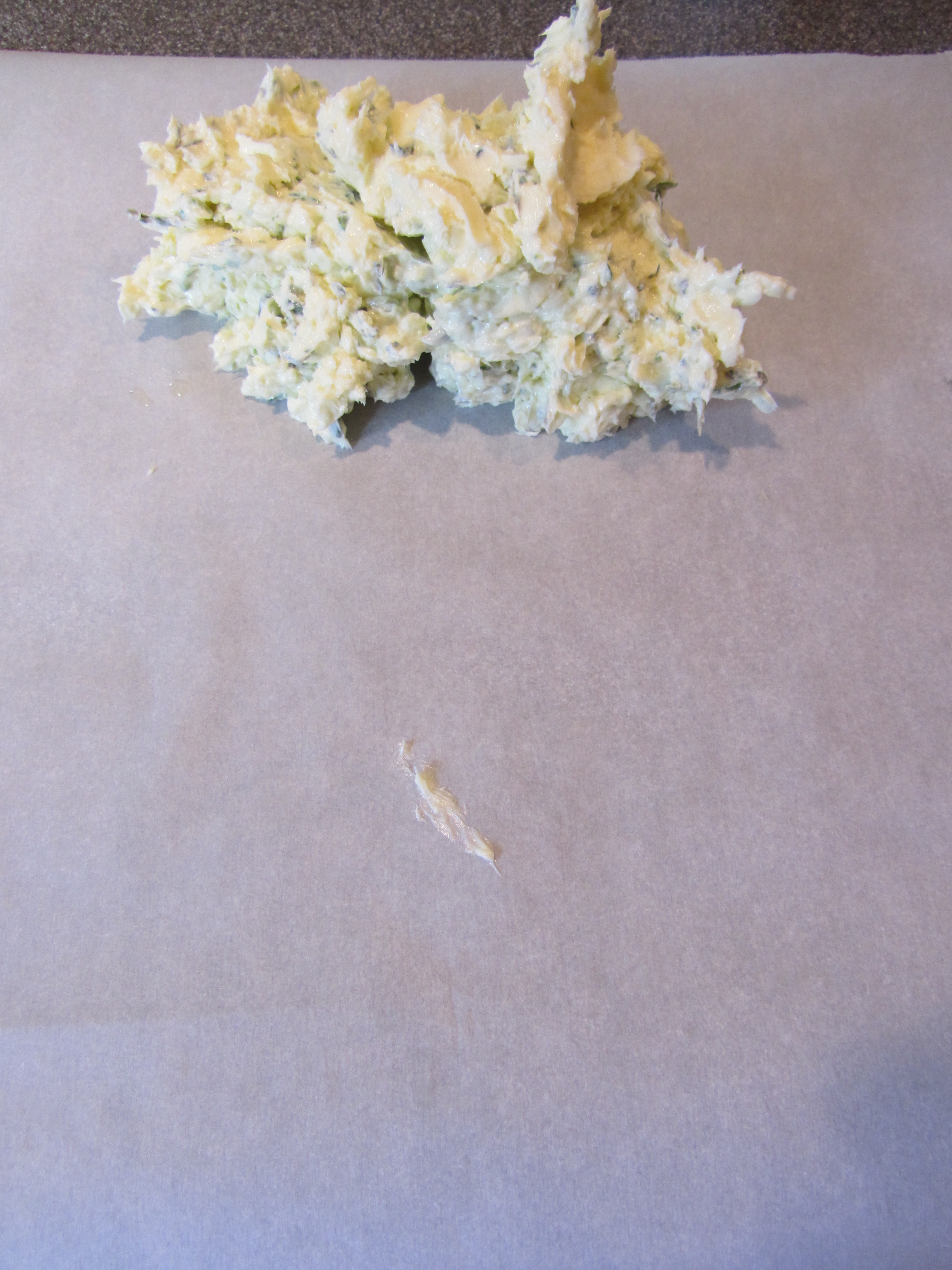
Compound butter on one end of parchment.
Compound butter on one end of parchment.

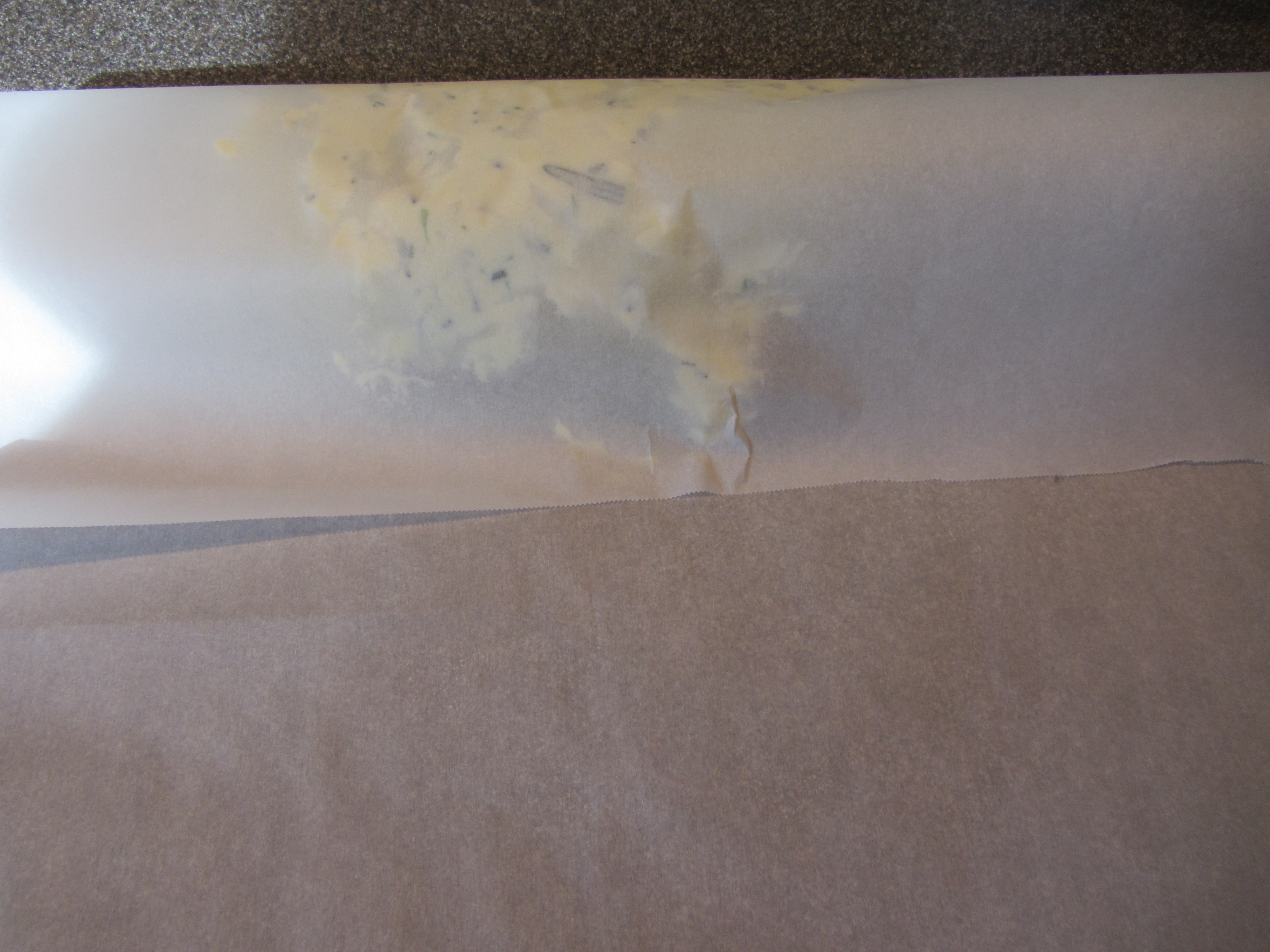
Far end of parchment pulled over butter.

Far end of parchment pulled over butter.

Place the edge of a sheet pan against the butter (on top of the paper), hold the bottom piece of paper, and press the butter into a log shape. Roll up the ends of the parchment, secure with rubber bands, and chill the butter until firm.

Compound butter rolled into a log to be chilled.

Compound butter rolled into a log to be chilled.

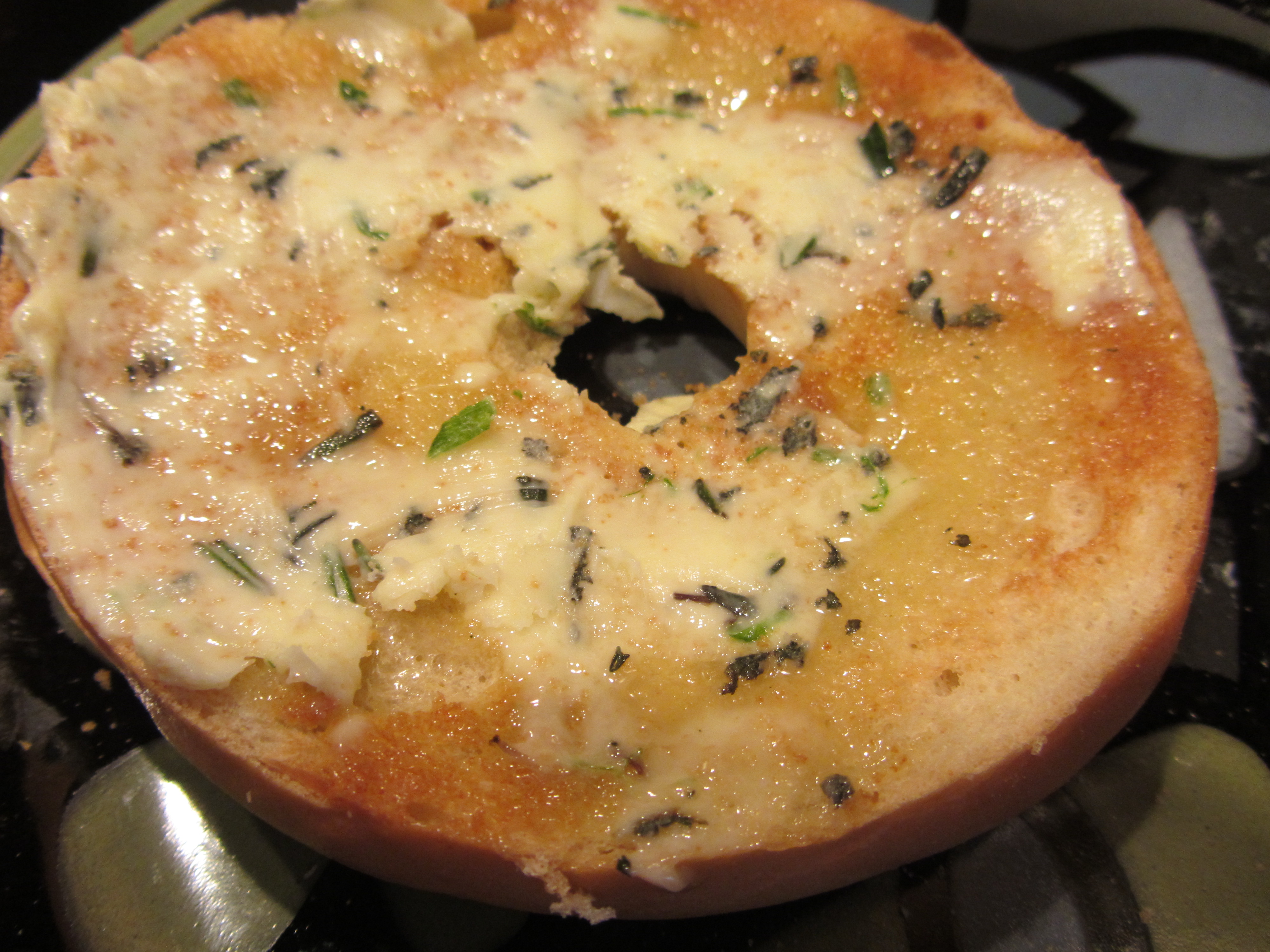
Slice the butter and serve as a sauce for meat, chicken, fish, bread, vegetables, or anything else you can think of. I first tried the butter this morning on half a bagel, and I could smell the fresh herbs as soon as I unrolled the parchment.
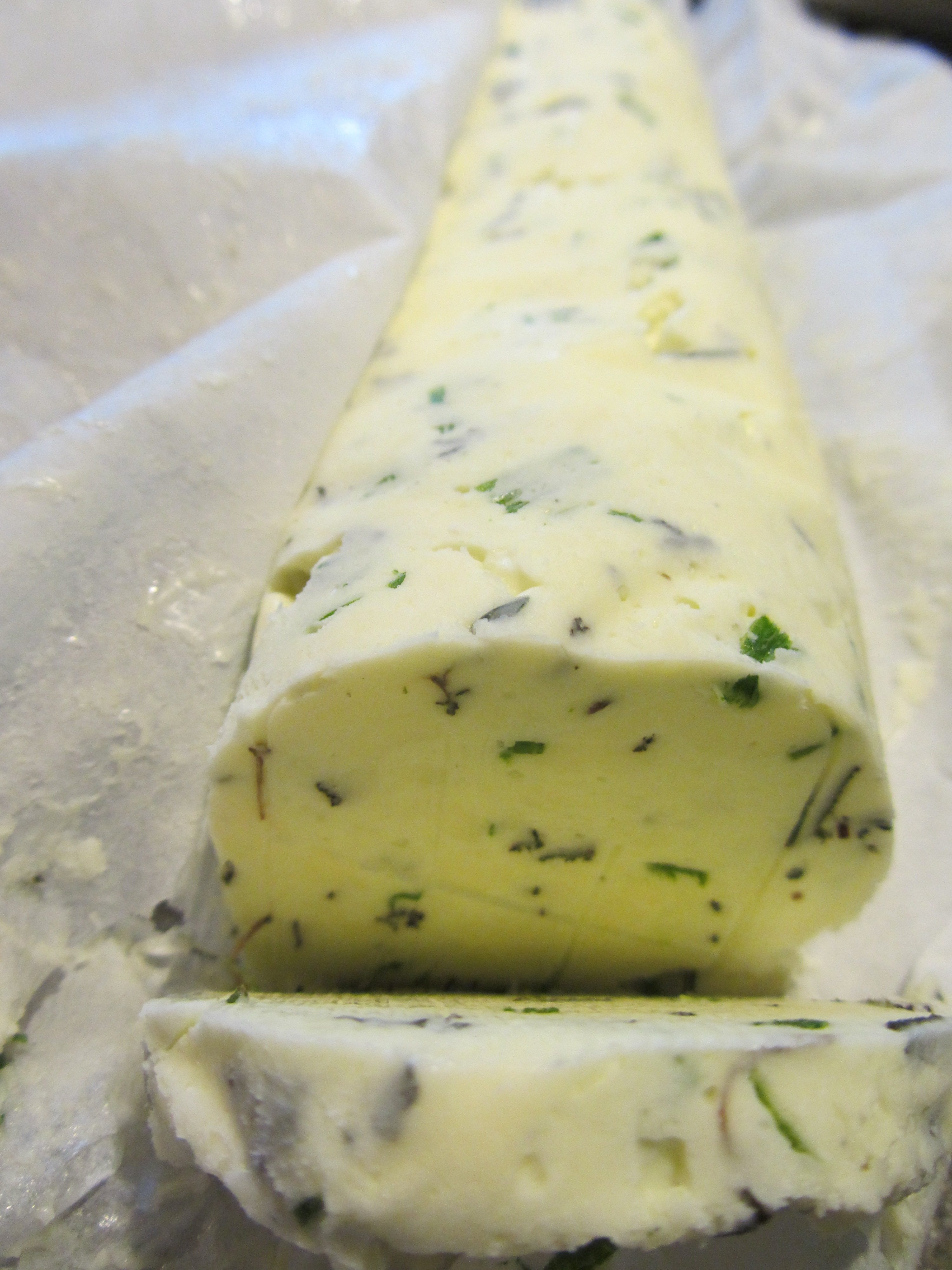
Compound butter, sliced.
Compound butter, sliced.

Compound butter on a bagel.

Compound butter on a bagel.

I liked this particular combination of herbs because none of the herbs overwhelmed the others. The butter looks really pretty and is super flavorful, so it would be a great thing to serve to guests. I look forward to trying this as a simple sauce for many things in the coming weeks.

Honey Butter

For a sweet finish to the episode, Alton makes honey butter. This recipe is really similar to the compound butter recipe.

Ingredients for honey butter:  salted butter, honey, cinnamon, and vanilla extract.

Ingredients for honey butter: salted butter, honey, cinnamon, and vanilla extract.

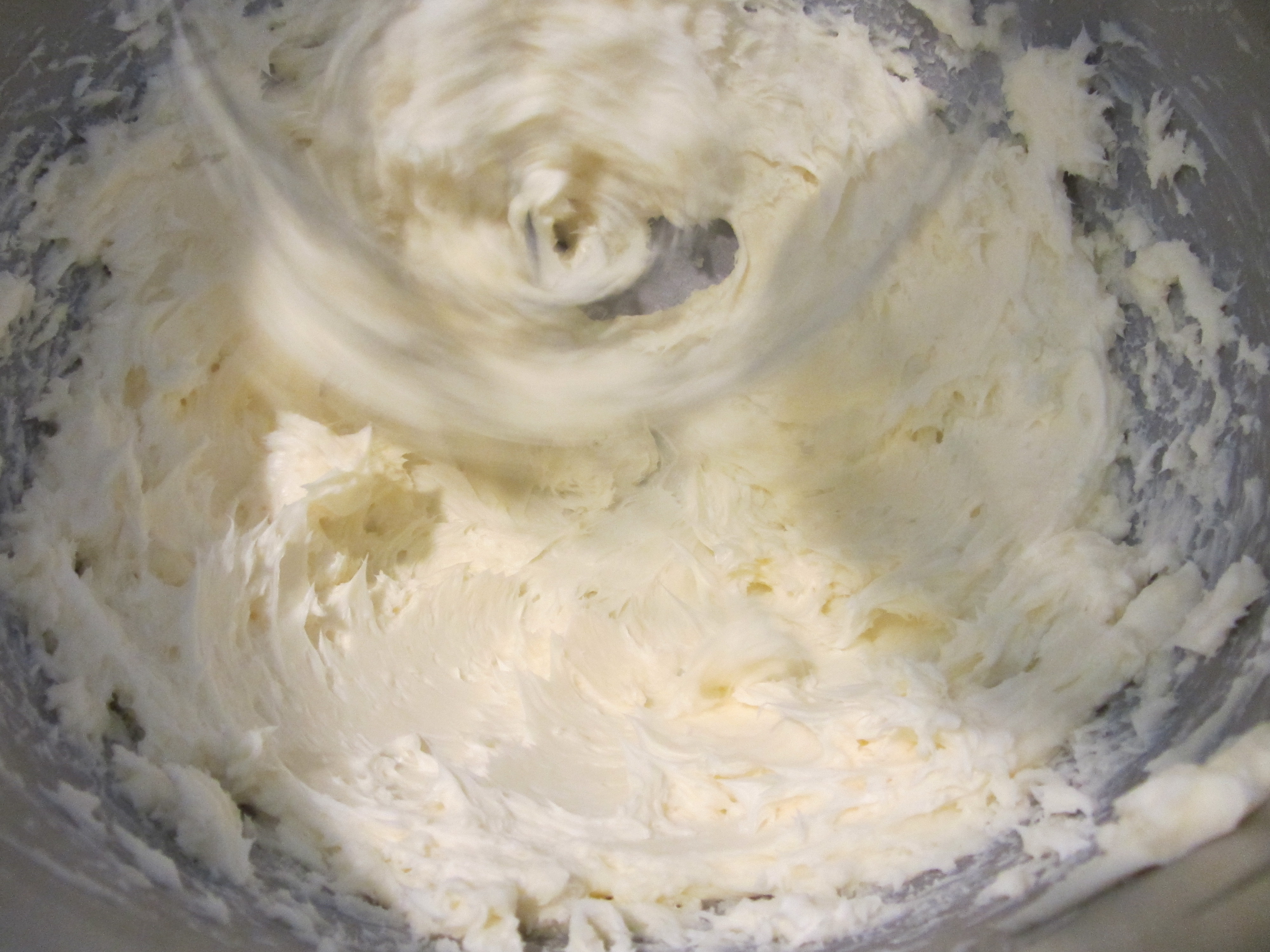
To start, cut a pound of salted butter into chunks and beat it with the whisk attachment of your mixer until fluffy.
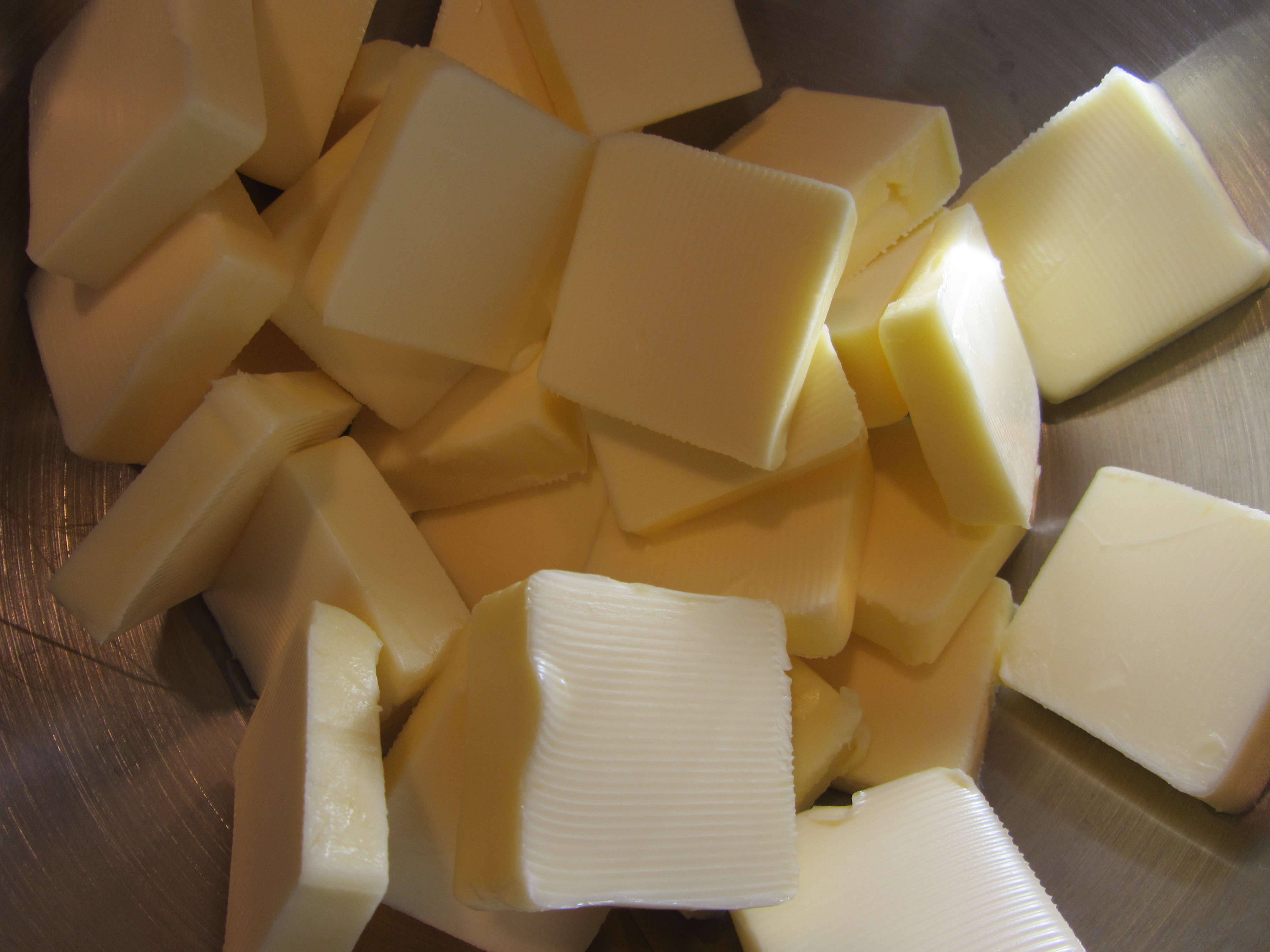
Butter cut into chunks.
Butter cut into chunks.

Butter beaten until fluffy.

Butter beaten until fluffy.

Once fluffy, add 1/4 C honey, 1/2 t cinnamon, and 1/2 t vanilla extract. Mix until evenly distributed.

Honey.

Honey.

Cinnamon, honey, and vanilla mixed into butter.

Cinnamon, honey, and vanilla mixed into butter.

Put the butter on parchment, use a sheet pan to push the butter into a log, and roll up the ends.
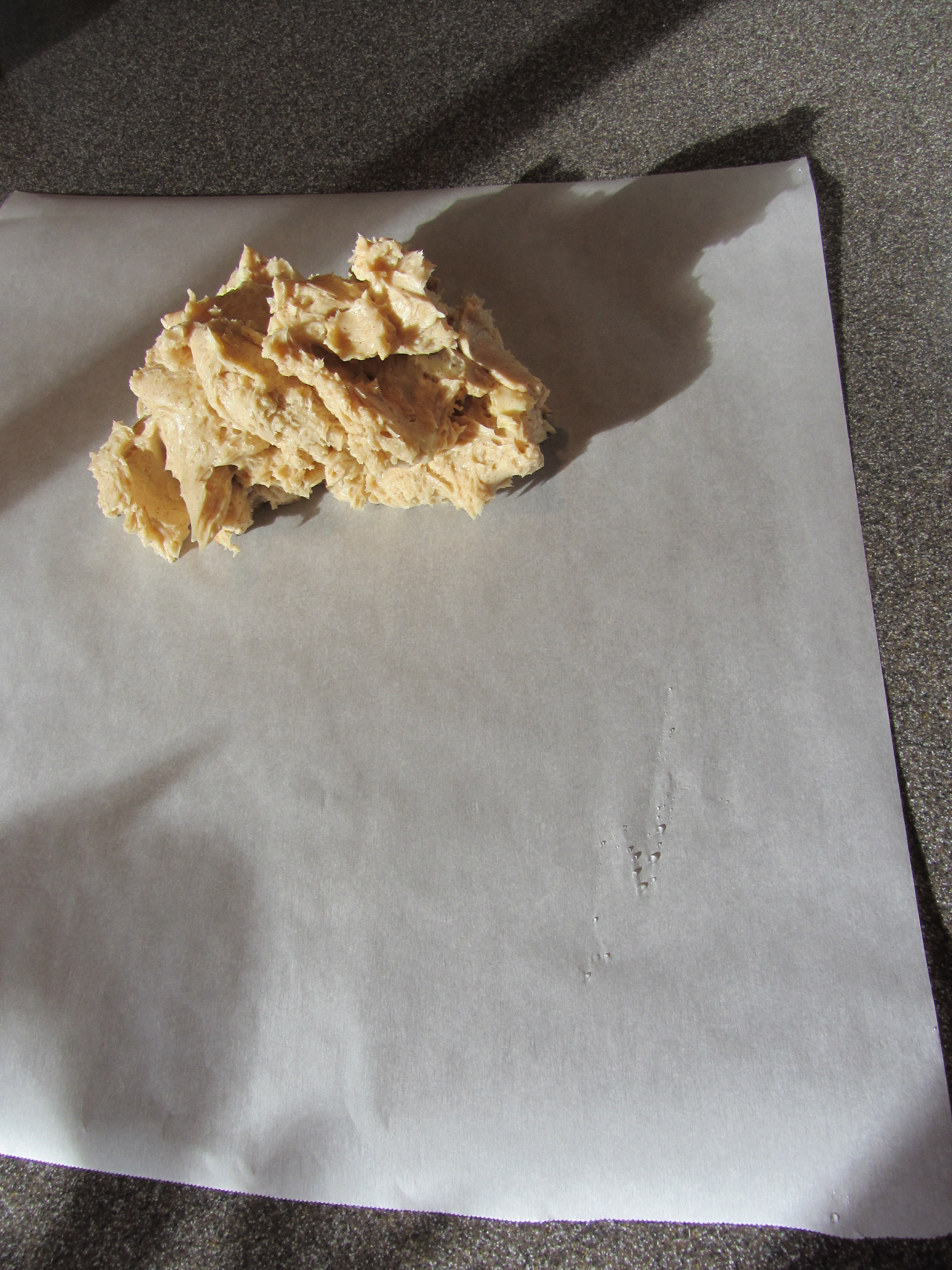
Honey butter on end of parchment sheet.
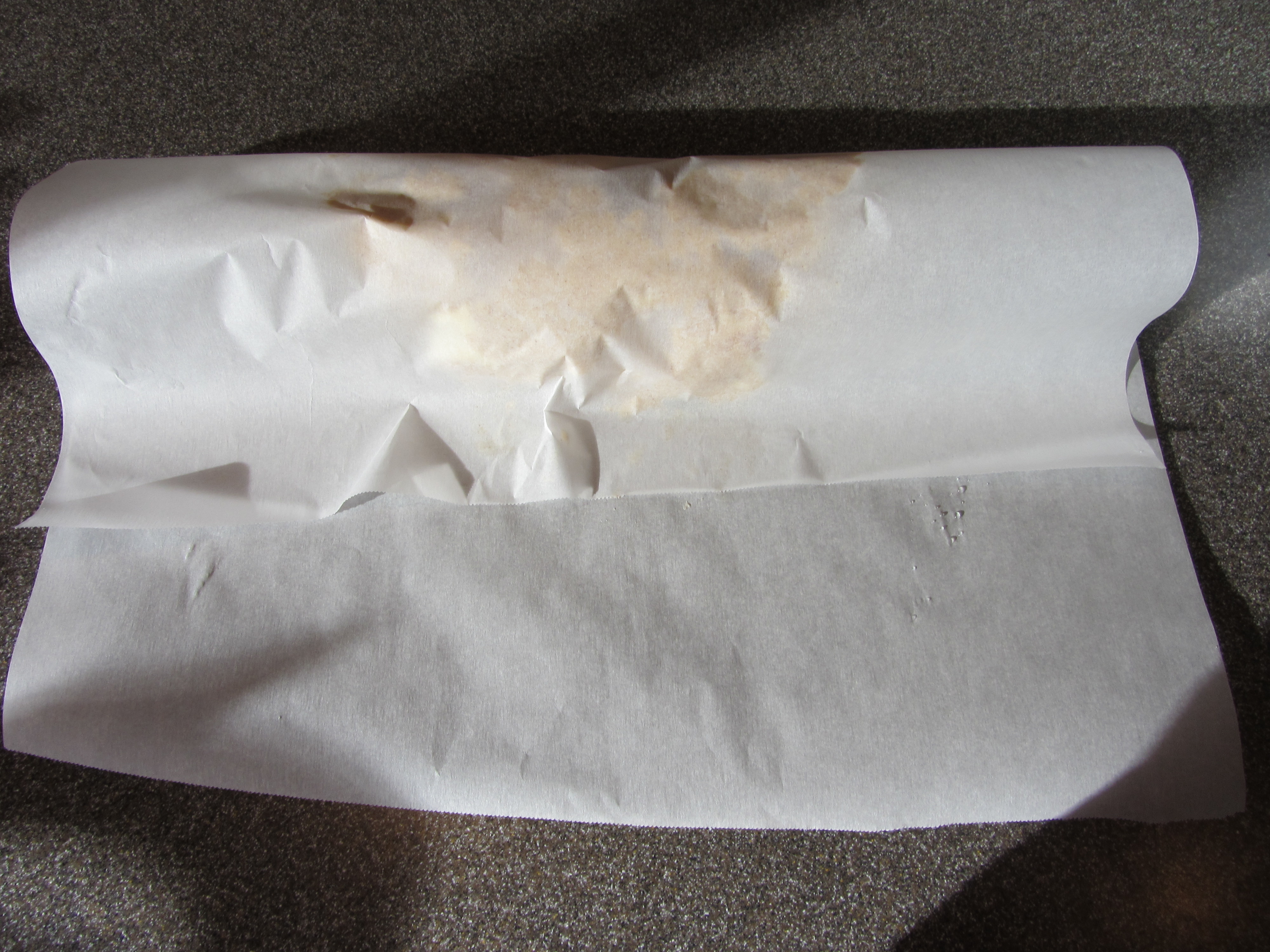
Honey butter on end of parchment sheet.

End of parchment pulled over butter.

End of parchment pulled over butter.

Honey butter log.

Honey butter log.

Chill the butter until firm, and slice to serve. Again, to first try this butter, I had it on half a bagel.
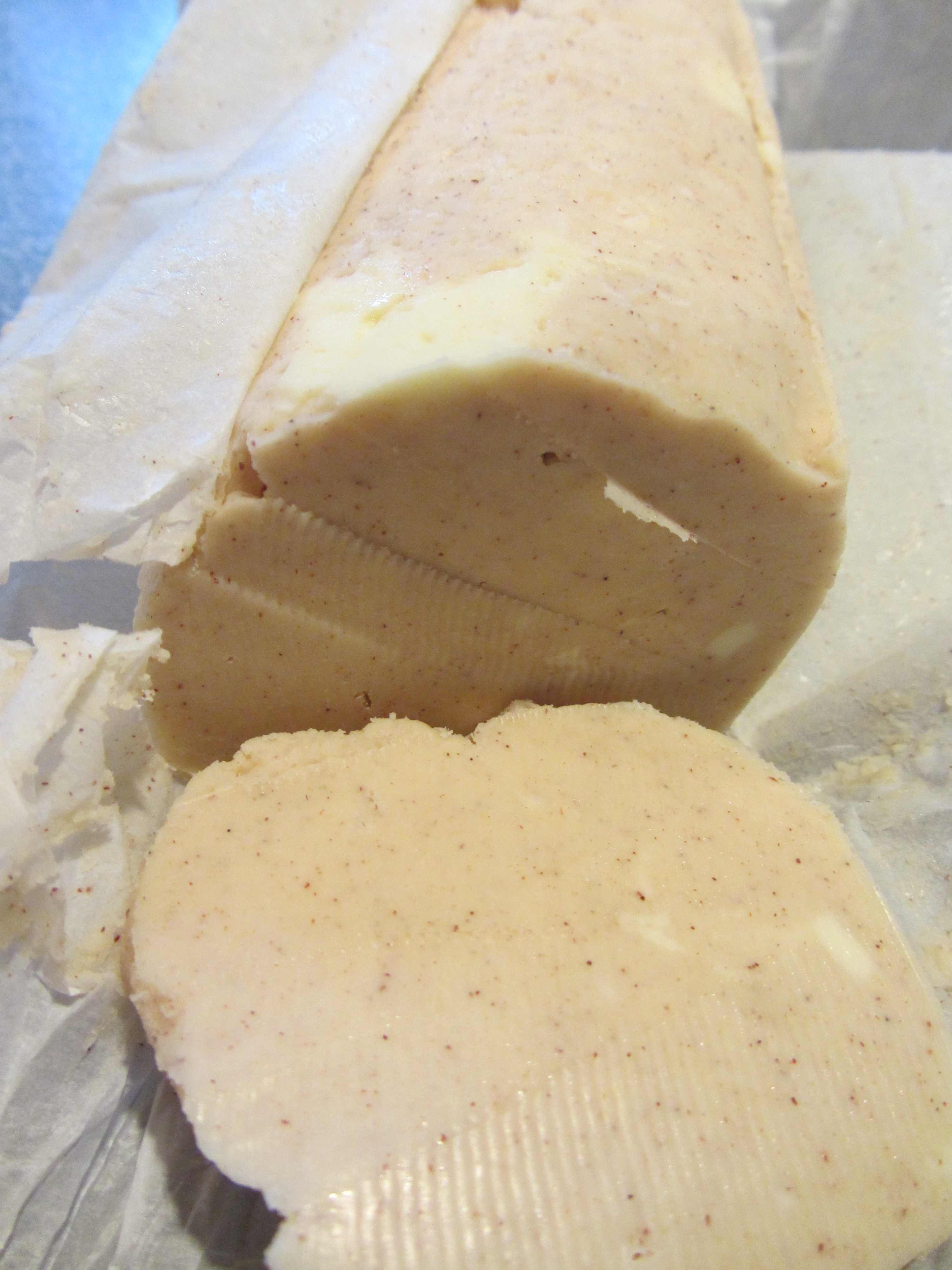
Sliced honey butter.

Sliced honey butter.

A pat of honey butter.

A pat of honey butter.

Honey butter on a bagel.

Honey butter on a bagel.

I was pleasantly surprised by the level of sweetness in the butter, as I was concerned it would be cloyingly sweet, but it was not. The flavor of the honey definitely came through, as did the vanilla and the cinnamon, but nothing was overpowering. This would be great on pancakes or waffles, and I think I will be trying that this weekend… with Alton’s pancake mix, of course!
My brother and I ate pancakes often when we were kids, and they were always prepared by Mom. While we occasionally would have Bisquick pancakes, usually our pancakes were made with one of Mom’s two sourdough starters. The one starter gave pancakes that were thin and airy, while the other sourdough pancakes were thick, slightly crispy on the outside, and soft in the center; the thick ones were always my favorite, and I have that very starter in my refrigerator right now. I don’t know exactly how old that sourdough starter is, but I believe it is at least 30. Mom almost always made a blueberry sauce to go with our pancakes, and I vividly remember fights over every spoonful, and especially the very last spoonful. Mom, in her apron, often had to mediate, deciding which one of us would get that final bit of sauce, and promising that the other of us would get it next time. Dad, in his shirt and tie, would hide behind his newspaper shield, ignoring the commotion to the best of his ability, while eating his own share of the blueberry goodness. Ah, the beauty of the family pancake breakfast.

“Instant” Pancake Mix

Seeing as we are starting a four-day mini vacation today, what better way to begin the day than with homemade pancakes? Last evening I watched the 34th episode of Good Eats, and quickly mixed up a batch of Alton Brown’s instant pancake mix.

Pancake mix ingredients:  flour, baking soda, baking powder, Kosher salt, and sugar.

Pancake mix ingredients:  flour, baking soda, baking powder, Kosher salt, and sugar.

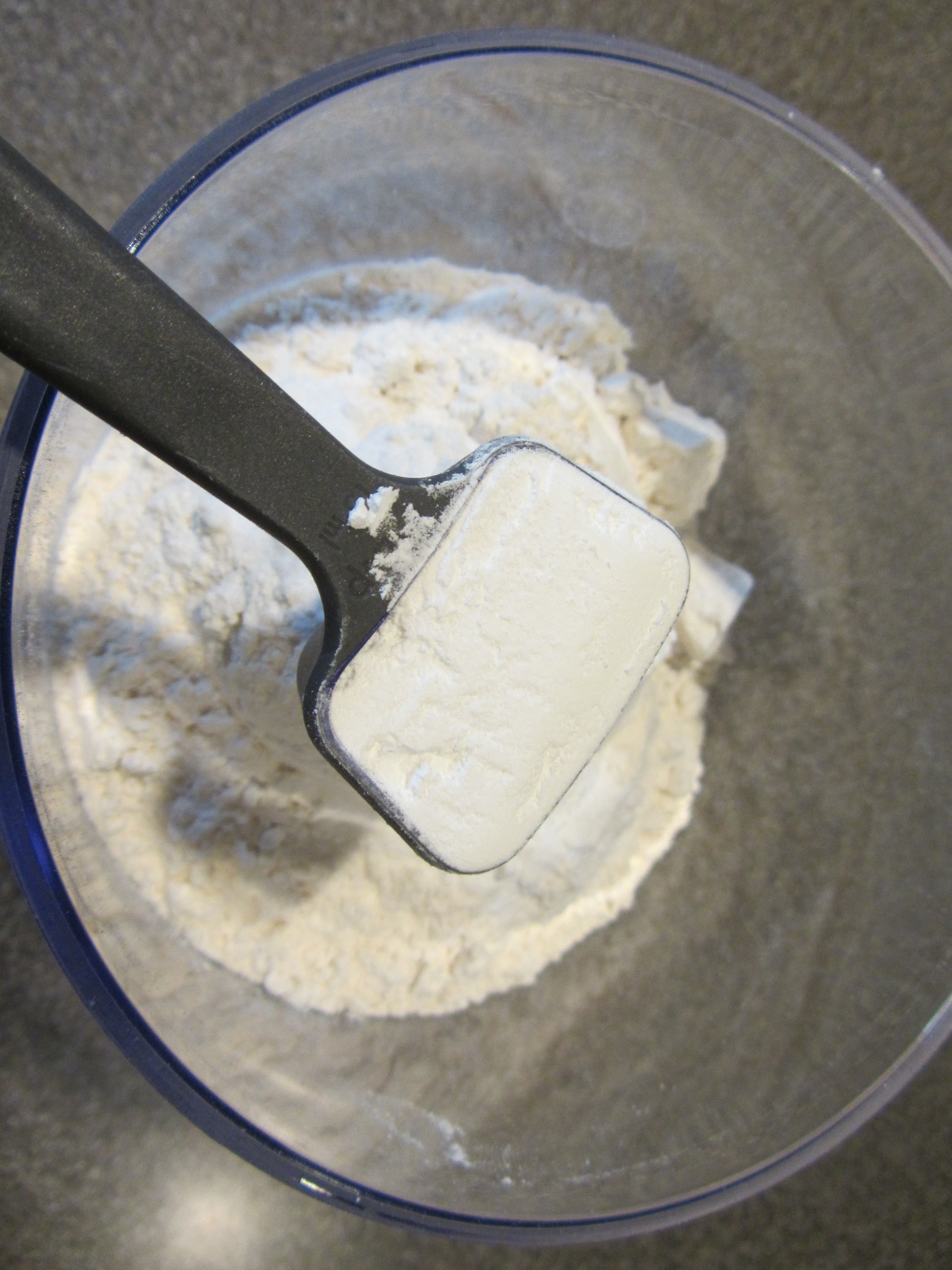
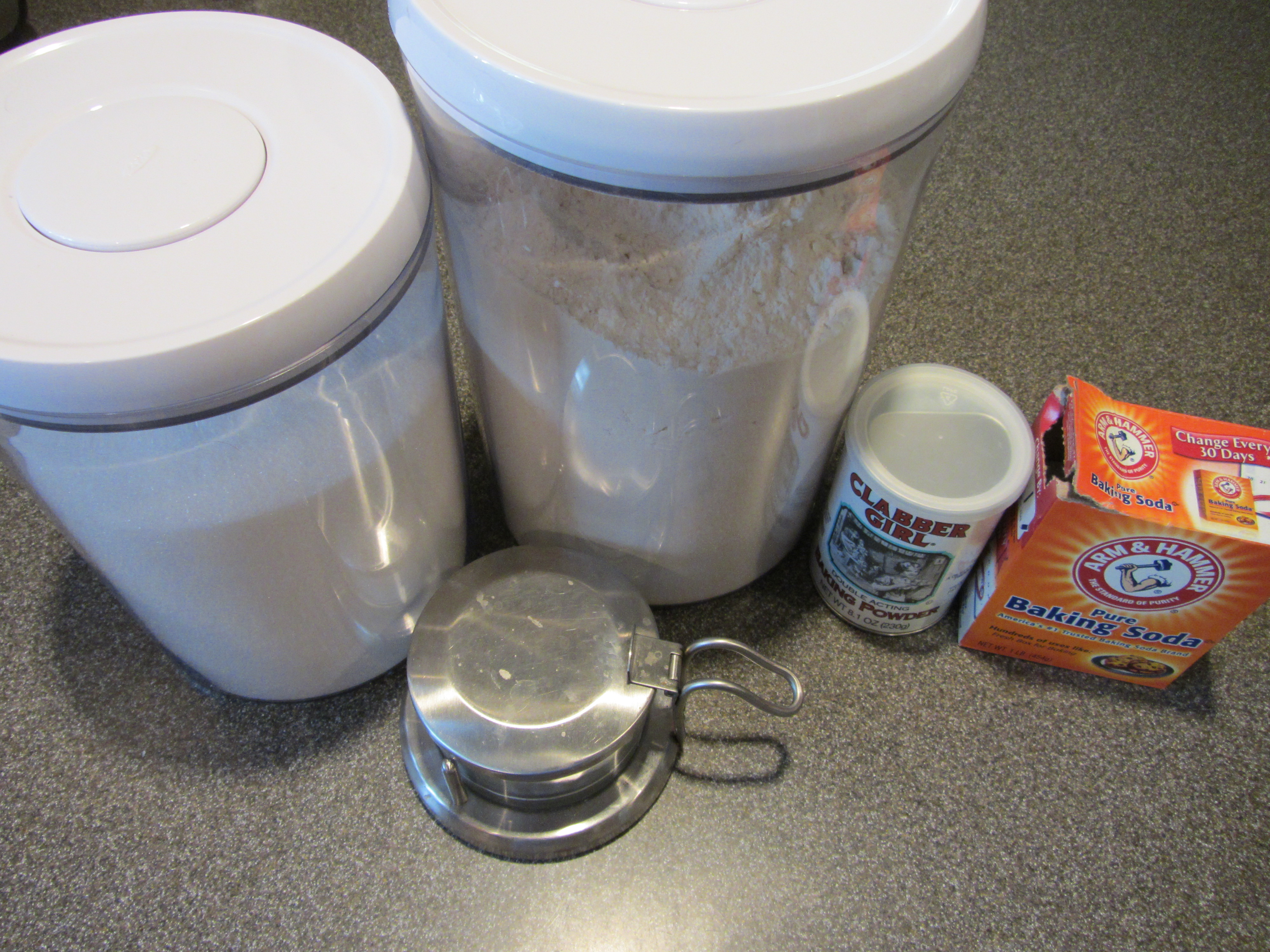
To make his mix, into a lidded container scoop 6 C of all-purpose flour; the moderate protein content of AP flour is ideal, as low-protein flours (like cake flour) result in pancakes that are too soft and light, while high-protein flours (such as bread flour) yield pancakes that are too dense and tough. Prior to scooping your flour, give it a good shake to aerate grains, as this will result in a more accurate measurement.

Spoon 6 C of flour into a lidded container.

Spoon 6 C of flour into a lidded container.

To the flour, add 1.5 t of baking soda, 1 T of baking powder, 1 T of Kosher salt, and 2 T of sugar.

Add 1.5 t baking soda.

Add 1.5 t baking soda.

Add 1 T baking powder.

Add 1 T baking powder.

Plus a tablespoon of Kosher salt.

Plus a tablespoon of Kosher salt.

And 2 T sugar.

And 2 T sugar.

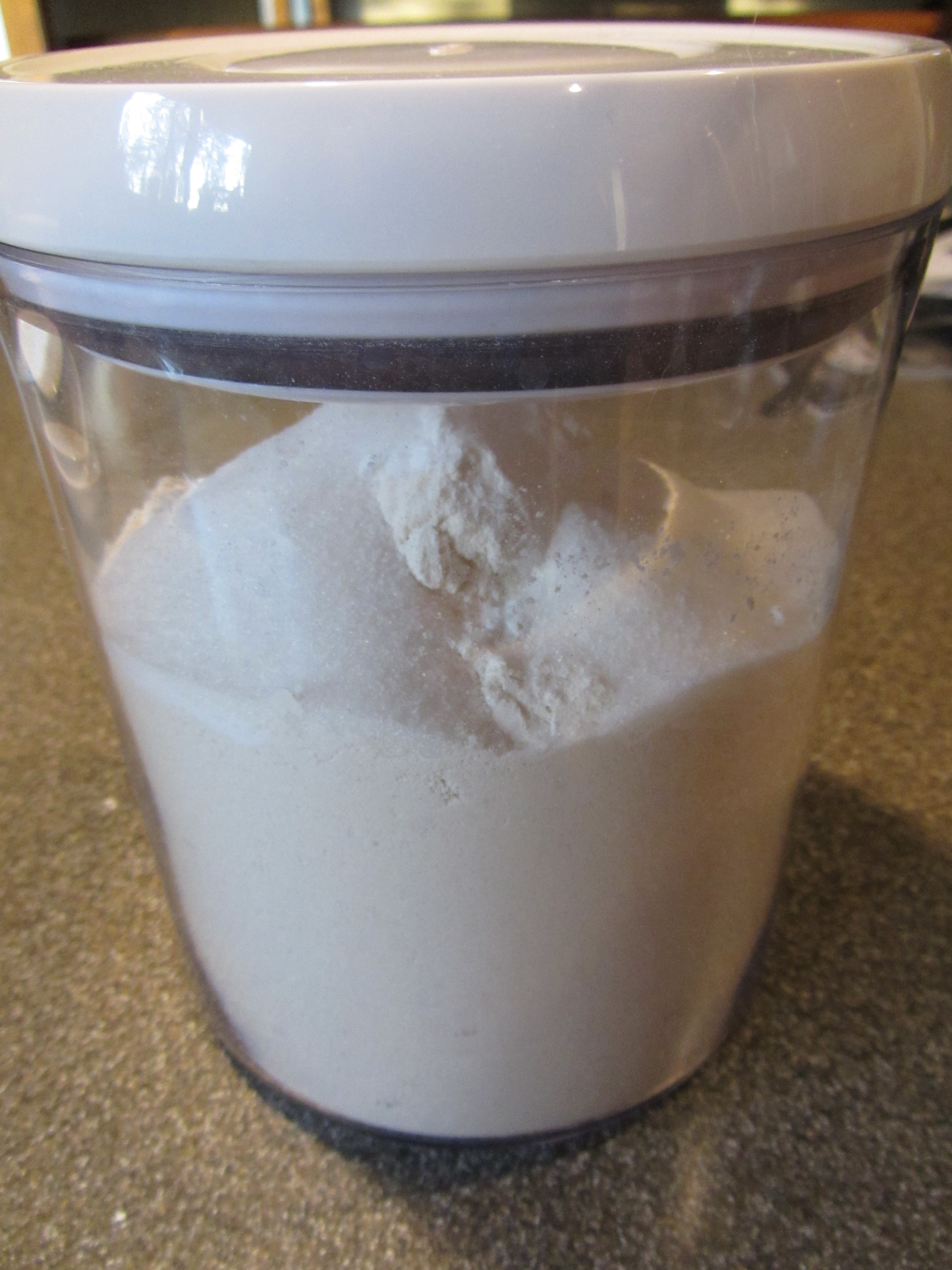
Shake the mix well and use within three months.

Before shaking.

Before shaking.

After shaking to combine.

After shaking to combine.

Note:  This recipe can easily be scaled up or down – just use the following formula:  1/4 t baking soda per cup of flour, 1/2 t baking powder per cup of flour, 1/2 t Kosher salt per cup of flour, and 1 t sugar per cup of flour.

When ready to make your pancakes, for every 2 C of pancake mix, you will need 4 T of melted butter, 2 C of buttermilk, and 2 eggs, separated. Oh, and fruit, if you want to have fruit in your pancakes. Alton used blueberries in the episode.

Pancake ingredients:  2 C pancake mix, 2 C buttermilk, 4 T melted butter, blueberries, and 2 eggs, separated.

Pancake ingredients: 2 C pancake mix, 2 C buttermilk, 4 T melted butter, blueberries, and 2 eggs, separated.

To give you an idea of how much mix to use, for us this morning, 2 C of pancake mix gave us 9 pancakes, made using a 3 oz. ladle. Measure your dry pancake mix into a large bowl.

2 C of pancake mix in a large bowl.

2 C of pancake mix in a large bowl.

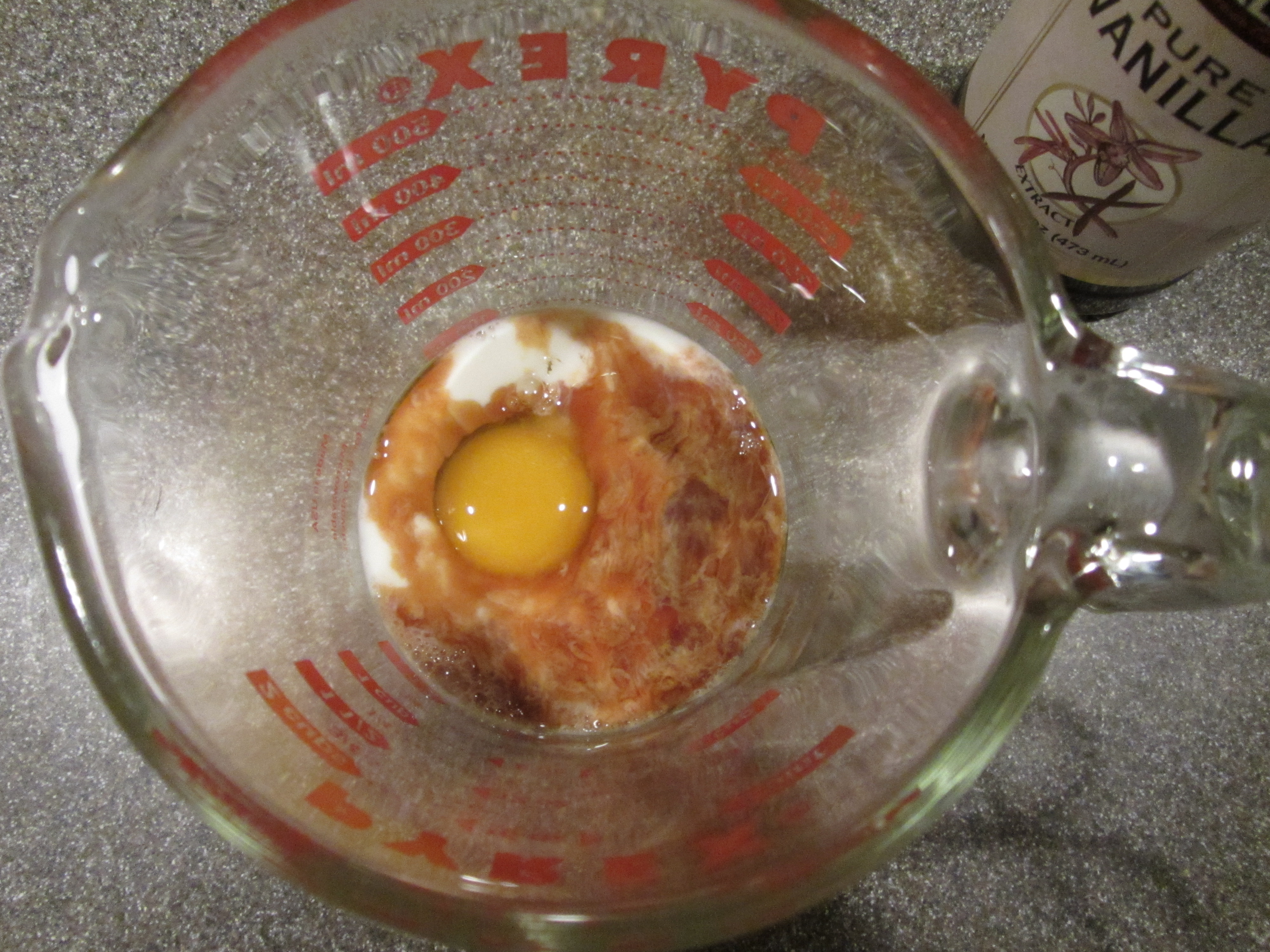
For the liquid ingredients, buttermilk and butter go together like oil and water, so, for proper mixing, add the egg whites to the buttermilk and mix with a fork; since egg whites are mostly water, they will mix easily with the buttermilk.

Adding egg whites to buttermilk.

Adding egg whites to buttermilk.

Buttermilk/egg white mixture.

Buttermilk/egg white mixture.

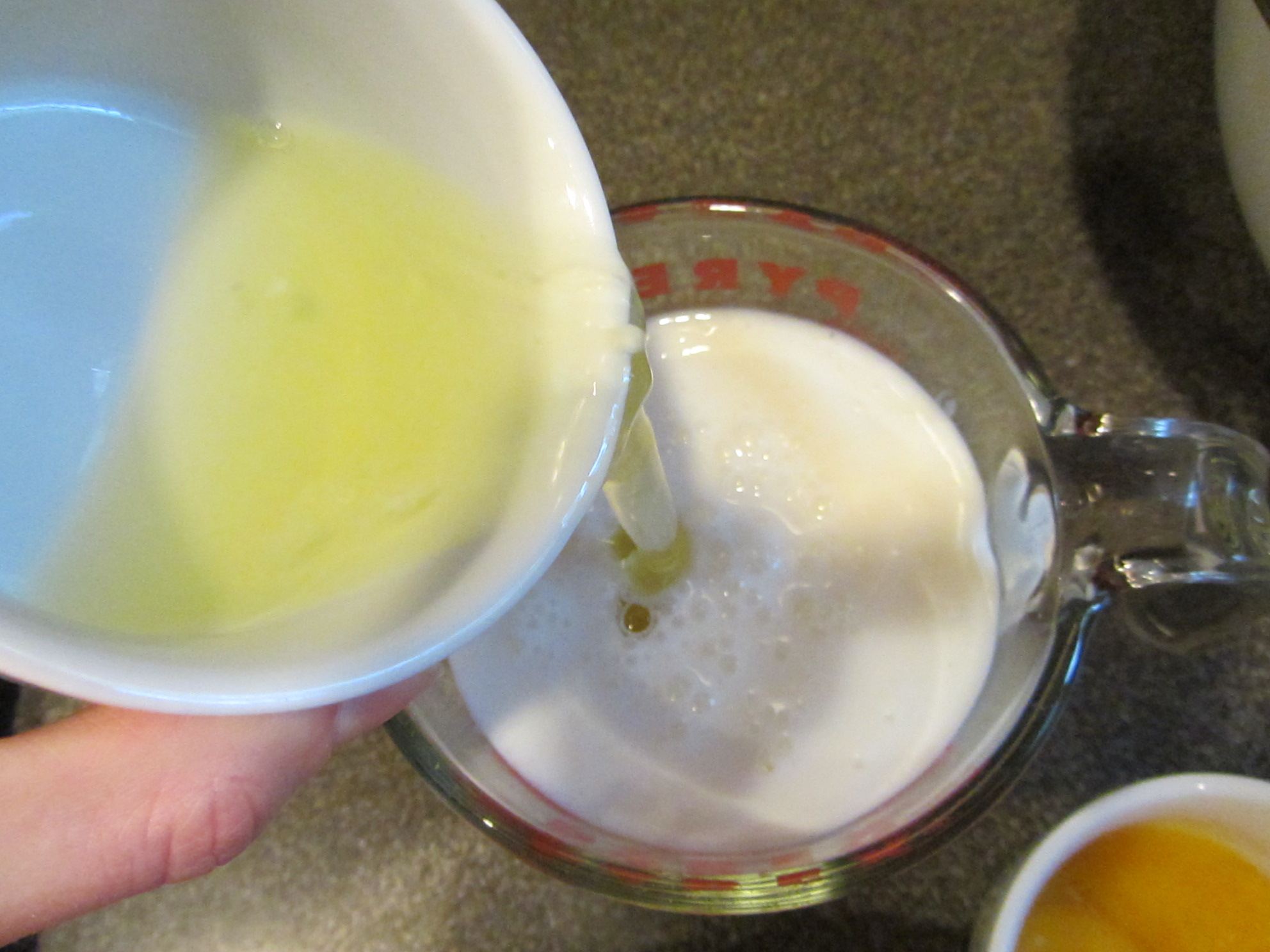
Separately, add the egg yolks to the melted butter; the yolks will mix well with the butter because their lipoproteins like both fat and water.

Adding egg yolks to melted butter.

Adding egg yolks to melted butter.

Egg yolk/butter mixture.

Egg yolk/butter mixture.

Finally, combine the egg white/buttermilk mixture with the egg yolk/butter mixture, and whisk.

Combining liquid ingredients.

Combining liquid ingredients.

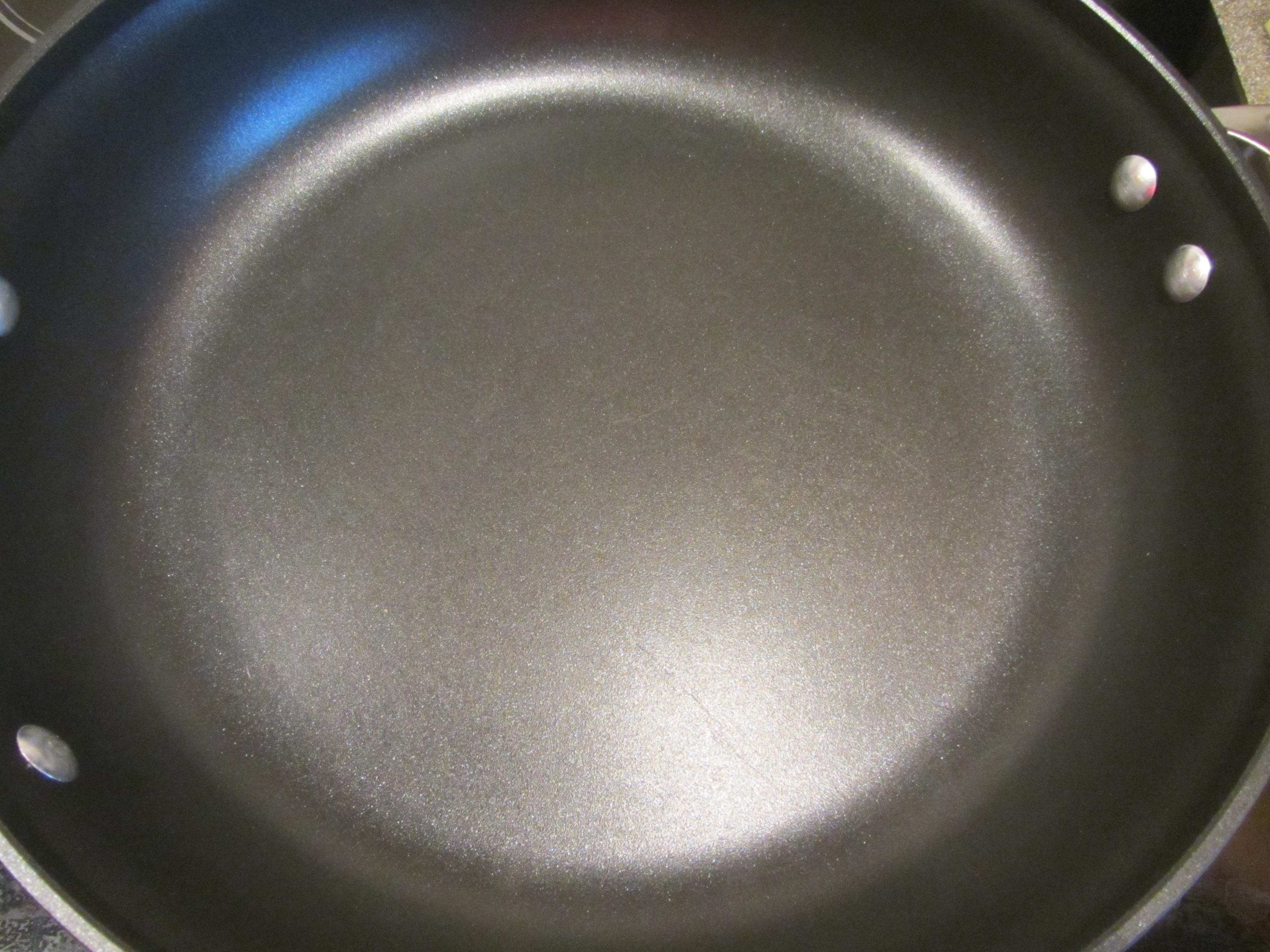
Once combined, heat a griddle or skillet to 350 degrees. If you plan to serve pancakes to numerous people at once, you will also want to put a towel-lined baking sheet in your oven and heat it to 200 degrees. We do not have a griddle, so I used a large, heavy-duty nonstick skillet. I was given an infrared thermometer for Christmas, so I used that to determine when my skillet had reached 350 degrees.

Large skillet preheating.

Large skillet preheating.

Pan just about ready.

Pan just about ready.

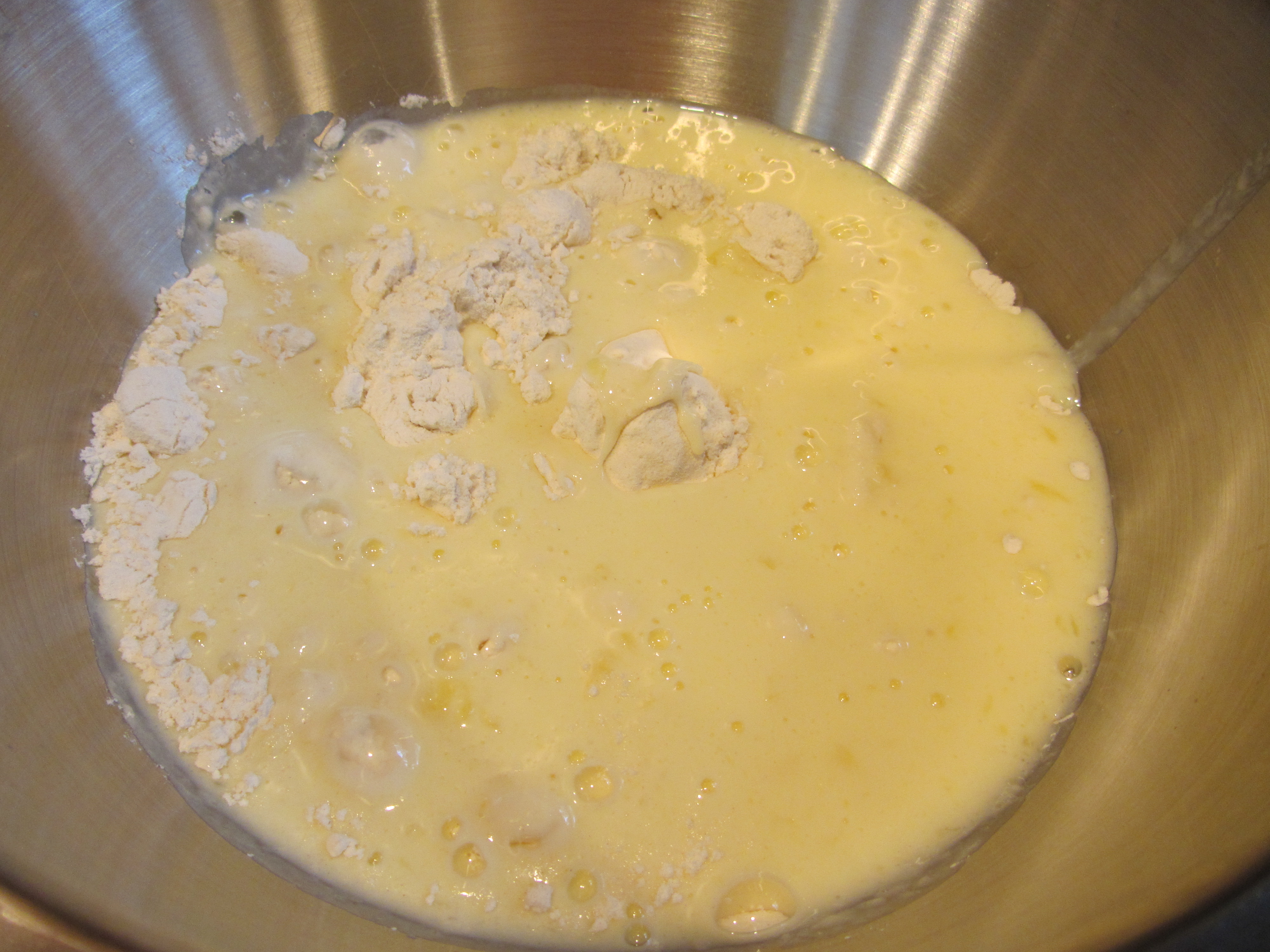
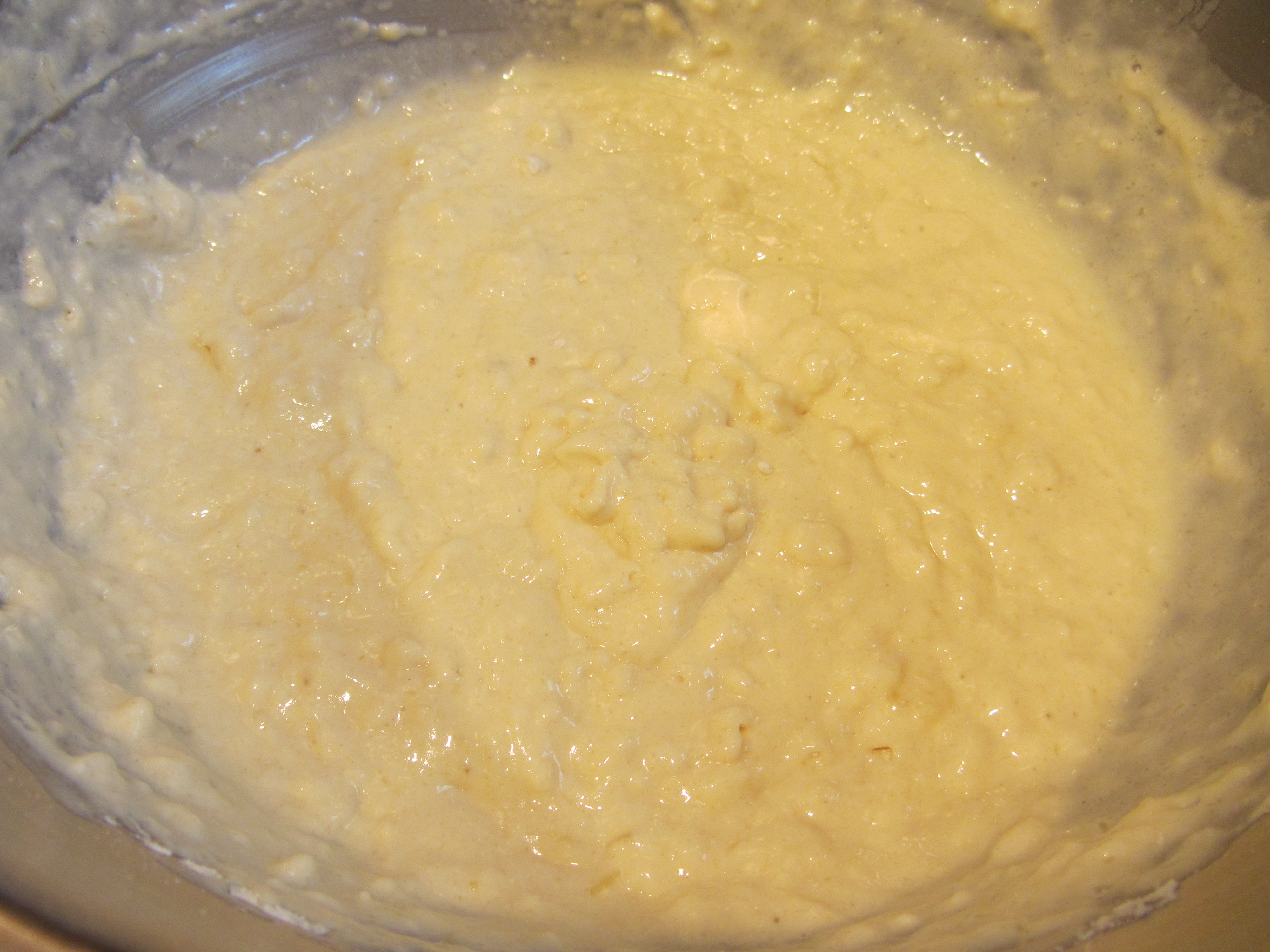
If you do not have an electric griddle or an infrared thermometer, you can tell that your skillet is ready when water droplets dance on the surface. When your cooking surface is heated, add the wet ingredients to the dry ingredients, and mix just until combined. You do not want to over-mix your batter, and do not worry about lumps, as they will cook out.

Adding wet ingredients to dry ingredients once the pan is hot.

Adding wet ingredients to dry ingredients once the pan is hot.

Mix just until barely combined.

Mix just until barely combined.

Lube your hot pan by rubbing it with a stick of butter, and then wipe it with some paper towels until no fat is visible on the pan.

Hot pan lubed with butter.

Hot pan lubed with butter.

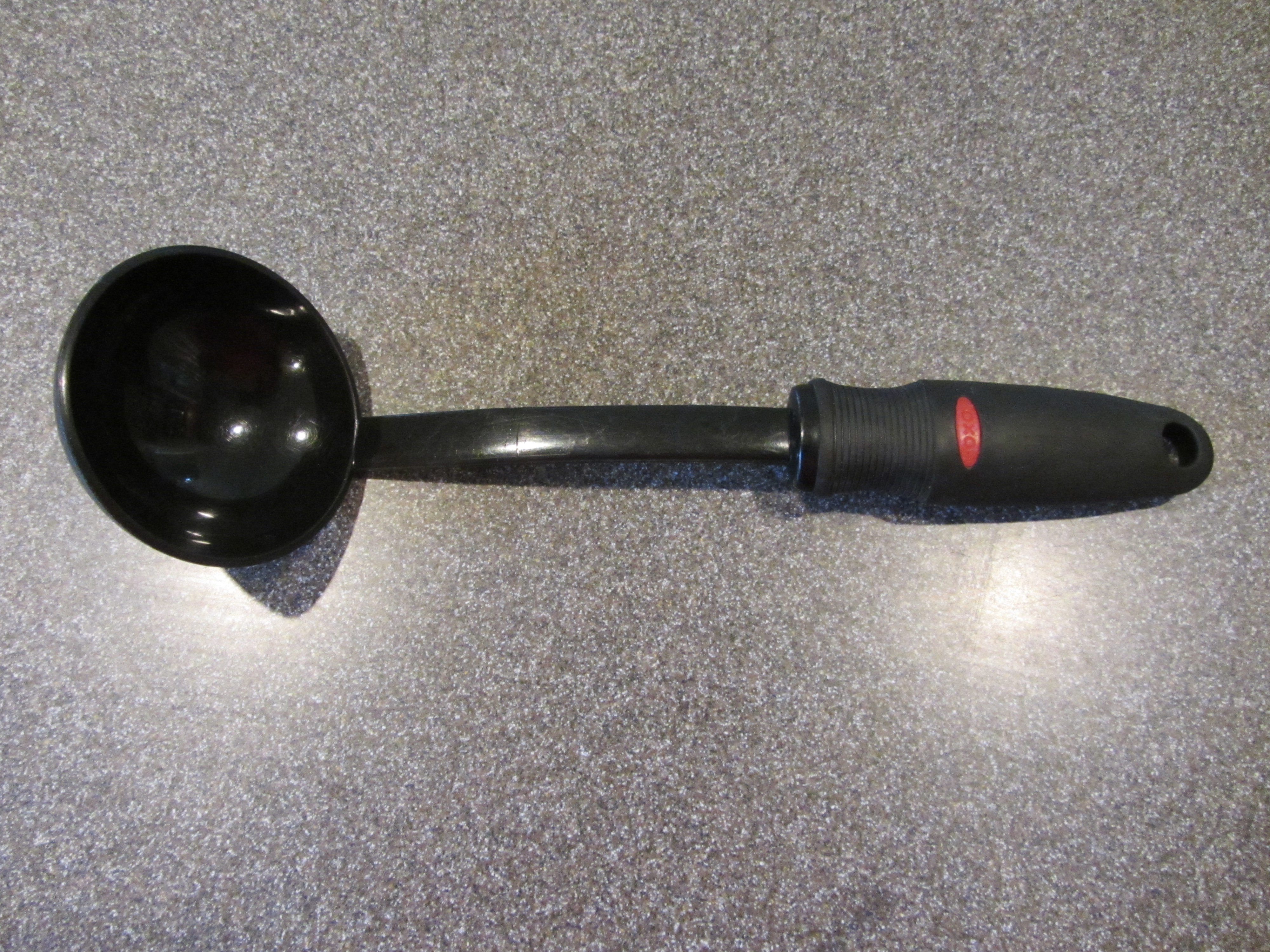
Using a 3 oz. ladle, gently spoon pancakes onto the pan.

3 ounce ladle.

3 ounce ladle.

Batter in the pan.

Batter in the pan.

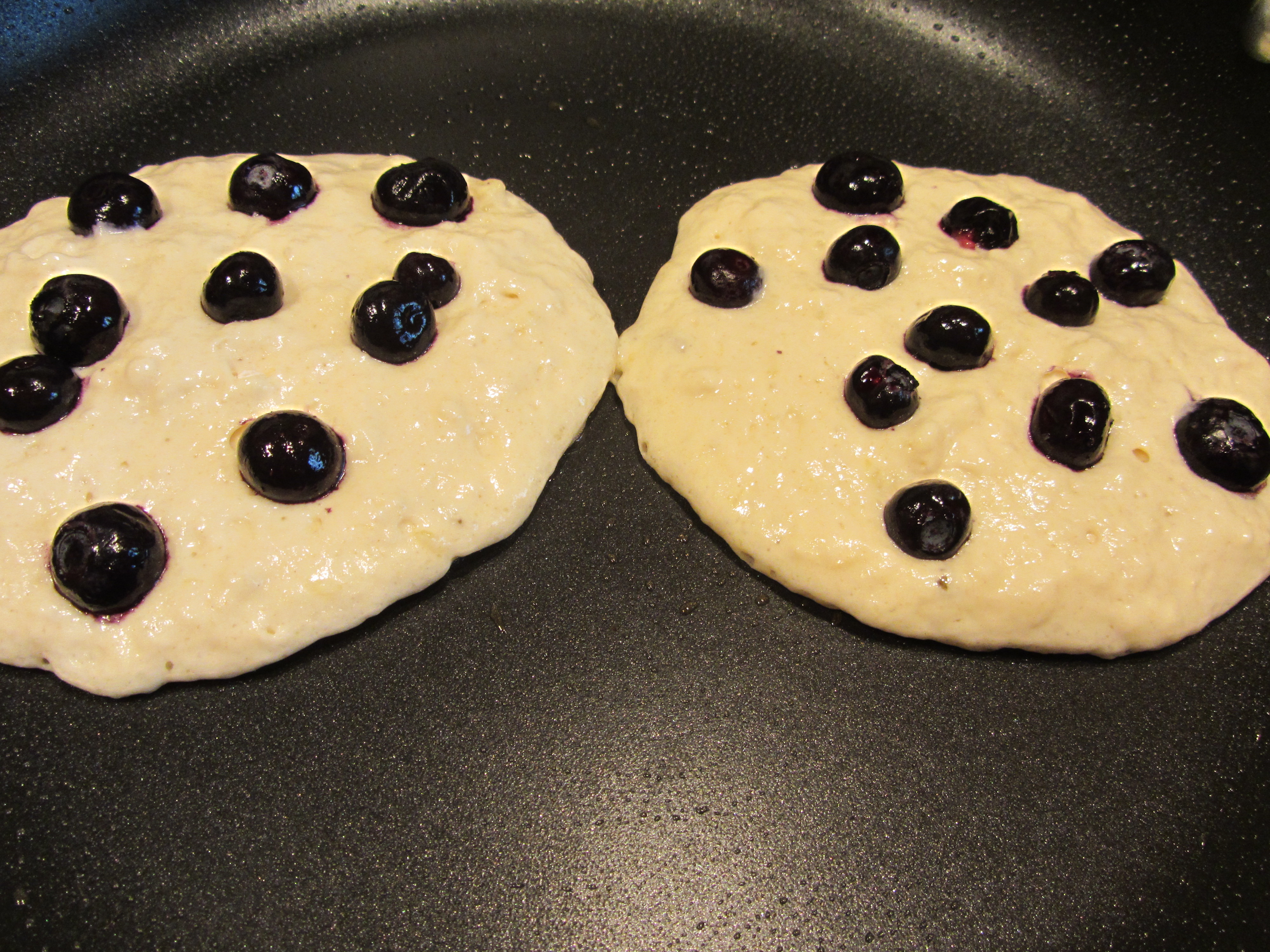
If you want to add fruit to your pancakes, sprinkle it onto the pancakes now.

Fruit sprinkled on.

Fruit sprinkled on.

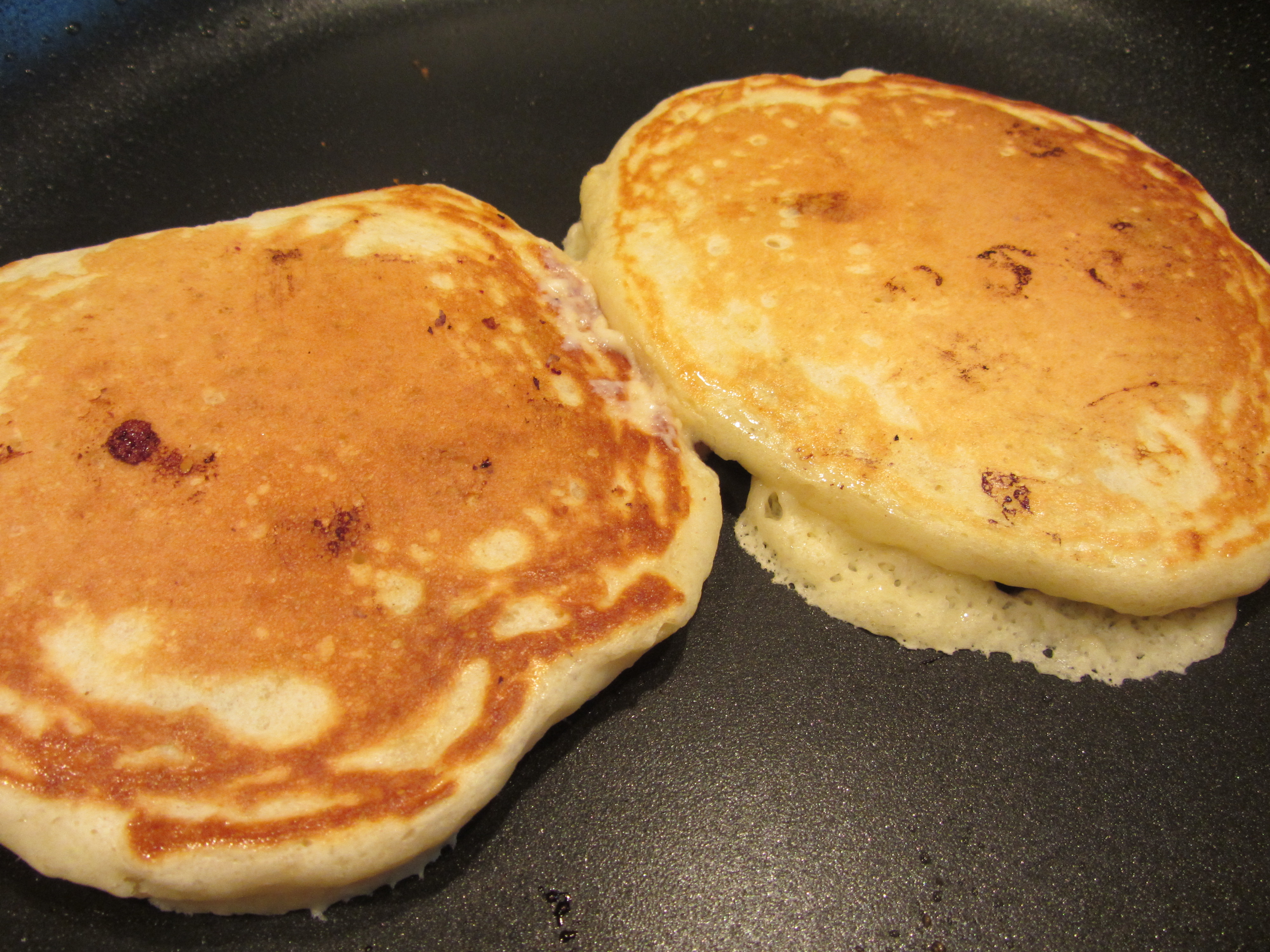
Cook the pancakes until bubbles set around the edges and the undersides are golden brown. Flip the pancakes and cook the second sides until they, too, are golden brown, which should take about half as long as for the first sides.

Flipped pancakes.

Flipped pancakes.

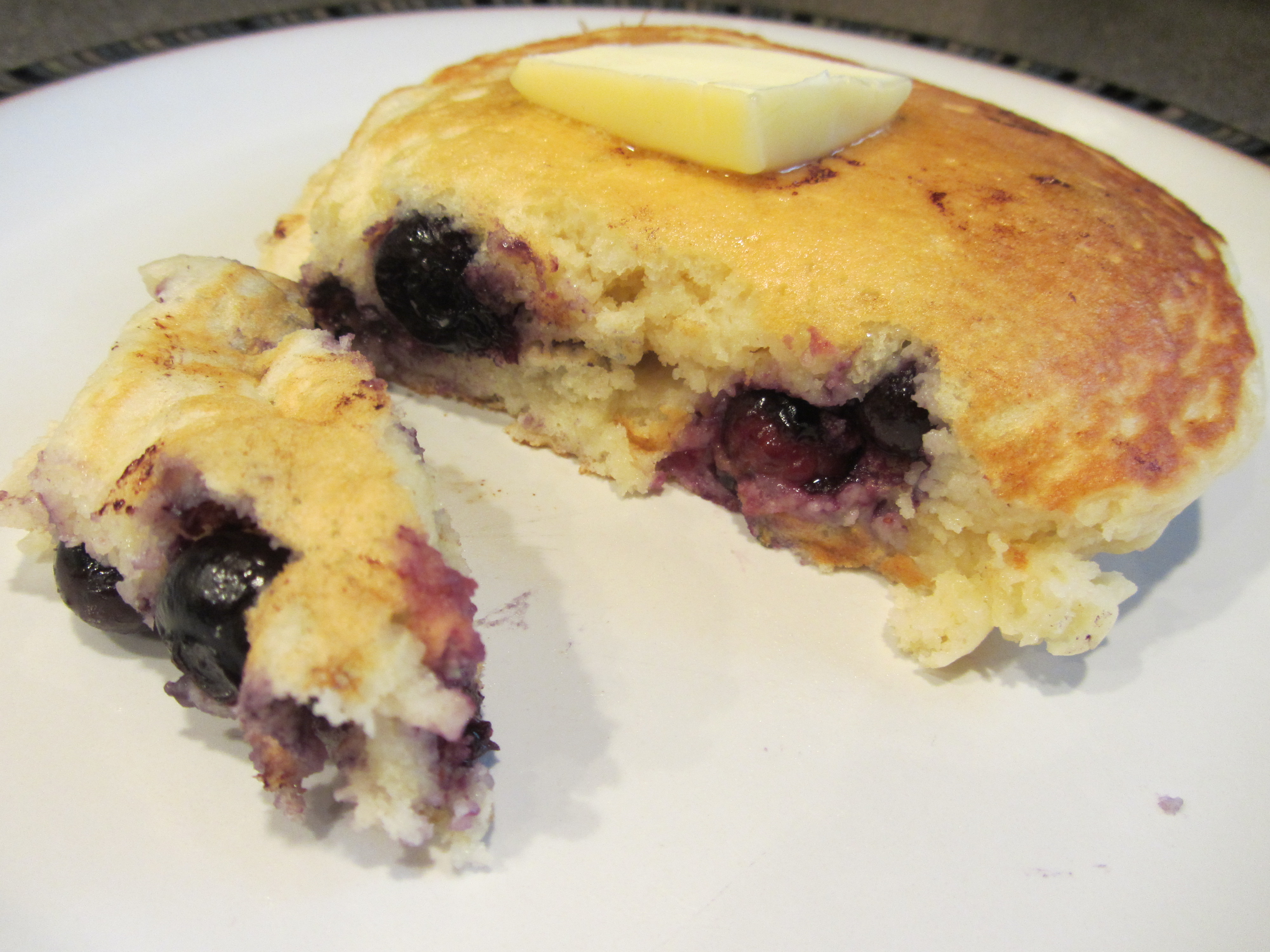
You can hold the pancakes in your warm oven for 20-30 minutes, or serve them immediately with butter and real maple syrup. I opted to eat mine with just butter.

Blueberry pancakes with butter.

Blueberry pancakes with butter.

Alton's blueberry pancakes.

Alton’s blueberry pancakes.

If you have leftover pancakes, Alton says you can cool them completely on a cake rack, wrap them individually in paper towels, and freeze them in a plastic bag; they can be reheated in a toaster or microwave. We had five extra pancakes, and they are in the freezer as I type. We thought these pancakes were really good, and they cooked up very nicely. They were thick, fluffy, golden brown, and slightly crispy on the outside. The tang from the buttermilk was evident, and paired well with the sweetness of the blueberries. Chopped bananas would also be good in these pancakes. Perhaps I will be making these pancakes when our family comes to visit next week. We may not have any chocolate chip cookies left (see my previous post here) but we do have pancake mix! If you are looking for a good, fast pancake recipe that is superior to commercial mixes, Alton’s pancakes are great.
 

Thank goodness I was set to increase my Boston Marathon training last week, as the 33rd episode of Good Eats had me baking not one, not two, but THREE types of chocolate chip cookies. We have family coming to visit next week, so I figured I could always freeze some cookies for when they arrive. As I ate two cookies with my morning coffee today, I was shocked, and somewhat horrified, to realize that we have a mere handful of cookies remaining. How did THAT happen? So much for freezing. At least I can say that we sufficiently and thoroughly evaluated the three cookie recipes, so if you want the scoop on Alton’s three chocolate chip cookie recipes, read on.

The Thin

From title alone, I was least excited to make Alton’s thin chocolate chip cookies, as I think of myself as someone who generally prefers cookies on the chewy side. I set out last Tuesday evening to whip up a batch, figuring they would be the perfect thing to greet Ted when he returned home from his evening running group. To start these cookies, combine one egg, 2 oz. of whole milk, and 1.5 t of vanilla, and allow the liquid to come to room temperature.

Milk, egg, and vanilla.

Milk, egg, and vanilla.

Liquid ingredients, coming to room temperature.

Liquid ingredients, coming to room temperature.

Meanwhile, sift together 2 1/4 C of bleached all-purpose flour, 1 t of salt, and 1 t (plus an extra pinch) of baking soda.

Bleached AP flour, salt, and baking soda.

Bleached AP flour, salt, and baking soda.

Sifted dry ingredients.

Sifted dry ingredients.

Why use bleached flour? Alton did not specify a reason in the episode, but bleached flour is apparently superior for baking because it has a lower protein content. Alton seems to use Kosher salt in nearly all of his recipes, but he did not specify that Kosher salt should be used in these cookies, so I used regular table salt. In a stand mixer, cream 2 sticks of cold butter, starting on low speed.

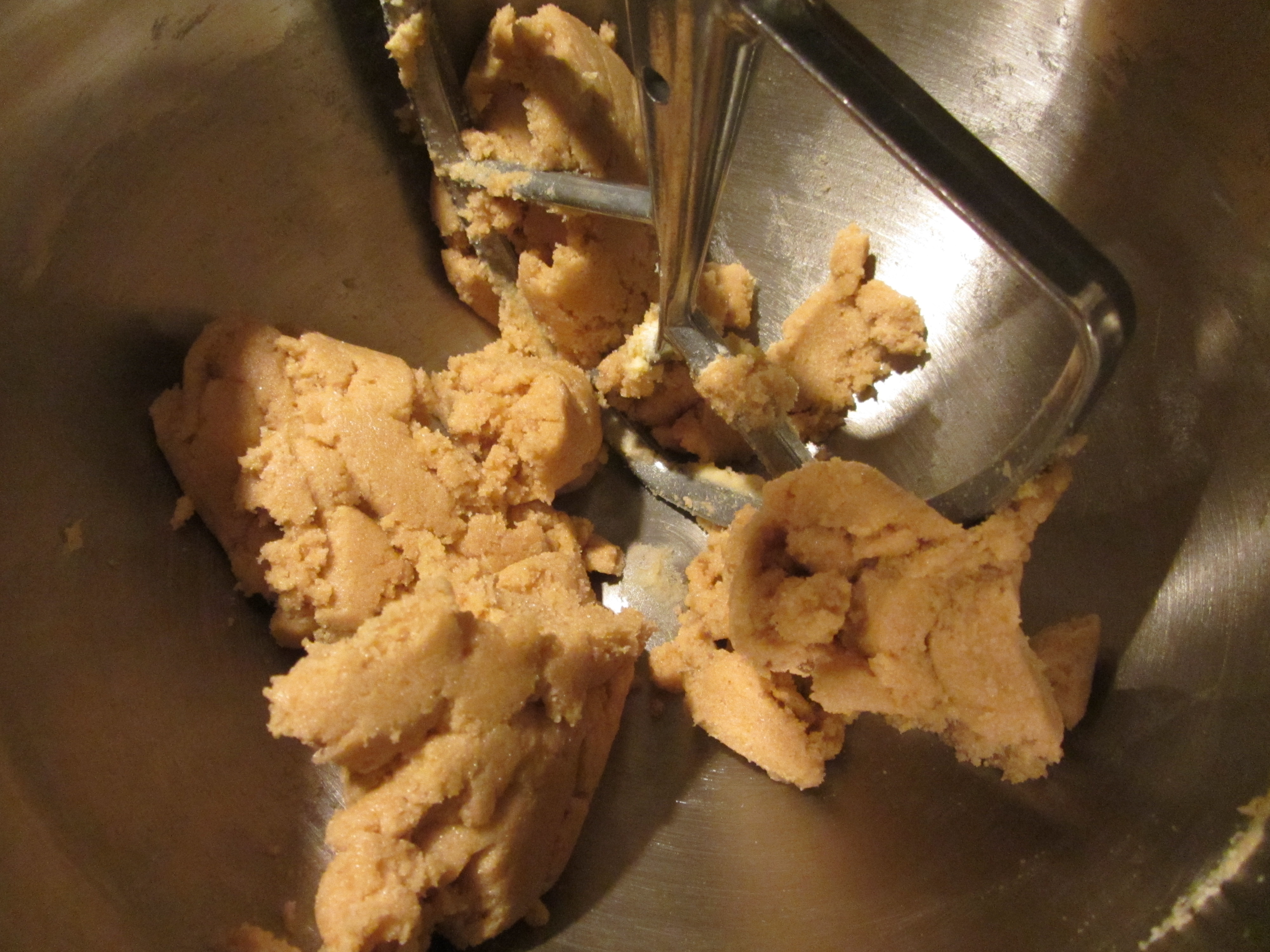
Cold butter in the mixer.

Cold butter in the mixer.

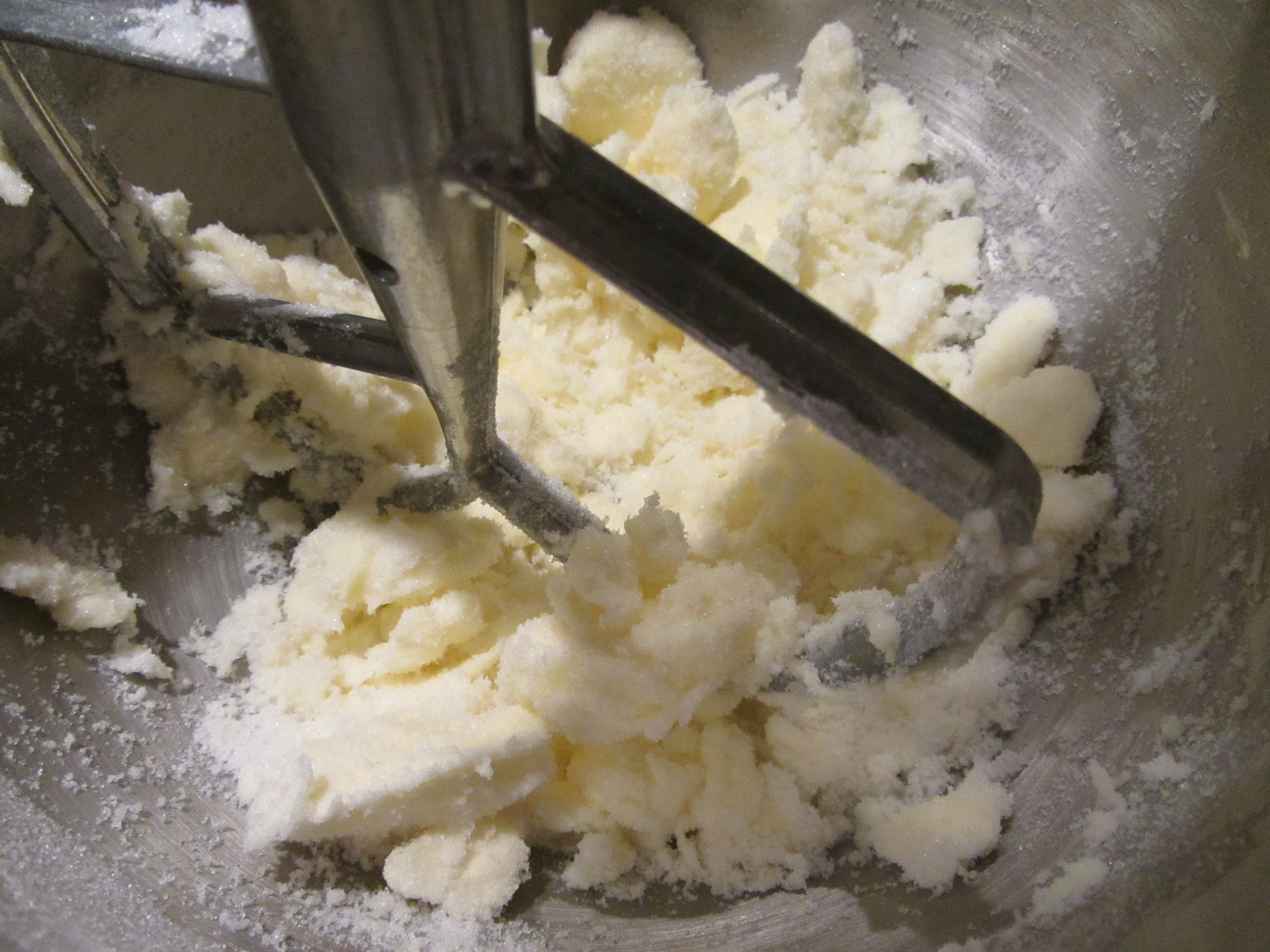
Add 1 C of sugar, 1/2 C of light brown sugar, increase the speed, and beat until fluffy.

Cold butter creamed with sugar.

Cold butter creamed with sugar.

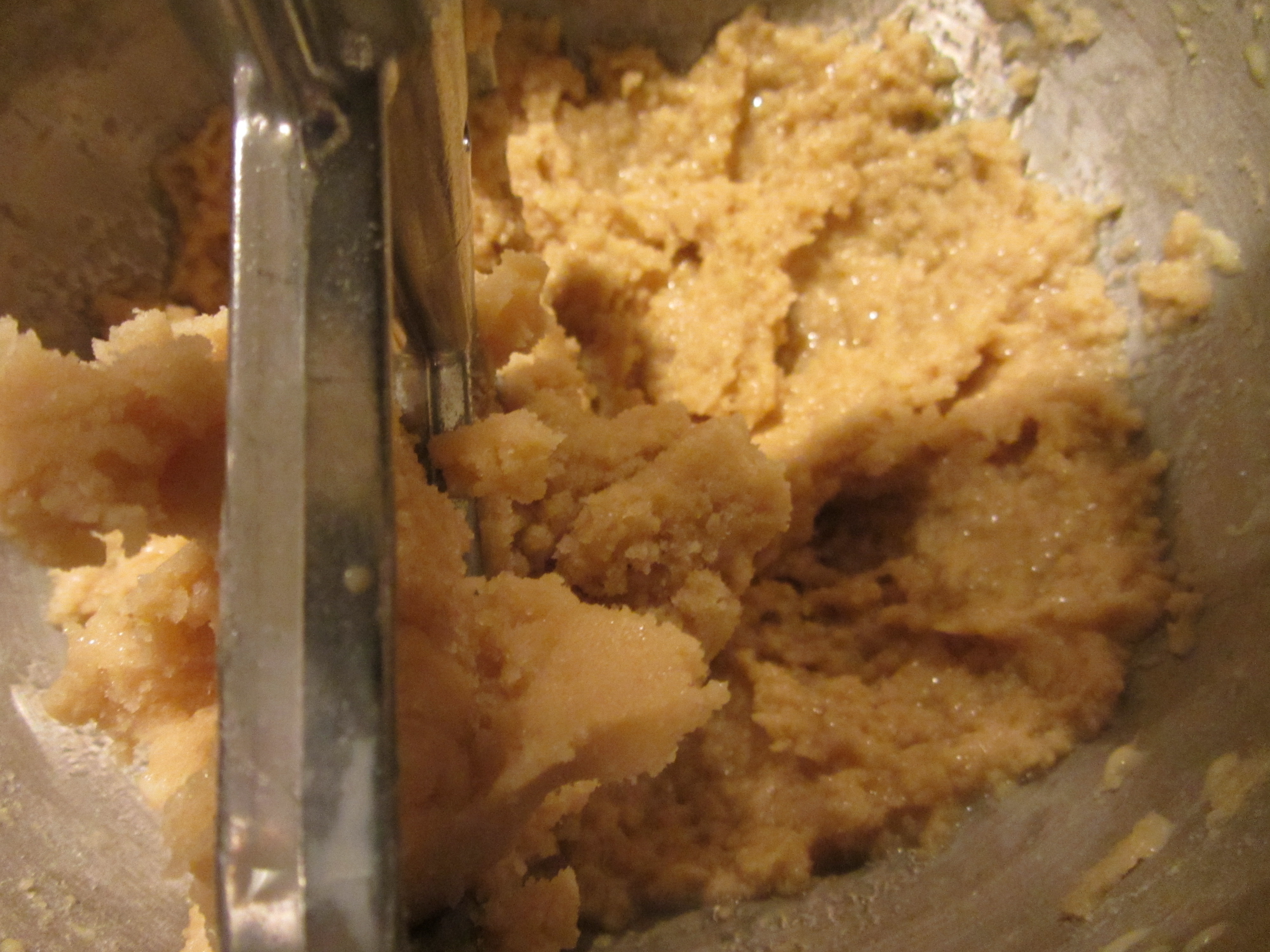
Light brown sugar added.

Light brown sugar added.

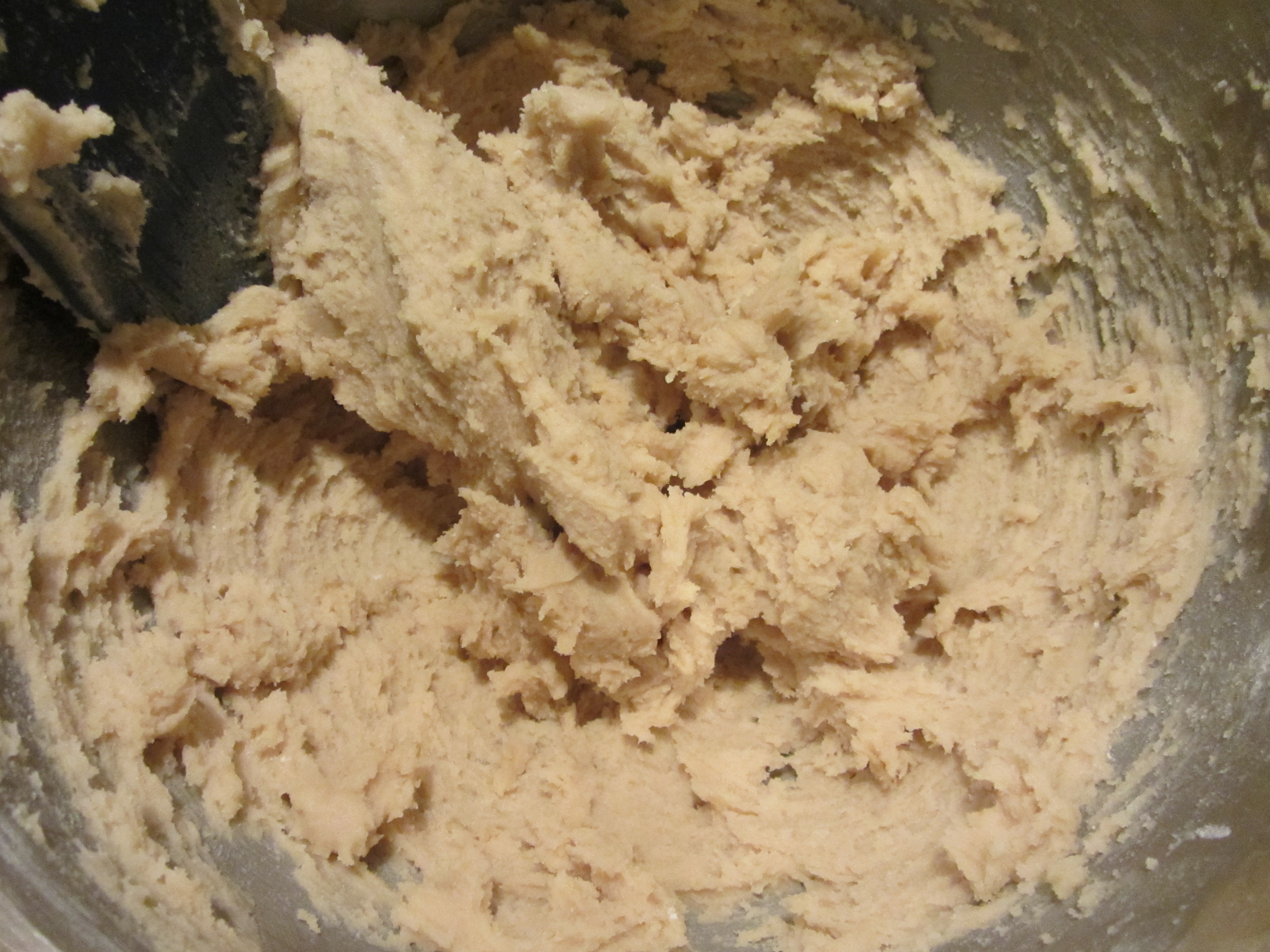
Creamed until fluffy.

Creamed until fluffy.

Once thoroughly mixed, decrease the speed and slowly add the liquid ingredients.

Liquid ingredients slowly added.

Liquid ingredients slowly added.

Next, on low speed, slowly add the dry ingredients, scraping the bowl between additions.

Dry ingredients added gradually.

Dry ingredients added gradually.

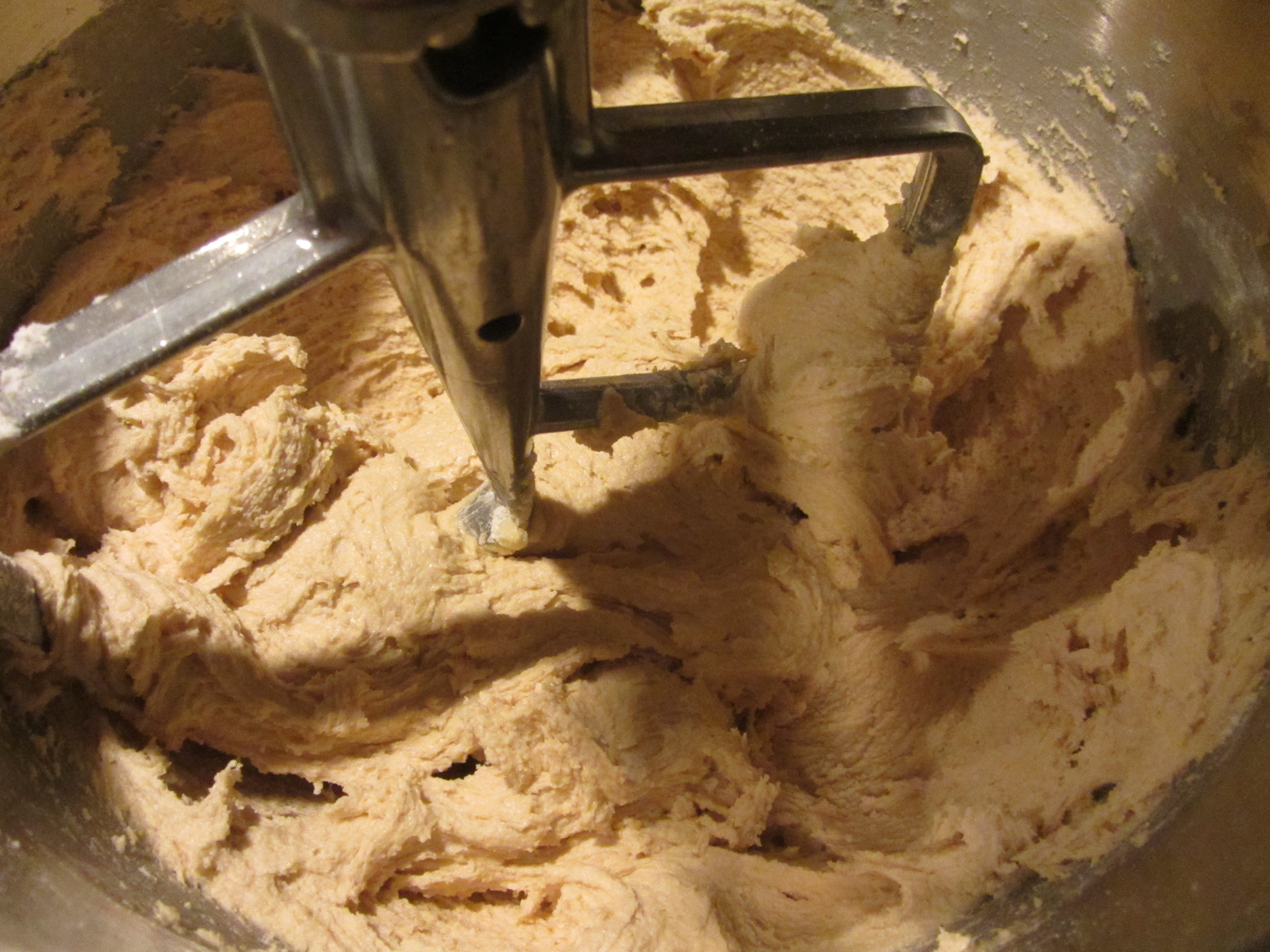
Dough after all flour incorporated.

Dough after all flour incorporated.

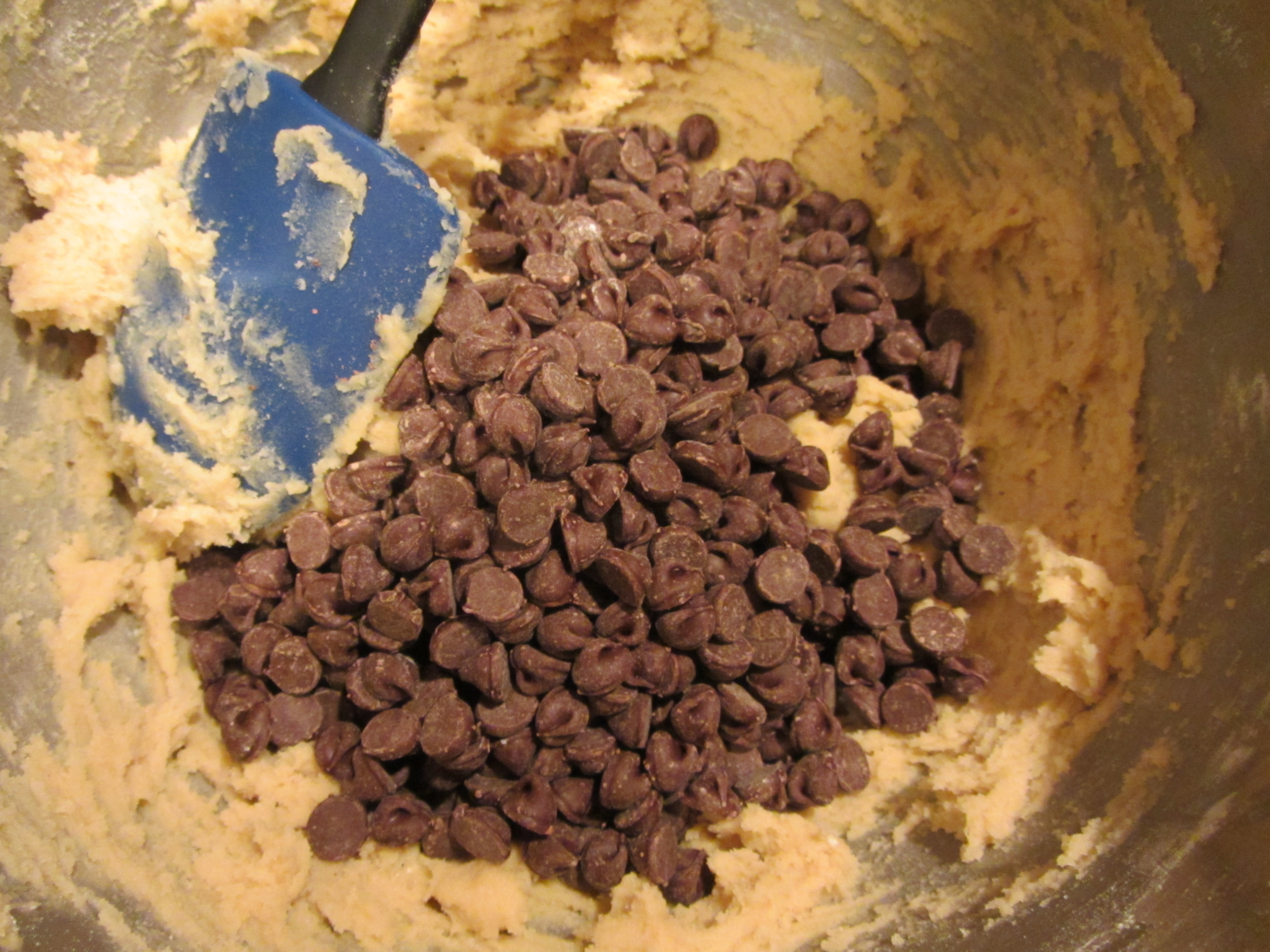
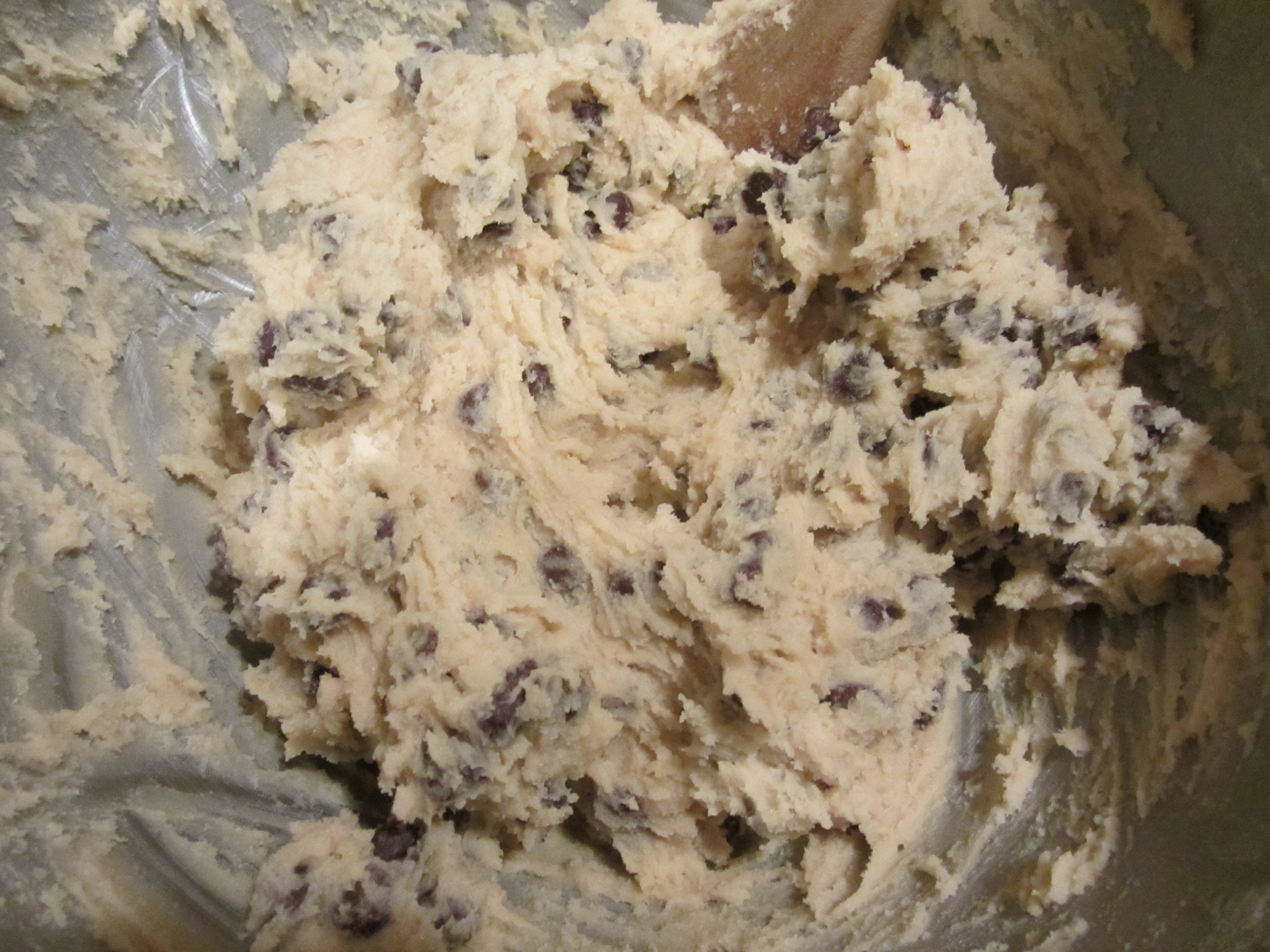
Once all of the flour is incorporated, stir in 2 C of semi-sweet chocolate chips.

Chocolate chips stirred in.

Chocolate chips stirred in.

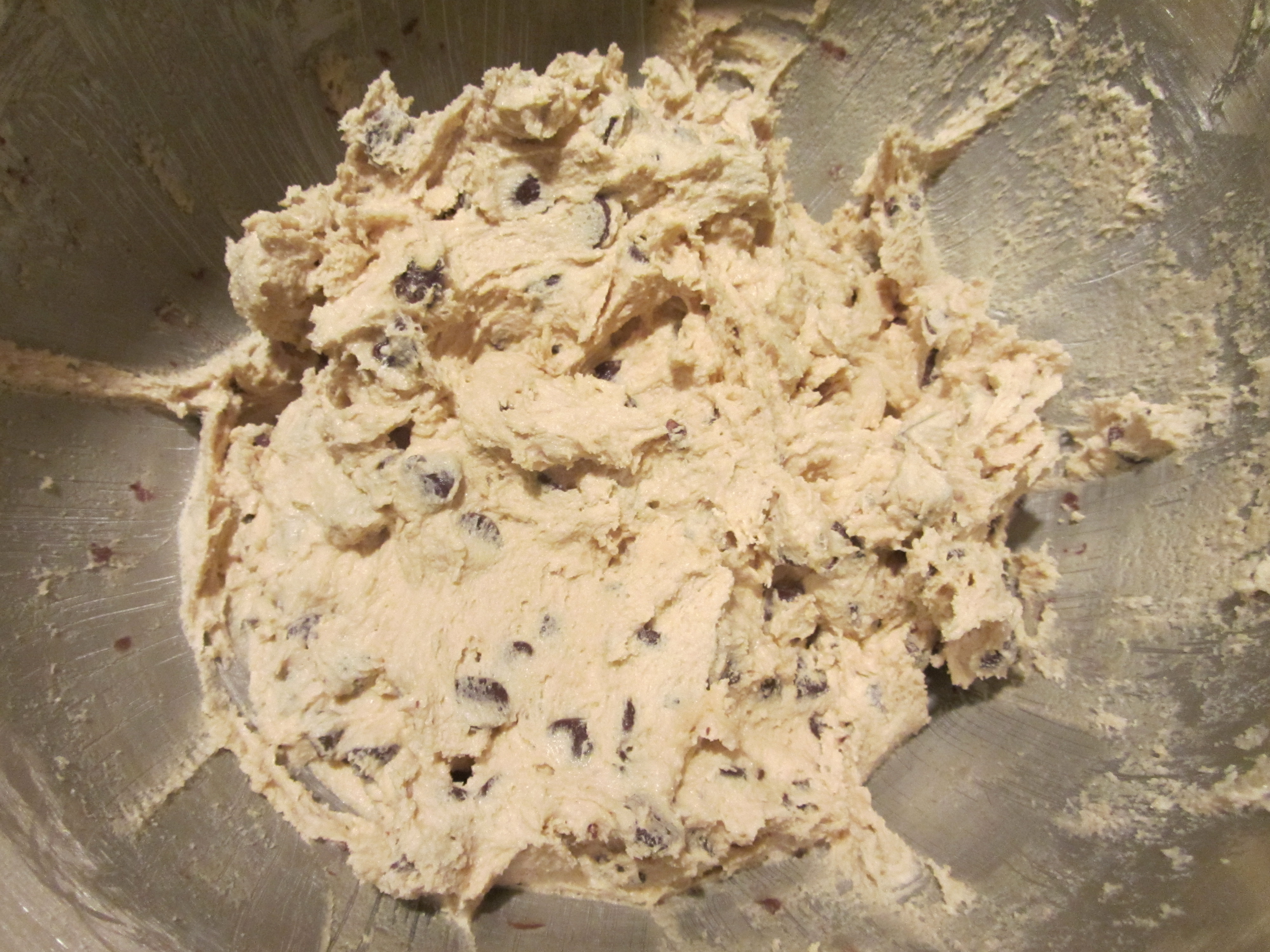
Final dough.

Final dough.

If you have one, use a #20 disher to spoon the dough onto parchment-lined baking sheets, with six cookies per sheet; I used an ice cream scoop, which resulted in pretty large cookies.

Ice cream scoop for dishing.

Ice cream scoop for dishing.

The cookies should take 13-15 minutes in the oven, and you want to remove them before they look like they are done. I used my oven’s convection setting to get more even baking.

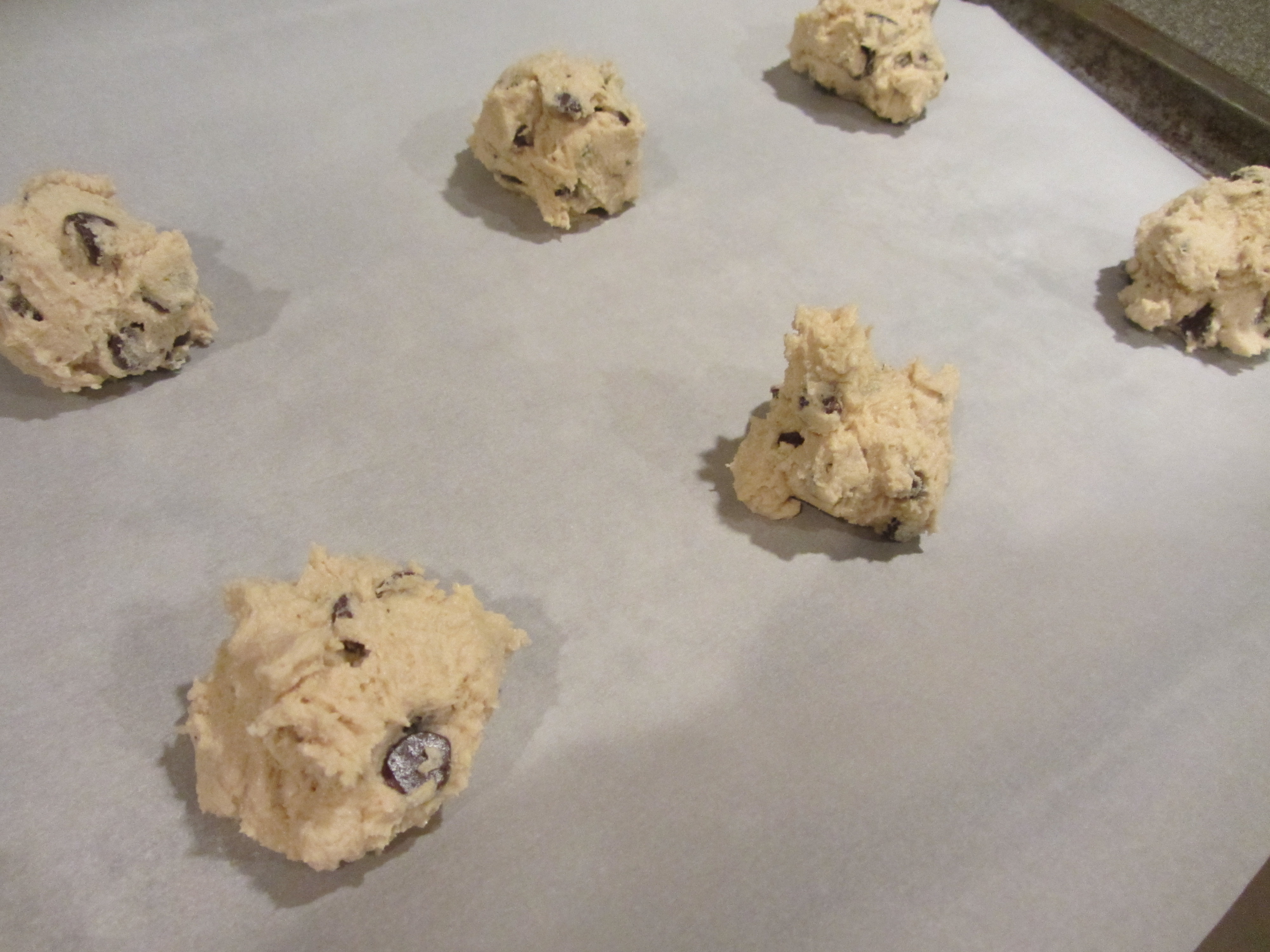
Six cookies per parchment-lined sheet.

Six cookies per parchment-lined sheet.

In the oven.

In the oven.

After baking for 13 minutes with convection setting.

After baking for 13 minutes with convection setting.

Remove them immediately from the pan to prevent further cooking. Once cool, store for a week at room temperature or freeze for up to three months.

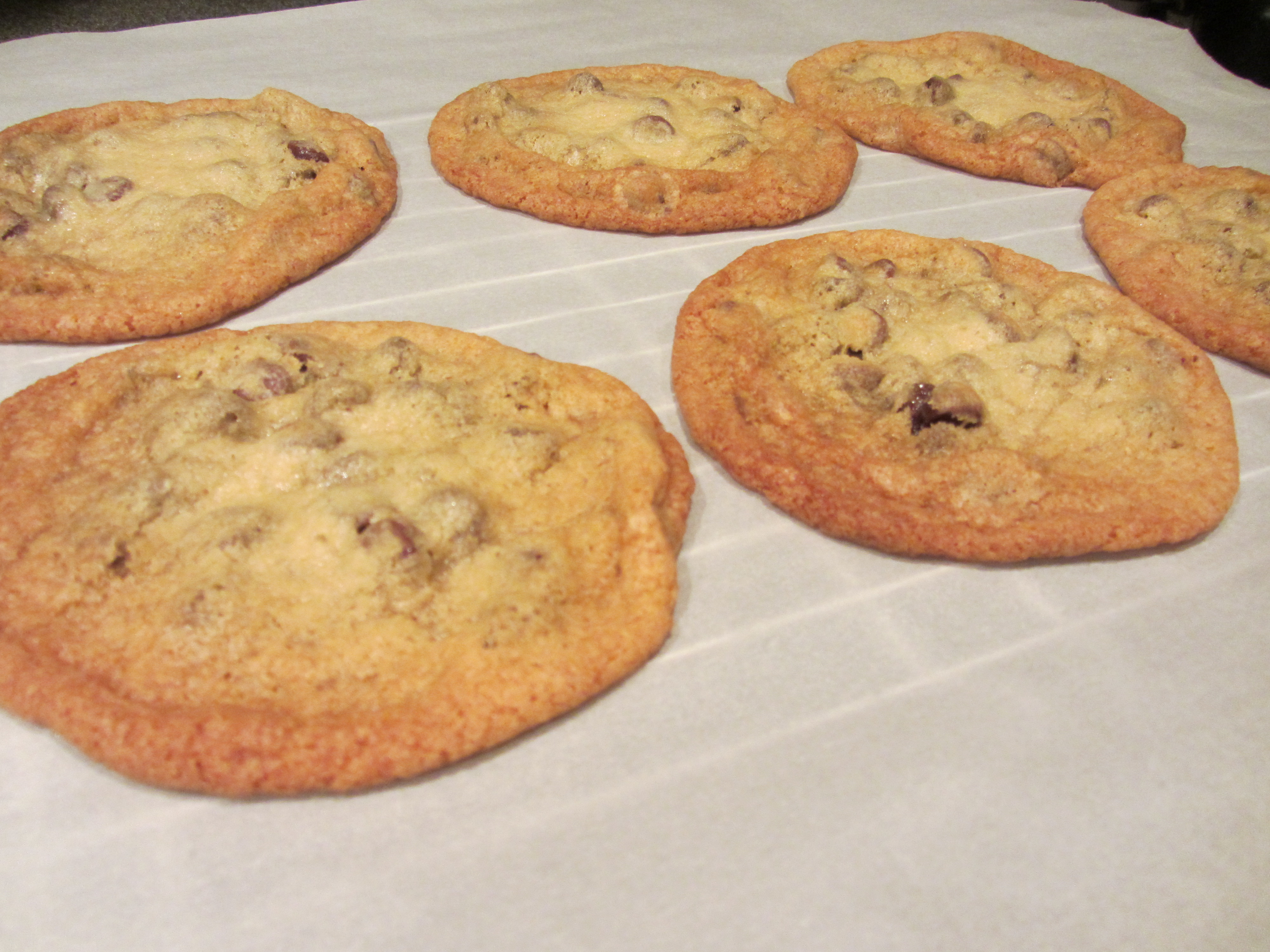
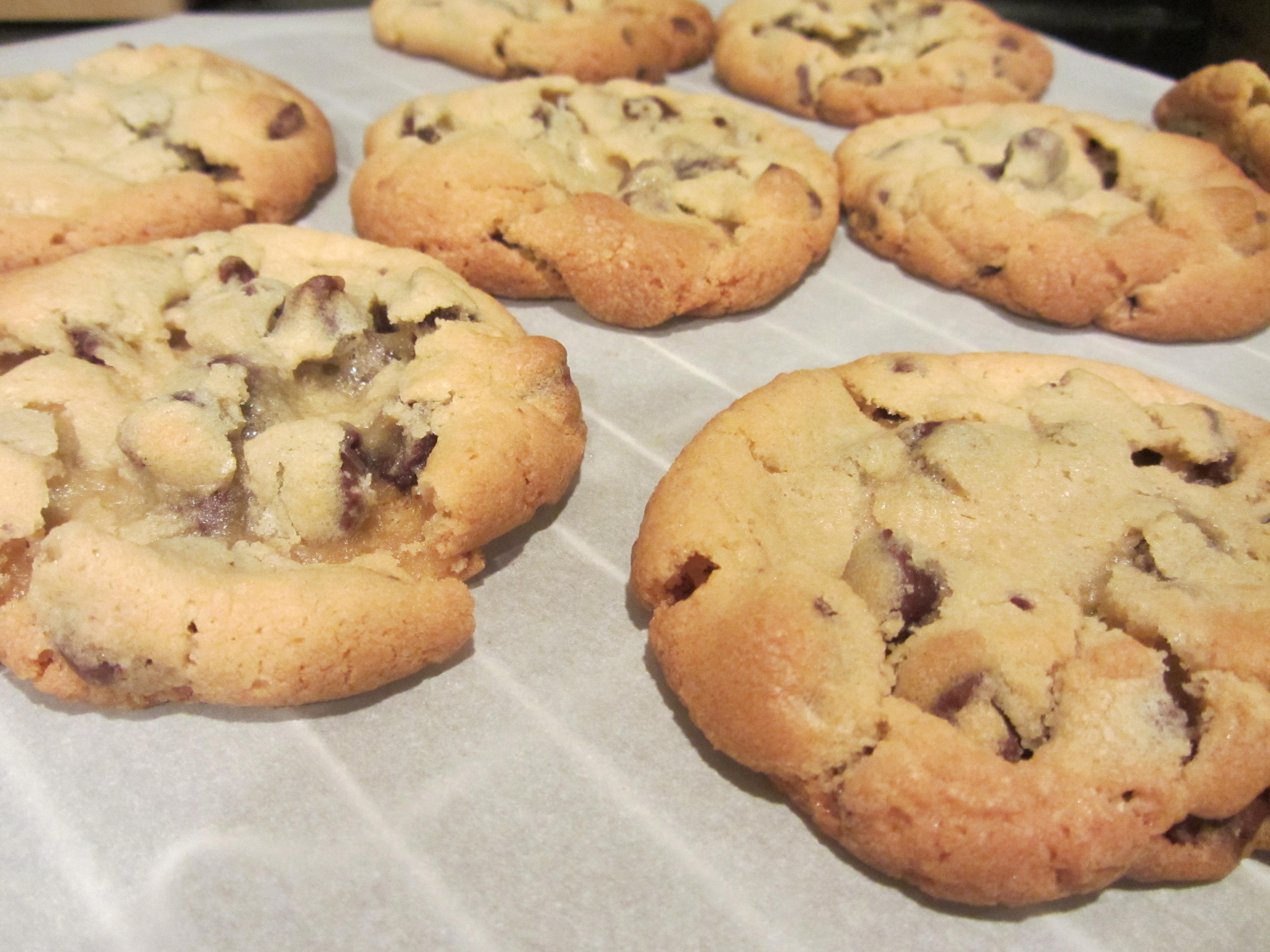
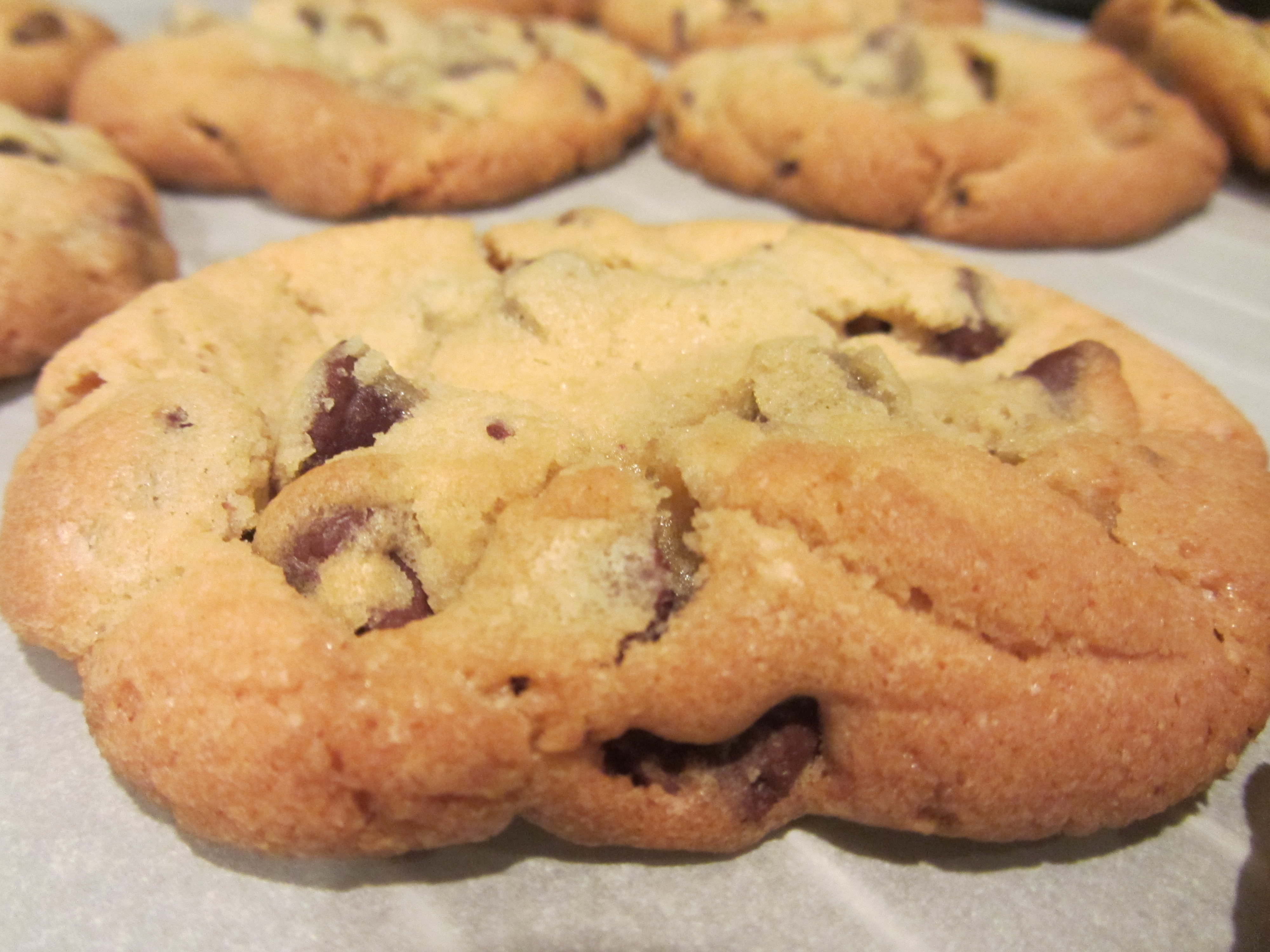
Alton's thin chocolate chip cookie.

Alton’s thin chocolate chip cookie.

The science behind Alton’s thin recipe lies in the combination of ingredients used:

  • Butter is the fat of choice for these cookies because it has a sharp melting point, which allows the batter to spread before setting.
  • The butter is used cold because sugar crystals form bubbles in the butter by cutting into it. These bubbles help other ingredients to be better incorporated.
  • Baking soda is the leavening agent used because it decreases the acidity of the batter, which increases the setting temperature of the cookies. For thinner cookies, increase the baking soda.
  • A combination of one egg and 2 oz. of whole milk is used because eggs cause batters to puff and spread; replacing one egg with some milk results in thinner cookies.
  • A higher ratio of white:brown sugar results in crisper cookies.

The Puffy

Seeing as we only had one type of chocolate chip cookie in the house, last Wednesday seemed to be another day for cookie baking. Next up was Alton’s puffy chocolate chip cookie.

Ingredients for Alton's puffy chocolate chip cookies:  butter-flavored shortening, sugar, brown sugar, cake flour, salt, baking powder, eggs, vanilla, and semisweet chocolate chips.

Ingredients for Alton’s puffy chocolate chip cookies: butter-flavored shortening, sugar, brown sugar, cake flour, salt, baking powder, eggs, vanilla, and semi-sweet chocolate chips.

For these cookies, you begin by creaming together 1 C of butter-flavored shortening, 3/4 C of sugar, and 1 C of brown sugar (I used light brown sugar).

Butter-flavored shortening, sugar, and brown sugar in the mixer.

Butter-flavored shortening, sugar, and brown sugar in the mixer.

Creamed mixture.

Creamed mixture.

Sift together 2 1/4 C of cake flour, 1 t of salt, and 1 1/2 t of baking powder. Again, I used regular salt, as Alton did not specify in the episode that Kosher salt should be used.

Cake flour, baking powder, and salt, ready to be sifted.

Cake flour, baking powder, and salt, ready to be sifted.

Sifted dry ingredients.

Sifted dry ingredients.

To the creamed mixture, add two eggs, one at a time, and 1.5 t of vanilla, and increase the speed.

Eggs and vanilla added.

Eggs and vanilla added.

Liquid ingredients incorporated.

Liquid ingredients incorporated.

Once blended, add the flour mixture slowly in three installments, starting on low speed and increasing to high.

Dry ingredients added in installments.

Dry ingredients added in installments.

Dough after dry ingredients incorporated.

Dough after dry ingredients incorporated.

Once all of the dry ingredients are incorporated, stir in 2 C of semi-sweet chocolate chips and put the dough in the refrigerator until it is thoroughly chilled.

Chocolate chips being stirred in.

Chocolate chips being stirred in.

Finished puffy dough.

Finished puffy dough.

Dough in the refrigerator to chill.

Dough in the refrigerator to chill.

Again, scoop six cookies per parchment-lined sheet, and bake at 375 degrees for 13-15 minutes, or until they look to be almost done. For these cookies, Alton tells you to use a smaller scoop to get more puff. I used a smaller ice cream scoop.

Six cookies per parchment-lined sheet.

Six cookies per parchment-lined sheet.

Remove the cookies from the pan ASAP to prevent further cooking, let them cool completely, and store at room temperature for a week, or frozen for up to 3 months.

Finished puffy cookies.

Finished puffy cookies.

Alton's puffy cookies.

Alton’s puffy cookies.

3-11-15 057 I literally was about to start baking these cookies when the doorbell rang; it was our cute neighbor girl, selling what else but chocolate chip cookies for school. If you have seen the ending of this episode of Good Eats, you know how ironic this is, as Alton sits on a park bench with a huge tin of cookies when a Girl Scout approaches him, asking him to buy cookies. Too funny. Of course, I had to buy some, so we have even more chocolate chip cookies heading our way in the near future.

And, for Alton’s science behind these cookies:

  • Shortening is the fat used because it has a higher melting temperature, which allows the cookies puff before they spread.
  • The leavening agent here is baking powder because it increases the batter’s acidity, which gives more rise and less spread.
  • Cake flour is the flour of choice because it has lower protein content, so it soaks up less moisture in the batter; more moisture in the batter gives more steam, which increases puffiness.
  • A higher ratio of brown:white sugar yields more tender cookies.
  • Chilling the dough results in less spreading.

The Chewy

Alton’s final cookie recipe in this episode is for the chewy cookie. This is the cookie I was most highly anticipating. I was on a roll last week, so I followed up Tuesday and Wednesday’s cookie baking with another batch on Thursday. Why not? You can never have too many cookies. Right?

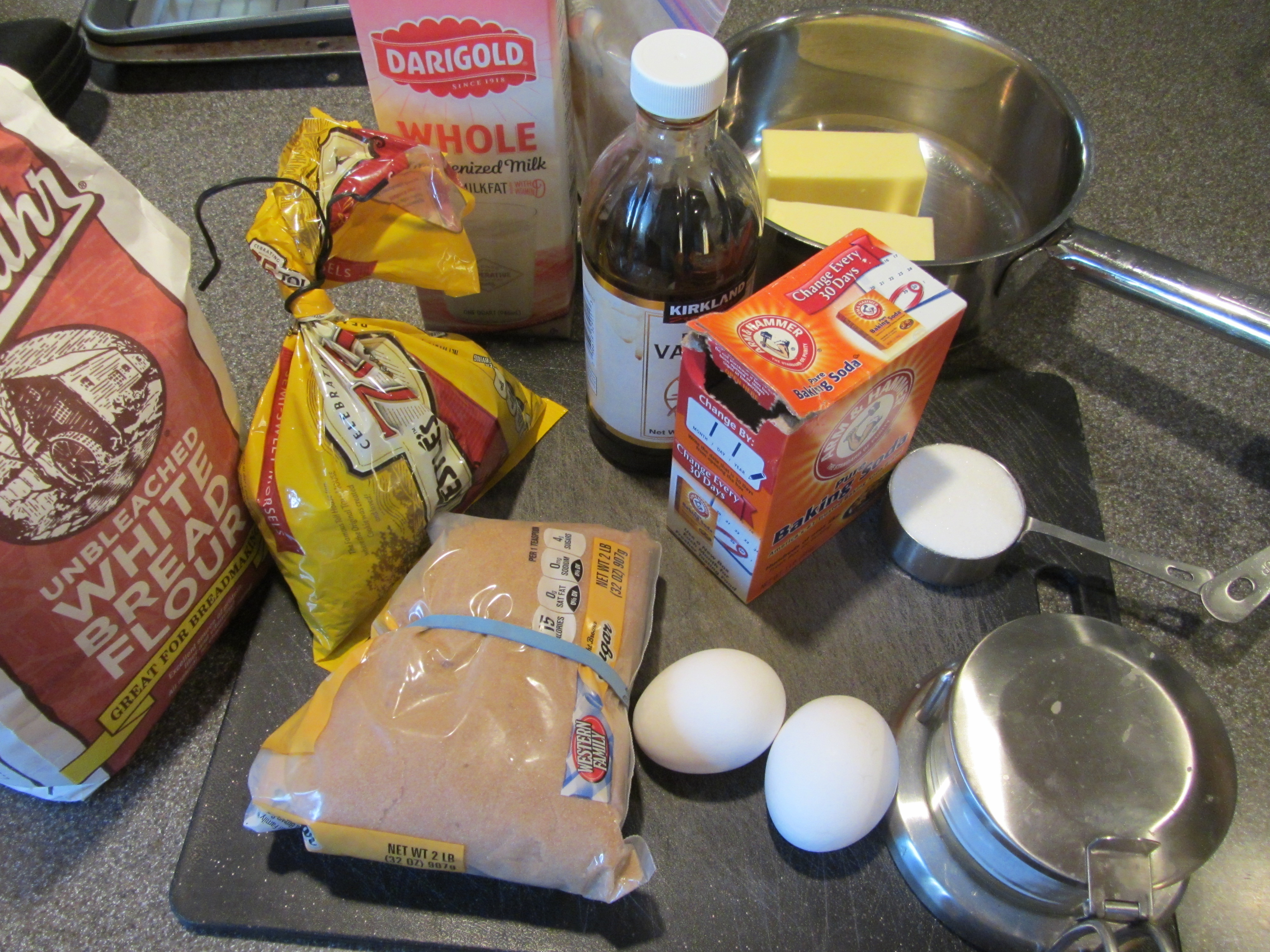
Chewy cookie ingredients:  butter, bread flour, Kosher salt, baking soda, sugar, brown sugar, eggs, whole milk, vanilla, and chocolate chips.

Chewy cookie ingredients: butter, bread flour, Kosher salt, baking soda, sugar, brown sugar, eggs, whole milk, vanilla, and chocolate chips.

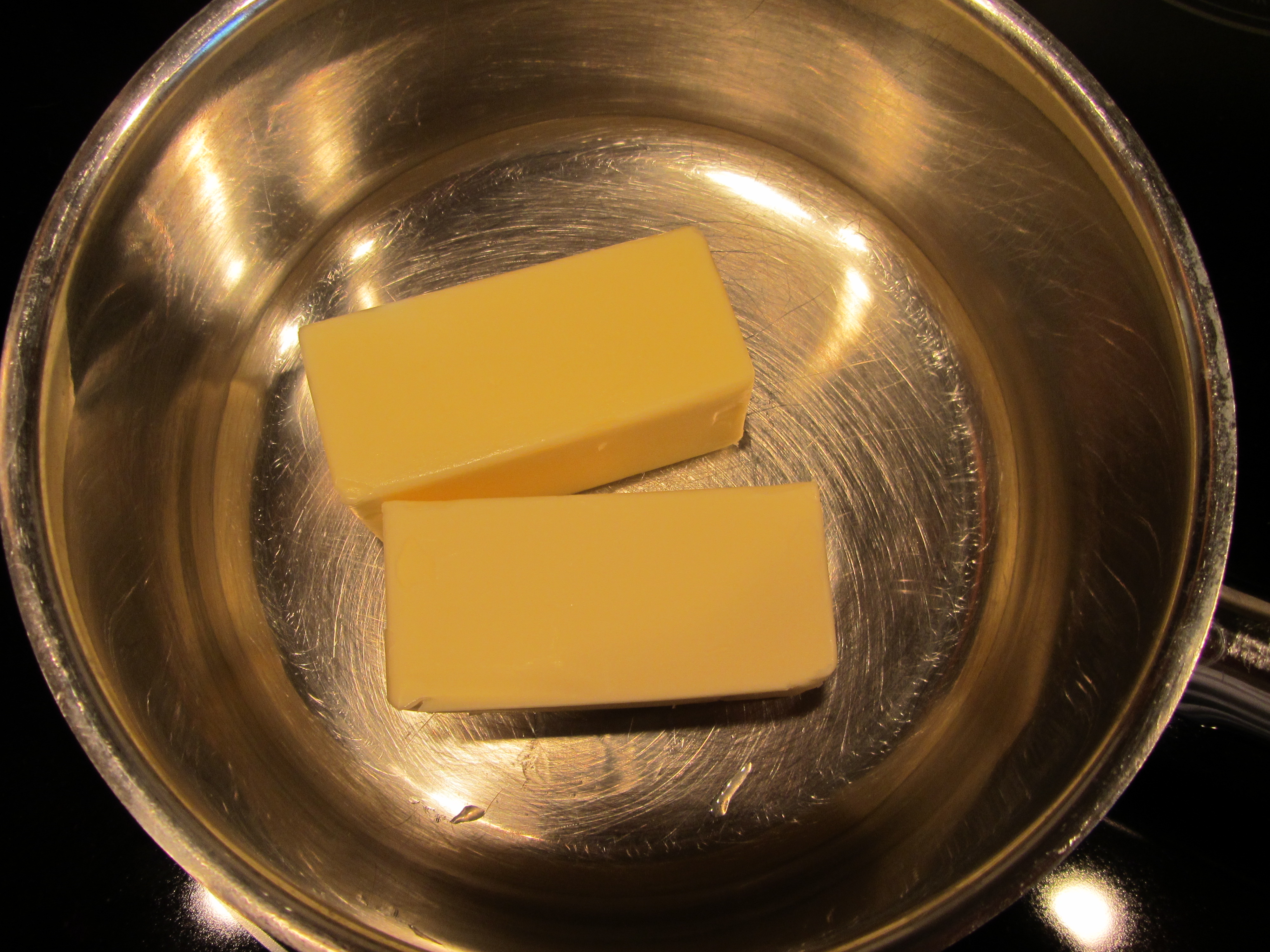
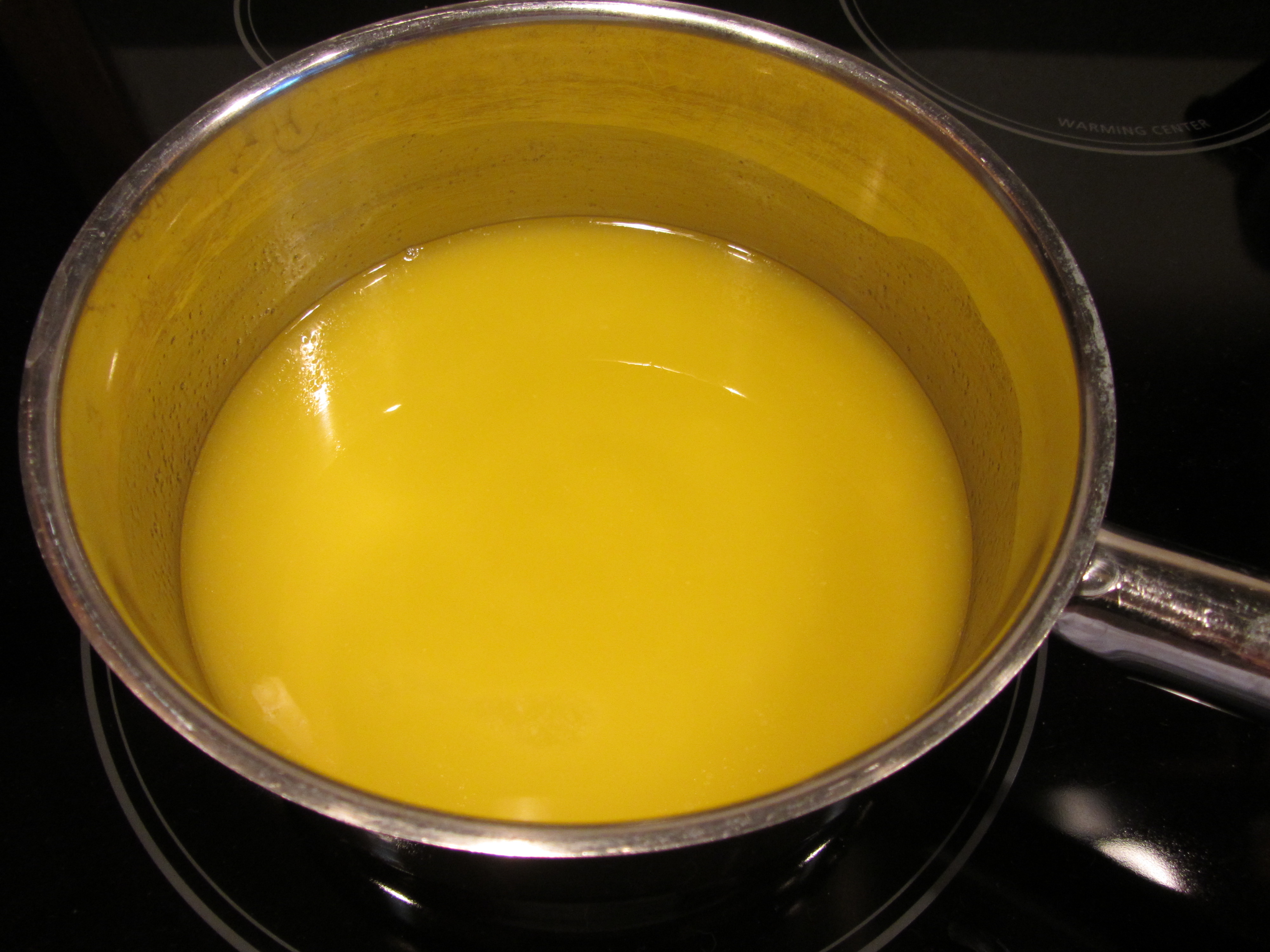
These cookies begin with melting two sticks of butter in a saucepan over low heat.

Melting butter in a saucepan over low heat.

Melting butter in a saucepan over low heat.

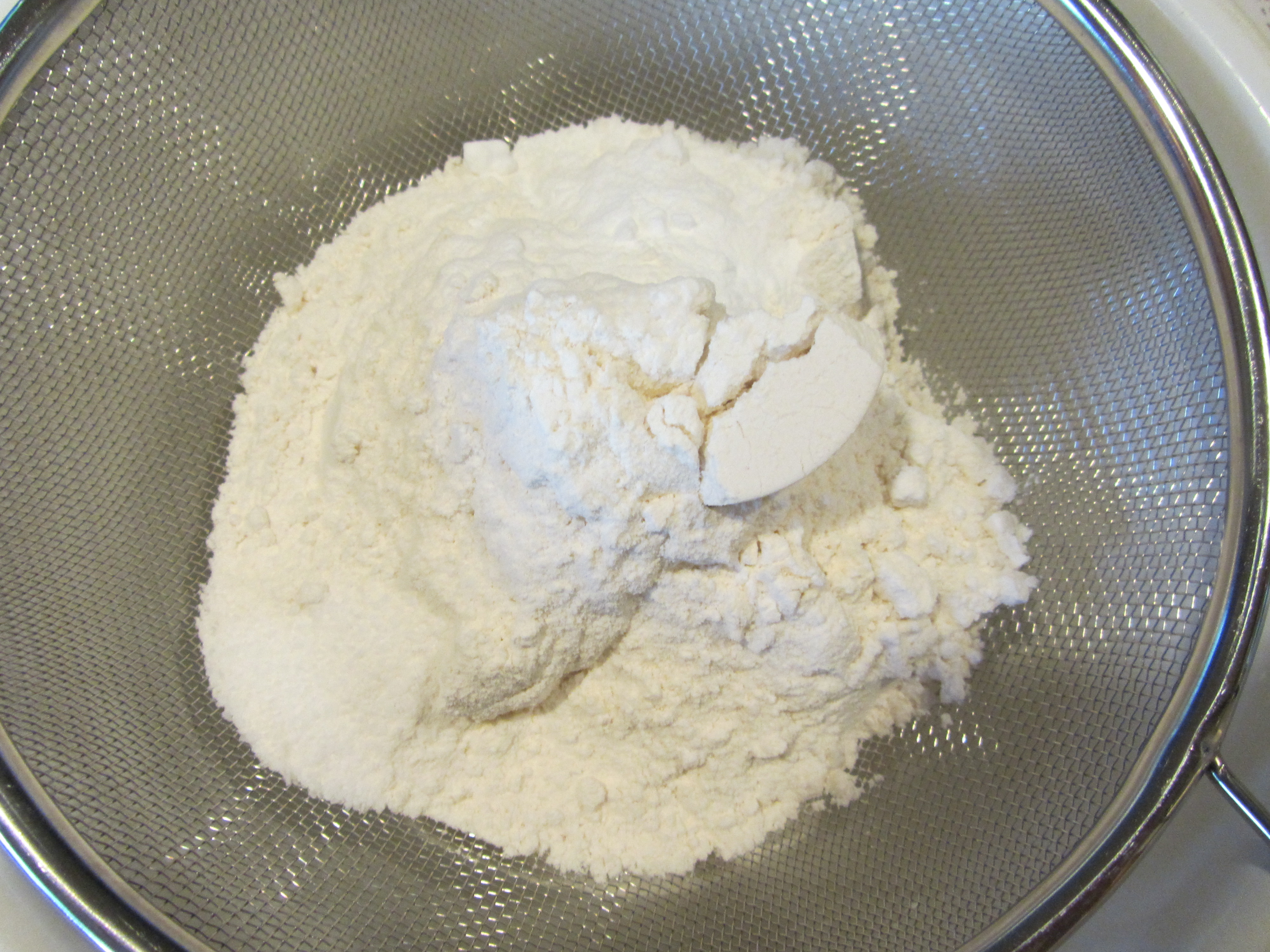
While the butter melts, sift together 2 1/4 C of bread flour, 1 t of Kosher salt, and 1 t of baking soda. Since Alton specified Kosher salt for this recipe, I used it here.

Bread flour, Kosher salt, and baking soda to be sifted.

Bread flour, Kosher salt, and baking soda to be sifted.

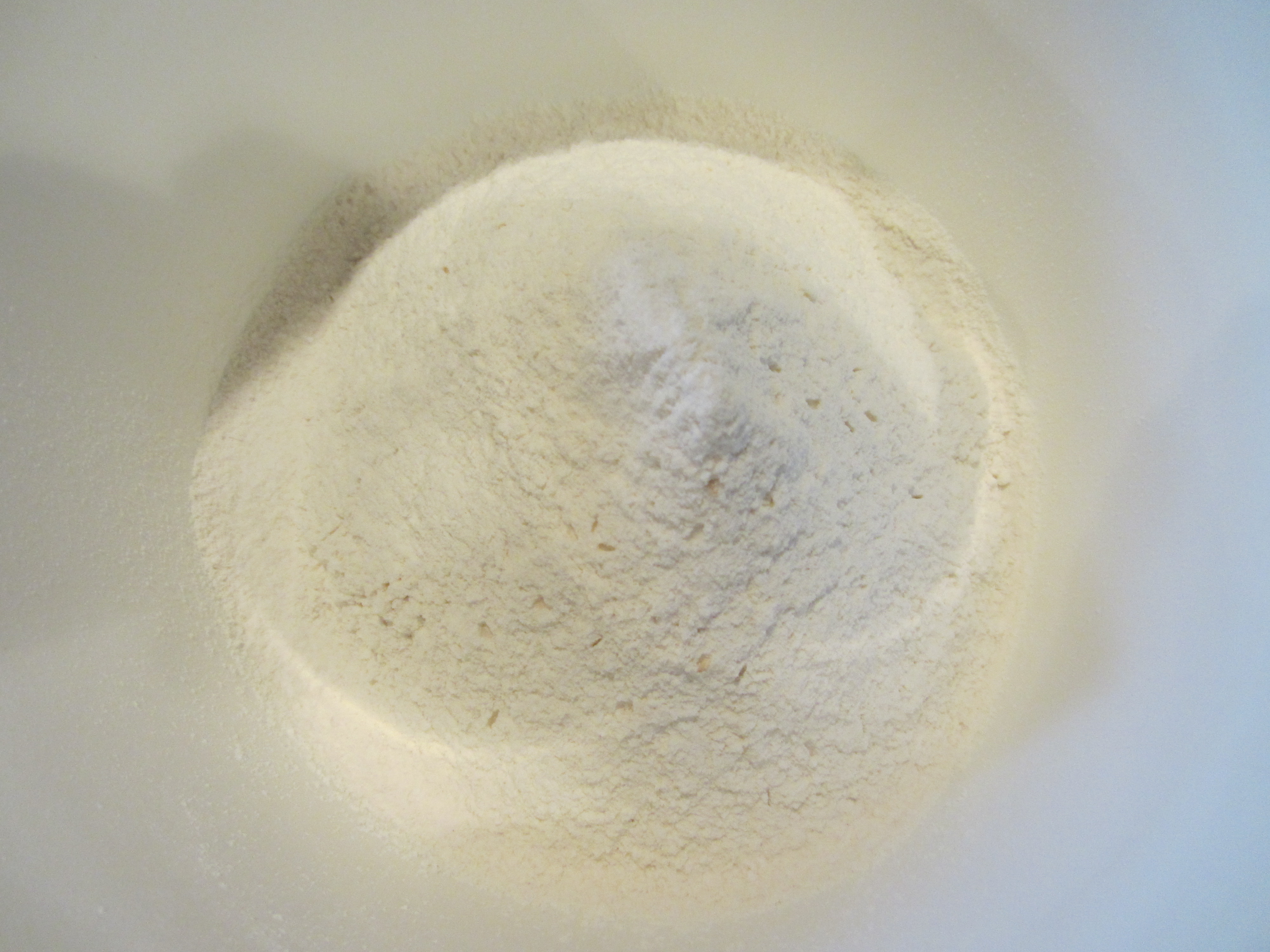
Sifted dry ingredients.

Sifted dry ingredients.

Once your butter is melted, combine it in your mixer with 1/4 C sugar and 1 1/4 C dark brown sugar.

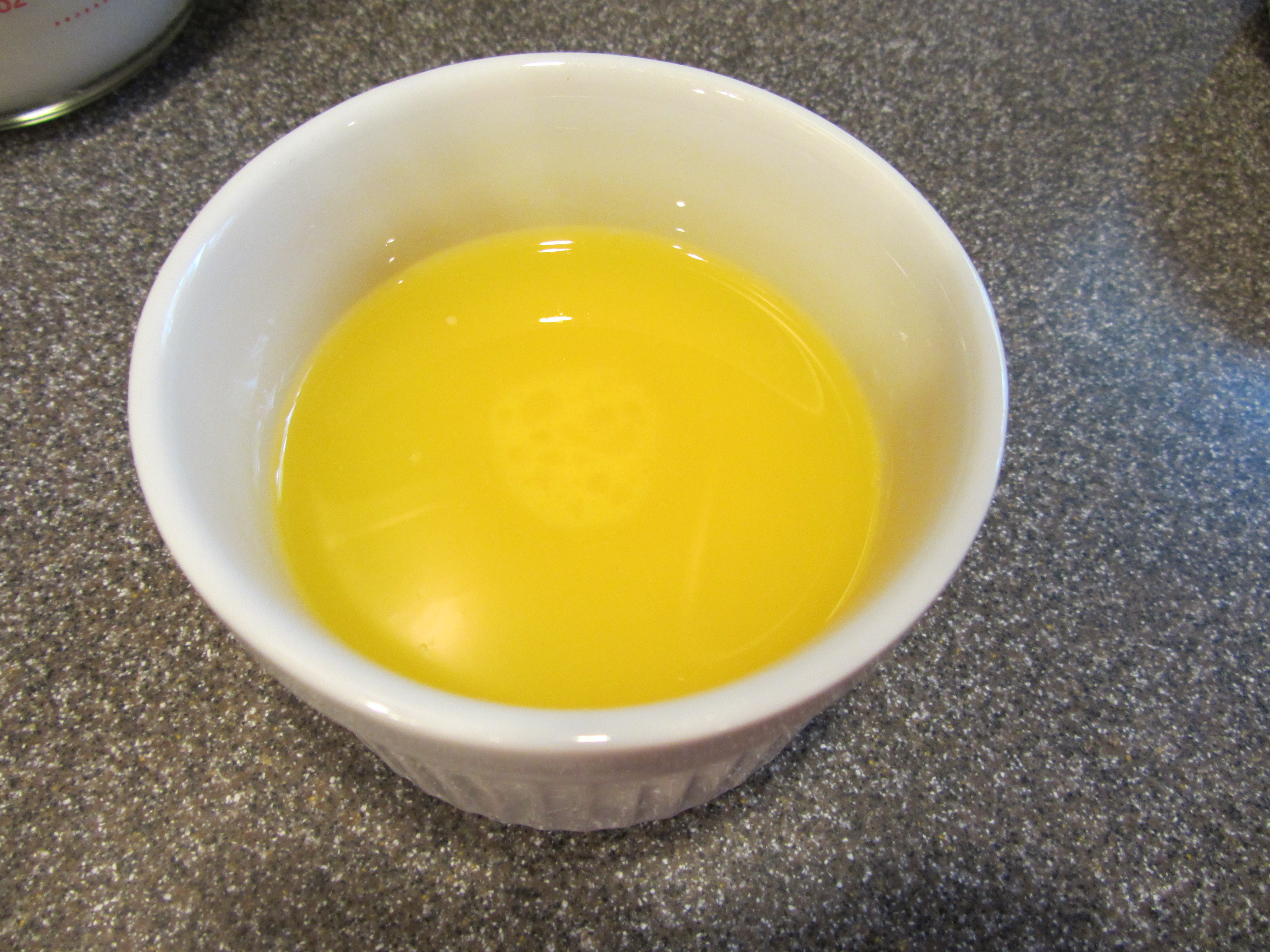
Melted butter.

Melted butter.

Melted butter, sugar, and brown sugar in the mixer.

Melted butter, sugar, and brown sugar in the mixer.

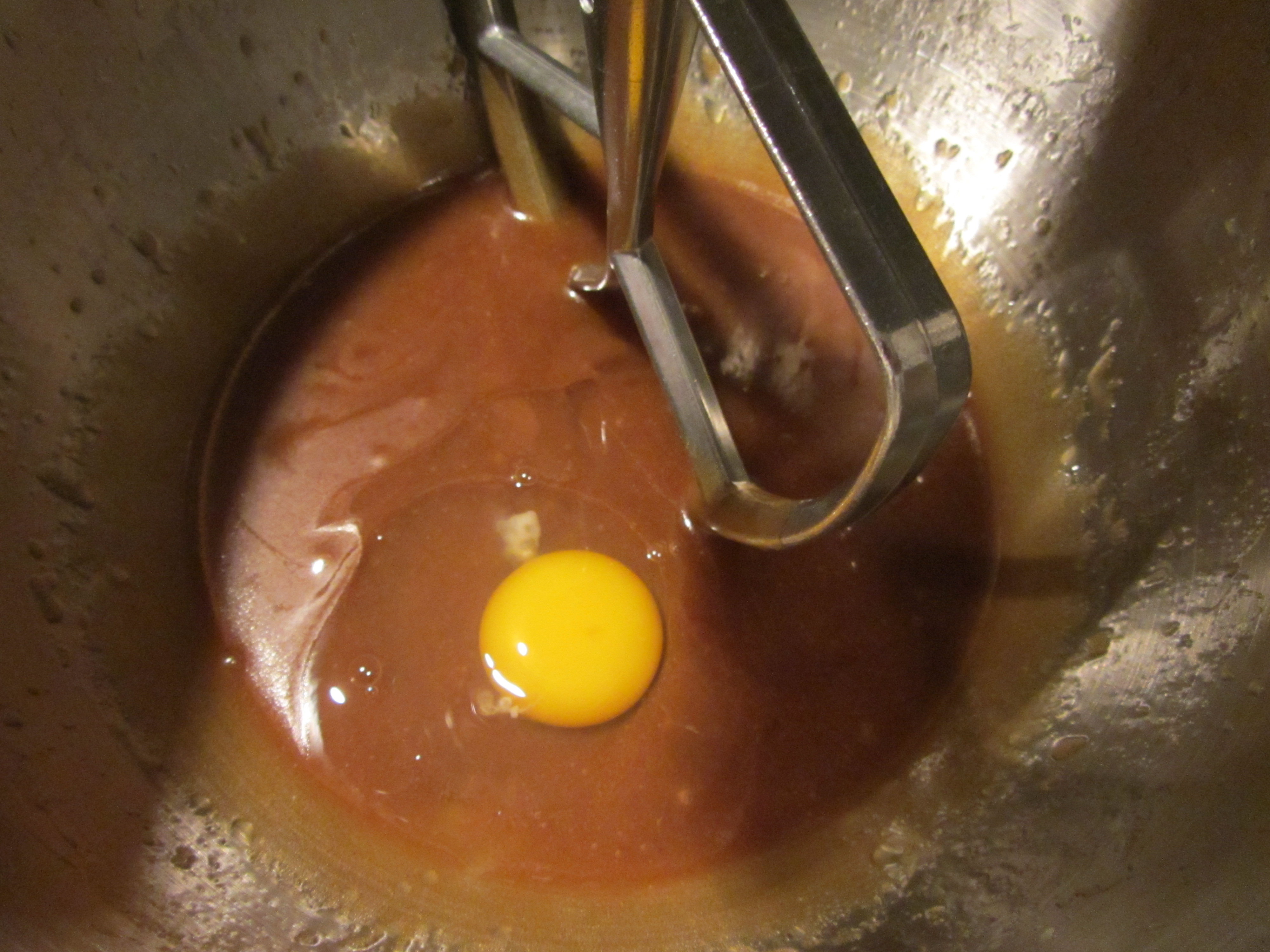
To this mixture add one egg, blending it in, and follow it up with an additional egg yolk.

One egg added to butter/sugar mixture.

One egg added to butter/sugar mixture.

An additional egg yolk.

An additional egg yolk.

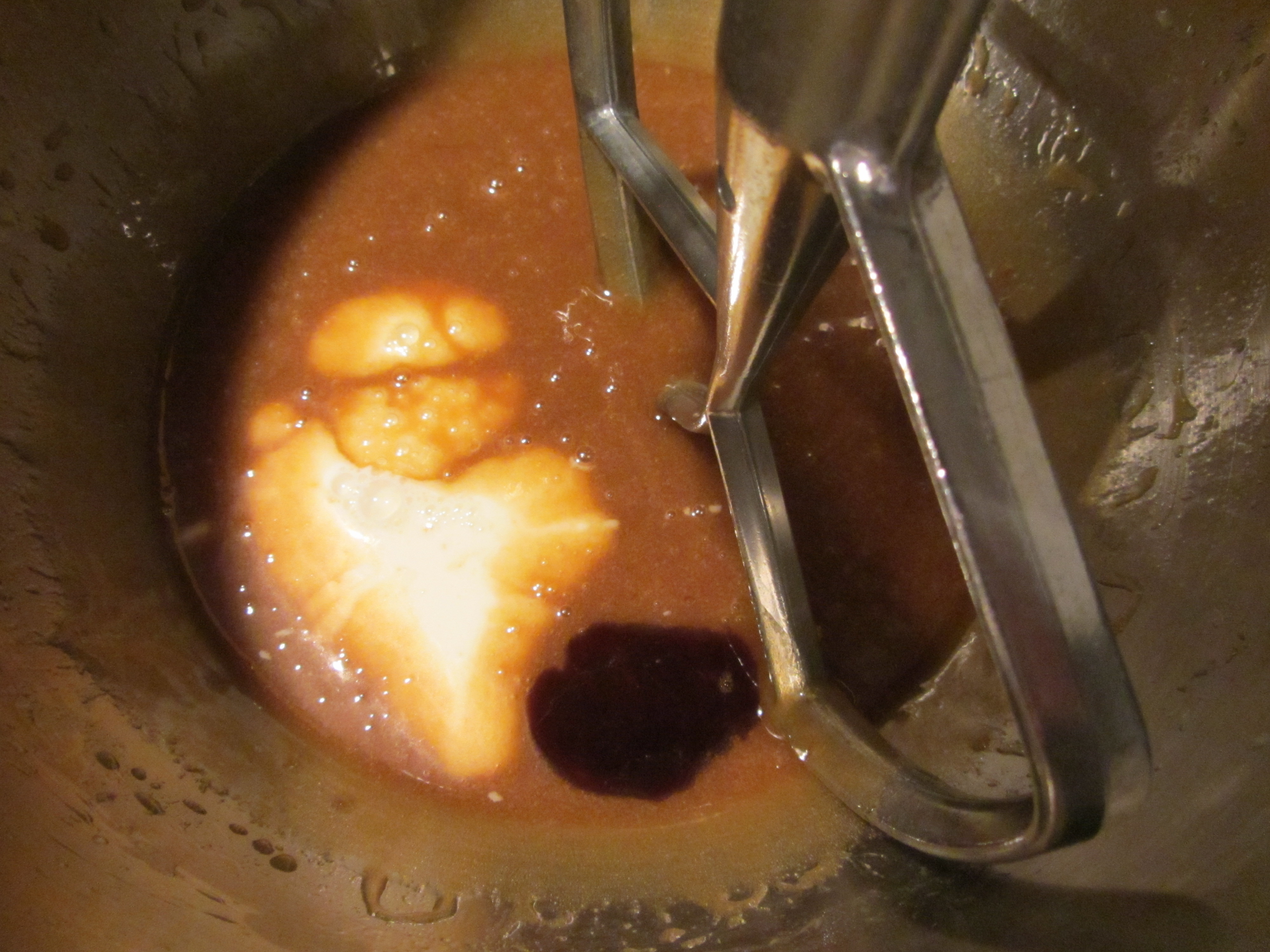
Also add 1 oz. of whole milk and 1 1/2 t of vanilla.

Whole milk and vanilla added.

Whole milk and vanilla added.

When all of the liquid ingredients are completely mixed, slowly add the dry ingredients, scraping the bowl between additions.

Wet ingredients after mixing.

Wet ingredients after mixing.

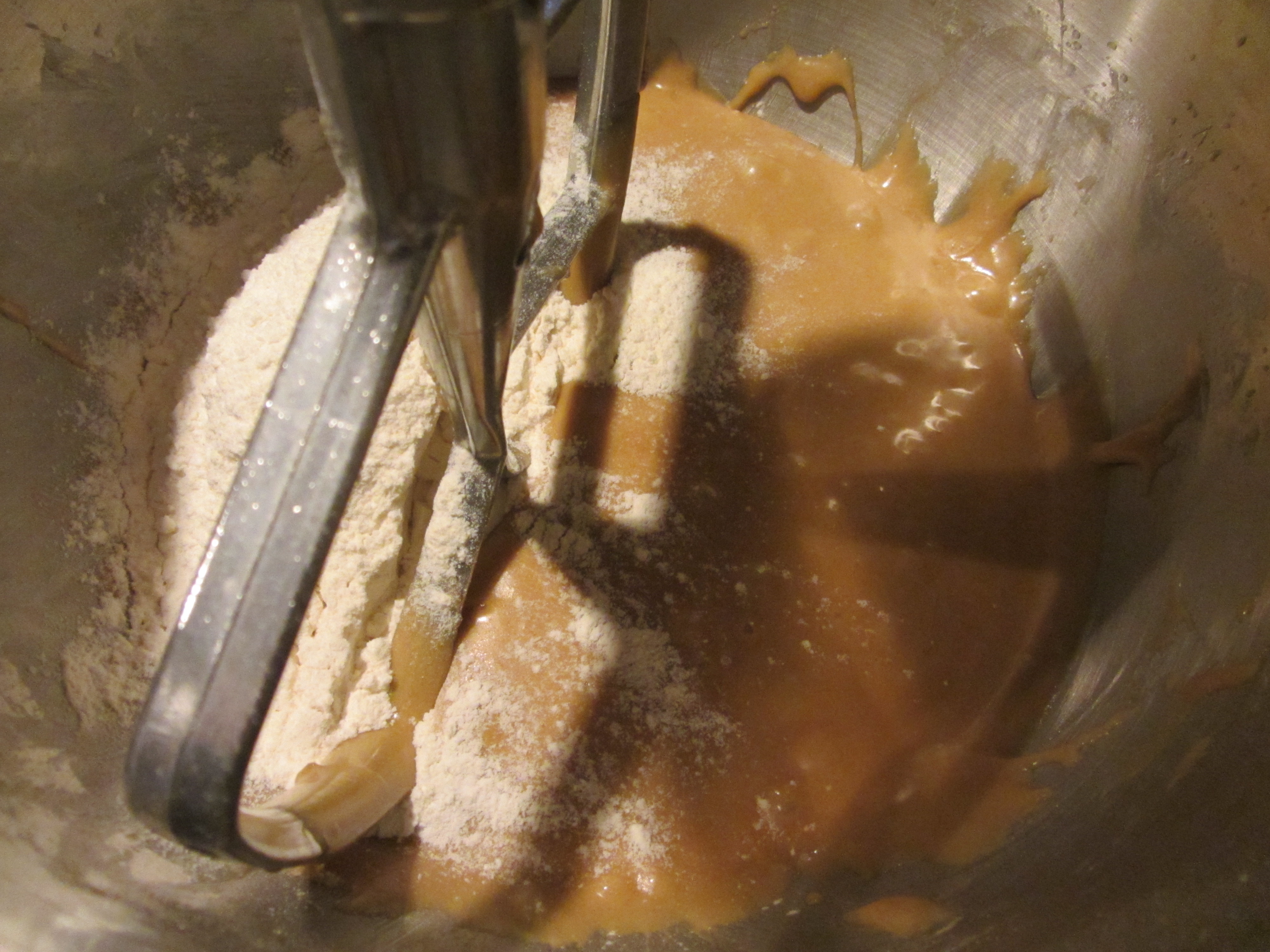
Flour mixture added gradually.

Flour mixture added gradually.

Dry ingredients mixed in.

Dry ingredients mixed in.

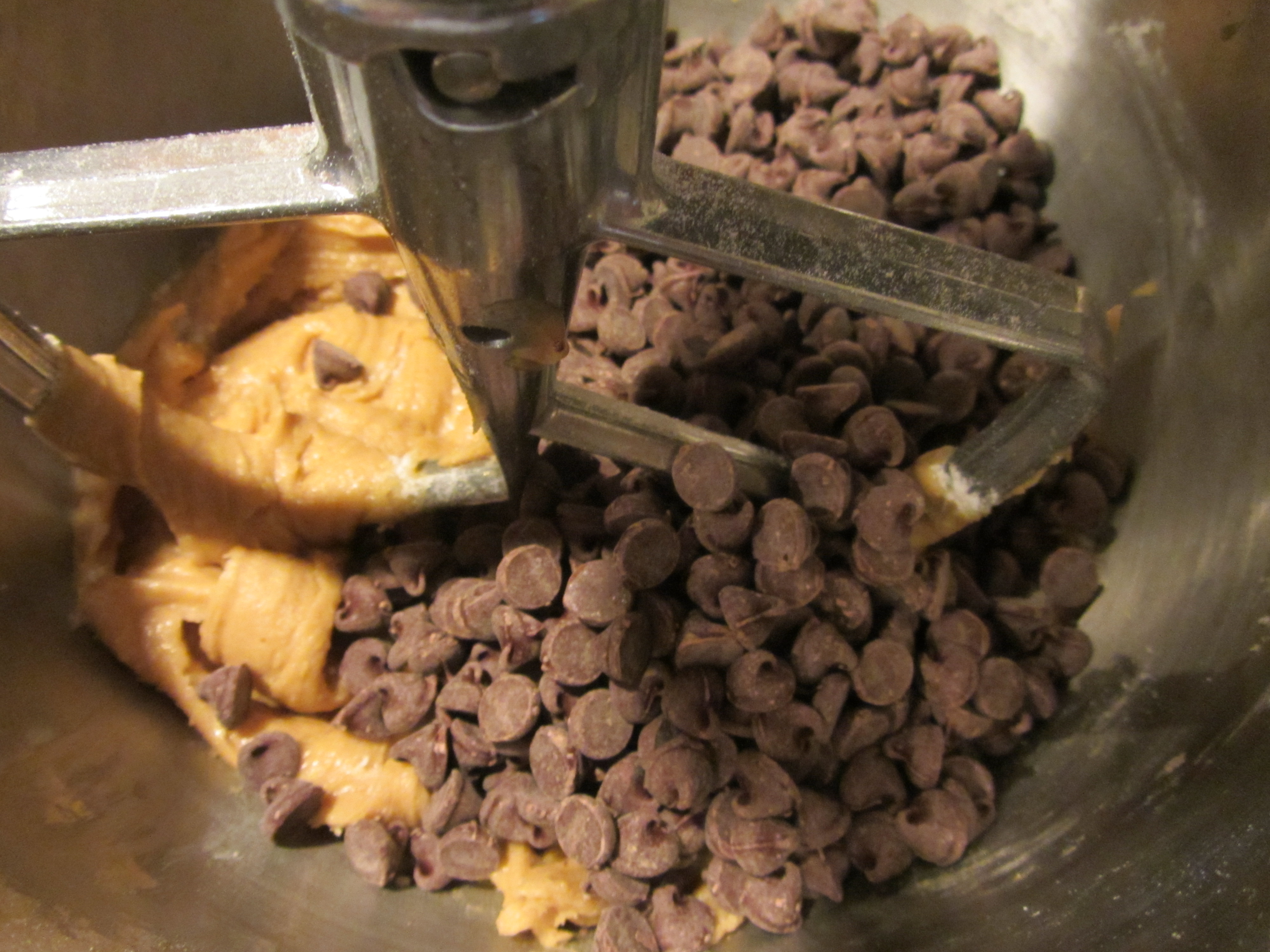
Stir in 2 C of semi-sweet chocolate chips and chill the dough thoroughly.

Chocolate chips added.

Chocolate chips added.

Final chewy dough.

Final chewy dough.

Flour on the Coonhound nose.

Flour on the Coonhound nose.

Dough in the refrigerator to chill.

Dough in the refrigerator to chill.

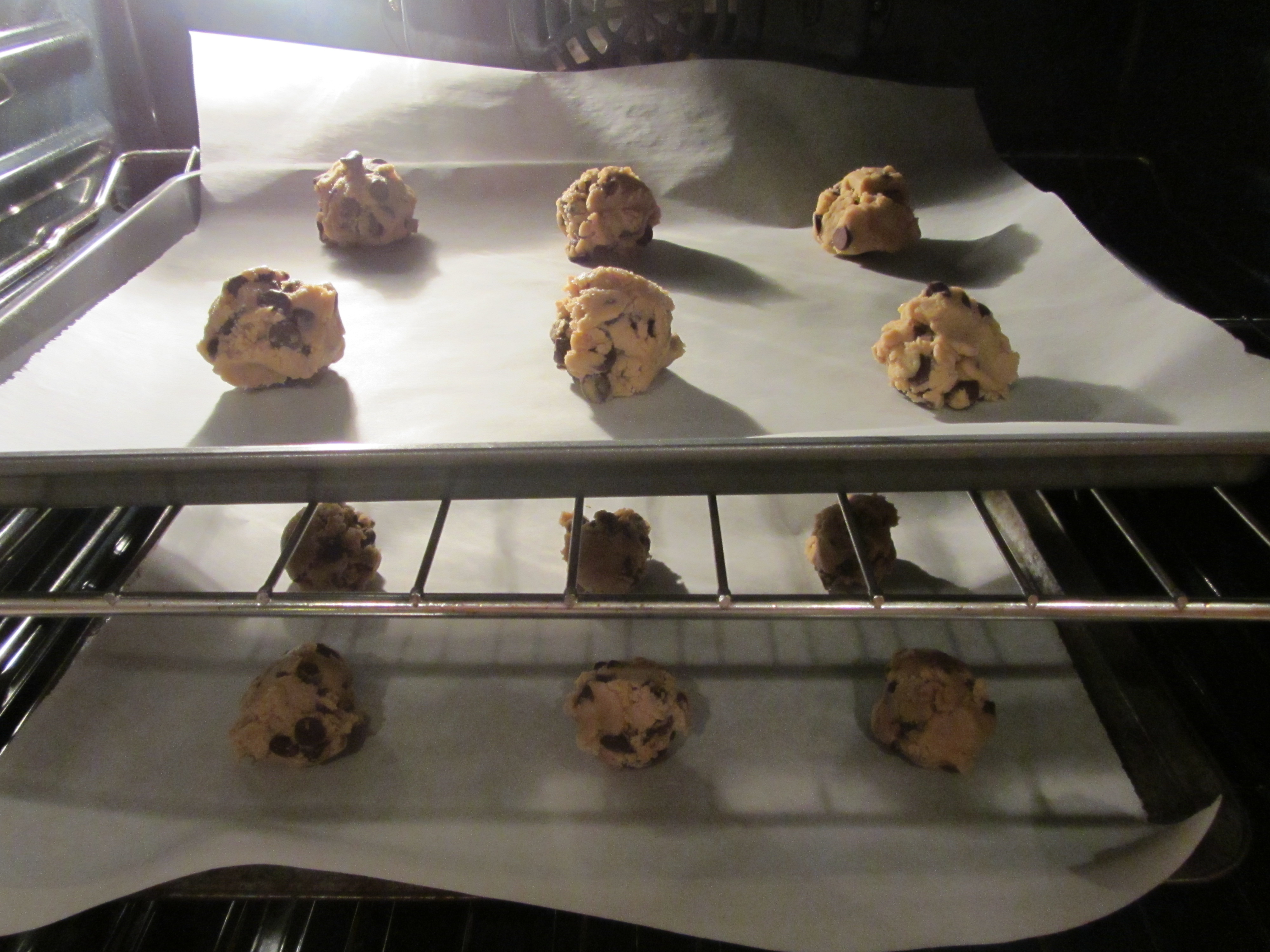
Once chilled, again scoop the dough onto parchment-lined sheets (six cookies per sheet), and bake at 375 degrees for 13-15 minutes. I again used my smaller ice cream scoop.

Cookies ready to bake.

Cookies ready to bake.

Chewy cookies in the oven.

Chewy cookies in the oven.

I found that these cookies took a little bit longer to bake than the others did. Again, pull them off of the baking sheets immediately and allow them to cool before storing at room temperature or freezing.

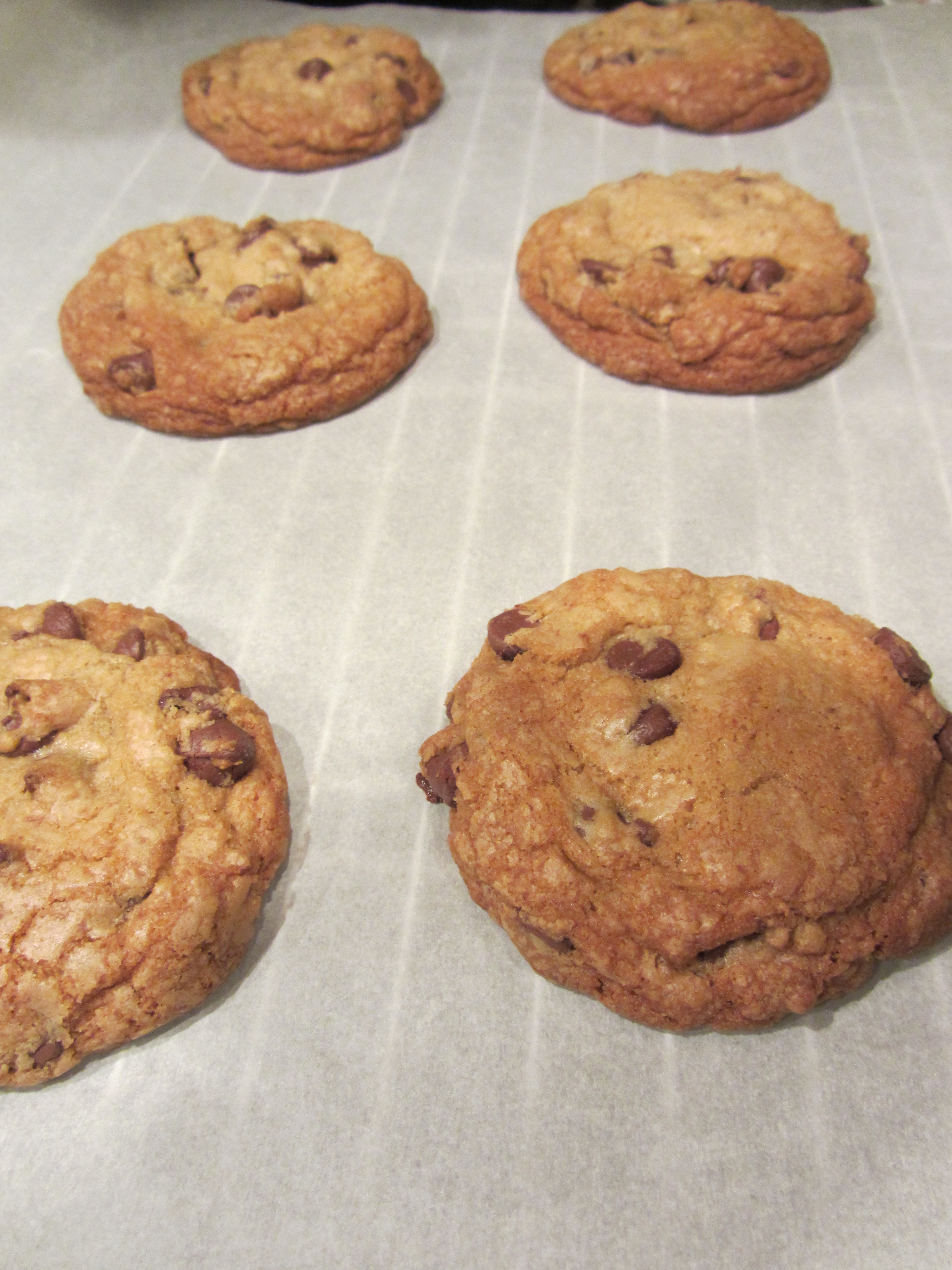
Finished chewy cookies.

Finished chewy cookies.

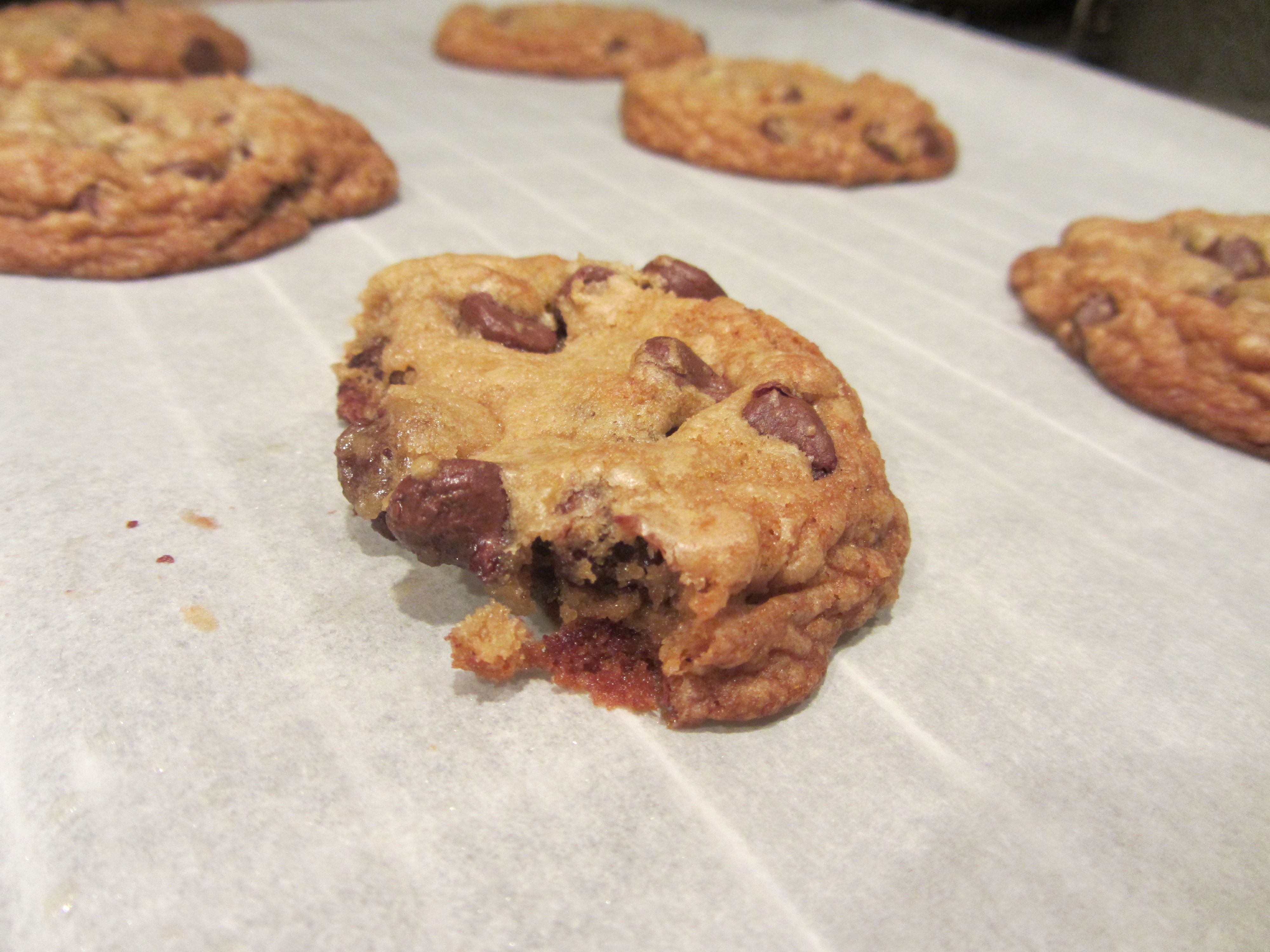
I had to sample part of a cookie that "broke" off.

I had to sample part of a cookie that “broke” off.

Alton explains that these cookies are chewy because:

  • The water from the melted butter combines with the protein of the bread flour, which produces gluten and makes the cookies chewy.
  • Bread flour absorbs more moisture, which therefore increases the moisture in the cookies.
  • Brown sugar is coated in molasses, which loves moisture. Increasing the brown sugar increases the cookies’ absorption of water from the air, which makes the cookies chewy.
  • The egg yolk, rather than a whole second egg, is added because egg whites tend to dry out baked goods.
  • Darker brown sugar leads to chewier cookies.
  • Chilling the dough results in less spreading.

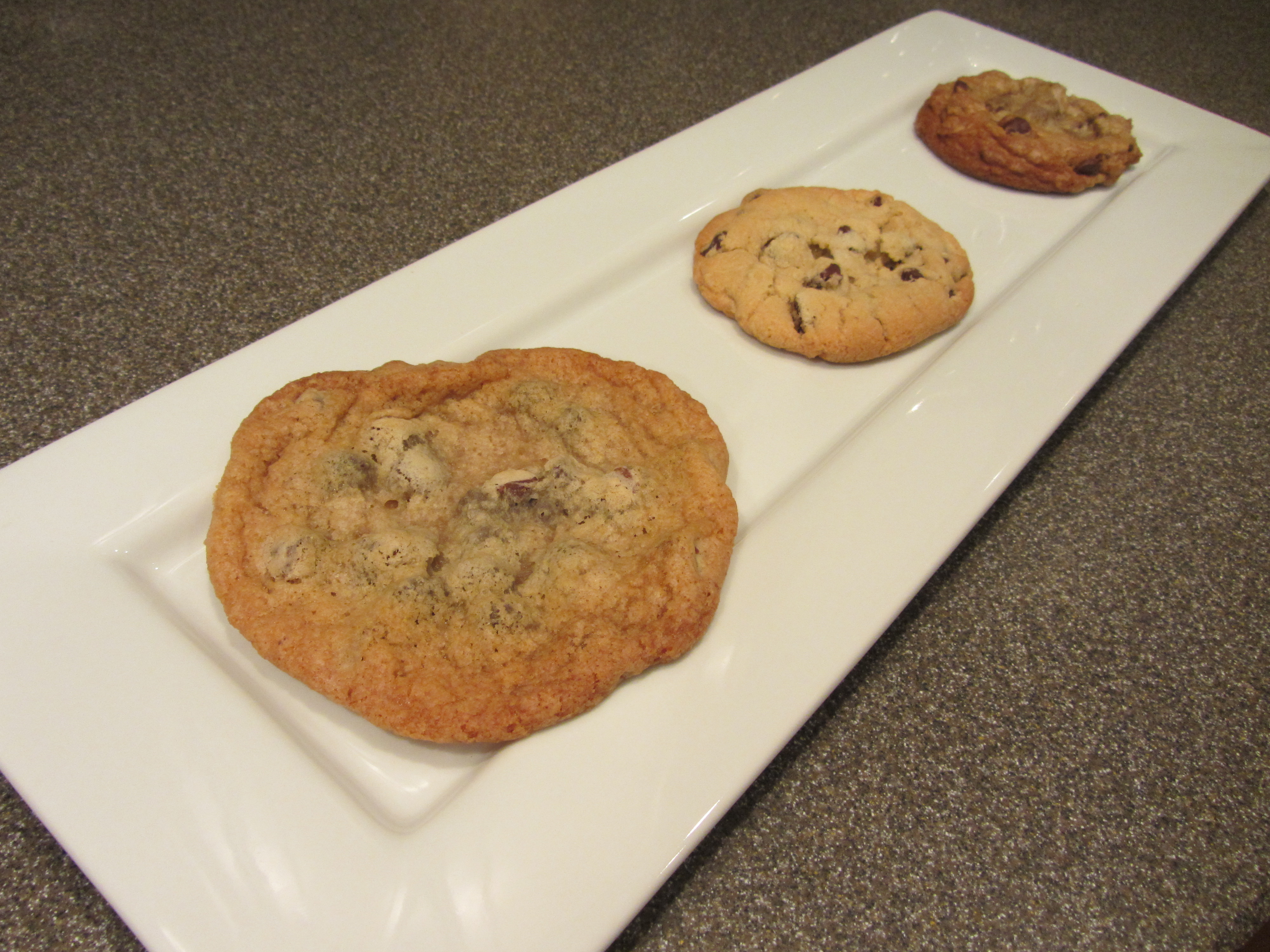
So, how did the cookies stack up against each other? We shared all three cookies with my parents, and the results were unanimous for the four of us.

Left to right cookie comparison:  thin, puffy, and chewy.

Left to right cookie comparison: thin, puffy, and chewy.

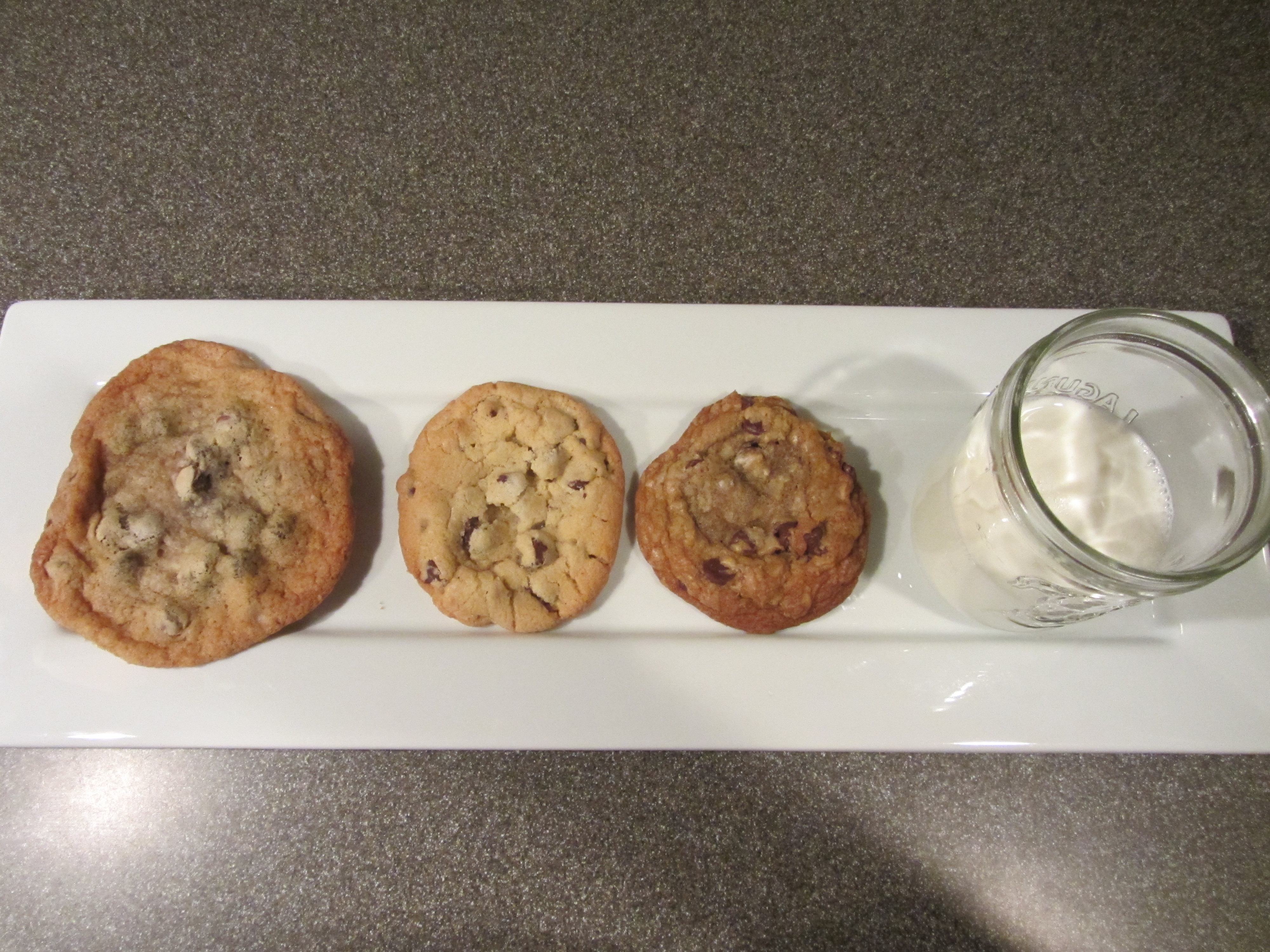
Left to right:  Alton's thin, puffy, and chewy chocolate chip cookies.

Left to right: Alton’s thin, puffy, and chewy chocolate chip cookies.

We all preferred the thin cookies the best, followed by the chewy cookies, and finally the puffy cookies. While all of the cookies were delicious, the thin cookies had the perfect combination of texture and flavor; they were thin and had crispy edges, while the centers were perfectly chewy. The chewy cookies were thicker, more dense, and had more of a caramelized flavor to them. Finally, the puffy cookies were lighter and more cake-like in texture and appearance. Aesthetically, the puffy cookies were by far my favorite, and that certainly does count for something. Beauty contest aside, though, the ones I will surely make again (ahem, probably next week for my family) will be the thin cookies.


Seeing as I am putting myself through (what I call) the Alton Brown Culinary School of Good Eats, I would be remiss if I did not write a little bit about the day I had yesterday. I was awoken at 5:07 am by my adorable Coonhound, Hitcher, who was suffering from one of his occasional fits of morning sickness. While I stood in the dark kitchen, waiting for him to finish grazing in the back yard, I decided to make a quick check of Facebook, or Twitter, or one of the other online giants. Staring back at me from the feed of none other than Alton Brown was a pair of latitude and longitude coordinates for the location of an autograph signing he would be having in Spokane at noon. The coordinates were for the Spokane Convention Center.

After a few more hours of sleep, I had to decide whether to do my planned 15 mile run, or to try to meet Alton; I split the difference, ran 8.5 miles, and dragged Ted to the Convention Center with me, along with our giant metal spoon and my Alton Brown cookbook. Somehow, I don’t think Ted looked too out-of-place on Spokane’s downtown streets with his spoon, as I think of the gentleman I used to always see, riding a bicycle with a huge Finding Nemo hat. We ended up waiting in line for about 45 minutes, briefly met Alton, had our photo taken with him, and got a few autographs. I will somewhat shamelessly admit how stoked I was about this. Secretly, I think Ted thought it was pretty cool too.

Ted and me with Alton.

Ted and me with Alton.

My custom Alton post-it.

My custom Alton post-it.

To cap off the day, we took my parents to see Alton perform his Edible Inevitable show. Though I did not know what to expect, I knew I would enjoy the show, but it far exceeded my expectations. I cannot remember the last time I laughed as hard as I did last night. Seriously, if you have the chance to see Alton perform live, you really should take that opportunity.

In a Cranberry Jam

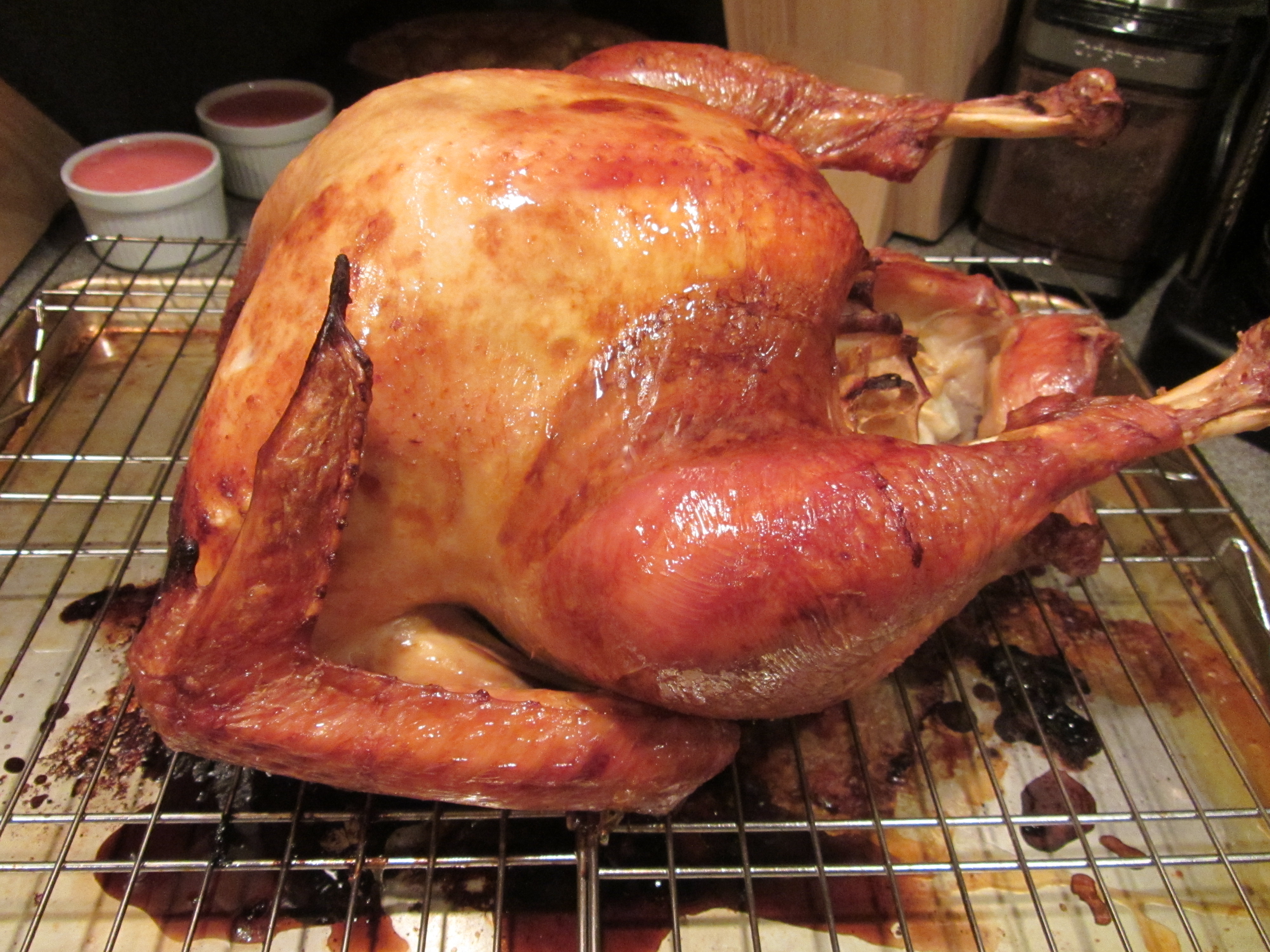
Last November, I cooked an early Good Eats Thanksgiving dinner for my parents and us, following it up with a Thanksgiving dinner with Ted’s parents on Thanksgiving day; that meant we had two Good Eats turkeys in a matter of days. I wrote about the early Thanksgiving dinner here. When I wrote about the Thanksgiving special, I failed to realize that the 32nd episode of the show would entail making recipes with the leftovers from the Thanksgiving special. So… we had Thanksgiving dinner again in February. Last Thursday, I again made Alton’s Tart Cranberry Dipping Sauce, Sweet Corn Bread Pudding, and the Good Eats Roast Turkey.

A February Good Eats turkey.

A February Good Eats turkey.

Sweet corn bread pudding.

Sweet corn bread pudding.

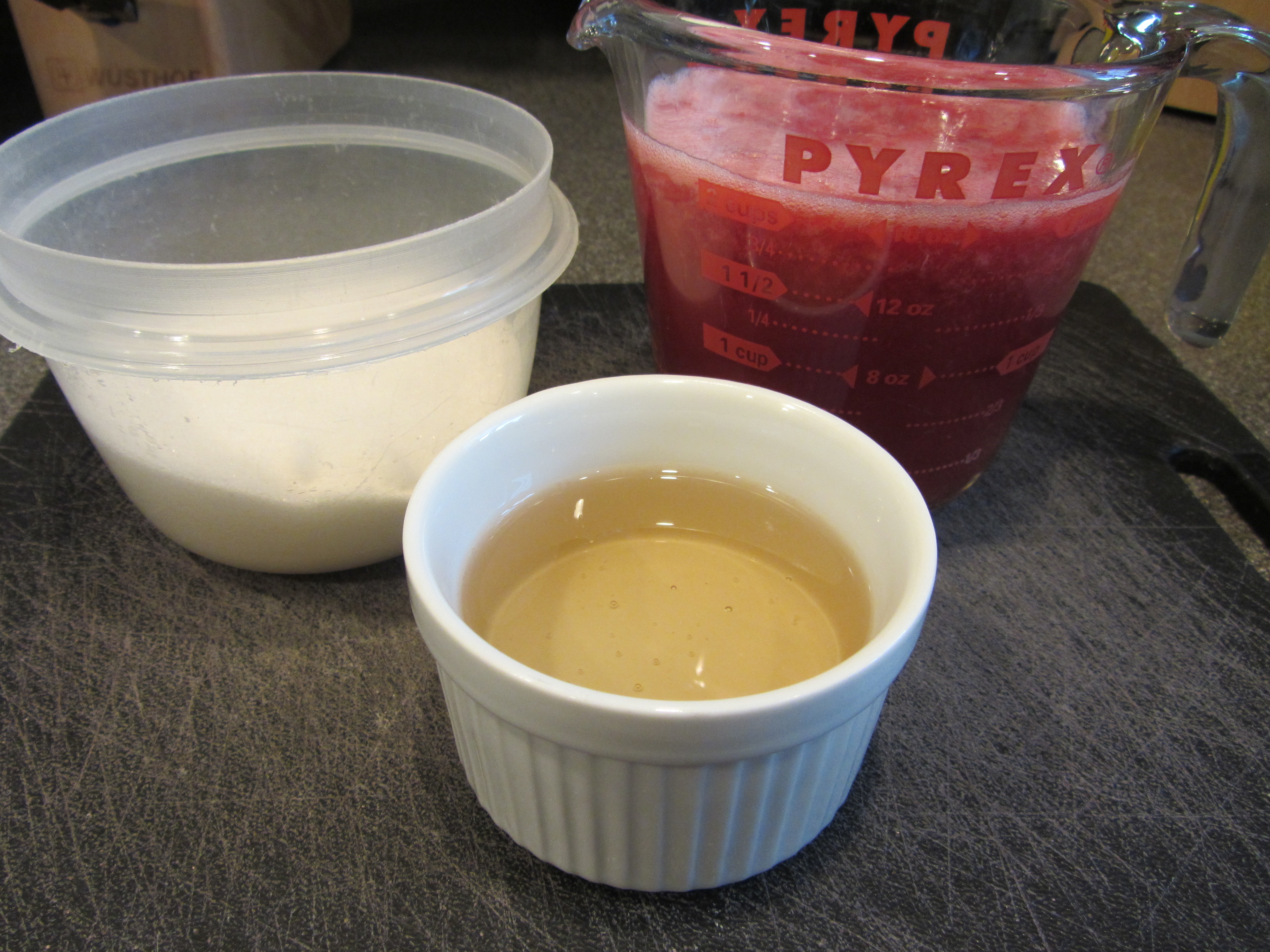
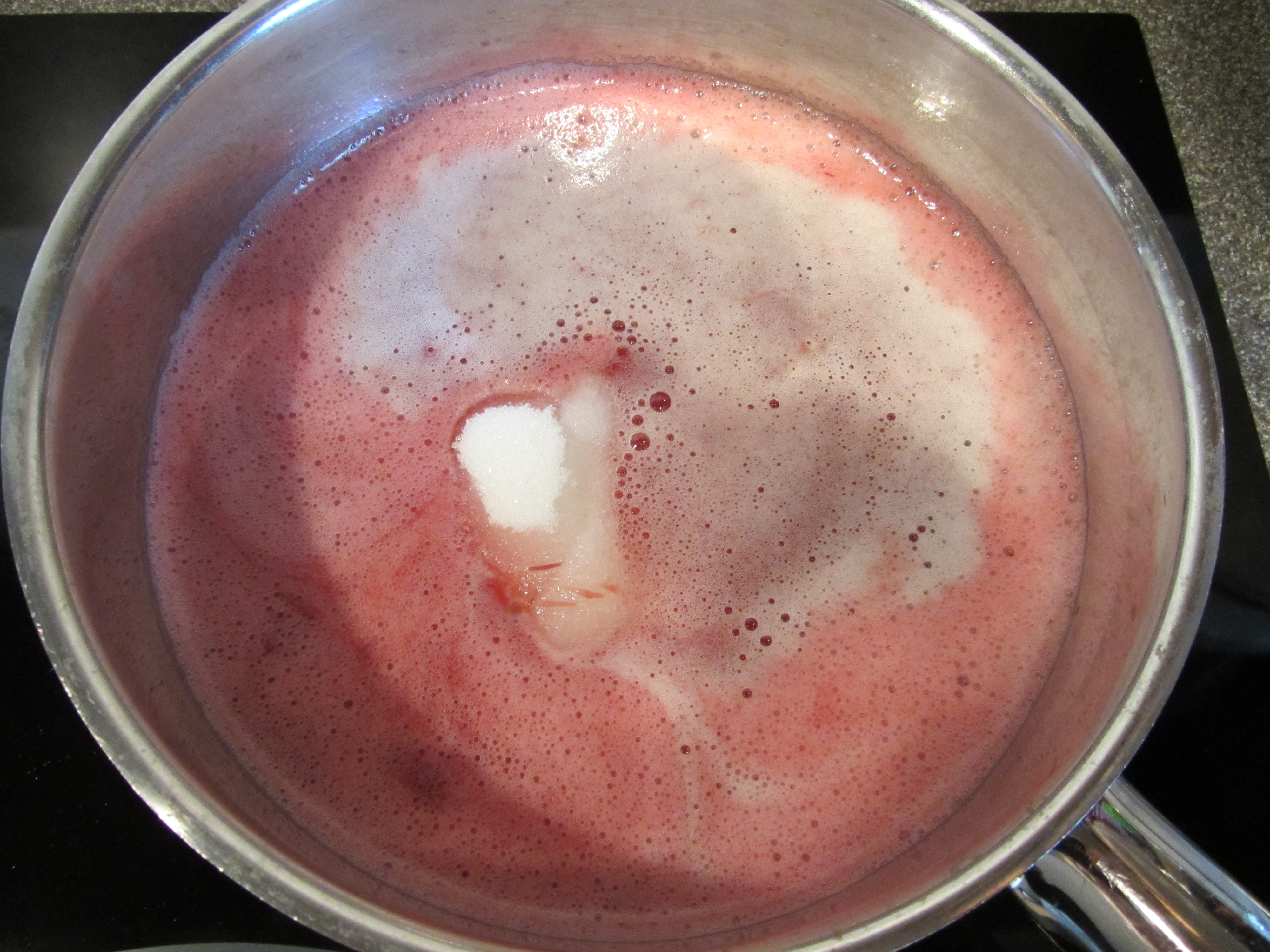
After a Thanksgiving-like dinner Thursday, I made Alton’s recipes for Thanksgiving leftovers on Friday, the first of which was for his cranberry jam. This recipe is really simple. To make it, you combine 2 C of leftover cranberry dipping sauce with a cup of sugar and a half cup of ginger ale.

Ingredients for cranberry jam:  leftover cranberry dipping sauce, ginger ale, and sugar.

Ingredients for cranberry jam: leftover cranberry dipping sauce, ginger ale, and sugar.

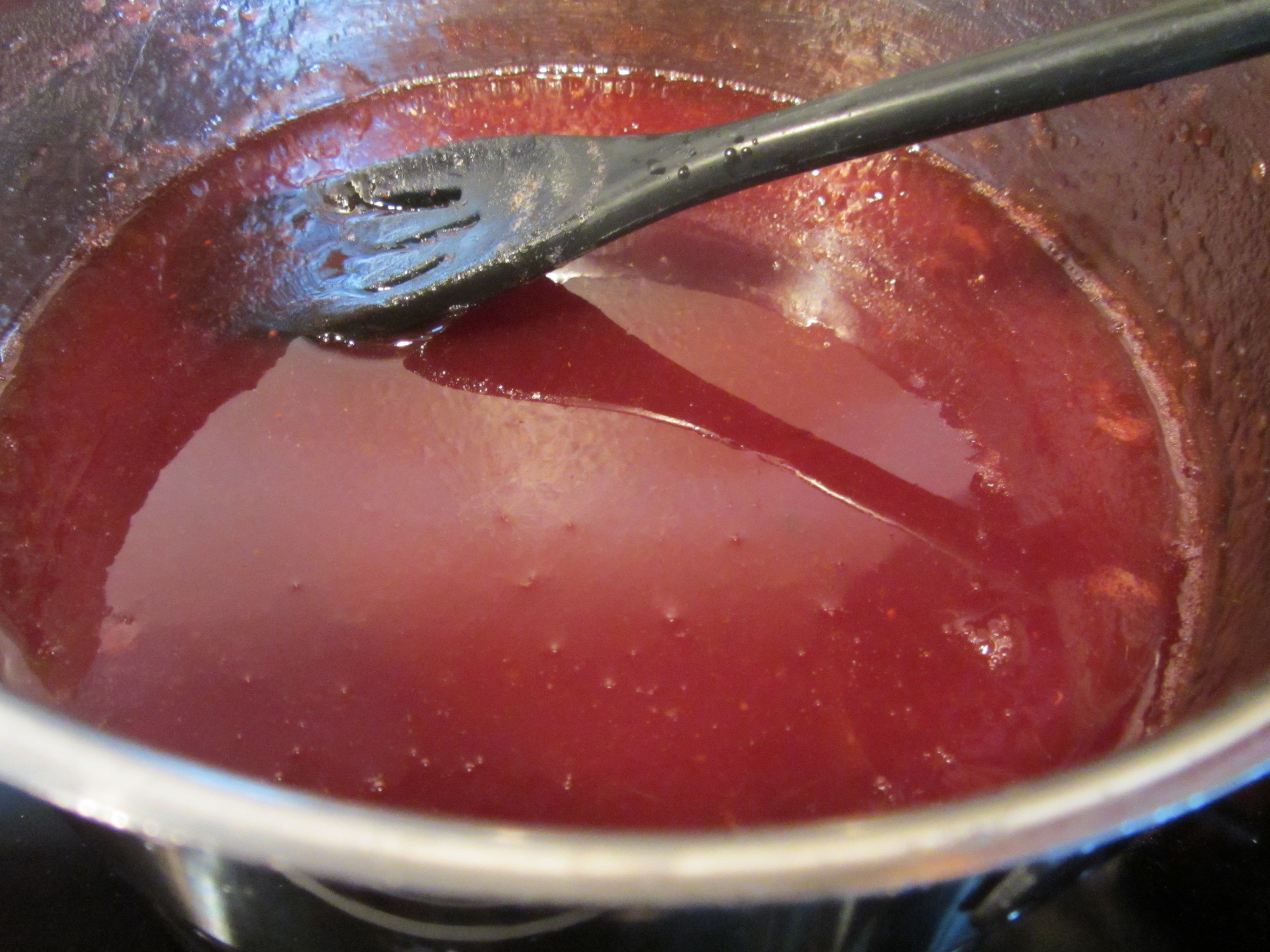
The mixture is cooked over low heat until it reduces to the consistency of loose jam, which took a couple of hours for mine.

Dipping sauce, ginger ale, and sugar in a saucepan.

Dipping sauce, ginger ale, and sugar in a saucepan.

Reduced cranberry dipping sauce.

Reduced cranberry dipping sauce.

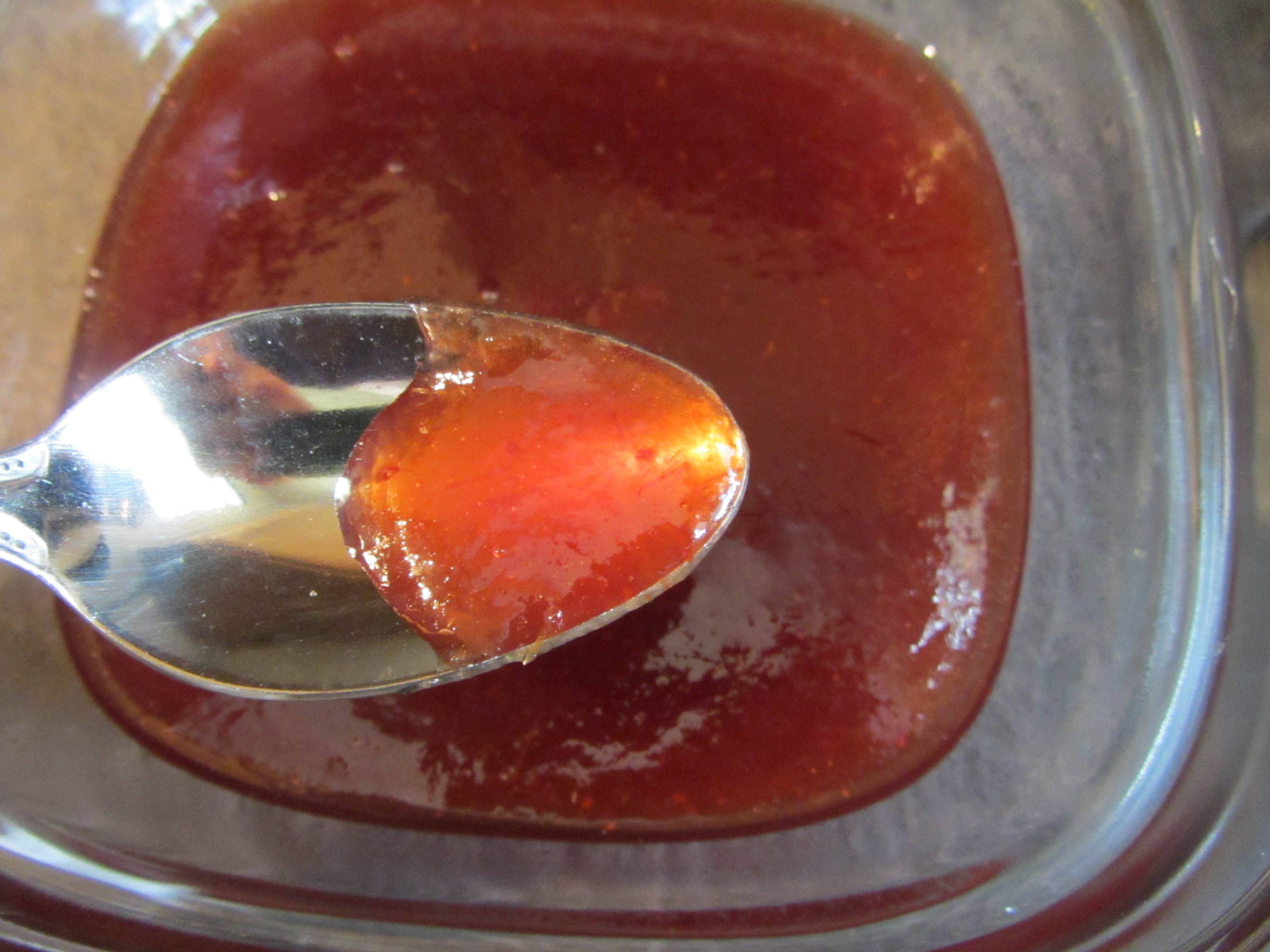
Finished cranberry jam.

Finished cranberry jam.

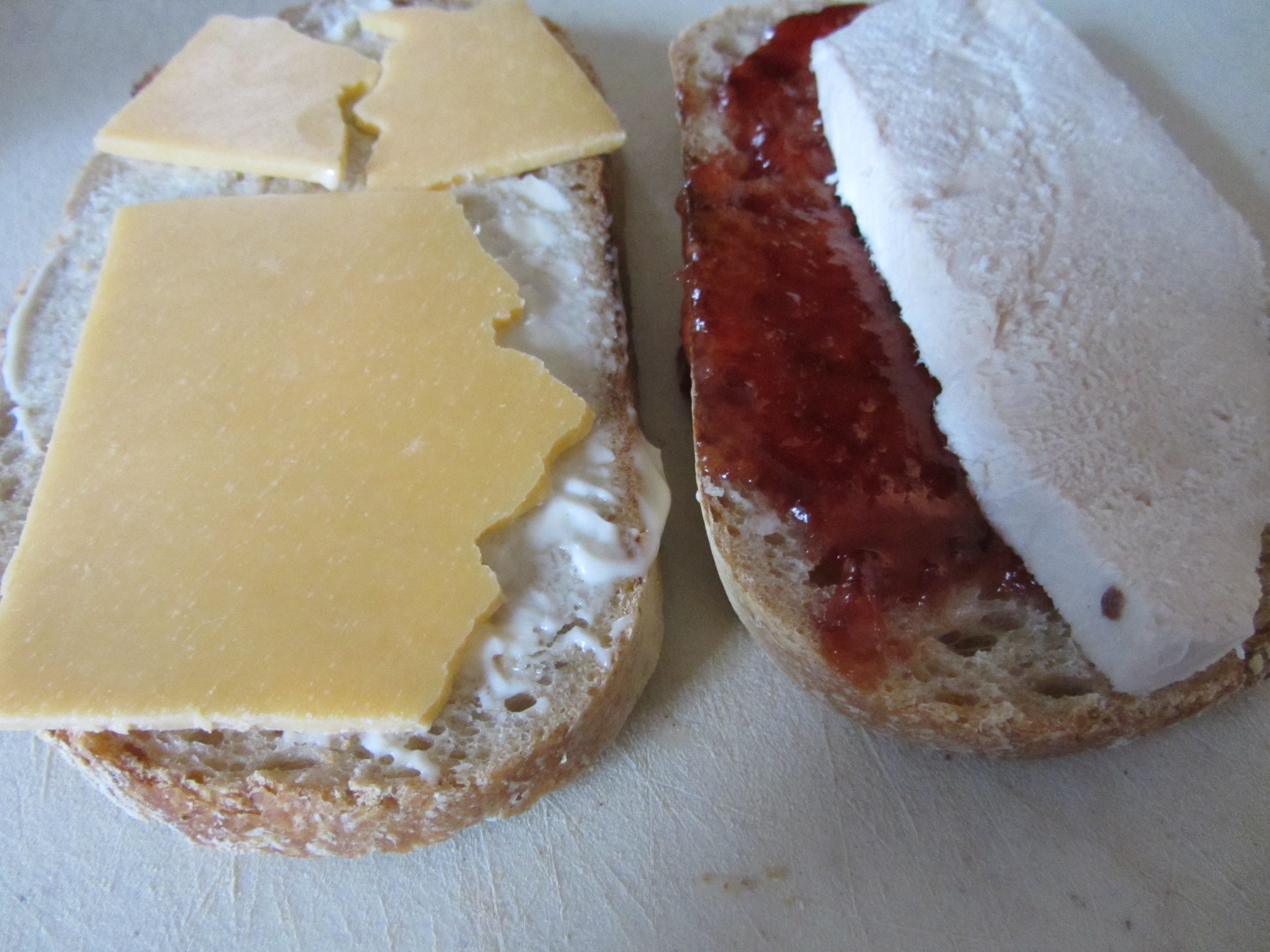
The resulting jam was really delicious, and we have since used it for turkey sandwiches, peanut butter and jelly sandwiches, and our morning toast.

Sandwich made with leftover turkey and cranberry jam.

Sandwich made with leftover turkey and cranberry jam.

The jam is tart-sweet, has a rich red color, and is easily spreadable. I liked the cranberry dipping sauce the first time around, and being able to make this jam from the leftovers makes it even more worthwhile. I will be making this one again.

Turkey Re-Hash

What better thing to eat for breakfast than Alton’s turkey hash? This recipe utilizes both the leftover turkey meat and the leftover corn bread pudding.

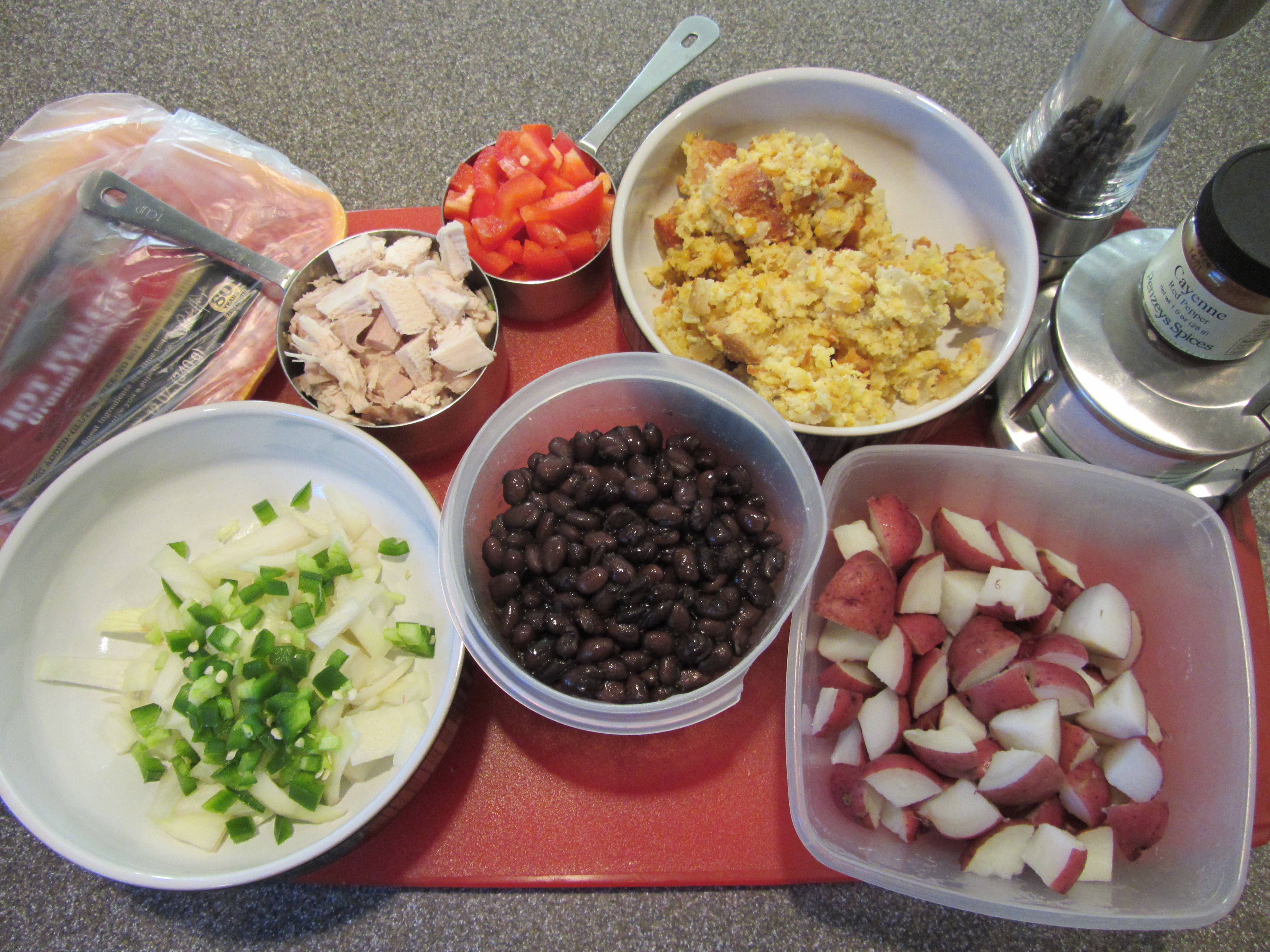
Ingredients for turkey hash:  breakfast sausage, onion, jalapeno, bell pepper, cooked red potatoes, black beans, leftover corn bread pudding, leftover turkey, cayenne, salt, and pepper.

Ingredients for turkey hash: breakfast sausage, onion, jalapeno, bell pepper, cooked red potatoes, black beans, leftover corn bread pudding, leftover turkey, cayenne, salt, and pepper.

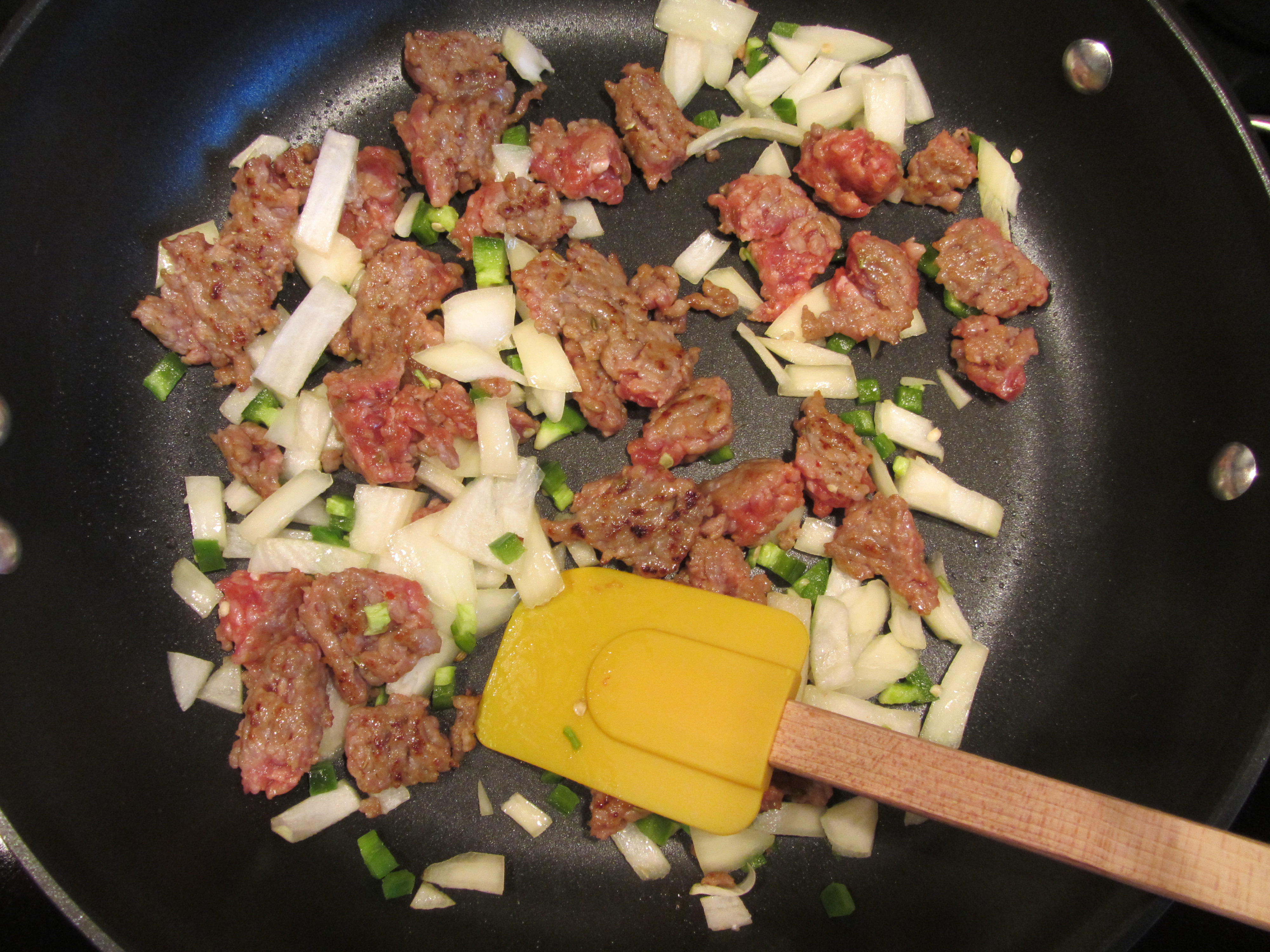
To start, Alton tells you to heat a cast iron skillet over medium-high heat. Since we have a brand new smooth top range, I opted not to use cast iron, as I have heard that it can scratch a smooth top range. Instead, I used a heavy non-stick skillet. Once the pan is hot, add a half pound of breakfast sausage and cook it until it renders some of its fat; I used a spicy Italian sausage.

Sausage rendering fat.

Sausage rendering fat.

To the sausage, add half an onion and half a jalapeno, chopped.

Onion and jalapeno added to pan.

Onion and jalapeno added to pan.

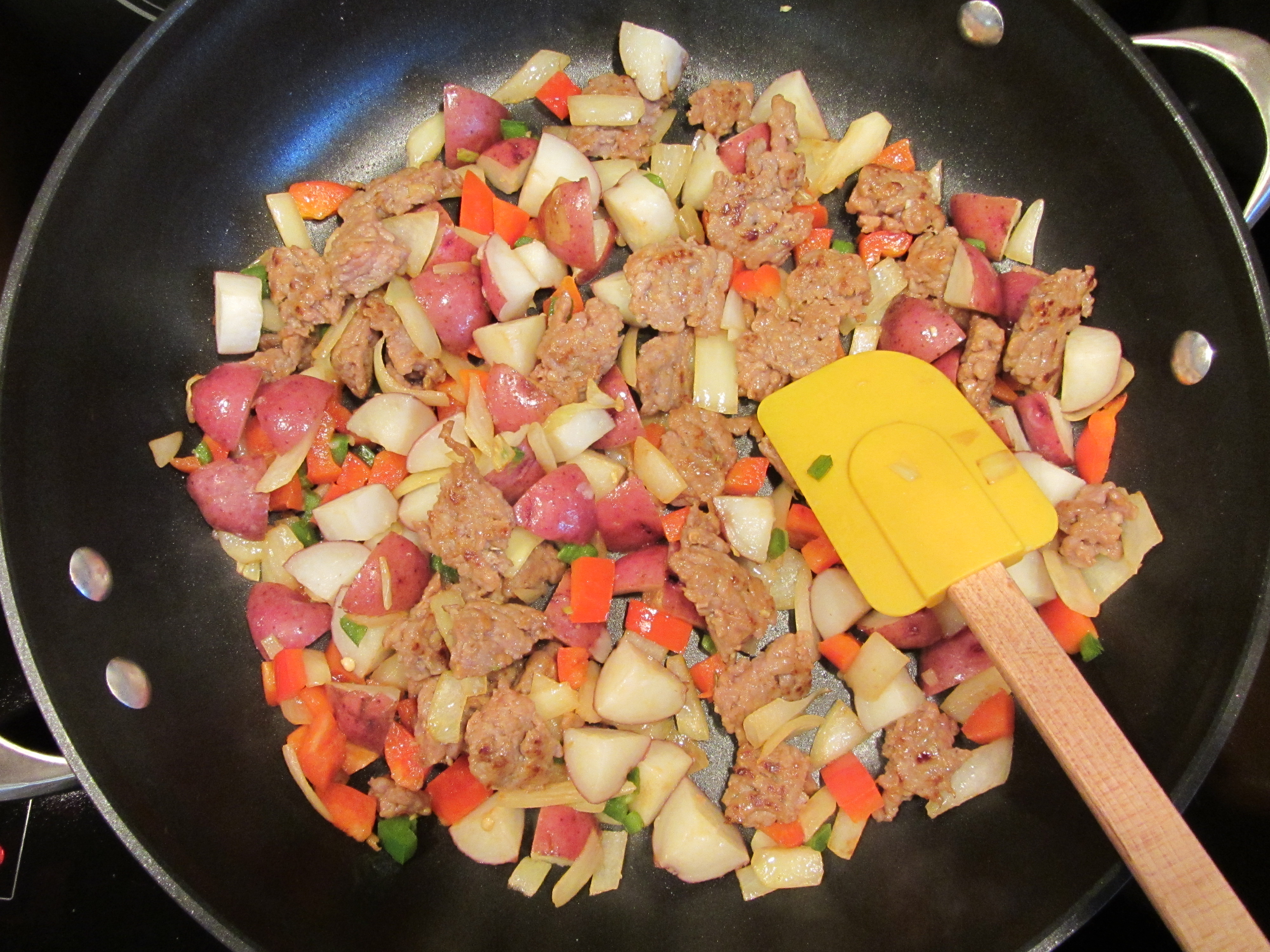
When the onion is translucent, add a half cup of chopped red bell pepper and cook for a minute or two.

Bell pepper added.

Bell pepper added.

Next, add 1.5 C of cooked, cubed red potatoes (Note: I cooked my potatoes the night before by simmering them in salted water until tender). To get some good brown color on the potatoes, increase the heat to high.

Potatoes added to hash.

Potatoes added to hash.

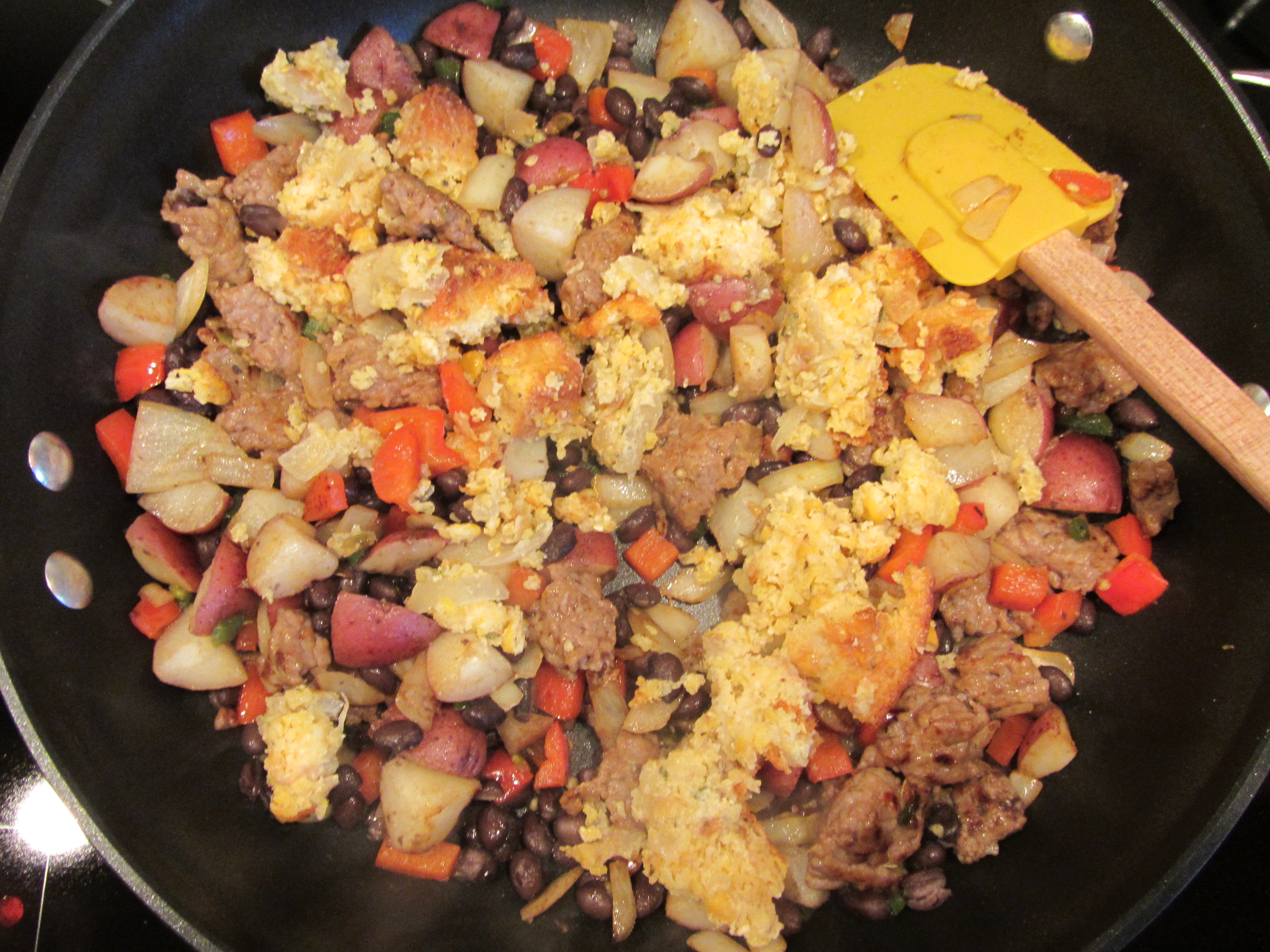
Then, add a can of black beans, drained and rinsed, followed by a couple cups of the leftover corn bread pudding, cubed.

Black beans in the pan.

Black beans in the pan.

The addition of leftover corn bread pudding.

The addition of leftover corn bread pudding.

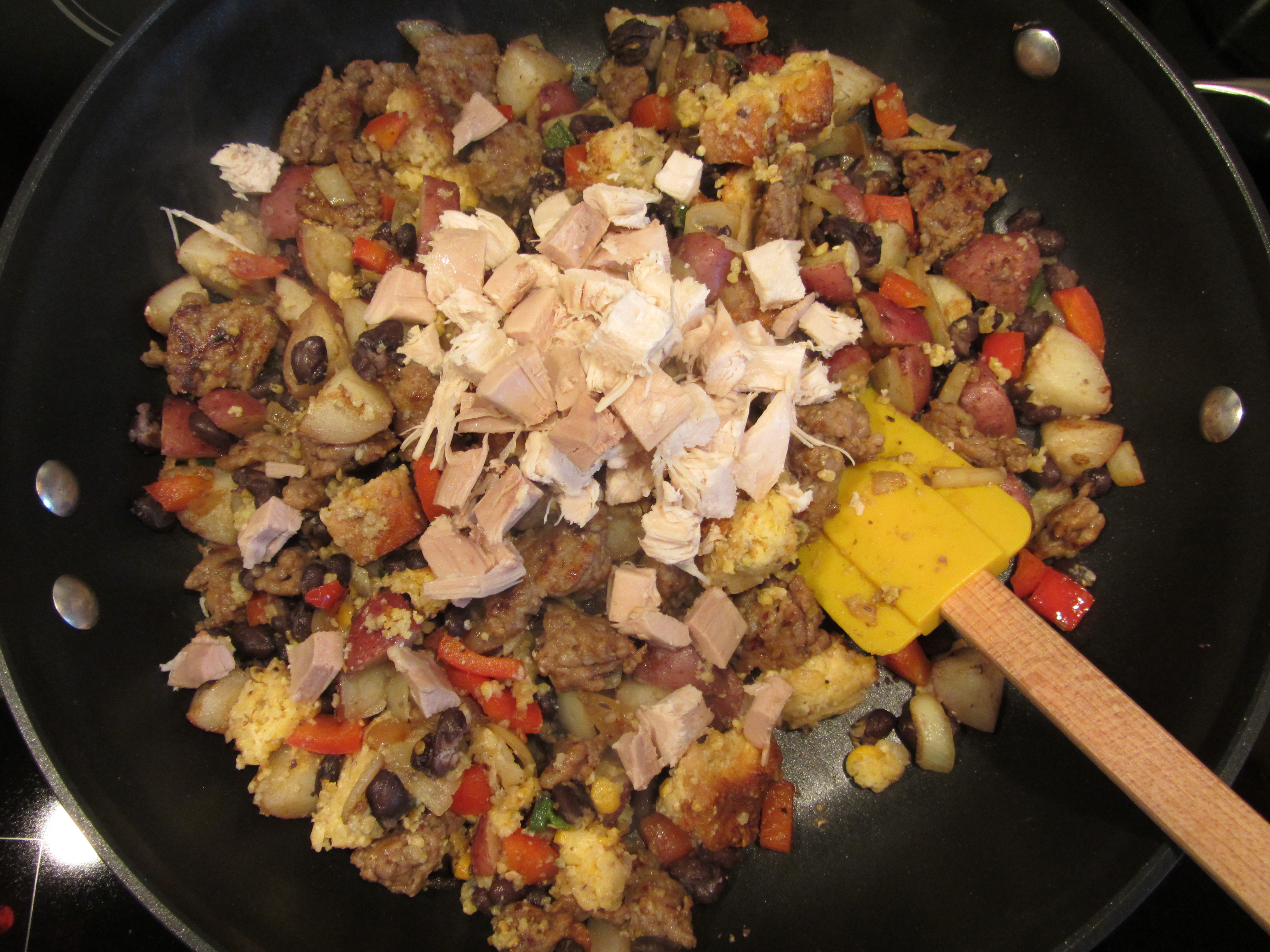
Stir everything and add a cup of cubed turkey meat.

Leftover cubed turkey added.

Leftover cubed turkey added.

Season the hash with some cayenne pepper, salt, and pepper.

Seasonings added to the hash.

Seasonings added to the hash.

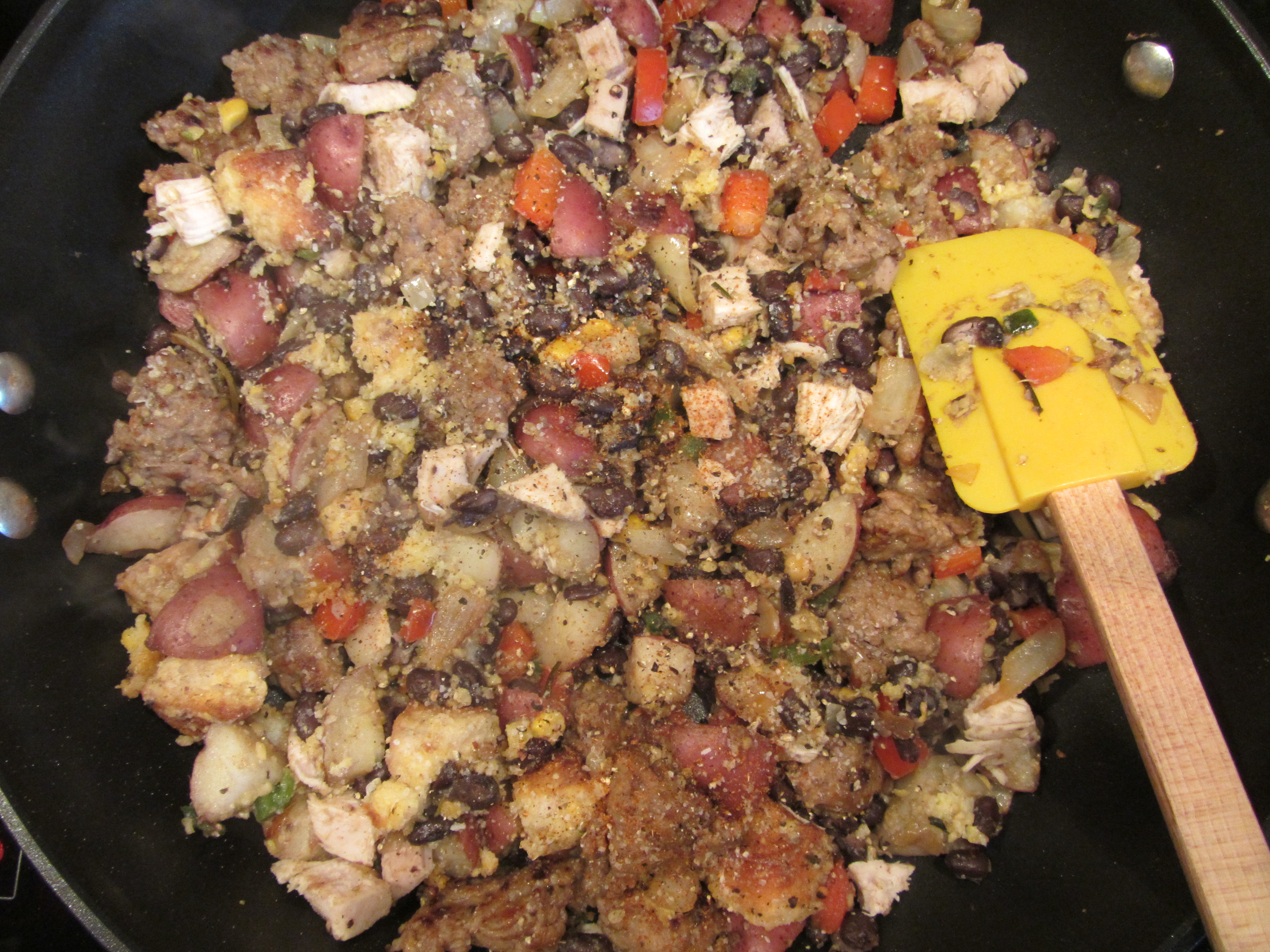
The completed hash.

The completed hash.

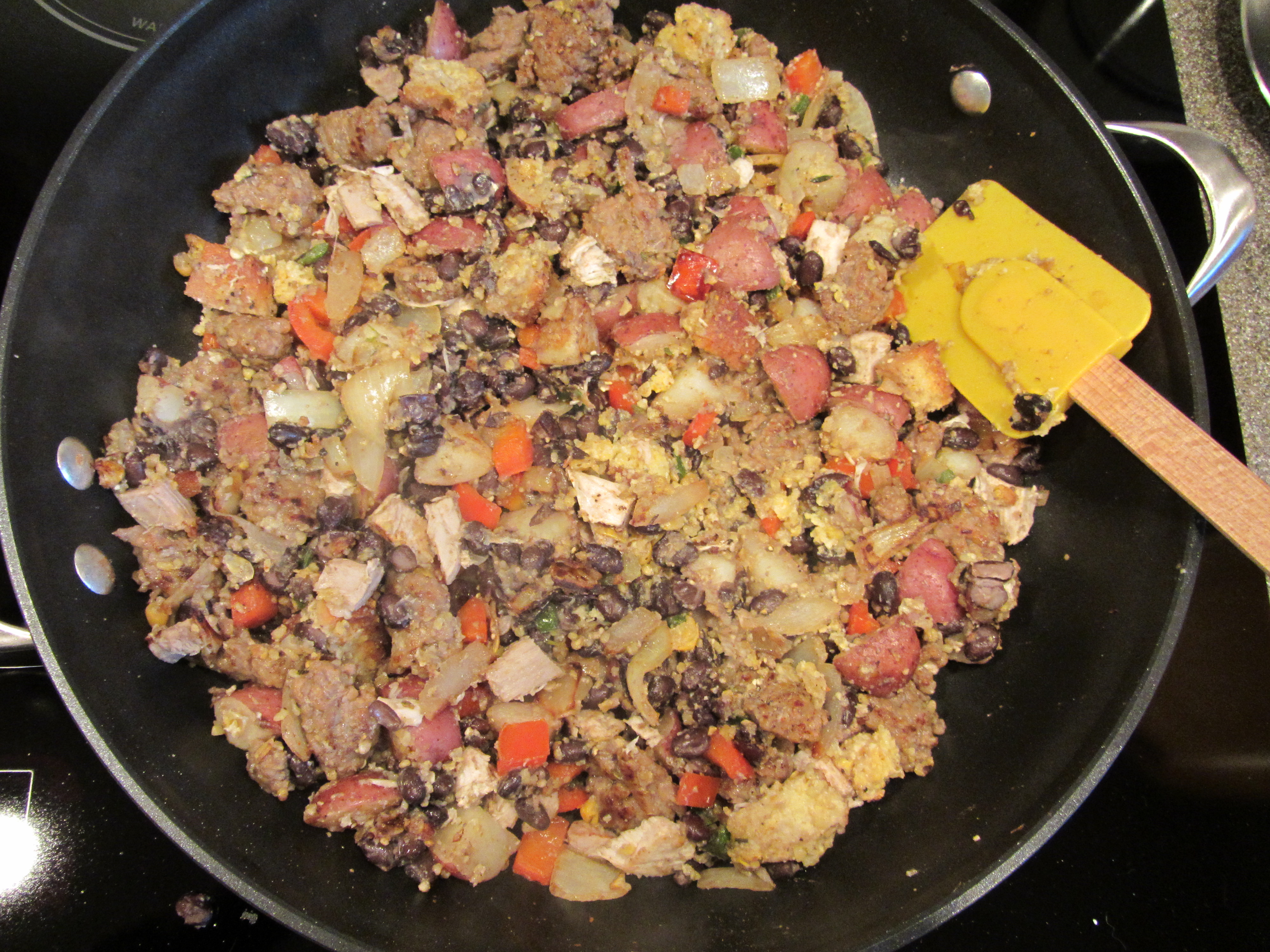
Turkey Re-Hash.

Turkey Re-Hash.

Serve hot. This hash was good, but not mind-blowing. It really was a perfect leftover recipe, as you could easily make this your own, adding whatever you have in the house. We rarely eat hot breakfasts during the week, so that was a treat in itself. The hash had a nice medley of textures and a pretty good level of heat, which we really like. This is a recipe I wouldn’t seek out, but I will not be surprised if I end up making a version of this again in the future with the leftovers we have on hand. Next time, though, I will likely make Alton’s mentioned additions of a couple of eggs and some cheese. Even better!
Bird to the Last Drop

Alton’s last Thanksgiving leftover recipe is for turkey soup. Allow a few hours for making this soup, as it will be better if it has longer to cook.

Ingredients for turkey soup:  vegetable broth, turkey carcass, frozen vegetables, rice, cubed turkey, Old Bay, thyme, salt, and pepper.

Ingredients for turkey soup: vegetable broth, turkey carcass, frozen vegetables, rice, cubed turkey, Old Bay, thyme, salt, and pepper.

To make it, combine two quarts of vegetable broth with the remains of your turkey carcass.

Broken down turkey carcass.

Broken down turkey carcass.

Turkey carcass and vegetable broth.

Turkey carcass and vegetable broth.

Cover this and simmer it over low heat. While the online recipe tells you to cook this for an hour, it will only be better if you can cook it longer. I simmered my bones for 2.5 hours.

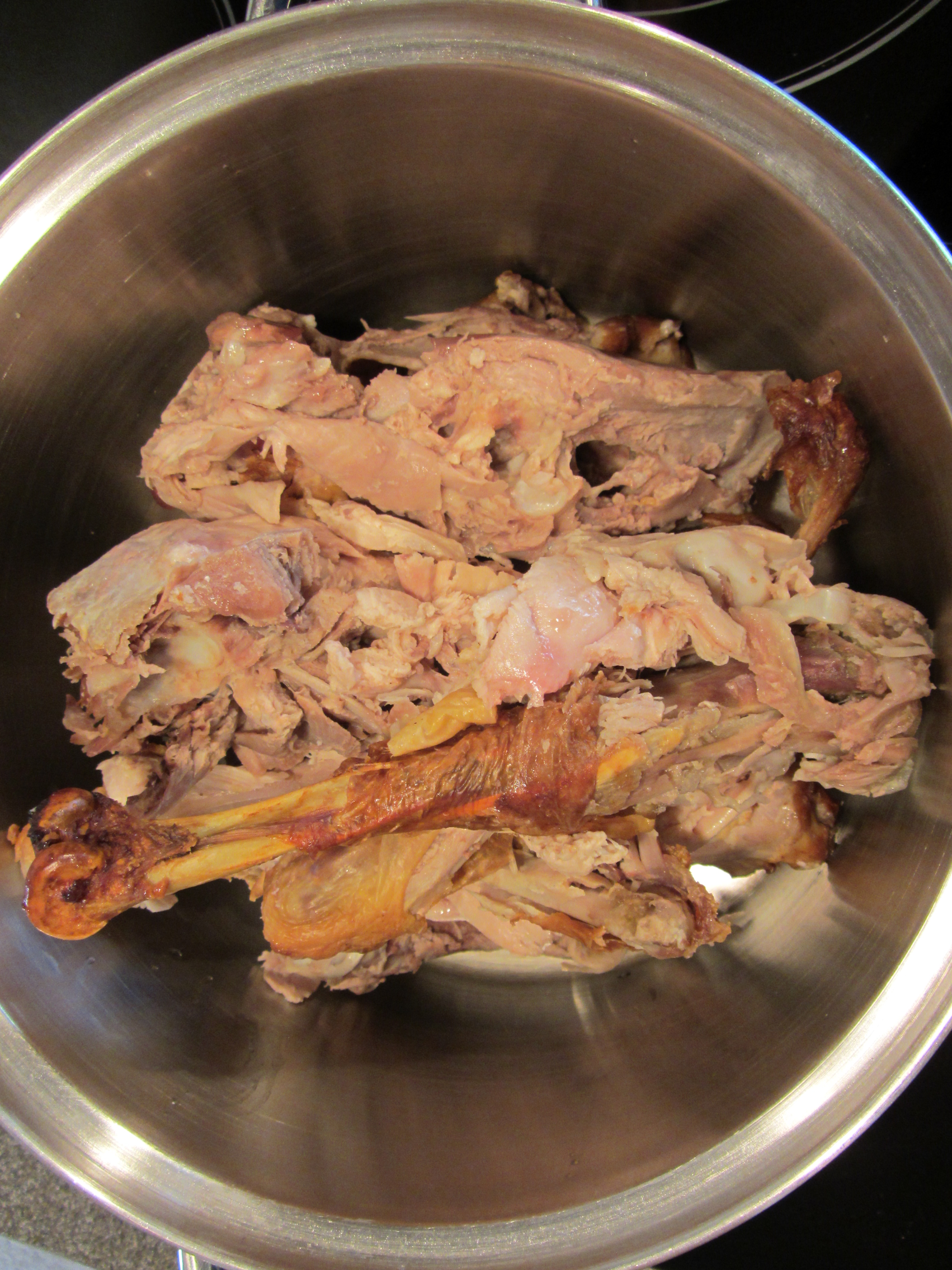
Turkey carcass after simmering for 2.5 hours.

Turkey carcass after simmering for 2.5 hours.

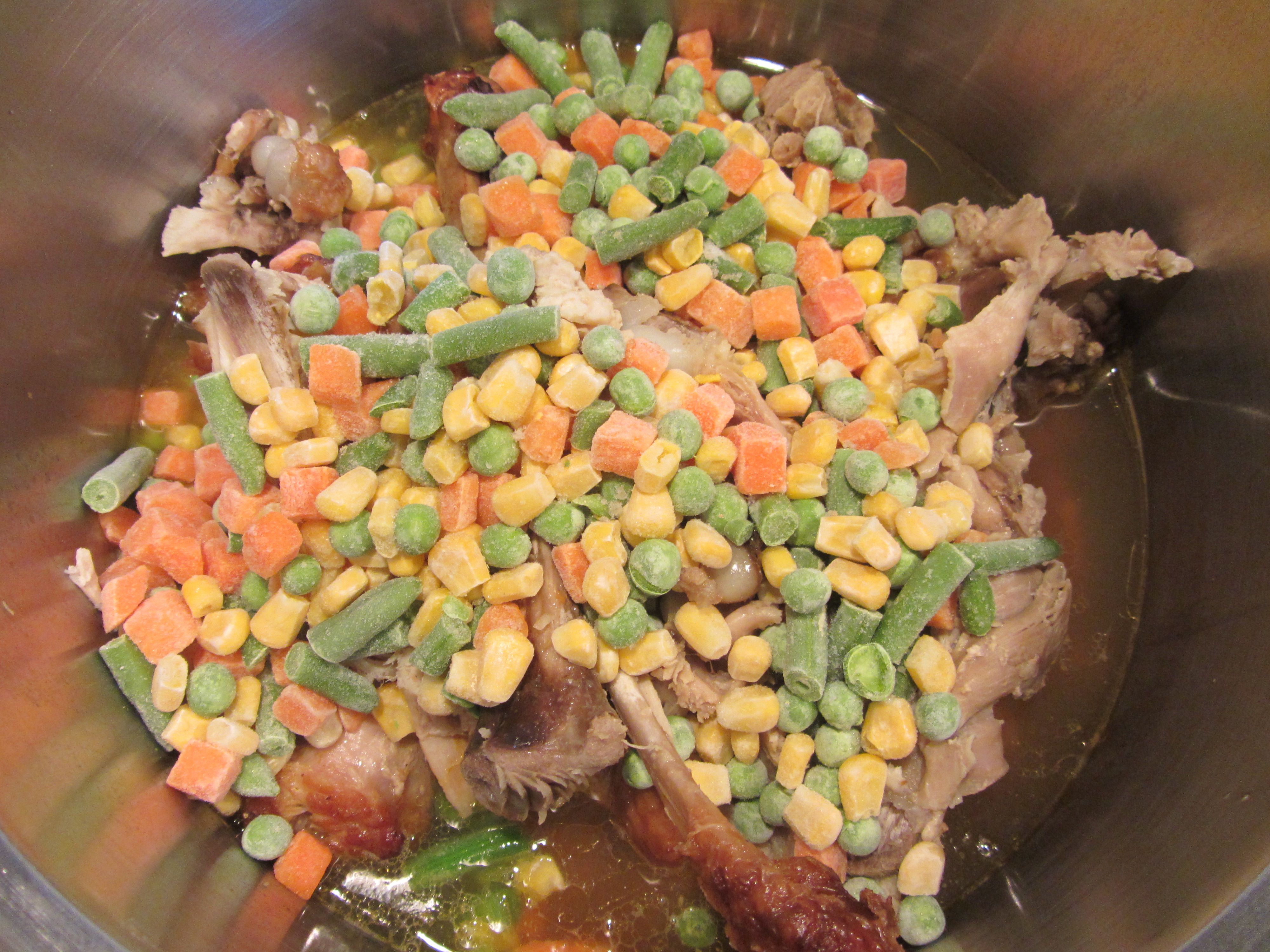
After a good simmer, add 10 ounces of frozen vegetables (I added 12 oz), 1/2 C of rice, 2 C of cubed turkey meat, 1 t of Old Bay Seasoning, 2 t of dried thyme, salt, and pepper.

Addition of frozen vegetables.

Addition of frozen vegetables.

3-2-15 038

Addition of rice.

Addition of rice.

Addition of leftover turkey meat.

Addition of leftover turkey meat.

Salt, pepper, and thyme added to soup.

Salt, pepper, and thyme added to soup.

Simmer the soup for an additional 20 minutes, remove the bones, and serve.

Turkey soup after final 20 minute simmer.

Turkey soup after final 20 minute simmer.

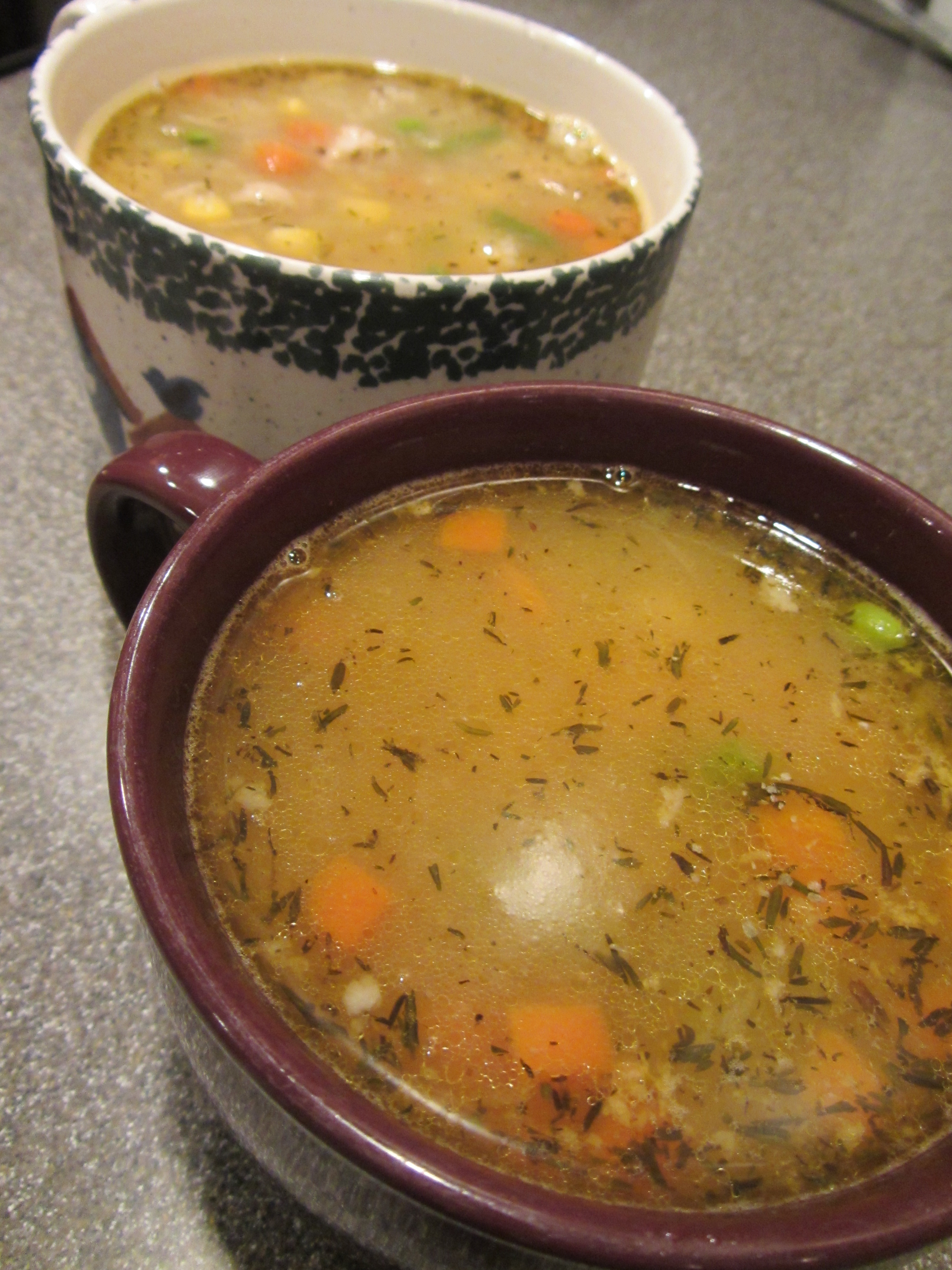
Turkey soup after fishing bones out.

Turkey soup after fishing bones out.

I made the soup a day prior to serving it. We returned home Saturday, after doing a mountain bike race in Oregon, and this turkey soup was the perfect meal to come home to. It was the epitome of comfort food, with a super rich mouthfeel, a variety of textures, and the flavor of a slow-cooked stock with lots of thyme.

Finished turkey soup.

Finished turkey soup.

We thought this turkey soup was great, and I will surely be making this with our future turkey leftovers. Delicious and easy! The richness of the soup makes it a meal in itself. Keep this one in mind for Thanksgiving this year, or should you need an excuse to make a Good Eats turkey at any time in the year!