Archive for the ‘Season 2’ Category

The Shrimp Cocktail

I had to make a decision here with my blog, as to whether to continue with the episodes in production order or in order of how the episodes aired. I chose to continue with the episodes by air date, which put my next episode as the shrimp episode. Shrimp, while I think they are okay, are not my favorite thing. I will almost always opt for other seafood over shrimp. This probably explains why I had never prepared shrimp prior to making this recipe from Good Eats.

To begin this recipe, Alton shows you how to clean and devein your shrimp by cutting along the back of each shrimp with small scissors. He gives a helpful tip to remove the veins (which are really the intestinal tracts) under water, as they tend to stick to everything. Alton really emphasizes the need to keep your shrimp very cold throughout every step of the shrimp cocktail process, so the shrimp are kept in a bowl of ice water while you devein them.

Cleaned shrimp.

Cleaned shrimp.

Once the shrimp are all clean, you combine Kosher salt, sugar, water, and ice cubes to make your brine. Alton says he makes his brine by running through one cycle of a coffee maker. I just dissolved my salt and sugar on the stove, let the brine cool slightly, and added my ice cubes. I poured the brine over my shrimp and put them in the refrigerator for 25 minutes.

Kosher salt and sugar, ready to be dissolved in some water to make a shrimp brine.

Kosher salt and sugar, ready to be dissolved in some water to make a shrimp brine.

While your shrimp sit in their brine, you make the cocktail sauce. You combine a can of drained tomatoes, chili sauce, horseradish, sugar, pepper, and Kosher salt in a food processor. I used my mini food processor that came with my immersion blender (Alton did this in the episode too), and it worked perfectly.
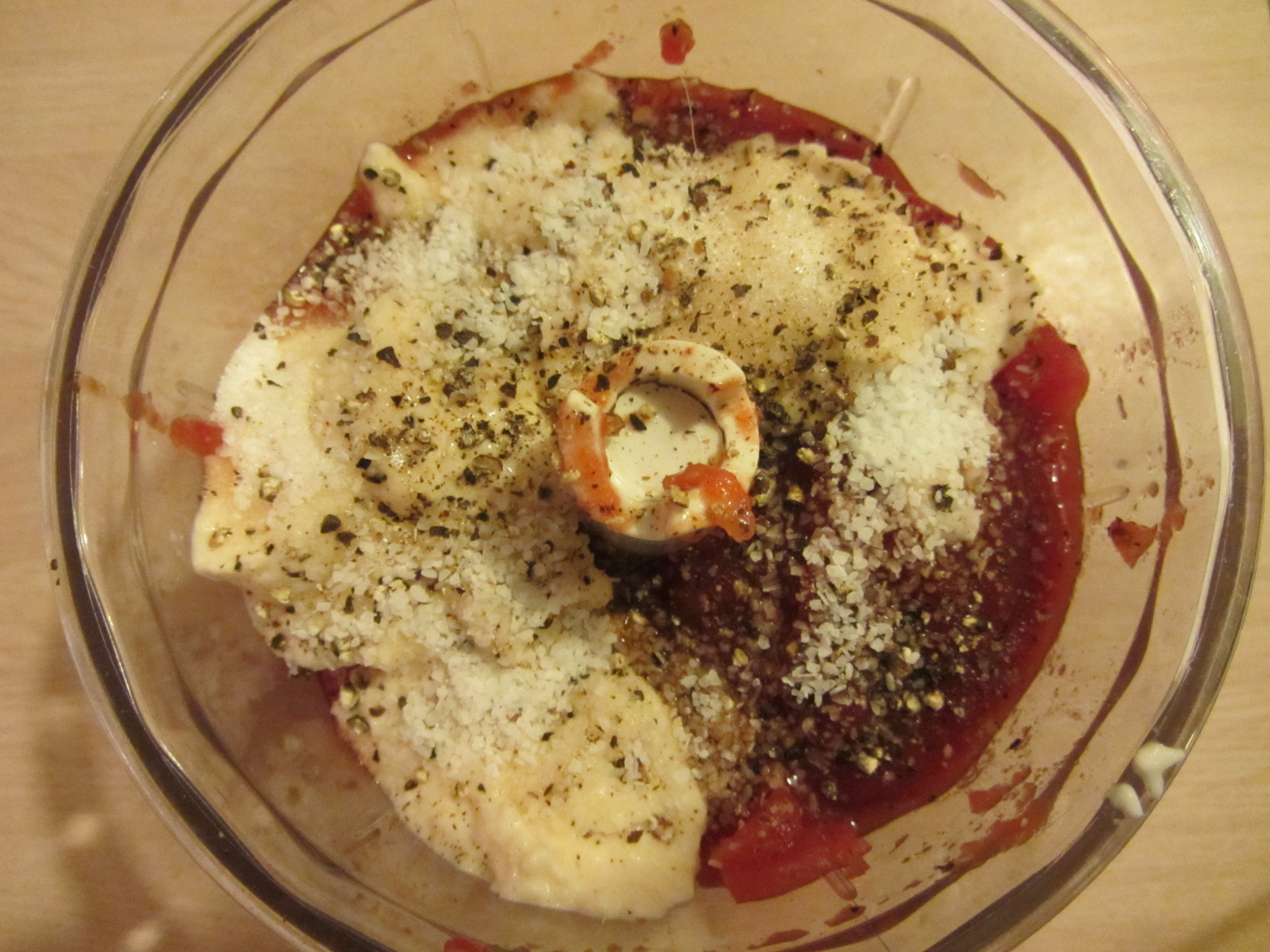
Canned tomatoes, chili sauce, horseradish, sugar, pepper, and Kosher salt.
Canned tomatoes, chili sauce, horseradish, sugar, pepper, and Kosher salt.

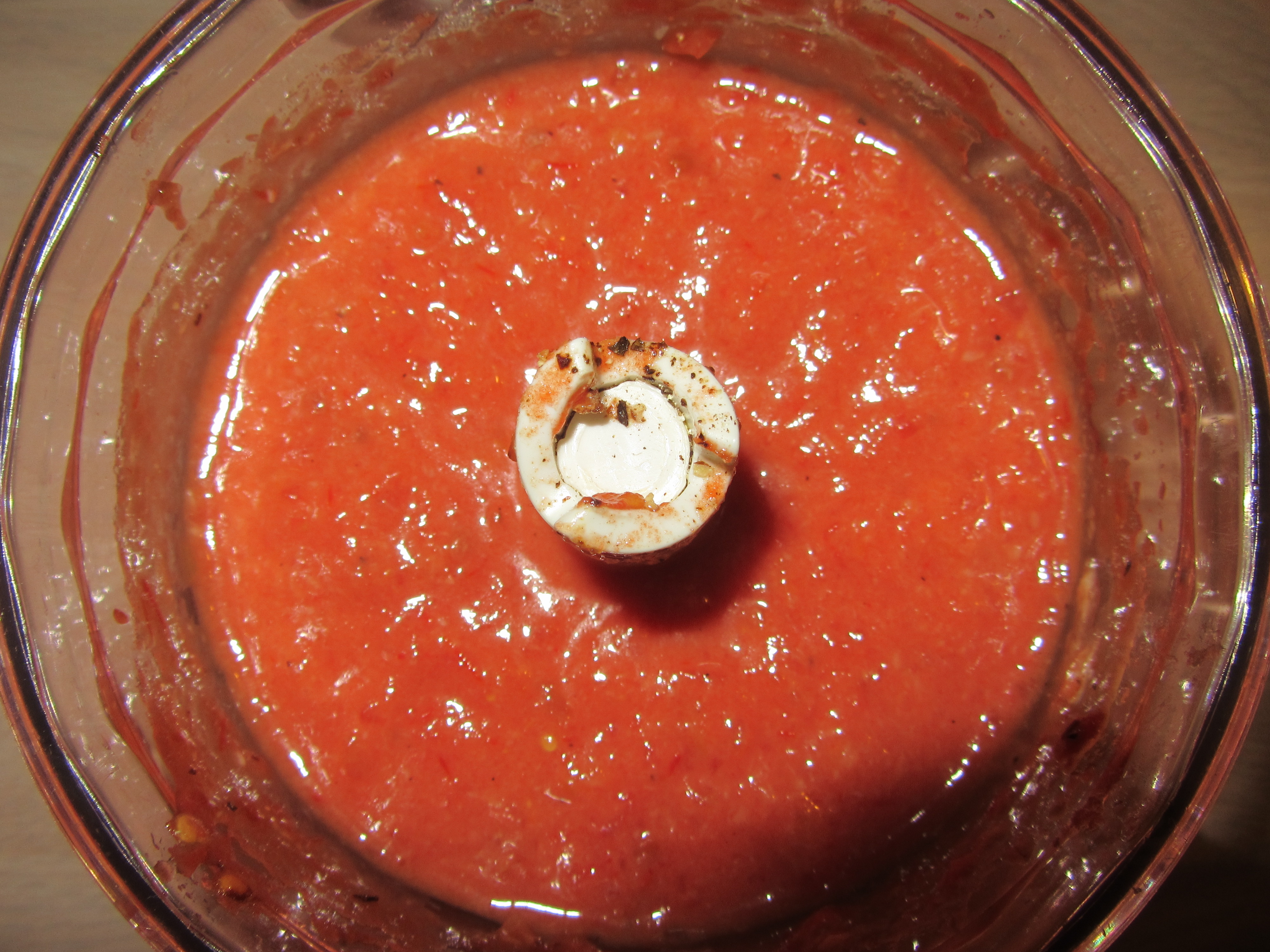
Finished cocktail sauce.

Finished cocktail sauce.

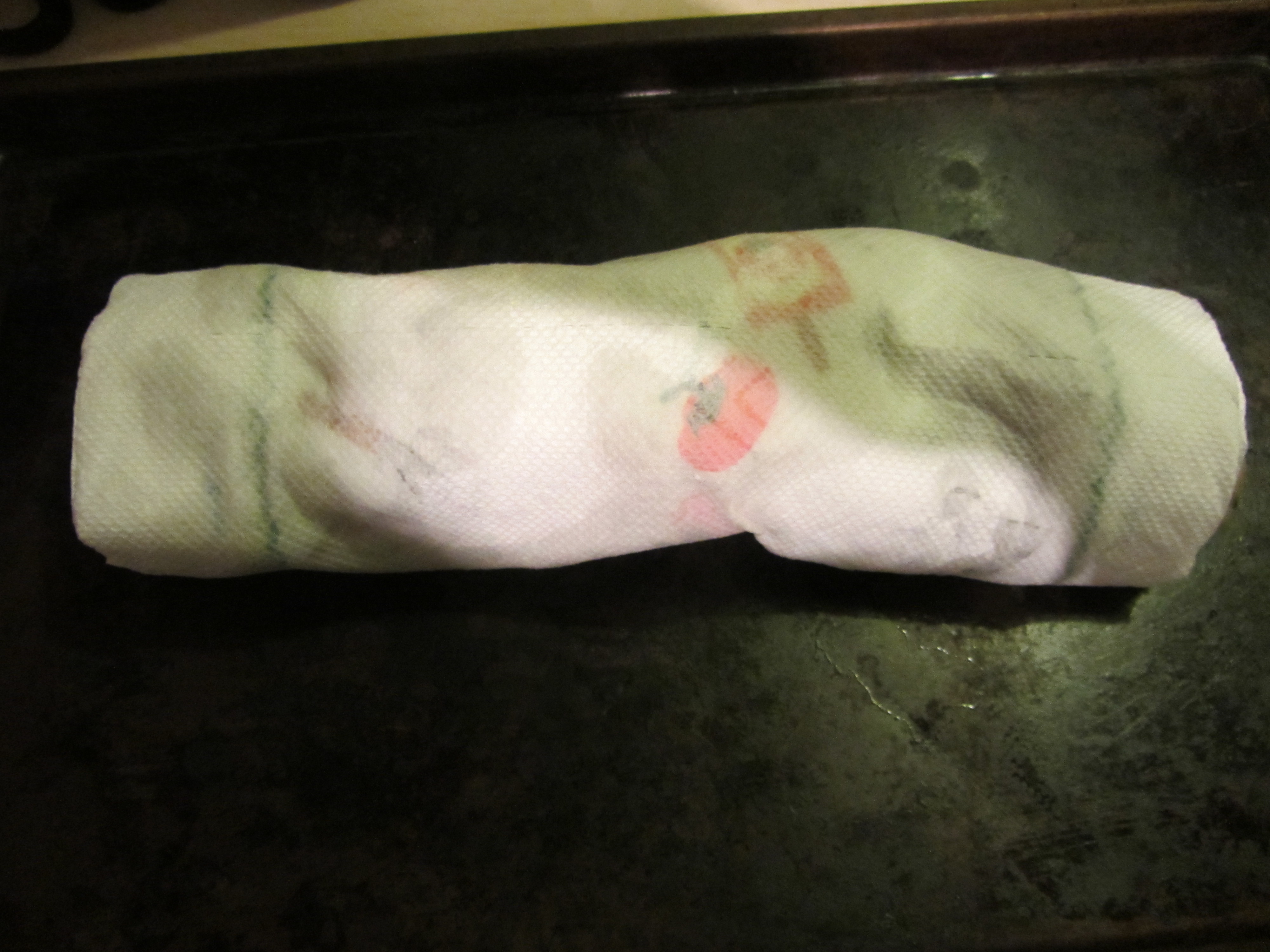
The sauce goes into the refrigerator while you finish your shrimp. After the brining period, you drain and rinse your shrimp. Alton tells you not to brine your shrimp for more than ~25 minutes. You then dry your shrimp in paper towels while you preheat your broiler with a foil-coated pan IN the oven.
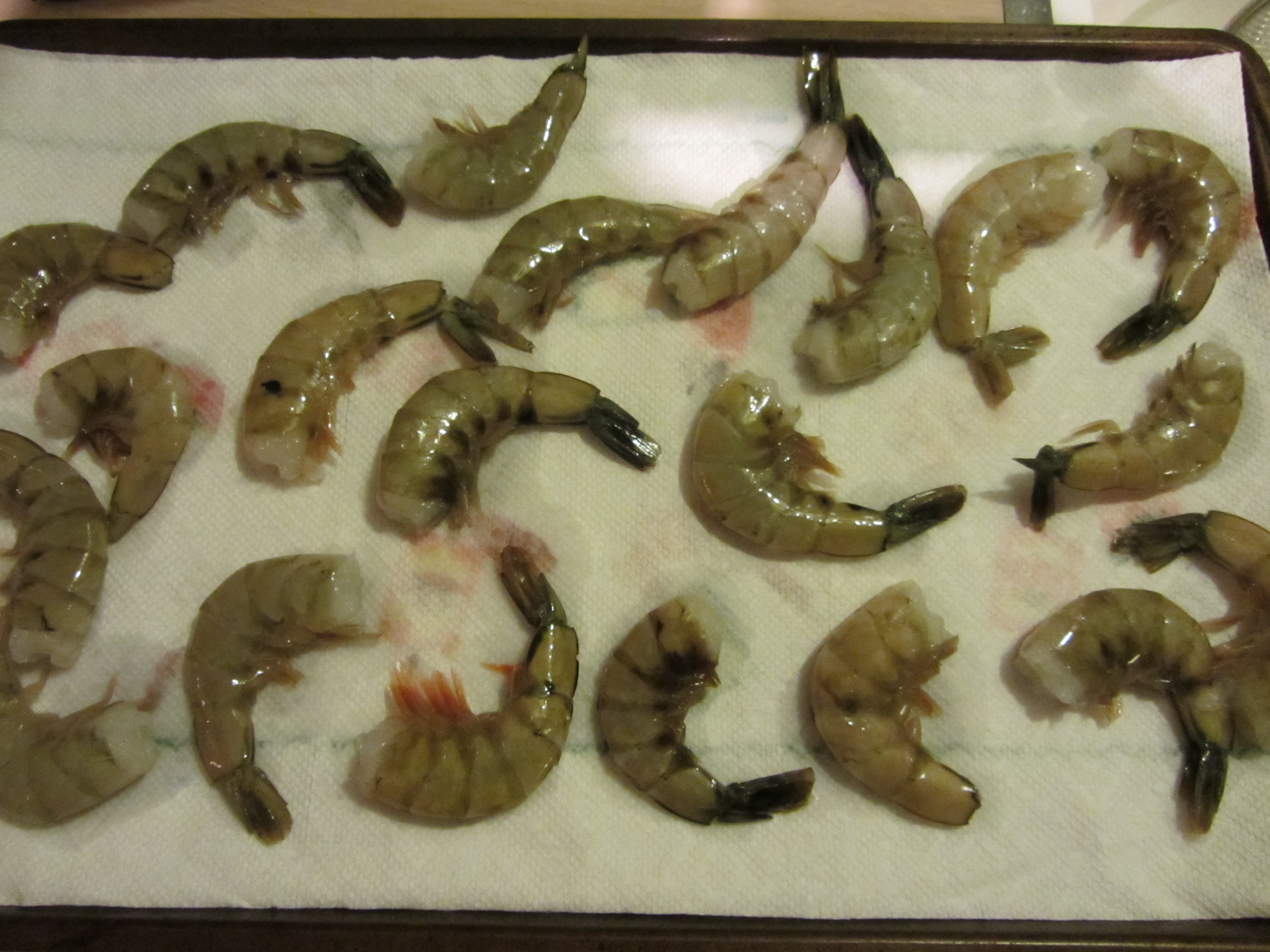
Shrimp after brining.
Shrimp after brining.

Shrimp, drying in paper towels.

Shrimp, drying in paper towels.

For this recipe, you want to place your oven rack in the position that is second closest to the broiler. Once the broiler is preheated, you toss your shrimp with some olive oil and sprinkle them with some Old Bay Seasoning. I love Old Bay Seasoning. Both my parents are from Maryland, and my grandma made the best crab cakes on the planet with a sprinkle of Old Bay.
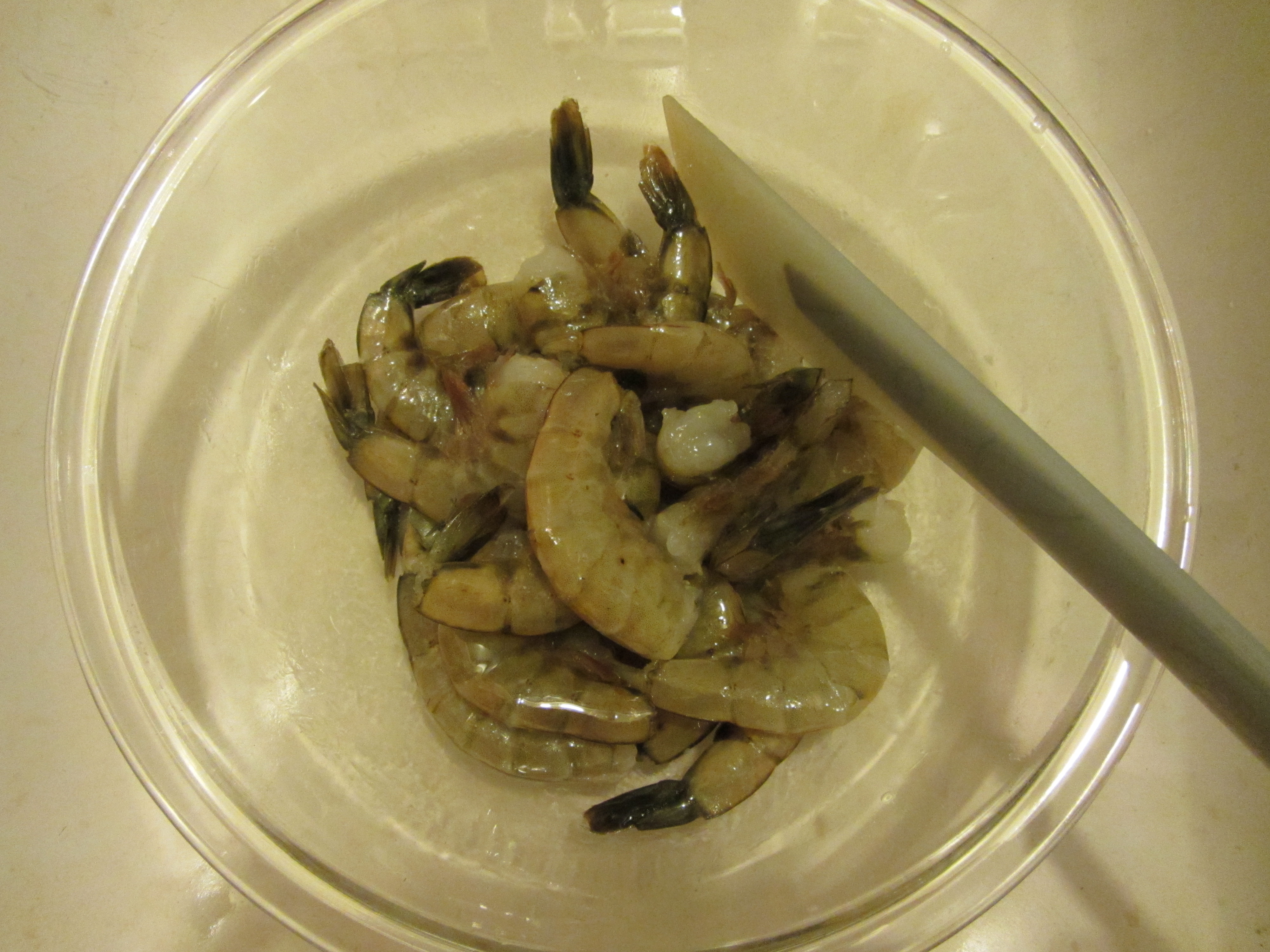
Shrimp coated with olive oil.
Shrimp coated with olive oil.

And a sprinkle of Old Bay.

And a sprinkle of Old Bay.

Shrimp with oil and Old Bay.

Shrimp with oil and Old Bay.

Once your shrimp are well-coated, you toss them, in a single layer, onto your hot pan in the oven, and they go under the broiler for two minutes. My shrimp were turning a nice shade of pink after two minutes. I flipped them over and threw them back into the oven for their additional one minute of cooking.
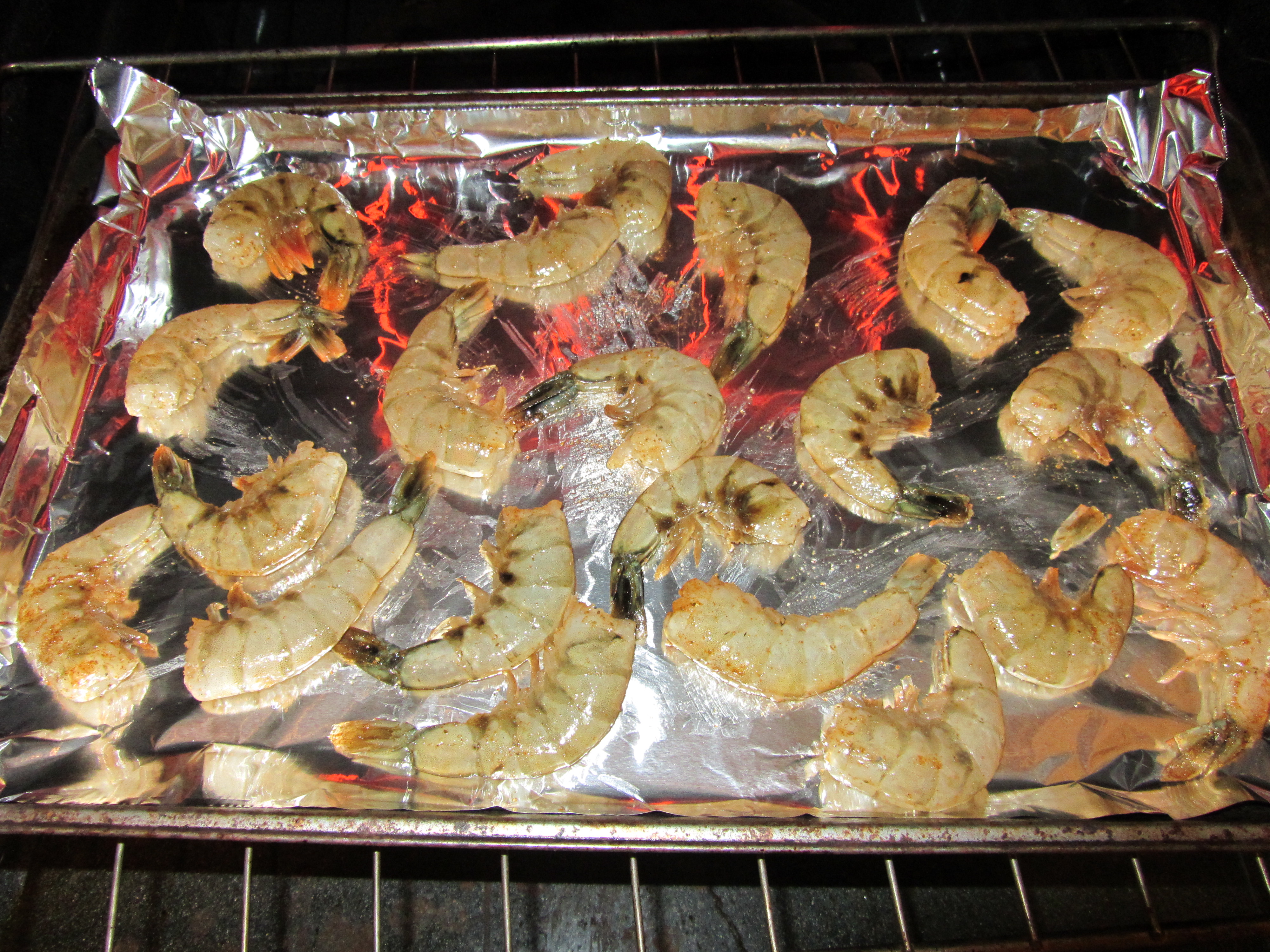
Shrimp into the oven on a pre-heated pan.
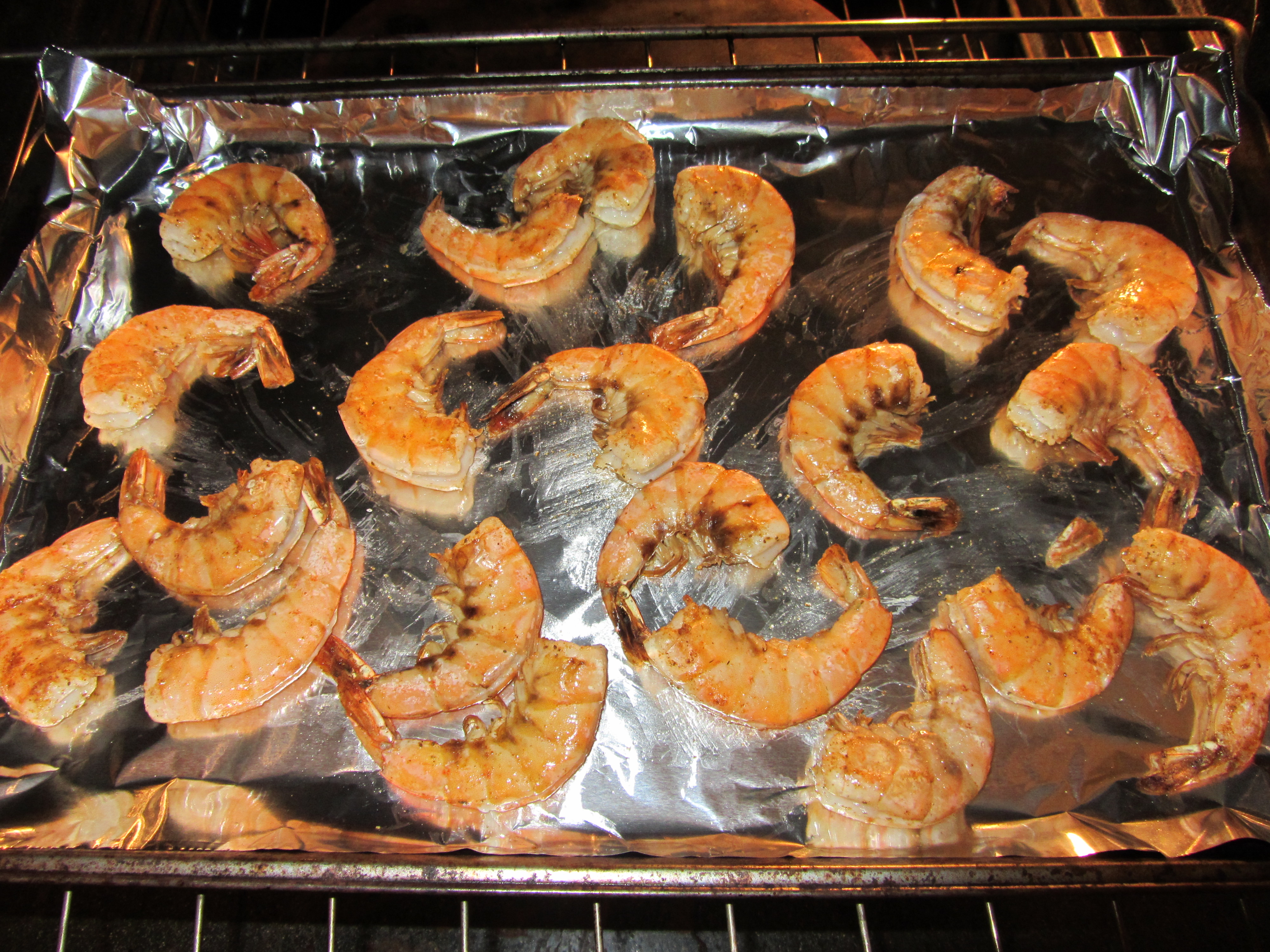
Shrimp into the oven on a pre-heated pan.

Shrimp after 2 minutes under the broiler.
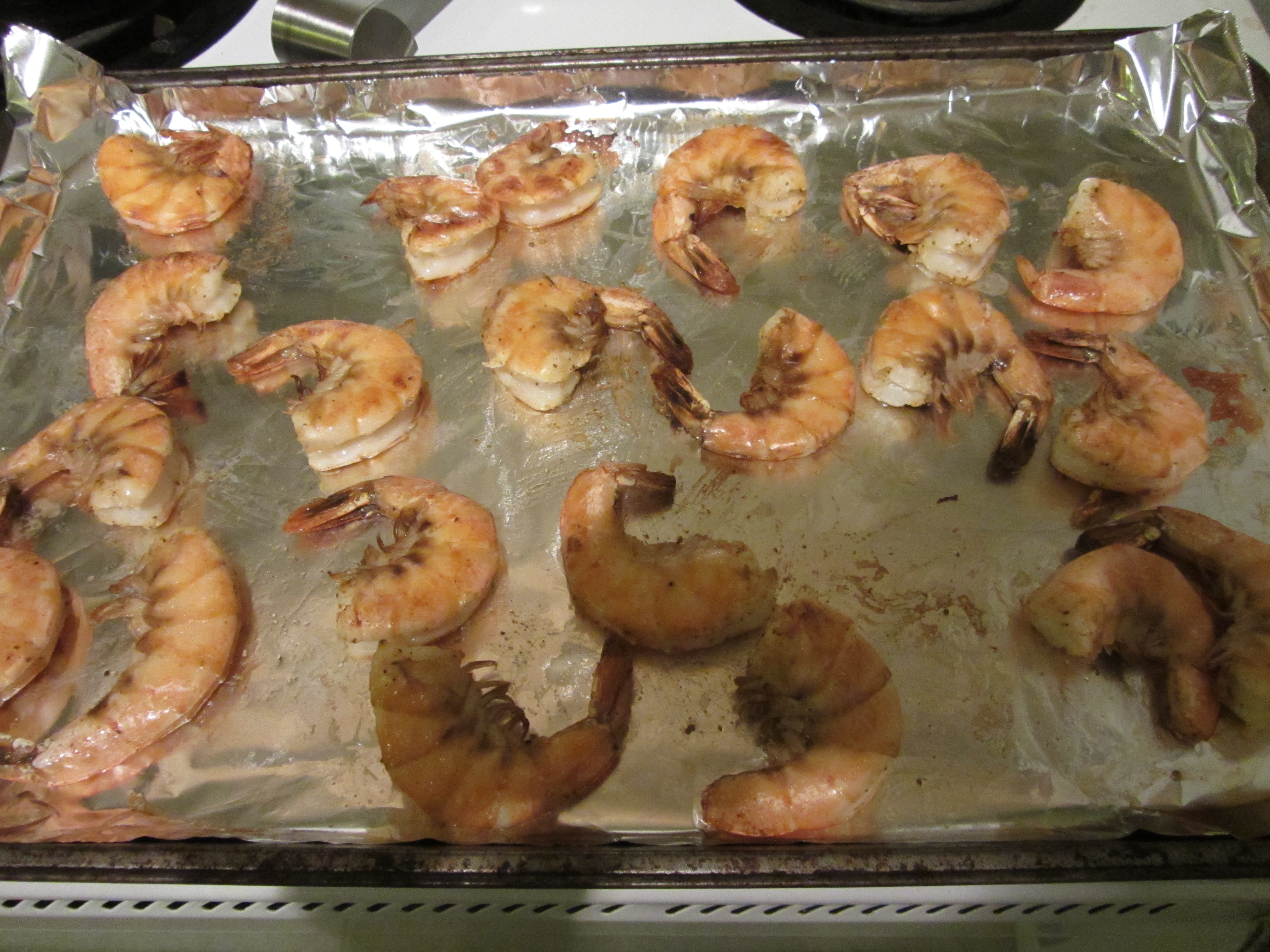
Shrimp after 2 minutes under the broiler.

Shrimp after being flipped for an additional minute under the broiler.

Shrimp after being flipped for an additional minute under the broiler.

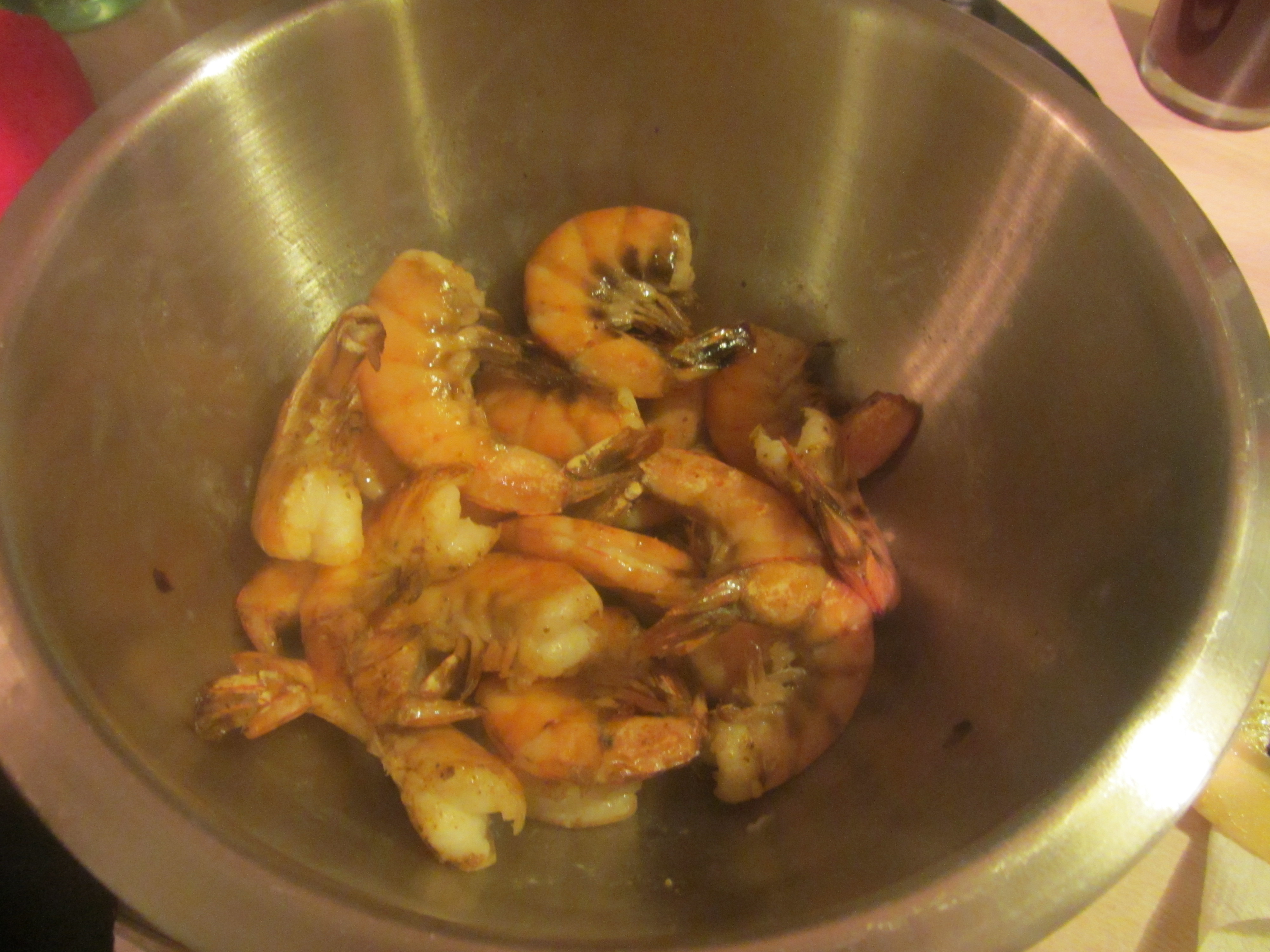
As soon as your shrimp come out of the oven, you want to put them into a freezer-cold bowl and toss them around. The bowl then goes back in the freezer for 5 minutes, and then is transferred to the refrigerator.
Frozen bowl.
Frozen bowl.

Hot shrimp into the cold bowl.

Hot shrimp into the cold bowl.

Once the shrimp are thoroughly chilled, you recreate the classic shrimp cocktail presentation, filling a martini glass with cold cocktail sauce and placing shrimp around the rim of the glass.
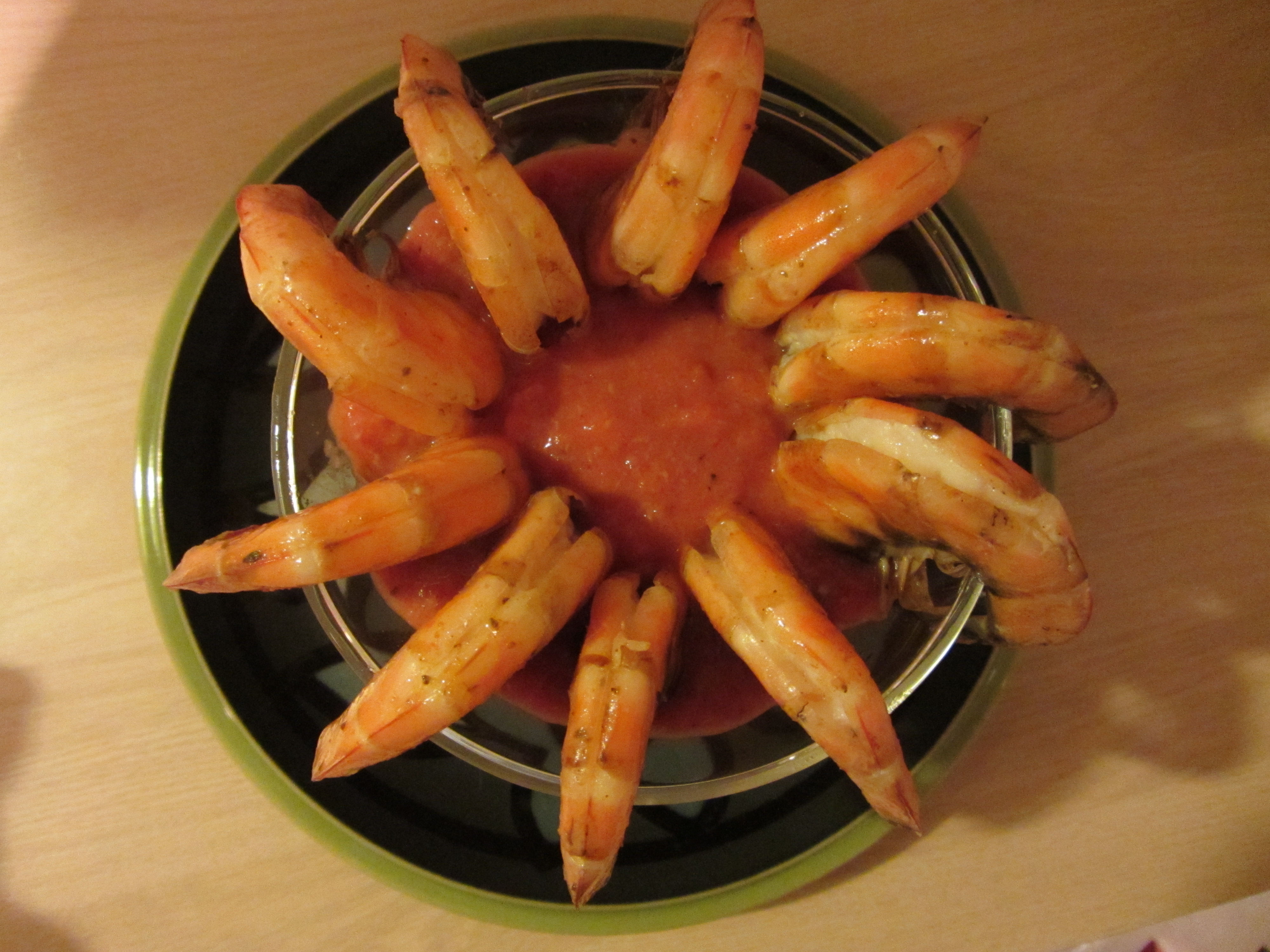
Completed shrimp cocktail.
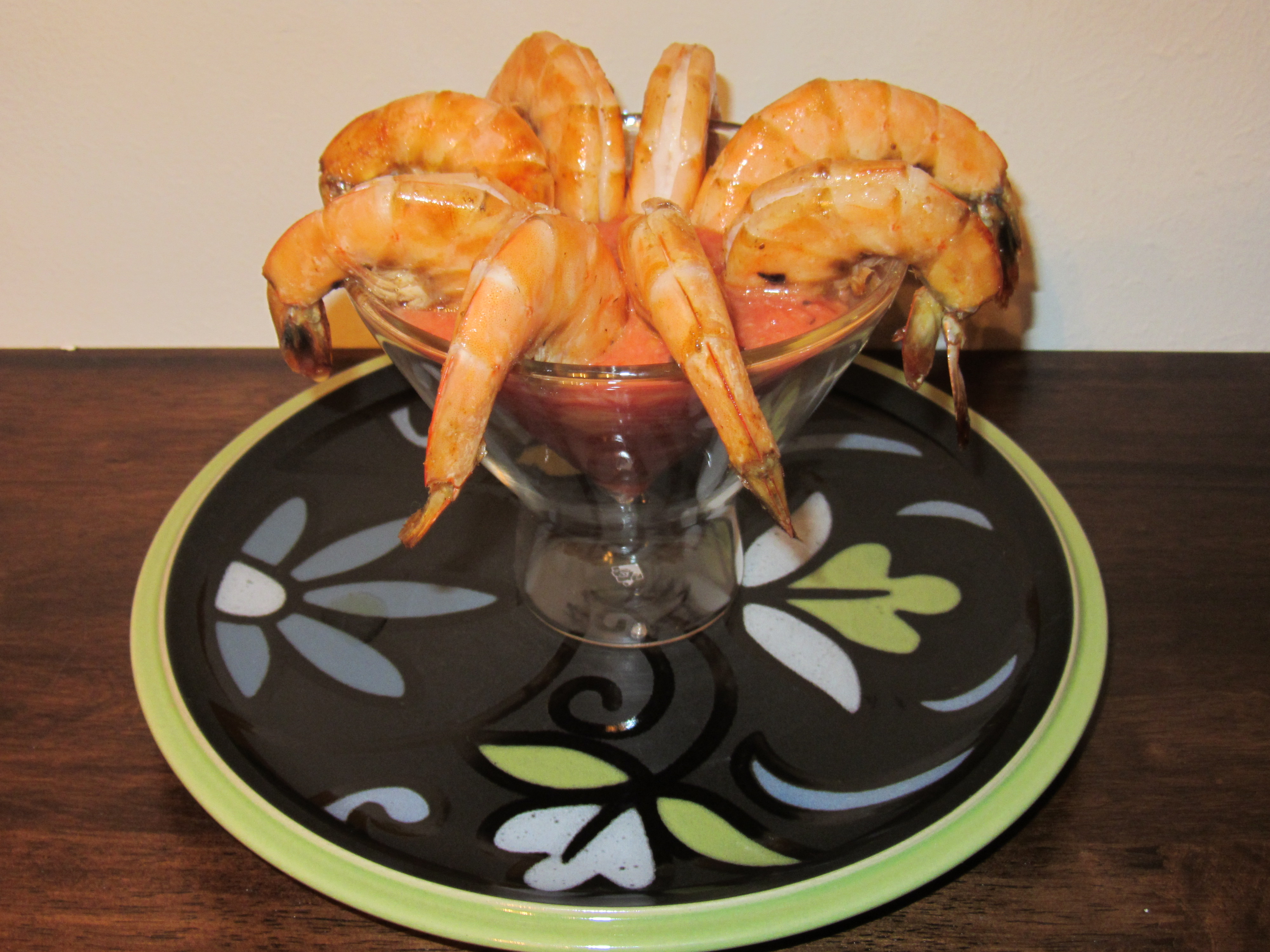
Completed shrimp cocktail.

Shrimp Cocktail.

Shrimp Cocktail.

My blogging helpers.

My blogging helpers.

We ate this shrimp cocktail for dinner one night last weekend. We loved the spicy kick of the cocktail sauce, though I am sure some people would find it to be too spicy. I found the heat of the horseradish to contrast nicely with the sweetness of the tomatoes and chili sauce. The shrimp had a nice texture that was far from the rubbery texture I have come to dislike in shrimp. Alton says dry heat methods are the best for cooking shrimp, and this recipe seems to confirm that. My husband thought this shrimp cocktail was delicious, and said this was the best cocktail sauce he had ever had.
It’s a Wonderful Waldorf

I live in Washington state. It is Fall. Could the timing be any better for me to happen upon the “Apple Family Values” episode of Good Eats? I love apples, but I sort of refuse to eat them in the summer. In fact, I see the commencing of apple eating as my concession that the fall season is indeed upon us. As a Washington apple eater, my new personal favorite apple is the SweeTango, though a good Honeycrisp is hard to beat. They are expensive, but so worth it.

I will admit that I was not overly enthused to make Alton’s Waldorf salad. My impression of Waldorf salad has always been that it is a dated, over-mayonnais-ed salad from a famous hotel. Boy was I wrong about this one, as Alton’s take is well worth making.
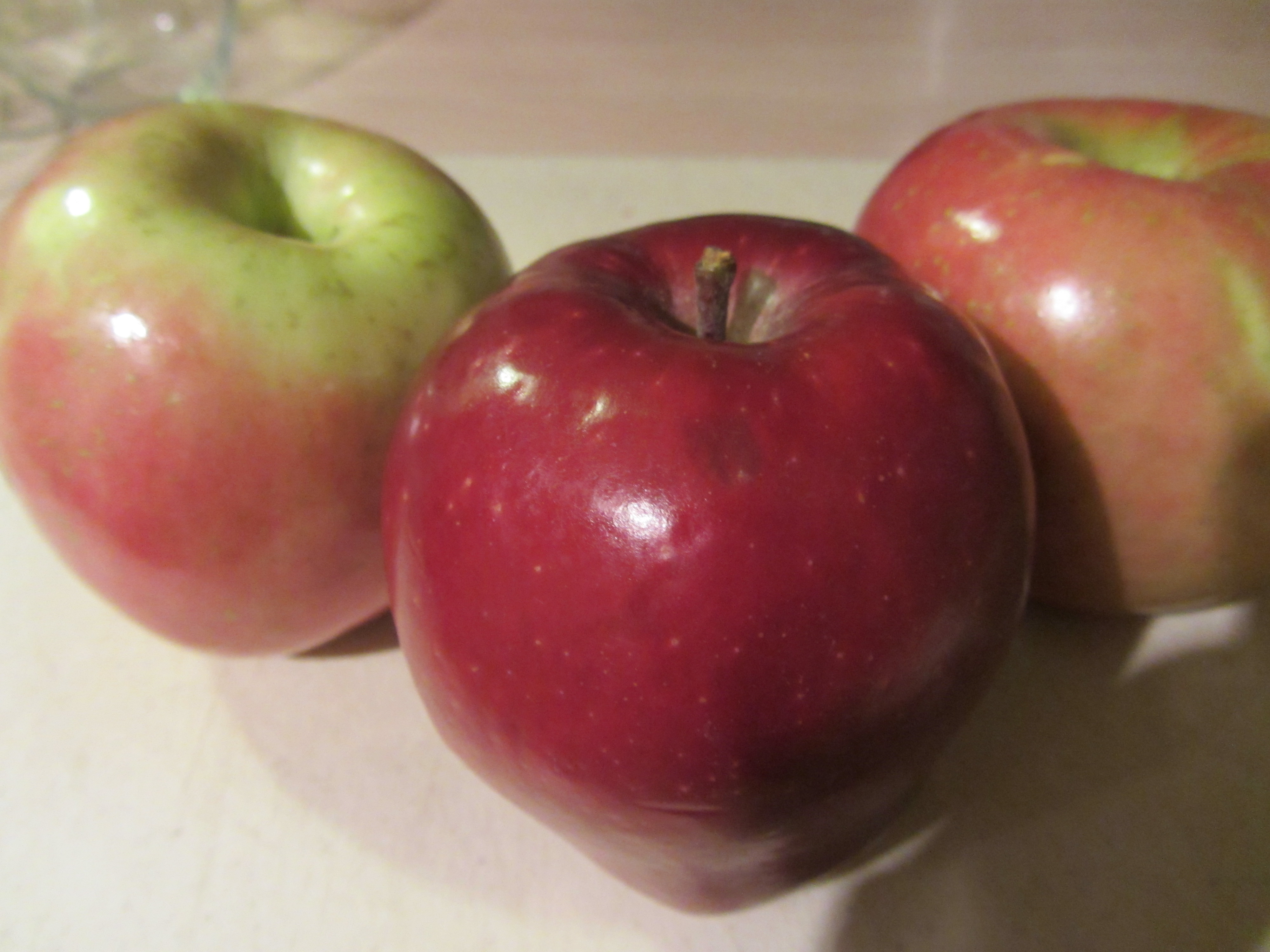
For Alton’s Waldorf salad, he recommends that you use three apples:  two Ginger Golds or Fujis and one Red Delicious. Ginger Gold apples are not readily available in our area, so I used Fuji apples in their place.

Two Fuji apples and one Red Delicious apple.

Two Fuji apples and one Red Delicious apple.

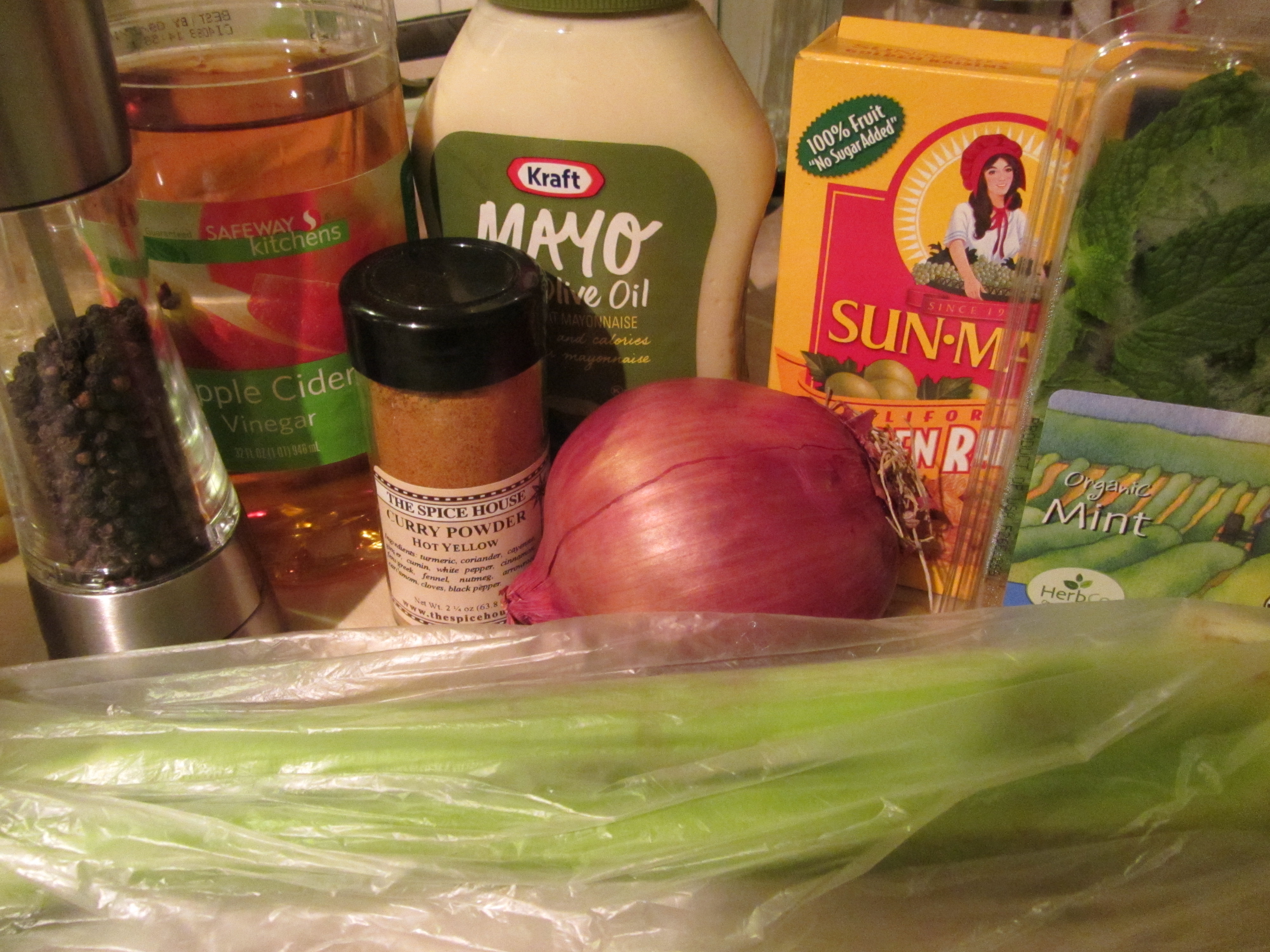
Ingredients for Waldorf salad (minus apples, toasted walnuts, and salt).

Ingredients for Waldorf salad (minus apples, toasted walnuts, and salt).

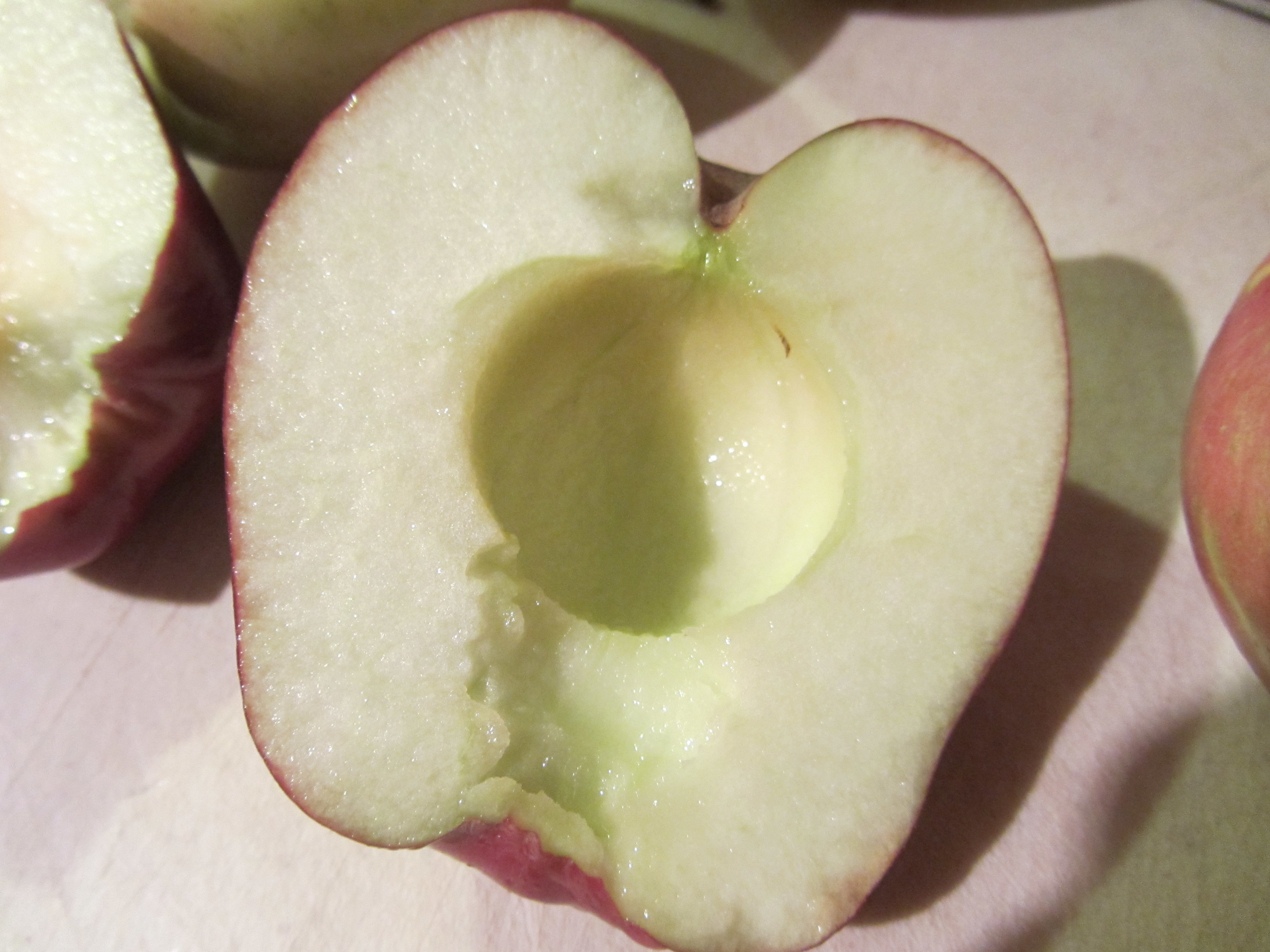
Alton suggests that you cut the apples in half, and use a melon baller to scoop out the core. This works like a charm, and I will be using this trick in the future.

Apple, cored with a melon baller.

Apple, cored with a melon baller.

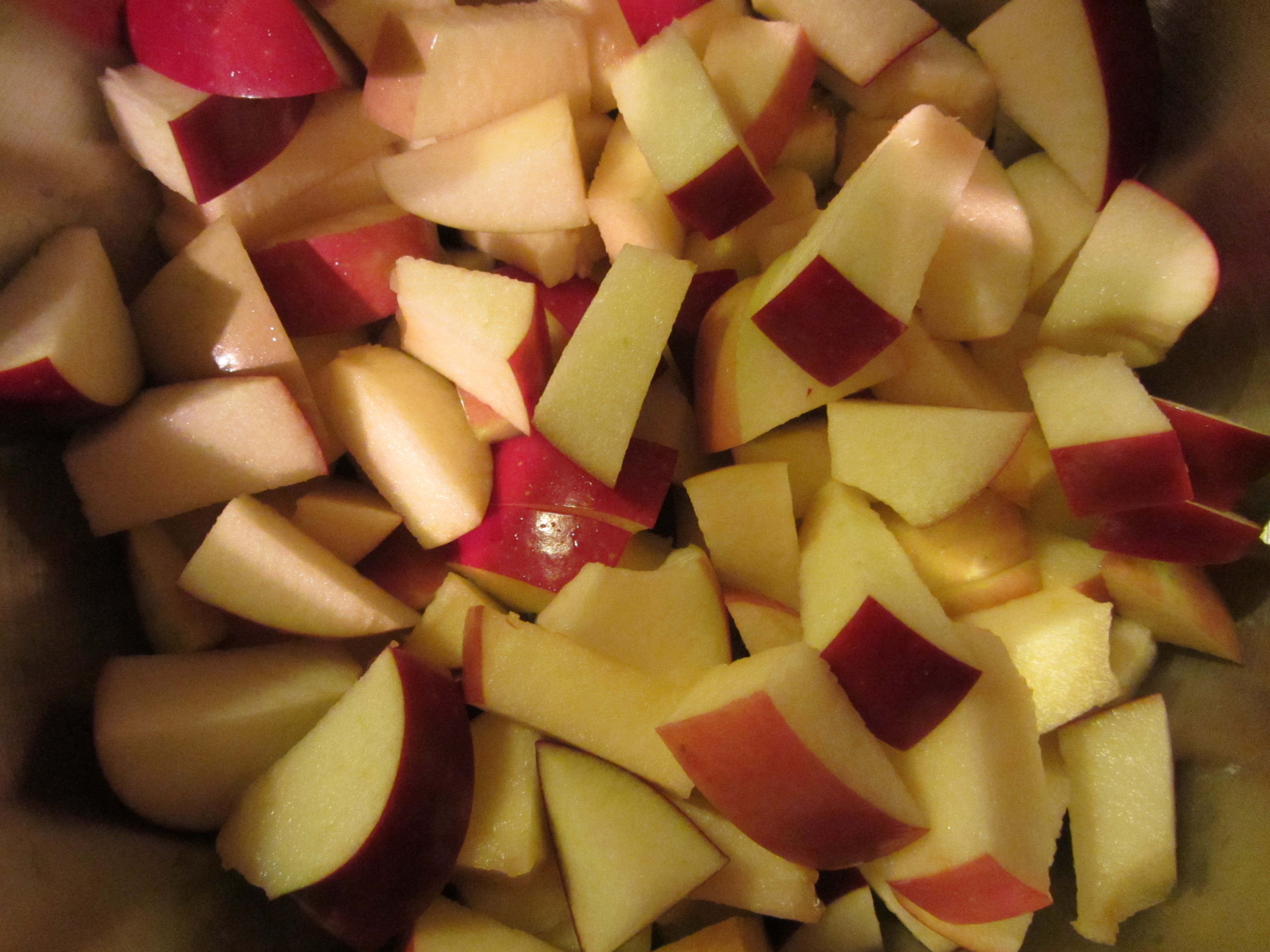
After coring and chopping the apples, you toss them with some cider vinegar.

Chopped apples, tossed with cider vinegar.

Chopped apples, tossed with cider vinegar.

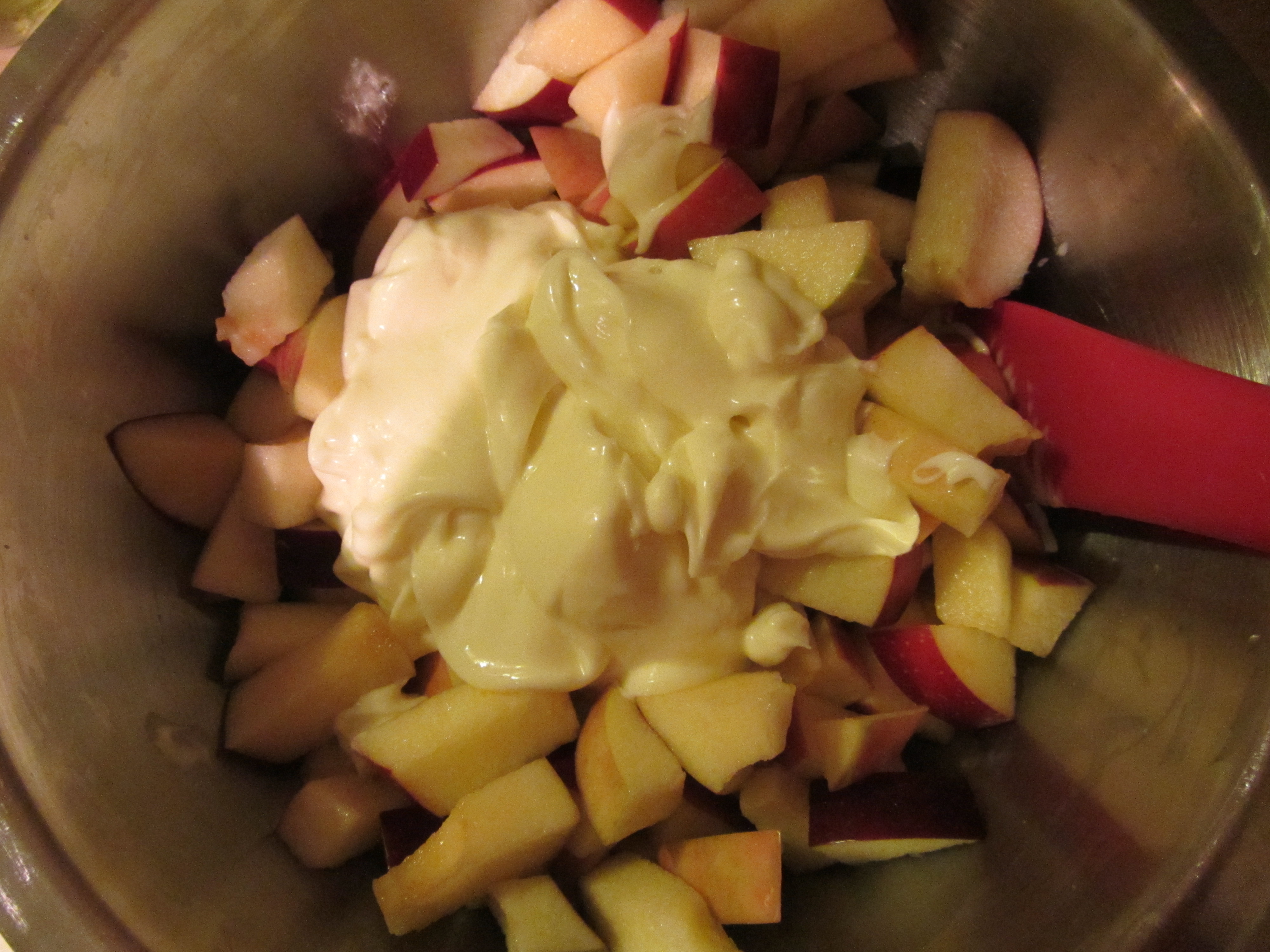
Following the vinegar, you add some mayonnaise to your apple mixture, tossing to make sure the apples are thoroughly covered.
Vinegar-coated apples with mayonnaise.

Vinegar-coated apples with mayonnaise.

Apples coated with mayo.

Apples coated with mayo.

You add some Kosher salt and pepper for seasoning.

Apples with vinegar, mayonnaise, salt, and pepper.

Apples with vinegar, mayonnaise, salt, and pepper.

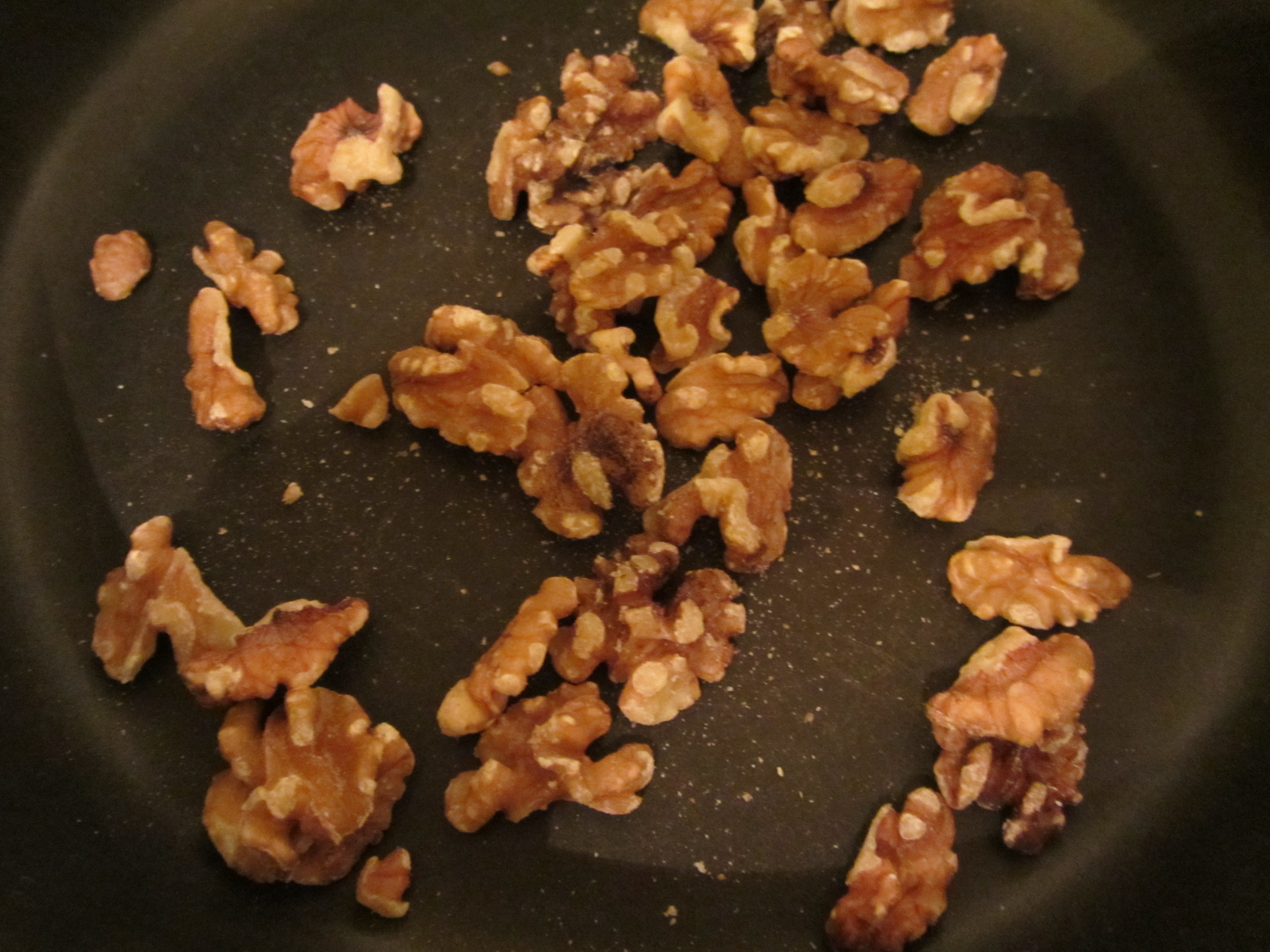
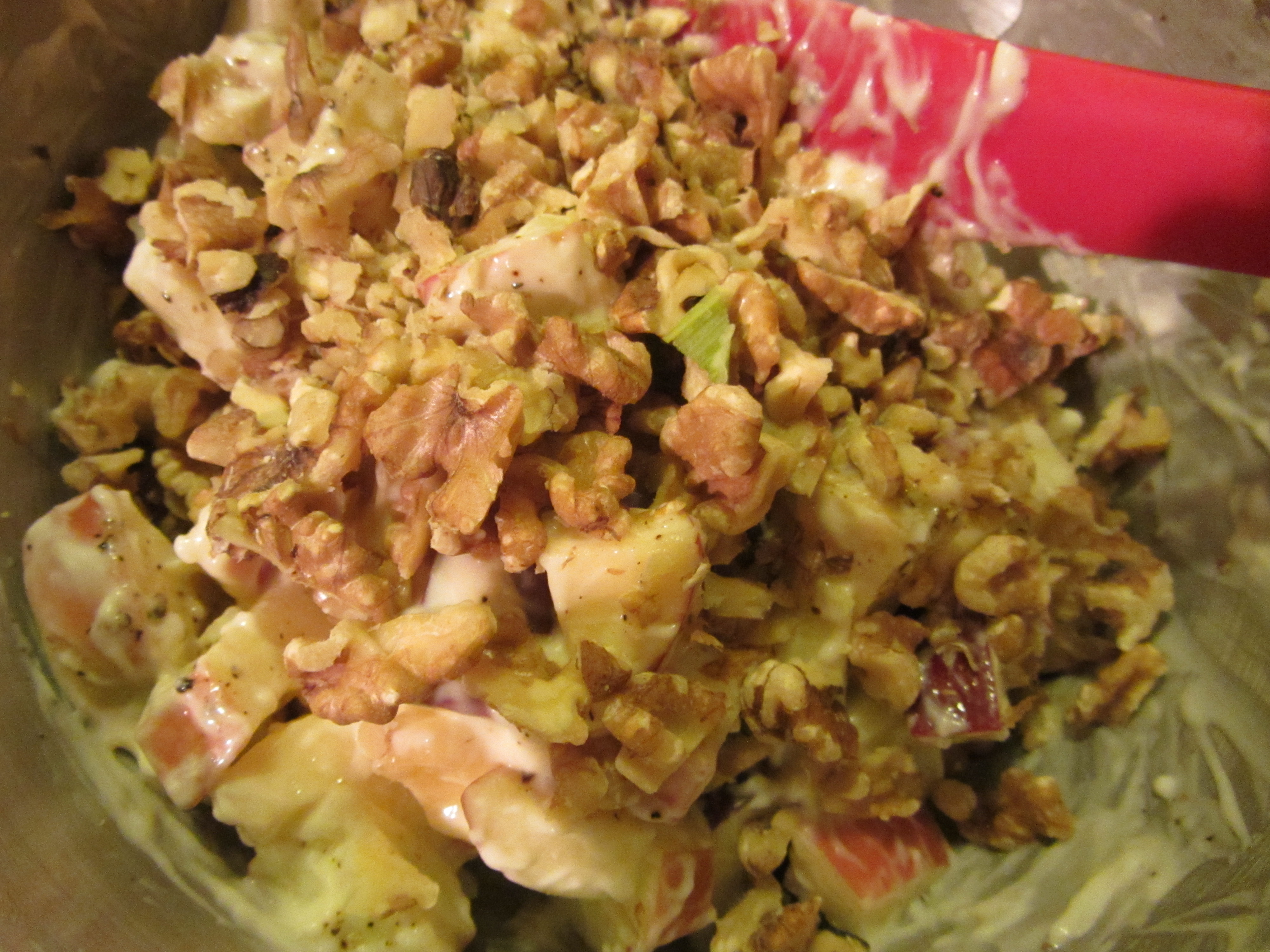
Meanwhile, you toast some walnuts on the stove, and throw them into the mix.

Toasting walnuts.

Toasting walnuts.

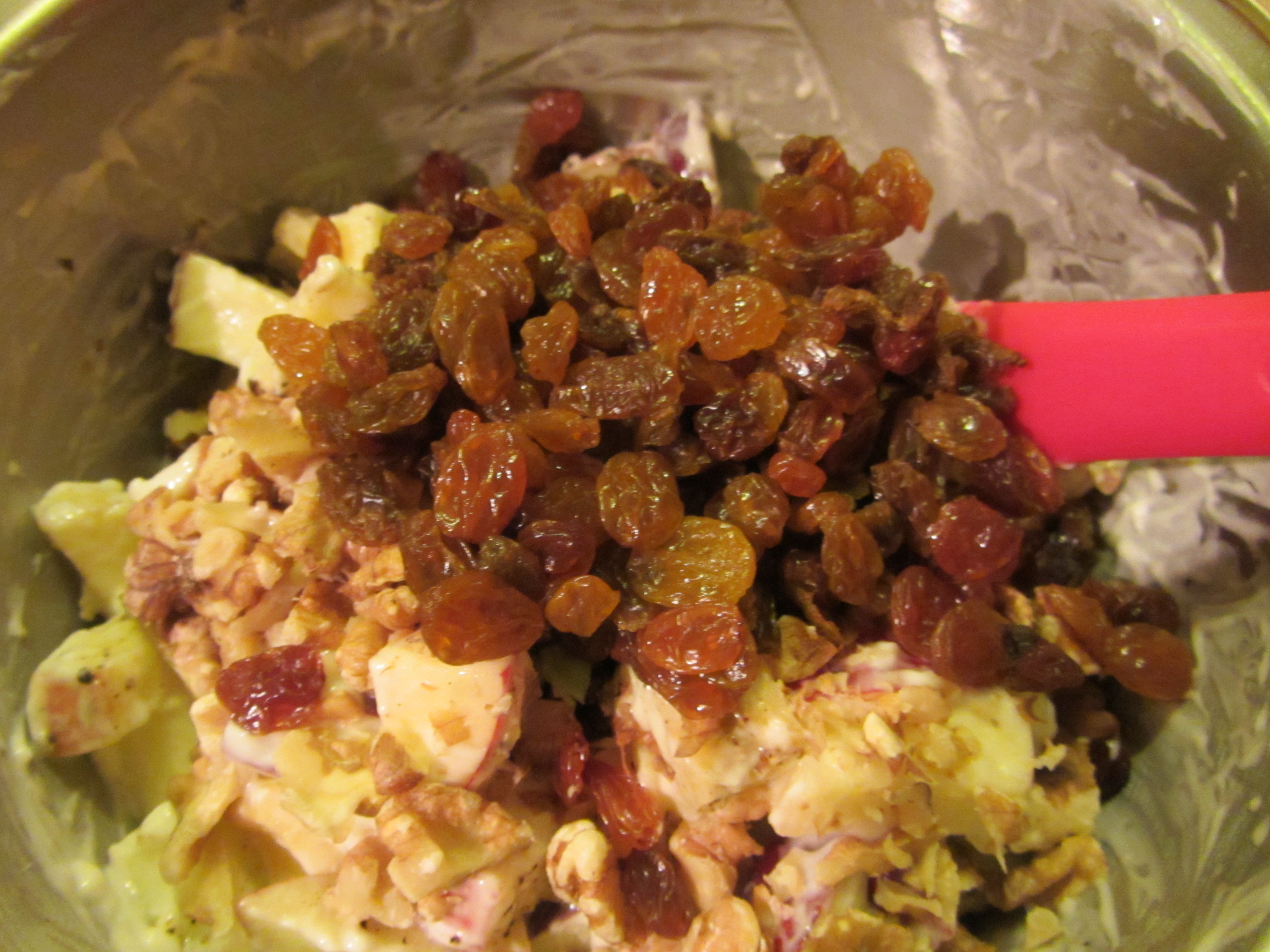
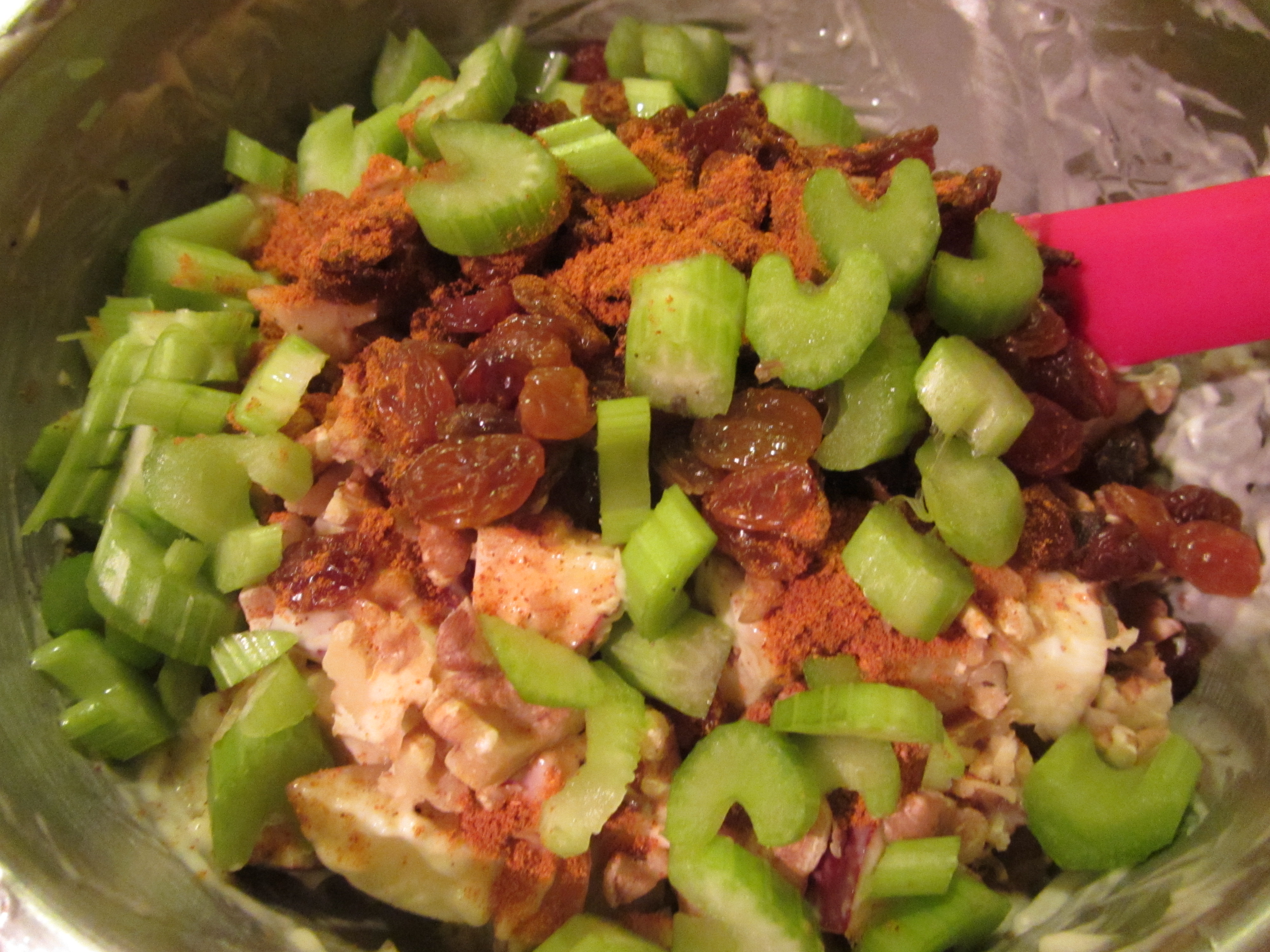
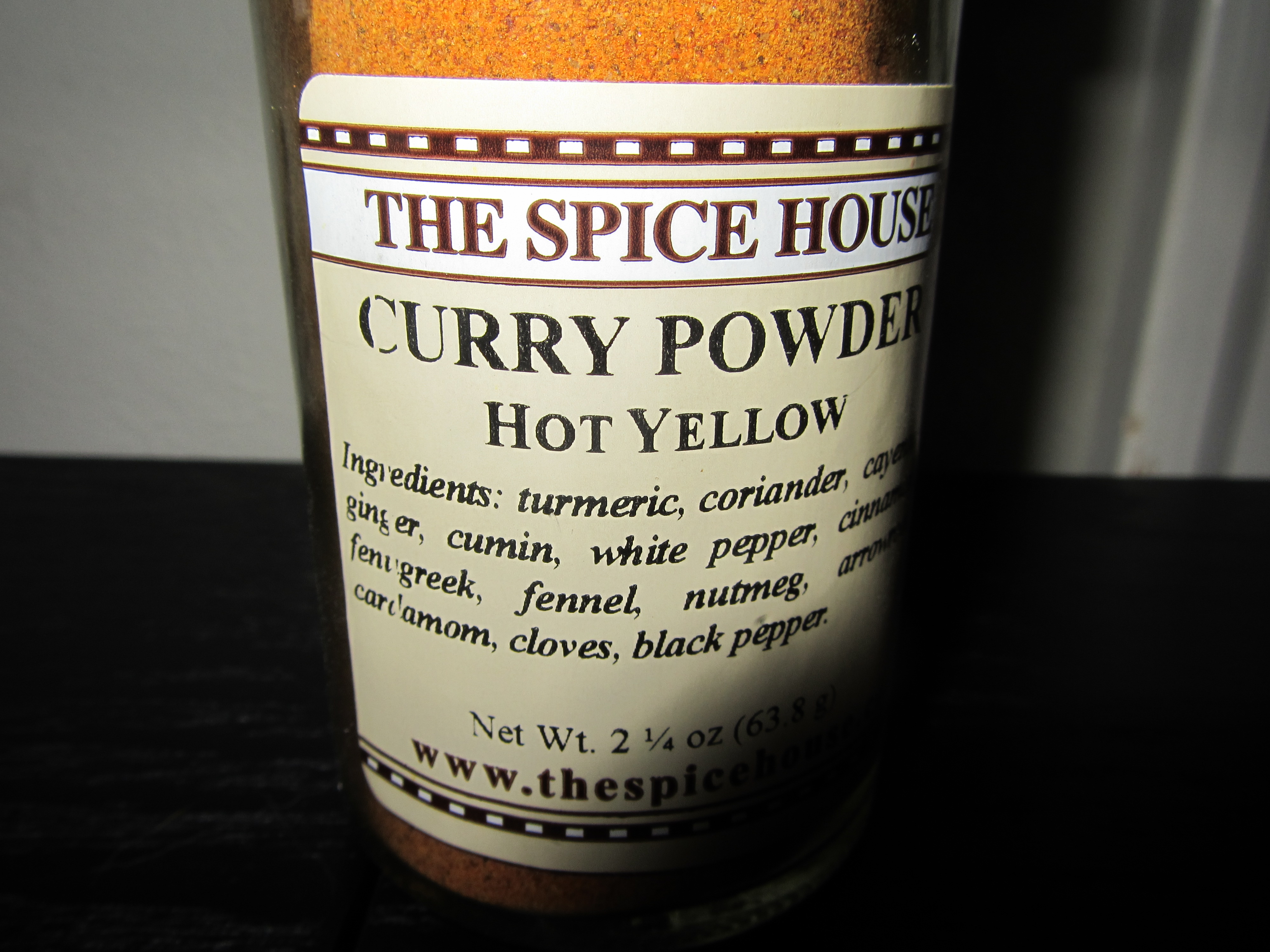
Next, you throw in some golden raisins, curry powder (I used hot curry powder for some extra kick, though maharajah curry would also be excellent), some celery, fresh mint, and red onion.

Apple mixture with toasted walnuts.

Apple mixture with toasted walnuts.

Apple mixture with walnuts and golden raisins.

Apple mixture with walnuts and golden raisins.

And some hot curry powder.

And some hot curry powder.

Plus some celery.

Plus some celery.

And some mint chiffonade.

And some mint chiffonade.

Some red onion tossed in.

Some red onion tossed in.

In the episode, Alton tells you to shred the red onion, while the online recipe calls for julienned red onion. I just sort of chopped my onions into thin strips. Also, the online recipe tells you to chill the salad for at least an hour prior to serving, but Alton does not mention this in the episode. I chilled my salad for 30 minutes, at the most.

The final mixture.

The final mixture.

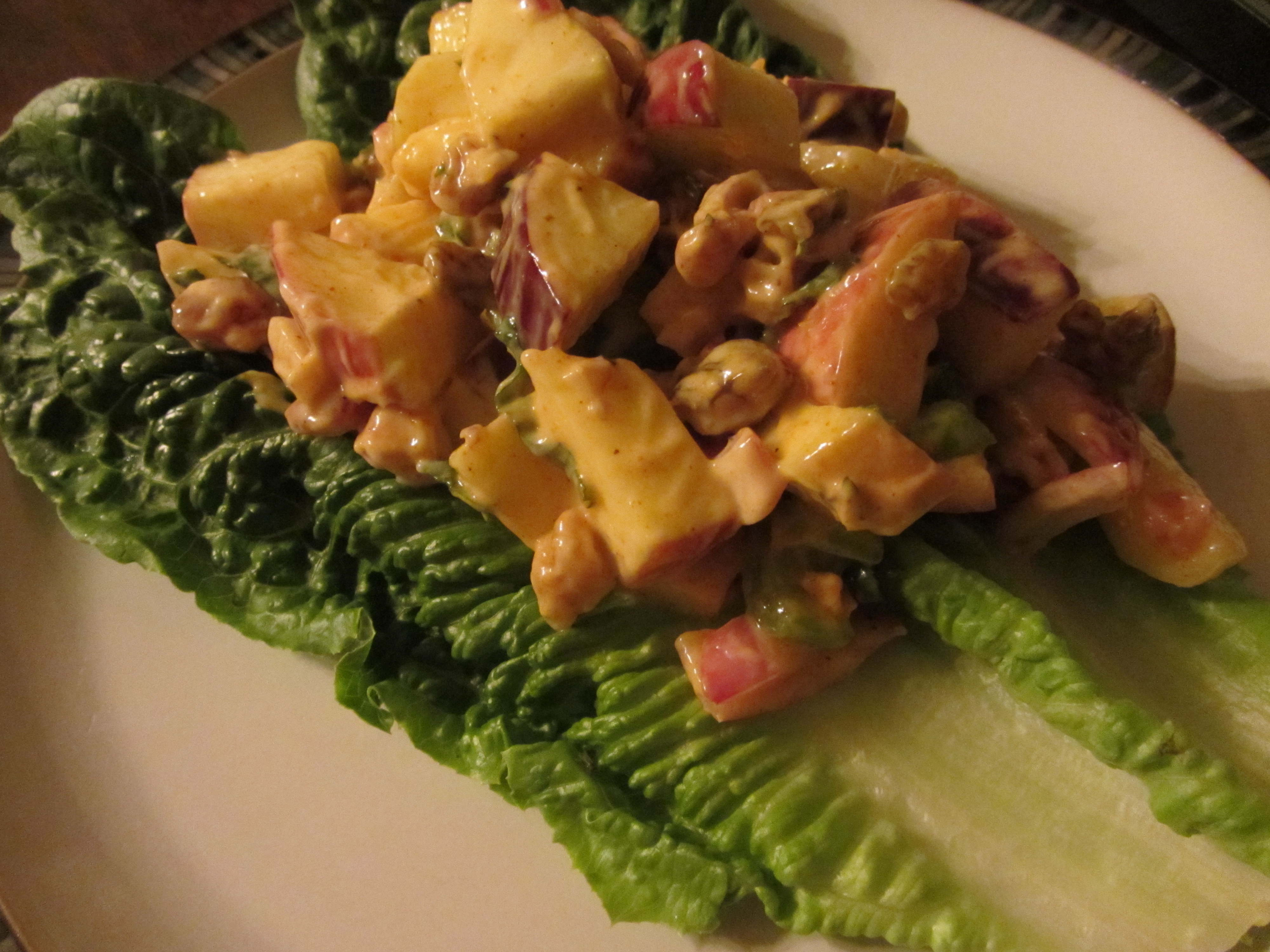
To serve the salad, you spoon it onto Romaine lettuce leaves.

Wonderful Waldorf.

Wonderful Waldorf.

We had this salad with a potato soup, but it could easily serve as an entree itself. I really loved this salad and will be making it again. It has so many wonderfully contrasting flavors and textures. The sweetness of the apple paired with the crunchy walnuts and celery, fresh mint, astringent red onion, and sweet-hot curry powder was delicious. My only complaint with this salad was that my red onion was quite strong, and almost overpowered some of the other flavors in the salad, but red onions tend to greatly vary in their potency. I also opted to use hot curry powder, as we tend to like a little spice in our food. I may have to try the Maharajah curry powder next time, as its sweeter flavor would probably pair nicely with the apples. Since we had the Waldorf salad as a side to our soup, we had leftovers. I anticipated that the texture of the salad would become one-note overnight, but the salad was just as good the following day, so do not be wary of having leftovers with this one.

10 Minute Apple Sauce

My mom used to make apple sauce in the fall. I remember her standing over the sink, her right arm spinning in circles as she turned the arm of her tattered food mill. Often, Mom would serve homemade (and sometimes store-bought) applesauce to my brother and me for breakfast. It was usually served in a bowl, and with a drizzle of heavy cream on top. I preferred my applesauce warm, and discovered that I liked it with a sprinkle of extra brown sugar. My mom could always make store-bought applesauce taste almost like homemade, with the additions of cinnamon, vanilla, and sugar.

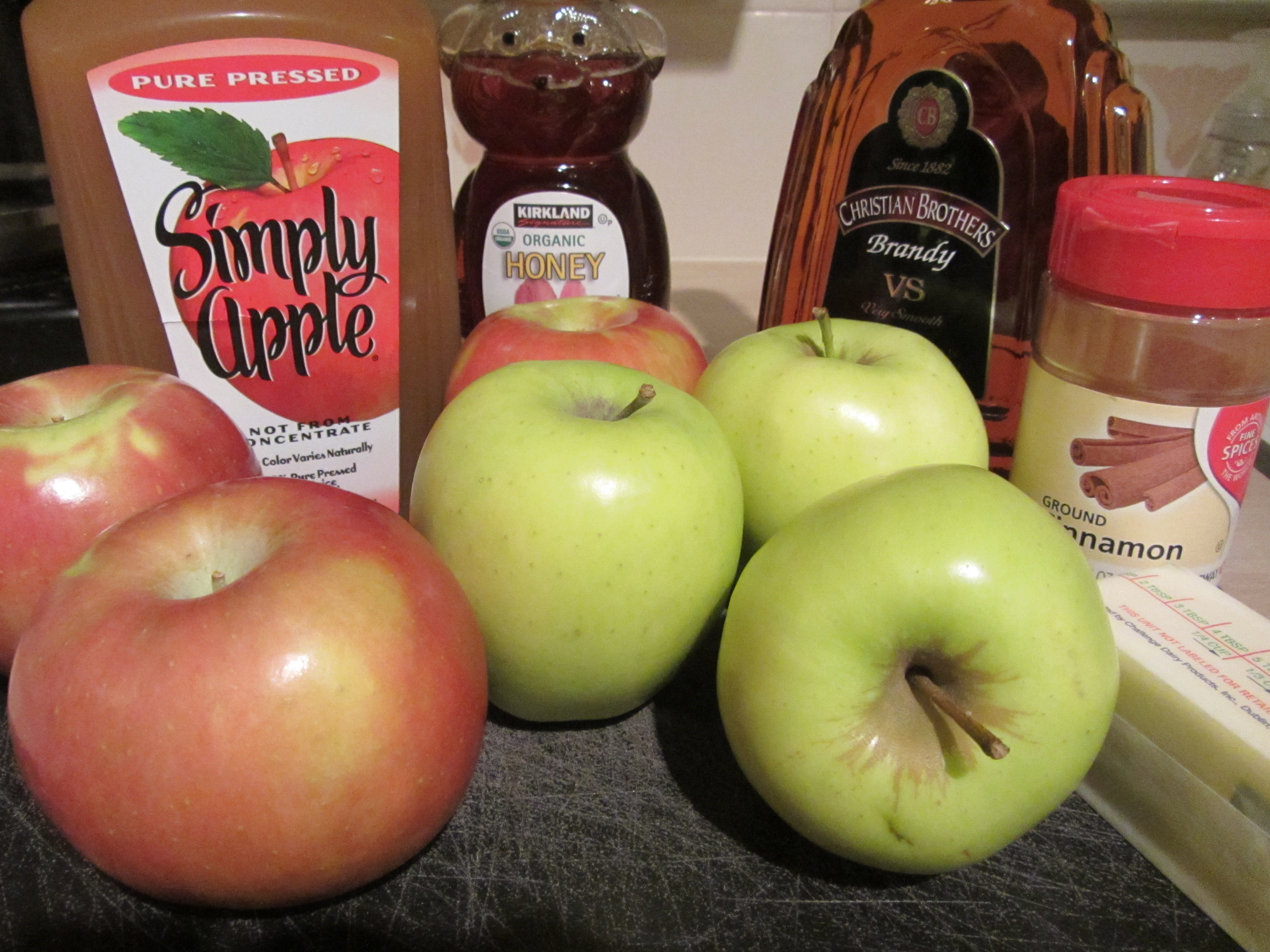
When I watched Alton prepare his 10 Minute Apple Sauce, I was skeptical that it could taste anything like my mom’s homemade applesauce. To begin, you combine unfiltered apple juice, cognac or brandy (I used brandy), butter, honey, and cinnamon in a microwave-save container that has a lid. To this liquid mixture you add six peeled, cored, and quartered apples (three Golden Delicious apples and three Fuji apples).

Golden Delicious apples, Fuji apples, unfiltered apple juice, honey, brandy, cinnamon, and butter.

Golden Delicious apples, Fuji apples, unfiltered apple juice, honey, brandy, cinnamon, and butter.

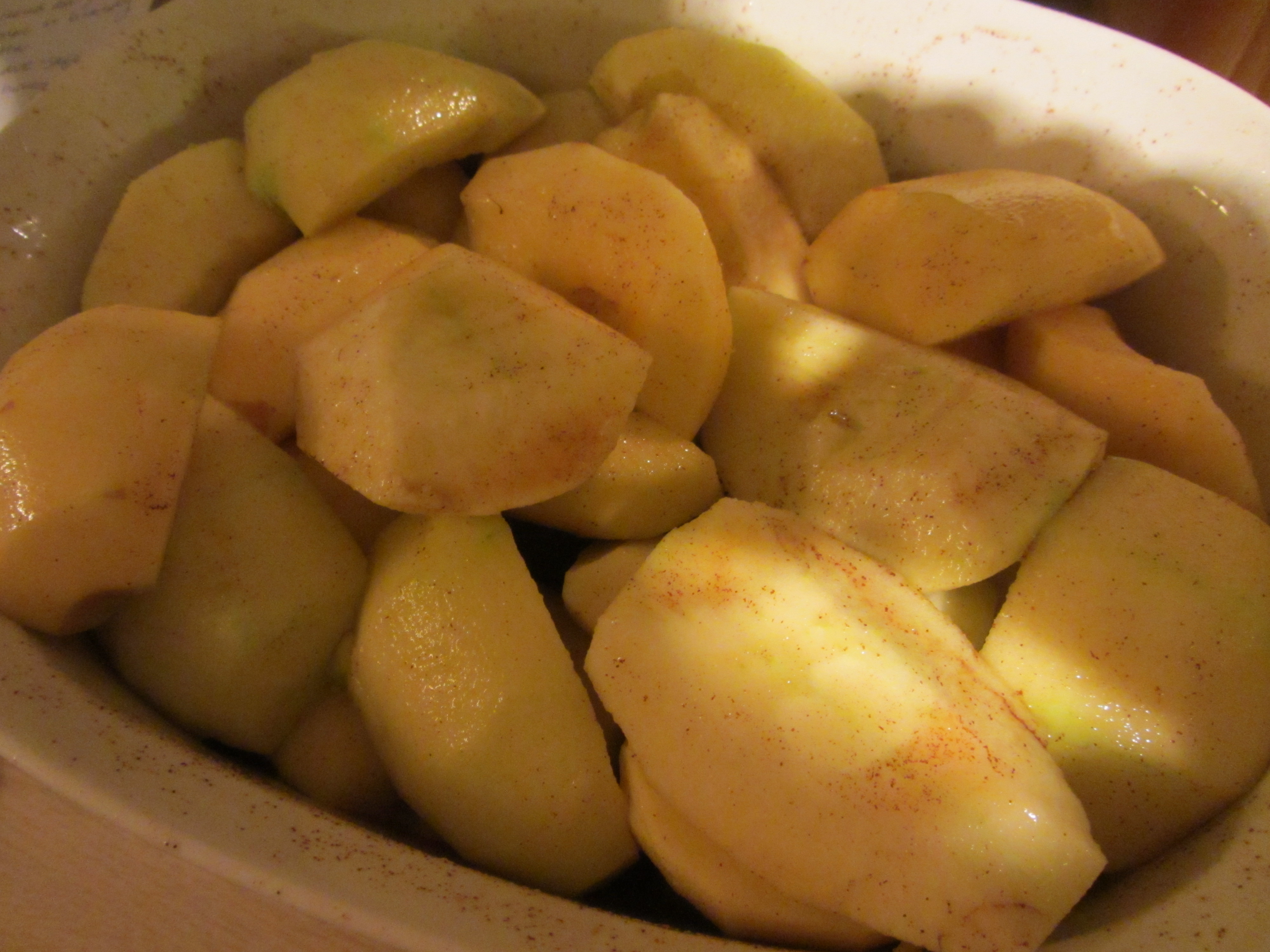
You put the lid on your container and give the entire mixture a good shake. Once everything is good and mixed, you open one corner of your lid and microwave the applesauce on high power for 10 minutes.

Apple mixture, prior to cooking.

Apple mixture, prior to cooking.

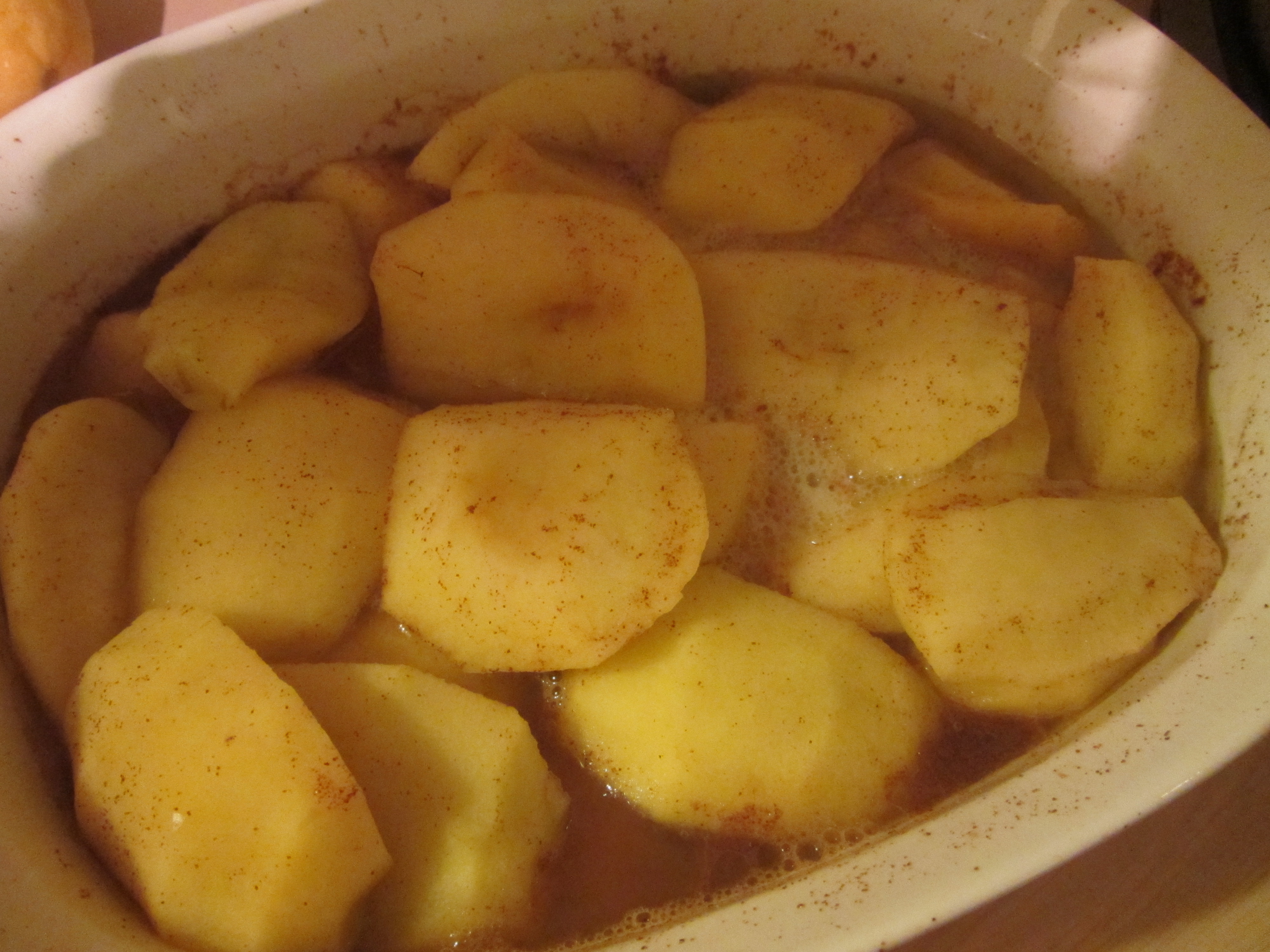
After cooking, you blend the mixture until it is “almost smooth.”

Apple mixture, after baking.

Apple mixture, after baking.

My immersion blender is one of my very favorite kitchen gadgets, but it happens to be quite unhappy at the moment. Our Coonhounds also happen to love the immersion blender (they come running), as they recognize that the sound of the whisk attachment often means whipped cream for them. Since the immersion blender is currently out of commission, I threw the entire apple mixture into the blender and blended it until it was nearly smooth.

Final applesauce.

Final applesauce.

Alton says that this applesauce will keep well in the refrigerator for two to three weeks. I guess that isn’t an issue when your applesauce is gone in two days. This is definitely the fastest and easiest applesauce I have ever made. Was it as good as Mom’s? Tough to say, but it was pretty darn good.

Baker, Baker

The final recipe in this episode is for baked apples. Yet again, I think of my mom when I think of baked apples. She would make baked apples for us for breakfast or dessert. Sometimes the apples were sliced prior to baking, while other times they were whole, as in Alton’s recipe in this episode.

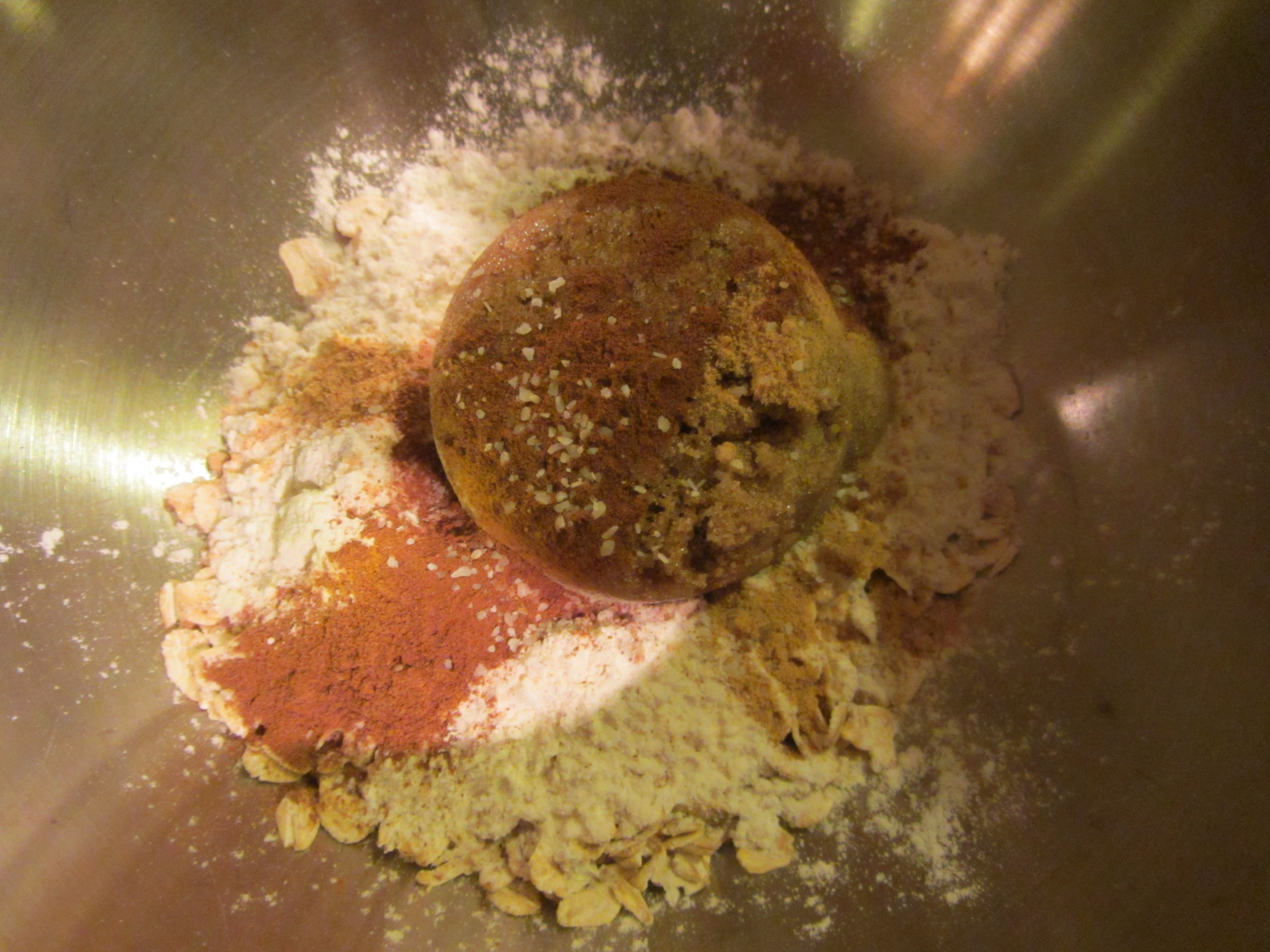
For these baked apples, you first combine your topping ingredients. In a bowl you combine oats, flour, light brown sugar, cinnamon, ground ginger, and Kosher salt.

All of the ingredients for baked apples.

All of the ingredients for baked apples.

Oats, flour, light brown sugar, cinnamon, ginger, and salt.

Oats, flour, light brown sugar, cinnamon, ginger, and salt.

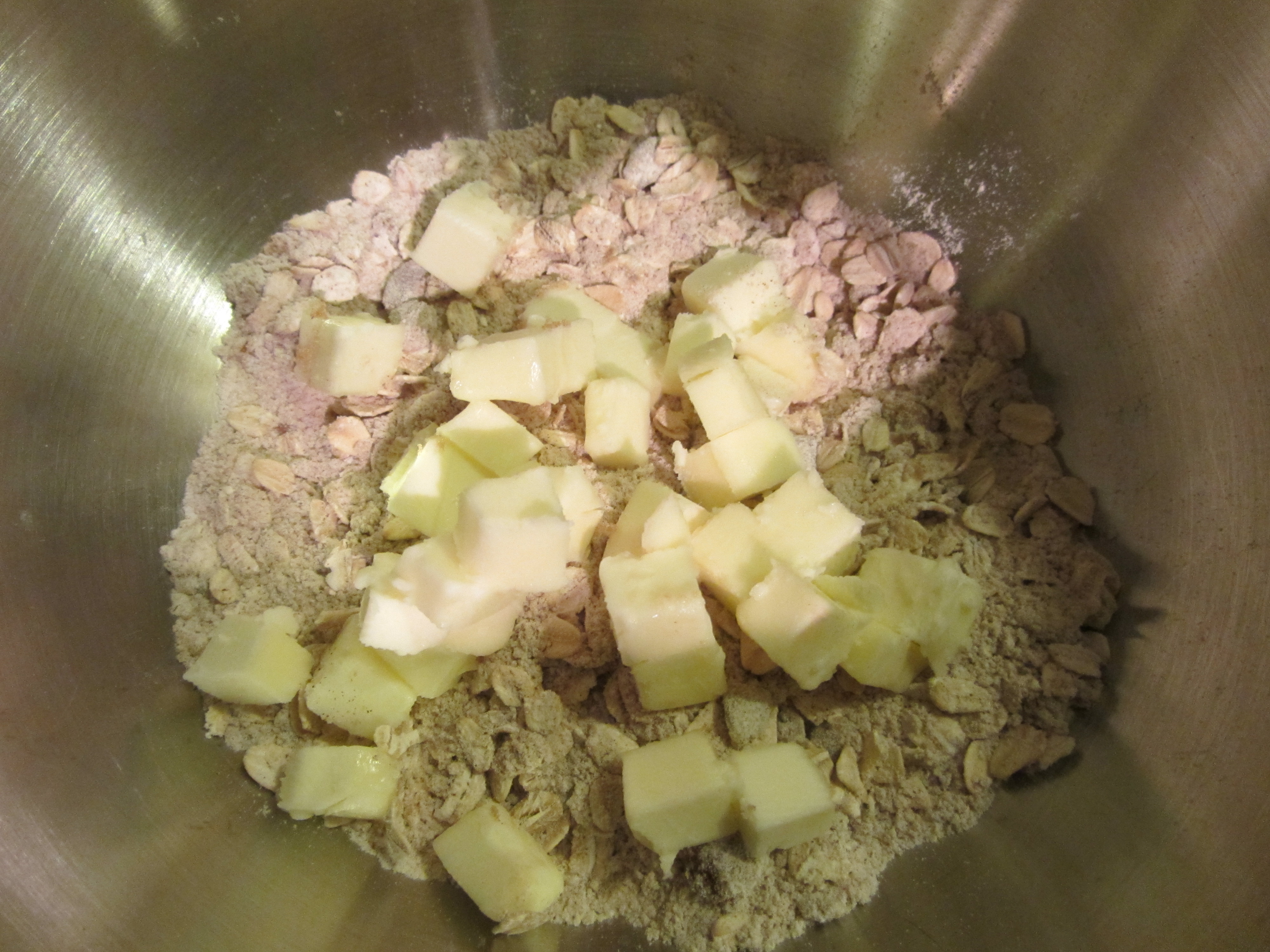
Into this mixture you add some butter with your hands, working until the mixture is crumbly.

And some butter.

And some butter.

Completed streusel topping.

Completed streusel topping.

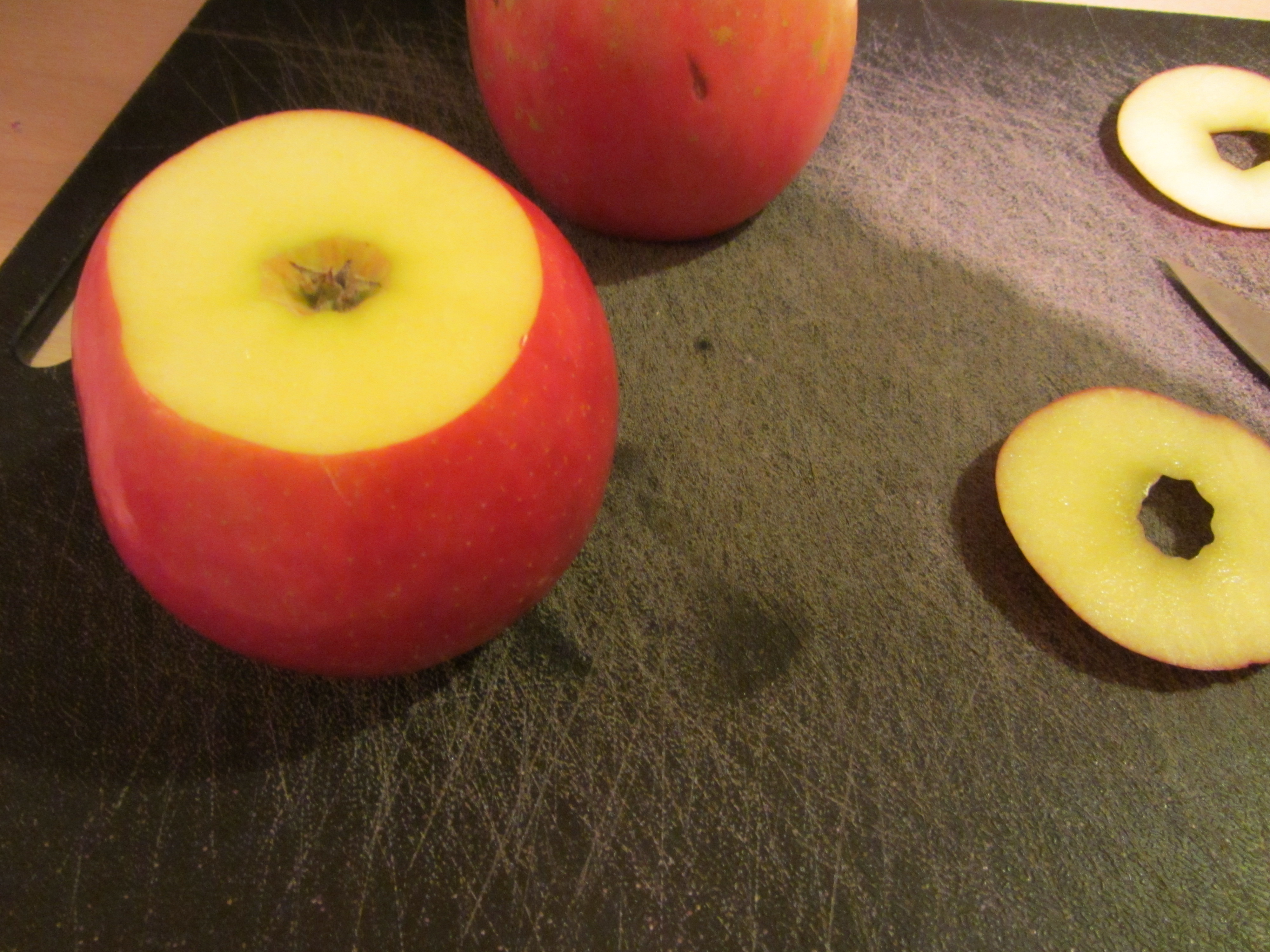
The topping mixture goes into the refrigerator while you prep your apples. For this recipe you want to use Braeburn or Fuji apples. I used Braeburns for this recipe. You first want to cut the bottoms off of your apples; this will give your apples a level, stable base while you work on them.

Leveling the apples.

Leveling the apples.

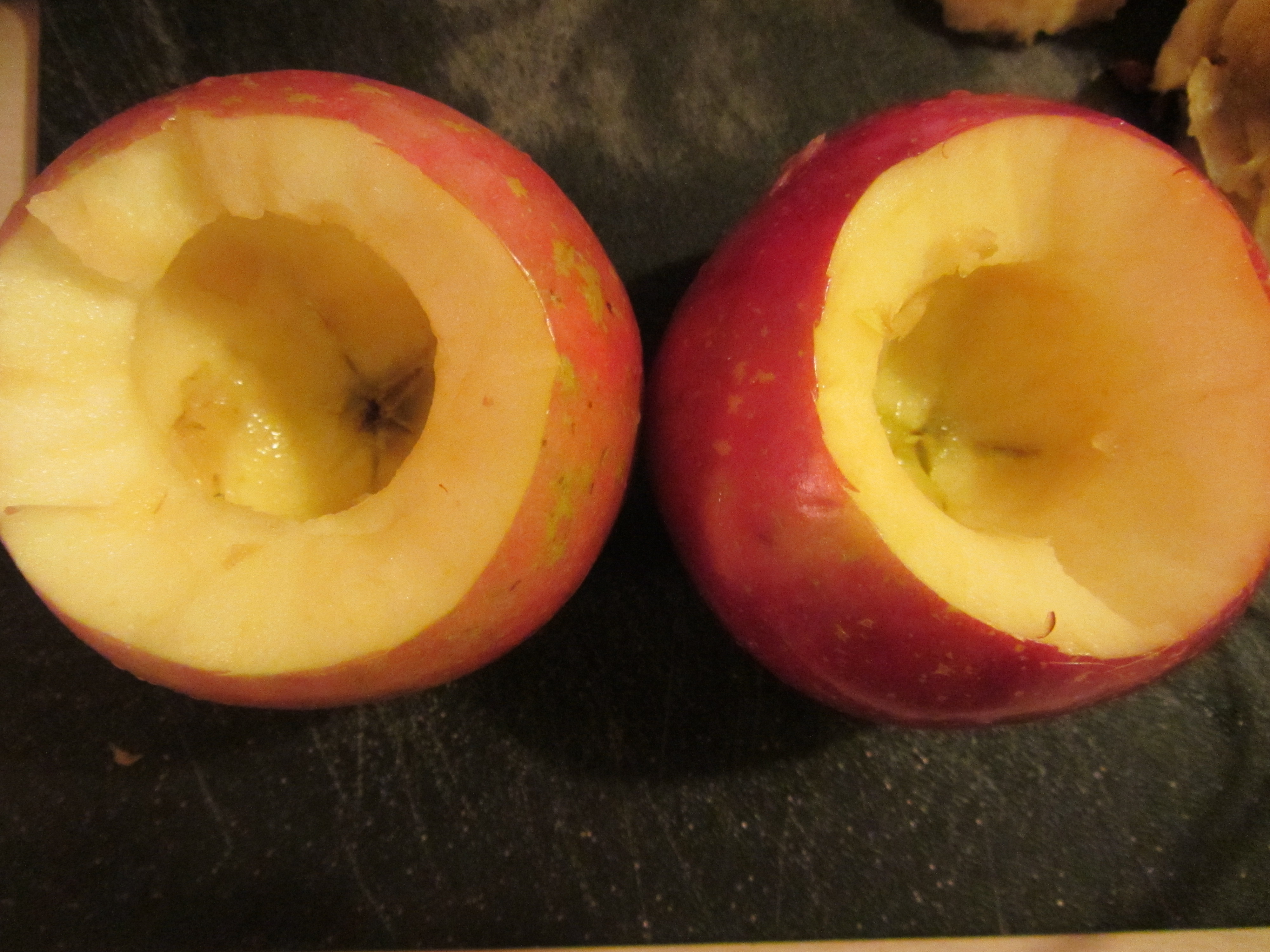
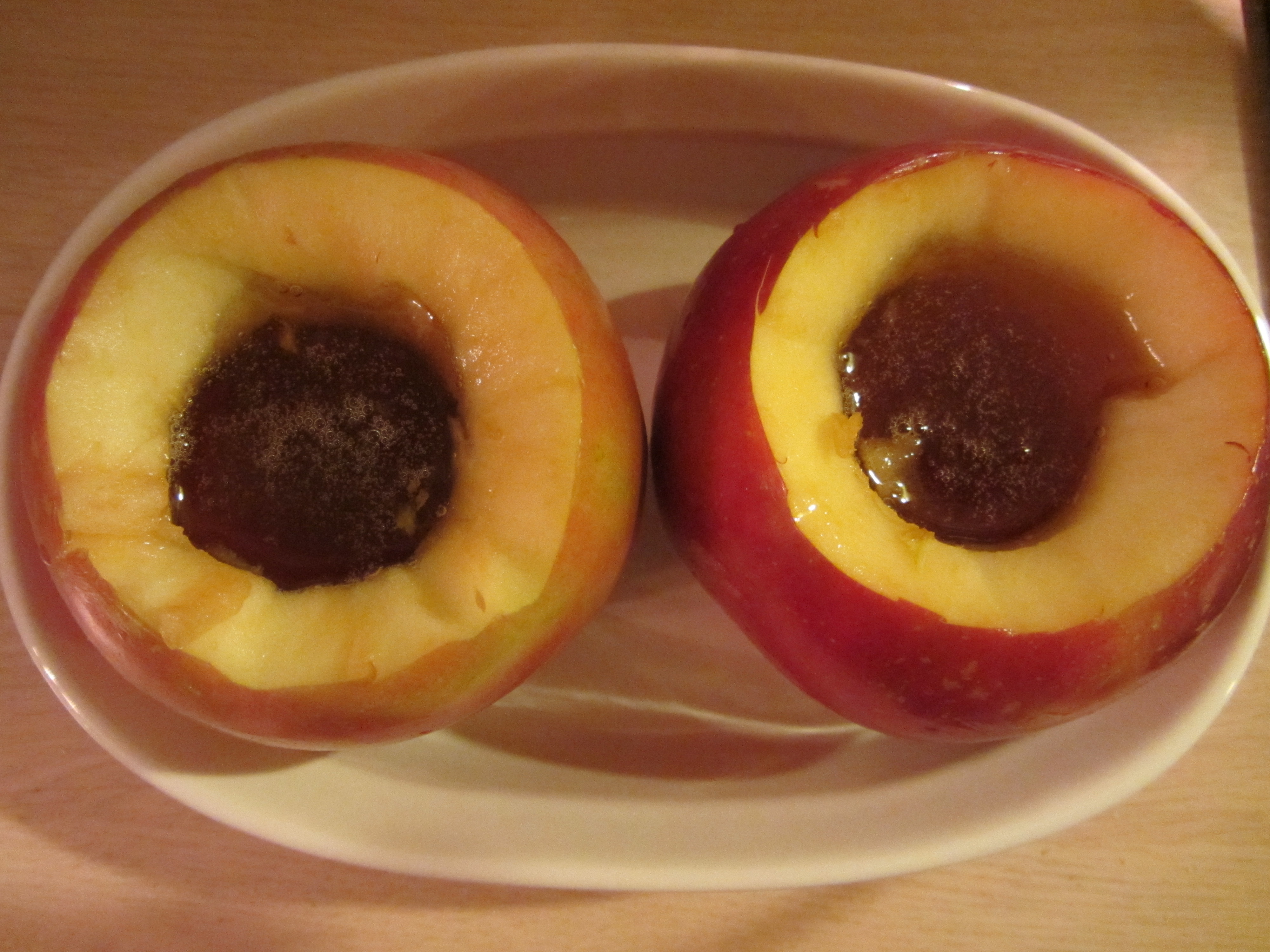
Once the apples are level, you carve off the tops of the apples, using a paring knife. A melon baller is then used to scoop out the seeds and core of the apples. Once cored, you fill the apple reservoirs with honey and sprinkle the tops with the topping mixture. You pack down the topping, and then sprinkle on additional streusel, taking care not to pack the second layer of topping.

Cored and ready to go.

Cored and ready to go.

Reservoirs filled with honey.

Reservoirs filled with honey.

Apples topped with two layers of streusel.

Apples topped with two layers of streusel.

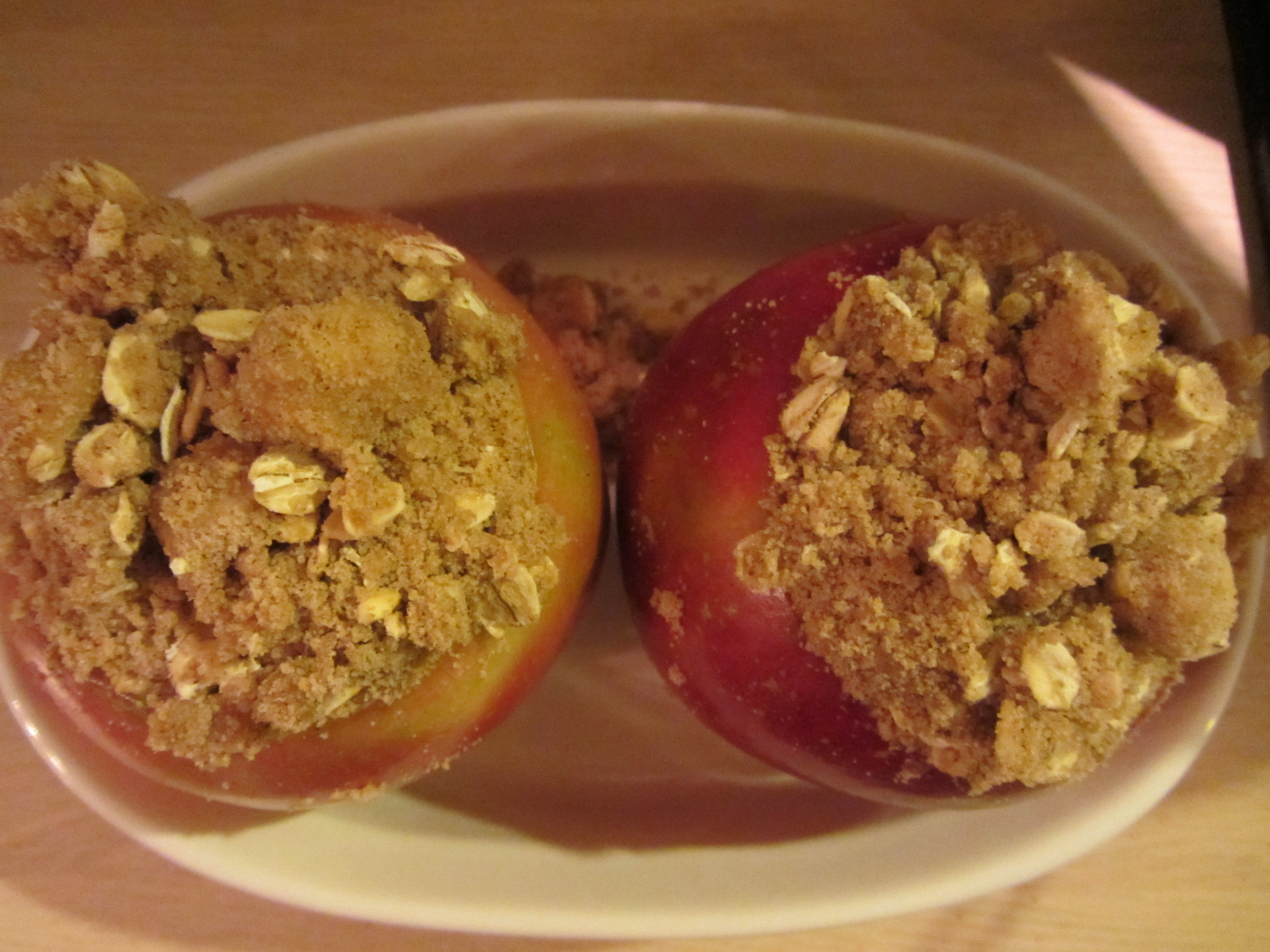
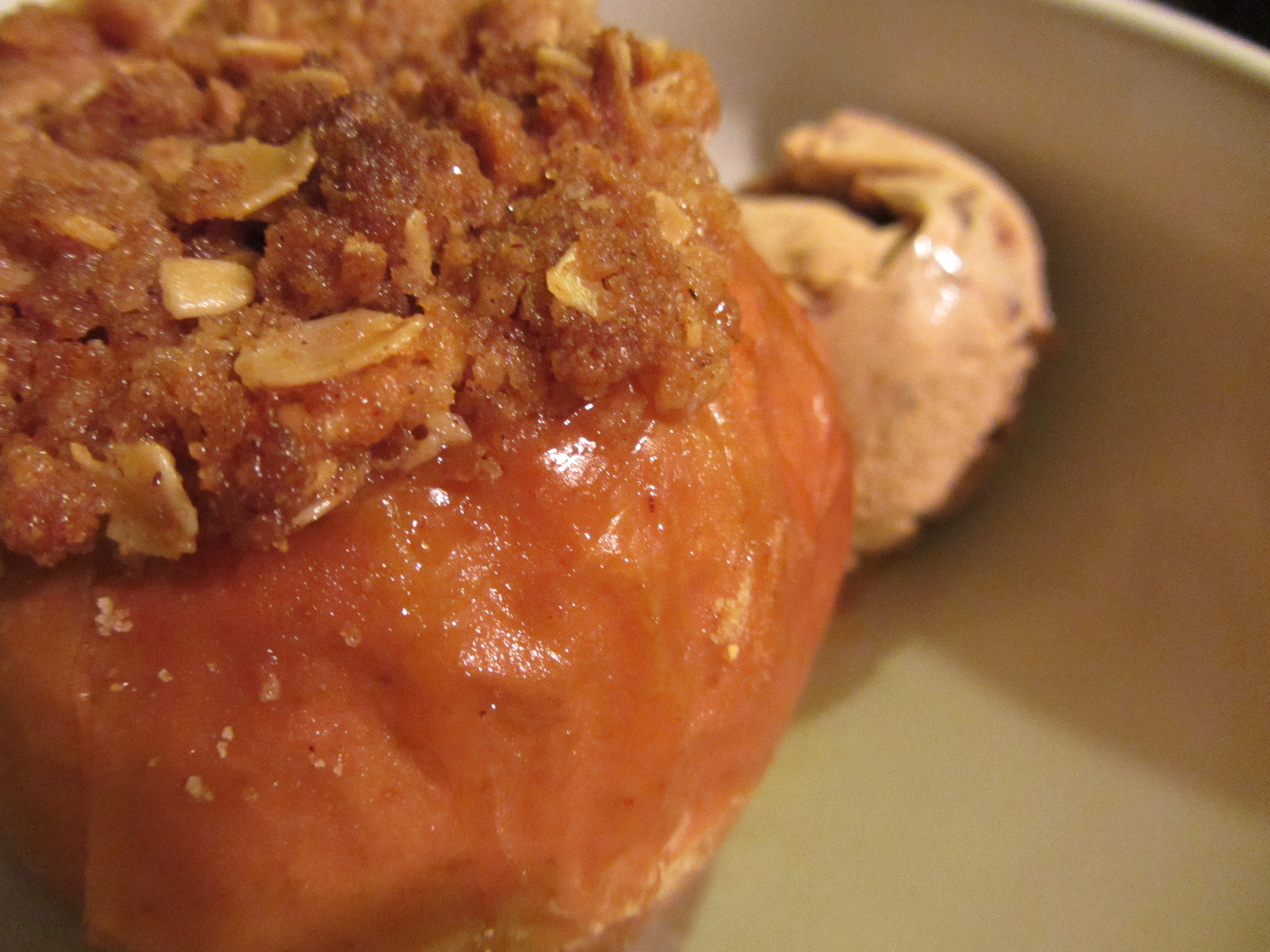
The apples are placed in a baking dish and go into a 350 degree oven for 40 minutes, or until they are tender when squeezed with tongs. The apples need to cool for about 10 minutes prior to eating. We ate ours with ice cream on the side.

Baked apples, served with ice cream.

Baked apples, served with ice cream.

This recipe does make additional streusel topping, so I made baked pears the following evening.

The streusel topping can also be used for pears.

The streusel topping can also be used for pears.

These baked apples have all of the flavor of homemade apple pie, yet they are so much easier to make. When served with ice cream, they are truly a treat. The apples are tender to the bite and filled with a glorious almost-caramelized filling. For an easy, yet indulgent, treat, these are a great way to go. I can say that I would gladly make any of these recipes again.


Fondue Vudu

Now that the fruitcake has officially all been eaten in our house, we’re on to the next logical task:  cheese! Cheese is absolutely one of my favorite things, and I will find any excuse to eat it. I have been known to reason that I need to eat more cheese because “I need more protein,” or because “Calcium is good for my bones.” I can also safely say that I like any and all types of cheeses. Well, except for Gjetost. I just can’t do Gjetost. Thank goodness my HDL is 119.

The first recipe Alton conquers in this episode of Good Eats is for cheese fondue. I will confess that I had made this fondue before, though I had not watched the episode prior to making the recipe. I did watch the episode before making it this time around. My family ate cheese fondue when I was growing up, especially when we went downhill skiing in the winter. I remember that my mom’s recipe always had a touch of Kirsch in it. Alton’s recipe also uses some alcohol, though his is in the form of hard cider and brandy.

To begin Alton’s recipe, you rub your fondue pot with a halved clove of garlic.

Garlic, hard cider, Gruyere, and Smoked Gouda.

Garlic, hard cider, Gruyere, and Smoked Gouda.

Alton recommends using an electric fondue pot, but we do not have one, so I used a standard fondue pot. Once you have thoroughly rubbed your fondue pot with garlic, you add hard cider, Kosher salt, lemon juice (Alton uses 1 T in the episode, while the online recipe calls for 2 T), and brandy. You bring this mixture to a simmer.

Pot rubbed with garlic and filled with hard cider, Kosher salt, lemon juice, and brandy.

Pot rubbed with garlic and filled with hard cider, Kosher salt, lemon juice, and brandy.

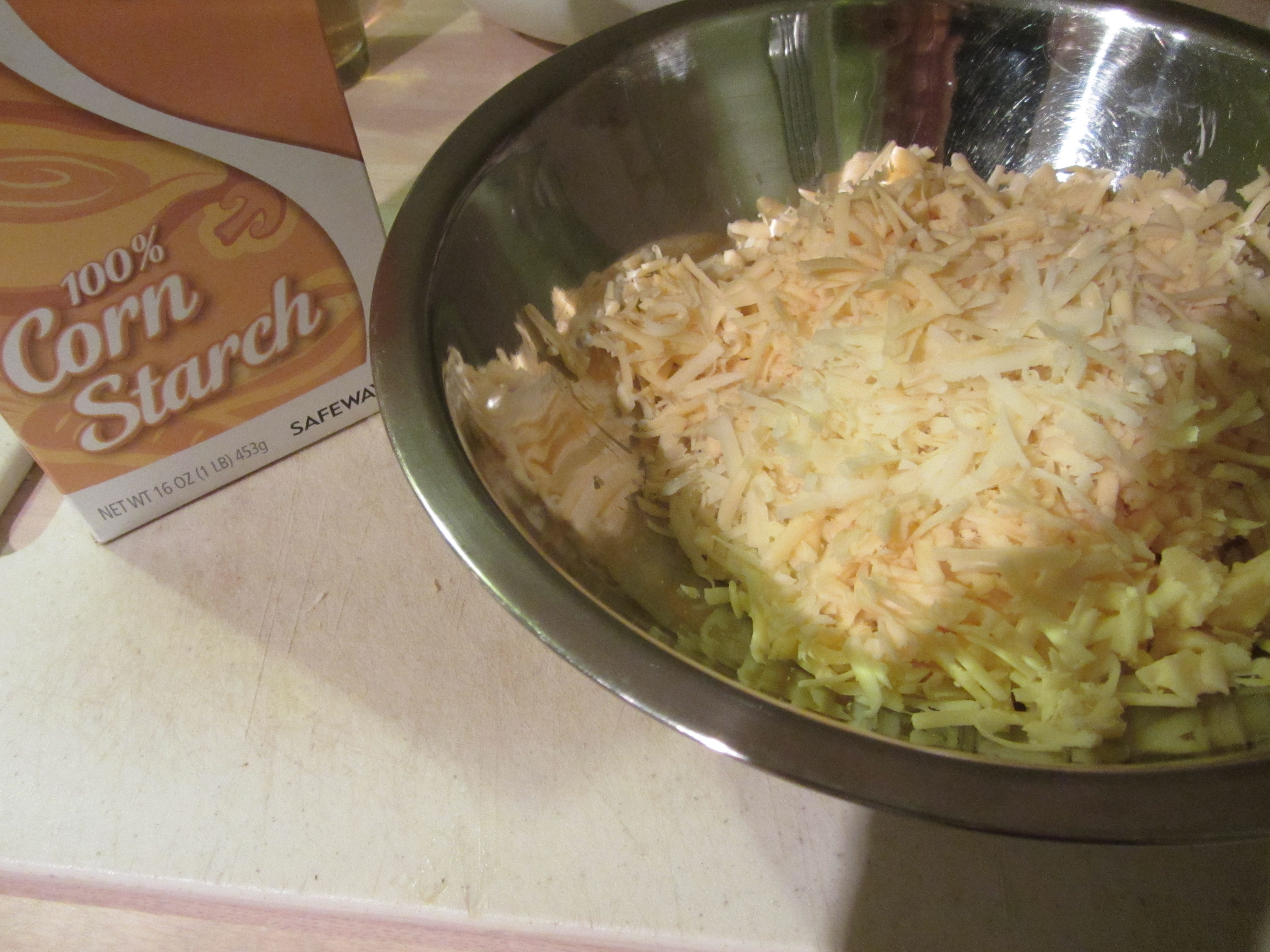
Meanwhile, you grate your Gruyere and Smoked Gouda, and toss the cheeses with 2 T of cornstarch (the online recipe calls for less cornstarch).

Grated Gruyere and Smoked Gouda.

Grated Gruyere and Smoked Gouda.

Cheese mixed with cornstarch.

Cheese mixed with cornstarch.

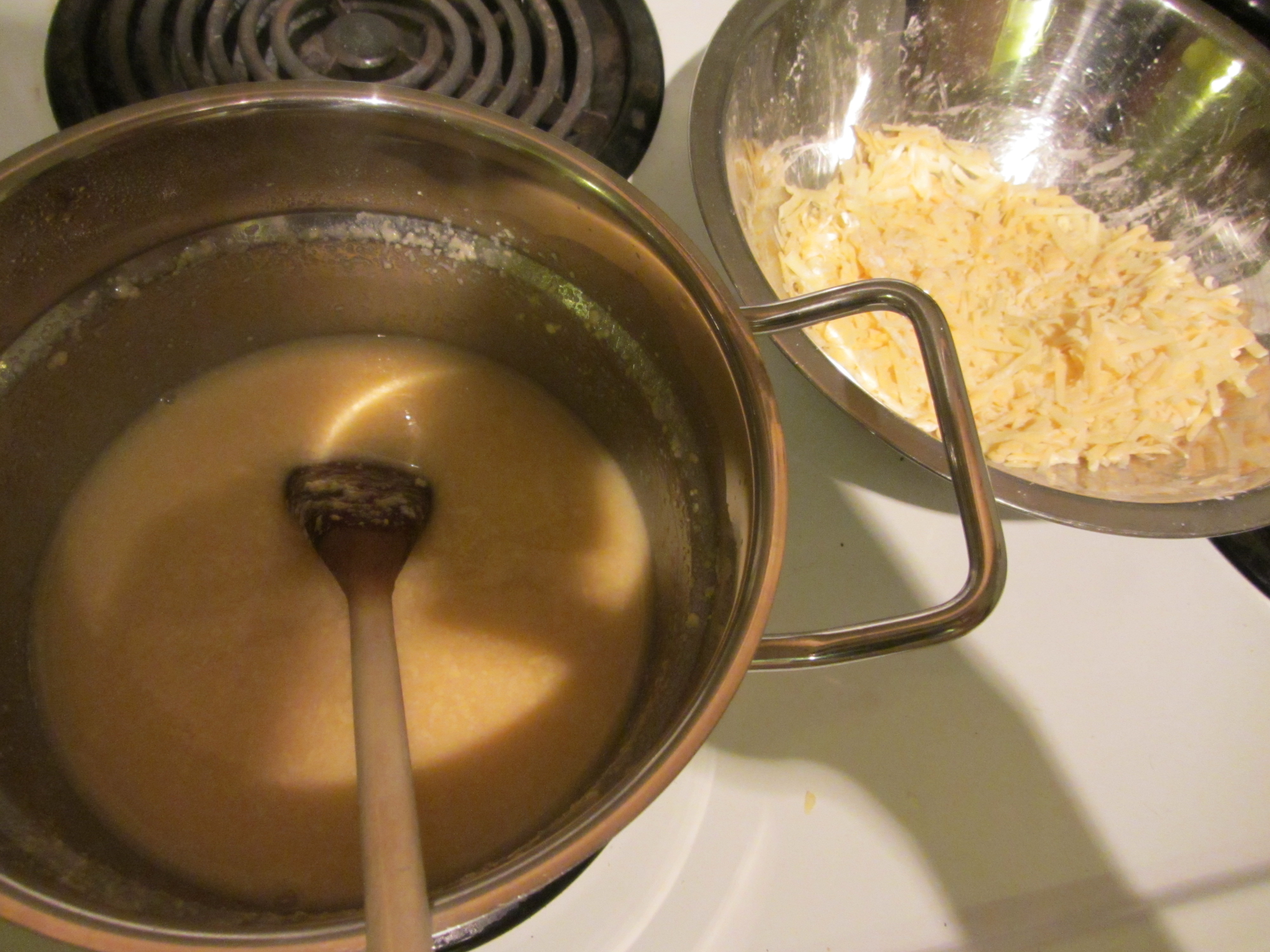
Gradually, handful by handful, you begin adding your grated cheese to the cider mixture.

Adding the first handful of cheese.

Adding the first handful of cheese.

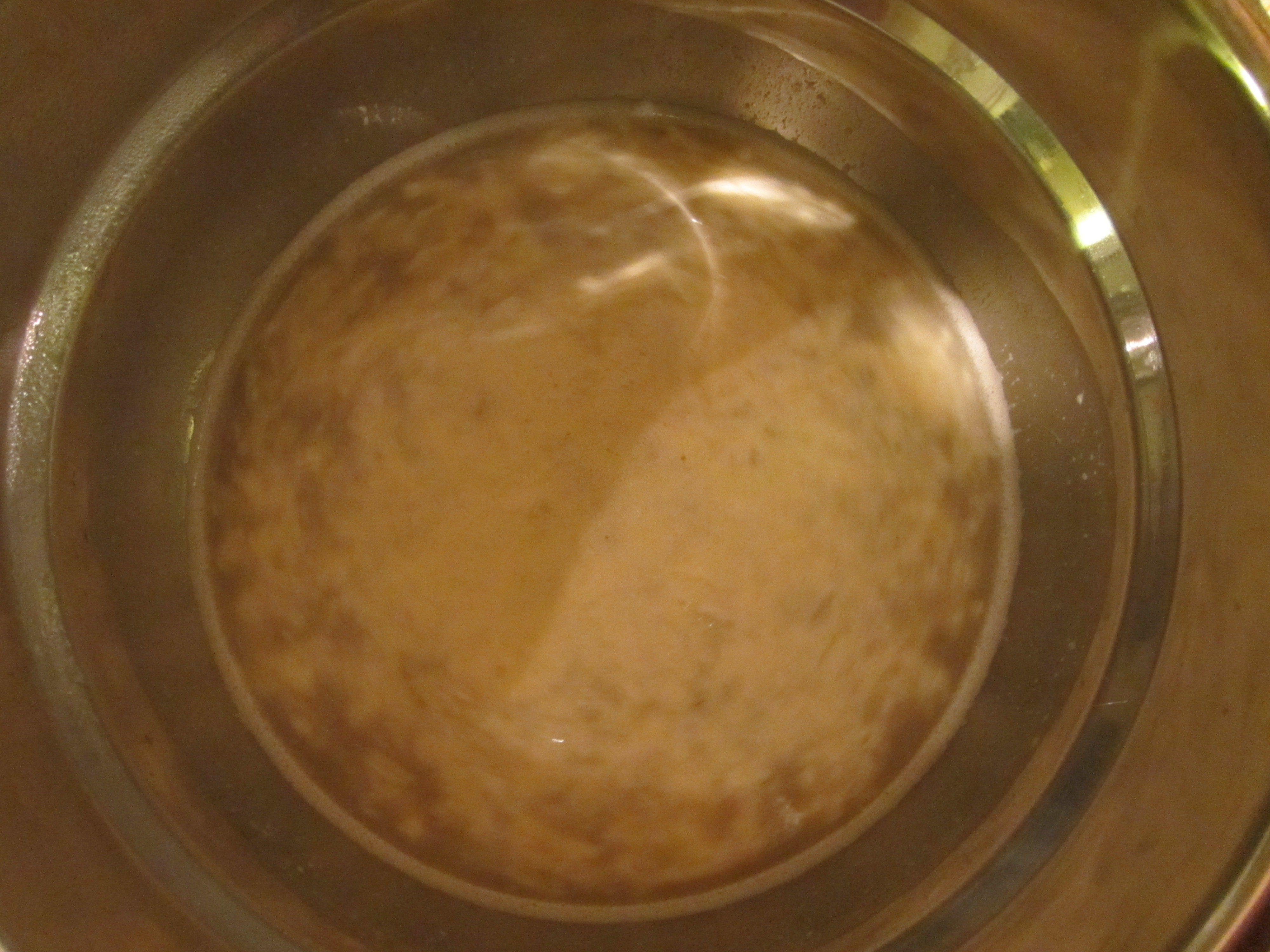
Alton stresses that you take this process slowly, allowing the cheese to melt completely and waiting for bubbles to break the surface before adding the next handful of cheese. I found that I actually needed to increase the heat a bit to get the cheese to completely melt and incorporate. Otherwise, little bits of cheese remained visible.

Adding cheese, handful by handful.

Adding cheese, handful by handful.

All of the cheese incorporated.

All of the cheese incorporated.

Once the cheese is all melted and smooth, you add a pinch of black pepper and 1/2 t (the online recipe calls for 1/4 t) of curry powder. Since we like heat, I chose to use hot curry powder.

Hot curry powder.

Hot curry powder.

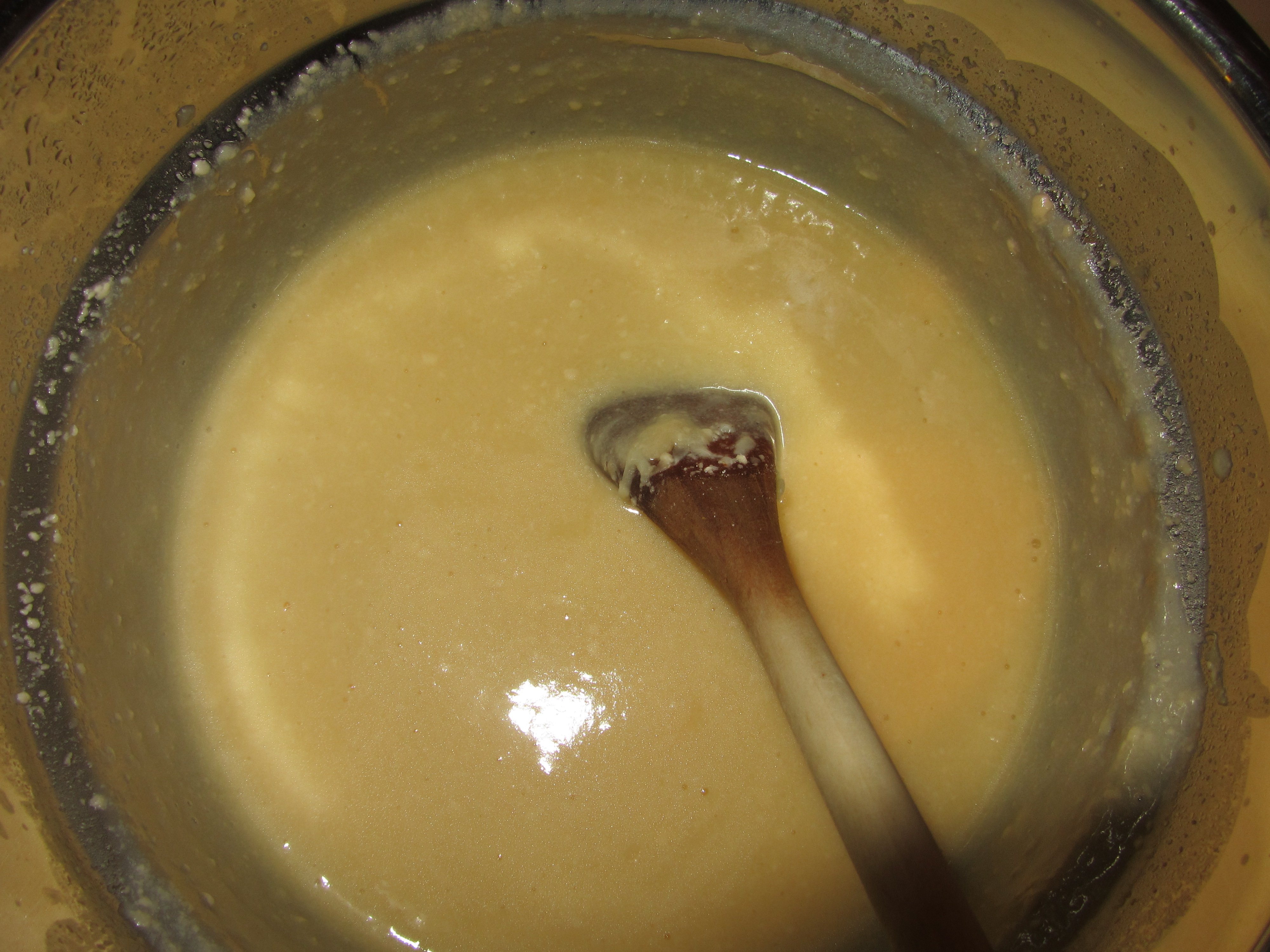
Fondue with curry powder.

Fondue with curry powder.

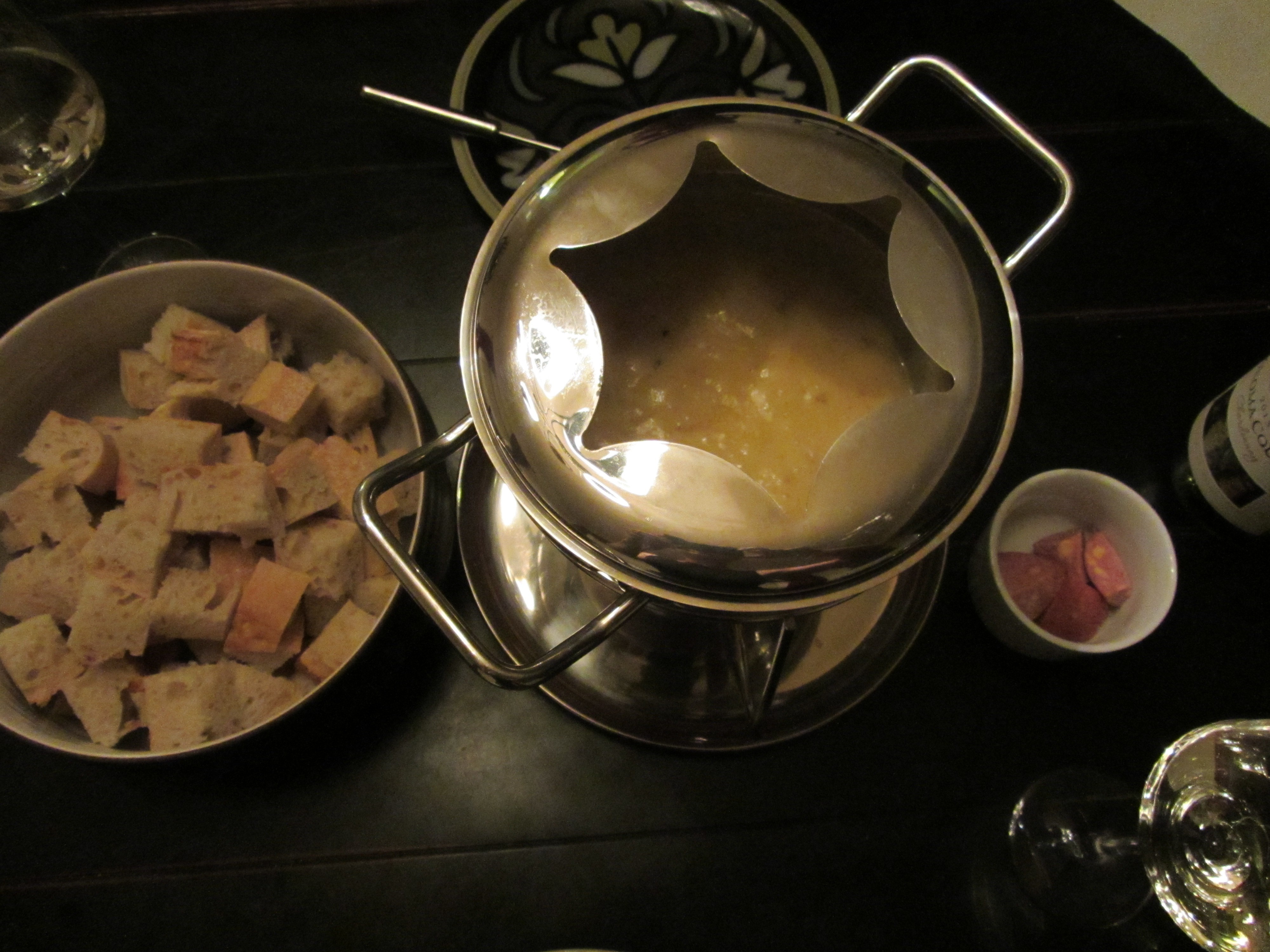
We ate our fondue with cubed bread and a little bit of cubed Summer sausage.

Fondue dinner spread.

Fondue dinner spread.

When we have had fondue in the past, we have also really liked to use apples or pears, though we did not do that this time around. We both really like the flavor of this fondue, which is why we have made it a few times now. My fondue ended up being much smoother this time around, which I assume could be due to the additional cornstarch in the episode recipe vs. the online recipe. The smokiness of the Gouda really comes through in this fondue, though it is not overpowering, and the sweetness of the cider is also evident. I find the flavors to balance well, with the sweetness of the cider, the smokiness of the Gouda, the subtle heat from the curry powder, the tartness of the lemon juice, and the salty/nutty flavor of the Gruyere. This is a super easy, but sinful, dinner to make. We like to have it on a day when we have done a good long run or bike ride! This will remain my go-to cheese fondue recipe, and I’ll be making it as Alton makes it in the episode.

Big Cheese Squeeze

The second recipe in the cheese episode is for a grilled cheese sandwich. Being the cheese lover I am, I’m a pretty happy girl if you put a grilled cheese sandwich in front of me, especially if the bread and cheese do the sandwich justice. For his sandwich, Alton tells you to heat two skillets (preferably iron) over high heat. Ideally, you want one skillet to be able to nest inside the other skillet. We happen to have two iron skillets that fit the bill perfectly.

Heating two cast iron skillets.

Heating two cast iron skillets.

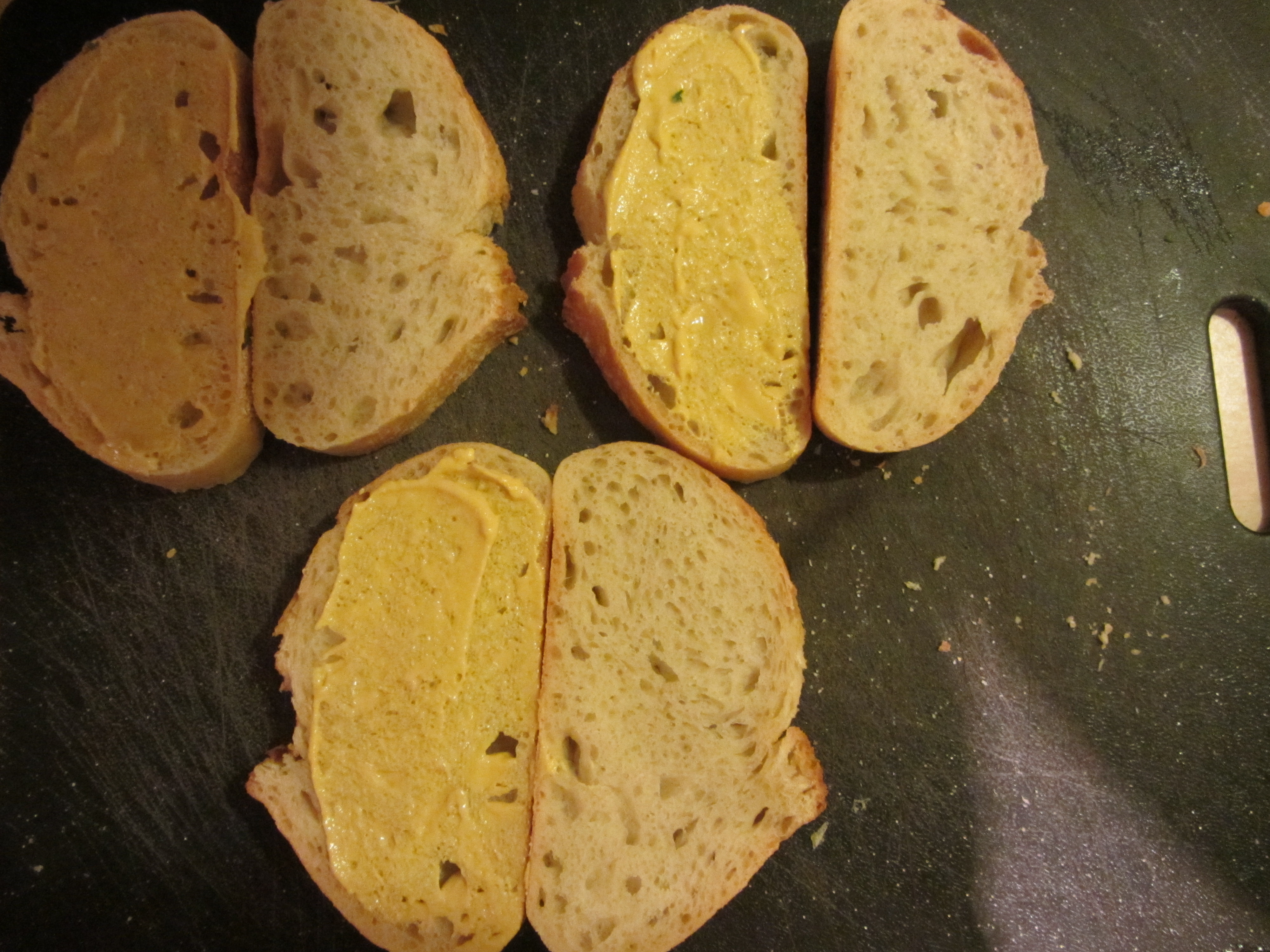
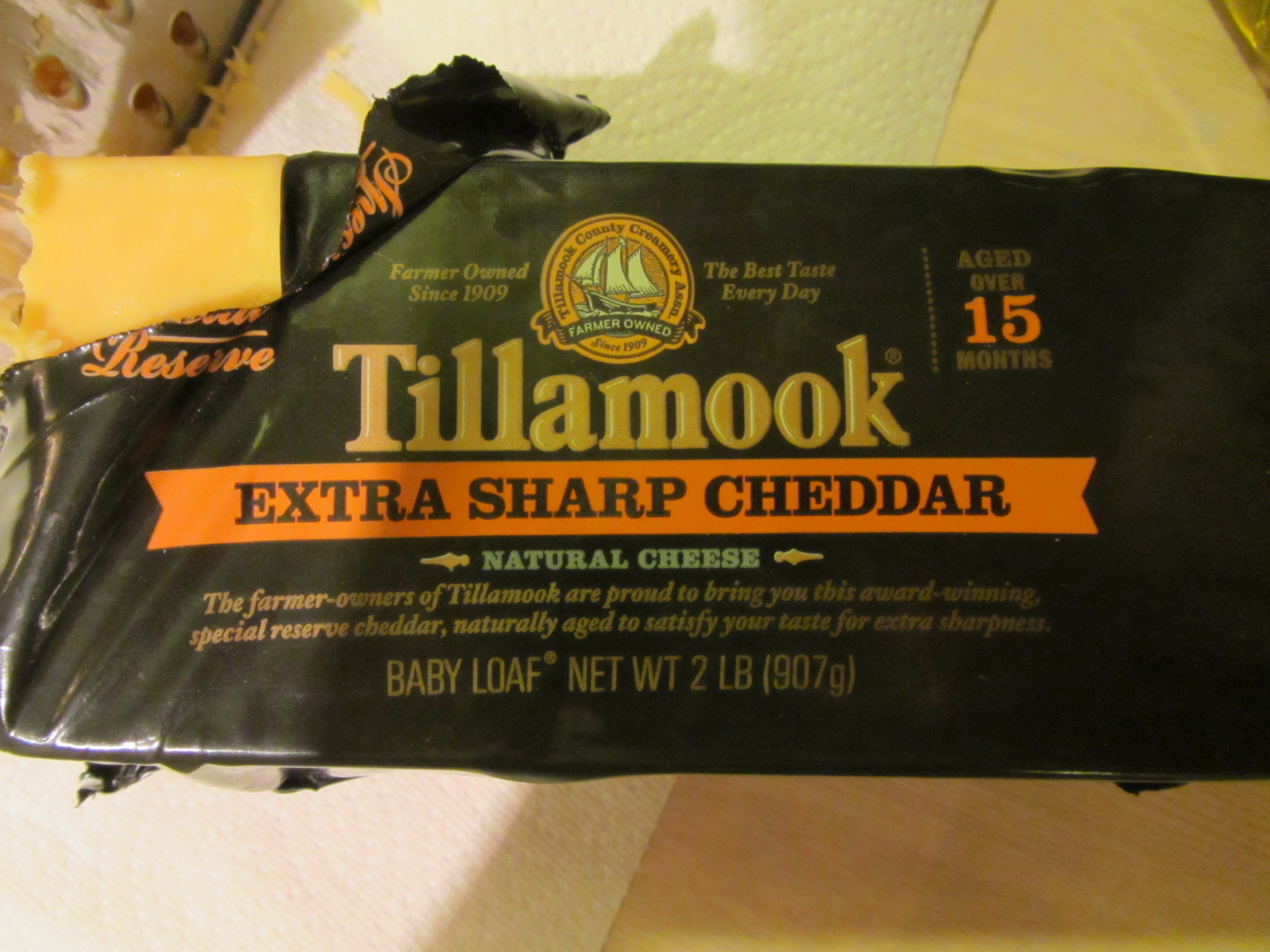
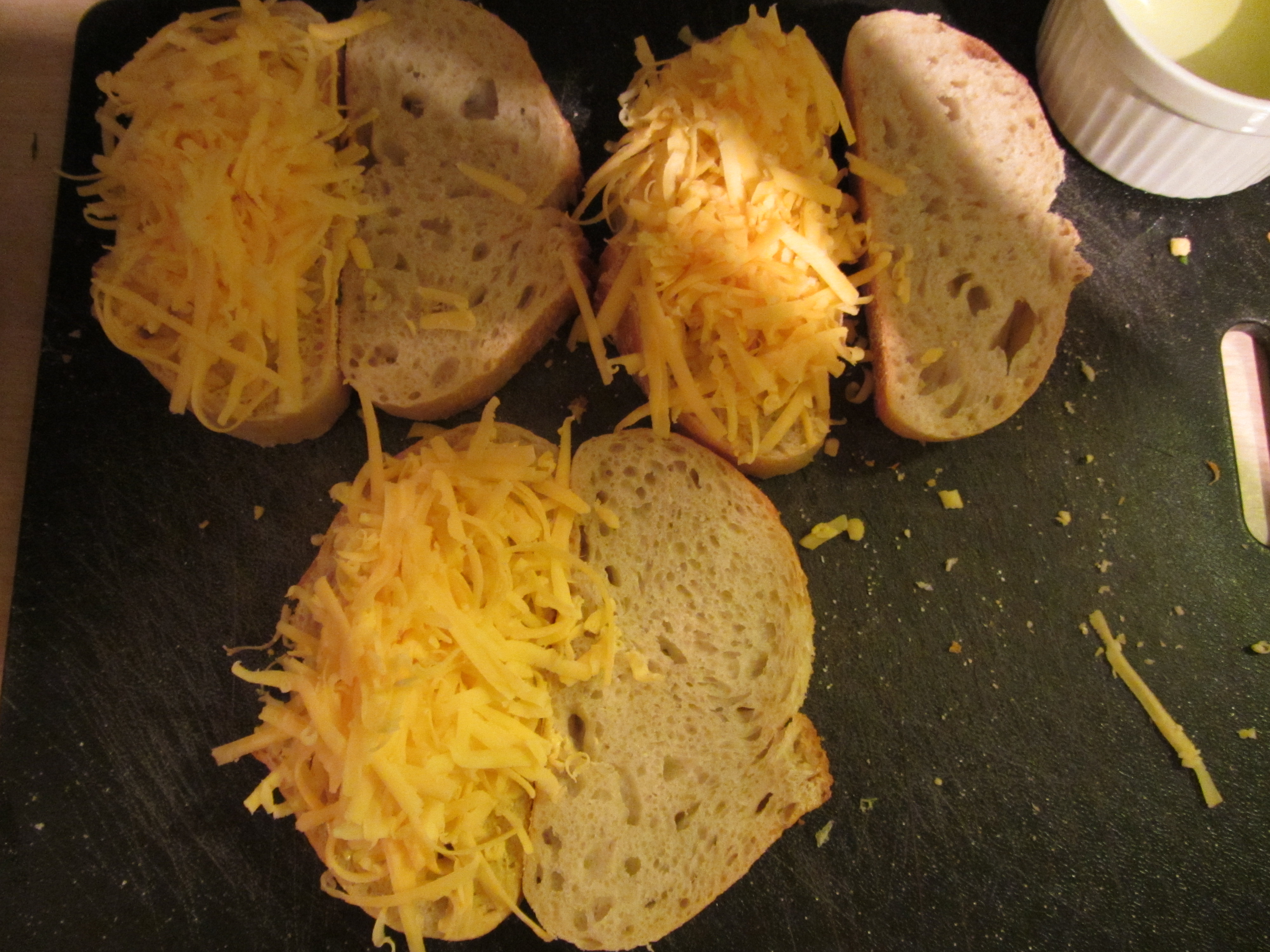
While your skillets heat, you grate a good handful of cheese (Alton uses Cheddar in the episode, so that is what I used) and spread Dijon mustard on one slice of bread. You top this with the cheese, grind some black pepper on top, and put the lid on your sandwich.

Mustard on the bread.

Mustard on the bread.

Extra sharp Cheddar.

Extra sharp Cheddar.

Cheese on the mustard-coated bread.

Cheese on the mustard-coated bread.

And some ground pepper.

And some ground pepper.

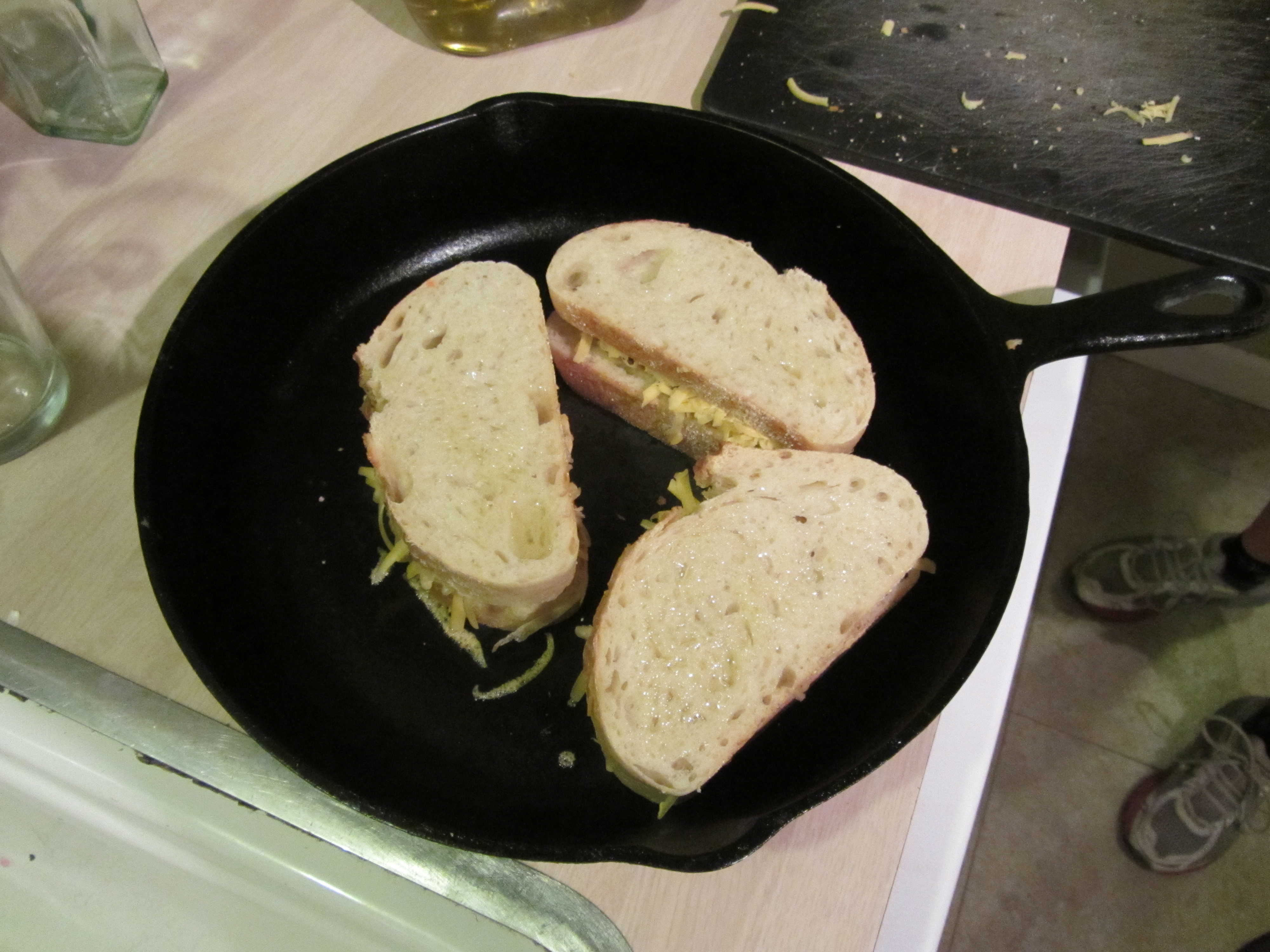
You then spritz olive oil onto the outer sides of the sandwich and onto the bottom of the smaller skillet. You remove the pans from the heat, place your sandwich in the larger skillet, and put the smaller skillet on top. In about three minutes, you should have the perfect grilled cheese sandwich.

Into the skillet, after being coated with olive oil.

Into the skillet, after being coated with olive oil.

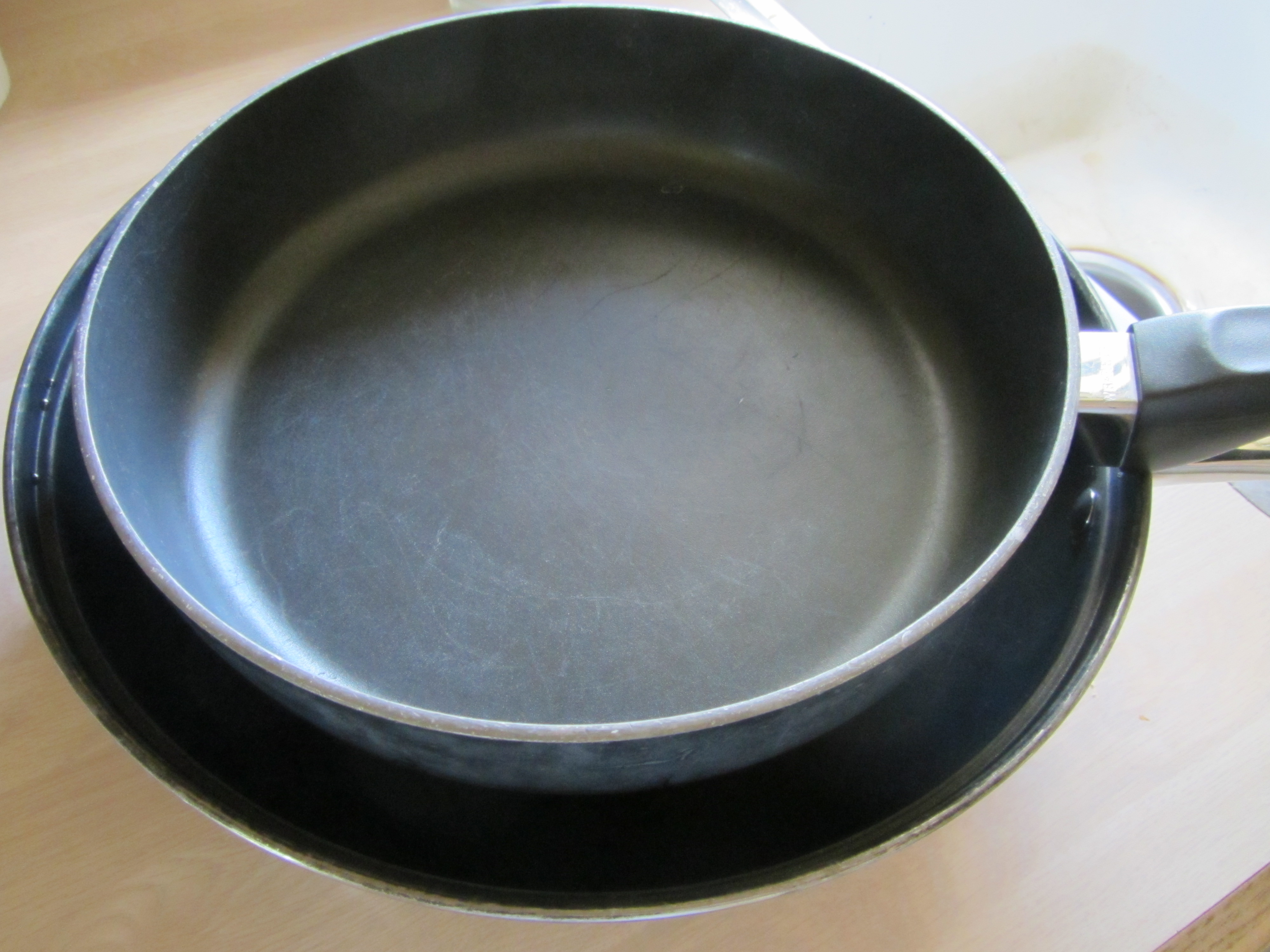
Nesting skillets.

Nesting skillets.

Nesting skillets.

Nesting skillets.

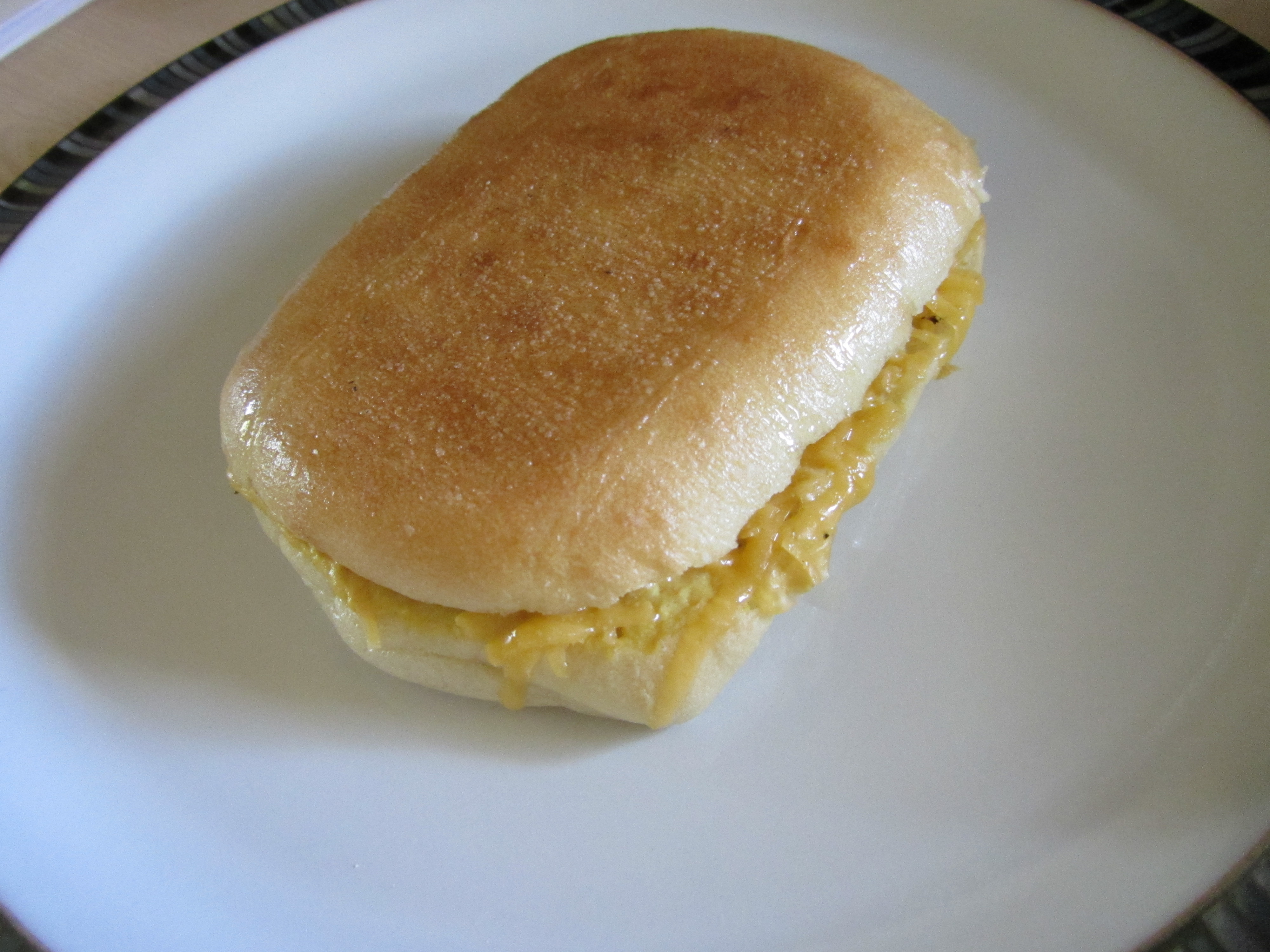
I have liked all of the recipes that I have prepared from Good Eats… until now. This recipe was just a complete flop for me. My skillets ended up being way too hot, and quickly burned the outside of my sandwich, and I did not actually turn the heat on under the skillets until I was completely ready to assemble my sandwich. I ended up throwing my sandwich away. Frustrated, and irritated to waste aged extra sharp Cheddar cheese, I opted to wait to try again another day. I tried this method again a few days later, opting for non-stick skillets this time, and heating them over lower heat for less time.

Bread with mustard.

Bread with mustard.

Bread with mustard and pepper.

Bread with mustard and pepper.

Bread with mustard, pepper, and cheese.

Bread with mustard, pepper, and cheese.

Oiled sandwich.

Oiled sandwich.

Nestled skillets.

Nestled skillets.

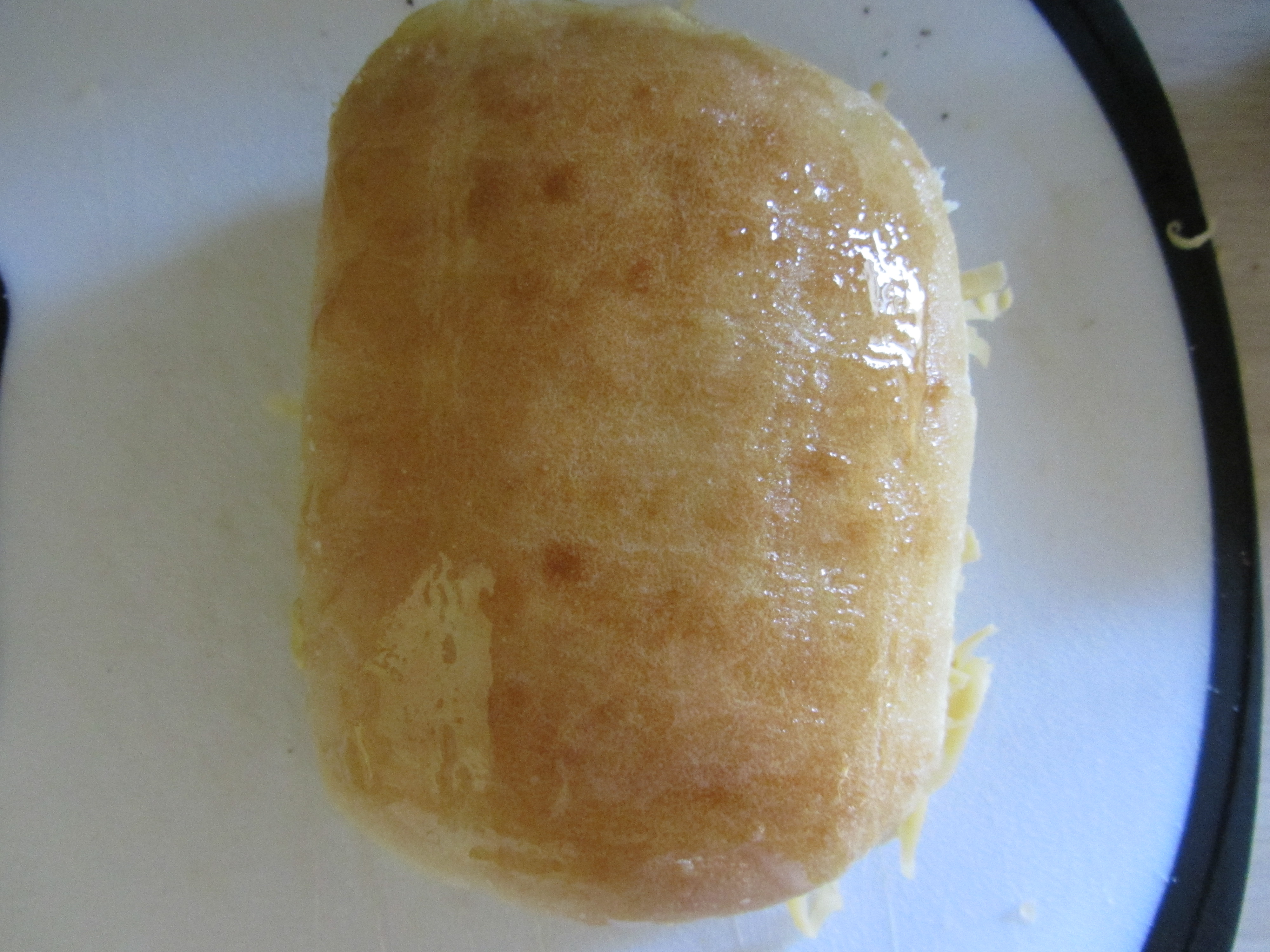
Guess what? This time, the skillets were not hot enough, so the outside of the sandwich got slightly browned, but the cheese was not thoroughly melted. Great.

Sandwich from skillets that were not hot enough.

Sandwich from skillets that were not hot enough.

I had to place them back over the heat and do it a second time. And, in that amount of time, I could have already eaten a perfectly good grilled cheese sandwich made the old-fashioned way. I will say that I liked the sandwich made with Dijon mustard and black pepper, though I had discovered that I liked the addition of mustard on my own a while ago. I will not be making a grilled cheese sandwich this way again. There is a reason that people have been making grilled cheese sandwiches the same way for years – because it works.

Free Range Fruitcake

The second season of Good Eats begins with Alton’s take on fruitcake. I don’t know about you, but when I think of fruitcake, I envision a cloyingly sweet, dense brick of a cake, filled with sticky globs of artificially bright, candied, green and red cherries. My mom says that she used to make fruitcake, though I never remember having hers. Due to the fact that I have not particularly adored the fruitcakes I have tasted in the past, it is not something I consume frequently, or even occasionally. In fact, I couldn’t tell you the last time I had fruitcake prior to making this recipe of Alton’s. I was excited for this one, as I was pretty confident I would like the resulting cake.

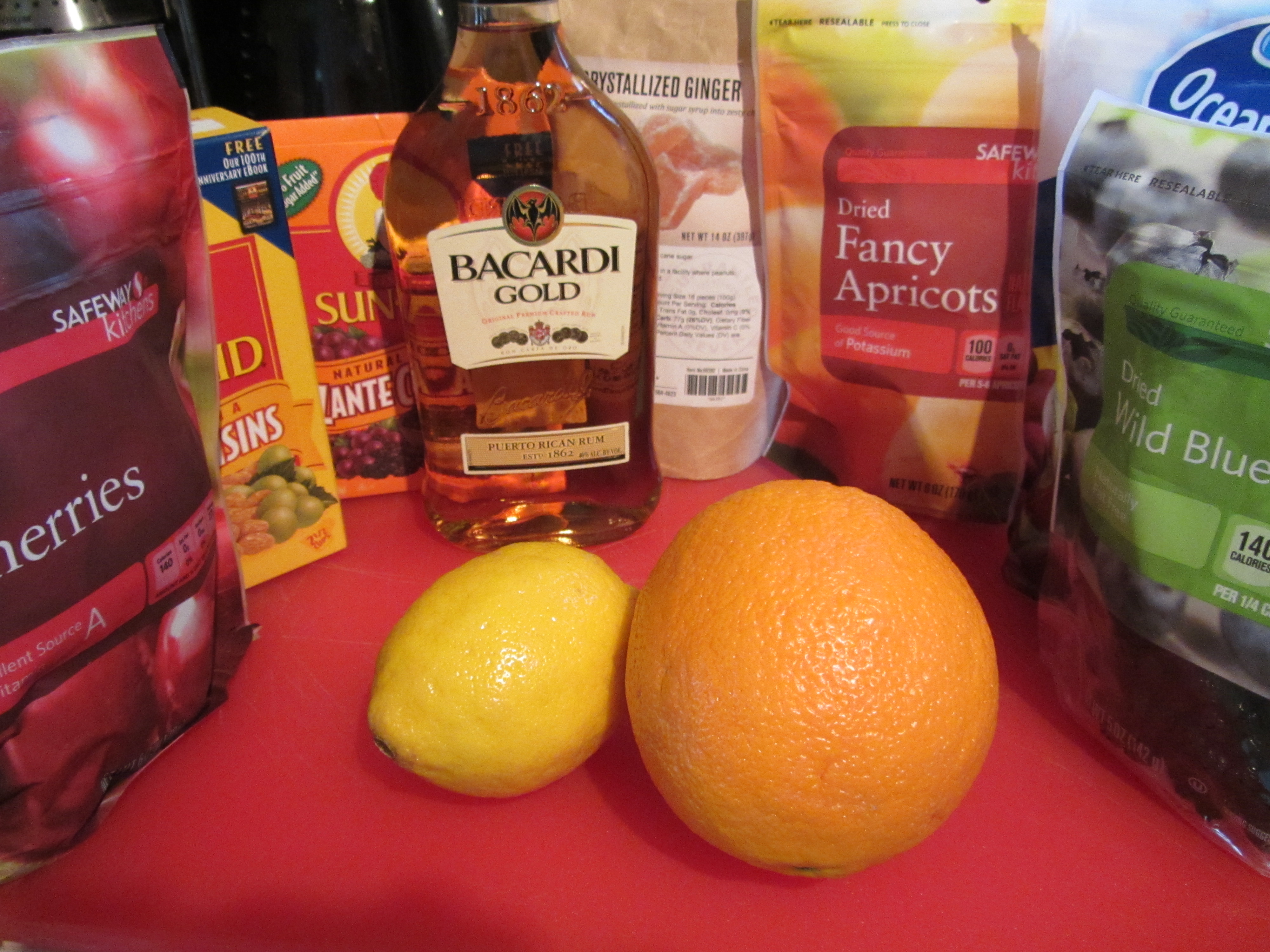
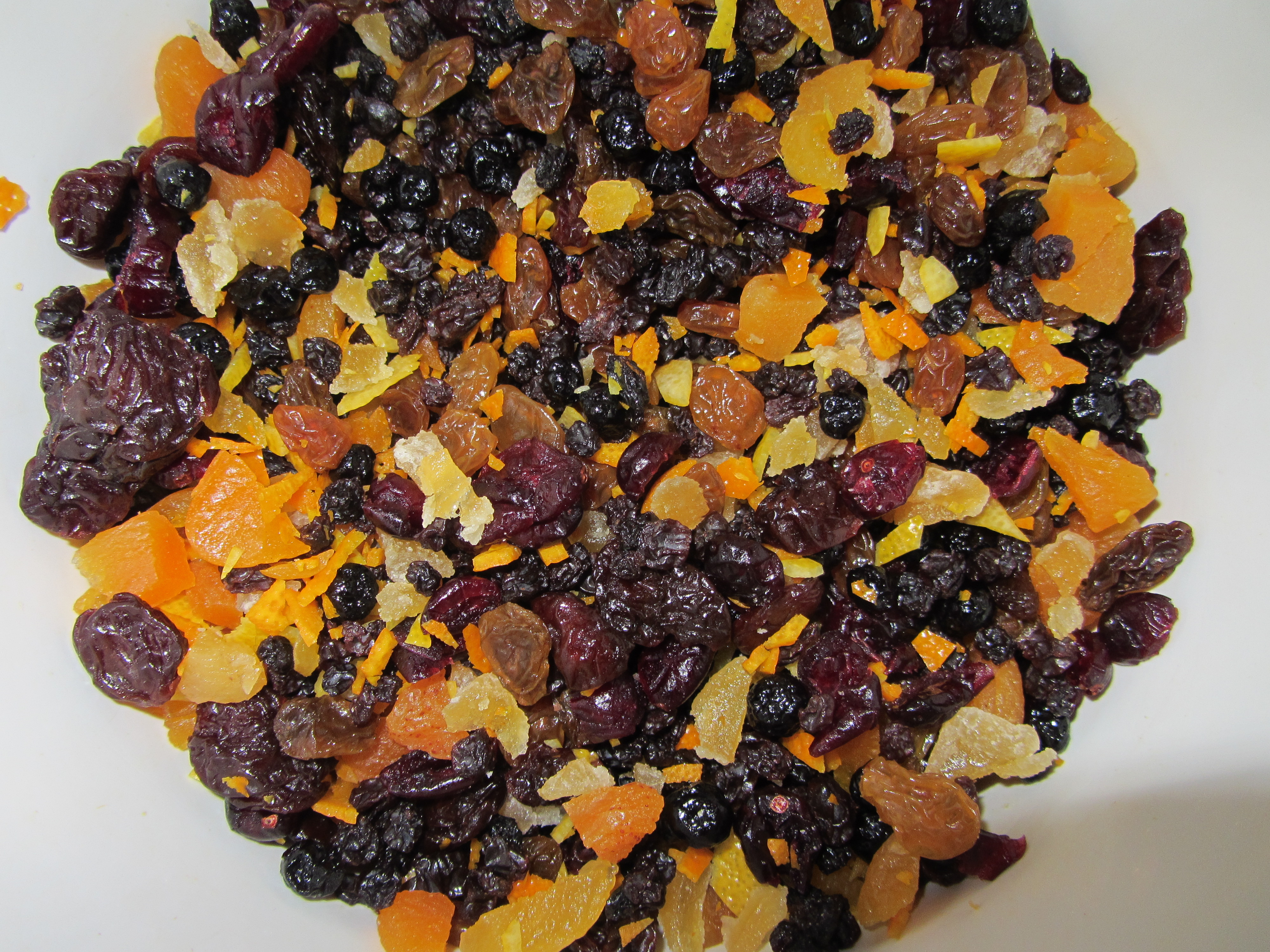
Alton’s fruitcake recipe begins with macerating in rum a plethora of dried fruit (golden raisins, currants, cranberries, blueberries, cherries, & apricots), along with lemon zest, orange zest, and candied ginger.

Ready to macerate.

Ready to macerate.

Golden raisins, currants, dried cranberries, dried blueberries, dried cherries, dried apricots, lemon zest, orange zest, and candied ginger.

Golden raisins, currants, dried cranberries, dried blueberries, dried cherries, dried apricots, lemon zest, orange zest, and candied ginger.

Soaking the fruit in the rum.

Soaking the fruit in the rum.

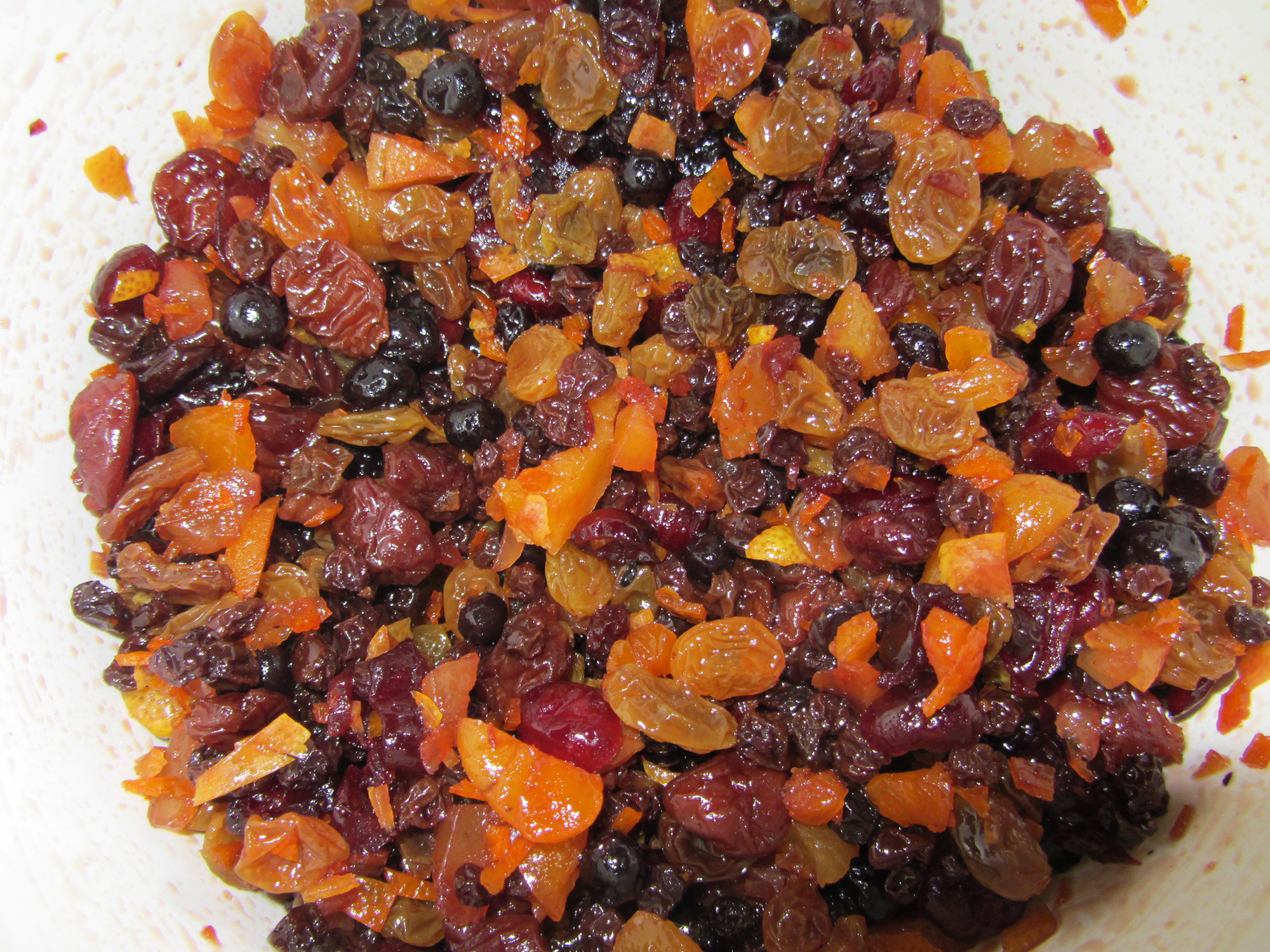
Ideally, you are to let the fruit sit overnight, though Alton says you can microwave the fruit and rum for 5 minutes, if you are short on time. I took the time to soak my fruit overnight, as I knew the result would be much better that way. Sure enough, the fruit had soaked up much of the rum, and was visibly plump when I checked it the next morning.

Fruit after soaking overnight.

Fruit after soaking overnight.

The next step was to toast my pecans. Though Alton recommends using freshly shelled nuts, my grocery store did not have pecans in the shell, so I bought the pre-shelled variety. I toasted them for 15 minutes at 300 degrees, just as Alton specifies in the episode.

Toasted pecans.

Toasted pecans.

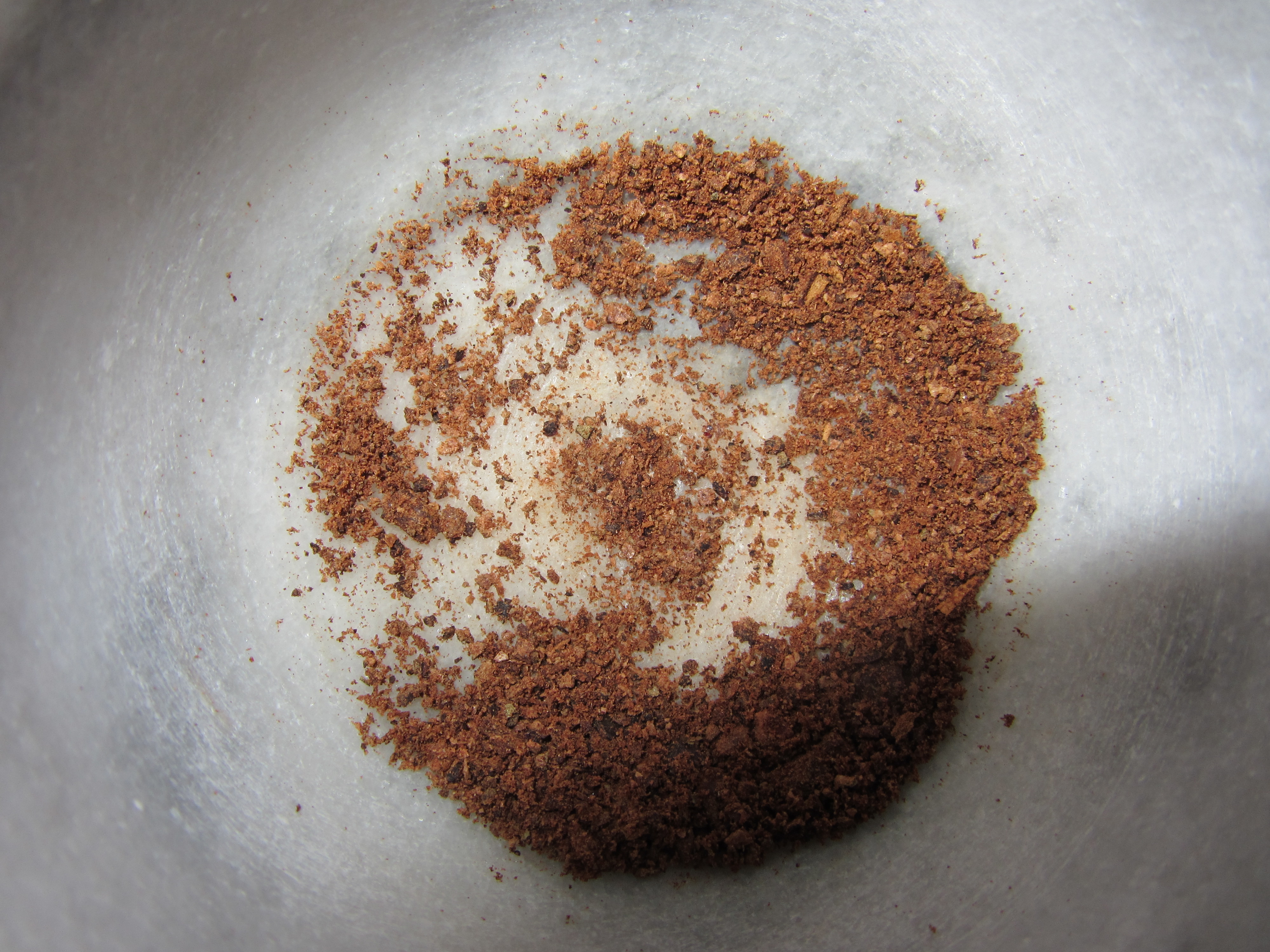
Next, I ground some whole cloves and allspice berries in my mortar and pestle, and I added this to a large pot with my macerated fruit.

Allspice and cloves.

Allspice and cloves.

Ground allspice and cloves.

Ground allspice and cloves.

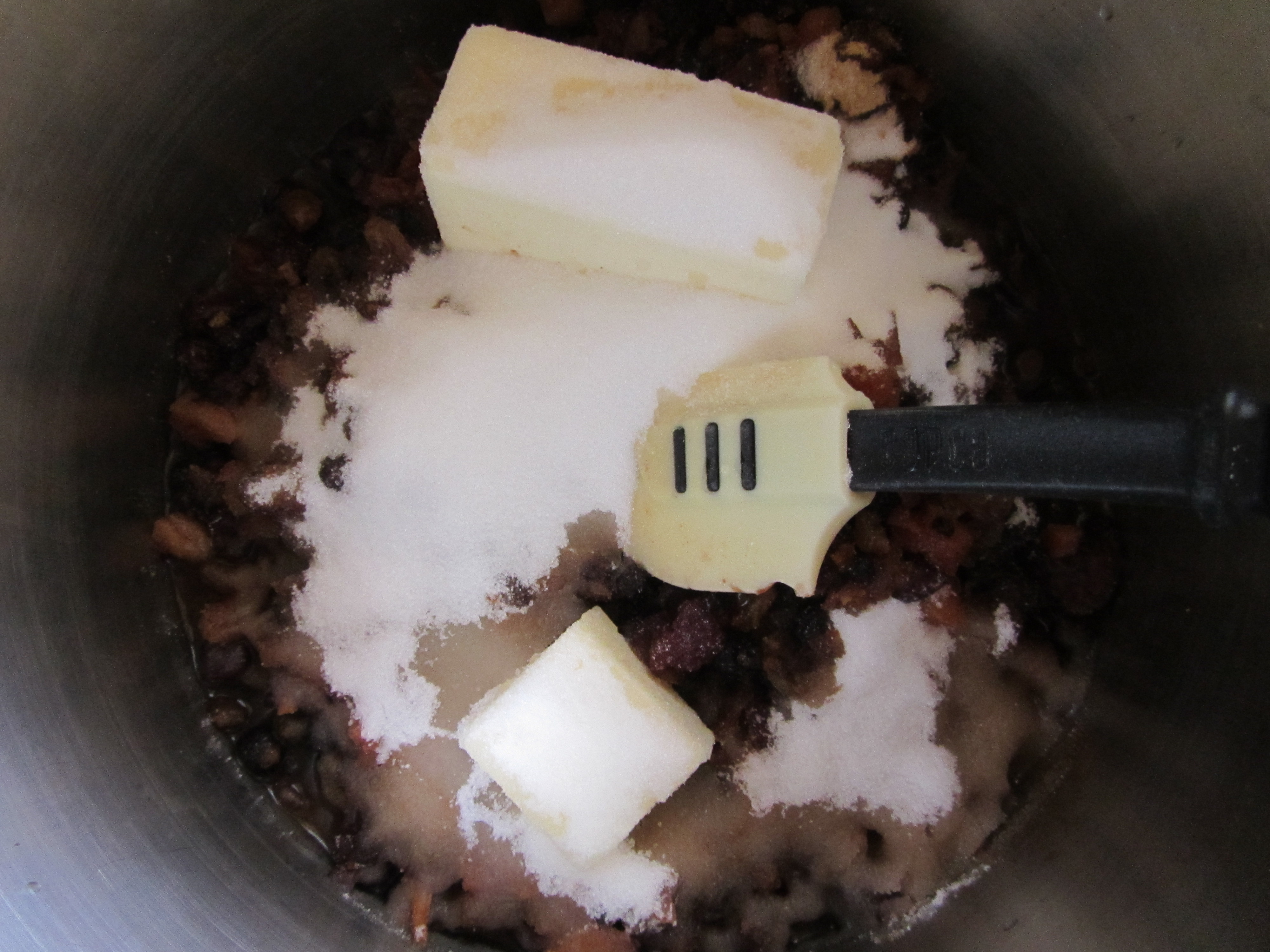
To this mixture, I added cinnamon, ginger, butter, apple cider (the recipe calls for unfiltered apple juice), and sugar.

Macerated fruit, spices, butter, sugar, and juice.

Macerated fruit, spices, butter, sugar, and juice.

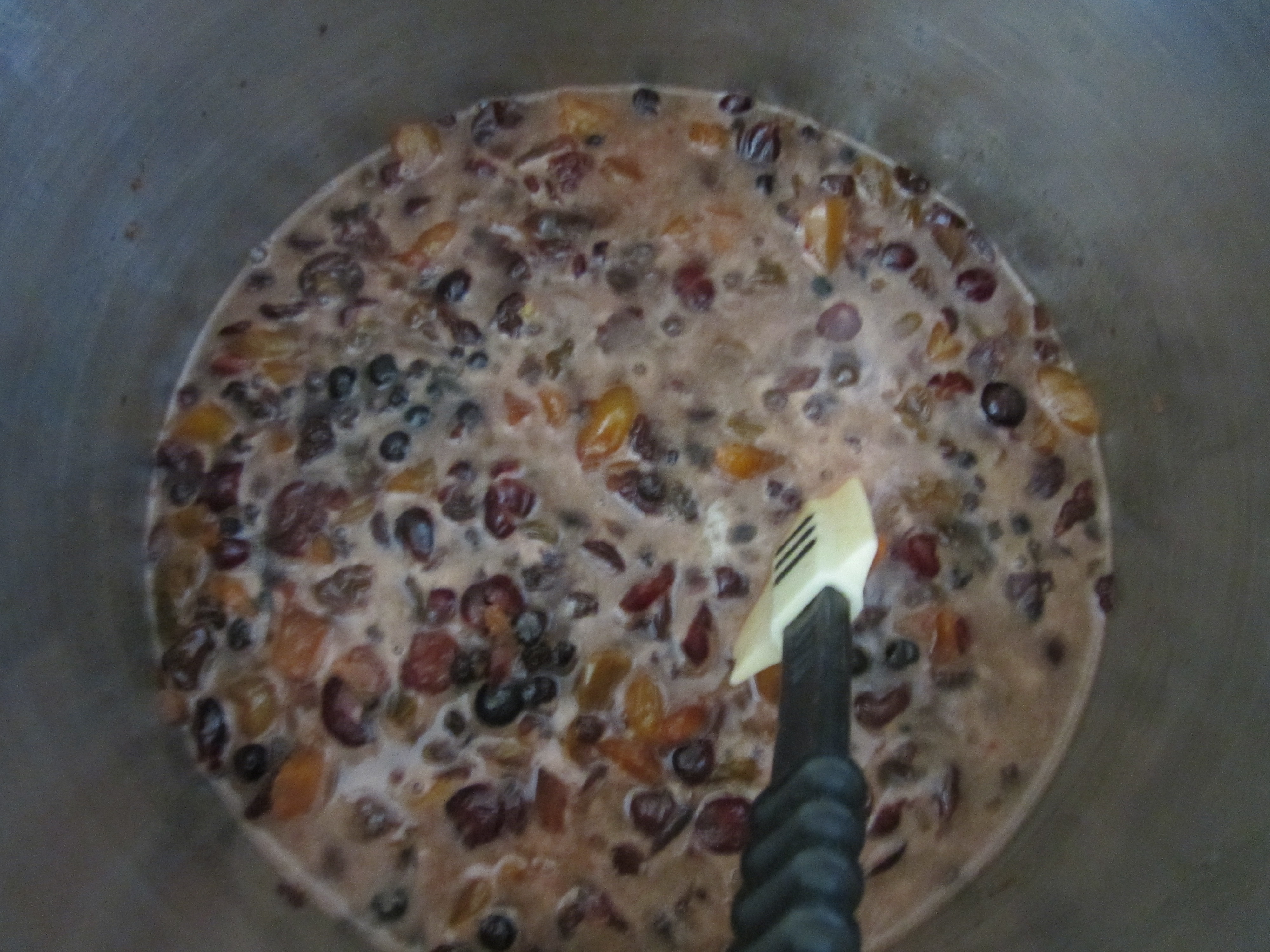
I brought my mixture to a boil, decreased the heat, and simmered it for a good 15 minutes. Alton then tells you to let this mixture cool for ~15 minutes.

The whole fruit mixture.

The whole fruit mixture.

After simmering.

After simmering.

Once cool, you sift in your dry ingredients, stirring quickly to avoid incorporating a lot of air into the batter.

Dry ingredients sifted in.

Dry ingredients sifted in.

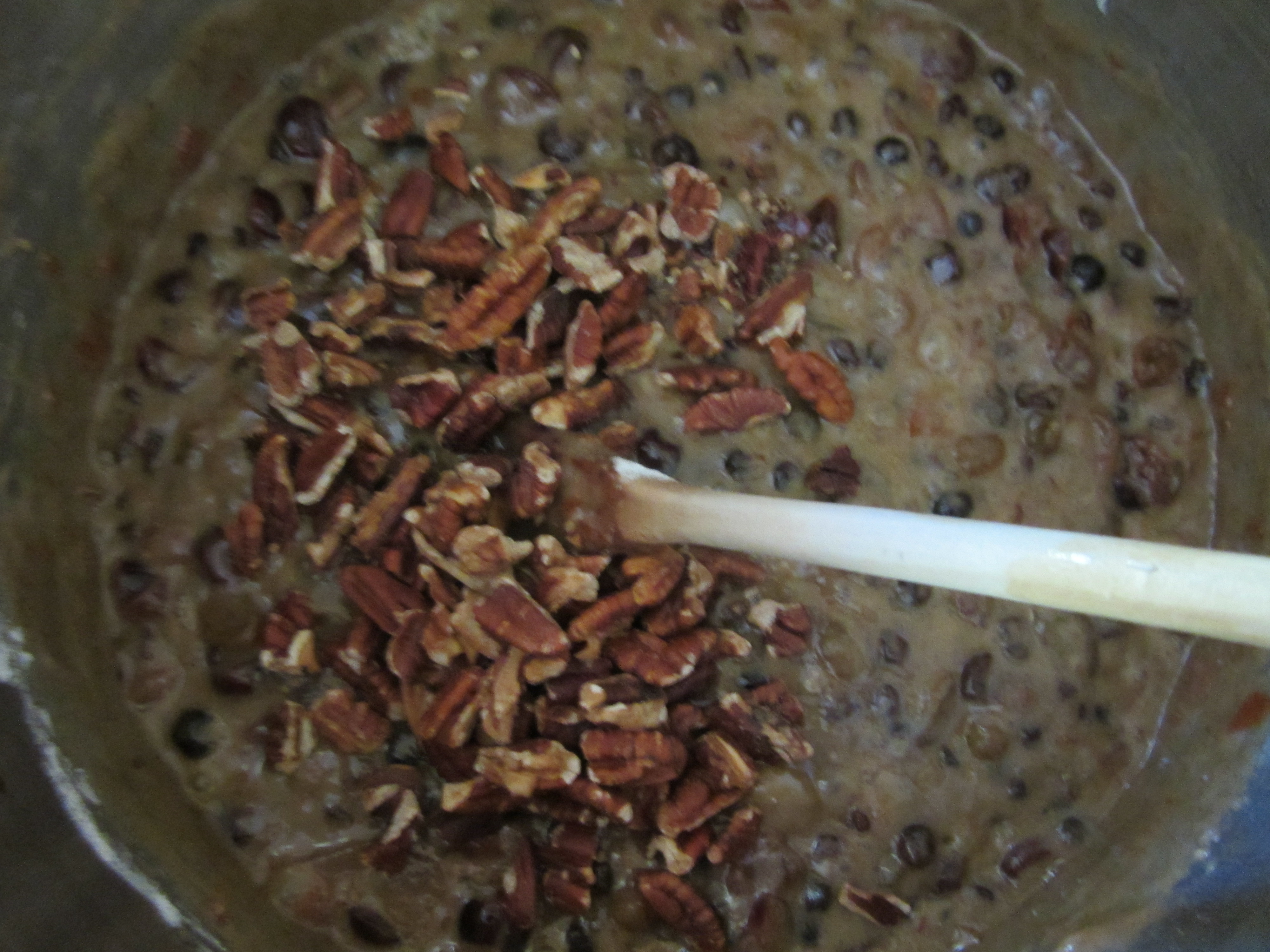
Two eggs are added, one at a time, followed by the toasted pecans, and the batter goes into a loaf pan.

Folding in the pecans.

Folding in the pecans.

Batter into the pan.

Batter into the pan.

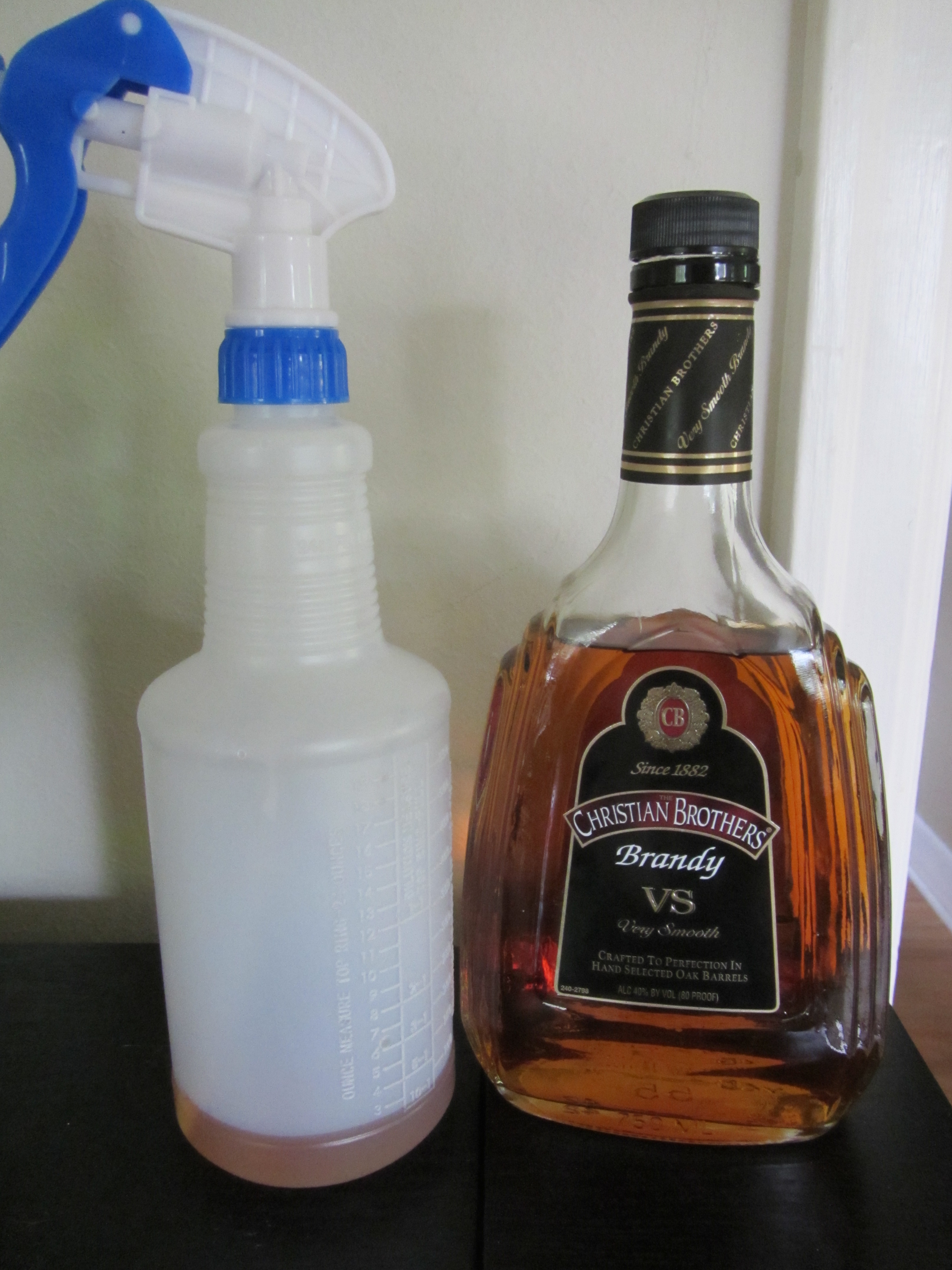
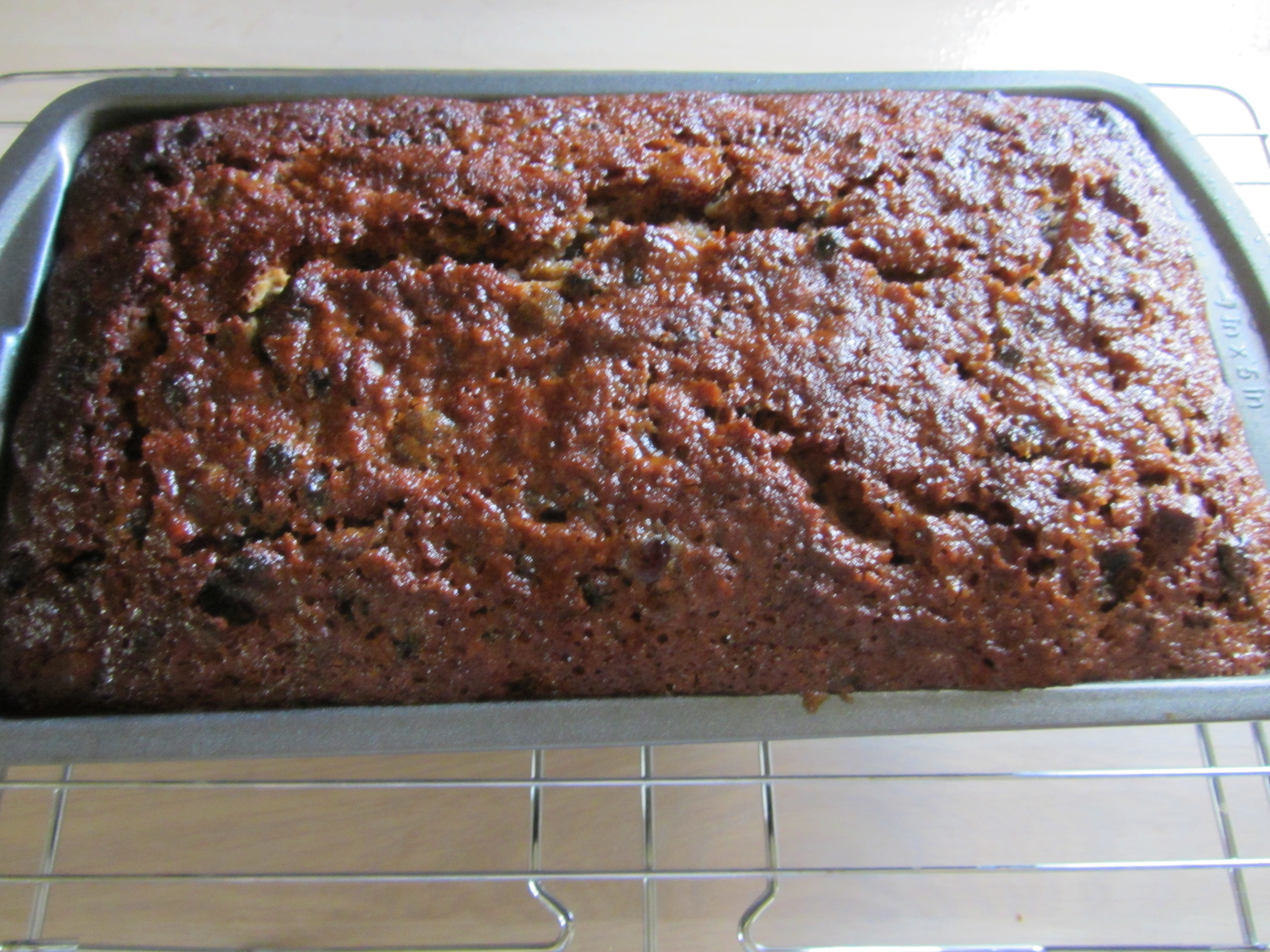
One tip Alton mentions in the episode (that is not mentioned in the online recipe) is to place a pan of hot water on the oven rack below the cake while it bakes. This is to keep the top of the cake from cracking. Once the cake is done (mine took 56 minutes), you spray it with brandy and allow it to cool completely before removing it from the pan.

Brandy to spritz.

Brandy to spritz.

It took hours for my cake to cool completely since it was so dense and had baked for nearly an hour. Once the cake is completed, Alton tells you to store it in an airtight container, checking it every three days. If the cake is dry, you spritz it again with more brandy. The cake will keep for at least two weeks.

Spritzed cake right out of the oven.

Spritzed cake right out of the oven.

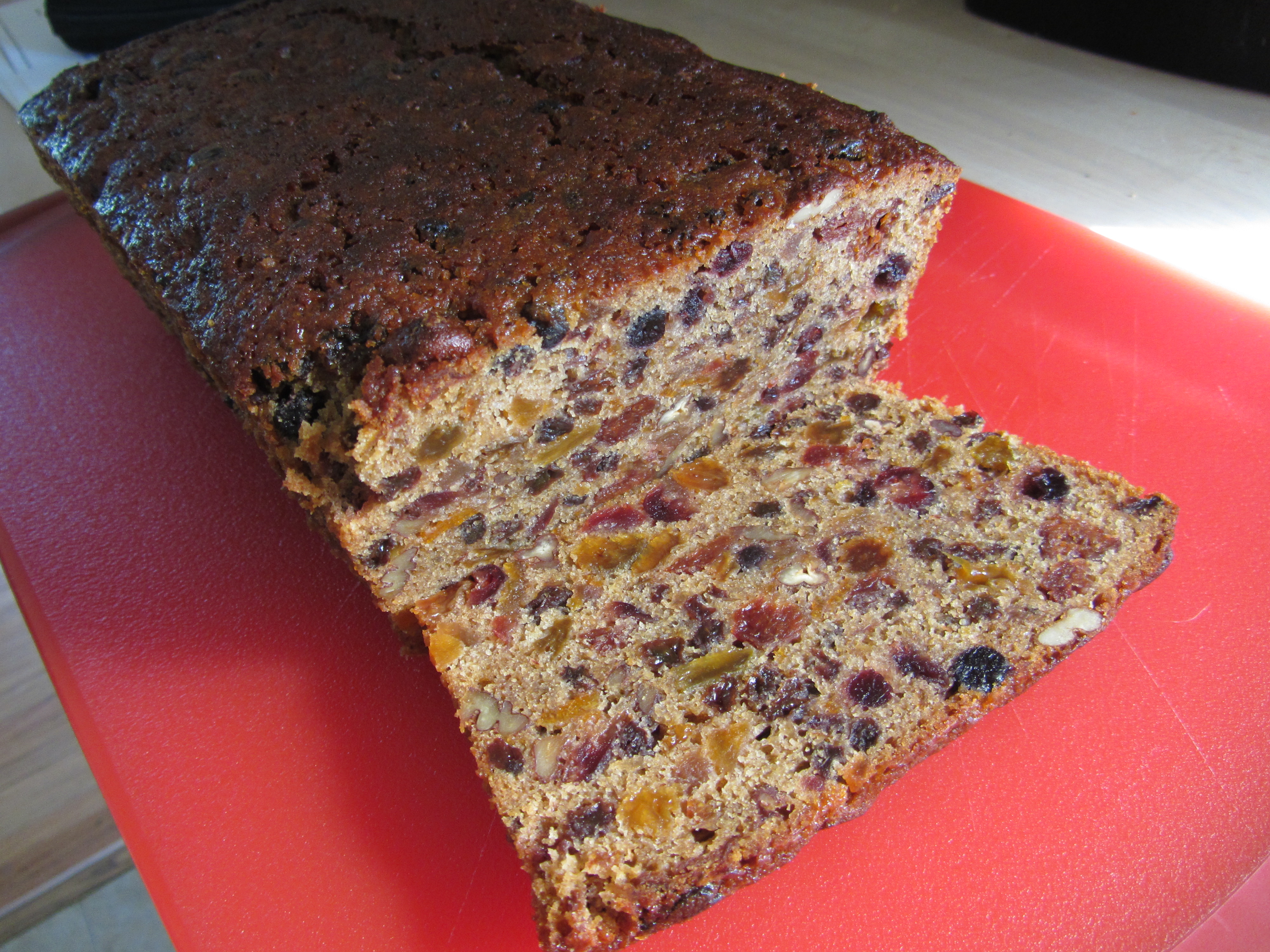
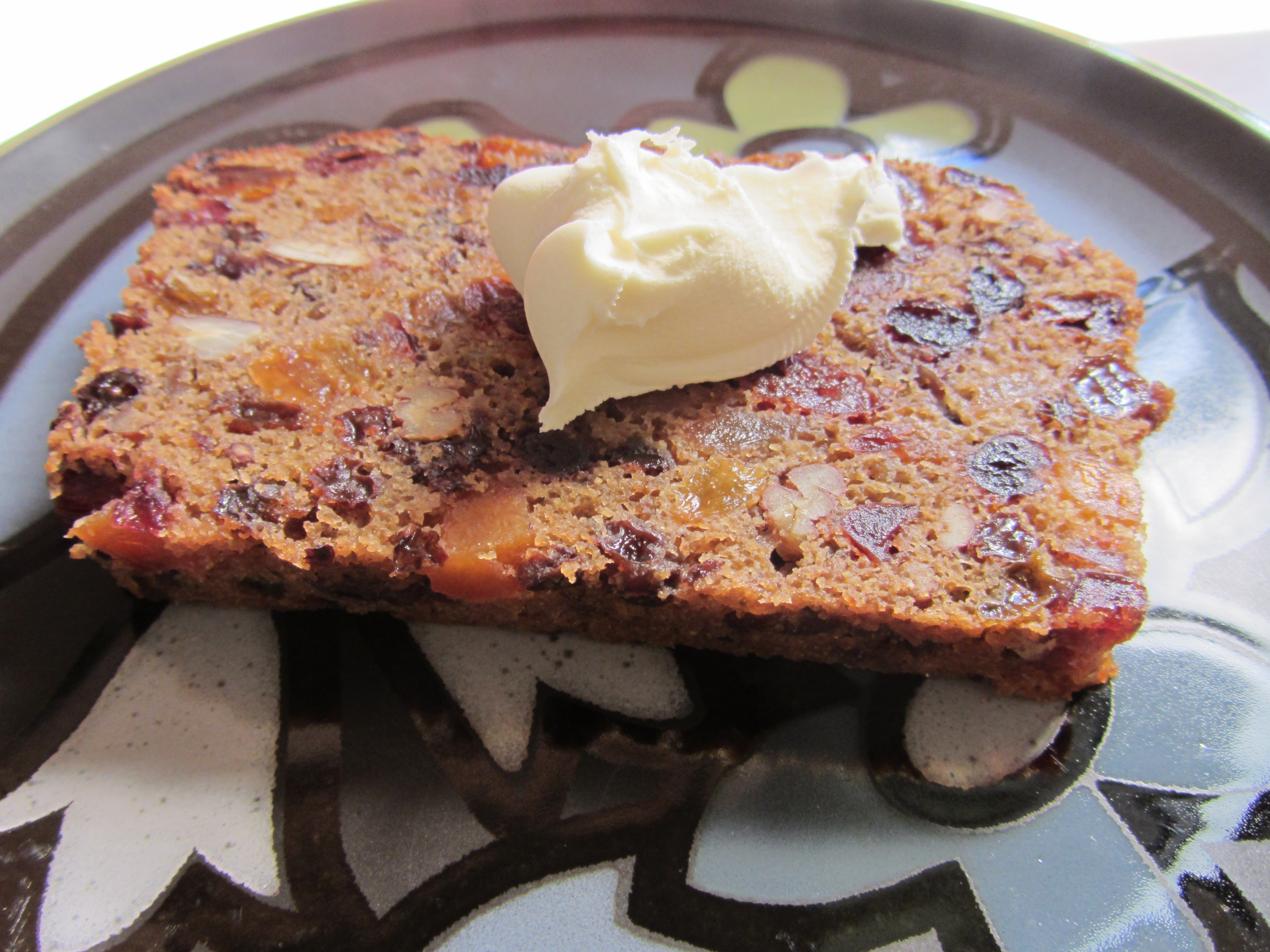
We broke into our cake the day after I made it, serving it the way Alton recommended, which was toasted and topped with mascarpone cheese. It was dense, sweet (but not overly so), super moist, and had loads of fruit flavor. It was also quite boozy!

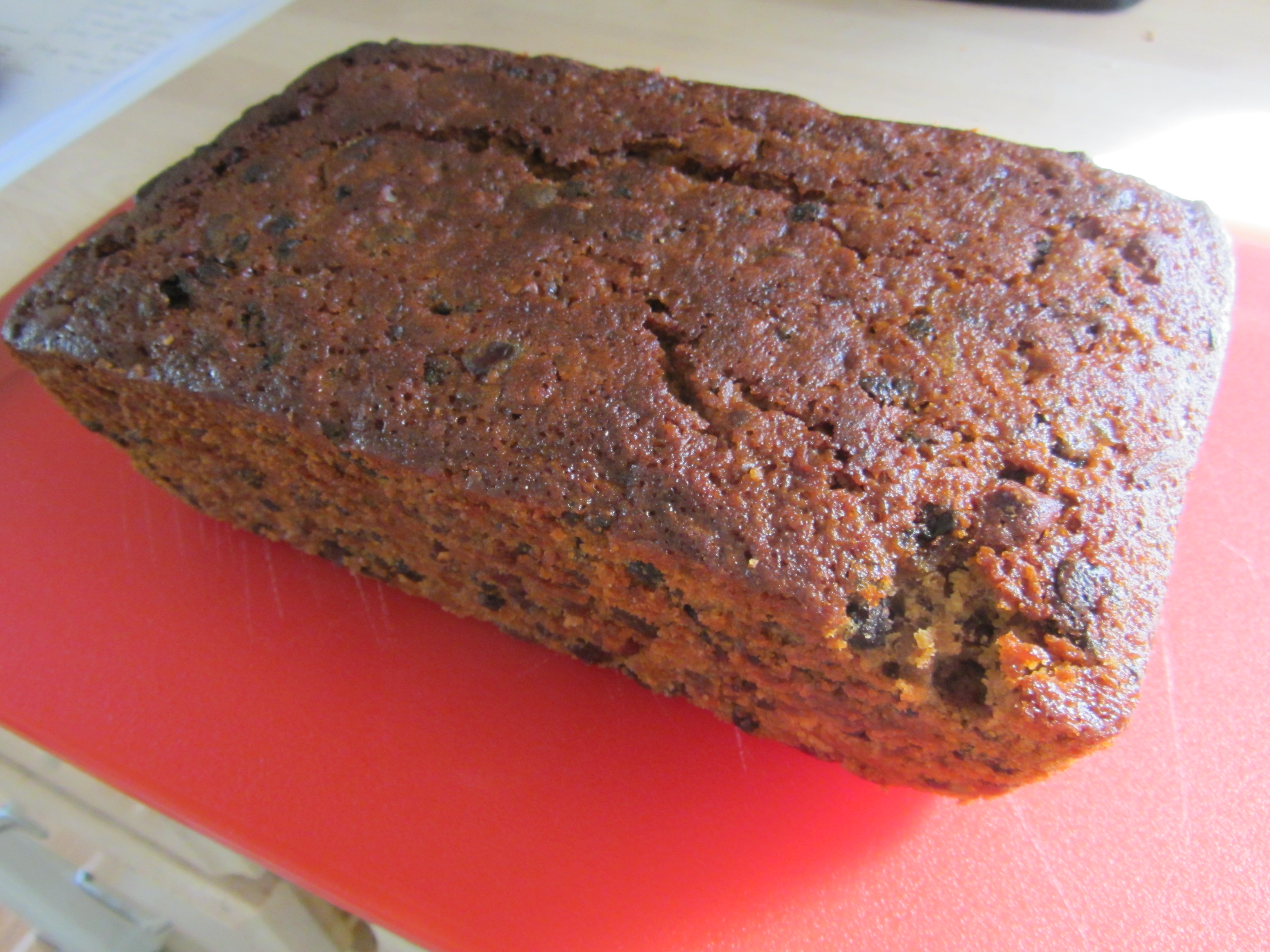
Completed cake, ready for slicing.

Completed cake, ready for slicing.

Loaded with fruit.

Loaded with fruit.

Toasted with mascarpone cheese.

Toasted with mascarpone cheese.

I shared some fruitcake with my parents also, and they both highly enjoyed it, saying they preferred it untoasted. As it sits, my cake was made 10 days ago, and we still have a hunk of it left. It has only gotten better since I first made it. This would be perfect to start a couple weeks before Christmas. I highly recommend this fruitcake recipe. It is perfect for a special occasion, and would also make a nice holiday gift, especially if you made it in mini loaf pans.