Archive for the ‘Season 1’ Category

Eggs Over Easy

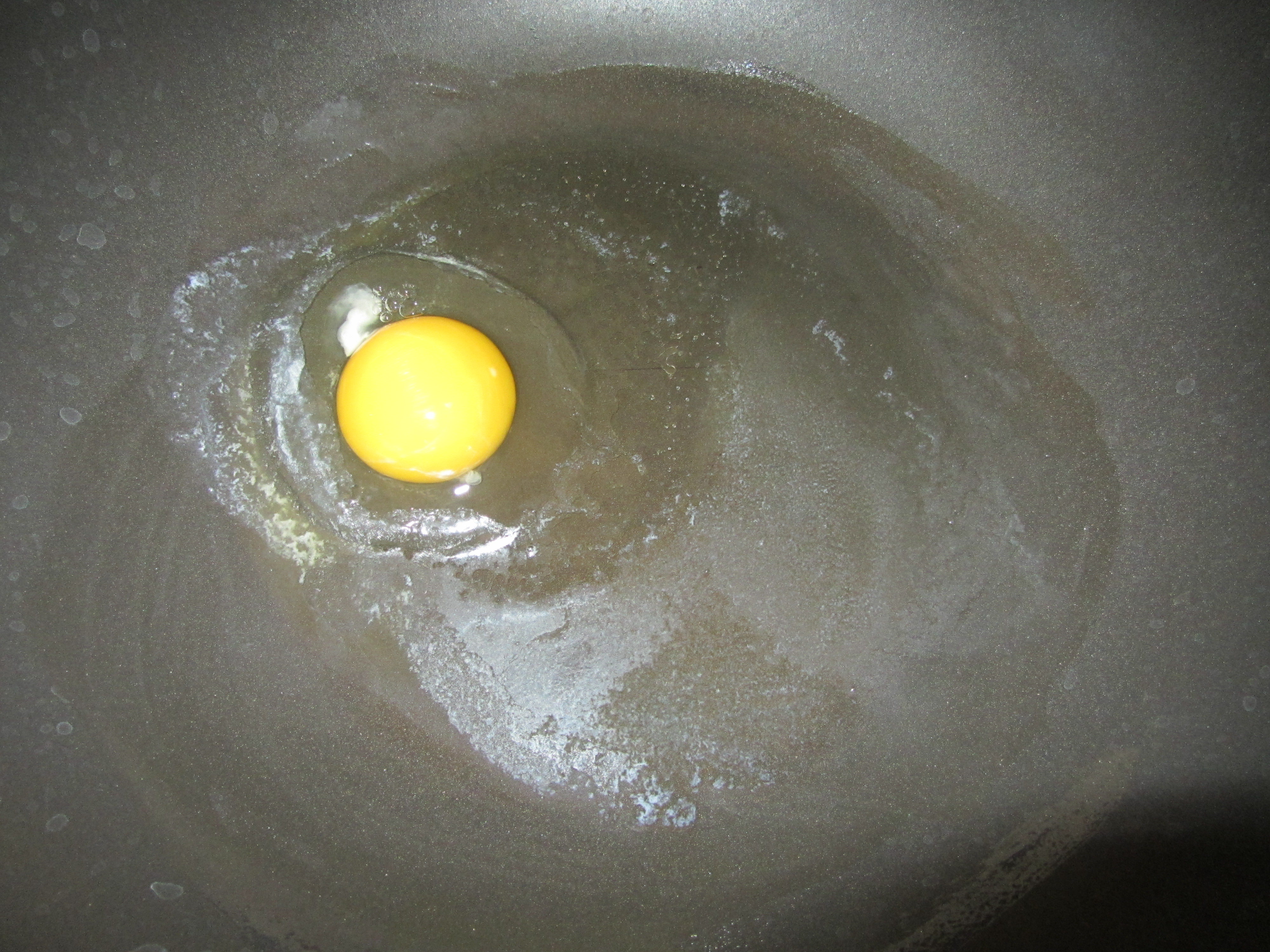
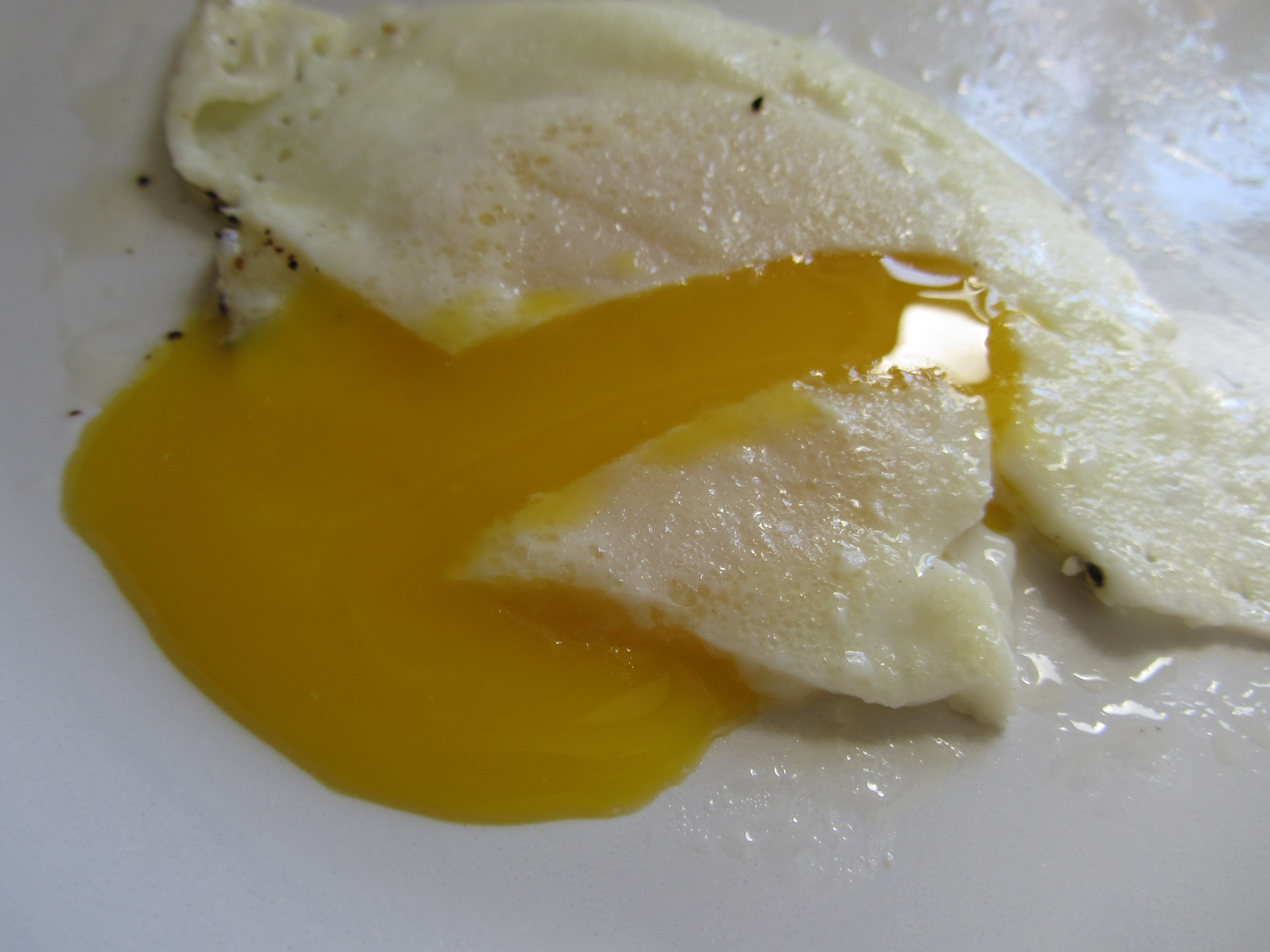
The first recipe in the third episode is for over easy eggs. This recipe can be found here. As a frequent egg eater, I have cooked eggs in numerous ways over the years. Over easy eggs are, however, a type of egg that I do not frequently cook. We do not have a small non-stick skillet in our kitchen repertoire, so I utilized a large non-stick pan we have that has rounded, rather than squared-off, edges. This kept the contents of the pan in the center of the bottom of the skillet. After melting my butter, I added a single egg (rather than two eggs, as in the episode and recipe).6-10-2014 111 6-10-2014 112 As soon as my egg white was opaque, I flipped it over easily and magnificently with a simple shake and jiggle of the pan.6-10-2014 113 Oh, wait… that part didn’t happen. Upon realizing that it was going to be impossible to gracefully and successfully flip my egg in my large pan, I cheated and flipped it with a spatula.6-10-2014 114 Once flipped, I counted to 10, flipped the egg, again, and it was ready to eat. The result was a perfect over easy egg, with a cooked, but not rubbery white, and an intact yolk that just perfectly leaked when I cut into it with my fork.6-10-2014 116 I will use this method again for cooking over easy eggs. Now, I just need to get a small skillet with which I can master the toss.
Scrambled Eggs Unscrambled

Though considered boring by some egg lovers, I adore a good plate of scrambled eggs. In fact, they are usually my go-to. The unfortunate thing is that scrambled eggs are so rarely cooked correctly. I have, in my many years of scrambling eggs, become pretty consistently good at cooking them. Many breakfast joints serve scrambled eggs that are rubbery, chewy, have an artificial shade of yellow, and are often a single, flat mass. Perhaps that’s why they get such a bad rap. So, take note… if you follow Alton’s recipe from Good Eats, you will have a proper plate of delicious scrambled eggs.
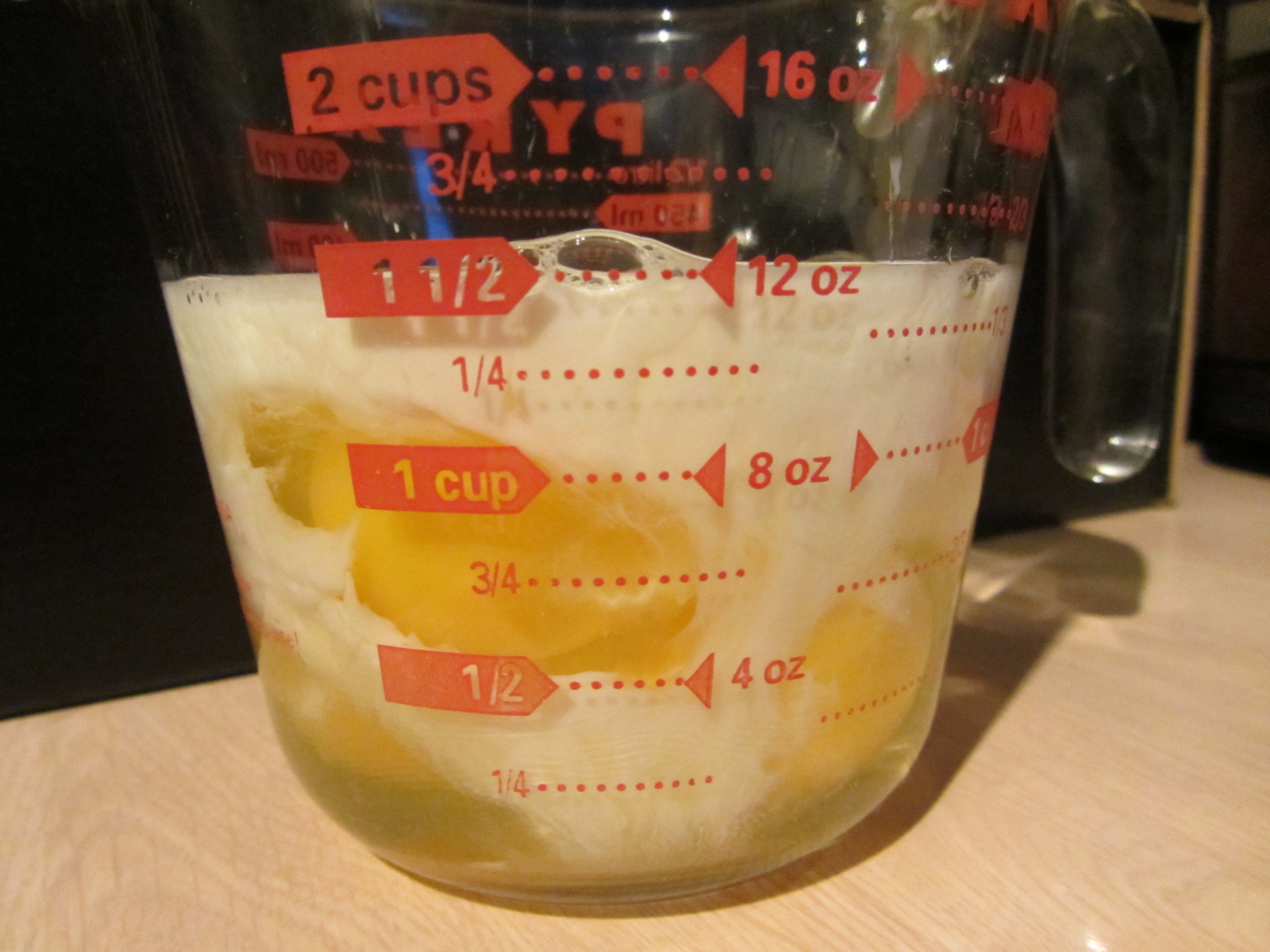
Eggs with added whole milk.

Eggs with added whole milk.

The tricks with scrambled eggs are to start them over low heat, only switching to high heat once the curds begin to form, and as soon as there is no liquid left in the pan, remove them from the heat.

Eggs over low heat.

Eggs over low heat.

Curds beginning to form.
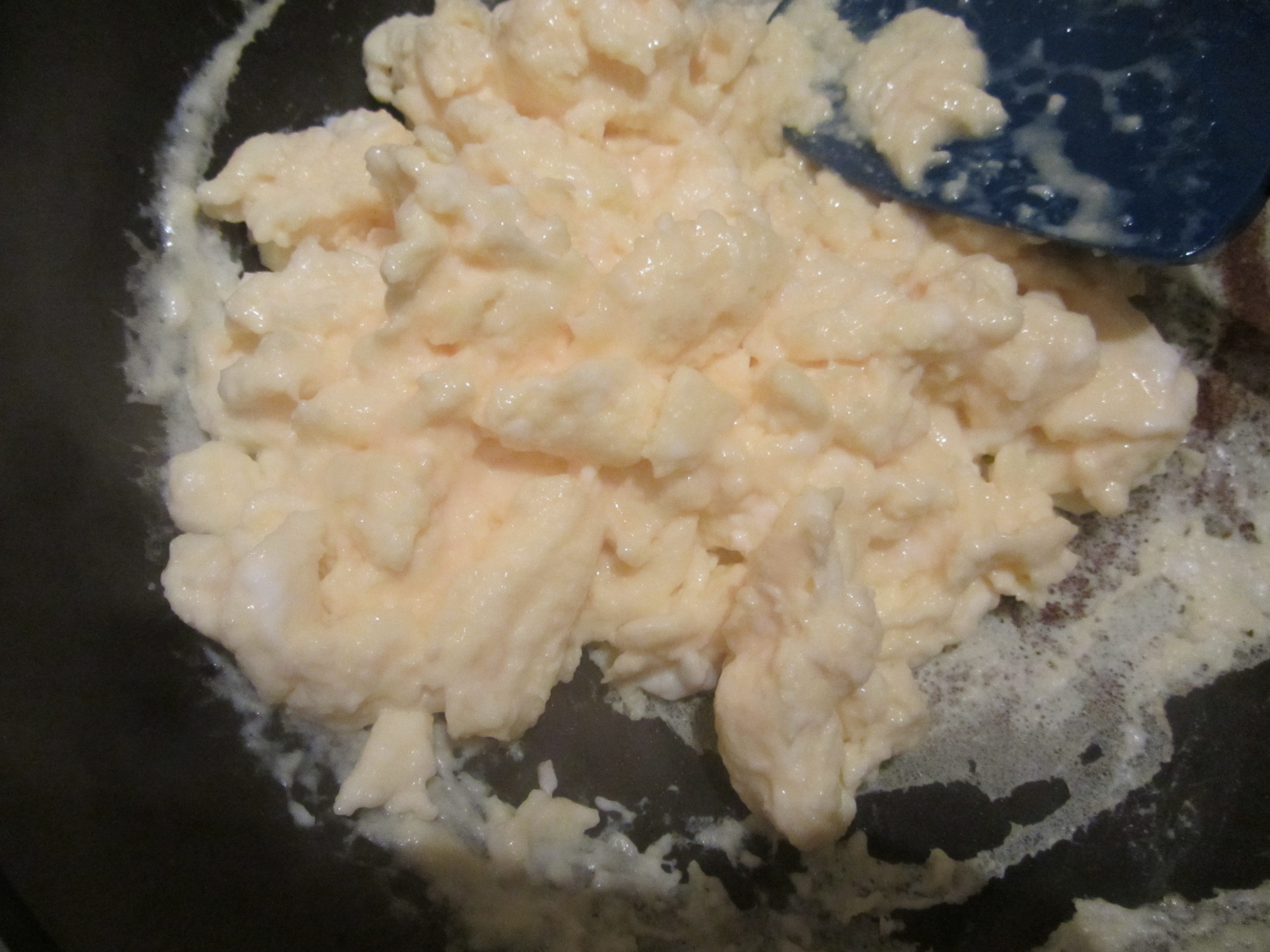
Curds beginning to form.

Time to remove from the burner.

Time to remove from the burner.

As Alton says in the episode, “If the eggs look done in the pan, they’ll be overdone on the plate.” I thought this recipe produced scrambled eggs that rivaled all of the others I have made successfully in the past. I added some grated sharp white cheddar cheese and hot sauce to mine, and I was good to go.

A perfect plate of scrambled eggs, topped with sharp white cheddar.

A perfect plate of scrambled eggs, topped with sharp white cheddar.

Lemon Curd

The final recipe in the third episode of Good Eats is for lemon curd. I had never before made lemon curd, so I was excited to make this one. Plus, just recently I had a delicious dessert at a restaurant that consisted of lemon curd, raspberries, and crumbled meringue. As far as desserts go, lemon curd is a quick and easy thing to make, using only a few ingredients. Be prepared, though, to whisk for several minutes. While the online recipe calls for the juice of four lemons, I only needed to juice two lemons to get the desired 1/3 cup of juice.

Zest

Zest

Lemon juice

Lemon juice

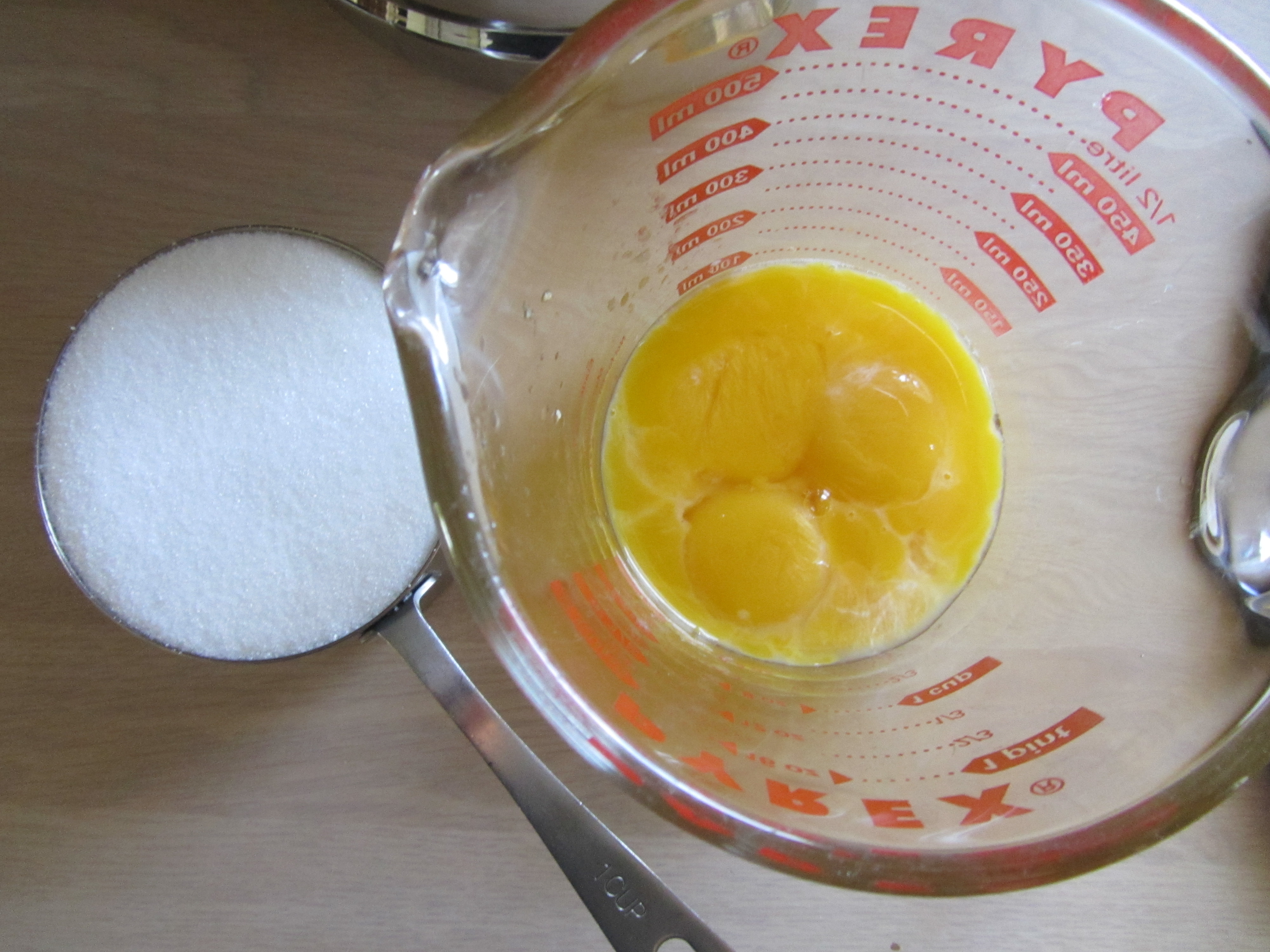
Eggs and sugar.

Eggs and sugar.

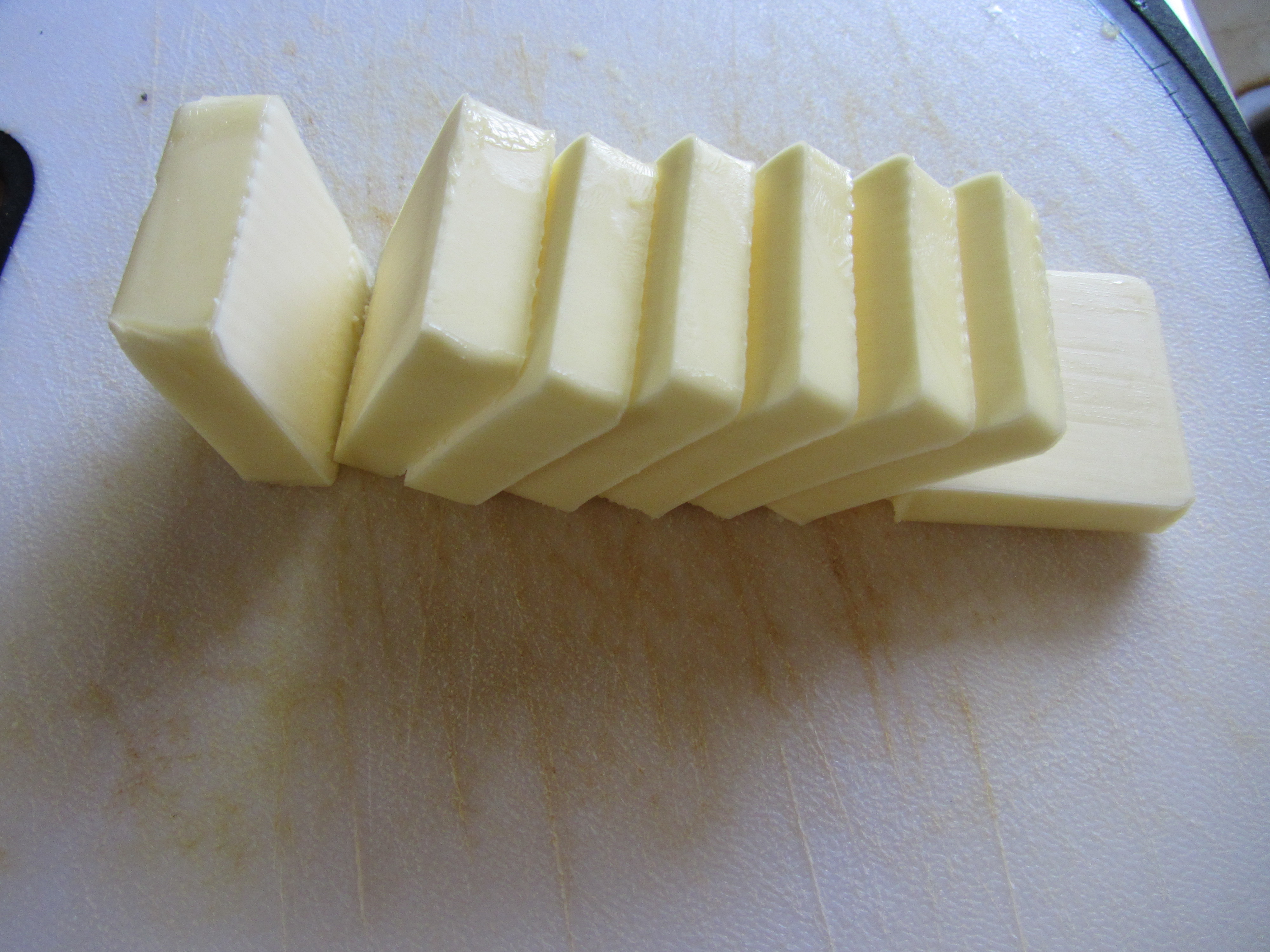
Butter, of course!

Butter, of course!

I used my double boiler to make my curd, whisking over low heat. The online recipe says it takes about eight minutes for the curd to be thick enough to remove from the heat. I, however, found that I had to cook my curd for several additional minutes, and truthfully, I probably should have cooked it even a little bit longer to get a bit thicker consistency.

Lemon curd in double boiler.
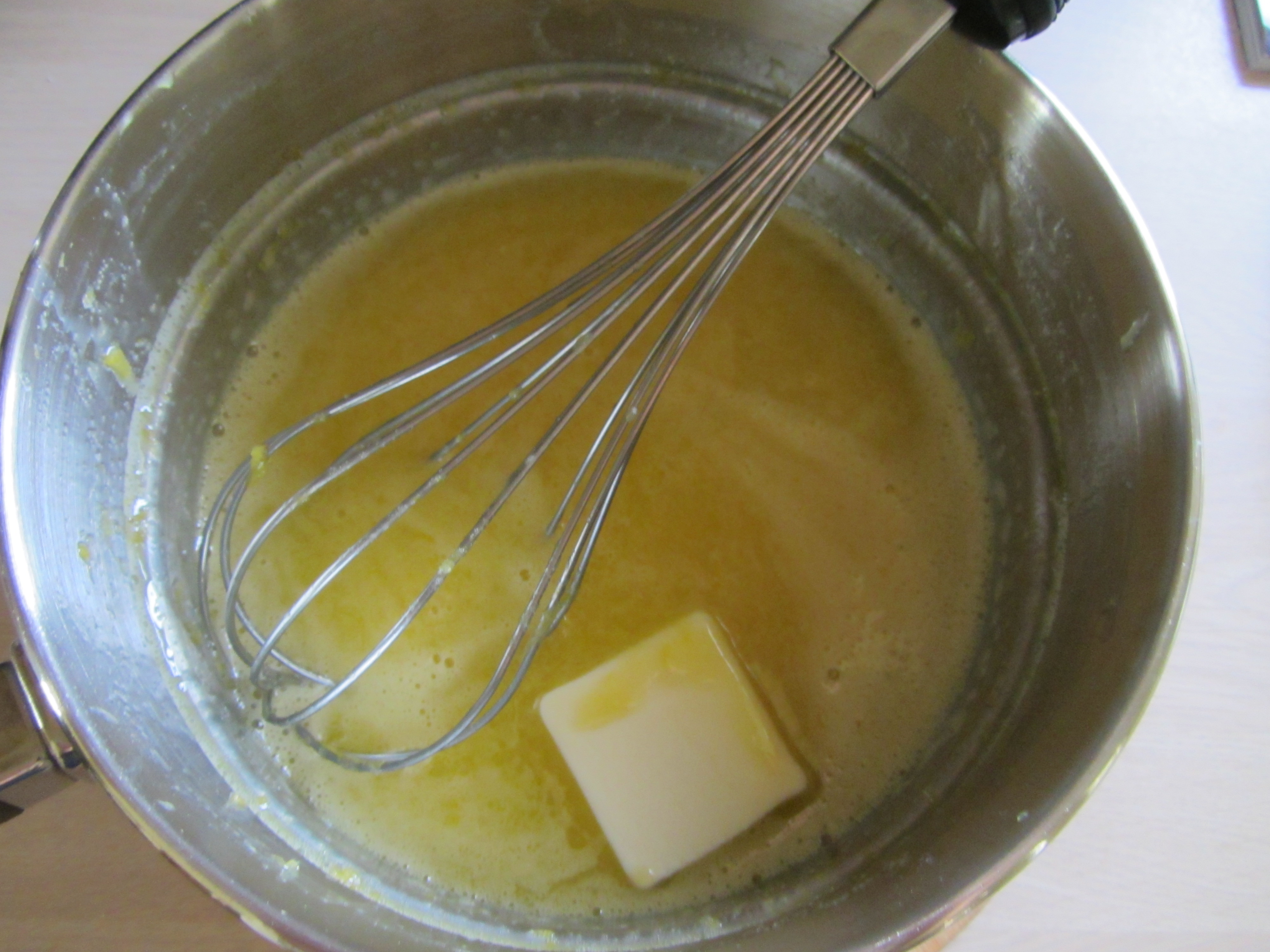
Lemon curd in double boiler.

Whisking in the butter, pat by pat.

Whisking in the butter, pat by pat.

Though it was a little bit thinner than I would have liked, the flavor of the curd was excellent. It was a vibrant shade of yellow, and had a great balance of sweetness and lemon tang. I described it as “bright,” and it was a perfect summer dessert. We ate it over pound cake (store bought, unfortunately) with good vanilla ice cream, and I had some the following morning over raspberries.

Finished lemon curd.
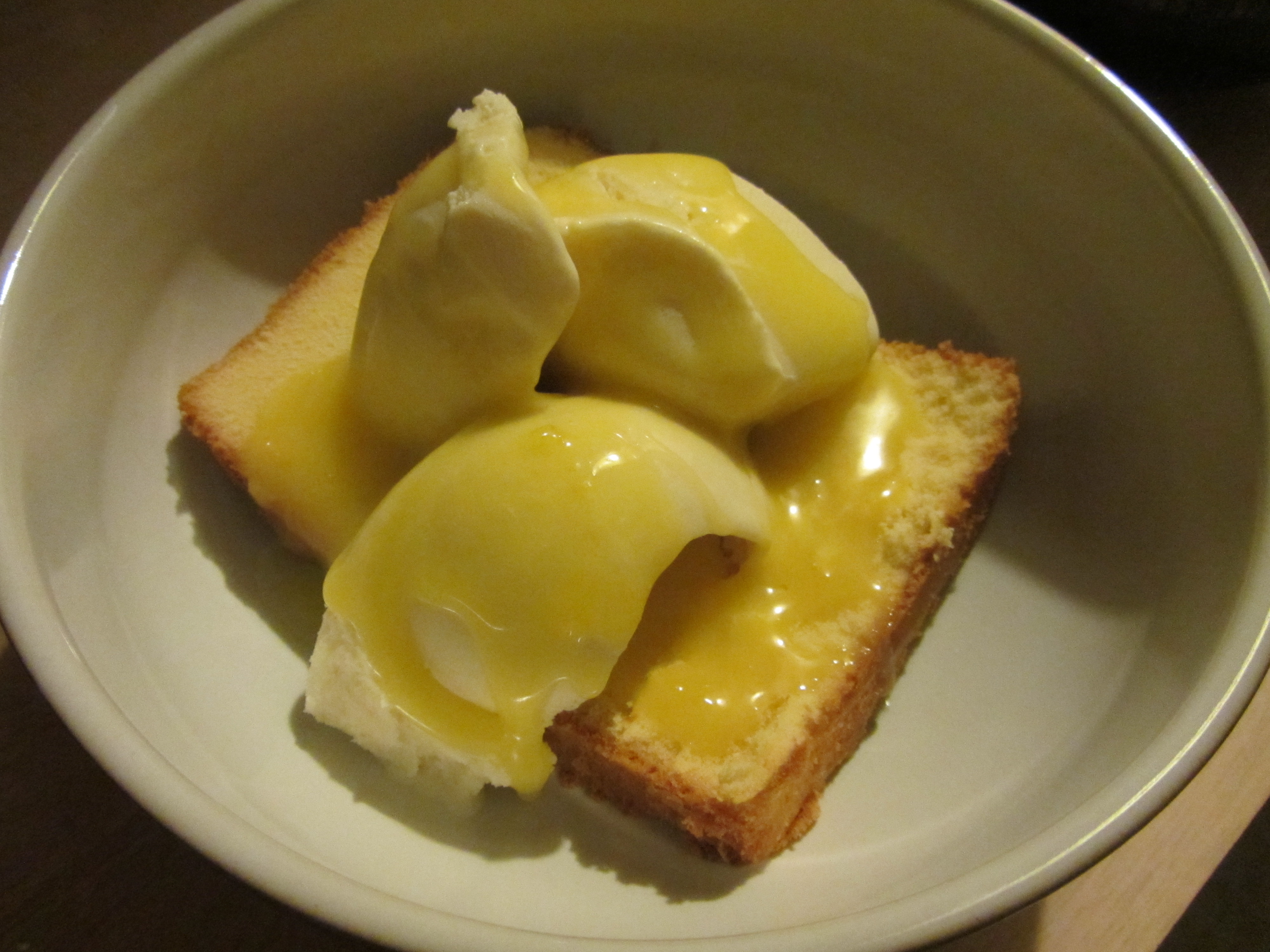
Finished lemon curd.

Pound cake with vanilla ice cream and lemon curd.

Pound cake with vanilla ice cream and lemon curd.

With some pound cake, ice cream, berries, and lemon curd still in our refrigerator, it might be time to get some dessert!

The Baked Potato

Following the success of my trial of the first episode, I continued my foray into Good Eats land with the recipes featured in the second episode about potatoes. Next up was the humble baked potato, which, by the way, I paired with the steaks I made from the first episode. The first time I attempted to make Alton’s baked potatoes (recipe here), I was in the process of getting everything ready to go when I discovered we had run out of Kosher salt. This NEVER happens at our house, but, of course, it had to happen on the very first day of my project. If it had been early in the evening, I would have simply run to the store for more salt, but it had been a busy weekend day and we were already on schedule for a very late dinner. Alton would, I presume, be happy to hear that I did not simply substitute other salt, but rather I postponed the commencement of my project until the following day. It is comical now, but at that time, I viewed it as some cosmic sign that my project was perhaps not meant to be.

The following day, I prepared baked potatoes per the Good Eats method, after, of course, watching the episode. Prior to baking these potatoes, I had always made my baked potatoes by wrapping them in foil and baking them in the oven. Alton’s method, by contrast, involves coating the potatoes with oil and Kosher salt,

Potato coated with oil and Kosher salt

Potato coated with oil and Kosher salt

and then baking them directly on the oven rack with no foil. It is wise to put a baking sheet on the rack below the potatoes, as they do drip while they bake. My husband and I were both happy with the resulting potatoes, which had crispy, salty skins.

Baked potato with crispy, salty skin.

Baked potato with crispy, salty skin.

Baked potato with butter, salt, and pepper.

Baked potato with butter, salt, and pepper.

Mashers

Continuing on with the potato recipes in the second episode, next up were the mashed potatoes. Mashed potatoes are not something we eat regularly, but rather tend to be reserved for holidays. Why? I don’t know, but perhaps it’s because they strike me as a rich, heavy dish fit for gluttonous holidays. I did go through a phase a few years ago when I couldn’t stand to look at mashed potatoes, but that was because I had worked as a food scientist on a mashed potato project that saw me tasting/modifying mashed potatoes all day at work. Trust me, you can get burnt out on mashed potatoes pretty quickly. After a year-long hiatus from mashed potatoes, I can say that I do enjoy them again, though they’ll probably never again be something I want to eat on a regular basis.

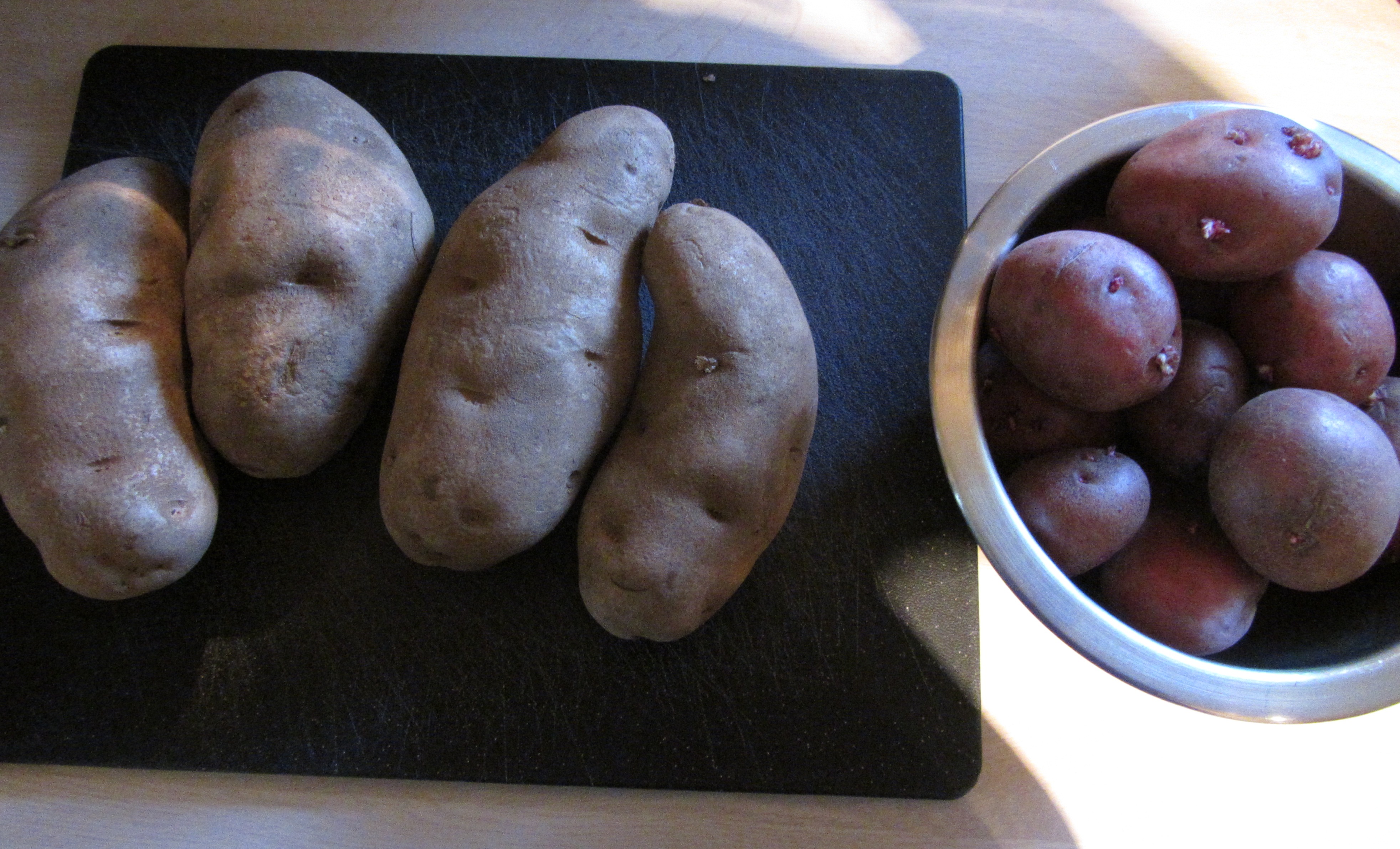
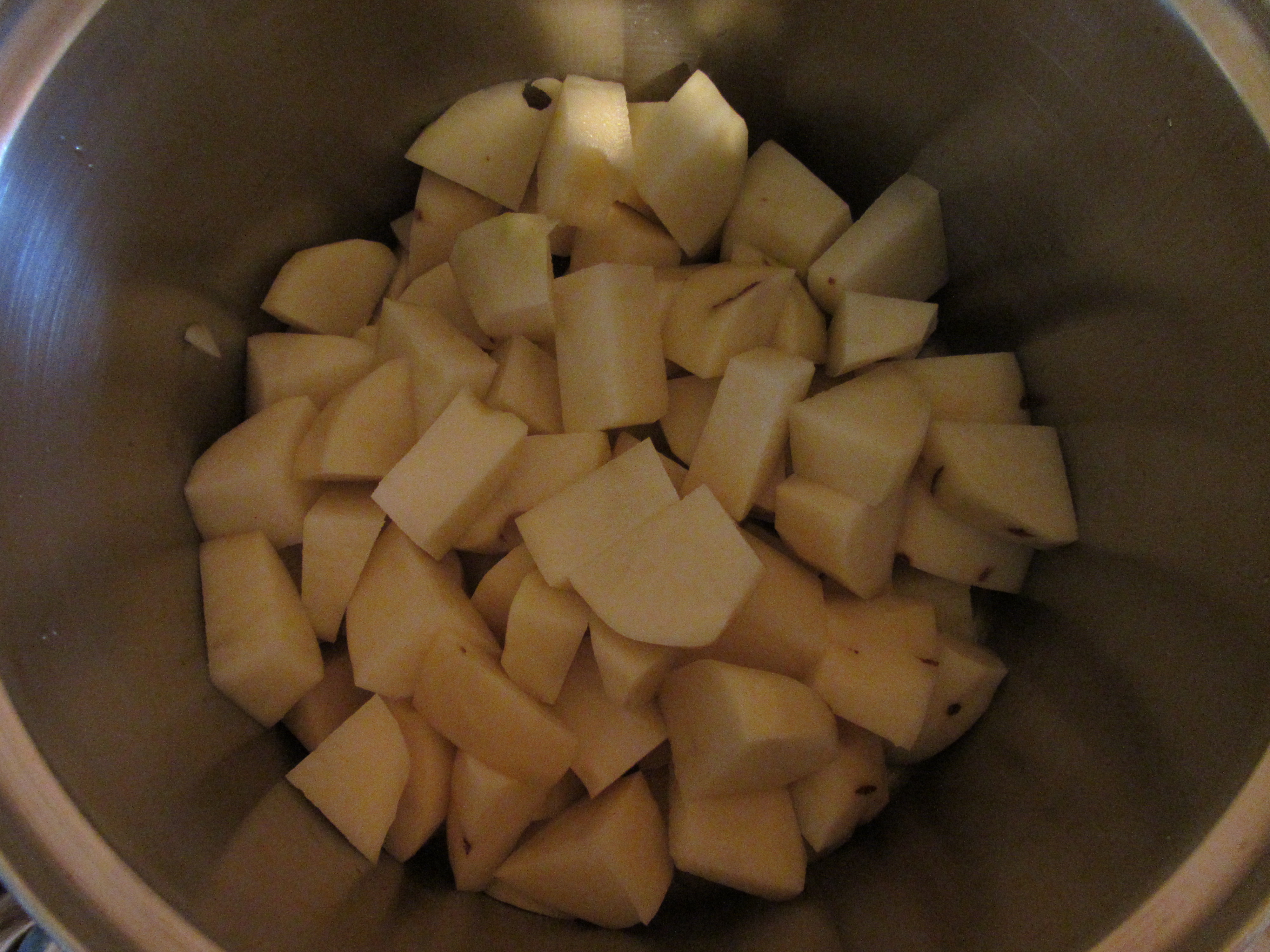
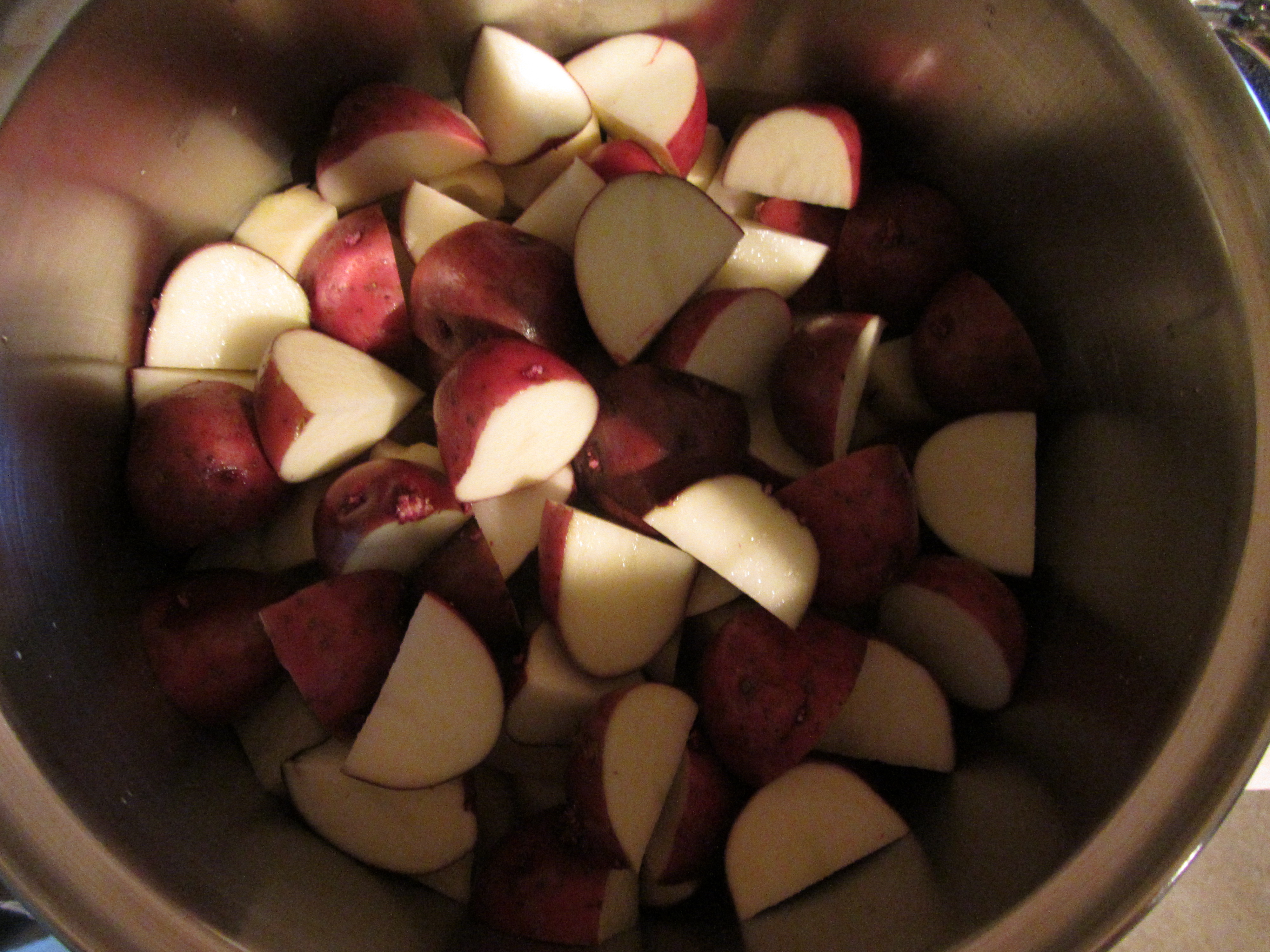
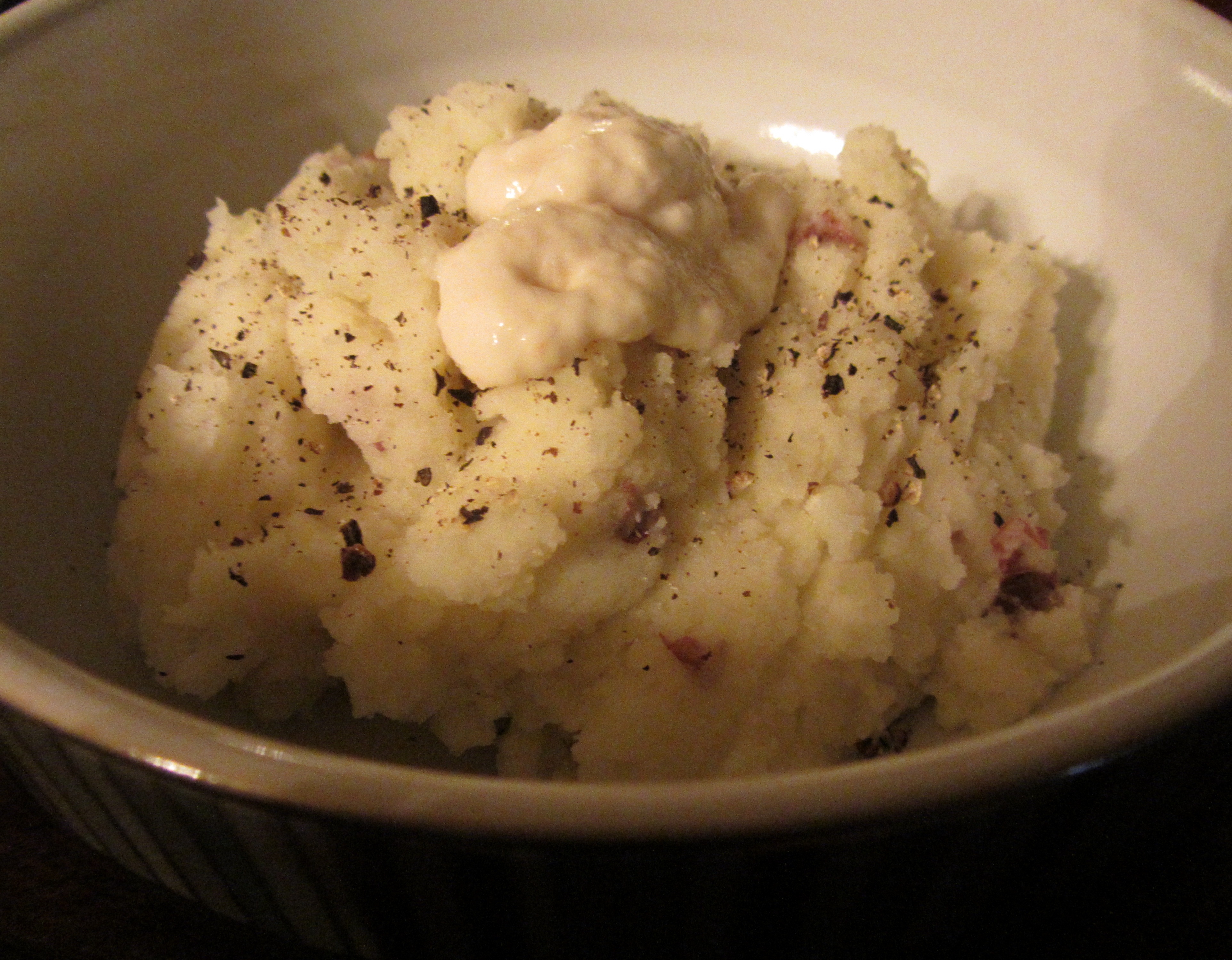
Alton’s recipe is here, and is really quite straight forward. As he states in the episode, really the important part of this recipe is the ratio of russet potatoes to red potatoes. Per his recommendation, I weighed my potatoes, getting a 2:1 ratio of russets to reds.???????????????????????????????episode 2 recipe 2-2 episode 2 recipe 2-3 While my potatoes gently cooked, I heated my dairy mixture with garlic.??????????????????????????????? ???????????????????????????????Sure enough, my potatoes were ready for mashing about 20 minutes after coming to a boil. They mashed easily, but I quickly discovered that I needed more of the dairy mixture than I had prepared. I quickly heated some more dairy on the stove, and added it slowly until I had the fluffy potatoes I desired.episode 2 recipe 2-6 ??????????????????????????????? Ted declared these the best mashed potatoes he has had, and he’s a Midwestern boy, so you know his opinions on meat and potatoes are valid. We ate ours with extra salt and pepper, and some creamed horseradish.

Mashed potatoes with salt, pepper, and horseradish.

Mashed potatoes with salt, pepper, and horseradish.

Potato/Portobello Gratin

The third, and final, recipe in the 2nd episode was for the potato/portobello gratin. One reason I was excited to begin this project was to employ some of the kitchen gadgets/equipment we have that are not so frequently used. Enter the mandolin. Ted bought a mandolin years ago for some particular recipe which I cannot recall. It has since sat on a shelf, rarely used. For the gratin recipe featured in this episode, the mandolin was a huge asset, if not a necessity. It yielded uniform slices of Yukon gold potatoes, and saved me a lot of time. In fact, following the prep work for this recipe, I found myself wondering why I have not utilized this tool more often.

Uniform Yukon Gold slices.

Uniform Yukon Gold slices.

I followed Alton’s recipe, but threw in some fresh tarragon I had lying around, and used Parmigiano-Reggiano. I had enough potato slices for three layers, while Alton created four layers in the episode.

Gratin layers prior to baking.

Gratin layers prior to baking.

In the online recipe, the directions are to check the gratin after baking for an hour, but I followed the slightly different instructions from the episode, which were to check the gratin after about 45 minutes. My gratin was cooked through at that point. I also ended up using more than the recommended 3/4 C of half-and-half from the online recipe. I just added more until the liquid came up through the layers when I pushed down with my hands. Though I thought it looked like it had a bit too much liquid when I pulled it out of the oven, it set up nicely after allowing it to cool for 20 minutes, and the potatoes were nicely cooked without being soft.??????????????????????????????? ??????????????????????????????? As a bonus, the tarragon was nice with the potatoes. This recipe really is something to experiment with, as you could throw in whatever you have on hand. Next up:   Episode 3.

When I first told my husband, Ted, of my idea to cook all of the recipes from Good Eats, he was instantly supportive. As a fan of the show himself, he recalled that the first episode of the show involved cooking a steak. I am embarrassed to admit that I had never before cooked a steak. Yes, you read that correctly. Though I cook often, I had never prepared a steak in my 30+ years. Ted was excited at the prospect of having a home-cooked steak. The question was, would I be able to cook it properly enough to do it justice?

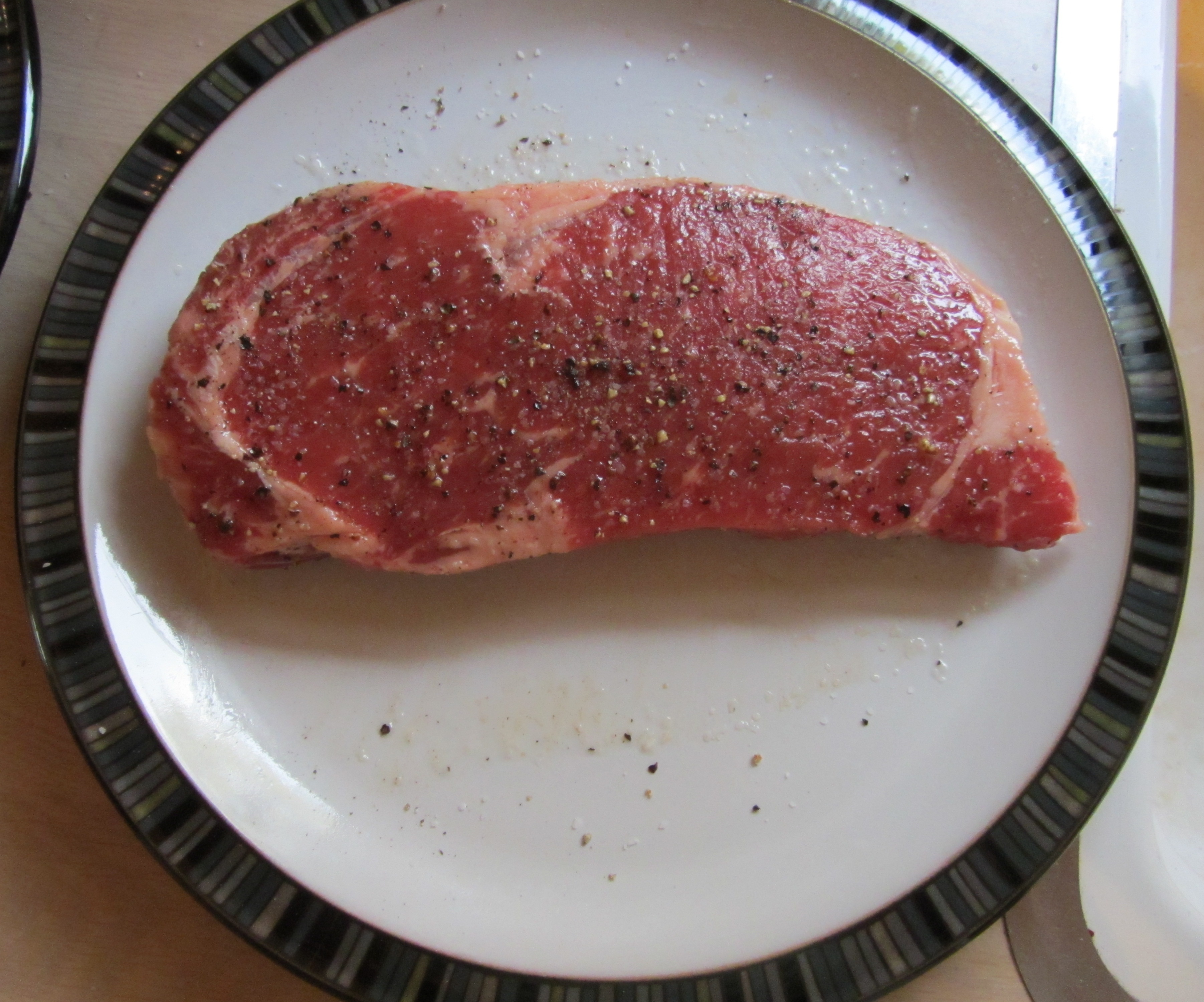
The recipe for Alton’s Pan-Seared Rib-Eye may be found here. After watching the episode, I picked out two rib-eyes to cook for Ted and me. I seasoned the steaks and allowed them to come to room temperature.

Rib-Eye, seasoned and brought to room temperature.

Rib-Eye, seasoned and brought to room temperature.

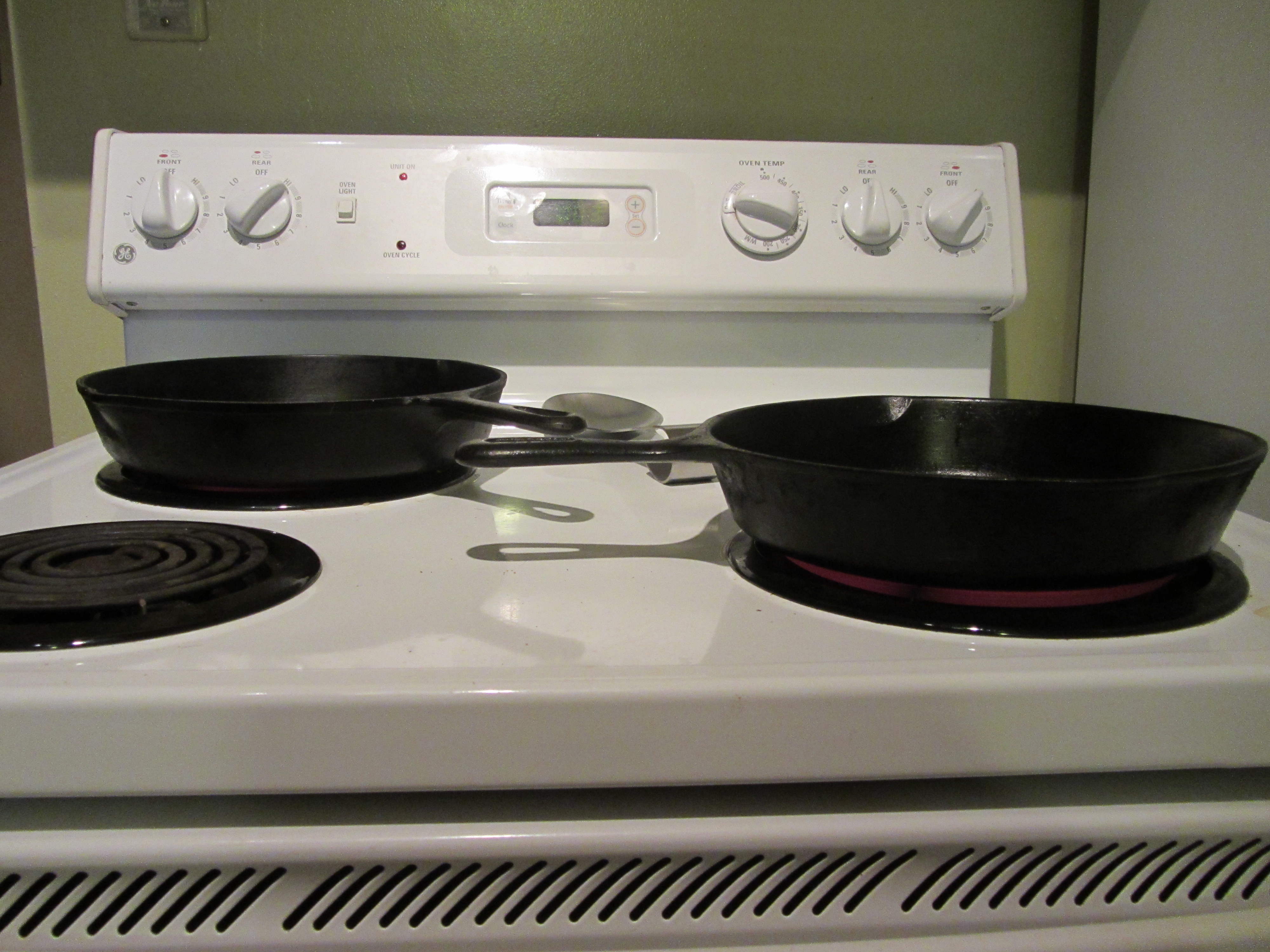
Per Alton’s instructions, I heated our two cast iron skillets until they were screaming hot, first in the oven and then further on the stove, and then placed the steaks in them. The vent above the stove was cranking, and the windows were open, but to no avail. The kitchen filled with smoke and the smoke alarm screamed her shrillest shriek, sending one of our Coonhounds running to the basement in fear. I followed Alton’s cooking recommendations to a tee, completing their cooking in mere minutes, and then allowing the steaks to rest, elevated and tented, for a few minutes.

Screaming hot skillets.

Screaming hot skillets.

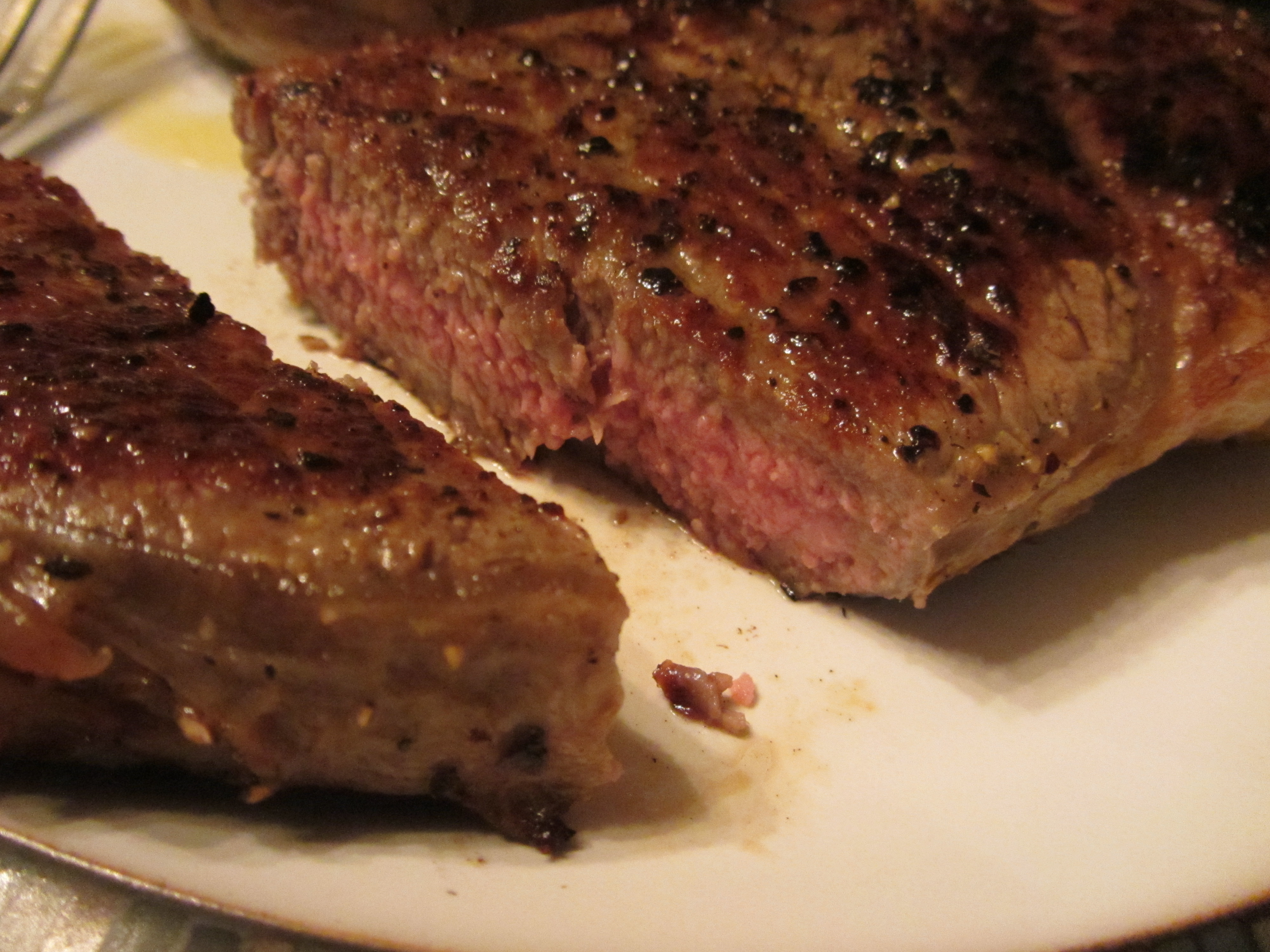
As we cut into our steaks for the first time, I was nervous about what we would find. Would the steaks be underdone, overdone, or just right? Well, slap my ass and call me Goldilocks! We were rewarded with perfect medium-rare steaks that were tender and juicy with a nice peppery crust. My pet peeve with steaks are when they “bleed” (my dad calls those “juices”) all over the plate. The liquid (whatever you choose to call it) remained where it belonged… in the meat. I deem the first recipe from Good Eats a success. If you follow Alton’s recipe and you want to cook a steak indoors, you will not be disappointed.

Medium-rare Rib-Eye.

Medium-rare Rib-Eye.